ANNUAL MEETING
Land, Space, and the Ocean: Honorary Geographer Kathryn Sullivan to speak at AAG 2021
 Geologist, astronaut, and award-winning NOAA scientist Kathryn Dwyer Sullivan is one of the most versatile of scholars, with a career that has quite literally run the gamut from space to the deep blue sea. Hear 2020’s AAG Honorary Geographer speak in a special keynote at AAG 2021.
Last year, the AAG Executive Committee recognized Sullivan’s distinguished career, including being the first American woman to walk in space, as well as serving as Under Secretary of Commerce for Oceans and Atmosphere, and as a NOAA Administrator. Sullivan steered priority work in the areas of weather and water services, climate science, integrated mapping services and Earth-observing capabilities. Sullivan also led NOAA’s efforts with regard to satellites, space weather, water, and ocean observations and forecasts to best serve American communities and businesses. As a woman scientist and role model, Kathryn Sullivan mirrors many of the values the AAG also actively pursues in our discipline and our association.
Read here about Sullivan’s amazing 2020 journey to the bottom of the ocean–the first woman ever to have done so.
AAG 2021 Goes Virtual – Poster Deadline January 29
 In mid-November, AAG made the difficult but necessary decision to shift the 2021 annual meeting to a completely virtual experience. A streamlined process is in place to help session and activity organizers bring their programming to the virtual environment, with the assistance of AAG staff. The shift to virtual does not affect any of our existing deadlines for registration, submissions, or session organizing including the upcoming poster abstract deadline on January 29.
PUBLICATIONS
NEW GeoHumanities Issue Alert: Articles with topics ranging from therapeutic landscapes to zine-making to the Great Barrier Reef
MThe most recent issue of GeoHumanities has been published online (Volume 6, Issue 2, December 2020) with 14 new research articles and creative pieces on subjects within geography. Topics in this issue include ghost cities; social movements; U.S. National Parks; historical geographies of adoption and abortion; creative map making; and archival spaces. Articles also explore mediums such as photography; the color blue; personal essays; and language translation. Authors are from a variety of research institutions including the London School of Economics; McMaster University; University of Texas at Austin; and University of Wollongong.
All AAG members have full online access to all issues of GeoHumanities through the Members Only page. In every issue, the editors choose one article to make freely available. In this issue you can read Imagining Environmental Justice “Across the Street”: Zine-making as Creative Feminist Geographic Method by Gabriella Velasco, Caroline Faria & Jayme Walenta for free.
Questions about GeoHumanities? Contact geohumanities [at] aag [dot] org.
NEW Annals Alert: Articles with topics ranging from historic wilderness management to women’s food businesses, from bioenergy systems to light pollution
 The most recent issue of the Annals of the AAG has been published online (Volume 111, Issue 1, January 2021) with 18 new articles on contemporary geographic research. Topics in this issue include geographical imagination systems; the World Bank; deserts; abnormal embryos; ozone exposure; gerrymandering; mapping inequality; and flood risk. Locational areas of interest include Tucson, Arizona; northern Minnesota; Jordan; rural France; upland Laos; and coastal Louisiana. Authors are from a variety of research institutions including China University of Geosciences; University of Bristol; University of Florida; and University of Central Florida.
All AAG members have full online access to all issues of the Annals through the Members Only page. Each issue, the Editors choose one article to make freely available. In this issue you can read More than Metaphor: Settler Colonialism, Frontier Logic, and the Continuities of Racialized Dispossession in a Southwest U.S. City by Sarah Launius & Geoffrey Alan Boyce for free for the next two months.
Questions about the Annals? Contact annals [at] aag [dot] org.
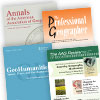
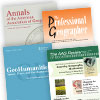 In addition to the most recently published journal, read the latest issue of the other AAG journals online:
• Annals of the American Association of Geographers
• The Professional Geographer
• GeoHumanities
• The AAG Review of Books
Call for Abstracts: Special Issue of ‘Annals’ on “Race, Nature, and the Environment”
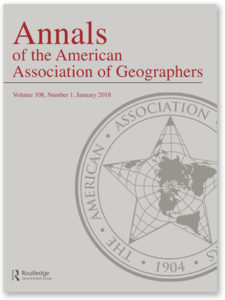 The 2023 Special Issue of the Annals invites new and emerging geographic scholarship situated at the crossroads of Race, Nature, and the Environment. In seeking contributions from across the discipline, we welcome submissions that advance critical geographic thinking about race and the environment from diverse perspectives and locations; that utilize a broad array of geographic data, theories, and methods; and that cultivate geographic insights that cut across time, place, and space. Abstracts of no more than 250 words should be submitted by e-mail to Jennifer Cassidento by March 31, 2021. The Editor (Katie Meehan) will consider all abstracts and then invite a selection to submit full papers for peer review by June 1, 2021.
More information about the special issue.
ASSOCIATION NEWS
AAG is Proud to Announce the 2021 AAG Honors
 Since 1951, AAG Honors have been offered annually to recognize outstanding accomplishments by members in research and scholarship, teaching, education, service to the discipline, public service outside academe, and for lifetime achievement. Each year, the AAG invites nominations for AAG Honors to be conferred in recognition of outstanding contributions to the advancement or welfare of the profession. The AAG Honors Committee is charged with making award recommendations for each category, with no more than two awards given in any one category. The AAG is proud to officially announce the 2021 AAG Honors.
See the Honorees.
AAG Announces Diversity & Inclusion, Mentoring, & Undergraduate Awards
The American Association of Geographers congratulates the individuals and entities named to receive an AAG Award. The 2021 Diversity and Inclusion Award is presented to Raynah Kamau and Whitney Kotlewski of Esri as well as to Jovan Lewis from University of California at Berkeley. Hilda Kurtz from University of Georgia has received the 2021 Susan Hardwick Excellence in Mentoring Award. The 2021 Marble-Boyle Undergraduate Achievement Award in Geographic Science is awarded to Jessica Embury of San Diego State University and Daniel Council of Ball State University.
See the Awardees.
AAG Thanks 2020 Donors for their Support
Thank you to the 479 donors who made 510 donations during 2020 totaling $148,155. Your donations provided resources to over 20 different funds. Here are some of the highlights:
60 members made gifts totaling $8,629 to support the Bridging the Digital Divide Fund. These funds were supplemented by a gift from Esri for $50,000 and will allow AAG to further its work with Tribal and Historically Black colleges and universities, and other minority-serving institutions. The COVID-19 pandemic exposed how crucial it is for students to connect remotely to classrooms and mentors. Geography students at minority serving institutions have been particularly affected by the technology gap. AAG launched Bridging the Digital Divide as part of its COVID-19 rapid response and allotted $238,000 of internal funds that supported students at 23 institutions for the fall 2020 semester.
The COVID-19 Rapid Response Fund received donations from 38 members totaling $6,462 that helped AAG launch nine projects to help the geography community during the pandemic. The AAG Council approved spending nearly $1 million of reserves to initiate projects such as Bridging the Digital Divide, two webinar series to advance members ‘ professional development and help students with their research, a mentoring program, support for the divisions, and renewal dues assistance.
318 members and friends donated a portion or all of their annual meeting registration fees when the 2020 and 2021 annual meetings went virtual. These contributions totaled $35,041.50.
The Black Geographies Specialty Group raised $4,256 from 33 members and other specialty groups received 12 donations totaling $2,245.
Unrestricted gifts were also received from 15 members totaling $3,930. During these uncertain times, these gifts provide AAG with the greatest amount of flexibility to help strengthen academic geography, enhance diversity in the discipline, offer leadership training, workshops and forums, and grow the field.
Several of AAG’s awards, prizes and scholarship funds continued to receive strong support that totaled $29,350 including a $20,500 for the Marble Fund, $6,000 to the Hess Scholarship Fund, $1,350 to the Marcus Fund, $1,000 for the Stanley Brunn Award, and $500 to the Wilbanks Award.
2021 AAG Election Underway

The AAG election will be conducted online again, and voting will take place January 7-28, 2021. Each member who has an email address on record with the AAG will receive a special email with a code that will allow them to sign in to our AAG SimplyVoting website and vote. It’s important to update your email address in your AAG account to ensure you receive the email ballot.
Read about the 2021 candidates.
AAG Holds Workshops on Public Scholarship at Virtual Regional Division Meetings
Geography and the AAG depend on you to increase visibility of geographers’ work. In response to the growing need and opportunity for geographers to enter into public scholarship, AAG developed a workshop for geographers at all stages of their careers to share their research and perspectives across different forms of media. Titled “Getting the Word Out about Geography,” the workshop was led by AAG staff at five AAG Regional Division meetings held virtually this fall.
Learn more about the workshop.
POLICY CORNER
Call to Action: Get Involved in 2021 Redistricting
 After a decade with our current legislative district maps, the time for 2021 state and congressional redistricting has finally arrived. If you’ve ever cared about gerrymandering and wanted to exercise your power as a geographer to make a difference, finding statewide opportunities for public participation this year should be your next step. As a service to both your community of geography colleagues, and to the community in which you live, it’s up to you to secure your place in the process, offer your best input, and help hold officials accountable.
Anyone with strong geospatial understanding has a lot to contribute to the redistricting process. It’s a perspective that redistricting officials sorely need, but often lack. And you do not have to be a GIS expert to contribute – as a geographer, you deserve to be at the table.
If you have as little as 15 minutes, you can make an impact. The AAG has compiled the following guide on Four Ways to Make an Impact on Gerrymandering and Redistricting.
In the News:
- Following last week’s violent riots at the U.S. Capitol, the House on Wednesday voted to impeach President Trump. He is the only U.S. President to have been impeached twice. The process will move to the Senate where outcomes currently remain uncertain.
- With Democratic candidates winning the two Senate runoff races in Georgia earlier this month, Chuck Schumer will be the new Senate Majority Leader and Democrats will take control of all Senate committees.
- President-elect Biden plans to unveil his additional Covid relief proposal Thursday. It will likely include boosting direct payments to individuals from $600 to $2,000 and is also expected to include more financial aid for state and local governments, additional unemployment benefits, funds to improve vaccine distribution, continued forbearance for rent payments, and aid for small businesses.
MEMBER NEWS
January Member Updates
The latest news about AAG Members.

AAG member Anthony Bebbington has been named The Ford Foundation’s new International Director of its Natural Resources and Climate Change program, leading the team that oversees Ford’s global work supporting rural, low-income, Indigenous, traditional, and Afrodescendant communities in the Global South who play a key role in mitigating climate change, improving governance over natural resources, and securing land rights for their people. Bebbington joins Ford Foundation after serving as the Milton P. and Alice C. Higgins Professor of Environment and Society in Clark University’s Graduate School of Geography. A member of the board of directors at Oxfam America and internationally recognized leader and scholar on extractive industries and natural resource governance, Bebbington brings more than 35 years of experience working with Indigenous and rural communities, civil society, the private sector, and policymakers.
Bebbington was Director of the Graduate School of Geography at Clark University from 2010 to 2017, and was elected to the National Academy of Sciences in 2009 and the American Academy of Arts and Sciences in 2014. He received a Distinguished Scholarship Honors award from AAG and a fellowship from the Guggenheim Foundation, among other accolades. More.
Collins the First Geographer in ELATES Leadership Program for Women Scientists
 University of South Florida geography professor Jennifer Collins is among thirty women scientists–and the first geographer–to take part in this year’s ELATES program at Drexel University. This national leadership development program is designed to advance the careers of senior women faculty in academic STEM disciplines. After some delay for the in-person training due to COVID-19, Collins will begin the intensive, full-year, part-time fellowship program later this year.
“I am looking forward to completing the program in the next year,” says Collins, who teaches in the School of Geosciences and whose research focuses on weather and climate, specifically hurricanes and interaction between large-scale climatic patterns and seasonal patterns of tropical cyclone activity. She says she is especially enthusiastic about the ways that ELATES can strengthen her teaching and mentoring. “When I entered a faculty position, I had experience with research with my PhD but we had no training on how to teach back then. We were just thrown in and learnt by trial and error. Similarly, with leadership, there are few training opportunities. I have had a lot of leadership roles, particularly in my professions, but I am particularly excited for the opportunity ELATES offers me to have discussions on leadership that I have not had before, opening me up to new perspectives, skills, and knowledge, and a life-long network of inspiring female leaders.”
The application for the next ELATES cohort is January 31, 2021. Find out more here.
RESOURCES AND OPPORTUNITIES
Early Career and Department Leadership Webinar Series Continues in 2021
Last fall, the AAG piloted a new webinar series as a service to AAG members and the wider geography community. The series focused on topics of interest to students and early career geographers, as well as department leadership issues, especially those involving building and growing strong academic programs at the undergraduate and graduate levels. The AAG is pleased to announce the continuation of the webinar series in 2021, resuming in late January and continuing through the spring.The first webinar, Building a Strong Professional Network – A Research Approach, is scheduled for Wednesday, January 27 at 3pm EDT. Registration is free and now open and URLs for the new series will be announced as soon as they are available.
For more information on the webinar series, visit: http://www.aag.org/careerwebinars.
Events Exploring Entrepreneurship and Immigration at the Kauffman Foundation
 The Kauffman Foundation is pleased to announce two virtual events in January. The January Entrepreneurship Issue Forum, “Immigration and Entrepreneurship: Knowledge Landscape,” will take place at 9 a.m. CST / 10 a.m. EST on Thursday, January 28. It will focus on what is known about immigration and entrepreneurs, including the economic effects of immigrant entrepreneurs, pathways and implications of entrepreneurship for immigrants, and a discussion of policy and programmatic action among and by practitioners. Register here.
The Early-stage Researcher Professional Development Series will take place at 1 p.m. CST on Friday, January 29 with mentors Rob Seamans (New York University) and Michelle Budig (University of Massachusetts Amherst). This series is open to 15 early-stage researchers to connect with research mentors to discuss research approaches, professional development and the research career trajectory. Register for the Professional Development Series here.
Career Mentors Needed for 2021 AAG Virtual Meeting
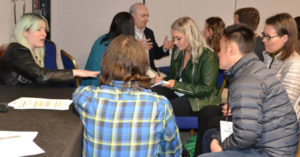
The AAG seeks professional geographers representing the business, government, nonprofit and academic sectors to serve as volunteer “Career Mentors” during the 2021 AAG Virtual Meeting. Career mentoring provides an open forum for students and job seekers to receive one-on-one and small-group consultation about careers in a variety of industries and employment sectors. Mentors are expected to answer questions and provide general career advice to students and job seekers interested in learning more about industries that employ geographers, the work geographers perform and strategies for getting into the field. This year we will be organizing eight sessions, one each morning and one each afternoon of the conference, to provide our virtual attendees around the world with more opportunities to participate.
For additional questions and to volunteer, please contact Mark Revell at the AAG at mrevell [at] aag [dot] org by March 1st, 2021.
The 34th Congress of the International Geographical Union
 The 34th Congress of the International Geographical Union was postponed from August 2020 to August 2021 due to the covid-19 pandemic. The Congress will be held in Istanbul, Turkey, August 16-20, 2021.
Details are available at https://www.igc2020.org/en/.
IN MEMORIAM
The AAG is saddened to hear of the passing of these colleagues.
Barry Lopez, the 2011 AAG Honorary Geographer, passed away at the age of 75 on December 25, 2020 after battling prostate cancer. Lopez, who spoke during the 2011 AAG Annual Meeting in Seattle, WA, was recognized for his evocative portrayals of people living in close communication with nature, and for his exemplary works of fiction and nonfiction alike that honor and inspire ideas about geography and landscape. Read more.
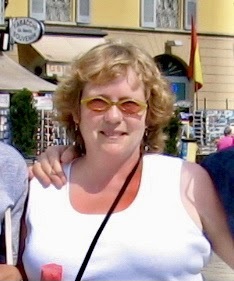 Lynn Staeheli, a professor and former head of the School of Geography and Regional Development at the University of Arizona, passed away December 20, 2020 at her home in Tucson, AZ. Professor Staeheli’s research focused on what she called the “big, contentious topics” such as the nature and spatial dimensions of democracy, citizenship, and politics. More concretely, her research topics included publicly accessible space, protest and activism, immigration and refugees, and the role of faith, religion, and spirituality in public life. Read more.
 Curtis C. Roseman, professor emeritus of geography at University of Southern California-Dornsife, died on December 13, 2020. He was a professor in the Department of Geography at the University of Southern California from 1985 to 2004, serving as Department Chair from 1985 to 1992. Among the many honors and awards he received over the years were the USC Community Service Award, the USC Faculty Volunteer Good Neighbor Award, Distinguished Scholar Award from the Ethnic Geography Specialty Group of the American Association of American Geographers, and a 1989 Fulbright Fellowship to New Zealand. Read more.
William Dando, 50 year AAG member and longtime chair of the Bible Geography specialty group, passed away on January 1, 2021. A full written tribute is forthcoming.
Moshe Brawer (משה ברוור) died on 28 December 2020. He was 101. Considered “the Father of Israeli geography,” he was the author of The Atlas of the World, an Israeli textbook published in 67 editions. He also compiled 20 other atlases in different languages. In 2002, he won the Israel Prize in geography. Among his accomplishments was determining the border of Israel with Jordan. He “was a man of great stature,” Brawer’s daughter, Orit Brawer Ben David, said. He is survived by his wife, Rina, 91, four children and eight grandchildren.
GEOGRAPHERS IN THE NEWS
- AAG member Alexander Reid Ross tracked 770 incidents of extremist, racist violence in 2020. As overall incidents declined, Ross told CityLab in October that attacks were growing more severe: “I think there will be more plans for targeted bombings, kidnappings, & assassinations.”
- How to Lie with Maps by Mark Monmonier was featured on 8 essential books for geographers list from Geographical.
EVENTS CALENDAR
Submit News to the AAG Newsletter. To share your news, email us!

 We are about 3 weeks away from the Annual Meeting! The completely virtual 2021 Annual Meeting, April 7-11, will feature 800+ paper sessions and panels on a wide range of topics as well as 27 poster sessions. Browse the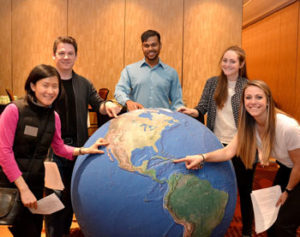
 The most recent issue of the Annals of the AAG has been published online (
 In addition to the most recently published journal, read the latest issue of the other AAG journals online: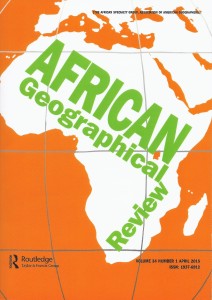
 The 2023 Special Issue of the Annals invites new and emerging geographic scholarship situated at the crossroads of Race, Nature, and the Environment. In seeking contributions from across the discipline, we welcome submissions that advance critical geographic thinking about race and the environment from diverse perspectives and locations; that utilize a broad array of geographic data, theories, and methods; and that cultivate geographic insights that cut across time, place, and space. Abstracts of no more than 250 words should be submitted by e-mail to
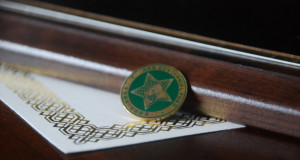
 The AAG is pleased to announce the recipients of the three 2020 AAG Book Awards: the John Brinckerhoff Jackson Prize, the AAG Globe Book Award for Public Understanding of Geography, and the AAG Meridian Book Award for Outstanding Scholarly Work in Geography. The AAG Book Awards mark distinguished and outstanding works published by geography authors during the previous year, 2020. The AAG will confer these awards at a future event to be determined, once the travel and in-person meeting restrictions have been lifted.
 Two virtual events are upcoming that may be of interest to AAG members:
 The William T. Pecora Award is presented annually to individuals or teams using satellite or aerial remote sensing that make outstanding contributions toward understanding the Earth (land, oceans and air), educating the next generation of scientists, informing decision makers or supporting natural or human-induced disaster response. Sponsored jointly by the Department of the Interior (DOI) and the National Aeronautics and Space Administration (NASA) and established in 1974, the award honors the memory of Dr. William T. Pecora, former Director of the U.S. Geological Survey and Under Secretary, Department of the Interior, whose early vision and support helped establish the Landsat satellite program. Nominations for the 2021 awards must be received by the Award Committee by May 14, 2021.
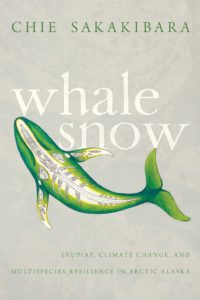
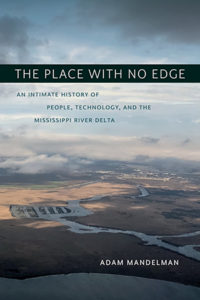 Adam Mandelman, The Place with No Edge: An Intimate History of People, Technology, and the Mississippi River Delta (LSU Press, 2020)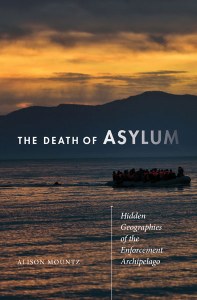
 Late last month, a bellwether event took place in Kansas, threatening higher education’s ability to support post-COVID recovery. Citing the extreme budget constraints caused by the pandemic, the nine-member Kansas Board of Regents unanimously approved a new policy giving public institutions the power to remove faculty, including those with tenure, through 2022. The new policy sidesteps one already in place that addresses financial emergencies while preserving transparency and faculty participation in termination decisions.
 The most recent issue of The Professional Geographer has been published online (
 In addition to the most recently published journal, read the latest issue of the other AAG journals online:
 The 2023 Special Issue of the Annals invites new and emerging geographic scholarship situated at the crossroads of Race, Nature, and the Environment. In seeking contributions from across the discipline, we welcome submissions that advance critical geographic thinking about race and the environment from diverse perspectives and locations; that utilize a broad array of geographic data, theories, and methods; and that cultivate geographic insights that cut across time, place, and space. Abstracts of no more than 250 words should be submitted by e-mail to
  The American Association of Geographers, in partnership with the Center for Spatial Studies at the University of California Santa Barbara and with support from Esri, will launch a series of webinars on key considerations for GeoEthics. The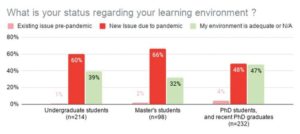
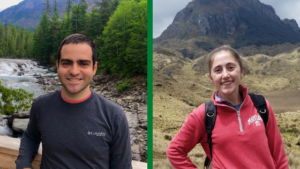 The AAG is excited to welcome two new interns coming aboard our staff for the Spring 2021 semester! Joining us this semester are Ilan Gritzman, a recent graduate from University of Central Florida, and Jennifer Church, senior at The University of Maryland.
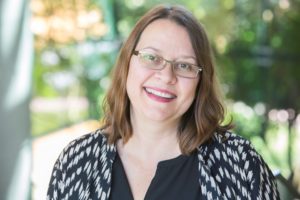 Linda Peters was inspired by her work with the March of Dimes Birth Defect Foundation to integrate geography and GIS in finding solutions for fundraising in areas of need. Today Linda holds a B.A. in Geography and Certificate in GIS/Cartography from University of Maryland Baltimore County and works as a Global Business Development Manager for Esri. Linda knows that most issues she comes across with her customers can benefit from spatial analysis, so she recommends strong communication skills and a willingness to put in the work and listen as keys for a successful career.
 The National Center for Research in Geography Education is organizing a research group to conduct a comprehensive analysis of AP Human Geography course data. Grants of $4,000 each are available for up to four researchers to join the study. For more information on how to apply, see this Dear Colleague Letter:
 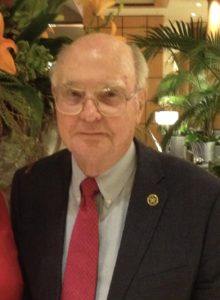 William Dando, 50 year AAG member and longtime chair of the Bible Geography specialty group, passed away on January 1, 2021. Throughout his career Dando received numerous awards for his teaching and service throughout his career, exemplifying an academic life that was a balance between scholarship and community service. He leaves behind his wife and co-writer/editor Caroline Z. Dando; children Christina, Lara, and Bill (all geographers); four grandchildren — Emmaline, Anna, Alex, and John; and thousands of former students and mentees.
 This is Part 2 of a two-part column I started last month on what geography departments can do (and should not do) to advocate for their work in budget talks, which are all the more crucial during the COVID-19 pandemic.
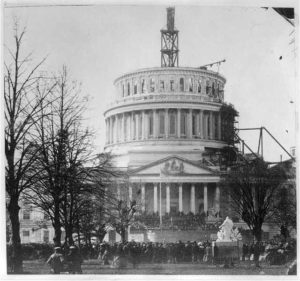
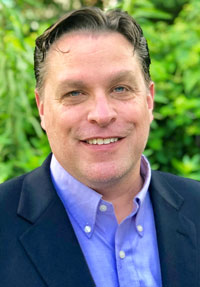 The insurrection at the United States Capitol on January 6th was equal parts terrifying and disorienting. As always, during a crisis, it takes time for the full story to emerge, but a few things are clear now: words and principles matter, and unity can only occur after accountability. These events heighten our appreciation of the delicate nature of democracy and the critical role of a well-informed populace.