An Interview with AAG Executive Director Gary Langham (Part 1)

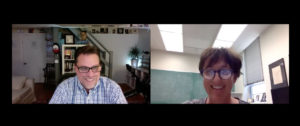
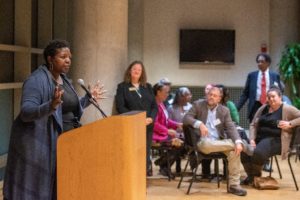
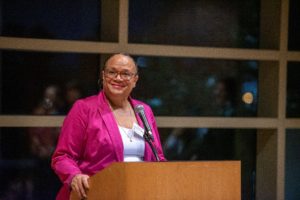
While the AAG membership elects some of its governance (i.e. president, vice president, Council), the temporal constant in leadership is the Executive Director (ED). Historically, his tenure spans multiple presidents and many dozens of councilors. Since COVID-19 has prevented our new ED, Gary Langham, from meeting the membership and vice versa, I decided to interview him as an introduction into learning a bit about his perspectives, goals and personal history that led him to AAG.

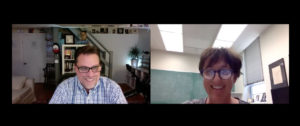
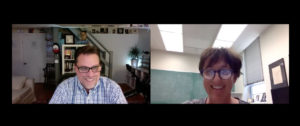
We met on Wednesday, Aug. 19, which not coincidentally is the one-year anniversary of his first week in this role—half of which has been during the coronavirus pandemic. The interview lasted for over an hour, generating far too much to publish as a single column. So, I will cover the interview in two columns beginning with this piece as a summary of his path that led him to AAG. I have edited my questions and Gary’s comments below for brevity and clarity.

AMY: Let’s just start with some basics, like your background, the area of your formal training, and your experiences that led you to AAG.

GARY: I grew up in Sacramento, CA, within an academic family. My dad was a Ph.D. botanist and his father had a Ph.D. in plant genetics, so acquiring my own Ph.D. seemed natural to me. Looking into the future one could never know, but in hindsight this makes sense.

My dad and grandfather had interesting backgrounds. My grandfather, originally an Iowa farm boy, had to find a new path when the family farm was lost during the depression. Eventually, he ended up at Cornell University in Ithaca, NY, in the early 1930s where he was the first Ph.D. recipient in plant genetics. Upon graduation, the government of Venezuela asked him to move there and lead a program for crops and genetics. He agreed and asked my grandmother, then a nurse, to marry him. They decided to go, despite speaking no Spanish at the time, and had four children there over the next 20 years.

During this time, he also became known as the father of the sesame seed. Sesame lays down its seed in pods that shatter when ripe, making it very time consuming to harvest. My grandfather was the first to find a variety that would open enough for machine harvesting, but not enough to lose the seeds. This side of the family continued researching and perfecting varieties of sesame for many years.

In addition to his scholarly abilities, my grandfather had an entrepreneurial spirit. Soon after he got there, oil production was booming in Venezuela, leading to a massive economic boom. He founded four large plant nurseries, supplying the growing numbers of businesses, hotels and factories around the country.

My dad was born and raised in Venezuela working in his dad’s plant nurseries. When my dad was 15, he went to the United States for the first time to finish school and later attend college. Inspired by what he learned from my grandfather, he sought his Ph.D. in plant biology and ecology. My father then taught at California State University in Sacramento for 38 years. He preferred teaching much more than research. I had the good fortune of growing up accompanying him on his botany and ecology field trips. We were around college students all of the time. During the summers, they would visit one day a week, so I grew up immersed in his love of teaching.

When I was seven years old, my dad discovered birding. He had been playing semi-pro ice hockey for fun, but he was getting too old and he wanted something else to do. He was also tired of the students asking what all the birds were on the field trips. So, he took this bird watching class. And it sounds silly to go from hockey to birding, but there is a whole world of competitive birding. Who knew?

What that meant for me, because he was so competitive, is whether I felt like it or not, I was in the back of a car going to look for birds every weekend from age seven to 13, and going all over the country traveling a lot with my parents. It was a lot of driving though, and I didn’t always love it. And of course, when you’re a kid, you absorb everything that you’re exposed to. So, now I was getting exposed to people, showing slides about birds and these professors would come over and they talk about their trips around the world. And, it was a great way to grow up. When I was 15, I started going back to Venezuela with my father. That was the first time my dad had been back in 30 years, and I kept going back for at least a month every year for the next 20 years.

Soon, he and I started leading birdwatching tours. Surprisingly, many people want to see birds bad enough that they will hire experts to show them all the species. Because I had spent so much time doing this, by the time I was 18 I was able to do it professionally. That’s how I put myself through college, leading trips all summer and over winter break. And, I did that for many years. When I came to my own schooling, I started off as an English major, finished that coursework and thought I was going to go to law school and do environmental law.

So, I was doing these birding tours, often with lawyers, and they’re like, “yeah, don’t do law school. Don’t do what I do. You should do birds or something like that. You should do ecology or conservation.” And, so I stayed on in college for a whole other major in biology. And, because I was putting myself through school with these tours, I could. I wasn’t in a hurry because I was getting paid to travel four months a year. In your twenties that’s really fun. Then I went back to college and took a class in, say, mammalogy, and then went all over the Americas seeing the mammals in the field. We were working all over the Americas: Canada, Costa Rica, and California in summer, and seven different trips in Venezuela that would rotate three per year over winter break.

This was an awesome way to grow up and go to college. But, eventually, I thought I’m just going to get a Ph.D. too. And what was great is because I had so much experience in South America already, it was easy to convince my advisers that I could go off and do research in South America because I’d already been doing it, essentially, for years. And it didn’t sound like a big risk. So, I got lucky and got into, arguably, the best ornithology program in the world at Cornell University. That was just a great experience. Although my Ph.D. is in ecology and evolutionary biology, I studied birds in South America.

Ecology spoke to my wide range of interests. And, just like with geography, you can never get bored with it because there’s so many different facets to it. After seven field seasons in Venezuela, Bolivia, and Peru, I wanted to go somewhere else. So, I did an NSF bioinformatics postdoc through UC Berkeley, with two years in the field and Queensland, Australia doing climate change research in the Wet Tropics and then a year back at Berkeley. Finally, I started working at Audubon, bringing birds, biology and policy together in conservation. Audubon was my job for 12 years before I started at AAG.

AMY: Actually, that was great. As you were relaying your story, I kept thinking about how your path seemed to be laid out for you. And, I feel like I just fell into geography. I spent my early life walking around in circles trying to figure out what I was going to do until I found this magic thing called geography. It just basically landed in my lap in college. And, then it transformed me.

At this point, our conversation transitioned to AAG, Geography, and higher education. I’ll continue the interview in a later column in which Gary will highlight his vision and goals for AAG.

—Amy Lobben
AAG President and Professor at University of Oregon
lobben [at] uoregon [dot] edu

DOI: 10.14433/2017.0078

    Share

News from the Human-Environment and Geographical Sciences (HEGS) Program at the National Science Foundation (NSF), September 2020

Update 9/15/2020: In response to concerns raised by members of the AAG, the NSF has clarified its announced changes to the Human-Environment and Geographical Sciences program (HEGS), formerly known as the Geography and Spatial Sciences program (GSS). 

AAG appreciates the time many of our members have taken to bring  questions and concerns about the program changes to light. The NSF’s Program Officers are available to provide answers and assistance in preparing proposals (email for the program and program guidelines are at the end of this clarification). 

Clarification from National Science Foundation: The repositioning of the Geography and Spatial Sciences program (GSS) to the Human-Environment and Geographical Sciences program (HEGS)

Over the past several years, NSF’s Directorate for Social, Behavioral and Economic Sciences (SBE) has repositioned several programs to better reflect the science supported by those programs and to make their value more apparent to a broader audience. Nearly all NSF program names draw attention to what researchers do or why it matters. As a result, most programs are no longer named solely after disciplines. These changes bring SBE into closer alignment with long-held program naming practices at the rest of NSF. This provides more opportunities for researchers to conduct innovative and valuable work and for NSF to more effectively communicate the value of the research that it supports.

The name change from Geography and Spatial Sciences (GSS) to Human-Environment and Geographical Sciences (HEGS) represents a more holistic perspective that considers the broad range of topics that enhance fundamental geographical knowledge, concepts, theories, methods and their application to societal problems and concerns. With the increase in convergent programs across NSF directorates such as Dynamics of Integrated Socio-Environmental Systems (DISES), Coastlines and People (CoPe), Sustainable Regional Systems (SRS) and Navigating the New Arctic (NNA), geographers stand uniquely situated to participate in such endeavors. At the same time, the inclusion of the term “Geographical Sciences” in the new program title signals the sustained and continued support of geography. In line with NSF’s mandate to support basic scientific research, HEGS-supported projects are expected to yield results that enhance, expand, and transform fundamental geographical/spatial theory and methods, and produce broader impacts that benefit society.

HEGS (previously GSS, and before that Geography and Regional Science-GRS) recognizes that geography is a broad discipline that includes the natural sciences, the social sciences and the humanitiesWhile HEGS continues to consider proposals that cover research in human geography, HEGS does not fund research that engages predominantly humanistic, non-scientific framings and methods. This has always been the case and is not a new policy or a change in requirements for proposals submitted to NSF. HEGS has always stressed to PIs that their proposals must focus on the scientific aspects of a project, including clearly articulated questions or hypotheses, methods and a corresponding data analysis plan that can provide answers to those questions. HEGS program staff have noted a steady increase in predominantly non-science-oriented proposals. It is important to note that this repositioning is not a judgement on the value of such scholarship or its practitioners. HEGS will continue to accept proposals that creatively integrate scientific and critical approaches. Prospective PIs are encouraged to visit the HEGS website and explore the diverse research and PIs that have been recently funded by the program.

The repositioning of HEGS also reflects the breadth of research appropriate for submission to the programs. HEGS is situated in the Behavioral and Cognitive Sciences Division of SBE and thus research projects submitted to the program must illustrate their relevance and importance to people and societiesIf a proposal is not well-connected to social or human dimensions, the proposal could be more appropriate for other programs at NSF. For example, bio-physical science is supported by programs in the Division of Environmental Biology in NSF’s Biological Sciences Directorate, and physical science is supported by programs in the Division of Earth Sciences (e.g. the Geomorphology and Land-use Dynamics Program) in the Geosciences Directorate.

Potential investigators are encouraged to contact a HEGS program officer with questions about whether their proposal would be considered by HEGS. Email hegs-info [at] nsf [dot] gov with a two-page (maximum) attachment outlining the research question(s) or hypotheses, the intellectual merit and anticipated broader impacts of the project, as well as the methods and anticipated data and analysis.

Scott M. Freundschuh, HEGS Program Officer

Sharmistha Bagchi-Sen, HEGS Program Officer

Antoinette WinklerPrins, Former GSS Program Officer and current Deputy Division Director in BCS

FAQs 

overview of guidance 

detailed guideline

***
Original announcement: Announcing Staff Changes in HEGS

Scott Freundschuh continues as HEGS Program Director.

BIO: Scott M. Freundschuh holds a Ph.D. in geography from SUNY Buffalo. Scott is a cognitive geographer, specializing in spatial cognition as it relates to types of spatial knowledge and their structures, geographic scale, spatial concept development and understanding, and spatial skills development. He is a faculty member at the University of New Mexico.

Sharmistha Bagchi-Sen joins HEGS as new Program Director.

BIO: Sharmistha Bagchi-Sen holds a Ph.D. in geography from the University of Georgia. Her research interests include the geography of innovation, geographic implications of industrial evolution with a focus on bio-pharmaceuticals, agri-bio, and bioenergy sectors, energy transitions, foreign direct investment in the United States, and socioeconomic implications of urban-regional population shrinkage. She is a faculty member at the State University of New York-Buffalo.

Kendra McLauchlan is now a permanent Program Director in the Division of Environmental Biology and works closely with HEGS.

BIO: Kendra K. McLauchlan holds a Ph.D. in ecology from University of Minnesota. Kendra is a physical geographer, specializing in reconstructing North American paleoenvironments as recorded in lacustrine sediments and dendrochronological records. She holds an adjunct appointment as a faculty member in Geography and Geospatial Sciences at Kansas State University.

HEGS Program Director Jacqueline (Jackie) Vadjunec has returned to Oklahoma State University where she has been promoted to full professor. Congratulations Jackie!

From GSS to HEGS – Why the Change?

The change from Geography and Spatial Sciences to Human-Environment and Geographical Sciences at NSF is the result of efforts within the Social and Behavioral Sciences Directorate to reposition programs so that they align with the mission of the Directorate. Geography is a broad discipline, spanning multiple paradigms and topics ranging from purely process-oriented biophysical geography to post-modern, humanistic geography. However, not all geographic scholarship is a good fit at the National Science Foundation (NSF). The name change articulates more clearly the human, environmental, and geographical sciences that are appropriate for funding at NSF. This change reflects NSF’s mission to “promote the progress of science; to advance the national health, prosperity, and welfare; and to secure the national defense” and also HEGS’s location in the Division of Behavioral and Cognitive Sciences (BCS) in the Directorate for Social, Behavioral, and Economic Sciences (SBE).

In general, research that is predominantly post-modern, post-structural, humanistic etc., is not a good fit for NSF. As noted in the solicitation, “A proposal to the HEGS Program must explain how the research will contribute to geographic and spatial scientific theory and/or methods development, and how the results are generalizable beyond the case study.” If research is more biophysical or process oriented, but aspatial and/or not well-connected to social or human dimensions, the proposal could be more appropriate for other programs at NSF. For example, bio-physical science is supported by the programs in the Division of Environmental Biology (DEB) directorate, and physical science is supported by the Geomorphology and Land-use Dynamics (GLD) program. When considering the fit of research at NSF, it is useful to understand the overall institutional architecture of the Foundation.

Potential investigators are encouraged to contact a HEGS program officer with questions regarding the fit of their research in HEGS. Please send an email inquiry to hegs-info [at] nsf [dot] gov with no more than a two page attachment that outlines the research question(s) or hypotheses, the intellectual merit and anticipated broader impacts of the project, as well as the methods and anticipated data and analysis.

You can find the new HEGS solicitation here.

You can find the HEGS FAQ here.

Other Funding Opportunities at NSF

Dynamics of Integrated Socio-Environmental Systems (DISES) Program

Navigating the New Arctic (NNA) Program

Coastlines and People (CoPe) Program

Build and Broaden DLC

Contact information for HEGS Program Directors is hegs-info [at] nsf [dot] gov.

    Share

Marshall E. Bowen

Marshall E. Bowen, an emeritus professor in the Department of Geography at the University of Mary Washington, passed away at his home on August 19, 2020. Professor Bowen received an undergraduate degree from Plymouth Teachers College (NH), a masters from Kent State University (OH), and his doctorate from Boston University. He joined the faculty at Mary Washington in 1965 and retired in 2001.

Professor Bowen was known as a scholar of vacant lands in the American west, most notably Elko County, Nevada, and Park Valley, Utah, writing over 40 articles and a book. He authored Utah People in the Nevada Desert (Utah State University Press, 1994) and articles in the Western Historical Quarterly, Utah Historical Quarterly, Nevada Historical Society Quarterly, Agricultural History, Material Culture and the Journal of Cultural Geography. His article, “Crops, Critters, and Calamity: The Failure of Dry Farming in Utah’s Escalante Desert, 1913-1918,” received the Ray Allen Billington Award for the best journal article in western history in 1999 from the Western History Association. His article, “The Russian Molokans of Park Valley,” received the Nick Yengich Memorial Editor’s Choice Award for the best article appearing in the Utah Historical Quarterly in 2015 from the Utah State Historical Society. In 1999, the Pioneer America Society, of which he was a long-term member presented him with the Henry H. Douglas Award for outstanding achievement in research, teaching, and service.

He taught thousands of students over his 36 year career at Mary Washington, packing the basement lecture hall in Monroe Hall with well over 300 students each semester as he shared his passion for places across North America. He also taught seminars in Historical Geography, and early in his career taught the Geography of Asia as well courses in physical geography. Some of the most life-changing experiences for students were shared by those who had the opportunity to take his summer field course to the American West throughout the 1970s. Many of those students went on to pursue advanced degrees in Geography. In 1987, he received the Grellet C. Simpson Award for Excellence in Undergraduate Teaching, followed by the Mortar Board Outstanding Professor Award in 1991.

An avid basketball player, Professor Bowen also served as the first men’s basketball coach at Mary Washington until 1976. Forty-five years later, many of those players remained a part of his life and hold frequent reunions to reminisce.

Professor Bowen is survived by his wife, Dawn, a Professor of Geography at UMW, a son and two daughters, and four grandchildren. A memorial service will be planned for a future date. The family requests that expressions of sympathy be in the form of contributions to the Geography Alumni Scholarship, University of Mary Washington Foundation, Jepson Alumni Executive Center, 1119 Hanover St., Fredericksburg, VA 22401-5412.

    Share

Robert Smith

Robert (Bob) Wheeler Smith died on August 13, 2020 in Grantsville, MD. He was 70 years old.

Born in Glen Rock, NJ, Smith received his Bachelor of Arts degree from Bucknell University, in Political Science. It’s said that he was so taken with his political geography class textbook that he looked up its author, Louis Alexander at the University of Rhode Island, and subsequently went there to receive his Master’s degree in Geography. He earned his PhD in Geography from the University of North Carolina, Chapel Hill.

Smith joined the State Department just before the UN Law of the Sea Convention was finalized in 1982, and devoted his career to maritime boundaries. His extensive international assignments included work on treaties with Mexico, Canada, the former USSR, and Kiribati. He authored many papers in the State Department series “Limits of the Seas.” He co-authored “Excessive Maritime Claims” and co-edited the multi volume International Maritime Boundaries.

During his career, he taught classes at Georgetown University, George Mason University, and the University of Virginia.  His favorite teaching experience was the Semester at Sea Program, which he taught after his retirement from the State Department.

Smith consulted for numerous countries on their own maritime boundaries, spending time at the Hague at the International Court of Justice and in Hamburg at the International Tribunal for the Law of the Sea.

Smith is survived by his wife Sandra, brother, Arthur Smith, daughters Laura and Tesia, and son-in-law Federico Guerrero. He is predeceased by his parents, Arthur and Carolyn Smith, and his brother, Frederick Smith.

    Share

Marvin Creamer

Marvin Creamer, a geographer and skilled sailor who completed a two-year circumnavigation of the globe in 1984, without any instruments at all, died on August 12, 2020 in Raleigh, North Carolina, after a brief illness. He was 104 years old.

Creamer, born in 1916 in Salem County, New Jersey, was a graduate of Glassboro State College, now known as Rowan University. He stayed on as a professor, establishing the Geography Department as its first chair in 1970 and received numerous honors up until his retirement in 1977. He was awarded an honorary doctorate degree in the humanities in 1980. Creamer also had graduate degrees in education and geography from the University of Pennsylvania and the University of Wisconsin.

An avid traveler by both land or sea, Creamer was best known for his extraordinary sailing feet aboard the 26-foot Globerstar, a voyage that he completed when he was nearly 70 years old. His life and adventure were covered by the New York Times, The Economist, and perhaps most importantly, Cruising World.

He was married to Blanche Layton Creamer in 1946 (deceased 2005) and is survived by his sister Evelyn Creamer Daniels; children Andra Creamer Hohler James (David), Lynn Creamer Borstelmann (Tim), and Kurt Creamer (Melissa); grandchildren and step-grandchildren Peggy James, Star Schreier Nixon (Matt), Evan Schreier, Vaughn Creamer, John Borstelmann, Kathryn Jeffery, Maggie Creamer, and Daniel Borstelmann; great-grandchildren Charlotte Nixon and Logan Nixon. He is survived also by his wife of 10 years, Elaine Gillam Creamer.


    Share

The Invisible and The Silent

I am the parent of an adult child with intellectual and developmental disabilities and have spent the past two decades watching how society (dis)engages with him. People avert their eyes. People pretend not to see him.  People give him a wide berth in store aisles.

Some adults demonstrate shockingly bad behavior when he makes his noises or rocks back-and-forth. They display disapproval of his imperfect body and social conduct with facial expressions, comments, or gestures—such as picking up their groceries and moving to another checkout line. My reaction is a swift but reasonably (I think) calm tongue-lashing. Then, I always tell myself I won’t make a public display again. But I do.

Believe it or not, I’m happy when kids stare. At least they’re acknowledging his presence. And Jeffrey loves social interaction, if given the chance.

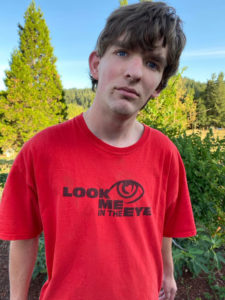
Amy Lobben’s son, Jeffrey, is wearing one of his favorite shirts.

That Jeffrey is singled out like this reflects how our society is obsessed with physical perfection. Examples are too numerous to list. Vanity sizing is just one example. Is that international? If not, I’ll explain. In America, as bodies get larger, sizing gets smaller. A women’s size 6 today was a size 12 fifty years ago. Because…we cannot have socially defined “imperfections” in our bodies. So, the fashion industry wisely adjusts their sizing over the years. It is remarkable how I have been a size 6 my entire adult life (I hope you hear the sarcasm regarding myself).

Society trains us to have low tolerance of imperfections in our own and others’ bodies. It’s no wonder that in the race to perfection, those with physical imperfections are ultra marginalized by society. And if we are intolerant of weight gain or imperfect eyebrows, imagine how intolerant we are with non-functioning eyes or legs. We have been taught to actively ignore those imperfections and the bodies they’re attached to. Even being near such a person in a grocery line is unendurable. The only distance at which this imperfection can be tolerated is so far away as to be indiscernible. It is the spatial scale of exclusion.

And that’s when it happens. People with disabilities become invisible. Through able-ism, they are silenced, left alone past the detectable edges of the universe that able-bodies and able-minded individuals inhabit.

Fortunately, an increasing number of countries have laws that protect the invisible and silent. In the United States, for example, organizations are required by law to make reasonable accommodations for people with disabilities.

Of course, “reasonable” is vague and open to opinion. For example, under the cover of “reasonable,” the state of Alabama developed their ventilator rationing policy, which said: “Persons with severe or profound mental retardation, moderate to severe dementia, or catastrophic neurological complications such as persistent vegetative state are unlikely candidates for ventilator support.”

Horrible, right? Let us not cast our righteous stones. Alabama was not alone in developing policies for ventilator support that excluded people with imperfections. Fortunately, disability advocacy groups and the U.S. Health and Human Services Department have now ensured that ventilator policies don’t discriminate based on imperfection.

The American Association of Geographers is not immune; historically, it has not been welcoming of people with disabilities. At the same time, we have mostly not been overtly discriminatory. There is no need for intervention by the U.S. Department of Health and Human Services. But we have created a culture and a structure that presents barriers to inclusion and participation of people with disabilities. For example:

  1. Cost of our annual meeting remains a persistent (and often vocal) concern for many AAG members. AAG responds to this concern and attempts to defray costs when possible. Some strategies include:  booking venues off-season, booking older venues, and including multiple locations in a single meeting. All of these strategies address membership demands to keep costs down. But, the result is an increase in barriers to participation for people with disabilities.  Remember Denver 2005? Or Las Vegas 2009? Even without disabilities, it’s pretty hard to get around in a blizzard or between venues that are over 1km apart. How many times have you experienced overcrowded stairwells between sessions because the elevators were unable to support capacity? These are trade-offs that most membership welcomes in AAG’s responsive efforts to defray conference fees.
  2. The AAG website is a disaster and does not come close to providing Universal Access. It’s not even screen-reader compliant. We are unique in our antiquatedness relative to most other large, professional organizations. This is ethically unacceptable and, for an organization that is always worried about recruiting more people to Geography, it’s not even good business.
  3. The physical headquarters of AAG is Meridian Place. It’s far from being ADA compliant. People who use manual or motorized wheelchairs cannot enter the front door.

Why is this the current state of AAG?  Historically, our collective membership has relegated issues of accessibility to the margins in favor of other priorities, such as saving money.

Fortunately, many accessibility issues are now being addressed by our new Executive Director, Gary Langham, and the AAG staff. For example, for the first time in my over 25 years in attending AAG meetings, child care for older children with disabilities was offered for the Denver 2020 meeting. Unfortunately, because of Covid, no one attended that meeting in person. But, the precedent was set. Don’t underestimate how big of a game-changer this support is for parents of older children with disabilities. For me, traveling as a parent of an older child with intellectual and developmental disabilities frequently represents an impossible obstacle. I’ve missed AAG meetings over the years because I couldn’t find support at home and because my son was too old for the child care provided by AAG.

As for examples two and three, though no concrete designs are yet in place, both website and Meridian Place renovations are actively being planned. ADA compliance and Universal Access are major parts of the discussion.

I am also delighted to announce that the AAG Council has unanimously supported the formation of a new AAG Accessibility Task Force. The members will identify the most pressing barriers to access within the AAG and develop strategies and guidelines to inform website design, building renovation, conference venue choices, and practices at conferences that enhance access.

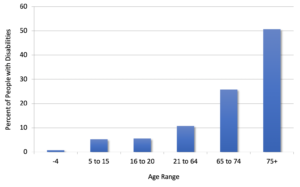
I will always argue that supporting access for even one person with disability justifies great effort. However, if numbers are important to justifying the effort, we should consider why persons with disability are such a small proportion of AAG membership and conference attendance. For example, each year prior to the annual conference, AAG asks members for accommodation requests. Few requests are made. But, according to the Institute on Disability, the overall rate of people with disabilities (in the U.S.) is almost 13%. Disaggregated, disability increases dramatically by age. The most common disability reported is ambulatory.

But, AAG does not receive accommodation requests from 13 percent of the attendees (i.e. equivalent to disability prevalence in the overall population). Perhaps the disability rate for geographers is shockingly low? I doubt it.

July 26 was Disability Independence Day, commemorating the signing of the Americans with Disabilities Act that was signed on the same day in 1990. Yet, this day seemed to come and go with little notice. How many people did you hear talking about it, marching about it, let alone celebrating it? As we experience the wave of social justice demanding amplification of marginalized voices, an important perspective is missing.

For too long AAG members with disabilities have been kept invisible and silent. Based on my brief tenure as Vice President and President, I have learned that many such individuals left the organization or stopped coming to conferences when barriers become too overwhelming. The Accessibility Task Force will advocate for AAG members with former and current disabilities, as well as that large portion of us who will, based purely on statistics, develop future disabilities. If we wish to have true lifetime members, we need to get ready now.

The task force’s charge over the next two years is to identify barriers and develop remediation recommendations, to move beyond the ADA and what is required by law to create true opportunities for access and inclusion for people with disabilities. We’re at the start of new AAG leadership and experiencing a nationwide awakening to the damages of exclusion and social injustice. Yes, there is much work to be done. But as we enter the dawn of the new decade, I am profoundly optimistic that this dawn will cast a bright light that makes us see those with disability and the barriers that prevent them from being in the AAG, the discipline of geography, and our society at large.

This is when the invisible become visible.

And that is when we as individuals and the AAG become true facilitators to access.

— Amy Lobben
AAG President

DOI: 10.14433/2017.0077

    Share

Leonard Kouba

Geographer Leonard Kouba died on July 15, 2020. A longtime  professor at Northern Illinois University until 1993, he was 82.

Kouba, who specialized in African geography, was an avid traveler, fisherman, and big-game hunter. He visited approximately 120 countries in his lifetime. He was a past recipient of NIU’s Excellence in Undergraduate Teaching Award. He established the Leonard J. Kouba Geography Graduate Student Fund to provide scholarships and other resources for graduate students in his home department at NIU.

    Share

AAG Welcomes New Editor of AAG Review of Books, Thanks Outgoing Editor

The AAG is pleased to announce Debbie Hopkins as the new editor of the AAG Review of Books. The AAG sincerely thanks founding editor Kent Mathewson, whose vision and ideas have shaped the AAG Review of Books since its beginnings eight years ago. Hopkins will take the helm when Mathewson steps down on July 1.

As the new editor of The AAG Review of BooksDebbie Hopkins brings a background in research, teaching, writing, and editing on transport and mobilities, sustainable urban development, low carbon transitions, and mobile labor. She is an Associate Professor in Human Geography at the University of Oxford, UK, jointly appointed between the School of Geography and the Environment, and the Sustainable Urban Development (Department of Continuing Education) program. She completed her master’s degree (Geography, with distinction) at King’s College London in 2010, PhD at the University of Otago (New Zealand) in December 2013, and postdoctoral training at the Centre for Sustainability (Otago, New Zealand, 2014-2016), and the Transport Studies Unit, University of Oxford (2016-2017).

In addition to her responsibilities at the AAG Review of Books, Hopkins is the Associate Editor (Transport and Mobilities) of the Journal of Sustainable Tourism and sits on the editorial board of the Journal of Transport Geography. She has also been part of several large research centres and grant applications, including the Energy Cultures project (2013-2016, Otago), the Centre for Innovation and Energy Demand (2016-2018, Sussex, Manchester and Oxford), and the Centre for Research on Energy Demand Solutions (2019-2022, multi-institutional). In addition to this, she leads research on low-carbon transitions, labor and mobilities, largely in relation to freight/trucking and waste. She has co-edited two books: Low Carbon Mobility Transitions (GoodFellow Publishers, 2016) and Transitions in Energy Efficiency and Dema

nd (Routledge (Open Access), 2018).

Kent Mathewson is former Fred B. Kniffen Professor in the Department of Geography and Anthropology at Louisiana State University. Mathewson helped start the AAG Review of Books in 2012, and has also been a book review editor for other publications such as the Annals of the AAGHistorical Geography, and Geographical Review for the past 25 years. His founding of the AAG Review of Books is rooted in his conviction that the books geographers publish are the discipline’s face to the world and offer a guide to measure progress in the discipline. AAG wishes him well and reiterates our thanks as he steps into retirement from both LSU and the AAG Review of Books.

Published quarterly, the AAG Review of Books is a special journal highlighting recent texts in geography and related disciplines. The journal features book reviews by geographers and other scholars at various points of their academic careers. We look forward to working with Dr. Hopkins.


    Share

The Spatial Scale of ‘We’

Every day around my town, I see signs of encouragement, most frequently — “We’re All In This Together.” That statement refers to the coronavirus pandemic, suggesting and assuming that we are all equally engaged in and affected by the pandemic. Similar messaging is delivered via emails, websites, and store speakers. Oregon’s public campaign takes the messaging even further, reminding us that “It’s up to you how many people live or die,” staying home ensures that we “don’t accidentally kill someone today.”

This messaging is clearly not limited to Oregon. We’re bombarded with fearful and dire characterizations of the force and magnitude of coronavirus. World leaders are asserting that coronavirus is “the worst public health crisis for a generation” (Boris Johnson), “we are at war” (Emmanuel Macron), or labeling themselves as “a wartime president” (Donald Trump).

At war? In his Nobel Peace Prize Acceptance Speech, President Barack Obama summarized the conditions under which war is justified: if it’s a last resort, if force is proportional, and if civilians are spared from harm (i.e. collateral damage). He further reflected that throughout history, the notion of “just war” was rarely observed. Our world leaders are certainly invoking rhetoric of war to muster broad public support for their unprecedented actions in the fight against coronavirus. And, polls seem to show that we support these actions. Therefore, we are obliged to ask ourselves whether our actions are, in fact, just.

The World Health Organization collects and maintains statistics on pandemics, epidemics, endemics, and outbreaks. As only a few examples, in 2018 405,000 people died from malaria (out of 228 million known cases) and 1,500,000 people died from tuberculosis (from 10,000,000 known cases). The United Nations reports that 9,000,000 people die of hunger every year (out of over 820 million people who are chronically hungry).  This already calls in question Boris Johnson’s assertion that Covid-19 is “the worst public health crisis for a generation.” But now include lockdown-related collateral damage and the UN predicts that the global coronavirus lockdowns will drive an additional 130 million people to the edge of starvation. The World Health Organization estimates that an additional 1.4 million people will die from tuberculosis as a direct result of the global lockdowns. The impact on other indices of health is dizzying, with surges in suicide, domestic violence, and mental health problems (the United States Centers for Disease Control reported in May that one-third of Americans are experiencing Generalized Anxiety Disorder, with rates higher for women, people of color, and people with less education). Factor-in unprecedented unemployment directly tied to coronavirus lockdowns that is surging across class, race, and gender lines, disproportionately affecting women, people with disabilities, and people of color. They bear the brunt of the crisis while we are protected in lockdown.

Apparently, this is what we accept as collateral damage in this war.

So, why doesn’t the world respond in the same way to malaria, tuberculosis, or starvation as it does to COVID-19? The answer is quite simple. Coronavirus has the audacity to attack wealthy white people. It affects visible people, rich people, important people, even world leaders. Those other maladies are primarily relegated to poor people in poor nations. In response to “the worst public health crisis for a generation,” these affected wealthy people adopted a large-scale extraordinary means in the “war” against coronavirus, while other maladies and the less privileged find funding and assistance dwindling. Lucica Ditiu, executive director of Stop TB Partnership succinctly summarizes the disparity.

“TB has been with us for thousands of years. For 100 years we’ve had only an infant vaccine and we have two or three potential vaccines in the pipeline. We look on in amazement at a disease that is 120 days old and it has 100 vaccine candidates in the pipeline. This is really fucked up.”

Ditiu’s statement illuminates the otherness in we. It illustrates the fluidity of how we define we. As a Geographer, I’m struck most by the sudden collapse of the social and spatial scale that defines the we in the rhetoric “we’re all in this together.” Shrinking the scale of we is demanded by our political leaders and supported by our society. But, usually, we lead very interdependent international-scale lives. Our political, economic, and social systems have created an international civilization that mandates the spatial scale of we to be global.

Or does it?

What happens when the we who are threatened are defined by ever-shrinking social and spatial scales of privilege? In the face of a pandemic, the admission to the world of we who can engage in lockdown is brutally strict. The more people we allow into our we, the less safe we are.  It becomes necessary to expand the margins of “other” in our effort to define and protect the we.

We have been told that saving lives is more important than the economy. Whose lives? This new we defined by coronavirus is the very essence of privilege, including only those who have the choice to stay at home. And even among those with housing, it works only for those who remain employed and have a home that is uncrowded, safe, non-violent, clean, warm, and well stocked with food and potable water. Our we excludes any of those who cannot participate in the lockdown. This means that we accept a giant portion of the world’s population being collateral damage in this war against coronavirus.

During Spring 2020, I have watched with distress at how easy it has been for the privileged to re-shape their we to a remarkably small spatial and social scale. I’m further horrified by the acceptance of collateral damage that has been caused by the systematic and intentional re-forming of that we. But, of course, the idea of we is fluid. It always has been. Throughout history, membership in we has been defined by spatial and social boundaries. Coronavirus has just created another boundary defining a we: those who benefit from lockdown and those who are collateral damage from lockdown.

We’re all in this together?

No. We are not.

— Amy Lobben
AAG President

DOI: 10.14433/2017.0074

    Share

Summer Series on questions of Geoethics and Human Rights highlighted by COVID-19 Conditions

By Coline Dony and Emily Fekete

This series developed from discussions that took place at the AAG’s Virtual Annual Meeting, April 6-10, 2020, during publicly available panels of the breaking theme “Geographers Respond to COVID-19”. The panels were set up by AAG specialty groups and their chairs who wanted to initiate discussions about the ongoing pandemic using a geographic lens, showcase the application of geography to urgent issues, and to learn from the evolving circumstances to build future preparedness. Recordings of the panels are still available for anyone to watch.

The discussions raised important, high-stakes questions of ethics and human rights, including ecological-ethical dilemmas of geographical research; access to digital spaces as a vital right; higher education in internet-deserts; the unequal burden of diseases in urban settings; as well as ethics of animal testing for vaccine development. The breaking theme attracted about 1,050 live attendees across the nine panels and an additional 230 views of the panel recordings. As one of the founding members of the AAAS Science and Human Rights Coalition, the AAG is interested in bringing these important discussions to a broader audience.

We invited the panel organizers to write the pieces below to reflect on the ethical and human rights costs of advancing science in times of immediacy, such as COVID-19, when personal geographical data are abundant. We further asked them to reflect on the responsibility of geographers to the public?

‘Slow’ Geographies and Ecological-Ethical Dilemmas of International Research

By Ashley Fent, Joseph Holler, Christine Gibb, Sachiko Ishihara, and Bill Moseley. Sidra Pierson and Hannah Gokaslan contributed editing.

The novel coronavirus spread rapidly into a global pandemic on the heels of unprecedented global social and economic integration—including academic practices of research and education in distant field sites, networking for research collaboration, and dissemination at national and international conferences. In response to COVID-19, governments imposed lockdowns and travel restrictions, fracturing global integration and cancelling plans for field research and academic conferences. Our virtual AAG panel deliberated how geographers may ethically and responsibly sustain climate and development research from home, and the costs of limiting travel on research quality and individual careers.

The pre-COVID status quo of global integration, consumerism, and carbon-intensive capitalism has caused unprecedented global environmental change, increased economic inequality, and disproportionately affected marginalized communities. Geographers are complicit; we have developed long-standing research relationships in vulnerable communities through a global system of unequal mobility, access to resources, and consumption of fossil fuelsEmissions dropped during the pandemic, but economic recovery and stimulus threaten to return us to our pre-COVID collision course with climate change. Scientists and business leaders are calling on us to reject business-as-usual, inventory our value systems and build back a cleaner economy. Corbera and others advocate a new ethics of care in academic professions, echoing the Great Lakes Feminist Geography Collective’s call for slow scholarship.

While our panel shared concerns about the adverse climatic impacts of international travel, we recognized the benefits of being immersed in the communities whose challenges we seek to understand. We shared commitments to physical presence in international field sites for building relationships, serendipitous discoveries, and avoiding pitfalls of disembodied data; but we also recognized an imperative to reconsider our own professional practices. We debated strategies for limiting the ecological costs of our travel-intensive approaches: less frequent but longer research trips, in-country travel by bicycle or public transportation, and substituting in-person conference attendance and fieldwork with remote participation and collaboration.

Strategies to limit ecological costs of academic work also present discriminatory challenges. Longer research trips require substantial funding and time, good health, and freedom from caregiving responsibilities. Students gain valuable international experience facilitated by shorter field visits with faculty supervisors. Successful remote collaboration is easier when it is based on pre-existing in-person relationships, and therefore still requires upfront investments in research travel.

Panel participants raised concerns about neocolonial representations and practices of international fieldwork. The pandemic has highlighted extreme inequalities in health systems, economic relief options, and vulnerabilities within and between nations; yet the near-global travel restrictions have partially and temporarily leveled the playing field among academics usually characterized by highly differential mobilities. Facing the prospect of prolonged restrictions on international travel, we must develop different and more collaborative strategies for maintaining international research programs. These strategies may be less fulfilling or effective for those of us accustomed to hypermobility; however, they also have potential to improve equity in academia and bolster the research capacities and profiles of our academic colleagues in the Global South.

Finally, our panel noted the timeliness of a discussion on slow geographies and addressing ecological-ethical dilemmas of international research during a global pandemic. This forced experiment challenges us to transform our professional practices as geographers.

The discussions and work that contributed to this panel have been published in The Professional Geographer. Fent, A., C. Gibb, S. Ishihara, J. Holler, and W. G. Moseley. 2021. Confronting the Climate Crisis: Slow Geographies and Relational Approaches to International Research.

The Digital Divide and the Right to Safe Internet Access in Times of COVID-19

The activated “Corona-Warning App” that launched in Germany in mid-June 2020. Credit: Authors

By Elisabeth Sommerlad and Yossi David

The current coronavirus (COVID-19) crisis highlights the importance of access to the internet in everyday life. During the pandemic, the restrictions on freedom of movement around the world are offset through digital platforms for our basic needs. Interpersonal communication is increasingly taking place in the digital sphere, and the growing importance of digital spaces for the fulfillment of basic needs has become apparent (e.g., food supply, education, information, health care, welfare). However, this argument ignores people affected by digital inequalities. We argue that the COVID-19 crisis is a unique event that reveals various critical aspects that were easier to be disregarded in our previous, so-called “normal” lives. We call for reviewing prior norms and practices, addressing the importance of internet access in times of crisis, and focusing on three key elements of digital spaces: (1) the digital divide could constitute a violation of fundamental (human) rights, (2) the unregulated internet penetration could lead to a violation of the right to privacy and security, especially for vulnerable groups, and (3) the lack of systematic and reliable fact-checking is dangerous to the public, in light of (mis)information distributed by ordinary people and official figures. The observable developments of new digital spaces of flow make us call for a debate on safe internet access as a human right.

We propose not to consider access to information via the internet as a mere privilege. Instead, the current pandemic emphasizes the necessity of accessing vital services and accurate information online. The question arises as to the extent to which (inter)national communities have an obligation to provide their citizens with affordable and stable internet access and to device-based digital media, independent of place of residence or financial resources. While promoting this, it is essential to strengthen the transparency of digital platforms and the responsibility of involved players. This is aimed at establishing neutral and democratic means of media regulation to ensure privacy (e.g. protection of personal data) and cyber security. It is also intended to prevent the abuse of online data as (new) instruments of cyber surveillance and of social media to spread misinformation. When we look at the tensions triggered by the crisis, numerous ethical questions arise, which we should approach from a perspective that combines media geography and communication studies. Times of crisis reinforce social barriers, emphasizing gaps, inequalities, and vulnerabilities. In the context of COVID-19, social inequalities are escalating and tangible new dimensions of digital divide reveal themselves on a global and local level.

The advantages and disadvantages that crises bring to our lives also require a deeper involvement of human geography and media scholars in public and civic policy making. Critical perspectives are essential to ensure full and comprehensive awareness of the different facets of political instructions, increased internet use, and social distancing. We argue that it is part of our duty as academics to take a critical perspective on the different aspects of digital inequality and also to pay attention to the dangers of reducing the importance of ethics under the heading of life-saving measures taken by governments and businesses.

Read a published chapter by David and Sommerland on this topic: Media and Information in Times of Crisis: The Case of the Coronavirus (COVID-19) Infodemic.

More-than-human geographies of COVID-19

By Libby Lunstrum, Stephanie Rutherford, Neel Ahuja, Bruce Braun, Rosemary Collard, and Rebecca W.Y. Wong

As part of the AAG Initiative “Geographers respond to COVID-19,” we examined how more-than-human geographies and study of the wildlife trade can shed light on COVID-19’s roots, routes of transmission, and impacts.

This begins with the need to question and problematize “origin stories,” the discourses that circulate about how pandemics emerge. These origin stories have high stakes, legitimizing certain modes of intervention over others. For example, the narrative that Chinese live animal markets are the roots of the coronavirus’s jump from animal to human is often tinged with an Orientalist gaze and oversimplifies our understanding of COVID-19’s origin, spread, and impact. We must consider these markets and the wildlife trade, but only in their complexity (which uncomfortably implicates Western countries too), the possibility of other points of origin, and the broader intensification of our interactions with animals and non-human environments, including factory farms and habitat disruption. We must also ask what is truly killing us. The latter, for instance, includes systemic discrimination, including poverty and racism, and the austerity measures crippling our early response and healthcare systems.

The wet-market origin story has also led numerous conservation organizations to demand the shutting down of much of the wildlife trade and live animal markets. This carries unforeseen risks from pushing poor rural people dependent on the trade deeper into poverty and pushing the trade itself underground, to amplifying modes of zoonotic security and surveillance that disproportionately target the poor.

Our response to COVID-19 also highlights the ethics and politics of animal testing, in particular test subjects whose lives are sacrificed to find treatments and an eventual vaccine. There are pressing questions surrounding their availability, sacrifice, and care. Every year China exports thousands of monkeys, the most sought-after test subjects, to the US, and it is unclear whether they will be included in the proposed wildlife trade ban, one the US government has resisted on these very grounds. Bringing these “test subjects” into the realm of moral subjects, we must reflect on how to develop an ethical framework that can embrace them as “frontline care workers,” albeit not of their own accord, in ways that foreground their welfare and sacrifice. Here we must shift the lens to look at animals not just as vectors of disease. They are so much more.

Against calls for a return to normalcy and while recognizing the horrific impacts of COVID-19, especially on the already-vulnerable, we have a profound opportunity to rethink our relationships with our economy, political system, each other, and the natural world, including wildlife. We see a need to foreground dignity and protection over efficiency, austerity, and brute nationalism. COVID-19 reveals the political fiction of human exceptionalism and exposes our shared intimacies with the natural world and one another. Our task as critical scholars is to reimagine how we might better live amidst intimacies that are both dangerous and life-giving to both us and our more-than-human counterparts.

University station in Hong Kong during the pandemic

Post-Secondary Teaching and Learning in a Pandemic

By Terence Day, I-Chun Catherine Chang, Calvin King Lam Chung, William Doolittle, Jacqueline Housel, Paul McDaniel 

COVID-19 forced universities and colleges throughout the world to move classes online. In most cases there was very little time to prepare, but faculty and students confronted the challenge. Courses were completed, and students graduated. Seen through the eyes of some college and university administrations, the transition went surprisingly well. However, looking at things more closely, there were issues, inequities, and unfairness for many students and faculty. And, of course, geography played a role in that, with different infection rates and ability of students and faculty to adapt.

For some students it was easy. Many students appreciated the opportunity to work from home, without the hassle of having to go to campus, or get up early. They could wake up, walk over to their desk, open their laptop, and take their class. However, that assumed the student had a home conducive to work. A 2018 survey found that 36% of university students in the US were housing insecure (Goldrick-Rab et al., 2018). Many of us also assumed that students have laptops. That turned out not to be the case as some students struggled to do exercises on their phones, and maintain wifi connectivity. Their difficulties highlight the social vulnerabilities of people living in internet deserts, as internet access is a lifeline for many, especially those in lockdown areas.

The loss of employment income was an added stressor for many students. COVID-19 related lay-offs and reduced hours of paid employment provoked financial stress. Those who live in areas with a high concentration of businesses related to hospitality and transport, are likely to have been most hard hit. In other cases students worked increased hours due to their status as ‘essential workers’ and also to support the family financially as the collective household income plummeted. Some students were pressured to work in conditions they felt were unsafe. With elementary and high schools closed, families with children at home and no daycare confronted challenges as they tried to study, and look after and educate their children.

Race, ethnicity, and nationality also played a role. Evidence suggests that Black and Latinx populations have higher age-adjusted COVID-19 related mortality rates than the general population (Gross et al., 2020). This impacts Black and Latinx students directly, but also provokes distracting concern about friends and family. There were other issues as well. Students who looked Asian were targeted for abuse based on the perceived Chinese origin of COVID-19. International students had to make hard decisions as borders closed. These same issues impacted faculty, as well as students.

Article 26 of The Universal Declaration of Human Rights states, “… higher education shall be equally accessible to all on the basis of merit”. This means that universities and colleges have an obligation to support ALL their students, and to facilitate ways to overcome the challenges imposed by COVID-19. Universities and colleges must provide enhanced services and accommodations for disadvantaged students, and address inequalities, prejudices, discrimination, disparities, racism and sexism issues in both online and face-to-face learning environments. We suggest that universities and colleges undertake student and faculty surveys throughout the coming year and adapt institutional policies for local circumstances.

A paper on this topic has been published in The Professional Geographer. Terence Day, I-Chun Catherine Chang, Calvin King Lam Chung, William Doolittle, Jacqueline Housel, Paul McDaniel. The Immediate Impact of COVID-19 on Postsecondary Teaching and Learning.

The City at Risk: Urban Geographers Respond to COVID-19

By Richard D. Quodomine, Dayne Walling, Augusta Wilson, Eric Hoffman, Michael J. Allen, Ian Purcell, Toni Castro-Cosio, and Hannah Torres

In April of 2020, Urban Geographers from the academic and practicing sides of the discipline came together to begin to assess and address the public, social, economic, and scientific challenges apparent in the early stage of the pandemic because of how adversely, and disproportionately, COVID-19 had impacted several populations and institutions linked to urban environments. While the most serious outbreaks had occurred in places with large population sizes and high densities, such as in New York City, Chicago, and New Orleans, and clusters can theoretically appear anywhere, several other urban area characteristics and spatial factors of systems, such as mobility of wealthy suburban cohorts, mass transit patterns, locations of municipally supported housing, concentrations of poverty, immigration networks and status, air quality attainment, aging water infrastructure, occupational and industrial growth sector mismatch, and fragmented government authority, compound negative public health effects and complicate effective response.

The multi-faceted and multi-scalar demands of responding to the pandemic are immense in every urban area. In Philadelphia, for example, 53 percent of Philadelphia’s COVID-19 fatal cases were in prisons, senior living facilities or similar protective quarters, many of which are municipal facilities. The schools have been closed, but as that is also the source of nutrition for many young people, school food services have had to remain open and attempt to serve in creative ways. Providing access to instruction has meant the rapid deployment of a laptop loaner program and discount high speed internet rolled out to upwards of 50,000 students.

The COVID-19 outbreak has also overlapped with existing and long-term patterns of disinvestment, imposed austerity and fiscal distress, which limit resources delivered to communities that need them most. The tax base of central and older cities has been reduced through federal and state public policy decisions in recent decades. In Detroit, Michigan’s largest city, the virus had an early severe effect. This is part of a trend where the state retains a greater share of public revenues leaving cities with less funding for essential services than fifteen years ago. Additionally, revenues from many local sales and business taxes are significantly reduced. Drops in transit ridership not only worsen bottom lines but potentially impact local shares of capital projects and jeopardize the receipt of future matching federal and state funds. Cities operate as hubs for regional activities, transportation, medicine and government, and their ability to be that is heavily impacted by the pandemic.

Serious scientific questions remain about how COVID-19 is manifesting and intersecting with environmental, racial, and medical justice issues. Due to historical inequality, urban areas have seen this disparity has recently come into stark view with the Black Lives Matter protests. While seen as primarily in opposition to potentially racist or overly violent police tactics, there is as much concern over how people of color are treated in health and social services. In many areas, those attainment areas have higher vulnerable populations, including lower income, people of color, aging populations and people with disabilities, resulting in higher mortality or long-term morbidities in their resident populations. Public health, policing and other policies must help guide equitable recovery and pay keen attention to the challenges confronting urban areas that have created deeply disparate effects and outcomes.

Going forward, studies will be necessary to determine COVID-19 impacts on Urban spaces. Possibly more importantly, the impacts of the recovery efforts, in terms of return on investment and the equity of those investments as they impact many impacted populations of color, LGBTQ status, and incomes.

Participatory Forum on New Requirements for Ethical Geographic Science in Rapid Research

To continue the discussion of questions that have been developed throughout both the AAG Annual Meeting Breaking Theme sessions and this Summer Series, please join us in a participatory forum on October 1, 2020. Click here to register and for more information.

DOI: 10.14433/2017.0075

    Share