Leonard Kouba

Geographer Leonard Kouba died on July 15, 2020. A longtime  professor at Northern Illinois University until 1993, he was 82.

Kouba, who specialized in African geography, was an avid traveler, fisherman, and big-game hunter. He visited approximately 120 countries in his lifetime. He was a past recipient of NIU’s Excellence in Undergraduate Teaching Award. He established the Leonard J. Kouba Geography Graduate Student Fund to provide scholarships and other resources for graduate students in his home department at NIU.

    Share

AAG Welcomes New Editor of AAG Review of Books, Thanks Outgoing Editor

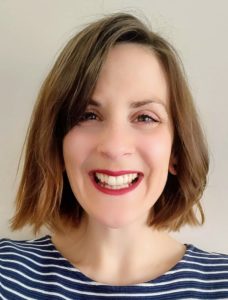
The AAG is pleased to announce Debbie Hopkins as the new editor of the AAG Review of Books. The AAG sincerely thanks founding editor Kent Mathewson, whose vision and ideas have shaped the AAG Review of Books since its beginnings eight years ago. Hopkins will take the helm when Mathewson steps down on July 1.

As the new editor of The AAG Review of BooksDebbie Hopkins brings a background in research, teaching, writing, and editing on transport and mobilities, sustainable urban development, low carbon transitions, and mobile labor. She is an Associate Professor in Human Geography at the University of Oxford, UK, jointly appointed between the School of Geography and the Environment, and the Sustainable Urban Development (Department of Continuing Education) program. She completed her master’s degree (Geography, with distinction) at King’s College London in 2010, PhD at the University of Otago (New Zealand) in December 2013, and postdoctoral training at the Centre for Sustainability (Otago, New Zealand, 2014-2016), and the Transport Studies Unit, University of Oxford (2016-2017).

In addition to her responsibilities at the AAG Review of Books, Hopkins is the Associate Editor (Transport and Mobilities) of the Journal of Sustainable Tourism and sits on the editorial board of the Journal of Transport Geography. She has also been part of several large research centres and grant applications, including the Energy Cultures project (2013-2016, Otago), the Centre for Innovation and Energy Demand (2016-2018, Sussex, Manchester and Oxford), and the Centre for Research on Energy Demand Solutions (2019-2022, multi-institutional). In addition to this, she leads research on low-carbon transitions, labor and mobilities, largely in relation to freight/trucking and waste. She has co-edited two books: Low Carbon Mobility Transitions (GoodFellow Publishers, 2016) and Transitions in Energy Efficiency and Dema

nd (Routledge (Open Access), 2018).

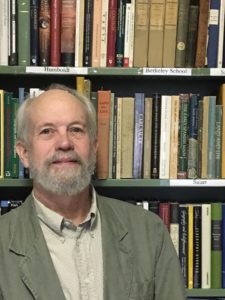
Kent Mathewson is former Fred B. Kniffen Professor in the Department of Geography and Anthropology at Louisiana State University. Mathewson helped start the AAG Review of Books in 2012, and has also been a book review editor for other publications such as the Annals of the AAGHistorical Geography, and Geographical Review for the past 25 years. His founding of the AAG Review of Books is rooted in his conviction that the books geographers publish are the discipline’s face to the world and offer a guide to measure progress in the discipline. AAG wishes him well and reiterates our thanks as he steps into retirement from both LSU and the AAG Review of Books.

Published quarterly, the AAG Review of Books is a special journal highlighting recent texts in geography and related disciplines. The journal features book reviews by geographers and other scholars at various points of their academic careers. We look forward to working with Dr. Hopkins.


    Share

The Spatial Scale of ‘We’

Every day around my town, I see signs of encouragement, most frequently — “We’re All In This Together.” That statement refers to the coronavirus pandemic, suggesting and assuming that we are all equally engaged in and affected by the pandemic. Similar messaging is delivered via emails, websites, and store speakers. Oregon’s public campaign takes the messaging even further, reminding us that “It’s up to you how many people live or die,” staying home ensures that we “don’t accidentally kill someone today.”

This messaging is clearly not limited to Oregon. We’re bombarded with fearful and dire characterizations of the force and magnitude of coronavirus. World leaders are asserting that coronavirus is “the worst public health crisis for a generation” (Boris Johnson), “we are at war” (Emmanuel Macron), or labeling themselves as “a wartime president” (Donald Trump).

At war? In his Nobel Peace Prize Acceptance Speech, President Barack Obama summarized the conditions under which war is justified: if it’s a last resort, if force is proportional, and if civilians are spared from harm (i.e. collateral damage). He further reflected that throughout history, the notion of “just war” was rarely observed. Our world leaders are certainly invoking rhetoric of war to muster broad public support for their unprecedented actions in the fight against coronavirus. And, polls seem to show that we support these actions. Therefore, we are obliged to ask ourselves whether our actions are, in fact, just.

The World Health Organization collects and maintains statistics on pandemics, epidemics, endemics, and outbreaks. As only a few examples, in 2018 405,000 people died from malaria (out of 228 million known cases) and 1,500,000 people died from tuberculosis (from 10,000,000 known cases). The United Nations reports that 9,000,000 people die of hunger every year (out of over 820 million people who are chronically hungry).  This already calls in question Boris Johnson’s assertion that Covid-19 is “the worst public health crisis for a generation.” But now include lockdown-related collateral damage and the UN predicts that the global coronavirus lockdowns will drive an additional 130 million people to the edge of starvation. The World Health Organization estimates that an additional 1.4 million people will die from tuberculosis as a direct result of the global lockdowns. The impact on other indices of health is dizzying, with surges in suicide, domestic violence, and mental health problems (the United States Centers for Disease Control reported in May that one-third of Americans are experiencing Generalized Anxiety Disorder, with rates higher for women, people of color, and people with less education). Factor-in unprecedented unemployment directly tied to coronavirus lockdowns that is surging across class, race, and gender lines, disproportionately affecting women, people with disabilities, and people of color. They bear the brunt of the crisis while we are protected in lockdown.

Apparently, this is what we accept as collateral damage in this war.

So, why doesn’t the world respond in the same way to malaria, tuberculosis, or starvation as it does to COVID-19? The answer is quite simple. Coronavirus has the audacity to attack wealthy white people. It affects visible people, rich people, important people, even world leaders. Those other maladies are primarily relegated to poor people in poor nations. In response to “the worst public health crisis for a generation,” these affected wealthy people adopted a large-scale extraordinary means in the “war” against coronavirus, while other maladies and the less privileged find funding and assistance dwindling. Lucica Ditiu, executive director of Stop TB Partnership succinctly summarizes the disparity.

“TB has been with us for thousands of years. For 100 years we’ve had only an infant vaccine and we have two or three potential vaccines in the pipeline. We look on in amazement at a disease that is 120 days old and it has 100 vaccine candidates in the pipeline. This is really fucked up.”

Ditiu’s statement illuminates the otherness in we. It illustrates the fluidity of how we define we. As a Geographer, I’m struck most by the sudden collapse of the social and spatial scale that defines the we in the rhetoric “we’re all in this together.” Shrinking the scale of we is demanded by our political leaders and supported by our society. But, usually, we lead very interdependent international-scale lives. Our political, economic, and social systems have created an international civilization that mandates the spatial scale of we to be global.

Or does it?

What happens when the we who are threatened are defined by ever-shrinking social and spatial scales of privilege? In the face of a pandemic, the admission to the world of we who can engage in lockdown is brutally strict. The more people we allow into our we, the less safe we are.  It becomes necessary to expand the margins of “other” in our effort to define and protect the we.

We have been told that saving lives is more important than the economy. Whose lives? This new we defined by coronavirus is the very essence of privilege, including only those who have the choice to stay at home. And even among those with housing, it works only for those who remain employed and have a home that is uncrowded, safe, non-violent, clean, warm, and well stocked with food and potable water. Our we excludes any of those who cannot participate in the lockdown. This means that we accept a giant portion of the world’s population being collateral damage in this war against coronavirus.

During Spring 2020, I have watched with distress at how easy it has been for the privileged to re-shape their we to a remarkably small spatial and social scale. I’m further horrified by the acceptance of collateral damage that has been caused by the systematic and intentional re-forming of that we. But, of course, the idea of we is fluid. It always has been. Throughout history, membership in we has been defined by spatial and social boundaries. Coronavirus has just created another boundary defining a we: those who benefit from lockdown and those who are collateral damage from lockdown.

We’re all in this together?

No. We are not.

— Amy Lobben
AAG President

DOI: 10.14433/2017.0074

    Share

Summer Series on questions of Geoethics and Human Rights highlighted by COVID-19 Conditions

By Coline Dony and Emily Fekete

This series developed from discussions that took place at the AAG’s Virtual Annual Meeting, April 6-10, 2020, during publicly available panels of the breaking theme “Geographers Respond to COVID-19”. The panels were set up by AAG specialty groups and their chairs who wanted to initiate discussions about the ongoing pandemic using a geographic lens, showcase the application of geography to urgent issues, and to learn from the evolving circumstances to build future preparedness. Recordings of the panels are still available for anyone to watch.

The discussions raised important, high-stakes questions of ethics and human rights, including ecological-ethical dilemmas of geographical research; access to digital spaces as a vital right; higher education in internet-deserts; the unequal burden of diseases in urban settings; as well as ethics of animal testing for vaccine development. The breaking theme attracted about 1,050 live attendees across the nine panels and an additional 230 views of the panel recordings. As one of the founding members of the AAAS Science and Human Rights Coalition, the AAG is interested in bringing these important discussions to a broader audience.

We invited the panel organizers to write the pieces below to reflect on the ethical and human rights costs of advancing science in times of immediacy, such as COVID-19, when personal geographical data are abundant. We further asked them to reflect on the responsibility of geographers to the public?

‘Slow’ Geographies and Ecological-Ethical Dilemmas of International Research

By Ashley Fent, Joseph Holler, Christine Gibb, Sachiko Ishihara, and Bill Moseley. Sidra Pierson and Hannah Gokaslan contributed editing.

The novel coronavirus spread rapidly into a global pandemic on the heels of unprecedented global social and economic integration—including academic practices of research and education in distant field sites, networking for research collaboration, and dissemination at national and international conferences. In response to COVID-19, governments imposed lockdowns and travel restrictions, fracturing global integration and cancelling plans for field research and academic conferences. Our virtual AAG panel deliberated how geographers may ethically and responsibly sustain climate and development research from home, and the costs of limiting travel on research quality and individual careers.

The pre-COVID status quo of global integration, consumerism, and carbon-intensive capitalism has caused unprecedented global environmental change, increased economic inequality, and disproportionately affected marginalized communities. Geographers are complicit; we have developed long-standing research relationships in vulnerable communities through a global system of unequal mobility, access to resources, and consumption of fossil fuelsEmissions dropped during the pandemic, but economic recovery and stimulus threaten to return us to our pre-COVID collision course with climate change. Scientists and business leaders are calling on us to reject business-as-usual, inventory our value systems and build back a cleaner economy. Corbera and others advocate a new ethics of care in academic professions, echoing the Great Lakes Feminist Geography Collective’s call for slow scholarship.

While our panel shared concerns about the adverse climatic impacts of international travel, we recognized the benefits of being immersed in the communities whose challenges we seek to understand. We shared commitments to physical presence in international field sites for building relationships, serendipitous discoveries, and avoiding pitfalls of disembodied data; but we also recognized an imperative to reconsider our own professional practices. We debated strategies for limiting the ecological costs of our travel-intensive approaches: less frequent but longer research trips, in-country travel by bicycle or public transportation, and substituting in-person conference attendance and fieldwork with remote participation and collaboration.

Strategies to limit ecological costs of academic work also present discriminatory challenges. Longer research trips require substantial funding and time, good health, and freedom from caregiving responsibilities. Students gain valuable international experience facilitated by shorter field visits with faculty supervisors. Successful remote collaboration is easier when it is based on pre-existing in-person relationships, and therefore still requires upfront investments in research travel.

Panel participants raised concerns about neocolonial representations and practices of international fieldwork. The pandemic has highlighted extreme inequalities in health systems, economic relief options, and vulnerabilities within and between nations; yet the near-global travel restrictions have partially and temporarily leveled the playing field among academics usually characterized by highly differential mobilities. Facing the prospect of prolonged restrictions on international travel, we must develop different and more collaborative strategies for maintaining international research programs. These strategies may be less fulfilling or effective for those of us accustomed to hypermobility; however, they also have potential to improve equity in academia and bolster the research capacities and profiles of our academic colleagues in the Global South.

Finally, our panel noted the timeliness of a discussion on slow geographies and addressing ecological-ethical dilemmas of international research during a global pandemic. This forced experiment challenges us to transform our professional practices as geographers.

The discussions and work that contributed to this panel have been published in The Professional Geographer. Fent, A., C. Gibb, S. Ishihara, J. Holler, and W. G. Moseley. 2021. Confronting the Climate Crisis: Slow Geographies and Relational Approaches to International Research.

The Digital Divide and the Right to Safe Internet Access in Times of COVID-19

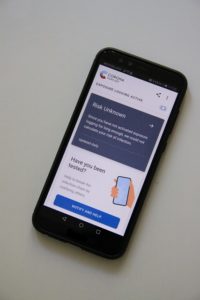
The activated “Corona-Warning App” that launched in Germany in mid-June 2020. Credit: Authors

By Elisabeth Sommerlad and Yossi David

The current coronavirus (COVID-19) crisis highlights the importance of access to the internet in everyday life. During the pandemic, the restrictions on freedom of movement around the world are offset through digital platforms for our basic needs. Interpersonal communication is increasingly taking place in the digital sphere, and the growing importance of digital spaces for the fulfillment of basic needs has become apparent (e.g., food supply, education, information, health care, welfare). However, this argument ignores people affected by digital inequalities. We argue that the COVID-19 crisis is a unique event that reveals various critical aspects that were easier to be disregarded in our previous, so-called “normal” lives. We call for reviewing prior norms and practices, addressing the importance of internet access in times of crisis, and focusing on three key elements of digital spaces: (1) the digital divide could constitute a violation of fundamental (human) rights, (2) the unregulated internet penetration could lead to a violation of the right to privacy and security, especially for vulnerable groups, and (3) the lack of systematic and reliable fact-checking is dangerous to the public, in light of (mis)information distributed by ordinary people and official figures. The observable developments of new digital spaces of flow make us call for a debate on safe internet access as a human right.

We propose not to consider access to information via the internet as a mere privilege. Instead, the current pandemic emphasizes the necessity of accessing vital services and accurate information online. The question arises as to the extent to which (inter)national communities have an obligation to provide their citizens with affordable and stable internet access and to device-based digital media, independent of place of residence or financial resources. While promoting this, it is essential to strengthen the transparency of digital platforms and the responsibility of involved players. This is aimed at establishing neutral and democratic means of media regulation to ensure privacy (e.g. protection of personal data) and cyber security. It is also intended to prevent the abuse of online data as (new) instruments of cyber surveillance and of social media to spread misinformation. When we look at the tensions triggered by the crisis, numerous ethical questions arise, which we should approach from a perspective that combines media geography and communication studies. Times of crisis reinforce social barriers, emphasizing gaps, inequalities, and vulnerabilities. In the context of COVID-19, social inequalities are escalating and tangible new dimensions of digital divide reveal themselves on a global and local level.

The advantages and disadvantages that crises bring to our lives also require a deeper involvement of human geography and media scholars in public and civic policy making. Critical perspectives are essential to ensure full and comprehensive awareness of the different facets of political instructions, increased internet use, and social distancing. We argue that it is part of our duty as academics to take a critical perspective on the different aspects of digital inequality and also to pay attention to the dangers of reducing the importance of ethics under the heading of life-saving measures taken by governments and businesses.

Read a published chapter by David and Sommerland on this topic: Media and Information in Times of Crisis: The Case of the Coronavirus (COVID-19) Infodemic.

More-than-human geographies of COVID-19

By Libby Lunstrum, Stephanie Rutherford, Neel Ahuja, Bruce Braun, Rosemary Collard, and Rebecca W.Y. Wong

As part of the AAG Initiative “Geographers respond to COVID-19,” we examined how more-than-human geographies and study of the wildlife trade can shed light on COVID-19’s roots, routes of transmission, and impacts.

This begins with the need to question and problematize “origin stories,” the discourses that circulate about how pandemics emerge. These origin stories have high stakes, legitimizing certain modes of intervention over others. For example, the narrative that Chinese live animal markets are the roots of the coronavirus’s jump from animal to human is often tinged with an Orientalist gaze and oversimplifies our understanding of COVID-19’s origin, spread, and impact. We must consider these markets and the wildlife trade, but only in their complexity (which uncomfortably implicates Western countries too), the possibility of other points of origin, and the broader intensification of our interactions with animals and non-human environments, including factory farms and habitat disruption. We must also ask what is truly killing us. The latter, for instance, includes systemic discrimination, including poverty and racism, and the austerity measures crippling our early response and healthcare systems.

The wet-market origin story has also led numerous conservation organizations to demand the shutting down of much of the wildlife trade and live animal markets. This carries unforeseen risks from pushing poor rural people dependent on the trade deeper into poverty and pushing the trade itself underground, to amplifying modes of zoonotic security and surveillance that disproportionately target the poor.

Our response to COVID-19 also highlights the ethics and politics of animal testing, in particular test subjects whose lives are sacrificed to find treatments and an eventual vaccine. There are pressing questions surrounding their availability, sacrifice, and care. Every year China exports thousands of monkeys, the most sought-after test subjects, to the US, and it is unclear whether they will be included in the proposed wildlife trade ban, one the US government has resisted on these very grounds. Bringing these “test subjects” into the realm of moral subjects, we must reflect on how to develop an ethical framework that can embrace them as “frontline care workers,” albeit not of their own accord, in ways that foreground their welfare and sacrifice. Here we must shift the lens to look at animals not just as vectors of disease. They are so much more.

Against calls for a return to normalcy and while recognizing the horrific impacts of COVID-19, especially on the already-vulnerable, we have a profound opportunity to rethink our relationships with our economy, political system, each other, and the natural world, including wildlife. We see a need to foreground dignity and protection over efficiency, austerity, and brute nationalism. COVID-19 reveals the political fiction of human exceptionalism and exposes our shared intimacies with the natural world and one another. Our task as critical scholars is to reimagine how we might better live amidst intimacies that are both dangerous and life-giving to both us and our more-than-human counterparts.

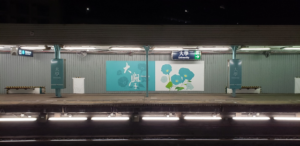
University station in Hong Kong during the pandemic

Post-Secondary Teaching and Learning in a Pandemic

By Terence Day, I-Chun Catherine Chang, Calvin King Lam Chung, William Doolittle, Jacqueline Housel, Paul McDaniel 

COVID-19 forced universities and colleges throughout the world to move classes online. In most cases there was very little time to prepare, but faculty and students confronted the challenge. Courses were completed, and students graduated. Seen through the eyes of some college and university administrations, the transition went surprisingly well. However, looking at things more closely, there were issues, inequities, and unfairness for many students and faculty. And, of course, geography played a role in that, with different infection rates and ability of students and faculty to adapt.

For some students it was easy. Many students appreciated the opportunity to work from home, without the hassle of having to go to campus, or get up early. They could wake up, walk over to their desk, open their laptop, and take their class. However, that assumed the student had a home conducive to work. A 2018 survey found that 36% of university students in the US were housing insecure (Goldrick-Rab et al., 2018). Many of us also assumed that students have laptops. That turned out not to be the case as some students struggled to do exercises on their phones, and maintain wifi connectivity. Their difficulties highlight the social vulnerabilities of people living in internet deserts, as internet access is a lifeline for many, especially those in lockdown areas.

The loss of employment income was an added stressor for many students. COVID-19 related lay-offs and reduced hours of paid employment provoked financial stress. Those who live in areas with a high concentration of businesses related to hospitality and transport, are likely to have been most hard hit. In other cases students worked increased hours due to their status as ‘essential workers’ and also to support the family financially as the collective household income plummeted. Some students were pressured to work in conditions they felt were unsafe. With elementary and high schools closed, families with children at home and no daycare confronted challenges as they tried to study, and look after and educate their children.

Race, ethnicity, and nationality also played a role. Evidence suggests that Black and Latinx populations have higher age-adjusted COVID-19 related mortality rates than the general population (Gross et al., 2020). This impacts Black and Latinx students directly, but also provokes distracting concern about friends and family. There were other issues as well. Students who looked Asian were targeted for abuse based on the perceived Chinese origin of COVID-19. International students had to make hard decisions as borders closed. These same issues impacted faculty, as well as students.

Article 26 of The Universal Declaration of Human Rights states, “… higher education shall be equally accessible to all on the basis of merit”. This means that universities and colleges have an obligation to support ALL their students, and to facilitate ways to overcome the challenges imposed by COVID-19. Universities and colleges must provide enhanced services and accommodations for disadvantaged students, and address inequalities, prejudices, discrimination, disparities, racism and sexism issues in both online and face-to-face learning environments. We suggest that universities and colleges undertake student and faculty surveys throughout the coming year and adapt institutional policies for local circumstances.

A paper on this topic has been published in The Professional Geographer. Terence Day, I-Chun Catherine Chang, Calvin King Lam Chung, William Doolittle, Jacqueline Housel, Paul McDaniel. The Immediate Impact of COVID-19 on Postsecondary Teaching and Learning.

The City at Risk: Urban Geographers Respond to COVID-19

By Richard D. Quodomine, Dayne Walling, Augusta Wilson, Eric Hoffman, Michael J. Allen, Ian Purcell, Toni Castro-Cosio, and Hannah Torres

In April of 2020, Urban Geographers from the academic and practicing sides of the discipline came together to begin to assess and address the public, social, economic, and scientific challenges apparent in the early stage of the pandemic because of how adversely, and disproportionately, COVID-19 had impacted several populations and institutions linked to urban environments. While the most serious outbreaks had occurred in places with large population sizes and high densities, such as in New York City, Chicago, and New Orleans, and clusters can theoretically appear anywhere, several other urban area characteristics and spatial factors of systems, such as mobility of wealthy suburban cohorts, mass transit patterns, locations of municipally supported housing, concentrations of poverty, immigration networks and status, air quality attainment, aging water infrastructure, occupational and industrial growth sector mismatch, and fragmented government authority, compound negative public health effects and complicate effective response.

The multi-faceted and multi-scalar demands of responding to the pandemic are immense in every urban area. In Philadelphia, for example, 53 percent of Philadelphia’s COVID-19 fatal cases were in prisons, senior living facilities or similar protective quarters, many of which are municipal facilities. The schools have been closed, but as that is also the source of nutrition for many young people, school food services have had to remain open and attempt to serve in creative ways. Providing access to instruction has meant the rapid deployment of a laptop loaner program and discount high speed internet rolled out to upwards of 50,000 students.

The COVID-19 outbreak has also overlapped with existing and long-term patterns of disinvestment, imposed austerity and fiscal distress, which limit resources delivered to communities that need them most. The tax base of central and older cities has been reduced through federal and state public policy decisions in recent decades. In Detroit, Michigan’s largest city, the virus had an early severe effect. This is part of a trend where the state retains a greater share of public revenues leaving cities with less funding for essential services than fifteen years ago. Additionally, revenues from many local sales and business taxes are significantly reduced. Drops in transit ridership not only worsen bottom lines but potentially impact local shares of capital projects and jeopardize the receipt of future matching federal and state funds. Cities operate as hubs for regional activities, transportation, medicine and government, and their ability to be that is heavily impacted by the pandemic.

Serious scientific questions remain about how COVID-19 is manifesting and intersecting with environmental, racial, and medical justice issues. Due to historical inequality, urban areas have seen this disparity has recently come into stark view with the Black Lives Matter protests. While seen as primarily in opposition to potentially racist or overly violent police tactics, there is as much concern over how people of color are treated in health and social services. In many areas, those attainment areas have higher vulnerable populations, including lower income, people of color, aging populations and people with disabilities, resulting in higher mortality or long-term morbidities in their resident populations. Public health, policing and other policies must help guide equitable recovery and pay keen attention to the challenges confronting urban areas that have created deeply disparate effects and outcomes.

Going forward, studies will be necessary to determine COVID-19 impacts on Urban spaces. Possibly more importantly, the impacts of the recovery efforts, in terms of return on investment and the equity of those investments as they impact many impacted populations of color, LGBTQ status, and incomes.

Participatory Forum on New Requirements for Ethical Geographic Science in Rapid Research

To continue the discussion of questions that have been developed throughout both the AAG Annual Meeting Breaking Theme sessions and this Summer Series, please join us in a participatory forum on October 1, 2020. Click here to register and for more information.

DOI: 10.14433/2017.0075

    Share

Making Data Meaningful Or Geography’s Contribution to Data Science

Geography has always been about data. After all, the field was founded and developed over the search for more and better information. It was 200 years ago that Alexander von Humboldt, perhaps the most famous geographer, acquired field observations in the Andes Mountains and used these observations to make a series of connections. In her 2015 book, The Invention of Nature, Andrea Wulf writes how Humboldt presented data he had painstakingly collected about a mountain:

To the left and right of the mountain he placed several columns that provided related details and information. By picking a particular height of the mountain, one could trace connections across the table and the drawing of the mountain to learn about temperature, say, or humidity or atmospheric pressure, as well as what species of animals and plants could be found at different altitudes . . . All this information could then be linked to the other major mountains across the world, which were listed according to their height next to the outline of Chimborazo. (p. 103)

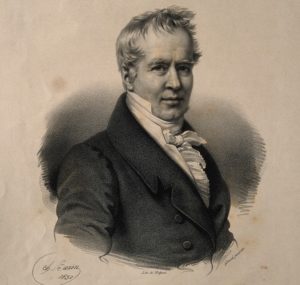
Alexander von Humboldt: 19th Century Data Scientist

Data continued to power geographical quests and queries.  While many nineteenth-century geographers sought to find novel information about places they encountered, geographers in the twentieth century questioned how to make sense of it. These debates focused on factors of causation, the value of regional synthesis, and the spatial variations of select data.  Later—as geographers came to critically inspect the sources, meanings, and uses of information—data continues to be the engine of our discipline.

So, it was particularly disheartening to hear the governor of Florida dismiss somebody with advanced degrees in geography as not being a “data scientist.” As most of you are probably aware, this remark came as justification for the firing of Rebekah Jones, the architect and manager of Florida’s acclaimed COVID-19 dashboard, purportedly because Florida officials did not like how she was presenting the data. Sadly, this follows along some other attempts at squelching inconvenient truths, like banning the use of the term “climate change.” In justification, Governor DeSantis said that Jones “is not a data scientist” because she has a degree in geography. Whatever the reasons for terminating an employee who had previously been praised and profiled, this is a particularly low blow.

And what is “data science” anyway? The Data Science Association, which ought to know, defines it as “the scientific study of the creation, validation and transformation of data to create meaning.” Accordingly, a data scientist “can play with data, spot trends and learn truths few others know.” This sounds an awful lot like what a lot of geographers do. Of course, I don’t need to tell you about how much data creation and analysis is involved in fields such as climatology, housing analysis, land science, big data, to name just a few. The major scientific development of our field, Geographic Information Science, is built around the manipulation of locationally based data. ESRI has developed a COVID-19 GIS Hub, and geographers have been active in examining COVID-19 in light of vulnerable people, economic data, and the spaces of everyday life.

The Florida governor’s drive-by slighting is yet more evidence of geographical ignorance and insensitivity. We have a long way in correcting for the type of geographical illiteracy that relegates half the world to “sh*t-hole countries” and where many cannot locate North Korea on a map. It begins early, as most school children still lack basic proficiency in geographical concepts. This has real consequences. It causes the public to overstate certain dangers to our security  while minimizing perils at our front door.

We also need to consider how we got to a place where the very essence of what we do can be so easily dismissed. The state of Florida has several fantastic geography programs: strong PhD granting departments, excellent masters, bachelors and community college programs. Yet, the lack of general knowledge about our field still disappoints. It is easy to complain about willful ignorance, but who could imagine people saying that a trained economist knows nothing about trade, or that a botanist provides no guidance on ecosystems. Yet here is where we are. The hope of the AP Human Geography explosion—especially prominent in Florida—is that it will result in a generation of people who know what geography does and why it matters. Any other steps we can take—from responding forcefully to these misstatements, to seeding geographers in public agencies and private companies—will mercifully wash away such unfortunate views.

__________

When I was elected as vice president of the AAG in February 2018, I would have never thought that my presidential term would be quite so eventful.  It began auspiciously, with the hiring of our new executive director and the prospect of new horizons, and it has ended with the upending of society as the pandemic has completely restructured how we live, work, and congregate, while the murder of George Floyd exposes once again the vicious and unrelenting racism embedded in our society.

If there was a theme to my presidential year, it lay in expanding the community of geographers. We have accomplished some terrific things including more assistance to the AAG regions and the prospect of a new international councilor. Unfortunately, the pandemic prevented us from experiencing the remarkable community manifested in our annual conference. This year, we missed the chance to come together in lecture halls, meeting rooms, hotel lobbies, bars, and cafes. We lost our chance to reunite with old friends, mentors, and students, to personally tell a colleague how much you enjoyed her article, to come together and plan further projects. To commune.

Given the circumstances, we have tried to carry forward, with virtual options and laying the groundwork for a return of physical conferences in the near future. We have also developed a remarkable taskforce to address the challenges brought about by COVID-19. My final presidential communication to you, later this month, will feature the results of that taskforce.

In the meantime, I want to thank everybody who has made this year so memorable and meaningful.  The past presidents, especially Glen MacDonald, Sheryl Beach, and Derek Alderman have each helped me find my footing. I look forward to working with Amy Lobben and Emily Yeh in the coming year as we continue to confront the issues of the coronavirus and the desire to move ahead. The AAG staff have been a remarkable backstop. They have all been so wonderful, but I would especially thank Candida Mannozzi, Gary Langham, Becky Pendergast, Emily Fekete, and Oscar Larson for guidance at various key points over the year. And of course, I want to thank you—for trusting me as president, for emailing me your insights, and for helping me through this unprecedented year. Never forget that the American Association of Geographers is your organization.  And never forget that our strength lies in our community.  May we move forward together.

— Dave Kaplan
AAG President

DOI: 10.14433/2017.0072

    Share

Frank A. Friedman

Frank A. Friedman, a member of AAG since 1959, died at his home in Robesonia, Pennsylvania, on May 30, 2020. He was 81.

Friedman was a graduate of Liberty High School, in his hometown of Bethlehem, and earned his Bachelor of Science in Education from Kutztown State College in 1960. He earned a Master of Education in Geography from Penn State University in 1965, and a Master of Science from Drexel University in 1980. He was a longtime geography teacher in the Conrad Weiser School District in Pennsylvania. He is survived by his sister, Marie A. Friedman.

    Share

Stephen Ladochy

Education: Ph.D. in Geography (University of Manitoba), M.S. in Atmospheric Sciences (Colorado State University), B.A. in Meteorology (University of California, Los Angeles)

Describe your job. What are some of the most important tasks or duties for which you are responsible?
Besides teaching classes in physical geography, meteorology and climatology, I mentor graduate students in their research and Masters’ theses.  I also write several letters of recommendation for students seeking jobs, graduate schools and research opportunities.  I continue collaborating with other scientists on climate research and occasionally answer requests from media on environmental stories.

What attracted you to this career path?
I always liked math, and found that it could be applied in meteorology.  At UCLA I interned at the National Weather Service as well as at air pollution consultants. While working at the L.A. County Air Pollution Control District, someone showed me information on “Jobs in Geography”, where you could teach weather courses at universities.  I was hired by the University of Winnipeg in the Great White North teaching weather and later climatology and environmental courses.  I enjoyed teaching, so went on to a Ph.D. in geography/climatology.

How has your education/background in geography prepared you for this position? Most of my education was in Atmospheric Sciences, so I had a lot of prep work to teach geography courses.  I found my niche and passion in meteorology and climatology and have been studying them since.

What geographic skills and information do you use most often in your work? What general skills and information do you use most often?
I like to show satellite images in my classes and the latest climatic data, such as from NASA. So using remote sensing, weather maps and oceanic conditions (being on the coast), I use statistics and recent environmental data in my classes and research.  Mostly, I’m looking at ENSO-Pacific Ocean Indices, weather maps and satellites and climate data to follow climate change.  We also have field instruments so my classes can measure surface weather data in different land uses in urban settings.

Are there any skills or information you need for your work that you did not obtain through your academic training? If so, how/where did you obtain them?
I was fortunate to have summer employment at the Jet Propulsion Laboratory, NASA. There I collaborated with oceanography scientists and student interns on several climate-related projects.  My boss there was a wonderful science communicator, so I learned a lot from him that carried into classrooms and media interviews.

Do you participate in hiring, screening, or training of new employees? If so, what qualities and/or skills do you look for?
I was just on two search committees for new hires. We looked for someone who would be a good instructor with our students, many of whom had English as a second language and were working while in school. We also looked for good mentors for these students, who could relate and encourage high achievement.  Scholarships were also important where they could lead student research

What advice would you give to someone interested in a job like yours?
You need to have a passion for your work and for helping students. That makes the hard work actually fun and something you look forward to doing.  We have special students that work hard and often reach their goals. You need to be a good mentor and inspiration to your students.  Your enthusiasm for your subjects will rub off.

What is the occupational outlook for career opportunities in your field/organization, esp. for geographers?
Our graduates have been fairly successful in finding employment in geography and related environmental fields.  Having skills in computer programming, GIS and remote sensing training or certificates, statistics and the sciences are all helpful.  Internships or summer help in companies or government agencies can often lead to more permanent employment.

    Share

Newsletter – May 2020

PRESIDENT’S COLUMN

Facing an Existential Crisis or COVID-19 and the Long-Term Future of Geography

By David Kaplan
AAG-Executive-Council-300x184-1

It does not seem so long ago that people were talking about the compression of space and time, about the “ends of history and geography.” How recent events have obliterated this! The pandemic of COVID-19—with its echoes of the 1918 Spanish Flu and the great contagious scourges of the past—demonstrates again that “history doesn’t repeat itself, but it often rhymes.” And how well this pandemic also affirms geography’s significance! The importance of place, of distance, of context, of networks—all show the enduring importance of geography and how central geographical concerns are in understanding the disease.

Continue Reading.

ANNUAL MEETING

Save the Date for AAG Seattle!
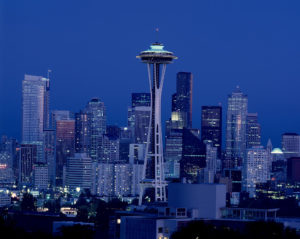
Dusk view of the skyline, Seattle, Washington

Join us for the AAG Annual Meeting April 7-11, 2021. We invite you to organize and participate in sessions, workshops, field trips, special events, and activities. Look for the call for papers in July 2020. We look forward to seeing you in the Pacific Northwest!

Virtual Session Recordings Available until May 14!

AAG facilitated a virtual annual meeting April 6-10, in response to restrictions on travel and gathering during the COVID-19 pandemic. The virtual conference hosted more than 180 sessions and panels. Recordings of most sessions are available through May 14 in the online session gallery.

PUBLICATIONS

NEW Annals of the American Association of Geographers Issue Alert:
Articles with topics ranging from unusually devastating tornadoes to offshore wind power to contemporary Mongolian pastoralism

Annals-generic-225x300-1

The most recent issue of Annals of the American Association of Geographers has been published online (Volume 110, Issue 3, May 2020) focusing on current geographic research. Topics in this issue include geoprivacydata activismhazard prediction mapslocal food systemscountermappingconservation law enforcementThe HolocaustBurmese migrantsNigerian geographers, and extractive economies. Regional areas of interest include the Big Thicket National Preserve in southeast TexasShijiazhuang, ChinaTaiwanthe Yellowstone River in eastern Montana; and Gangnam District, Seoul. Authors are from a variety of research institutions including: Durham UniversityUniversity of KentuckyFlorida State UniversityUniversity of Nottingham, and University of Oxford.

All AAG members have full online access to all issues of the Annals through the Members Only page. Each issue, the Editors choose one article to make freely available. In this issue you can read Disturbance after Disturbance: Combined Effects of Two Successive Hurricanes on Forest Community Structure by Daehyun Kim, Andrew C. Millington & Charles W. Lafon for free for the next two months.

Questions about the Annals? Contact annals [at] aag [dot] org.

NEW The Professional Geographer Issue Alert:
Research featuring sonic methods to urban growth models to participatory data
The-PG-2017-generic-213x300-1The latest issue of The Professional Geographer is now available (Vol 72, Issue 2, May 2020) with 10 new research articles in geography that emphasize applied studies. Topics include banking desertsTwitter use among Geography Departmentsfieldwork in geography, and migration. Study areas include AlbuquerqueFlushing, Queens, New York City; and the Hubei and Hunan Provinces of China. Authors are from a variety of global institutions including: University of TennesseeSalzburg University, and University of California, Santa Cruz.

All AAG members have full online access to all issues of The Professional Geographer through the Members Only page. In every issue, the editors choose one article to make freely available for three months. In this issue you can read Examining Spatial Disparities of Obesity: Residential Segregation and the Urban–Rural Divide by Heewon Chea & Hyun Kim for free for the next three months.

Questions about The PG? Contact profgeog [at] aag [dot] org.
Journals-newsletter-100-1In addition to the most recently published journal, read the latest issue of the other AAG journals online:

• Annals of the American Association of Geographers
• The Professional Geographer
• GeoHumanities
• The AAG Review of Books

NEW Spring Issue of the AAG Review of Books Published

AAG-RoB-spring-8-2-cvr-babyThe latest issue of The AAG Review of Books is now available (Volume 8, Issue 2, Spring 2020) with 5 book reviews on recent books related to geography, public policy and international affairs. The Spring 2020 issue also includes four book review discussions and two book review essays. The Spring 2020 Issue features two items selected by the editor to be made available free of charge: Mustafa Dikeç’s book review of Revolting New York: How 400 Years of Riot, Rebellion, Uprising, and Revolution Shaped a City, by Neil Smith and Don Mitchell and a Book Review forum by Elizabeth Johnson, Christian Anderson, Becky Mansfield, Shiloh Krupar, Julia Corwin, Scott Prudham and Jesse Goldstein of Jesse Goldstein’s Planetary Improvement: Cleantech Entrepreneurship and the Contradictions of Green Capitalism.

Questions about The AAG Review of Books? Contact aagreview [at] aag [dot] org.

ASSOCIATION NEWS

A Special Thank You from our Executive Director

Earlier this month, AAG unveiled our COVID-19 Rapid Response Task Force. Immediately, 125 of you stepped up to offer your time as volunteers, including many students. This generosity was in keeping with the earlier support AAG members offered one another when we had to rapidly pivot from an in-person Annual Meeting to a virtual meeting: 239 of you, including 88 students, donated a portion of your registration fee back to AAG, raising $22,763 that helped us make the meeting such a success for more than 1,000 attendees. Just this week, in a matter of days, our community raised more than $4,800 for the COVID-19 Rapid Response Fund, which will support the Task Force proposals that AAG Council will set in motion in June.

As the reality of COVID-19’s impact has set in during these past months, these are only some of the examples of how you have rallied to show your commitment to the discipline of geography, to your colleagues, and to your place in AAG’s community. Your support makes it possible for us to strengthen geography while facing this unexpected challenge. I am deeply grateful to all of you who have volunteered, contributed to the Fund, and otherwise assisted each other and shown your support for our organization. We will continue to work hard to be there for you, as you have done for us.

Read more.

AAG Substantially Revises Professional Conduct Policy
Harassment-Free-AAG-logo533px-290x290-1In April, AAG formally adopted a revised Professional Conduct Policy, signaling an important benchmark in the work of the Harassment-Free AAG Task Force, AAG Council, and AAG leadership and staff. Two years of the Task Force’s intensive reviews and discussions, including the 2019 Harassment-Free AAG Survey, contributed to the policy changes, which broaden the consideration of professional misconduct beyond AAG-sponsored events and into the field itself. Under the new policy, professional misconduct includes discrimination, sexual harassment, and bullying to the extent that such conduct relates to AAG activities or the professional roles of AAG members. The policy applies to all AAG members, staff, attendees and participants at any AAG-sponsored event, including online venues, and at AAG-sponsored meeting social events.

The revised 12-page policy also identifies standards for professional behavior and outlines processes for reporting and addressing violations, including an online form that can be used to submit a complaint.

Read the Policy.

2020 AAG Nystrom Award Recipient Announced

Kolak_Maynia-290x290-1

Marynia Kolak of the University of Chicago is the recipient of the 2020 J. Warren Nystrom Award, established by a former AAG Executive Director to annually recognize a paper based on a recent dissertation in geography. Kolak’s contribution, Distilling the Effect of the Great Recession on Food Access in a Segregated City: A Spatial, Quasi-Experimental Approach, is based on the dissertation she completed at Arizona State University in 2017. Kolak presented her paper along with three finalists, Kevin Mwenda of Brown University, Yago Martin Gonzalez of the University of South Carolina, and Mark Rhodes of Michigan Technological University, in a special session on Tuesday, April 7, 2020 at #AAGVirtual.

Learn more about the Nystrom Award and previous awardees.

AAG Signs On to Support Key Positions on COVID-19

In April, AAG participated in two letters to Congressional leaders, denouncing anti-Asian racist rhetoric, attacks, and discrimination during COVID-19 and supporting House Resolution 908, introduced in late March by Rep. Grace Meng (D-NY-6). A companion bill is expected to be introduced in the Senate by Senators Kamala Harris (D-CA), Tammy Duckworth (D-IL), and Mazie Hirono (D-HI).

Acting in concert with the AAAS and 49 other scientific institutions, AAG wrote to reject anti-Asian racism, especially in characterizing the COVID-19 virus. Instead, AAG and its colleague organizations vow to “focus on leveraging global human diversity to solve today’s public health crisis.” AAG also signed a letter along with more than 450 diverse organizations, spearheaded by the National Council of Asian Pacific Americans and the Democracy Initiative, in support of H.R. 908, affirming, “Hate and bigotry are not consistent with realizing the promise of American democracy where all of us have an equal voice.”

Need for GIS and Shared Data: Earlier this month, AAG was one of nine organizations that signed the National States Geographic Council’s letter in support of geo-enabling key data sets from public health and emergency response sectors, in order to gain better spatial insights into COVID-19. “[K]nowing where the outbreak is growing, where high-risk populations are, where the hospital beds and important medical resources are, and where to deploy resources is essential,” the letter stated, urging a nationwide effort to disaggregate existing data for improved nationwide spatial analysis.

Deadline Extended to List Your Geography Program in The Guide
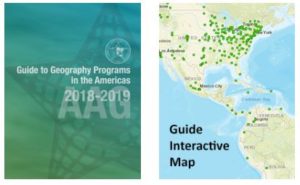
2018_2019_AAG_Guide-300x185-1The American Association of Geographers is accepting entries from geography programs for the 2020 edition of the Guide to Geography Programs in the Americas. The deadline for submitting a listing has been extended to Friday, June 12, 2020.

The 2020 edition of the Guide will be available exclusively online. The Guide lists undergraduate and graduate programs in all areas of geography and includes an interactive map that students can use to explore and discover geography programs, with easy-to-use search tools to find programs by degree type, region, and program specialization. It has long been an invaluable reference for faculty, prospective students, government agencies, and private firms in the United States, Canada, and throughout the world.

For more information and to list your program, please contact Mark Revell at guide [at] aag [dot] org.

New COVID-19 Resource Hub – Open to all AAG Members
COVID-KC-300x109-1The AAG has set up a new Knowledge Community to facilitate communication and knowledge-sharing among our members during the COVID-19 pandemic. The COVID-19 Resource Hub is open to all current AAG members, and is free to join. We encourage members to use the hub to share resources and data, seek research collaborations and information, connect to colleagues across subdisciplines, and support each other as we all experience and seek to understand the impacts of this pandemic from local to global. The AAG has posted initial resources and discussion topics, and we encourage our membership community to make this resource and space your own. We also encourage you to share any COVID-19 related posts from specialty group communities with this new community if you would like to reach more members.

Join and contribute to the COVID-19 Resource Hub.

Call for Abstracts: AAG ‘Annals’ Special Issue on Displacements
Annals-generic-225x300-2The 2022 Special Issue of the Annals of the American Association of Geographers will explore how — building on our history of critical engagement with place — geographers from across the discipline can contribute empirical, theoretical, and methodological insights on displacements and their implications. The AAG welcomes contributions that address displacements through multi- and inter-disciplinary engagements with geographical theory and methods, from a broad range of perspectives and locations, and in historical and contemporary contexts. Abstracts of no more than 250 words are invited by May 15, 2020.

Learn more about submitting.

POLICY CORNER

EPA Rulemaking Jeopardizes Utilization of Geospatial Research
US_Capitol

There is currently a rule under consideration by the Environmental Protection Agency (EPA) that is cause for major concern within the research community. The proposed Strengthening Transparency in Regulatory Science rule indicates that as the EPA uses scientific research to guide future policy decisions, preference will be given to studies which make their raw data publicly available. Consequently, this would allow the EPA discretion to discount research that does not fully disclose such data, which includes any findings that draw from personally identifiable medical and location information as well as proprietary data.

The American Association of Geographers (AAG), in partnership with the Urban and Regional Information Systems Association (URISA) and the University Consortium for Geographic Information Science (UCGIS), plans to submit a public comment expressing our opposition to this proposed rule.

While the principles of open data sharing and reproducibility are key to scientific integrity and advancement, certain health and environmental research are only possible when personally identifiable information is guaranteed to remain confidential. As organizations at the intersection of science, industry, and geospatial technologies, we fully appreciate that confidential and proprietary geospatial data, including remotely sensed satellite imagery, location tracking of individual mobility, and georeferenced demographic and health information (which can reveal identity), play essential roles in environmental and health research. We are deeply concerned that by favoring research in which data and models are made publicly available, the EPA will overlook or disregard findings from valid, scientific research.

The rule, first proposed in 2018, was recently modified in reaction to many of the comments originally received. However, the modifications fail to ameliorate the issues identified above.

You can make your voice heard on this proposed rule by visiting the public comments portal and submitting a response by the May 18th deadline. If feeling unsure on where to start, we recommend following this helpful guide from the Union of Concerned Scientists.

For additional background, watch this November 2019 hearing from the U.S. House Committee on Science, Space, & Technology entitled, “Strengthening Transparency or Silencing Science? The Future of Science in EPA Rulemaking.”

In the News:

  • The latest results for the National Assessment of Educational Progress (NAEP) in geography have been released. Click here to explore the data and see where our nation’s eighth-graders stand.
  • On April 24th, Congress passed its fourth stimulus bill addressing the COVID-19 crisis, the Paycheck Protection Program and Health Care Enhancement Act (H.R. 266). The bill provides funding for small business loans, health care providers, and additional COVID-19 testing.
MEMBER NEWS

Update: Geographers Act on COVID-19
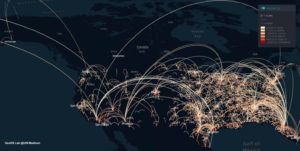
COVID-travel-map-300x151-1.

Our thanks to AAG members and geographers all over the world for sharing their work with us. Here are some of the efforts AAG has been hearing about:

Medical geographer Tolulope Osayomi of University of Ibadan has been interviewed frequently by the media about the value of lockdown procedures in Nigeria during COVID-19, including Vanguard Nigeria and Business Day.

Geographer Francesco De Pascale of L’Istituto di Ricerca per la Protezione Idrogeologica has worked with colleagues in geography and anthropology to collect testimonials from Italian citizens from within the spaces of their homes during COVID-19. The work, entitled “My lived space,” recalls the concept elaborated by the late French geographer Armand Frémont (1933-2019), defining lived space as “the space of individuals with which they appropriate, with their paths, their perceptions, their representations, their signs, their drives and passions” (2005). Dr. De Pascale and Giovanni Gugg of the University of Nice-Sophia Antipolis, Stefano Montes of the University of Palermo, and Gaetano Sabato of the University of Catania are collecting testimonies of “geographies of the home,” published in Il Sileno · Rivista Divulgativa (in Italian)

Geographer Charles Travis of Trinity College Dublin and University of Texas-Arlington has mapped social media posts about the COVID-19 pandemic.

In April, Arizona State University School of Geographical Sciences and Urban Planning and Spatial Analysis Research Center (SPARC) sponsored an online gathering on Digital Contact Tracing and Surveillance: A National Conversation with Geospatial Experts. Organized by ASU professor Trisalyn Nelson, the conversation examined what we currently know about the accuracy of cell phone GPS data, how social media can be used for tracking, and looming privacy issues posed by these capabilities. View the recorded meeting here.

Profiles of Professional Geographers
Lacochy-Profiel-250x300-1

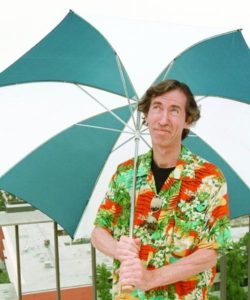
Geographers often have a background in meteorology and climatology like this month’s featured professional geographer, Stephen Ladochy, Professor Emeritus, California State University, Los Angeles, Department of Geosciences & Environment. Ladochy’s love of math got him interested in meteorology, but his job at the L.A. County Air Pollution Control District opened up a career path to pursuing a PhD and becoming a professor in Geography. He recommends geography students seek out internships or summer employment to give their career a boost!

Learn more about Geography Careers.

Geographers Honored this Spring

Katherine McKittrick, professor of gender studies at Queen’s University (and recipient of AAG’s 2019 Harold M. Rose Award for Anti-Racism Research and Practice); Diana Liverman, Regents Professor and director of the School of Geography and Development at the University of Arizona; and Lisa Naughton, professor of geography at University of Wisconsin-Madison were inducted as members of the American Academy of Arts & Sciences 2020 Class. 

Liverman was also elected to the National Academy of Sciences, along with Marilyn Brown, Regents Professor and Brook Byers Professor of Sustainable Systems in the School of Public Policy at Georgia Institute of Technology.

In April, Frank Magilligan, Erica Schoenberger, and Lisa Brooks (Abenaki) have received Guggenheim Fellowships for their work in geography. Magilligan is a professor of geography at Dartmouth whose work examines how science, politics, & values intersect in river restoration. Schoenberger is a professor of environmental health and engineering at Johns Hopkins University, as well as a political and economic geographer and environmental historian with specialties in the history of technology. She is the author of the recent Nature, Choice, and Social Power (Routledge 2015). Brooks is Chair of American Studies at Amherst College. Her recent work includes The Common Pot: The Recovery of Native Space in the Northeast and the book and companion website Our Beloved Kin: A New History of King Philip’s War.

RESOURCES AND OPPORTUNITIES

News from the International Geographical Union (IGU)

international-geographical-union-182x300-1

On April 2, 2020, the IGU postponed the 34th International Geographical Congress, originally scheduled to be held in August 2020, for one year.  It has been re-scheduled for August 16-20, 2021 in Istanbul, Turkey. Fees already paid and abstracts accepted will be carried forward to 2021 and there will be opportunities to submit new papers.  You can find further information about the IGU Congress and the IGU at https://igu-online.org/.

April 6 was to have been GeoNight (GéoNuit), an evening of public events that promote the discipline of geography. The annual April GéoNuit, launched in France in 2017, has gained in popularity in other countries, too. Events of any type, from public lectures to guided bike rides, have involved thousands of people. GeoNight events for 2020 were cancelled to avoid public gatherings, but geographers around the world can begin thinking about organizing Geo Night events for 2021.

Learn more about GeoNight (GéoNuit).

Comptroller Nominations Sought for Gamma Theta Upsilon

Gtulogo

The Gamma Theta Upsilon (GTU) Nominations Committee seeks candidates for consideration as nominees for the position of comptroller. The volunteer comptroller position oversees the financial management of GTU, including general accounting, yearly budget preparation, creation of financial reports, overseeing the filing of taxes, and acting as the liaison in managing GTU’s investment portfolio. This is a five year position starting in January 2021. If you believe that you or someone you know has the talents and resources required, the nominations committee hopes that you’ll consider serving GTU as Comptroller, a position that is integral to the functioning of GTU.

More information about applying for the comptroller position.

IN MEMORIAM

John W. Webb
Webb_John-290x290-1

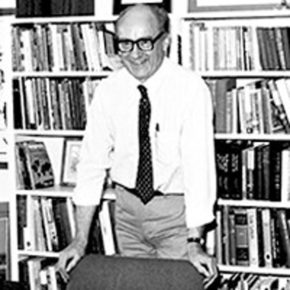
John W. Webb, 93, former Dean of Social Sciences and Professor of Geography, University of Albany (SUNY); former Professor of Geography, University of Minnesota; and co-author (with Jan O.M. Broek) of the world-wide best-selling text “A Geography of Mankind” (McGraw-Hill, 1968), died in St. Cloud, MN, on August 18, 2019.

Read more.

Allen G. Noble

Allen G. Noble, 90, a longtime AAG member, Pulitzer-nominated author, and Distinguished Professor Emeritus at the University of Akron, Ohio, died on March 24, at age 90. Noble was recognized in 1989 with the AAG Honors, the highest award offered by the AAG, and was named one of Ohio’s Distinguished Scientists.

Read more.

Ezekiel Kalipeni
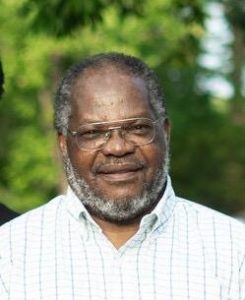
Ezekiel-Kalipeni-245x300-1Ezekiel Kalipeni, a longtime geography professor, died in the early hours of April 11, 2020 from heart-related complications while he was in his native country, Malawi at age 66. Globally known for his work focusing on medical geography, population and environment, and international development in Africa, Kalipeni was the 2014 recipient of the Kwado-Konadu-Agyemang Distinguished Scholar in African Geography Award. He also served as editor of the African Geographical Review, enjoyed mentoring and teaching students, and established the Kalipeni Foundation to support local development projects in Malawi’s southern district of Mulanje.

Read more.

David Hornbeck
hornbeckofficeOn Earth Day, 2020, COVID-19 claimed the life of Dr. David Hornbeck, Professor Emeritus, Department of Geography, California State University, Northridge. Hornbeck was particularly interested in both the historical geography of California during the mission and rancho periods and the development of GIS for business applications, particularly in banking. He was actively involved in career advising and development for students in his department and in developing his collection of papers, maps, and journals related to historical land use in California.

Read more.

The AAG is also saddened to hear of the passing of Evan Weismann this past month with a written tribute forthcoming.

GEOGRAPHERS IN THE NEWS
EVENTS CALENDAR
    Share

David Hornbeck

On Earth Day, 2020, COVID-19 claimed the life of Dr. David Hornbeck, Professor Emeritus, Department of Geography, California State University, Northridge. David led a full and productive life, ranging from two hitches in the Air Force from 1958 to 1966, earning his B.A. and M.A. in geography at what is now called California State University, Fresno (1968 and 1969, respectively) and his Ph.D. at the University of Nebraska, Lincoln, in 1972. In 1972, he began his career in the Department of Geography at San Fernando Valley State College, now California State University, Northridge. He retired in 2009.

Dominating the majority of his work, David’s passion was historical geography, especially of California during the mission and rancho periods and during the early establishment of the American agricultural and urban landscapes on the underlying Native Californian, Spanish, and Mexican cultural landscapes. He had a particular interest in the impacts of Spanish colonial expansion on the Native Californians and their fate in the mission system, meticulously reconstructing their demographics through mission archives in California and Mexico. He worked out the details of the economics of the mission, pueblo, and presidio systems in the context of the global trade and politics of the day. He was fascinated by the privatization of lands in California by the newly independent Mexico, which eventually led to the expropriation of the mission holdings to support that purpose. Privatization required petitioners for a land grant to map their proposed properties, submitting diseños as part of the petition. These petitions and diseños became part of the process by which Mexican ranchero families defended their claims to the American Board of Land Commissioners after 1848 (79% of them successfully, though the legal expenses typically led to sale or subdivision of the adjudicated holdings). David was interested also in the development of the distinctive California agricultural system and how the California urban system still bears the marks of the preceding Spanish and Mexican settlement systems. David loved the intense archival work historical geography required and, indeed, built up quite a collection of original materials that now comprise the Hornbeck Collection at the Monterey County Historical Society.

A second compelling interest David pursued was business GIS. His earliest work in this area was in grant and contract work in business location analysis and market area analysis, first for restaurants and then for banks. By 1984, he had begun to build and license fieldwork-based GIS systems for banks’ branch analysis, market area analysis, network analysis, and merger and acquisition needs. The LandBank GIS became so popular with major banks across the country that David and his wife, Ginny, founded Area Location Systems, Inc., to develop, market, and service it and train bank staff in its use. As a result of this work, banks became among the first corporations truly to understand what it was geographers do and to seek out geographers for their own marketing and IT staffs! David and Ginny eventually sold their shares in the company by the late-1990s, Ginny moving into special education and David continuing to do consulting and workshops for the banking industry, law firms, and water agencies until he entered the Faculty Early Retirement Program in 2002.

As a university faculty member, David devoted a lot of his time and energy to his students, many of whom remembered him fondly as a vivid and caring character and remained in contact with him long after their graduations. Indeed, the root of his interest in applied economic geography and business GIS was originally his desire to help his students develop rewarding careers using their geographic education. He served as the career advisor in his department and organized sixteen annual jobs symposia for geography students. Some of his publications were explicitly devoted to geographic education and to how faculty could cultivate both applied and academic dimensions in their work to mentor their students.  Many of the “Hornbeck School of Thought” (or “Hornbeck University of Geography”) went on for Ph.D.s themselves or entered highly successful careers in banking, environmental consulting, information technology companies, education, or government. Typical of David was an insight he shared shortly before retiring. He noted that academics often deeply enjoy teaching and mentoring the “A list” students who will go on to graduate school but sometimes tend to overlook the C students in the middle of the class curve. Many of these kids are much brighter than their GPAs suggest but are either too overworked, engulfed in personal problems, or immature to do well while they are students. But they are still taking it all in and, then, he said, they “grow into their educations” a few years later. Their geographic education all comes together for them in the context of their careers, which then take off. He commented that it’s the “C” students who seem to go on into six figure salaries and highly placed jobs, not the “A” students who go on to graduate school and academic penury!

David’s tragic encounter with COVID-19 leaves behind a large cadre of students, colleagues, business associates, and friends who mourn his loss and wish to comfort his wife of forty years, Ginny; his siblings, Arlene Suart (Sutter Creek, CA) and Claro Cabading (Honolulu); his sons, David, Christopher, and Brian; his grandchildren, Ashton, Vincent, and Robin. A webpage commemorating his life has been set up where there are links to his curriculum vitae, the Hornbeck Collection, his retirement “roast” materials, and examples from David’s little known pastime, flower photography.  A full obituary will also be posted there.

Donations will be gratefully received to support the Monterey County Historical Society that physically houses his collection (https://mchsmuseum.com/salinas/). Many thanks to Mr. Patrick J. “Mike” Maloney and Ms. Miriam Infinger, Research Associate, of the Law Offices of Patrick J. Maloney (Alameda, CA); Mr. James Perry of the MCHS; and Dr. Rubén G. Mendoza, Chair of the Department of Social, Behavioral, and Global Studies, and Ms. Jennifer A. Lucico, M.A., Lecturer, Department of Social, Behavioral, and Global Studies, California State University, Monterey Bay, for their years of work getting this collection assessed and physically moved to the Museum, for creating its digital portal, and for getting it all catalogued on WorldCat.

Very sadly yours,

Chrys Rodrigue
Dave’s second graduate student and friend of 48 years

    Share

Doing Geography in the Age of Coronavirus or How is Everybody Coping?

You hear it from everyone you know: these are strange and frightening times. While most of us have witnessed major disease outbreaks from afar – Ebola, SARS, Swine Flu – it is another thing to encounter something so directly, so personally, so comprehensively. Pandemic: what once seemed part of a grim historical record has smashed into our contemporary reality.
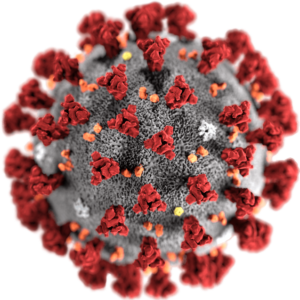
If you are one of the lucky ones, you are reading this inside your comfortable home, self-isolating, dashing out only to gather the most essential items. If you are one of the lucky ones, you are struggling to refit your classroom activities, your research, your office operations, your interactions with colleagues, and your accessibility to other people within this extraordinary era – pushing everything from the physical to the virtual realm. Maybe you also have children at home who want to be with their friends, or now need to be home-schooled. A hassle for sure, but hopefully something we will come through.

Of course not everyone is so lucky. Some are still on the front lines, making this strange new world tenable for the rest of us. Medical care workers of all sorts, people working for essential services or industries, people who must put themselves in the middle of this pandemic every single day. Still others are ill from the disease or care for sickened loved ones. And then there are those who have lost their jobs because of virus-related shutdowns or whose existing precarity threatens to push them over the edge. Poor pupils worried about the loss of their school lunches and struggling without secure internet connections. Students blocked from conducting their long-planned research and who may also be anxious about paying their rent. Job seekers who have just seen their prospects shrivel up. And junior scholars fearing how this might affect their tenure clock.

In my columns I have tried to touch on issues that affect some of us. The coronavirus threat is an issue that affects ALL of us in a way unimaginable just a few short weeks ago. It is important for us to remember that while the effects and the worry are universal, the outcomes are uneven. What for some of us may be an annoying inconvenience can prove to be truly horrific for others.

For those of us leading the AAG, the past two months have been challenging but manageable. As it became clear that the novel coronavirus would be so much more than a small disruption, we made the difficult decision to cancel our annual meeting, the first cancellation since the United States entered World War II. While the decision seems obvious now, we knew that many, many of our members would be seriously disappointed as the annual meeting is one of the highlights of their year.  We also realized that all of the careful planning conducted by the AAG staff and so many in the membership would be upended.

Even before we decided to cancel the in-person meeting, the staff was working on ways to allow some of the existing sessions to be conducted virtually. So far we have 150 virtual sessions ready for the AAG conference week. The platforms that are being assembled should allow for a fairly smooth operation for those who participate and attend. If you have already registered for the Denver meeting, you can attend these sessions free of charge and use your registrations for future meetings, while others pay a nominal fee. We will continue with the AAG council meeting (virtually of course) and hold the AAG business meeting. And we have a prepared a wonderful book, The Rocky Mountain West: A Compendium of Geographic Perspectives, which is available on the AAG website.

Of course there are so many aspects of the AAG annual meeting that cannot be done virtually and several of these will be postponed. Many of the themes for Denver will continue in Seattle (along with some new themes) and participants are invited to continue their sessions as they had already intended. I have reached out to the marquee participants for our Denver meeting and most have agreed to return next year. The presidential plenary will be a joint affair with president-elect Amy Lobben and myself looking at issues of marginalization, accessibility, and expanding the geography community. Past-president Sheryl Luzzadder-Beach will be able to present her address next year. We are working to make sure all of this year’s honorees will get their rightful due at next year’s Awards Luncheon. And the best news is that the AAG will host the annual meeting in Denver after all, in March 2023. It will be an opportunity for us to make good on all the work and preparations conducted by the local arrangements committee and local professionals.

Our annual meetings are so much more than sessions. They are opportunities for us to affirm our place in the geographical community. They provide a way for people to meet and connect with those they have only encountered on paper or online. They give students a much-needed boost in their professional development and networking. And they reignite old friendships and foster new ones. To continue with this, we hope that geographers consider some of the other options offered in Fall 2020. I have long championed the value of regional meetings, and this will be an opportunity for many of us to explore these. While we had intended to provide publicity for the regional meetings in Denver, we will be sure to advertise these over the summer. Other meetings, such as Race Ethnicity and PlaceGeography 2050 and the Applied Geography Conference should go forward as we overcome this affliction.

How this novel coronavirus changes us is open to speculation. But I have no doubt that the modifications to our society and to our geography will be profound, exceeding the transformations wrought by 9/11. Everything from personal hygiene to store design will harbor the possibility of a new pandemic. Right now, geographers can provide the necessary analytics and visual tools to help all of us understand the impact of the virus today. Looking toward the future, there will be ample opportunity for geographers to unpack all of the implications of this unprecedented and devastating disease.

But now is a time to step back. Many people are hurting. Many more are scrambling. First, take care of yourselves and your families. Then take care of those to whom you are directly connected – your students and the people who depend on you – inasmuch as you can do so. Look out for those who may be fearful and alone; there are more like this than you think. Be kind to one another. Keep your physical distance, but preserve and enhance your social community. The world has become a scary place. We need connections – now more than ever. Please help make these connections happen.

— Dave Kaplan
AAG President

DOI: 10.14433/2017.0070

    Share