Perspectives: A New Column in the AAG Newsletter

In May, we introduced a new column to the AAG Newsletter called Perspectives, replacing AAG’s former Op-Ed feature. Perspectives will share the opinions and ideas of members on issues of relevance to geography. We encourage submissions that stimulate dialogue, get members thinking, and challenge our discipline to take new approaches to the social, political, and environmental issues confronting geographers and the public.

We are grateful to Guo Chen of Michigan State University, whose article “Working Together for Racial and Social Justice: From Anti-Asian Racism and Violence to Anti-Racist Praxis in Geography” was the first Perspective to appear, last month. We look forward to sharing more of our members’ thought-provoking commentary in the coming months.

One of the great strengths and challenges of the discipline of geography is that it embraces the world. We envision Perspectives as having wide-ranging potential, showcasing our members’ voices, experiences, and opinions regarding virtually any topic. We want to make space for members to engage and challenge one another, taking on questions that help illuminate and strengthen the relevance of geography to people’s lives.

In all cases, the articles will focus on the best ideas: showcasing novel ways of considering social, political, and geography concepts, adhering to the AAG Code of Conduct and supporting AAG’s goal of fostering robust discussion and respectful disagreement. Optimal length is 1,000-1,500 words.

So, do you have a probing question or fresh inspiration for the discipline? Do you have a unique and engaging response to a column or feature article you’ve seen in our newsletter? We want to hear from you. Consider submitting a column for consideration as an upcoming Perspectives. Read more about our submission guidelines here.

DOI: 10.14433/2017.0092


Please note: The ideas expressed by Executive Director Gary Langham are not necessarily the views of the AAG as a whole. Please feel free to email him at glangham [at] aag [dot] org.

    Share

Newsletter – May 2021

PRESIDENT’S COLUMN

Opening Up the Possibilities for an Accessible AAG

By Amy Lobben

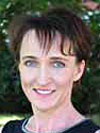
amy-225x300

Many of us “went” to the AAG annual meeting last month, scheduled to take place in Seattle. Of course, we all attended virtually from separate isolated locations. I attended from my living room, my kitchen table, and my bedroom floor… Keeping with my personal mission and my conference theme of Access, now is a good time to discuss how we all can participate in enhancing inclusion of attendees with disabilities at our meetings, whether they be national, regional, or in our departments. And wouldn’t it be nice if we all could be disciples, each carrying this message forward into our sister organizations when we attend meetings in cognate disciplines? My hope is that this column will be useful going forward, in particular for people who are as yet less familiar with disability and other accessibility issues, not just at AAG but at other conferences as well.

Continue Reading.

FROM THE MERIDIAN

A Good Day for Geography, Every Day

By Gary Langham

The late Will Graf would end his AAG President’s columns with this optimistic affirmation: It’s a good day for Geography. Given the last year, you might be surprised to hear that it is just as true today as it was during his tenure in 1998-99. Let me explain.

Continue Reading.

PERSPECTIVES

Working Together for Racial and Social Justice: From Anti-Asian Racism and Violence to Anti-Racist Praxis in Geography

By Guo Chen, Associate Professor of Geography and Global Urban Studies, Michigan State University

stopAAPIhate-1-300x197-1In June 2020, the Association for Asian American Studies issued an open call for putting an immediate end to anti-Black racism and advancing efforts toward achieving global social justice. The murders of Ahmaud Arbery, Breonna Taylor, Tony McDade, and George Floyd pulled a painful trigger for many Asian Americans… Since January 2020, the lives of Asian-heritage people in the U.S. and likely the same for those in other countries have been violently shaken. Asian Americans were among the first to help local communities combat Covid-19, while racist attacks were increasing in cities like Los Angeles…

Continue Reading.

ANNUAL MEETING

What was Presented at the 2021 AAG Annual Meeting?

Seong-et-al-Figure-1-300x215-1

Curious about all 2,952 papers and posters that were presented during the 2021 AAG Annual Meeting last month? Geographers Seong, JI, Stanescu, Lee, and Hwang used keyword network analysis to create a visual summary of the annual meeting. Based on presentation keywords, Urban was identified as the most frequent keyword, followed by COVID-19, GIS, and Climate Change.

Read the full analysis.

Save the Date for AAG NYC!

Join us for the 2022 AAG Annual Meeting February 26 – March 1, 2022. We invite you to organize and participate in sessions, workshops, field trips, special events, and activities. Look for the call for papers in June 2021. We look forward to seeing you in New York City.

PUBLICATIONS

NEW Annals of the American Association of Geographers Issue Alert:
The 2021 Special Issue of the Annals on the Anthropocene

Annals-generic-225x300

The Annals publishes a special issue each year to highlight research around a specific theme of global importance. The thirteenth annual special issue includes 29 articles on the Anthropocene and is guest edited by David Butler. The articles are divided into six sections: definitions and conceptual considerations; historical perspectives on the Anthropocene; physical geography and the Anthropocene; natural hazards, disasters, and the Anthropocene; the environment and environmental degradation; and the Anthropocene and geographic education. Introduced in 2000 as a concept indicating that human modification of the environment had reached such a significant level that a geological epoch distinct from the Holocene had been initiated, the Anthropocene has no universally accepted starting point. The 2021 special issue examines all geographic facets of the Anthropocene.

Read more about the Annals Special Issues.

Questions about the Annals? Contact annals [at] aag [dot] org.

NEW The Professional Geographer Issue Alert: Research featuring urban agriculture, geospatial analysis of HIV care, unemployment and more
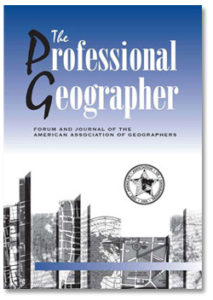
The-PG-2017-generic-213x300The most recent issue of The Professional Geographer has been published online (Volume 73, Issue 2, May 2021) with 14 new articles on current geographic research. Topics in this issue include direct injuries and fatalities from tornado outbreaks, shrinking cities, post-great recession geographies, electoral geography, principal component analysis, residential satisfaction in historic blocks, and structural fractality of road networks. Local areas of interest include Henan Province, Brazil, New York City, and Ethiopia. Authors are from a variety of institutions including University of Cologne, University of Connecticut, and Simon Fraser University.

All AAG members have full online access to all issues of The Professional Geographer through the Members Only page. In every issue, the editors choose one article to make freely available for three months. In this issue you can read The Elasticity of Shrinking Cities: An Analysis of Indicators by Maxwell Hartt for free for the next three months.

Questions about The PG? Contact profgeog [at] aag [dot] org.

NEW Spring Issue of the AAG Review of Books Published
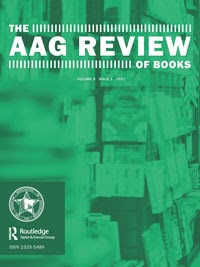
Review-of-Books-Cover

The latest issue of The AAG Review of Books is now available (Volume 9, Issue 2, Spring 2021) with 14 book reviews on recent books related to geography, public policy and international affairs. The Spring 2021 issue also includes two book review essays: Olwig’s comparison of Landscape and Power in Geographical Space as a Social-Aesthetic Construct and Landscape Theories: A Brief Introduction both by Olaf Kühne; and Kearns’ review of A Queer New York: Geographies of Lesbians, Dykes, and Queers by Jen Jack Gieseking, recipient of the 2021 Glenda Laws Award.

Questions about The AAG Review of Books? Contact aagreview [at] aag [dot] org.
Journals-newsletter-100In addition to the most recently published journal, read the latest issue of the other AAG journals online:

• Annals of the American Association of Geographers
• The Professional Geographer
• GeoHumanities
• The AAG Review of Books

ASSOCIATION NEWS

2021 AAG Nystrom Award Recipients Announced

Nystrom-Awardees-300x169The J. Warren Nystrom Award, established by a former AAG President to annually recognize a paper based on a recent dissertation in geography, is awarded during a special session at the AAG Annual Meeting. Two recipients were chosen for the 2021 AAG Nystrom Award: Daniela Aiella, currently a Postdoc at Queen’s University (PhD University of Georgia), for “A colonial genealogy of eviction: racialized dispossession in Atlanta and Vancouver” and Ziqi Li, a Visiting Assistant Professor at University of Illinois Urbana-Champaign (PhD Arizona State University), for “Computational Improvements to Multiscale Geographically Weighted Regression.” The Nystrom Award session recording is available to watch in the Annual Meeting program until May 11.

Learn more about the Nystrom Award and previous awardees.

AAG Announces Undergraduate Program Excellence Awards

awards_hi-res-300x160

Two recipients have been named for the 2021 Award for Bachelors’ Program Excellence in Geography: The Geographic Science Program at James Madison University (JMU) in Virginia, and the Department of Geography and Anthropology at Kennesaw State University in Georgia. The annual award honors Geography departments and programs that have significantly enhanced the prominence and reputation of Geography as a discipline and demonstrated the characteristics of a strong and engaged academic unit, playing an important role in educating future geographers and promoting the discipline to a wider world.

Learn more about these programs.

Get a Glimpse of AAG’s New Website
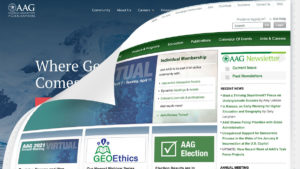
Web-redesign-reveal-1200x675-1-300x169During our virtual annual meeting, we gave a sneak peek of our new website currently in the design process. If you missed the session or weren’t able to attend the conference, you still have a chance to see the recording. Our website agency, Free Range, revealed some of the exciting changes in store for this completely accessible, innovative, and mobile friendly website launching later this spring. Please send us your questions and thoughts at feedback [at] aag [dot] org. We’d love to hear from you! View the recording.

We are also looking for some fresh taglines to appear on the new AAG website when it launches this summer! What does AAG mean to you in a few words? Submit your suggestion here.

Careers in Geography: Developing Collegial Relationships in a Department

Wednesday, May 12, 2:30 – 3:45pm EST

Join AAG members in the next webinar in our Department Leadership and Early Career series. This free event brings together panelists to discuss issues of onboarding, collegiality, and how a healthy department is widely beneficial for students, staff, and faculty. REGISTER NOW!

The Department Leadership and Early Career series combines two themes in one: building and growing strong academic programs, and helping students and young geographers navigate their early careers. AAG is pleased to continue this series throughout the spring, free and open to the public. Recordings of webinars held thus far are also available to watch at any time.

See upcoming webinars and view recordings

POLICY CORNER

New Data from Census as Geographers Prepare for Redistricting
US_Capitol

Last week the Census Bureau released its long-awaited congressional apportionment data. The 2020 population count resulted in some surprises and close-calls as states learned how many seats in the House of Representatives they will keep, gain, or lose. The release of this apportionment data was the first of two important steps in what’s next for congressional and state redistricting. States still require the Census demographic data in order to start drawing new district lines, which may not be released until late summer.

While the drawing of new maps won’t start for several months, now is the time to familiarize yourself with the process. To learn more, check out A Geographer’s Place in Redistricting published in Esri’s most recent edition of ArcNews. In this article, AAG’s Michelle Kinzer emphasizes that “when it comes to the fight for fair redistricting, there is no one better equipped than a geographer.”

In the News:

  • Competing NSF bills have been introduced in the House and Senate, the NSF for the Future Act (H.R. 2225) and the Endless Frontier Act (S. 1260). While both bills propose a new NSF directorate, they are otherwise substantially different. Click here to see a side-by-side comparison prepared by COSSA.
  • On March 31, the White House issued a fact sheet detailing many of the spending priorities in President Joe Biden’s proposed infrastructure initiative, the American Jobs Plan. The proposal includes $250 billion in research funding.
  • Nominations are being sought for to fill eight upcoming vacancies on the National Science Board (NSB), the policy-making body of the National Science Foundation (NSF) that also serves as an independent advisor to the President and Congress on federal science policy. More information on the nomination process is available on the NSB website. Nominations are due by May 31, 2021.
MEMBER NEWS

Profiles of Professional Geographers

 Johana-Ostling-300x225

Growing up in the Bay Area inspired a career in hazards for Johanna Ostling, a Forestry Technician (Fire Lookout) for the U.S. Forest Service. Fire Lookouts play a vital role in identifying locations of wildfires during fire season and directing responders to the location on the ground. Ostling uses her knowledge of weather conditions to record variables like wind speed, cloud types and cloud cover, and precipitation as well as her abilities to identify physical landscape features and map coordinates to determine wildfire locations and response.

Learn more about Geography Careers on the recently updated AAG Jobs & Careers website.

May Member Updates

The latest news about AAG Members. 

Four geographers are newly elected to the Academy of Arts and Sciences: incoming AAG Vice President Marilyn Raphael, 2020 AAG Lifetime Achievement recipient Ruth Wilson Gilmore, Marshall Shepherd, and 2021 Stan Brunn Award for Creativity recipient Dawn Wright. Founded in 1780, the American Academy of Arts and Sciences honors excellence and convenes leaders from every field of human endeavor to examine new ideas, address issues of importance to the nation and the world, and work together “to cultivate every art and science which may tend to advance the interest, honor, dignity, and happiness of a free, independent, and virtuous people.” Read more.

Two geographers have been elected to the National Academy of Sciences: Marshall Shepherd and 2021 Stan Brunn Award for Creativity recipient Dawn Wright. Established in 1863, the National Academy of Sciences is committed to furthering science in America, and its members are active contributors to the international scientific community. Read more.

Dr. Reece Jones of the Department of Geography and Environment at the University of Hawai‘i at Mānoa has been named a 2021 Guggenheim Fellow. Read more.

AAG Member Caroline Tracey is among eight selected to be a WW Dissertation Fellow in Women’s Studies for 2021. Tracey, a PhD candidate at the University of California, Berkeley, is working on an ethnography of the activism of women and trans deportees and return migrants in Mexico City for her dissertation. Read more.

Dr. Matt Cook of the Department of Geography and Geology at Eastern Michigan University (EMU) has been awarded the Ron Collins Distinguished Teaching Award, the highest teaching award EMU presents. He received this award in the same year as being granted tenure and serving as a co-PI on a major grant project. Read more.

RESOURCES AND OPPORTUNITIES

A Few Spaces Remaining: AAG Leadership and Early Career Workshops, 1-5 June

Two summer professional development workshops from the AAG’s Graduate Faculty Development Alliance have moved online. Registration is free and currently open, though only a few open slots are available – reserve your spot by May 15. Department Chairs, Heads, new Deans, and other emerging leaders – develop the tools you need to do your job, network with peers, and learn from top leadership professionals in an inclusive, innovative, and interactive series. The AAG Geography Faculty Development Alliance for early career geographers, as well as non-AAG members who are graduate students or teaching geography in higher education, offers an innovative, new online approach to the highly successful early career workshops that have been offered since 2002.

For more information about both workshops see http://www.aag.org/gfda or contact Dr. Patricia Price (patricia [dot] price [at] baruch [dot] cuny [dot] edu) with questions about the leadership workshop or Dr. Michael Solem (msolem [at] txstate [dot] edu) about the early career workshop.

Call for Abstracts: 2021 Climate Adaptation Research Symposium
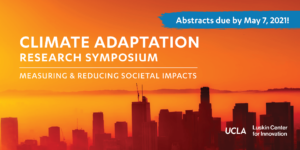
call-for-abstracts-graphic-twitter_Climate_Adaptation-300x150The UCLA Luskin Center for Innovation is delighted to invite abstracts for our 2021 Climate Adaptation Research Symposium. This virtual event will feature recent social science research on the impacts of climate change, particularly on vulnerable populations and communities. We’re building off the success of last year’s event, which brought together 70 presenters and more than 2,000 attendees from across the nation and world. Abstracts are welcome from economics, geography, law, public health, sociology, urban planning, and related disciplines. Research should measure the scale of climate impacts or focus on strategies to reduce these impacts.

Submission deadline: May 7, 2021

Symposium: September 8, 2021

Learn more and submit your abstract here: https://innovation.luskin.ucla.edu/abstracts/

Please direct any questions to lcievents [at] luskin [dot] ucla [dot] edu.

Participate in AGI’s Geoscience COVID-19 Impacts Survey
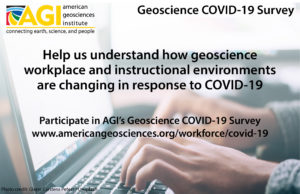
RAPID-COVID19-Geosciences-Study_04-1-300x194The American Geosciences Institute’s Geoscience COVID-19 Impacts study has been extended into a second phase that will continue the longitudinal study through March 2022, thanks to continued support by the National Science Foundation (Award #2029570). The second phase of this study will focus on how the COVID-19 pandemic has permanently changed the way in which geoscientists work and study and how workplace and instructional environments transition into post-pandemic configurations. The study will continue to accept new participants through January 2022 and is open to all geoscientists, including students, retirees, and those not currently employed, who reside in the United States, and are at least 18 years old.

For more information and to participate in the study, please visit https://www.americangeosciences.org/workforce/covid19.

IN MEMORIAM
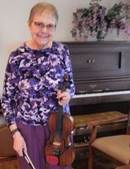
Hultquist_NancyNancy B. Hultquist, retired Central Washington University (CWU) geography professor, died March 30th, 2021. Nancy is remembered fondly by students, friends, and colleagues. Starting out using computer punch cards, Hultquist eventually moved to using GIS, ultimately introducing countless K-12 teachers to the early iterations of making maps and GIS through NCGE workshops she participated in. She was quick to assist junior faculty and devoted countless hours to helping students find employment, including maintaining a jobs list of employment opportunities across the Pacific Northwest which currently has over 800 subscribers. Read more.

The AAG is also saddened to hear of the passing of Jene McKnight and Roger Kasperson this past month with written tributes forthcoming.

FEATURED ARTICLES

Why should geographers care about data science?

By By Canserina Kurnia, Esri Senior Solution Engineer for Education, and Joseph Kerski, Ph.D., GISP, Esri Education Manager
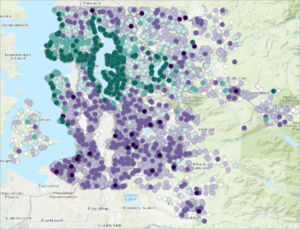
HouseValueMap-300x229“Data science is the study of data. Data science involves developing methods of recording, storing, and analyzing data to effectively extract useful information. The discipline of geography has always been focused on data science, because geographers have always been keen to gather, analyze, and make sense of large volumes of data across a wide variety of scales and covering a wide variety of themes, from ecoregions to individual census blocks. Those using GIS are spatial data scientists: They combine their data with theoretical foundations such as Tobler’s First Law to explain and predict. As they visualize and analyze data, they detect patterns and relationships, testing real-world phenomena against hypotheses.

Why is geographic thinking and spatial analysis important to data science?” Continue reading.

GEOGRAPHERS IN THE NEWS
EVENTS CALENDAR
    Share

Opening Up the Possibilities for an Accessible AAG

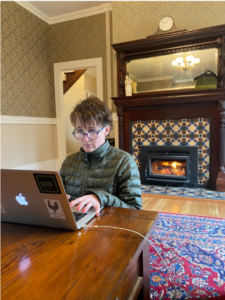
Many of us “went” to the AAG annual meeting last month, scheduled to take place in Seattle. Of course, we all attended virtually from separate isolated locations. I attended from my living room, my kitchen table, and my bedroom floor. Though just to insert some sense of the old days, for one committee meeting, I invited one of my University of Oregon colleagues (Alec Murphy) to the “Presidential Suite” (my kitchen table). I mistakenly thought the meeting was scheduled for later in the day and in my email invite, I offered to serve charcuterie and wine. Alec corrected my timing mistake and suggested that 8am might be too early for wine. I’m not so sure.

President Lobben opening up “the Presidental Suite” (her table at home, and a laptop) at AAG 2021.

Keeping with my personal mission and my conference theme of Access, now is a good time to discuss how we all can participate in enhancing inclusion of attendees with disabilities at our meetings, whether they be national, regional, or in our departments. And wouldn’t it be nice if we all could be disciples, each carrying this message forward into our sister organizations when we attend meetings in cognate disciplines? My hope is that this column will be useful going forward, in particular for people who are as yet less familiar with disability and other accessibility issues, not just at AAG but at other conferences as well.

Let me start with a bit of background. Over its lifetime, members of the Disability Specialty Group have spent significant time and effort working on issues of access, inclusion, and optimal integration at the AAG Annual Meetings. These efforts have included advocating for accommodations, sending advance scouts to venues, reporting on mobility strategies, and developing guidelines for conference assistants (for example, identifying an accessible route between the Marriott Wardman Park and the Omni Shoreham Hotels in Washington, D.C; it’s certainly not a direct one).

These efforts are beyond helpful—they are necessary for many of our members. But, these are not the sort of activities in which AAG Specialty Groups should have to engage in on their own. Imagine tasking members of the Water Resources Specialty Group with mapping access to safe drinking water at each conference.

As a result, AAG Council approved the creation of an Accessibility Task Force to ensure structural foregrounding of accessibility for all in all AAG’s operations. While I hope that this Task Force will continue to work on additional issues of accessibility, the initial charge was to address physical barriers to access and inclusion in the AAG. The first report has been drafted and submitted to Council and focuses on three issues: the website, Meridian Place, and the annual conference. AAG staff are already working on implementing nearly all of the report’s recommendations. Task Force members and I are thrilled by this progress and applaud our AAG leadership for taking these steps.

While I hope that this Task Force will continue to work on additional issues of accessibility, the initial charge was to address physical barriers to access and inclusion in the AAG.

But there are substantial barriers to access—socially situated barriers—that AAG cannot legislate or manage centrally. The social model of disability recognizes that disability manifests in cultural attitudes embedded in social practices. It’s the social model that suggests our society has to change to remove disabling barriers to access.

At the AAG annual meeting, many of these socially constructed barriers to access are created by other attendees. This is something that is in your control.

If you want to take small, individual and significant steps to foster inclusion, consider making the following social and behavioral changes outlined in the table below. This list is put together from a short survey I sent out to members of our Task Force and from my own personal experiences. It is by no means inclusive of all the measures we can take, and does not touch on other sets of measures that would help inclusion for other marginalized groups, but it is a starting point. And it is often taking that first step that opens us up to being more aware of how our actions affect others.

  • Don’t block ramps.
  • Adjust microphone heights as necessary.
  • Ensure equal integration in spaces (don’t relegate people with mobility devices to areas just for them or to the margins of the room).
  • Don’t move chairs around and block access corridors.
  • Avoid wearing scents.
  • Respect independence.
  • Don’t pet service animals unless invited to do so.
  • Talking louder doesn’t improve clarity. Be clearer rather than louder.
  • Don’t use flash photography or other strobe-like devices.
  • Avoid low lighting. It’s not safe for anyone, but especially unsafe for people who are blind or have low vision.
  • When communicating with someone using a sign language interpreter don’t talk to the interpreter, talk to the person with whom you’re communicating.

I want to spend some time contextualizing four important issues: judging others, bathrooms, language, and presentation guidelines.

Judging others: We all know that we’re not supposed to judge others based on appearance. And, yet we do. People who are visibly different from the majority of others that are present in a space are judged differently and assumed to be unable (or able). It’s an age-old adage: Don’t judge people by their appearances. This is especially true in the world of ability.

Bathrooms: I have to admit, I’m obsessed with bathrooms. They seem to be the battleground for so much of our collective history and ongoing exclusions – notably also around gender non-conformity and transgender rights in present times.

I also have deeply personal experiences navigating public toileting with my son with cognitive disabilities. Many of his and our experiences have not been easy, nor dignified. There have been many times when assisting my son has involved both of us finding ourselves on filthy public bathroom floors because public bathrooms are not designed for adults in his situation. Fortunately, my son can now use the family bathrooms or men’s bathrooms with Andrew (my husband). If Andrew isn’t with us, he and I go to the women’s bathroom. That often incites negative comments and critiques from others.

I’ve been asked not to use profanity in my columns. Too bad. If I could I’d be able to convey what I think about the judgement of others in the women’s bathroom in those circumstances.

But, my obsession with bathrooms isn’t really about the bathroom itself. It’s about how we have designed and legislated our bathrooms to control access to public space. From Victorian-era gender discrimination (which extended far beyond just public bathrooms), to Jim Crow racially segregated bathrooms (also extended far beyond bathroom spaces), to recent battles over transgender people’s rights to bathrooms (think North Carolina’s HB2 law), it seems that people only want to drop drawers in spaces that include people who only look like them or suspect they are like them.

The ADA (Americans with Disabilities Act) ensures that public bathrooms provide accommodations for people with disabilities. But accommodation is not inclusion. ADA laws mandate separate spaces, including bathrooms (but also: building entrances, classrooms, hiring process, educational practices, work environments…). You’ve seen these bathroom spaces on campuses and in civic venues, airports, and conference settings–rows and rows of stalls for non-disabled people and merely one or two “disabled stalls.”

I’ve paid attention to our public bathrooms at the AAG annual meeting venues. Without exception, the gendered public bathrooms at our venues have been airport style; only one or two stalls for people with disabilities, but rows for non-disabled people.

Until our society implements universal design and access for our public bathrooms, in our future meetings, attendees can focus on two key things to ensure dignified access to bathrooms: 1. when both an accessible stall and standard stall are available, use the standard stall if you don’t need the accessible stall; and 2. avoid judging others for seemingly inappropriate use of an accessible stall; you cannot judge by appearance alone who needs to use those stalls.

Language. We must condemn the use of derogatory slurs about marginalized groups, and that includes words that are considered “metaphors” (e.g., “stupid” “crazy” “lame”) but really point to ableist thinking. A recent article in the Harvard Business Review provides a good overview on the use of ableist language.

I don’t think that most people are intentionally derogatory about or towards disability when they use such words. But, these are not used as words of praise, and their usage upholds stigma for many groups with cognitive impairments and/or mental health diagnoses.

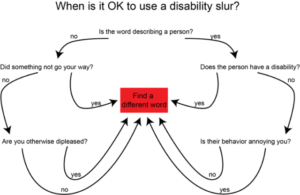
For a handy guide on when it’s OK and not OK to words like those above, consult the chart below (which I developed from a chart from the Military Special Needs Network).

Adapted from the Military Special Needs Network

The National Center on Disability and Journalism (https://ncdj.org/style-guide/) lists some excellent guidelines for referring to people with disabilities. To paraphrase:

  • Refer to a disability only when it’s relevant to a conversation and when knowledge of the disability is certain (e.g. not based on appearance alone).
  • Be sensitive to preferences for people-first or identify-first language. For example: “People who are blind…” rather than “Blind people…” This is intended to emphasize an individual’s personhood rather than their disability. However, there are critiques against the use of people-first language, including that it is often imposed by non-disabled people on disabled individuals and that the use of people-first language does not address the social injustices faced by the disability community. Also, many disabled people prefer identity-centric language because their disability is an important part of their identity and because it facilitates activism based on identity. In any case, people have the right to refer to themselves however they want.
  • When possible, ask the individual how they would like to be described.
  • Avoid made-up words like “diversability” and “handicapable” unless referring to them in a quote, a movement, or an organization.

None of us can be perfect and language preferences are subject to change. In fact, the very term “disabled” is contested as pejorative and biased. But we can all try to be better in how we use language around ability. Be open to self-correction.

Presentation Guidelines. One of the primary goals of our annual meeting is to exchange scholarly findings and ideas. We mostly use an audio/visual format for that sharing. Yet not everyone uptakes audio/visual presented information in the same way. Fortunately, presenters have a few options for enhancing the accessibility of their presentation and, happily, these guidelines by the APHA will improve the effectiveness of presentations more generally. Moderators and organizers must also stay aware of the needs of all of their presenters with regard to disabilities and access.

Going back to the inclusion diagram I referenced in the March column. We all decide what sort of Annual Meeting we want to host and attend. We can reject the medical models that suggest that disability is a personal problem and can only be ‘fixed’ by medical intervention. Instead, we can embrace universal access, and a space, a culture, and an annual meeting that moves beyond individual accommodation so as to be truly inclusive.

If you’re wondering which disability model you embrace, answer this question: What do you think needs curing, the body or the society?

Thank you to the Accessibility Task Force for their efforts in drafting the first report: Audrey Kobayashi, Deborah Metzel, Katherine Ericson, Sandy Wong, Hamish Robertson, and Leonor Vanik. Thank you to several others who shared their conference experience with me as I gathered input for the foundation of this column. And thank you to Sandy Wong, Diana Beljaars, and Stephanie Coen for their feedback on initial drafts of this column.

—Amy Lobben
AAG President and Professor at University of Oregon
lobben [at] uoregon [dot] edu

DOI: 10.14433/2017.0091

FURTHER INFORMATION

AAG 2021 sessions on disability, mental health, and access (for registrants’ view until May 11)

Accessibility Guidelines for Presenters, American Public Health Association

Disability Language Style Guide, National Center on Disability and Journalism

Knowledge base, including chart of definitions toward inclusion, Think Inclusive

Why You Need to Stop Using These Words and Phrases, Rakshitha Arni Ravishankar, Harvard Business Review

Military Special Needs Network and EFMP Coalition

Disability Justice, from Showing Up for Racial Justice, including these Google Docs:

Disability Home Manners,

Disability Justice, anti-ableism and access resources, and

Nuts and Bolts of Disability Access.

Is there a resource you’d recommend? Email us at newsletter [at] aag [dot] org.


Please note: The ideas expressed in the AAG President’s column are not necessarily the views of the AAG as a whole. This column is traditionally a space in which the president may talk about their views or focus during their tenure as president of AAG, or spotlight their areas of professional work. Please feel free to email the president directly at lobben [at] uoregon [dot] edu to enable a constructive discussion.

    Share

Working Together for Racial and Social Justice: From Anti-Asian Racism and Violence to Anti-Racist Praxis in Geography

By Guo Chen, Associate Professor of Geography and Global Urban Studies, Michigan State University

This column is the first in a new section of the AAG News called Perspectives, which offers a platform for members to discuss issues of relevance to geography. A slightly longer version of this article was first published in April as a tie-in with related sessions sponsored by the Asian Geography Specialty Group and the China Geography Specialty Group at AAG’s annual meeting. Registered participants at the meeting may view the recordings of these sessions until May 11:

In June 2020, the Association for Asian American Studies (AAAS) issued an open call directed at putting an immediate end to anti-Black racism and advancing efforts toward global social justice. The murders of Ahmaud Arbery, Breonna Taylor, Tony McDade, and George Floyd pulled a painful trigger for many Asian Americans. The Association clearly stated that “[the] fight against anti-Asian pandemic racism is rooted in a common struggle against white supremacy” and “[to] end global anti-Black racism, we must fight racism in our local communities and educate ourselves and others about the rich history of Black Americans and support, validate, and value Black lives now and always.”

Most recently, but not for the first time, the urgency of this shared struggle against white supremacy was highlighted by the horrific Atlanta-area shootings of eight people on March 16, 2021, including six women of Asian descent. In April, four members of the Indianapolis Sikh community were killed in a shooting at a FedEx warehouse. Anti-Asian racism in the United States has been more widely reported by the media lately than before (see LA Times coverage and NY Times, for example), and reports of anti-Asian hate crimes are rising around the world (see Time). In early 2020, Asian American communities and scholars were already well aware of this rise in anti-Asian racism. On a virtual panel in June 2020, the president of the AAAS, Dr. Jennifer Ho of the University of Colorado Boulder, explained why COVID-19-related anti-Chinese sentiment is essentially anti-Asian racism:

“[w]hile China and Chinese people have been targeted and blamed for the coronavirus in the United States … the truth is all forms of racism against the Chinese in the United States are forms of racism against anyone who is perceived to be Chinese in the United States. It’s an Asian/Asian American issue … what it means to be an Asian American is the recognition that those particularities that happened in a natal homeland get diminished, get flattened when you arrive in the United States. Because someone who doesn’t know what your particular ethnicity is, your nationality, and only sees your Asian-looking face and is going to make certain assumptions of who you are, about your ability to speak English … one of the things we have in common, as Asian Americans, is this understanding that we are not benefiting from white privilege, that we have been on a receiving end of systemic racism, starting with the Chinese, extending into other Asian ethnic groups.”

Since January 2020, the lives of Asian-heritage people in the U.S. and probably also in many other countries have been violently shaken. Asian Americans were among the first to help local communities combat COVID-19, while racist attacks were increasing in cities like Los Angeles. The Stop AAPI Hate website received 3,795 reports of anti-Asian hate incidents nationwide between its launch on March 19, 2020, and February 28, 2021. In these reports, the Chinese were the ethnic group most targeted, but 60% of the respondents were non-Chinese. Incidents occurred in all 50 states and the District of Columbia. Asian women reported significantly more incidents than did Asian men. The fatality rate for Asian women has continued to increase due to the combined effect of COVID-19 and a terrifying rise in hate incidents. In fact, the AAPI Data website reports that 13,620 more Asian Americans died than usual in the first seven months of 2020 (a 35% increase over the prior 5-year average). Over this long year, anxiety has also built up as many have been separated from their families or extended families and ancestral lands due to travel bans from both sides of the Pacific—a circumstance that has likely caused more stress to Asian women than to men, given that women are more likely to fulfill caregiver roles. As early as July 2020, studies were already finding a large percentage (40.3%) of Asian Americans with self-reported symptoms of anxiety and/or depression (an 8-fold jump from the previous year) compounded by racism-related vigilance. These same studies warned of the serious and long-lasting negative impact of experienced and perceived racial discrimination on physical health and psychological well-being.

Despite discussions on the xenophobic sentiment stoked by the previous U.S. administration, we must also accept the historicity of our current crisis of racism and racial violence. As race scholars have commented, white supremacy is the root of all race-related violence in the U.S., and “race is a thread that connects all shootings.” Anti-Asian racism is racism, just like anti-Black racism and any other form of racism. Whenever an Asian country is perceived as a national threat, Asian Americans suffer. Asian Americans are all too familiar with the history of state-sanctioned discrimination.

Racism is like a river that affects everyone in the country, and it is deeply rooted in white supremacy in the U.S.
. . .

We have come to realize that our geographic scholarship is compartmentalized along national, experiential, and personal identity lines. Racialized identities and the angst and alterity experienced by diasporic scholars in North America often need some translation to the rest of our international colleagues. But the themes of our studies are universal. As one geographer wrote to me, “different forms of oppression are linked … nobody is free until all are free.” And, as a community of geographers, we need to continue our discipline’s strong tradition of studying how oppression and marginalization play out, within places and across space. As a former chair of a Specialty Group of the AAG, I have led open dialogues with Asian and China-heritage geographers, some of whom shared opinions and stories with me in June 2020. Most expressed pain arising from frustration with a cross comparison of the ways different nations had handled COVID-19, together with feelings including fear about the prospect of leaving their “anodyne” research areas to embrace a perceived “politicized” arena, such as addressing the legacy of anti-Asian racism and distant or near memories of being discriminated against or marginalized as a Chinese or Asian scholar within our institutions. I appreciate their sharing with me.

“[T]here is a rising anti-Asian sentiment because of the [previous] U.S. leader’s rhetoric and the hawkish advisors and media he listens to … it is easier to blame the Other, versus looking clearly at the fault of not acting early, to respond to the pandemic, and doing the necessary steps to have masks, etc. We can see the … examples of Taiwan, South Korea, New Zealand and even many African nations that have low infection rates, and VERY low fatalities [by June 2020 during the first wave] … I get emotional almost weekly because of the current situation … I will stop writing about this.”

“I’m not a China-study scholar and I was never an active member as I almost never went to those AAG happy hours. But I do care about the study subjects … I used to think politics and politicization should be separate from academic endeavors, however, it becomes increasingly difficult, if not possible at all, to be like that. And even further, being a social scientist, I started asking myself whether it’s responsible not to face the challenges from the political side. I guess it’s a learning process for me.”

“I grew up in post-colonial Africa and have a very low level of tolerance for racism in any form. Even if I am not genetically Asian, I too could say a few words on bigotry and prejudices. But is this enough? Should we try to publish our personal opinions if this helps us discover our own identity and the originality of our own contributions as transnational geographers? We are a tiny minority but maybe it is easier for us to articulate or advocate than it is for a vast majority of people.”

“[One can] in no way ignore the anti-Asian/Chinese racism and discrimination that exist around the world, not just in the US … the diasporic Chinese scholars’ life experience …matter, and … the research on Asian (im)migration and racism … matter.”

“As a Mainlander based in Hong Kong, I can totally relate to [the] feeling … [about] racial prejudices against Asian scholars.”

“[I] would like to reach out to say that I feel [I am] being discriminated [against] in my job.”

In 2021, these messages from nine months ago look so distant, but the concerns are even more relevant today. As we sojourned in the Zoom world of scholarly exchanges in the past year, the fluidity has afforded us connectedness and made us academic refugees striving for existential relevance. The interruption of COVID-19 in our customary lives also provides an opportunity to change. It is time to prioritize anti-racist praxis in Geography, like in other disciplines, and to ensure that our being anti-racist advances a resolution to “challenge structural racism and other intersecting oppressive systems—e.g., ableism, classism, ethnocentrism, homophobia, sexism, transphobia—by shifting power—e.g., funding and other critical resources, policies, processes, leadership, culture” in our discipline and subdisciplines. For area geographers (those whose research has been largely framed regionally rather than systematically or globally), some clear goals are to continue to interrogate the assumptions and privileges embedded in area-bound expertise, to continue to problematize our positionalities and the dominant narratives in our research field, and to continue to privilege the scholarship that has long been considered “marginal,” such as work on transnational migration and migrants, underprivileged people, race, ethnicity, and social justice, to name a few. There is also an urgency to develop anti-racist learning and teaching praxis in our discipline.

Many challenges are ahead, but the most dreadful time is when we are in silence. We should continue to intervene with dialogues to break this silence. The research field is there to be defined and redefined.
. . .

Guo Chen (PhD, Penn State), Associate Professor of Geography and Global Urban Studies at Michigan State University. She is the recipient of a Wilson Center Fellowship in 2017-2018 and an Outstanding Service Award from the China Geography Specialty Group of the AAG in 2020. At MSU, Guo serves as an elected faculty representative on the Asian Studies Advisory Council, a founding member of the Geo Diversity Committee, a newly appointed faculty member on the President’s Advisory Committee on Disability Issues, a SWIG faculty advisor and a core faculty member of the Asian Pacific American Studies Program beginning fall 2021. Guo thanks Christian Lentz, Ken Foote, Shaolu Yu, Jennifer Ho, and Lisa Schamess for their reading of this piece, and the many anonymous colleagues for their emails, warm words, and generously shared resources, which led to this op-ed. The opinions expressed here are solely her own.

DOI: 10.14433/2017.0089

Panel resources:

Ho, J. 2020. Anti-Asian racism, Black Lives Matter, and COVID-19. Japan Forum. https://www.tandfonline.com/doi/full/10.1080/09555803.2020.1821749 .

Japan Forum Podcast 8 With Prof Jennifer Ho – Anti-Asian Racism, BLM, and COVID-19. https://soundcloud.com/soas-university-of-london/japan-forum-podcast-8-with-prof-jennifer-ho-anti-asian-racism-blm-and-covid-19 .

Teaching resources for Anti-Asian racism and COVID-19. www.colorado.edu/asmagazine/2020/04/08/anti-asian-racism-and-covid-19.

To be an Asian woman in America. CNN opinion.

For an understanding of white supremacy as the root of all race-related violence in the US, read https://theconversation.com/white-supremacy-is-the-root-of-all-race-related-violence-in-the-us-157566

Read Ben Barron (PhD student in Geography at CU Boulder) article about the Boulder and Atlanta shootings: https://www.boulderweekly.com/opinion/guest-columns/race-is-a-thread-that-connects-all-mass-shootings/

Anti-Racism Resources for Asian Americans. https://tiny.cc/AntiRacistAsAmResources .

Alberts, Heike C. and Helen D. Hazen. 2013. International Students and Scholars in the United States: Coming from Abroad. New York: Palgrave Macmillan.


Please note: Perspectives is a new column intended to give AAG members an opportunity to share ideas relevant to the practice of geography. If you have an idea for a Perspective, see our guidelines for more information. 

    Share

Nancy Hultquist

Nancy B. Hultquist, retired Central Washington University (CWU) geography professor, died March 30th, 2021. During her geographic career she was an active member of the American Association of Geographers (over 50 years), the National Council for Geographic Education (NCGE), and the Washington Geographic Alliance (WGA). Nancy is remembered fondly by students, friends, and colleagues. She was quick to assist junior faculty and devoted countless hours to helping students find employment.

Like many geographers, Nancy was drawn to the field early in her academic career. Also, like many geographers, she had many non-academic interests including bowling, raising Brittneys, and playing the fiddle.

Born in 1943, Nancy grew up in Atlanta, GA where she lived near a 32-lane bowling alley. There she worked and became good at the sport. (Nancy holds the record of High Series (679) for Women in Moscow, ID.) She completed her undergraduate degree in 1965 at Georgia State University and then on to Graduate school, first at the University of Cincinnati and then on to the University of Iowa. Along the way she married John (also a geographer) in 1969. From the farming country of Iowa came the first Brittany. Then the University of Idaho beckoned (1974), and the three headed further west.

The Moscow university provided a split position that Nancy and John shared. Along the way she gained knowledge and teaching experience using computers to make detailed maps. Like so many of her contemporaries, Nancy started out with key-punch cards and eventually moved on to Geographic Information Systems (GIS). Countless K-12 teachers were introduced to the early iterations of making maps and GIS through NCGE workshops she participated in with Paul Baumann.

In 1988, Nancy joined the CWU geography department as the first full-time, tenure-track woman faculty member. There, she became involved with an Army initiated (GRASS) GIS program. Initially the program used CWU faculty to do mapping for the Army’s Yakima Firing Center/Training Center. Nancy expanded the program to include undergraduate GIS classes and was instrumental in moving the program along. Her popular classes grew, and she soon had students presenting their GIS projects at professional meetings. It is little wonder that, as an advisor, she supervised more interns than any other geography department faculty.

Other than her love of geography and dogs, (their kennel name – Cedaridge Brittanys – was known throughout the Nation) Nancy was also a talented musician. She first played the fiddle at the age of 4 and, as an additional outlet for her boundless energy, joined a group named Kittitas Valley Fiddlers and Friends. Heart issues from a childhood case of Rheumatic fever ended her academic career, but only interrupted her fiddle playing. Major heart surgery came in 2009. Her surgeon told her she was spared because there was more for her to do on Earth.

As she recovered and gained stamina, Nancy began to take a larger role in the music of the Kittitas Valley Fiddlers and Friends. They played at elder care facilities in Ellensburg and other venues in the area, especially at the Adult Activity Center. The photo accompanying this text is from this period. She considered the entertainment provided to the residents of the valley in these facilities one of her best experiences.

Nancy was known as a great teacher and an even greater supporter of student success. She maintained a jobs list of employment opportunities across the Pacific Northwest which currently has over 800 subscribers. Many CWU alumni credit her tireless work to helping them launch their career. The list will continue, serving as a living memorial to her impact. Please take a moment to remember Nancy B. Hultquist as a shining light to students, colleagues, and friends.

    Share

Allen G. Noble

Dr Allen G. Noble, Professor Emeritus at the University of Akron, Ohio and a longtime AAG member, passed away on March 24. He was 90 years old.

In his early career, Dr. Noble served as a United States Foreign Service Officer in Bombay, India, and Curitiba and Belém, Brazil. He went on to a distinguished academic and publishing career in regional, cultural, and physical geography. His book Wood, Brick, and Stone: The North American Settlement Landscape was nominated for a Pulitzer Prize in 1984. In the late 1980s, AAG recognized Dr. Noble with the AAG Honors, the highest award offered by the AAG. The Ohio Academy of Sciences cited him in their 100th Year Celebration as one of Ohio’s Distinguished Scientists.

Noble’s ability to keep his family goal oriented and organized will be greatly missed. He was predeceased by his daughter and is survived by his wife, two sons, four grandchildren and three great grandchildren

    Share

You Baby

“You Baby.” It’s Saturday morning. Jeffrey, who is chronologically well out of his early teenage years, but very much still there in spirit, is awake and calling to me with his favorite insult. He’s mostly non-verbal, but this particular phrase is one that he articulates well enough for anyone to understand.

It’s catchy. A friend and I agree that sometimes we would love to deploy Jeffrey’s favorite phrase at select times, such as… some faculty meetings, for example.

I have mostly resisted using this nifty phrase. However, there are times when I do get fed up with the socially constructed marginalization that is the lived experience of my son and many others with disability. That’s usually when I let loose with “You Baby.”

My husband Andrew and I have started a winery, but not just any winery (terrapacem.com). Our goal is for this winery to provide community, training, and work experiences for people with disabilities. Our son Jeffrey and some of his friends from his school and support program will be among its first employees. Our urban tasting room is set to open this month. (As a side note, this process—and to be honest the many pallets of wonderful wine—have been a great distraction during the Covid pandemic. It’s one of the only things in my life that seems to be moving forward over the past year.)

Image: Lucas George Wendt

I have no idea how well this new venture will work. But, there’s no wading in; we have to jump! In addition to making wine and building a tasting room, we’ve partnered with local nonprofits supporting people with disabilities, including an amazing art program—we are dedicating wall space to displaying art from local artists with disabilities. Last week, Andrew and I visited the studio and saw some of the art that will be the first showing in our tasting room. While there, in addition to interacting with some of the artists, the instructors, and enjoying the displays, I saw a graphic on the wall (see the graphic here, with context about how it has been interpreted and shared). I’d seen it before. But last week, I found myself staring. I was awestruck by how hard inclusion is to achieve and the dramatic (and expensive) steps Andrew and I are taking in order to create opportunities for inclusion. Sometimes I feel like everything we are doing feels contrived – and to an extent it is. Sometimes the barriers seem unsurmountable. And sometimes I get very grouchy when I think about what we are having to do to overcome systematic and systemic bias and exclusion.

But, what we are doing is necessary. Everyone in society exists in constructed space with  boundaries of access and exclusion. Which people are allowed passage is based on intangible cultural, ethnic, racial, gendered, disabled, or economic boundaries. Spatial boundary patterns vary for every individual, driven by these geographies of exclusion.

One of my activities over the past several years has been mapping privileged and disenfranchised space and looking at the patterns of disconnected spaces that emerge. These patterns can reveal spaces that are dominated by a single group or multiple groups. The greater the privilege, the larger the space.

While I feel that Andrew and I are going to fairly extreme lengths to create inclusion opportunities for our son and his community, I also feel that our path is obvious and manageable. But, it’s my professional role – as geographer, educator, administrator, and AAG member, that presents the most confounding inclusion challenge for me.

In a coming column, I will share solicited responses I received from many faculty regarding what they wish they had known and been trained for before beginning their faculty career. One of those respondents mentioned frustration with the lack of preparation for teaching varied student learning needs. This same sentiment was part of a long, ongoing conversation between some of my colleagues, beginning about 2 years ago when we began to notice an uptick in students reporting disability-based instructional accommodations. Usually, those accommodations include extra time for exams or a notetaker. But those are often BandAid solutions.

The real problem is our institutional, instructional, and traditional pedagogic barriers. Major among these barriers is inadequate educator preparation, coupled with classic sage-on-the -stage or zoom-in-the-room instructional practices. The combination of poor training and one-size-fits-all instruction creates a serious disconnect between instructor delivery and student learning needs.

But, of course, institutional goals are the overarching barrier. And these goals are largely out of the hands of most faculty. On the institutional side, especially at public colleges and universities, we may need to think about our mission—our public mission. If we’re really in the business of education, maybe that should be our priority.

Just an idea.

Here’s an example: Research. Research is often the first thing universities celebrate in their missions. Yet it is expensive. As one upper administrator once told me, the university pays $1.3 for every $1 of external research funding it receives. In addition, as the Carnegie research activity classification increases (i.e. R3 to R1), the teaching load usually lowers.  At what cost do universities prioritize expensive research metrics over inclusive education?

I’ve spent most of my career at an R1 university.  I do see some contribution to society and I see the benefit to some students.  But, looking back, I’m honestly not sure whether I served society better by publishing a couple of articles per year in obscure academic journals, as opposed to focusing on more inclusive education of our next generation.

If we’re going to address the problem of educational access and inclusion, the answer seems obvious:  As geography educators, we (and our institutions) need to adopt Universal Design of Instruction. One of my favorite summaries of UDI is from the Do-It program at the University of Washington. Yet while simple to discuss, the principles of UDI are difficult to implement, primarily as a result of attitudinal, administrative, resource, and institutional barriers.

During our PhD programs, most of us are taught to be researchers. Some of us are formally taught to be teachers. But, few of us are taught Universal Design of Instruction. This approach represents a monumental shift from the traditional pedagogy: the lecture-driven course design. Yet, if we are going to achieve educational inclusion, our practices and institutions must shift out of comfortable models designed for the “typical” student and make way for a new approach – instructional design for a broad range of students. This range must include the very students who make up our classes whether they have disabilities, are of a non-traditional age, are raised in another language, come from any race, ethnicity, differ in learning style, or—most often—have lives that combine several of these.

As I reflect on the inclusion graphic I saw on the studio wall last week, I realize that in education—at all levels—we have a long way to go to create true inclusion. Rather than holding on to our normative, mainstream educational practices and relying on using accommodations for those students who don’t fit the norm, we should build inclusive instruction and learning. Then, the wave of student accommodation requests will reduce to a trickle.

I know, personally, that I need to do better. I need to learn and practice the principles of UDI. If I don’t, I know what Jeffrey would say… “You Baby.”

—Amy Lobben
AAG President and Professor at University of Oregon
lobben [at] uoregon [dot] edu

DOI: 10.14433/2017.0087


Please note: The ideas expressed in the AAG President’s column are not necessarily the views of the AAG as a whole. This column is traditionally a space in which the president may talk about their views or focus during their tenure as president of AAG, or spotlight their areas of professional work. Please feel free to email the president directly at lobben [at] uoregon [dot] edu to enable a constructive discussion.

    Share

AAG Announces 2021 Grant Recipients

The American Association of Geographers congratulates the individuals and entities named to receive an AAG Grant. The AAG will confer these awards at a future event to be determined, once the travel and in-person meeting restrictions have been lifted.

The 2021 Anne U. White Grant

This grant enables people, regardless of any formal training in geography, to engage in useful field studies and to have the joy of working alongside their partners.

Erik Johanson, Florida Atlantic University, will conduct paleoenvironmental research in Guayaquil, Ecuador with partner Jessie Johanson, and will lead a coring team with Florida Atlantic University (FAU) students associated with the FAU field school.

Max Woodworth, Ohio State University, will study historical urban geography with partner Namiko Kunimoto, in Tokyo for a project titled: Colonial Modernism in Datong, Shanxi.

2021 Dissertation Research Grant recipients ($1,000/each)

The AAG provides support for doctoral Dissertation Research in the form of grants up to $1,000 to PhD candidates of any geographic specialty.

Shamayeta Bhattacharya, University of Connecticut

Alicia Danze, University of Texas at Austin

Brandon Finn, Harvard University

Gengchen Mai, UC Santa Barbara

Scott Markley, University of Georgia

Sophie O’Manique, The Graduate Center, CUNY

Ruchi Patel, Pennsylvania State University

2021 Research Grant recipients ($500/each):

The AAG provides small Research Grants of $500 to support direct costs for fieldwork and research.

Ryan Burns, University of Calgary

Mei-Huan Chen, Pennsylvania State University

Jennifer Greenburg, Stanford University

Wenliang Li, University of North Carolina Greensboro

Anna Van de Grift, Texas A&M University

Qi Zhang, Boston University

2021 AAG Darrel Hess Community College Geography Scholarships

Outstanding students from community colleges, junior colleges, city colleges, or two-year educational institutions who will be transferring as geography majors to four-year universities receive support and recognition from this scholarship program, including $1,000 for educational expenses.  The scholarship has been generously provided by Darrel Hess of the City College of San Francisco to 29 students since 2006.

Devon Michelle Borthwick, transferring from Front Range Community College to the University of Wyoming,

Constance Connors, transferring from Sinclair Community College to Arizona State University

    Share

Newsletter – February 2021

PRESIDENT’S COLUMN

Want a Thriving Department? Focus on Undergraduate Success

By Amy Lobben

tamarcus-brownI cannot think of a person in higher education who has not felt the pressure of maintaining and growing undergraduate enrollments. Undergraduates, who make up the large majority of the student body, are the people we devote most of our instructional efforts toward, and—as administrators constantly point out—are universities’ primary source of revenue through tuition and fees. At public institutions, undergraduate success is also the primary focus of state legislatures looking at higher education metrics and state funding. Geography departments may literally live or die depending on their ability to maintain robust undergraduate enrollments and recruit majors.

Continue Reading.

FROM THE MERIDIAN

In Kansas, an Early Warning for Higher Education and Geography

By Gary Langham

Late last month, a bellwether event took place in Kansas, threatening higher education’s ability to support post-COVID recovery. Citing the extreme budget constraints caused by the pandemic, the nine-member Kansas Board of Regents unanimously approved a new policy giving public institutions the power to remove faculty, including those with tenure, through 2022. The new policy sidesteps one already in place that addresses financial emergencies while preserving transparency and faculty participation in termination decisions.

Continue Reading.

ANNUAL MEETING

New Curated Specialty Group Sessions at #AAG2021

This year at the 2021 Annual Meeting, AAG is taking a new approach to our scheduling of Specialty and Affinity Group sessions to decrease overlap and showcase the work of these groups. Specialty and affinity group chairs have highlighted a guided program of their “must-see” sessions for those interested in their specific topics including rural geography, business geography, geomorphology, hazards, the history of geography, and more. Curated tracks are AAG’s approach to helping you find the most relevant sessions among our abundant choices, helping you navigate our more than 760 sessions and 2,700 paper abstracts this year. All abstracts will be assigned to sessions by Mid-February, when the preliminary program is released.

Browse Sessions by Theme.

AAG 2021 Goes Virtual – Program to be Released Mid-February

AM2021V-1000X1000sq-290x290-1

In mid-November, AAG made the difficult but necessary decision to shift the 2021 annual meeting to a completely virtual experience. A streamlined process is in place to help session and activity organizers bring their programming to the virtual environment, with the assistance of AAG staff. Stay tuned — the program for the virtual meeting will be released in mid-February.

PUBLICATIONS

NEW The Professional Geographer Issue Alert:
Articles with topics ranging from the role of rivers in environmental movements to the digital representation of cities

The-PG-2017-generic-213x300The most recent issue of The Professional Geographer has been published online (Volume 73, Issue 1, February 2021) with 13 new articles on current geographic research. Topics in this issue include impacts of COVID-19 on learning; quantitative geography journals; income inequality; Wikipedia; Weibo; spatial autocorrelation; and regional development research trends. Locational areas of interest include Baltimore, Maryland; South Florida; and Catalonia. Authors are from a variety of institutions including University of North Carolina at Greensboro; University of Denver; and Avignon University.

All AAG members have full online access to all issues of The Professional Geographer through the Members Only page. Each issue, the Editors choose one article to make freely available. In this issue you can read How Identity Enriches and Complicates the Research Process: Reflections from Political Ecology Fieldwork by Hanson Nyantakyi-Frimpong for free for the next 3 months.

Questions about The PG? Contact PG [at] aag [dot] org.

NEW Winter Issue of the AAG Review of Books Published

The latest issue of The AAG Review of Books is now available (Volume 9, Issue 1, Winter 2021) with 15 book reviews on recent books related to geography, public policy, and international affairs. The Winter 2021 issue also holds one book review essay and a book review forum focused on the recipient of the 2019 AAG Meridian Book Award, Wilted: Pathogens, Chemicals, and the Fragile Future of the Strawberry Industry, by Julie Guthman.

Questions about The AAG Review of Books? Contact aagreview [at] aag [dot] org.

In addition to the most recently published journal, read the latest issue of the other AAG journals online:

• Annals of the American Association of Geographers
• The Professional Geographer
• GeoHumanities
• The AAG Review of Books

Call for Abstracts: Special Issue of ‘Annals’ on “Race, Nature, and the Environment”

Annals-generic-225x300-1The 2023 Special Issue of the Annals invites new and emerging geographic scholarship situated at the crossroads of Race, Nature, and the Environment. In seeking contributions from across the discipline, we welcome submissions that advance critical geographic thinking about race and the environment from diverse perspectives and locations; that utilize a broad array of geographic data, theories, and methods; and that cultivate geographic insights that cut across time, place, and space. Abstracts of no more than 250 words should be submitted by e-mail to Jennifer Cassidento by March 31, 2021. The Editor (Katie Meehan) will consider all abstracts and then invite a selection to submit full papers for peer review by June 1, 2021.

More information about the special issue.

ASSOCIATION NEWS

New Webinar Series Explores GeoEthics

The American Association of Geographers, in partnership with the Center for Spatial Studies at the University of California Santa Barbara and with support from Esri, will launch a series of webinars on key considerations for GeoEthics. The GeoEthics Series will begin on February 9, with a webinar hosted by Arizona State University’s Spatial Analysis Research Center.

Drawing together experts from academia, the private sector, and government, the multi-year GeoEthics Series is expected to result in an action plan for addressing the ethical issues surrounding geospatial data. Major ethical issues raised by locational information will be discussed, including surveillance, labor and employment, governance, geospatial analytics, and more culminating in an in-person Summit in late 2021, to be scheduled as soon as it is safe to do so. Sponsored by Esri, this Summit will further explore geospatial ethics in areas such as geography, human rights, immigration, labor, law, policy, computing, data science, and sociology. For more information, visit this link.

Bridging the Digital Divide

A May 2020 survey of AAG’s students found that 60% of undergraduates, 66% of masters, and 48% of PhDs faced new challenges in their learning environments and technology needs due to COVID-19. These numbers are one reason AAG launched the Bridging the Digital Divide program with Esri as a partner. The program has already dedicated $238,000 to faculty requests from eight tribal colleges and universities (TCUs), 14 historically Black colleges and universities (HBCUs), and 1 predominantly Black institution (PBI). It is serving students across more than 95 courses, 41 percent of which are GIS classes. Learn more about the program in the Winter issue of ArcNews. Readers can also catch up with Dr. Adegoke Ademiluyi, a faculty member at Fayetteville State University, who responded to the Bridging the Digital Divide program to benefit his students in this ArcNews interview.

For more information about the AAG’s COVID-19 Task Force efforts, read Executive Director Gary Langham’s Winter ArcNews article.

AAG Welcomes Spring 2021 Interns

The AAG is excited to welcome two new interns coming aboard our staff for the Spring 2021 semester! Joining us this semester are Ilan Gritzman, a recent graduate from University of Central Florida, and Jennifer Church, senior at The University of Maryland.

Interested in interning with the AAG for Summer 2020? The AAG is accepting intern applications until March 1, 2021. Interns at the AAG are provided a weekly stipend and participate in most AAG programs and projects such as education, outreach, research, website, publications, or the Annual Meeting.

Meet the interns.

POLICY CORNER

Our Policy Priorities for the Biden Administration

Image-118 capitol building

On January 20th, the first day of President Biden’s term, the AAG shared a letter with the White House outlining our top policy priorities for the new administration.

In the letter we state that as an organization of engaged geographers, spatial data scientists, academics and professionals, we stand ready to offer our support and expertise as the administration begins its ambitious agenda to “Build Back Better.” Our priorities include an emphasis on the importance of federal geospatial data and the implementation of the Geospatial Data Act, continued increased funding for the National Science Foundation (NSF) and related agencies, prioritization of geography as a subject in K-12 education, the use of geography to promote diversity, equity, and inclusion efforts, and the need to restore government and public trust in scientific integrity. We will adapt as issues evolve and emerge in years to come, but will do so with an emphasis on these guiding priorities along with the policy and advocacy tenets outlined in AAG’s Strategic Plan.

Click here to read the full letter to the White House, and stay tuned throughout the year for more ways to get involved in the AAG’s advocacy campaigns.

In the News:

  • In a victory for geographers and environmental advocates, a federal judge this week struck down a Trump-era EPA rule that allowed the omission of legitimate scientific findings, including confidential geospatial data, in the name of “transparency” in policymaking. The AAG, along with the Urban and Regional Information Systems Association (URISA) and the University Consortium for GIS (UCGIS), submitted a federal public comment in 2020 to oppose this troubling and harmful rule.
  • The Census Bureau is working to report results from the 2020 count  that will dictate 2021 redistricting, but continues to run behind schedule. The bureau will first release state population counts which are used to determine the number of total seats each state has in the House of Representatives. State population counts were due by the end of 2020, but are now expected by April 30th as the agency attempts to fix irregularities in data. The next important release is the detailed demographic data used by each state to draw new legislative districts. That data is typically delivered by the end of March, but as of now it is not expected to be shared before July 30th.
  • On January 27, President Biden issued a detailed Executive Order on Tackling the Climate Crisis at Home and Abroad. Among other things, the order ensures that “climate considerations” will have a place in U.S. foreign policy and national security, promises a government-wide approach to addressing the climate crisis, including by establishing a White House Office of Domestic Climate Policy and interagency National Climate Task Force, and seeks action to spur workforce development in sustainable infrastructure, agriculture, and the energy sector, while also addressing environmental justice for the most vulnerable populations.
MEMBER NEWS

Profiles of Professional Geographers

Linda Peters was inspired by her work with the March of Dimes Birth Defect Foundation to integrate geography and GIS in finding solutions for fundraising in areas of need. Today Linda holds a B.A. in Geography and Certificate in GIS/Cartography from University of Maryland Baltimore County and works as a Global Business Development Manager for Esri. Linda knows that most issues she comes across with her customers can benefit from spatial analysis, so she recommends strong communication skills and a willingness to put in the work and listen as keys for a successful career.

Learn more about Geography Careers on the recently updated AAG Jobs & Careers website.

RESOURCES AND OPPORTUNITIES

AAG Calls for Nominations for Standing and Awards Committees

The AAG Council will make appointments to several of the AAG Standing Committees at its spring 2021 meeting. These appointments will replace members whose terms will expire on June 30, 2021. If you wish to nominate yourself or other qualified individuals for one or more of these vacancies, please notify AAG Director of Operations Candida Mannozzi on or before March 1, 2021. Please make sure that your nominee is willing to serve if appointed. Include contact information for your nominee as well as a brief paragraph indicating their suitability for the position.

Open committees include: Committee on the Status of Women in Geography; Diversity and Inclusion Committee; Finance Committee; Membership Committee; Publications Committee; AAG Awards Committee; AAG Fellows Selection Committee; AAG Globe Book Award Committee; AAG Harm de Blij Award Committee; AAG Meridian Book Award Committee; AAG Marcus Fund for Physical Geography Committee; AAG Program Excellence Award Committee; AAG Research Grants Committee; AAG Harold Rose Award Committee; AAG Student Award and Scholarship Committee; and AAG Wilbanks Prize Committee.

Click here for a description of committees.

Career Mentors Needed for 2021 AAG Virtual Meeting

The AAG seeks professional geographers representing the business, government, nonprofit and academic sectors to serve as volunteer “Career Mentors” during the 2021 AAG Virtual Meeting. Career mentoring provides an open forum for students and job seekers to receive one-on-one and small-group consultation about careers in a variety of industries and employment sectors. Mentors are expected to answer questions and provide general career advice to students and job seekers interested in learning more about industries that employ geographers, the work geographers perform and strategies for getting into the field. This year we will be organizing eight sessions, one each morning and one each afternoon of the conference, to provide our virtual attendees around the world with more opportunities to participate.

For additional questions and to volunteer, please contact Mark Revell at the AAG at mrevell [at] aag [dot] org by March 1st, 2021.

NCRGE Dear Colleague Letter: Advanced Placement Human Geography

NCRGE_logoThe National Center for Research in Geography Education is organizing a research group to conduct a comprehensive analysis of AP Human Geography course data. Grants of $4,000 each are available for up to four researchers to join the study. For more information on how to apply, see this Dear Colleague Letter: http://www.ncrge.org/funding/

IN MEMORIAM

The AAG is saddened to hear of the passing of these colleagues.

William Dando, 50 year AAG member and longtime chair of the Bible Geography specialty group, passed away on January 1, 2021. Throughout his career Dando received numerous awards for his teaching and service throughout his career, exemplifying an academic life that was a balance between scholarship and community service. He leaves behind his wife and co-writer/editor Caroline Z. Dando; children Christina, Lara, and Bill (all geographers); four grandchildren — Emmaline, Anna, Alex, and John; and thousands of former students and mentees. Read more.

Robert Thomas Kuhlken, retired professor of geography and former geography department chair at Central Washington University, died on January 1, 2021. He was 67. More than anything Kuhlken loved to be outdoors and was a lifelong scholar, educator, and tireless observer of the natural world. Read more.

Hugh Brammer, who dedicated his life’s work to studying agriculture in Bangladesh, passed away at the age of 95 on January 13, 2021. Brammer, who held a MA in Geography from University of Cambridge spent over 25 years working for the Food and Agricultural Organization of the U.N. Read more.

    Share

Getting Our Bearings in Washington, D.C. and Charting Our Future

    Share