The AAG Newsletter is an online-only publication. It is sent to members’ inboxes 10 times a year and published on the website to highlight the news and other online content published by the AAG. View the editorial guidelines
Join Our Mailing List
Don’t miss a single issue of the AAG Newsletter. If you don’t already have an account, create one or log in to your current account and select the AAG Newsletter in the communications preferences of your member dashboard. You can also visit the AAG Resource Hub regularly for the most recent news, stories, and announcements.
Past Issues of the AAG Newsletter
Archived copies of the AAG Newsletter from 2003 to 2012 are available as PDFs and following years are compiled on web posts. View past issues
Share
Stories
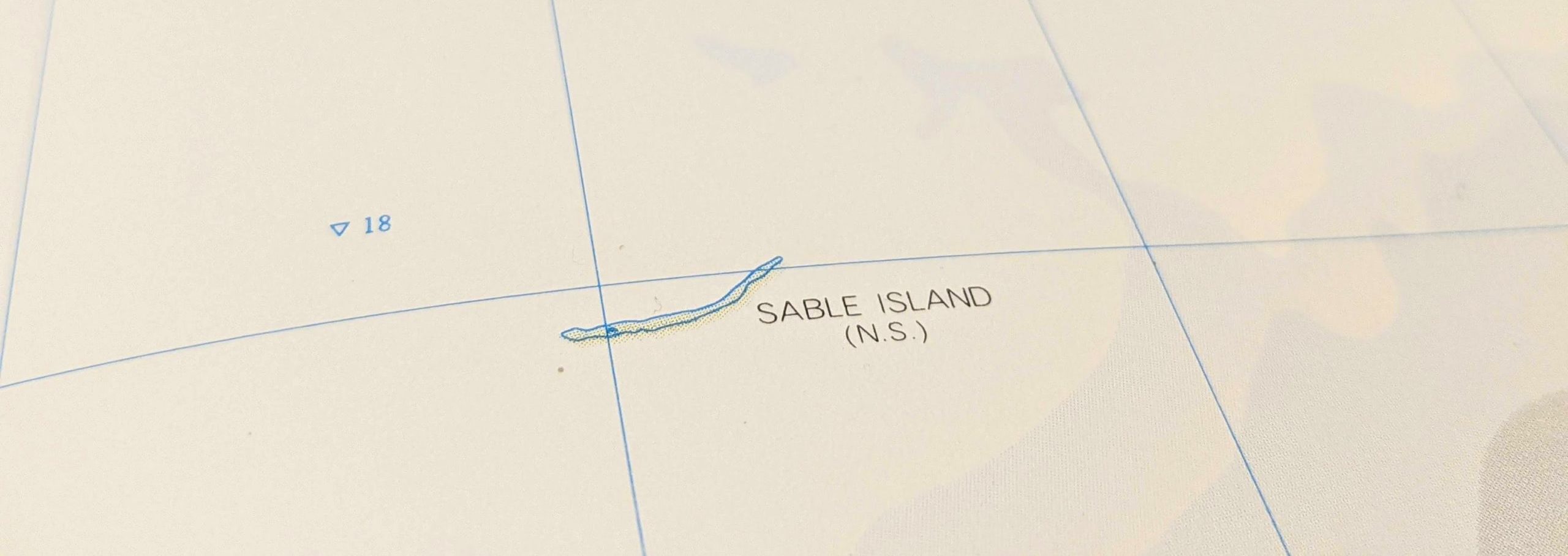
On the Map: The Wry Smile of Sable Island
Picture of Sable Island in an atlas.
When you next find yourself moving your eyes or navigating a finger across a map of the Northwest Atlantic, you may be in for a surprise. About 175 km southeast of Nova Scotia, a seam appears on the surface of the ocean and opens up, ever-so-slightly, into a wry smile.
An adjacent label should offer a name: Sable Island.
Sable Island pictured in an atlas in isolation.
Really? Can we be sure about this? The island is an anomaly, way out in the Atlantic, and there is nothing nearby that seems to justify its existence, geologically speaking. So it’s hard not to wonder about its position on the map, and its presence in the physical world.
It is tempting to imagine that the island’s unusually graceful outline might indicate the presence of a clever cartographer — one who has inserted a fictitious landmass in the Atlantic to suss out copycat mapmakers. There are precedents for such behavior on land after all: Ever heard of a “trap street”?
But a quick internet search confirms that Sable Island does exist. It is a place of sand, wind, waves, a single Scots pine (the only survivor of more than 80,000 trees planted since 1900), and feral horses, among other things.
Map of Sable Island.
Looking closer, Sable Island yields quirks far better than any tricky mapmaker could. For starters, it looks like a barrier island but is located much further from the coastline than typical barrier islands. It likely formed from a terminal moraine — a mass of rocks and sediment carried down and deposited by a glacier, — sometime during the last Ice Age. That origin story may also help to explain the unexpected stability of some of the island’s dune structures.
Over the last several centuries, Sable Island has also been notorious for attracting shipwrecks. Some 350 ships have succumbed to the sand bars, thick fog, and difficult currents characteristic of the area. Most of their remains have been crushed by waves and buried in the sand, making a full census impossible.
Sable Island map showing the location of the known wrecks upon the island.
Despite challenges of navigating to and from Sable Island, a rich history of research began there in 1871 with establishment of the Meteorological Service of Canada. Since then, research has expanded to include studies of climate, geomagnetism, and ecology.
In 2013, Sable Island became protected as a National Park Reserve with the approval of Mi’kmaq stakeholders. Full national park status has yet to be achieved, pending settlement of Indigenous Peoples’ land claims within the Made in Nova Scotia Process.
Share
Resources
Explore careers in geography—download the brochure
Geography is more than maps—it’s a powerful way to understand the world and shape its future. From climate science and urban planning to business analytics and public health, geographers bring critical insights to today’s most pressing challenges.
AAG Globe Book Award for Public Understanding of Geography
The deadline for the upcoming 2027 AAG awards has passed.
A committee awards the annual prize for a book that conveys most powerfully the nature and importance of geography to the non-academic world. An award of $1,000 will be made to the author(s). In any given cycle, the Globe Book Award Committee may also select a second title from the pool of nominations to be recognized with an Honorable Mention.
Eligibility
Books must be written or co-authored by a geographer. Books published for the first time in English, in any country, between October of the previous year and September of the current year, are now eligible for the award. Please submit your title for consideration for only one of the three AAG book awards (i.e., J.B. Jackson Prize, Globe Book Award or Meridian Book Award).
As with all other AAG awards, eligibility also rests on the candidate being in compliance with the AAG Professional Conduct Policy. Nominations may be rescinded, and the award may also be revoked for any candidate or awardee who is found in violation of the AAG’s Professional Conduct Policy.
Submissions
Nomination statements (two-page maximum length) should provide full contact information for the author(s) and the nominator(s), including email addresses, and should document the ways the nominated work conveys the nature and importance of geography to the non-academic world.
Mauris non tempor quam, et lacinia sapien. Mauris accumsan eros eget libero posuere vulputate. Etiam elit elit, elementum sed varius at, adipiscing vitae est. Sed nec felis pellentesque, lacinia dui sed, ultricies sapien. Pellentesque orci lectus, consectetur vel posuere.
2026
David L. Prytherch
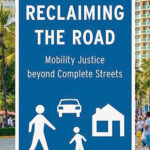
What would our streets, cities, and neighborhoods look like if urban plans took geographers and their studies seriously? With Reclaiming the Road (University of Minnesota Press), David Prytherch shows us the promise of communities planned, designed, and built for humans, rather than solely cars. Through rich case studies, extensive historical-geographical contexts, and delightful prose, the book offers an indispensable guide for re-engineering urban space through best practices, human-centered designs and policies, and abiding attention to intersectional concepts of equity and justice. In-depth interviews with transportation advocates, city planners, and community leaders across nine U.S. cities meld with interdisciplinary yet accessible theoretical discussions to ground the analysis in both lived experience and insightful scholarship. Immersed in dialogues linking practice, advocacy, and scholarship, Reclaiming the Road wields the powers of geography to ask more of urban design and to reimagine our communities as spaces of mobility and justice.
2026 AAG Globe Book Award for Public Understanding of Geography
David L. Prytherch
2026 AAG Globe Book Award for Public Understanding of Geography
What would our streets, cities, and neighborhoods look like if urban plans took geographers and their studies seriously? With Reclaiming the Road (University of Minnesota Press), David Prytherch shows us the promise of communities planned, designed, and built for humans, rather than solely cars. Through rich case studies, extensive historical-geographical contexts, and delightful prose, the book offers an indispensable guide for re-engineering urban space through best practices, human-centered designs and policies, and abiding attention to intersectional concepts of equity and justice. In-depth interviews with transportation advocates, city planners, and community leaders across nine U.S. cities meld with interdisciplinary yet accessible theoretical discussions to ground the analysis in both lived experience and insightful scholarship. Immersed in dialogues linking practice, advocacy, and scholarship, Reclaiming the Road wields the powers of geography to ask more of urban design and to reimagine our communities as spaces of mobility and justice.
2025
Christopher F. Meindl
Florida Springs: From Geography to Politics and Restoration by Christopher F. Meindl
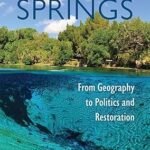
Freshwater springs represent sparkling trifles to the casual tourist, cherished landscapes to neighboring residents, and sources of live-giving water for everyone else. Dr. Meindl’s Florida Springs systematically unpacks the immense depth and complexity of these features to expose “competing narratives about springs, what ails them, and how we might repair the damage” (xxiii). A skilled geographic storyteller, Meindl writes in an engaging and approachable style, accessible to both lay readers and policymakers, while navigating across the breadth of geography in remarkable ways. Blending nuanced discussions of physical science, historical geography, and public policy, Meindl masterfully illustrates the unique power of geography to synthesize a wide range of subfields and concepts to produce clear and useful understandings of landscapes and ecosystems of vital importance to all.
Published by University Press of Florida
2025 AAG Globe Book Award for Public Understanding of Geography
Christopher F. Meindl
2025 AAG Globe Book Award for Public Understanding of Geography
Florida Springs: From Geography to Politics and Restoration by Christopher F. Meindl
Freshwater springs represent sparkling trifles to the casual tourist, cherished landscapes to neighboring residents, and sources of live-giving water for everyone else. Dr. Meindl’s Florida Springs systematically unpacks the immense depth and complexity of these features to expose “competing narratives about springs, what ails them, and how we might repair the damage” (xxiii). A skilled geographic storyteller, Meindl writes in an engaging and approachable style, accessible to both lay readers and policymakers, while navigating across the breadth of geography in remarkable ways. Blending nuanced discussions of physical science, historical geography, and public policy, Meindl masterfully illustrates the unique power of geography to synthesize a wide range of subfields and concepts to produce clear and useful understandings of landscapes and ecosystems of vital importance to all.
Published by University Press of Florida
2024
Charlotte Wrigley
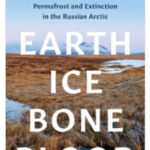
Earth, Ice, Bone, Blood is the first of its kind in that it takes a largely unstudied substance — permafrost — and applies it to one of the most pressing issues of the Anthropocene, extinction. The book considers how permafrost disrupts the normative definition of extinction by way of its becoming discontinuous — not just materially, but as a heterogenous and dynamical social category that has implications for all life on Earth. By situating the study in the Russian Arctic, the book also encompasses the fraught history and crucial ecological future of a nation that comprises 65% permafrost.
Published by University of Minnesota Press
2024 AAG Globe Book Award for Public Understanding of Geography
Charlotte Wrigley
2024 AAG Globe Book Award for Public Understanding of Geography
Earth, Ice, Bone, Blood is the first of its kind in that it takes a largely unstudied substance — permafrost — and applies it to one of the most pressing issues of the Anthropocene, extinction. The book considers how permafrost disrupts the normative definition of extinction by way of its becoming discontinuous — not just materially, but as a heterogenous and dynamical social category that has implications for all life on Earth. By situating the study in the Russian Arctic, the book also encompasses the fraught history and crucial ecological future of a nation that comprises 65% permafrost.
Published by University of Minnesota Press
2024
Honorable mentions to Jared D. Margulies and to Colin McFarlane
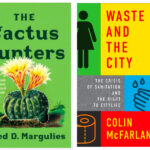
Honorable mentions to Jared D. Margulies, University of Minnesota Press, “The Cactus Hunters” and to Colin McFarlane, Verso, “Waste and the City: The Crisis of Sanitation and the Right to Citylife.”
2024 AAG Globe Book Award for Public Understanding of Geography
Honorable mentions to Jared D. Margulies and to Colin McFarlane
2024 AAG Globe Book Award for Public Understanding of Geography
Honorable mentions to Jared D. Margulies, University of Minnesota Press, “The Cactus Hunters” and to Colin McFarlane, Verso, “Waste and the City: The Crisis of Sanitation and the Right to Citylife.”
2023
Daniel D. Arreola
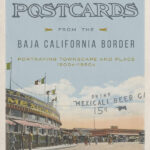
Postcards from the Baja California Border (University of Arizona Press, October 2021) by Daniel D. Arreola (Arizona State University) offers a window into the historical and geographical past of storied Mexican border communities. Once-popular tourist destinations from the 1900s through the 1950s, the border communities explored in Postcards from the Baja California Border used to be filled with revelers, cabarets, curio shops, and more. The postcards in this book show the bright and dynamic past of California’s borderlands while diving deep into the historic and geographic significance of the imagery found on the postcards.
This form of place study calls attention to how we can see a past through a serial view of places, by the nature of repetition, and the photographing of the same place over and over again. Arreola draws our focus to townscapes, or built landscapes, of four border towns—Tijuana, Mexicali, Tecate, and Algodones—during the first half of the twentieth century. With an emphasis on the tourist’s view of these places, this book creates a vivid picture of what life was like for tourists and residents of these towns in the early and mid-twentieth century.
Postcards from the Baja California Border is a rich and fascinating experience, one that will take readers on a time-travel journey through border town histories and geographies while celebrating the visual intrigue of postcards.
2023 AAG Globe Book Award for Public Understanding of Geography
Daniel D. Arreola
2023 AAG Globe Book Award for Public Understanding of Geography
Postcards from the Baja California Border (University of Arizona Press, October 2021) by Daniel D. Arreola (Arizona State University) offers a window into the historical and geographical past of storied Mexican border communities. Once-popular tourist destinations from the 1900s through the 1950s, the border communities explored in Postcards from the Baja California Border used to be filled with revelers, cabarets, curio shops, and more. The postcards in this book show the bright and dynamic past of California’s borderlands while diving deep into the historic and geographic significance of the imagery found on the postcards.
This form of place study calls attention to how we can see a past through a serial view of places, by the nature of repetition, and the photographing of the same place over and over again. Arreola draws our focus to townscapes, or built landscapes, of four border towns—Tijuana, Mexicali, Tecate, and Algodones—during the first half of the twentieth century. With an emphasis on the tourist’s view of these places, this book creates a vivid picture of what life was like for tourists and residents of these towns in the early and mid-twentieth century.
Postcards from the Baja California Border is a rich and fascinating experience, one that will take readers on a time-travel journey through border town histories and geographies while celebrating the visual intrigue of postcards.
2023
Honorable Mention: Adam Mathews and Chris Ferrie
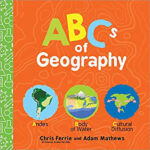
ABCs of Geography (Sourcebooks, 2022) by Adam Mathews (Western Michigan University) and Chris Ferrie (Centre for Quantum Software and Information) is a fun, accessible, and informative book about the fundamentals of geography aimed at children and, by extension, their caregivers.
2023 AAG Globe Book Award for Public Understanding of Geography
Honorable Mention: Adam Mathews and Chris Ferrie
2023 AAG Globe Book Award for Public Understanding of Geography
ABCs of Geography (Sourcebooks, 2022) by Adam Mathews (Western Michigan University) and Chris Ferrie (Centre for Quantum Software and Information) is a fun, accessible, and informative book about the fundamentals of geography aimed at children and, by extension, their caregivers.
2022
James Cheshire and Oliver Uberti
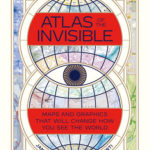
James Cheshire and Oliver Uberti for Atlas of the Invisible (W.W. Norton & Company, 2021) for creating a stunning collection of maps and visualizations that tells the stories of our past, present, and future – turning massive datasets into inviting, intriguing, and sometimes disturbing presentations for both geographers and a broader audience.
2022 AAG Globe Book Award for Public Understanding of Geography
James Cheshire and Oliver Uberti
2022 AAG Globe Book Award for Public Understanding of Geography
James Cheshire and Oliver Uberti for Atlas of the Invisible (W.W. Norton & Company, 2021) for creating a stunning collection of maps and visualizations that tells the stories of our past, present, and future – turning massive datasets into inviting, intriguing, and sometimes disturbing presentations for both geographers and a broader audience.
2021
Alison Mountz
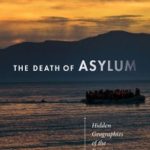
2020 Alison Mountz, The Death of Asylum: Hidden Geographies of the Enforcement Archipelago, University of Minnesota Press, 2020
2021 AAG Globe Book Award for Public Understanding of Geography
Alison Mountz
2021 AAG Globe Book Award for Public Understanding of Geography
2020 Alison Mountz, The Death of Asylum: Hidden Geographies of the Enforcement Archipelago, University of Minnesota Press, 2020
2020
Adam Moore
2019 Adam Moore, Empire’s Labor: The Global Army that Supports U.S. Wars, Ithaca: Cornell University Press, 2019
2020 AAG Globe Book Award for Public Understanding of Geography
Adam Moore
2020 AAG Globe Book Award for Public Understanding of Geography
2019 Adam Moore, Empire’s Labor: The Global Army that Supports U.S. Wars, Ithaca: Cornell University Press, 2019
2019
Tara Patricia Cookson
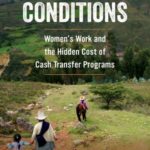
2018 Tara Patricia Cookson, Unjust Conditions: Women’s Work and the Hidden Cost of Cash Transfer Programs, University of California Press, 2018
2019 AAG Globe Book Award for Public Understanding of Geography
Tara Patricia Cookson
2019 AAG Globe Book Award for Public Understanding of Geography
2018 Tara Patricia Cookson, Unjust Conditions: Women’s Work and the Hidden Cost of Cash Transfer Programs, University of California Press, 2018
2018
Clyde Woods
The late Clyde Woods for developing a one-of-a-kind research program engaging social and public policy issues by examining the cultural practices of those oppressed by such policies. His book, Development Arrested, was highly acclaimed and a model of interdisciplinary research. Woods will be remembered as an important mentor to many, and as a public intellectual challenging how we understand race and human geographic knowledge production.
2018 AAG Globe Book Award for Public Understanding of Geography
Clyde Woods
2018 AAG Globe Book Award for Public Understanding of Geography
The late Clyde Woods for developing a one-of-a-kind research program engaging social and public policy issues by examining the cultural practices of those oppressed by such policies. His book, Development Arrested, was highly acclaimed and a model of interdisciplinary research. Woods will be remembered as an important mentor to many, and as a public intellectual challenging how we understand race and human geographic knowledge production.
2017
Nicole Nguyen
2016 Nicole Nguyen, A Curriculum of Fear, University of Minnesota Press
2017 AAG Globe Book Award for Public Understanding of Geography
Nicole Nguyen
2017 AAG Globe Book Award for Public Understanding of Geography
2016 Nicole Nguyen, A Curriculum of Fear, University of Minnesota Press
2016
Stephen J. Hornsby and Richard W. Judd, Eds
2015 Stephen J. Hornsby and Richard W. Judd, Eds; Michael J. Hermann (Cartographic Designer), Historical Atlas of Maine, University of Maine Press
2016 AAG Globe Book Award for Public Understanding of Geography
Stephen J. Hornsby and Richard W. Judd, Eds
2016 AAG Globe Book Award for Public Understanding of Geography
2015 Stephen J. Hornsby and Richard W. Judd, Eds; Michael J. Hermann (Cartographic Designer), Historical Atlas of Maine, University of Maine Press
2015
Paul Knox
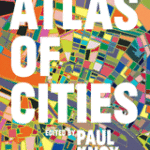
2014 Paul Knox, Atlas of Cities, Princeton University Press
2015 AAG Globe Book Award for Public Understanding of Geography
Paul Knox
2015 AAG Globe Book Award for Public Understanding of Geography
2014 Paul Knox, Atlas of Cities, Princeton University Press
2014
Michael Dear
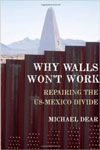
2013 Michael Dear, Why Walls Won’t Work: Repairing the US-Mexico Divide, Oxford University Press
2014 AAG Globe Book Award for Public Understanding of Geography
Michael Dear
2014 AAG Globe Book Award for Public Understanding of Geography
2013 Michael Dear, Why Walls Won’t Work: Repairing the US-Mexico Divide, Oxford University Press
2013
Laura Pulido
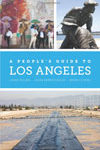
2012 Laura Pulido, Laura Barraclough and Wendy Cheng, A People’s Guide to Los Angeles, University of California Press.
2013 AAG Globe Book Award for Public Understanding of Geography
Laura Pulido
2013 AAG Globe Book Award for Public Understanding of Geography
2012 Laura Pulido, Laura Barraclough and Wendy Cheng, A People’s Guide to Los Angeles, University of California Press.
2012
Jim Kimmel and Jerry Touchstone Kimmel
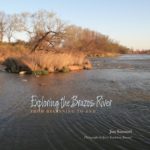
2011 Jim Kimmel and Jerry Touchstone Kimmel (photographs), Exloring the Brazos River from Beginning to End, Texas A&M University.
2012 AAG Globe Book Award for Public Understanding of Geography
Jim Kimmel and Jerry Touchstone Kimmel
2012 AAG Globe Book Award for Public Understanding of Geography
2011 Jim Kimmel and Jerry Touchstone Kimmel (photographs), Exloring the Brazos River from Beginning to End, Texas A&M University.
2011
Esther Jacobson-Tepfer and James E. Meacham
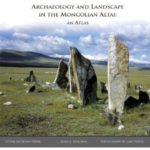
2010 Esther Jacobson-Tepfer and James E. Meacham, Archeology and Landscape in the Mongolian Altai (Gary Tepfer, Photography), Esri Press
2011 AAG Globe Book Award for Public Understanding of Geography
Esther Jacobson-Tepfer and James E. Meacham
2011 AAG Globe Book Award for Public Understanding of Geography
2010 Esther Jacobson-Tepfer and James E. Meacham, Archeology and Landscape in the Mongolian Altai (Gary Tepfer, Photography), Esri Press
2010
Stuart Elden
2009 Stuart Elden, Terror and Territory, The Spatial Extent of Sovereignty, University of Minnesota Press.
2010 AAG Globe Book Award for Public Understanding of Geography
Stuart Elden
2010 AAG Globe Book Award for Public Understanding of Geography
2009 Stuart Elden, Terror and Territory, The Spatial Extent of Sovereignty, University of Minnesota Press.
2009
Owen J. Dwyer and Derek H. Alderman
2008 Owen J. Dwyer and Derek H. Alderman, Civil Rights Memorials and the Geography of Memory, Center for American Places.
2009 AAG Globe Book Award for Public Understanding of Geography
Owen J. Dwyer and Derek H. Alderman
2009 AAG Globe Book Award for Public Understanding of Geography
2008 Owen J. Dwyer and Derek H. Alderman, Civil Rights Memorials and the Geography of Memory, Center for American Places.
2008
Trudy A. Suchan, Marc J. Perry, James D. Fitzsimmons, Anika E. Juhn, Alexander M. Tait and Cynthia A. Brewer
2007 Trudy A. Suchan, Marc J. Perry, James D. Fitzsimmons, Anika E. Juhn, Alexander M. Tait and Cynthia A. Brewer, Census Atlas of the United States, Washington, DC: US Census Bureau Press.
2008 AAG Globe Book Award for Public Understanding of Geography
Trudy A. Suchan, Marc J. Perry, James D. Fitzsimmons, Anika E. Juhn, Alexander M. Tait and Cynthia A. Brewer
2008 AAG Globe Book Award for Public Understanding of Geography
2007 Trudy A. Suchan, Marc J. Perry, James D. Fitzsimmons, Anika E. Juhn, Alexander M. Tait and Cynthia A. Brewer, Census Atlas of the United States, Washington, DC: US Census Bureau Press.
2007
Bruce D'Arcus
2006 Bruce D’Arcus, Boudaries of Dissent: Protest and State Power in the Media Age, New York, NY. Routledge Taylor and Francis Group, LLC.
2007 AAG Globe Book Award for Public Understanding of Geography
Bruce D'Arcus
2007 AAG Globe Book Award for Public Understanding of Geography
2006 Bruce D’Arcus, Boudaries of Dissent: Protest and State Power in the Media Age, New York, NY. Routledge Taylor and Francis Group, LLC.
2006
Dydia DeLyser
2005 Dydia DeLyser, Ramona Memories: Tourism and the Shaping of Southern California, University of Minnesota Press.
2006 AAG Globe Book Award for Public Understanding of Geography
Dydia DeLyser
2006 AAG Globe Book Award for Public Understanding of Geography
2005 Dydia DeLyser, Ramona Memories: Tourism and the Shaping of Southern California, University of Minnesota Press.
2005
James R. "Pete" Shortridge
2004 James R. “Pete” Shortridge, Cities on the Plains: The Evolution of Urban Kansas, University of Kansas Press.
2005 AAG Globe Book Award for Public Understanding of Geography
James R. "Pete" Shortridge
2005 AAG Globe Book Award for Public Understanding of Geography
2004 James R. “Pete” Shortridge, Cities on the Plains: The Evolution of Urban Kansas, University of Kansas Press.
2004
Neil Smith, American Empire
2003 Neil Smith, American Empire, Roosevelt’s Geographer and the Prelude to Globalization, University of California Press.
2004 AAG Globe Book Award for Public Understanding of Geography
Neil Smith, American Empire
2004 AAG Globe Book Award for Public Understanding of Geography
2003 Neil Smith, American Empire, Roosevelt’s Geographer and the Prelude to Globalization, University of California Press.
2003
Mark Monmonier
2002 Mark Monmonier, Spying with Maps: Surveillance Technologies and Future of Privacy, University of Chicago Press.
2003 AAG Globe Book Award for Public Understanding of Geography
Mark Monmonier
2003 AAG Globe Book Award for Public Understanding of Geography
2002 Mark Monmonier, Spying with Maps: Surveillance Technologies and Future of Privacy, University of Chicago Press.
2002
William G. Loy
2001 William G. Loy, Atlas of Oregon, University of Oregon Press
2002 AAG Globe Book Award for Public Understanding of Geography
William G. Loy
2002 AAG Globe Book Award for Public Understanding of Geography
2001 William G. Loy, Atlas of Oregon, University of Oregon Press
2001
James R. "Pete" Shortridge
2004 James R. “Pete” Shortridge, Cities on the Plains: The Evolution of Urban Kansas, University of Kansas Press.
2001 AAG Globe Book Award for Public Understanding of Geography
James R. "Pete" Shortridge
2001 AAG Globe Book Award for Public Understanding of Geography
2004 James R. “Pete” Shortridge, Cities on the Plains: The Evolution of Urban Kansas, University of Kansas Press.
AAG Members get exclusive access to publications, prominent journals, unique advocacy, grant, scholarship and professional opportunities with access to industry focus communities, and event discounts, including our annual meeting.
Some content may only be accessible if you belong to specific Specialty or Affinity Groups. You can still update your membership below. You will need to go through the Join flow, but you do not need to repurchase your membership unless it is expired or about to expire.
To provide the best experiences, we use technologies like cookies to store and/or access device information. Consenting to these technologies will allow us to process data such as browsing behavior or unique IDs on this site. Not consenting or withdrawing consent, may adversely affect certain features and functions.
Functional
Always active
The technical storage or access is strictly necessary for the legitimate purpose of enabling the use of a specific service explicitly requested by the subscriber or user, or for the sole purpose of carrying out the transmission of a communication over an electronic communications network.
Preferences
The technical storage or access is necessary for the legitimate purpose of storing preferences that are not requested by the subscriber or user.
Statistics
The technical storage or access that is used exclusively for statistical purposes.The technical storage or access that is used exclusively for anonymous statistical purposes. Without a subpoena, voluntary compliance on the part of your Internet Service Provider, or additional records from a third party, information stored or retrieved for this purpose alone cannot usually be used to identify you.
Marketing
The technical storage or access is required to create user profiles to send advertising, or to track the user on a website or across several websites for similar marketing purposes.




 Geography is more than maps—it’s a powerful way to understand the world and shape its future. From climate science and urban planning to business analytics and public health, geographers bring critical insights to today’s most pressing challenges.