The AAG Fellows is a program, started in 2018, to recognize geographers who have made significant contributions to advancing geography.
In addition to honoring geographers, AAG Fellows will serve the AAG as an august body to address key AAG initiatives including creating and contributing to AAG initiatives; advising on AAG strategic directions and grand challenges; and mentoring early and mid-career faculty. Similarly to other scientific organizations, the honorary title of AAG Fellow is conferred for life. Once designated, AAG Fellows remain part of this ever-growing advisory body. The AAG Fellows Selection Committee has recommended these Fellows to serve as the 2020 class.
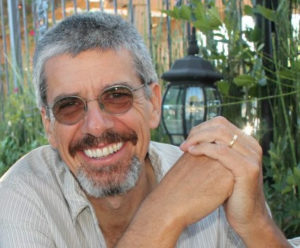 Stuart Aitken, San Diego State University
Stuart Aitken is a Distinguished Professor and June Burnett Endowed Chair of Geography at San Diego State University. His career to date spans nearly four decades. From his start as a teaching assistant at Miami University, Ohio, to his current position at San Diego State University, Professor Aitken has dedicated his professional career to the promotion and societal relevance of Geography.
Aitken is a highly renowned, greatly respected, and widely published scholar of social, cultural, and urban geography. He is a pioneer in the fields of children’s geographies; and is an authority on geographic methods, including qualitative approaches. Aitken has authored, co-authored, or edited innumerable books, refereed articles, book chapters, other reports, proceedings papers, and sundry writings. As testimony to his scholarship, he has been widely honored for his scholarship—evidence of the salience of his research beyond the sheer volume of work.
Most recently, in 2018, Aitken was named Albert W. Johnson Distinguished Professor; in 2013 he was named Jane Burnett Endowed Chair in Child and Family Geographies; he holds an honorary professorship at the University of Wales, Aberystwth and is an invited member of the Royal Norwegian Society for Science and Letters.
We are therefore pleased to bestow upon Stuart Aitken the title of AAG Fellow.
 Richard Boehm, Texas State University
Richard Boehm is a Professor and Jesse H. Jones Distinguished Chair in Geographic Education, the first endowed chair awarded at Texas State University. He is the Director of the Gilbert M. Grosvenor Center for Geographic Education and Co-Director of the National Center for Research in Geography Education. Boehm was the Co-Coordinator of the Texas Alliance for Geographic Education from 1986 to 2010; which is now back under his direction. He also served as the Chair of the Department of Geography from 1977 to 1994 at Texas State University.
Throughout his distinguished career, Boehm has continuously worked to improve the culture of support for early career scholars in geography and geography education. Over the years, he has organized early career scholar conferences that introduced the next generation of geographers to cutting-edge research developments in the field of geography education. Whatever capacity we have today to conduct research in geography education is largely an outcome of his tireless devotion to junior and senior scholars in this field—one marker of his legacy to geography. His energy and unflagging commitment to the discipline demonstrates that Professor Boehm has, and continues to, invest many years beyond an already distinguished career to promote and present the very essence of geography.
We are therefore pleased to bestow upon Richard Boehm the title of AAG Fellow.
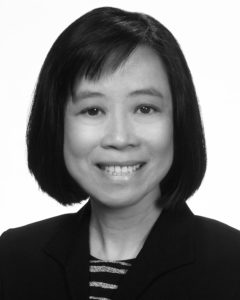 Anne Chin, University of Colorado Denver
Anne Chin is a Professor of Geography and Environmental Sciences at the University of Colorado Denver. Chin quickly developed a reputation as an excellent field geomorphologist who made critical observations to test and develop theory. She produced some of the first systematic studies of the geomorphology of urban streams in desert regions, and has contributed seminal research on step-pool mountain streams.
Chin has left her mark on the discipline, having published research in top-ranked, international, peer-reviewed journals, most notably Geomorphology, Journal of Geology, Progress in Physical Geography, Journal of Geophysical Research Letters, River Research and Applications, American Journal of Science, Environmental Management, among others. Anne has also authored a large number of refereed book chapters and has organized special issue of journals. In 2004 she was recognized for her research on step-pool mountain streams by being named recipient of the G.K. Gilbert Award for Excellence in Geomorphological Research by the AAG Geomorphology Specialty Group. She is (founding) editor-in-chief of the international journal Anthropocene and has done much to advance geography as a researcher, project initiator, coalition-builder, and role model.
We are therefore pleased to bestow upon Anne Chin the title of AAG Fellow.
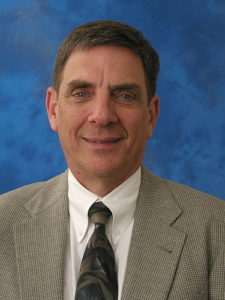 William Doolittle, University of Texas at Austin
William Doolittle is the Erich W. Zimmerman Regents Professor of Geography at the University of Texas at Austin. For more than forty years he has conducted research on the topic of agricultural landscapes, features, technology, and change. His work is interdisciplinary and he has demonstrated conspicuous merit through his innovative and sustained research contributions, his tireless service and mentorship, and his inspired leadership in Latin American geography.
Doolittle’s broad corpus of work – which includes four other books and 63 articles and book chapters published in the leading fora of our field and other disciplines – examines related themes ranging from phytoliths and obsidian to 16thC aqueducts and arroyo check dams – has brought a geographical perspective to scholars working in archeology, soil science, agricultural sciences, and historical ecology. His work has shaped how two generations of scholars have come to understand the dynamics of land use change in dryland environments in Mexico and beyond.
We are therefore pleased to bestow upon William Doolittle the title of AAG Fellow.
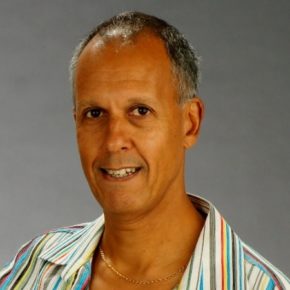 Basil Gomez, KBay Environmental Services LLC, University of University of Hawai`i, Mānoa
Basil Gomez is the Principal at KBay Environmental Services and is an Adjunct Professor of Geography and Environment at the University of Hawai`i, Mānoa, where he continues to contribute to education and mentorship. He provides consulting specializing in watershed management and the equitable and sustainable distribution of hydrological resources. Prior to starting KBay Environmental Services, Gomez was a Professor in the Department of Earth and Environmental Systems at Indiana State University, where he taught for 22 years.
Gomez has developed a strong international reputation and has made significant contributions to the field of geomorphology as a physical geographer. He has an impressive and sustained publication record, with more than 100 refereed journal articles is prestigious journals in geography, geomorphology, earth science, and water resources. He made substantial contributions in research focusing on sediment transport. In 2007, he received the G.K. Gilbert Award for Excellence in Geomorphic Research from the AAG’s Geomorphology Specialty Group for his paper in the Proceedings of the National Academy of Sciences where he demonstrated that under certain circumstances a simple scale correlation could be used to estimate the potential rate of bedload transport. Basil’s career is an outstanding example of the kind of performance that has advanced geography through a novel and sustained research program.
We are therefore pleased to bestow upon Basil Gomez the title of AAG Fellow.
 Carol Harden, University of Tennessee Knoxville
Carol Harden is a Professor Emerita at the University of Tennessee Knoxville. She is a remarkable field geomorphologist and has made exceptional contributions to advancing geography through sustained scholarship in human-environment interactions, innovative teaching and leadership in her academic department, outstanding mentoring of students and early-career colleagues, and invaluable service to the profession through AAG leadership (AAG President, 2009-2010).
Harden’s scientific contributions to geomorphology and geography are numerous, impactful, and wide-ranging. She began studying hillslope soil erosion in the Ecuadorian Andes, which expanded into several decades of studies shedding light on how human activity and land-use changes affect erosion, sedimentation, and related fluvial processes. A little closer to home, Dr. Harden’s work in the Appalachian Mountains has also expanded our understanding of how fluvial systems respond to human disturbances. In addition to Dr. Harden’s 80+ publications, she is one of the few physical geographers in to have both U.S. international field sites.
We are therefore pleased to bestow upon Carol Harden the title of AAG Fellow.
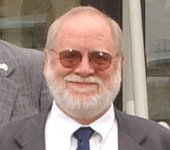 John A. Harrington, Jr., Kansas State University
John A. Harrington, Jr. is a Professor Emeritus of Geography and Geospatial Sciences at Kansas State University. He has had a long and consistent record of research as a climatologist and land change scientist to works to seek solutions to real world problems. He was a pioneer in studying the results of climate change, beginning in the late 1970s, both in the United States and internationally (Africa, Turkey).
Harrington, Jr.’s research endeavors are as persistent as they are extensive. Over the course of his long and stellar career, John has published over 57 peer-reviewed publications and reflects his depth as a scholar, his breadth as an atmospheric and geospatial scientist, and his generosity as a teacher-scholar-mentor. He has not only dedicated his career to enriching the discipline, but he has also enabled the enrichment of the lives that make up the discipline. His command of great overall knowledge and unwavering scientific commitment is balanced by his determination as a leader and eye for aptitude in others
We are therefore pleased to bestow upon John A. Harrington, Jr. the title of AAG Fellow.
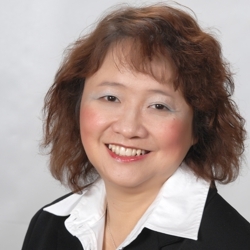 Mei-Po Kwan, Chinese University of Hong Kong, University of Illinois, Urbana-Champaign
Mei-Po Kwan is the Choh-Ming Li Professor of Geography and Resource Management and Director of the Institute of Space and Earth Information Science at the Chinese University of Hong Kong. She is also Professor of Geography and Geographic Information Science and Director of the Space-Time Analysis and Research (STAR) Laboratory at the University of Illinois at Urbana-Champaign. Kwan has been a sustained global leader in transformative geography research in areas including her work in critical, feminist, and qualitative GIS that bridges the binary understanding of GIS and geographic methods as either quantitative or qualitative. Her work has profoundly changed how geographers think about the disciplinary dynamics of Geography, geographic methods, and several fundamental divides in the discipline.
Kwan’s formal academic research products have broader impacts, which has included publishing 38 edited volumes (books and journal special issues), 215 journal articles and book chapters, delivered over 220 keynote addresses and invited lectures worldwide, and served as the Editor of the AAG Annals for 12 years.
We are therefore pleased to bestow upon Mei-Po Kwan the title of AAG Fellow.
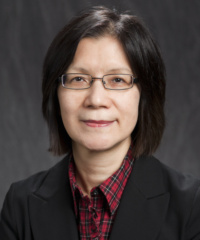 Nina Lam, Louisiana State University
Nina Lam is a Professor of Environmental Studies and E. L. Abraham Distinguished Professor at Louisiana State University. As a renowned scholar, she is one of the pioneers of contemporary geography-based remote sensing. Across an academic career stretching back over nearly forty years, Lam’s work has helped shape the field of remote sensing as it interfaces with the geographic community through her remote sensing research, teaching, and outreach, resulting in a major national and international impact on our discipline. Her work has continuously pushed the edge in these fields from both the theoretical and methodological fronts.
Lam’s sustained scholarly output is remarkable for its rigor as well its topical breadth. Her impressive publication list begins with the classic 1983 treatise on Spatial Interpolation Methods, for which she received the Andrew McNally Award for outstanding research publication. Since then, her research foci have included the socioeconomic inequality of cancer mortality; spatial analysis of the spread of the AIDS epidemic; applications of fractals for image analysis and spatial feature discrimination; to mapping land cover/land use and its change. Without a doubt, she is a leading researcher in quantitative geography in the United States today. Her academic productivity has been substantial, continuous, and significant, and has contributed to the advancement of geography.
We are therefore pleased to bestow upon Nina Lam the title of AAG Fellow.
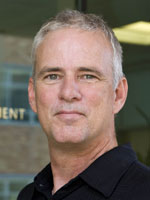 Glen Michael Sproul dit MacDonald, University of California, Los Angeles
Glen M. MacDonald is a Professor of Geography and in Ecology and Evolutionary Biology and John Muir Memorial Chair Distinguished Professor at the University of California, Los Angeles. He is a recognized leader in the discipline of geography and is already a Fellow in the American Academy of Arts and Sciences, American Geophysical Union, National Academy of Sciences, American Association for the Advancement of Science. MacDonald also served as President of the AAG (2016-2017) where he contributed significant national and international service to the discipline.
MacDonald’s contributions as a research scholar has produced a steady and impressive output of publications (books, book chapters, and refereed journal articles) focused on biogeography and climate change. With more than 179 publications, MacDonald’s work has been an exemplary corpus of interdisciplinary research on climate change.
We are therefore pleased to bestow upon Glen Michael Sproul dit MacDonald the title of AAG Fellow.
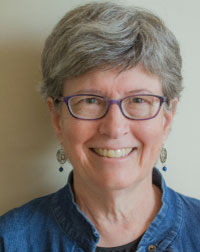 Sara McLafferty, University of Illinois
Sara McLafferty is a Professor of Geography and Geographic Information Science at the University of Illinois. She has made exceptional and sustained contributions to the discipline of geography through her research on feminist geography and GIS in relation to health and medical geography; to the AAG through serving on the National Council and the Strategic Planning Committee. She is an international leader in the subfield of health/medical geography and is excellent at all parts of her job including research, teaching, and service.
McLafferty’s research has significantly advanced health geography, economic geography, and urban geography alike. Her early work on gender, race, and commuting helped to establish the importance of considering not just gender differences within spatial processes, but the intersection of race and gender. She has served as a committee member of the National Academy of Sciences and the Society of Woman Geographers; and as an advisor and mentor to numerous undergraduate and graduate students as well as junior faculty—with over one-third of her published papers including students as co-authors). She has been a sustained leader in feminist geography, critical GIS, and health and medical geography and stands among the best of the best in our discipline: a well-rounded scholar who excels in research, teaching, and service.
We are therefore pleased to bestow upon Sara McLafferty the title of AAG Fellow.
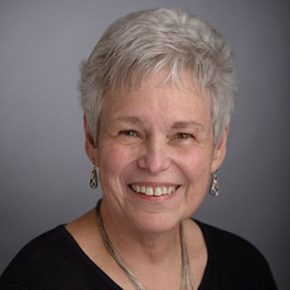 Risa Palm, Georgia State University
Risa Palm served until recently as Provost and Senior Vice President of Academic Affairs and Professor of Geosciences at Georgia State University. She has remained at Georgia State University where she is now a professor in the Urban Studies Institute. Over the past four decades, Palm has forged and extraordinary career which has progressed along two parallel tracks: as an academic who has made significant contributions to geography, and as a senior university administrator who has shaped the trajectories of several major public universities.
Palm, as a geography scholar, has authored or co-authored 13 books and over 40 articles and book chapters in the area of human response to environmental change. This is a commendable record for any full-time faculty member, but truly extraordinary for someone entering college and university administration less than 10 years after starting as an assistant professor. Very few individuals—in geography or beyond—can claim as long a career in the senior-most positions at the very top public universities in the United States.
We are therefore pleased to bestow upon Risa Palm the title of AAG Fellow.
 Susan M. Roberts, University of Kentucky
Susan M. Roberts is Associate Provost for Internationalization and a Professor of Geography at the University of Kentucky. Roberts’ research squarely places her as a major figure in economic and development geography, in which her innovative research methods as well as the breadth of her research bridges economic, political, and feminist geography, both theoretically and in applications to real-world cases. She was a pioneer in the development of the first feminist geography collection published. For the past 27 years, her message has been consistent and exceptional: That as geographers, we have the capacity to develop collective and global means for challenging how the world is hierarchically known and spatially organized. Roberts has extended this line of scholarship through her role as National Councilor for the AAG (2015-2018).
Roberts’ research represents the best of geographic scholarship. It is not only theoretically sophisticated and empirically rich, but it also consistently pushes the boundaries in economic, political, and feminist geography. Her 1997 co-edited book Thresholds in Feminist Geography significantly shaped the discipline’s thinking about feminist geography and methods, and it continues to be a volume widely recommend today. Her career-long dedication for advancing female-identified and other underrepresented members of our profession stands as a model for building diversity within geography.
We are therefore pleased to bestow upon Susan M. Roberts the title of AAG Fellow.
 Billie L. Turner II, Arizona State University
Billie L. Turner II is a Regents Professor and Gilbert F. White Professor of Environment and Society in the School of the Geographical Sciences and Urban Planning, and School of Sustainability at Arizona State University. He is also a Distinguished Research Professor of Geography at Clark University. In a career that has spanned over 40 years, Turner has been at the forefront of geographical scholarship, education and service, and he has made these themes a centerpiece of his in representing the discipline externally. He is renowned for his pioneering work and significant advances in the broad area of human-environmental science.
Turner’s corpus of scholarly research includes over 200 journal articles, book chapters and other such pieces, and authored or edited 13 books. His work has become a paradigm for Mayan studies and was selected as one of the Twenty Most Significant 20th Century Archaeological Discoveries. Turner has also been elected to the National Academy of Sciences; American Academy of Arts and Sciences; American Academy for the Advancement of Sciences; and as a Guggenheim Fellow. Billie L. Turner II truly is a geographical force of nature who continues to work tirelessly for our discipline.
We are therefore pleased to bestow upon Billie L. Turner II the title of AAG Fellow.
 Elizabeth Wentz, Arizona State University
Elizabeth Wentz is Dean of Social Sciences and Professor of Geography at Arizona State University. She has made path-breaking contributions to geographic research in the areas of GIS, remote sensing and space-time analysis. She has served as a National Councilor for the AAG (2012-2015) and was an active chair of AAG National Councilors during her tenure (2013-2015).
Wentz has made significant and pioneering contributions in the areas of GIS, remote sensing, and space-time analysis, having authored over 50 refereed articles in these domains, focusing on collaboration with her graduate students. She is an award-winning teacher and mentor of doctoral students; has spearheaded numerous initiatives to support and promote the success of female scholars, both within GIScience and within the discipline of geography more generally; and, is a highly innovative and accomplished administrative leader who, prior to becoming Dean, served as Director of the School of Geographical Sciences at Arizona State University. Wentz has made outstanding contributions to geographic research, academic administration, and mentoring junior faculty members and graduate students.
We are therefore pleased to bestow upon Elizabeth Wentz the title of AAG Fellow.
 Cort J. Willmott, University of Delaware
Cort J. Willmott is a Professor Emeritus of Geography at the University of Delaware. Over the course of three decades, he built an impressive record in climatology and quantitative/GIS methods and was instrumental in the creation of a Ph.D. in Climatology—the first of its kind in the United States. His legacy rests with the students he has produced.
Willmott’s scholarly research has resulted in over 50 refereed journal articles, 3 books, and numerous other materials—many of which he published with students. Over his career, he has sustained a strong commitment to mentorship of undergraduate, and graduate students, as well as junior faculty within the geographical/climatological community. This is personified through his Space Grant Program, which was a NASA-supported alliance dedicated to space-based teaching and research at the K-12 and collegiate levels. Willmott has been a model of academic citizenship, an excellent communicator, and a gifted researcher, know also for building one of the best-known climatology programs in the United States. He was awarded the AAG Distinguished Scholarship Honors in 2000.
We are therefore pleased to bestow upon Cort J. Willmott the title of AAG Fellow.
 Julie Ann Winkler, Michigan State University
Julie Ann Winkler is a Professor of Geography, Environment and Spatial Sciences at Michigan State University. Her intellectual contributions are in the areas of climate change impact assessment, synoptic climatology, and gender equality issues in academia. Her work continues to be timely and of high social and scientific relevance. Over the decades, Winkler has reached a reputation of an accomplished scholar, teacher, student mentor, and a selfless, dedicated citizen of the academy and the discipline of geography. She is widely known for her distinguished record of service to the AAG including, Vice President, President and Past President, and National Councilor, to name a few.
Winkler’s impressive scholarship has generated over 100 peer-reviewed works which have appeared in influential outlets read by scholars and professionals around the world. She is truly an ambassador for geography and her work shows others what a geographic approach is, how valuable our methods and perspectives can be, and why Geography is the original interdisciplinary discipline. Winkler has been an outstanding advocate for women in geography. She not only studies the subject intellectually but she lives it by being a mentor, friend, and example to us all.
We are therefore pleased to bestow upon Julie Ann Winkler the title of AAG Fellow.
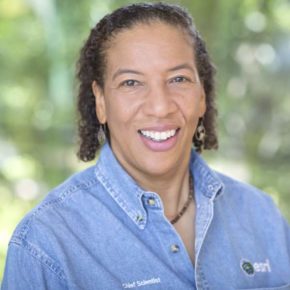 Dawn J. Wright, Environmental Systems Research Institute (Esri)
Dawn J. Wright is Chief Scientist of the Environmental Systems Research Institute (more commonly known as Esri) and Professor of Geography and Oceanography at Oregon State University, Corvallis. Wright has been an influential pioneer in the fields of marine science and GIScience, and was the first African-American female to dive to the ocean floor in the deep submersible ALVIN. Equally impressive has been her dedication and service to the AAG, having served as National Councilor (2006-2009), various senior committees, and as an office in several Specialty Groups.
Wright has made numerous key contributions to understanding the oceans and she has been published widely in top journals and books. Part of Wright’s mission at Esri is to foster and lead various research & development projects. One of the best examples is her co-leadership of original research while at Esri that has resulted in the world’s first 3D digital ocean model from sea surface to seafloor. This project, often referred to as the “Ecological Marine Units,” was presented at the AAG in 2017 in a special extended session with Roger Sayre of the USGS and has also been published in 2018 in the journals Oceanography, Nature: Scientific Reports; Current Biology; and J. of Operational Oceanography, as well as covered as a major news item in Nature by award-winning science journalist Alexandra Witze.
Wright has been an institution-builder from the start of her career. At Esri she has played a key role as the leading emissary for the use of GIS in science: in short, the “Science of Where,” and has led efforts within both the AAG and the AGU to promote geography through the use of Esri’s vast resources, and finding an effective balance between the environmental and social sciences.
We are therefore pleased to bestow upon Dawn J. Wright the title of AAG Fellow.
The AAG Fellows are chosen by the AAG Fellows Selection Committee. The 2019-2020 Fellows Selection Committee Members are Jonathan Harbor (University of Montana), Sarah Battersby (Tableau, Inc.), Korine Kolivras (Virginia Tech), Patricia Gober (Arizona State University), Stephen Hanna (University of Mary Washington), and Cindy Pope (Central Connecticut State University).


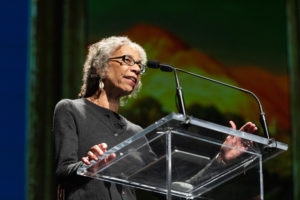 Ruth Wilson Gilmore, Graduate Center, CUNY
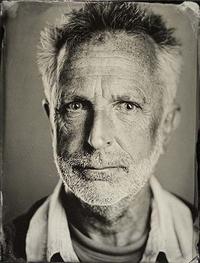 Michael Watts, University of California – Berkeley
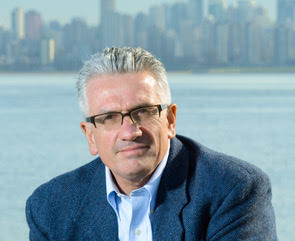 Jamie Peck, University of British Columbia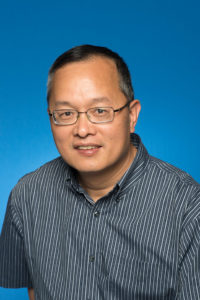
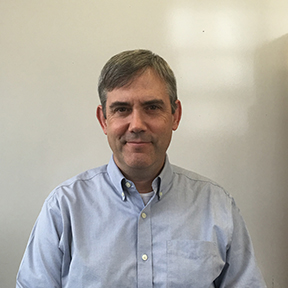 William Solecki, CUNY – Hunter College
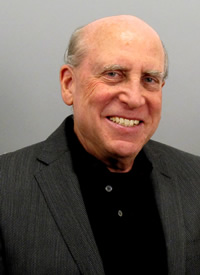 Robert Lake, Rutgers University
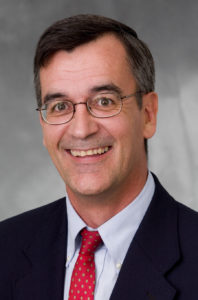 Keith Debbage, University of North Carolina at Greensboro
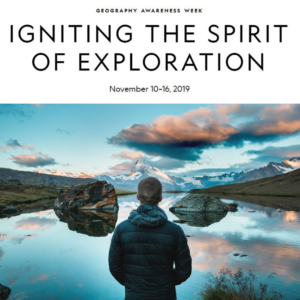 Geography Awareness Week is quickly approaching, November 10th – 16th, with GIS Day on November 13th. Below you’ll find GeoWeek and GIS Day resources, announcements, and ways to get involved, big and small. Do what you can to promote our wonderful discipline during the week, and also think about how you can support geography year-round!
 Geography.com: Ever need a resource to share with others for a quick intro to geography? Geography.com is designed for students and the general public to learn more about the field and all it has to offer.
  Be a GeoMentor: If you don’t have time to get involved in GeoWeek, set yourself up to be involved later by signing up to be a GeoMentor. Help young students discover geography and spatial thinking to better understand the world around them. You can
  Ask a Geographer: A great way to support geography awareness is to tell people about the AAG’s