
Newsletter – October 2017
PRESIDENT’S COLUMN
On Finding One’s Voice (and the Voices of Others)
By Derek Alderman
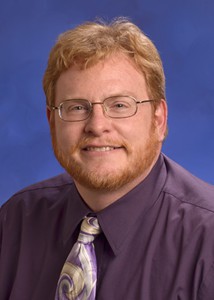 I am pleased to announce that the American Association of Geographers (AAG) is launching the Geography Speakers Bureau. The Bureau is part of the Geography is REAL initiative and builds upon the AAG’s long-time commitment to public outreach, informed and timely communication, and lending geographic research and education to addressing pressing issues and debates. The purpose of this column is to outline the rationale ad organization of the Speakers Bureau and encourage geographers to participate as well as address the resonance and efficacy of their voices as education and advocacy tools. While the Bureau creates a setting for increased speaking, it is also an opportunity for geographers to engage in greater listening and dialogue—both within the discipline and with a broad array of public groups.
Read past columns from the current AAG President on our President’s Column page.
ANNUAL MEETING

A Glance at New Orleans’ Contemporary Hispanic and Latino Communities

The geographic situation of New Orleans allowed the city to develop lasting ties to the Hispanic and Latino cultures south of the U.S. border. Post-Hurricane Katrina has led to both the revival of these historic connections as well as the development of new communities as migrants initially came in response to rebuilding efforts. Geographer James Chaney of Middle Tennessee State University provides a look at the modern ethnoscape in the changing urban landscape of New Orleans
New Orleans: Place Portraits
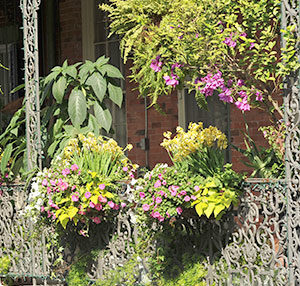
Though New Orleans is renowned for being below sea level, did you know that the city spent much of its early years above sea level? The early years of New Orleans was also the start to developing New Orleans’ multiethnic identity. The Creolization of culture in New Orleans is present today in its people and its architecture styles. In this month’s Place Portraits New Orleans’ unofficial “geographer laureate,” Richard Campanella of Tulane’s School of Architecture, explores the Creole heritage and physical landscape of the Crescent City in an effort to prepare AAG members for the 2018 Annual Meeting in New Orleans.
Read Campanella’s pieces below:
- New Orleans Was Once Above Sea Level.
- An Ethnic Geography of New Orleans.
- The Evolution of Creole Architecture.
“Focus on New Orleans and the Gulf Coast” is an ongoing series curated by the Local Arrangements Committee to provide insight on and understanding of the geographies of New Orleans, Louisiana, and the greater Gulf Coast region.
AAG Announces 2018 Annual Meeting Themes
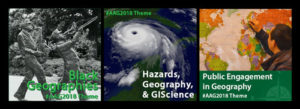 Each year, the AAG Council and Executive Director identify theme areas of geography for the annual meeting in order to provide a fresh take on some of the more pressing and timely issues facing the discipline. While any topic is accepted for presentation at the Annual Meeting, the themes are used to establish a way to focus the breadth and variety of geographic scholarship the Annual Meeting has to offer. This years themes are: Black Geographies; Hazards, Geography, and GIScience; and Public Engagement.
Find out more about each theme.
New Features of the Abstract and Session System
The AAG has recently updated several of its online platforms related to the Annual Meeting. Perhaps the most exciting update of all is the new and improved abstract and session submission console. Beyond its appearance, the new system has several new features that we hope will a) simplify the submission process and b) help attendees make the most of their experience in New Orleans.
Learn more about these new features.
CAMP AAG Coming to AAG 2018 New Orleans

The AAG is pleased to announce that it is continuing full-time, professionally managed and staffed onsite childcare services for the 2018 Annual Meeting in New Orleans. CAMP AAG will offer age-appropriate activities for children ranging from 6 months to 12 years of age (separated into age-appropriate groups) including curriculum-enriched, hands-on, creative activities, arts & crafts projects, active games, and more.
See more information about CAMP AAG.
POLICY UPDATE
AAG Writes Letter Pushing for DACA Permanency
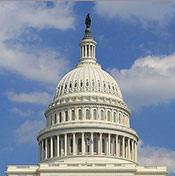
The AAG sent a letter to Congress urging them to quickly enact legislation that would make the Deferred Action for Childhood Arrivals (DACA) program permanent. Twenty-two other institutions or universities signed the AAG’s statement in support.
ASSOCIATION NEWS
AAG Welcomes Three Fall Interns!

Three interns have begun their work at the AAG headquarters in D.C. for the 2017 Fall semester.
Tolu Ajayi will be interning at the AAG while finishing the last semester of the B.S. in Geographical Sciences at University of Maryland, College Park.
Shane Colgan recently completed his B.S. in Geographical Sciences at University of Maryland, College Park. He will be interning at the AAG this Fall with plans to start his masters in GIS at University of Maryland, College Park this Spring.
Charles Christonikos is interning at AAG while also currently a senior at The George Washington University, pursuing a B.A. in Geography with minors in GIS and Criminal Justice.
MEMBER NEWS
October 2017 Profiles of Geographers
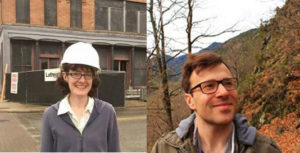
Geographers like Lisa Brownell, the Program Manager of the Ohio Historic Preservation Tax Credit at the Ohio Development Services Agency, and Marcello Graziano, an Assistant Professor in Department of Geography at Central Michigan University, think job outlook for geographers is good! Read about their journeys in the geographic discipline, the types of geographic skills they use every day on the job, and their advice to future geographers in this month’s Profiles of Professional Geographers spotlight.
Maya Peoples Making History Conference
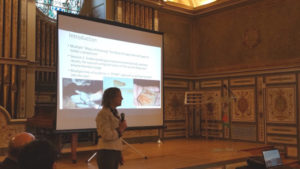
AAG Vice President, Sheryl Luzzadder-Beach, recently presented at the Maya Peoples Making History conference held at The Mexican Cultural Institute in Washington, D.C. Her research, which focuses on the use of LiDAR for reconstructing the environmental history of the Maya people in Belize, was one of four presentations held during the event.
RESOURCES & OPPORTUNITIES
Students – October 15th Deadline for Two Student Awards
October 15th is the deadline for applications to two annual awards presented by the AAG and supported by the Marble Fund for Geographic Sciences. The Marble-Boyle Undergraduate Achievement Awards aim to recognize excellence in academic performance by undergraduate students from the U.S. and Canada who are putting forth a strong effort to bridge geographic science and computer science. The biennial William L. Garrison Award for Best Dissertation in Computational Geography supports innovative research into the computational aspects of geographic science. Formal presentation of the awards will be made at the annual AAG awards luncheon.
See all upcoming award deadlines.
Nominations Sought for the Harold M. Rose Award
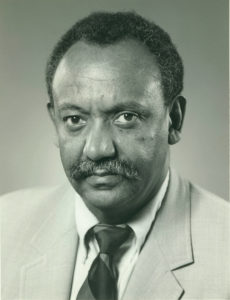
The Harold M. Rose Award for Anti-Racism Research and Practice honors Dr. Rose, the first Black president of the AAG. Dr. Rose devoted his career to expanding the discipline of geography into anti-racist scholarship, an area that had been virtually ignored, by conducting research on the black Ghetto, blacks and Cubans in Miami, and the quality of life in black communities during the 1960s and 1970s. This award honors geographers who have a demonstrated record of the type of research and active contributions to society that have marked Harold Rose’s career. The nomination deadline is October 15th.
More information about the nomination process available.
Community College Travel Grants – Deadline to Apply November 1st
Students currently enrolled at a US community college, junior college, city college, or similar two-year educational institution are eligible to apply for a Community College Travel Grant to attend the 2018 AAG Annual Meeting. These travel funds are generously provided by Darrel Hess and Robert and Bobbé Christopherson and consists of meeting registration, one year membership in the AAG, and a travel expense subsidy of $500 to be used to defray the costs of attending the AAG Annual Meeting. The deadline to apply is November 1, 2017.
Full details about the application process.
PUBLICATIONS
November Issue of The Professional Geographer now available!

The November 2017 (Volume 69, Issue 4) issue of The Professional Geographer is now available online! This issue features two themed sections – the 2016 AAG Nystrom Paper Competition participant papers and a focus on gender and the histories of geography as a discipline – in addition to a regular selection of manuscripts.
Just Published! The November 2017 Issue of the ‘Annals of the AAG’
Volume 107, Issue 6 (November 2017) of the Annals of the American Association of Geographers is now available! All articles are available to members with your AAG membership. This month, articles span the breadth of topics from oil pipeline activism to extreme precipitation frequency to young people and everyday foods.
Full article listing available.
ADDENDA
The Economist cites article printed in the Annals of the American Association of Geographers authored by Qiang et al. on the growth in exposure to flood hazards faced by U.S. residents.
Read The Economist article on Hurricane Irma.
GEOGRAPHERS IN THE NEWS
- Scott Sheridan interviewed about heat illness in post-Irma Florida
- Reuben Rose-Redwood on history of New York City street names
IN THE NEWS
Popular stories from the AAG SmartBrief
- How development affects disaster risk
- Mapping Animal Migration Patterns
- Satellites chart unique signatures of sea-level rise worldwide
- Can the world’s supply of sand meet demand?
- UNCCD: 1.3B people live on degrading agricultural land
EVENTS CALENDAR
- East Lakes Regional Division Fall Meeting
- Great Plains/Rocky Mountain Regional Division Fall Meeting
- West Lakes Regional Division Fall Meeting
- Middle States Regional Division Fall Meeting
- New England St. Lawrence Valley Regional Division Fall Meeting
- Association of Pacific Coast Geographers Regional Division Fall Meeting
- Southwest Division Regional Fall Meeting
- International Land Use Symposium ILUS 2017
- Mid-Atlantic Division Fall Meeting
- 75th Anniversary International Congress of Turkish Geography Society
Submit News to the AAG Newsletter. To share your news, submit announcements to newsletter [at] aag [dot] org.
 The title of my column comes from a recent NPR story on the NAACP. The storied civil rights organization is undergoing a wholesale “retooling” of its structures and tactics in an effort to regain relevance among younger generations of activists and to enhance its efficacy in anti-racism advocacy and education. In adapting to a dramatically changing political and media environment, former NAACP president and CEO Cornell Brooks said: “All of us have to be prepared to respond, not with telegraph speed but with Twitter speed.”
 Registration for the 2018 Annual Meeting is now open. The AAG accepts all submitted abstracts for presentation. Paper abstracts must be submitted by October 25, 2017, but may be edited through February 23, 2018. Registration rates increase on November 8, 2018 –
 Congratulations to the elected members of the first board for the new
  The AAG welcomes Dr. Emily Fekete as Communications, Education, and Media Specialist. Emily will lend her expertise in communications and media geographies to the communications team through new content curation, social media and program development.
 Each month the AAG profiles a geographer for a glimpse into the careers of working geographers. For August and September, see what attracted geographers Adelle Thomas, Senior Caribbean Research Associate at Climate Analytics; Visiting Researcher, University of the Bahamas, and Frank Boscoe, Research Scientist, New York State Cancer Registry, to the field and the variety of work they do!
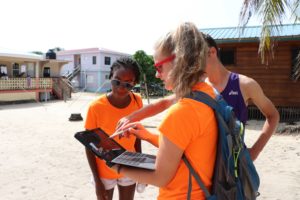 Geography students have been busy this summer with research projects, both on their own and as part of larger research teams. The AAG is celebrating the work of geography students by highlighting their projects on our
 The National Science Foundation seeks candidates for division director for Social, Behavioral, and Economic Sciences within the Geography and Spatial Sciences Program starting early 2018. The deadline to apply is September 29, 2017.
 Volume 36, Issue 2
 Volume 107, Issue 5
 New Books in Geography — August 2017
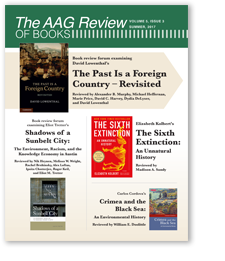 Volume 5, Issue 3
 The newest edition of AAG’s Guide to Geography Programs in the Americas is here! The Guide compiles extensive information about geography departments and programs at universities in the U.S., Canada, and Latin America as well as information about geography employers. Also featured is an
  If you have not yet examined the AAG Long Range Plan, 2015-2025, then I encourage you to do so. It provides a useful update on the Association’s progress since its 2002 strategic plan and offers 20 specific recommendations important for the future of AAG and the discipline of geography. One of those recommendations calls on us to “promote outreach and engagement,” which includes encouraging and training AAG members to write and speak for general audiences to maximize the contributions of geography to public debates, policy initiatives, and the broader civic society.
 If you have a penchant for landscape, be warned: you will be tempted to spend more time outside of the hotels than in the paper sessions of the upcoming AAG conference in New Orleans. Many aspects of the New Orleans landscape might seem generically American, especially within the compact Central Business District upriver from Canal Street, where the conference hotels are located. But venture downriver, across Canal Street into the French Quarter, and you will enter an urban landscape that remains more attuned to the Mediterranean and Caribbean than the North Atlantic. Those interested in the Hispanic and Latino aspects of this compelling landscape might consider the following sampling of spots to visit, mainly oriented toward the city’s historic status as a Spanish colonial capital and U.S. neo-colonial entrepôt for Latin America.
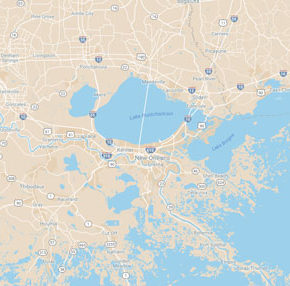 Over the next nine months, AAG’s “Focus on New Orleans and the Gulf Coast,” will feature a series of articles on New Orleans by Richard Campanella. Campanella teaches in Tulane’s School of Architecture. His geography training includes a M.S. degree from LSU where he specialized in mapping sciences. Campanella, New Orleans’ unofficial “geographer laureate,” is the author of 10 books and nearly 200 articles on New Orleans. He has received numerous awards for his highly creative integration of mapping and spatial analyses with architecture, social science and the humanities. Most recently, he received France’s highest academic honor – Chevalier dans L’Ordre des Palmes — for his geographical explications of New Orleans, past and present.
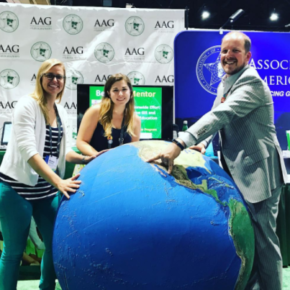 AAG Staff participated in and exhibited at the annual Esri Education GIS and User Conferences July 8th-14th in San Diego, California. The conferences are a great opportunity for the AAG to conduct outreach to the GIS community, engaging with current AAG members, signing up new AAG members, advertising the Annual Meeting for both attendees and potential exhibitors, and communicating our program efforts in the areas of geography and GIS education.
 AAG just recently launched an Instagram account. Help us to raise awareness of geography and increase the visibility of your research! How can you help? You can start by submitting photos and/or videos of your summer research projects to feature on
  Over 40% of AAG members are students and it is this 40%+ that I want to speak to and encourage to make the most of your membership to the AAG. While I am currently an AAG employee, I started with the organization just like you, as a student member. It’s how I got started in the geography community beyond my university and it is from that personal experience as a student member (combined with additional AAG insider knowledge gained since then) that I want to talk to you.
 Since 2011 the U.S. National Science Foundation (NSF) has required that all submitted proposals include a Data Management Plan (DMP). A DMP is a plan for the management and sharing of any data and other kinds of products resulting from the activities in a proposal. Why did NSF start to require DMPs? NSF is a U.S. federal agency supported by taxpayer dollars. As such, data and other products generated by NSF-supported research need to be made available in a format for others to use. Investigators need to be sure that their project meets the expectation that data gathered using public funding will be preserved in ways to facilitate long-term public accessibility and use. Making data publicly available in this way will also permit future meta-analysis, which adds value to the original data collection.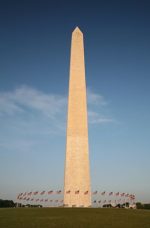
 The National Center for Research in Geography Education (NCRGE), a research consortium headquartered at the American Association of Geographers (AAG) and Texas State University, has approved awards for three new projects under its Transformative Research grant program. This investment by NCRGE continues a long-term and broad-based effort to develop a research coordination network supporting implementation of the Road Map for 21st Century Geography Education project’s landmark report on geography education research.
 The Visiting Geographical Scientist program (VGSP) is accepting applications for the 2017-18 academic year. VGSP sponsors Gamma Theta Upsilon visits by prominent geographers to small departments or institutions that do not have the resources to bring in well-known speakers. The purpose of this program is to stimulate interest in geography, targeted for students, faculty members, and administrative officers. Participating institutions select and make arrangements with the visiting geographer.
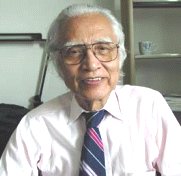 Masatoshi Yoshino, a distinguished Japanese physical geographer who served the IGU as the founder and the Chair of the Commission on Climatology (1988-1992) and as a Vice President (1992-1996), died on July 4, 2017, at the age of 89. He was a devoted scholar and kept writing and publishing quality articles till the very last moment of his life. Many people might remember him not only as a respectable scientist but also as an able and reliable organizer or leader, as can be seen in the success of the International Geographical Congress in Tokyo in 1980 which he conducted as the Secretary General.
 Every month the AAG compiles a list of newly-published books in geography and related fields. Some are selected for review in the AAG Review of Books. Anyone interested in reviewing these or other titles should contact the Editor-in-Chief, Kent Mathewson.
 On July 20 from 3 p.m. to 4 p.m. Eastern Time, the AAG will host a Twitter Chat entitled “The AAG Disciplinary Data Dashboard.” Guest speaker Mark Revell, AAG Workforce Development Specialist, will answer a variety of questions related to the AAG’s multiple ongoing data collection efforts involving members, departments and special research surveys. To join the chat, follow
 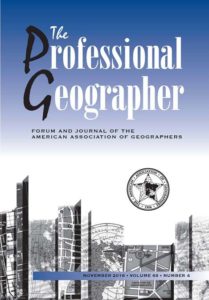 The AAG is pleased to announce that Volume 69, Issue 3 (August 2017) of The Professional Geographer is now available. The focus of The Professional Geographer is on short articles in academic or applied geography, emphasizing empirical studies and methodologies. These features may range in content and approach from rigorously analytic to broadly philosophical or prescriptive. The journal provides a forum for new ideas and alternative viewpoints.
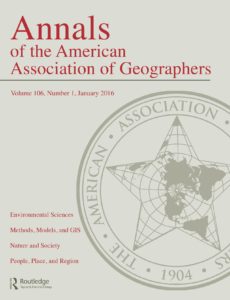 The American Association of Geographers seeks applications and nominations for the Methods, Models, and Geographic Information Sciences editor for the Annals of the American Association of Geographers. This new editor will be appointed for a four-year editorial term that will commence on January 1, 2018. The appointment will be made in the Fall of 2017. Nominations and applications should be submitted by Friday, September 29, 2017.
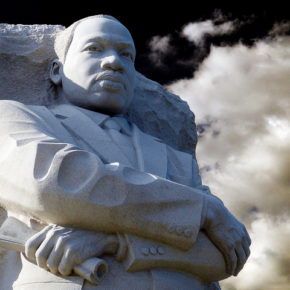 Established by a joint resolution of the U.S. Congress in 1987, Geography Awareness Week (GAW) is observed the third week in November every year. GAW promotes what geography is, why it is important, and the relevance of a geographic education in preparing citizens to understand and debate pressing social and environmental issues and problems. This year’s celebration is November 12-18, marking the 30th birthday of what has become an important tradition in our discipline. National Geographic’s Network of Alliances for Geographic Education recently met in Washington DC and designated “The Geography of Civil Rights Movements” as a featured theme for the 2017 Awareness Week.
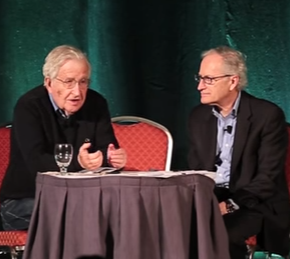 Videotaped sessions of select plenary sessions and featured speakers from the 2017 Annual Meeting in Boston are now available for viewing. The select videos available for viewing are as follows:
 The AAG has a long history of supporting and recognizing geographers’ accomplishments and contributions through its many prestigious grants and awards. The AAG Grants and Awards Program recognizes and supports AAG members, non-members, students, early career and senior faculty. On June 15, from 3 p.m. to 4 p.m., the AAG will host a Twitter Chat, entitled, “AAG Awards Program.” Guest speaker Candida Mannozzi, AAG Deputy Director of Operations, will answer questions about the variety of awards available, the submission process, key deadlines, and more. Follow @theAAG and participate by using the hashtag #AAGChat.
 Meredith Stone has joined the AAG staff as Public Policy and Outreach Specialist at the Washington, D.C. headquarters. She recently completed her Master of Arts in Geography at Ohio University. There, she served as a teaching assistant for Introduction to Geographic Information Systems and Mapping Sciences and also as a research assistant for the Baltimore Ecosystem Study, a National Science Foundation granted project investigating urban green space in the city.
 Christine MacKrell recently completed her bachelor of arts in geography from the University of Mary Washington where she also majored in political science and completed a certificate in geographic information systems. She will be attending George Washington University in the fall working toward a Master of Science.
 With students making up over 40% of AAG membership, the new Undergraduate Student Affinity Group (USAG) is an important community to speak on behalf of the unique and important perspectives of undergraduate geographers. It’s now time to elect the first USAG Board. Nominations are sought from undergraduates interested in this exciting leadership opportunity. By serving on the inaugural board, student leaders will determine where to focus the energy and initiative of the AAG undergraduate community to serve their needs and represent their voice.
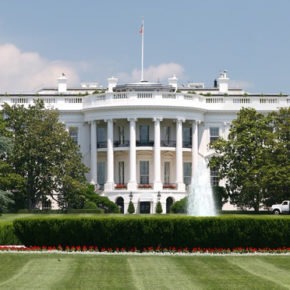 The Trump Administration’s budget proposal, which was released on May 23, includes sharp cuts for Federal science agencies. The document is the first step in the Fiscal Year 2018 appropriations process, and many bipartisan Senators and Representatives have taken issue with multiple aspects of the proposal.
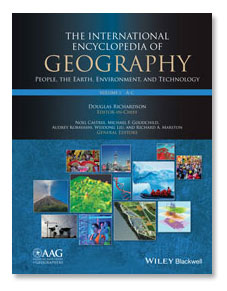 Time is running out to order the 15 volume print edition of the landmark reference work, The International Encyclopedia of Geography. The IEG is an essential resource for institutional libraries, research centers, professional organizations, and any major organization engaged with geography and interrelated fields within social sciences, humanities, science, and medicine. Order by June 30 to receive over 15% off the 15-volume print set.
 The AAG is pleased to announce that Volume 3, Issue 1 (June 2017) of GeoHumanities is now available. GeoHumanities is the newest journal of the American Association of Geographers. It features articles that span conceptual and methodological debates in geography and the humanities; critical reflections on analog and digital artistic productions; and new scholarly interactions occurring at the intersections of geography and multiple humanities disciplines. Each issue, the Editors choose one article to make freely available. In this issue you can read Rethinking the Final Frontier: Cosmo-Logics and an Ethic of Interstellar Flourishing by Matthew Kearnes and Thom van Dooren for free.
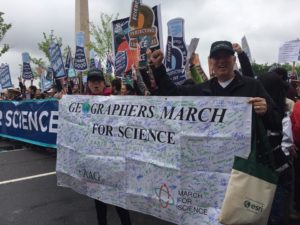 Geographers from around the country traveled to Washington, D.C. on Saturday, April 22, 2017, to demonstrate and show their support for the March for Science. Despite the rain, Geographers and scientists from many other disciplines and their supporters rallied to march for science!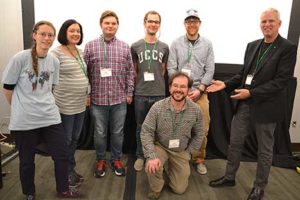
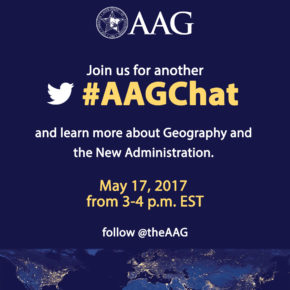 The AAG will host a Twitter Chat on May 17 from 3 p.m. to 4 p.m. Eastern Time entitled “Geography and the New Administration.” To join the chat, follow @theAAG on Twitter using the #AAGChat hashtag. In order to set the scene for what we hope will be an engaging and interactive discussion, we wanted to share some perspectives on the active role our organization has played in responding to several noteworthy recent policies.
 The National Center for Research in Geography Education (NCRGE) invites proposals to develop new collaborative and interdisciplinary research networks addressing major questions and challenges in geography education. Through this program, NCRGE aspires to strengthen geography education research processes and promote the growth of sustainable, and potentially transformative, lines of research.
 The Geosciences Division of the Council on Undergraduate Research (GeoCUR) is now accepting nominations for its annual award that highlights the importance of mentoring undergraduate research activities. The award annually recognizes an individual who serves as a role model for productive and transformative student-faculty mentoring relationships and for maintaining a sustained and innovative approach to the enterprise of undergraduate research.
 Late last week, President Trump signed into law a budget deal that will fund the federal government through September 30. The bipartisan deal has generally been viewed favorably by science advocates, as it maintains or increases funding levels for most agencies that provide research support.
 John Miller Morris, Jr., 64, passed away on February 16, 2017, in a San Antonio hospital after surgery, attended by friends who traveled thousands of miles to come to his bedside. He is survived by a daughter Erin Claire Noakes of Washington D.C. He will be missed by his longtime companion, many friends, colleagues, and neighbors.
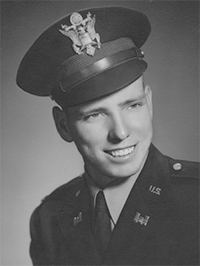 Ray Henkel was born Jan. 28, 1931 on a farm along the Cimarron River about 30 miles west of Tulsa. He died March 11, 2017, at age 86. Ray attended a one-room elementary school, and in 1948 graduated from Kellyville H. S. in a class of 15, earning an A in every class. Ray had a photographic memory, so school work was always easy for him.
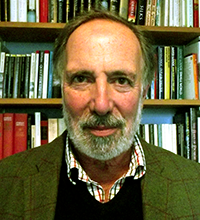 John Davey, a prodigious figure in academic, trade and reference publishing for almost 50 years, died at home with family at his side on April 21, 2017. He had just celebrated his 72 birthday days earlier. After making his mark in publishing in the 1970s, John joined Blackwell as their first full-time academic editor. During the 1980s he took the company from obscurity to being a major force in the industry. He rapidly became an editorial director, appointed several specialist editors, initiated Blackwell’s reference publishing, acquired and started several new journals, and had responsibility for rights and contracts.
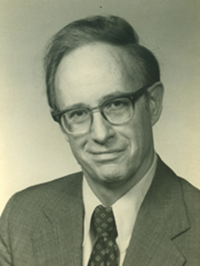 Marvin W. Mikesell, Professor of Geography in the Committee on Geographical Studies, died unexpectedly Wednesday morning, April 26, 2017, at the University of Chicago Hospital in Hyde Park, aged 88, in the midst of teaching his seminar on problems in the human geography of the Middle East this Spring Quarter.
 The 2016 U.S. Elections: Implications for Geography and Beyond
 This special theme will feature 50 sessions with more than 250 presentations at the intersection of human rights and geography and will build on the AAG’s decade-long initiatives in this area. Speakers from leading international human rights organizations, academia, government, and NGOs will address human rights challenges around the world.
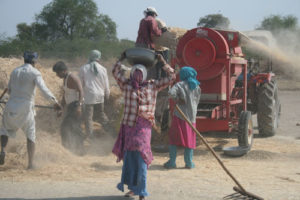 Geographies of Bread and Water
 The AAG is planning several activities to foster increased participation in the March for Science by AAG members and to provide resources and assistance for geographers who are planning to be in Washington on April 22:
 On Wednesday, April 5, the AAG Council will hold a town hall meeting for members to learn more about the association and its activities. This meeting gives an opportunity to ask questions and to provide input. The meeting is from 12-1 p.m., in the Commonwealth Room, Level 3, at the Sheraton.
 There is much more the
 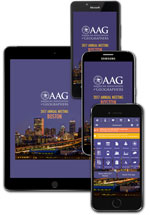 Get the most from your AAG 2017 Boston experience with the mobile app. Enjoy an interactive experience on your Apple, Android, BlackBerry and other mobile devices during the annual meeting. If you’re a laptop user or have a Windows phone, there’s also a Web version for your devices.
 The AAG Wilbanks Award for Transformational Research in Geography
 The American Association of Geographers (AAG) is pleased to announce that we are formally partnering with and affirming our support for the March for Science, a multi-location event that will be held in Washington, D.C., across the U.S., and internationally on Earth Day, April 22, 2017. As a nonprofit scientific, research, and educational society with a current membership of over 12,000 individuals from across the nation and around the world, the AAG is proud to stand with many other organizations that share a belief that the benefits of science are a human right. Our members work in the public, private, and academic sectors to advance the theory, methods, and practice of geography, and share a nonpartisan belief that science should be well funded and that political leaders should enact evidence-based policies for the common good.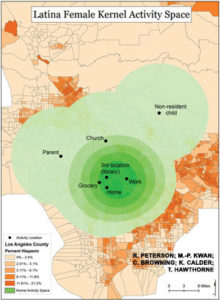
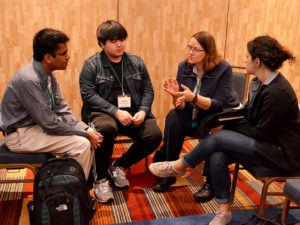 The Jobs & Careers Center provides a central location for jobseekers, students, and professionals to interact with one another and to learn more about careers and professional development for geographers. No additional cost or registration is required for conference participants to visit the Jobs & Careers Center. The Jobs & Careers Center will be located in Rooms 203, 204 & 205 of the Hynes Convention Center, Second Level.
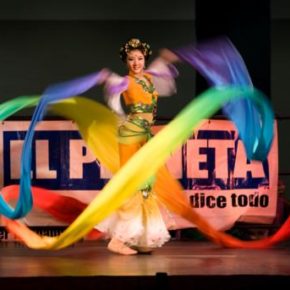 Boston’s cultural scene is vibrant in all seasons. From museums and performing arts to interactive festivals and outdoor concerts, Boston is abuzz with activities for cultural enthusiasts. If you love the classics, ensembles such as Handel & Haydn Society and the Boston Symphony Orchestra are reason enough to visit Boston. If you prefer a lighter, contemporary flair then the Boston Pops are your orchestra of choice. Boston’s heralded conservatories, including Boston Conservatory, New England Conservatory, and Berklee College of Music, also performance concerts every week throughout the year.
 Mark your calendars and be sure to join us for an #AAGChat on the release of the International Encyclopedia of Geography (IEG). The chat will feature Richard A. Marston, IEG General Editor – Physical Geography and former AAG President, as well as J. Marshall Shepherd, IEG Section Editor – Climate, as well as Jennifer Cassidento, AAG Publications Director. The chat will occur on Thursday, March 16, 2017, from 12-1 p.m. EST. To participate in the chat, please use the hashtag, #AAGChat. Make sure to follow us on Twitter by searching for our handle,
 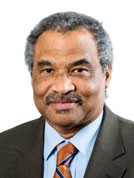 Samuel Stephen Nii Kojo Armah Aryeetey-Attoh was born June 26, 1956, in Accra, Ghana. He was the last born and only son to the late Samuel A Attoh and Cecilia Taiwo Attoh. Samuel received his BA with Honors from the University of Ghana, his Masters from Carleton University in Ottawa, Canada, and his Ph.D. from Boston University, Massachusetts. Dr. Attoh began his academic career at the University of Toledo, where he was a Geography Professor from 1987 to 2005. During this time, he also served as Chairman of Geography and Planning department from 1996 to 2003. He served as a Fellow of the American Council on Education and Administrative Placement Intern Mentor at Carnegie Mellon University, Pennsylvania, from 2003-2004.
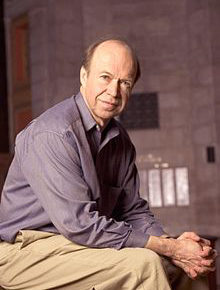 James Hansen, known for his climate research and his Congressional testimony on climate change that raised awareness of global warming, will deliver a featured talk on climate change, moderated by AAG President Glen MacDonald, at the AAG annual meeting in Boston on April 7, 2017. Hansen received a B.A. in physics and mathematics, an M.S. in astronomy and a Ph.D. in physics from the University of Iowa. From 1981 to 2013, he was the head of the NASA Goddard Institute for Space Studies in New York City. Currently, he directs the Program on Climate Science, Awareness and Solutions at Columbia University’s Earth Institute.
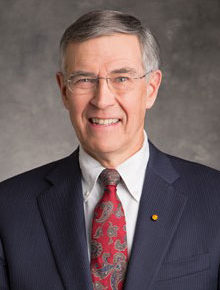 Rush D. Holt, Ph.D., chief executive officer of the American Association for the Advancement of Science (AAAS), will deliver a featured talk on emerging opportunities and challenges that science will face in the coming years at the AAG annual meeting in Boston on April 6, 2017. Holt is a Phi Beta Kappa graduate of Carleton College in Northfield, Minnesota, and he holds M.A. and Ph.D. degrees in physics from New York University. He is an elected fellow of AAAS, the American Physical Society, and Sigma Xi, and he holds honorary degrees from multiple universities. He is also a former Congressman and Jeopardy Champion.
 The AAG election will be conducted online again, and will take place Jan. 11-Feb. 2, 2017. Each member who has an email address on record with the AAG will receive a special email with a code that will allow them to sign in to our AAG SimplyVoting website and vote. It’s important to update your email address to make sure you will be able to vote. If you know your email address is up to date with us, there’s no need to do anything further.
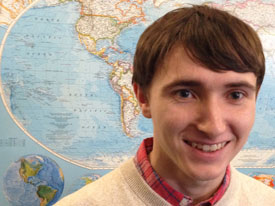 Ryan Habron is a senior at the University of Maryland pursuing a B.S. in Geographical Sciences. His focuses include GIS, Computer Cartography, and Remote Sensing. He hopes to use these skills to monitor transportation, and other urban planning tasks in his future career.
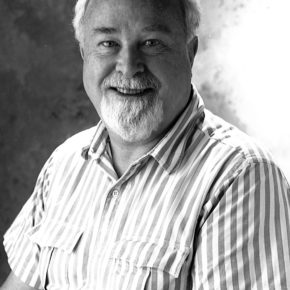 Professor Hunter who has died aged 88, was an influential figure in establishing the study of medical geography as a specialty within geography. John Melton Hunter was born in Windsor, Canada on January 1, 1928. John was educated at Bemrose School, Derby and went on to receive his Ph.D. in geography from the University of Reading in 1954. During his time at the University of Ghana, Legon, Accra, he was planning officer and adviser for the preparation and enumeration of area maps and census reports for the 1960 Ghana Census. After returning to Great Britain, he taught at the University of Durham from 1964 to 1967 before beginning his tenure at Michigan State University, East Lansing, Michigan in 1967.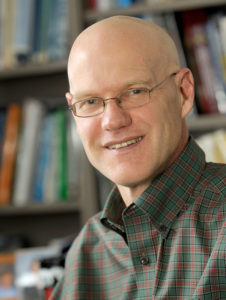
 The American Association of Geographers is pleased to announce the appointment of Jennifer Cassidento as its new Publications Director. Cassidento brings a wealth of editorial expertise and experience to the AAG publications. She has worked previously with major scholarly publishing houses, and for several years with the AAG on its journals, serving as managing editor of three of its flagship journals, including the Annals of the American Association of Geographers, the AAG Review of Books, and GeoHumanities.
 Mark your calendars and be sure to join us for an #AAGChat on careers in geography. The chat will address the many diverse career opportunities for geographers in a variety of industries and employment sectors and how geography students, graduates and early-career professionals can identify appropriate job openings. We will also discuss the many career resources available through the AAG, including our Jobs in Geography Center, Student Opportunities website, and more!
 All early- to mid-career scholars involved in geographic research on one or more social issues are eligible to be nominated for the Glenda Laws Award, which recognizes outstanding contributions to geographic research on social issues. Named in memory of Glenda Laws, a geographer who brought energy and enthusiasm to her work on issues of social justice and social policy, the award is presented at the awards luncheon at the AAG annual meeting.
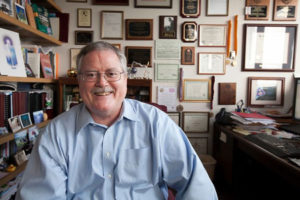 Our flagship journal, the Annals of the American Association of Geographers, begins the new year with a change of editorship for the newly named Physical Geography and Environmental Sciences section.