Perspectives: A New Column in the AAG Newsletter

In May, we introduced a new column to the AAG Newsletter called Perspectives, replacing AAG’s former Op-Ed feature. Perspectives will share the opinions and ideas of members on issues of relevance to geography. We encourage submissions that stimulate dialogue, get members thinking, and challenge our discipline to take new approaches to the social, political, and environmental issues confronting geographers and the public.

We are grateful to Guo Chen of Michigan State University, whose article “Working Together for Racial and Social Justice: From Anti-Asian Racism and Violence to Anti-Racist Praxis in Geography” was the first Perspective to appear, last month. We look forward to sharing more of our members’ thought-provoking commentary in the coming months.

One of the great strengths and challenges of the discipline of geography is that it embraces the world. We envision Perspectives as having wide-ranging potential, showcasing our members’ voices, experiences, and opinions regarding virtually any topic. We want to make space for members to engage and challenge one another, taking on questions that help illuminate and strengthen the relevance of geography to people’s lives.

In all cases, the articles will focus on the best ideas: showcasing novel ways of considering social, political, and geography concepts, adhering to the AAG Code of Conduct and supporting AAG’s goal of fostering robust discussion and respectful disagreement. Optimal length is 1,000-1,500 words.

So, do you have a probing question or fresh inspiration for the discipline? Do you have a unique and engaging response to a column or feature article you’ve seen in our newsletter? We want to hear from you. Consider submitting a column for consideration as an upcoming Perspectives. Read more about our submission guidelines here.

DOI: 10.14433/2017.0092


Please note: The ideas expressed by Executive Director Gary Langham are not necessarily the views of the AAG as a whole. Please feel free to email him at glangham [at] aag [dot] org.

    Share

A Good Day for Geography, Every Day

The late Will Graf would end his AAG President’s columns with this optimistic affirmation: It’s a good day for Geography. Given the last year, you might be surprised to hear that it is just as true today as it was during his tenure in 1998-99. Let me explain.

As I write this, it is the one-year anniversary of our official announcement canceling the AAG Annual Meeting in Denver. I will never forget that week or that gut-wrenching decision. The AAG meeting was one of the first big academic meetings of the year, and the crisis was escalating quickly. I am sure that I was not the only one waking up in the middle of the night and checking the latest statistics and news. Increasingly, it seemed that we would have to cancel, yet more than 6500 members had registered, and the AAG had not canceled a meeting since WWII.

As the Executive Committee sat in the conference room in San Diego and voted to cancel the in-person meeting, it was just 30 days before the event. Since the AAG had been investing in a virtual platform for months, we knew we could offer a virtual meeting, though 30 days was not much time to prepare. We decided to give full refunds and make the virtual meeting free for anyone already registered. Of course, this was the only fair decision, but it was also consequential for the organization, both culturally and financially. We also knew that membership was likely to dip significantly, but we had no idea how much or how long it might take to rebound. So, we budgeted for up to 50% losses in membership and took a pessimistic view of the current fiscal year. This time last year, the AAG was looking into a fiscal abyss, but I am pleased to report that the AAG has weathered this financial storm very well.

With the losses from the meeting, we expected to take a loss in FYE20, and we did: Official losses were $2M. This figure does not include additional spending that occurred as a result of the COVID-19 Rapid Response program. In total, $900k was approved from reserves to fund nine programs.  For example, our support for students included Bridging the Digital Divide, providing direct funds to purchase hardware and software for students at Historically Black Colleges and Universities and Tribal Colleges and Universities. These programs are meant to help members cope with the economic challenges of the pandemic.

After the initial FYE21 budget was approved in April 2020, the AAG Council re-convened in June 2020 to adopt a new budget. The first draft of the revised budget projected a loss of $1.5M due to loss of membership and projections for the Annual Meeting with reduced attendance. To offset these projected losses, we reduced expenses by $846k, with the other half being approved from reserves. This approach cut nearly all expenses except for staff. Remarkably, we expect to end the year without the need for any reserves, ending in positive territory, even without considering revenue from investments.

While AAG has experienced a 19% loss in membership year over year during the pandemic, this is far lower than the feared 50% loss. Three out of four of our lost members are either graduate students or members making under $75k per year. Therefore, Council has expanded eligibility for membership renewal fee coverage to all those making less than $75k and expanded the membership window for qualifying to two years. The job market appears to be recovering: Between March 1, 2019 and 2020, job postings at AAG dropped 38%. Postings have rebounded in 2021, and are now up 31%, suggesting at least some postings were merely delayed in the early pandemic.

The whole world turned upside down in the last year, and none of us are untouched. And still, it’s a good day for Geography.

The AAG has managed to get through a pandemic with surprising ease. To be sure, there are serious challenges ahead and much work to do. However, there is also reason to expect tomorrow will be a better day. Our work to replace our membership database and website is moving forward. On April 7th, we offered members the first preview of the site, and the full site is expected to launch in early summer. (We are welcoming feedback from members about a new tagline; share your ideas for a new tagline here). Together these new systems will open up greater possibilities for membership retention and a range of new and improved services. Multi-year membership, automatic renewals, tagged content, and much more will be possible. We continue to invest in creative, more inclusive approaches to meeting, including a climate-forward dispersed-meeting model for a new fall meeting, and a hybrid meeting that blends the best possible options for international virtual access and in-person convening in New York City.

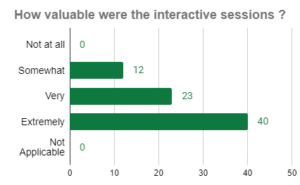
Nearly two-thirds of graduate students in the AAG Methods workshops found the interactions highly valuable.

Perhaps the biggest surprise of the last year is how popular our online seminars have been. In February, we kicked off a GeoEthics series, bringing together experts to talk about locational ethics. We also offered methods training workshops that have connected more than a thousand graduate students to a whole range of experts to discuss research challenges and solutions—and to one another at a time when peer support was also important. In all these cases, we showcase our membership’s expertise, connecting our members to it and each other. Traditionally, we might offer all these things only at the Annual Meeting. However, online platforms allow us to share year-round, to feature topics and presenters that reflect the AAG we want for the future. With minimal new expenses, we can showcase the expertise of our members while connecting and building community.

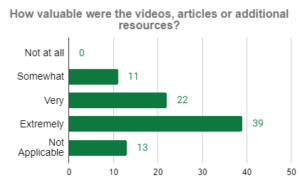
All respondents to the survey on AAG Methods workshops found resources helpful; nearly two-thirds found them very or extremely helpful.

If you attended any of these sessions, you know that it really matters to attendees. Three hundred people were on one three-hour session, engaged and eager for more. Students shed tears as they connected to methods experts and one another, gaining access and answers they needed during the pandemic. More to come on this experiment, but it gives me hope. During the troubling days and nights this past year, one thing kept coming back to me. Even as the pandemic loomed over all aspects of our personal and professional lives, we still found the energy, funding, and resolve to launch the COVID Rapid Response programs and to support one another. We put the members and our community first.

The whole world turned upside down in the last year, and none of us are untouched. And still, it’s a good day for Geography.

DOI: 10.14433/2017.0090


Please note: The ideas expressed by Executive Director Gary Langham are not necessarily the views of the AAG as a whole. Please feel free to email him at glangham [at] aag [dot] org.

    Share

Why should geographers care about data science?

By Canserina Kurnia, Esri Senior Solution Engineer for Education, and Joseph Kerski, Ph.D., GISP, Esri Education Manager

Data science is the study of data. Data science involves developing methods of recording, storing, and analyzing data to effectively extract useful information. The discipline of geography has always been focused on data science, because geographers have always been keen to gather, analyze, and make sense of large volumes of data across a wide variety of scales and covering a wide variety of themes, from ecoregions to individual census blocks. Those using GIS are spatial data scientists: They combine their data with theoretical foundations such as Tobler’s First Law to explain and predict. As they visualize and analyze data, they detect patterns and relationships, testing real-world phenomena against hypotheses.

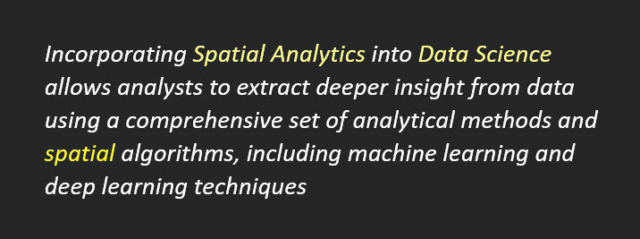
Why is geographic thinking and spatial analysis important to data science?  Incorporating spatial analytics into data science allows analysts to extract deeper insight from data using a comprehensive set of analytical methods and spatial algorithms. These methods and algorithms include machine learning and deep learning techniques.  Machine Learning (ML) refers to a set of data-driven algorithms and techniques that automate the prediction, classification, and clustering of data. Machine learning can play a critical role in spatial problem solving in a wide range of application areas, from image classification to spatial pattern detection to multivariate prediction. Deep learning is a type of machine learning that relies on multiple layers of nonlinear processing for feature identification and pattern recognition described in a model.

Geographers will no doubt find resonance with terms such as algorithms, classification, clustering, and pattern detection. Indeed, data science represents an opportunity for geographers to promote the value of geographic thinking throughout the academy and in the workplace. The rise of data science in academia and the workplace provides geographers with some new opportunities to demonstrate the relevance of their discipline, one that is high-tech and data-driven. In so doing, geographers can work in innovative ways with data science students and faculty, introducing them to the value of the geographic perspective and geographic tools. This work can lead to collaboration on research projects and jointly offered courses. Geographers can also work with employers to develop new internship programs and other opportunities for their students grounded in spatial thinking and data science.

Geographic Understanding + Data Science = Spatial Data Science

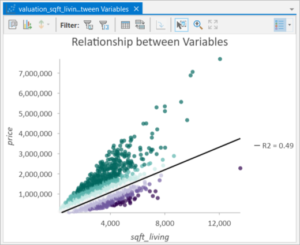
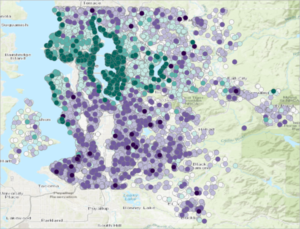
At left is a data-driven valuation model for the housing market for King County, Washington, USA.

When we chart the relationship between variables, in this case price and living space (measured in square feet), the dark green and dark purple indicate a large mismatch between predicted sale price of the homes and actual sale price of the homes. Ideally, data points should be close to the line. The closer to the line the data points are, the stronger the relationship is between the two variables.

In the chart, green colors indicate an underestimation of the sale price of the home, where the actual price of the house is higher than the one predicted by the model. The purple color indicates an overestimation, where the predicted price is above the actual price of the house. How can this situation happen?

Looking at the map at the left, the darker green points cluster around bodies of water, and people are willing to pay more to have a house near the water body. The regression model is systematically underestimating the sale price of the houses close to water bodies. It looks as though small changes to the size of the living space may result in bigger changes to the price of a house close to a water body compared to a house that is inland. So, location matters, and in this example, incorporating spatial data is crucial in modeling and understanding the complete situation.  In addition, visualizing the data on the map make it easy to observe the trend and distribution.

The Building Blocks of Spatial Data Science

Spatial data science is the intersection of geography and data science; it incorporates geographic understanding into existing data science methods to improve predictive models and results. This house value scenario provides a simple example of the type of questions spatial data science can address. But how do we learn spatial data science and apply it to our work?

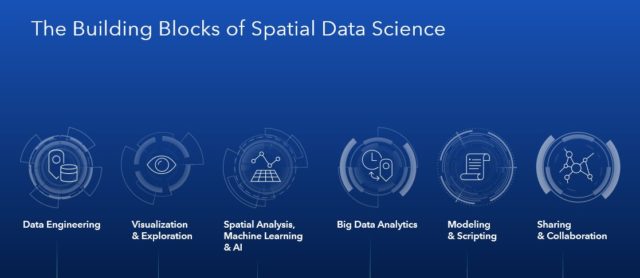
Spatial data science starts with Data Engineering. This refers to making sure the data is ready for our use. Visualization and exploration are next: We seek to understand the data and get a sense what we can solve with the data. We visualize and explore the data throughout the process and share the results. We use Spatial Analysis, Machine Learning and AI to layer the algorithms, methods, and approaches that allow us to break down the problem and create the model. This process turns data into information and often motivates us to take action.

These methods increasingly use larger data sets, such as a collection of imagery or a large vector data set, or real time streaming data from the Internet of Things. We use modeling and scripting, and Big Data Analytics, to Model the phenomena and automate the functionality. We employ Sharing and Collaboration to convey the results.  No matter how good the analysis is, if it is not shared with other, no action will be taken, and no improvements to the situation will be possible. Creating and sharing a story map, a dashboard, or one or more infographics enables others to understand the location, scope, and nature of the problem or situation, and allows for the gathering of stakeholders to arrive at a solution.

Integration

ArcGIS includes machine learning tools for performing classification, clustering, and prediction.   An example case for Classification is to classify impervious surfaces based on the latest high-resolution imagery to help effectively prepare for storm and flood events. Another example is for prediction:  Accurately predict impacts of climate change on local temperature using global climate model data.  An example for clustering is: Grouping the traffic patterns into traffic zones that can be used to elicit feedback from current drivers in the area.

As engaging and powerful as the tools are, integrating the tools is important. How can students and those in the workplace understand how data science works and integrate spatial components in data science? Nowadays, many open source machine learning frameworks exist, such as TensorFlow and scikit-learn.  These provide libraries for machine learning and deep learning. ArcGIS includes ready to use tools, methods and algorithms to support building blocks of spatial data science. ArcGIS Pro is a powerful desktop application that is used widely by the scientific community as a spatial analysis workstation, with ready-to-use tools for spatial data science modeling.

Equally importantly, integration between ArcGIS and open source data science machine learning libraries through Python and R is available. For Python, ArcGIS Notebooks allow the Jupyter notebook environment to access open source python libraries and the ArcGIS API for Python and ArcPy, which supports the backend of ArcGIS geoprocessing capabilities. For R, the ArcGIS R-Bridge connects ArcGIS to R, allowing for statistical analysis results to be easily mapped in 2D and 3D. Conversely, the bridge also allows data from the GIS to be input into R for statistical analysis.

Value-added Skills
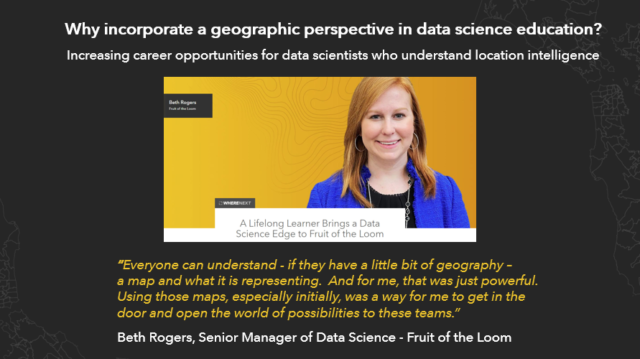
Adding data science to teaching spatial analytics builds highly marketable skills that are sought by nonprofit organizations, private companies, government agencies, and academia. This article shows how Fruit of the Loom hired recently graduating students as the company’s data analysts.

Conclusion
Spatial analytics is a fundamental part of data science.  Combining the power of the two brings deeper insights to analysis.  The job market for data scientists who understand location intelligence is growing.  And ready-to-use tools, open data, and integration tools are already available to enrich teaching and research.
Next steps

Explore resources for Spatial Data Science in Higher Education to learn how to bring spatial data science into your research and teaching. You’ll find lessons, web courses, webinars, sample notebooks and other resources to build your own skills and inspire your students and colleagues.

Featured Articles is a special section of the AAG Newsletter where AAG sponsors highlight recent programs and activities of significance to geographers and members of the AAG. To sponsor the AAG and submit an article, please contact Oscar Larson olarson [at] aag [dot] org.

    Share

What will be Presented at the 2021 AAG Meeting?

Jeong Chang Seong, Sanghoon JI, Ana Stanescu, Yubin Lee, and Chul Sue Hwang

Building off of an analysis completed for the cancelled in-person portion of the 2020 AAG Annual Meeting, Seong et al. have provided an update on presentation topics in anticipation of the 2021 AAG Annual Meeting.

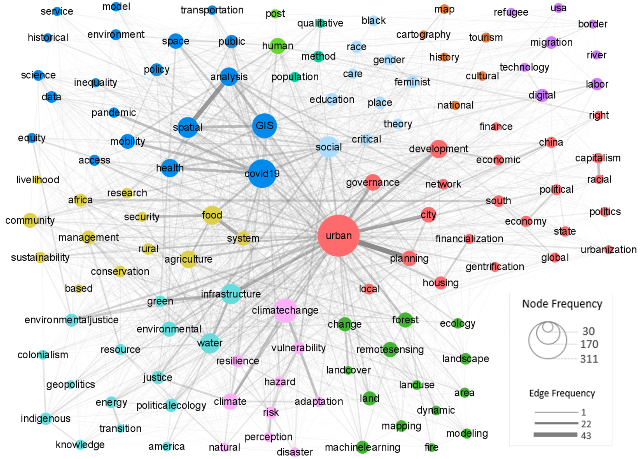
A total of 2,952 papers and posters (2,648 papers; 304 posters) are scheduled to be presented at the AAG virtual annual meeting in April this year (numbers as of March 1, 2021). To help meeting participants and fellow geographers to find out what will be presented at the meeting, we summarized the AAG 2021 presentation submissions using the keyword network analysis method.

Figure 1. Major keywords and their network clusters.

After collecting all keywords from the presentation submissions, raw keywords were cleaned with deletion, concatenation, standardization, normalization, lemmatization, and conversion techniques. A total of 20,550 keywords were split into single-word keywords. Only distinctive words were retrieved in each paper by deleting any duplicate words. A total of 4,145 distinctive keywords were identified from the 20,550 keywords. We used 30 as the keyword frequency threshold during network visualization. As a result, a keyword network diagram was constructed with 124 keywords as shown in Figure 1. In the figure, circle sizes reflect keyword frequencies, edge widths indicate co-occurrences between two keywords, and circle colors indicate cluster memberships.
Urban (311) was identified as the most frequent keyword at the 2021 AAG annual meeting, followed by COVID-19 (199), GIS (167), climate change (163), social (139), spatial (133), infrastructure (130), water (128), food (117), analysis (114), development (112) and health (111). Each number in parentheses indicates the frequency of the keyword. When the Louvain algorithm was applied for grouping keywords, ten (10) topical clusters were identified as shown in Table 1. Even if the Urban keyword appeared most frequently, the COVID-19 cluster had the largest number (779) of keywords as members. When the influence of each cluster was measured, the COVID-19 cluster was also most influential in the keyword network with the largest eigenvector centrality amount of 18.20%.

Cluster Name
Count of Members
Percent (%) Influence
Top Five (5) Keywords
COVID-19 779 18.20 covid19, GIS, spatial, analysis, health
Urban 560 16.39 urban, development, governance, city, planning
Land Cover 615 12.36 remote sensing, forest, change, land, machine learning
Climate Change 459 11.51 climate change, climate, resilience, risk, vulnerability
Political Ecology 403 10.78 infrastructure, water, environmental, justice, political ecology
Sustainability 319 10.64 food, agriculture, community, system, management
Critical Geography 335 7.64 social, education, place, feminist, race
Border 272 5.60 digital, migration, labor, usa, river
Mapping 158 2.59 tourism, map, cultural, national, history
Culture 144 2.24 human, post, more, than, animal
Others 101 2.05 method, population, qualitative, violence, culture

Table 1. Major clusters identified from the AAG 2021 presentation keywords.

About 7.5% of papers (i.e., 222 papers among 2952) included COVID-19 or pandemic in their keywords. A further detailed network analysis with the 222 papers identified seven (7) sub-clusters of COVID-19 research as shown in Table 2. Overall, five topics appear to stand out that are (1) spatial analysis of mobility, (2) health and sanitization accessibility, (3) community resilience and policies, (4) lockdown and activity spaces, and (5) online education.

Sub-cluster Name
Count of Members
Percent (%) Influence
Top Five (5) Keywords
Spatial Analysis 87 20.09 mobility, social, analysis, human, spatial
Community Resilience 66 15.30 food, local, system, resilience, agriculture
Public Health 61 11.24 health, public, neighborhood, adult, older
Activity Space 59 10.28 space, risk, livelihood, management, activity
Lockdown Impacts 61 9.01 GIS, lockdown, infrastructure, transportation, behavior
Sanitization Accessibility 41 8.80 access, vulnerability, water, sanitation, adaptation
Urban Policy 39 8.00 urban, policy, density, housing, rural
Online Education and Others 101 17.29 learning, online, education, teaching, city

Table 2. Sub-clusters of COVID-19 research.

The urban keyword was used in 311 papers (10.5% of total papers). Table 3 shows major sub-clusters of urban research. Like the 2020 case, no topic dominates in the urban research when examining the percent influence values that were measured with the eigenvector centrality. It, rather, shows that multiple sub-clusters are competitive each other.

Sub-cluster Name
Count of Members
Percent (%) Influence
Top Five (5) Keywords
Urban Development 99 11.74 development, agriculture, food, social, rural
Vulnerability 70 11.69 governance, resilience, system, climate change, COVID-19
Housing 89 11.40 housing, land, estate, financialization, political
Sustainability 103 11.21 change, sustainability, landscape, machine learning, management
Urban Planning 86 11.12 planning, GIS, human, community, critical
Green Space 69 10.45 infrastructure, green, space, environmental justice, gentrification
Public Access 77 9.44 city, water, public, right, access
Others 250 22.95 china, heat, spatial, urbanization, political ecology

Table 3. Sub-clusters of urban research.

The keyword network analysis suggests a couple of watching points in the 2021 AAG conference presentations. One is the emergence of COVID-19 research as a very influential topic. It may be of great interest to many geographers to see how fellow researchers tackle the global pandemic phenomenon. The other is the integration of GIS and spatial analysis into the COVID-19 cluster.

The 2021 AAG Conference is held virtually this year. Even if it is heartbreaking that we cannot meet fellow geographers face-to-face, the virtual conference will be an opportunity for us to overcome geographic mobility restrictions. We hope to see you all during the conference.

DOI: 10.14433/2017.0088

Acknowledgment: This research was supported by the MSIT (Ministry of Science, ICT), Republic of Korea, under the High-Potential Individuals Global Training Program (IITP-2020-0-01593) supervised by the IITP (Institute for Information & Communications Technology Planning & Evaluation).

About the Authors

Jeong Chang Seong, Ph. D., is a professor of geography at University of West Georgia (UWG), Carrollton, GA

Sanghoon JI is a graduate student at Kyung Hee University (KHU) who is currently performing a visiting research at UWG

Ana Stanescu, Ph. D., is an assistant professor of computer science at University of West Georgia, Carrollton, GA

Yubin Lee is a graduate student at KHU, Seoul, South Korea

Chul Sue Hwang, Ph. D., is a professor of geography at KHU, Seoul, South Korea

    Share

AAG Announces Undergraduate Program Excellence Awards

The American Association of Geographers (AAG) has named two recipients of the 2021 Award for Bachelors’ Program Excellence in Geography: The Geographic Science Program at James Madison University (JMU) in Virginia, and the Department of Geography and Anthropology at Kennesaw State University in Georgia.

The annual award and cash prize for Bachelors’ Program Excellence is one of three subcategories in AAG’s Program Excellence Awards, honoring Geography departments and Geography programs within blended departments that have significantly enhanced the prominence and reputation of Geography as a discipline and demonstrated the characteristics of a strong and engaged academic unit. The Bachelors’ Program award honors non-PhD-granting Geography programs at the baccalaureate level. Such programs play an important role in educating future geographers and promoting the discipline to a wider world, but tend not to be included in national rankings within the Academy.

JMU’s Geographic Science Program has shown remarkable growth over the last nine years, increasing from 156 to 240 majors, and employing 9.5 full-time tenure-track faculty. The program has invested in high-impact teaching practices that engage undergraduate students in field experiences in water resources, advanced cultural geography, and biogeography, often in the context of community engagement and service learning, both locally and abroad, and project-based instruction with partners such as Shenandoah National Park. The program is also known for its collegiality and maintenance of connections with its alumni.

Kennesaw State University’s Department of Geography and Anthropology has shown extraordinary energy and success in its promotion of geography on and off campus, since its founding in 1997. Offering six degree tracks — a Geospatial Sciences B.S., a Geography B.A., a Geography Minor, an Environmental Studies Minor, a Certificate in Geographic Information Sciences, and a Certificate in Land Surveying–the program serves about 7,000 students per year with 15 full-time faculty, 4 limited term full-time faculty, and 9 part-time faculty. Emphasizing experiential learning, professional experiences, high-impact practices, community engagement, internships and co-ops, teaching assistantships, and study abroad opportunities, the department tailors its coursework for students based on their educational interests and career goals.

“Undergraduate programs in Geography are the lifeblood of the discipline,” said Gary Langham, Executive Director of AAG. “These programs open so many doors to students, preparing them for careers in every sector and virtually every imaginable field, from environmental science to public health to business logistics, and so much more. We commend James Madison University and Kennesaw State University for their innovation in attracting and engaging students and their communities.”

    Share

Newsletter – March/April 2021

PRESIDENT’S COLUMN

You Baby

By Amy Lobben

lucas-george-wendt-tkEHyeKl7t8-unsplash-300x200-1

During our PhD programs, most of us are taught to be researchers. Some of us are formally taught to be teachers. But, few of us are taught Universal Design of Instruction. This approach represents a monumental shift from the traditional pedagogy: the lecture-driven course design. Yet, if we are going to achieve educational inclusion, our practices and institutions must shift out of comfortable models designed for the “typical” student and make way for a new approach – instructional design for a broad range of students.

Continue Reading.

ANNUAL MEETING

Countdown to the 2021 AAG Annual Meeting
AM2021V-1000X1000sq-290x290-1We are about 3 weeks away from the Annual Meeting! The completely virtual 2021 Annual Meeting, April 7-11, will feature 800+ paper sessions and panels on a wide range of topics as well as 27 poster sessions. Browse the Session Gallery to plan your attendance. For those who have not yet registered, you can do so here until the end of the event.

The 2021 AAG Meeting will feature several exciting sessions and plenaries, a highlight of which will be a presentation from 2020 Honorary Geographer Kathryn Sullivan. A new feature of the meeting this year are curated tracks, guided programs of Specialty and Affinity Group “must-see” sessions as highlighted by the groups. Browse the 15 curated tracks in the Session Gallery by selecting them from the “theme” drop-down menu.

To learn more about the meeting and plan for your participation, please visit the AAG Annual Meeting Website. We look forward to seeing you online soon.

Careers & Professional Development Sessions at the 2021 AAG Annual Meeting
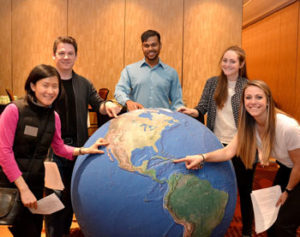
The AAG Jobs & Careers Center provides a central location for job seekers, students, and professionals to interact and to learn more about careers and professional development for geographers. Over 40 sessions will cover a range of topics from working as a geographer in the public, private, nonprofit, or academic sector to internships and work-based learning opportunities for geography students to computational skills in the geospatial services industry to diversity in academia and the workforce and more. Career Mentoring sessions will also be held twice daily April 7-April 10.

Learn about the Center’s offerings.

Helpful links for the 2021 AAG Annual Meeting

#AAG2021 is only a few weeks away and will be held online from April 7-11 in Pacific Time. Here are a few links for quick reference.

PUBLICATIONS

NEW Annals Alert: Articles with topics ranging from the racial politics of pesticides to natural gas production to urban parks
Annals-generic-225x300-2The most recent issue of the Annals of the AAG has been published online (Volume 111, Issue 2, March 2021) with 17 new articles on contemporary geographic research. Topics in this issue include geography department namesurban resilienceUniversity of Michigan; the Jamaican coffee industrygeographically weighted regressionbig data and mobilityEllsworth Huntington; and Peirce F. Lewis. Locational areas of interest include the Great Lakes RegionCalifornia’s hardwood rangelandsChad and CameroonPeru and Bolivia; and Eastern Montana. Authors are from a variety of research institutions including Mississippi State UniversityUniversity of British ColumbiaUniversity of Oxford; and University of Exeter.

All AAG members have full online access to all issues of The Annals through the Members Only page. Each issue, the Editors choose one article to make freely available. In this issue you can read Changes in the Frequency of Cool Season Lake Effects within the North American Great Lakes Region by Andrew W. Ellis, Michael L. Marston, and Joseph B. Bahret for free for the next two months.

Questions about the Annals? Contact annals [at] aag [dot] org.
Journals-newsletter-100-3In addition to the most recently published journal, read the latest issue of the other AAG journals online:

• Annals of the American Association of Geographers
• The Professional Geographer
• GeoHumanities
• The AAG Review of Books

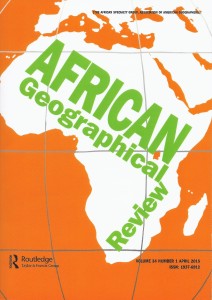
New issue of African Geographical Review
African-Geographical-Review-cvr-212x300-1

The latest issue of the journal of the Africa Specialty Group of the AAG, the African Geographical Review, has recently been published. Volume 40, Issue 1 is available online for subscribers and members of the Africa Specialty Group. The latest issue contains seven articles covering all sub-fields of geography, to enhance the standing of African regional geography, and to promote a better representation of African scholarship.

See more about the journal.

Call for Abstracts: Special Issue of ‘Annals’ on “Race, Nature, and the Environment”

AAG AnnalsThe 2023 Special Issue of the Annals invites new and emerging geographic scholarship situated at the crossroads of Race, Nature, and the Environment. In seeking contributions from across the discipline, we welcome submissions that advance critical geographic thinking about race and the environment from diverse perspectives and locations; that utilize a broad array of geographic data, theories, and methods; and that cultivate geographic insights that cut across time, place, and space. Abstracts of no more than 250 words should be submitted by e-mail to Jennifer Cassidento by March 31, 2021. The Editor (Katie Meehan) will consider all abstracts and then invite a selection to submit full papers for peer review by June 1, 2021.

More information about the special issue.

ASSOCIATION NEWS

2021 AAG Election Results

Election-button

The AAG members have spoken and the candidates running for various AAG governance positions have been selected. Congratulations to all who will be assuming their new roles on July 1st. We thank the hardworking officers whose terms will be concluding later this year.

See the results.

AAG Announces 2021 AAG Award Recipients

awards_hi-res-300x160-1

Congratulations to the recipients of 2021 AAG Awards including the Glenda Laws Award, the AAG Harold M. Rose Award for Anti-Racism Research and Practice, the AAG Harm de Blij Award for Excellence in Undergraduate Teaching, Wilbanks Prize for Transformational Research in Geography, and the AAG-Kauffman Awards for Best Paper and Best Student Paper in Geography & Entrepreneurship. The AAG will confer these awards at a future event to be determined, once the travel and in-person meeting restrictions have been lifted.

Learn more about the awardees.

AAG Announces 2021 Grant Recipients

The American Association of Geographers congratulates the individuals and entities named to receive an AAG Grant including the Anne U. White Fund, the Dissertation Research Grants, the Research Grants, and the AAG Darrel Hess Community College Geography Scholarships. The AAG will confer these awards at a future event to be determined, once the travel and in-person meeting restrictions have been lifted.

Read about the grantees.

AAG Announces 2020 Book Awards

AAG circular Awards Pin rests on an award certificate and against a brown frameThe AAG is pleased to announce the recipients of the three 2020 AAG Book Awards: the John Brinckerhoff Jackson Prize, the AAG Globe Book Award for Public Understanding of Geography, and the AAG Meridian Book Award for Outstanding Scholarly Work in Geography. The AAG Book Awards mark distinguished and outstanding works published by geography authors during the previous year, 2020. The AAG will confer these awards at a future event to be determined, once the travel and in-person meeting restrictions have been lifted.

See the Book Awards.

A new AAG.ORG is coming!

Prepare for a whole new web experience at AAG.org soon. The new site will elevate the vibrant and compelling communities of the geography discipline through stories, activities, and a host of new features. Members will have the chance to rediscover what they love about AAG, finding new ways to connect with geography and to make the world a better place. Launching in late spring, the site will be completely accessible, innovative, and mobile friendly. Be on the lookout for more information, and how you can provide feedback. We will share more as we move through stages of the process.

Careers in Geography: A Discussion with Geographers in Government/Public Sector Careers

Wednesday, March 24, 2:30 – 3:45 EST

Join AAG and geographers from the public sector in the next webinar in our Department Leadership and Early Career series. This free event brings together  panelists Jennifer Zanoni (U.S. Census Bureau), Stacy Drury (U.S. Forest Service), Suparna Das (DC Department of Health), Milena Janiec (U.S. Geological Survey), and Rich Quodomine (City of Philadelphia) to discuss key issues affecting career opportunities for geographers and improving their preparation for employment in public sector careers. REGISTER NOW!

The Department Leadership and Early Career series combines two themes in one: building and growing strong academic programs, and helping students and young geographers navigate their early careers. AAG is pleased to continue this series throughout the spring, free and open to the public. Recordings of webinars held thus far are also available to watch at any time.

See upcoming webinars and view recordings

POLICY CORNER

The American Rescue Plan is Passed and Signed into Law
US_Capitol

The following update is adapted from our colleagues at the Consortium of Social Science Associations (COSSA)

On Thurs, March 11th, President Biden signed into law the $1.9 trillion American Rescue Plan Act (H.R. 1319, committee report). The legislation, recently passed by Congress, aims to bring financial support to those affected by the COVID-19 pandemic through direct payments to individuals and expansion of unemployment assistance, among many other provisions. It also includes several notable provisions of interest to the science community, including $39.9 billion in funding for colleges and universities, with half to be used for student aid, as laid out in the CARES Act (see COSSA’s previous coverage). The bill also includes $100 million for the Institute of Education Sciences for research related to addressing learning loss caused by the coronavirus among K-12 students.

In addition, the National Science Foundation will receive $600 million “to fund or extend new and existing research grants, cooperative agreements, scholarships, fellowships, and apprenticeships, and related administrative expenses to prevent, prepare for, and respond to coronavirus.” While not included in the original bill text, this funding was added as part of the manager’s amendment that was passed on the House floor. This funding can only be used for research about the COVID-19 pandemic. The bill does not provide any relief for scientists whose research on other topics has been disrupted. The bipartisan RISE Act (see previous coverage), should it become law, would provide NSF with $3 billion to support non-COVID-related research impacted by the pandemic.

In the News:

  • The Senate last week held confirmation votes for Marcia Fudge as HUD Secretary, Merrick Garland as Attorney General, and Michael Regan to head EPA. On Monday, Deb Haaland was confirmed as head of the Department of Interior, making her the first Native American U.S. cabinet secretary.
  • On February 25, the House Committee on Science, Space, & Technology (SST) held a hearing on the COVID-19 pandemic’s impact on U.S. research and potential solutions to provide relief and recovery to the research enterprise.
  • The U.S. EPA invites nominations from a diverse range of qualified candidates to be considered for appointment to its National Environmental Justice Advisory Council (NEJAC). The Agency is seeking nominations to fill approximately eight (8) new vacancies for terms through September 2022. The nomination process for NEJAC Membership is open until March 24, 2021Click here to learn more about how to submit nominations, or email nejac [at] epa [dot] gov.
  • The National Academies of Sciences, Engineering, and Medicine (NASEM) has announced the opening of the 2021 application cycle for the New Voices initiative, a two-year program giving leadership opportunities to a diverse group of mid-career experts to collaborate and develop interdisciplinary solutions to complex problems being addressed by the National Academies. The New Voices initiative is open to U.S-based scientists, engineers, health professionals, and other experts from all professional sectors including industry, academia, non-profits, and the public sector. Applications are due March 31, 2021 and are available on the NASEM website. More information about the New Voices initiative is also available on the NASEM website.
MEMBER NEWS

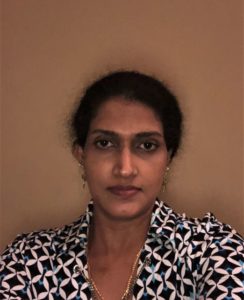
Profiles of Professional Geographers
B.Kar_-244x300-1

Bandana Kar, a Group Lead on the Research & Development Staff at Oak Ridge National Laboratory, brings knowledge of environmental hazards and events to address national security concerns. Kar encourages aspiring geographers to take advantage of internship opportunities in government labs similar to Oak Ridge on the path to a geography career. Searching for postings on https://www.orau.org/ is a good initial step to gaining first hand experience.

Learn more about Geography Careers on the recently updated AAG Jobs & Careers website.

RESOURCES AND OPPORTUNITIES

AAG Early Career and Department Leadership Webinar Series

In fall 2020, the American Association of Geographers piloted the Department Leadership and Early Career webinar series as a service to AAG members and the wider geography community. The series featured two separate, but equally important themes: building and growing strong academic programs, and helping students and young geographers navigate their early careers. AAG is pleased to continue this series throughout the spring, free and open to the public. Recordings of webinars held thus far are also available to watch at any time.

See upcoming webinars and view recordings.

New National Geospatial Operations Center Director Announced

The USGS is pleased to announce that David Brostuen has been selected as Director of the USGS National Geospatial Technical Operations Center (NGTOC). The NGTOC is the operational branch of the National Geospatial Program and has locations in Denver, Colorado and Rolla, Missouri. As Director of NGTOC, David leads a wide array of functions in support of maintaining seamless, current, nationally consistent coverage of base geospatial data for the Nation, including development of digital topographic maps (US Topo), the 3D Elevation Program and the National Hydrography Dataset. In addition, David oversees several broad-based USGS contract mechanisms for the acquisition of geospatial products and services through the commercial sector. David has been acting in the role of Director, NGTOC since January 2020.

Learn more.

Upcoming Virtual Events Sponsored by the Kauffman Foundation

Kauffmann-300x110Two virtual events are upcoming that may be of interest to AAG members:

Early-Stage Researcher Professional Development Series

The next virtual Early-Stage Research Professional Development session will take place 1 p.m. CT March 26 with mentors Maria Minniti (Syracuse University) and Sharon Alvarez (University of Pittsburgh).  This series is open to 15 early-stage researchers to connect with research mentors to discuss research approaches, professional development and the research career trajectory. Register.

Plain Language Training for Early-Stage Researchers

Have you ever wondered about communicating research findings to policymakers, government officials, or other stakeholders outside of your discipline? Join us 10 a.m. – 12:30 p.m. CT April 16 for a Plain Language training provided by Bold Type. In this session we will discuss what plain language is and how to apply it in translating your research findings into usable information that drives impact. Register.

2021 William T. Pecora Award Nominations Now Being Accepted
Pecora-Award-1-300x178-1The William T. Pecora Award is presented annually to individuals or teams using satellite or aerial remote sensing that make outstanding contributions toward understanding the Earth (land, oceans and air), educating the next generation of scientists, informing decision makers or supporting natural or human-induced disaster response. Sponsored jointly by the Department of the Interior (DOI) and the National Aeronautics and Space Administration (NASA) and established in 1974, the award honors the memory of Dr. William T. Pecora, former Director of the U.S. Geological Survey and Under Secretary, Department of the Interior, whose early vision and support helped establish the Landsat satellite program. Nominations for the 2021 awards must be received by the Award Committee by May 14, 2021.

Learn more.

FEATURED ARTICLES

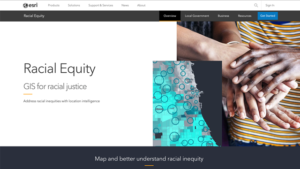
Visualizing Racial Equity

By Citabria Stevens
RacialEquity_Microsite1-300x169

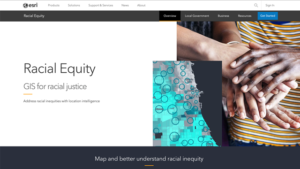
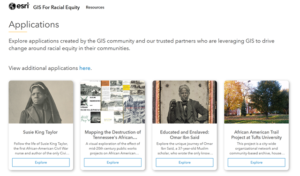
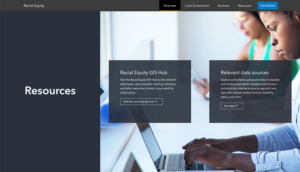
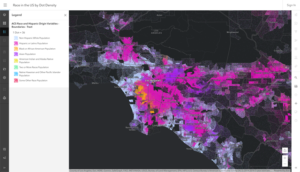
Understanding entrenched inequities and injustices is complex and figuring out what to do is a daunting endeavor. But GIS is a technology that breaks down complexities and reveals patterns over space and time, which can go a long way toward guiding action. To help scholars and policymakers leverage the full power of location intelligence to address issues that revolve around race, Esri has launched a racial equity initiative.

Continue Reading.

GEOGRAPHERS IN THE NEWS
EVENTS CALENDAR
    Share

AAG Announces 2020 Book Awards

The AAG is pleased to announce the recipients of the three 2020 AAG Book Awards: the John Brinckerhoff Jackson Prize, the AAG Globe Book Award for Public Understanding of Geography, and the AAG Meridian Book Award for Outstanding Scholarly Work in Geography. The AAG Book Awards mark distinguished and outstanding works published by geography authors during the previous year, 2020. The awardees will be formally recognized at a future event when it is safe to do so.

The John Brinckerhoff Jackson Prize

This award encourages and rewards American geographers who write books about the United States which convey the insights of professional geography in language that is both interesting and attractive to lay readers.
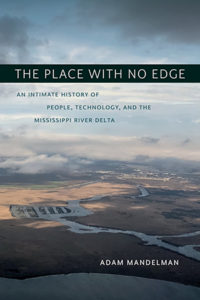
Adam MandelmanThe Place with No Edge: An Intimate History of People, Technology, and the Mississippi River Delta (LSU Press, 2020)
Adam Mandelman’s The Place with No Edge: An Intimate History of People, Technology, and the Mississippi River Delta offers an engagingly written interpretation of one of North America’s most unique cultural landscapes. Probing the environmental history of the lower Mississippi Delta, Mandelman reveals the intimate interplay of people, technology, politics, land, and water in a setting that for centuries has challenged and frustrated Euro-Americans. What he discovers is a rich story of how humans modified the delta environment as sugar cane farmers, rice producers, timber harvesters, oil drillers, and petrochemical manufacturers dramatically transformed the regional landscape. He documents how the technologies they utilized actually brought the Delta’s culturally diverse peoples into more intimate, interdependent relationships with their complex natural setting.

Rejecting the simple argument that this was merely another example of people destroying an environment they did not understand, Mandelman encourages us to appreciate the complexity of that human-land relationship. He argues that people need to look more closely at the interplay of technology and nature and to responsibly intervene in respectful ways where possible.

Mandelman’s nuanced narrative explains why this is so important and he suggests how it is necessary to understand and make sustainable this exotic setting for the people, plants, and animals that call it home. Mandelman’s work is indeed an excellent example of the kind of geographical research and writing recognized by the AAG John Brinckerhoff Jackson Prize.

The AAG Globe Book Award for Public Understanding of Geography

This award is given for a book written or co-authored by a geographer that conveys most powerfully the nature and importance of geography to the non-academic world.

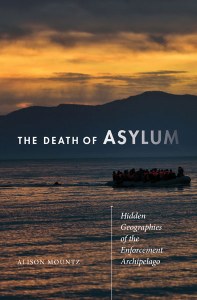
Alison Mountz, The Death of Asylum: Hidden Geographies of the Enforcement Archipelago (Minneapolis: University of Minnesota Press, 2020)

Alison Mountz’s monograph The Death of Asylum: Hidden Geographies of the Enforcement Archipelago is an important, timely and critical intervention in debates over the deadly curtailment of refugee rights globally.

By carefully charting the hidden geographies in which forced migrants are increasingly detained, Mountz provides a clear account of how contemporary states are using territory and off-shore management sites to deny access to asylum. While drawing on sophisticated geographical theories in its analysis of these deadly developments, the book is never intimidating. It is certainly sobering and overwhelming at moments, but by drawing readers in with compelling and sometimes surprising stories it remains at once accessible and alluring. It shows how a wide array of works by other geographers – from scholars of migration and borders to theorists of geopolitics, precarity and spaces of exception – can help us and a wider public come to terms with the practical death of asylum as a human right.

By thereby connecting the fates of real human beings with the construction of spaces where being human is repeatedly denied to the point of death, the book also invites readers to reflect deeply on how their own human geographies are bound up with those of others deemed illegal and unwanted. It is an urgent indictment of our times, but also of the intersecting territories of sovereignty and security in which borders demarcate belonging with such deadly consequence.

The AAG Meridian Book Award for Outstanding Scholarly Work in Geography

This award is given for a book written by a geographer that makes an unusually important contribution to advancing the science and art of geography.

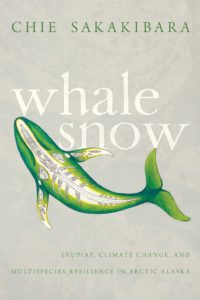
Chie SakakibaraWhale Snow (University of Arizona Press, 2020)

In Whale SnowChie Sakakibara pioneers a vision of surviving humankind and kin safely segueing a conjoined path in the future. On the frontier between tundra and ocean, she engaged in the kind of years-long fieldwork that exemplary geographers have pursued for generations in an effort to understand the why of where. Recognizing that whales and whaling remain integral to Inupiat lifeways, despite the onslaught of globalization and climate change, her work explores and elucidates the significance of bowhead whales to the persistence of Inupiaq culture and community.

This book offers a rare, qualified, and yet substantiated optimism to readers around the world. Hers is a vision of “being in a togetherness” that perseveres against myriad adversities on the near horizon, and that can continue to do so far into the future. This research is exemplary in its
sustained commitment to the community. It demonstrates the best of embedded, ethically-driven, and collaborative knowledge production. Those who seek, through their own studies with diverse cultural communities of practice, to overcome – as do the whaling Inupiat of Alaskan North Slope Borough, in unity with their animal kin — the existential threats of our unprecedented and contingent present will be inspired and transformed by reading this book.

In so many ways, Whale Snow epitomizes the essence of geography as an art, science, method, literary practice, and a way of understanding and relating to the world.

    Share

Visualizing Racial Equity

    Share

Social Media at #AAG2021

We’re getting closer to the 2021 AAG Annual Meeting! Whether you will be attending the meeting all week, for a few days, or catching up with recordings of presentations between other obligations, there are plenty of ways to get involved using social media. Social media is a great way for seasoned conference goers and newcomers alike to network, report on new research, engage in lively debate with those inside and outside of the discipline, and find out what’s going on during the largest geography conference in the world. Start planning your #AAG2021 social media strategy today with these helpful guidelines:

Twitter

One of the most frequently used social media sites for live events, Twitter is a great place to start scoping out the annual meeting. Twitter is used by geographers to discuss research ideas, share recent publications, or connect with others. As the main social media channel, the AAG annual meeting has had active Twitter users since at least 2011 in Seattle. This year the official conference hashtag will be #AAG2021. Start using and following #AAG2021; posts are already being compiled in anticipation of the meeting. If you are new to Twitter, try these tips to benefit most from the network:

  • Follow @theAAG on Twitter. The official AAG Twitter account will be active throughout the meeting with important announcements, live tweets of events, and fun ways to virtually interact with other conference attendees.
  • Use #AAG2021 on all your meeting related communications. Sometimes it is difficult to fit your thoughts into the 280 character count, but try to include the hashtag #AAG2021 in each of your tweets. This will ensure that your tweets are being seen by others who are attending the conference or following along. If you are new to hashtags, a hashtag is a way to organize a specific topic into one feed. Click on the hashtag to see the conversations happening related to that topic.
  • Whenever possible, try to include Twitter handles. If you are tweeting about a paper, panel, or poster, be sure to attribute the research to the right person by using their Twitter handle (@[name]). Presenters and panelists should consider including their handles on an opening slide or in a poster corner. Conversely, if you do not want your research to be tweeted, please state that information upfront so the audience is aware of your desires.
  • Follow the hashtag and join the conversation! The great thing about Twitter conversations is that they can be both live or asynchronous, helpful for those communicating between time zones.

Facebook

Do you prefer Facebook over Twitter as your social media site of choice? While there will be less live coverage of specific sessions, Facebook is a great way to share videos and news about the annual meeting with your friends, family, and colleagues.

  • Make sure you like the AAG Facebook page (www.facebook.com/geographers) and set the page so that you see it first in your News Feed by clicking on the “Following” dropdown menu on the AAG Facebook page itself. This will ensure that you receive the latest meeting related announcements as soon as you open the Facebook app or website.
  • Check on the page each morning for reminders of the day’s schedule of events.

Instagram

Instagram is a fun place to share your photos of your daily life as a geographer and where in the world you are participating from for the AAG Annual Meeting.

  • Follow @theAAG on Instagram for visual representations of programs currently underway at the AAG.
  • Share your photos of your personal experience of the annual meeting with other attendees using the conference hashtag #AAG2021.

Linked in

The AAG has recently expanded its presence on the professional networking site, Linked in. New features, such as the ability to write and publish short blog-style posts, has recently set Linked in apart from other social networks. With the ability to share content using hashtags, Linked in is a great network to share research, ask for feedback, and hear from industry thought leaders.

  • Are you following the AAG’s page on Linked in? Be sure to hit the follow button to ensure that anything posted by the AAG shows up in your feed.
  • Use #AAG2021 on Linked in as you would with Instagram or Twitter. Hashtags on Linked in work similarly to those on Instagram or Twitter, giving users a chance to follow a long with conversations about a particular topic, in this case, the 2021 AAG Annual Meeting.
  • Share upcoming professional development events or other items of interest to your Linked in feed using relevant hashtags. By adding hashtags to your posts, more people are likely to see your content.

General Communications

Because the AAG social media channels will be busy during the annual meeting, AAG staff may not be able to provide a timely reply through these mediums. The AAG Annual Meeting Website is a good place to start for conference information with regards to technology related questions, session times, and abstracts. If you have questions or concerns and need to contact a staff member, the best option is to email meeting[at]aag[dot[org].

    Share

Want a Thriving Department? Focus on Undergraduate Success

I cannot think of a person in higher education who has not felt the pressure of maintaining and growing undergraduate enrollments. Undergraduates, who make up the large majority of the student body, are the people we devote most of our instructional efforts toward, and—as administrators constantly point out—are university’s primary source of revenue through tuition and fees. At public institutions, undergraduate success is also the primary focus of state legislatures looking at higher education metrics and state funding. Geography departments may literally live or die depending on their ability to maintain robust undergraduate enrollments and recruit majors.

I don’t think it’s pessimistic to suggest that a geography faculty member can’t control national economy, demographics, or tuition costs. So, what is a geography professor or department to do? The answer is simple:

Focus on undergraduate student success.

While many faculty seem to intuitively know how their programs can adapt to changing student needs and are able to naturally connect with undergraduate students, some of the rest of us get stuck in the culture and traditions of how we approach undergraduate education and interaction. So, I sought some pointers from the experts: undergraduate advisors (especially Dr. Leslie McLees, Undergraduate Program Director in Geography at University of Oregon). We identified some key ways in which faculty can address changing needs of students, through curriculum, advising, and experience. I don’t have room to adequately address overall student experience, so I’ll focus on the two areas in which faculty and undergraduate students formally interact.

Curriculum for a Changing Discipline

Students want to know that their degrees matter, and rather than dismissing the question of relevance, we need to embrace it. If we cannot justify why our degree matters, how can we expect students to do so, much less parents and legislators?

To prove relevance, we should teach students about geography and how to be professional geographers. We can continually adapt curriculum to the changing discipline and needs of students through modernized geography classes and sequences, professional development courses, and flexible, personalized major tracks.

Like it or not, a current trend seems to be the blurring of traditional discipline boundaries in favor of problem-based programs. A modernized geography curriculum represents current and future trends in the discipline, the changing physical and human landscapes of our planet, and ways to be professionals addressing the problems and opportunities posed by those changes.

One of the things that frustrates me is holding on to previous curricular sequences and class names. There has recently been a robust conversation about this on the AAG listserve that challenges holding onto course names such as: Human Geography, Geomorphology, GIS… The anthropology department on my campus has an introductory course titled: Pirates and Piracy. What do you think sounds more interesting to an undergraduate student, Pirates and Piracy or Introduction to Human Geography? When my sons were UO students, they took the anthropology version.

A focus on undergraduate success is vital for geography departments. [image: Tamarcus Brown]
Another way to translate the need for a four-year degree is to integrate professional development or career management into the curriculum.

Don’t bristle. We’re not talking about vocational training.

Rather, we’re suggesting professional development through traditional routes such as internship or research experiences. Or, streamlined and direct experiences through a professional development course geared towards geography students. We have such a course in our department at the University of Oregon and it has been popular and successful. Moving beyond simply writing resumes and cover letters, it requires critical reflection on skills that students develop at college, training on how to tell their stories about developing those skills, practice in reaching out to people in the workforce, and development of a portfolio that forces them to articulate their proposed career paths. Think of it as a new-age capstone course that requires students to translate the sometimes lofty and theoretical content taught and learned in traditional geography courses into thinking about what it means to BE a professional, paid geographer.

And choices! Our undergraduate students have grown up with more choice than I could have even imagined. Recently, my husband Andrew and I were discussing network TV. Specifically, we were both complaining that our parents never let us stay up late enough to watch the entire episode of Wonderful World of Disney on Sunday night (turns out we both had to go to bed by 8:30pm). What’s half of the Wonderful World going to do for us? So, we both opted out. Our 8-year old minds couldn’t even imagine on-demand TV. And, yet, that’s how our kids have grown up.

That availability of choice has translated to demands for flexibility in our majors and curriculum choices.

Many colleges and universities are responding and offering programs with: enhanced flexibility, personalization (almost a design-your-own-major), and the absence of bottlenecks (i.e. removal of intense vertical integration that keeps students from completing specific required courses).

Advising and Experience Go Together

Approaches to advising vary considerably, but there has been a national trend towards centralized campus advising, which offers an opportunity to connect students to the many resources available on campuses, ranging from mental health and spaces for minoritized groups to financial aid, as well as classical guidance on major choice and requirements to obtain their degree. However, generating excitement about a relatively unknown discipline—which is unfortunately where geography usually lives—is difficult for a central advisor who lacks knowledge in the discipline and understanding of how a specific student’s interests can integrate with the major to provide skills that help them beyond their degree.

That level of advising takes place in departments.

Many geography programs designate an Undergraduate Director who is the face of the program for undergraduates. This UD is the ambassador and advocate both around campus and within geography. Maintaining strong connections with centralized advising not only helps those central advisors learn more about geography, but also helps identify our majors early, which means less time-to-degree, better within-major advising, and earlier connections with faculty and peers. Within the department, the UD not only understands the curriculum in-depth, but also moves advising beyond the checklist of classes to take. They are able to help students translate their course experiences into real-world relevance.

For many, the advisor is one of the closest relationships students will develop with faculty. Advising is more than classes. It is listening to a student and to students in general, hearing their concerns, and communicating with them to empower them to take charge of their learning and their future.

More than any other discipline, geography represents the dynamically changing physical and human planet. But, faculty and academia have…a bit of a pace problem. If we want geography to continue and thrive, we must keep up. We may have to let go of our ideal traditional geography program and the way we have always advised students.

In exchange, we may find ourselves building rather than simply teaching. And…launching alumni into the world who can think critically, engage responsibly, connect synthetically, and question routinely.

In other words, they’ll become geographers.

But, there is no “they” out there who will do it for us. As one of my senior colleagues once told me,

We are the They.


I’d like to thank Dr. Leslie McLees for providing ideas for this column (particularly in the area of advising). Contact her if your department is interested in learning more about integrating professional development into your geography program or discussing the possibilities of supporting a strong undergraduate program. lmclees [at] uoregon [dot] edu

—Amy Lobben
AAG President and Professor at University of Oregon
lobben [at] uoregon [dot] edu

DOI: 10.14433/2017.0086


Please note: The ideas expressed in the AAG President’s column are not necessarily the views of the AAG as a whole. This column is traditionally a space in which the president may talk about their views or focus during their tenure as president of AAG, or spotlight their areas of professional work. Please feel free to email the president directly at lobben [at] uoregon [dot] edu to enable a constructive discussion.

    Share