In Kansas, an Early Warning for Higher Education and Geography
Late last month, a bellwether event took place in Kansas, threatening higher education’s ability to support post-COVID recovery. Citing the extreme budget constraints caused by the pandemic, the nine-member Kansas Board of Regents unanimously approved a new policy giving public institutions the power to remove faculty, including those with tenure, through 2022. The new policy sidesteps one already in place that addresses financial emergencies while preserving transparency and faculty participation in termination decisions.

Four of Kansas’s six public universities were quick to say they will not use the new policy, at least for now. In contrast, the University of Kansas’s Chancellor Douglas A. Girod stated that the University is considering the policy as it reckons with a budget shortfall of more than $74 million. Girod goes on to suggest this shortfall will require the university to “eliminate programs and departments, reduce services, and implement furloughs and layoffs.” We only have to review the recent trends of geography departments to recognize this as a dire situation — all at a time when the value of geospatial awareness and research is more critical than ever.

The AAG submitted a letter to Chancellor Girod, asking him to join with other leaders of the state’s universities in rejecting this new policy and instead continue to involve academia’s most precious resource: its people. In our letter, we described why we–along with more than 50 national organizations and more than 6,000 individuals–are signing on to the KU Faculty’s Solidarity Letter:

“We see the Kansas Board of Regents policy decision as a troubling signal, and a potential threat for universities across the country as ongoing budget austerity measures and the crisis of COVID-19 converge. These circumstances leave vulnerable academic tenure as a whole, but especially the tenure of geography departments and professors. We will closely monitor this trend, and we call on our members to alert us to similar issues emerging on their campuses.”

Chancellor Girod responded quickly to our letter, expressing appreciation for our feedback and promising to include our concerns in their decision-making process while still citing the need to address the university’s budget challenges. Soon after, as reported by KU faculty member Ani Kokobobo in The Chronicle of Higher Education, Provost Barbara A. Bichelmeyer indicated that “the university hoped not to use the policy but needed to keep it on the table just in case,” and noted that further faculty input would be sought. But, asks Kokobobo, “can anyone feel safe speaking up on campus anymore, when we’re expected to outline the parameters of our own firings and those of our colleagues?”
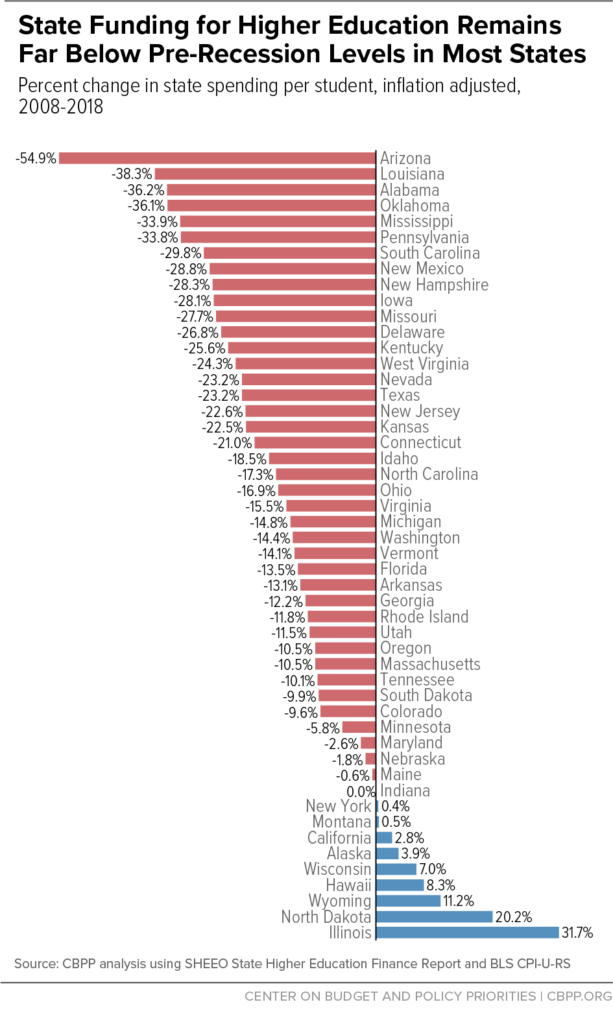
Unfortunately, the circumstances surrounding this issue are neither unique to Kansas nor are they only about COVID-19. For most states, public funding for higher education never recovered after the 2008 recession. Without the recurring financial challenges borne from stagnating state support, perhaps more institutions would have reserves sufficient to handle the additional strains of COVID-19. If anything, the trying times call for robust and consistent investment in high-quality teaching and research, as well as a shift back towards support for the academic freedom that tenure provides. The Kansas action runs dangerously counter to those ideals and poses a particular threat to the future of geography departments’ wide-ranging instruction and research on the impacts of COVID-19.

While COVID-19 may be the crisis of our time, the problems faced by geography departments are not new. At AAG, we have seen troubling trends in austerity for geography departments and faculty for over a decade. Our $900,000 COVID-19 Rapid Response programs help support the discipline through the pandemic and strengthen departments ahead of budget stresses. An ongoing series of workshops and resources give department chairs more tools to showcase geography at their institutions. Furthermore, we continue to support the discipline by pushing for significant funding increases for the National Science Foundation and related agencies, opening up more grant opportunities to ease the funding burden on graduate students and researchers.

But we can do more to strengthen our understanding of the challenges faced by geography departments and geographers. Working with our Healthy Departments Committee, our Data-Driven Strategic Insights group on the AAG staff is preparing to support a significant data collection this spring. If successful, this data collection can help us gain a bird’s-eye view of the network of geography programs in the U.S. and inform a strategy to strengthen it. With the prospect of deep cuts throughout higher education, it will be important for programs not to spread themselves too thin and instead focus on a specialty that reflects the needs of local job markets or builds inter-university geography programs. Retaining tenure-track positions will be critical to the sustainability of programs and long-term academic excellence. We urge geography programs in our network to facilitate the AAG’s work by providing timely, accurate information about each program’s strengths and weaknesses.

Although universities and colleges must face budget realities and make difficult decisions, we can leverage our collective experiences to ensure departments will not only survive but thrive amidst the profound changes that COVID-19 and other forces bring to post-secondary education and research. Now, more than ever, AAG will commit to supporting the stability and continuity of geographers and geography departments, acknowledging that every penny invested in their work repays itself with tangible benefits for public health, education, communities, and so much more.

What You Can Do Now

—Gary Langham
AAG Executive Director

DOI: 10.14433/2017.0085


Please note: The ideas expressed by Executive Director Gary Langham are not necessarily the views of the AAG as a whole. Please feel free to email him at glangham [at] aag [dot] org.
    Share

AAG Welcomes Spring 2021 Interns

Two new interns have joined the AAG staff this spring! The AAG would like to welcome Ilan and Jennifer to the organization.

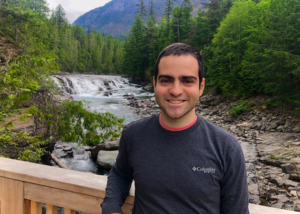
Ilan Gritzman recently graduated from the University of Central Florida with a Bachelor’s of Science in Public Administration and a minor in Urban and Regional Planning. Ilan has previously interned for Smithsonian Libraries on the World of Maps project, participated in a GIS study abroad in Belize, and served as a research assistant for Citizen Science GIS. He currently also collects and maps data on apartment units across Florida as a city surveyor for One Hundred Feet Inc. Ilan intends to pursue an M.A. in Urban and Regional Planning and secure a full-time position in either urban planning or GIS upon graduation. In his spare time, Ilan likes to cycle, play tennis, travel, and watch sports.

Jennifer Church is a senior at The University of Maryland, pursuing a B.S. in Environmental Science and Policy with a concentration in Land Use and a minor in Nonprofit Leadership and Social Innovation. After graduation, Jennifer hopes to have the opportunity to travel before applying for a Masters program in Geography. In her spare time, she enjoys skiing, kayaking, and embroidering.

If you or someone you know is interested in applying for an internship at the AAG, the AAG seeks interns on a year-round basis for the spring, summer, and fall semesters. Currently, due to COVID-19 safety regulations in Washington, DC AAG interns are home-based employees. More information on internships at the AAG is also available on the Jobs & Careers section of the AAG website at: https://www.aag.org/internships.

    Share

AAG Joins in Support for Faculty Rights

On Tuesday, January 26, AAG sent a letter to the Chancellor of the University of Kansas, asking him not to act on the recent Kansas Board of Regents’ decision to allow the suspension and termination of university employees, including tenured faculty, without formally declaring a financial emergency.

Chancellor Girod recognized our letter and thoughtfully acknowledged that AAG’s feedback would be incorporated as they chart a path forward in the days ahead.

We see the Kansas Board of Regents policy decision as a troubling signal and a potential threat for universities across the country as ongoing budget austerity measures and the crisis of COVID-19 converge. These circumstances leave vulnerable academic tenure as a whole, but especially the tenure of geography departments and professors. We will closely monitor this trend, and we call on our members to alert us to similar issues emerging on their campuses.

To support the University of Kansas faculty, please consider adding your name to the sign-on letter calling for a transparent process and shared governance for budget decisions in light of the current crisis.

    Share

Advocate for Geography in Austerity – Part 2

This is Part 2 of a two-part column on what geography departments can do (and should not do) to advocate for their work in budget talks, which are all the more crucial during the COVID-19 pandemic. These points are largely derived from answers I received from geographers in upper administrative positions at universities.
As I noted in my last column, I receive many requests about what the AAG can do to help departments demonstrate their relevancy to key stakeholders and avoid losing positions or being out on the chopping block. I therefore sought input from an expert group of key stakeholders – geographers who are upper-level college and university administrators.  My request was fairly simple: “From the perspective of a dean or provost, please list your ‘Top 3 Dos’ and ‘Top 3 Do Nots’ in order to be a highly effective, impactful, and well-functioning geography department.”

Last month, I focused on what Geography Departments should not do. This month, I summarize some of the strategies departments should pursue to remain relevant to students, the public, and university and college administration.

  1. Do… Align Strategies with Institution Priorities. Most, if not all, colleges and universities have published institutional visions. Long-term, sustained goals often revolve around increasing the university’s ranking, increasing undergraduate enrollment, bolstering external research funding, expanding extension, and/or improving student success. Shorter-term initiatives and/or goals often focus on hiring initiatives around key topical interests. For example, a quick web search revealed many university Data Science Initiatives (U Oregon, Harvard, U Michigan, Brown, Northwestern, Rice, Stanford, Purdue,…). And almost every university in the nation is scrambling to increase the diversity of its faculty. At the University of Oregon, the Institutional Hiring Plan (i.e. the process by which departments submit faculty hiring requests) explicitly references institutional hiring initiatives and requires departments to identify positions that align with those priorities. Clearly, aligning faculty and department priorities, goals, activities, and—when reasonable—faculty requests to these priorities is strategic.

As summarized by one of the administrators providing responses to my query:

“So, if a university has as its aim the increase in externally funded research, then the geography department must contribute. If, as is the case for a place like […] College, the goal is student majors and student satisfaction, then concentrate on that. If the university is trying to advance its international image, then geographers should participate in international collaborations with partner universities, teach synchronous or asynchronous courses with international partners, etc. In other words, whatever the strategic plan of the university it, the geography department, needs to track how it can and does contribute.”

As I mentioned last month, administrators don’t necessarily know (or care) about all of the trajectories within disciplines. They’re concerned about the health, mission, vision, and initiatives of the entire institution.  And, they’re the ones who allocate faculty lines. Aligning departmental priorities with institutional priorities is not only strategic in the short term (i.e. getting the faculty lines, extra space, or other resources); it’s also strategic in the long term to position the department and new faculty as partners in helping the university achieve its goals.

  1. Do… Listen and Communicate Effectively and Respectfully. I am constantly working on how to be a better communicator. I mostly don’t talk much, unless my role requires it. I’ve always felt that I learn more by listening than I do by talking. But, being a good listener also means being a good discourser (much to my displeasure). Check out this posting (thank you Kavita Pandit for sharing this), which contains some excellent tips for developing listening skills.

Effective communication is important both within the department and with administration. A small section of a single column is completely inadequate to discuss effective communication. As a brief summary, some strategies departments/organizations as well as all faculty can deploy (or avoid) include:

  • Avoid the seductive lure of callout. Faculty members will likely not always agree with administrators’ (or others’) decisions, especially around goals and resource allocation. But…Callouts are one-way screeds that, by design, don’t allow for productive conversation.  Much has been written about the callout-culture. One of the most eloquent voices is Loretta Ross (I am anxiously awaiting the publication of her forthcoming book, Calling In the Calling Out Culture: Detoxing Our Movement). Callouts do provide the potential to have your voice and opinion heard and gather allies from around campus. But, if the goal is to advocate for your department, students, faculty, staff, or change decisions and behaviors, a respectful two-way conversation is usually a more effective approach.

Even in this fractious time we find ourselves, I remain hopeful that academics will continue to commit to a culture that is informed, deliberative in judgement, charitable in spirit, and open to debate. And to achieve that…

  • Do disseminate relevant information to your colleagues. There are few things that are more frustrating to faculty than not knowing about upcoming deadlines, initiatives, institutional priorities, or opportunities.
  • Do brag about your faculty’s accomplishments. Regularly share with your Dean the achievements in your department (faculty, students, and staff). In that same vein, also support/nominate department members for university and external awards.
  • Do present a unified front in supporting department decisions, whether they’re made by vote or consensus. Obviously, not everyone is going to always agree with group decisions. While complaining is sometimes cathartic, there is little (if any) strategic benefit in airing dirty laundry in public. Assuming that it’s done through a respectful and democratic process within departments, respecting rather than undercutting the process of decision-making preserves collaboration.

Remember; today’s adversary is tomorrow’s ally.

  1. Do… Be Central to Institutional Partnerships. Participate actively in the initiatives, goals, interdisciplinary education, and research of the college or university.  As one of my senior colleagues said to me many years ago, don’t underestimate the importance of being a good department, college, and university citizen. I would add disciplinary citizenship.  Good citizenship is especially helpful in the face of slides in metrics (i.e. declines in enrollments, majors, research productivity…). As one of the deans responding to my request said: “Building a quality faculty that is willing to roll up sleeves and help the college overall is very much appreciated…”

Serving on college/university-wide committees allows geographers to highlight the accomplishments of our colleagues, show the value of our discipline, and foster diplomatic relations with other units. It also provides a gateway to information, allowing departments to stay ahead of changes in the institution as well as identify upcoming initiatives, goals, or priorities.

  1. Do…Be Productive. Nearly all of the responses I received from administrators identified metrics as one of the most important criteria for faculty and departments to pursue. Some metrics are specific to an institution, but many are similar across institutions.  As one geography administrator said, “Deans of most large research universities use metrics. This is partly because the provost/president also demand performance measured in terms of student credit hours produced, numbers of majors, amount of external grant funding awarded, and recognition of the scholarship of the faculty.”

Metrics are central to relevancy. The savvy and successful faculty and departments understand the metrics by which their institutions evaluate them. One of my respondents put this very succinctly:  “Set high expectations for department faculty members and enforce high standards. Departments that attempt to promote individuals who do not meet the standards of the university (or college) bring negative attention to the unit. On the other hand, when departments promote very high functioning individuals, the entire department is viewed more positively.”

There are many more “Dos,” just as there were many more “Don’ts” that could have been listed in last month’s column. But this list does highlight the major themes raised across the administrator I queried and provides a good starting point for advocating for geography.

Thank you very much to the experts who responded to my request and provided valuable input: Duane Nellis, Risa Palm, Kavita Pandit, JP Jones, Diana Liverman, W. Andrew Marcus, Alec Murphy, and Bob McMaster.

The dual crisis facing academia that I introduced in last month’s column is concerning at the very least. But, this also could be a great time for strengthening the impact, if not the resolve, of geographers and geography. I believe that this is not so much an opportunity as it is a necessity. We need to make sure that we’re ready to continue leading in all of the issues facing our planet and its inhabitants.

Live long and prosper Geography.

—Amy Lobben
AAG President and Professor at University of Oregon
lobben [at] uoregon [dot] edu

DOI: 10.14433/2017.0083


Please note: The ideas expressed in the AAG President’s column are not necessarily the views of the AAG as a whole. This column is traditionally a space in which the president may talk about their views or focus during their tenure as president of AAG, or spotlight their areas of professional work. Please feel free to email the president directly at lobben [at] uoregon [dot] edu to enable a constructive discussion.

    Share

AAG Holds Workshops on Public Scholarship at Virtual Regional Division Meetings

In response to the growing need and opportunity for geographers to enter into public scholarship, AAG recently developed a workshop to help our members–at all stages of your careers–share research and perspectives across different forms of public media.

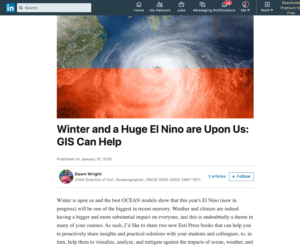
Chief Scientist at Esri, Dawn Wright, often uses her LinkedIn page to share blog-style articles on topics relating to GIS and the practicing community.

Past AAG Presidents have often called for geographers to actively pursue opportunities to highlight their work in venues beyond academic journals. For example, Derek Alderman called for increased public communication and a broader publishing footprint under his geography is R.E.A.L. initiative, while David Kaplan argued that geographers must start developing alt-ac skills for the growing market.

To examine the challenges and options for public scholarship among geographers, the AAG staff members Coline Dony, Emily Fekete, and Lisa Schamess offered a fall workshop to respond to feedback from AAG members, in particular those who attended the AAG workshop on student recruitment at the 2019 Regional Division Meetings, as well as the AAG Regional Division Task Force. The workshop entitled “Getting the Word Out about Geography,”was offered at five Regional Division meetings held virtually throughout the fall: the Middle States meeting; the Mid-Atlantic Division joint meeting with the Race, Ethnicity, and Place Conference; the Southeast Division meeting; the West Lakes Division meeting; and the Southwest Division meeting.

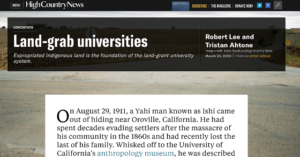
Special interest publication outlets like this example featuring maps made by cartographer Margaret Pearce from High Country News, offer opportunities for geographers to publish work that appeals to a particular segment of the public.

“Getting the Word Out about Geography” sheds light on the wealth of public scholarship opportunities beyond conventional academic publishing, with options suited to varied stages of career, purpose, capacity, and interest. From social media and blogging to speaking engagements and articles for newspapers and other public outlets, the workshop connects these approaches to geographers’ ability to secure grants and acquire “alt-metrics” suitable for portfolios and tenure files. The fall workshop emphasized the great potential of making local connections, such as with community organizations, local libraries, museums, food banks, or service organizations that likely have newsletters or public programs that fit the research agendas of many geographers. For those interested in reaching beyond the local community, social media, personal websites, blogging, and popular social platforms such as Twitter, LinkedIn, and Instagram)were explored. The workshop also covered some aspects of how to gain notice from news outlets, neighborhood blogs, and local and regional magazines.

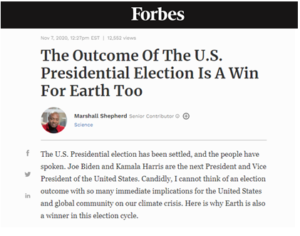
Meteorologist Marshall Shepherd is a frequent contributing author to Forbes, providing him a platform to explain how the work of geographers fits into current events.

During guided breakout discussions, participants exchanged ideas and offered support to one another from their own experiences. Participants were also asked to suggest ways that AAG can help them pursue public scholarship.

Geography and the AAG depend on geographers like you. The more we work together to increase our visibility, the more opportunities will become available for geographers to take part in public scholarship.

For those attending the 2021 AAG Annual Meeting online, the workshop will again be held as part of the AAG’s professional development offerings. Information about the timing of the workshop will be available here as more details about the Annual Meeting schedule are released.


    Share

Robert Thomas Kuhlken

Robert Thomas Kuhlken, retired professor of geography and former geography department chair at Central Washington University, died on January 1, 2021. He was 67.

Kuhlken was a lifelong scholar, educator, and tireless observer of the natural world. He was more comfortable outdoors than in, and always eager to explore new terrain. He studied at the University of Virginia at Wise and Oregon State University and was awarded a Fulbright fellowship to study agricultural terracing in the Fiji Islands while earning his doctoral degree in geography from Louisiana State University.

His specialization in human geography and his focus on land management fit perfectly with his desire to learn and explore. He favored traveling via public transportation on excursions throughout Mexico, South America, Polynesia, New Zealand, and Europe to get an unfiltered view of the local culture.

Kuhlken brought the results of these travels to the classroom, sharing his firsthand experience with his students. He taught college geography for more than three decades, spending most of his career at Central Washington University in Ellensburg, Washington, where he retired in 2015 as professor emeritus in geography.

He taught thousands of students at CWU. Countless first-year students with little knowledge of the rest of the world were captivated by Kuhlken’s enthusiastic spirit of adventure, his colorful stories, and deep insights into human and physical landscapes across the globe.

Kuhlken also taught courses focused on cultural geography, Oceania and North America, and urban and regional planning. His planning courses drew, in part, on his nearly 10 years of experience as a professional planner in Oregon before beginning his academic career. Quite a few of his students have gone on to successful careers as planners themselves.

As a scholar, Kuhlken’s work emphasized cultural ecology, historical geography, and environmental literature. He co-authored A Rediscovered Frontier: Land Use and Resource Issues in the New West which Rowman & Littlefield published in 2006.

He also published on topics as varied as Pacific archeology, zydeco music, and arson. In more recent years, his passion for fishing led to new scholarship on the geography of recreational fishing and the sport of angling.

More than anything, Kuhlken loved to be outdoors with friends and family—hiking, fishing, sailing, biking, gardening or just feeding the birds in the backyard. In remembrance, please donate to the National Park of your choice.

He is survived by his wife, Cynthia McGill Kuhlken; his stepson, Jeff Acker; and his brothers William Kuhlken, Kevin Kuhlken, and Karl Kuhlken.

    Share
    Share
    Share
    Share
    Share