Department Profile: School of the Environment at San Francisco State University

Located off the shores of Lake Merced in San Francisco’s southwestern corner, the School of the Environment at San Francisco State University (SFSU) brings together students and faculty committed to scientific exploration, environmental stewardship, and social justice. This unique setting, where urban life meets coastal and mountainous ecosystems, provides an ideal backdrop for studying the connections between people, landscapes, and the planet.

An Interdisciplinary Approach to Environmental Education

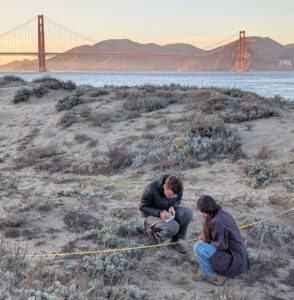
San Francisco State University students gather samples for a field methods class in the San Francisco Bay.

The School of the Environment offers a broad and integrated curriculum that reflects the shared mission of its faculty and programs. Students pursuing undergraduate majors gain a strong foundation in physical and human geography, in addition to field methods and geographic information science (GIS) and systems. These core skills equip students to understand environmental processes, helping them map change and analyze human–environment interactions. Graduate students have the option of specializing in geography, geographic information science, geosciences, or resource management and environmental planning.

These offerings are supported by the vast expertise of faculty across disciplines. Wide-ranging scholarly strengths range from physical geography and the use of technical programs to human-environment interactions. This includes food justice and urban agriculture, researching sustainable communities, green consumerism, and the politics of mobility.

A New School Built on Collaboration

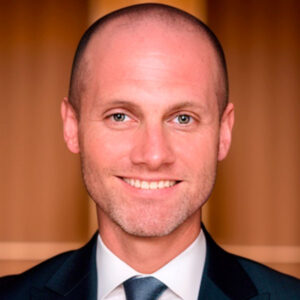
In the years following the COVID-19 pandemic, the Dean brought together three units — the former Department of Geography and Environment, the Department of Earth and Climate Sciences, and the Environmental Studies program — to explore merging into a larger, more cohesive academic home. Andrew Oliphant, professor and School of the Environment co-director, shares the former schools’ shared curriculum, cross-listed classes, and overlapping student communities naturally evolved into what is now the School of the Environment, strengthening opportunities for interdisciplinary research, teaching, and collaboration.

With the formation of the new School, faculty intentionally centered equity, representation, and inclusivity in their mission. Their efforts include a range of initiatives: culturally responsive student support, reducing or eliminating course-related costs wherever possible, and expanding pathways into environmental careers for students from historically marginalized communities. As Oliphant notes: “One of our missions is to change the face of the professional world in California that’s managing and stewarding the environment.”

A Presence Across Campus and Beyond

While the School recently reorganized and renamed itself, department chair Andrew Oliphant notes that its reach extends far beyond environmental programs. Students from art, cinema, ethnic studies, biology, physics, and other departments enroll in its courses.

Through this broad academic footprint, students gain training in climate and environmental fundamentals and the necessary language and context for environmental advocacy. The skills taught in courses are applicable across scientific, creative, and civic fields.

A thriving student–alumni network speaks to the school’s deep commitment to mentorship and career support. Graduates contribute to the California workforce and beyond, including local and state governments, federal agencies such as the U.S. Environmental Protection Agency, and private companies and nonprofits such as East Bay Municipal Utility District (EBMUD). The school’s organically built internship network helps open doors for students who may not otherwise have access to such opportunities.

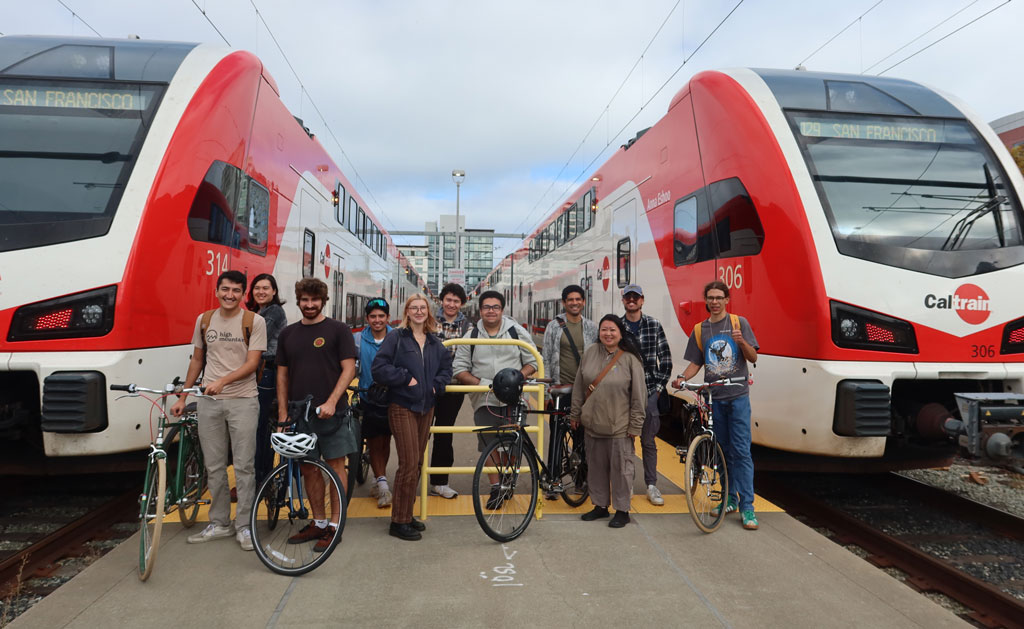
San Francisco State University students gather between two CalTrains for a transportation class field trip.


Preparing Students for a Changing World and Workforce

The school balances professional preparation with a deep commitment to the fundamental sciences. Students can begin to prepare for future steps to careers in environmental management, GIS, or planning; working with nonprofits in scientific research; or doctoral-level academic study.

Oliphant also emphasizes the importance of interdisciplinary training in an era of rapid technological change: “There will be geographers who lose work to AI … but the broad training we give — understanding biophysical processes, social structures, and the philosophies shaping our world — positions our students well in an AI-driven future.”

A prime resource for students includes participating in alternative learning spaces. For example, SFSU’s remote Sierra Nevada Field Campus offers summer field courses where teams of students and faculty spend a week immersed in research. The field campus also provides a location for locally centered research projects. Graduate students frequently use these field experiences to support their thesis work, and faculty encourage student employment on grant-funded research whenever possible.

One project, funded by the state of California, focuses on the restoration of Sierra Nevada Mountain meadows, which have long been degraded by agriculture, mining, and forestry. With numerous faculty who specialize in remote sensing and biogeography, collaboration with community partners such as the Mountain Maidu Consortium, whose Indigenous stewardship of these landscapes spans centuries, is essential. These partnerships represent the school’s holistic approach to environmental research: recognizing that complex spaces — like mountain meadows — cannot be understood through a single disciplinary lens.

When it comes to recounting student success, “it’s about the daughter of immigrant farm workers from the Salinas Valley, now working for the California Department of Food and Agriculture, advising farmers on healthy soil practices.” Oliphant goes on, “Or a recent graduate from the Pitt River Nation who’s working for the USGS, monitoring Northern California lands, part of his tribal community.” This kind of transformative student success is part of the reason SFSU was ranked 8th nationally for social mobility in 2024 by the U.S. News & World Report.

    Share

Department Profile: Geography and Geoinformation Sciences at George Mason University

The Geography and Geoinformation Sciences (GGS) Department at George Mason University is fortunate in its Fairfax, Virginia location, close to many professional opportunities in and around the nation’s capital. Anchored in the center of Northern Virginia’s geospatial intelligence hub, surrounded by federal headquarters like the National Geospatial-Intelligence Agency (NGA), US Geological Survey (USGS), and the National Oceanic and Atmospheric Administration (NOAA), as well as leaders in the private sector like Esri, Dewberry, and BAE Systems, GGS can also connect its students and alumni to local government agencies such as Fairfax County’s GIS and Mapping Services.

The department’s breadth is revealed in its name. “We are not the Department of Geography, but we are the Department of Geography and Geoformation Science,” says Dr. Deiter Pfoser, department chair and director of the Center for Geoscience. “So, there’s a huge distinction there … it sort of alludes to the quantitative sides [of the discipline].” Dr. Nathan Burtch, associate professor, undergraduate coordinator and associate chair, agrees.

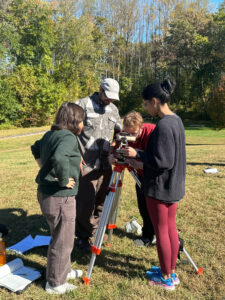
George Mason University GGS students gather data with a transit device to create contour maps of a local park in GGS as part of their Field Mapping class.
George Mason University GGS students gather data with a transit device to create contour maps of a local park in GGS as part of their field mapping class.

This emphasis on the quantitative is a major incentive of the program, as the majority of the department’s students are pursuing a Bachelor of Science degree and thinking about careers. Students pursuing a BS in geography can choose from concentrations in Geoinformatics, Geospatial Intelligence, and Urban Science, which are marketable and easily conceptualized by employers.

The department’s research initiatives, which have an annual expenditure of approximately six million dollars, largely trend around topics like artificial intelligence, computational analysis, and informatics. Students researching remote sensing have access to a collection of advanced drone remote-sensing equipment, including DJI drones and interchangeable sensors for environmental and infrastructural studies. Dr. Pfoser points out that the program emphasizes “not only geographical proximity to [many geospatial] agencies, but also work proximity.”

The university and the department’s faculty and leaders involve students in research as early into their academic journeys as possible. The College of Science’s Aspiring Scientists Summer Internship Program (ASSIP) has been active in providing high schoolers and undergraduate students the chance to engage in faculty-mentored research opportunities since 2019. The GGS department has eight prospective mentors for the 2026 session, tackling research interests like spatiotemporal computing, space weather, and food systems transformation. Dr. Pfoser expresses that “the idea is really to bring students closer to research as soon as we can,” to develop students into exemplary undergraduate, graduate, and PhD researchers.

Graduate degree offerings reinforce the department’s quantitative focus, with a master’s degree in Geoinformatics and Geospatial Intelligence. Undergraduate students interested in this degree, or the master’s in Geographic and Cartographic Sciences, can enroll in the Bachelor’s to Accelerated Master’s (BAM) Program and collect graduate credits in their final undergraduate semesters. In addition to offering accelerated, master’s, and doctorate pathways, the department also promotes a culture of lifelong learning by offering graduate certificates in GIS, Geospatial Intelligence, Environmental GIS and Biodiversity, and Remote Sensing and Image Processing. Executive education partnerships with local companies allow working professionals to advance their skills through the guidance of university course content.

An Interdisciplinary Approach to Quantitative Geography

“We’re a little bit more quantitative than the average,” says Dr. Burtch, “But we don’t ignore the cultural and the physical as well.” The GGS department’s Bachelor of Art’s geography program offers concentrations in environmental geography, health geography, geoanthropology, and urban planning. The professors teaching courses in this degree are consistently enthusiastic about their subjects, welcoming students to think critically and exercise real-world problem solving.

The department also values cross-disciplinary exploration. Undergraduate students can choose from a variety of elective courses that traverse neighboring disciplines. Associate professor and BAM advisor Dr. Christine Rosenfeld teaches Spatial Justice, for example, a geographic interrogation of unevenly distributed resources that results in social inequality. Dr. Maction Komwa teaches Geography of Resource Conservation, an analysis of the distribution and preservation of global resources. Dr. Burtch teaches Geography of Sport, purposefully integrating the discipline to reveal surprising explanations about the geography of the sports industry.

The strong sense of student community, accessible advising, and welcoming faculty make the GGS department at GMU an optimal learning environment for students of diverse education and career backgrounds. Standards for teaching excellence are maintained by routine faculty peer review, end-of-semester evaluations, and course modality surveys. The department uses this feedback to support their mindset of “perpetual change” and implement improvements to keep up with the ever-evolving scene of higher education.

Diversity is a big part of George Mason’s identity as an institution, as it is one of the most ethnically and economically diverse schools in Virginia. Dr. Pfoser highlighted the disciplinary diversity of the department by noting that only about half of its faculty are geographers by training. In addition to the interdisciplinary course offerings, the department offers diverse teaching perspectives from career computer scientists, hydrological engineers, environmental geographers, and data scientists. This combination of curriculum, teaching, and student diversity creates classroom environments suited for positive learning experiences.

    Share

The Wetlands of San Francisco Bay: Shifting Sediments and Murky Histories

Disrespect for the Rule of Law Undermines Science and Fundamental Social Norms

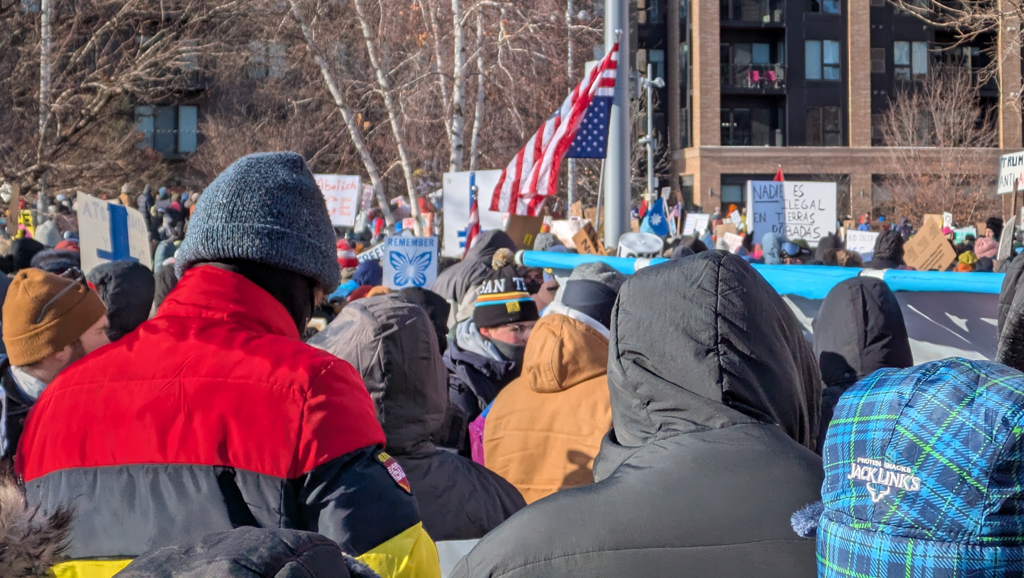
Mass turnout in Minneapolis on Jan 23, 2026. Credit: Bill Moseley

William Moseley

A world and society ruled through suppression and intimidation is fundamentally incompatible with academic pursuits, both in terms of science-informed policy and the social environment needed for good science. While scholarship ranges from basic to applied, and from deeply critical to more constructive, an explicit end goal, or positive byproduct, is often rules and regulations that are informed by a solid understanding of the world. The academy also does not do well when findings are distorted by politics, or the free flow of ideas and people across borders is impeded. A thriving geography depends on the rule of law at home, and strong norms and multilateral institutions internationally.

The current U.S. administration’s “might makes right” approach to domestic and international politics cannot coexist with or support a thriving academy and discipline of geography. How can it, when it undermines the very basic tenets of society? Daily life in my hometown of Minneapolis-Saint Paul has been deeply disrupted by the presence of 2,000-plus federal Immigrations and Customs Enforcement (ICE) agents in recent weeks. Renee Nicole Good and Alex Jeffrey Pretti were murdered in broad daylight for practicing legitimate and constitutionally protected passive resistance, high school students have been tear-gassed when leaving schools, child day care centers have become targets of aggressive military tactics, and people of color (including Native Americans ironically) have been consistently harassed and detained, regardless of their citizenship status. Among a myriad of other impacts, education is being disrupted, local schools have shifted to online learning, and foreign-born faculty and students at local universities and colleges (including my geography department) are understandably afraid and concerned. This is not okay. A federal security force has been weaponized against a particular geography (a state and city it deems a political enemy), the rule of law is not being respected, and ICE agents feel like foreign occupying forces who have no understanding of good community policing.

The administration’s coercive tactics in Minnesota are mirrored in their approach to international affairs (i.e., they are two sides of the same coin). On January 3, 2026, the U.S. President unleashed a dangerous genie when he authorized a mission to capture Venezuelan president Nicolás Maduro in Caracas, Venezuela, violating international law and another country’s territorial sovereignty. This attack signals a return to a 19th century multipolar world where great powers do as they please in their own backyards. While I am not naïve enough to believe that late 20th century multilateralism was perfect, at least there was a promise of strong international institutions, the rule of law, and fact-based policymaking. Geographers of all stripes, and from around the world, have made key contributions in studying the problems of our colonial past and foreign adventurism, as well the strengths and weaknesses of post WWII multilateralism and science-based policymaking. While I am clearly an idealist as opposed to a realist (in international relations terms), I believe geographers have an interest in promoting global cooperation and respect for human rights and international law.

Whatever you may think of Nicolás Maduro, the U.S. violated international law, and another country’s territorial sovereignty, when it sent troops into Caracas to capture him. Worse yet, these actions essentially give other military powers a green light to exact their wills on their neighbors, be it China in Taiwan or Russia in Ukraine. We have been here before and it does not end well. While the U.S. was not a formal colonial power like its European counterparts, its own territorial expansion, and 19th/20th century foreign adventurism, essentially constituted a U.S. imperial era. The atrocities of 20th century wars created a space for multilateralism, the rise of international institutions like the United Nations, the forging of international agreements on basic human rights, and scientific commissions on climate change, food security, and natural disaster mitigation. These hard-fought gains for a more peaceful, humane and sustainable world, in which many geographers played a critical role, must not be relinquished.

The atrocities of 20th century wars created a space for multilateralism, the rise of international institutions like the United Nations, the forging of international agreements on basic human rights, and scientific commissions on climate change, food security, and natural disaster mitigation. These hard-fought gains for a more peaceful, humane and sustainable world, in which many geographers played a critical role, must not be relinquished.

The aggression of the U.S. against its own citizens and residents, as well as the emerging multi-polar world being cemented by recent U.S. actions, are bad for science for at least two reasons. First, authoritarian politics contort scholarly priorities, emphasizing some areas (defense, surveillance and control) and downplaying others (healthy critique of government programs and actions, examination of troublesome histories, self-reflection on colonial assumptions in our disciplines). Second, the fear-based and isolationist tactics of authoritarianism undermine the international institutions that develop science-based policies and facilitate scientific collaboration and exchange.

Mapping the Path Forward

At some point, this moment will pass, and we will be faced with creating a post-Trump world. In the U.S., basic civic education and an appreciation for the rule of law are fundamental to a well-functioning society. While Trump has done much to weaken democratic norms, the vocational drift in U.S. education arguably contributed to the problem with a decline in the development of critical thinking skills and civic engagement. The growing economic divide in the U.S., brought on by neoliberalism, also did much to undermine public trust in higher education and research. In addition to important governance reforms to address campaign finance and the overreach of executive power, we need to address underlying structural problems (eroding public support for democracy and declining access to education) and think big about opening up quality K-12 and higher education in the U.S. to all income groups if we are to have a durable democracy.

On the international stage, multilateralism is clearly not dead, but it has been ailing for some time and the Trump Administration’s actions have wounded it further. Strong international institutions and norms are an antidote to a multipolar world that is a danger to science. While I acknowledge that the United Nations is in need of serious reform, something like it must persist and evolve into a more robust and participatory global forum which supports fundamental rights and brokers international agreements on the environment, health, nutrition and peace-building to name a few. Despite domestic political pressures, geographers must avoid nationalist traps and continue to engage with and support international institutions and exchange.

I don’t like bullies, I never have. It is hard to be thoughtful and productive when you are concerned about your own safety. Furthermore, it is challenging to have a generative scholarly exchange when people are concerned about political censorship or repression. In order to better the human condition and build a more sustainable world, we need strong democratic norms and institutions at home and abroad, i.e., civic nationalism and internationalism.


Please note: The ideas expressed in the AAG President’s column are not necessarily the views of the AAG as a whole. This column is traditionally a space in which the president may talk about their views or focus during their tenure as president of AAG, or spotlight their areas of professional work. Please feel free to email the president directly at moseley@macalester.edu to enable a constructive discussion.


    Share

Upgrading AAG’s Investment Portfolio and Benchmarks

White curved arrow painted on green background (decorative); Credit: Donald Giannatti zHPTMNZz-NM, Unsplash
Credit: Donald Giannatti, Unsplash

Photo of Gary Langham

In June 2022, AAG made a significant change to its investment approach by adding ESG screens to its portfolio. ESG stands for environment, social, and governance, and it offers investors a way to align their values with decisions about their stock holdings.

While it has always been possible to screen holdings actively, there are several reasons this approach is challenging for professional academic organizations like AAG. Active management of funds costs 2-3% more, and unless it allows one to chase the highest-performing stocks, it does not make financial sense. All other things being equal, over 30 years a difference like this results in a 74% reduction in returns. Active management also requires some way to avoid risk in investments and to make informed selections of stock holdings.

So, why don’t we just invest in bonds or something safe? In fact, there is a law that requires organizations like AAG to seek a reasonable return on endowed funds called UPMIFA. When AAG agrees to manage endowments for awards and other member benefits, it agrees to seek returns sufficient to fund them in perpetuity. In addition, we must remind ourselves that these funds are used to pay for things closely aligned with our mission. In 2025, for example, AAG funds helped 471 students attend the annual meeting. Investments pay for mission-related support like this.

To generate sufficient returns over time, investment earnings must exceed the costs of the investment platform and inflation in addition to the awards themselves. A typical approach is to maintain a broad portfolio that buffers against market downturns (as in 2023) and benefits from market upturns (as in 2024-5). AAG has done this for many years with a 50/50 split of bonds and diversified stock holdings. To avoid paying active management fees, it works with an investment advisor and automatically rebalances its stock holdings to seek returns and diversification.

ESG screens are a relatively new option that has the lower costs of passive investing while still allowing for values-based approaches. When AAG switched over to an ESG approach in 2022, we had to choose up to three screens from a list of 20. We selected fossil fuels, environment, and social justice. The returns over the next two years tracked the broader market closely, allowing us to meet our UPMIFA obligations and secure good returns for our mission awards and programming.

This fall, AAG added a fourth investment screen to guide its portfolio of endowed and board-restricted funds. As part of the due diligence in response to the recent member petition, our analyses revealed eight military weapons investments in our portfolio. One of the 20 screens offered by our investment company is military weapons. I enquired about whether adding that screen would cover the eight companies in question. In addition to affirming that the new screen would cover the companies in question, we also analyzed whether adding this as a fourth screen, rather than swapping one of the original three, was possible. This analysis yields a “tracking error” estimate that the industry uses to assess whether the options in the remaining funds after screening are likely to produce sufficient returns. Thankfully, the tracking error was low enough to add it as a fourth screen, which we did immediately. Once the screens were reflected in AAG holdings, I compared them with two human rights divestment benchmarks (the UN human rights and the American Friends Service Committee). Happily, we were now completely aligned with both funds.

This exercise brought up a new question. How do we know whether the ESG screens are performing as intended? Indeed, the ESG ratings are based on detailed compilations of Morningstar, a large, national investment firm. However, even a well-established company like this is susceptible to political pressure. Recently, it reported that it altered its human rights assessments and ratings in response to a coalition of states raising objections to its methods. Even without this example, we know all methods like this are fallible in one way or another. So, how can we continue with ESG screens but assess their performance?

To accomplish this, I recently proposed to the Finance Committee that we adopt external benchmarks to provide a thorough evaluation. The AAG Finance Committee assists AAG in overseeing its budget and investments. For each screen, we will work with stakeholder groups at AAG to identify the best possible benchmarks and then compare our holdings. In addition to the two mentioned above, we are considering Gogel for oil, coal, and gas, and Norges Bank for environment, social justice, and fossil fuels. Collectively, these four benchmarks offer us a way to monitor our ESG screens. Performance would be calculated at least once a year and reported to the Finance Committee and Council. From time to time, AAG would also conduct a more in-depth review of options for value-based screening options.

Collectively, these approaches help AAG set a new standard in investments for professional societies. Our efforts to conduct due diligence as part of the petition process have pushed AAG to define these practices. We remain fully committed to balancing our responsibilities to achieve funding for our awards and member services, while maintaining our values-based organization.


Please note: The ideas expressed by Executive Director Gary Langham are not necessarily the views of the AAG as a whole. Please feel free to email him at glangham [at] aag [dot] org.

    Share

AAG Honorary Geographer: Jennifer Clapp

Jennifer ClappJennifer Clapp is this year’s AAG Honorary Geographer. She is recognized for her groundbreaking work at the intersection of global economy, food systems, and food security, along with her commitment to praxis, including her current service as a member of the International Panel of Experts on Sustainable Food Systems (IPES-Food), and her previous service on the Steering Committee of the High-Level Panel of Experts on Food Security and Nutrition (HLPE-FSN) of the United Nations Committee on World Food Security (CFS) from 2019-2023 (vice chair 2021-2023).

She is a professor and Canada Research Chair in Global Food Security and Sustainability in the School of Environment, Resources and Sustainability at the University of Waterloo. Her recent books include Titans of Industrial Agriculture: How a Few Giant Corporations Came to Dominate the Farm Sector and Why it Matters (MIT Press, 2025), Food, 3rd edition (Polity, 2020), Speculative Harvests: Financialization, Food, and Agriculture (Fernwood Press, 2018), and Hunger in the Balance: The New Politics of International Food Aid (Cornell University Press, 2012).

Dr. Clapp is a Fellow of the Royal Society of Canada and an International Fellow of the Swedish Royal Academy of Agriculture and Forestry. She has also received numerous awards for her interdisciplinary research, including a Killam Research Fellowship, the Innis-Gérin Medal for contributions to Social Sciences from the Royal Society of Canada, a Pierre Elliott Trudeau Foundation Fellowship, the Canada Council for the Arts Molson Prize, and the Canadian Association for Food Studies Award for Excellence in Research.

We are honored to recognize Dr. Jennifer Clapp as Honorary Geographer, 2026.

    Share

Announcing a New Specialty Group at AAG: Critical Islands, Archipelagos, and Oceans (CIAO)

From the CIAO Specialty Group’s Organizing Committee

We are thrilled to announce the launch of the AAG’s newest specialty group, Critical Islands, Archipelagos, and Oceans (CIAO). CIAO is a scholarly and community committed to advancing the study of islands, archipelagos, and oceans as lived spaces and geographic forms enabling for critical thought. In the present moment of environmental injustice, capitalist failure, and the enduring realities of colonialism that work to divide us, we are dedicated to building solidarities across—and through—oceanic space.

CIAO’S vision

We envision CIAO as a dynamic space for geographers, Islanders, and others committed to social justice to convene in the co-creation of knowledge specific to islands, archipelagos, and oceans. In this spirit, we invite diverse perspectives that adopt a critical lens to interrogate the following topics:

  • Migration, mobility, and transoceanic networks
  • Archipelagic relationalities
  • Indigenous sovereignty
  • Island economies
  • Oceanic borders, territorialities, and governance
  • Responses to climate change
  • Militarism and militarization
  • Island feminism and island-based social movements
  • Indigenous futurisms

These topics are starting points rather than constraints and we welcome scholarly engagement beyond these themes.

CIAO’S activities

Upon joining CIAO, members can look forward to the following activities:

  • Virtual and in-person networking opportunities
  • Professional development and peer mentoring
  • Student travel grants
  • Awards for outstanding papers and creative scholarship
  • Conference activities at the AAG Annual Meeting including paper/panel sessions, social gatherings, and organized field trips.
  • At AAG 2026, CIAO will sponsor:
    • A session titled “Island Feminisms: Anti-racist and Decolonial Scholar-Activist Solidarities for Social and Environmental Justice/Feminismos isleños: solidaridades antirracistas y decoloniales entre académicas/os activistas por la justicia social y ambiental”
    • A panel
    • Any relevant sessions that AAG members suggest!

CIAO’S commitments

As a Specialty Group that explicitly recognizes the colonial legacy of the geography discipline, as well as the myriad ways that academia reinforces social, political, and economic inequalities, CIAO is committed to building an inclusive space safe from discrimination and violence. In addition to the professional benefits of CIAO membership, CIAO is committed to:

  • Celebrating and amplifying the voices of Islander and coastal communities; Indigenous peoples, women, people of color, and other marginalized communities
  • Upholding academic freedom within CIAO activities;
  • Facilitating transparent and accountable governance; and
  • Aligning with the AAG’s ethics of care for creating safe space at AAG Meetings, its Statement of Professional Ethics, and Professional Conduct Policies and Procedures

Join CIAO today

We warmly invite all geographers conducting critical work on islands, archipelagos, and oceans to join the CIAO community.

  1. Go to  aag.org and log in.
  2. From My AAG Dashboard, click on the red “Add a Group” link in the My Communities section.
  3. Review your current groups, then click the grey “Continue” button in the lower right.
  4. When the Specialty Groups list appears (it may take a minute), check the box next to “Critical Islands, Archipelagos, and Oceans,” then click “Continue.”
  5. Continue through the Affinity Groups and Communities of Practice screens until you reach your Shopping Cart, then proceed to Checkout. Fees are $20 for regular members and $5 for students.
  6. Once payment is complete, you’ll see a confirmation message. Allow up to 15 minutes for your dashboard to update. If the update doesn’t appear, try logging out and back in—or use a private browser window to clear any caching issues.

Questions? Contact us at CIAOSG@communities.aag.org.

We are so excited to host this new space, and we can’t wait to build the CIAO community with you!

    Share

Anthony Howell joins ‘Annals of the American Association of Geographers’ as newest editor

Anthony HowellAnthony Howell is the new Geographic Methods editor for the Annals of the American Association of Geographers. He is an associate professor, director of the Center on Technology, Data, and Society (CTDS), and senior sustainability scientist at Arizona State University.  Howell brings to the editorship at Annals a background in computational, geospatial and quantitative social science methods. He currently serves as an associate editor for two journals (Progress in Economic Geography and Urban Governance) as well as having served as a guest co-editor for Economic Modeling. He works across several subspecialties in geography, including economic geography, industrial geography, development geography, and population geography, as well as the broader social sciences.

Howell’s work engages with interdisciplinary scholarship, extensive international research, and quantitative, geospatial and computational social science methods. His goals for his editorship include “helping to attract, guide and strengthen the quality of cutting-edge and cross-disciplinary research, hoping to raise the profile of the journal both within and beyond the AAG community.” His approach to attracting and working with authors will draw on lessons he has learned in his own scholarly experiences–such as helping to pioneer ethnic disparities research within China relying on mixed-methods survey data collection, advanced quantitative methods, and computational social science approaches—and co-publishing with a wide variety of colleagues in geography, planning, politics, economics, and strategy. His networks have grown to be international ones, particularly focused on China and the broader Asia-Pacific region.

Dr. Howell’s term begins in January 2026.

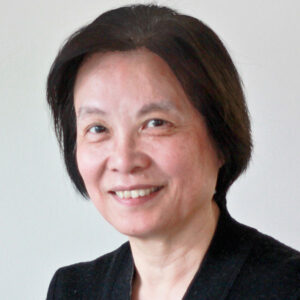
Ling BianWe thank longtime, outgoing editor Dr. Ling Bian, an AAG Fellow and professor in the Department of Geography at the University at Buffalo. Dr. Bian has been the Geographic Methods editor of the Annals since 2018, and also serves or has served on the editorial boards of numerous geography and GIScience journals, as well as on review panels for the National Science Foundation and the National Institutes of Health. Her current research interests include conceptual and analytical frameworks for the representation of dynamic geographic phenomena, individual-based and spatially explicit modeling of health behaviors, and spatial networks. During her tenure as an Annals editor, Dr. Bian has dedicated her efforts to advancing the geography discipline by promoting intellectually in-depth and socially relevant research outcomes.

    Share

Regional Meeting Lollapalooza: Remarkable Spaces for Grassroots Innovation and Discussion

An person dressed in a dinosaur costume entertains attendees at the APCG regional division meeting
Dancing dinosaur at the Annual Meeting of the Association of Pacific Coast Geographers (APCG) in Santa Clarita, CA. Credit: Michael Pretes

William Moseley

I grew up in the Chicago area, where we have an annual lakefront, summer music festival known as Lollapalooza, featuring an eclectic collection of genres and artists. This event is fun, experimental, inflected with regional traditions, and brimming with youthful, creative energy. More generically, lollapalooza refers to something extraordinary and a way I have come to think about our AAG regional meetings. This fall I had the pleasure of attending four AAG regional division meetings: Pacific Coast, Great Plains and Rocky Mountains, Southwest, and Middle States (see figure). These encounters have been tremendous opportunities for me to meet and learn from our members. Here I reflect on some broad themes across all of the meetings, as well as some key take home messages that I gleaned from each region.

Map showing color-coded shapes including states and provinces in AAG's nine Regional Divisions
AAG Regional Divisions


Cutting across all of the regions, I was deeply impressed by the presence, energy and insights of geography students, both graduate and undergraduate. If you are ever feeling down about the headwinds facing our discipline, just spend time with our students and you will come away feeling inspired and optimistic about the future. From their scholarly endeavors shared in talks and posters, to their competitive zeal at geography bowls, to their willingness to engage in hallway conversations, I was captivated.  I also have even greater appreciation for the contributions of international students to our discipline (even beyond what I have written about previously). Their presence was notable in all of the regional meetings and they help ensure that a broad range of life experiences are brought to bear on the emerging research produced by our discipline.

I also continue to be struck by the limited presence of R1 faculty at many regional meetings. Of course, there are notable exceptions to this broader trend and I also understand that this is a not a new phenomenon. I further understand some of the reasons for this (and I am also guilty of such transgressions). Many faculty are stretched in terms of time and/or resources to attend a second or third academic conference. As such, they prioritize a national meeting where the largest number of people in their subfield are sharing their latest research findings. What is lost is stronger bonds between different types of institutions in a region as well as an opportunity for undergraduate and master’s level students to potentially meet a future advisor.

Beyond these broader themes, I was really struck by the individual character of each region and some unique lessons I learned in each place. The meeting of the Association of Pacific Coast Geographers (APCG) took place at the College of the Canyons in Santa Clarita, CA. There our outdoor barbecue on the second evening was graced by the presence of a dancing dinosaur (see Figure 2) and later that night a person in a gorilla costume briefly entered the auditorium for the keynote lecture (attesting to the fun and quirky ambiance of APCG meetings). More seriously, I was really struck by role that community colleges play in this region as a critical pipeline for future geographers (and something the discipline could build on more broadly). Some of the fastest growing geography programs in the region, such as San Diego State University, source many of their majors from surrounding community colleges. The APCG meeting also took place on a community college campus, College of the Canyons.

An person dressed in a dinosaur costume entertains attendees at the APCG regional division meeting
Dancing dinosaur at the Annual Meeting of the Association of Pacific Coast Geographers (APCG) in Santa Clarita, CA. Credit: Michael Pretes


This year’s Great Plains Rocky Mountain (GPRM) regional meeting in Omaha, NE was a joint meeting with the National Council for Geographic Educations (NCGE), our sister organization that counts many high school geography teachers among its ranks. This innovative experiment of two meetings in the same place with some cross over events created a space for bridges to be built between the parallel universes of high school and college geographers. It allowed myself and two members of the AAG taskforce on geography undergraduate education to run a workshop on the high school-to-college geography pipeline for secondary school teachers and university instructors, to speak to a mixed audience at an evening banquet, and to have dinner with the leadership of the NCGE. I could see the NCGE meeting joining with other regions in the future and I believe we could do even more to bring college faculty and high school teachers together.

The meeting of the Southwest Division of the AAG (SWAAG) took place in Las Cruces, New Mexico and was hosted by New Mexico State University. In addition to a keynote address, I participated in several panel discussions, including one on academic freedom. There I learned of state government initiatives in Texas and Oklahoma to audit course syllabi and reading lists. I further came to understand that certain words and topics are being advised against in course titles, such as decolonizing, liberation and resistance. This situation is alarming to me both personally and professionally (e.g., I have publications using several of these ‘trigger’ words). More significantly, maintaining academic freedom is a core value of the AAG and something it fights for on the national level. Nonetheless, at this regional meeting, I was deeply impressed by the way faculty were sharing experiences and advice on how to navigate such challenging circumstances. It also served as a reminder that our local experiences of speech suppression, censorship or freedom can vary greatly (and we need to be sensitive to the fact that the actions and decisions of the AAG might play out differently across regional contexts).

Lastly, the Middle States Division of the AAG (MSAAG) met at Montclair State University in Montclair, NJ. There I was impressed by the presence of deeply engaged high school teachers and their students, many of whom presented research posters. The quality of their research was striking and I believe this is an innovation that could be experimented with in other regions. What could be a better recruitment tool than to have high school students attend research presentations by grad students, or to have a professor engage with a high schooler about their project and encourage them to think about a geography degree in college.

My journey across these events left me feeling inspired by the energy and insights of our students, encouraged by the experimentation in each division, and better in-touch with political currents and challenges. This is not to say the fall AAG regional meetings are flawless, some suffer from low attendance or limited organization, but I see these as vital encounters to be improved up, not dismissed or marginalized. Fortunately, the support of AAG staff for the regions has begun to bear fruit, building on the recommendations of an AAG task force report released on the topic some five years ago. Just like a summer music festival, these are fun spaces to experience the diversity, energy and creativity of our discipline.


Please note: The ideas expressed in the AAG President’s column are not necessarily the views of the AAG as a whole. This column is traditionally a space in which the president may talk about their views or focus during their tenure as president of AAG, or spotlight their areas of professional work. Please feel free to email the president directly at moseley@macalester.edu to enable a constructive discussion.
 

    Share

Academic Freedom and the Need for Geographers as Public Intellectuals

Geographer Katherine McKittrick and colleague Dan Charna participate in a joint book-signing at AAG 2025 in Detroit. Credit: Lisa Schamess, AAG

William Moseley

Free speech and academic freedom are increasingly under siege in the United States, with the scope and scale of speech repression nearly unprecedented. At the same time, the U.S. government is currently engaged in a vast array of domestic and foreign policy shifts, from changes in environmental regulations and naming conventions at home, to the closing of USAID operations and retreat from multilateralism abroad. Despite efforts to silence critics, these policy and program shifts deserve thoughtful public conversations that involve geographers. We need geographers as public intellectuals to continue to voice their perspective on the policies and programs of our government and others.

The tradition of the public intellectual (a form of public geography) may be contrasted with that of the ivory tower academic. Public intellectuals are scholars who take the time to address an important public debate or policy issue when they have relevant expertise and an informed perspective to offer. The public intellectual practice is more well developed in Europe, where academics regularly participate in policy discussions and are considered normal actors in public discourse. In fact, many European universities expect their faculty to comment on public issues and acknowledge this is in tenure and promotion criteria. In contrast, this practice is less well developed in the United States, with such engagement sometimes viewed as inappropriate. This distance between the American academy and public policy discussions has contributed to the ivory tower phenomenon, arguably making it more challenging for the U.S. public to feel connected to universities, their faculty and students.

To the extent that academics do participate in public policy discussions in the U.S., some disciplines tend to be over-represented, most notably economics and political science. That said, analysis that a student and I undertook over a decade ago showed that for a small discipline, geography was punching above its weight, outpacing allied disciplines such as anthropology, geology, and biology in terms of op-ed productivity per member. The geographic perspective is critical for adding to public policy discussions, be it in terms of nuance regarding spatial patterns, scale, coupled-human-environment systems or deep regional knowledge. As former AAG president Alec Murphy has argued: “our understanding of issues and problems will be impoverished if geographical perspectives are not part of the mix.”

The AAG considers the support of free speech and academic freedom to be core to its mission and has offered programming to this end. For example, in 2023, the AAG initiated the Elevate the Discipline cohort of 15 geographers to receive year-long support and training in techniques for public scholarship to inform public policy. In late October of this year, the AAG hosted a panel for department and program chairs seeking to support their faculty in terms of academic freedom. Furthermore, I am happy to report that we still have many geographers who continue to offer their perspectives on the issues of the day. Herewith three examples.

In early October, Christopher F. Meindl, associate professor of geography at the University of South Florida, published a commentary entitled “Florida’s 1,100 natural springs are under threat — a geographer explains how to restore them.” In this piece, Meindl drew on his own research as a human-environment geographer, and recent book on Florida springs, to provide context and recommendations for restoring these important natural assets.

Second, while we often think of public scholarship appearing in the form of commentaries, some geographers also write books that are more accessible to a public audience. A good example of this is Yolonda Youngs’ recent book, Framing Nature, about the social construction of nature in Grand Canyon National Park. Hearing Youngs present on her book at the recent meeting of the Association of Pacific Coast Geographers, I appreciated how she explained deliberately writing the book for a public audience, even tearing up portions of a previous draft and re-writing it in a way that would be more accessible.

Lastly, geographer and cartographer Margaret Wickens Pearce was recently recognized as a MacArthur Foundation Fellow (aka genius award) for her groundbreaking work “creating maps that foreground Indigenous Peoples’ understanding of land and place.” Her approach highlights another form of public scholarship, working respectfully with communities to bring their perspectives into conversation with broader publics. As a Potawatomi Nation tribal member, Pearce was well positioned to undertake this work.

Today, we need the geographer as public intellectual more than ever. Engaging in this manner requires a certain amount of backbone and privilege, the ability to write for broader publics, and good timing.

Writing for a general audience has always required some willingness to endure negative feedback. Now we have an added layer of hostility and professional risk to anything perceived as critical. In mid-September, the U.S. president argued that television coverage that is critical of him or his administration’s policies is illegal (a point that was unsubstantiated and challenged). Several academics, including geographers, have also lost their jobs or been put on administrative leave for comments they made on social media following Charlie Kirk’s murder. While the climate of fear these comments and actions have engendered is palpable, and some members of our community are in more precarious positions than others, now is not the time for those in privileged positions to be silent.

The unfortunate reality is that tenured and U.S.-born professors in blue states are often in less precarious positions than others. As such, at this time I would especially encourage those with privilege to contribute as public intellectuals where appropriate. When writing, it is always important to stick to positions and perspectives that are informed by one’s scholarship. Doing so makes one’s arguments more defensible.

Writing for broader publics is also quite different than writing for academic audiences. While we generally learn to write for academic audiences as graduate students, most of us are not taught to write for non-specialists. Writing for a general audience is a skill that needs to be developed. As mentioned previously, the AAG’s “Elevate the Discipline” program offered media and advocacy training to a group of geographers working on climate change and society. Some departments and faculty members have also been more proactive than others in mentoring and collaborating with students in this approach to writing. For example, former AAG president Derek Alderman, as well as Jordan Brasher, worked alongside Ph.D. candidate Seth Kannar, who was first author on a 2025 commentary for The Conversation entitled “From Greenland to Fort Bragg, America is caught in a name game where place names become political tools.” This was no doubt a valuable experience for an early career geographer, showing that it is possible to make connections between our research and current policy discussions.

Lastly, unlike most academic articles, the timing of many (but not all) commentaries is critical so they dovetail with the news cycle. This is challenging for many academics, as it means dropping what you are doing and writing something quickly so that it is relevant to a burning, public debate. Reporters may also call for background information or perspective on an issue, and one needs to set aside their current work to think through a thoughtful response. Even more challenging are live media interviews on radio or television. A good example of this is former AAG president Glen MacDonald who was interviewed widely by major news outlets, including on the nightly news in 2018 in L.A. about the Camp Fire ravaging the state at that time. This is hard but important work, and geographers almost always add critical depth and perspective to the conversation.

While academic freedom is under siege in the United States today, we now need geographers as public intellectuals more than ever. Fear is a powerful weapon and those in less precarious positions need to push back in support of a robust civil society and the power of the fourth and fifth estates. In so doing, geographers bring valuable perspectives to the debate, bridge the gap between academia and the public, and demonstrate the vitality and relevance of our discipline.


Please note: The ideas expressed in the AAG President’s column are not necessarily the views of the AAG as a whole. This column is traditionally a space in which the president may talk about their views or focus during their tenure as president of AAG, or spotlight their areas of professional work. Please feel free to email the president directly at moseley@macalester.edu to enable a constructive discussion.

    Share