MyCOE / SERVIR Capstone Fellows Describe Their Experiences

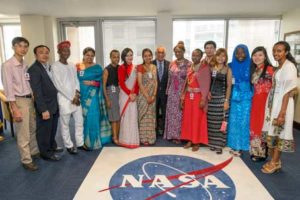
[/media-credit] Joel Kowsky, NASA
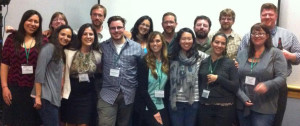
In the spring, 14 students traveled from all over the world to Washington, D.C., to discuss their efforts using satellite data and mapping technologies to address climate change issues in their regions. The efforts are part of the My Community, Our Earth (MyCOE) / SERVIR Fellowship Program. The student-led projects address a range of issues including agricultural productivity, water resources, sea level change, food safety, forest conservation, and natural disaster planning.

The event was a culmination of a global program carried out over the past two years, with representative student-led projects highlighting how youth around the world are using remote sensing, GIS, GPS, and geospatial data to address climate change issues in their regions. The 14 students were selected from the 120 participants who were nominated by instructors and staff of the MyCOE Program and SERVIR hubs and chosen by U.S. Agency for International Development (USAID) and NASA.

View the inspiring testimonials from these fellows:

Khin Seint Seint AyeImpact of famous floating gardens on the environment and livelihoods of a unique Inle lake in Central Myanmar

Susan MalasoApplication of GIS and RS Techniques in Frost Risk Mapping for Mitigating Agricultural Losses in Kenya

LhakpaLinking Traditional Beliefs on Climate Change to Scientific Understanding: A Case Study in Eastern Bhutan

Tsedenya Abebe MengisteAssessment of Flood Frequency and Local Adaptation Practices in Dilu-Meda, Upper Awash, Ethiopia

Prasamsa ThapaSurface Area Variation and Climatology of Tsho Rolpa Glacial Lake using Remote Sensing and GIS, Dolakha District, Nepal

Jirawat PanpengVulnerability of Rural Coastal to Potential Sea Level Change: Case of Laemsing District, Chanthaburi Province, Thailand

Roseline Nijh Egra BatchaParticipatory Learning and Gender Partnerships in Climate Change and Food Security: Mfoundi-Yaounde Cameroon

Joyeeta PoddarAssessment of Glacier Health as a Response to Climate Change in Western Himalayas, India

Khoa NguyenChanges of paddy rice extent and its possible effect on the environment in Mekong Delta, Vietnam

Seble DejeneCarbon Stock Estimation in Wof-Washa Natural Forest: Carbon Finance Options & Climate Change Mitigation, Ethiopia

Pramila PaudyalClimate Change Vulnerability in Mountain Agriculture: A Case Study Of Susma Chhemawati VDC, Dolakha District, Nepal

Wasiu AlimiAssessment of the Climatic and Socio-Economic Impacts of Illegal Logging in a Rainforest: The Role of Women, Nigeria

Lateefah OyinlolaAssessment of vulnerabilities of fresh cut produce to climate change in South Western Nigeria

Tran Thi Mai AnhApplication of GIS and Remote Sensing in Administering Payment For Forest Environmental Services at Huong Son Hydroelectric Power Plant’s Watershed, Vietnam

The MyCOE / SERVIR program supports long-term training of young, emerging scholars in the use of Earth observations, geography, and geospatial technologies to address climate change issues in developing regions. The public-private partnered program provides the mentorship, networking, and professional development necessary to transform innovators into scholars, with the skills to connect their research results to the public and decision makers. It is sponsored by NASA, USAID, and AAG, with the AAG also administering the program. SERVIR, an acronym meaning “to serve” in Spanish, is a joint venture between NASA and USAID. SERVIR works in partnership with leading regional organizations around the globe to help developing countries use information provided by Earth-observing satellites and geospatial technologies to better manage climate risks and sustainability of natural resources.

To learn more about the full My Community, Our Earth / SERVIR program, contact Project Director Dr. Patricia Solís at psolis [at] aag [dot] org. Or, visit https://www.aag.org/mycoe.servir. Read more detailed information on the NASA event.

    Share

Two Geographers Awarded 2014 Guggenheim Fellowships

Anthony Bebbington, professor and director of Clark University’s Graduate School of Geography, and Diana Liverman, professor at the University of Arizona, were recently awarded a 2014 John Simon Guggenheim Memorial Foundation Fellowship. They were among the 178 scientists, artists and scholars from the almost 3,000 applicants from the United States and Canada to receive an award this year.

Bebbington’s award was in support of his forthcoming book, “Natural resource extraction in Latin America: transforming the human-environment, challenging social science.” His research addresses the political ecology of rural change, with a particular focus on extractive industries and socio-environmental conflicts, social movements, and indigenous organizations and livelihoods.

Starting in late summer, Liverman will use her one-year fellowship to write a book on poverty and climate change in the Americas. She plans to outline policies that work with communities to reduce climate risks through a variety of programs, such as small-scale irrigation and water conservation, shade, mobility and warning systems. Her goal is to identify solutions that eliminate poverty, reduce emissions and help people adapt to climate change.

Established in 1925 by former U.S. Senator and Mrs. Simon Guggenheim, the foundation has sought from its inception to “add to the educational, literary, artistic, and scientific power of this country, and also to provide for the cause of better international understanding. The foundation has granted more than $315 million in Fellowships to almost 17,700 individuals, including scores of Nobel laureates and poets laureate, as well as winners of Pulitzer Prizes, Fields Medals, and other important, internationally recognized honors.

    Share

How to Succeed in Business with a Degree in Geography

There are many business opportunities for people with geography degrees. I have three degrees in geography and 33 years of working experience in the business world. I’d like to share my real-life experience and hope that it will offer insights and incentives to those who contemplate a career in business. Let me present my story in a question-and-answer format:

Did you plan to have a career in business? I never thought of having a career in business. After I got my doctoral degree, I taught world regional geography and urban geography at Boston University in 1977 and then in 1978 and 1979 at the State University of New York at Cortland. Both teaching positions were short-term and non-tenured. Tenure-track positions were hard to find. I needed to think of alternatives.

How did you select a career in business? In late 1979, China opened up to doing business with the West. Many American companies were very interested in entering the Chinese market but didn’t know how. Since my specialty was China, I thought I could help them open some doors in the new Chinese market.

How did you find your first job at a company? I sent more than 500 letters to companies across the United States, telling people I could help them develop the Chinese market. I got a dozen interviews, and I landed a job as the China Area Manager at Academic Press, Inc., a wholly-owned subsidiary of a Fortune 500 publishing company called Harcourt Brace Jovanovich (HBJ).

How much did the job pay compared to your previous academic positions? My business position paid me twice as much as my first full-time academic position. I also got to learn a business and how things work, including global expansion skills.

Why would a Fortune 500 firm hire you with no background or experience in business? The chairman of the company traveled to Beijing, China to drum up new business, but he had a hard time getting along with the Chinese and vice versa. One of the 500 letters that I had mailed out landed on his desk. He told the senior vice president to hire me. The company needed my geographic knowledge of China and my language skills to help them navigate that market.

What happened next? I succeeded in getting my first prepaid order for my company ($150,000 in 1982 – $330,000 in today’s value). Sales to Southeast Asia tripled. Two years into my job, the company wanted to relocate from New York City to Orlando, Florida. I didn’t want to go to Florida. I quit my job and started my independent consultancy in May of 1983.

Why did you start a consultancy? Since I had succeeded in opening the Chinese market for Academic Press, I sent 300 letters to publishers across the country. Within 3 months, I had 3 paying clients, including Rand McNally & Co., the map-making publisher who wanted me to sell maps and globes to China.

How much is your success in consulting related to your degrees in geography? I apply what I know about Chinese geography and cultural geography to day-to-day problems in business. I’ve worked with more than 100 U.S. manufacturers, trade associations, and service organizations. Businesses need people with geographical and cross-cultural knowledge.

Could you give an example of how you applied geography to a business problem? A company spent $1,000,000 on postage each year to mail catalogs worldwide. I looked at its bloated mailing list and found that there were many duplicate records. This means that quite a number of people received multiple copies of marketing materials. Many names on the list were misspelled and out-of-date. I surveyed our worldwide customer base and eliminated duplication and waste. Management was very happy because I reduced their costs.

Could you give another example of applying geography in business? As a cultural geographer of China, I know that there will be misunderstandings between American managers and their Asian counterparts. One time, K-Mart wanted our company to import 100,000 Santa Claus dolls. Our manager asked our Taiwan representative to send in a sample. I looked at the sample and found that the torso had a piece of wood inside. This was not good because if a doll body had a solid core, we had to pay $1 per doll in import duty. I sent the sample back to our office in Taiwan and asked them to replace the wood with fabric so that we could import the dolls duty free.

Do businesses really appreciate geography? They do. They need people with geographical knowledge and perspective to get things done. In 1996, the American Management Association (AMA) commissioned me to create and teach a three-day course titled “Business Skills for the China Market” to executives from Fortune 1000 companies who wanted a crash course on China. I became the first person in the United States after 1949 to do this. Recently, Lockheed Martin asked me to create and teach a one-day course on China. Such needs are there. Companies may not think of solutions for their needs coming from geography. It is up to people with geography degrees to create solutions and make them relevant and resonant.

What advice would you give to someone with a geography degree about succeeding in business? Start at an entry level and learn a business. Geography is not a trade. It is an academic discipline. Once you know enough of a business, you can apply your unique training as a geographer to look at things in a way that people trained in other disciplines may not come up with. This is how you differentiate yourself and become competitive. Few businesses pay us to teach them geography. They just want us to solve their problems and get things done. It’s up to us to invent ourselves.

Author’s note: I wrote this piece to commemorate my long-time friend and personal mentor, Forrest (“Woody”) R. Pitts, an accomplished geographer, who passed away on January 8th, 2014. When he was alive, Woody kept telling me that geography had benefited me professionally, even though I never conducted research as an academic. Woody was right. I was wrong. I am grateful to geography and the life journey which it inspired me to take.

Editor’s note: This article originally appeared in the UC Santa Barbara Department of Geography website. Reprinted with permission from the author. 

DOI: 10.14433/2014.0011

    Share

New Books: June 2014

Every month the AAG compiles a list of newly-published books in geography and related areas. Some are selected for review in the AAG Review of Books.

Publishers are welcome to send new volumes to the Editor-in-Chief (Kent Mathewson, Editor-in-Chief, AAG Review of BooksDepartment of Geography and Anthropology, Louisiana State University, Baton Rouge, LA 70803).

Anyone interested in reviewing these or other titles should also contact the Editor-in-Chief.

June, 2014

    Share

A Decade of Change: AAG Returns to Chicago

The AAG is pleased to be holding its next annual meeting April 21-25, 2015, in the world-class city of Chicago.  The AAG last met in Chicago in 2006, and in the newsletter issues leading up to the 2015 meeting, the Local Arrangements Committee (LAC — chaired by Professor Euan Hague, Chair of the Geography Department at DePaul University) will provide articles that highlight some of the more dramatic changes in Chicago since then. This first article provides an overview of some of the themes of change discussed by the LAC at its first Chicago meeting on May 24, 2015 — these themes will be presented in greater detail in coming issues.


The AAG 2015 conference hotel, Hyatt Regency, 151 East Wacker Drive, Chicago


Population Redistribution

The 2010 Census reported that the 16 county multi-state Chicago–Naperville–Michigan City, IL–IN–WI Combined Statistical Area (2004 definition) had a population of 9.68 million.  That means that the Chicago region grew by 4 percent between 2000 and 2010, which was considerably slower growth than the previous decade (1990 to 2000) when the same 16 county metropolitan area grew by 11.1 percent.  The population loss in Chicago proper (with the exception of its Downtown) and the inner suburbs was largely responsible for the growth slowdown, for instance between 2000 and 2010 Chicago lost over 200,000 residents.  Meanwhile, the outer suburbs helped offset these latter declines, for instance the 3 largest outer suburbs of Chicago (Aurora, Joliet, and Naperville) together added 109,616, a little over half the amount that the City of Chicago lost. This reflects a continued long term trend in the Chicago region of population decentralization from Chicago’s core to the edge, despite a slight pause in that trend in the 1990s when the City of Chicago actually gained population for the first time since the 1950 Census.  Meanwhile Downtown Chicago deserves special attention as its population saw a 114 percent increase from 1990 to 2010.  This population increase was paralleled by a residential housing boom that has included the conversion of former Downtown office spaces to residential units and new high-rise apartment buildings and condominiums have sprouted up in and around Downtown – a theme that was highlighted in a special map provided to AAG attendees at the 2006 AAG meeting.

The LAC is working on field trips that will showcase various aspects of Chicago’s recent population redistribution trends and an upcoming newsletter will go into greater detail on these population shifts.

A Greener Chicago

The 2006 AAG meeting publications highlighted Chicago’s efforts to expand upon its rich heritage of city parks and greenways and those efforts have continued.  The Openlands Project was founded in 1963 and since then it has helped secure, protect, and provide public access to more than 55,000 acres of land for parks, forest preserves, land and water greenway corridors, and urban gardens.  Participants of the AAG meeting will be able to link up with this vast network of greenways within walking distance of the conference hotel.  Just blocks away is Millennium Park which is currently celebrating its 10th anniversary and special events continuing into 2015 will celebrate this magnificent park space by showing off its world-class art, music, architecture, and landscape design.  Another “green” milestone reached by Chicago’s is its commitment to bicycling as it has built over 200 miles of on-street bike lanes including one that weaves 1.2 miles through downtown within a buffer that separates it from cars.  Chicago also has a Divvy (divvybikes.com) bike sharing program with the largest number of stations of any city in the United States.


Corner of Monroe and Canal Street, Chicago, by author 24 May 2015.


The LAC is already working on field trips that will visit components of the greenway system of Chicago and an upcoming newsletter will go into greater detail on many other aspects of the greening of Chicago.

Chicago’s Food Systems

The Chicago region is the command and control center for U.S. industrial agriculture (center of the Corn Belt) yet it is also a leader in alternative agricultural systems including a very active local food movement that emphasizes organic and natural choices.  The Chicago food theme is one that the LAC is particularly interested in as several members are actively researching the issues, so upcoming newsletter stories will review the status of the region’s ties to traditional industrial agriculture as well as the growth in alternative systems.  As coincidence would have it when the LAC met on Memorial Day 2014 weekend a massive crowd of protestors assembled in the Loop to demonstrate against the use of genetically modified organisms (GMOs) and to promote a call for locally grown organic alternatives.


GMO protest at Federal Plaza on Jackson Blvd and Clark Street, Chicago, by author 24 May 2015.


The LAC is working on field trips that will visit parts of the corn-belt within range of Chicago and it will also show case locally grown components of the new Chicago food system including retail configurations that attempt to turn food deserts into food oases.

Lake Michigan and other Regional Water Resources

Chicago sits adjacent to Lake Michigan and the growth of the metropolitan region’s population and spatial extent have caused concern among regional planners over the potential for future water supply shortages.  The Metropolitan Planning Council (MPC) is promoting a regional approach to sustainable water supply planning and management.  Chicago and many of its inner suburbs are already withdrawing Lake Michigan water to meet their needs and as the outer suburbs speculate about their own future shortages from dwindling local ground water supplies they are being warned that Lake Michigan water may not be available.  All of this may seem odd given the vast size of Lake Michigan, but international laws with Canada limit withdrawals.

The LAC is working on the development of a field trip to showcase these and other regional examples of innovations in water resources management.  Views of the Chicago River and Lake Michigan are a close walking distance from the conference hotel and just a little further, just a mile, is Navy Pier which puts you slightly above and out onto the Lake.

Transportation 

Chicago is a large centralized gateway to international trade and traffic for the United States.  Chicago continues to grapple with the growth in freight flows that often test the capacity of the region’s transportation infrastructure.


Photo taken from a freight yard in Southwest Chicago on 28 May 2005.


As in 2006, almost all of the container freight on these railcars is transferred to and from trucks which take up twice the road space of cars on the region’s highways.

On top of the container-freight issue, the Chicago region is grappling with a host of other transportation issues including the goal of expanding public transportation services.  The edge cities toured during the last AAG meeting have matured and exhibit both traditional and reverse commuting patterns.  The Loop is still the dominant job center of the region and the peak commuting flows reflect this, however, there is a growing gentrifying population that works in the suburbs but lives and consumes in the city, which only adds more complexity to the pattern.  New retail configurations in the suburbs like Lifestyle Centers are adding to non-work related trips and suburban gridlock is common place on the weekends.  The Local Arrangements committee is working on field trips that will show-case some of the problems identified here as well as some of the existing plans that are in place to alleviate the problems.  The conference hotel is also directly accessible to public transportation, particularly the “L”, and extensive bicycle paths are within walking distance toward the Lake.

Race, Immigration, and Ethnicity

The LAC will write a newsletter piece prior to the meeting that articulates some of the changing dynamics and patterns of Chicago’s racial and ethnic diversity since the last meeting in 2006.  Topics to be covered will include the degree to which multiethnic neighborhoods have expanded or contracted or whether classic patterns of segregation have reemerged.  The piece will examine the tension that gentrification has posed to the stability of some of the city’s more stable ethnic enclaves.  The geographic dimensions of the growth in Chicago’s China Town will be described.

The Local Arrangements Committee already has plans to visit the Pilson neighborhood, a Latino neighborhood that has seen continued pressure from gentrification since the last meeting in 2006.

So as you plan your trip to Chicago, save time to explore these and many other aspects of change that Chicago has experienced since 2006.  Bring your walking shoes and depending on the weather you may even consider renting a bicycle to tour on the greenways of Chicago accessed in front of the conference hotel.  Venture into some of Chicago’s ethnic neighborhoods for unique dining experiences.  Or possibly even plan a journey from Downtown to the Edgeless exurbs of Chicago.

    Share

AAG Book Awards Celebrate Works Written by Geographers

The AAG presented the following book awards during an awards luncheon at the 2014 AAG Annual Meeting in Tampa on April 12.

2013 John Brinckerhoff Jackson Prize

 This award encourages and rewards American geographers who write books about the United States which convey the insights of professional geography in language that is both interesting and attractive to lay readers.

Anne Kelly Knowles, Middlebury College
Mastering Iron: The Struggle to Modernize an American Industry, 1800-1868
Published by the University of Chicago Press, 2013

In collaboration with Chester Harvey who is the cartographer for this copiously illustrated volume, Anne Kelly Knowles has set a new standard for historical geography.  This noteworthy volume blends regional and local scale geography with rich archival sources to offer new insights into a neglected topic – the ante-bellum iron industry in the United States.  She examines this particular economic activity because it provided the foundation for the country’s later industrial might, and it also allowed for the exploration of technology transfer from the United Kingdom to the U.S. during the time the industry was expanding across the landscape.

It is a richly empirical work and draws on a range of sources from company records to national surveys.  Through these sources, she demonstrates the power of considering the industry at multiple scales – as part of the Atlantic World, the manufacturing core of the U.S., and company towns.  She creatively uses color maps to vibrantly illustrate the migration of the industry from the eastern seaboard, the spatial realities of resources and processing centers, the relationship of the industry to population centers, and the layout of iron-making communities.  The graphics add a perspective that few historians would be able to replicate in prose alone, making for a much more powerful and compelling argument. Throughout the work, she solidly documents her arguments with persuasive evidence.  Family and corporate papers shore up her case at the local scale. To make her argument for the overall growth of the industry, she turned to a national survey of iron making and the U.S. Census.  She deftly sustains her narrative at multiple scales.  Drawn from the archives are a splendid array of historical photographs, contemporary maps, and colorful artwork that enliven the presentation.  Knowles relies heavily on empirical evidence and avoids the tortured language of theoretically oriented treatises. Nonetheless, she clearly situates her work in the context of relevant theories and engages effectively with the likes of Latour and Harvey, as well as historians of technology.

The AAG Globe Book Award for Public Understanding of Geography

This award is given for a book written or co-authored by a geographer that conveys most powerfully the nature and importance of geography to the non-academic world.

Michael Dear, University of California, Berkeley
Why Walls Won’t Work: Repairing the US–Mexico Divide
Published by the Oxford University Press, 2013

Many of the best geographical stories take a feature on the land — either one that exists physically, or something placed there by human activity — and looks into backstory, evolution, and implications. It matters not at all if the feature is a theme park, an historic road, a botanical garden, a modest meetinghouse, a collection of skyscrapers: each is geographical in its quintessence. What Michael Dear gives us in his 2013 book, Why Walls Won’t Work: Repairing the US–Mexico Divide, is a particularly acute take on a vast human-imposed creation, the nearly 2,000-mile-long US-Mexico boundary.

Themes include cartography and border expeditions; discussions of law and order; comparisons of South and North; a chapter titled “Fortress USA;” and a concluding eponymous chapter, “Why Walls Won’t Work” that collectively spell out the long history of established uncertainty in the relationship of the United States and Mexico.

Perhaps the abiding question is not “why walls won’t work,” but when that will become obvious in a world of push-pull factors, international economic inequality, and migrant mobility. Text on a concluding page recaptures an energy many of us were reminded of in 1990 as the Berlin Wall was reduced to rubble: “The Wall separating Mexico and the US will come down. Walls always do. Partition is the crudest tool in the armory of geopolitics, an overt confession of failed diplomacy.”

Eminently worthy of the prestigious AAG Globe Book Award, Why Walls Won’t Work is a geographer-planner’s timely text on the dimensions of territory.

AAG Meridian Book Award for Outstanding Scholarly Work in Geography

This award is given for a book written by a geographer that makes an unusually important contribution to advancing the science and art of geography. 

Richard Schroeder, Rutgers University
Africa after Apartheid: South Africa, Race and Nation in Tanzania
Published by the Indiana University Press, 2012

Africa after Apartheid explores what has happened to the region of southern Africa in the wake of Apartheid. A timely, important and deeply geographic book, Schroeder beautifully ties together economics, human migration, race relations, cultural changes, and a bit of physical landscape in tracing how the end of Apartheid had massive consequences for neighboring countries, especially in terms of capital investment and its concomitant race relations. While Schroeder focuses on a vitally important region and story, it could also be mirrored in other postcolonial settings. Where do rulers go, what do they do, and how do they act after the demise of their regime? In addition to Africa After Apartheid’s major empirical and theoretical contributions, the book is extremely well-written and accessible to non-specialists. His book significantly enhances our understanding of southern African geography.

Stuart Elden, University of Warwick
The Birth of Territory
Published by the University of Chicago Press, 2013

The Birth of Territory is a landmark study of territory as an organizational principle to divide, order, and control land.  Despite territory’s foundational position in geography and politics, it has received relatively little critical attention in terms of its historical, geographical, and political production.  Stuart Elden provides a thorough genealogy of territory and its evolution in western political thought from ancient to early modern periods and substantially pries open a concept that is often taken for granted. He convincingly presents a case for territory as contingent, contested, and far from settled in terms of its political salience and uneven development, with sources ranged from historical, political, and literacy texts and practices. Written in an eloquent and engaging style, Elden’s work will surely provide a new baseline for geographers’ understanding of territory and become an important text for geography and associated disciplines in the investigation of space, power, land, development, and political order.

    Share

‘Earth Interactions’ Journal Undergoes Recent Changes

Since 1997 the American Geophysical Union (AGU), the American Meteorological Society (AMS) and the Association of American Geographers (AAG) have jointly published Earth Interactions, an electronic journal focusing on the interactions between the lithosphere, hydrosphere, atmosphere, and biosphere in the context of global issues or global change. Earth Interactions has recently undergone several significant changes. Beginning in January 2014, the AMS has taken on all editorial responsibilities, from submission through publication, although the journal continues to be a joint publication of all three organizations. Additionally, Earth Interactions is now a fully open access journal, available free of charge to all readers.

Earth Interactions is a peer-reviewed, highly interdisciplinary journal that accepts original research articles, review articles, brief “data reports” and “model reports,” and special collections of papers from conferences and workshops. Submissions from  interdisciplinary research teams are encouraged, especially those that involve scientists and practitioners from the disciplines represented by AAG, AGU, and AMS. Earth Interactions is a unique publishing venue as it exploits the capabilities of electronic communications technology. In particular, it provides authors with the opportunity to use animations and other visualization techniques that traditional publications typically cannot accommodate.

To cover the publication expenses of this open access journal, there is a flat author fee for all papers accepted for publication. Partial or full waivers of the author fee are available for those with no (or extremely limited) funding. More information about Earth Interactions can be obtained from the journal website (https://journals.ametsoc.org/loi/eint) or by contacting Rezaul Mahmood, Editor, Department of Geography and Geology, Western Kentucky University, rezaul [dot] mahmood [at] wku [dot] edu.

    Share

The AAG Review of Books

New Books: May 2014

Every month the AAG compiles a list of newly-published books in geography and related areas. Some are selected for review in the AAG Review of Books.

Publishers are welcome to send new volumes to the Editor-in-Chief (Kent Mathewson, Editor-in-Chief, AAG Review of BooksDepartment of Geography and Anthropology, Louisiana State University, Baton Rouge, LA 70803).

Anyone interested in reviewing these or other titles should also contact the Editor-in-Chief.

May, 2014

    Share

Meet AAG’s New Director of Administration Ed Ferguson

Ed Ferguson, AAG’s newly appointed Director of Administration, brings a background of association management experience to the job. Prior to joining the AAG, he was the Deputy Executive Director of the National Association of Counties (NACo) in Washington, DC, and before that was the Executive Director of the League of Oregon Cities and the Executive Director of the Association of Indiana Counties, Inc. He also worked as staff counsel for various committees in the Indiana General Assembly and in the private practice of law.

A native Hoosier, Ed received his Bachelor’s Degree in business from Indiana University in Bloomington; his Master’s Degree in Health Administration from Indiana University-Purdue University at Indianapolis; and his J.D. degree from Indiana University’s Robert H. McKinney School of Law in Indianapolis.

While at NACo, Ed managed the County Services Department, the research, education, training and technical assistance arm of the organization. He managed staff who were responsible for NACo grants and contracts, its conferences and educational meetings, its training programs and its research division.

    Share