Every month the AAG compiles a list of newly-published books in geography and related areas. Some are selected for review in the AAG Review of Books.
Publishers are welcome to send new volumes to the Editor-in-Chief (Kent Mathewson, Editor-in-Chief, AAG Review of Books, Department of Geography and Anthropology, Louisiana State University, Baton Rouge, LA 70803).
Anyone interested in reviewing these or other titles should also contact the Editor-in-Chief.
A Desolate Place for a Defiant People: An Archaeology of Maroons, Indigenous Americans, and Enslaved Laborers in the Great Dismal Swamp by Sayers, Daniel (University of Florida 2014,http://upf.com/book.asp?id=SAYER001)
Forrest Pitts, emeritus professor of geography at the University of Hawaii, died earlier this year at his home in Santa Rosa, California.
Pitts taught for many years at the University of Oregon, University of Pittsburgh, and Seoul National University. In 1989, he retired from the University of Hawaii after 35 years of teaching and field research. His professional interests were in Asia and in computational approaches to geographic science.
After serving in the U.S. Navy during World War II and studying Japanese at the Language School in Boulder, Colorado, Pitts earned a bachelor’s degree in Oriental Languages and Literature at the University of Michigan. He continued his graduate studies in Michigan to earn a master of arts degree in Far Eastern Studies and a doctorate in Geography.
Pitts’ work is marked by fieldwork in Japan, Okinawa, and Korea. He was editor of Korean Studies, and served eight years as executive director of the International Geographical Union Commission on Quantitative Methods.
AAG convenes experts on spatial data infrastructures, disaster management
On October 24-25, the Association of American Geographers (AAG) hosted a stakeholder workshop in Washington, D.C., as a key component of the FALCON project. The project, which has received seed funding from the Abu Dhabi Global Environmental Data Initiative (AGEDI), in conjunction with the United Nations Environment Programme (UNEP), as part of the Eye on Earth Disaster Management Special Initiative (SI), is focused on supporting spatial data infrastructures for disaster management and risk reduction in the MENA (Middle East-North Africa) region.
The workshop brought together 25 experts and leaders from government agencies, NGOs, international organizations, universities, and the private sector. Featured speakers and panelists represented the Federal Geographic Data Committee; the National Geospatial-Intelligence Agency; the National Institute of Environmental Health Sciences; the U.S. Departments of State and Homeland Security; the U.S. Geological Survey; World Resources Institute; the United Nations Environment Programme; the University of Illinois, Urbana-Champaign; Clarion University; Deloitte; Esri; the UN Office of Outer Space Affairs; Ushahidi; and the World Bank.
Douglas Richardson, Executive Director of the AAG, and Huda Petra Shamayleh of AGEDI delivered opening remarks at the workshop and both played a lead role throughout the event. Costis Toregas of George Washington University and John Wertman of the AAG, Facilitator and Chair respectively of the Disaster Management SI, also helped guide the proceedings.
Presentations and panels at the workshop focused on the Eye on Earth program and the FALCON project; U.S. spatial data infrastructure resources; U.S. and international support for global disaster management and risk reduction efforts; emerging trends in geographic technologies used for disaster management; and the role of a global geospatial health network for disaster relief.
Participants also contributed ideas for the FALCON Roadmap of recommendations for SDI implementation in the region as well as discussed opportunities related to the 2015 Eye on Earth Summit, which will be held in Abu Dhabi in October of next year. Presentation materials are posted on the AAG’s Eye on Earth website: https://eoe.aag.org/. For information on the upcoming 2015 Eye on Earth Summit: Informed Decisions to Sustain our World, see https://www.eoesummit.org/. For more information on the EOE AAG FALCON project, contact John Wertman at jwertman [at] aag [dot] org or Candice Luebbering at cluebbering [at] aag [dot] org.
Share
Member News
AAG Member Jeanette Rice Joins CBRE to Lead Research Efforts Focused on Investment in the Americas
Jeanette Rice Joins CBRE to Lead Research Efforts Focused on Investment in the Americas
CBRE Group, Inc. announced that Jeanette I. Rice has joined the company to lead its research efforts focused on the investment market in the Americas. In this role Ms. Rice will manage the investment and strategy team within CBRE’s research group, developing analysis and insight on investment opportunities across the region.
Ms. Rice, who will have the title of Americas Head of Investment Research at CBRE, has more than 30 years of experience as a senior-level economist, market analyst, and investment strategist. This includes extensive investment strategy activities, including comparative market analysis, metro market selection, submarket selection, product strategy, pricing/risk analysis, and other investment strategies for internal and client investment decisions.
“Jeanette has built a reputation for thoughtful in-depth analysis and forecasting in all major commercial property types as well as a thorough understanding of global, national and regional economic trends,” said Spencer Levy, Americas Head of Research, CBRE. “Her addition to our team complements our existing capabilities and enhances our ability to deliver sharp, insightful analysis on market trends that institutional investors increasingly require.”
Ms. Rice has consulted for investors such as Verde Realty, IDI, Brookfield Asset Management, The Lionstone Group, Granite Properties and Invesco Real Estate, and has held senior investment strategy and research leadership positions at IDI Gazeley, Crescent Real Estate and HFF.
Ms. Rice received a B.A. from the University of Washington (Seattle), an M.A. from Queen’s University (Kingston, Ontario, Canada) and did additional graduate studies at the University of Chicago. She holds the Counselor of Real Estate (CRE) designation and is RERI (Real Estate Research Institute) and Homer Hoyt Fellow. Ms. Rice is based in Dallas.
Share
Newsletters
Newsletter – November 2014
PRESIDENT’S COLUMN
Geography & STEM
Domosh
By Mona Domosh
I knew that I had put my finger on something important when I sent out a message on a listserv and received multiple responses almost immediately and continuously for the next few days. As I’m sure most of us have experienced, our inboxes can fill up overnight with seemingly unimportant messages that are left unread. But clearly the title of my message – Geography and STEM – caught people’s attention. Continue Reading
Remembering John Muir on the Centennial of His Passing: Writer, Naturalist, Scientist, Activist, Geographer?
By Glen MacDonald
John Muir died in Los Angeles, California on Christmas Eve, 1914 with the pages of an unfinished manuscript on Alaska beside him in his hospital bed. As we mark the centenary of Muir’s passing what might we say about him from the perspective of Geography? Muir can claim many titles – writer, naturalist, scientist and environmental activist. Can we also consider him a geographer? Read More
ANNUAL MEETING
AAG Past President’s Address by Julie Winkler
Embracing the Complexity and Uncertainty of Climate Change
Julie Winkler
AAG Past President Julie Winkler will deliver her address, “Embracing the Complexity and Uncertainty of Climate Change,” at the AAG Annual Meeting in Chicago on Thursday, April 23, 2014.
Climate change is one of the defining environmental concerns of our time, and will directly or indirectly affect every sector of society. The complexity of the climate system and the multifaceted linkages between natural and human systems complicates planning for future change. Another hurdle is the multiple sources of uncertainty such as internal climate variability, land cover change, spatial and temporal interdependencies, and sectoral synergies. Continue Reading
Abstract, Session Deadline Extended to Nov. 20
Due to the high volume of submissions, the AAG is extending the deadline for abstracts and session proposals to Nov. 20, 2014. Presenters and speakers will have until April 8, 2015, to edit final versions of their abstracts. Call for Papers
Symposium on Physical Geography, Environmental Reconstruction at AAG 2015
On April 23, 2015, the AAG Annual Meeting will feature “Environmental Reconstruction” in a daylong symposium on physical geography. Environmental reconstruction is an integrative research theme that cuts across the many facets of physical geography and involves the study of past climates, landscapes, and biological systems. It also includes the reclamation of altered environments. This symposium will help facilitate and enhance dialog among physical geographers on emerging developments, challenges, and approaches related to environmental reconstruction and physical geography more generally. Learn More
News
Kitchin and Shepherd
Rob Kitchin, Marshall Shepherd to Receive AAG Media Achievement Award
The AAG will confer the AAG Media Achievement Award to:
Rob Kitchin in recognition of his exceptional engagement with media through producing and studying it, advancing our understanding of media geography while being an active member of the mediascape.
J. Marshall Shepherd in recognition of his success in promoting greater understanding of climate phenomena through the print and broadcast media. He is also honored for the attention given by the media, government and his profession to the extraordinary record of service and scholarly publications.
The AAG Media Achievement Award will be presented at a special awards luncheon at the AAG Annual Meeting on April 25, 2015. Learn More
AAG’s GeoProgressions Project Hosts Researcher-Training Workshop in Washington, DC
How do children progress in their knowledge and understanding of geographic and spatial concepts? What are the influences of maps and geospatial technologies in that learning process? Questions of this nature were at the heart of a recent workshop hosted by the AAG’s GeoProgressions project, funded by the National Science Foundation to build capacity for researching learning progressions in geography. Learn More
AAG Responds to Rep. Smith’s Attacks on NSF Peer Review
Congressman Lamar Smith (R-TX), Chairman of the House Committee on Science, Space, and Technology, has been reviewing inidual grants awarded by NSF through the merit-review process in an effort to undermine the value of some research funded by the Foundation. Some of the grants that Chairman Smith has questioned were funded through the agency’s Geography and Spatial Sciences (GSS) program. On October 7, 2014, AAG Executive Director Doug Richardson sent a letter [PDF] to the Chairman that praises the value of GSS-funded research and asserts that Smith’s action “undermines our nation’s scientific endeavor and makes young Americans reticent to pursue careers in critical STEM fields.”
Read the full letter. See also, Threats to Geography and Social Science Funding
AAG Convenes Experts on Spatial Data Infrastructures, Disaster Management
The AAG hosted a stakeholder workshop in Washington, D.C., in late October as a key component of the Eye on Earth FALCON project, which is focused on improving spatial data infrastructures for disaster management and risk reduction in the Middle East-North Africa (MENA) region. Participants contributed ideas for the FALCON Roadmap of recommendations for SDI implementation in the region as well as discussed opportunities related to the 2015 Eye on Earth Summit, which will be held in Abu Dhabi in October of next year. Presentation materials are posted on the AAG’s Eye on Earth website. Learn More
MEMBER & DEPARTMENT News
Masucci
Michele Masucci Named Vice Provost for Research at Temple University
Professor of Geography Michele Masucci was appointed as Vice Provost for Research at Temple University. She is responsible for technology transfer and business development, grant submission, research compliance, research-related training, and management of special research support programs. Read More
AAG Member Eric Lambin Wins Volvo Environment Prize
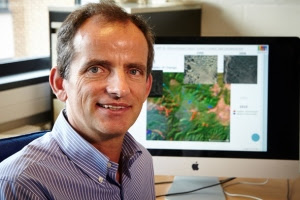
The 2014 winner of the Volvo Environment Prize, Professor Eric Lambin, is a remote sensing pioneer using advanced data collection and satellite images to understand land use and the influence of humans on the planet. The Volvo Environment Prize is awarded annually to people who have made outstanding scientific discoveries within the area of the environment and sustainable development. Read More
In Memoriam
Past President George Demko Dies at 81
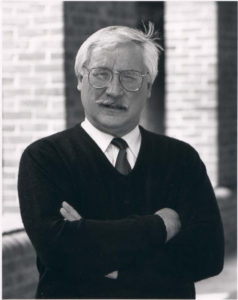
George Demko, an internationally renowned geographer, academic, and PhD scholar has died at age 81 of natural causes. Over his lifetime in academia, his greatest achievement was the mentoring and influencing of thousands of students who carry his legacy with them today. Learn More
See the AAG Necrology
GRANT & AWARD OPPORTUNITIES
Society of Woman Geographers Dissertation Fellowships
The Society of Woman Geographers (SWG) invites applications for its Evelyn L. Pruitt doctoral dissertation research fellowships for 2015-2016 for women in geography and geographical aspects of other fields. Continue Reading
Oak Human Rights Fellowship: Food Sovereignty and Human Rights
The Oak Institute seeks a frontline human rights activist who works on problems created by or associated with food sovereignty and human rights outside of the United States for residence at Colby College in the fall of 2015 and is pleased to issue a call for nominations for the 2015 Oak Human Rights Fellowship. Learn More
PUBLICATIONS
New AAG Brochure Informs, Inspires Students About Geography Jobs
The new AAG Jobs and Careers in Geography brochure is geared toward recruiting both upper-level high school and undergraduate college students to geography courses, geography majors, and possible careers in geography. The six-panel, color brochure is designed to speak directly to students, with lively graphics portraying young people engaged in the exciting and socially meaningful activities of geography today. Read More
‘The AAG Review of Books’ Volume 2, Issue 4 Is Now Available
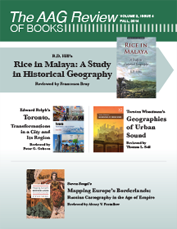
The AAG is pleased to announce Volume 2, Issue 4 of The AAG Review of Books, featuring scholarly book reviews as formerly published in the Annals of the AAG and The Professional Geographer, along with reviews of significant current books related more broadly to geography and public policy and/or international affairs. To access the full AAG Review of Books, visit the AAG Journals page. Select AAG Review of Books, which will take you to the Taylor & Francis site. Then, select a volume in the List of Issues box and select any issue from there. Read More
MORE HEADLINES
Thomas
Dr. Yonette Thomas to Assume Key Leadership Roles at the AAG
The AAG is pleased to announce that Dr. Yonette Thomas is joining its staff as Senior Advisor. In this capacity, Thomas will help lead AAG’s growing portfolio of research programs in health and geography. She will provide expertise and leadership to the AAG’s initiatives on gender, race, ethnicity, sexual orientation, disabilities, and other diversity and equity programs. Thomas previously served as Associate Vice-President for Research Compliance at Howard University. Most recently, Thomas was Branch Chief of Epidemiology Research, in the Division of Epidemiology, Services, and Prevention Research at the National Institute on Drug Abuse. Learn More
Dr. Jenny Lunn Joins AAG Staff as Senior Researcher
Dr. Jenny Lunn recently joined the AAG staff as Senior Researcher where she will be involved in a variety of the Association’s projects, including the international work in developing regions and with overseas partners. She will also be involved in the AAG’s My Community, Our Earth: Learning for Sustainable Development (MyCOE). Lunn previously worked for the Royal Geographical Society with the Institute of British Geographers in London where she was involved in a variety of roles spanning the Society’s work in education, higher education and public engagement. Most recently she managed the “Discovering Britain” project, a prestigious series of geographically themed walks around the United Kingdom. Learn More
Remembering John Muir on the Centennial of His Passing:
Writer, Naturalist, Scientist, Activist, Geographer?
[Glen MacDonald also is organizing a featured panel session, “Geographers on John Muir: Assessing His Legacy and Relevance After 100 Years,” for the 2015 AAG annual meeting in Chicago, April 21-25. More information will be available soon.]
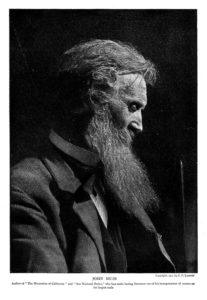
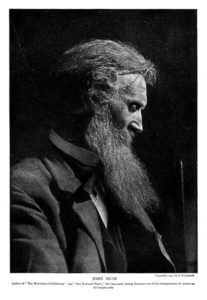
John Muir died in Los Angeles, California on Christmas Eve, 1914 with the pages of an unfinished manuscript on Alaska beside him in his hospital bed. As we mark the centenary of Muir’s passing what might we say about him from the perspective of Geography? Muir can claim many titles — writer, naturalist, scientist and environmental activist. Can we also consider him a geographer? Certainly Muir worked and wrote in a very formative period for American Geography and the Association of American Geographers. Although he received honorary degrees from the University of California, Wisconsin, Harvard and Yale, Muir never earned a formal university diploma. He did, however, attend the University of Wisconsin for two years starting in the 1860’s. Alas, this was long before the establishment of the Department of Geography there. But then founding lights of the AAG, including William Morris David, educated in the 19th century like Muir, did not hold degrees in the then incipient field of geography either. In Muir’s case his academic interests focused on chemistry, geology and botany. Through Ezra Carr, a Professor of Natural Sciences, Muir was likely introduced to the then revolutionary theories of Louis Agassiz regarding Pleistocene glaciation and this became a lifelong interest. Muir would also become acquainted with the controversial theories on evolution articulated by Charles Darwin in The Origin of Species. Although Agassiz was to remain deeply hostile to Darwin’s theory of natural selection, the ideas of both of these men were highly influential in the thinking of Muir as well as creators of the AAG such William Morris Davis. More than this though, Muir, like Davis and every geographer of the time, was profoundly influenced by that foundational figure of modern geography, Alexander von Humboldt. Indeed, in 1866 Muir wrote to his mentor and confident Jeanne Carr “How intensely I desire to be a Humboldt!” Muir’s regard for Humboldt, his intellectual development in the natural sciences and his intense interest in combining both geology and botany reflects the same scholarly, and at the time revolutionary, crucible that formed the science of Davis and Clements. By inclination and available education he was arguably as much a geographer as many of the founders of the AAG.
A scan of a more than 100-year-old photo of Muir by C. F. Lummis taken in 1901. Owned by: Glen M. MacDonald John Muir Memorial Chair Distinguished Professor of Geography, Ecology and Evolutionary Biology and The Institute of the Environment and Sustainability UCLA Los Angeles, CA 90095-1524 310-825-5008 macdonal@geog.ucla.edu
Like Davis, Muir was a sharp observationalist-inductivist who moved beyond the descriptive confines of natural history and sought to explain nature rather than simply observe and record. Within the earth sciences, Muir’s work on glacial features and evidence of past glaciation coupled with his theory on the glacial origins of Yosemite and other Sierra Nevada valleys stands as an important and lasting contribution. Physical geography is sometimes delineated from geology through its attention to modern processes and landforms. In this regard Muir showed a similar inclination. He was the first to discover living glaciers in the Sierra Nevada. This work, published in 1873 in the American Journal of Science and Arts must have been particularly sweet for Muir as it reinforced his position in a well-known scientific disagreement with Josiah Dwight Whitney, a Professor of Geology at Harvard and head of the California Geological Survey, who argued, incorrectly, that the Yosemite Valley was a tectonic feature. However, if geography is indeed the integrative science, then Muir was to more than equal many founders of the AAG in his desire and capability of spanning the earth and life sciences. Muir wrote many descriptions of the distributions of montane and alpine flora, but my favorite, and certainly most integrative was his study of the giant sequoia (Sequoiadendron giganteum). In his 1876 monograph published as a Proceedings of the American Association for the Advancement of Science, Muir analyzed the contemporary distribution of the species along the west slope of the Sierra Nevada, noted its environmental relations and particularly its disjunct distribution. The latter he attributed to the fragmentation of its range by Pleistocene glaciers emanating from the High Sierra. Now, today we know Muir had an overstated belief in the extent and role of glaciation and new research shows that the geographic distribution of giant sequoia may largely be explained by micro-climate, but the questions he asked remain topical. Muir also presaged the current focus of many geographers on the long-term trajectories and uncertain future of plant animal species in the face of human impact. Consider his pondering the future of the giant sequoia in his 1876 “What area does Sequoia now occupy as the principal tree? Was the species ever more extensively distributed in the Sierra during post-glacial times? Is the species verging on extinction? And if so, then to what causes will its extinction be due? What have been its relation to climate, soils and to other coniferous trees with which it is associated? What are those relations now? What are they likely to be in the future?” These are the same questions biogeographers are asking about a multitude of endangered species.
Muir’s scientific work and his writings were no doubt well known by many of the founders and first members of the AAG. What of his actual engagement with professional geography and his regard by the discipline at that time? It is notable that Muir was a member of the Committee for Arrangements, along with William Morris Davis and a number of eminent geographers for the 8th International Geographic Congress in 1904. His impact on our discipline clearly transcended his passing. It is striking to me that the 1958 Honorary Presidential Address by John Leighly at the first Annual Meeting of the AAG to be held on the west coast was entitled “John Muir’s Image Of The West.” I was alerted to Muir’s quote regarding von Humboldt through Leighly’s speech. Today, 100 years past his death, although citations to Muir’s scientific papers may be sparse, his ideas on the importance of past glaciations and his books such as My First Summer in the Sierra or Our National Parks remain widely known by geographers investigating questions of physical geography, conservation or human-nature perception and interactions. As Muir is in the pantheon of thinkers who developed modern environmentalism and conservation, it would be hard to find any geographer who has not been exposed to the work and philosophy of Muir in the course of their education. Geographer activists knowingly or unknowing are also taking a page from his book, most strikingly developed during his emotional and ultimately failed attempt to save the Hetch Hetchy Valley. For generations these ideas have undoubtedly helped formulate the thinking of geographers and through them the course of the AAG. So, although never formally a trained geographer, Muir was drawn by the same forces of curiosity and cross-disciplinary inquiry that have propelled geographers and geography over the past century. I am inclined to consider him a true geographer and one of our seminal figures. As he so fervently desired in 1866, Muir was and is “a Humboldt.” (John Muir: Born April 21, 1838, Dunbar, Scotland; Died December 24, 1914, Los Angeles, CA)
Glen MacDonald is distinguished professor and inaugural John Muir Memorial Chair in Geography at UCLA. He engages Geography with scholars, policy makers, writers, artists, activists and others to look at contemporary nature and people issues in the American West.
Glen MacDonald also is organizing a featured panel session, “Geographers on John Muir: Assessing His Legacy and Relevance After 100 Years,” for the 2015 AAG annual meeting in Chicago, April 21-25. More information will be available soon.
Symposium on Physical Geography at the 2015 AAG Annual Meeting
A special feature of the upcoming 2015 AAG annual meeting is the one-day Symposium on Physical Geography, scheduled for Thursday, April 23. The overall intent of the symposium is to raise the visibility of physical geography research at the AAG annual meeting, and provide additional networking opportunities to facilitate and enhance dialog among physical geographers on emerging developments, challenges, and approaches related to physical geography.
The symposium is also an experiment with alternative formats for physical geography sessions at future AAG annual meetings. Over the years there have been numerous informal conversations among members of the physical geography community regarding potential changes to the oral and poster sessions of the AAG annual meeting. Arguments have often been made for larger poster sessions and fewer oral sessions, under the expectation that these format changes would lead to increased session attendance and hence improved visibility within the discipline of the research efforts of individual physical geographers and enhanced popularity of the AAG annual meeting among physical geographers. Reference is often made to the formats of popular meetings of other geophysical-related scientific organizations, which typically include a small number of themed oral sessions that are selected by an organizing committee from proposals by members, with the majority of the attendees’ research contributions displayed in large poster sessions. Many of these arguments were raised again at the special session, Conversation on the Future of Physical Geography, held at the 2014 AAG annual meeting in Tampa. With these recommendations in mind, AAG past presidents Carol Harden, Richard Marston and Julie Winkler organized the one-day symposium as a modest, but manageable, effort to explore the potential for alternative session formats and implications for other components of the AAG annual meeting.
The Symposium on Physical Geography will feature two morning sessions of invited presentations around the theme, Environmental Reconstruction–A Nexus of Biogeography, Climatology and Geomorphology. This integrative research theme was selected as it cuts across the many facets of physical geography and encompasses the study of past climates, landscapes and biological systems, along with the reclamation of altered environments. The afternoon will be devoted to an extended poster session in a new mode, with up to 100 posters on display during the entire afternoon. Poster presentations are being solicited on all aspects of physical geography, including environmental reconstruction, and the posters will be grouped by theme and/or specialty group. Presenters will post the times next to their poster when they will be available for discussion with viewers, although they are encouraged to stand by their poster during at least a portion of the period from 4:30-6:30 p.m. The symposium will conclude with a happy hour from 4:30-7:30 p.m.
The symposium will be followed by a second Conversation on the Future of Physical Geography, scheduled for Friday, April 24, 11:45 a.m. At this time, attendees will have an opportunity to reflect on the symposium (both its strengths and weaknesses), consider whether this type of structure warrants further experimentation, and, if so, recommend strategies for selecting themes and symposia organizers for a 2016 Symposium on Physical Geography. The long-term goal is to develop meeting formats that support the careers of physical geographers and enhance physical geography within the AAG.
Physical geographers at all stages of their careers are strongly encouraged to submit an abstract for the Thursday afternoon poster session. The deadline for abstracts is November 5, 2014. Please indicate as a Special Request on the online abstract submission form your interest in being part of the Symposium on Physical Geography poster session, and email a copy of your abstract confirmation to Professor Carol Harden (charden [at] utk [dot] edu). Specialty groups are urged to co-sponsor the poster session, and to also use the poster session for some of their own activities such as student poster awards.
Updates on the Symposium on Physical Geography will be posted on the AAG website
Long-standing member of the AAG, Robert “Bob” Hutton, of Alexandria, VA, passed away on October 19, 2014, at the age of 82.
Hutton received his Bachelor’s degree in Russian Studies from Haverford College, PA, in 1954. He also spent the summers of 1953 and 1954 at a Russian Summer School held at Middlebury College, VT.
He then enlisted in the Army, receiving a sharp shooter commendation during Basic Training much to his own surprise as he was blind in his right eye! He served during the Korean War from 1954 to 1957, specializing in languages.
Following this he continued his education at Columbia University, NY, graduating with a Master’s degree in the Geography of East Asia in 1962. His final thesis was titled “Trade Relations between Japan, Communist China, and the Soviet Union.”
Hutton then spent his career working for the National Security Agency and the Library of Congress, retiring from the latter in 1998.
During his retirement he had many hobbies, one of which was wine. He said that his background in geography helped him to understand the soil and climatic conditions important to the production of wine. As a member of the American Wine Society and a writer for various wine journals, he traveled to wine events including the Vin Expo in Bordeaux and the London Wine Fair.
Hutton joined the Association of American Geographers in 1962 and maintained his life-time interest in geography. He was delighted to attend the Annual Meeting in New York in 2012 to receive recognition for his 50 years of continuous membership.
After his first wife died in 2007, he remarried in 2010. He is survived by his sister Elizabeth MacDonald; four children, Edward, Charles, Grace, and Susan; and six grandchildren.
Every month the AAG compiles a list of newly-published books in geography and related areas. Some are selected for review in the AAG Review of Books.
Publishers are welcome to send new volumes to the Editor-in-Chief (Kent Mathewson, Editor-in-Chief, AAG Review of Books, Department of Geography and Anthropology, Louisiana State University, Baton Rouge, LA 70803). Authors interested in reviewing books should also contact the Editor-in-Chief (kentm@lsu.edu).
Ancient Plants and People: Contemporary Trends in Arcaeobotany by Madella, Marco, Lancelotti, Carla and Manon Savard (University of Arizona Press 2014, http://www.uapress.arizona.edu/Books/bid2480.htm)
Biodiversity Conservation in Latin America and the Caribbean: Prioritizing Policies by Blackman, Allen, Rebecca Epanchin-Niell, Juha Siikamäki, Daniel Velez-Lopez (Routledge 2014, http://www.routledge.com/books/details/9780415730969/)
Caring for Place Ecology, Ideology, and Emotion in Traditional Landscape Management by Anderson, E.N. (Left Coast Press 2014, http://www.lcoastpress.com/book.php?id=487)
Conservative Hurricane: How Jeb Bush Remade Florida by Corrigan, Matthew T. (University of Florida Press 2014, http://upf.com/book.asp?id=CORRI002)
Landesque Capital: The Historical Ecology of Enduring Landscape Modifications by Håkansson, N Thomas and Mats Widgren (Left Coast Press 2014, http://www.lcoastpress.com/book.php?id=497)
Recalling Deeds Immortal: Florida Monuments to the Civil War by Lees , William B. and Frederick P. Gaske (University of Florida Press 2014, http://upf.com/book.asp?id=GASKE001)
Sacred Geographies of Ancient Amazonia: HIstorical Ecology of Social Complexity by Schaan, Denise P. (Left Coast Press 2012, http://www.lcoastpress.com/book.php?id=366)
Tom Rabenhorst, Senior Lecturer Emeritus in the Department of Geography and Environmental Systems (GES) at the University of Maryland, Baltimore County (UMBC), died Saturday after a long battle with brain cancer.
Tom began his career at UMBC in 1973 as a part-time instructor while also an Assistant Professor at Montgomery Community College. He became a full time lecturer at UMBC in 1975, teaching courses in physical geography, cartography and remote sensing, while also developing its highly successful training program in cartography.
Over his 40 years at UMBC, Tom trained hundreds of students who have gone on to careers with many federal, state and local agencies, as well as private companies. He was always seeking ways to challenge his students and his ability to get the very best from them is evidenced by the numerous awards they won for cartographic design. In particular, his 2003 Advanced Cartography class designed and produced The Digital Atlas of Maryland Agriculture that was awarded “Best in Show” and “Best Digital Entry” in the National Map Competition held by the American Congress of Surveying and Mapping, honors never before given to a student entry. In addition, his students had remarkable success in winning highly competitive and prestigious National Geographic Society internships.
Tom was the co-author of two monographs (Applied Cartography and Applied Cartography: Introduction to Remote Sensing), and the author of numerous published maps, including an important contribution to the Historical Atlas of the United States (National Geographic Society) that utilized the base maps he developed for the Historical U.S. County Outline Map Collection 1840-1980. Tom was an avid hiker and, together with his wife Carol, he hiked and mapped the trail systems of several state and local parks and published interpretative maps of each that have become highly popular. At the time of his death, Tom, along with GES colleague Jeff Halverson, was working on a textbook on Severe Storms to be published by Oxford University Press. Tom also served for several years as the Cartographic Editor of the Annals of the Association of American Geographers, the flagship journal in American geography, and he was recognized for elevating the professional standards of cartographic contributions published in the journal.
Tom was a beloved friend to many and he impacted many lives at UMBC and beyond. He leaves behind many accomplishments but his legacy as a human being exceeds anything that can be written down in a curriculum vitae. His incredible vitality and willingness to help anyone who asked for his assistance will be missed.
Adapted with permission from a letter to the UMBC Community.
AAG Members get exclusive access to publications, prominent journals, unique advocacy, grant, scholarship and professional opportunities with access to industry focus communities, and event discounts, including our annual meeting.
Some content may only be accessible if you belong to specific Specialty or Affinity Groups. You can still update your membership below. You will need to go through the Join flow, but you do not need to repurchase your membership unless it is expired or about to expire.
To provide the best experiences, we use technologies like cookies to store and/or access device information. Consenting to these technologies will allow us to process data such as browsing behavior or unique IDs on this site. Not consenting or withdrawing consent, may adversely affect certain features and functions.
Functional
Always active
The technical storage or access is strictly necessary for the legitimate purpose of enabling the use of a specific service explicitly requested by the subscriber or user, or for the sole purpose of carrying out the transmission of a communication over an electronic communications network.
Preferences
The technical storage or access is necessary for the legitimate purpose of storing preferences that are not requested by the subscriber or user.
Statistics
The technical storage or access that is used exclusively for statistical purposes.The technical storage or access that is used exclusively for anonymous statistical purposes. Without a subpoena, voluntary compliance on the part of your Internet Service Provider, or additional records from a third party, information stored or retrieved for this purpose alone cannot usually be used to identify you.
Marketing
The technical storage or access is required to create user profiles to send advertising, or to track the user on a website or across several websites for similar marketing purposes.
To provide the best experiences, we use technologies like cookies to store and/or access device information. Consenting to these technologies will allow us to process data such as browsing behavior or unique IDs on this site. Not consenting or withdrawing consent, may adversely affect certain features and functions.
Functional
Always active
The technical storage or access is strictly necessary for the legitimate purpose of enabling the use of a specific service explicitly requested by the subscriber or user, or for the sole purpose of carrying out the transmission of a communication over an electronic communications network.
Preferences
The technical storage or access is necessary for the legitimate purpose of storing preferences that are not requested by the subscriber or user.
Statistics
The technical storage or access that is used exclusively for statistical purposes.The technical storage or access that is used exclusively for anonymous statistical purposes. Without a subpoena, voluntary compliance on the part of your Internet Service Provider, or additional records from a third party, information stored or retrieved for this purpose alone cannot usually be used to identify you.
Marketing
The technical storage or access is required to create user profiles to send advertising, or to track the user on a website or across several websites for similar marketing purposes.


 ANNUAL MEETING


 AAG Member Eric Lambin Wins Volvo Environment Prize
 In Memoriam
 ‘The AAG Review of Books’ Volume 2, Issue 4 Is Now Available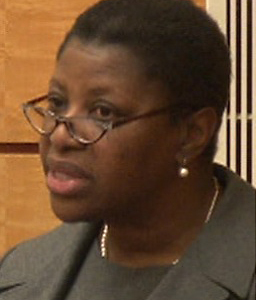
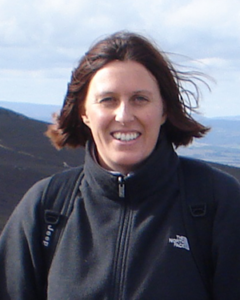 Dr. Jenny Lunn Joins AAG Staff as Senior Researcher