New Orleans: The Uncertain City

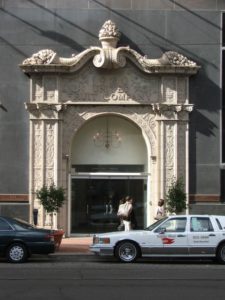
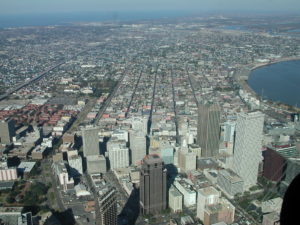
Skyscrapers in the New Orleans business district in the foreground contrast with the French Quarter in the background. Photo credit: Craig Colten

New Orleans battles with its identity. Locals see their home as a river city. Its European colonial founders etched a street grid across the narrow natural levee and perched the incipient city on the banks of the Mississippi River. Since then it has benefitted from waterborne commerce while battling high water that threatens its riparian site. The river loomed large in colonial life and looms large today.

Peirce Lewis, however, identified an uneasy relationship between the riverside site and maritime/inland hinterland situation when he labeled New Orleans as “the impossible but inevitable city.” The site on the banks of the river, had long been used by Native Americans as a strategic portage between the river and Lake Pontchartrain — in effect a bay of the Gulf of Mexico. The city’s French founder, Bienville, foresaw the importance of a city that could connect the vast North American hinterland with the Gulf and the French empire beyond. Indeed, colonial leaders abandoned two prior attempts to establish colonial capitals on the Gulf Coast before selecting the site about 100 miles upstream from the river’s mouth. Thus, the city is an heir of more direct coastal-oriented settlements, but reflects the significance of the river in its development. As the city celebrates it tricentennial in 2018, New Orleans may continue to see itself as a river city, but it functions very much as a Gulf Coast city on the banks of the Mississippi River.

Its relationship to the two water bodies remains thoroughly intertwined. In the years since 1718, the city’s economy has depended on the commerce coursing down the Mississippi – furs and cypress during the colonial era; corn, whiskey, hogmeat, sugar, and cotton during the antebellum period; grain and petrochemical products during much of the last century. New Orleans served as the entrepôt for this waterborne trade that relied on both the river and the Gulf. Another commercial tie has been tourism. Residents from across the Gulf South turned to New Orleans for a variety of pleasures since the 19th century, while New Orleans’s citizens have been prominent in the development of the Mississippi shore and visit the beaches of Alabama and Florida – furthering the city’s connections to the larger Gulf.

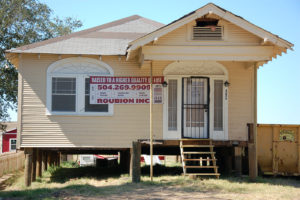
Elevated house after Hurricane Katrina. Credit: Craig Colten

Coping with hazards also reflects the city’s position at the intersection of fluvial and marine environments. Flood control efforts have focused on protecting the city while diverting risk via engineered floodways onto coastal fishermen in Mississippi Sound and near the mouth of the Atchafalaya River. Tropical weather presents a powerful threat from the warm waters of the Gulf of Mexico, and with the loss of it coastal wetlands, New Orleans is ever closer to the Gulf and to storm surges driven by cyclones. After Hurricane Katrina in 2005, some homeowners reluctantly raised their houses on stilts, like beach houses – a concession to their coastal location. When the BP oil platform erupted in a tragic fire in April 2010 and released millions of gallons of crude into the Gulf, neighboring coastal states faced economic catastrophe as the slick washed onto their sandy beaches and drove tourists away. Florida’s governor criticized Louisiana for carelessly developing its offshore oil resources which he saw as a threat to his state’s economy. Residents of New Orleans complained that they could smell the oil from off shore – emphasizing their proximity to the Gulf.

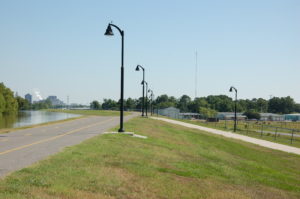
Mississippi River levee during high river in 2011 at Baton Rouge. Photo credit: Craig Colten

Based on its role as entrepôt to the Mississippi River valley, New Orleans was among the country’s five largest cities on the eve of the Civil War. Levees obstructed the view of the river although they did not impede commerce, and these structures became one of the dominating features of the lower river landscape. The Civil War diverted Midwestern commerce to the eastern seaboard by rail, and New Orleans declined in the rank order of the country’s cities. The conflict also left the levees in a poor state of repair and a flood in 1874 provided a political tipping point in a long-running campaign to pass the costs of levee construction and maintenance to the federal government. At the urging of Southern planters and politicians Congress passed legislation in 1879 to fund and maintain the levees, not for flood protection of the recently rebellious region, but to maintain a navigable waterway for interstate commerce. By the early 20th century, engineers abandoned the mistaken belief that the river confined by levees would maintain a deep channel. Following several floods culminating in the most tragic U.S. flood on record in 1927, the Mississippi River Commission declared the main purpose of levees was to fend off inundation and not enable commerce. Despite the fact that the flood of record did not inundate New Orleans, it prompted massive re-engineering of the river that was oriented toward protecting New Orleans and its shipping interests. Its role as the entrepôt connecting the Mississippi River to the Gulf of Mexico remained a dominating concern.

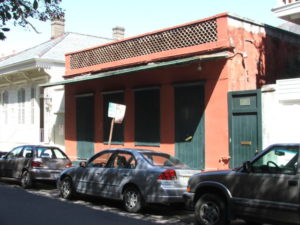
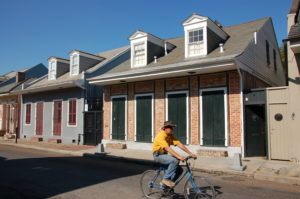
Creole cottage in the French Quarter. Photo credit: Craig Colten

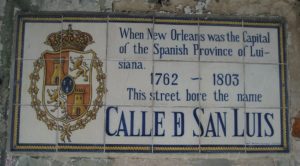
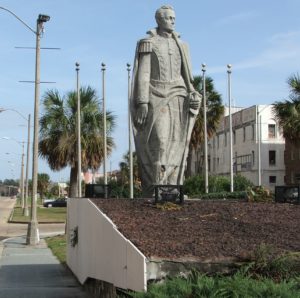
With its distinctive French and Spanish colonial heritage, a sizable number of African Americans, along with later Anglo, German, and Italian immigrants, New Orleans may have fallen in its ranking among the country’s largest cities, but it emerged in the 1800s as the largest Gulf Coast city of what Terry Jordan called the Creole Coast. With a legal system based on French civil code, a persistent French-speaking population well into the 19th century, culinary traditions from France, Spain, Africa, and indigenous populations, it became a most peculiar place. African and European cooks and chefs combined local seafood, rice, and spices from multiple hearths to fashion a creole cuisine that is a hallmark of the city’s culture today. Building traditions from Africa and Europe created a landscape unlike other American cities. Celebrations, most notably Mardi Gras, have incorporated elements of the Catholic sacred calendar with Caribbean and African influences to produce arguably the city’s best known spectacle each spring.   In addition, Afro-Caribbean rhythms blended with European brass instruments to give rise to jazz.

One could argue that New Orleans thrives on these important elements of its past. Visitors flock to stroll through the narrow streets of the French Quarter, to sample the spicy creole fare, to enjoy the seductive rhythms and melodies in the jazz clubs, and to forget their cares along the parade routes during Mardi Gras. And beyond the well-worn tourist paths, there are countless lesser-known architectural, culinary, and musical treasures. Of course, the city is highly cognizant of its rich history and aggressively seeks to parley that into heritage tourism income. Indeed, in 2015 tourists spend over $7 billion dollars in the city. Tourism has largely recovered from the downturn after 9/11, the devastating decline caused by the hurricanes Katrina and Rita, and the Great Recession a decade ago.

French Quarter Festival. Zack Smith Photography, courtesy of French Quarter Festivals, Inc.

Always looking for a way to expand its tourism calendar, the city supports numerous special events to attract visitors beyond the Mardi Gras season. The Jazz and Heritage Fest held each spring is one of the world’s premier music festivals. Operating since 1970, it began as a celebration of regional music — jazz, gospel, rhythm and blues, and Acadian sounds. It still features local talent and traditions, but has exploded into an international event drawing major popular music performers. There are countless other festivals — such as the Essence Music Fest, the Voodoo Music Fest, the Cajun and Zydeco Fest, the Satchmo Fest, along with Southern Decadence, the Creole Tomato Fest, the Oyster Fest, and the Oak Street Po-boy fest. Plus there are sports events such as the Sugar Bowl, the Crescent City Classic Marathon, and periodic NCAA championships. The annual calendar ensures that most visitors who stay even a few days will be able to participate in one of these celebrations. Indeed one the most noteworthy events will overlap with the AAG meeting in New Orleans — The French Quarter Fest.

The French Quarter Fest was created to showcase local musical performers on multiple outdoor stages in and near the French Quarter. Initially, a “locals” event it offered free performances in the midst of the city’s historic district where local cuisine was available around every corner. It has grown but still offers a more intimate setting than that sprawling Jazz Fest, and admission is FREE. The festival’s web site [https://fqfi.org/] boasts that it will host 300 hours of entertainment by 400 performers during its run from April 12 to 15, 2018. It is truly one of the jewels of the city’s festival calendar, and it falls at a time when weather is generally quite pleasant and conducive to a street festival.

New Orleans has persisted in a perilous place for three centuries now and in that time it has given rise to a rich array of visual, auditory, and gustatory experiences. After the 2005 hurricane season, some questioned whether it made economic sense to rebuild the devastated city. Some 20 percent of the city’s population were not certain about the safety of returning and stayed away. Yet, rebuilding and denying risk, along with celebrating at the drop of a hat, are things that the people of New Orleans and the Gulf Coast excel at. Long-time residents are deeply attached to this quirky place, and new arrivals since 2005 came to get a taste of the traditions that endure, even if altered by the newcomers and their influences.

In the face of a disappearing coast, there is grave concern about the long-term future of the city and the outlying wetlands. Louisiana is investing huge sums of money to offset the encroachment of the Gulf across its coastal marshes. But with the highest rate of relative sea-level rise in the U.S., this deltaic coast will certainly change in the coming decades. How that will impact the city has yet to be seen and uncertainty hangs over the city like another layer of humidity. But we encourage you to come pay us a visit while you can.

— Craig Colten, Louisiana State University


Recommended reading, by geographers for geographers:

S. Hemmerling, Louisiana Coastal Atlas (2017)

A. Sluyter, C. Watkins, J. Chaney, A. Gibson, Hispanic and Latino New Orleans (2015)

R. Campanella, Bourbon Street (2014), Geographies of New Orleans (2006)

R. Orgera and W. Parent, eds., Louisiana Field Guide (2014)

C. Colten, Unnatural Metropolis (2005), Perilous Place, Powerful Storms (2009) USGS, Environmental Atlas of Lake Pontchartrain Basin

P. Lewis, New Orleans: Making of an Urban Landscape (2003)

Also visit the web page of the unofficial “Geographer in Residence” of New Orleans, Richard Campanella and his Geographer’s Space in the Louisiana Endowment for the Humanities’ Cultural Vistas

Also visit the web page of the unofficial “Geographer in Residence” of New Orleans, Richard Campanella and his Geographer’s Space in the Louisiana Endowment for the Humanities’ Cultural Vistas


DOI: 10.14433/2017.0009

    Share

New Books: June 2017

Every month the AAG compiles a list of newly-published books in geography and related areas. Some are selected for review in the AAG Review of Books.

Publishers are welcome to send new volumes to the Editor-in-Chief (Kent Mathewson, Editor-in-Chief, AAG Review of BooksDepartment of Geography and Anthropology, Louisiana State University, Baton Rouge, LA 70803).

Anyone interested in reviewing these or other titles should also contact the Editor-in-Chief.

June 2017

Advancing the Civil Rights Movement: Race and Geography of Life Magazine’s Visual Representation, 1954-1965 by Michael DiBari Jr. (Lexington Books 2017)

All the Agents and Saints: Dispatches from the US Borderlands by Stephanie Elizondo Griest (University of North Carolina Press 2017)

The Bohemian South: Creating Countercultures, from Poe to Punk by Shawn Chandler Bingham and Lindsay A. Freeman (eds.) (University of North Carolina Press 2017)

Climate Change in Practice: Topics for Discussion with Group Exercises by Robert L. Wilby (Cambridge University Press 2017)

Clouds: Nature and Culture by Richard Hamblyn (CSIRO 2017)

Crossing the Line by Bibi Belford (Sky Pony Press 2017)

Deterritorializing/Reterittorializing: Critical Geography of Educational Reform by Nancy Ares, Edward Buendia, and Robert Helfenbein (eds.) (Sense Publishers 2017)

Evergreen: The Garrett Family, Collectors and Connoisseurs by Evergreen Museum & Library (John Hopkins University Press 2017)

From California’s Gold Fields to the Mendocino Coast: A Settlement History across Time and Place by Samuel M. Otterstrom (University of Nevada Press 2017)

Global Cities: Urban Environments in Los Angeles, Hong Kong, and China by Robert Gottlieb and Simon Ng (MIT Press 2017)

Global Urban Agriculture by Antionette WinklerPrins (ed.) (CABI 2017)

Grounded Authority: The Algonquins of Barriere Lake Against the State by Shiri Pasternak (University of Minnesota Press 2017)

Hairy Hippies and Bloody Butchers: The Greenpeace Anti-Whaling Campaign in Norway by Juliane Riese (Berghahn Books 2017)

Heading Out: A History of American Camping by Terence Young (Cornell University Press 2017)

The Human Atlas of Europe: A Continent United in Diversity by Dimitris Ballas, Daniel Dorling, and Benjamin Hennig (Policy Press 2017)

Imagining the Arctic: Heroism, Spectacle, and Polar Exploration by Huw Lewis-Jones (I.B. Tauris 2017)

Infrastructural Ecologies: Alternative Development Models for Emerging Economies by Hilary Brown and Byron Stigge (MIT Press 2017)

Life in the Himalaya: An Ecosystem at Risk by Maharaj K. Pandit (Harvard University Press 2017)

Migrant Returns: Manila, Development, and Transnational Connectivity by Eric J. Pido (Duke University Press 2017)

The Next Social Contract: Animals, the Anthropocene, and Biopolotics by Wayne Gabardi (Temple University Press 2017)

Places in Need: The Changing Geography of Poverty by Scott W. Allard (Russell Sage Foundation 2017)

Principles of Radiometric Dating by Kunchithapadam Gopalan (Cambridge University Press 2017)

Rethinking International Skilled Migration by Micheline van Riemsdijk and Qingfang Wang (eds.) (Routledge 2017)

Rising Tides: Climate Refugees in the Twenty-First Century by John R. Wennersten and Denise Robbins (Indiana University Press 2017)

Spatial Analysis of Coastal Environments by Sarah M. Hamylton (Cambridge University Press 2017)

Suspect Red by L.M. Elliott (Disney Hyperion 2017)

Swords in the Hands of Children: Reflections of an American Revolutionary by Johnathan Lerner (OR Books 2017)

The Takeover: Chicken Farming and the Roots of American Agribusiness by Monica R. Gisolfi (University of Georgia Press 2017)

Tap: Unlocking the Mobile Economy by Anindya Ghose (MIT Press 2017)

Understanding Conflicts about Wildlife: A Biosocial Approach by Catherine M. Hill, Amanda D. Webber, and Nancy E.C. Priston (eds.) (Berghahn Books 2017)

Wild by Nature: North American Animals Confront Colonization by Andrea L. Smalley (John Hopkins University Press 2017)

    Share

Newsletter – June 2017

PRESIDENT’S COLUMN

Upon Reflection 

By Glen M. MacDonald
Glen M. MacDonald
MacDonald

How fast time flies. It is hard to believe that the end of the academic year is upon us, June has come and I am writing my last president’s column. I want to use the opportunity provided by this final column to reflect upon the past year. I also want to look ahead and consider the role of our discipline and the American Association of Geographers as we face the changing and challenging world ahead of us. Finally, I hope with one last act as president to give back a little for all I have received.

Continue Reading. 

Recent columns from the President


FEATURES

Civil Rights Featured Theme of 2017 Geography Awareness Week: A Call for Participation

Established by a joint resolution of the U.S. Congress in 1987, Geography Awareness Week (GAW) is observed the third week in November every year. GAW promotes what geography is, why it is important, and the relevance of a geographic education in preparing citizens to understand and debate pressing social and environmental issues and problems. This year’s celebration is November 12-18, marking the 30th birthday of what has become an important tradition in our discipline. National Geographic’s Network of Alliances for Geographic Education recently met in Washington DC and designated “The Geography of Civil Rights Movements” as a featured theme for the 2017 Awareness Week.

Continue Reading.


ANNUAL MEETING

Save the Date: AAG 2018 New Orleans

Mark your calendar for the AAG Annual Meeting in New Orleans on April 10 to April 14, 2018. We invite you to organize and participate in sessions, panels, field trips, events, and activities. The Call for Papers will open in July 2017.

Learn more.

Videos from AAG 2017: Boston 

Videotaped sessions of select plenary sessions and featured speakers from the 2017 Annual Meeting in Boston are now available for viewing. The select videos available for viewing are as follows:

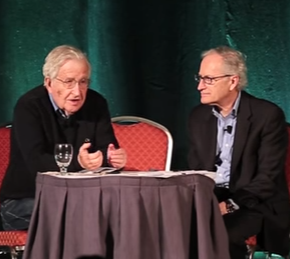
  • Noam Chomsky – A Continuing Conversation with Geographers and Atlas Award
  • Glen MacDonald’s Presidential Plenary on Geographies of Bread and Water in the 21st Century
  • David Harvey’s Featured Lecture: Marx, Capital and the Madness of Economic Reason
  • James Hansen’s Lecture: Global Climate Change: Can the Next Generation Avert a Catastrophe?
  • AAAS’ Rush Holt on Advancing Science in the Public Arena

Learn more.


ASSOCIATION NEWS

Twitter Chat: AAG Grants and Awards Program

The AAG has a long history of supporting and recognizing geographers’ accomplishments and contributions through its many prestigious grants and awards. The AAG Grants and Awards Program recognizes and supports AAG members, non-members, students, early career and senior faculty. On June 15, from 3 p.m. to 4 p.m., the AAG will host a Twitter Chat, entitled, “AAG Awards Program.” Guest speaker Candida Mannozzi, AAG Deputy Director of Operations, will answer questions about the variety of awards available, the submission process, key deadlines, and more. Follow @theAAG and participate by using the hashtag #AAGChat.

Learn more.

AAG Seeks Nominations for 2018 Vice President, National Councilors, Student Councilor

The AAG Nominating Committee seeks nominations for Vice President (one to be elected), for National Councilor (two vacancies) and Student Councilor (one to be elected) for the 2018 election. Those elected will take office on July 1, 2018. Members should submit the names and addresses of each nominee and their reasons for supporting nomination to any member of the committee no later than July 30, 2017. As part of your nomination statement, please confirm that the person is willing to be considered for the position for which you are recommending her or him. Nominations by email are strongly preferred.

Learn more.

Meredith Stone Joins AAG Staff as Public Policy and Outreach Specialist

Meredith StoneMeredith Stone has joined the AAG staff as Public Policy and Outreach Specialist at the Washington, D.C. headquarters. She recently completed her Master of Arts in Geography at Ohio University. There, she served as a teaching assistant for Introduction to Geographic Information Systems and Mapping Sciences and also as a research assistant for the Baltimore Ecosystem Study, a National Science Foundation granted project investigating urban green space in the city.

Learn more.

Christine MacKrell Interns at AAG for Summer Semester

Christine MacKrellChristine MacKrell recently completed her bachelor of arts in geography from the University of Mary Washington where she also majored in political science and completed a certificate in geographic information systems. She will be attending George Washington University in the fall working toward a Master of Science.

Learn more.

AAG Seeks Interns for Fall Semester

The AAG is currently seeking interns for the spring semester, although the organization offers opportunities on a year-round basis for the spring, summer and fall semesters. Interns participate in most AAG programs and projects such as education, outreach, research, website, publications, or the Annual Meeting. The AAG also arranges for interns to accompany different AAG staff on visits to related organizations or events of interest during the course of their internship.

Learn more.

Undergrads: Nominations Sought for Inaugural Board of the AAG USAG

usagWith students making up over 40% of AAG membership, the new Undergraduate Student Affinity Group (USAG) is an important community to speak on behalf of the unique and important perspectives of undergraduate geographers. It’s now time to elect the first USAG Board. Nominations are sought from undergraduates interested in this exciting leadership opportunity. By serving on the inaugural board, student leaders will determine where to focus the energy and initiative of the AAG undergraduate community to serve their needs and represent their voice.

Learn more.


MEMBER NEWS

Presidential Geographers: Drs. Mazey and Nellis Lead Buckeye Universities

As of July 1, 2017, the state of Ohio will have two university presidents who are geographers. Dr. Duane Nellis, president-elect at Ohio University (OU), will join Dr. Mary Ellen Mazey of Bowling Green State University (BGSU) as a leader of a public academic institution in Ohio. Mazey began her Presidency at BGSU in July of 2011 and holds a PhD in Geography from the University of Cincinnati, while Nellis holds his PhD in Geography from Oregon State University.

Learn more.


PUBLIC POLICY

AAG Statement on the U.S. Withdrawal from the Paris Agreement

Image-118 capitol buildingThe American Association of Geographers (AAG) opposes the Trump Administration’s decision to pull out of the Paris Climate Agreement. Climate change constitutes a major threat to the Earth’s environment and to the well-being of people in all nations and there is a substantial body of evidence that global climate change is driven by human-induced causes.

Learn more.

AAG Opposes Cuts to Federal Science Agencies in FY 2018 Budget

The Administration released its full budget on May 23, including cuts to Federal science agencies. In response to appropriators, the AAG stressed further insights into the detrimental effects of those reductions.

Learn more.

Administration Releases FY 2018 Budget

The Trump Administration’s budget proposal, which was released on May 23, includes sharp cuts for Federal science agencies. The document is the first step in the Fiscal Year 2018 appropriations process, and many bipartisan Senators and Representatives have taken issue with multiple aspects of the proposal.

Learn more.

AAAS, AAU, and Many Others Endorse AAG Letter Urging President Trump to Appoint OSTP Leaders

58 scientific organizations, universities, and others endorsed a sign-on letter organized by the AAG that asks President Trump to “quickly” appoint “highly-qualified individuals” to serve as Director and in other senior leadership positions in the White House Office of Science and Technology Policy (OSTP). These key roles have been vacant since January 20.

Learn more.


RESOURCES & OPPORTUNITIES

Recommend Candidates for AAG Honors and Nominating Committees

The AAG Council seeks nominations for candidates to serve on the AAG Honors Committee and the AAG Nominating Committee. The Council will prepare the final slate of candidates for both committees from the nominations received, and committee members will be elected by a vote of the AAG membership. The deadline for nominations is June 30.

Call for Nominations – AAG Honors

Please consider nominating outstanding colleagues for the AAG Honors, the highest awards offered by the AAG! AAG Honors are offered annually to recognize outstanding accomplishments by members in research and scholarship, teaching, education, service to the discipline, public service outside academe, and for lifetime achievement. Individual AAG members, specialty groups, affinity groups, departments, and other interested parties are encouraged to nominate outstanding colleagues by June 30. Currently, honors are awarded in several categories, including: Distinguished Teaching Honors; Gilbert F. White Distinguished Public Service Honors; Ronald F. Abler Distinguished Service Honors; Gilbert Grosvenor Honors for Geographic Education; Distinguished Scholarship Honors; and Lifetime Achievement Honors. AAG Honors are selected annually by the AAG Honors Committee from a collection of nomination submissions.

Learn more.

The AAG Fellows Program

The AAG is honored to announce it has launched AAG Fellows, a new program to recognize geographers who have made significant contributions to advancing geography. In addition to honoring geographers, AAG Fellows will serve the AAG as an august body to address key AAG initiatives including creating and contributing to AAG initiatives; advising on AAG strategic directions and grand challenges; and mentoring early and mid-career faculty. The deadline for nominations is June 30.

Learn more.


PUBLICATIONS

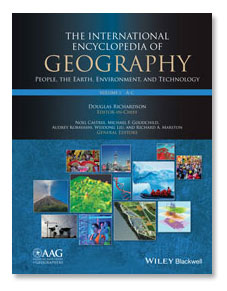
The International Encyclopedia of Geography – Order by June 30!

he International EncyclopediaTime is running out to order the 15 volume print edition of the landmark reference work, The International Encyclopedia of Geography. The IEG is an essential resource for institutional libraries, research centers, professional organizations, and any major organization engaged with geography and interrelated fields within social sciences, humanities, science, and medicine. Order by June 30 to receive over 15% off the 15-volume print set.

Learn more.

Methods, Models, and GIS Section Editor Sought for ‘Annals of the AAG’

The American Association of Geographers seeks applications and nominations for the Methods, Models, and Geographic Information Sciences editor for the Annals of the American Association of Geographers. This new editor will be appointed for a four-year editorial term that will commence on January 1, 2018. The appointment will be made in the Fall of 2017. Nominations and applications should be submitted by Friday, September 29, 2017.

Learn more.

AAG Cartography Editor Sought for ‘Annals of the AAG,’ ‘Professional Geographer,’ and ‘GeoHumanities’

The American Association of Geographers seeks applications and nominations for a Cartography Editor for the AAG journals Annals of the American Association of GeographersThe Professional Geographer, and GeoHumanities. The new editor will be appointed for a four-year editorial term that will commence on January 1, 2018. The appointment will be made in the Fall of 2017.

Learn more.

June 2017 Issue of ‘GeoHumanities’ Now Available

The AAG is pleased to announce that Volume 3, Issue 1 (June 2017) of GeoHumanities is now available. GeoHumanities is the newest journal of the American Association of Geographers. It features articles that span conceptual and methodological debates in geography and the humanities; critical reflections on analog and digital artistic productions; and new scholarly interactions occurring at the intersections of geography and multiple humanities disciplines. Each issue, the Editors choose one article to make freely available. In this issue you can read Rethinking the Final Frontier: Cosmo-Logics and an Ethic of Interstellar Flourishing by Matthew Kearnes and Thom van Dooren for free.

Learn more.


ADDENDA

IN THE NEWS

Popular stories from the AAG SmartBrief


EVENTS CALENDAR

Submit News to the AAG Newsletter. To share your news, submit announcements to newsletter [at] aag [dot] org.

    Share

Upon Reflection

How fast time flies. It is hard to believe that the end of the academic year is upon us, June has come and I am writing my last president’s column. I want to use the opportunity provided by this final column to reflect upon the past year. I also want to look ahead and consider the role of our discipline and the American Association of Geographers as we face the changing and challenging world ahead of us. Finally, I hope with one last act as president to give back a little for all I have received.

I will start by saying what an honor and pleasure it has been to serve as your president. I have met so many wonderful geographers and learned so much. I am in awe of how smart and dedicated our members are. The heartfelt concerns about geography, society at large and the environment that so many of you have communicated to me have helped me focus on what is really important. Personally, the friendship and kindness shown to me at our regional meetings, annual meeting and council meetings leaves me with warm and indelible memories. I am not too proud to admit I have had my share of uncertainties, and a few faltering steps, over the past year. The patience and good humor shown by the membership, council and staff have been much appreciated and kept things on a good course. Thank you all.

Now, here are some candid reflections and ruminations that I want to share.
On Governance, Policy and Communication Between the AAG and the Membership

I was happy to see that in many cases when geographers had concerns about the AAG they felt free to email me, our Executive Director Doug Richardson, or other members of the council and expressed those concerns with clarity and friendliness. That is how it should be. The AAG is not governed by some aloof cabal of “others” or a disassociated elite. The members of council are you — geographers from both large and small educational institutions. Geographers from the private sector and government agencies. Geographers from every part of the country and other nations. Geographers who really care and are willing to spend their time — unpaid and often unheralded — working for our discipline and our association. The members of council with whom I have worked as president are some of the finest and most genuinely caring people I know.

I have seen how the council takes the concerns of our members very seriously and is willing to act upon those concerns when possible. This is not the Titanic — the association can change course when needed. Over the past year we received letters and petitions concerning things such as refund policies in light of U.S. immigration rules or the engagement of the military with geographical education and research. In these cases, the council revised our refund policy and is now developing a committee to examine engagement between the military and geography.

Because public policy issues have increasingly come to the fore for the AAG and require fair consideration and action when appropriate, I asked Past President Sarah Bednarz to strike a small committee and look into how the AAG should handle issues of public policy, particularly when petitioned by our members. Please remember that the AAG has a constitution and articles of constitution that prescribe the policy areas and actions we as an association can embrace. Based upon Sarah’s excellent report, the AAG has put into place a formal mechanism to make sure that such policy-related requests are handled fairly and thoughtfully. The formation of a special committee to examine issues pertaining to the discipline of geography and the military is an example of that process at work.

Alas, I have also encountered a few cases where public statements and invectives were made without actually contacting council members, staff or even reading the information posted on our website and provided in our electronic communications to members. Although I regret such instances, I mean no disrespect here. I realize that there are issues that move people passionately. Some members may not know any of the elected officials or feel comfortable sending a “stranger” an email about a question or concern, and the time to exhaustively search for information online may be in short supply for many of us. In the end, my feeling is it is better to be heard than be silent.

I will make two humble suggestions to you. The first is — please do communicate with the association. Take a look at the AAG website for information, and if you don’t find it, feel free to send an email to your regional representative or other members on council for help or to express concerns. This association is governed by members just like you for the benefit of all members. By communicating with us you can affect change. The second suggestion — join in our governance yourself. Serve on regional and national committees. Run for elected office. Yes, you! Not only can you help steer this great association and influence our discipline, but you will meet some of the most wonderful people in the world. I cannot over-emphasize how rewarding this can be, or how much we need our members to pitch-in.

On Communication with the Wider World

Geographers have so much to share with the wider world. I have been pleased to see how the AAG develops statements and communication initiatives on issues that concern the discipline and membership. I have also been pleased by the times I have seen geographers in the media commenting on exciting new research or current events. However, I think we can do more. I look at the great success that the American Geophysical Union has in getting press coverage for research presented at their annual meeting. I commissioned Vice President Derek Alderman to strike a committee and look into how the association can up its game in terms of public communication. Derek came up with some very exciting proposals and I look forward to him as president working with AAG staff and membership to take the association to the next level. I urge our membership and specialty group leadership to work with Derek in identifying and helping broadcast our most compelling research and insights.

As I have written before, better communication about geography and geographers also requires each of us to do our part. Please do get to know your campus communication officers. Don’t be afraid to share your work with the public. When an issue moves you, take to the keyboard and write an op-ed for the newspaper. We all have a lot to tell the world. 

The Growth and Internationalization of Our Association

It is gratifying to see our membership climb to a record level of almost 12,000. Fantastic. This growth bodes well for the future of the association and our discipline. However, it does come with some challenges. First, about a third of our membership and meeting attendees are from outside the U.S. The AAG has become a vibrant world marketplace for the discipline of geography. Are we serving both our domestic and international membership well? I was concerned about our international members and our professional non-academic members getting good value from the AAG. I asked council members Stuart Aitkin and David DiBiase to strike small committees to examine how we could improve service to our international and professional members respectively.

Stuart and his team tabled a report that amongst other things pointed out that the exclusionary border and immigration policies propounded by the Trump Administration in the U.S., were posing serious challenges for our international membership. In some cases members were officially excluded from attending the annual meeting and others felt personally uncomfortable traveling to the U.S. In other cases, some international members felt compelled to boycott meetings in the U.S. in solidarity with those excluded by border and immigration policies. The AAG continues to oppose such exclusionary and discriminatory policies and to work for solutions. How do we monitor this situation and accommodate members? How can we influence changes in such policies? We need all your help here.

In addition, some international members felt out of the loop in terms of AAG governance. Although any member can run for office, the term “national councilor” does imply a domestic focused position. After discussion, council would like to remedy this by perhaps focusing one of the present councilor positions on international representation. Perhaps slightly changing the name national councilor to national and international councilor would also better reflect the international scope of the AAG? We would like consensus on how to move forward here. Please do help your with your thoughts and suggestions. Council will continue to work on this at the fall meeting.

David found that for many professional members there was a desire to remain engaged with academic geography, but the annual meeting and our publications were not as industry and applications focused to be of practical value in many cases. Council would like to work on this and needs your thoughts and ideas. One suggestion was twin some of our annual meetings with more applied and professional-oriented meetings.

The Growth of Our Annual Meetings and the Increasing Importance of the Regions

Our annual meeting in Boston was a record breaker with more than 9,400 attendees. Although the growth of the meeting is satisfying in many regards, it is not without costs. With a plethora of concurrent sessions and other events it may seem that one misses more sessions of interest than one actually attends. In addition, I noted that many sessions at the Boston meeting had only a small handful of members there to hear the hard work of the presenters. This is a shame. We have not moved to a model of decreasing oral presentations through vetting abstracts. Should we do so? Can we institute more concise time limits — say 10-minute maximums for most presentations? Is it possible to promote poster sessions more, such as the AGU has done successfully? Can we shift the proportion of poster to oral presentations in a voluntary manner?

A meeting that involves more than 9,000 people also limits the cities that can host us. Many places in which we would enjoy congregating simply do not have the hotel rooms, conference facilities or travel infrastructure to host the meeting. Many of the cities that do offer these services are also expensive in terms of hotel rooms. I have seen firsthand how hard our executive director and the AAG staff work to find suitable venues and keep costs low. I have also learned that arrangements for a meeting this size must be made several years in advance. The logistics are incredible. Of course, aside from the limitation on potential host cities and the costs of attending the meetings, the size of our annual gathering also means something is lost in terms of the intimacy and sense of community that is engendered. Alas, I am not sure there is much to be done about these issues short of shrinking the size of the annual meeting.

In light of this all I want to emphasize the importance of our regional meetings in providing venues at which a wide range of talks can be given and heard effectively. A sense of intimacy and community pervades the regional meetings and interesting new towns and cities can be experienced at often reasonable costs. One of the greatest pleasures of being president was the chance to attend regional meetings around the country. I cannot adequately express how much I enjoyed this and how much geography I learned. My faculty and student hosts were so gracious and the enthusiasm of the attendees about geography was energizing. The AAG should do all it can to promote our regions and their meetings. Alas, in some regions the larger research departments seem very uninvolved with the regional meetings. I think this is a shame for faculty and particularly for undergraduate and graduate students. I will confess that I and my department are as guilty of this as many. I am going to work hard to address this — and plan to rent a van to take some of our UCLA students up to the APCG meeting in Chico this fall. Join us there!

Healthy Departments and a Healthy Discipline

Given the growth of the AAG itself, it came as an awakening to me how many departments are finding it difficult to grow or even sustain numbers of majors. With geographical awareness, perspectives and techniques exploding across the natural sciences, social sciences and humanities we as a discipline should be at an exciting growth point. What is going on? In some states the population size of university-aged people is declining and many departments are having trouble maintaining student numbers. However, this is not universal. It is a fact that geography departments do face competition for student interest from expanding environmental studies, earth systems sciences, sustainability, global studies and development studies departments. We should not castigate these programs, as they seek to produce graduates well-trained to tackle the challenges of the 21st century. However, we should also not shirk from proudly promoting our own discipline. Part of this must involve thinking about how we market the discipline. What does a course title such as “Introductory Physical Geography 1” denote to a brand new freshman? Not much I would guess. How about considering something like “Our Dynamic Planet — Processes of Physical Change on the Earth’s Surface”? You get the idea. Aside from naming courses — are our courses exciting and compelling in terms of content and student experience? Do we offer courses that speak to the challenges of the 21st century and the importance of geographical perspectives and methods in tackling those challenges? How often do we as faculty and geography students speak to undergraduate groups and clubs about the discipline? Do we speak and provide resources to high schools and community colleges to get geography on student’s radars? Do we work to get articles about geography in student newspapers? Do we generously provide service courses for other majors? No small number of undergraduate geography majors come to the discipline through elective courses they took while pursuing an earlier major.

Here also the AAG has a role to play. The association has long had initiatives on healthy departments and goes to bat for departments in trouble. I think we can do more — but we need help. Given the importance of YouTube as an information source, the council has been considering developing very short online videos about geography. What else can and should the AAG be doing as a central resource to grow geography as a major? How can we better use social media? How do we market geography to the changing demographics of the U.S.? The health of the discipline in our schools must be an important continuing focus going forward.

Diversity

I have written previously regarding the mismatch between the diversity of the U.S. and of the world at large, and the diversity of our membership and the discipline of geography in the U.S. Every member of council takes this issue extremely seriously and seeks for our diversity to be vastly better. I take this as a major concern. I can tell you that this is one area in which the association comes in for continuing criticism from our members. I know that we as an association can do more. We need help and ideas from you. What communication strategies can we undertake to better understand the needs and educational aspirations of our diverse national and international populations and serve these as an association? How can we make a true diversity of populations feel comfortable and empowered within our association as members? How can we encourage and promote greater diversity amongst AAG leadership?

One area I feel strongly about in this regards is our Developing Regions Program. This program helps support participation in the AAG by people from economically disadvantaged regions, largely in the global south. Not only does this help deserving individual geographers, but it grows both the international engagement and diversity of the AAG. It is a triple bottom line. I know though there is more we must and can do — both domestically and internationally. Please give us your ideas and help here.

I also must state that the diversity challenge is one that, in the end, cannot be won solely at the level of the AAG. Substantially increasing the diversity of geography must be recognized as the personal responsibility of every member. The AAG does not create new geographers. They are created by our universities, our departments and by us as individual faculty and students interacting with students. It is through the creation of new geographers who represent the diversity of the U.S. and the world that the AAG will grow to reflect the diversity of the nation and the planet. So, this challenge extends to our members also. What are you personally doing in your university, in your department and in your day-to-day interactions with students and the public to build a more diverse discipline? Increasing the diversity within geography is a challenge that must be taken on by all, working through personal engagement and not just via theory and polemics.

Importance of Geography and the AAG Going Forward

I would not be honest if I did not admit to concern about the state of world affairs as I look forward to the next year and decade. This is a world in which I am sure geography is of vital importance and in which the AAG has a role to play. In practical and applied terms the world is becoming both smaller and seemingly more fragmented. Through electronic communication, trade and transportation, and social networks of a mobile world population, events that are distant from our homes can have immediate and significant impacts. At the same time the grand ideas of a global society and continental to global partnerships and governance for the greater good of all appear to be losing favor. Whether we talk about Brexit and fragmentation of the European Union, the Make America Great Again agenda and regional political divisions in the U.S., or the vicious regional and civil conflicts in Ukraine, Africa and the Middle East, geographical differences have not been erased, but are arguably ascendant. The withdrawal of the U.S. from the Paris Climate Accord is one more sign that the fragmenting power of short-term self-interest at the sacrifice of longer-term common-good seems to be gaining traction. The discipline of geography provides geospatial, environmental and socioeconomic perspectives and tools relevant to all of these issues.

But beyond academic and policy-relevant perspectives and tools, I believe geography and geographers have something even more to offer. Geography is about understanding and appreciating the general truths, linkages and differences that play out across the surface of the earth. Any solutions we might hope to find for hunger, poverty, terrorism, war, denial of civil rights or environmental degradation must come from deeper understanding of the world. The understanding I am speaking of is not just something expressed in the academic sense of facts, figures and scholarly discourses, but something that includes a deeper respect, empathy and sense of shared destiny. I believe that of all the disciplines, because of our broad roots in the humanities, social sciences and natural sciences, geographers have the potential to develop, communicate and implement such holistic understanding. A heavy charge to our discipline? Perhaps. But if not us as geographers, then who?

A Final Act as President in Support of the AAG Developing Regions Program

As should be clear, I believe in a diverse and international AAG acting for the good of individual geographers and for the aggregate good of the planet and its people. I was very impressed to see that a number of AAG members who could not attend the Boston AAG, out of immigration concerns or in solidarity with those who could not attend, contributed their refundable registrations fees to the AAG Developing Regions Program. The program fosters the scholarly and personal exchanges that directly contribute to the type of understanding I describe above. For those members who contributed their registration refunds to the Developing Regions Program, I want to thank and honor you for your generosity and tangible commitment to your values. Therefore my last act as President will be to join you and write a check in the amount of $500 as contribution to the AAG Developing Regions Program on behalf of my wife Joanne (a University of Toronto, Geography alumna) and myself.

I close my final presidential column by inviting you to join me in providing Derek Alderman our best wishes and support as he takes up the presidency of the AAG.

Join the conversation on Twitter #PresidentAAG

—Glen M. MacDonald


DOI: 10.14433/2017.0007

    Share

Administration Releases FY 2018 Budget

The Trump Administration’s budget proposal, which was released on May 23, includes sharp cuts for Federal science agencies. The document is the first step in the Fiscal Year 2018 appropriations process, and many bipartisan Senators and Representatives have taken issue with multiple aspects of the proposal.

The National Science Foundation (NSF) would receive $6.7 billion – a cut of approximately $800 million (11 percent) from the FY 2017 enacted level of $7.5 billion. The NSF indicated that it would be able to fund 19 percent of grant proposals (as compared to the current 21 percent) under the proposed funding level. The Foundation’s Geography and Spatial Science Program is housed in the Social, Behavioral, and Economic (SBE) Sciences Directorate, which was cut by 10 percent, and the Division of Behavioral and Cognitive Sciences, which was cut by 7.5 percent. The reduction for the SBE Directorate is not as steep as some social and behavioral science advocates had feared.

For other agencies, the National Institutes of Health (NIH) was budgeted at $26.9 billion, a $7.2 billion cut (21 percent) from the current-year funding level. The U.S. Geological Survey (USGS) was cut by $163 million (15 percent) and the National Oceanic and Atmospheric Administration (NOAA) is proposed for a $902 million reduction (16 percent). The Environmental Protection Agency’s (EPA) Science and Technology program was cut by approximately 40 percent in the budget. The U.S. Census Bureau received a 3.7 percent increase, but there are concerns that this modest amount will not enable the Bureau to fully ramp up its 2020 Census preparations.

The budget also proposes the elimination of the National Endowment for the Humanities (NEH), a long-expected move that prompted the resignation of NEH Chairman William D. Adams on the day of the budget’s release. Adams was an Obama Administration appointee whose term was slated to run until next year. Other programs eliminated in the proposal include the National Endowment for the Arts; the Agency for Healthcare Research and Quality; the Corporation for National and Community Service; the U.S. Institute of Peace; the Corporation for Public Broadcasting; and the Woodrow Wilson International Center for Scholars. It is unclear whether Congress will support these moves.

In a significant policy initiative, the Administration’s budget proposes to reduce reimbursement of indirect costs in research grants. Indirect costs, which support salaries, facilities, and other expenses tied into carrying out funded projects, are a crucial component of Federal research grants. Most institutions would face significant difficultly in adapting to such a policy change and it would likely cause many universities and others to rethink their approach to seeking grant funding from Federal agencies.

The final FY 2018 appropriations will not be settled for months. House and Senate leaders are focused on tackling healthcare reform and tax-law changes and will only turn to a full debate on appropriations once those issues have been dealt with. While some science agencies will probably face cuts from current funding levels, it is unlikely that Congress will support reductions on the magnitude of those included in this budget proposal.

As always, we encourage AAG members to reach out to their elected officials about issues that are of importance to them. Stay tuned for updates on these and other important policies by visiting the AAG Policy Action page.

    Share

Meredith Stone Joins AAG Staff as Public Policy and Outreach Specialist

Meredith Stone has joined the AAG staff as Public Policy and Outreach Specialist at the Washington, D.C. headquarters. She recently completed her Master of Arts in Geography at Ohio University. There, she served as a teaching assistant for Introduction to Geographic Information Systems and Mapping Sciences and also as a research assistant for the Baltimore Ecosystem Study, a National Science Foundation granted project investigating urban green space in the city. Her master’s thesis focuses on street art and murals and their relationships with racial justice in Baltimore neighborhoods.
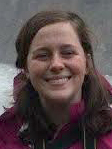
She holds Bachelor of Arts in Geography from the University of Mary Washington where she also completed a minor in Environmental Sustainability and a certificate in Geographic Information Science.

In her spare time she enjoys cooking, watching movies, and exploring the outdoors with friends and family.

    Share

New Books: May 2017

Every month the AAG compiles a list of newly-published books in geography and related areas. Some are selected for review in the AAG Review of Books.

Publishers are welcome to send new volumes to the Editor-in-Chief (Kent Mathewson, Editor-in-Chief, AAG Review of BooksDepartment of Geography and Anthropology, Louisiana State University, Baton Rouge, LA 70803).

Anyone interested in reviewing these or other titles should also contact the Editor-in-Chief.

May 2017

After Piketty: The Agenda for Economics and Inequality by Heather Bushy, J. Bradford DeLong and Marshall Steinbaum (eds.) (Harvard University Press 2017)

Beyond Control: The Mississippi River’s New Channel to the Gulf of Mexico by James F. Barnett Jr. (University Press of Mississippi 2017)

Critical Norths: Space, Nature, Theory by Sarah J. Ray and Kevin Maier (eds.) (University of Alaska Press 2017)

Documents That Changed the Way We Live by Joseph Janes (Rowman and Littlefield 2017)

From California’s Gold Fields to the Mendocino Coast: A Settlement History Across Time and Place by Samuel M. Otterstrom (University of Nevada Press 2017)

Geographical Models with Mathematica by Andre Dauphine (ISTE Press 2017)

Icefall: Adventures at the Wild Edges of Our Dangerous, Changing Planet by John All and John Balzar (Public Affairs 2017)

Newspaper City: Toronto’s Street Surfaces and the Liberal Press, 1860-1935 by Phillip Gordon Mackintosh (University of Toronto Press 2017)

Science and Sensibility: Negotiating an Ecology of Place by Michael Vincent McGinnis (University of California Press 2016)

Understanding Spatial Media by Rob Kitchin, Tracey P. Lauriault and Matthew W. Wilson (SAGE Publishing 2017)

Weathering Katrina: Culture and Recovery among Vietnamese Americans by Mark J. VanLandingham (Russell Sage Foundation 2017)

    Share

Newsletter – May 2017

PRESIDENT’S COLUMN

The Creation of Transformative Geographies 

By Glen M. MacDonald
Glen M. MacDonald
MacDonald

We all like to think of ourselves as being transformative in one way or the other. Indeed, we all are. In our personal interactions and the examples we set, we can transform the lives of those around us. Gifted teachers and graduate advisors play a critical role in transforming the lives of their students, and it is from such teachers that our discipline attracts new adherents and grows. The importance and power of the transformative process of education, student by student, classroom by classroom, department by department, cannot be overvalued. Because of its innately transformative role, teaching should always be highly regarded by our Association and by each and every one of us.

Continue Reading. 

Recent columns from the President


FEATURES

AAG 2017 Boston Recap

Whether you want to reminisce or just see what you missed, check out our retrospective of the the special events and sessions from the AAG 2017 annual meeting! The Boston conference hosted more than 9,000 geographers, GIS specialists, environmental scientists, and other registrants from around the world sharing the latest in research, policy, and applications in geography, sustainability, and GIScience.

See the Highlights.


AAG Kicks Off Earth Day with the March for Science

Geographers from around the country traveled to Washington, D.C. on Saturday, April 22, 2017, to demonstrate and show their support for the March for Science. Despite the rain, Geographers and scientists from many other disciplines and their supporters rallied to march for science!

Continue Reading.


ANNUAL MEETING

2017 Annual Specialty and Affinity Group Awards

The AAG has 71 Specialty and Affinity Groups which bring together AAG members around interests in particular topics, regions or professional communities. Many of these groups bestow awards for outstanding achievement and service, prizes for papers and posters, and give grants for research and travel to students, faculty and professionals in their respective fields. Some of these awards were presented at the AAG’s annual Awards Luncheon held in Boston on April 9, 2017. The full list of all 2017 Specialty and Affinity Group Awards will be published on the AAG website in due course.

Learn more.

Great Plains/Rocky Mountains Division Team Takes 2017 World Geography Bowl Title

2017 Winning World Geography Bowl Team

The Great Plains/Rocky Mountains Division team won first place in the 2017 World Geography Bowl (WGB), an annual quiz competition for teams of college-level geography students representing the AAG’s nine regional divisions. First runner-up was Southeast Division team and second runner-up was the Southwest Division team. This was the 28th year for AAG hosting during its Annual Meeting in Boston.

Learn more.

AAG Launches Emerging Scholars Program at the Annual Meeting

Emerging-workforce-scholarsAAG2017-300x200

This year, the AAG launched the “Emerging Workforce Scholars” program, a unique three-day careers pathway exploration at the Annual Meeting in Boston. Fourteen highly motivated, diverse students from Boston’s community colleges, high schools and youth programs were introduced to careers in the environment, sustainable infrastructure and the tools of applied geography and geosciences. The AAG partnered with the Boston Private Industry Council (PIC) to recruit, vet and train this cohort of highly-qualified students. The Boston Mayor’s Office of Workforce Development and the Massachusetts Secretary of Labor and Workforce Development (Hon. Ronald L. Walker, II) were also an integral part of making this project a resounding success.

Learn more.


ASSOCIATION NEWS

Geography and the New Administration

The AAG will host a Twitter Chat on May 17 from 3 p.m. to 4 p.m. Eastern Time entitled “Geography and the New Administration.” To join the chat, follow @theAAG on Twitter using the #AAGChat hashtag. In order to set the scene for what we hope will be an engaging and interactive discussion, we wanted to share some perspectives on the active role our organization has played in responding to several noteworthy recent policies.

Learn more.

AAG Accepting Registrations for Early Career and Department Leadership Workshops

The University of Tennessee will host two AAG-sponsored workshops in June designed for all geographers interested in 1) improving their programs and 2) graduate students and faculty who are beginning their careers in higher education.

Learn more.

Call for Nominations – AAG Honors

Please consider nominating outstanding colleagues for the AAG Honors, the highest awards offered by the AAG! AAG Honors are offered annually to recognize outstanding accomplishments by members in research and scholarship, teaching, education, service to the discipline, public service outside academe, and for lifetime achievement. Individual AAG members, specialty groups, affinity groups, departments, and other interested parties are encouraged to nominate outstanding colleagues by June 30. Currently, honors are awarded in several categories, including: Distinguished Teaching Honors; Gilbert F. White Distinguished Public Service Honors; Ronald F. Abler Distinguished Service Honors; Gilbert Grosvenor Honors for Geographic Education; Distinguished Scholarship Honors; and Lifetime Achievement Honors. AAG Honors are selected annually by the AAG Honors Committee from a collection of nomination submissions.

Learn more.

The AAG Fellows Program

The AAG is honored to announce it has launched AAG Fellows, a new program to recognize geographers who have made significant contributions to advancing geography. In addition to honoring geographers, AAG Fellows will serve the AAG as an august body to address key AAG initiatives including creating and contributing to AAG initiatives; advising on AAG strategic directions and grand challenges; and mentoring early and mid-career faculty. The deadline for nominations is June 30.

Learn more.

Recommend Candidates for AAG Honors and Nominating Committees

The AAG Council seeks nominations for candidates to serve on the AAG Honors Committee and the AAG Nominating Committee. The Council will prepare the final slate of candidates for both committees from the nominations received, and committee members will be elected by a vote of the AAG membership. The deadline for nominations is June 30.

Learn more.

2017 J. Warren Nystrom Award

Four recent geography PhDs, finalists in the 2017 J. Warren Nystrom Award competition, presented high-quality research papers on April 6 during a special session at the AAG Annual Meeting in Boston. The Nystrom Award is an annual prize for a paper based upon a recent doctoral dissertation in geography.

Learn more.

AAG Seeks Interns for Fall Semester

The AAG is currently seeking interns for the spring semester, although the organization offers opportunities on a year-round basis for the spring, summer and fall semesters. Interns participate in most AAG programs and projects such as education, outreach, research, website, publications, or the Annual Meeting. The AAG also arranges for interns to accompany different AAG staff on visits to related organizations or events of interest during the course of their internship.

Learn more.


MEMBER NEWS

Geographers Farhana Sultana and Tim Beach Lecture at Vatican Workshops

Tim Beach, Centennial Professor of Geography and Environment at UT Austin, presented an invited lecture on “Societal Collapses from the Maya to Mesopotamia and Beyond” at the Vatican in a workshop on Biological Extinction sponsored by the Pontifical Academy of Sciences and Pontifical Academy of Social Sciences.

Farhana Sultana, associate professor of geography at the Maxwell School, presented at “The Human Right to Water” workshop, also hosted by the Pontifical Academy of Sciences, in Vatican City on Feb. 23-24, 2017.

Learn more.


RESOURCES & OPPORTUNITIES

Job Announcement for a Geography and Spatial Sciences Program Director at NSF

The Geography and Spatial Sciences (GSS) Program at the National Science Foundation (NSF) seeks applicants for a Program Director position that will become available in Summer 2017. While applications may be submitted as late as May 11, 2017, applicants are encouraged to submit their applications sooner if at all possible.

Learn more.

Request for Proposals: Transformative Research in Geography Education

The National Center for Research in Geography Education (NCRGE) invites proposals to develop new collaborative and interdisciplinary research networks addressing major questions and challenges in geography education. Through this program, NCRGE aspires to strengthen geography education research processes and promote the growth of sustainable, and potentially transformative, lines of research.

Learn more.

Call for Nominations: GeoCUR Undergraduate Research Mentor Award

cur-logo-300x175The Geosciences Division of the Council on Undergraduate Research (GeoCUR) is now accepting nominations for its annual award that highlights the importance of mentoring undergraduate research activities. The award annually recognizes an individual who serves as a role model for productive and transformative student-faculty mentoring relationships and for maintaining a sustained and innovative approach to the enterprise of undergraduate research.

Learn more.


PUBLIC POLICY

Federal Research Agencies Avoid Cuts in Congressional Budget Deal

Late last week, President Trump signed into law a budget deal that will fund the federal government through September 30. The bipartisan deal has generally been viewed favorably by science advocates, as it maintains or increases funding levels for most agencies that provide research support.

Under the deal, the National Science Foundation (NSF) will remain level funded at $7.472 billion. The National Institutes of Health, meanwhile, receives a $2 billion increase to $34.1 billion, $352 million of which is targeted for the 21st Century Cures act that was enacted late during the Obama Administration.

Learn more.


IN MEMORIAM

John Miller Morris

John Miller MorrisJohn Miller Morris, Jr., 64, passed away on February 16, 2017, in a San Antonio hospital after surgery, attended by friends who traveled thousands of miles to come to his bedside. He is survived by a daughter Erin Claire Noakes of Washington D.C. He will be missed by his longtime companion, many friends, colleagues, and neighbors.

Learn more.

Ray Henkel

Ray Henkel was born Jan. 28, 1931 on a farm along the Cimarron River about 30 miles west of Tulsa. He died March 11, 2017, at age 86. Ray attended a one-room elementary school, and in 1948 graduated from Kellyville H. S. in a class of 15, earning an A in every class. Ray had a photographic memory, so school work was always easy for him.

Learn more.

John Charles Armstrong Davey

John DaveyJohn Davey, a prodigious figure in academic, trade and reference publishing for almost 50 years, died at home with family at his side on April 21, 2017. He had just celebrated his 72 birthday days earlier. After making his mark in publishing in the 1970s, John joined Blackwell as their first full-time academic editor. During the 1980s he took the company from obscurity to being a major force in the industry. He rapidly became an editorial director, appointed several specialist editors, initiated Blackwell’s reference publishing, acquired and started several new journals, and had responsibility for rights and contracts.

Learn more.

Marvin W. Mikesell

Marvin W. MikesellMarvin W. Mikesell, Professor of Geography in the Committee on Geographical Studies, died unexpectedly Wednesday morning, April 26, 2017, at the University of Chicago Hospital in Hyde Park, aged 88, in the midst of teaching his seminar on problems in the human geography of the Middle East this Spring Quarter.

Learn more.


PUBLICATIONS

The International Encyclopedia of Geography is Here

he International EncyclopediaThe AAG and an international team of distinguished editors and authors announce a new major reference work for Geography: The International Encyclopedia of Geography: People, the Earth, Environment, and Technology. Available as an online resource and as a 15-volume full-color print set published by Wiley, this is an invaluable resource for libraries, geographers, GIScientists, students and academic departments around the globe. Updated annually, this Encyclopedia is the authoritative reference work in the field of geography for decades to come.

Learn more.

Publicize Your Department in the AAG Guide to Geography Programs

The American Association of Geographers is accepting entries from geography programs to be included in the 2017 edition of the Guide to Geography Programs in the Americas. The deadline for submitting a listing has been extended to Friday, June 2, 2017.

The 2017 edition of the Guide will be available exclusively online.

The Guide serves as a complete and invaluable reference for faculty, prospective students, government agencies, and private firms in the United States, Canada, and throughout the world. To list your institution, please contact Mark Revell at guide [at] aag [dot] org.

Learn more.

New Books in Geography — April 2017

New Books in Geography illustration of stack of booksEvery month the AAG compiles a list of newly-published books in geography and related fields. Some are selected for review in the AAG Review of Books. Anyone interested in reviewing these or other titles should contact the Editor-in-Chief, Kent Mathewson.

Learn more.

May 2017 Issue of the ‘Annals of the AAG’ Now Available

Annals-cover-2016The AAG is pleased to announce that Volume 107, Issue 3 (May 2017) of the Annals of the American Association of Geographers is now available.

Learn more.


ADDENDA


IN THE NEWS

Popular stories from the AAG SmartBrief


EVENTS CALENDAR

Submit News to the AAG Newsletter. To share your news, submit announcements to newsletter [at] aag [dot] org.

    Share

Great Plains/Rocky Mountains Division Team Takes 2017 World Geography Bowl Title

AAG President Glen MacDonald (far right) presented prizes to winners, including the winning Great Plains/Rocky Mountains Division team above. (Photograph for AAG by Becky Pendergast)

The Great Plains/Rocky Mountains Division team won first place in the 2017 World Geography Bowl (WGB), an annual quiz competition for teams of college-level geography students representing the AAG’s regional divisions. First runner-up was Southeast Division team and second runner-up was the Southwest Division team. This was the 24th year for AAG hosting during its Annual Meeting in Boston.

Read more about this year’s event.

Contestants are selected by regional divisions via a competitive process, which in many divisions includes participation in a regional geography bowl held at the regional division’s annual meeting. Each participant in the World Geography Bowl receives a travel stipend, co-sponsored by the AAG and that student’s regional division, greatly offsetting expenses for attendance at the national meeting.

Learn more about the WGB.

The competition is fully staffed by volunteers, who write and edit questions and help run the proceedings as judges, scorekeepers, and moderators. To become involved, read more about the process or contact WGB executive director Jamison Conley, (West Virginia U.) at Jamison [dot] Conley [at] mail [dot] wvu [dot] edu.

Anyone interested in becoming a sponsor or donating prizes of books, gift certificates, software, etc., may contact AAG’s WGB liaison Kelsey Taylor at ktaylor [at] aag [dot] org.

Note: This post has been updated to state that this was the 24th year the bowl was held. A previous version erroneously stated that this was the 28th year.

    Share

AAG Kicks Off Earth Day with the March for Science

Geographers from around the globe participate in the March for Science in Washington, DC

Geographers from around the country traveled to Washington, D.C. on Saturday, April 22, 2017, to demonstrate and show their support for the March for Science. Despite the rain, Geographers and scientists from many other disciplines and their supporters rallied to march for science!

As a formal partner of the march, AAG was proud to stand with many other organizations that shared a belief that science should be well funded and that political leaders should enact evidence-based policies for the common good.

To kick off the day, the AAG Meridian Place office served as a gathering place and information center for geographers participating in the March. Coffee and refreshments were available for marchers throughout the day. Guests included families like the Brownell family who traveled all the way from Columbus, Ohio, to take part in the march!

Lisa, Ellie, Adam and Jonas Brownell from Columbus, Ohio.
Shortly before the start of the march, the Accuweather reporting team sat down with AAG President Glen MacDonald and Executive Director Doug Richardson to ask them why science is so important and why they are participating in the march. Watch a short clip of AAG President Glen MacDonald’s response to “Why Science is so Important,” here.  Also, watch a short clip of AAG Executive Director Doug Richardson’s thoughts on the “Impact of Federal Funding in the Scientific Community,” here

Accuweather reporting team interviews AAG Executive Director Doug Richardson.


Accuweather reporting team interviews AAG President Glen MacDonald

Mid-day, you could see marchers holding banners and signs that read, “March for Science Including Geography – The Glue that Holds the Rest Together,” “In Science We Trust,” “Policy After Peer Review,” “The Climate is Changing, Why Can’t We,”  “Science Not Silence,” and many more. AAG members and staff carried three signed Geographers March for Science banners during the march. The three banners had been on display during our Annual Meeting in Boston, April 5-9, and AAG attendees had a chance to sign the banners. Kudos to our AAG President Glen MacDonald who somehow managed to slip past the crowd and get in front of the march with our signed Geography March for Science banner! 

AAG President Glen MacDonald carries the Geographers March for Science banner.

In addition to the March for Science in Washington, D.C., satellite marches were happening around the country and throughout the world. Many AAG member geographers participated in marches including AAG Past President Sarah Bednarz, in Albuquerque, NM; Eric Huntley, Lexington, KY; Paul McDaniel in Atlanta, GA; faculty and students from Salem State Geography, Salem, MA; Dawn Wright, in Vienna, Austria; and many more.

At the conclusion of the march, AAG invited members, partners and supporters to a happy hour reception at the AAG Meridian Place office to rest, catch up and to celebrate the march.

Marchers enjoy a happy hour reception at the AAG Meridian Place in Washington, DC.

AAG would like to thank all the members, partners and supporters who participated in the March for Science. The day was a great success and we look forward to collaborating and partnering in future events that will have an important impact to the discipline of geography and the overall future of science.

For a visual recap of the day’s event, check out our Twitter Moment here.  In addition, we’ve captured the highlights of the day on Facebook as well, and you can watch it here.

Visit the AAG Policy Action page to learn more about our work on the March for Science and to see the ost recent policy actions taken by the AAG.

    Share