Every month the AAG compiles a list of newly-published books in geography and related areas. Some are selected for review in the AAG Review of Books.
Publishers are welcome to send new volumes to the Editor-in-Chief (Kent Mathewson, Editor-in-Chief, AAG Review of Books, Department of Geography and Anthropology, Louisiana State University, Baton Rouge, LA 70803).
Anyone interested in reviewing these or other titles should also contact the Editor-in-Chief.
2018 AAG Annual Meeting Presidential Plenary Announced
The AAG announces the 2018 annual presidential plenary session from its current president, Derek Alderman, as well as a panel of esteemed scholars. The presidential plenary is currently slated to take place during the 2018 AAG annual meeting on Tuesday, April 10, 2018 in the Grand Ballroom at the Sheraton Hotel from 6:30 -8:30 p.m.
Alderman will present When the Big Easy Isn’t So Easy: Learning from New Orleans’ Geographies of Struggle. Beyond merely providing hotels, restaurants, and bars, the hosting cities of AAG meetings offer important moments to delve into the scientific value of these locations and to learn about the historical and contemporary forces and tensions that shape their communities and spaces. Doing so not only advances our intellectual understanding of place but also has the potential to create a more responsible and empathetic visitor and academic conference citizen—someone who can appreciate, analyze, and be affected by the people and places that exist beyond tourism brochures found in hotel lobbies.
When the Big Easy Isn’t So Easy creates a space to explore the role of struggle in the making, unmaking, and remaking of New Orleans. The city’s development has long been a power-laden process in which multiple identities, histories, and social interests converge, mix, but also clash. A wide range of racial, ethnic, class, and environmental struggles have shaped New Orleans in complex ways, making it a site of vulnerability, inequality, and displacement and at the same time a place of resourcefulness, creative surviving and living, and social justice activism.
Panelists, all of whom are civically engaged scholars and gifted geographic storytellers, will highlight not only the (Post) Katrina experience but also the deeper historical and geographic roots of struggle in New Orleans. They will take the audience to evocative spaces and moments, using the opening session to open broader discussions of issues such as black lives and geographies, disaster response and recovery, food justice, water-society relations, the politics of public memory, and urban political economy. Panelists will reflect on the larger academic-political lessons from New Orleans, offer ideas for (re)imagining the future of this city and others, and demonstrate how geographers can learn from and with the host cities for our AAG meetings.
Craig Colten, LSU. One of the perennial experts on NOLA and Louisiana history of human-environment/water-society relations.
Richard Campanella, Tulane University. Author of AAG’s ongoing features on NOLA and widely published local expert.
Michael Crutcher, Jr, Independent Scholar. Long-time expert on NOLA and author of book on Treme neighborhood.
Catarina Passidomo, University of Mississippi. Emerging scholar in southern studies, food geography/justice, and wrote dissertation on post-Katrina NOLA.
Rebecca Sheehan, Oklahoma State University. Has worked extensively as of late on the controversial removal of Confederate monuments from NOLA.
A Glance at New Orleans’ Contemporary Hispanic and Latino Communities
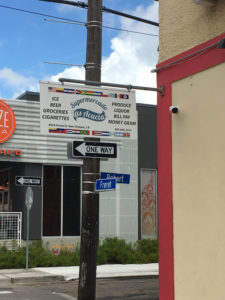
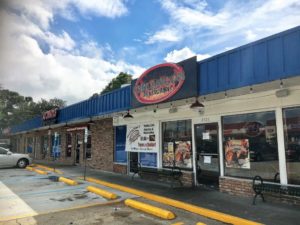
Las Acacias, a Latino market located in the revitalized Freret Street District in Uptown. Photo credit: James Chaney
Situated near the mouth of North America’s largest river, New Orleans has long served as a major port that advantageously connects the United States’ heartland to the rest of the world. Proximity and access to the Gulf of Mexico strategically place the Crescent City between the large consumption economy of the United States and the extraction economies of Latin America, which have historically been key purveyors of raw materials and commodities to the markets of their northern neighbor. Also, New Orleans served as a jumping off point for numerous military expeditions in the nineteenth and twentieth centuries that altered the political landscape of Latin American countries. Yet, even before becoming an “American” city, New Orleans was governed by the Spanish via Cuba (1762―1803). These economic, political, and historical linkages to Latin America and beyond have facilitated the transnational flows of people, products, and cultures over the course of four centuries and have cultivated the unique multinational ethnic kinship the port city holds today with Latin America and Spain [1]. Evidence abounds of these Hispanic and Latino ties in the cultural landscape, especially in one of the Big Easy’s most notable cultural productions: music [2]. Similarly, visitors with a keen eye will be able to discern the Latin American imprint woven into the urban fabric stretching from the French Quarter to the western suburb of Kenner and the riverbanks of St. Bernard Parish [3].
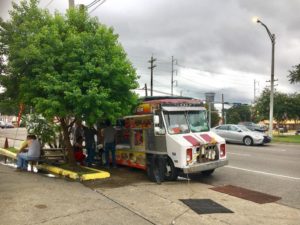
A taco truck on Claiborne Avenue near The Home Depot still serves Latino laborers more than a decade after Hurricane Katrina. Photo credit: James Chaney
Contemporary Latino migration and settlement in the southern United States have received considerable scholarly attention―particularly from geographers―over the past three decades. The “Nuevo South” moniker was coined to describe this supposedly new migratory phenomenon taking place. However, before Hurricane Katrina in 2005, New Orleans was often left out of discussions on southern destinations for Latinos, even though it was home to one of the oldest and most diverse Latino populations in the country. Perhaps the lack of attention was because the metropolitan area’s Latino population was relatively stable and mostly integrated. Of the 58,545 Latinos enumerated in Census 2000, four out of five were U.S citizens, more than half were born in the United States, and Latino household incomes were only slightly below the region’s average [4]. Therefore, New Orleans’ Latinos didn’t fit the narrative of a “New Latino South” so often applied to describe emerging Latino communities made up of and sustained by recent immigrants looking for new opportunities. But, in the wake of Katrina, New Orleans gained national attention seemingly overnight as Latino immigrants from Mexico, Central America, and as far away as Brazil and Peru flocked to southeast Louisiana to participate in the reconstruction efforts. Many arriving laborers were undocumented, taking advantage of the temporary suspension of federal and state enforcement of employment eligibility verification. While a study conducted by scholars from Tulane and Berkeley estimated that 14,000 Latinos laborers arrived within the first few months after the storm, local community leaders, social workers, and others engaged in the reconstruction efforts suggested much higher figures. In any case, this demographic phenomenon caught the attention of local officials, denizens, and national media. A Newsweek article posed the question, “Will Latino day laborers locating in New Orleans change its complexion?” [5]. Then-mayor Ray Nagin infamously asked himself in front of a town hall audience, “How do I ensure New Orleans is not overrun with Mexican workers?”. Indeed, Latinos became a prominent fixture in the metropolitan area in the years following Katrina. As laborers gutted and rebuilt flooded homes, taco trucks appeared throughout the city, and new tiendas, taquerías, pupuserías and Latino-themed night clubs opened across Orleans and Jefferson Parishes. Likewise, numerous Latino-focused nonprofits and religious organizations launched legal and language services designed to help arriving Latino immigrants settle and integrate into southeast Louisiana.
New Orleans certainly emerged more Latino than before the storm. Census 2010 counted 91,922 Latinos in the seven-parish metropolitan statistical area―an increase of 57 percent since 2000. But, as reconstruction effort came to an end, the surge of Latino workers that arrived after Hurricane Katrina appears to have receded. According to the Mexican consulate―which reopened in New Orleans in 2008 amid a new demand for administration and diplomatic functions for Mexican nationals in Louisiana and Mississippi―consulate employees were handling 80 to 100 appointments a day in the first years after the storm. Lines regularly formed outside the consulate’s location in the central business district, as Mexican immigrants waited to renew passports or matriculas, or to access other services. A decade later, however, appointments average between ten and fifteen daily which has led the consulate to scale back its number of employees. As demand for construction workers declined, some Latino laborers moved elsewhere within Louisiana such as Baton Rouge, Gonzales, and Alexandria while others relocated to states like Texas, Tennessee, Mississippi, Georgia and Florida and still others returned to their countries of origin.
Taquería Chilangos Restaurant shares a small shopping center with Las Carnitas Restaurant which specializes in Central American and Peruvian food. Photo credit: James Chaney
Although the initial intensity of post-Katrina Latino migration may have subsided, it certainly reinvigorated existing Latin American communities. This is most evident in the metropolitan area’s four core parishes of Orleans, Jefferson, St. Bernard, and Plaquemine which are home to 76,129 Latinos as identified by Census 2010. The settlement and integration of post-Katrina Latinos have put new emphasis on Latin American culture, which has led to new restaurants, stores, festivals, and radio programs that cater to an established ethnic community. Yet, many of the new Latino establishments have found success serving a larger non-Latino clientele. For example, David Montes de Oca, a Mexico City native, came to New Orleans via Houston with a taco trailer in tow. His first patrons were day laborers living and working in suburban Jefferson Parish. Yet in 2007, Jefferson Parish officials began passing measures to restrict street venders. Montes de Oca responded by opening a brick-and-mortar restaurant called Taquería Chilangos in a shopping center home to other Latino-owned businesses in the 2700 block of Roosevelt Boulevard in Kenner. Taquería Chilangos built a strong customer base by serving typical Mexican fare and earning a reputation for the best authentic tacos in New Orleans. Another example is Norma’s Sweets Bakery at 2925 Bienville Street in New Orleans’ Mid-City neighborhood which opened following Katrina to serve the growing number of Latino residents in the area. The bakery’s menu includes a variety of Latin American pastries and lunch options, but Norma’s Sweets becomes a favorite destination for non-Latino customers during Carnival season for its Cuban-style king cake filled with cream cheese and guava paste.
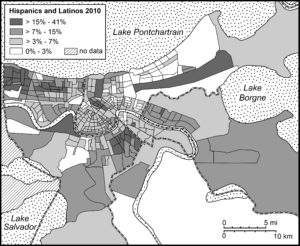
The Hispanic and Latino Population of New Orleans as a proportion of the total population of each census tract 2010. Map credit: Case Watkins
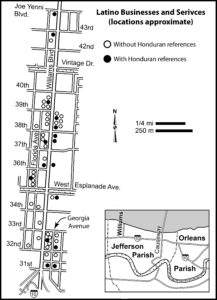
Perhaps one of the more interesting facets of New Orleans’ post-Katrina Latino geographies is the resurgence of Honduran population. New Orleans and Honduras share a long history starting with the once-ripe banana trade. The port city also served as a gateway for Honduran immigration. By the mid-twentieth century, Honduran immigrants residing in the Lower Garden District’s Irish channel neighborhood reached a critical mass, and, within the Latino community, the area became known as the Barrio Lempira (named after Honduras’ currency). By the 1960s and 1970s, upwardly mobile Hondurans were moving to the Mid-City neighborhood and by the 1980s and 1990s many relocated to suburban communities of North Kenner and Metairie in Jefferson Parish. Although the mid-century decennial censuses did not disaggregate persons of Honduran origin, Hondurans were considered the prominent Latin American nationality in the metropolitan area―so much so that erroneous claims of mythic proportions stating that 100,000 Hondurans lived in New Orleans or that New Orleans was home to largest the Honduran community in the United States, became commonplace. Of course, later censuses that enumerated Hondurans proved these assertions false. Census 2000 counted only 8,112 Hondurans in the metropolitan area, more than two-thirds of which were found in Jefferson Parish. In fact, the metropolitan area’s Mexican population had grown larger, numbering 10,202. But following Katrina the number of Hondurans soared. By 2010, Hondurans could accurately claim to be the largest Latin American nationality with a census count of more than 25,000—around 4,000 more than the enumerated 20,729 persons claiming Mexican origin at that time. Although visible residential and small business clusters are found in Jefferson Parish, which is now home to three-quarters of the area’s Honduran population, many newcomers settled in other sectors of the metropolitan area, even venturing into eastern New Orleans neighborhoods like Village de L’Est home to the city’s Vietnamese community and extending as far as St. Bernard Parish. (Figure 5)
Latino Businesses and Services in the William Boulevard, North Kenner. Map credit: Andrew Sluyter
Today New Orleans’ Honduran identity and sense of place manifest themselves in various ways. St. Teresa de Avila Catholic Church on Erato Street, which served the Hondurans and other Latin Americans Catholics who lived in the Barrio Lempira, features a statue of Our Lady of Suyapa, the patron saint of Honduras. The church hosts an annual festival in her honor on February 3rd celebrating the virgin as does the Immaculate Conception Church in Marrero on the West Bank where children perform national dances in traditional dress. More frequently, Hondurans gather each weekend in public parks, most notably City Park in Mid-City, to play soccer. For those looking for authentic Honduran cuisine, numerous restaurants can be found throughout the metropolitan area; however, Casa Honduras at 5704 Crowder Boulevard in New Orleans East is noteworthy. Not only does Casa Honduras offer typical Honduran dishes, it serves traditional Garifuna food and drink such as sopa de caracol con coco (coconut curry conch soup) and gifiti (a drink made with rum, herbs, and spices). Casa Honduras has become a de facto cultural center for New Orleans’ Garifuna community and periodically hosts Garifuna musical performers and events [6]. For visitors interested in Afro-indigenous culture from Central America, a meal at Casa Honduras is worth the trip.
Despite Hondurans being the largest Latino group in the metropolitan area, they account for only a little more than a quarter of the total contemporary Hispanic and Latino population. New Orleans has long been home to an assorted Latin American population. Through commerce, social networks, and geopolitics, or due to natural disasters, different groups have arrived to make the city their home, beginning with Los Isleños who first settled in the area in 1778. Indeed, most groups are less conspicuous when compared to the Hondurans and Mexicans, yet they have all contributed the creation of a distinctive pan-Latino identity in the city. While some national-origin groups populations have waxed and waned through the years, others have continued to grow. Between 1980 and 2010, the number of Nicaraguans, Guatemalans, and Salvadorans doubled, and the number of Cubans has slightly increased to 6,440 since 2000. Brazilian immigration to New Orleans began with the coffee trade in nineteenth century. The number of Brazilians in the city, however, was small until post-Katrina reconstruction efforts attracted thousands of Brazilians from other U.S. cities like Boston and Atlanta as well as Brazil. The surge was brief, and many Brazilians left within the first few years following the storm. Nevertheless, those who stayed have established a Brazilian community anchored in Kenner and Chalmette in St. Bernard Parish. A notable establishment for those seeking authentic Brazilian fare such as Feijoada is the Brazilian Market and Café at 2424 Williams Boulevard in Kenner.
While each national-origin group seeks to maintain its own traditions and character, a pan-ethnic identity has emerged to unify those of Hispanic and Latino heritage. Media outlets such as Jambalaya News, Radio Tropical Caliente, and LatiNola.com provide news and entertainment programming in Spanish and work to connect local Latinos with the larger New Orleans community. The Hispanic Heritage Center sponsors Latin American-themed cultural activities and artists in the region and provides scholarships to promising Hispanic high school students. Other annual Latino festivals like Que Pasa Fest, Kenner’s Hispanic Summer Fest, and Carnival Latino attract large numbers of both Latino and non-Latino visitors. Finally, nonprofit and religious organizations like Puentes, Congreso de Jornaleros, and the Archdiocese of New Orleans Hispanic Apostolate advocate on behalf of Latino immigrants (particularly undocumented) and, in turn, help to foster a stronger sense of a pan-Latino community. Thus, as the composite and size of New Orleans’ Hispanic and Latino community will undoubtedly continue to fluctuate, it will remain a significant and dynamic component of New Orleans’ society and unique culture.
[1]. “Hispanic” designates an individual or group of Spanish-language heritage. “Latino” identifies an individuals or groups from Latin America of Spanish- or Portuguese-language origin. For a more detailed analysis of New Orleans’ Hispanic and Latino populations and heritage see Hispanic and Latino New Orleans: Immigration and Identity since the Eighteenth Century. (2015) Andrew Sluyter, Case Watkins, James P. Chaney, and Annie Gibson. Baton Rouge: Louisiana State University Press
[5]. Arian Campo-Flores (2005) A New Spice in the Gumbo: Will Latino Day Laborers Locating in New Orleans Change its Complexion? Newsweek. 147(23): 46.
[6]. The Garifuna (or more correctly the Garínagu) are mixed-race descendants of African, Island Carib, European, and Arawak peoples who are found mainly in Honduras, Nicaragua, Belize, Guatemala, the island of St. Vincent and, since the twentieth century, the United States. For more information about New Orleans’ Garifuna community see James Chaney (2012) Malleable Identities: Placing the Garínagu in New Orleans. Journal of Latin American Geography 11(2): 121-144. DOI:10.1353/lag.2012.0049
I am pleased to announce that the American Association of Geographers (AAG) is launching the Geography Speakers Bureau. The Bureau is part of the Geography is REAL initiative and builds upon the AAG’s long-time commitment to public outreach, informed and timely communication, and lending geographic research and education to addressing pressing issues and debates. The purpose of this column is to outline the rationale ad organization of the Speakers Bureau and encourage geographers to participate as well as address the resonance and efficacy of their voices as education and advocacy tools. While the Bureau creates a setting for increased speaking, it is also an opportunity for geographers to engage in greater listening and dialogue—both within the discipline and with a broad array of public groups.
A Glance at New Orleans’ Contemporary Hispanic and Latino Communities
The geographic situation of New Orleans allowed the city to develop lasting ties to the Hispanic and Latino cultures south of the U.S. border. Post-Hurricane Katrina has led to both the revival of these historic connections as well as the development of new communities as migrants initially came in response to rebuilding efforts. Geographer James Chaney of Middle Tennessee State University provides a look at the modern ethnoscape in the changing urban landscape of New Orleans
Though New Orleans is renowned for being below sea level, did you know that the city spent much of its early years above sea level? The early years of New Orleans was also the start to developing New Orleans’ multiethnic identity. The Creolization of culture in New Orleans is present today in its people and its architecture styles. In this month’s Place Portraits New Orleans’ unofficial “geographer laureate,” Richard Campanella of Tulane’s School of Architecture, explores the Creole heritage and physical landscape of the Crescent City in an effort to prepare AAG members for the 2018 Annual Meeting in New Orleans.
“Focus on New Orleans and the Gulf Coast” is an ongoing series curated by the Local Arrangements Committee to provide insight on and understanding of the geographies of New Orleans, Louisiana, and the greater Gulf Coast region.
AAG Announces 2018 Annual Meeting Themes
Each year, the AAG Council and Executive Director identify theme areas of geography for the annual meeting in order to provide a fresh take on some of the more pressing and timely issues facing the discipline. While any topic is accepted for presentation at the Annual Meeting, the themes are used to establish a way to focus the breadth and variety of geographic scholarship the Annual Meeting has to offer. This years themes are: Black Geographies; Hazards, Geography, and GIScience; and Public Engagement.
The AAG has recently updated several of its online platforms related to the Annual Meeting. Perhaps the most exciting update of all is the new and improved abstract and session submission console. Beyond its appearance, the new system has several new features that we hope will a) simplify the submission process and b) help attendees make the most of their experience in New Orleans.
The AAG is pleased to announce that it is continuing full-time, professionally managed and staffed onsite childcare services for the 2018 Annual Meeting in New Orleans. CAMP AAG will offer age-appropriate activities for children ranging from 6 months to 12 years of age (separated into age-appropriate groups) including curriculum-enriched, hands-on, creative activities, arts & crafts projects, active games, and more.
The AAG sent a letter to Congress urging them to quickly enact legislation that would make the Deferred Action for Childhood Arrivals (DACA) program permanent. Twenty-two other institutions or universities signed the AAG’s statement in support.
Three interns have begun their work at the AAG headquarters in D.C. for the 2017 Fall semester.
Tolu Ajayiwill be interning at the AAG while finishing the last semester of the B.S. in Geographical Sciences at University of Maryland, College Park.
Shane Colgan recently completed his B.S. in Geographical Sciences at University of Maryland, College Park. He will be interning at the AAG this Fall with plans to start his masters in GIS at University of Maryland, College Park this Spring.
Charles Christonikos is interning at AAG while also currently a senior at The George Washington University, pursuing a B.A. in Geography with minors in GIS and Criminal Justice.
MEMBER NEWS
October 2017 Profiles of Geographers
Geographers like Lisa Brownell, the Program Manager of the Ohio Historic Preservation Tax Credit at the Ohio Development Services Agency, and Marcello Graziano, an Assistant Professor in Department of Geography at Central Michigan University, think job outlook for geographers is good! Read about their journeys in the geographic discipline, the types of geographic skills they use every day on the job, and their advice to future geographers in this month’s Profiles of Professional Geographers spotlight.
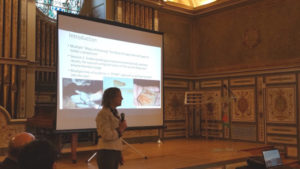
AAG Vice President, Sheryl Luzzadder-Beach, recently presented at the Maya Peoples Making History conference held at The Mexican Cultural Institute in Washington, D.C. Her research, which focuses on the use of LiDAR for reconstructing the environmental history of the Maya people in Belize, was one of four presentations held during the event.
Students – October 15th Deadline for Two Student Awards
October 15th is the deadline for applications to two annual awards presented by the AAG and supported by the Marble Fund for Geographic Sciences. The Marble-Boyle Undergraduate Achievement Awards aim to recognize excellence in academic performance by undergraduate students from the U.S. and Canada who are putting forth a strong effort to bridge geographic science and computer science. The biennial William L. Garrison Award for Best Dissertation in Computational Geography supports innovative research into the computational aspects of geographic science. Formal presentation of the awards will be made at the annual AAG awards luncheon.
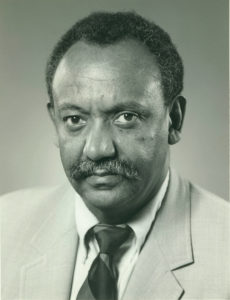
The Harold M. Rose Award for Anti-Racism Research and Practice honors Dr. Rose, the first Black president of the AAG. Dr. Rose devoted his career to expanding the discipline of geography into anti-racist scholarship, an area that had been virtually ignored, by conducting research on the black Ghetto, blacks and Cubans in Miami, and the quality of life in black communities during the 1960s and 1970s. This award honors geographers who have a demonstrated record of the type of research and active contributions to society that have marked Harold Rose’s career. The nomination deadline is October 15th.
Community College Travel Grants – Deadline to Apply November 1st
Students currently enrolled at a US community college, junior college, city college, or similar two-year educational institution are eligible to apply for a Community College Travel Grant to attend the 2018 AAG Annual Meeting. These travel funds are generously provided by Darrel Hess and Robert and Bobbé Christopherson and consists of meeting registration, one year membership in the AAG, and a travel expense subsidy of $500 to be used to defray the costs of attending the AAG Annual Meeting. The deadline to apply is November 1, 2017.
November Issue of The Professional Geographer now available!
The November 2017 (Volume 69, Issue 4) issue of The Professional Geographer is now available online! This issue features two themed sections – the 2016 AAG Nystrom Paper Competition participant papers and a focus on gender and the histories of geography as a discipline – in addition to a regular selection of manuscripts.
Just Published! The November 2017 Issue of the ‘Annals of the AAG’
Volume 107, Issue 6 (November 2017) of the Annals of the American Association of Geographers is now available! All articles are available to members with your AAG membership. This month, articles span the breadth of topics from oil pipeline activism to extreme precipitation frequency to young people and everyday foods.
The Economist cites article printed in the Annals of the American Association of Geographers authored by Qiang et al. on the growth in exposure to flood hazards faced by U.S. residents.
Shane Colgan recently completed his bachelor of science in Geographical Sciences from the University of Maryland, College Park. He will be attending the University of Maryland, College Park to pursue his masters in GIS starting this upcoming Spring semester. His geographic research deals with vegetation indexes and tree top canopy analysis to document the habitat of bats in Maryland, Virginia, and Delaware.
When not at work or doing research Shane enjoys watching the Capitals ice hockey team.
The AAG is pleased to announce three themes for the 2018 Annual Meeting to be held in New Orleans from April 10-14. Each year, the AAG Council and Executive Director identify theme areas of geography for the annual meeting in order to provide a fresh take on some of the more pressing and timely issues facing the discipline. While any topic is accepted for presentation at the Annual Meeting, the themes are used to establish a way to focus the breadth and variety of geographic scholarship the Annual Meeting has to offer.
Contributions to the Black Geographies theme will address the meaningful role of Black communities and individuals as they advance the production of geographic knowledge and space-making practices. Likewise, contributions will encourage the critical reflection on the issues, processes, intrinsic qualities, and interconnections that shape Black lives and geographies on local, national, continental, and international scales.
Geographers are uniquely situated to address the myriad challenges presented by hazards due to the interdisciplinary nature of our discipline. The Hazards, Geography, and GIScience theme will approach these issues from multiple perspectives, with the goal of using the research and tools of Geography and GIScience to learn from past events and plan for future hazards.
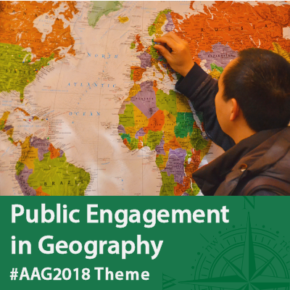
The Public Engagement theme will create and open spaces for demonstrating, debating, and improving how geographers engage public groups through their research, teaching, and other professional practices. This theme seeks paper, panel, and workshop sessions that explore the practical strategies, ethical considerations, and challenges of geographers interacting with a broad array of communities.
More information about each of these themes will be forthcoming. To submit your abstract or session for consideration as part of one of these three themes, please select the relevant theme name in the “Theme” dropdown in the abstract/session submission console. If you have already submitted your abstract or session, you can log into the console and edit your submission. All submissions to the themes are due by November 8, 2017.
The presentations began with Sheryl Luzzadder-Beach and Timothy Beach of UT Austin discussing their research which combines geoarchaeology, botanical analysis, and laser mapping (LiDAR) to reconstruct the environmental history of the ancient Mayan landscape in Belize. LiDAR has been beneficial to archaeology because of it’s ability to image landscapes beneath dense vegetation such as the forests of Central America. The research by Luzzadder-Beach and Beach shows that LiDAR’s survey capabilities can expand occupation areas of the ancient Maya to approximately twenty times what was previously known.
The duo was followed by Geoffrey Wallace of McGill University, currently a visiting researcher at Georgetown University. His scholarship focuses on the environmental history of the Yucatan Peninsula through the changes in the political and social landscapes as a result of colonization. He is building geospatial databases from historic records that can be used to analyze the movement of people and distribution of commodity goods production in the Yucatan.
Next was Adrienne Kates of Georgetown University who explored the chicle trade in Quintana Roo, Mexico from 1901-1930 and the Maya peoples’ fight for autonomy from the Mexican government.
The formal presentations concluded with Bianet Castellanos’ anthropological perspective of the modern condition of the Maya. She reviewed traditional gender roles and how Maya women navigate these gender roles in a global economy.
The talks were followed by discussion sessions led by John McNeill, Matthew Restall, and John Tutino. From taming the challenging ecosystem of the Yucatan thousands of years ago to integrating into the global economy of today, the conference was a celebration of the continuous adaptability and resiliency of the Maya people.
The title of my column comes from a recent NPR story on the NAACP. The storied civil rights organization is undergoing a wholesale “retooling” of its structures and tactics in an effort to regain relevance among younger generations of activists and to enhance its efficacy in anti-racism advocacy and education. In adapting to a dramatically changing political and media environment, former NAACP president and CEO Cornell Brooks said: “All of us have to be prepared to respond, not with telegraph speed but with Twitter speed.”
Part 1: Congo Square, Atlantic Exchange, and the Emergence of Jazz.
New Orleans is a city at the historical crossroads of several different cultures: French and Spanish colonials, descendants of the African diaspora, and indigenous Choctaw and Chickasaw peoples. Through this unique blending of religious and ethnic traditions has emerged musical styles that contribute to New Orleans’ sense of place. In the first of a two part series, Case Watkins of James Madison University, explores the development of musical styles in New Orleans, including, of course, Jazz.
New Orleans’ unofficial “geographer laureate,” Richard Campanella of Tulane’s School of Architecture, provides commentary on the physical features, material culture, and historical geography of New Orleans through this newsletter mini series that will run until the 2018 Annual Meeting. This month, learn more about the sordid history of the New Orleans Slave Trade, the four different land surveying systems found within the city, and the architectural styles New Orleans has used to rebuild itself post-Hurricane Katrina.
“Focus on New Orleans and the Gulf Coast” is an ongoing series curated by the Local Arrangements Committee to provide insight on and understanding of the geographies of New Orleans, Louisiana, and the greater Gulf Coast region.
Registration for the 2018 Annual Meeting is now open. The AAG accepts all submitted abstracts for presentation. Paper abstracts must be submitted by October 25, 2017, but may be edited through February 23, 2018. Registration rates increase on November 8, 2018 – register early to get the best rate!
#AAG2018 will overlap with French Quarter Festival, a four-day local music showcase scattered throughout New Orleans’ famous French Quarter. FQF will feature hundreds of hours of free, local music of all varieties, as well as food and drink from New Orleans’ finest restaurants. French Quarter Fest will run from April 12-15, 2018.
If ever you find yourself at a loss for conversation among a group of geographers, simply ask this one question: Where do you think the AAG should hold its next Annual Meeting? Everyone has an opinion on this question, and embellished memories of past meetings to recount; the only risk of raising this question is that the conversation may well go long into the night. AAG Executive Director, Doug Richardson, explains how selecting AAG Annual Meeting sites is a lengthy and complex process.
Call for Participation: Geography Career Events 2018
The AAG is seeking a diverse range of individuals to help host sessions at the 2018 Annual Meeting related to careers and professional development. Interested individuals can be from private or public sector and employed in government, business, non-profits, or academia. The abstract deadline is October 25, 2017.
NCRGE Welcomes Abstracts for a Special Track During AAG 2018 New Orleans
For the 2018 AAG Annual Meeting in New Orleans, the National Center for Research in Geography Education (NCRGE) is welcoming abstracts and organized session proposals for a special track of sessions on Transformative Research in Geography Education during the AAG Annual Meeting on April 10-14, 2018, in New Orleans. This track aims to raise the visibility of research in geography education, grow the NCRGE research coordination network, and provide productive spaces for discussion about geography education research and the notion of what makes research in the field potentially transformative.
AAG Statement on Charlottesville Tragedy and White Supremacy
The American Association of Geographers is deeply saddened and disturbed by the recent deadly and violent events in Charlottesville, Virginia. Members of the AAG are encouraged to use their research, teaching, professional practice, community outreach, and channels of public communication to oppose racism and violence and advocate for a constructive national dialogue about white supremacy and race relations in general.
USAG Chair: Michelle Church; Michigan State University USAG Secretary-Treasurer: Lauren Gerlowski; Point Park University USAG General Board Member: Siobhan Flynn; Rutgers University USAG General Board Member: Erika Ornouski; California State University, Sacramento USAG General Board Member: Noah Irby; University of North Dakota
Emily Fekete joins AAG as Communications, Education, and Media Specialist
The AAG welcomes Dr. Emily Fekete as Communications, Education, and Media Specialist. Emily will lend her expertise in communications and media geographies to the communications team through new content curation, social media and program development.
Coline Dony Joins AAG as Senior Geography Researcher
The AAG welcomes Dr. Coline Dony as a Senior Geography Researcher. In her role at the AAG, Coline will be helping to develop GIS coding curricular materials and starting a new AAG initiative, “Coding for Girls in GIS and Geography.”
Each month the AAG profiles a geographer for a glimpse into the careers of working geographers. For August and September, see what attracted geographers Adelle Thomas, Senior Caribbean Research Associate at Climate Analytics; Visiting Researcher, University of the Bahamas, and Frank Boscoe, Research Scientist, New York State Cancer Registry, to the field and the variety of work they do!
Geography students have been busy this summer with research projects, both on their own and as part of larger research teams. The AAG is celebrating the work of geography students by highlighting their projects on our Instagram page, our newest social media channel. Follow @theAAG to see more student field work!
AAG Snapshot: How to Make the Most of your Student Membership
AAG student membership has grown recently with students now representing over 40% of AAG membership. Learn how to use your AAG student membership to the fullest with some tricks from AAG staff member, Candice Luebbering.
NSF Seeks Candidates for Division Director of Behavioral and Cognitive Sciences
The National Science Foundation seeks candidates for division director for Social, Behavioral, and Economic Sciences within the Geography and Spatial Sciences Program starting early 2018. The deadline to apply is September 29, 2017.
August 2017 Issue of the ‘African Geographical Review’ Now Available
Volume 36, Issue 2 (August 2017) of the African Geographical Review is now available! The African Geographical Review is the journal of the Africa Specialty Group of the American Association of Geographers. This issue is the second part of a series that explores the shift in development theory from the Millennium Development Goals to the Sustainable Development Goals in Africa since 2015.
September 2017 Issue of the ‘Annals of the AAG’ Now Available
Volume 107, Issue 5 (September 2017) of the Annals of the American Association of Geographers is now available! Articles spanning the breadth of geography from the four major areas of Methods, Models, and Geographic Information Science; Nature and Society; People, Place, and Region; and Physical Geography and Environmental Sciences are featured in each issue. Access to the journal is included in your AAG membership.
Recent books published in geography and related topics span the discipline from contemporary cities to climate change to capitalism. Some of these new titles will be selected to be reviewed for the AAG Review of Books. Individuals interested in reviewing these or other titles should contact the Editor-in-Chief, Kent Mathewson.
Summer 2017 Issue of ‘The AAG Review of Books’ Now Available
Volume 5, Issue 3 of the AAG’s quarterly journal, The AAG Review of Books, is now available online. Since its inception, The AAG Review of Books, has published over 250 reviews of scholarly material. In addition to a quarterly publication, members can search book reviews by author, title, and theme in the new books database.
AAG Releases New Edition of Guide to Geography Programs in the Americas
The newest edition of AAG’s Guide to Geography Programs in the Americas is here! The Guide compiles extensive information about geography departments and programs at universities in the U.S., Canada, and Latin America as well as information about geography employers. Also featured is an interactive map of the programs listed in The Guide.
If ever you find yourself at a loss for conversation among a group of geographers, simply ask this one question: Where do you think the AAG should hold its next Annual Meeting? Everyone has an opinion on this question, and embellished memories of past meetings to recount; the only risk of raising this question is that the conversation may well go long into the night.
How the AAG Selects Annual Meeting Sites
Selecting AAG Annual Meeting sites is a lengthy and complex process. I would like to share with you the many steps and considerations that go into Annual Meeting site selection that have been in place for many years. As with most major academic associations, we contract for meeting sites about five to eight years into the future, and in blocks of three or four meetings at a time. This gives us negotiating leverage, minimizes costs, and reduces staff time by consolidating what is a very lengthy and complicated due diligence and negotiation process.
At the outset, the process involves a great deal of AAG member and Council discussion and input, as well as extensive data gathering, past history analysis, cost comparison, staff experience, research, and consultation with our professional conference managers firm, as well as geographical balancing of our meeting sites. We then develop and issue a detailed Request for Proposals (RFP) to several prospective cities, liaison with the bidders, conduct comparative analyses of all proposals, perform physical site inspections, weigh union hotel preferences, and enforce the inclusion of numerous specific contract stipulations that I have developed over the years to protect the AAG. All of these considerations go into the process of narrowing down feasible locations for our AAG Annual Meetings for each calendar year. With a shortlist of promising bids in hand, we then enter into detailed and careful negotiations of myriad contract provisions before signing an agreement with major convention centers and/or large hotels at a proposed site. If we cannot negotiate the costs and legal terms we require and which are favorable to the AAG at an initially preferred site, we are willing to cancel negotiations and start the above process all over again with an alternate potential city.
Finally, once we have completed lengthy negotiations and entered into major contracts for convention centers and/or large hotels at a particular year’s site, we then also must develop specifications and competitively bid out dozens of ancillary contracts for meeting services such as audio-visual services; internet availability; food and beverage obligations; overflow hotels; exhibitor booth agreements and exhibit setup services; special events needs related to workshops, field trips, and supplemental meeting room space; design, construction and setup of meeting registration structures and signage; mobile app and the printed program book; and many other agreements.
Why not small cities?
I frequently am asked why the AAG doesn’t meet in smaller cities such as Ann Arbor or Portland. The fact is that most cities are far too small to host our Annual Meetings. They lack the required number or concentration of hotel rooms and meeting rooms or sufficient airline flights to accommodate our 9,000 attendees. We do have a suite of mid-sized and lower-cost cities that we have used from time to time (most recently Tampa), but ironically these smaller city meetings are among our very lowest-attended meetings despite being our lowest cost venues. So it is not clear that lower venue costs correlate with greater access or attendance (or desirability). Costs of transportation are of course primarily a function of where one lives in relation to the meeting site, rather than the meeting site itself. This is why we try to rotate our meetings among different regions the country, so that each region is involved, and also of course so that geographers can experience many different places.
What about international AAG Meetings?
The AAG has on a few occasions held an Annual Meeting in Canada (Toronto and Montreal). I would love to hold additional AAG meetings in other international locations, from Mexico City to Vancouver to elsewhere. So why not?
One obstacle is that since 9/11, the U.S. borders with Canada and Mexico have become more difficult and uncertain to cross. At the same time, growing numbers of AAG members from other countries now teach or study on visas in the U.S. Many members have expressed concern that if they were to leave the U.S. to attend an Annual Meeting, they may not be able to return easily (or in some cases at all) to the United States. The AAG Council has considered the issue of international Annual Meetings on several occasions during the past decade, and each time the consensus has been it would not be fair to hold the AAG Annual Meeting in a location where a substantial number of our faculty and graduate student members would be unable to attend. It is of course always possible that domestic and international circumstances may change, or that the AAG Council’s position on this issue could change, but for now the consideration of fairness to these many members residing in the U.S. on visas remains the policy.
Controlling Costs at our Annual Meetings
Our conference manager consultants tell us every year that the AAG meetings are the best bargain of any of the dozens of meetings they help organize. We hold a full five day meeting, with elaborate and expensive A/V requirements for 80+ concurrent and fully equipped session rooms, as well A/V systems for large plenary and reception rooms, etc. Our meeting fees are very low and are well below those of nearly all other comparable geography meetings. In addition, our meeting fees have not been increased in many years, despite rising costs in almost every category of expense. The AAG also sponsors many programs which subsidize the costs of attending, including a very progressive registration fee structure for students, un- and underemployed members, and retired geographers, as well as mechanisms to subsidize travel and offset costs for students attending the meeting. Learn more about AAG Annual Meeting cost comparisons at our report, AAG Annual Meeting Fees: An Analysis.
Summary
We can always do more, but by all comparative measures, we are doing a very good job of keeping our meeting reasonably priced while providing an incomparable experience. This was illustrated by the responses to the recent McKinley Membership Survey, and also by the remarkable growth in the number of geographers and attendees from other disciplines deciding to attend our Annual Meeting every year. The reality is that thousands of geographers from around the world now choose to attend our meetings, despite the fact that they have dozens of other meeting options to choose from. So, we must be doing something right.
I hope this quick overview is helpful; we welcome questions and your input and would be happy to discuss any aspects of the AAG Annual Meetings in more detail with you. If you have any questions, please feel free to contact me (drichardson [at] aag [dot] org), Oscar Larson (olarson [at] aag [dot] org), or Kelsey Taylor (ktaylor [at] aag [dot] org). As always we welcome your insight and ideas for improving our annual meetings, and we look forward to seeing you in New Orleans in April of 2018!
AAG Statement on Charlottesville Tragedy and White Supremacy
The American Association of Geographers is deeply saddened and disturbed by the recent deadly and violent events in Charlottesville, Virginia.
Rallies supported by white nationalists, neo-Nazis and Ku Klux Klan members led to the killing of one counter-protester, the wounding of at least 19 other protesters, and the deaths of two law enforcement officers doing surveillance of the rallies by air. On behalf of its almost 12,000 members, the AAG expresses heartfelt sympathy to the victims of the Charlottesville tragedy and their loved ones.
The AAG also wishes to use this statement to offer the strongest possible condemnation of white supremacy and the perpetrators of this recent violence. The AAG calls upon US federal, state, and local government officials to be unequivocally anti-racist in their denouncement and investigation of white supremacy—not only in Charlottesville but also in the many US communities long harmed by racism in both highly publicized and everyday ways.
Enhancing diversity, promoting inclusion, and advocating for historically marginalized social groups are central to the AAG and its mission. Recent events in Virginia strike at the heart of these values. Moreover, geographers are making important contributions to studying the social and spatial foundations and consequences of racism, violence, and inequality. Yet more can and should be done in the discipline of geography and by academicians and professionals in other fields to address these critical issues.
Members of the AAG are encouraged to use their research, teaching, professional practice, community outreach, and channels of public communication to oppose racism and violence and advocate for a constructive national dialogue about white supremacy and race relations in general. This advocacy can come in many forms based on the abilities and sensitivities of AAG members, but it is vital that the discipline’s informed and committed voices are heard, whether that is through the media, at government and policy meetings, in classrooms, teach-ins and educational forums, or among grass roots community organizing.
AAG Members get exclusive access to publications, prominent journals, unique advocacy, grant, scholarship and professional opportunities with access to industry focus communities, and event discounts, including our annual meeting.
Some content may only be accessible if you belong to specific Specialty or Affinity Groups. You can still update your membership below. You will need to go through the Join flow, but you do not need to repurchase your membership unless it is expired or about to expire.
To provide the best experiences, we use technologies like cookies to store and/or access device information. Consenting to these technologies will allow us to process data such as browsing behavior or unique IDs on this site. Not consenting or withdrawing consent, may adversely affect certain features and functions.
Functional
Always active
The technical storage or access is strictly necessary for the legitimate purpose of enabling the use of a specific service explicitly requested by the subscriber or user, or for the sole purpose of carrying out the transmission of a communication over an electronic communications network.
Preferences
The technical storage or access is necessary for the legitimate purpose of storing preferences that are not requested by the subscriber or user.
Statistics
The technical storage or access that is used exclusively for statistical purposes.The technical storage or access that is used exclusively for anonymous statistical purposes. Without a subpoena, voluntary compliance on the part of your Internet Service Provider, or additional records from a third party, information stored or retrieved for this purpose alone cannot usually be used to identify you.
Marketing
The technical storage or access is required to create user profiles to send advertising, or to track the user on a website or across several websites for similar marketing purposes.
To provide the best experiences, we use technologies like cookies to store and/or access device information. Consenting to these technologies will allow us to process data such as browsing behavior or unique IDs on this site. Not consenting or withdrawing consent, may adversely affect certain features and functions.
Functional
Always active
The technical storage or access is strictly necessary for the legitimate purpose of enabling the use of a specific service explicitly requested by the subscriber or user, or for the sole purpose of carrying out the transmission of a communication over an electronic communications network.
Preferences
The technical storage or access is necessary for the legitimate purpose of storing preferences that are not requested by the subscriber or user.
Statistics
The technical storage or access that is used exclusively for statistical purposes.The technical storage or access that is used exclusively for anonymous statistical purposes. Without a subpoena, voluntary compliance on the part of your Internet Service Provider, or additional records from a third party, information stored or retrieved for this purpose alone cannot usually be used to identify you.
Marketing
The technical storage or access is required to create user profiles to send advertising, or to track the user on a website or across several websites for similar marketing purposes.

 Alderman will present When the Big Easy Isn’t So Easy: Learning from New Orleans’ Geographies of Struggle. Beyond merely providing hotels, restaurants, and bars, the hosting cities of AAG meetings offer important moments to delve into the scientific value of these locations and to learn about the historical and contemporary forces and tensions that shape their communities and spaces. Doing so not only advances our intellectual understanding of place but also has the potential to create a more responsible and empathetic visitor and academic conference citizen—someone who can appreciate, analyze, and be affected by the people and places that exist beyond tourism brochures found in hotel lobbies.
 I am pleased to announce that the American Association of Geographers (AAG) is launching the Geography Speakers Bureau. The Bureau is part of the

 Each year, the AAG Council and Executive Director identify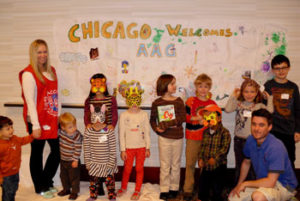

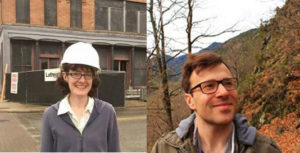

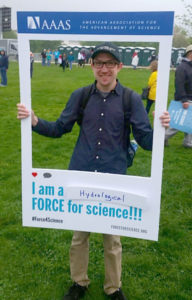 Shane Colgan recently completed his bachelor of science in Geographical Sciences from the University of Maryland, College Park. He will be attending the University of Maryland, College Park to pursue his masters in GIS starting this upcoming Spring semester. His geographic research deals with vegetation indexes and tree top canopy analysis to document the habitat of bats in Maryland, Virginia, and Delaware.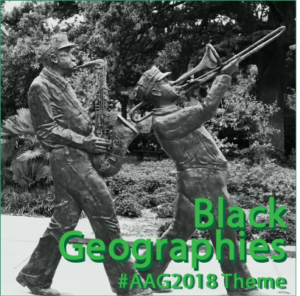

 The title of my column comes from a recent NPR story on the NAACP. The storied civil rights organization is undergoing a wholesale “retooling” of its structures and tactics in an effort to regain relevance among younger generations of activists and to enhance its efficacy in anti-racism advocacy and education. In adapting to a dramatically changing political and media environment, former NAACP president and CEO Cornell Brooks said: “All of us have to be prepared to respond, not with telegraph speed but with Twitter speed.”
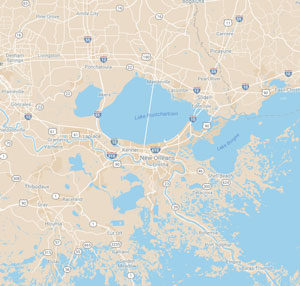
 Registration for the 2018 Annual Meeting is now open. The AAG accepts all submitted abstracts for presentation. Paper abstracts must be submitted by October 25, 2017, but may be edited through February 23, 2018. Registration rates increase on November 8, 2018 –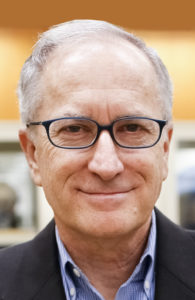
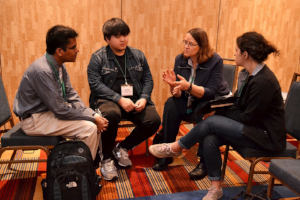
 Congratulations to the elected members of the first board for the new
  The AAG welcomes Dr. Emily Fekete as Communications, Education, and Media Specialist. Emily will lend her expertise in communications and media geographies to the communications team through new content curation, social media and program development.
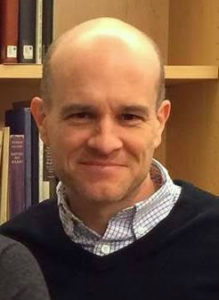
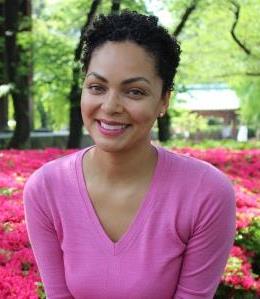 Each month the AAG profiles a geographer for a glimpse into the careers of working geographers. For August and September, see what attracted geographers Adelle Thomas, Senior Caribbean Research Associate at Climate Analytics; Visiting Researcher, University of the Bahamas, and Frank Boscoe, Research Scientist, New York State Cancer Registry, to the field and the variety of work they do!
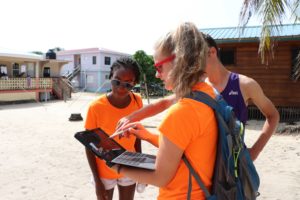 Geography students have been busy this summer with research projects, both on their own and as part of larger research teams. The AAG is celebrating the work of geography students by highlighting their projects on our
 The National Science Foundation seeks candidates for division director for Social, Behavioral, and Economic Sciences within the Geography and Spatial Sciences Program starting early 2018. The deadline to apply is September 29, 2017.
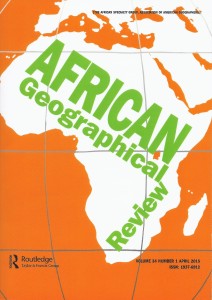 Volume 36, Issue 2
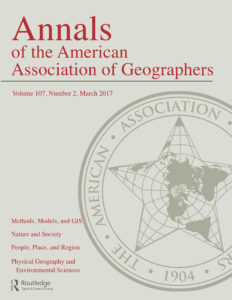 Volume 107, Issue 5
 New Books in Geography — August 2017
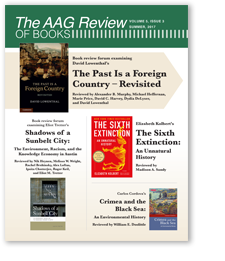 Volume 5, Issue 3
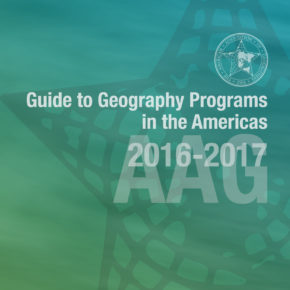 The newest edition of AAG’s Guide to Geography Programs in the Americas is here! The Guide compiles extensive information about geography departments and programs at universities in the U.S., Canada, and Latin America as well as information about geography employers. Also featured is an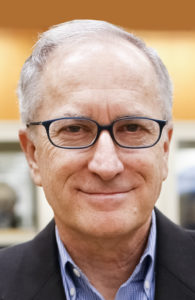
 The American Association of Geographers is deeply saddened and disturbed by the recent deadly and violent events in Charlottesville, Virginia.