The AAG Susan Hardwick Excellence in Mentoring Award
The deadline for the upcoming 2027 AAG awards has passed.
The AAG Susan Hardwick Excellence in Mentoring award is given annually to an individual geographer, group, or department who has demonstrated extraordinary leadership in building supportive academic and professional environments in their departments, associations, and institutions and guiding the academic and or professional growth of their students and junior colleagues. It is named in honor and memory of the late Susan Hardwick, the inaugural recipient of this award and a beloved mentor, scholar and colleague.
Nominations are sought to recognize individuals, groups, or departments who have increased the number of students and faculty from underrepresented groups, improved the quality of their participation in geography or who have impacted the climate of a department, college, or institution toward greater inclusion. Self nominations are also welcomed.
The Awardee(s) will be invited to participate in an interview or contribute a publication for Journal of Geography in Higher Education that identifies and promotes specific mentoring practices that are replicable, effective and highly valued in order for these actions to be shared with the broader AAG community.
Eligibility
Individual geographers, groups, or departments are eligible for nomination. Nominations from a wide spectrum of mentors in the geography community are encouraged, including from academic, public, private, and non-profit sectors. The relationship may be between mentor and students or mentor and junior faculty or employees. Posthumous nominations are generally not accepted.
Criteria
The award will honor individuals, groups, or departments who consistently do one or more of the following:
Have succeeded in establishing formal, informal, or quasi formal channels for providing support to students, junior faculty and/or employees
Help to create a vital and engaged geography community at their home Institution or association.
Demonstrate a commitment to inclusion and to the particular advising and mentoring needs of individuals from traditionally underrepresented groups.
Have developed and carried out specific practices that are replicable, effective and highly valued.
Nominations
Nominations for the AAG Susan Hardwick Excellence in Mentoring Awardmust be received by the deadline (Eastern Time). Complete nominations will include:
the nominee’s curriculum vitae, only if the nominee is an individual geographer
a concise (500 words maximum) yet specific description of the accomplishments that warrant selection according to the above criteria;
No more than three (3) letters of recommendation from other individuals (including mentees) The strongest applications will feature at least one supporting letter from a senior colleague.
As with all other AAG awards, eligibility also rests on the candidate being in compliance with the AAG Professional Conduct Policy. Nominations may be rescinded, and the award may also be revoked for any candidate or awardee who is found in violation of the AAG’s Professional Conduct Policy.
For questions or difficulties, please contact grantsawards@aag.org or call the AAG at 202-234-1450.
Selections
Nominations for the AAG Susan Hardwick Excellence in Mentoring Award will be reviewed jointly by the AAG JEDI Committee and the Committee on the Status of Women in Geography. A single awardee will be recommended to be approved by the AAG Council at their Fall meeting. No monetary prize is provided. Awards are presented at the Awards Ceremony during the AAG’s Annual Meeting.
AAG Susan Hardwick Excellence in Mentoring Award Recipients
Mauris non tempor quam, et lacinia sapien. Mauris accumsan eros eget libero posuere vulputate. Etiam elit elit, elementum sed varius at, adipiscing vitae est. Sed nec felis pellentesque, lacinia dui sed, ultricies sapien. Pellentesque orci lectus, consectetur vel posuere.
2026
Sarah Holloway
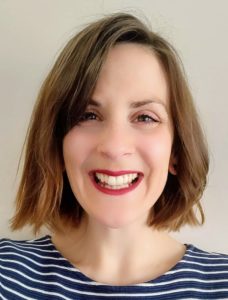
The American Association of Geographers recognizes ProfessorSarah Holloway with the Susan Hardwick Excellence in Mentoring Award for her longstanding commitment to supporting students and colleagues, and her role in fostering a positive, inclusive academic environment. Over more than 30 years at Loughborough University, she has contributed to meaningful improvements in departmental and institutional culture through her teaching, mentorship, and dedication to equitable practices.
Professor Holloway has provided guidance to individuals at many career stages, including undergraduate and graduate students as well as early and midcareer faculty. Her thoughtful, individualized approach has helped many scholars grow in confidence, navigate key career transitions, and develop leadership skills. Her mentorship has supported people from a wide range of backgrounds, including first-generation students, international scholars, and those facing social or economic barriers.
Her work has also contributed to broader structural change. Professor Holloway played an important role in advancing maternity leave and part-time employment policies at her university and supported the first researchers to benefit from these improvements. She introduced new topics into the curriculum early in her career and helped shape courses that broaden students’ perspectives and strengthen the learning environment. Her contributions to equity and inclusion were further acknowledged when she received her School’s inaugural EDI Champion Award.
Across her career, Professor Holloway has helped build a more supportive and inclusive academic community. Her sustained contributions have positively influenced individuals, programs, and the wider field. The American Association of Geographers is pleased to honor her with the 2026 Susan Hardwick Excellence in Mentoring Award.
2026 AAG Susan Hardwick Excellence in Mentoring Award
Sarah Holloway
2026 AAG Susan Hardwick Excellence in Mentoring Award
The American Association of Geographers recognizes ProfessorSarah Holloway with the Susan Hardwick Excellence in Mentoring Award for her longstanding commitment to supporting students and colleagues, and her role in fostering a positive, inclusive academic environment. Over more than 30 years at Loughborough University, she has contributed to meaningful improvements in departmental and institutional culture through her teaching, mentorship, and dedication to equitable practices.
Professor Holloway has provided guidance to individuals at many career stages, including undergraduate and graduate students as well as early and midcareer faculty. Her thoughtful, individualized approach has helped many scholars grow in confidence, navigate key career transitions, and develop leadership skills. Her mentorship has supported people from a wide range of backgrounds, including first-generation students, international scholars, and those facing social or economic barriers.
Her work has also contributed to broader structural change. Professor Holloway played an important role in advancing maternity leave and part-time employment policies at her university and supported the first researchers to benefit from these improvements. She introduced new topics into the curriculum early in her career and helped shape courses that broaden students’ perspectives and strengthen the learning environment. Her contributions to equity and inclusion were further acknowledged when she received her School’s inaugural EDI Champion Award.
Across her career, Professor Holloway has helped build a more supportive and inclusive academic community. Her sustained contributions have positively influenced individuals, programs, and the wider field. The American Association of Geographers is pleased to honor her with the 2026 Susan Hardwick Excellence in Mentoring Award.
2025
Leslie Duram
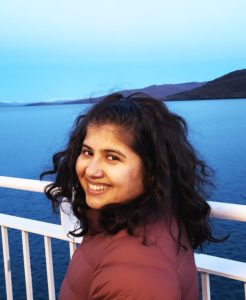
AAG’s Susan Hardwick Excellence in Mentoring Award acknowledges Dr. Leslie Duram’s remarkable mentorship and lasting impact on students and colleagues. Dr. Duram, Professor of Geography and Environmental Resources and Director of the Environmental Studies minor at Southern Illinois University, has advised numerous graduate students, including those from underrepresented backgrounds and helped them achieve career success. Her unparalleled dedication to mentoring students extends to undergraduate students in the Environmental Studies minor as she provides all aspects of professional development opportunities. Dr. Duram’s exceptional mentorship and unwavering support has reached many of her colleagues and contributed to fostering a vibrant and engaged community in her department, university, and the geography discipline. As the department chair, she has been a supportive and inspirational colleague and mentor to her faculty colleagues for personal and professional growth. Her remarkable mentorship was highly recognized by prestigious awards such as Teaching Excellence Award and University Women’s Professional Advancement (UWPA) Mentorship Award by her institution (SIU).
Students and colleagues of Dr. Duram have extensively shared the deep impacts of her genuine compassion for their personal well-being and continued growth into successful scholars, educators, and professionals. With an innate understanding of each individual’s strengths and potential, Dr. Duram has skillfully provided the tools and opportunities necessary for success. Her dedication to caring for varied needs, nurturing talent, and promoting a culture of continuous learning has made an indelible impact on her students and peers. Dr. Duram’s mentorship is a shining example of dedication and excellence.
2025 AAG Susan Hardwick Excellence in Mentoring Award
Leslie Duram
2025 AAG Susan Hardwick Excellence in Mentoring Award
AAG’s Susan Hardwick Excellence in Mentoring Award acknowledges Dr. Leslie Duram’s remarkable mentorship and lasting impact on students and colleagues. Dr. Duram, Professor of Geography and Environmental Resources and Director of the Environmental Studies minor at Southern Illinois University, has advised numerous graduate students, including those from underrepresented backgrounds and helped them achieve career success. Her unparalleled dedication to mentoring students extends to undergraduate students in the Environmental Studies minor as she provides all aspects of professional development opportunities. Dr. Duram’s exceptional mentorship and unwavering support has reached many of her colleagues and contributed to fostering a vibrant and engaged community in her department, university, and the geography discipline. As the department chair, she has been a supportive and inspirational colleague and mentor to her faculty colleagues for personal and professional growth. Her remarkable mentorship was highly recognized by prestigious awards such as Teaching Excellence Award and University Women’s Professional Advancement (UWPA) Mentorship Award by her institution (SIU).
Students and colleagues of Dr. Duram have extensively shared the deep impacts of her genuine compassion for their personal well-being and continued growth into successful scholars, educators, and professionals. With an innate understanding of each individual’s strengths and potential, Dr. Duram has skillfully provided the tools and opportunities necessary for success. Her dedication to caring for varied needs, nurturing talent, and promoting a culture of continuous learning has made an indelible impact on her students and peers. Dr. Duram’s mentorship is a shining example of dedication and excellence.
2024
Derek Alderman
Dr. Derek Alderman is recognized for his outstanding and impactful contributions to mentorship of students and early career faculty colleagues. The committee particularly noted the caring and inclusive environment Dr. Alderman creates which supports a highly valued climate of collegiality within the University of Tennessee Department of Geography and Sustainability, the impressive number of students mentored throughout his career, his holistic “coaching up” mentorship style that centers diversity, equity, and inclusion, draws upon his own life experience, and goes far beyond a one-size-fits-all mentorship approach. The committee was moved by the testimonies and letters of support submitted by Dr. Alderman’s mentees which embody the spirit, memory, and legacy of the late Dr. Susan Hardwick.
2024 AAG Susan Hardwick Excellence in Mentoring Award
Derek Alderman
2024 AAG Susan Hardwick Excellence in Mentoring Award
Dr. Derek Alderman is recognized for his outstanding and impactful contributions to mentorship of students and early career faculty colleagues. The committee particularly noted the caring and inclusive environment Dr. Alderman creates which supports a highly valued climate of collegiality within the University of Tennessee Department of Geography and Sustainability, the impressive number of students mentored throughout his career, his holistic “coaching up” mentorship style that centers diversity, equity, and inclusion, draws upon his own life experience, and goes far beyond a one-size-fits-all mentorship approach. The committee was moved by the testimonies and letters of support submitted by Dr. Alderman’s mentees which embody the spirit, memory, and legacy of the late Dr. Susan Hardwick.
2023
Heather A. Smith
Heather A. Smith, University of North Carolina Charlotte, is recognized for her outstanding style of mentorship that emulates, honors, and embodies the spirit, memory and legacy of the late Dr. Susan Hardwick.
Students and colleagues of Dr. Smith praise her generosity, inclusivity and focus on collaboration, service, and leadership. Dr. Smith is recognized for her commitment to providing more access, more opportunity, more attention, more care, more critical engagement, and more professional development than is typical in academia, all while exemplifying high standards for excellence and engagement. Further, she has provided students with the skills and resources they need to succeed as scholars and practitioners. She shows sustained interest in the continued growth, well-being, and success of current and former students and faculty colleagues. The far-reaching impacts of her style of mentorship are carried forward by her mentees into other spaces and places.
Dr. Smith’s professional interests and mentoring strengths have guided a generation of geography students in effective community engagement and in the ethical conduct of engaged research. Through highly impactful professional development meetings and other structured mentoring spaces and activities, Dr. Smith engages and guides students at every level, from undergraduate to Ph.D. She also sustains junior colleagues in effectively and successfully navigating academia and beyond. Her mentorship is exemplary and invaluable.
2023 AAG Susan Hardwick Excellence in Mentoring Award
Heather A. Smith
2023 AAG Susan Hardwick Excellence in Mentoring Award
Heather A. Smith, University of North Carolina Charlotte, is recognized for her outstanding style of mentorship that emulates, honors, and embodies the spirit, memory and legacy of the late Dr. Susan Hardwick.
Students and colleagues of Dr. Smith praise her generosity, inclusivity and focus on collaboration, service, and leadership. Dr. Smith is recognized for her commitment to providing more access, more opportunity, more attention, more care, more critical engagement, and more professional development than is typical in academia, all while exemplifying high standards for excellence and engagement. Further, she has provided students with the skills and resources they need to succeed as scholars and practitioners. She shows sustained interest in the continued growth, well-being, and success of current and former students and faculty colleagues. The far-reaching impacts of her style of mentorship are carried forward by her mentees into other spaces and places.
Dr. Smith’s professional interests and mentoring strengths have guided a generation of geography students in effective community engagement and in the ethical conduct of engaged research. Through highly impactful professional development meetings and other structured mentoring spaces and activities, Dr. Smith engages and guides students at every level, from undergraduate to Ph.D. She also sustains junior colleagues in effectively and successfully navigating academia and beyond. Her mentorship is exemplary and invaluable.
2022
David Lopez-Carr
David Lopez-Carr, UC Santa Barbara, for his demonstrated outstanding leadership in creating effective, structured mentorship avenues and for his clear, intentional work to diversify the discipline.
2022 AAG Susan Hardwick Excellence in Mentoring Award
David Lopez-Carr
2022 AAG Susan Hardwick Excellence in Mentoring Award
David Lopez-Carr, UC Santa Barbara, for his demonstrated outstanding leadership in creating effective, structured mentorship avenues and for his clear, intentional work to diversify the discipline.
2021
Hilda Kurtz
2021 Hilda Kurtz of the University of Georgia has mentored her students with hands-on facilitation of quality research papers and proposals with a high track record of funding success. Through journal editorship, she has mentored diverse early career scholars in academic publishing. She also co-founded the Franklin College Diversity and Inclusion Graduate Fellows Program, which establishes a local community of engagement around social justice. Kurtz has also developed a workshop series focused on work-life balance, emphasizing job market preparation and tanglible skills for success in academe, which have been forally integrated into the Geography Department’s required first year graduate student seminar.
2021 AAG Susan Hardwick Excellence in Mentoring Award
Hilda Kurtz
2021 AAG Susan Hardwick Excellence in Mentoring Award
2021 Hilda Kurtz of the University of Georgia has mentored her students with hands-on facilitation of quality research papers and proposals with a high track record of funding success. Through journal editorship, she has mentored diverse early career scholars in academic publishing. She also co-founded the Franklin College Diversity and Inclusion Graduate Fellows Program, which establishes a local community of engagement around social justice. Kurtz has also developed a workshop series focused on work-life balance, emphasizing job market preparation and tanglible skills for success in academe, which have been forally integrated into the Geography Department’s required first year graduate student seminar.
2020
Dr. Jeffery Roth
2020 Dr. Jeffery Roth of Stephen F. Austin State University is an excellent mentor, who advises students from a variety of backgrounds. He has demonstrated commitment to supporting students both professionally and personally, thus embodying the exemplary legacy of the late Susan Hardwick. Dr. Roth has served as Geography Club advisor, he continues to create lifelong learners, has received teaching awards, and actively participates, and encourages students to participate in, community activities. It is clear that Dr. Roth has shaped the lives of faculty, students, and members of the community in remarkable ways.
2020 AAG Susan Hardwick Excellence in Mentoring Award
Dr. Jeffery Roth
2020 AAG Susan Hardwick Excellence in Mentoring Award
2020 Dr. Jeffery Roth of Stephen F. Austin State University is an excellent mentor, who advises students from a variety of backgrounds. He has demonstrated commitment to supporting students both professionally and personally, thus embodying the exemplary legacy of the late Susan Hardwick. Dr. Roth has served as Geography Club advisor, he continues to create lifelong learners, has received teaching awards, and actively participates, and encourages students to participate in, community activities. It is clear that Dr. Roth has shaped the lives of faculty, students, and members of the community in remarkable ways.
2019
Lorraine Dowler
2019 Lorraine Dowler not only mentors at all levels, but is a strong advocate for her mentees. She is committed to the holistic development of her advisees (students or colleagues), and pays particular attention to the mental, physical, and emotional well-being of those with whom she interacts, especially new faculty learning to balance academia. Dr. Dowler’s advocacy of students and colleagues goes above and beyond the criteria listed for this AAG award. Besides her tireless advocacy for students and colleagues, she also continues to advise, research, publish, and contribute to the field of geography. For the qualities and characteristics that Dr. Dowler puts forth, and for her genuine concern for all those that work with her, she is a most deserving recipient of this award.
2019 AAG Susan Hardwick Excellence in Mentoring Award
Lorraine Dowler
2019 AAG Susan Hardwick Excellence in Mentoring Award
2019 Lorraine Dowler not only mentors at all levels, but is a strong advocate for her mentees. She is committed to the holistic development of her advisees (students or colleagues), and pays particular attention to the mental, physical, and emotional well-being of those with whom she interacts, especially new faculty learning to balance academia. Dr. Dowler’s advocacy of students and colleagues goes above and beyond the criteria listed for this AAG award. Besides her tireless advocacy for students and colleagues, she also continues to advise, research, publish, and contribute to the field of geography. For the qualities and characteristics that Dr. Dowler puts forth, and for her genuine concern for all those that work with her, she is a most deserving recipient of this award.
2018
David Kaplan
2018
David Kaplan of Kent State University is an exceptional mentor, serving as principal advisor to over 20 master’s thesis student committees and 11 PhD student committees, as well as serving on the committees of dozens of other student projects. Recent advisees refer to him as a “lifelong advisor” who has “enduring and genuine concern” for his students. In addition, his support of junior peers at his institution and elsewhere speaks to his commitment to offer sound counsel and valuable advice to others to advance their academic and professional paths. Kaplan’s extraordinary dedication and service to his department, institution and the AAG exemplify the many ways that he is committed to enhancing diversity and inclusion in geography.
2018 AAG Susan Hardwick Excellence in Mentoring Award
David Kaplan
2018 AAG Susan Hardwick Excellence in Mentoring Award
2018
David Kaplan of Kent State University is an exceptional mentor, serving as principal advisor to over 20 master’s thesis student committees and 11 PhD student committees, as well as serving on the committees of dozens of other student projects. Recent advisees refer to him as a “lifelong advisor” who has “enduring and genuine concern” for his students. In addition, his support of junior peers at his institution and elsewhere speaks to his commitment to offer sound counsel and valuable advice to others to advance their academic and professional paths. Kaplan’s extraordinary dedication and service to his department, institution and the AAG exemplify the many ways that he is committed to enhancing diversity and inclusion in geography.
2017
Beverly Mullings
2017 Beverly Mullings is a trailblazer in supporting mental health in academia through both her purposeful, strategic, and actionable advice to the people she supports and platforms she has built for individuals who have been afraid to speak out about mental health. Through her creation of a list serve on mental health and the academy and kickstarting the AAG’s mental health initiative she has been a persistent advocate for those most marginalized in our discipline. Dr. Mullings has also been integral in revitalizing both the Gender Studies program at Queen’s University and the Journal of Critical Race Inquiry.
2017 AAG Susan Hardwick Excellence in Mentoring Award
Beverly Mullings
2017 AAG Susan Hardwick Excellence in Mentoring Award
2017 Beverly Mullings is a trailblazer in supporting mental health in academia through both her purposeful, strategic, and actionable advice to the people she supports and platforms she has built for individuals who have been afraid to speak out about mental health. Through her creation of a list serve on mental health and the academy and kickstarting the AAG’s mental health initiative she has been a persistent advocate for those most marginalized in our discipline. Dr. Mullings has also been integral in revitalizing both the Gender Studies program at Queen’s University and the Journal of Critical Race Inquiry.
2016
Kenneth E. Foote
2016
Kenneth E. Foote, in recognition of his career-long dedication to being a mentor, but also in helping other to be successful mentors themselves. He has worked diligently to mentor department chairs and other leaders. He has tirelessly promoted and encouraged colleagues along their career paths, and he has been particularly committed to sharing effective means of mentoring graduate students and faculty. He was co-leader of the AAG’s Enhancing Departments and Graduate Education (EDGE) programs, and for more than 10 years he has organized and hosted Graduate Faculty Development Alliance workshops and Department Leadership workshops.
2016 AAG Susan Hardwick Excellence in Mentoring Award
Kenneth E. Foote
2016 AAG Susan Hardwick Excellence in Mentoring Award
2016
Kenneth E. Foote, in recognition of his career-long dedication to being a mentor, but also in helping other to be successful mentors themselves. He has worked diligently to mentor department chairs and other leaders. He has tirelessly promoted and encouraged colleagues along their career paths, and he has been particularly committed to sharing effective means of mentoring graduate students and faculty. He was co-leader of the AAG’s Enhancing Departments and Graduate Education (EDGE) programs, and for more than 10 years he has organized and hosted Graduate Faculty Development Alliance workshops and Department Leadership workshops.
2015
Susan Hardwick
2015
Susan Hardwick has, throughout her long and meritorious career, served as primary mentor or advisor to countless graduate and undergraduate students, as well as supporting K-12 geography teachers in Oregon, Texas, California and elsewhere. Through her service within the AAG and other professional organizations, she has contributed greatly to the mentoring of junior faculty members and graduate students. She has helped many young people enter into and pursue rewarding paths within our discipline, and has been an especially valuable mentor to women in geography. Besides directly mentoring women in the discipline, she has also worked to raise awareness of the experiences of women as they seek to become successful in their careers as geographers.
2015 AAG Susan Hardwick Excellence in Mentoring Award
Susan Hardwick
2015 AAG Susan Hardwick Excellence in Mentoring Award
2015
Susan Hardwick has, throughout her long and meritorious career, served as primary mentor or advisor to countless graduate and undergraduate students, as well as supporting K-12 geography teachers in Oregon, Texas, California and elsewhere. Through her service within the AAG and other professional organizations, she has contributed greatly to the mentoring of junior faculty members and graduate students. She has helped many young people enter into and pursue rewarding paths within our discipline, and has been an especially valuable mentor to women in geography. Besides directly mentoring women in the discipline, she has also worked to raise awareness of the experiences of women as they seek to become successful in their careers as geographers.
Anthony O. Gabriel, professor of geography at Central Washington University, died Tuesday, September 14, 2021, after a valiant 14-month battle with cancer. He was 56. He was called home to God at his home surrounded by his loving family.
Anthony was born to Oswald Gabriel and Ursula Duhr in Vancouver, B.C., Canada in October 1964. He grew up in Langley, B.C. and attended Trinity Western University. He went on to complete his Master’s degree at Western Washington University where he met and married his wife, Marikay Douvier. Anthony continued to complete his Ph.D. in Geography at the University of Guelph in Guelph, Ontario.
Anthony was a professor in the geography departments at Western Washington University, University of Wisconsin-Oshkosh and finally, for the last 20 years, at Central Washington University. Through is love of teaching and research, he helped to mold the future of many students. He always went over and above to serve his department and his students. He successfully supervised over 30 Masters of Science theses.
Together Anthony and Mari welcomed two children, Katie and Zach. Anthony was very proud and supportive of his children, as he was involved in their education, extra-curricular activities, and life lessons. He always encouraged his children to pursue their dreams and goals.
Anthony was a devout member of St. Andrew’s Catholic Church. He enjoyed camping and fishing, walking his dogs, playing pool in the Ellensburg Pool League and being a 4-H leader for On Target Shooting Sports.
Anthony was a remarkable, very generous, and caring person, completely devoted to his family. He mentored many young faculty members in the department of geography at Central Washington University, helping them navigate work-family balance. He will be especially missed for his hilarious (and unique) sense of humor and how he loved to make people laugh.
Anthony was preceded in death by his father, Oswald Gabriel. Anthony is survived by his wife Mari, daughter Katie, son Zach, mother Ursula Gabriel, sister Angela Gabriel-Morrissey, brother-in-law Chris Morrissey, as well as numerous in-laws (and out-laws), nephews and nieces.
Fair redistricting is indispensable to a healthy democratic republic. But what exactly is fair? This turns out to be a rather difficult question; it is much easier to see when things are blatantly not fair – when they don’t adhere to one-person one-vote in the second sense of equal representation.
The AAG is now accepting abstracts for all presentation types at the 2022 AAG Annual Meeting to be held February 25 – March 1 in New York City. All abstracts for both in-person and virtual presentations will be accepted. For those participating in-person at the annual meeting, registrants may opt to present their work in either in-person or virtual paper or poster sessions. Those registered for the virtual meeting experience may only present in virtual paper or poster sessions. Deadlines vary by presentation type.
Serve as a Career Mentor at the 2022 AAG Annual Meeting
The AAG seeks panelists, career mentors, workshop leaders and session organizers for careers and professional development activities at the 2022 AAG Annual Meeting in New York City. Individuals representing a broad range of employment sectors, organizations, academic and professional backgrounds, and racial/ethnic/gender perspectives are encouraged to apply. If interested, email careers [at] aag [dot] org, specifying topic(s) and activity(s) of interest, and attach a current C.V. or resume. For best consideration, please submit your information by November 4, 2021.
New York City to Host Hybrid 2022 AAG Annual Meeting
Mark your calendar for the AAG Annual Meeting in the Big Apple, February 25 – March 1, 2022. The hybrid meeting will take place both online and at the NY Hilton Midtown and the Sheraton New York Times Square Hotel. Registration and the call for papers for #AAG2022 is open, and we invite you to organize and participate in sessions, workshops, field trips, special events, and activities. We look forward to seeing you in New York City!
Space to Cultivate: A View from the AAG Review of Books
“I envision the Review as a space to be working through ideas and concepts,” says Editor-in-Chief Debbie Hopkins, who took the helm of the journal in mid-2020: “A place where a reviewer has the freedom to speak.” Read our interview with Hopkins and Editorial Assistant Neha Arora to find out more about what they look for in submissions
A World of Possibilities: Introducing AAG’s New Recruitment Video
Many AAG members have shared the importance of having new digital marketing tools that can be used to recruit students into geography programs. As part of the COVID-19 Rapid Response initiative, AAG has worked with Green Jay Strategies to produce just such a film: A World of Possibilities Waiting for You with a Degree in Geography. The video is aimed at students who are early in their process of discovery of a geography degree and considers the research of Dr. Justin Stoler (University of Miami) on the understanding and preferences of undergraduate students. AAG can customize this video with your department’s contact information at the end (the video can also just be used as it is). If you would like to have a version that displays your department contact information on a closing slide at the end of the video, please email helloworld[at]aag[dot]org for more information.
AAG would like to thank AAG members Dr. Debarchana Ghosh, Dr. Deborah Thomas, Dr. Jacqueline Housel, Dr. Jason Post, Dr. Justin Stoler, and Dr. Wan Yu for their roles in helping shape this video and the AAG COVID-19 Response Subcommittee for proposing this project.
AAG Early Career and Department Leadership Webinar Series Continues in Fall 2021
The Early Career and Department Leadership webinar series, launched in fall 2020 as part of the AAG’s COVID-19 Rapid Response initiatives, also represents a broader effort at the AAG to expand year-round programming for members and the wider geography community. The AAG is pleased to announce that the webinar series will continue in the 2021-2022 academic year.
This fall will be a great time to reconnect with colleagues, both in your regions and beyond. For the first time, AAG and the Applied Geography Conference are collaborating with six of our Regional Divisions to create a carbon-sensitive meeting model with AAG Regions Connect: A Joint Climate-Forward Initiative. Happening Oct 14-16, AAG Regions Connect is part of a larger effort to reduce carbon emissions at AAG events combining in-person local gathering with nationally available online events, including new offerings for career and professional development and regional perspectives on international and national issues. Registration is now open. See the larger work of the AAG Climate Action Task Force.
Check out our Events page for information on Regions Connect and other Regional Division events this fall.
The Future Is Here: Geography Awareness Week November 14-20
AAG is excited to announce this year’s theme for Geography Awareness Week, The Future Is Here: Geographers Pursue the Path Forward. Highlighting the many ways that geographers are anticipating and shaping a better future in their work, the week will also celebrate the contributions of early-career geographers and students of geography.
We’ll share more resources and materials in October, and in the meantime, we want to hear from you! We are looking for stories to amplify your work and ideas during GeoWeek with our #GeographersRespond hashtag. You can send us information about a GeoWeek event you are planning, a video of you talking about your path to geography, a photo with a few lines about your work, or just an email telling us what you’re up to. Send your items to lschamess [at] aag [dot] org for a chance to be featured during Geography Awareness Week.
Nominate Colleagues for AAG Honors and AAG Fellows
Please consider nominating outstanding colleagues for the AAG Honors, the highest awards offered by the American Association of Geographers, and the AAG Fellows, a program recognizing both later-career and early/mid-career geographers who have made significant contributions to advancing geography. Individual AAG members, specialty groups, affinity groups, departments, and other interested parties are encouraged to nominate outstanding colleagues following the newly revised submission guidelines. Deadlines for nominations will be September 15th.
Nominate Inspiring Geographers: September Awards Deadlines
AAG Grants and Awards make a huge impact on our community of Geographers and help maintain the legacy of geographers of the past while paying tribute to geographers thriving right now. Deadlines are already approaching starting in September. Don’t miss your opportunity to apply or nominate someone deserving! Learn more about the following grants and awards before their due dates:
Sept. 15: AAG Enhancing Diversity Award and AAG Susan Hardwick Excellence in Mentoring Award
The AAG Nominating Committee seeks nominations for Vice President (one to be elected) for National Councilor (two vacancies), and for Student Councilor (one vacancy) for the 2022 election. The AAG encourages nominations of a broad range of colleagues who reflect different disciplinary specialties, regional locations, gender, race, ethnicity, diverse ability, stage in career, etc. Those elected will take office on July 1, 2022. AAG members should submit the names and addresses of each nominee and their reasons for supporting nomination to any member of the AAG Nominating Committee no later than September 24, 2021. As part of your nomination statement, please confirm that the person is willing to be considered for the position for which you are recommending them. Nominations by email are strongly preferred.
Reconciliation in Place Names Act Endorsed Again by AAG
Last month the Reconciliation in Place Names Act was reintroduced in Congress by Senators Ed Markey (D-MA) and Elizabeth Warren (D-MA), and Congressman Al Green (D-TX). The AAG supported this bill in the last Congress and has again endorsed this important piece of legislation that aims to rectify the litany of US geographic place names that are offensive and outdated. See below for an excerpt from Sen. Markey’s press release on the bill.
Washington, DC – United States Senator Edward J. Markey (D-Mass.), Elizabeth Warren (D-Mass.) and Congressman Al Green (D-Texas) introduced the Reconciliation in Place Names Act. Originally introduced last year with then-Congresswoman Deb Haaland (D-N.M.), this bill would address land units and geographic features with racist and bigoted names.
Public lands are a part of the fabric of America that are meant to welcome everyone; however, thousands of geographic features, national forests, wilderness areas, and other public lands have offensive names that celebrate people who have upheld slavery, committed unspeakable acts against Native Americans, or led Confederate war efforts. Furthermore, many of these landmarks include offensive slurs that degrade people based on their race or background, making many feel unwelcome.
Currently, the United States Board on Geographic Names oversees all naming processes and decisions. While Board policies authorize changing the names of offensive geographic features, the current process is time-consuming, lacks transparency and public involvement, and is ill equipped to address the vast nature of the problem. The Reconciliation in Place Names Act would create an Advisory Committee on Reconciliation in Place Names, which would make recommendations to the Board on Geographic Names on geographic features to be renamed and recommendations to Congress on renaming Federal land units with offensive names.
In the News:
The AAG’s Redistricting Panel Series is happening now! Click here to learn more about why geospatial thinkers are indispensable to the redistricting process, and to see if there is an upcoming panel in your state. It’s time for all geographers to step up and get involved in this once in a decade opportunity to draw new state and congressional districts.
MEMBER NEWS
September Member Updates
The latest news about AAG Members.
Dr. Jayajit Chakraborty from the University of Texas at El Paso was selected to serve as a member of the Science Advisory Board and the new Environmental Justice Science Committee of the U.S. Environmental Protection Agency (EPA). The EPA Science Advisory Board (SAB) is a federal advisory committee that provides independent peer review, consultation, advice, and recommendations to the EPA Administrator on a range of environmental health science, engineering, climate change, environmental justice, and economic issues. Read more.
RESOURCES AND OPPORTUNITIES
Visiting Geographical Scientist Program Accepting Applications for 2021-2022
The VGSP, which sponsors visits by prominent geographers to small departments or institutions with limited resources, is accepting applications for the 2021-2022 academic year. The purpose of this program is to stimulate interest in geography among students, faculty members, and administrative officers. A list of pre-approved speakers is available on the website, however participating institutions select and make arrangements with the visiting geographer. VGSP is funded by Gamma Theta Upsilon (GTU), the international honors society for geographers. Questions and complete applications may be directed to Mark Revell.
The next testing window for the GISCI Geospatial Core Technical Knowledge Exam® as a part of the GISP Certification has been scheduled and will once again be administered by PSI Online through their worldwide testing facilities in a computer-based testing (CBT) format. The exam will be held December 4 – 11, 2021. The Exam will be administered by PSI Online, a worldwide exam delivery company with over 70 years of experience in providing computer-based testing (CBT) facilities across the US, Canada, and around the world.
Register for the 2021 AAAS Science, Technology and Human Rights Conference
Registration for the 2021 AAAS Science, Technology and Human Rights Conference is now open! The conference will be held online October 21-22. Visit https://sciencetechhumanrights2021.org/ to register. Early registration is available through September 1. More information is available here. Students: stay tuned for the call for student e-posters, which will be issued soon.
Participate in a Survey on Entrepreneurship and Innovation from the Kauffman Foundation
The Kauffman Research team is working with scholars at NORC at the University of Chicago (an independent, non-profit survey research organization) to survey researchers of entrepreneurship and innovation about the professional climate within their field. The survey focuses, primarily, on questions of intellectual inclusion within university departments, conferences and networking arenas, and the publishing and funding domains. Kauffman invites scholars who study entrepreneurship—at all stages of their academic career, and across fields and disciplines to share their perspectives with us.
Upcoming Virtual Events from the Kauffman Foundation
Have you ever wanted to share your research with experts and decision-makers in a way that grabs their limited attention? Participate in the Plain Language: Executive Summaries Workshop. This free, virtual event will share strategies for:
Defining the target audience(s) for scholarly research.
Leveraging smart information design to create useable and persuasive documents.
Applying sentence-level edits to improve the readability of your work.
Advisory Committee to Director of Census Bureau Seeks New Members
The Census Advisory Committee Branch is in the process of soliciting nominees to fill membership vacancies on the Census Scientific Advisory Committee (CSAC). The purpose of the CSAC is to provide advice to the Director on the full range of Census Bureau programs and activities including communications, decennial, demographic, economic, field operations, geographic, information technology, and statistics. The ending period of solicitation is September 30, 2021.
John (‘Jock’) Herbert Galloway died on July 27, 2021 in Tweed, Ontario, after suffering several years with Alzheimer’s. Jock was a devoted and much loved and respected member of the Department of Geography & Planning at the University of Toronto as well as at Victoria College where he was a long-time Fellow. Exploring the global geographical diffusion of the sugar cane industry and its various branches, Jock’s research and publications focused on the historical geography of Brazil and the Caribbean. Read more.
The AAG is also saddened to hear of the passing of Sanford H. Bederman and Bobby M. Wilson this past month with written tributes forthcoming.
When I taught my Geography of China class in fall 2019, I had a student from the PRC whom I remember as being particularly open-minded and eager to learn. One day, after I lectured about the massive Hong Kong protests for universal suffrage and the principle of one-person one-vote that were occurring, he asked, nonplussed, “Why do they care so much about one-person one-vote? What’s the big deal? Why bother protesting for that?” He was genuinely curious about what could motivate so many people to expend so much effort on something that didn’t seem to him to be much preferable to the alternative. I explained the benefits of representative and liberal democracy, accountability of one’s elected officials, and the importance of citizens having a real voice in governance, but I could see the skepticism from him and other international students about what US democracy was looking like to the rest of the world.
There’s also a slightly different way to interpret his question: why were the people of Hong Kong struggling so hard for an ideal that has proven elusive even for the world’s self-proclaimed champion of democracy? Consider the first meaning of “one-person one-vote” – universal suffrage. Aside from the obvious fact that voting in the US was originally limited to only white men with property, this year has seen an unprecedented wave of over four hundred voter suppression bills introduced in state legislatures across the country. Georgia has notoriously made it illegal for anyone other than a poll worker to give food or water to anyone waiting in line to vote, disproportionately affecting minority communities where wait times are very long and barriers to voting formidable. Other bills make it more difficult to register, establish strict photo ID laws, and limit access to voting by restricting mail-in ballots, absentee ballots, early voting, number of polling sites, and hours polling sites are open. These and other measures disproportionately affect people of color, the elderly, and those with disabilities. In one 2016 inspection, nearly two-thirds of polling places had at least one impediment for those with disabilities, up from less than one-half in 2008. Many Native Americans who live on reservations do not have traditional street addresses, causing their voter registration applications to be rejected; furthermore, because of increasing limits on polling sites and drop boxes, some Native Americans have had to drive up to 150 miles in order to vote.
Beyond these obstacles to voting access that belie the idea of universal suffrage, however, there is also a second meaning to “one-person one-vote”: the principle that any one person’s voting power should be roughly equivalent to another’s. Representation in the US Senate does not adhere to this principle (nor the Electoral College for the selection of the president): a voter in rural Vermont effectively has sixty times the clout of a voter in California. The House of Representatives, though, is supposed to be the people’s house, with representation proportional to the population (though every state must have at least one representative). It is for this reason that there is a decennial census, in order to apportion Congressional representatives based on population change. Since the number of House seats was frozen at 435 by an act of Congress in 1929, reapportionment has meant the movement of Congressional seats from slow-growing to faster-growing states. Recent scholarship in political geography suggests that this process has disadvantaged lower income, less educated, and minority populations. The findings of the 2020 Census, delayed due to the pandemic, have resulted in seven states losing one seat each, five states gaining one seat each, and Texas gaining two seats.
After reapportionment comes redistricting: the drawing of electoral district boundaries for Congressional districts as well as state legislatures. The Constitution and the Equal Protection Clause of the 14th Amendment dictate that in any given state, congressional districts and state legislative districts must have equal populations. Redistricting must also follow the Voting Rights Act, which bars discrimination based on race (though it has been substantially gutted by 2013 and 2021 Supreme Court decisions). Beyond this, however, the actual drawing of districts is up to each state. Common criteria for districts, adopted by many states, include geographic compactness, contiguity, preservation of communities of interest, preservation of counties or other political subdivisions, and competitiveness.
Fair redistricting is indispensable to a healthy democratic republic. But what exactly is fair? This turns out to be a rather difficult question; it is much easier to see when things are blatantly not fair – when they don’t adhere to one-person one-vote in the second sense of equal representation. Gerrymandering is the term used to describe a configuration where district boundaries give unfair advantages to an incumbent, a political party (partisan gerrymandering), or another group. The portmanteau was coined in 1812 after a governor named Gerry signed into law a redistricting plan which looked like a salamander and was designed to keep his political party in power. Partisan gerrymandering has a long history in the US, with two of its most common tactics being “cracking” and “packing.” Cracking refers to spreading members of a political or ethnic/racial minority into many districts to ensure they cannot elect a representative of their choice, while packing is the concentration of voters of one type into one district, to reduce their overall influence. Although the strategies seem plain enough, interpretations can be contested in practice. In particular, in the 1990s, a wave of majority-minority districts was created to prevent or reverse racial discrimination caused by earlier gerrymandering. But these attempts to prevent cracking minority representation were seen by others as a form of packing.
Since the 1960s, there has been increasing litigation as well as citizen attention to the often highly partisan results of redistricting. One response has been the creation of Independent Redistricting Commissions (IRCs) to either oversee or delineate congressional and legislative boundaries. In addition, many states, regardless of whether they have IRCs, have opportunities for public comment and testimony, public hearings, public map submissions, and citizen review.
Here is where geographers come in – or, at least, should. After all, there are few things as geographical as the drawing of maps. Yet, though there continues to be research on electoral geography (for example see recent articles by Webster, Forest, and Rossiter et al.), most research on redistricting has been done by political scientists, mathematicians and lawyers. Even more relevant here is the fact that geographers have by and large been absent from the current redistricting process underway across the US. This is no doubt due in part to the fact that each state has a different process, making it harder to identify opportunities to get involved. It is for this reason that AAG is launching a virtual Redistricting Panel Series this month to equip geographers with the tools and knowledge to take action in their home states as district maps are redrawn. There will be panels for up to 15 states this month, organized by geographers and hosted on AAG’s virtual platform. Anyone is welcome to register for a panel, which will focus on the redistricting process of that particular state, how geographers can get involved, and why geospatial thinking is indispensable to the effort to create fair outcomes.
My own participation in a recent public hearing of the Colorado Independent Redistricting Commission confirmed just how relevant geographical considerations are – for example, in defining “communities of interest.” Preliminary maps had put several small mountain towns in western Boulder County into a large district that crossed county lines and was comprised of many mountain areas. In this version of redistricting, mountain towns tied to the ski industry were treated as a community of interest. But many at the hearing argued that in fact the more relevant community of interest is the watershed. “Everything flows downhill” said one participant: residents of the mountain towns come downhill for schools and jobs, much as the water in the reservoir flows east down to larger population centers. Others argued about the donut shape that the city of Boulder had been divided into for a state house district, suggesting that this split a community of interest that has developed around the issue of affordable housing. Others still argued that, given their concern about the health and environmental impacts of fracking, they should not be placed in a district with a majority pro-fracking and anti-regulation population. An exasperated IRC member asked several times how the speakers would draw the lines instead, given the requirements of equal population. A former county commissioner sympathized with the IRC, acknowledging the difficulty of their task: “One person’s ‘gerry’,” he noted, “is another person’s ‘mander.’”
I hope that AAG’s Redistricting Panel Series will inspire geographers to get involved, contributing their geospatial expertise and sensibilities to these extraordinarily important, and difficult, tasks. To see panels and register, visit this link.
Please note: The ideas expressed in the AAG President’s column are not necessarily the views of the AAG as a whole. This column is traditionally a space in which the president may talk about their views or focus during their tenure as president of AAG, or spotlight their areas of professional work. Please feel free to email the president directly at emily [dot] yeh [at] colorado [dot] edu to enable a constructive discussion.
Share
Journals
A Space to Cultivate: An Interview with Debbie Hopkins and Neha Arora of the AAG Review of Books
In June 2020, Debbie Hopkins, Associate Professor in the Department for Continuing Education and the School of Geography and Environment, University of Oxford, took over as Editor-in-Chief of the AAG Review of Books, replacing Founding Editor Kent Mathewson. Published quarterly, The AAG Review of Books highlights recent texts in geography and related disciplines. The journal features book reviews by geographers and other scholars at various points of their academic careers.
We recently asked Debbie and Neha Arora, PhD Candidate in Human Geography, Stockholm University, and Editorial Assistant at The Review, to talk with us about their work this past year. This interview has been edited for clarity and brevity.
Q: What were you expecting from The AAG Review of Books, and what has surprised you?
Debbie: I find book reviews very interesting. As I expected, I have experienced the submissions as an art form, a particular form of writing that doesn’t have to be formulaic. Geographers tend to write more like humanists, a little poetic. Storytelling is something geographers do quite naturally, but we know we have to write a certain way to be published.
The Review allows you to have fun with yourself. That’s exciting for academics. You’re reviewing this book but how does it fit with the world?
Getting into it, I had very big shoes to fill. I was intimidated to meet Kent. He was very generous and supportive as I got going. Something that surprised me was the generosity with which reviewers engaged with the material. Reviewing is quite a selfless act. Particularly as I started this in the pandemic, dealing with that, taking classes online, homeschooling, dealing with personal tragedies. For people to say, yes I will do that. Across career stages, quite phenomenal. It’s no small feat, but people seem to get a lot out of it.
Neha: Absolutely everything has been a pleasant surprise! When I joined, I was expecting to be limited to an administrative role, especially since I did not have much experience in publishing. But Debbie encouraged me to be a part of the entire process, opening so many avenues to learn and grow. This has allowed me to expand networks, get a deeper look into the academic world as well as the publishing industry, read across disciplines and hone my editing and writing skills. Most exciting, however, has been trying to figure out new ways of broadening the scope of the journal. I never expected to be a part of these conversations. I was even surprised by how smoothly our little team works across continents, with Debbie in the UK, Jennifer in the US, and me first in South Africa and then in Sweden. I am also incredibly lucky to have these amazing women as my mentors.
Q: Talk to us a little about the three different review types that the Review publishes?
Debbie: The book review essay is our space to cultivate and have that additional benefit for the person reviewing, able to communicate more of their own perspective, ideas, and research. Also, it includes a variety of formats – often involving two or more books discussed in relation to one another. We like for reviewers to explore the relationships among texts, and sometimes bring in their teaching experiences or professional experiences. The book review is a standard review. That is the submission we see the most. Even this quite traditional form – one book, 1,500 words – can show a surprising variety. The forum tends to spring from an author-meets-critic type event at conferences. A group of reviewers interrogate the book, ask questions, challenge, and then the author responds, creating a nice dialogue.
Q: What are some changes and new approaches you’ve been trying out this past year?
Neha: Under Debbie’s guidance, we started this year with a very clear vision and focus – driving diversification and inclusion across the board. We looked at not only the kind of books we were sourcing, but also sourcing them from beyond ‘main’ publishers and Anglophone geography, as well as looking beyond just books and reviewing other media such as films, or complementing a book review by including content from a podcast. Equally important has been a focused effort to seek a diverse range of reviewers across multiple axes (ECRs, gender, geography). We are also keen on empowering reviewers to engage in new ways with the books, by encouraging creativity and flexibility with the format of the reviews.
This is of course work in progress and such an immense learning experience. I never wholly appreciated the challenges in achieving these extremely important – and timely – objectives, not only at the journal, but across academia. Something as simple as the accessibility of university websites beyond the Anglophone world makes it very challenging to reach out to new potential reviewers. Even the more popular universities do not have pages for their PhD students or ECRs. Similar issues exist with geography associations elsewhere and smaller publishing houses. It’s understandable that they do not have the resources to expand their online presence. And it just means we need to find other ways, and change will happen more slowly.
Debbie: Right now, we are reliant on what comes to us, but we need to go beyond the languages that Neha and I can engage with. If there is a review you’d like to write because you think an English-speaking audience would be interested, we want to know. We will remain an English-speaking journal, but need to enter into a dialogue.
We also want to reach beyond books and review other media – I think it is important that we engage with those. Books will remain very important for our discipline. Most recently we had a forum for a documentary. I can see how it will be very important teaching material, as well.
We did a review of a book about a British TV show – Landscapes of Detectorists, which offered interesting commentary on citizen science and the public reach. It’s important that our reviews think about the power of the spoken word, as well as written.
Neha: I have to say here that it is so incredibly exciting to work with Debbie on this – she is always in favor of pushing boundaries, is always open to discussing new ideas and constantly encourages curiosity. She is providing me with a roadmap to be the kind of academic I hope to be.
Q: Can you talk a little about the freedoms and possibilities for an author writing for the Review?
Debbie: It would be interesting to have some conversations about certain kinds of books that are both good for interest in geography and perhaps less valuable for the actual discipline. People who work in policy don’t read what we think is policy. Some of the issue is managing that, finding it. I’d love for geographers to all have a conversation that brings people together. An advantage to the Review of Books is that it’s not peer-reviewed. Reviews can get published relatively quickly. We can be quite topical. It’s only a few months to publication, which is really quite unusual for academic publishing! We are never going to be an empirical research journal.
We want The Review of Books to welcome young geographers [as reviewers and as part of the] network, part of dialogue. Some of the great relationships I’ve had are because I’ve written with people, been part of community. We are interested in getting to know people who are interested in ideas and contributing to the community in some way.
I envision the Review as a space to be working through ideas and concepts. A place where a reviewer has the freedom to speak. The articles are all free access after a year, and two articles per issue are open access right away.
Q: What is the “spark” you are looking for, either in a book, or in a writer, or both (in a submission)?
Neha:There is such a diversity in the reviews that we get and publish that it is hard to pinpoint one characteristic. But the reviews that I enjoy reading the most are the ones with a personal story. The reviews that go beyond describing the strengths and flaws of the book but describe how the reviewer connected with the book as a reader. This could be through an overlap with their own work, or how it brought back a memory from the field, or just an emotional response.
Debbie: Representing the diversity of the discipline is so important to me. So something I haven’t seen before, a book, author, a fresh take, someone who wants to review and speaks with passion. It’s finding that match…. Something that comes together and shows the really cool work geographers do. That real-worldness of our work. Geographers are interested in changing the world. When we see these reviews and this academic work being tied to tangible world events, that’s really special.
Q: How can someone submit their work?
Debbie: I’m very open to just an email. We are preparing a new submission page for later this year or early in 2022. Our current page on the AAG website has information and guidance on submitting.
Often the best reviews are the ones where the reviewer approaches us. Review essays are more difficult for us to solicit. It has to be a passion, so we have to rely on people to approach us, often because of a contemporary trigger (e.g., protest). Forums are very much the same.
Dr. Bobby M. Wilson, Emeritus Professor of Geography at the University of Alabama, who was a widely recognized leader in anti-racist scholarship, passed away on August 25th, 2021.
Dr. Wilson grew up on a farm in Warrenton, North Carolina where his responsibilities on the farm shaped his character and strength. It was also in Warrenton that he participated in the struggle for civil rights in the early 1960s. Later, he would attend North Carolina Central University, which was one of the few historically Black colleges that offered an undergraduate degree in geography. He earned a B.A. in Geography there and then received a fellowship to attend Clark University, where he earned a M.A. (1973) and Ph.D. (1974).
His first teaching position was in the Department of Urban Studies at the University of Alabama at Birmingham, from 1974-2002. He moved to the University of Alabama (in Tuscaloosa) in 2002, where he stayed for nearly two decades pursuing anti-racist scholarship. He also served as interim chair and retired as professor emeritus in 2015. Fittingly, his office in Farrah Hall was only a few steps away from Malone Hood Plaza on The University of Alabama campus, which celebrates the desegregation of the University of Alabama. His proximity to the plaza is symbolic of Dr. Wilson’s long dedication to anti-racist scholarship.
Wilson was active in several research areas including Urban and Social Geography; Urban Studies; Black Geographies; and the civil rights movement. His publications cover topics including Black perspectives on labor geographies, racial capitalism, urban planning, and residential segregation. His most notable publications were America’s Johannesburg: Industrialization and Racial Transformation in Birmingham, and Race and Place in Birmingham: The Civil Rights and Neighborhood Movements, both published in 2000. These books explore crucial links between the civil rights movement, the unique rise of industrial development in Birmingham, and Alabama’s former slaveholding plantation economy. These books are highly regarded in a variety of disciplines from Urban Studies to Economic Geography for their clear analysis of the spatial dimensions of race and exploitation of Black labor during industrialization. As a testament to the lasting importance of his work, The University of Georgia Press republished America’s Johannesburg in 2019.
In addition to being a member of the American Institute of Certified Planners and the Editorial Board, of Antipode: A Radical Journal of Geography, Dr. Wilson was also a long-time member of the American Association of Geographers and was active in the Southeast Division (SEDAAG). He served on the Editorial Committee, of Southeastern Geographer, Journal of the Southeastern Division, Association of American Geographers, the Editorial Board, of Annals of the Association of American Geographers, and AAG’s Commission on Afro-American Geography.
He was recognized by the AAG with a Presidential Achievement Award in 2012, and both a Rose Award for Anti-Racism Research and Practice and the AAG Lifetime Achievement Award in 2015. The latter in “recognition of his extraordinary contributions to the scholarship of urban and social geography, urban studies, and anti-racist theory and practice; his teaching and mentoring; as well as his exemplary leadership in support of geography.”
Dr. Wilson is remembered fondly by many former colleagues and students at the University of Alabama and elsewhere.
Fair redistricting is indispensable to a healthy democratic republic. But what exactly is fair? This turns out to be a rather difficult question; it is much easier to see when things are blatantly not fair – when they don’t adhere to one-person one-vote in the second sense of equal representation.
The AAG is now accepting abstracts for all presentation types at the 2022 AAG Annual Meeting to be held February 25 – March 1 in New York City. All abstracts for both in-person and virtual presentations will be accepted. For those participating in-person at the annual meeting, registrants may opt to present their work in either in-person or virtual paper or poster sessions. Those registered for the virtual meeting experience may only present in virtual paper or poster sessions. Deadlines vary by presentation type.
Serve as a Career Mentor at the 2022 AAG Annual Meeting
The AAG seeks panelists, career mentors, workshop leaders and session organizers for careers and professional development activities at the 2022 AAG Annual Meeting in New York City. Individuals representing a broad range of employment sectors, organizations, academic and professional backgrounds, and racial/ethnic/gender perspectives are encouraged to apply. If interested, email careers [at] aag [dot] org, specifying topic(s) and activity(s) of interest, and attach a current C.V. or resume. For best consideration, please submit your information by November 4, 2021.
New York City to Host Hybrid 2022 AAG Annual Meeting
Mark your calendar for the AAG Annual Meeting in the Big Apple, February 25 – March 1, 2022. The hybrid meeting will take place both online and at the NY Hilton Midtown and the Sheraton New York Times Square Hotel. Registration and the call for papers for #AAG2022 is open, and we invite you to organize and participate in sessions, workshops, field trips, special events, and activities. We look forward to seeing you in New York City!
Space to Cultivate: A View from the AAG Review of Books
“I envision the Review as a space to be working through ideas and concepts,” says Editor-in-Chief Debbie Hopkins, who took the helm of the journal in mid-2020: “A place where a reviewer has the freedom to speak.” Read our interview with Hopkins and Editorial Assistant Neha Arora to find out more about what they look for in submissions
A World of Possibilities: Introducing AAG’s New Recruitment Video
Many AAG members have shared the importance of having new digital marketing tools that can be used to recruit students into geography programs. As part of the COVID-19 Rapid Response initiative, AAG has worked with Green Jay Strategies to produce just such a film: A World of Possibilities Waiting for You with a Degree in Geography. The video is aimed at students who are early in their process of discovery of a geography degree and considers the research of Dr. Justin Stoler (University of Miami) on the understanding and preferences of undergraduate students. AAG can customize this video with your department’s contact information at the end (the video can also just be used as it is). If you would like to have a version that displays your department contact information on a closing slide at the end of the video, please email helloworld[at]aag[dot]org for more information.
AAG would like to thank AAG members Dr. Debarchana Ghosh, Dr. Deborah Thomas, Dr. Jacqueline Housel, Dr. Jason Post, Dr. Justin Stoler, and Dr. Wan Yu for their roles in helping shape this video and the AAG COVID-19 Response Subcommittee for proposing this project.
AAG Early Career and Department Leadership Webinar Series Continues in Fall 2021
The Early Career and Department Leadership webinar series, launched in fall 2020 as part of the AAG’s COVID-19 Rapid Response initiatives, also represents a broader effort at the AAG to expand year-round programming for members and the wider geography community. The AAG is pleased to announce that the webinar series will continue in the 2021-2022 academic year.
This fall will be a great time to reconnect with colleagues, both in your regions and beyond. For the first time, AAG and the Applied Geography Conference are collaborating with six of our Regional Divisions to create a carbon-sensitive meeting model with AAG Regions Connect: A Joint Climate-Forward Initiative. Happening Oct 14-16, AAG Regions Connect is part of a larger effort to reduce carbon emissions at AAG events combining in-person local gathering with nationally available online events, including new offerings for career and professional development and regional perspectives on international and national issues. Registration is now open. See the larger work of the AAG Climate Action Task Force.
Check out our Events page for information on Regions Connect and other Regional Division events this fall.
The Future Is Here: Geography Awareness Week November 14-20
AAG is excited to announce this year’s theme for Geography Awareness Week, The Future Is Here: Geographers Pursue the Path Forward. Highlighting the many ways that geographers are anticipating and shaping a better future in their work, the week will also celebrate the contributions of early-career geographers and students of geography.
We’ll share more resources and materials in October, and in the meantime, we want to hear from you! We are looking for stories to amplify your work and ideas during GeoWeek with our #GeographersRespond hashtag. You can send us information about a GeoWeek event you are planning, a video of you talking about your path to geography, a photo with a few lines about your work, or just an email telling us what you’re up to. Send your items to lschamess [at] aag [dot] org for a chance to be featured during Geography Awareness Week.
Nominate Colleagues for AAG Honors and AAG Fellows
Please consider nominating outstanding colleagues for the AAG Honors, the highest awards offered by the American Association of Geographers, and the AAG Fellows, a program recognizing both later-career and early/mid-career geographers who have made significant contributions to advancing geography. Individual AAG members, specialty groups, affinity groups, departments, and other interested parties are encouraged to nominate outstanding colleagues following the newly revised submission guidelines. Deadlines for nominations will be September 15th.
Nominate Inspiring Geographers: September Awards Deadlines
AAG Grants and Awards make a huge impact on our community of Geographers and help maintain the legacy of geographers of the past while paying tribute to geographers thriving right now. Deadlines are already approaching starting in September. Don’t miss your opportunity to apply or nominate someone deserving! Learn more about the following grants and awards before their due dates:
Sept. 15: AAG Enhancing Diversity Award and AAG Susan Hardwick Excellence in Mentoring Award
The AAG Nominating Committee seeks nominations for Vice President (one to be elected) for National Councilor (two vacancies), and for Student Councilor (one vacancy) for the 2022 election. The AAG encourages nominations of a broad range of colleagues who reflect different disciplinary specialties, regional locations, gender, race, ethnicity, diverse ability, stage in career, etc. Those elected will take office on July 1, 2022. AAG members should submit the names and addresses of each nominee and their reasons for supporting nomination to any member of the AAG Nominating Committee no later than September 24, 2021. As part of your nomination statement, please confirm that the person is willing to be considered for the position for which you are recommending them. Nominations by email are strongly preferred.
Reconciliation in Place Names Act Endorsed Again by AAG
Last month the Reconciliation in Place Names Act was reintroduced in Congress by Senators Ed Markey (D-MA) and Elizabeth Warren (D-MA), and Congressman Al Green (D-TX). The AAG supported this bill in the last Congress and has again endorsed this important piece of legislation that aims to rectify the litany of US geographic place names that are offensive and outdated. See below for an excerpt from Sen. Markey’s press release on the bill.
Washington, DC – United States Senator Edward J. Markey (D-Mass.), Elizabeth Warren (D-Mass.) and Congressman Al Green (D-Texas) introduced the Reconciliation in Place Names Act. Originally introduced last year with then-Congresswoman Deb Haaland (D-N.M.), this bill would address land units and geographic features with racist and bigoted names.
Public lands are a part of the fabric of America that are meant to welcome everyone; however, thousands of geographic features, national forests, wilderness areas, and other public lands have offensive names that celebrate people who have upheld slavery, committed unspeakable acts against Native Americans, or led Confederate war efforts. Furthermore, many of these landmarks include offensive slurs that degrade people based on their race or background, making many feel unwelcome.
Currently, the United States Board on Geographic Names oversees all naming processes and decisions. While Board policies authorize changing the names of offensive geographic features, the current process is time-consuming, lacks transparency and public involvement, and is ill equipped to address the vast nature of the problem. The Reconciliation in Place Names Act would create an Advisory Committee on Reconciliation in Place Names, which would make recommendations to the Board on Geographic Names on geographic features to be renamed and recommendations to Congress on renaming Federal land units with offensive names.
In the News:
The AAG’s Redistricting Panel Series is happening now! Click here to learn more about why geospatial thinkers are indispensable to the redistricting process, and to see if there is an upcoming panel in your state. It’s time for all geographers to step up and get involved in this once in a decade opportunity to draw new state and congressional districts.
MEMBER NEWS
September Member Updates
The latest news about AAG Members.
Dr. Jayajit Chakraborty from the University of Texas at El Paso was selected to serve as a member of the Science Advisory Board and the new Environmental Justice Science Committee of the U.S. Environmental Protection Agency (EPA). The EPA Science Advisory Board (SAB) is a federal advisory committee that provides independent peer review, consultation, advice, and recommendations to the EPA Administrator on a range of environmental health science, engineering, climate change, environmental justice, and economic issues. Read more.
RESOURCES AND OPPORTUNITIES
Visiting Geographical Scientist Program Accepting Applications for 2021-2022
The VGSP, which sponsors visits by prominent geographers to small departments or institutions with limited resources, is accepting applications for the 2021-2022 academic year. The purpose of this program is to stimulate interest in geography among students, faculty members, and administrative officers. A list of pre-approved speakers is available on the website, however participating institutions select and make arrangements with the visiting geographer. VGSP is funded by Gamma Theta Upsilon (GTU), the international honors society for geographers. Questions and complete applications may be directed to Mark Revell.
The next testing window for the GISCI Geospatial Core Technical Knowledge Exam® as a part of the GISP Certification has been scheduled and will once again be administered by PSI Online through their worldwide testing facilities in a computer-based testing (CBT) format. The exam will be held December 4 – 11, 2021. The Exam will be administered by PSI Online, a worldwide exam delivery company with over 70 years of experience in providing computer-based testing (CBT) facilities across the US, Canada, and around the world.
Register for the 2021 AAAS Science, Technology and Human Rights Conference
Registration for the 2021 AAAS Science, Technology and Human Rights Conference is now open! The conference will be held online October 21-22. Visit https://sciencetechhumanrights2021.org/ to register. Early registration is available through September 1. More information is available here. Students: stay tuned for the call for student e-posters, which will be issued soon.
Participate in a Survey on Entrepreneurship and Innovation from the Kauffman Foundation
The Kauffman Research team is working with scholars at NORC at the University of Chicago (an independent, non-profit survey research organization) to survey researchers of entrepreneurship and innovation about the professional climate within their field. The survey focuses, primarily, on questions of intellectual inclusion within university departments, conferences and networking arenas, and the publishing and funding domains. Kauffman invites scholars who study entrepreneurship—at all stages of their academic career, and across fields and disciplines to share their perspectives with us.
Upcoming Virtual Events from the Kauffman Foundation
Have you ever wanted to share your research with experts and decision-makers in a way that grabs their limited attention? Participate in the Plain Language: Executive Summaries Workshop. This free, virtual event will share strategies for:
Defining the target audience(s) for scholarly research.
Leveraging smart information design to create useable and persuasive documents.
Applying sentence-level edits to improve the readability of your work.
Advisory Committee to Director of Census Bureau Seeks New Members
The Census Advisory Committee Branch is in the process of soliciting nominees to fill membership vacancies on the Census Scientific Advisory Committee (CSAC). The purpose of the CSAC is to provide advice to the Director on the full range of Census Bureau programs and activities including communications, decennial, demographic, economic, field operations, geographic, information technology, and statistics. The ending period of solicitation is September 30, 2021.
John (‘Jock’) Herbert Galloway died on July 27, 2021 in Tweed, Ontario, after suffering several years with Alzheimer’s. Jock was a devoted and much loved and respected member of the Department of Geography & Planning at the University of Toronto as well as at Victoria College where he was a long-time Fellow. Exploring the global geographical diffusion of the sugar cane industry and its various branches, Jock’s research and publications focused on the historical geography of Brazil and the Caribbean. Read more.
The AAG is also saddened to hear of the passing of Sanford H. Bederman and Bobby M. Wilson this past month with written tributes forthcoming.
Geography is the quintessential interdisciplinary discipline — or, as AAG past president Mona Domosh has described it, a ‘promiscuous discipline,’ an undisciplined discipline — a radically intradisciplinary discipline. For someone like myself whose research is in human and nature-society geography, this means that my work is in conversation not only with that of other geographers, but also in some cases with the work of anthropologists and sociologists, and with those in other interdisciplinary fields like environmental studies, development studies, and even religious studies. My colleagues in Geographic Information Science collaborate with computer scientists and applied mathematicians, among others. And physical geographers — including geomorphologists, climatologists, biogeographers, hydrologists, and soil scientists — read and want their work read not only by geographers but also by geologists, ecologists, atmospheric scientists, civil engineers, and aerospace engineers. If all these other disciplines are the spokes, geography imagines itself as the hub, with porous boundaries but shared concerns, whether about the relationship between humans and the earth’s surface, about space-time, about scale, or about the manifold human and physical landscapes of the earth.
In this arrangement, many Geography departments thrive in producing research and teaching students. And yet, I believe there are some questions we need to ask about the positionality of physical geographers within the discipline, and the role of AAG in serving the needs of all geographers.
Consider this. A 2015 survey of the AAG membership, current and lapsed, found that of those who responded, only 13.7% identified physical geography as their primary focus (compared to 51.6% human geography). Similarly, a 2020 survey by AAG found that of academics, 20% identified physical geography as their primary field (vs. 57% human geography) and only 17% of students identified physical geography as their primary field. This is down considerably from 1979, when Melvin Marcus noted that 36% of members were physical geographers.
In my own department, almost all physical geographers attend the American Geophysical Union (AGU) meeting every year – and the AAG only every few years, if at all. With over 25,000 attendees every year now, AGU’s meeting has rapidly become the preeminent conference for earth and environmental scientists of all stripes. Given limitations of time and dollars (not to mention the carbon costs of conference travel), most of us cannot afford to travel to more than one major conference a year, and for physical geographers, the choice is increasingly AGU over AAG (or for that matter, in some cases, also over the Ecological Society of America (ESA) or the Geological Society of America (GSA) meetings). As AGU, which boasts 60,000 members, gets larger and larger, it is no wonder that it has become a center of gravity for many current research specializations of physical geographers, who by and large identify with the rise of Earth System Science as an integrative approach to the geosciences. As circles of scientists move towards a conference, special sessions, invited talks, side meetings, and other events draw a critical mass of researchers, who often attend as much to see those colleagues as to give talks.
Similarly, for the discipline’s flagship journal in the United States, the Annals of the American Association of Geographers, the percentage of submissions to the “Physical Geography, Earth and Environmental Sciences” section has decreased over time. Data from 2014 to 2020 show that on average, physical geography articles constituted about 9% of total new manuscripts and 11% of total accepted manuscripts. Things were not always thus. When the AAG was founded in 1904, physical geography dominated the organization and the field; indeed, at that time geography itself was often equated with physical geography, and specifically, geomorphology (Marcus 1979, Rhoads 2004; Aspinall 2010). From 1911-1923 articles in physical geography accounted for between 50-100% of those published in the Annals. There was a significant dip in the prominence of physical geography from the mid-1920s to the early 1950s, followed by a revival from the 1960s to 1980s that coincided with the increasing specialization of and creation of journals for subfields within physical geography. Writing in 2004, Bruce Rhoads stated that from about 1923 to 2004, the long-term average was 21% physical geography articles in the Annals.
The relatively low percentage of physical geography articles in journals of the AAG relative to the number of physical geographers teaching and researching in Geography departments is thus by no means new. However, it has been exacerbated over the past two decades by the proliferation of scholarly journals, the increasing specialization of research areas, and increasing interdisciplinary collaborations between physical geographers and other earth and environmental scientists who have other target journals. Moreover, consider that AAG has two journals, the Annals and Professional Geographer, whereas the ESA now publishes six, and the AGU an astounding twenty-two journals.
Physical geographers naturally want their work read, and cited, by others in their specific research areas – and geologists, hydrologists, ecologists, climatologists, etc. don’t tend to read the Annals or Professional Geographer. The key issue is audience. Geography journals are broad, encompassing multiple subdisciplines, unlike AGU’s specifically targeted journals. AGU has managed to find a way to provide both depth and specialization (in specific journals and membership sections) as well as interdisciplinarity (in the very large annual conference). Another important issue is turnaround time. For many journals in the earth sciences, articles can appear online within three or four months of submission; the Annals takes much longer.
Beyond these, impact factors (IF) may also make a difference, given how much metrics have been made to matter in academia these days. Though the impact factor of the Annals is quite high for Geography (3.3 in 2019, 4.68 in 2020), as is that of Progress in Physical Geography (3.488), the impact factors of journals in other disciplines are comparable, or in some cases higher due in part to the size of the fields. For example, the 2020 IF for the AGU journal Geophysical Research Letters was 4.72 and Water Resources Research’s was 5.24. The ESA’s Ecology has an IF of 5.5; American Meteorological Society’s Journal of Climate has an IF of 5.7 and its Bulletin of the American Meteorological Society an IF of 9.834.
…in many departments, retiring climatologists, geomorphologists, and biogeographers have been replaced by new faculty whose training is from other disciplines with their own strong identities. Without these more senior physical geographers as mentors or models, an identification with Geography as a discipline is likely to become ever more dissipated.
In addition to these issues, though, there is also a tension within physical geography between those — more often geographers trained in Geography departments — who embrace the more holistic dimensions of the discipline, and those who are frustrated that this holistic perspective may disadvantage them in the eyes of geoscientists who see such an approach as less “rigorous.” Related is also a tension between geography’s field-based tradition and broader trends towards a greater emphasis on numerical modeling. Of note too is that in many departments, retiring climatologists, geomorphologists, and biogeographers have been replaced by new faculty whose training is from other disciplines with their own strong identities. Without these more senior physical geographers as mentors or models, an identification with Geography as a discipline is likely to become ever more dissipated.
I don’t think any of this is a problem for individual geographers or even for departments. My concern is with what else AAG as an organization could be doing for physical geographers. What would make it worth it to physical geographers to join the AAG, itself a way to continually sustain our broader academic community around our holistic, undisciplined discipline? How do we achieve a healthy balance of the centrifugal forces that pull physical geographers into the orbit of other disciplines with the centripetal force that keeps us together as geographers? After all, many of my physical geography colleagues, even if their degrees were not in Geography (as mine too, were not), do really appreciate the holistic nature of the discipline. And, are graduates in physical geography from Geography departments going on to be hired as faculty members in other Geography departments? If not, what might facilitate that?
There are clearly no easy answers, but here are a few ideas, which I’ve formulated with the help of several physical geography colleagues.
First, the advent of the Special Issues of the Annals since 2009, seems to me to be a very positive development given that the themes have been capacious enough for contributions from the whole range of subspecialities within geography. Such holistic and integrative perspectives are very much geography’s strengths. Perhaps highlighting these special issues to colleagues in other Earth System Science fields would be one productive measure, especially as Earth System Sciences also slowly opens up to more consideration of human dimensions.
Second, there are many ways that AAG as an organization could strengthen its appeal to physical geographers. More recognition for early career faculty as well as students in physical geography could be helpful, for example through early career awards and paper awards. These would have to be not just granted, but also advertised widely to physical geographers in a variety of institutional locations. Addressing the relative absence of postdoctoral fellowships in Geography compared to other departments associated with Earth Systems Scientists is also important. Keynote addresses and high-profile events at AAG meetings, whether in person or virtual, regional or national, could also help increase interest. Finding ways to reinvigorate key AAG specialty groups in physical geography is also important. AAG could sponsor workshops for graduate students and early career faculty on grant proposal writing. Moreover, AAG could be well-situated to help geoscientists tackle issues of justice, equity, diversity, and inclusion, given Geography’s integration of human geographic expertise on such issues together with the geosciences. Finally, training sessions or other initiatives focused on topics such as highlighting women physical geographers or tools for addressing racial inequities in geoscience could help raise AAG’s profile.
I offer these suggestions cognizant that I’m not a physical geographer, so I stand to be corrected if any of what I’ve written here seems off. I look forward to hearing your thoughts and suggestions.
Please note: The ideas expressed in the AAG President’s column are not necessarily the views of the AAG as a whole. This column is traditionally a space in which the president may talk about their views or focus during their tenure as president of AAG, or spotlight their areas of professional work. Please feel free to email the president directly at emily [dot] yeh [at] colorado [dot] edu to enable a constructive discussion.
Share
Perspectives
Invisible and Silent No More: The Necessity of Centering Anti-Racism as We Address Inclusion and Access for Disabled Community Members
By Gretchen Sneegas, PhD, Texas A&M University and Arrianna Planey, PhD, University of North Carolina, Chapel Hill
Editor’s Note: This month, we present a Perspective from AAG members Dr. Gretchen Sneegas and Dr. Arrianna Planey. Their commentary on the intersectional nature of marginalization and discrimination in terms of disability and anti-Blackness is a response to the August 2020 President’s Column by AAG Past President Amy Lobben. In the first version of the column shared on social media, Dr. Lobben critiqued the lack of universal physical access at AAG headquarters by saying, “People who use manual or motorized wheelchairs cannot enter the front door – something that is reminiscent of the days of segregation.” In response to member concerns, AAG made the decision to remove the reference to segregation.
We thank Drs. Sneegas and Planey for their perspective on the intersectional dynamics of ableism and anti-Black racism. Our thanks also to Dr. Lobben for being in dialogue with the authors and with us, as well as to our Strategic Communications Editorial Board for their independent review and input as we finalized this column.
Picture this: A disabled Black woman uses her cane to navigate dark, non-descript hallways as she attends the American Association of Geographers meeting. She nervously fiddles with her badge to make sure that it is visible so that no one polices her or questions her right to be present in the space. Unfortunately, her vigilance is for naught: an older white gentleman corners her and questions whether she’s really disabled. This is the third such incident at this conference – one experienced personally by one of this op-ed’s co-authors.
This woman is not disabled first. She is Black and disabled, experiencing racism and ableism simultaneously and cumulatively, not sequentially. Understanding this reality is the essential contribution of intersectionality, or how overlapping axes of privilege and oppression compound experiences of advantage or discrimination (Combahee River Collective, 1986; Crenshaw 1989, 1991).
In her July 31, 2020 newsletter column, “The Invisible and the Silent,” AAG President Amy Lobben raised important questions on the culture of ableism in the AAG and academia, making numerous recommendations for improving inclusion for disabled AAG members and their families: applying universal design principles to the AAG’s website, improving conference accessibility, and promoting an Accessibility Task Force. However, these efforts must place racism – particularly anti-Black racism and white supremacy – at their forefront (Lewis, 2020).
We argue the AAG must explicitly address the intersections of racism and ableism, not to mention oppressions based on gender, sexuality, and socio-economic status. Any effort to address ableism is necessarily incomplete without simultaneously addressing white supremacy. We call on AAG to center its work against ableism around disabled geographers of color, especially those racialized as Black, because of how ableism is experienced by, and employed as a weapon against Black people particularly.
Confronting Ableism Means Confronting Racism
Nowhere is the racism-ableism intersection more starkly rendered than the violence perpetrated against Black communities at the hands of police and legal systems. A 2016 analysis of the Washington Post database on fatal police shootings found Black Americans to be 2.5 times more likely to be killed by police than white Americans. Another study estimates that between one third to one half of all people killed by police are disabled (Perry and Carter-Long, 2016). Deafness, blindness, autism, mental illness, and physical or cognitive disabilities often register to police as ‘abnormal’ behavior or not following directions, resulting in far higher risk for violence, brutality, and death. Policing also produces disability, with survivors of violent police acts left with long-term physical and mental damage, creating an ongoing cycle of trauma. Disabled Black Americans are thus at some of the highest risk for police violence and discrimination in ways that are compounded by intersections between how they are racialized and their disability status, and not reducible to their Blackness or disability. The tragic and incomplete list of Black people with disabilities killed by police includes Marcus-David Peters , Sandra Bland, Freddie Gray, Tanisha Anderson, Deborah Danner, Ezell Ford, Keith Lamont Scott, Alfred Olango, and Walter Wallace, Jr.
Dr. Lobben writes that “People with disabilities become invisible….Through able-ism, they are silenced.” Her claim can be deepened by a broadened focus on other axes of privilege, oppression, and power. The disproportionate police violence against Black people with disabilities transects the literal and metaphorical invisibility of disabled people with the hypervisibility of Blackness as a perceived threat to white supremacist “law and order,” while simultaneously erasing Black disabled peoples’ individuality and vulnerability. Not coincidentally, many such incidents turn on the misperception of disability, wherein “invisible” disabilities affecting mental and physical health (e.g., deafness, mental illness) are ignored in the white mainstream disability conversation, even as they figure prominently in police violence against Black communities.
The intersections of (in)visibility, racialization, and ableism are highlighted by a particular section of Dr. Lobben’s column. On our first reading, we were struck by a parallel comparison she drew between the lack of American with Disabilities Act compliance at AAG’s headquarters and the shameful history of racial segregation in the United States: “People who use manual or motorized wheelchairs cannot enter the front door – something that is reminiscent of the days of segregation.” The sentence was subsequently edited out of the column.
Defining ‘segregation’ as merely a form of spatial separation is widely seen in mainstream disability conversations. However, the term ‘segregation’ cannot be uncoupled from its history of state-sponsored domestic terrorism in the U.S. The weight of these cultural meanings makes comparing the seemingly “universal” challenges of a majority-white mainstream disabled community to racialized segregation insensitive at best. Separate accommodations for people with disabilities cannot be compared with racial segregation, defined as the racialization of space and the spatialization of race by means of policy, policing, and other informal and state-sanctioned practices (Lipsitz, 2007). The harmful effects of racial and ethnic segregation reverberate throughout Black American communities to the present day, including the disproportionate public health, economic, and regulatory impacts of COVID-19 on Black people (Summers, 2020).
While the segregation comparison may seem innocuous, not addressing the harm it causes to Black AAG members perpetuates the foundations of anti-Black racism that have long gone unaddressed in academic spaces and institutions, including the AAG. Countless Black scholars have written about such micro-aggressions – on Twitter with the #BlackInTheIvory hashtag, in essays and op-eds (Hamilton 2020a, Roberts 2020), and via peer-reviewed scholarship (Eaves 2020b, Hamilton 2020b, 2020c) – which unambiguously inform Black academics on a daily basis that their safety and well-being are not respected, centered, or guaranteed.
How AAG Can Engage Fully in the Work to Address Ableism
Geography is an overwhelmingly white discipline – not only in terms of membership numbers, but also in its cultural norms and institutional structures, which function as gatekeeping tools to determine who is included (Kobayashi and Peake, 2000; Gilmore, 2002; Peake and Kobayashi, 2002; Pulido, 2002; Woods, 2002; Kobayashi, 2014; Eaves 2020a; Faria and Mollett 2020; Hamilton 2020c; Oswin 2020; Roy 2020). Geography lags behind other disciplines in African American and Hispanic representation for student enrollment and degree conferral, and comprises less than 5% of all geography faculty compared to 10% of all higher education faculty (Faria et al., 2019). It is vital that the AAG act on the arguments which these and other BIPOC (Black and Indigenous People of Color) scholars have been making for decades if justice and inclusivity are truly its goals.
AAG must exert stronger leadership to have uncomfortable yet essential discussions about racism and colorism across all of its activities. We are glad to see President Lobben leveraging her access to AAG’s large platform to highlight the long-overlooked issue of suppression faced by disabled scholars. AAG’s efforts to do so must also explicitly center, not just include, disabled geographers of color who face unique and compounded challenges at the racism-ableism juncture.
One of the most critical actions AAG can take is for the new Accessibility Task Force to explicitly highlight the intersections of race/ethnicity and ableism, to address and avoid reproducing white supremacist power dynamics in the AAG. Some recommendations include (but are not limited to):
Actively center disabled scholars of color across all stages of the Task Force’s activities and act on their suggestions. It is not enough to include BIPOC scholars with disabilities at the table – their needs must be prioritized.
Create multiple avenues for formative feedback from the AAG membership, making sure to prioritize comments from disabled BIPOC AAG members.
Develop relationships with AAG specialty/affinity groups that work with AAG members with increased risk of discrimination on the basis of race, ethnicity, gender, sexuality, and disability status, including the Disability specialty group, Mental Health affinity group, and Senior Geographers association.
Work with the AAG Harassment-Free Task Force and COVID-19 Rapid Response TaskForce to address intersections of race/ethnicity, ableism, discrimination, and health.
Highlight the racism-ableism relationship within this year’s Geographies of Access theme for the Annual Meeting, as well as future AAG conference themes, special AAG conference sessions, and/or proposed special issues in AAG journals.
We also encourage all AAG members to center the needs of BIPOC geographers with disabilities as they actively engage the Black Geographies Specialty Group’s call to “go beyond their statements [of solidarity] and work to transform the discipline by addressing its legacies of racism, imperialism, colonialism, homophobia, and sexism”.
Incorporating the intersections between ableism and racism in the AAG’s continued work on disability-based discrimination will benefit all AAG members. This is the only way to avoid deepening the unequal vulnerabilities faced by disabled geographers of color, while working towards restorative justice that centers those who have been most harmed. We ask the AAG leadership and all geographers to bring their energy and dedication to the concerns we articulate here, implementing them at the AAG; your institutions and departments; and in your teaching, research, and mentorship.
Perspectives is a column intended to give AAG members an opportunity to share ideas relevant to the practice of geography. If you have an idea for a Perspective, see our guidelines for more information.
Share
News
AAG Early Career and Department Leadership Webinar Series Continues in Fall 2021
By Julaiti Nilupaer, Mark Revell, Ken Foote and Shannon O’Lear
This May marked the culmination of a year-long series of webinars developed by the AAG in partnership with past president Ken Foote (University of Connecticut) and current council member Shannon O’Lear (University of Kansas). The Early Career and Department Leadership webinar series launched in fall 2020 as part of the AAG’s COVID-19 Rapid Response initiatives also represents a broader effort at the AAG to expand year-round programming for members and the wider geography community. Read on for results from this year’s series and news about the series that will kick off this fall. To access the series, click here for Early Career webinars and here for Department Leadership webinars.
The series has featured two distinct but interconnected themes: (1) building and sustaining strong academic programs and (2) helping students and young geographers navigate their early careers. The department leadership thread has covered a wide range of topics, fromthe impacts of COVID-19 on the future directions of graduate programs, to questions about rebranding, renaming, merging or blending geography with other programs, to creating inclusive courses and curricula, facilitating respectful workplaces and being a good colleague. Early career-themed webinars have focused on articulating career pathways and helping young geographers build strong professional networks, as well as the value they bring to a diverse range of business, government, and nonprofit sector careers.
Locations of 536 attendees from Spring 2021 webinars. Approximately 84% of them were in the United States.
Over the whole year, the series has so far attracted 2,454 registrations. This spring, 536 live attendees across 23 countries (see Map 1) participated in at least one webinar. AAG survey data found that most audience members were either employed in higher education or were graduate students pursuing a master’s degree or PhD; 77 percent of them identified themselves as human geographers. Regarding their overall experience (on a scale of 1-5), 72 percent of audience members rated a 4 or 5 (see Graph 1) and were looking forward to more opportunities to engage with panelists and other audience members. Graph 2 below highlights some of the attendees’ experiences.
Graph 1. Feedback on attendees’ overall experience for Spring webinars
The AAG thanks those from across the discipline who volunteered to help lead the webinars. Altogether 42 panelists and presenters were involved during the year, including faculty, students, and professionals from a wide range of universities, organizations, and businesses. The organizers benefited greatly from suggestions made by panelists and the audience about topics to address in future webinars. We are sincerely grateful for every attendee who participated regardless of time zones, offered insightful comments, asked thoughtful questions, and provided honest feedback that will make the upcoming events even better.
Graph 2: Feedback from attendees for Spring webinars.
This Fall, More of a Good Thing
AAG is pleased to announce the continuation (and expansion) of the Early Career and Department Leadership webinar series through 2022 and beyond. We are excited to find new ways to serve our members. Based largely on audience feedback, here are some ideas we are using to create webinar events that we hope will address the needs and interests of AAG members, from students to department chairs and everyone in between:
More sessions on early career topics: The AAG will continue to provide webinars on careers in geography, including on academic career paths for geography PhDs; strategies for funding, grant writing and publishing; and active pedagogy.
More sessions on department leadership: The AAG will continue next year on topics related to diversity, equity and inclusion; leadership styles and strengths; and supporting non-tenure track faculty.
More career mentoring opportunities: The AAG recognizes the strong need for attendees to receive timely and high-quality mentoring from panelists. Our early career webinars this fall will feature extended time for open discussion and career-oriented mentoring.
More networking space for each session: The AAG will update the webinar format to make it easier for attendees to network with one another virtually.
An exciting collaboration opportunity this fall will be the AAG Regions Connect meeting in October, a first-ever convening of several AAG Regional Divisions’ fall meetings over a span of a few days, with a climate-forward model for sharing virtual content along with in-person gatherings. The AAG is working with the regional meeting organizers to provide career and professional development sessions during AAG Regions Connect. Registration and details for AAG Regions Connect will follow soon.
Have a great idea for an Early Careeror Department Leadership webinar? We’d like to hear from you. Send your suggestions to Mark Revell, Manager of Career Programs and Disciplinary Research.
Share
Register for Free
Create an account to get free access to exclusive AAG content.
AAG Members get exclusive access to publications, prominent journals, unique advocacy, grant, scholarship and professional opportunities with access to industry focus communities, and event discounts, including our annual meeting.
Some content may only be accessible if you belong to specific Specialty or Affinity Groups. You can still update your membership below. You will need to go through the Join flow, but you do not need to repurchase your membership unless it is expired or about to expire.
To provide the best experiences, we use technologies like cookies to store and/or access device information. Consenting to these technologies will allow us to process data such as browsing behavior or unique IDs on this site. Not consenting or withdrawing consent, may adversely affect certain features and functions.
Functional
Always active
The technical storage or access is strictly necessary for the legitimate purpose of enabling the use of a specific service explicitly requested by the subscriber or user, or for the sole purpose of carrying out the transmission of a communication over an electronic communications network.
Preferences
The technical storage or access is necessary for the legitimate purpose of storing preferences that are not requested by the subscriber or user.
Statistics
The technical storage or access that is used exclusively for statistical purposes.The technical storage or access that is used exclusively for anonymous statistical purposes. Without a subpoena, voluntary compliance on the part of your Internet Service Provider, or additional records from a third party, information stored or retrieved for this purpose alone cannot usually be used to identify you.
Marketing
The technical storage or access is required to create user profiles to send advertising, or to track the user on a website or across several websites for similar marketing purposes.
To provide the best experiences, we use technologies like cookies to store and/or access device information. Consenting to these technologies will allow us to process data such as browsing behavior or unique IDs on this site. Not consenting or withdrawing consent, may adversely affect certain features and functions.
Functional
Always active
The technical storage or access is strictly necessary for the legitimate purpose of enabling the use of a specific service explicitly requested by the subscriber or user, or for the sole purpose of carrying out the transmission of a communication over an electronic communications network.
Preferences
The technical storage or access is necessary for the legitimate purpose of storing preferences that are not requested by the subscriber or user.
Statistics
The technical storage or access that is used exclusively for statistical purposes.The technical storage or access that is used exclusively for anonymous statistical purposes. Without a subpoena, voluntary compliance on the part of your Internet Service Provider, or additional records from a third party, information stored or retrieved for this purpose alone cannot usually be used to identify you.
Marketing
The technical storage or access is required to create user profiles to send advertising, or to track the user on a website or across several websites for similar marketing purposes.

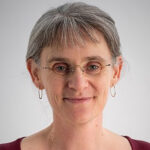
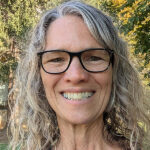
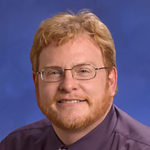
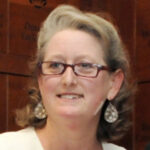

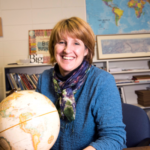

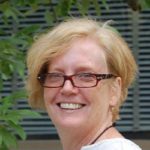
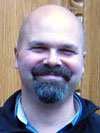
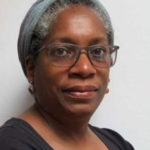
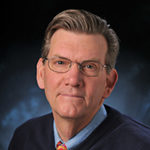
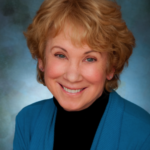
 Fair redistricting is indispensable to a healthy democratic republic. But what exactly is fair? This turns out to be a rather difficult question; it is much easier to see when things are blatantly not fair – when they don’t adhere to one-person one-vote in the second sense of equal representation.
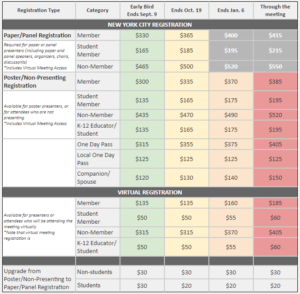 The AAG is now accepting abstracts for all presentation types at the 2022 AAG Annual Meeting to be held February 25 – March 1 in New York City. All abstracts for both in-person and virtual presentations will be accepted. For those participating in-person at the annual meeting, registrants may opt to present their work in either in-person or virtual paper or poster sessions. Those registered for the virtual meeting experience may only present in virtual paper or poster sessions. Deadlines vary by presentation type.
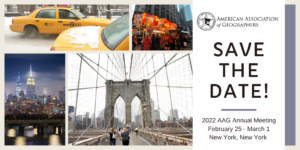 Mark your calendar for the AAG Annual Meeting in the Big Apple, February 25 – March 1, 2022. The hybrid meeting will take place both online and at the NY Hilton Midtown and the Sheraton New York Times Square Hotel. Registration and the call for papers for #AAG2022 is open, and we invite you to organize and participate in sessions, workshops, field trips, special events, and activities. We look forward to seeing you in New York City!
 “I envision the Review as a space to be working through ideas and concepts,” says Editor-in-Chief Debbie Hopkins, who took the helm of the journal in mid-2020: “A place where a reviewer has the freedom to speak.” Read our interview with Hopkins and Editorial Assistant Neha Arora to find out more about what they look for in submissions
 In addition to the most recently published journal, read the latest issue of the other AAG journals online:
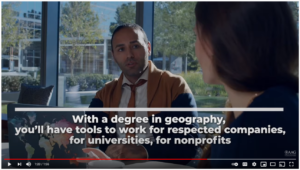 Many AAG members have shared the importance of having new digital marketing tools that can be used to recruit students into geography programs. As part of the COVID-19 Rapid Response initiative, AAG has worked with Green Jay Strategies to produce just such a film:
 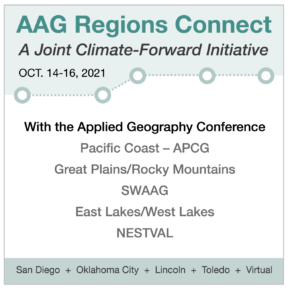 This fall will be a great time to reconnect with colleagues, both in your regions and beyond. For the first time, AAG and the Applied Geography Conference are collaborating with six of our Regional Divisions to create a carbon-sensitive meeting model with
 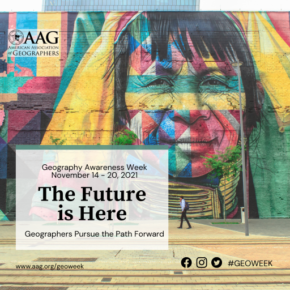 AAG is excited to announce this year’s theme for Geography Awareness Week,
 Last month the Reconciliation in Place Names Act was reintroduced in Congress by Senators Ed Markey (D-MA) and Elizabeth Warren (D-MA), and Congressman Al Green (D-TX). The AAG supported this bill in the last Congress and has again endorsed this important piece of legislation that aims to rectify the litany of US geographic place names that are offensive and outdated. See below for an excerpt from
  The VGSP, which sponsors visits by prominent geographers to small departments or institutions with limited resources, is accepting applications for the 2021-2022 academic year. The purpose of this program is to stimulate interest in geography among students, faculty members, and administrative officers. A list of pre-approved speakers is available on the website, however participating institutions select and make arrangements with the visiting geographer. VGSP is funded by Gamma Theta Upsilon (GTU), the international honors society for geographers. Questions and complete applications may be directed to
  The next testing window for the GISCI Geospatial Core Technical Knowledge Exam® as a part of the GISP Certification has been scheduled and will once again be administered by PSI Online through their worldwide testing facilities in a computer-based testing (CBT) format. The exam will be held December 4 – 11, 2021. The Exam will be administered by PSI Online, a worldwide exam delivery company with over 70 years of experience in providing computer-based testing (CBT) facilities across the US, Canada, and around the world.
 The Kauffman Research team is working with scholars at NORC at the University of Chicago (an independent, non-profit survey research organization) to survey researchers of entrepreneurship and innovation about the professional climate within their field. The survey focuses, primarily, on questions of intellectual inclusion within university departments, conferences and networking arenas, and the publishing and funding domains. Kauffman invites scholars who study entrepreneurship—at all stages of their academic career, and across fields and disciplines to share their perspectives with us.
 Have you ever wanted to share your research with experts and decision-makers in a way that grabs their limited attention? Participate in the Plain Language: Executive Summaries Workshop. This free, virtual event will share strategies for:
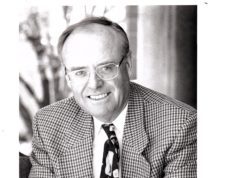 John (‘Jock’) Herbert Galloway
 When I taught my Geography of China class in fall 2019, I had a student from the PRC whom I remember as being particularly open-minded and eager to learn. One day, after I lectured about the massive Hong Kong protests for universal suffrage and the principle of one-person one-vote that were occurring, he asked, nonplussed, “Why do they care so much about one-person one-vote? What’s the big deal? Why bother protesting for that?” He was genuinely curious about what could motivate so many people to expend so much effort on something that didn’t seem to him to be much preferable to the alternative. I explained the benefits of representative and liberal democracy, accountability of one’s elected officials, and the importance of citizens having a real voice in governance, but I could see the skepticism from him and other international students about what US democracy was looking like to the rest of the world.