History Painted in Place: Detroit Murals Map and Guide
Just weeks after Detroit was named #4 in the United States for the creation of beautiful murals, the city’s Office of Arts, Culture and Entrepreneurship (ACE) took on the task of putting the city at number one. To accomplish this, in 2022 the city launched a mural map and app to identify every mural and artist in the city, based on hundreds of curated murals and biographies of artists.
This initiative builds on a rich legacy of mural art in Detroit. Mural art has left its mark as far back to the early 1930s, capturing almost 100 years of history in Detroit. As the city struggled through the transition of the Great Depression, the prominent Mexican painter and muralist Diego Rivera was commissioned by the Detroit Institute of Arts (DIA) to capture the energy of Detroit’s distinctive automotive, steel, and other industries. Often considered to be the most complex artworks devoted to American Industry, Rivera’s “Detroit Industry” murals depict the city’s manufacturing base and labor force on 27 panels, spanning all four walls of the DIA’s Diego Court.
Grand in scope and scale, the paintings celebrate Detroit’s auto factories and depict men of all races side by side on an assembly line. Rivera’s technique for painting frescoes, his portrayal of American life on public buildings, and the 1920s Mexican Mural Movement led to and influenced the New Deal mural programs of the 1930s and 1940s, in addition to the future generation of artists in the city.
The main two panels of his series draw inspiration from Ford’s River Rouge Plant, where Rivera toured and sketched for months before creating large-scale tributes to their workers along with a blend of critique and celebration of the forces of industry. He also blended ancient Aztec symbolism into his modernist treatment, creating allegorical figures to portray the complex relationship of human and machine.
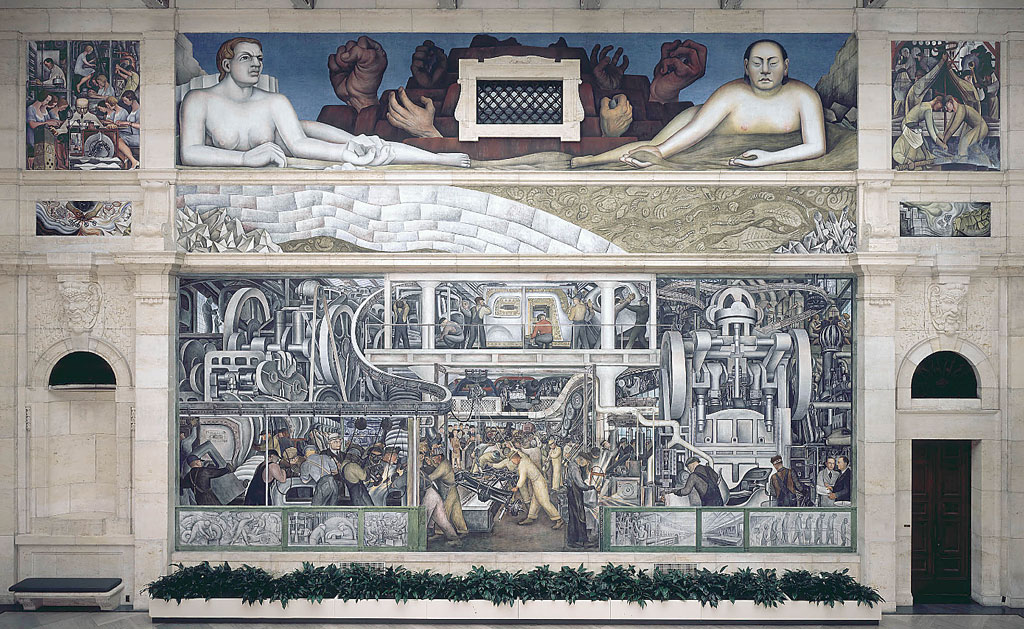
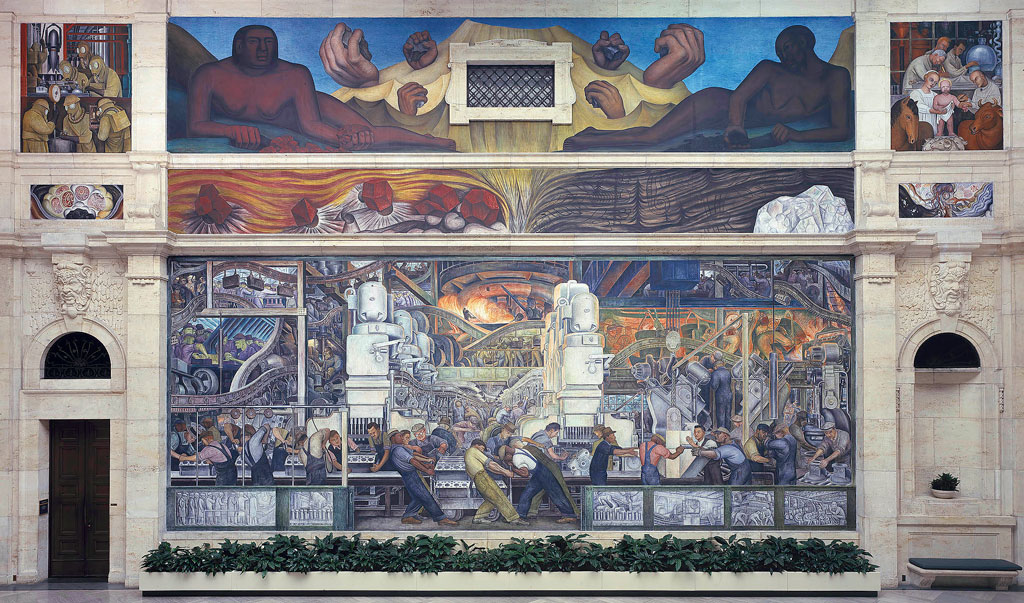
The Detroit Institute of Arts’ Research Library, Archives, and Collection Information department holds the digitization of a collection of existing 8 x 10-inch (large format) nitrate photo negatives, which were taken in 1932–33 to document the making of Diego Rivera’s “Detroit Industry” murals. Their digitization preserves the history of the murals and makes the images accessible to the public. In addition, the film that Ford Motor Company’s team made of the artist at work is now accessible on the National Archives website.
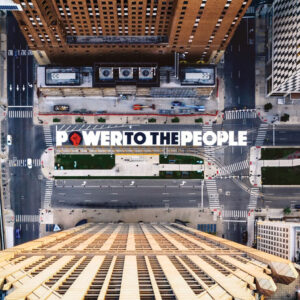
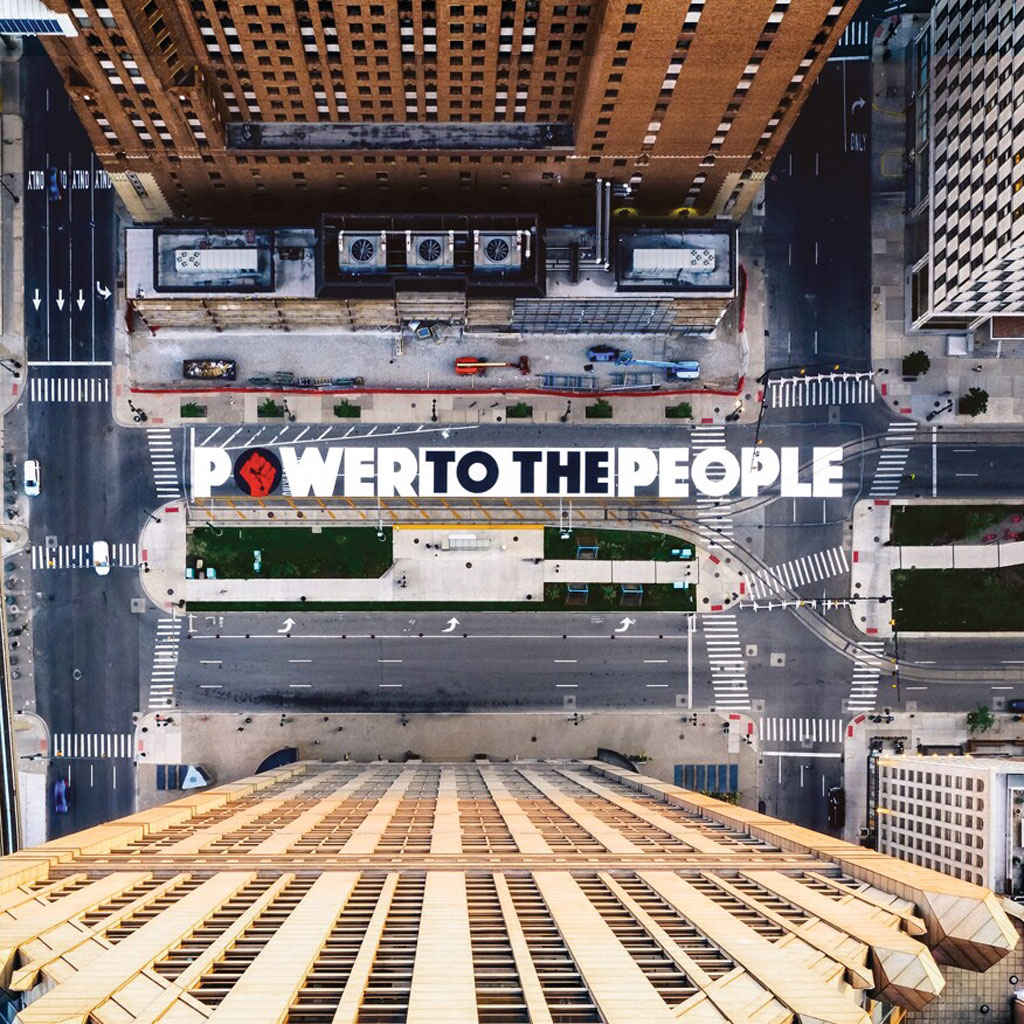
Hubert Massey is a contemporary muralist whose work is inspired by 1960s- and ’70s-era activism and the art of Diego Rivera, having studied with former Rivera apprentices Stephen Dimitroff and Lucienne Bloch. In 2020, Massey worked with twenty Detroit teens to create a street mural in the Lower Woodward neighborhood, celebrating the phrase “Power to the People” and the Black Lives Matter movement spreading worldwide.
Massey works in the fresco technique and is the only known African American commissioned fresco artist in America. He has also produced work in the mediums of mosaic, terrazzo, sculpture, stained glass, and other material. You can find his work across Detroit’s Mexicantown, Greektown, the Cultural Center, the Charles H. Wright Museum of African American History, and the Detroit Athletic Club, among other places.
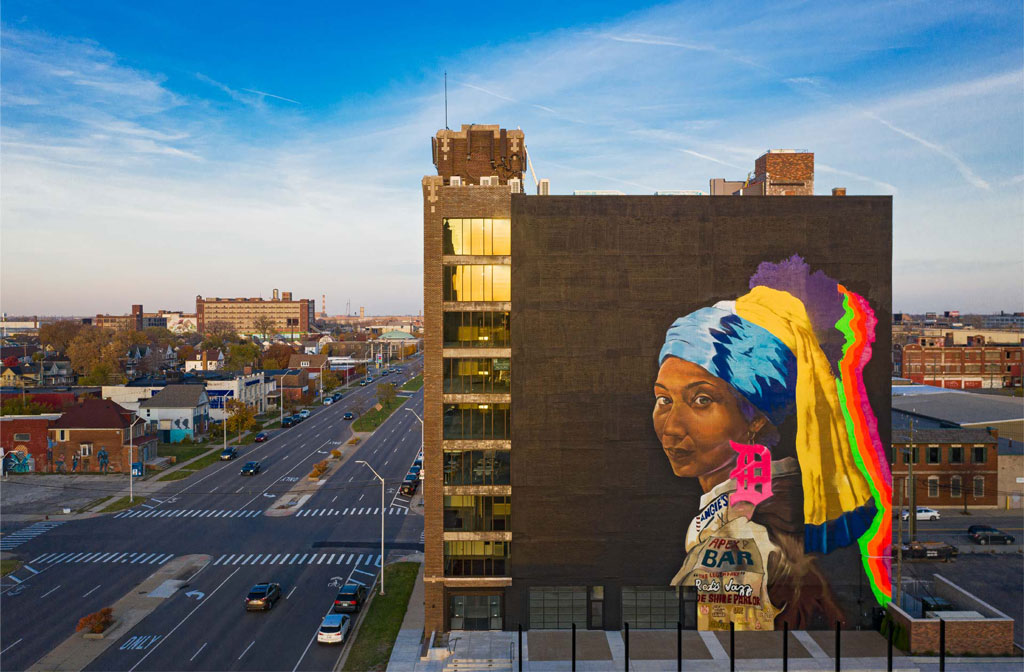
Sydney G. James is another Detroit artist who has contributed large-scale work to the city. A Black figurative painter and public art muralist, she pays homage to the city and emphasizes the deep connection between her art and Detroit, highlighting how murals serve as vibrant expressions of identity and community. Her work not only beautifies the urban landscape but also tells the stories of the people and the place that inspire her.
One of her most notable works is “Girl with the D Earring,” an 8,000 square-foot painting of a Black woman, on Grand Boulevard from Woodward Avenue into Milwaukee Junction. This work re-envisions Dutch artist Johannes Vermeer’s “Girl with a Pearl Earring.” “It’s one woman,” James told Hour Detroit. “But she represents Detroit in general. ‘Girl with the D Earring’ is a celebration of the city and a celebration of its people.”

Musician and visual artist, Sheefy McFly’s “Detroit Never Left” mural, located at Gratiot and Chene near Detroit’s Historic Eastern Market, is a nod to the idea of Detroit having a “resurgence.” The painting depicts a party full of Detroiters: a man jitting—a dance style that was born in Detroit–with a woman twerking (a dance move perfected in New Orleans in the 1990s, with origins in West African dance), a radio, and a Black man wearing a Cartier watch and a blue “D” hat, exuding an authentic Detroit. McFly told The Michigan Chronicle that “anyone from Detroit that walks by can identify with the mural.” His style blends Neo-Expressionism and Pop Art with a Detroit twist that reflects the cultural and social dynamics of Detroit, capturing the city’s spirit and history.
Public art is a form of creative place making, which further deepens connection with places where we live, work, and play.
The vibrant murals of Detroit are more than just artistic expressions; they are a testament to the city’s rich history, diverse culture, and dynamic geography. By intertwining art with public spaces, the city’s murals not only beautify the landscape but also celebrate the unique cultural tapestry that defines this iconic American city.
Explore Detroit’s murals in the city’s interactive map. Filter by year, artist, name, or location.



 Geography in the News is an educational series offered by the American Association of Geographers for teachers and students in all subjects. We include vocabulary, discussion, and assignment ideas at the end of each article.
 Adeti Afe is a third-year student at the University of Maryland Baltimore County, studying Geography and Environmental Science while pursuing a GIScience certificate and a French minor. Her journey with Geography and Environmental Science began with a deep love for nature, which has grown into a commitment to sustainability and conservation. She developed an interest in science in the fourth grade, thanks to a great teacher named Mr. Omar, who was intentional in his teaching. She eventually fell in love with Environmental Science because she enjoys learning about how humans impact the environment, and how organisms interact with a variety of habitats. She attended a French immersion school for nine years, which ultimately inspired her to pursue a minor in the language. Adeti plans to graduate in May 2026. Her interests include ecology and urban planning. After graduating, she aims to attend graduate school and pursue a career in landscape architecture/design or ecology
 Geoffrey Brown is a fourth-year Social and Environmental Geography student at Ohio State University. He’s minoring in Environmental Science with a concentration in Ecosystem Restoration. Although a ‘Buckeye’ at heart, he’s originally from Land O Lakes, Florida, where his interest in the environment started. He’s worked in various internships from Surveying and GIS to Urban Forestry. He’s currently researching water chemistry and habitat changes at an old quarry site that has been turned into an urban park in Columbus, Ohio. In his free time, he likes to go hiking, cook, and complain about the New England Patriots. He looks forward to graduating this fall and is excited to be at the AAG.
 This is the second of a short series of perspectives by 2024-2026 Council Treasurer Antoinette WinklerPrins—a series designed to help illuminate some of the financial challenges a professional organization such as the AAG faces. In this column, she offers information about the costs of managing a hybrid annual meeting, such as the one AAG has supported since 2023.


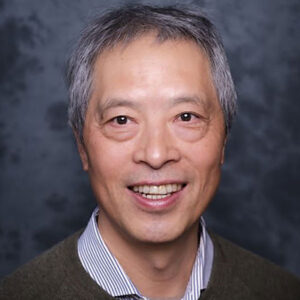 Professor Jiquan Chen has received the 2025 AAG Distinguished Scholarship Honor in recognition of his transformative impact on geography and environmental science. With over 600 publications and more than $30 million in research funding, Dr. Chen has made significant advances in understanding global ecosystems and the interactions between humans and nature. His groundbreaking SESometry framework has provided a new approach to measuring and analyzing the socioecological impacts of climate change, influencing both policy and scientific research worldwide.
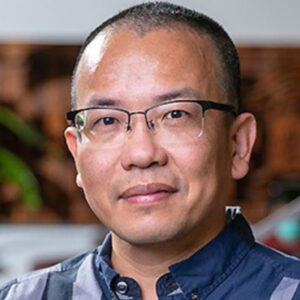 Dr. Xinyue Ye was awarded the AAG Distinguished Scholarship Honor for his transformative work at the intersection of geography, urban planning, and data science. As the Harold L. Adams Endowed Professor at Texas A&M University, he has built an extensive research portfolio that spans multiple disciplines, including geography, urban planning, computer science, engineering, medicine, and public policy. His establishment of pioneering research labs, such as the Urban AI Lab and Computational Social Science Lab, has significantly advanced urban informatics, employing innovative tools like digital twin infrastructures and virtual/augmented reality to enhance urban planning and resilience.
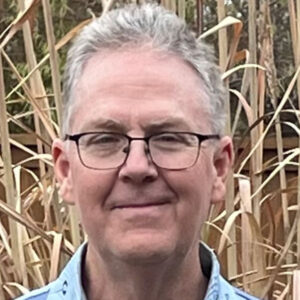 Dr. Scott Greene is recognized with the 2025 Gilbert Grosvenor Honors for Geographic Education Award, celebrating his remarkable dedication to advancing geographic education. Known for his tireless commitment, Dr. Greene’s teaching excellence has earned him several awards including the University of Oklahoma’s highest teaching honor, the prestigious Regents Award for Superior Teaching.
 The American Association of Geographers awards the AAG Lifetime Achievement Honors to Dr. Victoria Lawson for her outstanding contributions to geographical research, teaching and mentoring, and disciplinary service. Lawson has published pathbreaking research at the intersection of feminist economic and social geography. Lawson’s initial work was on migration and informal work in Ecuador. Lawson’s ensuing research focuses on rural poverty issues in the United States, leading to the formation of the Relational Poverty Network that charted a new course for geographical relational poverty thinking. Over her 40-year career, Lawson played a leading role in helping to advance feminist care ethics approaches in geographical research.
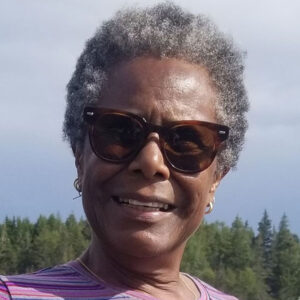 The American Association of Geographers awards the 2025 Lifetime Achievement Honors to Dr. Rickie Sanders. For four decades, her scholarship, transformative teaching, and visionary leadership have reshaped multiple disciplines and had an influence well beyond academia. Sanders, Professor Emerita in Geography at Temple University, is the first Black woman in the United States to earn a Ph.D. in Geography and the first Black woman in the United States to earn the rank of Professor in the discipline. Sanders was among the first to integrate race and gender in geographic research. Sanders has held significant leadership roles, including heading Temple’s Geography and Urban Studies Department and Women’s Studies Program, and has received grant funding to support her innovative work in geographic education.
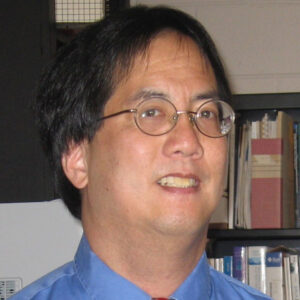 The 2025 Media Achievement Award is presented to Dr. Cary Mock for his exceptional and outstanding communication of geographical and climatological insights to broadcast, print, and social media. He has given well over 200 interviews since 2000 to a wide range of local, national, and international media outlets, ranging from local newspapers to the Washington Post, the Guardian, Reuters, and the Associated Press. He has spoken on radio, including Voice of America, and appeared on numerous television stations in the US, Canada, and the United Kingdom. Professor Mock is highly regarded for his ability to convey climate information in ways that are compelling and relatable to varied audiences and he is especially sought after for his ability to not only explain the science of current weather patterns, but also to put current events in historical contexts. His detailed, thorough archival research of climate history enables him to authoritatively compare current climate extremes to historical events. Through decades of carefully communicating climate knowledge, Cary Mock has developed networks of trusted relationships with media and become a reliable, informative voice and excellent role model.
 Dr. David Cairns is a respected and innovative biogeographer who integrates diverse field studies to understand how ecological and geomorphic patterns and processes are shaped by gradients in environmental conditions, disturbance regimes, and climate change. His work straddles specialty groups and scientific communities, and he has received honors from several, including the Henry C. Cowles Award from the American Association of Geographers (AAG) Biogeography Specialty Group. He is also a Fellow of the American Association for the Advancement of Science. Cairns’ research focus in the high Arctic has been a significant part of his career, and he currently serves as president of the Board of Directors of the Arctic Research Consortium of the United States, which coordinates international and interdisciplinary work in the Arctic, and was integral to the development and activities of the International Polar Year research program. He served in various capacities for the AAG, including serving as chair and board member for the Biogeography Specialty Group, and as a reviewer on AAG journals and student paper competitions. He made impressive efforts to implement equity and diversity policies at Texas A&M University. Dr. Cairns has provided a model of mentorship and collaboration that elevates all of the voices in a room, and has a laudable track record of teaching and mentoring. The AAG is very proud to recognize Dr. David Cairns as an AAG Fellow.
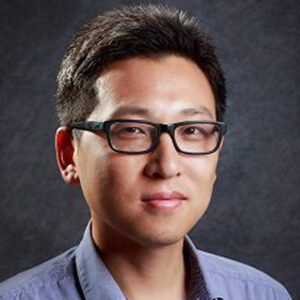 Dr. Gang Chen has an exemplary track record of leadership and service at multiple levels. This includes, among other things, leadership of the Landscape Specialty Group to service on the Southeastern Division of the AAG (SEDAAG) Program committee to the editorship of the journal Remote Sensing of Environment. A professor in the Department of Earth, Environmental and Geographical Sciences, University of North Carolina at Charlotte, Dr. Chen’s scholarship spans environmental sustainability, geospatial analytics, and remote sensing. Dr. Chen’s research has contributed to the development of novel geospatial models and datasets that advance Earth observation, big data analytics, and enhanced accessibility of geographic services to underserved communities. Dr. Chen is a beloved mentor who has served as faculty advisor to 46 students, from high school sophomores to postdoctoral fellows. Passionate about justice, equity, diversity, and inclusion, Dr. Chen has strived to improve representation of women within the male-dominated field of remote sensing and has undertaken numerous professional development initiatives, workshops, and community outreach events to support the next generation of geographers. These efforts span advising two NGOs – Sustain Charlotte and TreesCharlotte in environmental protection using green infrastructure, giving ‘Science Saturdays’ talks at the North Carolina Museum of Natural Sciences for K-12 students and their families, and developing remote sensing workshops for urban planners and students in Bangkok, Thailand. The AAG is very proud to recognize Dr. Gang Chen as an AAG Fellow.
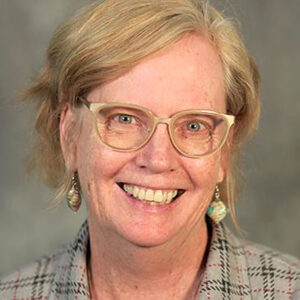 Dr. Lorraine Dowler has played a significant and sustained role in advancing geography through her exceptional research, service, and teaching innovations. She has shaped the field of feminist geography by mentoring a generation of feminist scholars and documenting the ties between the gendered spaces of daily life and state politics, power, and militarization. Internationally renowned for her work on feminist geopolitics, Dr. Dowler raises key questions about the gendering of identities in geopolitics, the power dynamics underpinning them, and the blurred boundaries between public and private spaces. She has had a central role in efforts to advance and improve our discipline through her service on AAG Council and Finance committee and her leadership of initiatives like the Task Force for a Harassment-Free AAG. Within her university, she has held a range of leadership positions, from overseeing initiatives around justice, equity, diversity, and inclusion to the headship of Women’s Studies. An exceptional and dedicated mentor, Dr. Dowler is diagnosing obstacles to access and exposing bias and harassment while mentoring new generations of geographic scholars at the intersection of her department, college, and profession. Recipient of teaching and mentoring awards, she has initiated innovations in undergraduate curriculum such as the Apocalyptic Geographies course, which challenges students to use a geographic perspective in analyzing contemporary global justice issues.
 Dr. Dupigny-Giroux is a University Distinguished Professor of Geography and Geosciences at the University of Vermont. She is also the state climatologist of Vermont and a recognized leader in hydroclimatic natural hazards, climate literacy and climate services. Her research intersects climate science, hydrology, remote sensing, and geographic information science. She was lead editor of “Historical climate variability and impacts in North America,” a first monograph of its kind that uses documentary and ancillary records in analyzing climate variability and change. She has contributed to all five National Climate Assessments, and served a major role on the 3rd and 4th National Climate Assessments. A highly sought-after speaker, Dr. Dupigny-Giroux has focused on climate literacy to help citizens, municipalities and legislators understand how climate science can inform decisions and improve quality of life. Her numerous leadership roles include serving as president of the American Association of State Climatologists, member of the American Meteorological Society’s Applied Climatology Committee, member of the NOAA Science Advisory Board Climate Working Group, and member of three committees/boards of the National Academies of Science, Engineering and Medicine. A Fellow of the American Meteorological Society, she was also an AAG National Councilor and Chair of the Climate Specialty Group, which has honored her with the Lifetime Achievement Award. The AAG is very proud to recognize Dr. Lesley-Ann Dupigny-Giroux as an AAG Fellow. (Photo: Steve Exler, VT EPSCoR program, University of Vermont)
 Dr. Timothy Hawthorne’s career has been focused on community, from his pioneering research in community geography to his leadership in student engagement with participatory research. His innovative vision, creating mobile GIS labs to bring geoscience technology to high-need schools and communities, has made GIS an accessible science and tool for communities. These efforts have advanced geography as a participatory, citizen science. Dr. Hawthorne has been a leader within Applied Geography and geographic education, and he has been an award-winning mentor during his career. Just as his research has been focused on community engagement, his teaching and mentorship has been dedicated to advocating for geography students and providing opportunities for students to get involved in the field, showing them that geography is a discipline engaged in the real world with real peoples’ lives. His publicly engaged research in Belize illustrates how Dr. Hawthorne unites his research, teaching, and mentorship in a participatory, community project. Through long-standing research with a community with which he has built strong ties, Dr. Hawthorne invites students to participate in publicly engaged research. This combination of community research, innovative geographic mobile labs, and student-centered, and participatory field work research both in the US and abroad shows that Dr. Hawthorne is the quintessential scholar-teacher. The AAG is very proud to recognize Dr. Timothy Hawthorne as an AAG Fellow.
 Dr. Joshua Inwood’s career has centered on developing theoretical frameworks to study racism, white supremacy, and the legacies of social justice movements while ensuring this research is accessible and impactful to multiple audiences. His work has positioned him as a leading voice in examining white supremacy within the field of geography, illustrating how geographic concepts and practices both perpetuate racial oppression and serve as tools for resistance. At the core of Dr. Inwood’s scholarship is an exploration of power dynamics in social and political discourse, alongside a commitment to understanding how grassroots resistance movements challenge systems of oppression and demand accountability. Dr. Inwood is widely recognized as one of geography’s most effective advocates and communicators. Through public forums, he demonstrates the critical role of geographic storytelling and perspectives in addressing pressing social issues. A prolific writer, he contributes extensively to both scholarly publications and broader public research platforms, bridging the gap between academia and the wider community.
 Dr. John Kupfer is a highly productive landscape ecologist working at the interface between biogeography, ecology, and geographical information sciences. He has published over 70 papers addressing how ecological patterns and processes are shaped by gradients in environmental conditions, by disturbances such as floods and fires, and by human activities. His research is policy-relevant and actional science. In this way, he is leading biogeography into environmentally important and exciting areas for the 21st century. His research has been recognized twice by the Henry Cowles Award for Excellence in Publication from the Biogeography Specialty Group of the AAG. He is also an award-winning teacher. Additionally, he has provided valuable service to the AAG on numerous committees that include the Governing Council, the Search Committee for the Executive Director of the AAG, the Presidential Taskforce on the State of AAG Regions, and the Honors and Publications committees. He was also president of the Biogeography Specialty Group. The AAG is very proud to recognize Dr. John Kupfer as an AAG Fellow.
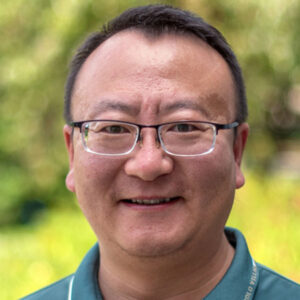 Dr. Zhenlong Li is an associate professor in the Department of Geography at Pennsylvania State University and leads the Geoinformation and Big Data Research Laboratory. He is a leading scholar in GIScience focusing on geospatial big data, spatial computing, and geospatial AI. His research aims to enhance knowledge discovery and decision-making regarding hazards, public health, population mobility, and climate change. His work is widely recognized with over 100 well-cited articles published in top-tier international journals, supported by extensive research grants from prestigious sponsors including NSF and NIH. Dr. Li emphasizes equipping future GIScientists with strong problem-solving abilities by integrating spatial and computational thinking in his teaching and advising, and a number of his mentees have secured prominent academic and professional positions. He currently serves as an associate editor of the International Journal of Digital Earth and International Journal of Applied Earth Observation and Geoinformation. Previously, he served as the Chair of the AAG Cyberinfrastructure Specialty Group and co-Chair of Earth Science Information Partnership (ESIP) Cloud Computing Group. Dr. Li’s significant contributions to the advancement of GIScience and his role as a rising leader in the discipline make him a valued member of the geography community and a deserving recipient of the AAG Fellow distinction. The AAG is very proud to recognize Dr. Zhenlong Li as an AAG Fellow.
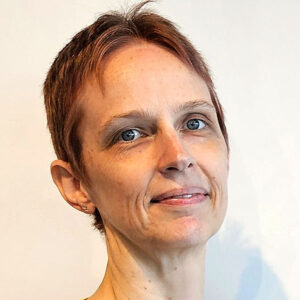 Dr. Corene Matyas has dedicated their career to producing exceptional, community relevant climate research and communication, guiding and mentoring the future generations of geography and climatology scholars, and creating space for marginalized peoples in the discipline. Dr. Matyas’ research studying the precipitation patterns within hurricanes is critically important as we increasingly need to understand heavy precipitation landfalls and how human perceptions of perceived risk impact assessments and actions in the face of these storms. Dr. Matyas’ research is coupled with their exceptional teaching. They have won teaching awards at both the college and disciplinary level and winning the College of Liberal Arts and Sciences Teacher of the Year Award and the SEDAAG Excellence in Teaching Award a decade apart is a testament to the sustained impact Dr. Matyas has made in teaching and guiding students. It is this dedicated service to the future of our discipline that is a throughline for Dr. Matyas’s career. Their service as a judge for student competitions, organizer for specialty groups and societies that make space for marginalized, underrepresented scholars in geography, and their consistent mentorship of students in the classroom as well as involving them in research is inspiring. They also communicate science to diverse audiences through visual arts. The AAG is very proud to recognize Dr. Corene Matyas as an AAG Fellow.
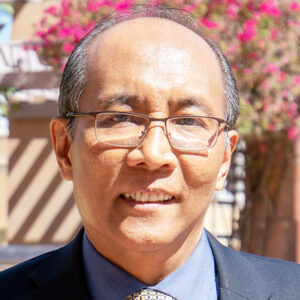 Dr. Myint is a leader in the use of remote sensing and geographic information science to understand coupled human-environment systems in the context of natural hazards, land change, urban sustainability, and environmental management. He has won accolades from organizations including the United States Geological Survey, the University Consortium of Geographic Information Science, and the American Association of Geographers (AAG) Remote Sensing Specialty Group. Dr. Myint has made great efforts to sustain and advance justice, diversity, equity, and inclusion in geography including giving talks at minority-serving schools in under-resourced communities and serving as the founding Chair of his school DEI committee. Dr. Myint has an extensive record of service to the AAG Remote Sensing Specialty Group, including chair, vice chair, director, special session organizer, and judge for student paper competitions (2009, 2015). He was also invited by AAG to help lead a joint workshop organized by AAG, NASA, and USAID as part of the My Community Our Earth (MyCOE) fellowship initiative that focused on climate change and sustainable landscapes in Asia. Dr. Myint has a long and distinguished track record of teaching and mentoring. The AAG is very proud to recognize Dr. Soe Myint as an AAG Fellow.
 Chris S. Renschler is a Supervisory Research Soil Scientist at USDA’s Agricultural Research Service (ARS) National Soil Erosion Research Laboratory (NSERL), following a distinguished 20-year academic career with positions at eight universities on four continents, encompassing research, teaching, and outreach. As the NSERL Research Leader he leads and coordinates science and stakeholder engagement activities to develop the knowledge and technology needed by land users to conserve natural resources for future generations. A Fulbright Scholar, he is internationally recognized for his expertise in soil and water conservation, integrated watershed management, extreme events, and natural resources and hazards management, utilizing GIS and Remote Sensing technologies. His research and stakeholder engagement activities involve the development, validation, and application of integrated hydrology and erosion modeling tools, created collaboratively with scientists, engineers, and practitioners, to facilitate effective decision-making in the context of global climate change, extreme weather events, community resilience, and evolving land use and land cover patterns. Dr. Renschler has exhibited a strong commitment to service within the AAG and has held multiple leadership positions within the AAG, including chair of the Geomorphology Specialty Group, where he played a pivotal role in fostering collaboration and in advancing the group’s career development, research, and awards programs. He is an editorial board member of the Journal of Earth Science Informatics and Remote Sensing. Dr. Renschler is a past recipient of an Achievement in GIS Award from the Environmental Systems Research Institute (Esri) and currently serves as the president of the International Soil Conservation Organization (ISCO). The AAG is very proud to recognize Dr. Christian S. Renschler as an AAG Fellow.
 Dr. Kevon Rhiney is a mid-career scholar with an impressive record of research, leadership, mentorship, and service to the AAG. Dr. Rhiney is associate professor of Human-Environment Geography at Rutgers University and was previously on the faculty at The University of the West Indies (Jamaica). One of the leading Caribbean scholars, Dr. Rhiney has enhance understanding of small-island agrarian political ecology, critical disaster studies, and the human dimensions of global environmental change. This has included groundbreaking research on coupled human-environmental impacts of global change on smallholder coffee production. Dr. Rhiney’s service to the discipline notably includes work as editor of the journal Geography Compass, as co-founder and past chair of the AAG Caribbean Geography Specialty Group, and as a former board member and director for the AAG Development Geographies Specialty Group. His teaching and mentorship reflect a commitment to advancing the field of geography and enriching geographic education on the Caribbean as an understudied region. Dr. Rhiney has been especially active in the recruitment and mentorship of international students and students who enhance the diversity of geography. His expertise in formulating policies has been sought by highly influential organizations such as the IPCC, USAID, and the United Nations Food and Agriculture Organization, which speaks to how Dr. Rhiney’s scholarship has reached into the influential circles beyond the academy. The AAG is very proud to recognize Dr. Kevon Rhiney as an AAG Fellow.
 Dr. Emily Rosenman is a committed and creative economic geographer with interests in urban political economy and geographies of humanitarian finance. These are exciting areas that are already advancing established geographic subfields. Her latest research applies economic geography to the US opioid epidemic, examining how pharmaceutical companies exploited health disparities for profit and identifying policy and regulatory interventions that could prevent future harm. Dr. Rosenman is the 2023-24 chair of the Economic Geography Specialty Group (having previously served as treasurer and vice chair), where she has prioritized advancing the causes of equity, diversity, and inclusion, focusing particularly on the contributions of early-career researchers. She has led the creation of an early-career keynote lecture in economic geography now held annually at AAG. She has also developed a program for undergraduate students of color from across the United States to receive mentorship on applying to graduate school in geography. These new initiatives are deeply integrated into her evolving program of scholarship, where she has written on the politics of representation and citations in economic geography, the limits of engaged pluralism, and a framework for economic geography to become more publicly engaged. With a defining interest in contemporary policy problems, Dr. Rosenman is not just a critic, but a builder of alternative ideas and institutions. The AAG is very proud to recognize Dr. Emily Rosenman as an AAG Fellow.
 Dr. Southworth is a leader in land change, human-environment dynamics, geographic information science, and remote sensing; and more recently the thoughtful engagement with artificial intelligence and big data to address pressing environmental challenges. Her research exemplifies how scholarship can be performed by highly interdisciplinary research teams that involve both social and environmental scientists. She has worked to broaden diversity and inclusion in AAG, especially in terms of transforming remote sensing in the AAG and beyond to be more inclusive of women, and founding and directing the Women in Geography group at the University of Florida. She has served as a Department Chair for 9 years, where she built a track record of incorporating and implementing innovative ideas to expand geography’s standing within the college and beyond. She serves on the AAG task force on nurturing undergraduate geography education and is a past winner of the Association’s E. Willard and Ruby S. Miller Award. She is a sought-after mentor and has shepherded dozens of master’s and doctoral graduate students who have gone on to significant positions in academia, government, and industry. The AAG is very proud to recognize Dr. Jane Southworth as an AAG Fellow.
 Robert Stewart is a Distinguished Scientist in the Spatial Statistics group at the Oak Ridge National Laboratory and a professor in the Bredesen Center Data Science Track at the University of Tennessee, Knoxville. His research primarily centers on the geospatial dimensions of risk and decision-making under uncertainty, applying methods from spatial statistics, machine learning, and Bayesian reasoning. His research has made significant impact on a wide variety of applications including population dynamics, environmental risk, maritime safety, transport risk, built environment characterization, and change detection. He is chair of the IEEE Computational Intelligence Society’s Government Activities Committee. He is an editorial board member of the Journal Transactions in GIS and the International Journal of Geographical Information Science. Robert serves as advisor to the Organisation for Economic Cooperation and Development’s Nuclear Energy Agency as well as the Alan Turing Institute’s Colouring Cities Research Program. He has also chaired the AAG’s Geographic Information Science and Systems Specialty Group at AAG and has served as ORNL liaison to the World Health Organization Chemical Risk Network. Robert remains passionate about mentoring and advising the next generation of geospatial scientists. He has mentored many early and mid-career scientists and served on a number of graduate committees located across multiple departments and universities. The AAG is very proud to recognize Dr. Robert Stewart as an AAG Fellow.
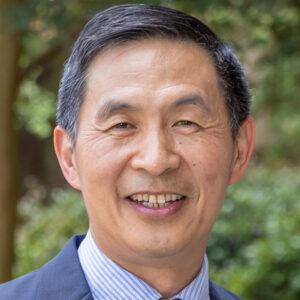 Dr. Fahui Wang, renowned GIScientist, has made seminal contributions to the development and application of spatial analysis methods for understanding spatial and social injustices in health, well-being, and access to services. He pioneered, and continues to advance, the field of spatial accessibility modeling through his work on ‘floating catchment’ methods, and their variants, that have become the gold standard in the field. Adopted by planners and analysts who evaluate health care workforce inequalities and disparities in access, his modeling approaches stand out for their policy relevance and broad impacts. Dr. Wang’s rigorous empirical research identifies communities lacking access to essential health services and informs where and how access can be improved. Organizations that have benefited from his leadership and his energy and passion for the discipline include the AAG’s Spatial Analysis and Modeling & Health and Medical Geography Specialty Groups and the International Association for Chinese Professionals in GIScience. As department chair, he led initiatives that have greatly increased the diversity of departmental faculty and provided supportive mentorship to students from underrepresented backgrounds who faced significant obstacles to success. The AAG is very proud to recognize Dr. Fahui Wang as an AAG Fellow.
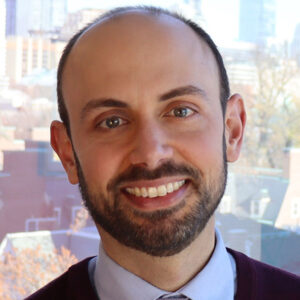 Dr. Michael Widener, professor of Geography and Planning at the University of Toronto, has made original and ground-breaking contributions to health and transportation geography and provided visionary leadership and disciplinary and community service. His research has significantly shaped understandings of the social, spatial, and temporal dimensions of inequalities in food access. Combining rigorous quantitative modeling with thoughtful critical analysis, his research challenges well-worn concepts in the food access literature such as “food deserts.” He has engaged students and researchers with community partners to improve food access and health outcomes for equity-deserving populations in Toronto and across Canada. In his university leadership positions, Dr. Widener has spearheaded initiatives to support and mentor junior faculty; developed innovative curricula in key areas; tackled barriers faced by underrepresented students; and expanded research and educational ties with diverse communities. His international leadership is reflected in his service to the AAG’s Health and Medical Geography Specialty Group; co-editorship of Health and Place; and extensive committee service. An engaged and passionate mentor, Dr. Widener has worked tirelessly to build community among his students, in his department, and across the discipline of geography. The AAG is very proud to recognize Dr. Michael Widener as an AAG Fellow.
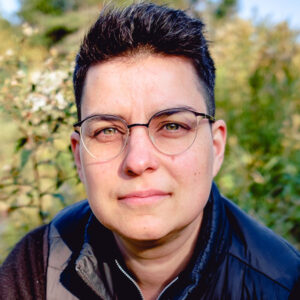 Max Liboiron is recognized for their extraordinary work in developing participatory and anticolonial environmental science practices. Via careful critique of current academic norms and concrete examples of how we can do better, Dr. Liboiron has inspired students and scholars across Geography and the environmental sciences to change their lab manuals, citation practices, collaboration protocols, and research methods. Rather than simply calling researchers out for extractive science, Dr. Liboiron calls researchers in to participatory and reciprocal mentorship and research practices through academic publications, such as Pollution is Colonialism (2021, Duke University Press), online resources such as the CLEAR Lab Manual, and short films made in collaboration with Couple3 that “open the black box of what seem like mundane laboratory practices… that are the main vehicles for equity, humility, accountability, and the creation of a lab collective. Our goal: to do science differently, in ways that do not replicate existing power dynamics.”
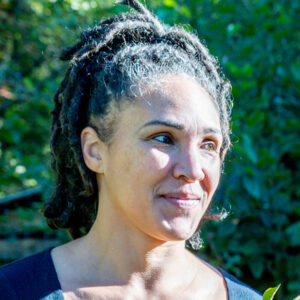 Chérie Rivers is recognized for her radical interdisciplinary and participatory geographic work, which weaves together Black and Indigenous ecologies, decolonial pedagogy, and Africana studies. A scholar of many talents, Dr. Rivers has produced two monographs—To Be Nsala’s Daughter: Decomposing the Colonial Gaze (Duke University Press 2023), and Necessary Noise: Music, Film, and Charitable Imperialism in the East of Congo (Oxford University Press, 2016), as well as an edited volume, The Art of Emergency: Aesthetics and Aid in African Crises (Oxford University Press, 2020). She also founded and runs an educational biodynamic farm, Dandelions’, that integrates the legacy of freedom farming with Black and Indigenous earth practices. To integrate her work as a scholar and a farmer, she has developed important tools for decolonial pedagogy and land-based learning, including an interdisciplinary curriculum entitled Decomposing the Colonial Gaze. Throughout, her goal is to “interrupt… modern colonialism with the transformative power of imagination” asking both what sustains us, and what we want to sustain.
 She is recognized for her lifelong excellence in applying spatial thinking to the challenge of creating better lives and opportunities for people, starting in Detroit in the late 1960s.
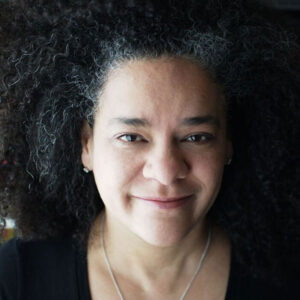 As a foundational voice for Black geographies and Black methods of knowledge creation, Dr. McKittrick has re-imagined scholarship to be both documentation and instigation in modes that are poetic, sonic, material, and rhetorical. In every new, surprising iteration, her work offers “curiosity, wonder, citations, numbers, playlists, friendship, poetry, inquiry, song, grooves, and anticolonial chronologies as interdisciplinary codes that entwine with the academic form,” according to Duke University Press.
 Dr. Bronwen Powell, associate professor in the Department of Geography at Penn State University, has an exceptional record in scholarship focused on Indigenous agrobiodiversity, food and nutrition systems, and international development, grounded in the principles of social justice and anti-racism. She’s been a strong public advocate for Indigenous food sovereignty through her interdisciplinary collaborations and scholarship engagement. As the associate head for Diversity, Equity, and Inclusion in her department, Dr. Powell spearheaded new initiatives that were centered around Indigenous geographies and was recognized for her leadership and commitment to promoting an inclusive academic environment for students and faculty. Dr. Powell has distinguished herself through her strong dedication to anti-racism scholarship and praxis that seems to center Indigenous and African voices and perspectives. The AAG is pleased to honor Dr. Powell with the Harold M. Rose Award for Anti-Racism Research and Practice.
 Dr. Jieun Lee, Associate Professor of Geography, GIS, and Sustainability at the University of Northern Colorado, is recognized for her deep and sustained commitment to increasing diversity and equity in geography at the departmental, institutional, and national levels. Dr. Lee is explicitly recognized for empowering foreign-born women working in U.S. academic institutions in geography and the geospatial sciences. Dr. Lee played a leadership role in creating the Golden Compass program, which provides a safe and supportive environment for international women scholars to share their experiences, build networks, and receive mentoring. Building on the early success of an inaugural workshop, she secured grant funding from the National Science Foundation, in partnership with the Association of American Geographers and the University of Consortium for Geographic Information Science (UCGIS), to expand the reach and impact of the program over the next four years. Her visionary initiative is putting inclusive excellence into practice and opening new leadership opportunities for diverse scholars in the discipline.
 AAG’s Susan Hardwick Excellence in Mentoring Award acknowledges Dr. Leslie Duram’s remarkable mentorship and lasting impact on students and colleagues. Dr. Duram, Professor of Geography and Environmental Resources and Director of the Environmental Studies minor at Southern Illinois University, has advised numerous graduate students, including those from underrepresented backgrounds and helped them achieve career success. Her unparalleled dedication to mentoring students extends to undergraduate students in the Environmental Studies minor as she provides all aspects of professional development opportunities. Dr. Duram’s exceptional mentorship and unwavering support has reached many of her colleagues and contributed to fostering a vibrant and engaged community in her department, university, and the geography discipline. As the department chair, she has been a supportive and inspirational colleague and mentor to her faculty colleagues for personal and professional growth. Her remarkable mentorship was highly recognized by prestigious awards such as Teaching Excellence Award and University Women’s Professional Advancement (UWPA) Mentorship Award by her institution (SIU).
 Dr. Lisa Bhungalia has developed a socially engaged research agenda that bridges empirical observations on justice issues with innovative theory. The committee finds Dr. Bhungalia’s research to be at the forefront of what it means to blend theory and practice in pursuit of justice and the forging of a critical lens through which to examine and better understand social issues in the discipline of geography and global studies. Her book, Elastic Empire: Refashioning War through Aid in Palestine (Stanford University Press, 2024), an excellent example of bridging theoretical frameworks to practice, has earned prestigious honors, including the 2024 Albert Hourani Book Award and the Palestine Book Awards. Like Glenda Laws, for whom this award is named, Dr Lisa Bhungalia brings intellectual care, curiosity, enthusiasm, and empathy to a research project that centers those in the constant struggle for social justice and human rights across Palestine and beyond.
 Pablo Mansilla Quiñones is a decolonial scholar who works closely with Indigenous social, territorial, and environmental struggles throughout South America. He uses a combination of participatory methods (through research) and transdisciplinary engagement approaches in the support of grassroots organizing (through activism) across his projects. These practices (including mapping, geohumanities, and creative geographies) have contributed to successful struggles against mega-dam construction in Mapuche territory and to Wayuú, Añú, and Barí struggles against extractivism in their territories. He is currently leading the Climate Pluriverses project, which brings together researchers and social movement leaders from across the world to engage in a process of building different socio-environmental possibilities from the creative knowledges and grounds of involved groups. Dr. Mansilla Quiñones also contributes to decolonial knowledge production by co-authoring articles with his research collaborators across a career of productivity that merits distinction. For these reasons, Dr. Mansilla Quiñones should be recognized for continuing the legacy of Dr. Glenda Laws and her exemplary commitment to social justice and social policy.
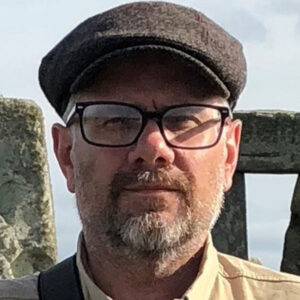 James Tyner, professor, Kent State University in Ohio, is recognized for his distinguished career in political geography, particularly prolific contributions to our understanding of the political economy of violence in Southeast Asia and the US, and histories and geographies of 20th-century Marxism, dedicated mentoring of graduate students, and longstanding record of service to the discipline.
 Loretta Lees, director of the Initiative on Cities, Boston University, is recognized for her distinguished career in urban geography through groundbreaking international research on the temporality and spatiality of gentrification, outstanding mentorship of postdoctoral scholars and PhD students; and as a Scholar-Activist for her steadfast commitment to collaboration with marginalized communities and in applying geography for social justice in cities.
 With Judicial Territory: Law, Capital, and the Expansion of American Empire (Duke University Press), Shaina Potts has provided an extraordinary work of scholarship, as well as a distinctly geographical contribution to critical understandings of the co-constitution of capital and empire in the liberal international order of the twentieth and twenty-first centuries. Tracing the territorial dimensions of Anglo-American dominance over international economic law, Potts demonstrates the ways that subtle jurisdictional questions have played a quiet but powerful role in establishing a global regime that favors private property rights and U.S. investments at the expense of national sovereignty, particularly in the Global South. Potts takes a subject which has typically been the exclusive domain of legal scholarship and convincingly demonstrates that it must be treated as a fundamentally geographic question, revealing a hidden map of legal rulings and capital flows which in many ways better explains the state of the world today than the political map of distinctly bordered sovereign nations. Potts adds rich human detail to this study of a system which is designed to be faceless and abstract, and in doing so she combines the synthetic, multi-perspectival and multi-scalar approach which is the hallmark of extraordinary geographical insight.
 Apartheid Remains (Duke University Press) is a richly textured geographical monograph, the product of more than a decade of fieldwork, and sustained theoretical, political, and personal engagement with the industrial and residential landscapes of Durban, South Africa. Sharad Chari brings together a wide range of materials and methods, including documentary photography, music, archival materials, interviews, to investigate the layered remnants, legacies, and afterlives of apartheid and anti-apartheid struggles. Apartheid Remains, although a vibrantly interdisciplinary work, is rooted in geography, both in its commitments to and orientation to place, and in the clarity of Chari’s critical analysis, organized around a series of spatio-temporal conjectures. Over the course of the book, Chari attends to the sedimented accumulations of colonial relations, while remaining attentive to geographies of hope and livingness that exceed the constraints and toxicities of racial capitalism. Apartheid Remains represents significant theoretical and methodological contributions to geography, demonstrating the capaciousness of geographical writing as a critical orientation to possibility.
 Florida Springs: From Geography to Politics and Restoration (University Press of Florida) is this year’s recipient of the AAG Globe Book Award. Freshwater springs represent sparkling trifles to the casual tourist, cherished landscapes to neighboring residents, and sources of life-giving water for everyone else. Dr. Meindl’s Florida Springs systematically unpacks the immense depth and complexity of these features to expose “competing narratives about springs, what ails them, and how we might repair the damage.” A skilled geographic storyteller, Meindl writes in an engaging and approachable style, accessible to both lay readers and policymakers, while navigating across the breadth of geography in remarkable ways. Blending nuanced discussions of physical science, historical geography, and public policy, Meindl masterfully illustrates the unique power of geography to synthesize a wide range of subfields and concepts to produce clear and useful understandings of landscapes and ecosystems of vital importance to all.
 A deeply researched and well-written account of the connections between the lumber industry in northern California and the building of San Francisco, City of Wood: San Francisco and the Architecture of the Redwood Lumber Industry (University of Texas Press) draws on cultural and economic geography, as well as architectural and environmental history, to trace the links between redwood lumber camps and sawmills to lumber yards on the docks of San Francisco and construction of wooden housing in the city. Throughout the book, Buckley embeds his analysis in the lives and landscapes of production and consumption: the types of ordinary, everyday spaces and places that had fascinated writer, artist, and founder of Landscape magazine J.B. Jackson, for whom this award is named. Beautifully illustrated with newly drawn maps at different scales and historic photographs, City of Wood is a magnificent achievement, reminding us that city building depended on the bounty of nature, capitalist enterprise, and prodigious labor. The book informs and shapes our understanding of the construction of towns and cities across North America and beyond.
 Based on an extraordinary amount of research in vast collections of postcards, Framing Nature: The Creation of an American Icon at the Grand Canyon (University of Nebraska Press) shows how the visual image of the Grand Canyon has been shaped and remade in the public mind. Youngs draws on cultural geography and landscape analysis to make her case, demonstrating her field knowledge of the dramatic physical geography of the Grand Canyon. Appropriately, her book is beautifully illustrated with many postcard views and historic images, as well as clearly drawn maps of viewpoints. In using postcards as evidence, the committee felt, Youngs reflected J.B. Jackson’s love of American popular culture. Framing Nature makes a substantive, informed, and novel contribution to cultural landscape analysis, and informs our understanding of the transformation of one of the world’s greatest natural landscapes into a national and environmental icon.