AAG  Embarks on National Partnership to Support Foreign-Born Women Faculty

Multi-year, $1M initiative funded by the National Science Foundation

National Science Foundation official logoThe American Association of Geographers (AAG) is the recipient of a major grant as part of  a three-year, $1 million dollar project entitled Geospatial sciences Alliance for International women faculty Advancement (GAIA). The project is funded by the National Science Foundation (NSF) ADVANCE program, which supports “increased representation and advancement of women in academic science and engineering careers, thereby contributing to the development of a more diverse science and engineering workforce.”

Jieun Lee
Jieun Lee, Principal Investigator for ADVANCE-GAIA

Principal Investigater Dr. Jieun Lee, associate professor of Geography, GIS, and Sustainability at the University of Northern Colorado (UNC), will lead the project along with Co-Principal Investigators Dr. Gary Langham, Executive Director of AAG; Dr. Amy Rock, Executive Director of the University Consortium for Geographic Information Science (UCGIS), and Dr. Laxmi Ramasubramanian, Associate Provost for Faculty Success, The City University of New York, College of Staten Island (CUNY-CSI).

The GAIA partnership reflects years of work on the issue of supporting women who teach geography and all geospatial sciences in the United States but were born in different countries, many of whom are women of color. Drawn from lessons learned during the first-ever 2022 Golden Compass convening, which focused on mentoring foreign-born women faculty (FBWF) and gathering insights for faculty equity and inclusion, GAIA aims to enhance and scale the insight and curriculum from the Golden Compass. Both programs were developed by Dr. Lee, in collaboration with fellow alumni of UCGIS’s TRELIS program for advancement of women, and through support from UCGIS, AAG, UNC, and the Korea-America Association for Geospatial and Environmental Sciences.

“This grant gives us an excellent platform from which we can continue the collaboration of Golden Compass, gather data about the experiences of women scholars from other countries, and develop implementation plans that lead to systemic change within university geography departments,” said Dr. Lee.

“This project is exactly the sort of partnership we want to invest in,” said Gary Langham, Executive Director of AAG. “Academia needs to create spaces where all faculty can thrive, bringing their talents to institutions, students, and research. I take pride in our part toward helping foreign-born women faculty succeed, persist in their careers, and find satisfaction in being geographers at U.S. institutions.”

Over the next three years, working in partnership with the CUNY-CSI and UCGIS, UNC and AAG will engage with foreign-born women faculty (FBWF) and their institutions to gather information on the experiences of FBWF in American institutions.

The GAIA findings and analysis will be made available to the public and will include recommendations for how departments can become more welcoming spaces.

In the final phase of the project, GAIA will work directly with departments that create an implementation plan for supporting their foreign-born women faculty, guiding each department and its leadership to ensure the effective adoption of the GAIA curriculum, successful programming, and measurable outcomes.

The Geospatial sciences Alliance for International women faculty Advancement (GAIA) is supported by the National Science Foundation under Award Nos. 2404263 and 2404264. Any opinions, findings and conclusions or recommendations expressed in this material are those of the author(s) and do not necessarily reflect the views of the National Science Foundation. For additional information, contact AAG.

    Share

Challenging “It’s Always Been This Way” with an Ethos of Care

Person holding their hands in the shape of a heart with sunlight in background

By Risha RaQuelle, Chief Strategy Officer

Photo of Risha Berry

The AAG will host the Convening of Care, September 19-20, 2024, funded by the National Science Foundation in partnership with the University of Colorado Colorado Springs (UCCS) and the National Organization of Research Development Professionals (NORDP).

Thirty participants, drawn from among early career scholars, department leaders, and representatives from the research enterprise (ex. funding officers at colleges and universities), will meet at the AAG offices in Washington, DC, to explore how belief systems such as the ones we live within today still carry the heat signature of systems created hundreds of years ago.

Many behaviors and practices that we take for granted in current institutions are in fact the legacy of these older systems, undermining the lives and often the careers of many of us:

  • prioritization of timeliness and urgency at the expense of developing trusting and collegial partnerships,
  • Individualism, competitiveness, and perfectionism, and
  • hierarchies of power that reinforce one-way belief systems.

The exploration of how these entrenched systems and attitudes lead to protecting or reinforcing the “it’s always been this way” tradition, is paramount in creating an “Ethos of Care.”  An ethos of care seeks to enhance practices and processes within the research enterprise and enable collaborators to confront and address the accepted norms of power and bias, and “resolve to disrupt and transform those norms in a mutually beneficial, evolving and inspiring manner,” according to Principal Investigator Emily Skop of UCCS.

The goal of the convening is to enable practitioners in the research enterprise to probe the origins of knowledge discovery and inspire critical reflection on the ethical, political, economic, and emotional aspects of research practice and knowledge production.  Participants will complete an Ethos of Care Credential and a foundational paper to inform implications for care in practice.

Our work is ever-evolving, and optimistic that even the most permanent-seeming system of beliefs or policies once invented, can be transcended.  Did you know that we have a TLC GRAM toolkit? You can start today by evaluating and tracking your progress in this community engaged care movement.  I’m rooting for you.

The Convening of Care project is supported by the National Science Foundation under Award No. 2324401 and Award No. 2324402. Any opinions, findings and conclusions or recommendations expressed in this material are those of the author(s) and do not necessarily reflect the views of the National Science Foundation.

The AAG Culture of Care column is an outreach initiative by the AAG JEDI Committee. Don’t forget to sign up for JEDI Office Hours. The current theme of Office Hours is An Ethos of Care in the Research Enterprise.

    Share

Returning to Detroit: In solidarity and with care

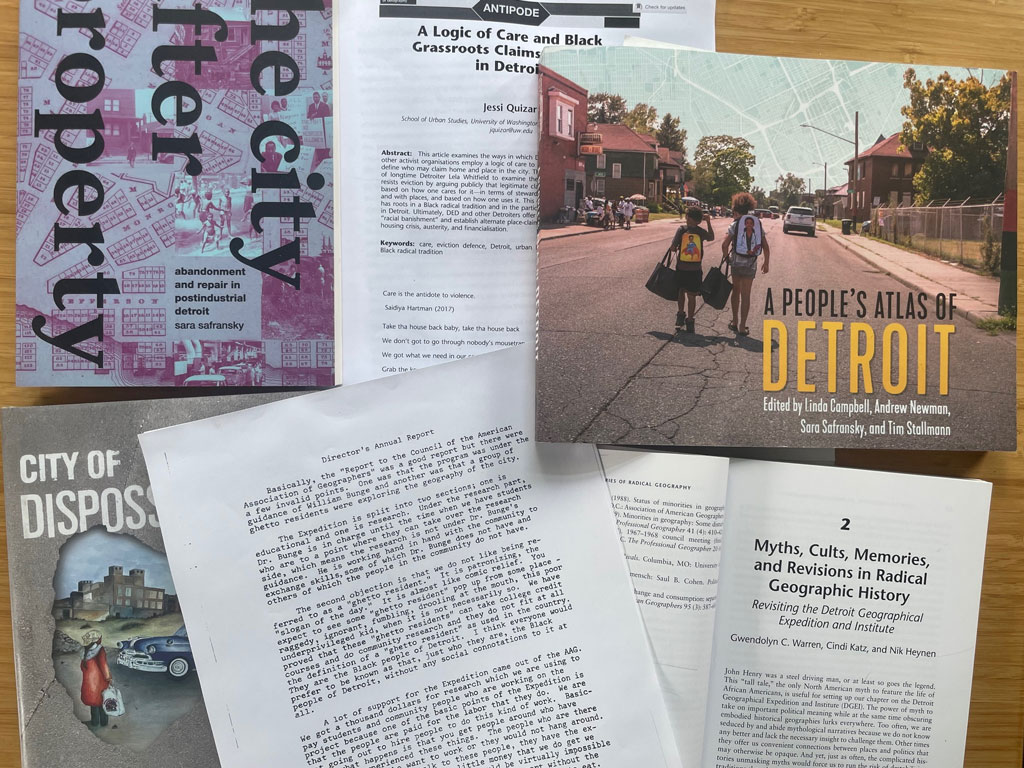
A photo of several papers and books about Detroit arranged on a desktop. Credit: Patricia Ehrkamp

Photo of Patricia Ehrkamp

After a 40-year hiatus, our Annual Meeting will be returning to Detroit, Michigan next March. The stack of Detroit-themed books and articles on my desk has been growing, and I am thrilled that the AAG will meet in this city again. Our long absence prompted me to briefly look back: We last met in Detroit in 1985 during the AAG presidency of Risa Palm, with 2,377 people in attendance. This may seem low given the size of more recent annual meetings, but the number of attendees amounted to roughly 44 percent of the AAG membership at the time. We were a much smaller organization then! As AAG Past President Risa Palm reminded me, the 1985 meeting was overshadowed by the University of Michigan’s decision to close their geography department only a little while earlier, which brought home the “institutional precarity of our discipline” (Huntley and Rosenblum, 2020: 367)—an ongoing concern for geography.

Like many deindustrialized cities in the U.S., Detroit has seen tremendous change since 1985, with shifts in its economic base, disinvestment, and serious population decline. In 2013, Detroit became the largest city in the US to ever declare bankruptcy. Since then, as you may know from U.S. media coverage, Detroit’s fate has changed. A recent example is the Ford corporation’s purchase and renovation of Detroit’s Michigan Central Station, which re-opened in June 2024. US media celebrate Detroit’s recent renaissance, including its renewed population growth after a decade of losses. More critical voices doubt, however, that all these new investments in the city, many of which come from outside, will benefit Detroiters. These are important concerns because “Detroit is continually rendered as a no-man’s-land and new frontier waiting to be claimed, tamed, and resettled” as Linda Campbell, Andrew Newman, Sara Safransky and Tim Stallman (2020: 11) write in A People’s Atlas of Detroit.

Our return to Detroit is in no small measure due to the advocacy of the Black Geographies Specialty Group (BGSG). As I learned during our preparations for the meeting in Detroit, BGSG urged former Executive Director Doug Richardson to hold another Annual Meeting there. “It is in the spirit of solidarity, academic intrigue, and social justice that we encourage you to select Detroit, Michigan as the host city for a future AAG Conference,” BGSG wrote in a letter[1] following the Boston AAG meeting in 2017. The letter emphasized that this majority Black city with its long history of activism and community organizing had long inspired important geographic research on race, ethnicity, and anti-Black racism–among others, the work of AAG Fellow and 2019 AAG Lifetime Achievement Award recipient Joe T. Darden.

Detroit, of course, holds a special place in the geographic imaginations of urban, radical and critical geographers because of the Detroit Geographical Expedition and Institute (DGEI), which was co-founded and co-directed by community organizer Gwendolyn Warren and geographer William (Bill) Bunge (1928-2013). DGEI operated from 1968-1972 with the goal to put geography to work in the interest of racial justice through community-based mapping and facilitating access to college education for Black Detroit youths. This work was possible with funding from the AAG. The re-release of Bunge’s book Fitzgerald: Geography of a Revolution in 2011 garnered renewed interest in the DGEI and Bunge’s work. Six sessions at the Annual Meeting in Boston in 2017 commemorated his contributions to radical geography, urban geography, and the quantitative revolution. At the 2014 AAG meeting in Tampa, two sessions focused on activist geographies and the legacies of the DGEI, including Gwendolyn Warren’s reflections in conversation with Cindi Katz (see also Warren, Katz and Heynen, 2019). This conversation challenged some of the myths in our discipline with regard to the DGEI that too often only focus on Bunge without fully understanding Warren’s role or acknowledging the important contributions of community research by “the Black people of Detroit.”

Given these complex histories, I hope that we will return to Detroit in solidarity and with care. This means “to take seriously the ways in which our work is “for others” and to build connection and responsibility as key values in our research approaches,” as AAG Past President Vicky Lawson wrote in 2007. It also means that we take seriously the city’s history and geography, and that we honor its residents’ experiences and visions for Detroit’s present and future. Recent work by geographers and others has taken on questions such as anti-eviction struggles (Quizar, 2024), property, displacement, and repair (Safransky, 2023), Indigenous and Black dispossession (Mays, 2022), and brought together community members, activists, and scholars to map and tell more nuanced stories of Detroit (Campbell, Newman, Safransky, and Stallman, 2020).

Returning to Detroit in solidarity and with care offers us an opportunity to pause and reflect on some of the historical erasures, silences, and exclusions in geography and in our professional organization, while also recognizing how much our discipline and the AAG have changed over time as we keep broadening the tent of geography. These changes are significant! I wrote about AAG’s commitment to advocacy, justice, equity, diversity, and inclusivity in my last column. But consider this: 40 years ago, there was no Black Geographies Specialty Group that could have advocated for a meeting in Detroit. Today, BGSG is a highly dynamic feature with a strong voice in the AAG and usually offers a curated track at our annual conference.

Holding a meeting in Detroit again—a city that has generated so much geographic interest and research—and returning there in solidarity and with care encourages us to make space for conversations about the future of geography, to collectively envision new geographic knowledges and practices, and—to borrow from Katherine McKittrick (2006: xv)—create more “humanly workable geographies.”  To me, this is what the meeting theme–Making Spaces of Possibility–is all about. As we have been planning the meeting, solidarity and care have already provided inspiration for several special sessions that will center research on Detroit and the wider region, and honor some of the contributions to geographic knowledge that have gone unacknowledged for too long. I hope that our annual meeting in the city of Detroit will be guided by “collective care—care for land, for relationships, and for people’s well-being” (Quizar, 2024: 802).

Our planning and preparations for the Annual Meeting is putting into practice solidarity and care through AAG’s commitment to a place-based approach to Annual Meetings. This includes putting together a series of webinars on Detroit and its surrounding areas, and creating opportunities for collaboration, volunteering, and learning in and from the city and region where we meet. Registration is open. I hope to see many of you there!

[1] The letter also listed the following supporters: Drs. Joe Darden & Alan Arbogast, Michigan State University Department of Geography, the Eastern Michigan University Department of Geography and Geology, the Geographies of Food and Agriculture Specialty Group, ACME: An International Journal for Critical Geographies, Journal of Social & Cultural Geography and Feminist Liberating Our Collective Knowledge (FLOCK), UNC — Chapel Hill.

References

Campbell, L., Newman, A., Safransky, S., Stallmann, T. (eds.) (2020). A People’s Atlas of Detroit. Wayne State University Press.

Detroit Geographical Expedition and Institute (1971). Available at https://antipodeonline.org/wp-content/uploads/2017/01/dgei_fieldnotes-iii_b.pdf.

Huntley, E. R., & Rosenblum, M. (2020). The Omega affair: Discontinuing the University of Michigan Department of Geography (1975–1982). Annals of the American Association of Geographers, 111(2), 364-384. https://doi.org/10.1080/24694452.2020.1760780#d1e244

Lawson, V. (2007). Geographies of Care and Responsibility. Annals of the Association of American Geographers, 97(1), 1-11. https://doi.org/10.1111/j.1467-8306.2007.00520.x

Mays, K. T. (2022). City of Dispossessions: Indigenous Peoples, African Americans, and the Creation of Modern Detroit. University of Pennsylvania Press.

McKittrick, K. (2006). Demonic Grounds. Black Women and the Cartographies of Struggle. University of Minnesota Press.

Quizar, J. (2024). A Logic of Care and Black Grassroots Claims to Home in Detroit. Antipode, 56(3), 801-820.

Safransky, S. (2023). The City after Property: Abandonment and Repair in Postindustrial Detroit. Duke University Press.

Warren, G. C., Katz, C., & Heynen, N. (2019). Myths, Cults, Memories, and Revisions in Radical Geographic History: Revisiting the Detroit Geographical Expedition and Institute. Spatial Histories of Radical Geography: North America and Beyond, eds. T.J. Barnes and E. Sheppard, Wiley: 59-85.


Please note: The ideas expressed in the AAG President’s column are not necessarily the views of the AAG as a whole. This column is traditionally a space in which the president may talk about their views or focus during their tenure as president of AAG, or spotlight their areas of professional work. Please feel free to email the president directly at P.Ehrkamp@uky.edu to enable a constructive discussion.

    Share

Gathering Examines Hurricane Risk in a Changing Climate

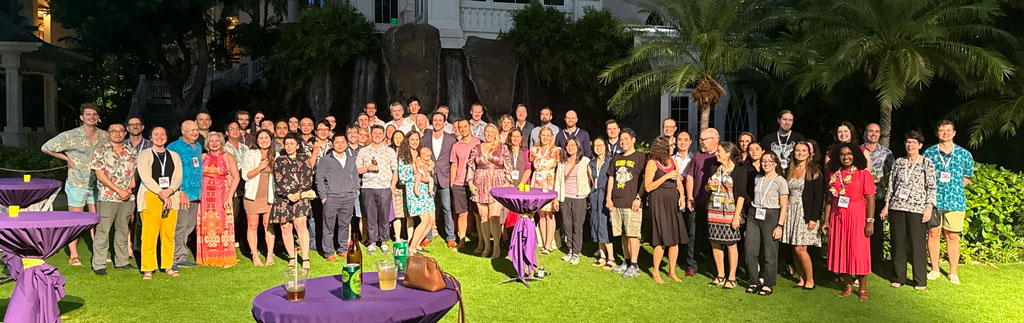
Attendees from the Symposium on Hurricane Risk gather for a group photo outside for the closing reception. Credit: Jennifer Colins

Over almost two decades, the 8th annual Hurricane Risk in a Changing Climate Symposium has grown into a gathering where experts in the public and private sector can grapple together with escalating risks of hurricanes in our warming world. Held in Honolulu, Hawaii, from June 2-6, 2024, this year the symposium drew 75 specialists from diverse fields—meteorologists, social scientists, engineers, and reinsurance professionals—who engaged in in-depth discussions relating to hurricane risk over the course of four days.

Participants discuss their research during a poster session at the Symposium on Hurricane Risk. Credit: Jennifer Colins

The evolution of the symposium’s theme over the years mirrors a deepening understanding of the multifaceted nature of hurricanes and their impacts. This year, the meeting explored evolving challenges, with sessions such as “Signal or noise? Uncertainties in the future tropical cyclone (TC) risk projection,” dissecting the intricacies of risk modeling, debating strategies for mitigation, adaptation, and comprehensive risk management. These critical discussions could help shape policies and practices that affect millions of livelihoods.

“I love the general inquisitiveness of the group that attends,” says Phil Klozbach, research scientist in the Department of Atmospheric Science at Colorado State University, who oversees the university’s seasonal tropical cyclone forecasts. “There’s some really good discussion there. I also learned about a lot more industry folks that use our seasonal forecast too.”

The symposium also served as a meeting place for the next generation of researchers, with students presenting yearlong research and receiving recognition for their contributions. Judges ranging from private industries to academia recognized three students for the presentation of their research:

Katy Hollinger Beatty, North Carolina University (Advisor: Gary Lackmann) for her work titled “Anticipating Future Tropical Cyclone Rainfall and its Influence on Transportation Infrastructure and Flooding”

Cong Gao, Shanghai Jiao Tong University (Advisor: Lei Zhou) for his work titled “Ocean Subsurface has Significant Impacts on Tropical Cyclone Genesis”

Megan Blair, University of South Florida (Advisor: Jennifer Collins) for her work “How Hurricane Ian was Communicated to the Public and How they Perceived their Risk as a Result”

“It was such a great meeting. I am returning to work this week full of new ideas and recharged passion. That’s the best kind of conference,” noted Student Award Chair, Suz Tolwinski-Ward, Director of Climate Statistics at Verisk.

Attendees listen during a welcome session at the Symposium on Hurricane Risk. Credit: Jennifer Colins

As the symposium concluded, it was clear that the collaborative efforts of the attendees would resonate far beyond the conference room. The dialogues initiated here are set to influence research, policy, and practice, steering a global community towards more resilient and adaptive strategies in the face of hurricane risks. As a result of the collective efforts, a peer-reviewed book related to the conference theme, published by Springer, is now available.

This year’s conference was led by AAG member, Fellow, and Distinguished Scholarship Honor Awardee Jennifer Collins (University South Florida), and co-organized by AAG member Yijie-Zhu (Florida Atlantic University). Sponsorships from the American Association of Geographers, the University of South Florida, Gallagher Research Centre, RenaissanceRe, Reask, Moody’s RMS, and FM Global supported the conference. AAG’s support assists up to eight students to receive free registration.

Learn more about the 2024 Symposium on Hurricane Risk in a Changing Climate.

Curious about working with AAG? We are seeking new partnerships for 2025. Find out more.

    Share

AAG Welcomes Summer 2024 Interns

Two new interns have joined the AAG staff this spring. The AAG would like to welcome Nora and Shayla to the organization.

Nora ButterNora Butter (she/her) is a junior at George Washington University pursuing a dual B.A. in Environmental Studies and Geography, with minors in Geographic Information Systems (GIS) and Sustainability. Her areas of interest include environmental justice, geomorphology, biogeography, sustainable city planning as well as mapping for representation and aid. In her free time, she enjoys attending concerts, baking, and musical theater. As an Ohio native that grew up in a car-heavy town, Nora enjoys exploring Washington, D.C. via public transportation and loves riding the metro. She’s excited for this summer and the research that follows!
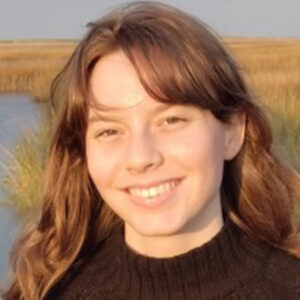
Shayla Flaherty is a senior at Bridgewater State University, pursuing a B.S. in Geography with a concentration in Environmental Planning and Conservation. Her areas of interest include GIS, natural resource conservation, coastal zone management, and ecosystem ecology. Outside of academics, she enjoys painting, dancing, and golfing. She is excited to be working as the AAG’s Media and Communication intern.



If you or someone you know is interested in applying for an internship at the AAG, the AAG seeks interns on a year-round basis for the spring, summer, and fall semesters. More information on internships at the AAG is also available on the Jobs & Careers section of the AAG website at https://www.aag.org/about-us/#internships.

    Share

Revolutionary Geographical Lessons from Mississippi Freedom Schools

Two young African-American girls look down from window in front of the Freedom School Photo by Ken Thompson, ©The General Board of Global Ministries of The United Methodist Church, Inc. Used with permission of Global Ministries.
Freedom School Photo by Ken Thompson, ©The General Board of Global Ministries of The United Methodist Church, Inc. Used with permission of Global Ministries.

By Derek H. Alderman, University of Tennessee and Joshua Inwood, Pennsylvania State University

Derek AldermanJosh InwoodThe 60th anniversary of Freedom Summer is upon us. In the summer of 1964, several civil rights organizations, with the Student Non-Violent Coordinating Committee (SNCC) often leading the way, carried out a bold campaign uniting volunteers from across the country with oppressed, often forgotten, communities in Mississippi. This effort not only combated racial discrimination but also led to widespread changes, including expanding American democracy. The campaign’s grassroots, participatory approach empowered Black people through voter registration, community organizing, and education.

Freedom Schools were a transformative innovation of the Mississippi Freedom Project. SNCC workers and their local allies transformed churches, backyards, community centers, and other meeting places in Black communities into 41 Freedom Schools that served over 2,500 students of color. These schools provided a powerful alternative to a segregated and poorly funded state-run school system that sought to reproduce passive and demoralized Black communities—what SNCC organizer Bob Moses called the “sharecropper education.” Freedom Schools have their origin in the history of Black citizenship schools and a tradition of educational self-determination and “fugitive pedagogy” in the face of severe oppression dating back to the days of enslavement.

Freedom Schools met the basic educational needs of Black youth long denied an adequate education under racial apartheid. These schools also fostered African American creative expression, critical thinking, and appreciation for Black history and literature. These insurgent classrooms were spaces of open dialogue, encouraging students to question and challenge the ideologies and effects of racism, white supremacy, and inequalities in U.S. society. They built the self-esteem and activist skills necessary for students to participate in their own liberation. Historian Jon Hale notes that many Freedom School students worked to integrate public spaces and businesses, organize demonstrations and boycotts, and canvass communities to encourage voter registration. Although these schools operated for just six weeks in the summer of 1964, they proved influential in creating a revolutionary cadre of young Black Mississippians ready to take on the role of citizen leaders in their communities. Freedom Schools have continued to inspire educational models of social justice that are still found today.

Although scholars have often overlooked this fact, Geography was a pivotal part of the Freedom School curriculum.  Freedom Schools offered revolutionary spatial learning and inquiry, focusing on Black students and their families’ often-ignored struggles and needs. Though not explicitly stated, the curriculum developers sought to spur students to develop an ‘anti-racist regional knowledge.’ This regional knowledge was not just a collection of facts and figures but a tool for understanding and challenging the power relations undergirding the building of the Deep South as a racially unjust region. It was an embodied and visceral form of geographic learning in which SNCC empowered students to reflect on their personal experiences with Jim Crow discrimination and identify the social and geographic forces behind their oppression. Running through the Freedom School curriculum was an idea made popular many years later by Clyde Woods, who argued that racialized underdevelopment in the South did not simply happen. It resulted from a monopoly of white power, what Woods called the “plantation bloc,” arresting the development opportunities of Black people – even as these oppressed communities found ways to survive and create.

Clyde Woods…argued that racialized underdevelopment in the South did not simply happen.

In our National Science Foundation-funded research, we have examined the Freedom School curriculum closely regarding geographic education, finding that these pedagogical ideas went beyond how Geography was taught in many schools and universities at the time. While top academic geographers in 1964 debated how to make the field more scientifically precise and the merits of systematic versus regional approaches, SNCC was in Mississippi creating course content that directly connected U.S. racism and segregation to broader regional and national analysis and putting its organic geographic intellectualism in the service of racial equality. The disconnect between Geography in Freedom Schools and what was practiced by ‘professional geographers’ speaks not just to the path-breaking nature of Freedom Summer but also to the complicity of our disciplinary spaces and practices in historically ignoring and excluding Black communities.

Along with colleagues Bethany Craig and Shaundra Cunningham, our paper in the Journal of Geography in Higher Education delves into Freedom Schools as a neglected chapter in geographic education. We highlight the curricular innovations they deployed in producing geographic knowledge accountable to Black experiences, communities, and places. Freedom School curriculum called on students to critically use geographic case studies to conduct regional comparisons — both within the U.S. and internationally — to situate Mississippi and the South within broader racial struggles and human rights geographies to raise the political consciousness and expand students’ relational sense of place.

At Freedom Schools, students developed skills using data from the U.S. Census and other sources to understand racial disparities in income and housing across communities in Mississippi and concerning their own families. Freedom Schools engaged students in interrogating the material landscapes of inequality to ask probing questions about the unjust distribution of resources from place to place. The curriculum frequently used maps, not just as passive locational references. Black students were given opportunities to produce “power maps,” which charted the social and spatial connections and networks between institutions and influential people undergirding the oppressive conditions in their community. Plotted on these unconventional but important cartographies were the larger geographic scales of power driving white supremacy—from the local to the national.

The disconnect between Geography in Freedom Schools and what was practiced by ‘professional geographers’ speaks not just to the path-breaking nature of Freedom Summer but also to the complicity of our disciplinary spaces and practices in historically ignoring and excluding Black communities.

As the nation remembers Freedom Summer, we encourage colleagues to delve into the revolutionary Geography lessons at work in Freedom Schools. This curriculum offers a window into the Black Geography knowledge production that always undergirded the Civil Rights Movement. It is an essential counterpoint to popular treatments that give too little attention to the intellectual labor and sophisticated planning behind the Movement. Black geographies of education, such as those found in Freedom Schools, provide an important avenue for recovering too easily forgotten activists and activism and how educational reform remains unfinished civil rights work.

Yet, examining the Freedom School curriculum is of more than historical importance. It directly inspires a question of importance to contemporary geography educators: How can we design a curriculum that serves not just the intellectual debates and interests of the field but responds directly to the everyday experiences, needs, and well-being of students and others from historically marginalized groups? When we publish critical research on equity and social justice, do we actively consider how that scholarship could translate to and impact educational praxis? As our field struggles with addressing issues of Diversity, Equity, and Inclusion (DEI) and broadening participation as well as the relevance of Geography in an environment of education retrenchment, it is essential to note that students of color yearn for an educational experience that responds to their humanity and daily struggles.

Toward a Geography of Freedom

Freedom Schools provoke us to ask: Are we doing enough to articulate a vision of geographic education that addresses and intervenes in the struggle for freedom? Do we project within our classrooms a geographic perspective that helps historically excluded student groups make sense of and challenge their oppression and recognize their historical and contemporary contributions to building the nation and the wider world? As a discipline, are we doing what Freedom Schools did in helping our students develop the skills to identify and resist structural inequalities?

More and more geographers are committed individually and departmentally to these questions. Still, Freedom Schools provokes us to consider whether a more systemic approach is needed to rebuild Geography education and curriculum. Freedom Schools provide a moment for our field to re-evaluate and broaden what counts as geographic learning, whose lives matter in our curriculum, and what social and political work geographic pedagogy should accomplish. Several years ago, a group of educational specialists developed a set of widely distributed National Geography Standards called Geography for Life, which stops short of prominently promoting peace, social and environmental justice, and anti-discrimination. Don’t we need a new set of curricular standards borrowed from 1964 Mississippi, called Geography for Freedom?

Black geographies of education, such as those found in Freedom Schools, provide an important avenue for recovering too easily forgotten activists and activism and how educational reform remains unfinished civil rights work.

Crafting a Geography for Freedom curriculum should be a shared responsibility and involves collaborating with K-12 educators. Our K-12 colleagues have been hit especially hard by growing pressure from states, school districts, and parents to limit the very kind of discussions about racial injustice once held sixty years ago in Freedom Schools. Many university professors wrongly assume that their jobs and programs in higher education are somehow separate from and not impacted by Geography at the primary and secondary levels. The chilling, if not the absolute loss, of the right to tell and teach truths in classrooms can spread to higher education, and there are signs that it already has done so.

Reforming and rewriting the geographic curriculum taught at educational institutions is crucial. Yet, the Freedom Schools’ legacy of operating independently of and in opposition to the state should provoke us to expand the spatial politics of where teaching and learning happen. It is necessary to move beyond the traditional classroom to develop a Geography for Freedom curriculum within what Jacob Nicholson calls “alternative, non-formal educational spaces” — whether that be teach-ins, reading and writing groups, afterschool and summer programs,  teacher advocacy workshops, people’s schools or assemblies, mobile geospatial/citizen science labs, community radio shows, film screenings, or producing zines, infographics, and pamphlets.

Looking back upon Mississippi’s Freedom Schools and ‘discovering’ the role that Geography played in its educational activism should not be a feel-good moment for us in academic or professional geographic circles. Instead, it should push us to engage in a sober reckoning about what more our field can and should do to embrace the ideals and spatial imagination of Freedom Summer. We are 60 years behind, and it is time to catch up.


Perspectives is a column intended to give AAG members an opportunity to share ideas relevant to the practice of geography. If you have an idea for a Perspective, see our guidelines for more information.

    Share

AAG Welcomes Jennifer Jones as New Membership Services Coordinator

Jenni JonesAAG is pleased to welcome Jennifer (Jenni) Jones as the newest addition to our staff as Membership Services Coordinator.

“I am looking forward to being a trusted go-to person for members once they do get to know me in the role,” Jones says. “The goal is to create an experience for the members that makes them want to stay members and also to tell other people about the benefits of being part of AAG.”

Jones brings 10 years of service experience working with numerous membership-based and public-serving non profits. Previously, she worked with the American Board of Internal Medicine (ABIM) as a credentialist and for the American Association for Cancer Research (AACR) as a program and editorial assistant in program development and publications.

Gaining an understanding of AAG’s history, committees, members, and offerings over the past few weeks is helping Jenni get a historical perspective on the organization, as she learns to resolve technical issues for members. As the membership services coordinator, Jones works to meet AAG’s programming and strategic planning goals, interacting with members to ensure needs are met and to participate in the initiatives and goals of the communities of practice, affinity, and specialty groups. “For now, it’s just digging in and learning all the ways in which everybody belongs to the AAG and the way in which people decide to interact with the organization because there’s many different ways,” Jones stated.

In her free time, Jones enjoys gardening and beautifying spaces, in addition to spending time with her cats, Vincent & Salvador. She also spends time in movement and organizing spaces for economic justice in and around Philadelphia, Pa.

    Share

A Toolkit for What Resists Fixing: Creating a Culture of Care

Person holding their hands in the shape of a heart with sunlight in background

By Risha RaQuelle, Chief Strategy Officer

Photo of Risha Berry

I most recently had the privilege of presenting a beta version of our TLC GRAM toolkit at the 2024 GFDA Department Leaders workshop with Dydia DeLyser of California State Fullerton and Daniel Trudeau of Macalester College. The TLC GRAM Toolkit is a compressed, operationalized approach to the AAG’s Justice, Equity, Diversity, and Inclusion Committee’s strategic plan. I was excited to share this newest version of the strategy, which we piloted with our JEDI Committee working groups, as a potential tool for geography departments and program leaders at a time when such tools are very much needed.

Briefly, I invited the participants to walk through the toolkit and consider their own justice, equity, diversity, and inclusion strategies in one of the seven domains: Training, (Focused) Listening, Communications, Governance, Reports, Advocacy, and Membership. Although created for use by geography education leaders, we hope that anyone could adapt these tools to a wide variety of settings. We have also taken care to prepare this for many contexts, knowing that some campuses and states are pushing back against JEDI programs in explicit ways. For program leaders in states where JEDI work is being challenged, the TLC GRAM framework provides a universal outline to consider how to do the work within these limitations, by emphasizing management and training approaches that have broad relevance for good governance and student support. For example, in the workshop, participants were invited to match existing and planned strategies with the TLC GRAM categories the activity aligned with.

This “inventory” approach is helpful for identifying a range of strategies and approaches that are already in place, viewing them through the lens of TLC GRAM “best practices,” and then identifying new methods they’d like to try.

The TLC GRAM inventory is a process designed to encourage leaders to identify and build on the JEDI practices they have planned or underway.

The TLC GRAM inventory is a process designed to encourage leaders to identify and build on the JEDI practices they have planned or underway. This approach also leads the participant to round out their JEDI practices by developing strategies within each of the seven domains of the toolkit. Through this process, a participant will begin to see opportunities for alignment, areas that overlap, and gaps in planning. When a team co-creates this list, it can be even more powerful, as they refine their brainstorming into clear and actionable steps, celebrating the opportunity to collaborate in accomplishing their identified aims.

In other words, the toolkit is designed to take the guesswork out of identifying the “perfect” strategy.

Why Seeking the “Perfect” Strategy is Not the Best Way

The request for a toolkit often comes with an expectation of highly specific steps to take, and this is understandable. Who wouldn’t want a quick and straightforward way to identify actions to take, find clear categories we can get right the first time, and co-create strategies that are seamless and efficient? However, a toolkit is just that: tools. Try as we might, we can’t make the tools themselves into the end. They are only the beginning of an intention toward change. Uncertainty, learning, trial and error are not only unavoidable, but necessary to facilitating change.

The work we do to intentionally create opportunities for systems change is not a short game. This work is deeply systemic, unpredictable, and requires long-term commitment. The temptation is to identify ALL the strategies that anyone has ever taken, listen to how they utilized them, and consider if those strategies may work in your own context. While there is value in considering many options, you as leader and your team are the best candidates for identifying what you want to accomplish and what might motivate you.

Knowing that this work requires patience, we can still motivate and energize ourselves by engaging in quick exercises to jumpstart our thinking.

Knowing that this work requires patience, we can still motivate and energize ourselves by engaging in quick exercises to jumpstart our thinking. Doing so allows us to become time delimited, listing activities that might be possible in each domain. Of course, fear and anxiety might emerge as the pressure builds to find the “perfect” strategy. The purpose of this exercise is to identify “a” strategy. Carving out 10-15 minutes together with your team will jump start a process to co-create and refine each strategy, as time permits. The goal is to see what might be possible. For example,

  • In the Training domain — I might want to identify what training courses are available to support faculty and staff or students in undertaking justice, equity, diversity, and inclusion work. An inventory of what exists in the department is a first step toward finding out who is already doing the work on our team. In states where constraints are being placed on many kinds of DEI programming, I might think creatively about ways to strengthen existing mentoring and leadership training programs and faculty development.
  • In the Focused Listening domain, a participant might say they will create opportunities to have discussions about a justice, equity, diversity, or inclusion strategy that the department might want to undertake. This could be during a staff meeting as a quick exercise. Again, this can take other forms, like a special listening activity for students to talk about their needs and experiences on campus. You could also regularly assess the departmental climate to ensure that it is ideally free of tensions and hostility and that it fosters a healthy, constructive and inclusive environment for all groups — students, faculty, and support staff.
  • In the Communications domain, one might identify who is represented on our website and why. Who is missing? Developing a strategy around gaining stories from scholars that you do not see on your website, personal testimonials, and narratives about their lived experiences in their research journey, could be a first start.
  • In the Governance domain, one might start with adding a justice, equity, diversity, and inclusion item (or a similar item focused on creating a culture of care, addressing full student needs, etc.) on every agenda to discuss opportunities for alignment and support. This way you will be certain to address this topic each time you meet.
  • In the Reports domain, you may want to identify what demographic reports exist for your department, who may have access to this and what might the trends be that you see as you disaggregate the data by demographic categories. You could also pair the demographic trends that you see with lived experiences of those that may not be represented in the data. What do we want to accomplish together and why, could be a first start.
  • In the Advocacy domain, you could identify what your advocacy aims are for your department, how you might support them and who might want to get involved.
  • In the Membership domain you might want to identify who makes up your department, team, or classroom, taking an assessment of who is missing and how you might find new opportunities to engage or recruit those that are not present.

While we can quibble over aspects of what is represented in the toolkit — and this matters — the first attempt is to take the first step, write something down and commit to doing the work. Pull the list together, with your team, co-create and consider the possibilities and limitations, with others, and start somewhere. You will be surprised at what you will accomplish when you take this first step. Please contact me so that we may celebrate your success. I am rooting for you!

Download the toolkit


The AAG Culture of Care column is an outreach initiative by the AAG JEDI Committee. Don’t forget to sign up for JEDI Office Hours. The current theme of Office Hours is An Ethos of Care in the Research Enterprise.

    Share

Academic Freedom, Advocacy, and the Importance of Our Professional Association

Image showing silhouettes of graduates wearing caps and gowns with a sunset in the background

Photo of Patricia Ehrkamp

Many of us look forward to summer, as it tends to bring some time to rest and reflect. Alas, this summer I find it more difficult to put my mind at ease as hardly a day goes by without news of another challenge facing higher education. At the end of June, Governor Katie Hobbs vetoed House Bill 2735, which landed on her desk after passing the Arizona State Senate following much debate in and outside the legislature. The bill, purportedly drafted in response to a financial crisis at the University of Arizona, intends to concentrate decision-making power over educational matters in university regents and presidents. While House Bill 2735 has not been signed into law, challenges to faculty participation in shared governance and to academic freedom more broadly abound. Some of these challenges originate from within universities. Take, for example, the University of Kentucky, my home institution. Following a longer campaign by the university’s president, our university senate, which had curricular oversight and decision-making power with regard to educational policy, is being replaced with a faculty senate that only has advisory capacity. Similar to the intent of Arizona’s House Bill 2735, this shift consolidates educational policy decision-making power with the university president and the Board of Trustees.

Other challenges to academic freedom and even the right to free speech have followed on the heels of on-campus, often pro-Palestinian, protests and encampments in the late spring and early summer. Across the United States, colleges and universities have responded to such protests with increasing amounts of policing—arresting, suspending, and expelling students and faculty. These crackdowns infringe on the First Amendment right to protest, and they are indicative of growing restrictions to campuses as sites of open dialogue. Together with wider ranging, often sudden shifts in university policies and newly implemented rules that go into effect without notice, police force and the threat of violence toward protesters seem intent on discouraging public debate by intimidating students and faculty.

More broadly, legislatures in numerous states of the U.S. have targeted educational freedom through a number of bills that variably seek to ban particular theoretical frameworks that explain social injustice (such as critical race theory), AP Black Studies courses, or mention of inequalities, as well as DEI initiatives that seek to redress existing inequities in colleges and universities. In 2023 alone, some 45 anti-DEI bills were introduced across the country; more are underway. These legislative initiatives, as many of you know, have gone far in their attempts to undermine efforts at remedying some of the historical injustices and exclusions in higher education.

Safeguarding and Strengthening Geography for the Future

Against the backdrop of these challenges, which often appear alongside broader budgetary and demographic shifts, I felt fortunate to spend some time with department and program leaders in geography and cognate disciplines to discuss external pressures on our discipline, our departments, and workplaces at this year’s AAG Department Leadership workshop. Two days of virtual meetings that I co-organized and co-hosted with past AAG presidents Ken Foote and Rebecca Lave, and the AAG’s chief strategy officer Risha RaQuelle, made space for thinking carefully through the question of what makes a department healthy and why department health matters, a conversation that originated 20 years ago. The workshop provided ample opportunities to discuss the challenges and pressures that face higher education and geography, and to explore with expert session leaders, as well, the opportunities that such shifts in higher education and on college campuses may bring. Some of our sessions explicitly addressed the need to make the case for geography to university administrators and to our students and their parents. These latter sessions generated thoughtful discussions on what geographic inquiry and knowledge offer students in terms of career readiness skills and career paths. We discussed how to communicate (including to university administrators) geography’s integrative nature and our discipline’s ability to tackle big questions such as climate change.

And while state legislatures or some university administrators may think differently, we also talked about the importance of improving shared governance within departments in order to create better workplaces for one another and to better serve our students. Our conversations about building, expanding, and maintaining a Culture of Care in geographers’ everyday workspaces also addressed the legislative challenges to equity, inclusivity, and diversity that may require a new vocabulary and different strategies for us to continue our work toward more just geographies.

Sharing the leadership workshop space with such talented and dedicated department and program leaders not only leaves me impressed and confident in the future of geography, but also reminds me why our professional organization has such a critical and necessary role to play! For many geographers, our first introduction to the AAG comes via participating in the annual meeting or in the regional division conferences, and these remain important cornerstones of the AAG’s work to facilitate geographic knowledge production. But the AAG does much more than that on behalf of geographers. Apart from professional development and mentoring initiatives such as the annual AAG leadership workshop and the GFDA early career development workshop, the AAG supports and enriches the lives of geographers in academic and non-academic careers through its Specialty and Affinity Groups, and AAG’s new initiative to encourage Research Partnerships (the first RFP focuses on Targeted Mentoring Networks). I also encourage you to check out the educational materials on the AAG’s wetbsite and YouTube channel, such as these readings in Black Geographies and racial justice and in Queer and Trans Geographies.

As our professional organization, the AAG also plays an important role in providing guidance, leadership, and advocacy for scholar-educators and non-academic geography practitioners alike. I have been impressed with the growing efforts to integrate our collective commitments to justice, equity, diversity, and inclusion (JEDI) across the AAG’s activities to create a more equitable and more inclusive discipline of geography. The Healthy Departments Committee’s activities in support of programs facing external pressures are invaluable, and so is committee chair and AAG Past President David Kaplan’s advice for departments to be proactive. Similarly, the Elevate the Discipline initiative provides guidance and media training for geographers to engage in public scholarship that communicates geographic insights to the wider public, a worthwhile endeavor that dovetails well with immediate past president Rebecca Lave’s focus on public and engaged scholarship.

In the current moment, I especially appreciate the AAG’s leadership in climate action, support for scientific inquiry, public scholarship, inclusion, and more broadly its advocacy in support of academic and educational freedom. My own scholarly work grapples with questions of rights, care, and justice, and the attacks on shared governance, academic freedom, and civic rights feel like significant challenges to democracy itself. So, I am grateful that the AAG is one of 40 professional organizations to sign on to the American Historical Association’s Statement on 2024 Campus Protests that affirms the right to a diversity of opinions and calls on university administrators to refrain from using force to suppress protests.

As our scientific and professional organization, the AAG’s advocacy on behalf of geography is critical and I am grateful for it. But the work to keep improving our discipline and our work as geographers falls on all of us. So, I want to close with the gentle reminder that in order to create more equitable worlds of geography and for geographers, all of us are called upon “to uphold equity, human rights, and educational freedom.”


Please note: The ideas expressed in the AAG President’s column are not necessarily the views of the AAG as a whole. This column is traditionally a space in which the president may talk about their views or focus during their tenure as president of AAG, or spotlight their areas of professional work. Please feel free to email the president directly at P.Ehrkamp@uky.edu to enable a constructive discussion.

    Share

Responding to the Critical Moment

Person holding their hands in the shape of a heart with sunlight in background

By Risha RaQuelle, Chief Strategy Officer

Photo of Risha Berry

This month, we are sharing more information about AAG’s Research Partnerships Initiative, and specifically the current Request for Partners (RFP) for Targeted Mentoring Networks. During AAG’s months of development around these initiatives, as well as the discussions and insights offered by participants at AAG 2024, I was reminded of a term that is often used and sometimes comes under fire, yet is seldom fully understood. That word is “critical.”

In her recent column on the importance of language and terminology in education, outgoing chair Dr. Caroline Nagle of the AAG’s Justice, Equity, Diversity and Inclusion (JEDI) committee discussed the temptations and pitfalls to “rebranding” a word or concept that is attracting pressure and attention. She was speaking primarily of the terms associated with Diversity, Equity and Inclusion (DEI), but could easily have been speaking of a word  like “critical,” which has been a flashpoint for ideological attacks on everything from educational goals for critical thinking to the development of critical race theory, a legal concept widely misidentified with all race-conscious educational efforts.

It turns out that “critical,” like the discipline of geography itself, is a complex, multi-faceted concept, oversimplified in the public eye. Its surprising origins and shades of meaning are worth exploring as we become more proactive and responsive to ways to strengthen and support the talented people who should be—and stay—in our field.

In last month’s column, I spoke of the fact that cultures of care do not, typically, simply come together because someone just thought it was a good idea. All too often a critical incident reveals the harmful inadequacy of a system or community to meet the needs of all people, whether in a department or program or at an institution itself. A culture of care is initiated because something happened, someone was excluded or harmed, and care must be prioritized to prevent the event repeating. Here, the root meaning of critical matters greatly: from the Greek medical word krisis, meaning a point at which a patient can either improve or worsen. These incidents are decisive points in which we can choose to address harm and strengthen our support systems, or permit the harm to metastasize instead. Notably, crisis and critical are also related to krinein, meaning “to separate, decide, judge…distinguish.”

These meanings suggest a specific perspective for our work of care and transformation in geography. We are challenged as never before to reflect, respond, speak, and intervene where we can by using observation and discernment; to collectively and individually identify the critical moments that point to an urgent need for action.

Collective Care in a Time of Constraint

The reality now is that many of us are working in environments where it can be hard or impossible to meet these needs directly because the very act of speaking up, naming issues and specific incidents, or confronting systemic issues has been hampered by formal or informal silencing, policies against DEI training and activity, and the like. That is why it will be ever more important for the AAG to support and lead proactively, to put the elements of care in place and monitor progress through our JEDI Committee and research partnerships.

We know that critical incidents do not magically go away in the memory or in the present reality of our lives. They remain part of the work—hopefully a catalyst, but often an obstacle. We must support one another with caring strategies to help us share knowledge, co-create, organize, and make the discipline better.

Explore the AAG Targeted Mentoring Network Effort

Mentoring is one of many important areas of educational and professional support, with powerful potential to detect, correct, and hopefully prevent critical incidents, along with its value for the important decisions about research and careers. Yet mentoring is often thought of as one-dimensional, as a classic one-to-one and one-way relationship of an experienced sage to new acolyte. AAG is seeking new ways to energize the practice of mentorship, and specifically to seek partnerships to co-identify grant funding to seed and support ways to mentor geographers with more sensitivity to their identities, needs and aspirations, life experiences, and backgrounds through creating partnerships to develop Targeted Mentoring Networks.

With the leadership of the Targeted Mentoring Network (TMN) Working Group, and the support of the incoming AAG president Patricia Ehrkamp, chair of the AAG Mentoring Task Force, we have issued the first formal Request for Partnership (RFP) of our Research Partnership Initiative, focused on targeted mentoring networks (TMNs). We are open to your ideas for a variety of TMNs, and we believe in a plurality of answers that allow participants to acknowledge certain aspects of their career identity, inclusive of their positionality, and intersectionality.  Finding guidance through the unbeaten pathway of our interdisciplinary field often requires more than one mentor. Through the options explored in the TMN initiative, we hope that geographers will be able to connect to any number of TMN they identify with, helping them build their “Mentor Map.”

Join us in exploring what the Targeted Mentoring Networks effort can become. The RFP is active through August 5. We encourage you to learn more and apply.

This award is based upon work supported by the National Science Foundation under Award No. 2324401 and Award No. 2324402. Any opinions, findings and conclusions or recommendations expressed in this material are those of the author(s) and do not necessarily reflect the views of the National Science Foundation.

The AAG Culture of Care column is an outreach initiative by the AAG JEDI Committee. Don’t forget to sign up for JEDI Office Hours. The current theme of Office Hours is An Ethos of Care in the Research Enterprise.

    Share