

Our work
Healthy departments make the future of geography a reality
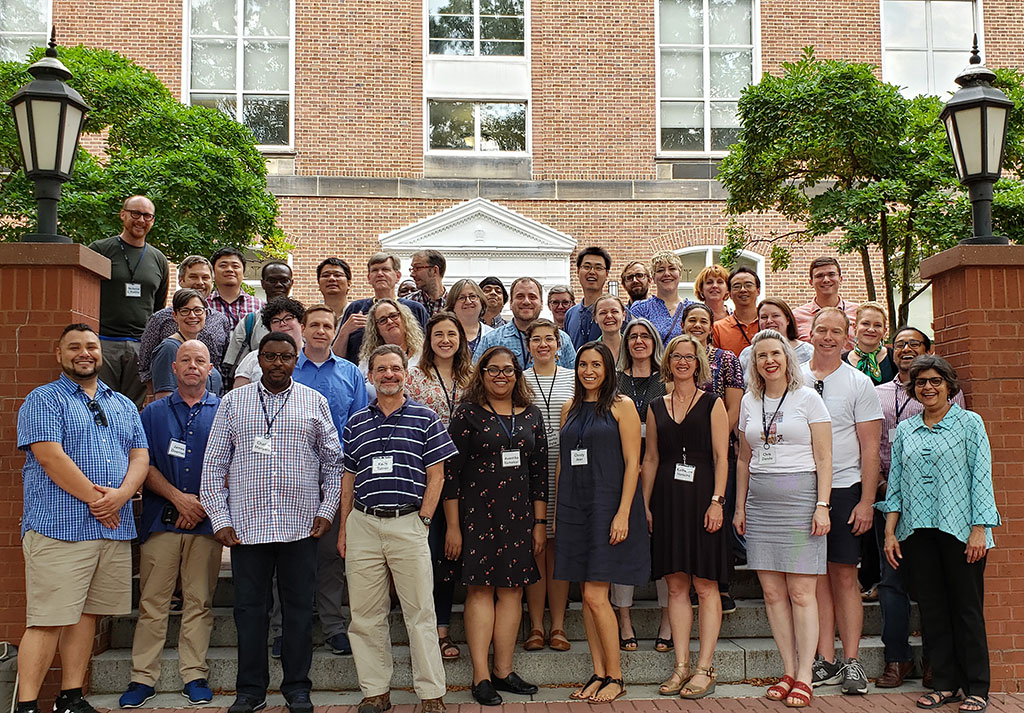
The work of the Healthy Departments committee provides coherent and engaged guidance and action that enhances the future health and excellence of academic geography departments across the country. Committee members visit departments and colleges and engage in outreach with administrators to support geography. The committee also designs and implements actions that help move leaders in geography towards these goals.
Goals:
- support departments in crisis
- assist in restructuring the curriculum to advance department goals
- offer the Healthy Departments workshop
- provide suggestions of department reviewers
- provide materials for chairs to support fundraising
- support department expansions
- provide data for benchmarking and for communicating effectively with deans
- investigate how geography departments can most effectively position themselves within their institutions by aligning themselves with the central needs and missions of those respective institutions
This page is a resource to assist department chairs and provide practical information that can improve program quality. This page will continue to evolve with new information as we are able to share it. We invite suggestions for additional resources to be included.
Resources
Information to enhance the future health and excellence of academic geography departments
This online community is a resource designed to support department and program leadership. Members receive updates from AAG and from the Healthy Departments Committee on events, initiatives, and developments relevant to program leadership, and have a space to ask questions, share best practices, ideas, and resources related to running successful academic programs with peers across institutions.
This knowledge community is intended for incoming, current, and former leaders of geography and related programs, including chairs and heads, associate chairs, deans, academic advisors, provosts, and other administrators, as well as faculty interested in leadership issues.
To be added to this knowledge community, you must first have an AAG account—either a free Explorer account or a Member account. Once you have an account:
Request to be added to the knowledge community
This is a central repository for visitors to access and utilize data on geography higher education as a field of study. We encourage researchers to use the data as a foundation for research projects and publications, as well as insights into the field that might inform your own strategic planning.
Learn more
The Professional Journey section of the AAG website includes information and resources on geography careers that can be used to inform students and potential majors about the many dynamic and exciting career opportunities available with a degree in geography.
- Geography Career Profiles — Learn about geography careers from profiles of professional geographers working in education, business, nonprofit organizations, and government agencies.
- Private Sector Careers — Learn how geographers are creating positive change within private companies large and small as they begin to recognize the value of geographic analysis in their everyday operations.
- Federal Government Careers — The federal government has numerous, varied, and a constantly growing number of geography-related positions due to an expanding need for geographic expertise and analysis.
- State and Local Government Careers — Geographers are involved in a variety of state and local government organizations and departments that focus on transportation, health, environmental protection, urban planning, economic development, and more.
- Nonprofit and NGO Careers — With their ability to understand complex relationships between people, place, community, environment, and society, geographers are well positioned to apply their disciplinary perspectives to the nonprofit sector.
- Academic Careers — There are many academic career paths available for geographers. These can vary, from a tenured faculty position at a large institution, to part-time adjunct teaching at a community college, to influencing the younger generation as a K-12 teacher.
The AAG’s YouTube channel features a wide variety of content that can be valuable for geography program leaders. Subscribe to the channel for the latest updates!
- A World of Possibilities is Waiting for You with a Degree in Geography — With skills in geography, your students have tools to work for respected companies, universities, nonprofit organizations, and in public service for local, state, or national governments.
- AAG Geography Student Recruitment Webinar — First offered at the 2019 AAG Regional Division meetings, this workshop covers strategies and resources that can help you and your geography program in recruiting and advising students.
- Preparing Geography Students for the 21st Century Workforce: A Workshop — Created by Joseph Kerski (Esri) in collaboration with the AAG, this workshop prepares geography educators to inform their students about career opportunities for geography graduates in the modern workforce.
Each year, members of the Healthy Departments Committee organize sessions at the AAG annual meeting, as well as at the regional division meetings they attend. Be sure to watch for sessions sponsored by the committee throughout the year.
In addition, AAG hosts an annual luncheon at the AAG annual meeting for geography program leadership. The luncheon is led by the AAG vice president and supported by the Healthy Departments Committee. All members of the Geography Program Leaders AAG Knowledge Community are invited and encouraged to attend. If you are not yet a member of this knowledge community, we invite you to consider joining (see details about this resource above).
AAG members may purchase discounted insurance options for both personal and professional needs, including professional liability insurance. To access this benefit, log in and navigate to “Member Special Offers” in the left-hand sidebar of the member dashboard, then select the link for Forrest T. Jones & Company Life and Liability Insurance.
Workshops
Professional Learning
Whether you are building your career or guiding a department forward, our two complementary workshops offer practical support for today’s evolving higher education landscape. Held each June in person or virtually, these programs help geography faculty and leaders navigate change with confidence through strategic planning, shared governance, and evidence‑based decision‑making.
To learn more about how these workshops developed and became a central part of the Healthy Departments Initiative, see the History section below.
This workshop is open to graduate students and faculty at the start of their careers in higher education, including instructors, lecturers, assistant professors, and other untenured faculty. Typically offered as a full‑week program – some years in person and other years virtually, it brings together participants from a wide range of teaching‑ and research‑focused institutions in the United States and internationally. The workshop addresses many of the challenges common in the early years of a faculty appointment, with the overarching goal of helping participants understand how teaching, research, service, outreach, and personal well‑being intersect, while building lasting professional networks with peers and workshop leaders. When offered in person, participants may also engage with department leaders attending a concurrent workshop during the same week, fostering cross‑career dialogue and mentoring.
Learn moreThis workshop is open to all geographers interested in strengthening their programs, including department chairs and heads, associate chairs, deans, academic advisors, provosts, other administrators, and faculty considering future leadership roles. Typically offered as a two‑day virtual program or a full‑week in‑person experience, the workshop addresses the growing challenges facing geography departments in a rapidly changing higher education landscape. Dedicated time is set aside for participants to share experiences and discuss common concerns, making peer learning and networking with both emerging and experienced academic leaders a central feature. When held in person, participants also have opportunities to engage with early career faculty attending a concurrent workshop during the same week, fostering cross‑career dialogue and mentoring.
Learn moreWho we are
Committee members

Shannon O’Lear
University of Kansas
Chair
Shannon O’Lear
Chair
David H. Kaplan
Kent State University
David H. Kaplan

Gary Langham
AAG
Ex officio
Gary Langham
Ex officio
Derek Alderman
University of Tennessee, Knoxville
Derek Alderman
Perry Carter
Texas Tech University
Perry Carter
Mike DeVivo
Grand Rapids Community College
Mike DeVivo

Ken Foote
University of Connecticut
Ken Foote

Deborah Martin
Clark University
Deborah Martin
William Moseley
Macalester University
William Moseley
Benjamin Ofori-Amoah
Western Michigan University
Benjamin Ofori-Amoah
History
Background on the initiative
The Healthy Departments Initiative was formally proposed in 2003 by AAG Past President Vicky Lawson and unanimously approved by the AAG Council at its March 2004 meeting. A Standing Committee was established with the following formal charge:
“The committee seeks to help geography departments in colleges and universities strengthen their programs by sharing, developing, and disseminating materials and information of use to department heads; organizing workshops and other activities; providing recommendations of geographers who could serve effectively as site visitors or reviewers; and bringing to the attention of Council issues of importance to the health of geography departments. The committee will also provide a resource for departments in need of rapid input in response to challenges that arise.”
Since its founding, the Initiative has played an active role in supporting geography programs through workshops, conference sessions, letters of support, and strategic advising. In parallel with the creation of the Initiative, a related but distinct set of professional learning workshops had already begun to take shape:
In 2002, under the leadership of Professor Ken Foote (University of Connecticut), an initial workshop was launched to support early career faculty and advanced doctoral students. This workshop focused exploring the connections among teaching, research, and professional development, while fostering a culture of support, inclusion, and professional success. Core topics included diversity and inclusion, public outreach and science advocacy, communication skills, personal well‑being in academic careers, and navigating the tenure and promotion process. With the exception of a couple of years, the workshop has been held continuously since its launch, and cohorts formed through these workshops became known collectively as the Geography Faculty Development Alliance (GFDA).
In 2004, under the leadership of Vicky Lawson (University of Washington), a complementary initiative was established to strengthen geography departments by sharing, developing, and disseminating materials and resources for department heads and academic leaders. The inaugural workshop brought together thirty-one leaders of geography, including department chairs, deans, provosts, and future leaders, and developed a set of initial set of insights and practical strategies for strengthening geography departments.
Beginning in 2005, collaboration with the NSF‑funded Enhancing Departments and Graduate Education in Geography (EDGE) project expanded and integrated these initiatives. This work produced additional resources, including a guide to careers in geography, the Healthy Departments Initiative website, and workshop materials that were later developed into stand‑alone courses. These efforts also provided the foundation for several influential publications, including Aspiring Academics (2009), Teaching College Geography (2009), and Practicing Geography (2012).
In 2010, the two workshop initiatives were first offered jointly under the leadership of Ken Foote, evolving into two complementary programs focused on early career faculty development and departmental leadership. Typically offered in June, either in person or virtually, these workshops support geography programs in navigating change in higher education through strategic planning, shared governance, and evidence‑based decision‑making. Today, the workshops continue under the sponsorship of the American Association of Geographers (AAG), reflecting more than two decades of sustained investment in faculty and leadership development within the discipline.