AAG Welcomes Spring 2020 Interns

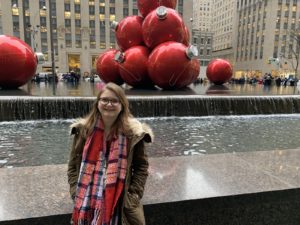
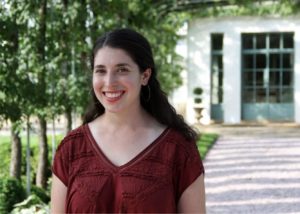
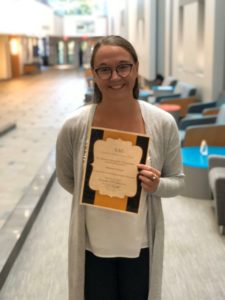
Two new interns have joined the AAG staff this spring semester! The AAG would like to welcome Ariel and Hannah to the organization.

Ariel Golightly is a senior at the University of Maryland, College Park, pursuing a B.S. in Geographical Sciences with minors in Geographic Information Systems and Sustainability Studies. She is particularly interested in cultural geography, Latin American migration, land cover change, urban sustainability, and community planning. Ariel hopes to serve in the Peace Corps in the near future and later obtain her Master’s degree. In her spare time, she enjoys yoga, reading, being outside, cooking, and baking.

Hannah Brenner is a senior at George Washington University pursuing a bachelor’s degree in geography with minors in sustainability and GIS. Hannah is interested in sustainable agriculture and how the way we grow our food affects people and the earth. She’s worked on farms around the world and has also earned her permaculture design degree. She believes that food is key to solving many of our worlds issues. Originally from North Carolina, she has made her home in DC and loves exploring the city. In her free time, Hannah likes to garden, cook, travel, and go on hikes around DC.

If you or someone you know is interested in applying for an internship at the AAG, the AAG seeks interns on a year-round basis for the spring, summer, and fall semesters. More information on internships at the AAG is also available on the Jobs & Careers section of the AAG website at: https://www.aag.org/internships.

    Share

A Day in the Life of a Geographer


    Share

The Publishing Paradox or How the Publishing Model May be Broken

Among the familiar litany of New Year’s resolutions, many of you may have promised yourselves that 2020 would be the year to finally finish that book or write that article. In other words: to PUBLISH.

Publishing is a huge part of academic life, the coin of the realm. There may have been some mythical past when graduate students could obtain their PhD and land a decent academic job without having to publish a single thing. When tenure in research universities required just a few thoughtful articles or perhaps a book. And when those in predominantly teaching institutions could get by with producing something once or twice in a career.

Fast forward to our day. Rare is the PhD who lands a job without a CV listing several publications. And institutions of all stripes demand a quiver of accepted articles from their tenure=track hopefuls. It is not unusual to see professors within research universities generating several articles every single year, racking up Google Scholar hits and the citations to go with them. Some twitter posts look like “to-do” lists of publishing projects promised and completed. Working over weekends and holidays has become the norm.

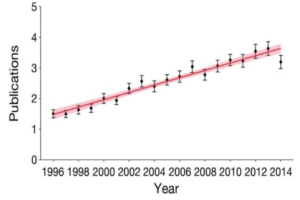
This greater frenzy of publication is borne out by the magnificent growth in journal publications each year. The most recent figure showed some 2.5 million articles published in 28,000 journals. This is driven in part by an increase in articles per capita. The chart below shows the number of scientific publications for full professors at research universities in geography and area studies between 1996 and 2014. It shows that average article generation more than doubled, and this for a group with few worries about tenure and promotion.

Average publications by geography full professors at research universities in 15 countries. Chart from Nikolioudakis et al, 2015 (https://www.int-res.com/articles/esep2015/15/e015p087.pdf).

All those would-be articles cycle through a publication system that has remained the same at its research core: authors who submit academic papers, other professors who kindly examine these submissions and provide comprehensive reviews, editors who orchestrate the whole process from beginning to end, and an audience of mostly academics ready to consume the scholarly output.

The truly dramatic changes have occurred in the larger publication universe. Two decades ago, there were many publishers such as Carfax, VH Winston, Pion, and Blackwell. In addition, there were still a number of independently published society journals. Many professors would take out personal subscriptions.

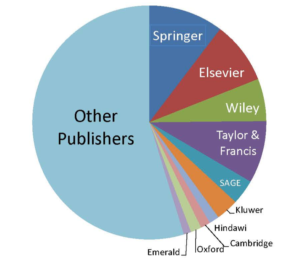
Today, most journal publishing has steadily consolidated into five or six big houses. The chart below shows the situation for all English-language journals. For just the social sciences, the top five publishers account for about 70 percent of all articles, compared to 15 percent in the early 1990s. These publishers sell journals to academic libraries as part of a package, but the costs of the packages can be stratospheric. Elsevier was recently embroiled in controversy because European libraries and the University of California felt that it charged far too much per article. Adding salt to these wounds is information that Elsevier makes about a 37 percent profit margin—selling back to academics content that these same academics have already produced. The other publishing houses employ the same basic model of selling to professors what the professors have already produced for free [full disclaimer, I am an editor for two journals published by Taylor & Francis].


Journal title shares by major publishers. Data from International Association of Scientific, Technical and Medical Publishers, 2018 (https://www.stm-assoc.org/2018_10_04_STM_Report_2018.pdf).

Very little of the publishing profits—which can be staggering—dribbles down to the people who are the beating heart of the publication process. To be sure, publishing houses offer major benefits in production, allowing articles to be copy edited, proofread, typeset and put online in a matter of days. The ability of the average scholar to access thousands of titles—crisp and in full color—without ever having to leave her office is nothing short of phenomenal. Archives can be summoned with the click of a mouse. For those who can afford it, these companies expedite the smooth transmission of information. But by acting as consolidators and distributors, journal publishers position themselves to sell scientific knowledge provided to them for free.

Of these, the only person within the research circle who gets paid—maybe a few thousand dollars a year—is the editor, mainly to cover expenses. The authors sometimes have to pay to cover page charges, especially if they want their article to be freely available to the readership. (The promotion of open access, which journals have jumped all over, can be quite costly with fees in excess of $2000 per paper.) In all but rare occasions, the reviewers review for absolutely nothing (and in some disturbing situations will get junior colleagues and students to review in their name), and merit or promotion committees seldom bestow academic credit for this consuming labor.

Added to the morass has been the proliferation of so-called predatory journals. I am sure that every one of you has received a solicitation, perhaps several times a week, asking whether you want to publish in a journal with a fishy title (International Journal of Global Technology and Science Research anyone?). These journals come with all the trappings—submission guidelines and editorial boards—and they promise a lot: super-fast review (within days!) and sometimes offers to write the paper for you. Yet the fees are onerous and the articles themselves rarely get circulated. With so many legitimate journals out there encouraging open access fees, and the pressure to publish, it is little wonder that such journals are seen as viable options.

Of course, there are a host of ethical issues that involve societies like the American Association of Geographers. We have been able to negotiate some lucrative contracts with our publisher, Taylor & Francis, which pay many of our bills. But this also perpetuates the high prices academic institutions are charged for subscriptions, and can put scientific knowledge out of reach for people without access.

So given the fact that journal publishing is not only here to stay but proliferating, how do we make the process better? Some journals have chosen to avoid the big presses: AcmeFocus, and Fennia to name three. Especially if tenure committees can come unshackled from the need for metrics, such publications provide a place for solid and alternative scholarship.

We can also devise better ways to validate the process of peer review. As an editor, I badger experts in various topics to take several hours of their time to provide a critical service to an anonymous someone. There is no monetary compensation for this, nor does it make a mark on most CVs. Yet at least half say yes, and many of the others apologize and promise to review at a different time. The entire edifice of scholarly publishing would crash without peer reviewers, yet they are often as taken-for-granted as wall studs. It would be nice if there was also a way to reward peer reviewers in some fashion and perhaps the whole process might be revamped.

The paradox of publishing is threefold. We require graduate students and professors to publish in academic journals if they hope to advance. Yet authors and peer reviewers work for free and journal editors for very little, while article fees increase and publishing houses accrue the profits. Academic societies such as the AAG rely on contracts with journal publishers to secure some of these profits, essentially benefitting from the free labor of their members.

To abandon the system would mean altering the rewards intrinsic to academia and forgoing the revenues now vital to scholarly associations. But the University of California’s termination of their contract with Elsevier earlier this year demonstrates that this system may not be sustainable in the long term. We all have a stake in the outcome. I hope that geographers will lead the way in developing a fairer and more reasonable model for journal publishing.

— Dave Kaplan
AAG President

DOI: 10.14433/2017.0066

    Share

Geospatial Brain Power

Does learning GIS improve spatial reasoning capabilities in high schoolers? A team from six universities is studying the students—and their brains—to find out.

A group of researchers from six American universities are studying what effect spatial education has on the development of the spatial thinking and reasoning skills of high school students. The research team wants to find out how the students, who use GIS technology for class projects, go about solving complex reasoning problems and whether their brains are physically changing in response to spatial learning.

With more emphasis on science, technology, engineering, and mathematics (STEM) courses in the American secondary school curriculum, an increasing number of students want to pursue STEM degrees at universities and the well-paying careers available to them upon graduation.

Students who take STEM classes often become innovators.

While spatial reasoning and analysis are frequently applied in careers that fall under the STEM umbrella, these important skill sets aren’t formally included in the secondary school curriculum. Instead, they are introduced incidentally in STEM-related classes when students encounter spatial concepts in the assignments.

“Spatial thinking plays a very important role in the learning and practice of STEM-related disciplines,” said Bob Kolvoord, dean of the College of Integrated Science and Engineering at James Madison University (JMU) in Harrisonburg, Virginia. “Many of the most important discoveries in science involved a critical spatial insight, such as the structure of the Benzene ring or the DNA molecule.”

The Geospatial Semester

One way to teach high school students spatial reasoning and help them retain those skills is to add GIS coursework to the curriculum. Broadly speaking, spatial reasoning covers all thinking that has a spatial component. This includes geospatial reasoning, which is geographic in nature. Spatial analytics methodologies often include the examination of physical features such as the respective size, shape, and position of the objects or sites being studied and how they interact with nearby elements in their environment.

The Geospatial Semester is now in 30 high schools.

To help introduce students to spatial reasoning, Kolvoord in 2005 cofounded the Geospatial Semester (GSS) with his colleague Kathryn Keranen, an adjunct professor at JMU.  The GSS program offers high school juniors and seniors the opportunity to take GIS classes at their own schools while earning university credit at JMU. The program started at 4 high schools in Virginia but has expanded to include 30 high schools in Virginia, Oregon, and Illinois.

“We wanted to develop an educational program that exposed students to more problem-based learning through projects that require collaboration, and the use of GIS in their coursework was a good fit,” said Kolvoord. More than 4,000 students have participated in GSS thus far. Past student projects have explored a variety of issues related to the environment, renewable energy, wildlife, transportation, and public safety.

An Analytical Methodology for Spatial Cognition

Postulating that the students who participated in the Geospatial Semester had increased their spatial reasoning abilities, Kolvoord assembled a team to study whether exposure to GIS changes students’ high-level STEM spatial thinking ability. The team developed testing procedures to determine how these changes occur at both the cognitive and neurological levels.

Kolvoord’s chief collaborator on the team is David Uttal, professor of psychology and education at Northwestern University, where he works in the area of spatial thinking in STEM education. Other members include Adam E. Green, an associate professor of psychology at Georgetown University who specializes in cognitive neuroscience; David Kraemer, assistant professor of education in the Department of Psychological and Brain Sciences at Dartmouth College; and Emily Grossnickle Peterson, an assistant professor in the School of Education at American University, along with graduate students at all four institutions. Nora Newcombe, a professor of psychology at Temple University and the principal investigator at the school’s Center for Spatial Intelligence and Learning, advises the team.

Kolvoord said that his and Uttal’s approach to the research has evolved over the last 10 years. They started by interviewing students and assessed their final class projects. Students have used GIS to study a wide range of topics including elk habitats, hurricanes, air quality in relation to California wildfires, and even school locker usage.

“We initially found that the GIS students used more spatial language and exhibited stronger problem-solving skills than other students,” Kolvoord said. “We then added other collaborators to the team to more fully examine how the cognitive and behavioral aspects of the testing results connect.”

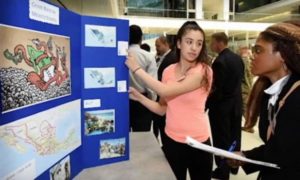
Two students who were recently enrolled in the Geospatial Semester present their final projects at a National Geospatial-Intelligence Agency (NGA) forum.

The researchers also explored the students’ spatial thinking abilities using standard psychometric measures. These include the mental rotation test (MRT), where a person—selecting from a series of options—matches the shape of one figure to another figure by mentally rotating them, and the embedded figures test (EFT), where the test taker recognizes geometric shapes from a bigger and more complex image.

Also, the students were interviewed and asked to answer questions such as these: Why do you think gas or milk prices differ from gallon to gallon or brand to brand? How would you predict what the price would be for each gallon or brand? If you were trying to increase recycling in your community or to run for a local political office, how would you go about running your campaign?

“There are both spatial and nonspatial ways to solve these problems. By analyzing their answers, we examined both their use of spatial language and their problem-solving abilities,” Kolvoord said. “We have ways to tease apart the interviews to look at how the students identify a problem, how they reason with the data, how they draw a conclusion, how they cite spatial data, and how they cite spatial representation. And the data we are collecting is really, really interesting. We have found that the open-ended problem-solving capabilities achieved by the GSS students seem to be making a difference in the development of their cognitive abilities that we can quantify.”

The research also includes performing neuroimaging of the brains of students in the study groups, using functional magnetic resonance imaging (fMRI) technology. These tests determine whether physical changes in the brain actually occur with spatial learning, according to Kolvoord. “This allows us to develop biological inferences about how these changes occur and explain the effects of spatial education on core spatial abilities as well as high-level spatial thinking,” he said.

Grants from the National Science Foundation and the Center for Spatial Intelligence and Learning support the team’s work.

Kolvoord said the research he and other team members are doing is bridging a critical gap between the analytical work being performed in the cognitive neuroscience laboratory and its real-world application in the classroom. Testing students provides the researchers with definitive, real-world data on what improves spatial cognition.

“More than two decades of research on how the brain performs spatial cognition has provided us with a reasonably clear understanding of the process,” he said. “Our longtime, active engagement with those schools that teach the Geospatial Semester gives us access to a group of students exposed to a unique form of STEM education that is deliberately designed around spatial thinking and reasoning. Because of our access to these students, we believe that this may be the first research that employs longitudinal data analysis to measure how learning in a real-world high school changes the brain.”

What Researchers Have Learned So Far

The study included a test group of 79 students who had experience in learning and using GIS technology, and a control group of 130 students who hadn’t enrolled in GSS. Pre- and posttest data was collected on all 209 students, who came from both urban and suburban school districts and were demographically diverse.

The scan results have shown so far that there was a significant effect on the GSS students when they mentally processed the embedded figures task.

“Specifically, there were differences in activation in the parietal region of the brain, which is related to spatial reasoning,” Kolvoord said. “Students who took GSS had a greater blood flow in this region from pretest to posttest compared to the control group, implying greater activation.”

Since this analysis was done for all students participating in the tests, researchers feel optimistic about the results. They haven’t yet found out whether there is any increased white matter connectivity in the brains of the GSS students, but the researchers plan to continue work on that aspect of the project.

“While we have not completed the final analysis of all of our test results, we see differential improvement in the GIS students [compared to the control group] on STEM problem-solving skills, including problem definition and arguing from evidence,” Kolvoord said. “These abilities apply broadly across STEM and other disciplines, as they are the key skills in critical thinking.”

The research team will conduct a second series of experiments to determine the duration of GIS instruction that is needed to improve cognitive reasoning abilities.

To learn more about the GSS program, visit the Geospatial Semester website. This video from the National Science Foundation’s 2018 STEM for All Video Showcase, describes the GSS program and the neural impacts of spatial education.

    Share

Sylvia Chant

The career of feminist development geographer Sylvia Chant was cut short on December 18, 2019 at age 60, when she died of pancreatic cancer. As reported in her obituary in The Guardian,during her career, Chant challenged the received notion that households headed by women in developing countries were automatically more likely to live in poverty than those headed by men. Chant argued that multiple household responsibilities and obligations in relation to men were the greater challenge to women’s lives and success.

Her books include Women-headed Households(1997) and Gender, Generation and Poverty(2007). Writing of her in The Guardian, colleague Cathy McIlwaine described Chant as “keen to work with other researchers[. S]he co-authored and edited 11 of her 18 books, including four that we wrote together, of which the most recent was Cities, Slums and Gender in the Global South (2016). She edited the International Handbook of Gender and Poverty (2010), whose more than 100 chapters came from 125 established and early career authors.

As a professor at the London School of Economics, Chant was known as an inspiring and generous teacher, who influenced many PhD students to work on gender and international development around the world.

Her ideas around women-headed households and wider gender inequalities helped shape the policies of international agencies such as the Commonwealth Secretariat, UN-Habitat, the International Labour Organization, UN Women, and the World Bank. Her work with the Gambia Committee on Traditional Practices Affecting the Health of Women and Children contributed to the country’s final outlawing of female genital mutilation in 2015.

Born in Dundee, Chant grew up in London and earned a geography degree from King’s College, Cambridge in 1981. She attained her PhD at University College London in 1984, studying the role of women in the construction of housing in Querétaro, Mexico. McIlwaine noted, “This was among the first studies that recognised women as key actors in self-build housing in poor urban communities in countries of the global south.”

She is survived by her husband Chris Mogridge, her mother, June, and two sisters, Adrienne and Yvonne.


    Share

New Books: December 2019

Every month the AAG compiles a list of newly-published books in geography and related areas. Some are selected for review in the AAG Review of Books.

Publishers are welcome to send new volumes to the Editor-in-Chief (Kent Mathewson, Editor-in-Chief, AAG Review of BooksDepartment of Geography and Anthropology, Louisiana State University, Baton Rouge, LA 70803).

Anyone interested in reviewing these or other titles should also contact the Editor-in-Chief.

PLEASE NOTE: Due to current public health policies which have prompted the closing of most offices, we are unable to access incoming books at this time. We are working on a solution during this transition and will continue our new books processing as soon as we can. In the meantime, please feel free to peruse previous books from our archived lists.

December 2019

After Geoengineering: Climate Tragedy, Repair, and Restoration by Holly Jean Buck (Verso Books 2019)

Blue Legalities: The Life and Laws of the Sea by Irus Braverman and Elizabeth R. Johnson, eds (Duke University Press 2020)

City of Refuge: Slavery and Petit Marronage in the Great Dismal Swamp, 1763-1856 by Marcus P. Nevius (University of Georgia Press 2020)

Disaster Upon Disaster: Exploring the Gap Between Knowledge, Policy and Practice by Susanna M. Hoffman (Bergahn Books 2019)

Half Broke: A Memoir by Ginger Gaffney (W. W. Norton & Company 2020)

The Licit Life of Capitalism: US Oil in Equatorial Guinea by Hannah Appel (Duke University Press 2019)

Making Industrial Pittsburgh Modern: Environment, Landscape, Transportation, Energy, and Planning by Jill Lindsey Harrison (MIT Press 2019)

Murals of the Americas: Mayer Center Symposium XVII, Readings in Latin American Studies by Victoria I. Lyall, ed (University of Oklahoma Press 2019)

Punctuations: How the Arts Think the Political by Michael J. Shapiro (Duke University Press 2019)

    Share

Lisa Colson

Education: M.A. in Geography (George Washington University), B.A. in Environmental Studies (Eckerd College)

Describe your job. What are some of the most important tasks or duties for which you are responsible?
In our workplace, we use a variety of decision support services and I am responsible for knowing how to use all of them, providing geospatial training, and responding to certain map requests. We use a variety of vector, raster, and satellite imagery data sets, requiring advanced knowledge to ensure proper scientific data handling to efficiently conduct analysis. My work involves mapping crop conditions, weather, crop distribution, and trade policy and effects. Sometimes, I have a project for 2-3 weeks and other times, I have new challenges each day. Each map request requires me to be creative in distilling multiple data sets into clear and concise policy messages. We talk a lot about the subtle messages conveyed in our use of colors, annotations, and other cartographic features.

What attracted you to this career path?
I was attracted to this industry because geography provides a more flexible approach to integrating different disciplines of information into summary messages about health, the environment, international development, and other complex topics. Working in agriculture, especially around the world, addresses many of the interdisciplinary topics that interest me, including food security, sustainable development, and poverty alleviation.

How has your education/background in geography prepared you for this position?
As an analyst, I was required to take initiative to learn how to process satellite imagery into clear, concise stories about current crop conditions. I had to be flexible in identifying areas where the data and tools I had could provide a reliable and accurate sense of the crop conditions, taking into consideration constraints in the spatial resolution, timing, cloud free percentage, and other details that would hinder or support my ability to perform the analysis. Time and computer network constraints often played a significant role in figuring out if an analysis would be realistic to tackle.

My education in geography and specifically remote sensing provided me with the necessary foundation to advance my skills for the specific analytical demands of my current workplace. In addition, my background in policy communication greatly supported me in creating well-received map products that simplified complex data into clear policy messages. I really loved doing that analytical work.

More recently, I have become a graphics editor and training coordinator to help build upon the geospatial skills of my colleagues. With newer staff and the many decision support tools that we use, it is challenging to stay abreast of application developments. Communicating how I did my work, while staying abreast of the applications, is a newer and still rewarding challenge for me. I enjoy sharing my love of geospatial analysis and remote sensing with colleagues, especially as the industry leap frogs forward with technological advancements.

What geographic skills and information do you use most often in your work? What general skills and information do you use most often?
Geographic skills:  I think I most often use location identification, in the sense of advising colleagues to clarify the locational extent of the map image. This is done by adding rivers, roads, cities, and other geographical context to the maps of satellite imagery and other raster data sets. Yet there is more to this. The main geographic questions we tackle are (1) how much grows (in terms of crops) in a given place and (2) what are the conditions of the crops in that place? The important skills myself and colleagues use to answer these questions are spatial joins (aka, making geospatial data sets from tabular data), difference mapping (with raster calculator and post-classification change detection), zonal statistics (to help summarize data to counties or states), and other area calculations.

In the world of remote sensing, I am also required to know the name of many satellite sensors and some basic sensor specifications. For example, sometimes management thinks higher spatial resolution would help make it easier to answer key questions, but these sensors are often missing other critical data. I periodically engage in important discussions about the trade-offs between time and processing speed when considering the geographic extent, timing, and spatial resolution of different imagery sources. Having the technical expertise and yet flexibility to talk with non-technical decision makers is a critical aspect of my work.

General skills: I frequently use writing and presentation skills. I present at conferences about interesting analysis I have done or new product development, such as the Global Agricultural & Disaster Assessment System (GADAS). GADAS is a free, global website that provides a geospatial platform for analysis with hundreds of data layers. When showcasing this or other workflows, I heavily utilize my PowerPoint skills preparing slides. My work also requires me to talk with users of our applications to figure out their challenges and the assumptions that they bring to the application. Sometimes knowing an application well makes a person blind to how others might approach using the same tool. I frequently communicate with people who are not trained in geography, but it is my responsibility to help them be able to perform certain geographical tasks. It can be challenging and requires me to have patience and sometimes think creatively.

Honestly, I far more frequently use general skills to perform my duties, as I review our decision support systems, report bugs on where the applications are having issues, and advise on improvements to these systems. Technically, I am testing geospatial applications and therefore using geospatial skills, but any tester can tell you that they are not being overly creative in performing this task. My work involves far more documentation than I would probably prefer to admit. Yet, concise writing that captures a concern or requirement for a developer to efficiently fix or enhance a decision support tool has its merits. That “telephone game” sometimes works better than other times.  When it works, it is very rewarding.

Are there any skills or information you need for your work that you did not obtain through your academic training? If so, how/where did you obtain them?
Sure, and yet the skills I need I have built upon from my academic training. For example, my previous career in the non-profit world taught me more about using PowerPoint effectively and giving presentations, and yet I learned presentation skills during school as well. In addition, I of course had to write many papers in college and graduate school. These assignments prepared me well, and yet I spent my first 3-5 years in DC learning a completely different writing style. After all, policy memos, briefing papers, and even 5-15 minute presentations for the office are so different from what I did in college.

Here’s another way of thinking about this: some people believe the purpose of going to college is to learn a skill, but instead it is often to learn how to think critically. So how do I identify skills I learned outside of school, when I am constantly thinking through new challenges and exploring solutions to build upon my academic foundation? To me, this is honestly the difference between a job and a career; and I love having a career.

Do you participate in hiring, screening, or training of new employees? If so, what qualities and/or skills do you look for?
First and foremost, I look for the skills needed to perform the job. This is sometimes easier said than done. I work in a place that needs talented people in a variety of arenas. Finding a person with a diverse set of skills can be very challenging and this makes the art of screening for new employees more fluid than some people might expect.

We need people who can be clear and concise in presenting information. The resume or CV is a first indication of this skillset. Sometimes technical people list out all of their skills, but with little organizational structure that helps provide a sense of the person and their history. I always look for people with not only the technical skills, but also an interest area relevant to our work, whether this is meteorology, agronomy, international development, food security, or another relevant field. This helps me know the person could provide scientific quality analysis in an operational environment.

We also look for a person who can be flexible to work with a variety of personality types. Every workplace has a culture and it’s nice to find people who can blend into that culture instead of shaking it up. An interview is as much about the candidate as it is about the team and being able to envision the candidate contributing something new or missing to the team.

What advice would you give to someone interested in a job like yours?
First, don’t be afraid to get to know a variety of tools. Second, geography is a tool that can be applied in many different disciplines. Take the time to develop some expertise in a discipline, where you can geospatially analyze relevant data. Conducting analysis goes beyond knowing how to use the tools, as it is important to also understand the data and proper data handling needs. Third, realize all jobs involve some data cleaning, file management, and time management. No one is too important to do these tasks.

Most importantly, my advice is to take on challenges. Start by finding the little things that are not working well and fixing them. Focusing on tasks within your areas of responsibility that help things function better is a way for you to take initiative and expand your area of expertise. Finding the right time and place to take initiative is incredibly important. It makes all the difference between getting criticized for stepping outside your lane and being rewarded for showing the necessary initiative to solve an important problem. Workplaces are as broken as we allow them to be, so try not to be the source of problems when there is so much interesting work that could be done.

What is the occupational outlook for career opportunities in your field/organization, esp. for geographers?
Sometimes I think geography is currently exploding. Technological infrastructure has finally caught up with the wishes and desires of many analysts. Now with cloud computing, it could be possible to process not just gigabytes, but terabytes of data. Demand for geographers, especially combined with remote sensing data, has increased over the past 10 years, and with more powerful computers the possibilities for working with these data are only limited by our creativity.

    Share

Doug M. Amedeo

Doug M. Amedeo, professor emeritus of geography at the School of Natural Resources, died Dec. 4, 2019, in Lincoln.

Amedeo was a leader in environmental perception and behavioral geography, focusing his career on the human dimensions of environmental and spatial issues. He began as an associate professor at the University of Nebraska-Lincoln in 1973, after serving for five years as an assistant professor at the University of California.

By 1992, he was promoted to full professor, and in 1993, he became the chair of the Department of Geography, which later was merged with the Department of Anthropology, and then the School of Natural Resources, his permanent faculty home. He served in that role for three years.

Amedeo also was a permanent member of editorial boards for the journals of “Architectural and Planning Research” and “Environment and Behavior,” and served on more than 18 university committees over the years.

During the course of his career, he published and presented more than 70 books, chapters, articles or papers and advised nearly 20 graduate students in pursuit of their doctorate degree. Even in his retirement, he continued to work with, advice and inspire students at the University of Nebraska-Lincoln.

Amedeo was born Sept. 21, 1932, in Brooklyn, New York, to Guido and Jean (Gong) Amedeo. He served in the Korean War and, in 1962, earned his bachelor’s degree in economics from Wisconsin State University. He earned his master’s and doctorate degrees in geography from the University of Iowa in 1965 and 1967, respectively.

In 1977, he married Patricia Herriott, who survives him. He also is survived by his daughters, Cynthia Amedeo Nelson of Lincoln and Elizabeth Amedeo Stigleman (Marty) of Midland, Michigan.

A celebration of his life will be in spring 2020; Wyuka Funeral Home is in charge of arrangements. In lieu of flowers, memorials made be made to women’s, children’s or animal charities. Condolence can be left at Wyuka.com.


Published from the School of Natural Resources, University of Nebraska – Lincoln.


    Share

Regional Divisions Announce Outstanding Graduate Student Papers During their Fall Meetings

The AAG is proud to announce the Fall 2019 student winners of the AAG Council Award for Outstanding Graduate Student Paper at a Regional Meeting. The AAG Council Award for Outstanding Graduate Student Paper at a Regional Meeting is designed to encourage graduate student participation at AAG Regional Division conferences and support their attendance at AAG Annual Meetings. One graduate student in each AAG Regional Division receives this yearly award based on a paper submitted to their respective regional conference. The awardees receive $1,000 in funding for use towards their registration and travel costs to attend the AAG Annual Meeting. The board members from each region determine student award winners.

The winners from each region will be presenting their papers in two dedicated paper sessions at the upcoming 2020 AAG Annual Meeting in Denver, CO.

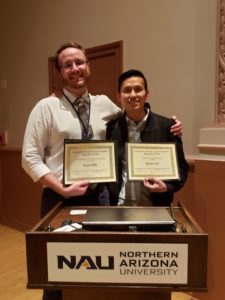
Matthew Walter (far left)

MSDAAG: Matthew Walter, Masters Student, University of Delaware; Paper title – A Rapidly Assessed Wetland Stress Index (RAWSI) Using Landsat 8 and Sentinel-1 Radar Data

GPRM: Cheyenne Sun Eagle, Masters Student, University of Kansas; Paper title – Spatial and Temporal Patterns of Land Allotment on the Pawnee Reservation

SWAAG: Katherina Kang, Masters Student, University of North Texas in the Department of Geography; Paper title – Vegetation and land use effects on the spatial distribution and accumulation of soil black carbon in an urban ecosystem

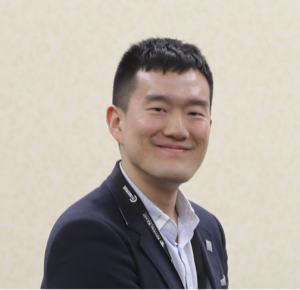
Junghwan Kim

WLDAAG: Junghwan Kim, Ph.D. Student, University of Illinois at Urbana-Champaign; Paper title – How Neighborhood Effect Averaging May Affect Assessment of Individual Exposures to Air Pollution: A Study of Individual Ozone Exposures in Los Angeles

ELDAAG: Rebekka Apardian, Ph.D. Student of Spatially Integrated Social Sciences, University of Toledo; Paper title – Exploring the Relationship Between Pedestrian Crashes and Walkability

Michaela Garland

NESTVAL: Michaela Garland, Master’s Student, Southern Connecticut State University; Paper title – Evaluating, initiating, and incubating Blue Economy development – Case of the Long Island sound region

Dustin Tsai (on right)

APCG: Dustin Tsai, PhD candidate, University of California Davis; Paper title – A Tale of Two Croatias: How Club Football (Soccer) Teams Produce Regional Divides in Croatia’s National Identity

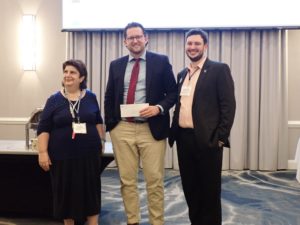
SEDAAG: Jordan Brasher, PhD candidate, University of Tennessee-Knoxville; Paper title – “Contesting the Confederacy: Mobile Memory and the Making of Black Geographies in Brazil”

Jordan Brasher (center)

MAD: Kelly J. Anderson, University of Maryland College Park, Middle Atlantic Division; Paper title – “Weather-related Influences on Rural-to-urban Migration: A Spectrum of Attribution in Beira, Mozambique”


    Share

AAG is Proud to Announce the 2020 AAG Honors

Each year, the AAG invites nominations for AAG Honors to be conferred in recognition of outstanding contributions to the advancement or welfare of the profession. The AAG Honors Committee is charged with making award recommendations for each category, with no more than two awards given in any one category.  This year, the AAG Honors Committee and the AAG Council are pleased to announce the following AAG Honorees to be recognized during the 2020 AAG Annual Meeting Awards Luncheon.

2020 AAG Lifetime Achievement Honors
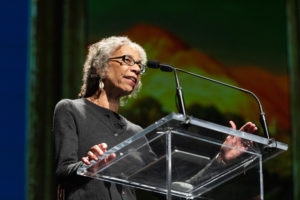
Ruth Wilson Gilmore, Graduate Center, CUNY

Ruth Wilson Gilmore, the recipient of this year’s AAG Lifettime Achievement Award, is a public intellectual who integrates geographic scholarship with advocacy and activism. This award recognizes Dr. Gilmore’s transformational contributions to the discipline of Geography. Her scholarship has pushed the boundaries of geographic thought and influenced the trajectories of multiple areas of our field, including critical human geography, black geographies, and political economic geography. Dr. Gilmore is also an advocate for geographic thinking and the importance of space and place within interdisciplinary fields including American studies, carceral studies, and ethnic studies.

Dr. Gilmore is particularly known for her work in carceral studies, including her award-winning book, Golden Gulag: Prisons, Surplus, Crisis and Opportunities (soon to be re-issued by University of California Press). Golden Gulag brought the theoretical and methodological tools of economic geography to bear on the interconnections of race, space and inequity, reshaping the national conversation on prisons. In this book and in related articles, chapters, and lectures, she pushed scholars, politicians and citizens to confront society’s highly inequitable valuation of different lives. In addition to her contributions on prison abolition, Dr. Gilmore’s research addresses racial capitalism, organized violence, and labor and social movements. She is known for her depth of knowledge, meticulous analysis and theoretical agility.

Dr. Gilmore’s powerful scholarship has been paired with deep engagement in public-facing scholarship. She is the quintessential intellectual-activist, engaging a wide range of audiences in the U.S. and internationally on the role of the state in taking and preserving life. Dr. Gilmore is also an extraordinary mentor of undergraduate and graduate students and of junior and mid-career scholars. She is described by her mentees as a “formidable, uncompromising, generous and greatly beloved scholar”. Through her mentorship, Dr. Gilmore has shaped a new generation of public scholars within Geography.

The discipline of Geography has benefited enormously from Dr. Gilmore’s scholarship, activism, and mentorship. She is a role model for all of us. (Photo credit ©DonUsner)
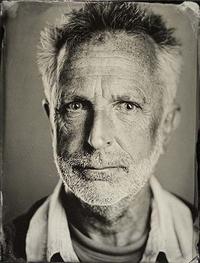
Michael Watts, University of California – Berkeley

Michael Watts, recipient of the 2020 AAG Lifetime Achievement Award, is one of the most influential nature/society scholars of the last fifty years. His foundational research on political ecology, vulnerability and resilience, agrarian political economy, the social production of famine, oil

and development, and environmental justice – all conducted through a fine-grained ethnographic, political, and deeply historical engagement with Nigeria and West Africa – continues to shape scholarly debates and research programs across the environmental social sciences, area studies, and humanities.

Watts’ work is widely cited and taught. He has written two powerful monographs – Silent Violence: Food, Famine, and Peasantry in Northern Nigeria (1983/2013 2nd ed.) and Curse of the Black Gold: 50 Years of Oil in the Niger Delta (2014) – and more than 300 articles and essays. He is perhaps best known for his edited volumes, which have been no less than field-defining. He has set and then reset the intellectual trajectory of political ecology and critical nature/society research three times in twenty years with the various editions of Liberation Ecologies, initially published in 1996 and then entirely overhauled twice: first for a 2nd edition in 2004, and then again for a 3rd edition retitled Global Political Ecology, which was published in 2011. His 2001 collection Violent Environments (with Nancy Peluso), catalyzed a body of research focused on the role of armed conflict in environmental conservation world-wide which continues today in work on the role of armed drones in wildlife protection. His recent co-edited volume Subterraenean Estates: Life Worlds of Oil and Gas (2015) promises to play a similarly defining role in research on the environmental and political impacts of fossil fuel extraction. He has received numerous awards including the Victoria Medal of the Royal Geographical Society and AAG Distinguished Scholarship Honors. In addition to funding from NSF and the National Geographic Society, his research has been funded by major foundations including Ford and Rockefeller. He has also received a Guggenheim.

As the Class of 1963 Professor of Geography and Development Studies at Berkeley, he supervised 90 Ph.D. students and served on the committees of 75 others. His service to Geography and academia more broadly includes co-founding and directing the storied Environmental Politics Workshop at UC Berkeley, and serving as Chair of the Board of Trustees of the Social Science Research Council for more than a decade and on the advisory board for the Stanford Center for Advanced Studies in the Behavioral Sciences. Beyond academia, Watts has worked at the highest levels of international development (serving as Chief of Party for the United National Development Program and working with the World Bank), corporate governance (arranging workshops on corporate social responsibility for companies such as Statoil and Genentech), statecraft (working with the U.S. Congress and State Department on oil issues), and community activism (collaborating with photojournalists and the environmental justice collective RETORT). These multi-faceted engagements with diverse stakeholders are a testament to Watts’ ability to impact both powerful and marginalized constituencies in and beyond academia.

2020 AAG Distinguished Scholarship Honors
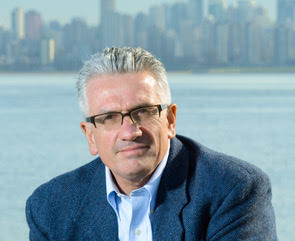
Jamie Peck, University of British Columbia

The 2020 AAG Distinguished Scholarship Award is awarded to Jamie Peck, for his foundational and sustained contributions to the field of economic geography and to human geography, more broadly.
It is difficult to overstate Jamie Peck’s intellectual influence. Peck is one of the most productive geographers of our time. He is in the top 1% of social scientists in terms of citations, with an h-index of 83 and more than 40,000 citations. His published work, which is notable for both methodological rigor and deep theoretical insight, includes 6 monographs, 13 edited volumes, 93 book chapters and 200 articles. Over three decades, he has published transformative work on the dynamics of neoliberalization, the economic transformation of urban governance, the history of economic geography, changing labor markets and regulation, and policy mobilities. His research has been funded by Canada’s Social Sciences and Humanities Research Council, the Ford Foundation, the U.S. National Science Foundation, and The Leverhulme Trust, among other sources. His many awards include the RGS-IBG Back Award and a Guggenheim, and he is a Fellow of the Academy of Sciences (UK), a Fellow of the Royal Society of Canada, and a Corresponding Fellow of the British Academy. One of the outstanding characteristics of his scholarship is his ability to frame complex problems in terms accessible to a broad audience. This is reflected in the reach of his work outside of the academy, as demonstrated by quotations and interviews in two dozen popular press outlets, including the Economist, the Guardian, the New York Times, and the Wall Street Journal.

Peck’s extraordinary scholarship is matched by an extraordinary record of service to the field as an editor and mentor. In his remarkable and ongoing run as editor at Antipode and Environment and Planning A, and now as lead editor of the five Environment and Planning journals, he has shaped the intellectual conversation across Human Geography for decades. Beyond his own editorial work, he is currently on the editorial or advisory boards of 11 other academic journals, and is a tireless reviewer for the top journals in geography and regional studies. Finally, through his deep intellectual generosity to junior colleagues and students, including as founder of the Summer Institute for Economic Geography and as advisor to graduate students and postdoctoral fellows, he has played a pivotal role in the development of generations of economic geography scholars. For these and his many other contributions to geography, Jamie Peck is the recipient of the 2020 AAG Distinguished Scholarship Award.
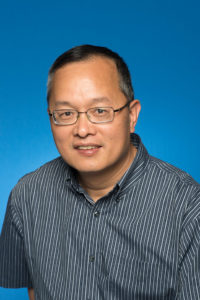
Qihao Weng, Indiana State University

Qihao Weng is a pioneer and leading scholar in the area of urban remote sensing. During his distinguished career, he has significantly advanced our theoretical understanding and empirical knowledge of urban heat islands and land surface temperature, urban sprawl, and environmental sustainability in the context of rapid urbanization. His originality, creativity, and significant intellectual contributions have resulted in 235 articles, 14 books, and funding support from NSF, NASA, USGS, NOAA, ESA, and the National Geographic Society. His academic record testifies to his history of innovative work and far reaching influence on a wide range of disciplines including urban geography, urban planning, landscape ecology, meteorology, and climatology.

Weng’s outstanding contributions to urban remote sensing and sustainability science include methodological innovations including novel algorithms and data analysis strategies and theoretical advances offering new perspectives on the urban environment and spatio-temporal aspects of urbanization processes. Taken together, Weng’s empirical and theoretical contributions have yielded significant new insights on some of the most critically important phenomenon influencing contemporary urban environments.

Weng’s seminal research on urban heat islands, landscape effects on land surface temperature, and urbanization processes opened a critical new frontier towards understanding and measuring novel environmental risks in rapidly growing urban regions. He developed a methodology for estimating land surface temperature with satellite-derived measures of vegetation that has become a core technique for those investigating urban climates. His research has also demonstrated that urban sprawl and warming are not an isolated phenomenon, but instead are coupled with other risk factors, such as infectious disease. His scholarship has not only transformed the scientific understanding of remote sensing in geographical applications, but also has bridged methodological gaps between geography, spatial ecology, and environmental science.

Beyond the considerable impact of his own research, Weng’s production of educational materials and resources have played an important role in training future generations of urban scholars in remote sensing and GIS techniques. In particular, Weng’s An Introduction to Contemporary Remote Sensing is the standard textbook for many introductory remote sensing courses and has been adopted by numerous universities, community colleges, and technical schools around the world. He also has a long record of dedicated professional service to the AAG. In recognition for his outstanding contributions to scholarship in geography, Weng has received many honors and awards including the AAG Outstanding Contributions Award in Remote Sensing (2011) and Willard and Ruby S. Miller Award (2015). In 2018, Weng was named a Fellow of the Institute of Electrical and Electronics Engineers (IEEE), Senior Fellow at NASA, and member of the European Union Academy of Sciences.

Weng’s research exemplifies the multifaceted scholarship that is critical in bridging contemporary urban studies with spatial ecology and environmental science. He also continues to be a role model for exemplary practices in education, public service, and professional leadership for the next generation of geographic leaders. For these reasons, the 2020 AAG Distinguished Scholarship Award is awarded to Qihao Weng.

2020 AAG Gilbert White Distinguished Public Service Honors
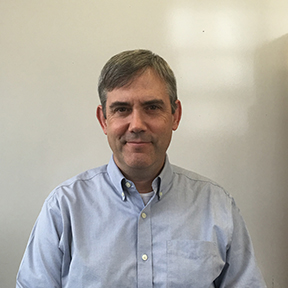
William Solecki, CUNY – Hunter College

The 2020 Gilbert White Distinguished Public Service Honors is awarded to William Solecki for his outstanding work to improve the human condition through direct community engagement, wide-ranging public service, and salient, cutting-edge research. Solecki’s work sits at the nexus of geographic inquiry, social justice, and environmental policy. His work has transformed our understanding of the opportunities and obstacles of urban living in a changing natural environment, and has been deeply influential across communities and organizations.

Of particular note is Solecki’s deft ability to work at multiple geographic scales among myriad organizations to advance our understanding of, and ability to respond effectively to, climate change. At a local scale, Solecki has co-chaired the New York City Panel on Climate Change, served as the Director of the CUNY Institute for Sustainable Cities, served as the interim Director of the Science and Resilience Institute @ Jamaica Bay, and led several climate impact studies in the greater New York and New Jersey region. At a national scale, Solecki served as the coordinating lead author for chapters in the 2014 (Chapter 11: Urban, Infrastructure, and Vulnerability) and 2018 (Chapter 18: Northeast) U.S. National Climate Assessment reports. Internationally, Solecki has been involved in Working Group II of the Intergovernmental Panel on Climate Change since 2006 and has made numerous contributions to the IPCC’s assessments of climate change impacts, vulnerability and adaptation for communities. He served as a contributing author for three chapters in the Fourth Assessment Report, as a lead author for the Urban Areas chapter in the Fifth Assessment Report, as a lead author for the Decision-Making Options for Managing Risk chapter in the Sixth Assessment Report, and as a coordinating lead author of the Framing and Context chapter of the IPCC Special Report Global Warming of 1.5oC.

In addition to his extensive scholarly research and many contributions to climate change assessments, Solecki is co-founder of the Urban Climate Change Research Network, co-editor of Current Opinion on Environmental Sustainability, and founding editor of the Journal of Extreme Events. He currently maintains numerous collaborative projects around the world. In 1975, Gilbert White wrote “that the human race is a family that has inherited a place on the earth in common, that its members have an obligation to work toward sharing it so that none is deprived of the elementary needs for life, and that all have a responsibility to leave it undegraded for those who follow (Stewardship of the Earth, p. 403-404). William Solecki is awarded the 2020 Gilbert White Distinguished Public Service Honors for his unfettered devotion to those basic principles and his ability to put them into action.

2020 Distinguished Teaching Honors
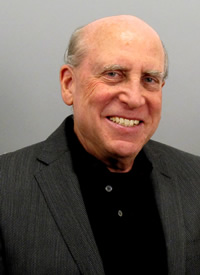
Robert Lake, Rutgers University

Robert Lake, the recipient of the 2020 AAG Distinguished Teaching Honors, is an extraordinary educator and mentor of graduate students and young scholars. He has provided generous, sensitive and supportive teaching and guidance both inside and outside of the classroom. Lake’s goal has been to teach students how to think rather than what to think. His selfless mentorship has allowed students to grow and flourish intellectually.

At Rutgers University, Lake served as dissertation chair or committee member for over 130 doctoral students, many of whom are now leading scholars in urban geography and urban studies. He is well known for his innovative course design, particularly in the area of geographic theory, and his ability to convey to students his deep understanding of the research process. Moreover, he has contributed, through numerous administrative positions, to the structure and organization of graduate education from the department to the university level. Lake has been the recipient of multiple teaching awards inside and outside of Rutgers University.

Lake also has provided discipline-wide mentorship for graduate students and young scholars. As a long-term co-editor of the journal Urban Geography, Lake guided young scholars through the publication process. In his role as organizer of the annual AAG Urban Geography plenary lecture, he provided a forum for intellectual discourse and mentoring. Over the last two decades, Lake has organized the Brooklyn Urban Reading Group, an ongoing, open and inclusive discussion involving faculty and students from nearby universities.

Through his devotion to graduate education and the mentoring of young scholars, Lake has contributed to a network of scholars (affectionately referred to as Bob-net) who are continuing to strengthen the discipline of geography. In the words of a colleague and mentee, Robert Lake’s commitment to “pluralism, engagement, and deep care for others” makes him an exemplary educator and a role model for the discipline of geography.

2020 AAG Media Achievement Awar
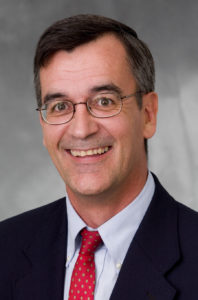
Keith Debbage, University of North Carolina at Greensboro

Keith Debbage, recipient of the 2020 Media Achievement award, is a quintessential communicator of the scholarly ideas of applied urban and economic geography. His conceptual explorations run the gamut from local-scale planning issues, to regional examinations of economic decline and recovery, to the impacts of the so-called “Creative Class.” In every case, Debbage breaks the complexity down into jargon-free and readable packets of knowledge. Debbage draws on his scholarship, extensive professional service, including his appointment as a Coleman Foundation Fellow, and his lived experience when communicating with the public, such as in his recent columns on the power of local-scale entrepreneurialism and the role of higher education in the economic and cultural life of North Carolina. A disarming folksiness is underlain by decades of applied scholarship, much of it completed with external grant and contract funding.

As a role model for others, Debbage is prolific in his media presence and yet, by all accounts, seeks to share the spotlight with his student collaborators and to bring sophistication to his analyses even as they are accessible. From over a hundred newspaper columns, often against a backdrop of maps or graphics, to countless radio and television appearances, Debbage does the difficult work of communicating geographic scholarship to the public. For his consistent commitment to this important work, for repeatedly demonstrating that conceptual complexity doesn’t mean Geography has to be confined to the Ivory Tower, and for finding the right voice to bring Geography into the public sphere, Professor Keith Debbage is recognized with the 2020 American Association of Geographers Media Achievement Award.

 

    Share