
Newsletter – February 2021
PRESIDENT’S COLUMN
Want a Thriving Department? Focus on Undergraduate Success
By Amy Lobben
 I cannot think of a person in higher education who has not felt the pressure of maintaining and growing undergraduate enrollments. Undergraduates, who make up the large majority of the student body, are the people we devote most of our instructional efforts toward, and—as administrators constantly point out—are universities’ primary source of revenue through tuition and fees. At public institutions, undergraduate success is also the primary focus of state legislatures looking at higher education metrics and state funding. Geography departments may literally live or die depending on their ability to maintain robust undergraduate enrollments and recruit majors.
FROM THE MERIDIAN
In Kansas, an Early Warning for Higher Education and Geography
By Gary Langham
 Late last month, a bellwether event took place in Kansas, threatening higher education’s ability to support post-COVID recovery. Citing the extreme budget constraints caused by the pandemic, the nine-member Kansas Board of Regents unanimously approved a new policy giving public institutions the power to remove faculty, including those with tenure, through 2022. The new policy sidesteps one already in place that addresses financial emergencies while preserving transparency and faculty participation in termination decisions.
ANNUAL MEETING
New Curated Specialty Group Sessions at #AAG2021
This year at the 2021 Annual Meeting, AAG is taking a new approach to our scheduling of Specialty and Affinity Group sessions to decrease overlap and showcase the work of these groups. Specialty and affinity group chairs have highlighted a guided program of their “must-see” sessions for those interested in their specific topics including rural geography, business geography, geomorphology, hazards, the history of geography, and more. Curated tracks are AAG’s approach to helping you find the most relevant sessions among our abundant choices, helping you navigate our more than 760 sessions and 2,700 paper abstracts this year. All abstracts will be assigned to sessions by Mid-February, when the preliminary program is released.
AAG 2021 Goes Virtual – Program to be Released Mid-February
In mid-November, AAG made the difficult but necessary decision to shift the 2021 annual meeting to a completely virtual experience. A streamlined process is in place to help session and activity organizers bring their programming to the virtual environment, with the assistance of AAG staff. Stay tuned — the program for the virtual meeting will be released in mid-February.
PUBLICATIONS
NEW The Professional Geographer Issue Alert:
Articles with topics ranging from the role of rivers in environmental movements to the digital representation of cities
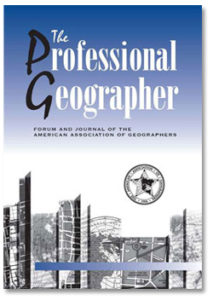 The most recent issue of The Professional Geographer has been published online (Volume 73, Issue 1, February 2021) with 13 new articles on current geographic research. Topics in this issue include impacts of COVID-19 on learning; quantitative geography journals; income inequality; Wikipedia; Weibo; spatial autocorrelation; and regional development research trends. Locational areas of interest include Baltimore, Maryland; South Florida; and Catalonia. Authors are from a variety of institutions including University of North Carolina at Greensboro; University of Denver; and Avignon University.
All AAG members have full online access to all issues of The Professional Geographer through the Members Only page. Each issue, the Editors choose one article to make freely available. In this issue you can read How Identity Enriches and Complicates the Research Process: Reflections from Political Ecology Fieldwork by Hanson Nyantakyi-Frimpong for free for the next 3 months.
Questions about The PG? Contact PG [at] aag [dot] org.
NEW Winter Issue of the AAG Review of Books Published
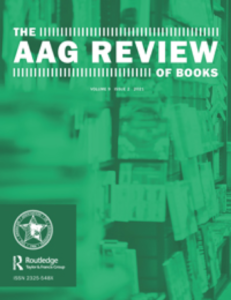
The latest issue of The AAG Review of Books is now available (Volume 9, Issue 1, Winter 2021) with 15 book reviews on recent books related to geography, public policy, and international affairs. The Winter 2021 issue also holds one book review essay and a book review forum focused on the recipient of the 2019 AAG Meridian Book Award, Wilted: Pathogens, Chemicals, and the Fragile Future of the Strawberry Industry, by Julie Guthman.
Questions about The AAG Review of Books? Contact aagreview [at] aag [dot] org.
 In addition to the most recently published journal, read the latest issue of the other AAG journals online:
• Annals of the American Association of Geographers
• The Professional Geographer
• GeoHumanities
• The AAG Review of Books
Call for Abstracts: Special Issue of ‘Annals’ on “Race, Nature, and the Environment”
 The 2023 Special Issue of the Annals invites new and emerging geographic scholarship situated at the crossroads of Race, Nature, and the Environment. In seeking contributions from across the discipline, we welcome submissions that advance critical geographic thinking about race and the environment from diverse perspectives and locations; that utilize a broad array of geographic data, theories, and methods; and that cultivate geographic insights that cut across time, place, and space. Abstracts of no more than 250 words should be submitted by e-mail to Jennifer Cassidento by March 31, 2021. The Editor (Katie Meehan) will consider all abstracts and then invite a selection to submit full papers for peer review by June 1, 2021.
ASSOCIATION NEWS
New Webinar Series Explores GeoEthics
 The American Association of Geographers, in partnership with the Center for Spatial Studies at the University of California Santa Barbara and with support from Esri, will launch a series of webinars on key considerations for GeoEthics. The GeoEthics Series will begin on February 9, with a webinar hosted by Arizona State University’s Spatial Analysis Research Center.
Drawing together experts from academia, the private sector, and government, the multi-year GeoEthics Series is expected to result in an action plan for addressing the ethical issues surrounding geospatial data. Major ethical issues raised by locational information will be discussed, including surveillance, labor and employment, governance, geospatial analytics, and more culminating in an in-person Summit in late 2021, to be scheduled as soon as it is safe to do so. Sponsored by Esri, this Summit will further explore geospatial ethics in areas such as geography, human rights, immigration, labor, law, policy, computing, data science, and sociology. For more information, visit this link.
Bridging the Digital Divide
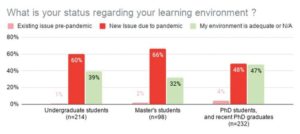
A May 2020 survey of AAG’s students found that 60% of undergraduates, 66% of masters, and 48% of PhDs faced new challenges in their learning environments and technology needs due to COVID-19. These numbers are one reason AAG launched the Bridging the Digital Divide program with Esri as a partner. The program has already dedicated $238,000 to faculty requests from eight tribal colleges and universities (TCUs), 14 historically Black colleges and universities (HBCUs), and 1 predominantly Black institution (PBI). It is serving students across more than 95 courses, 41 percent of which are GIS classes. Learn more about the program in the Winter issue of ArcNews. Readers can also catch up with Dr. Adegoke Ademiluyi, a faculty member at Fayetteville State University, who responded to the Bridging the Digital Divide program to benefit his students in this ArcNews interview.
For more information about the AAG’s COVID-19 Task Force efforts, read Executive Director Gary Langham’s Winter ArcNews article.
AAG Welcomes Spring 2021 Interns
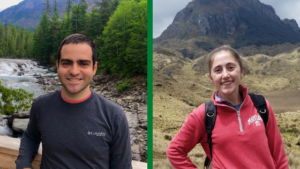 The AAG is excited to welcome two new interns coming aboard our staff for the Spring 2021 semester! Joining us this semester are Ilan Gritzman, a recent graduate from University of Central Florida, and Jennifer Church, senior at The University of Maryland.
Interested in interning with the AAG for Summer 2020? The AAG is accepting intern applications until March 1, 2021. Interns at the AAG are provided a weekly stipend and participate in most AAG programs and projects such as education, outreach, research, website, publications, or the Annual Meeting.
POLICY CORNER
Our Policy Priorities for the Biden Administration
On January 20th, the first day of President Biden’s term, the AAG shared a letter with the White House outlining our top policy priorities for the new administration.
In the letter we state that as an organization of engaged geographers, spatial data scientists, academics and professionals, we stand ready to offer our support and expertise as the administration begins its ambitious agenda to “Build Back Better.” Our priorities include an emphasis on the importance of federal geospatial data and the implementation of the Geospatial Data Act, continued increased funding for the National Science Foundation (NSF) and related agencies, prioritization of geography as a subject in K-12 education, the use of geography to promote diversity, equity, and inclusion efforts, and the need to restore government and public trust in scientific integrity. We will adapt as issues evolve and emerge in years to come, but will do so with an emphasis on these guiding priorities along with the policy and advocacy tenets outlined in AAG’s Strategic Plan.
Click here to read the full letter to the White House, and stay tuned throughout the year for more ways to get involved in the AAG’s advocacy campaigns.
In the News:
- In a victory for geographers and environmental advocates, a federal judge this week struck down a Trump-era EPA rule that allowed the omission of legitimate scientific findings, including confidential geospatial data, in the name of “transparency” in policymaking. The AAG, along with the Urban and Regional Information Systems Association (URISA) and the University Consortium for GIS (UCGIS), submitted a federal public comment in 2020 to oppose this troubling and harmful rule.
- The Census Bureau is working to report results from the 2020 count that will dictate 2021 redistricting, but continues to run behind schedule. The bureau will first release state population counts which are used to determine the number of total seats each state has in the House of Representatives. State population counts were due by the end of 2020, but are now expected by April 30th as the agency attempts to fix irregularities in data. The next important release is the detailed demographic data used by each state to draw new legislative districts. That data is typically delivered by the end of March, but as of now it is not expected to be shared before July 30th.
- On January 27, President Biden issued a detailed Executive Order on Tackling the Climate Crisis at Home and Abroad. Among other things, the order ensures that “climate considerations” will have a place in U.S. foreign policy and national security, promises a government-wide approach to addressing the climate crisis, including by establishing a White House Office of Domestic Climate Policy and interagency National Climate Task Force, and seeks action to spur workforce development in sustainable infrastructure, agriculture, and the energy sector, while also addressing environmental justice for the most vulnerable populations.
MEMBER NEWS
Profiles of Professional Geographers
 Linda Peters was inspired by her work with the March of Dimes Birth Defect Foundation to integrate geography and GIS in finding solutions for fundraising in areas of need. Today Linda holds a B.A. in Geography and Certificate in GIS/Cartography from University of Maryland Baltimore County and works as a Global Business Development Manager for Esri. Linda knows that most issues she comes across with her customers can benefit from spatial analysis, so she recommends strong communication skills and a willingness to put in the work and listen as keys for a successful career.
Learn more about Geography Careers on the recently updated AAG Jobs & Careers website.
RESOURCES AND OPPORTUNITIES
AAG Calls for Nominations for Standing and Awards Committees
The AAG Council will make appointments to several of the AAG Standing Committees at its spring 2021 meeting. These appointments will replace members whose terms will expire on June 30, 2021. If you wish to nominate yourself or other qualified individuals for one or more of these vacancies, please notify AAG Director of Operations Candida Mannozzi on or before March 1, 2021. Please make sure that your nominee is willing to serve if appointed. Include contact information for your nominee as well as a brief paragraph indicating their suitability for the position.
Open committees include: Committee on the Status of Women in Geography; Diversity and Inclusion Committee; Finance Committee; Membership Committee; Publications Committee; AAG Awards Committee; AAG Fellows Selection Committee; AAG Globe Book Award Committee; AAG Harm de Blij Award Committee; AAG Meridian Book Award Committee; AAG Marcus Fund for Physical Geography Committee; AAG Program Excellence Award Committee; AAG Research Grants Committee; AAG Harold Rose Award Committee; AAG Student Award and Scholarship Committee; and AAG Wilbanks Prize Committee.
Click here for a description of committees.
Career Mentors Needed for 2021 AAG Virtual Meeting

The AAG seeks professional geographers representing the business, government, nonprofit and academic sectors to serve as volunteer “Career Mentors” during the 2021 AAG Virtual Meeting. Career mentoring provides an open forum for students and job seekers to receive one-on-one and small-group consultation about careers in a variety of industries and employment sectors. Mentors are expected to answer questions and provide general career advice to students and job seekers interested in learning more about industries that employ geographers, the work geographers perform and strategies for getting into the field. This year we will be organizing eight sessions, one each morning and one each afternoon of the conference, to provide our virtual attendees around the world with more opportunities to participate.
For additional questions and to volunteer, please contact Mark Revell at the AAG at mrevell [at] aag [dot] org by March 1st, 2021.
NCRGE Dear Colleague Letter: Advanced Placement Human Geography
 The National Center for Research in Geography Education is organizing a research group to conduct a comprehensive analysis of AP Human Geography course data. Grants of $4,000 each are available for up to four researchers to join the study. For more information on how to apply, see this Dear Colleague Letter: http://www.ncrge.org/funding/
IN MEMORIAM
The AAG is saddened to hear of the passing of these colleagues.
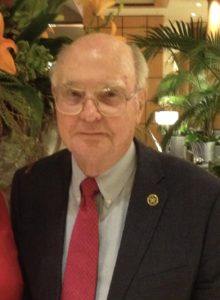 William Dando, 50 year AAG member and longtime chair of the Bible Geography specialty group, passed away on January 1, 2021. Throughout his career Dando received numerous awards for his teaching and service throughout his career, exemplifying an academic life that was a balance between scholarship and community service. He leaves behind his wife and co-writer/editor Caroline Z. Dando; children Christina, Lara, and Bill (all geographers); four grandchildren — Emmaline, Anna, Alex, and John; and thousands of former students and mentees. Read more.

Robert Thomas Kuhlken, retired professor of geography and former geography department chair at Central Washington University, died on January 1, 2021. He was 67. More than anything Kuhlken loved to be outdoors and was a lifelong scholar, educator, and tireless observer of the natural world. Read more.
Hugh Brammer, who dedicated his life’s work to studying agriculture in Bangladesh, passed away at the age of 95 on January 13, 2021. Brammer, who held a MA in Geography from University of Cambridge spent over 25 years working for the Food and Agricultural Organization of the U.N. Read more.
 Late last month, a bellwether event took place in Kansas, threatening higher education’s ability to support post-COVID recovery. Citing the extreme budget constraints caused by the pandemic, the nine-member Kansas Board of Regents unanimously approved a new policy giving public institutions the power to remove faculty, including those with tenure, through 2022. The new policy sidesteps one already in place that addresses financial emergencies while preserving transparency and faculty participation in termination decisions.
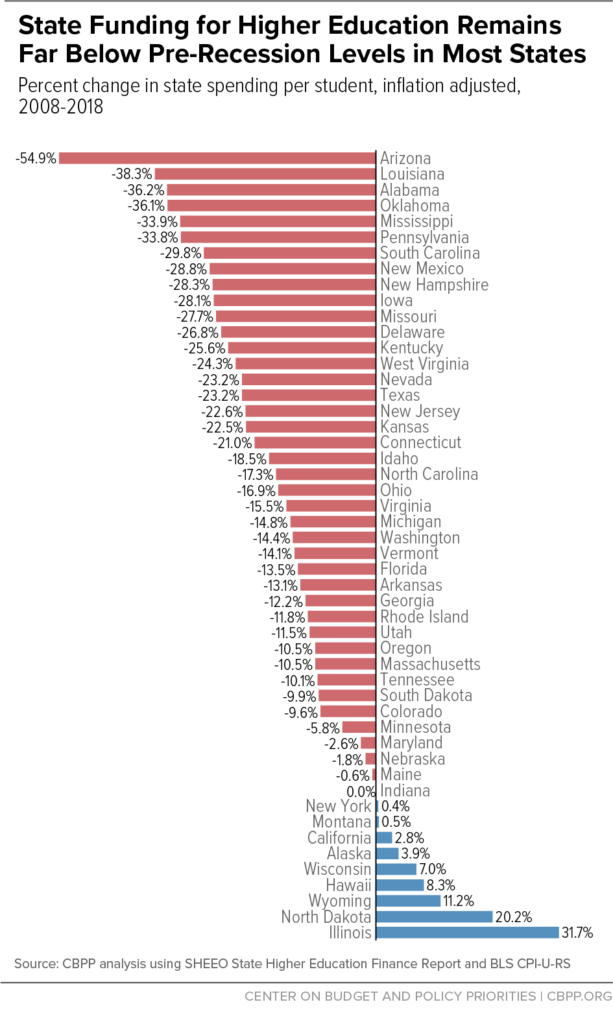 Unfortunately, the circumstances surrounding this issue are neither unique to Kansas nor are they only about COVID-19. For most states, public funding for higher education
 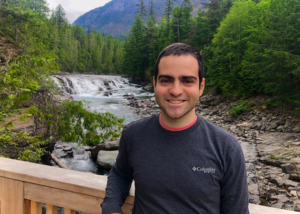 Ilan Gritzman recently graduated from the University of Central Florida with a Bachelor’s of Science in Public Administration and a minor in Urban and Regional Planning. Ilan has previously interned for Smithsonian Libraries on the World of Maps project, participated in a GIS study abroad in Belize, and served as a research assistant for Citizen Science GIS. He currently also collects and maps data on apartment units across Florida as a city surveyor for One Hundred Feet Inc. Ilan intends to pursue an M.A. in Urban and Regional Planning and secure a full-time position in either urban planning or GIS upon graduation. In his spare time, Ilan likes to cycle, play tennis, travel, and watch sports.
 Jennifer Church is a senior at The University of Maryland, pursuing a B.S. in Environmental Science and Policy with a concentration in Land Use and a minor in Nonprofit Leadership and Social Innovation. After graduation, Jennifer hopes to have the opportunity to travel before applying for a Masters program in Geography. In her spare time, she enjoys skiing, kayaking, and embroidering.
 This is Part 2 of a two-part column on what geography departments can do (and should not do) to advocate for their work in budget talks, which are all the more crucial during the COVID-19 pandemic. These points are largely derived from answers I received from geographers in upper administrative positions at universities.
 The Glenda Laws Award is administered by the American Association of Geographers and endorsed by members of the Institute of Australian Geographers, the Canadian Association of Geographers, and the Institute of British Geographers. The annual award recognizes outstanding contributions to geographic research on social issues. This award is named in memory of Glenda Laws—a geographer who brought energy and enthusiasm to her work on issues of social justice and social policy. All early to mid-career scholars involved in geographic research on one or more social issues will be eligible for this award. Nominations should include two letters of recommendation from scholars or members of community organizations familiar with the research upon which the nomination is based, a curriculum vitae, and a scholarly paper based on original research.






















































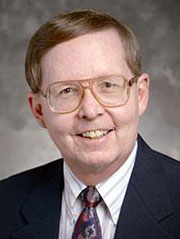 The Wilbanks Prize for Transformational Research in Geography has been established in memory of the late Dr. Thomas (Tom) Wilbanks, a former AAG President and long-standing AAG member, who earned the admiration and respect of colleagues around the world for his many years of scholarship and research bridging the academic, public and private sectors.









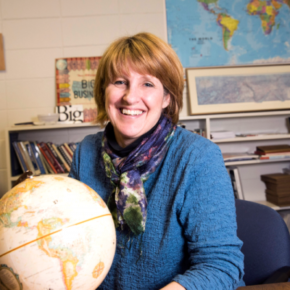 Hilda Kurtz, University of Georgia