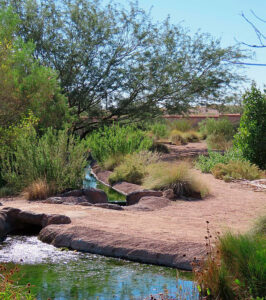
Announcing a New Specialty Group at AAG: Critical Islands, Archipelagos, and Oceans (CIAO)
From the CIAO Specialty Group’s Organizing Committee
We are thrilled to announce the launch of the AAG’s newest specialty group, Critical Islands, Archipelagos, and Oceans (CIAO). CIAO is a scholarly and community committed to advancing the study of islands, archipelagos, and oceans as lived spaces and geographic forms enabling for critical thought. In the present moment of environmental injustice, capitalist failure, and the enduring realities of colonialism that work to divide us, we are dedicated to building solidarities across—and through—oceanic space.
CIAO’S vision
We envision CIAO as a dynamic space for geographers, Islanders, and others committed to social justice to convene in the co-creation of knowledge specific to islands, archipelagos, and oceans. In this spirit, we invite diverse perspectives that adopt a critical lens to interrogate the following topics:
- Migration, mobility, and transoceanic networks
- Archipelagic relationalities
- Indigenous sovereignty
- Island economies
- Oceanic borders, territorialities, and governance
- Responses to climate change
- Militarism and militarization
- Island feminism and island-based social movements
- Indigenous futurisms
These topics are starting points rather than constraints and we welcome scholarly engagement beyond these themes.
CIAO’S activities
Upon joining CIAO, members can look forward to the following activities:
- Virtual and in-person networking opportunities
- Professional development and peer mentoring
- Student travel grants
- Awards for outstanding papers and creative scholarship
- Conference activities at the AAG Annual Meeting including paper/panel sessions, social gatherings, and organized field trips.
- At AAG 2026, CIAO will sponsor:
- A session titled “Island Feminisms: Anti-racist and Decolonial Scholar-Activist Solidarities for Social and Environmental Justice/Feminismos isleños: solidaridades antirracistas y decoloniales entre académicas/os activistas por la justicia social y ambiental”
- A panel
- Any relevant sessions that AAG members suggest!
CIAO’S commitments
As a Specialty Group that explicitly recognizes the colonial legacy of the geography discipline, as well as the myriad ways that academia reinforces social, political, and economic inequalities, CIAO is committed to building an inclusive space safe from discrimination and violence. In addition to the professional benefits of CIAO membership, CIAO is committed to:
- Celebrating and amplifying the voices of Islander and coastal communities; Indigenous peoples, women, people of color, and other marginalized communities
- Upholding academic freedom within CIAO activities;
- Facilitating transparent and accountable governance; and
- Aligning with the AAG’s ethics of care for creating safe space at AAG Meetings, its Statement of Professional Ethics, and Professional Conduct Policies and Procedures
Join CIAO today
We warmly invite all geographers conducting critical work on islands, archipelagos, and oceans to join the CIAO community.
- Go to aag.org and log in.
- From My AAG Dashboard, click on the red “Add a Group” link in the My Communities section.
- Review your current groups, then click the grey “Continue” button in the lower right.
- When the Specialty Groups list appears (it may take a minute), check the box next to “Critical Islands, Archipelagos, and Oceans,” then click “Continue.”
- Continue through the Affinity Groups and Communities of Practice screens until you reach your Shopping Cart, then proceed to Checkout. Fees are $20 for regular members and $5 for students.
- Once payment is complete, you’ll see a confirmation message. Allow up to 15 minutes for your dashboard to update. If the update doesn’t appear, try logging out and back in—or use a private browser window to clear any caching issues.
Questions? Contact us at [email protected].
We are so excited to host this new space, and we can’t wait to build the CIAO community with you!
 Anthony Howell is the new Geographic Methods editor for the Annals of the American Association of Geographers. He is an associate professor, director of the Center on Technology, Data, and Society (CTDS), and senior sustainability scientist at Arizona State University. Howell brings to the editorship at Annals a background in computational, geospatial and quantitative social science methods. He currently serves as an associate editor for two journals (Progress in Economic Geography and Urban Governance) as well as having served as a guest co-editor for Economic Modeling. He works across several subspecialties in geography, including economic geography, industrial geography, development geography, and population geography, as well as the broader social sciences.
 We thank longtime, outgoing editor Dr. Ling Bian, an AAG Fellow and professor in the Department of Geography at the University at Buffalo. Dr. Bian has been the Geographic Methods editor of the Annals since 2018, and also serves or has served on the editorial boards of numerous geography and GIScience journals, as well as on review panels for the National Science Foundation and the National Institutes of Health. Her current research interests include conceptual and analytical frameworks for the representation of dynamic geographic phenomena, individual-based and spatially explicit modeling of health behaviors, and spatial networks. During her tenure as an Annals editor, Dr. Bian has dedicated her efforts to advancing the geography discipline by promoting intellectually in-depth and socially relevant research outcomes.

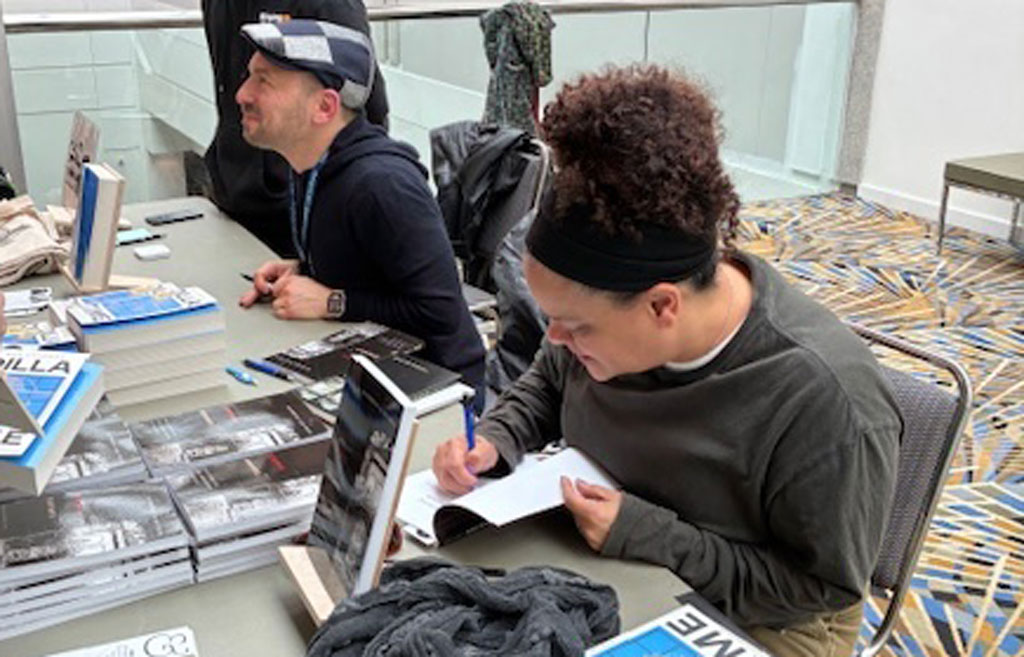

 This is the sixth of a short series of perspectives by 2024-2026 Council Treasurer Antoinette WinklerPrins — a series designed to help illuminate some of the financial challenges a professional organization such as the AAG faces. In this column, she offers perspectives on the financial aspects of running the AAG Annual Meeting.


 Geography in the News is an educational series offered by the American Association of Geographers for teachers and students in all subjects. We include vocabulary, discussion, and assignment ideas at the end of each article.