Member Profile: Dydia DeLyser

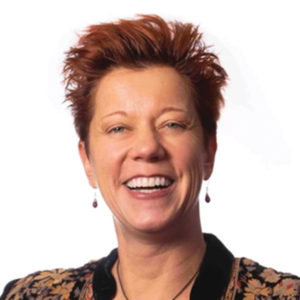
Photo of Dydia DeLeyser“Figuring out what places are about” is the foundation of Dydia DeLyser’s inquisitive, hands-on work to explore and preserve American landscapes and cultural histories. A professor of geography emerita at Cal State Fullerton, DeLyser has cultivated this outlook from early on. As the child of Dutch immigrants who came to the U.S. in the 1960s, she learned early how place, belonging, and language could open—or close—doors.

“My first language is not English, it was Dutch,” she says. “So my earliest memories are of having sort of a secret language at home that nobody else could understand.” Her parents were “always trying to understand American culture, and yet never able to become a part [of it].”

For DeLyser, the outsider status was doubled by another kind of “outside:” the past. Her parents’ vivid stories of their experiences of World War II and the privations of life in Europe even before Nazi occupation lit up DeLyser’s imagination and appreciation for social history: “The broader cultural stories about our past, like my parents’ stories about the war, are also intimate personal stories that happen in the lives of individuals,” she says. “We connect our individual experiences to the broader narrative, you know, of victory over the Nazis or so many other issues. That’s a geographical or spatial experience.”

DeLyser’s hunger to understand and embrace places and times she couldn’t know firsthand have led to her foundational preoccupation with what she calls “the intimate geographies of social memory.”

Bridging Time and Space

DeLyser started working on her intertwined study of history’s large scales and intimate personal histories while she was still an undergraduate at UCLA, aided by her work at UCLA Library’s Department of Special Collections in the manuscript, photographs, and rare books library, one of the largest such departments in the country. The archive housed the personal papers of L.A. notables and international figures such as novelist Raymond Chandler, journalist Carey McWilliams, writers Henry Miller and Anaïs Nin, and Peggy Hamilton, the first fashion editor of the LA Times.

Reading their letters and manuscripts opened DeLyser’s eyes to new ways of knowing people, even after their deaths. Research—specifically, qualitative research with primary materials—was like a portal through the gap in time and place that had so fascinated and frustrated DeLyser from childhood. She has dedicated her career to the methods that make qualitative research vibrant.

“To me, scholarship should be empirically rich, grounded in some real thing,” she says. “It should be theoretically sophisticated and engaged with whatever conceptual conversations are current and engaging and relevant in the discipline or subdiscipline you are in, and it should be methodologically articulate.” Put simply, she says: “You should be clear how you know.”

DeLyser describes research methods as “an important form of credibility for a scholar, as the core of your scholarly credibility. If you can show how you know—because you interviewed these people or because these are the quotes or because you did this archival research or you spent ten years observing at this place or because you actually did the labor or whatever the reason—If you can show how you know, then we will trust you. And then we’ll be able to learn from you, we’ll be able to take on whatever your point is.”

If you can show how you know, then we will trust you.”

Early in her career, DeLyser established a close relationship to Bodie, a California ghost town in the Eastern Sierra region. Designated a National Historic Landmark and state park in the early1 960s, Bodie began as a gold-mining town that boomed in the 1870s, crashed in the 1880s, but then lingered well into the 20th century. As the population declined, at one point there were more buildings than people. And as residents left, they abandoned furnishings and things they didn’t want to pay to move, which became the  intact artifacts of their daily lives on display in about 200 buildings, from dishes, pots, and chairs in kitchens to unused caskets in the town morgue.
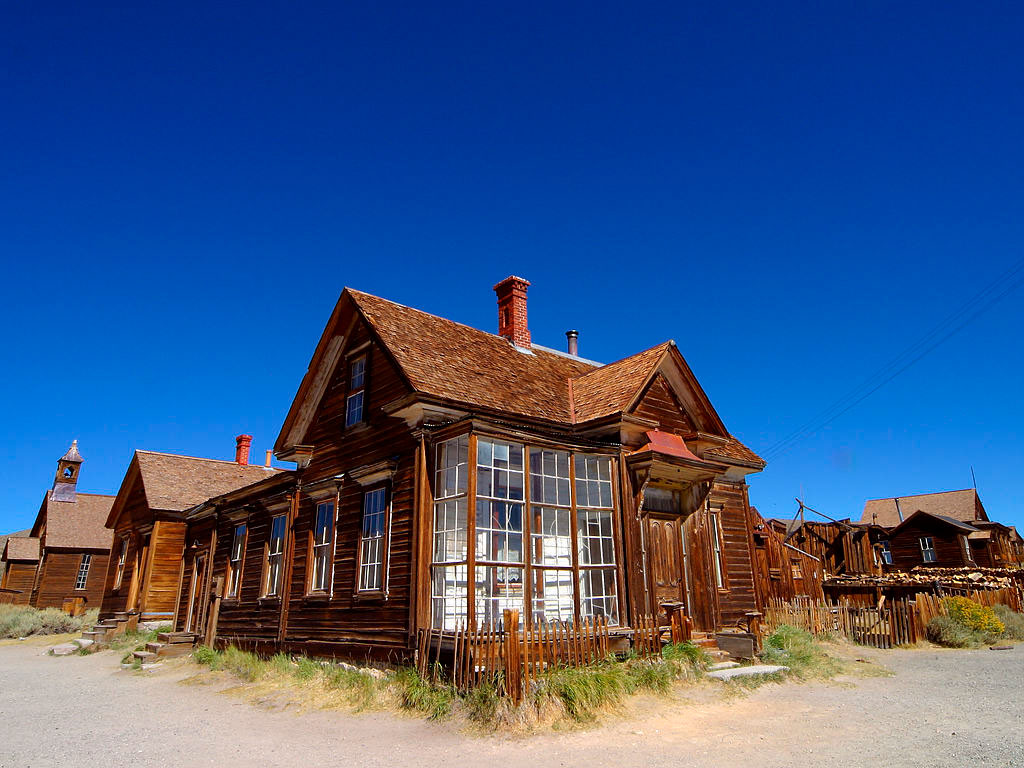
Exterior view of a building in Bodie, Calif. Credit: Jon Sullivan, Wikimedia Commons
Credit: Jon Sullivan, Wikimedia Commons


Starting when she was a college student with summers free, she began working as a low-paid, unskilled seasonal worker for maintenance, DeLyser gradually deepened her knowledge of Bodie over the next 35 years in all different ways, from conducting ethnographic research tourists there to using the Park’s own archive to understand how State Parks staff were themselves shaping what visitors saw and ultimately to using her research to make the case for broadening the town’s National Historic Landmark status, all while putting in true sweat equity in caring for the town, from physically working to stabilize the abandoned buildings to “cleaning about 10,000 [public] toilets.” Now, she is executive director of the town’s nonprofit, working to preserve Bodie in a state of “arrested decay—keeping the buildings standing while letting them look like they’re still falling down,” according to DeLyser. Today’s visitors to Bodie can peer inside its buildings to see the many personal items left behind by the final occupants, and imagine the lives of the town’s former inhabitants. DeLyser was interested in the impact of this on visitors, especially in the moments of recognition when a specific object reminded them of something in their own lives. DeLyser then sought to map these personal epiphanies onto the larger stories of history.

Interior view of a kitchen in Bodie, Calif. Credit: Fronl, Wikimedia Commons
Credit: Fronl, Wikimedia Commons


“Ghost towns are so connected to the mythic West in the United States, to the heroic, mythologized tales of the “Wild West” and all that, we simply connect ourselves to big themes about American culture. All of a sudden, from a small life and a small object, it links to the big themes. I’ve seen myself have ordinary objects spark magic in my life many times, and I’ve studied how it happens.“

Always say yes

DeLyser also engages enthusiastically as a teacher, mentor, and champion of the geography discipline. Over the years, she has served on AAG Council, was a founding member of the AAG Qualitative Research Specialty Group, contributed to the work of the AAG Harassment Free Task Force, as well as its Public and Engaged Scholarship Task Force. She worked tirelessly during the COVID pandemic to deliver supportive programming for graduate students, and also serves on the AAG Climate Committee, to name only a few contributions. It’s part of her commitment to hold the door open for the next generation of geographers.

“I’ve had to bust open doors myself in my career, but the point isn’t about busting open doors. The point is to hold the door open and create a pathway for success for the people who will come after us,” she says.

She brings the same esprit de corps to her research and publishing. “There’s no sense in scholarship unless it’s shared,” she says. “If I can learn something from my scholarship about the past, I feel obligated to share that, otherwise I take it with me. It happens in the moment, it happens in the present, but it’s always for the future.”

Living in Bodie, where only Park staff now live, gave DeLyser a strong sense of community, and a strong desire to give back to that community, something that has followed her throughout her career.

DeLyser is careful to appreciate and credit the communities she works with. Years later, as she launched a new research project about how neon signs have shaped the American landscape she recognized that there was a “neon community” or “communities” in the U.S., and, she says, “I wanted people to feel like they knew who I was and they welcomed my work, so it took me a long time to become part of that community, vested in being part of a community as ‘neon people.’” DeLyser says neon signs are “an incredibly overlooked part of the American landscape. People read the sign that says “OPEN” over the door that’s red and blue—they read that sign without even realizing that they’ve read it.” She wanted to bring those hidden signs and their hidden stories to light.

DeLyser had been introduced to the behind-the-scenes world of neon by her husband and longtime creative partner, Paul Greenstein, an expert in the history and repair of classic neon signs. Early in their relationship, she accompanied him to repair a sign over a restaurant, and the adventure sparked questions and conversations, which in turn led to more than a half dozen collaborations over the years. Greenstein and DeLyser have delved into the history and cultural significance of neon, antique cars, and Indian motorcycles. Their 2021 book Neon: A Light History  is the latest culmination of these collaborations.

DeLyser’s approach to research combines immersion in the topic, becoming embedded in the communities that hold deep knowledge about it. She sees her research across a spectrum of often deeply personal and committed hands-on experience and careful methodologies. “I had all the tools,” she recalls of her long relationship with Bodie. “I knew how to use a hammer and a Skilsaw, and I also I knew how to do an interview. I had a hammer in one hand and a notebook in my pocket.”

    Share

Tracking the Geography of Diseases: How Epidemiologists Map Infection

Geography In The News logoGeography in the News is an educational series offered by the American Association of Geographers for teachers and students in all subjects. We include vocabulary, discussion, and assignment ideas at the end of each article. 

By Neal Lineback

Have you ever wondered where you caught a cold? If so, you’ve asked the first question epidemologists ask about infectious diseases. Epidemiology is the study of how diseases spread. It relies on geography to find its answers.

You could say that epidemiologists study the “where” of diseases. Specifically, they study the paths of communicable diseases.

What are communicable diseases? They’re the ones you can catch. These illnesses spread through viruses, fungi, or bacteria, typically from person to person, and sometimes from animals to people. Some diseases come from contaminated food, water, or insects. All of these transmissions relate to geography. 

Viruses and bacteria are all around us, particularly in dense human populations. Some are harmless. But dangerous viruses range across a whole host of diseases, from pneumonia and whooping cough to measles, chicken pox, and polio, among others.

Among the least dangerous to healthy individuals is the common cold, or Rhinovirus. Its symptoms are normally mild. The cold is so common that it’s almost impossible to know where you caught it—unless you are an epidemologist. Through contact tracing, distribution maps, and other tools, epidemiologists can find the initial source of an infection. It takes only one or two people for a disease to spread as contacts multiply.

Epidemiology is a science of time as well as space. Once a few people show symptoms, they could infect 50 percent or more of the people they come in contact with, within three to ten days. This makes swift analysis crucial.

A fast-moving virus can cause an epidemic or pandemic. The difference between the two is in distribution. The disease is distributed unevenly in an epidemic, with some communities having few or no cases. In a pandemic, many more people are sick across more areas. Deaths and hospitalizations are elevated too.

This is why the flu virus—which is actually a number of virus types that can mutate over time–and the COVID viruses are carefully tracked by their strain. Flu is also identified by type. If you have ever heard a strain of influenza referred to as A,B,C, or D, you have heard its type, based on its severity. “A” causes pandemics and is the most dangerous. “B” can cause epidemics. “C” causes mild cold-like symptoms. “D” is an animal variety.

The recent COVID outbreak in 2020-2023 was a pandemic in the United States. Ensheng Dong, a Ph.D. student at Johns Hopkins University, was one of the first people in the world to create a map-based dashboard to show the disease’s spread. Using a Geographic Information System (GIS), Dong worked with physicists, geographers, and others at the university to build a map to track outbreaks. Its red-on-black appearance became iconic.

Outbreaks of many viral infections can be mapped. The CDC (Centers of Disease Control) and other international medical institutions maintain huge geographical databases to follow outbreaks around the world. This research is critical in slowing, treating, and containing viral diffusions and concentrations, allowing the medical professionals to predict where intervention (ie. tests, warnings, and vaccinations) can be helpful in reducing deaths and hospitalizations.

Epidemiology is still a young science. Less than 175 years ago, a doctor named John Snow identified the source of the 1854 cholera outbreak in London: a neighborhood water pump. He did this by mapping all of the cholera cases in the area and interviewing the families. Once he identified the common location they’d used to draw water, he removed the handle from the pump. New cases fell.

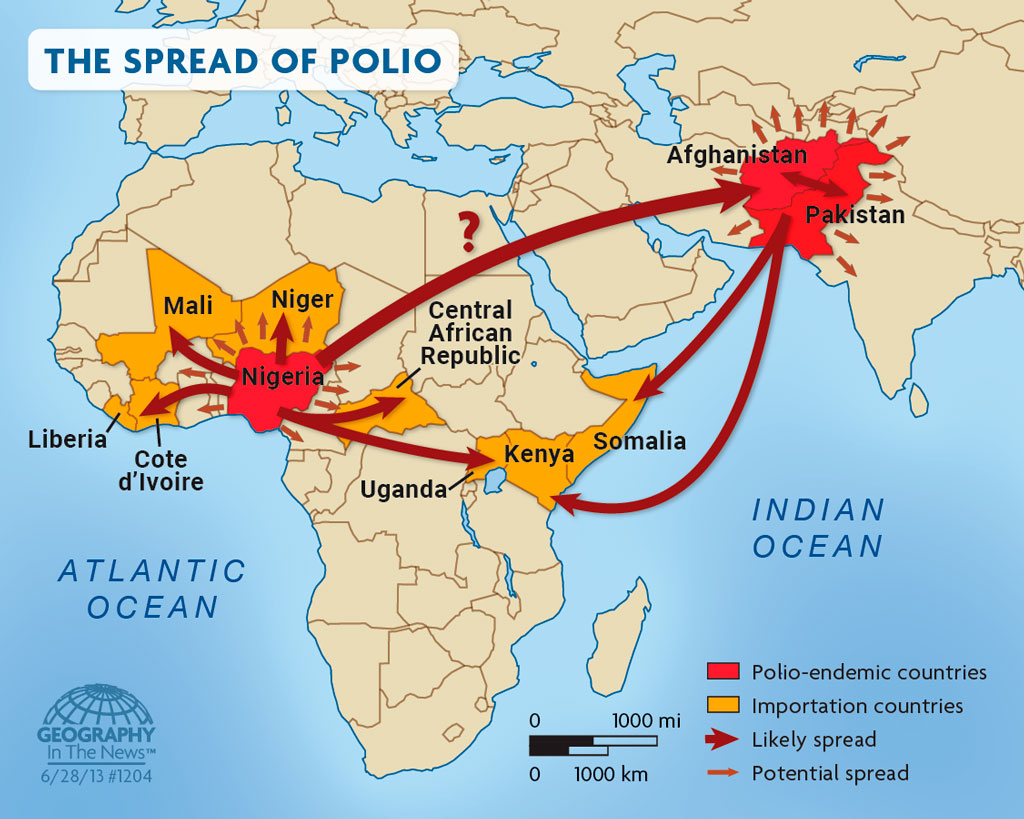
This map shows the 2013 spread of polio worldwide:

This map by Rachael Carpenter indicates that the spread of polio began with a concentration in Afghanistan, then jumped to Somalia, Kenya, and Nigeria. The disease spread to Nigeria’s African neighbors Cote d'Ivoire, Mali, Niger, Central African Republic, Uganda, and Liberia.
In 2013, Geography in the News reported on a severe polio outbreak, showing the path of infection. Map by Rachael Carpenter


Polio cases began with a concentration in Afghanistan, then jumped to Somalia, Kenya, and Nigeria. The disease spread to Nigeria’s neighbors in Africa, before it was finally halted through the efforts of multiple relief organizations’ vaccine programs, including The World Health Organization (WHO),The United Nations Children’s Fund (UNICEF), Rotary International, and the Centers for Disease Control.

So how can a microscopic virus jump thousands of miles from Afghanistan to Nigeria? Clearly, modern technology played a role in moving such great distances over the earth’s surface. What made the countries adjacent to Nigeria so susceptible to the spread of polio? These are geographic questions on the minds of health officials as they battle communicable diseases worldwide everyday.The mobilities of viruses around the world require constant attention.

Note: You can reduce your odds of infection by frequent hand washing, using tissues and avoiding touching your face when you sneeze. Cleaning your work spaces and using a mask, or covering your mouth when you cough, are also good practices.

And that is Geography in the News.


Material in this article comes from “Polio Returns with a Vengeance” (2013), an original article for Geography in the News by Neal Lineback and Mandy Lineback Gritzner.

AAG’s Geography in the News is inspired by the series of the same name founded by Neal Lineback, professor and the chair of Appalachian State University’s Department of Geography and Planning. For nearly 30 years from 1986 to 2013, GITN delivered timely explainer articles to educators and students, relevant to topics in the news. Many of these were published on Maps.com’s educational platforms and in National Geographic’s blogs. AAG is pleased to carry on the series.

Vocabulary
  • Communicable disease
  • Epidemic
  • Fungus/Fungi
  • Iconic
  • Mutate
  • Pandemic
  • Strain
  • Virus
Discussion
  1. What are some of the tools epidemiologists use to track how diseases spread?
  2. Why do we say that epidemiology is a science of time as well as space?
  3. What is the difference between an epidemic and a pandemic?
  4. What are some of the reasons that a virus can “jump” long distances?
Further Reading

“John Snow, Historical Giant in Epidemiology.” UCLA https://epi-snow.ph.ucla.edu/

“Medical Geography and Why We Need It.” University of British Columbia. https://geog.ubc.ca/news/medical-geography-and-why-we-need-it/

Milner, Greg. “Creating the Dashboard for the Pandemic.” Esri ArcUser, Summer 2020. https://www.esri.com/about/newsroom/arcuser/johns-hopkins-covid-19-dashboard

“Notes from the Field: Outbreak of Poliomyelitis — Somalia and Kenya, May 2013,” Centers for Disease Control, Morbidity and Mortality Weekly Report. At https://www.cdc.gov/mmwr/preview/mmwrhtml/mm6223a7.htm

“What Is Epidemiology?” Epidemiology for the Uninitiated. BMJ Group. https://www.bmj.com/about-bmj/resources-readers/publications/epidemiology-uninitiated


    Share

The Status of Women and Underrepresented Groups in Geography – A Multidimensional Analysis

    Share

Educator Resources

AAG Partners with Content With Purpose on new digital series: ‘Unearthing Geography’ video series will reveal the power of geographic thinking

Content with Purpose logo using colored letters CWPWashington, D.C., March 4 — The American Association of Geographers (AAG) is partnering with Content With Purpose (CWP) to produce Unearthing Geography, a new digital series that brings the discipline of geography to life, revealing its relevance, impact and essential role in understanding and addressing today’s most complex challenges.
Too frequently, geography is reduced to maps, place names or the physical features of the Earth alone. In reality, it is an inherently interdisciplinary field, one that connects physical and human systems, science and society, and local realities with global dynamics. Through education grounded in the sciences, social sciences and humanities, geographers are trained to think across boundaries, integrate multiple perspectives, and understand how people, places and environments interact.

At a time of accelerating climate change, social inequity, geopolitical tension, and technological transformation, this connective way of thinking has never been more important.

With cinematic storytelling, expert insight and real-world case studies, Unearthing Geography will showcase the work of geographers across academia, government, industry and communities—applying geographic perspectives to issues such as climate resilience, urban development, environmental justice, public health, migration and technological change.

At its heart, Unearthing Geography positions geographers as connectors—of data and lived experience, of disciplines and sectors, and of science and society—highlighting how geographic thinking helps navigate complexity and support systems-based approaches to the world’s most pressing problems.

The series will also look to the future of the discipline: inspiring students and early-career professionals to explore educational opportunities in geography, re-engaging those who have taken diverse career paths, and helping educators, employers, partners and funders better understand the long-term value of geographic education and training.

“Geography is essential to understanding how the world works—and how we can make it better,” said Gary Langham, Executive Director of the AAG. “Our work with CWP is a timely international collaboration to show how geographers work to shape more just, healthy, and sustainable futures.”

Max Smith, Founder and Managing Director of CWP, commented: “Geography offers one of the most powerful lenses for understanding the interconnected challenges facing society today. Through Unearthing Geography, we’re using our storytelling expertise to elevate the discipline and the people behind it, connecting research with lived experience.”

Unearthing Geography will launch at the AAG Annual Meeting in New York in February 2027, followed by a coordinated digital launch and campaign. The campaign will extend across the AAG’s global network and beyond, reaching geographers, students, educators, policymakers, employers, partners and the wider public.

CWP is a B Corp certified strategic content creator that works in partnership with leading member bodies and associations, engaging professionals in their industries’ role in building a better tomorrow.

Organizations interested in contributing to the series are encouraged to contact Sophie Newboult, Series Development Manager at CWP to learn more: sophie@contentwithpurpose.co.uk.

    Share

Bridging Difficult Conversations

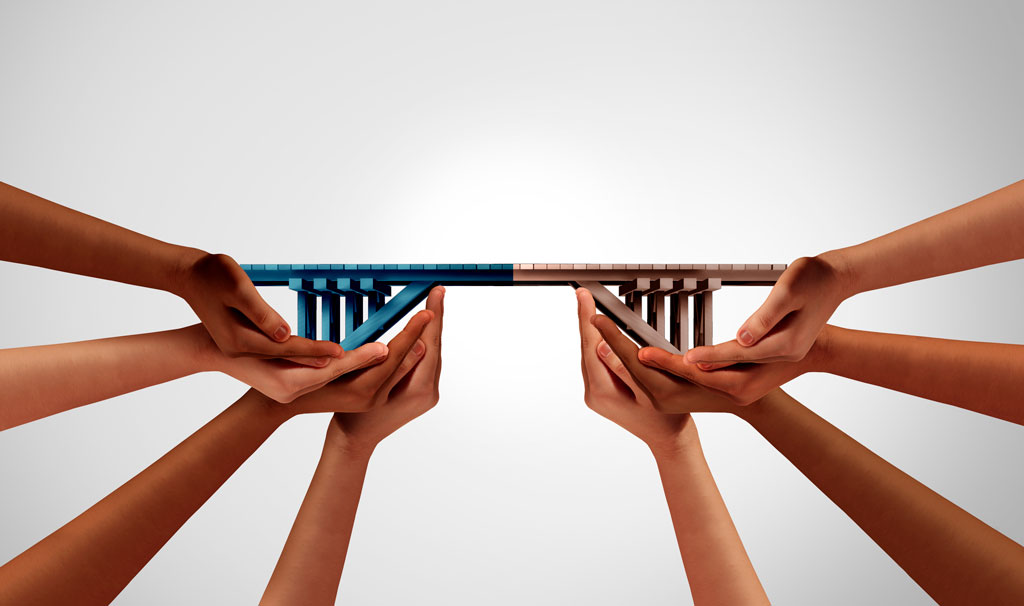
Illustration showing a group of diverse hands connecting to form a bridge.

William Moseley

I grew up in the Midwest, a cultural region where we stereotypically avoid difficult conversations. While my people might famously say ‘that’s interesting’ when we disagree, or ‘I’m not mad’ when we are furious, such conflict avoidance is not a healthy approach for a large and diverse organization such as the AAG.

Nearly a year ago (April 2025), the AAG Council received a successful membership petition asking that we hold a special meeting to discuss a proposal for “the AAG to endorse the campaign for an academic boycott of Israeli academic institutions, and for financial disclosure and divestment of any AAG funds invested in corporations or state institutions profiting from the ongoing oppression of the Palestinian people.” Just a few weeks ago (February 12), AAG members received an email with the AAG Council’s response to the petition, a response which reflects nearly a year of deep conversations with a membership that was often sharply divided on this issue, and on the most appropriate response. I am proud to say that the AAG did not avoid this issue, but tackled it head on in a thoughtful and comprehensive manner. Below I discuss our process for arriving at this response, the response itself, and some common reactions and concerns I have heard from the membership.


Our Process

In receiving and reflecting on the petition, the challenge for the AAG Council was to create a space where all member voices could be heard on this important topic. A one- or two-hour online meeting where the petitioners shared their views would have privileged some perspectives over others and not been accessible to a diverse membership on different schedules and across multiple time zones. After careful thought, Council resolved to hear member input on the petition via two pathways last fall:

  1. to create a background document on the topic (including the AAG’s history of dealing with divisive issues, pros and cons of different actions, etc.) which members could comment on over a 60-day period (a two-month asynchronous meeting if you will); and
  2. to offer two online sessions (one closed and the other open to a member audience) where members could directly share their relevant insights with Council.

While this approach was far from perfect, it was appreciated by many. As one AAG member wrote: “We are a community. A community with different viewpoints, research areas, life experiences, and belief systems, which is what makes our community so vibrant. It is also what makes our community, expertise, and ability to constructively debate with one another critical in a time when misinformation, ignorance, and hate are rampant in public discourse.”


The Response

As explained in the February 12 email to the membership, there are four components of the AAG response to the petition: 1) an ESG Investment Framework and Implementation Policy; 2) an International Partnership Framework and Due Diligence Policy; 3) a Displaced Scholars Support Program and Fund; and 4) a Statement on Palestine and Higher Education. Below I briefly discuss each of these components in turn.

ESG Investment Framework and Implementation Policy. This policy obligates the AAG to more actively manage and monitor the Environmental, Social, and Governance (ESG) investment filters that guide its endowment investments. Some of these screens existed beforehand as a result of our climate change work and we added additional screens related to the military weapons industry. As a result, the AAG currently holds no investments in companies listed on the American Friends Service Committee or UN human rights lists. This approach is meant to keep our investments aligned with our values over time, while taking care to sustain our relatively modest endowment in support of our mission. Moving forward, we will review our investments annually, with flags being raised if more than 5% of our investments fall outside of these screens. This policy addresses the divestment concerns of the petitioners without being country specific (we want to avoid investments in problematic companies regardless of where they are operating).

International Partnership Framework and Due Diligence Policy. This policy will help guide new international partnerships (such as formal MOUs, joint programs, or co-sponsored events) with organizations based in countries where there are significant human rights or academic freedom concerns. Using a third-party list of countries where there are concerns as a trigger, the AAG Council will review and vote on potential new partnerships (leaving an official record of the decision). This extra level of scrutiny will also allow Council to make nuanced decisions. For example, Council could decide to collaborate with an organization fighting against oppression in country X, but not to do so with institutions in the same country that are complicit in human rights abuses. While the specific third-party list(s) Council will use to trigger a review is to be determined by a working group in the near future (e.g., Human Rights Watch World Report, Amnesty International Annual Report), it is important to have such a list because Council should not be deciding when or when not to undertake a review on an ad hoc basis. It would also be impractical and cumbersome for Council to review all such partnerships. For example, AAG staff should have the liberty to allow the Canadian Association of Geographers (not on any human rights watch list) to contract for a booth at the annual meeting without Council micromanaging the process. To be clear, the AAG has not had a partnership with any Israeli organization or institution since 2005. This policy, while also not country specific, is essentially a boycott of organizations in other countries that have been complicit in human rights abuses.

Displaced Scholars Support Program and Fund. This is a new AAG program and related fund to support displaced scholars around the world, including those from Gaza and other conflict zones. The program will provide selected displaced scholars with: (1) free AAG membership, (2) waived registration for AAG annual meetings, (3) eligibility to apply for relocation or travel funds, and (4) connections to aid organizations (e.g., IIE Scholar Rescue Fund, Scholars at Risk). A working group will develop the program details over the next year. We currently have three displaced scholars participating in a pilot program, and four internationally recognized experts advising its development. The program provides real and tangible support to geographers whose human rights and academic freedom have been compromised.

Statement on Palestine and Higher Education. The AAG released a statement on February 12 affirming commitments to Palestinian educational rights, human rights, academic freedom, and self-determination. The statement affirms that Palestinian and Israeli scholars, and all members of our community, have the right to pursue higher education and research free from violence, harassment, or discrimination. The statement addresses the destruction of higher-education infrastructure in Gaza, barriers to Palestinian scholars’ mobility and access to education, and threats to campus safety and academic freedom affecting both Palestinian and Israeli scholars. The statement also affirms that criticism of state policy must be clearly distinguished from antisemitism, Islamophobia, or other forms of racism.


Member Reactions and Concerns

While it has only been a few weeks since the AAG released its response, so far member reactions have largely been affirming and recognize the challenge of having such a difficult conversation. One member wrote: “It is notable for the way it [the AAG response] advocates positive and cooperative measures that support our shared values in universal human rights and academic freedom, instead of antagonistic and confrontational actions.” Another member wrote: “While the call for a referendum, and ensuing discussion, were sparked by the events in Gaza, the AAG took a meaningful step in negotiating a series of actions that signal institutional change and a responsiveness to member concerns. I appreciate the clear condemnation of violence and repeated focus on human rights, academic freedom, and education, and rejection of racism, that underpins each of the planned and implemented responses.” Of course, not all AAG members have been happy with the process Council undertook to broker this conversation. Let me speak to a few of those concerns here, concerns that were shared with me before the AAG shared its official response.

Since the time we initially received the member petition, I heard from some members that they would like to have had a yes or no vote on the petitioners’ demands. I would first note that such a vote was not called for in the original petition; it was requested later (without the support of the official petition). Second, such votes are not a part of the AAG bylaws (the membership votes on bylaw changes or in instances where the Council requests a vote). Thirdly, such an approach would have circumvented the AAG Council, a body which is elected by the membership and charged with considering issues in a way that reflects the long-term interests of the association (aka fiduciary responsibility, which is broader than financial considerations). Lastly, a yes or no vote on the original proposal was inherently limiting in terms of choices and would not have resulted in the more nuanced response that eventually emerged after considerable deliberation.

Other members have suggested that our process was undemocratic. I would argue that just because there was not a direct vote on the issue does not mean that the process was undemocratic. The AAG is an indirect democracy in that we elect Council members and special committee members (such as the nominations committee) to act on our behalf. Most of us do not have the time to consider all sides of an issue, so we elect representatives to do this work for us. Furthermore, the AAG Council went to great pains to hear member concerns on this issue and in a way that did not privilege the loudest voices in the room.

In sum, I am proud of the way the AAG has handled this difficult conversation. We have not sidestepped a potentially contentious issue, but addressed the main concerns of the petitioners re: divestment and collaboration, stuck to our core values and heard the views of a diverse membership, while not succumbing to divisive language or putting the organization in legal jeopardy. While I am certain that some of you will remain unhappy with this outcome, being part of a big family often entails compromise, working through challenging issues, and building bridges to arrive at a shared understanding and best possible outcome under the circumstances. Our community is stronger for meeting this moment.


Please note: The ideas expressed in the AAG President’s column are not necessarily the views of the AAG as a whole. This column is traditionally a space in which the president may talk about their views or focus during their tenure as president of AAG, or spotlight their areas of professional work. Please feel free to email the president directly at moseley@macalester.edu to enable a constructive discussion.


    Share

Department Profile: School of the Environment at San Francisco State University

Located off the shores of Lake Merced in San Francisco’s southwestern corner, the School of the Environment at San Francisco State University (SFSU) brings together students and faculty committed to scientific exploration, environmental stewardship, and social justice. This unique setting, where urban life meets coastal and mountainous ecosystems, provides an ideal backdrop for studying the connections between people, landscapes, and the planet.

An Interdisciplinary Approach to Environmental Education

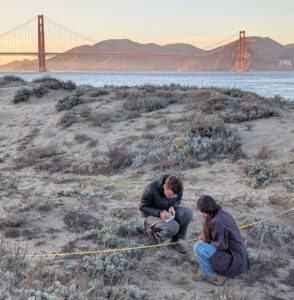
San Francisco State University students gather samples for a field methods class in the San Francisco Bay.

The School of the Environment offers a broad and integrated curriculum that reflects the shared mission of its faculty and programs. Students pursuing undergraduate majors gain a strong foundation in physical and human geography, in addition to field methods and geographic information science (GIS) and systems. These core skills equip students to understand environmental processes, helping them map change and analyze human–environment interactions. Graduate students have the option of specializing in geography, geographic information science, geosciences, or resource management and environmental planning.

These offerings are supported by the vast expertise of faculty across disciplines. Wide-ranging scholarly strengths range from physical geography and the use of technical programs to human-environment interactions. This includes food justice and urban agriculture, researching sustainable communities, green consumerism, and the politics of mobility.

A New School Built on Collaboration

In the years following the COVID-19 pandemic, the Dean brought together three units — the former Department of Geography and Environment, the Department of Earth and Climate Sciences, and the Environmental Studies program — to explore merging into a larger, more cohesive academic home. Andrew Oliphant, professor and School of the Environment co-director, shares the former schools’ shared curriculum, cross-listed classes, and overlapping student communities naturally evolved into what is now the School of the Environment, strengthening opportunities for interdisciplinary research, teaching, and collaboration.

With the formation of the new School, faculty intentionally centered equity, representation, and inclusivity in their mission. Their efforts include a range of initiatives: culturally responsive student support, reducing or eliminating course-related costs wherever possible, and expanding pathways into environmental careers for students from historically marginalized communities. As Oliphant notes: “One of our missions is to change the face of the professional world in California that’s managing and stewarding the environment.”

A Presence Across Campus and Beyond

While the School recently reorganized and renamed itself, department chair Andrew Oliphant notes that its reach extends far beyond environmental programs. Students from art, cinema, ethnic studies, biology, physics, and other departments enroll in its courses.

Through this broad academic footprint, students gain training in climate and environmental fundamentals and the necessary language and context for environmental advocacy. The skills taught in courses are applicable across scientific, creative, and civic fields.

A thriving student–alumni network speaks to the school’s deep commitment to mentorship and career support. Graduates contribute to the California workforce and beyond, including local and state governments, federal agencies such as the U.S. Environmental Protection Agency, and private companies and nonprofits such as East Bay Municipal Utility District (EBMUD). The school’s organically built internship network helps open doors for students who may not otherwise have access to such opportunities.

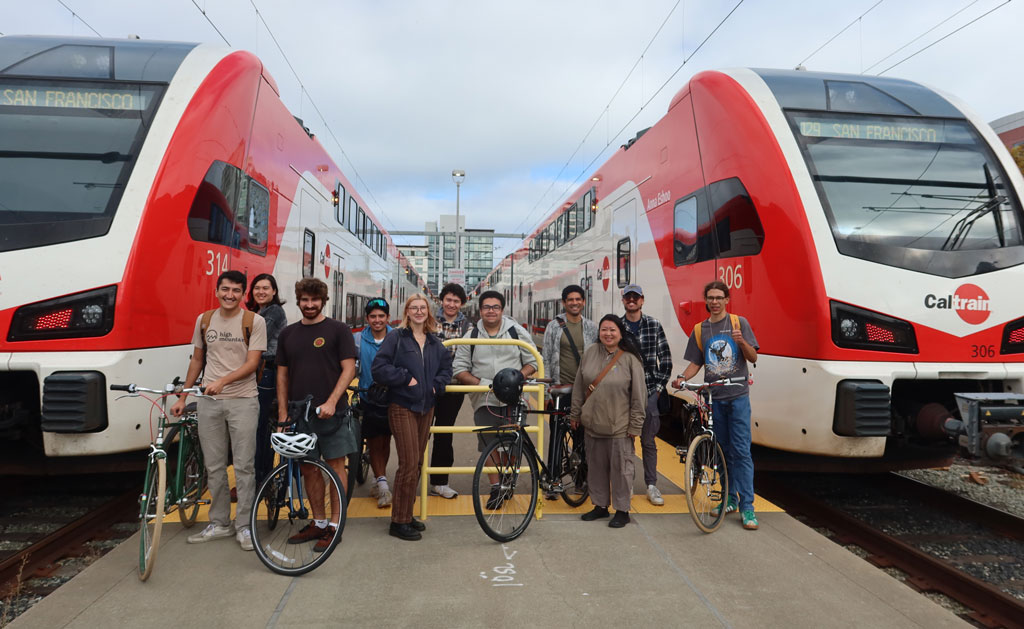
San Francisco State University students gather between two CalTrains for a transportation class field trip.


Preparing Students for a Changing World and Workforce

The school balances professional preparation with a deep commitment to the fundamental sciences. Students can begin to prepare for future steps to careers in environmental management, GIS, or planning; working with nonprofits in scientific research; or doctoral-level academic study.

Oliphant also emphasizes the importance of interdisciplinary training in an era of rapid technological change: “There will be geographers who lose work to AI … but the broad training we give — understanding biophysical processes, social structures, and the philosophies shaping our world — positions our students well in an AI-driven future.”

A prime resource for students includes participating in alternative learning spaces. For example, SFSU’s remote Sierra Nevada Field Campus offers summer field courses where teams of students and faculty spend a week immersed in research. The field campus also provides a location for locally centered research projects. Graduate students frequently use these field experiences to support their thesis work, and faculty encourage student employment on grant-funded research whenever possible.

One project, funded by the state of California, focuses on the restoration of Sierra Nevada Mountain meadows, which have long been degraded by agriculture, mining, and forestry. With numerous faculty who specialize in remote sensing and biogeography, collaboration with community partners such as the Mountain Maidu Consortium, whose Indigenous stewardship of these landscapes spans centuries, is essential. These partnerships represent the school’s holistic approach to environmental research: recognizing that complex spaces — like mountain meadows — cannot be understood through a single disciplinary lens.

When it comes to recounting student success, “it’s about the daughter of immigrant farm workers from the Salinas Valley, now working for the California Department of Food and Agriculture, advising farmers on healthy soil practices.” Oliphant goes on, “Or a recent graduate from the Pitt River Nation who’s working for the USGS, monitoring Northern California lands, part of his tribal community.” This kind of transformative student success is part of the reason SFSU was ranked 8th nationally for social mobility in 2024 by the U.S. News & World Report.

    Share

Department Profile: Geography and Geoinformation Sciences at George Mason University

The Geography and Geoinformation Sciences (GGS) Department at George Mason University is fortunate in its Fairfax, Virginia location, close to many professional opportunities in and around the nation’s capital. Anchored in the center of Northern Virginia’s geospatial intelligence hub, surrounded by federal headquarters like the National Geospatial-Intelligence Agency (NGA), US Geological Survey (USGS), and the National Oceanic and Atmospheric Administration (NOAA), as well as leaders in the private sector like Esri, Dewberry, and BAE Systems, GGS can also connect its students and alumni to local government agencies such as Fairfax County’s GIS and Mapping Services.

The department’s breadth is revealed in its name. “We are not the Department of Geography, but we are the Department of Geography and Geoformation Science,” says Dr. Deiter Pfoser, department chair and director of the Center for Geoscience. “So, there’s a huge distinction there … it sort of alludes to the quantitative sides [of the discipline].” Dr. Nathan Burtch, associate professor, undergraduate coordinator and associate chair, agrees.

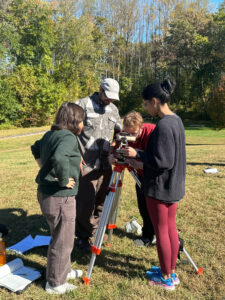
George Mason University GGS students gather data with a transit device to create contour maps of a local park in GGS as part of their Field Mapping class.
George Mason University GGS students gather data with a transit device to create contour maps of a local park in GGS as part of their field mapping class.

This emphasis on the quantitative is a major incentive of the program, as the majority of the department’s students are pursuing a Bachelor of Science degree and thinking about careers. Students pursuing a BS in geography can choose from concentrations in Geoinformatics, Geospatial Intelligence, and Urban Science, which are marketable and easily conceptualized by employers.

The department’s research initiatives, which have an annual expenditure of approximately six million dollars, largely trend around topics like artificial intelligence, computational analysis, and informatics. Students researching remote sensing have access to a collection of advanced drone remote-sensing equipment, including DJI drones and interchangeable sensors for environmental and infrastructural studies. Dr. Pfoser points out that the program emphasizes “not only geographical proximity to [many geospatial] agencies, but also work proximity.”

The university and the department’s faculty and leaders involve students in research as early into their academic journeys as possible. The College of Science’s Aspiring Scientists Summer Internship Program (ASSIP) has been active in providing high schoolers and undergraduate students the chance to engage in faculty-mentored research opportunities since 2019. The GGS department has eight prospective mentors for the 2026 session, tackling research interests like spatiotemporal computing, space weather, and food systems transformation. Dr. Pfoser expresses that “the idea is really to bring students closer to research as soon as we can,” to develop students into exemplary undergraduate, graduate, and PhD researchers.

Graduate degree offerings reinforce the department’s quantitative focus, with a master’s degree in Geoinformatics and Geospatial Intelligence. Undergraduate students interested in this degree, or the master’s in Geographic and Cartographic Sciences, can enroll in the Bachelor’s to Accelerated Master’s (BAM) Program and collect graduate credits in their final undergraduate semesters. In addition to offering accelerated, master’s, and doctorate pathways, the department also promotes a culture of lifelong learning by offering graduate certificates in GIS, Geospatial Intelligence, Environmental GIS and Biodiversity, and Remote Sensing and Image Processing. Executive education partnerships with local companies allow working professionals to advance their skills through the guidance of university course content.

An Interdisciplinary Approach to Quantitative Geography

“We’re a little bit more quantitative than the average,” says Dr. Burtch, “But we don’t ignore the cultural and the physical as well.” The GGS department’s Bachelor of Art’s geography program offers concentrations in environmental geography, health geography, geoanthropology, and urban planning. The professors teaching courses in this degree are consistently enthusiastic about their subjects, welcoming students to think critically and exercise real-world problem solving.

The department also values cross-disciplinary exploration. Undergraduate students can choose from a variety of elective courses that traverse neighboring disciplines. Associate professor and BAM advisor Dr. Christine Rosenfeld teaches Spatial Justice, for example, a geographic interrogation of unevenly distributed resources that results in social inequality. Dr. Maction Komwa teaches Geography of Resource Conservation, an analysis of the distribution and preservation of global resources. Dr. Burtch teaches Geography of Sport, purposefully integrating the discipline to reveal surprising explanations about the geography of the sports industry.

The strong sense of student community, accessible advising, and welcoming faculty make the GGS department at GMU an optimal learning environment for students of diverse education and career backgrounds. Standards for teaching excellence are maintained by routine faculty peer review, end-of-semester evaluations, and course modality surveys. The department uses this feedback to support their mindset of “perpetual change” and implement improvements to keep up with the ever-evolving scene of higher education.

Diversity is a big part of George Mason’s identity as an institution, as it is one of the most ethnically and economically diverse schools in Virginia. Dr. Pfoser highlighted the disciplinary diversity of the department by noting that only about half of its faculty are geographers by training. In addition to the interdisciplinary course offerings, the department offers diverse teaching perspectives from career computer scientists, hydrological engineers, environmental geographers, and data scientists. This combination of curriculum, teaching, and student diversity creates classroom environments suited for positive learning experiences.

    Share

The Wetlands of San Francisco Bay: Shifting Sediments and Murky Histories

Disrespect for the Rule of Law Undermines Science and Fundamental Social Norms

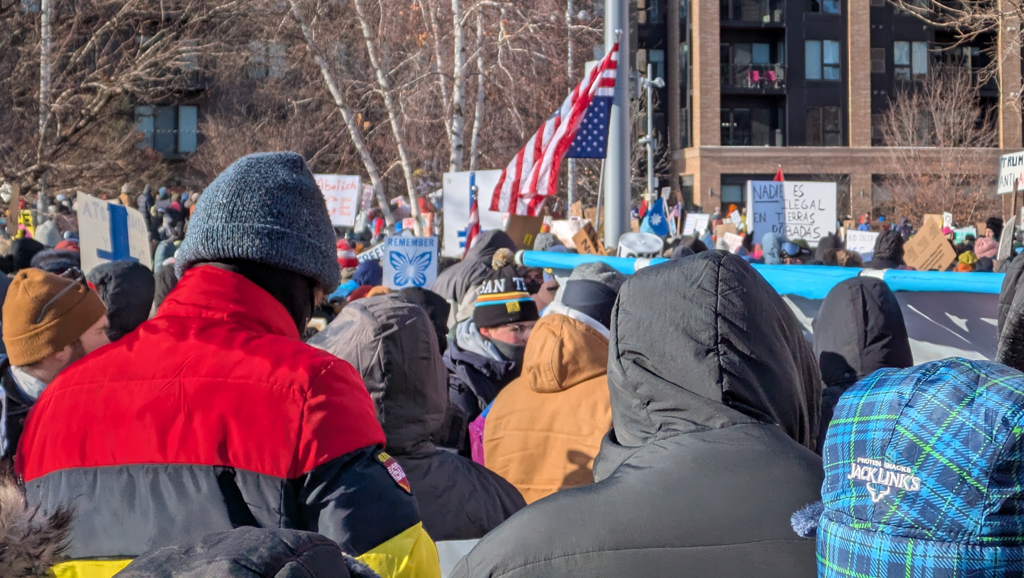
Mass turnout in Minneapolis on Jan 23, 2026. Credit: Bill Moseley

William Moseley

A world and society ruled through suppression and intimidation is fundamentally incompatible with academic pursuits, both in terms of science-informed policy and the social environment needed for good science. While scholarship ranges from basic to applied, and from deeply critical to more constructive, an explicit end goal, or positive byproduct, is often rules and regulations that are informed by a solid understanding of the world. The academy also does not do well when findings are distorted by politics, or the free flow of ideas and people across borders is impeded. A thriving geography depends on the rule of law at home, and strong norms and multilateral institutions internationally.

The current U.S. administration’s “might makes right” approach to domestic and international politics cannot coexist with or support a thriving academy and discipline of geography. How can it, when it undermines the very basic tenets of society? Daily life in my hometown of Minneapolis-Saint Paul has been deeply disrupted by the presence of 2,000-plus federal Immigrations and Customs Enforcement (ICE) agents in recent weeks. Renee Nicole Good and Alex Jeffrey Pretti were murdered in broad daylight for practicing legitimate and constitutionally protected passive resistance, high school students have been tear-gassed when leaving schools, child day care centers have become targets of aggressive military tactics, and people of color (including Native Americans ironically) have been consistently harassed and detained, regardless of their citizenship status. Among a myriad of other impacts, education is being disrupted, local schools have shifted to online learning, and foreign-born faculty and students at local universities and colleges (including my geography department) are understandably afraid and concerned. This is not okay. A federal security force has been weaponized against a particular geography (a state and city it deems a political enemy), the rule of law is not being respected, and ICE agents feel like foreign occupying forces who have no understanding of good community policing.

The administration’s coercive tactics in Minnesota are mirrored in their approach to international affairs (i.e., they are two sides of the same coin). On January 3, 2026, the U.S. President unleashed a dangerous genie when he authorized a mission to capture Venezuelan president Nicolás Maduro in Caracas, Venezuela, violating international law and another country’s territorial sovereignty. This attack signals a return to a 19th century multipolar world where great powers do as they please in their own backyards. While I am not naïve enough to believe that late 20th century multilateralism was perfect, at least there was a promise of strong international institutions, the rule of law, and fact-based policymaking. Geographers of all stripes, and from around the world, have made key contributions in studying the problems of our colonial past and foreign adventurism, as well the strengths and weaknesses of post WWII multilateralism and science-based policymaking. While I am clearly an idealist as opposed to a realist (in international relations terms), I believe geographers have an interest in promoting global cooperation and respect for human rights and international law.

Whatever you may think of Nicolás Maduro, the U.S. violated international law, and another country’s territorial sovereignty, when it sent troops into Caracas to capture him. Worse yet, these actions essentially give other military powers a green light to exact their wills on their neighbors, be it China in Taiwan or Russia in Ukraine. We have been here before and it does not end well. While the U.S. was not a formal colonial power like its European counterparts, its own territorial expansion, and 19th/20th century foreign adventurism, essentially constituted a U.S. imperial era. The atrocities of 20th century wars created a space for multilateralism, the rise of international institutions like the United Nations, the forging of international agreements on basic human rights, and scientific commissions on climate change, food security, and natural disaster mitigation. These hard-fought gains for a more peaceful, humane and sustainable world, in which many geographers played a critical role, must not be relinquished.

The atrocities of 20th century wars created a space for multilateralism, the rise of international institutions like the United Nations, the forging of international agreements on basic human rights, and scientific commissions on climate change, food security, and natural disaster mitigation. These hard-fought gains for a more peaceful, humane and sustainable world, in which many geographers played a critical role, must not be relinquished.

The aggression of the U.S. against its own citizens and residents, as well as the emerging multi-polar world being cemented by recent U.S. actions, are bad for science for at least two reasons. First, authoritarian politics contort scholarly priorities, emphasizing some areas (defense, surveillance and control) and downplaying others (healthy critique of government programs and actions, examination of troublesome histories, self-reflection on colonial assumptions in our disciplines). Second, the fear-based and isolationist tactics of authoritarianism undermine the international institutions that develop science-based policies and facilitate scientific collaboration and exchange.

Mapping the Path Forward

At some point, this moment will pass, and we will be faced with creating a post-Trump world. In the U.S., basic civic education and an appreciation for the rule of law are fundamental to a well-functioning society. While Trump has done much to weaken democratic norms, the vocational drift in U.S. education arguably contributed to the problem with a decline in the development of critical thinking skills and civic engagement. The growing economic divide in the U.S., brought on by neoliberalism, also did much to undermine public trust in higher education and research. In addition to important governance reforms to address campaign finance and the overreach of executive power, we need to address underlying structural problems (eroding public support for democracy and declining access to education) and think big about opening up quality K-12 and higher education in the U.S. to all income groups if we are to have a durable democracy.

On the international stage, multilateralism is clearly not dead, but it has been ailing for some time and the Trump Administration’s actions have wounded it further. Strong international institutions and norms are an antidote to a multipolar world that is a danger to science. While I acknowledge that the United Nations is in need of serious reform, something like it must persist and evolve into a more robust and participatory global forum which supports fundamental rights and brokers international agreements on the environment, health, nutrition and peace-building to name a few. Despite domestic political pressures, geographers must avoid nationalist traps and continue to engage with and support international institutions and exchange.

I don’t like bullies, I never have. It is hard to be thoughtful and productive when you are concerned about your own safety. Furthermore, it is challenging to have a generative scholarly exchange when people are concerned about political censorship or repression. In order to better the human condition and build a more sustainable world, we need strong democratic norms and institutions at home and abroad, i.e., civic nationalism and internationalism.


Please note: The ideas expressed in the AAG President’s column are not necessarily the views of the AAG as a whole. This column is traditionally a space in which the president may talk about their views or focus during their tenure as president of AAG, or spotlight their areas of professional work. Please feel free to email the president directly at moseley@macalester.edu to enable a constructive discussion.


    Share