Newsletter – June 2019

PRESIDENT’S COLUMN

Postcard from Mesoamerica

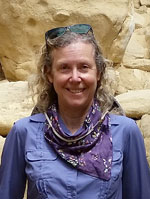
By Sheryl Luzzadder-Beach

“As Geography research begins in the field and ends in the field, so does my Presidential Column. I had the good fortune to be able to compose most of my first column (July 2018) during my fieldwork in Belize and Guatemala in Central America. Now I am filing my final column as your AAG President from field camp in northwestern Belize, working with an international team of colleagues, students, and volunteers to study the resilience of ancient Maya society… I thank you, my readers and fellow AAG members, for the Opportunity to freely explore challenging and timely issues and to share thoughts and opinions on current events and research over the last year.”

Continue Reading.

ANNUAL MEETING

#aagDENVER Hotel Room Rates Announced
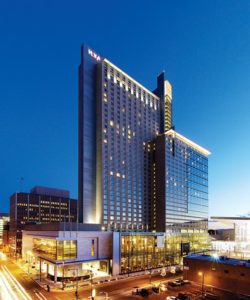
Hyatt-Regency_web-250x300The 2020 AAG Annual Meeting will be headquartered in downtown Denver, Colorado at the Hyatt Regency – Convention Center. While many of the special events and sessions will be taking place at the Hyatt Regency – Convention Center, the neighboring Sheraton – Denver Downtown will also house some of the meeting. A block of rooms is now available for AAG Meeting attendees to reserve at a discounted rate.

View the accommodations.

Denver, Colorado to host 2020 AAG Annual Meeting

Mark your calendar for the AAG Annual Meeting in the Mile High City April 6-10, 2020. Registration and the call for papers for #aagDENVER will be announced this summer. We look forward to seeing you in the Rocky Mountains!

PUBLICATIONS

NEW GeoHumanities Issue Alert:
Articles with topics ranging from soundscapes and television, alpine exploration to travel writing
GeoHumanities-coverThe most recent issue of GeoHumanities has been published online (Volume 5, Issue 1, June 2019) with 18 new research articles and creative pieces on subjects within geography. Topics in this issue include climate changesustainable economiestraumaliterary geographysoundscapesmountaineeringghost storiessocial media data, and nationality. Articles also explore mediums such as museum exhibitionstelevision showspublic arttravelogues, and photography. Authors are from a variety of research institutions including Coventry UniversityUNSW CanberraYork St. John University, and Swansea University.

All AAG members have full online access to all issues of GeoHumanities through the Members Only page. In every issue, the editors choose one article to make freely available for two months. In this issue you can read #OurChangingClimate: Building Networks of Community Resilience Through Social Media and Design, by Sheryl-Ann Simpson, N. Claire Napawan & Brett Snyder for free.

Questions about GeoHumanities? Contact geohumanities [at] aag [dot] org.

Journals-newsletter-100In addition to the most recently published journal, read the latest issue of the other AAG journals online:

• Annals of the American Association of Geographers
• The Professional Geographer
• GeoHumanities
• The AAG Review of Books

ASSOCIATION NEWS

AAG seeks two editors for the Annals of the American Association of Geographers
Annals-generic-225x300-1The flagship journal of the AAG, the Annals of the American Association of Geographers, has two upcoming editor vacancies to start January 2020. The open positions are in the subject areas of Human Geography and Nature & Society. Applications for the four year term will be accepted until September 6, 2019, with appointments being made in the fall of 2019.

More information about the editorial positions.

Final Call for Submissions to the Guide to Geography Programs
Guidecover1718baby-2

The AAG will continue to accept late submissions to the 2019 Guide to Geography Programs in the Americas through Wednesday, June 12, 2019.

Updated each academic year, the Guide lists undergraduate and graduate programs in all areas of geography and includes an interactive map that students can use to explore and discover geography programs, with easy-to-use search tools to find programs by degree type, region, and program specialization. It has long been an invaluable reference for faculty, prospective students, government agencies, and private firms in the United States, Canada, and throughout the world.

For more information and to list your program, please contact Mark Revell at guide [at] aag [dot] org.

Call for AAG Honors and Nominating Committees

The AAG Council seeks nominations for candidates to serve on the AAG Honors Committee and the AAG Nominating Committee. The Council will prepare the final slate of candidates for both committees from the nominations received, and committee members will be elected by a vote of the AAG membership. The Honors Committee submits nominations for awards and fellows to the Council every fall. The Nominating Committee recommends to the Council the slate of candidates for the AAG Vice President, President, and National Councilor elections.

If you wish to nominate yourself or other qualified individuals for service on these committees, please send your recommendations by email to AAG Secretary Cathleen McAnneny by June 30, 2019.

MEMBER NEWS

Profiles of Professional Geographers
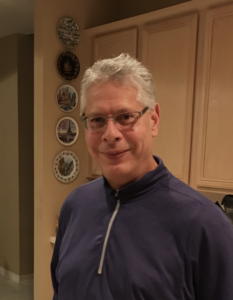
Carlos_web-233x300-1You can make a difference with geography and GIS at any stage in your career. Just ask Carlos Saavedra who is spending his retirement doing volunteer work at Puerto Rico Rises, Dallas GiveCamp and the Boy Scouts of America. Carlos stresses the importance of GIS in today’s economy, saying that “the most fulfilling thing is that I can share how GIS works and educate non-profit organizations on how this tool can change the way they do business.”

Learn more about Geography Careers.

June Member Updates

The latest news about AAG Members.
Song_world_index_transactions_GIS_web-300x212-1

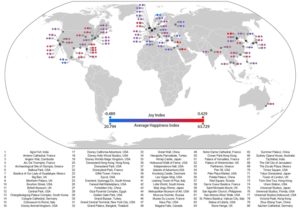
A new research paper entitled “Extracting human emotions at different places based on facial expressions and spatial clustering analysis” was published in Transactions in GIS, led by the research team of Yuhao Kang with his advisor Dr. Song Gao at the Geospatial Data Science Lab at the University of Wisconsin-Madison along with their collaborators from Wuhan University, Peking University, and New Jersey Institute of Technology. Related to this work, graduate student Yuhao Kang won first place in the 2019 AAG Robert Raskin best student paper competition from the AAG Cyberinfrastructure Specialty Group. Learn more.

Thirty-three students and early career scholars will participate in the summer school on Reproducible Problem Solving with CyberGIS and Geospatial Data Science. The week long program will be co-led by the CyberGIS Center for Advanced Digital and Spatial Studies at the University of Illinois at Urbana-Champaign, the American Association of Geographers, and the University Consortium for Geographic Information Science. Learn more.

RESOURCES AND OPPORTUNITIES

New Geography & Indigenous Studies Programs Interactive Map

AAGGeographyandIndigenousStudiesProgramsDatabaseIn consultation with the Indigenous Peoples Specialty Group, the AAG has developed a new resource to assist Indigenous students in finding safe places to pursue geography education. This interactive map highlights geography and Indigenous Studies programs throughout the US and Canada as well as those colleges and universities that offer support systems for Indigenous students. The resulting database of 185 schools is now available online and will be a part of the 2019-2020 Guide to Geography Programs in the Americas.

Learn more about the creation of this resource.

Fellowships Available for Antarctic Research
SCAR_logo_2018_white_background-300x291-1The Scientific Committee on Antarctic Research has fellowships to help early career researchers join a project team from another country that is working in the Antarctic. For 2019, 5 to 6 fellowships of up to $15,000 will be awarded for the purpose of creating lasting partnerships over the course of several research seasons in the Antarctic. The deadline for fellowship applications is July 17, 2019.

Find out more about the SCAR fellowships.

2020 IGU Congress to be held in Istanbul, Turkey

international-geographical-union-182x300-1The International Geographical Union has announced its next Congress to be held August 17-21, 2020 in Istanbul, Turkey. The submission deadline for session proposals is July 31, 2019. Other key dates are: August 1, 2019 – Early registration starts; January 13, 2020 – Deadline for submitting abstracts for papers and posters; February 24, 2020 – Notification of results of abstract reviews; and March 9, 2020 – Deadline for early registration fee payment.

See the 2020 IGU Congress website.

GEOGRAPHERS IN THE NEWS
EVENTS CALENDAR
    Share

Postcard from Mesoamerica


As Geography research begins in the field and ends in the field, so does my Presidential Column. I had the good fortune to be able to compose most of my first column (July 2018) during my fieldwork in Belize and Guatemala in Central America. Now I am filing my final column as your AAG President from field camp in northwestern Belize, working with an international team of colleagues, students, and volunteers to study the resilience of ancient Maya society. While “Op-Ed” stands for Opinion/Editorial, it also represents both Opportunity and Education. I thank you, my readers and fellow AAG members, for the Opportunity to freely explore challenging and timely issues and to share thoughts and opinions on current events and research over the last year. I am also grateful for the platform of the AAG Newsletter on which to perform one of my primary duties as a Professional Geographer: to Educate, to enable understanding and discussing important issues from local to global scales, and, to inspire actions to solve the planet’s most critical human and environmental problems. It is a tall order, but we should set expectations for ourselves at the very highest level to ensure a better future for people, the environment, and the planet.

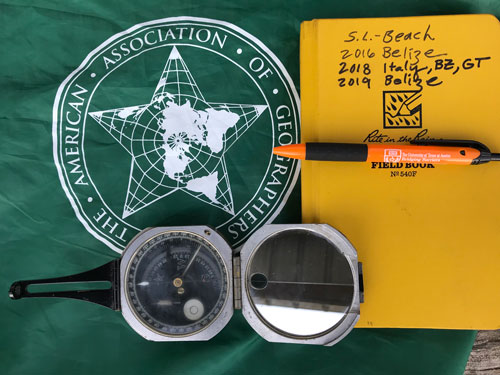
Pocket transit given to Tim Beach, Sheryl’s husband, by his father. (Photo courtesy Sheryl Luzzadder-Beach)

This is my 26th field year exploring the palimpsests of millennia of urban and agricultural landscapes of parts of modern Mexico, Belize, and Guatemala. Each year we discover more about how extensive and influential ancient humans have been in the Americas. We have increased our understanding of human influences on the earth, from William Denevan exploding the Pristine Myth in the 1992 Annals Special issue (82(3):369-85), to the 2013 dawning of the journal The Anthropocene, (Anne Chin, Editor-in-Chief), to the May 2019 binding vote of the Anthropocene Working Group approving that the Anthropocene shall be “treated as a formal chrono-stratigraphic unit” and its primary marker will be “one of the stratigraphic signals around the mid-twentieth century of the Common Era” (AWG, 5/21/19). It is still a complicated matter of agreeing when that marker occurs in time globally. While the swirling smog of the 19th C. Industrial Revolution was a leading, if not charismatic, candidate, not to mention the globally detectable nuclear testing fallout signal of the mid-20th C., evidence still builds for an Early Anthropocene. Denevan’s idea (1992) that 18th century human visibility on the landscape was less substantial than that which was visible before 1492 still stands the test of time, further supported by W. F. Ruddiman et al.’s 2016 work (Rev. Geophys. 54: 93-118) on early, increased releases of CO2 and Methane to the atmosphere associated with increased burning and farming like rice paddy (wetland) agriculture in Asia. Now with advanced geospatial technology such as Lidar guiding our field exploration and validation, we are fast on the trail of finding significant extents of ancient landesque capital, including cultivated landscapes, ranging far across the Western Hemisphere, including Mesoamerica. Much else has changed in field research infrastructure since the early 1990s: Quad maps in Belize were produced for us in 1993 as Ozalid blueprints in the Government Mapping Office in Belmopan. Now there is a Land Information Center providing geospatial data. In 1994, a colleague mounted a brick-shaped GPS unit on an extension pole in the jungle, trying to reach a satellite signal at just the right hour. For communications, there was a payphone and one fax machine in the general store in the village near our field camp, a lifeline for college students with final papers due who were here in the field to collect data before the rainy season hit. Now we despair that the local internet is not working today in camp. Yet, there are some regions here in Belize and beyond still too remote to access cell service, allowing us a moment to also rejoice that there are places untouched by clouds of 4G data smog to walk through and be interrogated by.

My last official duty as AAG President will take place at the end of June, when I travel on behalf of the AAG to Beijing and Harbin, China, where I will be hosted by the Geographical Society of China to present in a session on “Scientific Organization Governance” at the China Association of Science and Technology Meeting, and will present academic talks on my team’s Ancient Water Management research, at Chinese universities. It is a privilege to be able to collaborate internationally, and to thereby conduct science and science diplomacy. Getting back to my yearlong theme of Science, Geography, and Human Rights, we must strive to fulfil the ideals of making science accessible to the benefit of all people; of guaranteeing scientists their rights to practice and to preserve science; and to protect scientists’ rights to collaborate freely and internationally.

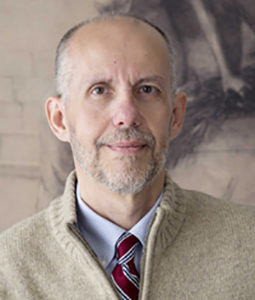
Although my title will change to Past President on 1 July, my service to AAG as a member of the leadership team will continue for one more year: on the AAG Executive Committee, the AAG Council, and the Disciplinary Matters Committee. My writing assignment will shift from a monthly column, to composing the content and form of the Past Presidential Address for the Denver meetings and for the Annals, as per tradition. I look forward to my new role, and continuing to serve our association. I congratulate the incoming President, David Kaplan, and thank him for his service this past year as Vice President, and ask that you all lend your support to his efforts and themes. I also thank Derek Alderman for his service as Past President, and congratulate him on completing his term on the AAG Council, concluding on 30 June. I also extend a warm welcome and best wishes to Vice-President elect Amy Lobben. Speaking of service, please do not forget to nominate deserving AAG members for awards! See the AAG website for complete details.

The AAG Council and AAG Committees and Task Forces deserve much of our thanks for keeping our association vibrant and dynamic through their volunteer efforts. I am most grateful for the lasting friendships and professional relationships that have been formed with the Officers, Council, Committees, and the AAG Staff, and thank them all for their support during my presidency and beyond. My final words of praise are for the AAG Staff, the Legal team, and retiring Executive Director Dr. Douglas Richardson, for their day in and day out dedication to this non-profit organization’s mission and members. I will not be able to name all of the AAG staff in this column but please know you are a terrific team! I will note that AAG’s Rebecca Pendergast and Emily Fekete are especially thanked for their good-natured patience with my stretching the concept of “column publication deadline.”

AAG Members, I thank all 12,000 of you for making the AAG a community. I look forward to seeing you at future meetings, especially in Denver for the 2020 AAG Annual Meetings. Make a Difference with Geography. Have a great summer, wherever your Geography takes you!

— Sheryl Luzzadder-Beach
President, American Association of Geographers
Professor, Geography and the Environment and C.B. Smith Fellow in US-Mexico Relations, University of Texas at Austin
slbeach (at) austin (dot) utexas (dot) edu

DOI: 10.14433/2017.0055

    Share

Geography, Green Resolutions, and Graduation

Complex organizations have complex interests and responsibilities, especially in the 21st century. My October 2018 Column reminded us to keep our eyes on the prize of equity for all. Together, we Geographers have worked diligently over the last several years to shine a light on equity and banish harassment and bullying from our meetings, our places of work, and our lives. We have more work to do, but we do have a heightened awareness, and a strong, renewed resolve to move forward with justice. Even though we have a strong Statement of Ethics (2009) condemning workplace harassment and discrimination, we further renewed our resolve to fight bullying and harassment with the Harassment Free AAG Initiative of 2019 (Please also remember to take the Post-Meeting Survey). And we will keep working to improve the climate for all. While keeping an eye on our social and civil well-being, the well-being of our planet also needs our attention and actions as strongly as ever. Protecting the civil rights and human rights of scientists helps to advance and protect science, to the benefit of people and the planet.

Headlines are just as alarming on the environmental justice side of the scales as they are on the social justice side. A recent email correspondent offers fair points regarding institutions and fossil fuel divestment, but implied that AAG is neglecting the environment because of our recent focus on anti-harassment initiatives. We should not be forced to make a false choice between the workplace climate, the atmosphere, and our fiduciary responsibility to members and donors as a non-profit, among others. AAG has invested in a portfolio of green funds, and it is worth thoughtful consideration of additional long-term, planet-healthy investment strategies, absolutely. We must of course maintain a complementary balance of Planet Earth’s and her Inhabitants’ well-being. Our AAG Logo and flag, after all, are green.

Recent headlines and reports include this week’s news that atmospheric carbon dioxide concentrations have hit an all-time high of 415 ppm (Washington Post, 5/14/19). That concentation is the “…highest level in human history” (WaPo 5/14/19). Other headlines include news that “humans are speeding extinction and altering the natural world at an ‘unprecedented’ pace” (NY Times 5/12/19).

In light of these daunting global trends, members of the U.S. Congress, led by Rep. Alexandria Ocasio-Cortez and Sen. Ed. Markey have proposed a non-binding resolution, the Green New Deal. The Green New Deal does not pit society against the environment, but blends the well-being of both by resolving to “reduce greenhouse emissions…to avoid the worst consequences of climate change while also…addressing “societal problems like economic inequality and racial injustice.”(New York Times, 2/21/19).

The plan encompasses five main goals to:

“invest in sustainable businesses”;

“Move to 100% clean energy by 2030”;…

“Create a Commission…to provide publicity, training, education and direct financing” for projects and reforms;

“Establish a renewable Energy Administration” modeled after Roosevelt’s “Rural Electrification Administration”; and

Create a “Full Employment Program… a direct employment initiative to guarantee jobs and a living wage for every American…” (See this link for the Full Plan Language).

Geographers’ diverse talents and insights can contribute in all of these areas.

Within the AAG’s ranks, there are also renewed Green goals. AAG passed a Resolution Requesting Action on Climate Change in 2006. In Spring 2019, a group of members have pointed out that much has changed in the last 13 year since that resolution, and it is time to strengthen our commitment to fight climate change. This monumental effort was led by Geographers Rutherford H. Platt, Ian Burton, Susan Cutter, James Kenneth Mitchell, James L. Wescoat, Claire Rubin, and Martin A. Reuss. The group sent a new Resolution on Climate Change to Council, which was passed unanimously at the April 2019 AAG Meeting. The new Resolution was rooted in the legacy of Geographer and National Academy of Sciences Member Gilbert White (1911-2006), for whom a special session was convened by the aforementioned panelists at the 2019 Annual AAG Meeting. Dr. White’s work showed compassion for people and the environment, with his pioneering work using planning policies to move people out of dangerous flood plains and save lives and property, as opposed to sole reliance on technological solutions to flooding and flood control. His floodplain management work is a great example of fulfilling the human right to benefit from science. The Green New Deal echoes this, incorporating smart business and social policy solutions to improving the environment, the economy, and people’s well-being together. The new AAG Climate Change Resolution promotes 8 goals to fight climate change, compatible with the Green New Deal, summarized at the AAG Website 2019 AAG Climate Resolution for full details. Many thanks to the authors, and to the AAG Council for supporting this.

Future Geograph-ies/-ers

It is graduation time and the goals of social and environmental justice should inspire the new generation of Geographers who are graduating this month from our institutions. We welcome them to the company of scholars and professionals, and we encourage them to carry the torch forward, to create a better social, physical, and technological world, and a brighter future. We also need to continue lending our full support as senior scholars and professional mentors for the latest generation of Geographers, in whom I have great hope, confidence, and inspiration. I end this column with my very best wishes and gratitude to my students who will always be members of our home departmental community, and to all students at this important time of transition in your lives. Congratulations to all, and to those who share in your success!

— Sheryl Luzzadder-Beach
President, American Association of Geographers
Professor, Geography and the Environment and C.B. Smith Fellow in US-Mexico Relations, University of Texas at Austin

Feel free to share your thoughts with me at: slbeach (at) austin (dot) utexas (dot) edu

DOI: 10.14433/2017.0054

    Share

New Books: May 2019

Every month the AAG compiles a list of newly-published books in geography and related areas. Some are selected for review in the AAG Review of Books.

Publishers are welcome to send new volumes to the Editor-in-Chief (Kent Mathewson, Editor-in-Chief, AAG Review of BooksDepartment of Geography and Anthropology, Louisiana State University, Baton Rouge, LA 70803).

Anyone interested in reviewing these or other titles should also contact the Editor-in-Chief.

PLEASE NOTE: Due to current public health policies which have prompted the closing of most offices, we are unable to access incoming books at this time. We are working on a solution during this transition and will continue our new books processing as soon as we can. In the meantime, please feel free to peruse previous books from our archived lists.

May 2019

The Adventures of Alexander Von Humboldt by Andrea Wulf and Lillian Melcher (Penguin Random House 2019)

The Beachcomber’s Guide to Marine Debris by Michael Stachowitsch (Springer 2019)

Black Food Geographies: Race, Self-Reliance, and Food Access in Washington, D.C. by Ashanté M. Reese (University of North Carolina Press 2019)

Caribbean New Orleans: Empire, Race, and the Making of a Slave Society by Cécile Vidal (University of North Carolina Press 2019)

Cartography: The Ideal and Its History by Matthew H. Edney (University of Chicago Press 2019)

Chinatown Unbound: Trans-Asian Urbanism in the Age of China by Kay Anderson, Ien Ang, Andrea Del Bono, Donald McNeill, and Alexandra Wong (Rowman & Littlefield 2019)

City of a Million Dreams: A History of New Orleans at Year 300 by Jason Berry (University of North Carolina Press 2018)

Credit Where It’s Due: Rethinking Financial Citizenship by Frederick F. Wherry Kristin S. Seefeldt Anthony S. Alvarez (Russell Sage Foundation 2019)

Dealing with Peace: The Guatemalan Campesino Movement and the Post-Conflict Neoliberal State by Simon Granovsky-Larsen (University of Toronto Press 2019)

Down and Out in Saigon: Stories of the Poor in a Colonial City by Haydon Cherry (Yale University Press 2019)

Drugs on the Page: Pharmacopoeias and Healing Knowledge in the Early Modern Atlantic World by Matthew James Crawford, Joseph M. Gabriel (eds.) (University of Pittsburgh Press 2019)

Ecohumanism and the Ecological Culture: The Educational Legacy of Lewis Mumford and Ian McHarg by William J. Cohen (Temple University Press 2019)

Explorations in Place Attachment by Jeffrey S. Smith (Routledge 2017)

Giants of the Monsoon Forest: Living and Working with Elephantsby Jacob Shell (W. W. Norton & Company 2019)

Imagining Seattle: Social Values in Urban Governance by Serin D. Houston (University of Nebraska Press 2019)

The Interior Borderlands: Regional Identity in the Midwest and Great Plainsby Jon. B. Lauck (The Center for Western Studies 2019)

Marxist Class Theory for a Skeptical World by Raju J. Das (Haymarket Books 2018)

Native American Log Cabins In the Southeast by Gregory A Waselkov (University of Tennessee Press 2019)

Nature and the Iron Curtain: Environmental Policy and Social Movements in Communist and Capitalist Countries, 1945-1990 by Astrid Mignon Kirchhof, J. R. McNeill (eds.) (University of Pittsburgh Press 2019)

Oceans in Decline by Sergio Rossi (Springer 2019)

Outward and Upward Mobilities: International Students in Canada, Their Families and Structuring Institutionsby Kim Kwak (University of Toronto Press 2019)

Quest for the Unity of Knowledge by David Lowenthal (Routledge 2018)

Rice in the Time of Sugar: The Political Economy of Food in Cuba by Louis A. Pérez Jr. (University of North Carolina Press 2019)

The Spanish Caribbean and the Atlantic World in the Long Sixteenth Century by Ida Altman and David Wheat, eds. (University of Nebraska Press 2019)

Waterlogged: Examples and Procedures for Northwest Coast Archaeologists by Kathryn Bernick, ed. (Washington State University Press 2019)

    Share

Newsletter – May 2019

PRESIDENT’S COLUMN

Postcard from Mesoamerica

By Sheryl Luzzadder-Beach

“As Geography research begins in the field and ends in the field, so does my Presidential Column. I had the good fortune to be able to compose most of my first column (July 2018) during my fieldwork in Belize and Guatemala in Central America. Now I am filing my final column as your AAG President from field camp in northwestern Belize, working with an international team of colleagues, students, and volunteers to study the resilience of ancient Maya society… I thank you, my readers and fellow AAG members, for the Opportunity to freely explore challenging and timely issues and to share thoughts and opinions on current events and research over the last year.”

Continue Reading.

ANNUAL MEETING

#aagDENVER Hotel Room Rates Announced

Hyatt-Regency_web-250x300The 2020 AAG Annual Meeting will be headquartered in downtown Denver, Colorado at the Hyatt Regency – Convention Center. While many of the special events and sessions will be taking place at the Hyatt Regency – Convention Center, the neighboring Sheraton – Denver Downtown will also house some of the meeting. A block of rooms is now available for AAG Meeting attendees to reserve at a discounted rate.

View the accommodations.

Denver, Colorado to host 2020 AAG Annual Meeting

Mark your calendar for the AAG Annual Meeting in the Mile High City April 6-10, 2020. Registration and the call for papers for #aagDENVER will be announced this summer. We look forward to seeing you in the Rocky Mountains!

PUBLICATIONS

NEW GeoHumanities Issue Alert:
Articles with topics ranging from soundscapes and television, alpine exploration to travel writing

GeoHumanities-coverThe most recent issue of GeoHumanities has been published online (Volume 5, Issue 1, June 2019) with 18 new research articles and creative pieces on subjects within geography. Topics in this issue include climate changesustainable economiestraumaliterary geographysoundscapesmountaineeringghost storiessocial media data, and nationality. Articles also explore mediums such as museum exhibitionstelevision showspublic arttravelogues, and photography. Authors are from a variety of research institutions including Coventry UniversityUNSW CanberraYork St. John University, and Swansea University.

All AAG members have full online access to all issues of GeoHumanities through the Members Only page. In every issue, the editors choose one article to make freely available for two months. In this issue you can read #OurChangingClimate: Building Networks of Community Resilience Through Social Media and Design, by Sheryl-Ann Simpson, N. Claire Napawan & Brett Snyder for free.

Questions about GeoHumanities? Contact geohumanities [at] aag [dot] org.

Journals-newsletter-100In addition to the most recently published journal, read the latest issue of the other AAG journals online:

• Annals of the American Association of Geographers
• The Professional Geographer
• GeoHumanities
• The AAG Review of Books

ASSOCIATION NEWS

AAG seeks two editors for the Annals of the American Association of Geographers

Annals-generic-225x300-1The flagship journal of the AAG, the Annals of the American Association of Geographers, has two upcoming editor vacancies to start January 2020. The open positions are in the subject areas of Human Geography and Nature & Society. Applications for the four year term will be accepted until September 6, 2019, with appointments being made in the fall of 2019.

More information about the editorial positions.

Final Call for Submissions to the Guide to Geography Programs

Guidecover1718baby-2

The AAG will continue to accept late submissions to the 2019 Guide to Geography Programs in the Americas through Wednesday, June 12, 2019.

Updated each academic year, the Guide lists undergraduate and graduate programs in all areas of geography and includes an interactive map that students can use to explore and discover geography programs, with easy-to-use search tools to find programs by degree type, region, and program specialization. It has long been an invaluable reference for faculty, prospective students, government agencies, and private firms in the United States, Canada, and throughout the world.

For more information and to list your program, please contact Mark Revell at guide [at] aag [dot] org.

Call for AAG Honors and Nominating Committees

The AAG Council seeks nominations for candidates to serve on the AAG Honors Committee and the AAG Nominating Committee. The Council will prepare the final slate of candidates for both committees from the nominations received, and committee members will be elected by a vote of the AAG membership. The Honors Committee submits nominations for awards and fellows to the Council every fall. The Nominating Committee recommends to the Council the slate of candidates for the AAG Vice President, President, and National Councilor elections.

If you wish to nominate yourself or other qualified individuals for service on these committees, please send your recommendations by email to AAG Secretary Cathleen McAnneny by June 30, 2019.

MEMBER NEWS

Profiles of Professional Geographers

Carlos_web-233x300-1You can make a difference with geography and GIS at any stage in your career. Just ask Carlos Saavedra who is spending his retirement doing volunteer work at Puerto Rico Rises, Dallas GiveCamp and the Boy Scouts of America. Carlos stresses the importance of GIS in today’s economy, saying that “the most fulfilling thing is that I can share how GIS works and educate non-profit organizations on how this tool can change the way they do business.”

Learn more about Geography Careers.

June Member Updates

The latest news about AAG Members.

Song_world_index_transactions_GIS_web-300x212-1

A new research paper entitled “Extracting human emotions at different places based on facial expressions and spatial clustering analysis” was published in Transactions in GIS, led by the research team of Yuhao Kang with his advisor Dr. Song Gao at the Geospatial Data Science Lab at the University of Wisconsin-Madison along with their collaborators from Wuhan University, Peking University, and New Jersey Institute of Technology. Related to this work, graduate student Yuhao Kang won first place in the 2019 AAG Robert Raskin best student paper competition from the AAG Cyberinfrastructure Specialty Group. Learn more.

Thirty-three students and early career scholars will participate in the summer school on Reproducible Problem Solving with CyberGIS and Geospatial Data Science. The week long program will be co-led by the CyberGIS Center for Advanced Digital and Spatial Studies at the University of Illinois at Urbana-Champaign, the American Association of Geographers, and the University Consortium for Geographic Information Science. Learn more.

RESOURCES AND OPPORTUNITIES

New Geography & Indigenous Studies Programs Interactive Map

AAGGeographyandIndigenousStudiesProgramsDatabaseIn consultation with the Indigenous Peoples Specialty Group, the AAG has developed a new resource to assist Indigenous students in finding safe places to pursue geography education. This interactive map highlights geography and Indigenous Studies programs throughout the US and Canada as well as those colleges and universities that offer support systems for Indigenous students. The resulting database of 185 schools is now available online and will be a part of the 2019-2020 Guide to Geography Programs in the Americas.

Learn more about the creation of this resource.

Fellowships Available for Antarctic Research

SCAR_logo_2018_white_background-300x291-1The Scientific Committee on Antarctic Research has fellowships to help early career researchers join a project team from another country that is working in the Antarctic. For 2019, 5 to 6 fellowships of up to $15,000 will be awarded for the purpose of creating lasting partnerships over the course of several research seasons in the Antarctic. The deadline for fellowship applications is July 17, 2019.

Find out more about the SCAR fellowships.

2020 IGU Congress to be held in Istanbul, Turkey

international-geographical-union-182x300-1The International Geographical Union has announced its next Congress to be held August 17-21, 2020 in Istanbul, Turkey. The submission deadline for session proposals is July 31, 2019. Other key dates are: August 1, 2019 – Early registration starts; January 13, 2020 – Deadline for submitting abstracts for papers and posters; February 24, 2020 – Notification of results of abstract reviews; and March 9, 2020 – Deadline for early registration fee payment.

See the 2020 IGU Congress website.

GEOGRAPHERS IN THE NEWS
EVENTS CALENDAR
    Share

Harassment-Free AAG: Moving Forward

“Our lives begin to end the day we become silent about things that matter.” 

Attributed to Dr. Martin Luther King Jr.

In civil society, we measure our words and deeds, and listen to others’ ideas and opinions. We set our expectations for civil discourse not necessarily based on a minimum expectation of the law, but based on our humanity, because we set high standards for ourselves and feel empathy for others.

We, too, can be thoughtful in word and deed. We, too, can have each other’s best interests at heart. Sometimes, however, we can be too stunned by words or deeds to move, frozen in shock. We can be frozen by the fear of the powerful, or the shock of the unexpected. And, we can become frustrated when the wheels of justice turn too slowly or silently. We applaud those who do speak up for justice.

I am writing to assure our community that Harassment-Free AAG does not end at the boarding gate for the flight home from the Annual Meeting. In fact, avoiding workplace discrimination and harassment all weeks of the year is the first concern in AAG’s current Statement of Professional Ethics (see section II and II.A.).

The AAG launched Harassment-Free AAG at the 2019 Annual Meeting, which members did use. I am again grateful to all the individuals, AAG Staff Members, and committee members who worked hard on the policy and on the logistics, enactment, launch, and post-meeting follow through of this new program. This program builds upon the 2017 Council Resolution creating the Standing Committee on AAG Annual Meeting Attendee Disciplinary Matters. Meanwhile, AAG members will be receiving a post-Annual Meeting survey created by the Harassment-Free AAG task force, due out in early May, to assess their experiences as a benchmark for the beginning of this program, so please watch for it and respond.

And, justice moves at a judicial pace. Several incidents did occur and were reported, and the AAG is processing them. Please do not misinterpret silence as inaction or not caring. In order for AAG sanctions to be enforceable, there must be due process. This is in fairness to those seeking justice, to complainants, witnesses, and to respondents, until all evidence is presented and considered, and decisions are rendered in the formal process. If there is no due process, it undermines AAG’s ability to enforce sanctions when warranted. So rest assured that the meeting Advocate, Ombudsperson, and AAG Staff, AAG legal counsel, and officers have been working hard behind the scenes both during and after the meeting to process and respond to reports.

That said, some incidents have been discussed in the wider social media, which of course cannot be un-seen. One recent incident is made more troubling because of the lack of response of bystanders in real time. It is certainly our collective duty to call out bullying: peer pressure is another check on misbehavior in civil society, in addition to formal proceedings. Again, we turn to Dr. King for introspection:

In the end, we will remember not the words of our enemies, but the silence of our friends.

Every one of us has a responsibility to speak out against mistreatment and misbehavior. While it is up to the justice system to investigate their severity and pervasiveness, and to determine consequences, this is also about our humanity and doing the right thing. AAG has released the following statement with the hopes that it will ease members’ concerns about the status of pending cases:

Statement by AAG regarding Harassment Free Meetings and Recent Incidents

“ The AAG is fully committed to having harassment free meetings. We have recently implemented a new wide-ranging Harassment Free AAG meetings policy (see AAG Event Conduct Policy http://annualmeeting.aag.org/conduct) that was rolled out at the Washington, DC meeting, and it has already made a positive contribution. The AAG is now compiling all the information currently available on each of the five harassment incidents which have been reported at the recent Annual Meeting. We have presented this information to our attorney, and will be undertaking formal investigations of each of the incidents as promptly as legally possible. The AAG also has a legally-reviewed policy in place on how to proceed regarding such incidents, and a special AAG Committee to handle these cases. That process is moving forward now on each of these incidents as rapidly as possible, and each will be thoroughly investigated, and enforceable sanctions will be forthcoming as warranted.”

Waiting for findings is painful, especially because we are sometimes at the mercy of University processes and timelines. So, again, I am grateful that AAG has a clear and enhanced anti-harassment policy and a process to address misbehavior by our members. I am grateful for our AAG Members’ concern and attention to this topic, and for the AAG Staff’s prompt and thorough actions to respond. AAG Council has asked the Harassment-Free Task Force to work on more specific topics that have arisen, including suggestions from our members, as we move into year 2 of this program. We will continue to review and update the new policy as unanticipated circumstances arise, and as the post-meeting survey provides input. Our work is far from done.

Thank you for allowing me into your mailboxes each month to discuss important issues that affect us all and thank you all for moving AAG into the 21st century in our expectations for courteous, thoughtful, and professional discourse, for healthy debates among ourselves, and for respect for one another.

Please share your ideas with me at: slbeach (at) austin (dot) utexas (dot) edu

— Sheryl Luzzadder-Beach, President, AAG
Professor, Geography and the Environment, The University of Texas at Austin

DOI: 10.14433/2017.0053

    Share

Social Media at #aagDC

We’re getting closer to the 2019 AAG Annual Meeting! Whether you will be attending the meeting all week, for a few days, or looking to follow the action from afar, there are plenty of ways to get involved using social media. Social media is a great way for seasoned conference goers and newcomers alike to network, report on new research, engage in lively debate with those inside and outside of the discipline, and find out what’s going on during the largest geography conference in the world! Start planning your #aagDC social media strategy today with these helpful guidelines!


Twitter

One of the most frequently used social media sites for live events, Twitter is a great place to start scoping out the annual meeting. Twitter is used by geographers to discuss and share research ideas or connect with others, often leading to face to face meet-ups at the annual meeting. As the main social media channel, the AAG annual meeting has had active Twitter users since at least 2011 in Seattle. The hashtag #AAG followed by the year of the event used to be the standard AAG Annual Meeting tag. However, this year we decided to switch it up! Due to increased traffic from other events who are already using #AAG2019 (hat tip to the ASEAN Autism Games) and the fact that as geographers we are always thinking about place and space, we will now use the hashtag #aag followed by the location of the conference. This year the official conference hashtag will be #aagDC! Start using and following #aagDC; posts are already being compiled in anticipation of the meeting! If you are new to Twitter, try these tips to benefit most from the network:

  • Follow @theAAG on Twitter! The official AAG Twitter account will be active throughout the meeting with important announcements, live tweets of events, and fun photos throughout the conference hotels. Due to popularity, the AAG will continue to conduct a Twitter poll once a day for members to choose a session they would like to see live-Tweeted!
  • Use #aagDC on all your meeting related communications. Sometimes it is difficult to fit your thoughts into the (now expanded!) 280 character count, but try to include the hashtag #aagDC in each of your tweets. This will ensure that your tweets are being seen by others both at the conference and following along offsite. If you are new to hashtags, a hashtag is a way to organize a specific topic into one feed. Click on the hashtag to see the conversations happening related to that topic.
  • Whenever possible, try to include Twitter handles. If you are tweeting about a paper, panel, or poster, be sure to attribute the research to the right person by using their Twitter handle. Presenters and panelists should consider including their handles on an opening slide or in a poster corner. Conversely, if you do not want your research to be tweeted, please state that information upfront so the audience is aware of your desires.
  • Unable to attend the meeting this year? Follow the hashtag and join the conversation!

Facebook

Do you prefer Facebook over Twitter as your social media site of choice? While there will be less live coverage of specific sessions, Facebook is a great way to share photos, videos, and news about the annual meeting with your friends, family, and colleagues.

  • Make sure you like the AAG Facebook page (www.facebook.com/geographers) and set the page so that you see it first in your News Feed by clicking on the “Following” dropdown menu on the AAG Facebook page itself. This will ensure that you receive the latest meeting related announcements as soon as you open the Facebook app or website.
  • Be on the lookout for Facebook Live videos from some of the major events like the Exhibition Hall opening and the World Geography Bowl finals!
  • Check on the page each morning for reminders of the day’s schedule of events.

Instagram

The AAG’s newest social media channel, Instagram is a fun place to share your photos of activities at the annual meeting and your daily life as a geographer!

  • Follow @theAAG on Instagram for photos of the annual meeting as well as behind the scenes looks at the work that goes into planning the conference on a yearly basis!
  • Share your photos of the meeting with other attendees using the conference hashtag #aagDC and look for an Instagram collage of #aagDC photos after the meeting ends.
  • Want to be featured in our new Instagram Campaign to meet members of the AAG, #MeettheAAG? Look for AAG Staff throughout the meeting who will be taking photos and collecting information about AAG members that will be showcased during the summer.

General Communications

Because the AAG social media channels will be busy during the annual meeting, AAG staff may not be able to provide a timely reply through these mediums. The AAG Annual Meeting App is a good place to start for conference information with regards to floor plans, session times and locations, and abstracts. If you have questions or concerns and need to contact a staff member, the best option is to find a conference volunteer (wearing a neon yellow t-shirt) or to stop by the AAG Meridian or Registration area in the Atrium of the Marriott Hotel.

    Share

Bruce Mitchell

Education: B.A. in Philosophy and Religion (Eckerd College), Ph.D. in Geography and Environmental Science and Policy (University of South Florida)

Describe your job/position and some of the primary tasks and duties for which you’re responsible.
We’re a Washington, D.C. based nonprofit organization engaged in advocacy, research, and policy analysis centered on the Community Reinvestment Act of 1977. NCRC looks at investment activity within US cities, particularly mortgage and small business lending, and access to financial services. We’re very interested in the issue of equity and wealth building for low and moderate income Americans, so we focus on evaluating how banks are providing financial access for individuals in cities and rural areas. Our work is not enforcement, but we point-out where banks can do better in their performance and make recommendations to improve policy decisions and regulation.

Where do you draw your data from, and how do you use the data in your work?
We primarily use publically available datasets. For instance, to look at mortgage activity, we use data gathered as part of the Home Mortgage Disclosure Act (HMDA). Additionally, under the Community Reinvestment Act, banks are obligated to report data regarding their small business lending, so we use both of these datasets to study lending activity. Data on bank branch locations and deposits are available from the FDIC. We also use U.S. Census data quite a bit to define low to moderate income areas and determine where minority communities are located and what sort of financial access and access to capital these groups have. We’ve also done some interesting studies using historic sources, like the HOLC residential security maps, commonly referred to as “redlining maps” which identified lending risk by neighborhood using theories from Homer Hoyt and the Chicago School of urban geography. We looked at the HOLC classifications of neighborhoods done in the 1930’s to compare the demographics and economic status of the neighborhoods today. It is startling how little demographic and economic change there has been in these neighborhoods. Eighty years later and they are still mostly minority and low income. Also, we are releasing a report on gentrification and displacement and their impact on capital flow and neighborhood change.

How do you perceive the value and importance of geographic knowledge to perform the work that you just described?
A geographer brings a distinct perspective to this work. Our work at NCRC engages with the problems of urban geography, looking at neighborhood change, and how this corresponds with the spatial flow of capital within cities. We also examine capital access at different scales, from census tracts up to metro areas and states. A multi-scalar understanding of geography is critical to what we do. We use spatial statistics and spatial analysis to examine bank branch access and proximity to various communities. An economist might approach these issues in a non-spatial way and fail to see the relationship of neighborhood demographics on issues like proximity and financial access for communities. Much of our work involves mapping. Maps provides an immediate spatial awareness to people, helping them understand how lending and investment patterns differ between communities. When you combine maps with visualizations of statistical and other quantitative analysis, it is a very powerful way of providing information to advocates and policymakers.

Can you reflect and maybe give an example or two of some impacts that this work has had in the community?
What we’re engaged in is very close to critical cartography. We’re looking at inequitable access to capital, and using maps and data to encourage banks to meet their obligation to do a better job in underserved communities. This results in what are called “community benefit agreements”, involving community groups, banks, and federal agencies. The Community Reinvestment Act impacts banks when they are trying to achieve a merger and there’s a problem with their performance in low to moderate income and underserved communities. Often we are able to look at their performance and encourage increased commitments to lending and community development efforts. Some of these community benefit agreements amount to billions of dollars in commitments by banks. We’ve had a number of community benefit agreements in the past two years which have substantially increased the amount of investment in underserved communities by banks.

We also work on grants. For instance, working with the U.S. Dept. of the Treasury to assess the impact of their Bank Enterprise Award (BEA) program. Under a W.K. Kellogg Foundation grant, we’re currently looking at discrimination in small business lending. This involves rigorous testing of banks using prospective customers of different race and gender profiles to assess how customer service interactions take place. It’s a very innovative area of market research with civil rights implications. Our goal in all of these activities is to increase equity in financial access for all Americans.

How does your work connect to your aspirations, both as a private citizen and as a professional in your field? 
I enjoy both the quantitative work and the mapping work that we do. Additionally, seeing how issues in geography, that might seem theoretical, profoundly impact our communities. Redlining and the HOLC maps which arose partly out of early theories of urban geography like filtering and invasion/succession for instance. Today it is interesting to see how urban planning theories, like Richard Florida’s “creative class” are playing out through processes like neighborhood gentrification. It’s very rewarding to engage in policy issues that directly affect economic equity throughout the United States, and to be in a position that in a small way promotes greater equity for all Americans.

Based on your prior educational experiences, when did you discover geography? Can you think of a specific moment that changed your perspective about different issues, civic responsibilities, and the potential of geography to be of value in society?
The initial “hook” into geography for me was cartography. I was interested in the revolution in cartographic science that was taking place with applications like ArcGIS, enabling more people to engage in mapmaking. Beyond that, the theoretical aspects of geography matched well with my previous education in philosophy and the social sciences. Unifying the quantitative aspects of spatial analysis with my social sciences orientation has been rewarding and interesting. Outside of my job, I have done research and publications on environmental justice issues with Jayajit Chakraborty. I’ve looked at areas where there is inequitable exposure to urban heat, which I describe as an issue of thermal inequity within US cities, and also cities around the world, like in India. I use spatial statistics to determine whether there is a relationship between socially vulnerable communities and greater exposure to the urban heat island effect and climate change.

    Share

New Books: March 2019

Every month the AAG compiles a list of newly-published books in geography and related areas. Some are selected for review in the AAG Review of Books.

Publishers are welcome to send new volumes to the Editor-in-Chief (Kent Mathewson, Editor-in-Chief, AAG Review of BooksDepartment of Geography and Anthropology, Louisiana State University, Baton Rouge, LA 70803).

Anyone interested in reviewing these or other titles should also contact the Editor-in-Chief.

PLEASE NOTE: Due to current public health policies which have prompted the closing of most offices, we are unable to access incoming books at this time. We are working on a solution during this transition and will continue our new books processing as soon as we can. In the meantime, please feel free to peruse previous books from our archived lists.

March 2019

Adventures in Modernism: Thinking with Marshall Berman by Jennifer Corby (ed.) (Urban Research 2019)

The Alps: An Environmental History by Jon Mathieu (Polity 2019)

The Caribbean: A Brief History (3rd Edition) by Gad Heuman (Bloomsbury 2018)

Circulation and Urbanization by Ross Exo Adams (Sage Publishing 2019)

Civilization Critical: Energy, Food, Nature, and the Future by Darrin Qualman (Fernwood Publishing 2019)

The Codex Mexicanus: A Guide to Life in Late Sixteenth-Century New Spain by Lori Boornazian Diel (University of Texas Press 2018)

Detain and Deport: The Chaotic U.S. Immigration Enforcement Regime by Nancy Hiemstra (University of Georgia Press 2019)

Digital Geographies by James Ash, Rob Kitchin, and Agnieszka Leszczynski (eds.) (Sage Publishing 2018)

Dream City: Creation, Destruction, and Reinvention in Downtown Detroit by Conrad Kickert (The MIT Press 2019)

Governing Gifts: Faith, Charity, and the Security State by Erica Caple James (ed.) (University of New Mexico Press 2019)

At Home on the Waves: Human Habitation of the Sea from the Mesolithic to Today by Tanya J. King and Gary Robinson (eds.) (Berghahn Books 2019)

Inventing Exoticism: Geography, Globalism, and Europe’s Early Modern World by Benjamin Schmidt (University of Pennsylvania Press 2019)

Latin American Migrations to the U.S. Heartland: Changing Social Landscapes in Middle America by Linda Allegro and Andrew Grant Wood (eds.) (University of Illinois Press 2018)

Law as Refuge of Anarchy: Societies without Hegemony or State by Hermann Amborn (The MIT Press 2019)

Lisbon, City of the Sea: A History by Malcolm Jack (I.B. Tauris 2019)

Making Climate Change History: Documents from Global Warming’s Past by Joshua P. Howe (University of Washington Press 2017)

Making History – Creating a Landscape: The Portuguese American Community of Southeastern New England by James W. Fonseca (CreateSpace 2018)

Postwar Emigration to South America from Japan and the Ryukyu Islands by Pedro Iacobelli (Bloomsbury Academic 2019)

São Paulo: A Graphic Biography by Felipe Correa (University of Texas Press 2018)

The Second Coming by Franco Berardi (Polity Books 2019)

Subaltern Geographies by Tariq Jazeel and Stephen Legg (eds.) (University of Georgia Press 2019)

Water Resources Planning: Fundamentals for an Integrated Framework (Fourth Edition) by Andrew A. Dzurik, Tara Shenoy Kulkarni, and Bonnie Kranzer Boland (Rowman and Littlefield 2018)

    Share

AAG Announces 2019 AAG Award Recipients

The American Association of Geographers congratulates the individuals and entities named to receive an AAG Award. The awardees represent outstanding contributions to and accomplishments in the geographic field. Formal recognition of the awardees will occur at the 2019 AAG Annual Meeting in Washington, D.C. during the AAG Awards Luncheon on Sunday, April 7, 2019.

2019 AAG Harm de Blij Award for Excellence in Undergraduate Teaching

This annual award recognizes outstanding achievement in teaching undergraduate Geography including the use of innovative teaching methods. The recipients are instructors for whom undergraduate teaching is a primary responsibility.  The award consists of $2,500 in prize money and an additional $500 in travel expenses to attend the AAG Annual Meeting, where the award will be conveyed. This award is generously funded by John Wiley & Sons in memory of their long-standing collaboration with the late Harm de Blij on his seminal Geography textbooks.

Alex Papadopoulos, DePaul University

Dr. Alex Papadopoulos is Professor of Geography at DePaul University. He was recognized with DePaul’s Excellence in Teaching award in 1996 and the Cortelyou-Lowery Award for Teaching, Service and Excellence in 2011. Papadopoulos teaches a variety of undergraduate courses including Earth’s Cultural Landscape, Urban Geography, Geopolitics and Topics in Architecture and Urbanism. His teaching accomplishments include initiating DePaul’s first experiential learning geography class, leading multiple study abroad experiences in Europe and North Africa, and mentoring numerous colleagues in their teaching. Students describe him as an instructor who is knowledgeable, inclusive, and caring. Multiple students stated that Dr. Papadopoulos helped spark their academic interests, with alumni noting that his teaching has resulted in life-long learning for them. Dr. Papadopoulos has established himself as an extraordinary, and extraordinarily committed, teacher at this institution that values teaching above all other academic responsibilities.

2019 AAG E. Willard and Ruby S. Miller Award

This annual award recognizes members of the Association who have made truly outstanding contributions to the geographic field due to their special competence in teaching or research. Funding for the award comes from the estate of Ruby S. Miller. More than one award may be awarded each year. Each award includes $1,000 and a commemorative plaque.

J. Clark Archer, University of Nebraska Lincoln
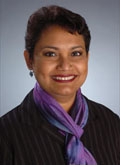

J. Clark Archer, University of Nebraska Lincoln, has led a career characterized by an outstanding record of sustained high-quality scholarship. Over more than four decades, he has made significant contributions to the fields of political geography (specifically the geography of United States politics), cartography, population geography, and demographics. He is a leading expert on the use of maps in political and electoral geography research, and has published many regarded atlases, monographs and more than 50 journal articles and book chapters. Moreover, Archer’s analyses and interpretations of American elections have been instrumental in consolidating a role for electoral geography in the study of American politics.  Such work underlines the traditional power of geography to inform problems that straddle multiple disciplines.

2019 Glenda Laws Award

The Glenda Laws Award is administered by the American Association of Geographers and endorsed by members of the Institute of Australian Geographers, the Canadian Association of Geographers, and the Institute of British Geographers. The annual award and honorarium recognize outstanding contributions to geographic research on social issues. This award is named in memory of Glenda Laws—a geographer who brought energy and enthusiasm to her work on issues of social justice and social policy.

Farhana Sultana, Syracuse University

Farhana Sultana’s work is theoretical and applied, interdisciplinary, rigorous, critical, layered, intriguing, provocative and even uncomfortable at times. Dr. Sultana began her professional career in social justice and over time she has expanded her focus to colonialism, institutional racism, and related concerns. As a geographer from the global South, Dr. Sultana has worked for years to bring non-Eurocentric thinkers into our institutions and has asked that academics “de-colonize their pedagogy.” One of her most recognized bodies of work has forced us to recognize that academic freedom is not globally guaranteed. More recently, Dr. Sultana has brought her skills, knowledge, and talents to the increasingly vocal and visible problems of mental health that have emerged in academia. She has supervised more than forty Ph.D., Master’s, and Honor’s Student throughout her career and mentored many more. Her service to the discipline and profession, universities, international communities, conferences and workshops is impressive, far-reaching, and impossible to  summarize. She has been described as a scholar/activist and public intellectual, and also as someone with the courage and bravery to speak out, even when it may be uncomfortable to the status quo. The AAG is proud to award Dr. Farhana Sultana the 2019 AAG Glenda Laws Award.

2019 The AAG Harold M. Rose Award for Anti-Racism Research and Practice

The Rose Award was created to honor Harold M. Rose, who was a pioneer in conducting research on the condition faced by African Americans. The award honors geographers who have a demonstrated record of this type of research and active contributions to society, and is awarded to individuals who have served to advance the discipline through their research, and who have also had an impact on anti-racist practice.

Katherine McKittrick, Queen’s University

Dr. Katherine McKittrick of Queen’s University has not only contributed to the study of race and gender through her prodigious scholarly output, but she has been a consummate mentor to various students and faculty of color. She has also been one of the most high-profile advocates for the burgeoning field of Black Geographies. Through her work on numerous editorial boards, and as an associate editor of Antipode, she has worked to promote faculty and students of color and mentored junior scholars in writing and publishing in the discipline.

Her efforts were recognized when she was awarded the inaugural Ban Righ Mentorship Award at Queen’s University. Dr. McKittrick has also been instrumental in seeing scholarship that engages with the perspectives of underrepresented persons made more visible in the discipline and in bridging the views of Black Studies, Women’s Studies, and Geography.

The 2019 AAG Marcus Fund for Physical Geography Award

The objective of The Mel Marcus Fund for Physical Geography is to carry on the tradition of excellence and humanity in field work espoused by Dr. Melvin G. Marcus. Grants from the Mel Marcus Fund for Physical Geography will foster personally formative participation by students collaborating with faculty in field-based physical geography research in challenging outdoor environments.

Elizabeth Watson, Drexel University

Dr. Elizabeth Watson, Assistant Professor in the Department of Biodiversity, Earth & Environmental Sciences at Drexel University.  She will take a PhD student and an undergraduate student to Bahía San Quintín, Baja California, México.  There they will be conducting seagrass mapping in an estuary using a combination of remote sensing and field-based methods. This pristine and highly productive estuary is a model system for study, due to its long-time stewardship by local NGOs.  Through a peer-mentoring approach, the undergraduate will be exposed to field methods for the first time, while the PhD student will gain leadership skills. The selected undergraduate, a first-generation college student, has been working in Dr. Watson’s laboratory and will be able to experience a different type of research environment while interacting with local scientists and students in Mexico.  The PhD student will be making important connections with local scientists and NGOs while making progress on his dissertation research.  The Marcus award funds will be used to cover the travel expenses for the two students and will support the award’s goal of fostering personally formative participation by students collaborating with faculty in field-based physical geography research.

2019 Meredith F. Burrill Award

The AAG Meredith F. Burrill Award honors work of exceptional merit and quality that lies at or near the intersection of basic research in geography on the one hand, and practical applications or policy implications on the other.The purpose of the award is to stimulate and reward talented individuals and groups whose accomplishments parallel the intellectual traditions Meredith F. Burrill pursued as a geographer, especially those concerned with fundamental geographical concepts and their practical applications, especially as relevant to local, national, and international policy arenas. The funds that underwrite the award come from a bequest by Burrill, a gift from his wife Betty, and donations in his memory from colleagues and friends. The award, consists of a certificate and cash honorarium, at the Association’s Annual Meeting.

Stephanie Pincetl, University of California Los Angeles

Stephanie Pincetl, University of California Los Angeles, has been an intellectual leader in the field of urban sustainability, known particularly for her extensive research on urban metabolism and effective resource management governance structures. Her academic success is unquestionable, with one monograph and some 90 peer-reviewed scholarly works in the leading journals of her field. More pertinent to the Burrill Award, however, are the myriad ways that she has coupled that academic success with real world problem-solving, using her large-scale datasets to analyze and answer critical policy questions regarding sustainability. This work has implications not only for the case of Los Angeles, where her California Center for Sustainable Communities is based, but is applicable more broadly in megacities around the globe.

2019 Wilbanks Award for Transformational Research in Geography

The AAG Wilbanks Award for Transformational Research in Geography will honor researchers from the public, private, or academic sectors who have made transformative contributions to the fields of Geography or GIScience. Provided there is sufficient availability of funds, the Wilbanks Award will consist of a cash prize of $2,000 and include a memento with the name of the Award and the recipient.

Susan Cutter, University of South Carolina.
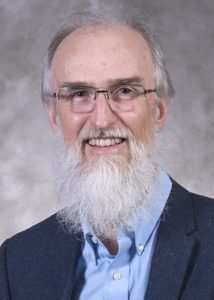
Dr. Cutter, Carolina Distinguished Professor of Geography and Director of the Hazards and Vulnerability Research Institute, has made transformative, far-reaching research contributions to geography and the broader interdisciplinary research communities that focus on hazards and disasters. Her work led to development of the Social Vulnerability Index, the first nationwide empirical representation of social vulnerability. The Index is used in FEMA’s National Risk Assessment toolkit and by many other nations.  She also pioneered the Baseline Resilience Indicators for Communities, a county-level assessment of disaster resilience; the Hazards of Place model of vulnerability, which analyzes the contributions of physical and social vulnerability to overall place vulnerability; and the Disaster Resilience of Place model, which identify place-based differences and measures progress towards resilient goals and outcomes.

Alan MacEachren, the Pennsylvania State University

Dr. MacEachren, Professor of Geography and Director of the Hazards and Vulnerability Research Institute and Director of the GeoVISTA Center, has made transformative, far-reaching research contributions to geography, GIScience, and the broader interdisciplinary research communities that focus on information visualization and visual analytics.  In his seminal 1995 book, How Maps Work: Representation, Visualization and Design, he developed a cognitive-semiotic theoretical perspective for dynamic representation that fostered the next generation of cartography, conceptualizing map making and reading as a process of knowledge construction itself.  Dr. MacEachren’s recent work on geovisual analytics champions thinking about how humans can collaborate with computers to make sense of information needed to solve highly complex problems.  His research advances our fundamental understandings in geography, computer science and related fields and has been employed in a broad range of domains, such as public health, crisis management, and environmental science.

2019 AAG Award for MA/MS Program Excellence  

This annual award and cash prize honors Geography departments and Geography programs within blended departments that have significantly enhanced the prominence and reputation of Geography as a discipline and demonstrated the characteristics of a strong and engaged academic unit. The award honors non-PhD granting Geography programs at both the baccalaureate and master levels.

Western Michigan University has a clearly outlined commitment to shared governance and cultivates robust engagement with the East Lakes Division of the AAG. An annual curricular retreat regularly sets Departmental goals, and graduate students have a voice through formal regular meetings with the Chair and Graduate Director, and informal monthly lunches with Departmental faculty.

Western Michigan’s use of internal Departmental funding to prioritize graduate student participation in conferences, results in annually funding around 16 masters students, approximately half of its incoming masters cohort, to attend the AAG meeting. Not only are these graduate students well-resourced, they become successful. The Department of Geography offers a teaching assistantship training program for its graduate students and has seen recognition of this with on-campus awards for Graduate Teaching Excellence. Its graduate students move on to Ph.D. programs, successfully pursue internships, or move into careers with employers in the public sector such as the UN’s refugee agency (UNHCR) and various state and federal agencies, and the private sector.

One of the most impressive initiatives undertaken by Western Michigan University’s Department of Geography has been systematic outreach to K-12 and area community colleges. In a letter, Diana Casey of Muskegon Community College, an institution around 100 miles away from WMU, stated “The faculty at WMU have always maintained an open door for my undergraduate students to learn about opportunities so they can further their collegiate studies,” and notes that not only will the geographers at Western Michigan host her and her students, but these faculty also regularly travel to Muskegon Community College to meet faculty and students.

Finally, the Department offers a robust research profile, generating around $1.8m in external grants over the last five years, its faculty publishing “133 peer-reviewed articles, 7 books, and 20 book chapters” over the same period, in addition to presenting 165 papers at academic conferences and a further 97 invited lectures.

Honorable Mention:
California State University – Long Beach, has exhibited a very strong and successful commitment to enhancing faculty research in a teaching-intensive institution, strategic outreach to Latinx students to further diversify its already multicultural student body, and curricular development both in terms of specialized UAV courses and robust general education offerings. The integration of federally-supported Coverdell graduate student fellowships for returning Peace Corps volunteers was noted by the committee as an innovative recruitment strategy.

2019 Dissertation Research Grant recipients ($1,000/each)

Sophia Borgias, University of Arizona

Michael Desjardins, University of North Carolina at Charlotte

Eric Goldfishcher, University of Minnesota

Robert Hobbins, Arizona State University

Megan Mills-Novoa, University of Arizona

2019 Research Grant recipients ($500/each):

Lynn Resler, Virginia Tech University

Sean Kennedy, UCLA

Jessie Speer, Queen Mary University of London

Marylynn Steckley, Carleton University

Kathryn Hannum, Kent State University

Lisa Tranel, Illinois State University

    Share