Julian Minghi

Julian Vincent Minghi passed away peacefully on July 26, 2024. A longtime professor of geography at the University of South Carolina Columbia, he had a lasting impact on the careers of his peers and succeeding generations of geographers.

Born in 1933 in London, Dr. Minghi spent his early years in Sussex and Wales. In his youth he traveled to Italy’s Piedmont and Tuscany regions, returning during his undergraduate years to climb the Italian Alps with famous mountain climber Walter Bonatti. These experiences influenced him to become a professional geographer with strong interests in boundaries and borderlands. He was also stimulated by his undergraduate professor, John House, from the University of Durham, who was held in high regard by his peers for pioneering works in political geography.

He received his M.A. and Ph.D. degrees from the University of Washington, where he was advised by Douglas Jackson who was known for cutting-edge approaches to studying interstate political worlds. Minghi’s 1961 Ph.D. dissertation addressed what then were innovative themes and approaches, for example, the impacts of cross-border landscapes in the emerging worlds of television. During this time, he met his wife and life companion Lee.

Active in the American Association of Geographers as a Council member, he also served on the International Geographical Union’s Commission on World Political Geography, where he worked in early years with John House, Ron Johnston, Bertha Becker, David Knight, John O’Loughlin, Anton Gosar, Werner Gallusser, Saul Cohen, Dennis Rumley, Vladimir Kolossov, Andre Louis Sanguin, Peter Taylor and others advancing political geography on many fronts.

Julian Minghi changed political geography through such work as his article “Boundary Studies in Political Geography,” published in the Annals of the American Association of Geographers in 1963, signaling a new turn in the study of boundaries and borders. He co-edited, with Roger Kasperson, the comprehensive book The Structure of Political Geography. First published in 1969 and still in print, it changed political geography and the two mens’ careers.

“In the huge upheavals of geography in the 1960s, political geography was nowhere to be seen,” recalled Peter Taylor, emeritus professor of geography at Loughborough University. “This changed with the publication of The Structure …. It converted political geography into a social science; 40 chapters organized into five sections: Heritage, Structure, Process, Behavior, and Environment — Wow! It certainly recruited me.”

“Julian Minghi stood out in international encounters of political geographers for his kind mentoring and his fascination with borders and borderlands,” said Virginie Mamadouh, associate professor of political and cultural geography at the University of Amsterdam.

“Minghi’s contributions to the field of political geography are immense,” said Reece Jones, chair of Geography and Environment at the University of Hawai‘i-Mānoa. “Thankfully, his legacy will continue to be recognized through the Julian Minghi Distinguished Book Award, which is given annually to the author of the best book in political geography by the Political Geography Specialty Group of the AAG.”

“There was little of note published in political geography in the 1950s before Julian’s first papers and especially his co-edited book with Kasperson, said John O’Loughlin, professor of political geography at the University of Colorado Boulder. “The book’s ambition and broad range of subjects showed the young scholars of the day what should be important research topics and had been neglected for too long.”

“Julian was a pioneer in the field of political geography [whose] major publications led many young geographers to take up political geography and study borders (at a time when it was still partially blackballed within academic and scientific circles due to erroneous associations with the Geopolitics of the Third Reich) and make it into the thriving discipline which it is today.” David Newman, professor of geography at Ben-Gurion University of the Negev.

Herman van der Wusten, professor emeritus of political geography at the University of Amsterdam, agrees: “Julian Minghi helped kickstart a new political geography in the 1970s. Later on he was fruitfully active on political boundary problems for humans and their landscapes as they were put up, withdrawn or got a different function. He was a great colleague who will be sorely missed.”

“In his long and distinguished career, Professor Minghi played a key role and link between an earlier generation of work on border studies in political geography and the revitalization of that field over the last thirty years,” said James Sidaway, professor of political geography at the University of Singapore. “This critical legacy will long endure,”

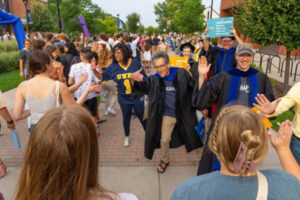
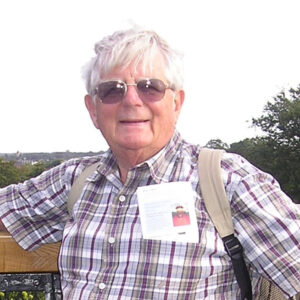
Julian Minghi posed for a photo outdoorsColleagues have praised Minghi’s energy and joyful spirit. He was “audacious and undisciplined … and a little bit playful,” in the words of Phil Steinberg, professor of political geography and arctic studies geographer at Durham University. Richard Schofield, senior lecturer in boundary studies at King’s College London, described Minghi as “a lovely man who continued to captivate my M.A. students at KCL on Geopolitics, Resources, and Territory into his 90s, delivering a usual annual clutch of lectures with relish and good humor. No one would ever call Julian a cowboy, but he did sort of die with his spurs on!”

Alexander (Alec) Murphy: professor emeritus of geography at University of Oregon, said, “Julian was an exceptionally warm, good humored, thoughtful political geographer who made pioneering contributions to the subdiscipline. His work with Roger Kasperson, The Structure …, helped to turn me toward political geography as a graduate student, and I cherished the many times we met at academic gatherings around the world. One of the great honors of my career was the invitation to give the first inaugural Julian Minghi Lecture at the University of South Carolina in 2007.”

Minghi’s knowledge of the world was always informed by his fascination with boundaries. “As a political geographer, Julian Minghi was professionally loyal to the Alps-Adriatic region,” recalled Anton Gosar, professor of geography at the University of Ljubljana. “He wrote extensively with Milan Bufon and made several field trips to the Italo-Slovenian border and organized conferences with scholars from both countries. Julian and his wife were fascinated by the mountain and Lakeland of the Julian Alps. They spent their honeymoon there and wanted to celebrate their anniversaries every year in the same facility.”

Mamadouh remembered, “One of the memorable moments was him sharing his memories of the evolution of the Italian/Slovenian border area over decades during the Cold War and after the disintegration of Yugoslavia when we were visiting Gorizia/Nova Goricia during a fieldtrip at the occasion of the Borderscapes III Conference in Trieste in summer 2012.”

Dennis Rumley, Professor of Indian Ocean Studies and Distinguished Research Fellow at Curtin University in Western Australia, called Minghi “an icon of political geography. He never got bored with borders. He was a very kind and generous man who had a wicked sense of humour. Like his favourite football team — Arsenal — Julian was always straight (talking in his case; shooting — for goal — their case). He clearly enjoyed life and had a positive and permanent impact on all who met and knew him. He will be missed by all of us.”


This memorial was prepared by Stanley Brunn, University of Kentucky, Lexington, insights and information from former colleagues and family members: Lee Minghi, Lynn Shirley, Anton Gosar, Reece Jones, David Knight, Victor Konrad, Virginie Mamadouh, Alec Murphy, David Newman, John O’Loughlin, Dennis Rumley, Richard Schofield, James Sidaway, Phil Steinberg, Peter Taylor and Herman van der Wusten.

    Share

A Global Gathering Place

Colorful comment bubble shapes containing a word in different languages

Photo of Patricia Ehrkamp

As I am finalizing this column, the 35th International Geographical Congress (IGC) draws to a close in Dublin, Ireland. Organized by the International Geographical Union (IGU) and the Geographical Society of Ireland (GSI), the Congress met under the theme “Celebrating a World of Difference” and brought together over 3,000 delegates. It was a delight to see so many geographers from around the world engaging in the exchange of knowledge, collaborating across borders and language barriers, and building new networks and friendships along the way. A number of plenaries highlighted the expertise of ‘Voices from the Global South,’ for example two sessions on climate change. These sessions also made clear that so many current and pressing issues in the world—such as climate change, food security, and geopolitics—do not stop at national borders and cannot be understood in isolation.

This wonderful global and collaborative spirit stands in stark contrast to expressions of nationalism, boundary-making, and xenophobia that characterize the presidential election campaign in the United States. Nationalism, populism, and anti-immigrant rhetoric are on full display—with at least on one side of the political spectrum going as far as calling for mass deportations. These are, of course, well-known tropes of electoral politics, and they have been part and parcel of U.S. immigration policy for decades. But I will never get used to the ways that such anti-immigrant rhetoric and hostility unnecessarily instill discomfort or even fear in those of us who hail from parts of the world outside the U.S. Geographic research has long addressed these topics, including, for example, making rising ethnonationalism the theme of the 2022 presidential plenary.

Beyond our scholarship on these issues, however, I watch the election campaign and TV ads with deep concern for how this rhetoric affects the numerous international students in our undergraduate and graduate programs, and I wonder how our international colleagues feel about them. Many of our AAG members are immigrant faculty members and practitioners, as well as international students, and research shows that racism, discrimination, and anti-immigrant politics create stress and anxiety and adversely affect the health and mental health of immigrants and minoritized populations.

So, I want to take this opportunity to emphasize that the AAG’s broader commitments to inclusivity comprise a deep commitment to internationalism in education, research, and geographic practice, and that the broader production and exchange of knowledge and insights across national borders benefit all of us. As AAG Past President Eric Sheppard noted in 2013, efforts to change our name to American Association of Geographers were prompted by the realization that “the AAG has become far more than a community of American geographers. Many of our members, even among those working in the United States, are not (only) American citizens. Many more attend our annual meetings from outside the United States as our national meetings have become the gathering place for geographers from across the world.”

These trends continue. Although our membership declined during and in the aftermath of the Covid-19 pandemic, our international membership (as geographers with an address outside of the United States) has remained at about 25 percent. The 2022 Membership Report shows that the AAG had 9,347 members at the end of 2022, which included 2,554 international members that represented over 100 countries.

There is other encouraging news: Following three years of canceled or virtual conferences between 2020 and 2022, in the past two years, our annual meetings have again become global gathering places for geographers. In Denver (2023), 26.5% of our attendees came from outside the United States, representing 82 countries. Honolulu similarly attracted international attendees from 78 countries, accounting for 30.6% of our overall attendees. Hawai’i’s (relative) geographic proximity to Asia aided in bringing more colleagues from that region to this most recent conference, and I am so grateful that our organization was able to afford opportunities for 64 Indigenous students and scholars from the Pacific Ocean basin region to attend this Annual Meeting free of charge as part of our commitments to enhancing global inclusivity.

In many other ways, our lives have been globally connected, which is also what we teach in our introductory geography classes. One way of fostering such connections is through education abroad. Study abroad participation has become an important aspect of how universities and colleges are ranked, and they advertise such opportunities as they seek to recruit talented undergraduate students. Lauded as ‘high impact’ learning experiences for undergraduate students, 94 percent of United States colleges and universities offer and encourage students to participate in study abroad opportunities according to the spring 2024 Institute of International Education Snapshot. For our students, studying abroad offers exciting and important opportunities of gaining a deeper understanding of the world, through first-person experiences with different cultures, knowledges, and approaches. Of course, faculty exchanges—for example through Fulbright programs—do similarly important work.

As we continue to build global consciousness and understanding, the AAG remains committed to being a gathering place for all geographers.”

The number of international students coming to the United States has been growing, and international faculty are contributing much to growing diversity in the U.S. academy and in our home departments. But there are challenges as well. In addition to the hostile political climate I already mentioned, international faculty and students may also struggle with visa issues, have to overcome language hurdles, and may find themselves encountering microaggressions and unspoken barriers. In response to some of these challenges, AAG has been supporting the Golden Compass initiative that seeks to foster equity and inclusion for international women faculty in geography and geospatial science. This initiative, which originally focused on mentoring a relatively small group of scholars, has now received significant funding from the National Science Foundation under the new project name Geospatial sciences Alliance for International women faculty Advancement (GAIA) to scale up and shift focus toward data collection, training, and technical assistance that will help institutions transform their approach to supporting international women scholars. Led by Dr. Jieun Lee of the University of Northern Colorado, this partnership is a collaboration among UNC, AAG, the University Consortium for Geographic Information Science, and the College of Staten Island.

Universities in the U.S. keep recruiting international students—in part because tuition dollars matter in the neoliberalized world of higher education. But international students bring so much more: they enrich our classrooms and learning in geography programs with their experiences and insights! In our seminars and research endeavors, international students’ ideas contribute to fostering a global consciousness and understanding, and they bring significant regional expertise and insights that are critically important as geographers tackle difficult research problems in different parts of the world. So, we should celebrate that student applications from abroad for the 2024 academic year continue to grow, and that our programs attract international students. And while we’re at it, maybe we can also check in with our international colleagues and students locally to make sure that they feel supported in the current, challenging political climate. After all, a global geographic consciousness also includes our home places.

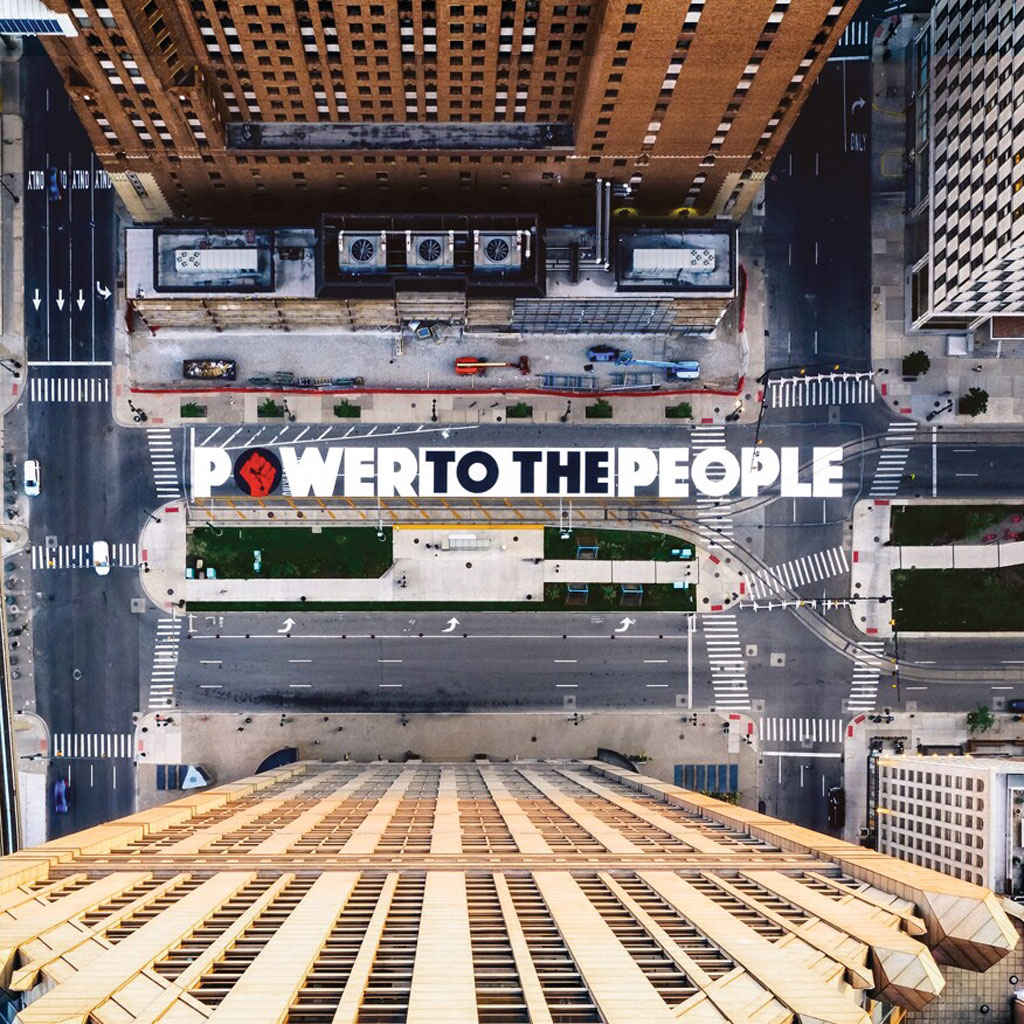
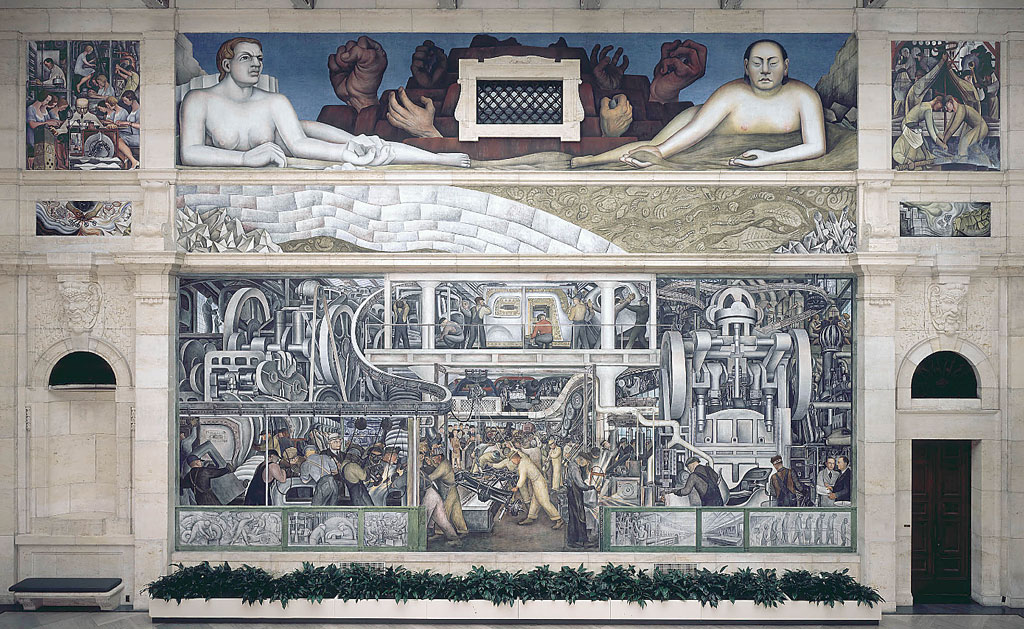
It is wonderful to see so many international members of the AAG, and to know that so many colleagues from around the world continue to find their way to our conferences. My hope is that our next Annual Meeting in Detroit, a city on the U.S. border with Canada with a long history of immigration, will not only attract similar numbers of international attendees, but will also spark conversations about immigration, borders and difference, and continue to foster intellectual engagement across borders that enriches our geographic knowledge and our lives as geographers. As we continue to build global consciousness and understanding, the AAG remains committed to being a gathering place for all geographers.


Please note: The ideas expressed in the AAG President’s column are not necessarily the views of the AAG as a whole. This column is traditionally a space in which the president may talk about their views or focus during their tenure as president of AAG, or spotlight their areas of professional work. Please feel free to email the president directly at P.Ehrkamp@uky.edu to enable a constructive discussion.

    Share

AAG  Embarks on National Partnership to Support Foreign-Born Women Faculty

Multi-year, $1M initiative funded by the National Science Foundation

National Science Foundation official logoThe American Association of Geographers (AAG) is the recipient of a major grant as part of  a three-year, $1 million dollar project entitled Geospatial sciences Alliance for International women faculty Advancement (GAIA). The project is funded by the National Science Foundation (NSF) ADVANCE program, which supports “increased representation and advancement of women in academic science and engineering careers, thereby contributing to the development of a more diverse science and engineering workforce.”

Jieun Lee
Jieun Lee, Principal Investigator for ADVANCE-GAIA

Principal Investigater Dr. Jieun Lee, associate professor of Geography, GIS, and Sustainability at the University of Northern Colorado (UNC), will lead the project along with Co-Principal Investigators Dr. Gary Langham, Executive Director of AAG; Dr. Amy Rock, Executive Director of the University Consortium for Geographic Information Science (UCGIS), and Dr. Laxmi Ramasubramanian, Associate Provost for Faculty Success, The City University of New York, College of Staten Island (CUNY-CSI).

The GAIA partnership reflects years of work on the issue of supporting women who teach geography and all geospatial sciences in the United States but were born in different countries, many of whom are women of color. Drawn from lessons learned during the first-ever 2022 Golden Compass convening, which focused on mentoring foreign-born women faculty (FBWF) and gathering insights for faculty equity and inclusion, GAIA aims to enhance and scale the insight and curriculum from the Golden Compass. Both programs were developed by Dr. Lee, in collaboration with fellow alumni of UCGIS’s TRELIS program for advancement of women, and through support from UCGIS, AAG, UNC, and the Korea-America Association for Geospatial and Environmental Sciences.

“This grant gives us an excellent platform from which we can continue the collaboration of Golden Compass, gather data about the experiences of women scholars from other countries, and develop implementation plans that lead to systemic change within university geography departments,” said Dr. Lee.

“This project is exactly the sort of partnership we want to invest in,” said Gary Langham, Executive Director of AAG. “Academia needs to create spaces where all faculty can thrive, bringing their talents to institutions, students, and research. I take pride in our part toward helping foreign-born women faculty succeed, persist in their careers, and find satisfaction in being geographers at U.S. institutions.”

Over the next three years, working in partnership with the CUNY-CSI and UCGIS, UNC and AAG will engage with foreign-born women faculty (FBWF) and their institutions to gather information on the experiences of FBWF in American institutions.

The GAIA findings and analysis will be made available to the public and will include recommendations for how departments can become more welcoming spaces.

In the final phase of the project, GAIA will work directly with departments that create an implementation plan for supporting their foreign-born women faculty, guiding each department and its leadership to ensure the effective adoption of the GAIA curriculum, successful programming, and measurable outcomes.

The Geospatial sciences Alliance for International women faculty Advancement (GAIA) is supported by the National Science Foundation under Award Nos. 2404263 and 2404264. Any opinions, findings and conclusions or recommendations expressed in this material are those of the author(s) and do not necessarily reflect the views of the National Science Foundation. For additional information, contact AAG.

    Share

Challenging “It’s Always Been This Way” with an Ethos of Care

Person holding their hands in the shape of a heart with sunlight in background

By Risha RaQuelle, Chief Strategy Officer

Photo of Risha Berry

The AAG will host the Convening of Care, September 19-20, 2024, funded by the National Science Foundation in partnership with the University of Colorado Colorado Springs (UCCS) and the National Organization of Research Development Professionals (NORDP).

Thirty participants, drawn from among early career scholars, department leaders, and representatives from the research enterprise (ex. funding officers at colleges and universities), will meet at the AAG offices in Washington, DC, to explore how belief systems such as the ones we live within today still carry the heat signature of systems created hundreds of years ago.

Many behaviors and practices that we take for granted in current institutions are in fact the legacy of these older systems, undermining the lives and often the careers of many of us:

  • prioritization of timeliness and urgency at the expense of developing trusting and collegial partnerships,
  • Individualism, competitiveness, and perfectionism, and
  • hierarchies of power that reinforce one-way belief systems.

The exploration of how these entrenched systems and attitudes lead to protecting or reinforcing the “it’s always been this way” tradition, is paramount in creating an “Ethos of Care.”  An ethos of care seeks to enhance practices and processes within the research enterprise and enable collaborators to confront and address the accepted norms of power and bias, and “resolve to disrupt and transform those norms in a mutually beneficial, evolving and inspiring manner,” according to Principal Investigator Emily Skop of UCCS.

The goal of the convening is to enable practitioners in the research enterprise to probe the origins of knowledge discovery and inspire critical reflection on the ethical, political, economic, and emotional aspects of research practice and knowledge production.  Participants will complete an Ethos of Care Credential and a foundational paper to inform implications for care in practice.

Our work is ever-evolving, and optimistic that even the most permanent-seeming system of beliefs or policies once invented, can be transcended.  Did you know that we have a TLC GRAM toolkit? You can start today by evaluating and tracking your progress in this community engaged care movement.  I’m rooting for you.

The Convening of Care project is supported by the National Science Foundation under Award No. 2324401 and Award No. 2324402. Any opinions, findings and conclusions or recommendations expressed in this material are those of the author(s) and do not necessarily reflect the views of the National Science Foundation.

The AAG Culture of Care column is an outreach initiative by the AAG JEDI Committee. Don’t forget to sign up for JEDI Office Hours. The current theme of Office Hours is An Ethos of Care in the Research Enterprise.

    Share

Student Resources

TLC GRAM Toolkit Template

    Share

A Toolkit for What Resists Fixing: Creating a Culture of Care

Person holding their hands in the shape of a heart with sunlight in background

By Risha RaQuelle, Chief Strategy Officer

Photo of Risha Berry

I most recently had the privilege of presenting a beta version of our TLC GRAM toolkit at the 2024 GFDA Department Leaders workshop with Dydia DeLyser of California State Fullerton and Daniel Trudeau of Macalester College. The TLC GRAM Toolkit is a compressed, operationalized approach to the AAG’s Justice, Equity, Diversity, and Inclusion Committee’s strategic plan. I was excited to share this newest version of the strategy, which we piloted with our JEDI Committee working groups, as a potential tool for geography departments and program leaders at a time when such tools are very much needed.

Briefly, I invited the participants to walk through the toolkit and consider their own justice, equity, diversity, and inclusion strategies in one of the seven domains: Training, (Focused) Listening, Communications, Governance, Reports, Advocacy, and Membership. Although created for use by geography education leaders, we hope that anyone could adapt these tools to a wide variety of settings. We have also taken care to prepare this for many contexts, knowing that some campuses and states are pushing back against JEDI programs in explicit ways. For program leaders in states where JEDI work is being challenged, the TLC GRAM framework provides a universal outline to consider how to do the work within these limitations, by emphasizing management and training approaches that have broad relevance for good governance and student support. For example, in the workshop, participants were invited to match existing and planned strategies with the TLC GRAM categories the activity aligned with.

This “inventory” approach is helpful for identifying a range of strategies and approaches that are already in place, viewing them through the lens of TLC GRAM “best practices,” and then identifying new methods they’d like to try.

The TLC GRAM inventory is a process designed to encourage leaders to identify and build on the JEDI practices they have planned or underway.

The TLC GRAM inventory is a process designed to encourage leaders to identify and build on the JEDI practices they have planned or underway. This approach also leads the participant to round out their JEDI practices by developing strategies within each of the seven domains of the toolkit. Through this process, a participant will begin to see opportunities for alignment, areas that overlap, and gaps in planning. When a team co-creates this list, it can be even more powerful, as they refine their brainstorming into clear and actionable steps, celebrating the opportunity to collaborate in accomplishing their identified aims.

In other words, the toolkit is designed to take the guesswork out of identifying the “perfect” strategy.

Why Seeking the “Perfect” Strategy is Not the Best Way

The request for a toolkit often comes with an expectation of highly specific steps to take, and this is understandable. Who wouldn’t want a quick and straightforward way to identify actions to take, find clear categories we can get right the first time, and co-create strategies that are seamless and efficient? However, a toolkit is just that: tools. Try as we might, we can’t make the tools themselves into the end. They are only the beginning of an intention toward change. Uncertainty, learning, trial and error are not only unavoidable, but necessary to facilitating change.

The work we do to intentionally create opportunities for systems change is not a short game. This work is deeply systemic, unpredictable, and requires long-term commitment. The temptation is to identify ALL the strategies that anyone has ever taken, listen to how they utilized them, and consider if those strategies may work in your own context. While there is value in considering many options, you as leader and your team are the best candidates for identifying what you want to accomplish and what might motivate you.

Knowing that this work requires patience, we can still motivate and energize ourselves by engaging in quick exercises to jumpstart our thinking.

Knowing that this work requires patience, we can still motivate and energize ourselves by engaging in quick exercises to jumpstart our thinking. Doing so allows us to become time delimited, listing activities that might be possible in each domain. Of course, fear and anxiety might emerge as the pressure builds to find the “perfect” strategy. The purpose of this exercise is to identify “a” strategy. Carving out 10-15 minutes together with your team will jump start a process to co-create and refine each strategy, as time permits. The goal is to see what might be possible. For example,

  • In the Training domain — I might want to identify what training courses are available to support faculty and staff or students in undertaking justice, equity, diversity, and inclusion work. An inventory of what exists in the department is a first step toward finding out who is already doing the work on our team. In states where constraints are being placed on many kinds of DEI programming, I might think creatively about ways to strengthen existing mentoring and leadership training programs and faculty development.
  • In the Focused Listening domain, a participant might say they will create opportunities to have discussions about a justice, equity, diversity, or inclusion strategy that the department might want to undertake. This could be during a staff meeting as a quick exercise. Again, this can take other forms, like a special listening activity for students to talk about their needs and experiences on campus. You could also regularly assess the departmental climate to ensure that it is ideally free of tensions and hostility and that it fosters a healthy, constructive and inclusive environment for all groups — students, faculty, and support staff.
  • In the Communications domain, one might identify who is represented on our website and why. Who is missing? Developing a strategy around gaining stories from scholars that you do not see on your website, personal testimonials, and narratives about their lived experiences in their research journey, could be a first start.
  • In the Governance domain, one might start with adding a justice, equity, diversity, and inclusion item (or a similar item focused on creating a culture of care, addressing full student needs, etc.) on every agenda to discuss opportunities for alignment and support. This way you will be certain to address this topic each time you meet.
  • In the Reports domain, you may want to identify what demographic reports exist for your department, who may have access to this and what might the trends be that you see as you disaggregate the data by demographic categories. You could also pair the demographic trends that you see with lived experiences of those that may not be represented in the data. What do we want to accomplish together and why, could be a first start.
  • In the Advocacy domain, you could identify what your advocacy aims are for your department, how you might support them and who might want to get involved.
  • In the Membership domain you might want to identify who makes up your department, team, or classroom, taking an assessment of who is missing and how you might find new opportunities to engage or recruit those that are not present.

While we can quibble over aspects of what is represented in the toolkit — and this matters — the first attempt is to take the first step, write something down and commit to doing the work. Pull the list together, with your team, co-create and consider the possibilities and limitations, with others, and start somewhere. You will be surprised at what you will accomplish when you take this first step. Please contact me so that we may celebrate your success. I am rooting for you!

Download the toolkit


The AAG Culture of Care column is an outreach initiative by the AAG JEDI Committee. Don’t forget to sign up for JEDI Office Hours. The current theme of Office Hours is An Ethos of Care in the Research Enterprise.

    Share

Tips on Future-Proofing Your GIS Career

Illustration of a group of red and white circles containing location arrows; Credit: Al Amin Shamim, Unsplash
Credit: Al Amin Shamim, Unsplash

By Rosemary Boone, Esri Young Professionals Network (YPN)

As GIS evolves toward web-based applications, the skills required for a successful GIS career are also changing. This article provides advice on how to future-proof your GIS career by continuing your skill development and through community engagement, mentoring, networking, and attendance at conferences. You’ll receive crucial resources you can leverage to become more connected to various GIS community groups and build your own online presence and reputation.

What does it mean to be a GIS professional of the future? This is a valid question, as the world of GIS is constantly evolving. As GIS moves more toward being web-based, the skills needed to be a marketable GIS professional are changing too.

As a Senior Industry Marketing Manager at Esri, and an Advisory Board member for the Esri Young Professionals Network (YPN), I was recently inspired by an Esri YPN webinar, titled Future-Proofing Your GIS Career: Essential Skills and Training for Success, to compile five important tips for future-proofing your GIS career.

1) Stay Connected after You’ve Graduated

Preparing for your future takes a variety of forms and formats. You can build skills with online courses, apply for a certificate in a specialized area, or present at a conference. An important part of your professional development is connecting with, learning from, and sharing with your peers and community groups

Here are ways to include connections and networking in your career development:

Get Involved in GIS Communities

Connect with community groups or networks such as Esri YPN, Women+ in Geospatial, local user groups, associations like URISAAAGWomen in GIS, and USGIF.

LinkedIn is an excellent platform to stay engaged. You can follow industry experts and learn from the content they create. Start with joining the Esri YPN LinkedIn Group.

If you are a GIS user, Esri Community is one of the largest online GIS communities and is a place to read blogs, ask technical questions, connect with users of GIS technology, submit ideas, and set up RSS feeds. Many Esri products, services, and groups have their own Esri Community space and blog.

Become a Mentor

The best way to grow is to teach someone else. Mentoring, whether formally through a program or informally as a colleague, can help not only the people you mentor to learn, but you as well. Find out if you are eligible to mentor in your department, or get connected with an organization with mentoring programs, such as The URISA Mentor Network, which takes applications throughout the year for both mentors and mentees.

Ethnically Diverse Geospatial Engagement (EDGE) came out with a Beginners Guide to Mentorship with EDGE. Women+ in Geospatial has a  mentor program that also reaches an international group. AAG members also can get access to a list of mentors that you can get connected with. (Email Mark Revell to learn more).

You can also browse through the YPN Mentorship space to read up on material and resources around the overall topic of mentorship.

Attend Conferences

Conference-going is a big way to grow your skills and network through attending presentations and workshops to learn about the latest technology trends. Many times, you will be introduced to a new concept or idea while at a conference to take back to your organization that could potentially result in a successful campaign or initiative. The contacts you make at conferences can be leveraged as a resource for future collaborations, troubleshooting, mentors, and potential colleagues.

Some conferences that may interest you include AAG’s Annual Meeting and check out Esri conferences.

2) Equip Yourself to Overcome Challenges

There will be a time where you lack confidence about learning something new when you begin your career. It happens to all and the best of us! Here are ways to approach that challenge when learning something new.

First, remind yourself, “everyone has been new at something once.”

Next, ask questions. It’s best to ask questions at the beginning to show you’re engaged and you’re thinking about the problem. If you feel nervous or confused about something that you might not have the skills to accomplish, know that asking questions is not considered a weakness.

Remember, it’s okay to say, “I don’t know”. Have the mindset to say, “I don’t know but I will figure it out” because chances are the resources are out there for you. When asking quality questions, you demonstrate a sincere thoughtfulness and a willingness to go deeper.

Last, don’t underestimate the knowledge that you do have. It’s important to sometimes take a step back to acknowledge how far you have come in GIS and learning ArcGIS. Imposter Syndrome is a real thing and can be easy to get caught up in.

3) Leverage Resources to Grow Your GIS Skills

There are many resources, both formal and informal, to help keep your GIS skills sharp:

4) Validate or Demonstrate Your GIS Skills

Showcase and validate your skills through programs such as the Esri Technical Certification Program and GIS Certification Institute. Achieving a certificate in GIS can elevate your professional standing and open doors to various career opportunities.

There are costs associated with each program. Esri Technical Certifications charges a fee for the exam, which is proctored online, allowing you to take it at home or in your office. GISCI charges for the exam and a portfolio submission, as well as small annual fees and recertification every three years.

Esri also offers free Massive Open Online Courses (MOOC) on various topics such as Spatial Data Science, Cartography, Imagery, Climate, and more. Each MOOC is six-weeks long and offers a certificate upon completion.

5) Build Your Presence and Reputation in the GIS Community

Sometimes, you just have to put yourself out there. There’s just no way around it no matter how uncomfortable it feels. This takes time, intention, motivation, and tenacity. (As I sit here and write this article, I too am putting myself out there!)

Here are some ways you can begin to build a presence and reputation of your own in the GIS community.

Become a YPN Ambassador

If you are just starting out as a GIS professional, the YPN Ambassador program could be a fit for you. YPN is designed to prompt you to network online and in person, developing professional communication skills and becoming an active participant in the GIS community. Complete the steps in becoming one of three ambassador types and earn your badge and certificate.

Participate in Mapping Challenges and Competitions

Virtual challenges, hackathons, and similar events are a fun way to attract attention and demonstrate your skills in geospatial technology. Some recommendations are:

Leverage Social Media to Boost Your GIS Career

Social media is a powerful tool for building an identity that aligns with your goals and values, enabling you to communicate and connect with the outside world, learn from others, cultivate creativity, and promote your work. By leveraging social media effectively, you can boost your reputation and visibility in the GIS community and establish yourself as an active participant.

Download this ebook, published in collaboration with the URISA Vanguard Cabinet and the Esri Young Professionals Network, to discover how to use social media to supercharge your career, leading to growth opportunities, meaningful connections, and collaboration prospects.

Join a Local YPN Chapter

Esri YPN has established seven chapters across the United States, each hosting two in-person meetups a year. Meetups revolve around networking, meeting industry experts, and learning the latest trends in GIS. Some meetups take place at an Esri regional office and vary in format such as geography trivia, demos, networking activities, and more. Join a chapter near you.

Find Guest Speaking Opportunities

Consider submitting a paper session or abstract to present at a conference. I took that advice and submitted a proposal for a lightening talk at the upcoming GIS-Pro conference.  To my amazement, I later received an acceptance email and will be traveling to present! Is this nerve-wracking and a bit uncomfortable for me? Yes! But I know that I will grow professionally as a result and meet people that will make me a stronger and more well-rounded professional.


Rosemary Boone is a Senior Industry Marketing Manager for Esri, concentrating on executing marketing strategies for K-12 schools and higher education institutions. She holds a master’s degree in education technology with an emphasis on multimedia. Prior to her career in marketing, she taught elementary school and taught overseas. In her free time, she likes to listen to music, exercise, and spend time with her two Dachshunds.

Featured Articles is a special section of the AAG Newsletter where AAG sponsors highlight recent programs and activities of significance to geographers and members of the AAG. To sponsor the AAG and submit an article, please contact Oscar Larson olarson [at] aag [dot] org.

    Share

Responding to the Critical Moment

Person holding their hands in the shape of a heart with sunlight in background

By Risha RaQuelle, Chief Strategy Officer

Photo of Risha Berry

This month, we are sharing more information about AAG’s Research Partnerships Initiative, and specifically the current Request for Partners (RFP) for Targeted Mentoring Networks. During AAG’s months of development around these initiatives, as well as the discussions and insights offered by participants at AAG 2024, I was reminded of a term that is often used and sometimes comes under fire, yet is seldom fully understood. That word is “critical.”

In her recent column on the importance of language and terminology in education, outgoing chair Dr. Caroline Nagle of the AAG’s Justice, Equity, Diversity and Inclusion (JEDI) committee discussed the temptations and pitfalls to “rebranding” a word or concept that is attracting pressure and attention. She was speaking primarily of the terms associated with Diversity, Equity and Inclusion (DEI), but could easily have been speaking of a word  like “critical,” which has been a flashpoint for ideological attacks on everything from educational goals for critical thinking to the development of critical race theory, a legal concept widely misidentified with all race-conscious educational efforts.

It turns out that “critical,” like the discipline of geography itself, is a complex, multi-faceted concept, oversimplified in the public eye. Its surprising origins and shades of meaning are worth exploring as we become more proactive and responsive to ways to strengthen and support the talented people who should be—and stay—in our field.

In last month’s column, I spoke of the fact that cultures of care do not, typically, simply come together because someone just thought it was a good idea. All too often a critical incident reveals the harmful inadequacy of a system or community to meet the needs of all people, whether in a department or program or at an institution itself. A culture of care is initiated because something happened, someone was excluded or harmed, and care must be prioritized to prevent the event repeating. Here, the root meaning of critical matters greatly: from the Greek medical word krisis, meaning a point at which a patient can either improve or worsen. These incidents are decisive points in which we can choose to address harm and strengthen our support systems, or permit the harm to metastasize instead. Notably, crisis and critical are also related to krinein, meaning “to separate, decide, judge…distinguish.”

These meanings suggest a specific perspective for our work of care and transformation in geography. We are challenged as never before to reflect, respond, speak, and intervene where we can by using observation and discernment; to collectively and individually identify the critical moments that point to an urgent need for action.

Collective Care in a Time of Constraint

The reality now is that many of us are working in environments where it can be hard or impossible to meet these needs directly because the very act of speaking up, naming issues and specific incidents, or confronting systemic issues has been hampered by formal or informal silencing, policies against DEI training and activity, and the like. That is why it will be ever more important for the AAG to support and lead proactively, to put the elements of care in place and monitor progress through our JEDI Committee and research partnerships.

We know that critical incidents do not magically go away in the memory or in the present reality of our lives. They remain part of the work—hopefully a catalyst, but often an obstacle. We must support one another with caring strategies to help us share knowledge, co-create, organize, and make the discipline better.

Explore the AAG Targeted Mentoring Network Effort

Mentoring is one of many important areas of educational and professional support, with powerful potential to detect, correct, and hopefully prevent critical incidents, along with its value for the important decisions about research and careers. Yet mentoring is often thought of as one-dimensional, as a classic one-to-one and one-way relationship of an experienced sage to new acolyte. AAG is seeking new ways to energize the practice of mentorship, and specifically to seek partnerships to co-identify grant funding to seed and support ways to mentor geographers with more sensitivity to their identities, needs and aspirations, life experiences, and backgrounds through creating partnerships to develop Targeted Mentoring Networks.

With the leadership of the Targeted Mentoring Network (TMN) Working Group, and the support of the incoming AAG president Patricia Ehrkamp, chair of the AAG Mentoring Task Force, we have issued the first formal Request for Partnership (RFP) of our Research Partnership Initiative, focused on targeted mentoring networks (TMNs). We are open to your ideas for a variety of TMNs, and we believe in a plurality of answers that allow participants to acknowledge certain aspects of their career identity, inclusive of their positionality, and intersectionality.  Finding guidance through the unbeaten pathway of our interdisciplinary field often requires more than one mentor. Through the options explored in the TMN initiative, we hope that geographers will be able to connect to any number of TMN they identify with, helping them build their “Mentor Map.”

Join us in exploring what the Targeted Mentoring Networks effort can become. The RFP is active through August 5. We encourage you to learn more and apply.

This award is based upon work supported by the National Science Foundation under Award No. 2324401 and Award No. 2324402. Any opinions, findings and conclusions or recommendations expressed in this material are those of the author(s) and do not necessarily reflect the views of the National Science Foundation.

The AAG Culture of Care column is an outreach initiative by the AAG JEDI Committee. Don’t forget to sign up for JEDI Office Hours. The current theme of Office Hours is An Ethos of Care in the Research Enterprise.

    Share