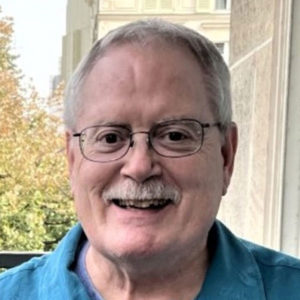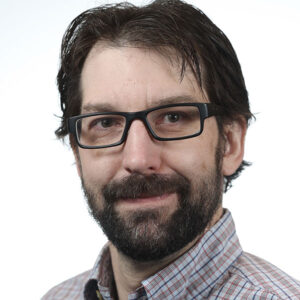
In January 2025, Joshua L. Conver will become the new editor-in-chief of The AAG Review of Books. Conver is the GIS Librarian in the Center for Digital Scholarship and Curation at Washington State University.
A physical geographer with experience in both academia and public land management, he also has an undergraduate degree in political science and research experience at the Arizona State House of Representatives. With a wide-ranging background that includes the study of humanities and cultural resources, Conver will bring an integrative sensibility to his editorial decisions for The Review.
Conver earned his Ph.D. in Geography from the University of Cincinnati in 2020, and is a longstanding GIS practitioner who earned his certificate in 2013. He has an M.S. in Natural Resources from the University of Arizona and a B.A. in Geography and Political Science, also from the University of Arizona. His research interests include spatial and landscape ecology, cultural and natural resource management, long-term monitoring, public science, integrated GIS, built environments, and data curation.
We express our gratitude to outgoing editor Debbie Hopkins, Associate Professor in Human Geography at the University of Oxford, who has steered the publication since June 2020. Along with editorial assistant Neha Arora, Hopkins worked to bring in book reviews that represent the diversity of the discipline and offer fresh perspectives, highlighting what she calls “that real-worldness of our work.”
2024 Geography Department Survey: Student Enrollments
Share
John S. Adams
John S. Adams, or JSA to those who knew him, was an urban economic geographer at the University of Minnesota. As a researcher, he studied the relationships between housing markets and policy, land use, and transportation in North American metropolitan areas. As a teacher, he taught classes on urban economics, transportation and land use, geography of the Twin Cities, and regional courses on North America and Russia. As a mentor, he advised dozens of graduate students, supporting them through research assistantships, an openness to whatever topic they chose to study, and continuing to be a source of guidance well after graduation. As an administrator, he was happy to take his turn as Department Chair (multiple times), President of the AAG, the first director and later the associate dean of the Humphrey School of Planning, and wherever else he was needed.
While JSA’s academic studies began in economics, he, like so many of us, took a class in geography and was hooked. After finishing his Ph.D. at the University of Minnesota, he taught at Penn State for three years before returning to Minnesota, where he taught for an astonishing 37 years. He spent time at many other institutions as a visiting scholar during that time, including UC Berkeley, Bank of America world headquarters, Moscow State University, and the U.S. Military Academy. During this time, he investigated housing policy and economics across North America, as well as developing a history of the quantitative revolution in urban geography.
Much of his research focused on the Twin Cities, including the Transportation and Regional Growth Study, funded by the Minnesota Department of Transportation, the Metropolitan Council of the Twin Cities, and the Center for Transportation Studies — a somewhat unlikely coalition to support research in the social sciences but reflective of JSA’s integrative approach to understanding the world. He was keen on producing research that was relevant to policymakers and planners in the region — many of whom he also had as students. The Center for Transportation Studies on the University of Minnesota campus established an award in 2009 in his honor for graduate students in planning and public policy, reflecting his contributions to interdisciplinary collaboration and policy-relevant research.
JSA was endlessly curious about the world. He was always asking people to share their stories with him, whether it was where they were from, where their family was from, or what they were interested in. He taught his graduate students that one of the best ways to do research was simply to ask people what they did for a living or what they thought of something, especially when it came to people like government bureaucrats whose stories often weren’t told. Field work was also essential: part of graduate student orientation at Minnesota was a field trip around the Twin Cities led by JSA and Professor Judith Martin, introducing students to their new home through a geographic lens. His willingness to strike up a conversation with anyone was especially on display during the field courses that he led across North America, Europe, and Russia for graduate and undergraduate students, along with his dedication to service no matter where he might be:
On a 1995 field study to cities of the U.S. Midwest and Southeast, it had been another long day of studying urban structure and change. Nobody knew why JSA stopped the van in the left turn lane of a busy thoroughfare during afternoon rush hour and got out of the driver’s seat, until we saw him dragging a fallen streetlight over to the curb and out of the lanes of oncoming traffic. Horns were honking, people were gawking, and we were kind of concerned that he might get electrocuted. But the image was perfect — “Citizen Adams,” in his signature plaid short-sleeve shirt and khakis, taking charge of Nashville’s “crumbling infrastructure” and “apathetic citizenry.”
Last but not least, JSA cared deeply about the institutions of higher education and of geography, arguing that higher education helps build a healthy foundation for the future of our country. He was a strong advocate for regular participation in departmental life and contributions beyond research and teaching. He argued for regular attendance at weekly departmental colloquia, in part to be well informed on the state-of-the-art of geographic research, but also to connect with students and faculty across the department as well as visiting speakers. Similarly, he advocated regular attendance at both national and regional AAG meetings, to hear about cutting edge research but also to learn about the state of the discipline in other departments and as a whole. He enjoyed introducing current and former students to each other, keeping the network of Minnesota alumni active through in-person meetings and also his family newsletter (always sent via the USPS). His sense of humor, concern for students and colleagues, and deep commitment to service are as much his legacy as his research and teaching, for geographers across Minnesota and around the world.
This memorial was prepared by Julie Cidell, Professor and Department Head of the Department of Geography & GIS at the University of Illinois at Urbana-Champaign; and Laura Smith, Associate Professor in the Department of Geography at Macalester College.
Program Profile: University of Wisconsin, Eau Claire – Department of Geography & Anthropology
In 2024, AAG recognized the Department of Geography and Anthropology at the University of Wisconsin at Eau Claire (UWEC) with the AAG Award for Bachelor Program Excellence. We asked Ryan Weichelt, a UWEC alumnus and current department chair, what makes the program stand out. He shares three key reasons how the department continues to evolve and meet the needs of the students, workforce, and discipline: promotion of geography and collegiality across campus, pursuit of scholarship, and excellence in instruction.
Cross-Campus Collaboration
Drs. Faulkner and Hilgendorf greeting 1st year students on the first day of classes at UWEC.
During this period, the department began to partner closely with the university to become a hub for geospatial technology and expand its reach into various programs on campus, including biology, computer science, and data science. Geospatial technology has distinguished the department on campus ever since, and facilitates significant research opportunities. For instance, faculty and students have collaborated with Hewlett Packard Enterprise (HPE) to leverage geospatial technologies in understanding and improving healthcare across the country. The interdisciplinary nature of these technologies “has shown how geography can play a role in understanding healthcare and making [it] available for more people,” says Dr. Weichelt.
While the department’s largest major is environmental studies, the geospatial program has driven numerous cross-campus collaborations. Biology and geology students frequently enroll in numerous certificate programs, leading to new majors and fostering a collaborative academic environment. The geospatial technology program has opened doors for interdisciplinary research and attracted new students who wish to work in archaeology, climate science, resource planning, or conservation.
Pursuit of Scholarship: “Geography is Everything”
The department offers a diverse range of classes and Liberal Education (LE) core components, akin to General Education in other institutions. Dr. Weichelt expresses the department’s pride in the breadth of curriculum, encompassing physical geography, technology, and cultural studies. The versatility of courses enables staff and students to provide extensive service to the university, supporting its growth and attracting prospective majors.
This commitment to geography as an all-encompassing discipline underscores the departmental belief that “geography is everything.”
Cross-campus collaboration also attracts new students, supporting other department efforts, such as incorporating GIS into non-geospatial classes, and renaming introductory classes to clarify that they belong to a series: “Planet Earth, Human Geography,” “Planet Earth, Physical Geography,” “Planet Earth, Cultural Geography,” and so on. Equipped with three state-of-the-art computer labs, the department can offer students a state-of-the-art computing experience, with support from alumni grants and donations and the university, which provides geospatial lab modernization funds every two years. Students across the university can access these dedicated spaces to get direct experience with remote sensing, GIS, and other geospatial tools.
Fieldwork is also a critical component of UWEC’s curriculum. “Many of our classes require field components, not just the physical geography classes, [but also] those like tourism geographies, urban geographies, and Indigenous geographies courses,” says Dr. Weichelt.
Students have field work opportunities with their professors in the United States, internationally, or remotely. Dr. Harry Jol, for example, conducts ground-penetrating radar (GPR) research globally and recently took students to Lithuania to study Holocaust sites. Dr. Douglas Faulkner, a fluvial geomorphologist and recipient of the 2019 Gilbert Grosvenor Award, brings students to local rivers like the Chippewa, Eau Claire, and Red Cedar Rivers. Dr. Papia Rozario collaborates with colleagues across the U.S. on remote sensing and AI research, analyzing precision agriculture data obtained with drones.
A standout course, Geography 368, mandates 7 to 12-day field expeditions for all students. Even during the COVID-19 campus closures, students in the course adapted by researching sustainable city exploration via bicycles. Students also must complete 30 hours of community service before graduation. The geography club’s “Missing Maps” program allows students to apply their geospatial skills while fulfilling this requirement, making meaningful contributions to communities across the globe.
Excellence in Instruction: Strengthening Department Culture
Dr. Weichelt praises the numerous younger faculty members the department has hired in recent years. They help to foster a more cohesive and collaborative environment, enhancing the program’s longstanding tradition and continuously updating curriculum to address Justice, Equity, Diversity, and Inclusion (JEDI) issues, particularly how geographers and geography can contribute to solving these critical questions. This is upheld by an Anti-Racist Statement wrote and approved in 2020, in addition to the University’s EDI Goals.
As the state grapples with challenges to campus justice and equity initiatives, the department is using scholarships to help bridge gaps for diverse students, while adhering to new state regulations. For example, six first-year students interested in majoring in geography are eligible to apply for the George Simpson Incoming Student Scholarship, ranging from $1,000 up to $1,500.
Faculty are active in campus organizations and programs that advocate for diversity and inclusion such as the Race, Ethnicity, Gender, and Sexuality Program and American Indian Studies. This commitment to inclusivity and support is mirrored in the department’s vibrant student life. From a strong geography club, welcome parties and celebrations, mentorship opportunities, and speaker series presentations, connecting with students “always been a tradition here.” The level of attention to maintaining and strengthening the department culture in turn strengthens the discipline and future geographers.
UW Eau Claire’s Department of Geography and Anthropology exemplifies excellence not only through its award-winning programs but also through its dedication to student success and inclusivity. By fostering a supportive and dynamic environment, the department ensures that its graduates are well-prepared to tackle the challenges of the modern world, making significant contributions to the field of geography and beyond.
Share
On the Map
History Painted in Place: Detroit Murals Map and Guide
"Power to the People" mural captured in an image from above on Woodward Avenue in Detroit; Source: Joe Gall, courtesy Hubert Massey and Detroit Heals Detroit
Just weeks after Detroit was named #4 in the United States for the creation of beautiful murals, the city’s Office of Arts, Culture and Entrepreneurship (ACE) took on the task of putting the city at number one. To accomplish this, in 2022 the city launched a mural map and app to identify every mural and artist in the city, based on hundreds of curated murals and biographies of artists.
This initiative builds on a rich legacy of mural art in Detroit. Mural art has left its mark as far back to the early 1930s, capturing almost 100 years of history in Detroit. As the city struggled through the transition of the Great Depression, the prominent Mexican painter and muralist Diego Rivera was commissioned by the Detroit Institute of Arts (DIA) to capture the energy of Detroit’s distinctive automotive, steel, and other industries. Often considered to be the most complex artworks devoted to American Industry, Rivera’s “Detroit Industry” murals depict the city’s manufacturing base and labor force on 27 panels, spanning all four walls of the DIA’s Diego Court.
Grand in scope and scale, the paintings celebrate Detroit’s auto factories and depict men of all races side by side on an assembly line. Rivera’s technique for painting frescoes, his portrayal of American life on public buildings, and the 1920s Mexican Mural Movement led to and influenced the New Deal mural programs of the 1930s and 1940s, in addition to the future generation of artists in the city.
The main two panels of his series draw inspiration from Ford’s River Rouge Plant, where Rivera toured and sketched for months before creating large-scale tributes to their workers along with a blend of critique and celebration of the forces of industry. He also blended ancient Aztec symbolism into his modernist treatment, creating allegorical figures to portray the complex relationship of human and machine.
A view of the south wall of the Diego Rivera Detroit Industry mural at the Detroit Institute of Arts
A view of the north wall of the Diego Rivera Detroit Industry mural at the Detroit Institute of Arts
The Detroit Institute of Arts’ Research Library, Archives, and Collection Information department holds the digitization of a collection of existing 8 x 10-inch (large format) nitrate photo negatives, which were taken in 1932–33 to document the making of Diego Rivera’s “Detroit Industry” murals. Their digitization preserves the history of the murals and makes the images accessible to the public. In addition, the film that Ford Motor Company’s team made of the artist at work is now accessible on the National Archives website.
“Power to the People” mural captured in an image from above on Woodward Avenue in Detroit; Source: Joe Gall, courtesy Hubert Massey and Detroit Heals Detroit
Hubert Massey is a contemporary muralist whose work is inspired by 1960s- and ’70s-era activism and the art of Diego Rivera, having studied with former Rivera apprentices Stephen Dimitroff and Lucienne Bloch. In 2020, Massey worked with twenty Detroit teens to create a street mural in the Lower Woodward neighborhood, celebrating the phrase “Power to the People” and the Black Lives Matter movement spreading worldwide.
Massey works in the fresco technique and is the only known African American commissioned fresco artist in America. He has also produced work in the mediums of mosaic, terrazzo, sculpture, stained glass, and other material. You can find his work across Detroit’s Mexicantown, Greektown, the Cultural Center, the Charles H. Wright Museum of African American History, and the Detroit Athletic Club, among other places.
“Girl with the D Earring” mural; Source: Zoyes Creative
Sydney G. James is another Detroit artist who has contributed large-scale work to the city. A Black figurative painter and public art muralist, she pays homage to the city and emphasizes the deep connection between her art and Detroit, highlighting how murals serve as vibrant expressions of identity and community. Her work not only beautifies the urban landscape but also tells the stories of the people and the place that inspire her.
One of her most notable works is “Girl with the D Earring,” an 8,000 square-foot painting of a Black woman, on Grand Boulevard from Woodward Avenue into Milwaukee Junction. This work re-envisions Dutch artist Johannes Vermeer’s “Girl with a Pearl Earring.” “It’s one woman,” James told Hour Detroit. “But she represents Detroit in general. ‘Girl with the D Earring’ is a celebration of the city and a celebration of its people.”
“Detroit Never Left” mural; Courtesy Sheefy McFly’s website
Musician and visual artist, Sheefy McFly’s “Detroit Never Left” mural, located at Gratiot and Chene near Detroit’s Historic Eastern Market, is a nod to the idea of Detroit having a “resurgence.” The painting depicts a party full of Detroiters: a man jitting—a dance style that was born in Detroit–with a woman twerking (a dance move perfected in New Orleans in the 1990s, with origins in West African dance), a radio, and a Black man wearing a Cartier watch and a blue “D” hat, exuding an authentic Detroit. McFly told The Michigan Chronicle that “anyone from Detroit that walks by can identify with the mural.” His style blends Neo-Expressionism and Pop Art with a Detroit twist that reflects the cultural and social dynamics of Detroit, capturing the city’s spirit and history.
Public art is a form of creative place making, which further deepens connection with places where we live, work, and play.
The vibrant murals of Detroit are more than just artistic expressions; they are a testament to the city’s rich history, diverse culture, and dynamic geography. By intertwining art with public spaces, the city’s murals not only beautify the landscape but also celebrate the unique cultural tapestry that defines this iconic American city.
Explore Detroit’s muralsin the city’s interactive map. Filter by year, artist, name, or location.
Share
On the Map
Michigan Central Station: “The Sublime Object” of Detroit
An exterior panoramic view of Michigan Central Station and surrounding areas in Detroit. Credit: Stephen McGee
In 2019, as the renovation of Michigan Central Station (MCS) in Detroit was getting underway, geographer Lucas Pohl captured some of the mythology and mystery that arose around the station in its more than forty years of decline:
One of the first lessons I learned while visiting Detroit is that you cannot speak about the city without facing its past. While this could be said of most places, it is a particular obsession of Detroiters to point to the city’s history in order to explain its present (and future). If you base Detroit solely on ‘what you see’, you do not get the ‘whole thing’.”
In 2015, Detroiters had described to Pohl the special place that the 1913 Beaux Arts-style Michigan Central Station has occupied in their minds—reflections of awe that speak from the last decade to its era of grandeur, its painful descent into ruins, and its 2024 reopening as a community and commercial hub once more:
Michigan Central Station is a special case. We have lots of skyscrapers that were empty for a long time, but the train station has a special place in the people’s hearts.”
“It’s just the One.”
“It’s a thing for everyone . . . I see it and I’m like, ‘Oh, I love Detroit.’”
People walk through the interior hall of Michigan Central Station in Detroit. Credit: Stephanie Rhoades Hume, Michigan Center
New Life for the MCS
The recent renovation of the Michigan Central Station focuses on its future as a tech and mobility hub on 30 acres, with 1.2 million square feet of public and commercial space. Ford Motor Company was the lead on its renovation, with partners like Google and Newlab joining the State of Michigan and the City of Detroit. Yet this building also lives within more than 100 years of shared memories and history. Its presence in the public imagination remains a central element in its new life.
Just as there is plenty to remark on in the rebirth of the station, from the craftsmanship brought back to life to the careful planning for a mix of uses and inclusion of skills and jobs programming, Detroit historian Jamon Jordan also sheds light on the many reasons the station’s history is important to the city’s life.
On the grand reopening in June 2024, Jordan shared an op ed published in the Detroit Free Press, detailing the rich history of Michigan Central. From his childhood memories of the station in 1977, about a decade before it closed—many believed for good—Jordan traces back to the people, events, and stories that made Michigan Central a nerve center of city and Black history long before it became an emblem of decay during Detroit’s tough years at the end of the 20th century.
When the Erie Canal opened in 1825, Jordan recounts, it sparked a mass migration from the East Coast, either with Detroit as their destination, or through the city to Chicago. Starting in the 1830s, the railroad became a feature of the landscape, and the Michigan Central Railroad became a fixture by 1846.
One of the most consequential figures Jordan brings to life is Elijah McCoy, an African American engineer who began working for the Michigan Central Railroad in 1866. Born in Ontario, Canada, in 1844 to parents who escaped on the Underground Railroad, McCoy was trained in Scotland, but was “allowed only to be a lubricator and fireman on the railroad” because he was Black, says Jordan. This talented engineer was relegated to oiling the train’s moving parts and shoveling coal.
Undeterred, McCoy invented “an automatic lubricator that could oil the train’s moving parts as it was moving, eliminating the need for trains to make frequent stops,” says Jordan, thus gaining the last laugh and transforming the capacity of the railroad industry.
An era came to an end when the old 1884 Central Station was destroyed in a fire in 1913. The present building occupies a different site at 14th and Michigan. Until it closed in 1988–due to declining rail ridership nationwide and the attrition in both employers and residents in Detroit–its vast grandeur greeted thousands of travelers, including the hopeful members of the African American Great Migration. Many of them, migrating from the segregated South, had only dreamed of an arrival like this one, into a public train station without a single set of discriminating signs for “Whites” and “Coloreds.”
Jordan brings together touchstones of history through the station’s life, from international fame to personal connection: from Ossian Sweet to Joe Louis to Lucinda Ruffin—Jordan’s own grandmother.
Once, Michigan Central Station had 10 gates for trains, and its 18-story tower held 500 offices. In the station’s heyday in the 1940s, more than 4,000 passengers passed through each day. The six-year renovation preserves many of the original structures exterior and interior architectural details, and also addresses renovations at two nearby buildings, which will now house an innovation space called NewLab, and a mobility hub that incorporates greenspace, pedestrian, and bicycle connections. The result may well be a new Detroit place that is still worthy of Jacques Lacan’s somber definition of a “sublime object,” as Pohl describes it: “a remainder of loss that triggers a strong nostalgia,” yet that also can contribute to the city’s future.
Find out more about Detroit history from Black Scroll Network. Read an analysis of the fall and rise of Michigan Central in this article by Wayne State University’s Mila Puccini and Jeffrey Horner.
Like many of you, my initial encounter with the AAG was through attending an Annual Meeting. Others first learn about the AAG through one of our nine regional division meetings or the set of journals that AAG publishes. It is often only after being a member for a while that we pay more attention to what the AAG is and does on a regular basis, and how it is run. This is why I want to use this column to talk a bit about governance, introduce you to the AAG’s wonderful staff, and to the association’s new headquarters in Washington, DC.
My recent visit to the AAG’s headquarters for the September AAG Council meeting reminded me how important it is for members to know what we do. AAG is governed by the AAG Council, whose members are elected to serve three-year terms. There are six national councilors and nine regional councilors, and membership on the board is staggered to make sure that not everyone rotates off at the same time. One student councilor and one international councilor round out the board. The AAG’s Executive Director, Gary Langham, serves ex officio as a non-voting member of the Council, and AAG Council activities are supported by AAG staff.
On the occasion of AAG Council’s first in-person meeting of the 2024/25 academic year I thought I’d take you behind the scenes to let you see who your elected council members are. These include, of course, our Executive Committee, which consists of Vice President Bill Moseley, immediate Past President Rebecca Lave, secretary Dydia DeLyser, treasurer Antoinette WinklerPrins and myself as president. The Executive Committee reviews and refines agendas, suggests policy, and oversees the work of standing committees and task forces.
AAG Council meets four times a year. The September meeting is the first of two in-person meetings; the second of these meetings takes place in conjunction with the Annual Meeting of the AAG. We do meet virtually two more times during the year because our tasks can no longer be accomplished in just two annual meetings. For a recent perspective on AAG governance and Council meetings, see this article by past President Emily Yeh.
It was exciting for Council to meet for the first time in the AAG’s new headquarters at 1701 Pennsylvania Avenue. The AAG’s move to this recently renovated building is part of our commitment to reducing GHG emissions. In addition to downsizing significantly from over 7,200 square feet to a space that is 3,900 square feet, the building is accessible and also LEED Gold certified, in contrast to the Meridian Place which was built in 1890 and in need of updates. Between divesting all of our assets from fossil fuel industries and moving into the new headquarters, AAG is committed to continue reducing emissions from our operations. Staff continue to contribute to these goals by using public transportation and through hybrid work arrangements. While we still have a ways to go and must work on further reducing our climate impacts, this progress is no small feat.
AAG’s Emily Frisan captured some of the highlights of the September Council meeting in a brief video I hope you’ll watch. If you are ever in DC, we invite you to drop by to visit the headquarters of your AAG.
Please note: The ideas expressed in the AAG President’s column are not necessarily the views of the AAG as a whole. This column is traditionally a space in which the president may talk about their views or focus during their tenure as president of AAG, or spotlight their areas of professional work. Please feel free to email the president directly at P.Ehrkamp@uky.edu to enable a constructive discussion.
Share
Register for Free
Create an account to get free access to exclusive AAG content.
AAG Members get exclusive access to publications, prominent journals, unique advocacy, grant, scholarship and professional opportunities with access to industry focus communities, and event discounts, including our annual meeting.
Some content may only be accessible if you belong to specific Specialty or Affinity Groups. You can still update your membership below. You will need to go through the Join flow, but you do not need to repurchase your membership unless it is expired or about to expire.
To provide the best experiences, we use technologies like cookies to store and/or access device information. Consenting to these technologies will allow us to process data such as browsing behavior or unique IDs on this site. Not consenting or withdrawing consent, may adversely affect certain features and functions.
Functional
Always active
The technical storage or access is strictly necessary for the legitimate purpose of enabling the use of a specific service explicitly requested by the subscriber or user, or for the sole purpose of carrying out the transmission of a communication over an electronic communications network.
Preferences
The technical storage or access is necessary for the legitimate purpose of storing preferences that are not requested by the subscriber or user.
Statistics
The technical storage or access that is used exclusively for statistical purposes.The technical storage or access that is used exclusively for anonymous statistical purposes. Without a subpoena, voluntary compliance on the part of your Internet Service Provider, or additional records from a third party, information stored or retrieved for this purpose alone cannot usually be used to identify you.
Marketing
The technical storage or access is required to create user profiles to send advertising, or to track the user on a website or across several websites for similar marketing purposes.
To provide the best experiences, we use technologies like cookies to store and/or access device information. Consenting to these technologies will allow us to process data such as browsing behavior or unique IDs on this site. Not consenting or withdrawing consent, may adversely affect certain features and functions.
Functional
Always active
The technical storage or access is strictly necessary for the legitimate purpose of enabling the use of a specific service explicitly requested by the subscriber or user, or for the sole purpose of carrying out the transmission of a communication over an electronic communications network.
Preferences
The technical storage or access is necessary for the legitimate purpose of storing preferences that are not requested by the subscriber or user.
Statistics
The technical storage or access that is used exclusively for statistical purposes.The technical storage or access that is used exclusively for anonymous statistical purposes. Without a subpoena, voluntary compliance on the part of your Internet Service Provider, or additional records from a third party, information stored or retrieved for this purpose alone cannot usually be used to identify you.
Marketing
The technical storage or access is required to create user profiles to send advertising, or to track the user on a website or across several websites for similar marketing purposes.