Regional Meeting Lollapalooza: Remarkable Spaces for Grassroots Innovation and Discussion

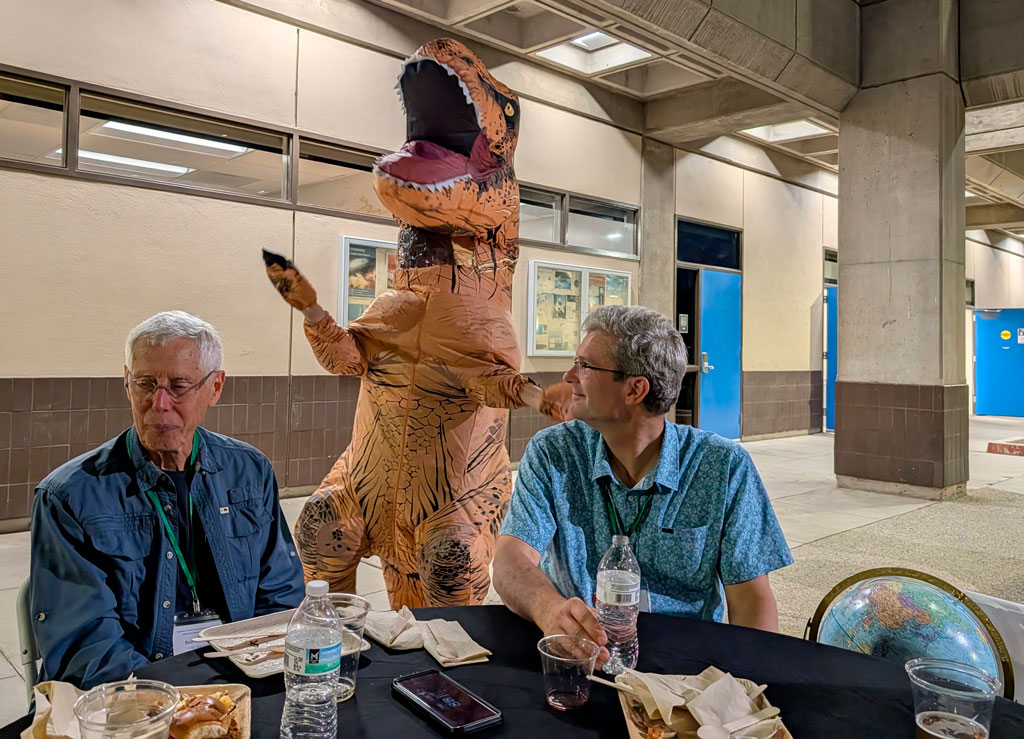
An person dressed in a dinosaur costume entertains attendees at the APCG regional division meeting
Dancing dinosaur at the Annual Meeting of the Association of Pacific Coast Geographers (APCG) in Santa Clarita, CA. Credit: Michael Pretes

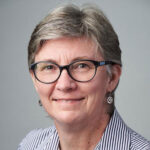
William Moseley

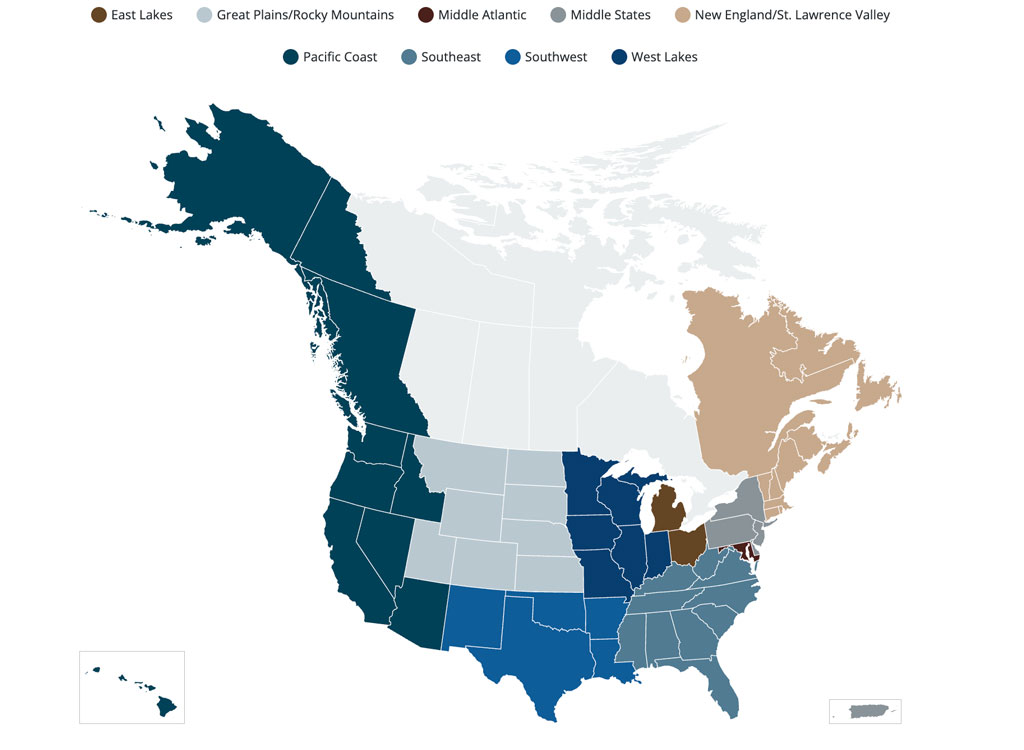
I grew up in the Chicago area, where we have an annual lakefront, summer music festival known as Lollapalooza, featuring an eclectic collection of genres and artists. This event is fun, experimental, inflected with regional traditions, and brimming with youthful, creative energy. More generically, lollapalooza refers to something extraordinary and a way I have come to think about our AAG regional meetings. This fall I had the pleasure of attending four AAG regional division meetings: Pacific Coast, Great Plains and Rocky Mountains, Southwest, and Middle States (see figure). These encounters have been tremendous opportunities for me to meet and learn from our members. Here I reflect on some broad themes across all of the meetings, as well as some key take home messages that I gleaned from each region.

Map showing color-coded shapes including states and provinces in AAG's nine Regional Divisions
AAG Regional Divisions


Cutting across all of the regions, I was deeply impressed by the presence, energy and insights of geography students, both graduate and undergraduate. If you are ever feeling down about the headwinds facing our discipline, just spend time with our students and you will come away feeling inspired and optimistic about the future. From their scholarly endeavors shared in talks and posters, to their competitive zeal at geography bowls, to their willingness to engage in hallway conversations, I was captivated.  I also have even greater appreciation for the contributions of international students to our discipline (even beyond what I have written about previously). Their presence was notable in all of the regional meetings and they help ensure that a broad range of life experiences are brought to bear on the emerging research produced by our discipline.

I also continue to be struck by the limited presence of R1 faculty at many regional meetings. Of course, there are notable exceptions to this broader trend and I also understand that this is a not a new phenomenon. I further understand some of the reasons for this (and I am also guilty of such transgressions). Many faculty are stretched in terms of time and/or resources to attend a second or third academic conference. As such, they prioritize a national meeting where the largest number of people in their subfield are sharing their latest research findings. What is lost is stronger bonds between different types of institutions in a region as well as an opportunity for undergraduate and master’s level students to potentially meet a future advisor.

Beyond these broader themes, I was really struck by the individual character of each region and some unique lessons I learned in each place. The meeting of the Association of Pacific Coast Geographers (APCG) took place at the College of the Canyons in Santa Clarita, CA. There our outdoor barbecue on the second evening was graced by the presence of a dancing dinosaur (see Figure 2) and later that night a person in a gorilla costume briefly entered the auditorium for the keynote lecture (attesting to the fun and quirky ambiance of APCG meetings). More seriously, I was really struck by role that community colleges play in this region as a critical pipeline for future geographers (and something the discipline could build on more broadly). Some of the fastest growing geography programs in the region, such as San Diego State University, source many of their majors from surrounding community colleges. The APCG meeting also took place on a community college campus, College of the Canyons.

An person dressed in a dinosaur costume entertains attendees at the APCG regional division meeting
Dancing dinosaur at the Annual Meeting of the Association of Pacific Coast Geographers (APCG) in Santa Clarita, CA. Credit: Michael Pretes


This year’s Great Plains Rocky Mountain (GPRM) regional meeting in Omaha, NE was a joint meeting with the National Council for Geographic Educations (NCGE), our sister organization that counts many high school geography teachers among its ranks. This innovative experiment of two meetings in the same place with some cross over events created a space for bridges to be built between the parallel universes of high school and college geographers. It allowed myself and two members of the AAG taskforce on geography undergraduate education to run a workshop on the high school-to-college geography pipeline for secondary school teachers and university instructors, to speak to a mixed audience at an evening banquet, and to have dinner with the leadership of the NCGE. I could see the NCGE meeting joining with other regions in the future and I believe we could do even more to bring college faculty and high school teachers together.

The meeting of the Southwest Division of the AAG (SWAAG) took place in Las Cruces, New Mexico and was hosted by New Mexico State University. In addition to a keynote address, I participated in several panel discussions, including one on academic freedom. There I learned of state government initiatives in Texas and Oklahoma to audit course syllabi and reading lists. I further came to understand that certain words and topics are being advised against in course titles, such as decolonizing, liberation and resistance. This situation is alarming to me both personally and professionally (e.g., I have publications using several of these ‘trigger’ words). More significantly, maintaining academic freedom is a core value of the AAG and something it fights for on the national level. Nonetheless, at this regional meeting, I was deeply impressed by the way faculty were sharing experiences and advice on how to navigate such challenging circumstances. It also served as a reminder that our local experiences of speech suppression, censorship or freedom can vary greatly (and we need to be sensitive to the fact that the actions and decisions of the AAG might play out differently across regional contexts).

Lastly, the Middle States Division of the AAG (MSAAG) met at Montclair State University in Montclair, NJ. There I was impressed by the presence of deeply engaged high school teachers and their students, many of whom presented research posters. The quality of their research was striking and I believe this is an innovation that could be experimented with in other regions. What could be a better recruitment tool than to have high school students attend research presentations by grad students, or to have a professor engage with a high schooler about their project and encourage them to think about a geography degree in college.

My journey across these events left me feeling inspired by the energy and insights of our students, encouraged by the experimentation in each division, and better in-touch with political currents and challenges. This is not to say the fall AAG regional meetings are flawless, some suffer from low attendance or limited organization, but I see these as vital encounters to be improved up, not dismissed or marginalized. Fortunately, the support of AAG staff for the regions has begun to bear fruit, building on the recommendations of an AAG task force report released on the topic some five years ago. Just like a summer music festival, these are fun spaces to experience the diversity, energy and creativity of our discipline.


Please note: The ideas expressed in the AAG President’s column are not necessarily the views of the AAG as a whole. This column is traditionally a space in which the president may talk about their views or focus during their tenure as president of AAG, or spotlight their areas of professional work. Please feel free to email the president directly at moseley@macalester.edu to enable a constructive discussion.


    Share

Academic Freedom and the Need for Geographers as Public Intellectuals

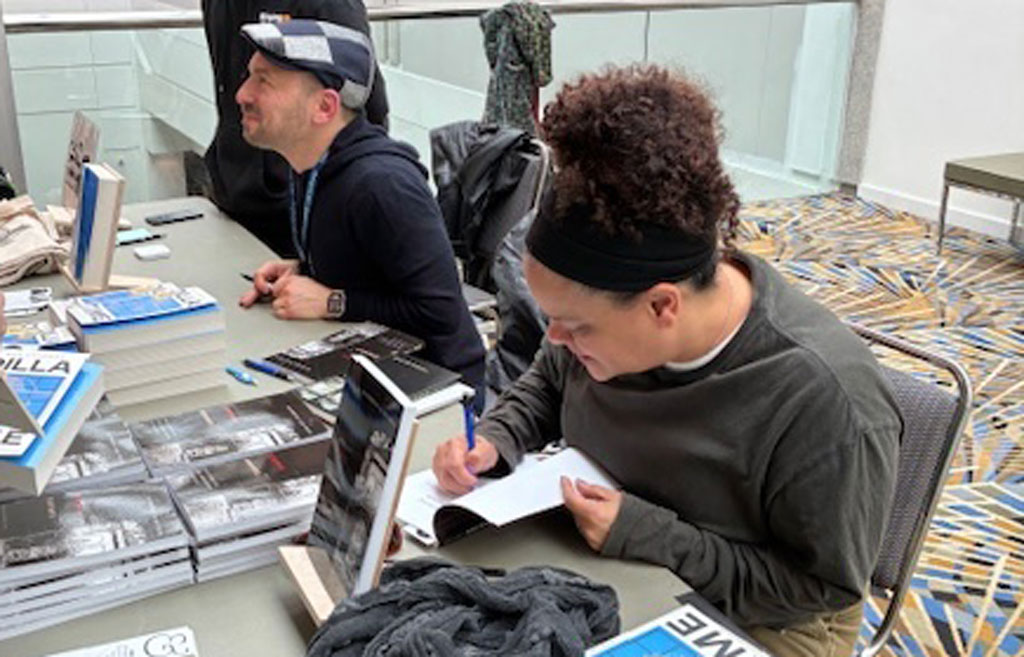
Geographer Katherine McKittrick and colleague Dan Charna participate in a joint book-signing at AAG 2025 in Detroit. Credit: Lisa Schamess, AAG

William Moseley

Free speech and academic freedom are increasingly under siege in the United States, with the scope and scale of speech repression nearly unprecedented. At the same time, the U.S. government is currently engaged in a vast array of domestic and foreign policy shifts, from changes in environmental regulations and naming conventions at home, to the closing of USAID operations and retreat from multilateralism abroad. Despite efforts to silence critics, these policy and program shifts deserve thoughtful public conversations that involve geographers. We need geographers as public intellectuals to continue to voice their perspective on the policies and programs of our government and others.

The tradition of the public intellectual (a form of public geography) may be contrasted with that of the ivory tower academic. Public intellectuals are scholars who take the time to address an important public debate or policy issue when they have relevant expertise and an informed perspective to offer. The public intellectual practice is more well developed in Europe, where academics regularly participate in policy discussions and are considered normal actors in public discourse. In fact, many European universities expect their faculty to comment on public issues and acknowledge this is in tenure and promotion criteria. In contrast, this practice is less well developed in the United States, with such engagement sometimes viewed as inappropriate. This distance between the American academy and public policy discussions has contributed to the ivory tower phenomenon, arguably making it more challenging for the U.S. public to feel connected to universities, their faculty and students.

To the extent that academics do participate in public policy discussions in the U.S., some disciplines tend to be over-represented, most notably economics and political science. That said, analysis that a student and I undertook over a decade ago showed that for a small discipline, geography was punching above its weight, outpacing allied disciplines such as anthropology, geology, and biology in terms of op-ed productivity per member. The geographic perspective is critical for adding to public policy discussions, be it in terms of nuance regarding spatial patterns, scale, coupled-human-environment systems or deep regional knowledge. As former AAG president Alec Murphy has argued: “our understanding of issues and problems will be impoverished if geographical perspectives are not part of the mix.”

The AAG considers the support of free speech and academic freedom to be core to its mission and has offered programming to this end. For example, in 2023, the AAG initiated the Elevate the Discipline cohort of 15 geographers to receive year-long support and training in techniques for public scholarship to inform public policy. In late October of this year, the AAG hosted a panel for department and program chairs seeking to support their faculty in terms of academic freedom. Furthermore, I am happy to report that we still have many geographers who continue to offer their perspectives on the issues of the day. Herewith three examples.

In early October, Christopher F. Meindl, associate professor of geography at the University of South Florida, published a commentary entitled “Florida’s 1,100 natural springs are under threat — a geographer explains how to restore them.” In this piece, Meindl drew on his own research as a human-environment geographer, and recent book on Florida springs, to provide context and recommendations for restoring these important natural assets.

Second, while we often think of public scholarship appearing in the form of commentaries, some geographers also write books that are more accessible to a public audience. A good example of this is Yolonda Youngs’ recent book, Framing Nature, about the social construction of nature in Grand Canyon National Park. Hearing Youngs present on her book at the recent meeting of the Association of Pacific Coast Geographers, I appreciated how she explained deliberately writing the book for a public audience, even tearing up portions of a previous draft and re-writing it in a way that would be more accessible.

Lastly, geographer and cartographer Margaret Wickens Pearce was recently recognized as a MacArthur Foundation Fellow (aka genius award) for her groundbreaking work “creating maps that foreground Indigenous Peoples’ understanding of land and place.” Her approach highlights another form of public scholarship, working respectfully with communities to bring their perspectives into conversation with broader publics. As a Potawatomi Nation tribal member, Pearce was well positioned to undertake this work.

Today, we need the geographer as public intellectual more than ever. Engaging in this manner requires a certain amount of backbone and privilege, the ability to write for broader publics, and good timing.

Writing for a general audience has always required some willingness to endure negative feedback. Now we have an added layer of hostility and professional risk to anything perceived as critical. In mid-September, the U.S. president argued that television coverage that is critical of him or his administration’s policies is illegal (a point that was unsubstantiated and challenged). Several academics, including geographers, have also lost their jobs or been put on administrative leave for comments they made on social media following Charlie Kirk’s murder. While the climate of fear these comments and actions have engendered is palpable, and some members of our community are in more precarious positions than others, now is not the time for those in privileged positions to be silent.

The unfortunate reality is that tenured and U.S.-born professors in blue states are often in less precarious positions than others. As such, at this time I would especially encourage those with privilege to contribute as public intellectuals where appropriate. When writing, it is always important to stick to positions and perspectives that are informed by one’s scholarship. Doing so makes one’s arguments more defensible.

Writing for broader publics is also quite different than writing for academic audiences. While we generally learn to write for academic audiences as graduate students, most of us are not taught to write for non-specialists. Writing for a general audience is a skill that needs to be developed. As mentioned previously, the AAG’s “Elevate the Discipline” program offered media and advocacy training to a group of geographers working on climate change and society. Some departments and faculty members have also been more proactive than others in mentoring and collaborating with students in this approach to writing. For example, former AAG president Derek Alderman, as well as Jordan Brasher, worked alongside Ph.D. candidate Seth Kannar, who was first author on a 2025 commentary for The Conversation entitled “From Greenland to Fort Bragg, America is caught in a name game where place names become political tools.” This was no doubt a valuable experience for an early career geographer, showing that it is possible to make connections between our research and current policy discussions.

Lastly, unlike most academic articles, the timing of many (but not all) commentaries is critical so they dovetail with the news cycle. This is challenging for many academics, as it means dropping what you are doing and writing something quickly so that it is relevant to a burning, public debate. Reporters may also call for background information or perspective on an issue, and one needs to set aside their current work to think through a thoughtful response. Even more challenging are live media interviews on radio or television. A good example of this is former AAG president Glen MacDonald who was interviewed widely by major news outlets, including on the nightly news in 2018 in L.A. about the Camp Fire ravaging the state at that time. This is hard but important work, and geographers almost always add critical depth and perspective to the conversation.

While academic freedom is under siege in the United States today, we now need geographers as public intellectuals more than ever. Fear is a powerful weapon and those in less precarious positions need to push back in support of a robust civil society and the power of the fourth and fifth estates. In so doing, geographers bring valuable perspectives to the debate, bridge the gap between academia and the public, and demonstrate the vitality and relevance of our discipline.


Please note: The ideas expressed in the AAG President’s column are not necessarily the views of the AAG as a whole. This column is traditionally a space in which the president may talk about their views or focus during their tenure as president of AAG, or spotlight their areas of professional work. Please feel free to email the president directly at moseley@macalester.edu to enable a constructive discussion.

    Share

Maximizing your Donation to the AAG

Hand placing blocks atop one another to form a stairway. Credit: imagine buddy vsLbaIdhwaU, unsplash
Credit: imagine buddy vsLbaIdhwaU, unsplash

By Antoinette WinklerPrins, AAG Council Treasurer


Photo of Antoinette WinklerPrinsThis is the sixth of a short series of perspectives by 2024-2026 Council Treasurer Antoinette WinklerPrins — a series designed to help illuminate some of the financial challenges a professional organization such as the AAG faces. In this column, she offers perspectives on the financial aspects of running the AAG Annual Meeting. Read previous columns.

Donating to organizations you care about can happen at any time of the year; however, the later fall is the time of year that most people donate to causes they believe in, in part due to the U.S. tax code that permits tax deductions for charitable giving. Since we are heading into the latter part of the year, I thought I’d focus my column this month on some best practices about making donations, whether large or small.

Donations help organizations do their best work

Donations really matter to nonprofit member organizations such as the AAG. The funds they bring in permit a range of activities and awards that simply would not be possible without this money. No matter the size of the donation, the gift is appreciated. Regular donations, whether monthly or annually, are especially helpful, because these let an organization such as the AAG plan, but one-off gifts are of course always welcome. What matters most is giving consistently over time, at a level that suits your budget while helping to support your values.

Do some research

It is best that donating to any cause is not done in a vacuum, so I recommend you consider looking up the organization you are considering donating to in a nonprofit evaluator such as Charity Navigator. You can search these sites for the organization of your choice, by name of their “Employer Identification Number” (EIN) – an IRS assigned number (for the record, the AAG’s EIN is 53-0207414), or by name. That means, though, that you need to know the legal name of the organization. In the case of the AAG, the legal name is the Association of American Geographers, as that is the name used when we were founded. About a decade ago, AAG members voted to change the name of the organization to the American Association of Geographers, and that is our “d/b/a” (“doing business as”) name.

For a large gift, get guidance from the organization

If considering a large donation, especially one with a possible endowment for a specific award or purpose, please reach out to AAG staff ahead of time to talk through the details. It is very important that you limit the restrictions/conditions/purpose of the donation — it is better to assign your donation to general use (“where the need is greatest”). The limitations you impose today may make sense for a specific purpose at this moment, but those limitations may not make sense decades into the future. Many nonprofit organizations are hamstrung with restricted funds, sometimes decades old, that they cannot access or use for awards or services they are undertaking for their membership today. A recent case in Orlando, Florida involved a behest intended only to purchase art for the permanent collection, which the institution has gone to court to release, citing the fact that it has no funds for purchasing art for a permanent collection, but does have significant operating needs. Restricted funds are appealing to donors, who understandably want to leave a specific legacy, but can ultimately constrain organizations from fulfilling their missions. Please reach out to the AAG office to learn more about setting up a major gift or bequest. [insert mailto link to donate@aag.org]

There are many ways to give

Donate when, in whatever way you can, and at the level that you can afford. You can donate via Charity Navigator, or you can donate directly via the AAG website. More people are moving towards the use of “Donor Advised Funds” (DAFs) which are a mechanism set up via financial firms such as Fidelity, Schwab, Vanguard, etc., to manage cash and other assets that are earmarked to be donated to a qualified charity over time. These accounts are popular because they offer tax advantages and flexibility in asset contributions, and these are an easy way to support desired charitable causes through a single account. If you use a DAF, you will also need to know the correct legal name of the organization you wish to donate to, or its EIN.

We appreciate your support

Thank you! By donating you support the organizations you care about and affirm their purpose and work.

Please feel free to reach out to me or Gary Langham, AAG’s Executive Director with questions, comments, or concerns. Send your comments and questions with the subject line “Treasurer’s Corner” to helloword@aag.org.

    Share

Bryon Middlekauff

Professor Emeritus of Geography, Dr. Bryon Middlekauff, passed away on September 3, 2025. He was a faculty member at Plymouth State University (previously Plymouth State College), NH from 1988 to 2016. Bryon’s life was marked by a deep passion for teaching geography and mentoring both students and faculty.

Bryon’s bachelor’s, master’s, and doctoral degrees—all in in geography—were from the University of Maryland, Appalachian State University, and Michigan State University, respectively, and his dissertation focused on Appalachian paleoclimatology. He returned to this topic in a subsequent published article, and his scholarship also examined fieldwork practice.

Bryon joined the social science department at Plymouth State University after positions at Western Carolina University and Youngstown State University. In 2001 he taught at the University of Wolverhampton in the U.K. while on sabbatical and in 2004 expanded his teaching to encompass the environmental sciences, receiving a new appointment in 2008 as professor of geography and environmental planning.

“One of Bryon’s many strengths was engaging students both in the classroom and beyond,” says former colleague Dr. Patrick May, a longtime colleague. “His lectures were very dynamic, and he got a lot of students really excited about geomorphology, ‘the geography of geology’—understanding the processes that shaped the environment around them.”

Bryon felt strongly about the importance of field studies and led college trips around New England, eastern Canada, and to the American Southwest, as well as travel courses to Paris, the United Kingdom, and Tanzania. He also ran workshops for the New Hampshire Geographic Alliance, leading rigorous day trips throughout the state to help educate educators about the natural environment.

Bryon was instrumental in advancing Plymouth State’s geography program both nationally and regionally. He was heavily involved in the American Association of Geographers (AAG) and attended annual meetings where he presented papers and poster sessions. He was also a member of the New England St. Lawrence Valley Geographical Society (NESTVAL) and served as their Regional Councilor to the AAG for two terms. Bryon received NESTVAL’s Distinguished Service Award in 2013 which included a citation for a Lifetime Contribution to NESTVAL and Geography, one of only three people to receive this distinction. In 1993, Bryon was instrumental in establishing a NESTVAL competition to create a team to send to the first AAG World Geography Bowl, held at the AAG’s annual meeting in Atlanta. Bryon mentored the PSU team members, preparing them for the competition. Under his guidance, Plymouth State’s Geo Bowl team won the New England-St. Lawrence Valley Geographical Society competition several times and students participated in the national competition at the annual AAG conference. “The bowl was a way to excite students,” says May, “and Bryon assured that they took advantage of the full conference experience, including sessions and field trips.”

“He was instrumental in building the PSU Geography Club and remained in touch with many former students,” continues May. “Students will remember him to be very demanding and that they were lucky to have him because he shared so much enthusiasm for his field.”  For his students, Bryon opened a door into the world of becoming a professional geographer. He encouraged many of his students to attend graduate school and accompanied some on visits to the schools.

Dr. Jennifer Collins, now at University South Florida, started her career at Plymouth State College, in the year 2000, where she notes that Bryon had such an impact on both her personally and her career, recognizing that she was a Geographer and suggested she become a member and come to the AAG annual meeting.  Prior to that Jennifer was only an American Meteorological Society member. Jennifer notes that being a member of the AAG has been instrumental to her career and she owes that to Bryon who also helped her network at the AAG conference. “He was a friend, colleague, and mentor, all wrapped up in one.”, she said.

Bryon enjoyed many activities from fly-fishing to skiing. Most of all he enjoyed spending time with his wife, children, and grandchildren. Bryon is survived by his wife and former Plymouth State Director of Advancement Julie DeGalan ’91MBA. Together they co-wrote the book, Great Jobs for Environmental Studies Majors, and were members of Holmes Heritage Society, which honors those who have included Plymouth State in their financial and estate plans. He is also survived by his daughters, Lari (Pat) Hayhoe and Amy (Dan) Jones; grandchildren, Nick (Chelsea), Beau and Olivia Hayhoe, Billy (Olivia) and Tyler Townes, Hayden Jones, and Chelsea Roberts; and great-grandchildren, Charlie, George, Margaret and Penny Hayhoe, Phoebe Townes, and Fiona and Josie Roberts. He is survived by his sister, Kirklyn Kline; nephews, Kevin (Cindy) and Kirk Eikelberger; and grand-nephew, Riley Eikelberger.

Additional information is available in an online obituary.


Written by Pat May, Jennifer Collins, and Julie DeGalan

    Share

Maps as ‘Materials that Carry Memory’

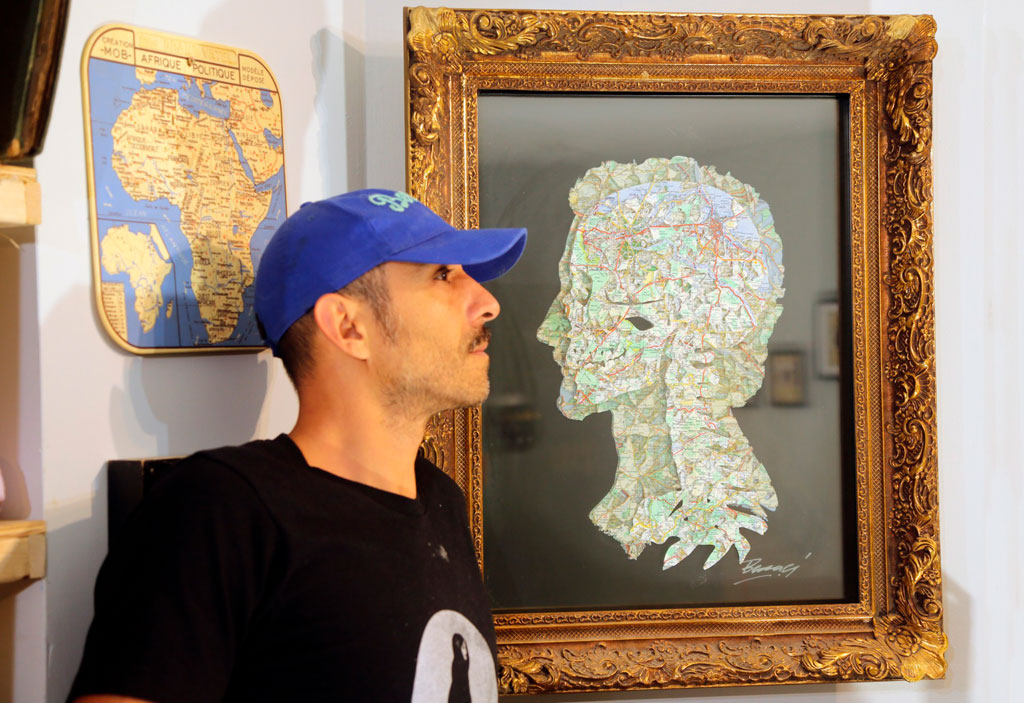
Joanathan Bessaci poses showing his profile facing his artistic rendering of a profile. Courtesy: Joanathan Bessaci
Joanathan Bessaci with his art. Courtesy: Joanathan Bessaci


When artist Joanathan Besacci was growing up in Lyon, France, he was surrounded by the vast variety of the world, past and present. His maternal grandmother emigrated to France from Vietnam, and his paternal grandfather was from Kabylia (Northern Algeria). As a child, Bessaci spent hours watching his artist father work and exploring the flea market in Lyon, France, where his grandparents had a stall.

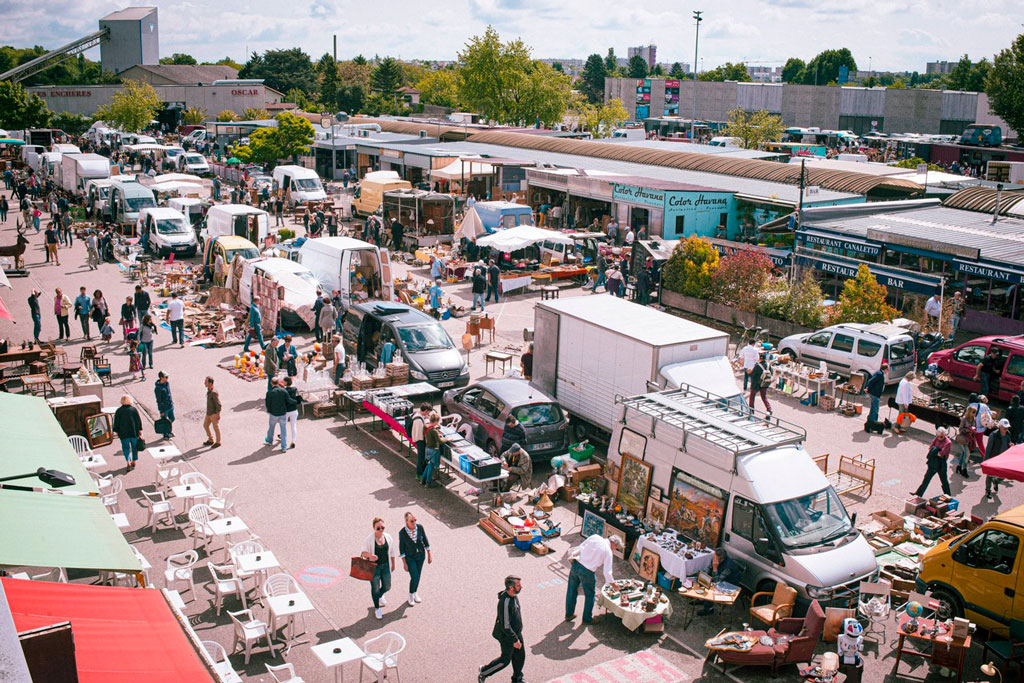
The flea market was a magical place, he says, “a doorway to other worlds.” His memories of it go back to 1986, when it was still called La Fecine, in Villeurbanne, set up on a street closed on Sunday mornings. In the 1990s, it moved to Vaise, and by the end of the decade, it found its current home: Les Puces du Canal.

Aerial view of a flea market in Lyon. Courtesy: Joanathan Bessaci
Flea market in Lyon. Courtesy: Joanathan Bessaci


“I went there as a child, still half-asleep but filled with excitement,” Bessaci recalls. “My grandfather arrived as early as 4 a.m.; I followed my father around after 5 a.m. You had to get up early to hope for a good spot. Sometimes sales began right in the trucks, under the flickering light of flashlights, before the sun had even risen.”

It was here that he first discovered the maps, books, and old photographs that now form the essential materials of his art. “They carried stories, past lives, fragments of humanity which, though I didn’t realize it yet, would become the very substance of my work.”

The flea market also influenced Bessaci’s fascination with the riddles presented by old objects and artifacts, “guessing what an object had been used for, what life it had lived, who had touched it before me. In some maps, I find traces of passage—a handwriting, a stain, a tear. These marks of time move me deeply. They make each piece unique, irreplaceable, like an imprint left by history. It is in this intimate relationship with objects, memory, and enigma that my artistic practice took root.”

Bessaci started as a graffiti artist, in his teens. His work evolved over time into the elaborate paper cut-out sculptures, using maps and photographs, that he makes today. At art school, he says, “I discovered the relationship to time. Coming from graffiti, where everything must be done in urgency, I was stunned to learn that a single project could take 80 to 100 hours of work. At first, it was a trial, almost a violence against my rhythm. But little by little, this temporality became an obviousness, a new kind of breathing.”

Now based in the United States, Bessaci continues to develop his practice and present his work in exhibitions and art fairs. He draws inspiration from antique Michelin road maps, primarily from the 1920s to the 1970s. He combines them with photographs and vintage textiles to create works that blend the markers of human individuality with topographies and routes. “My process is instinctive, almost archaeological,” he told Bold Journey magazine in 2025. “I collect, cut, layer, stitch. Each gesture is an attempt to surface memory, to retell what we think we already know.”

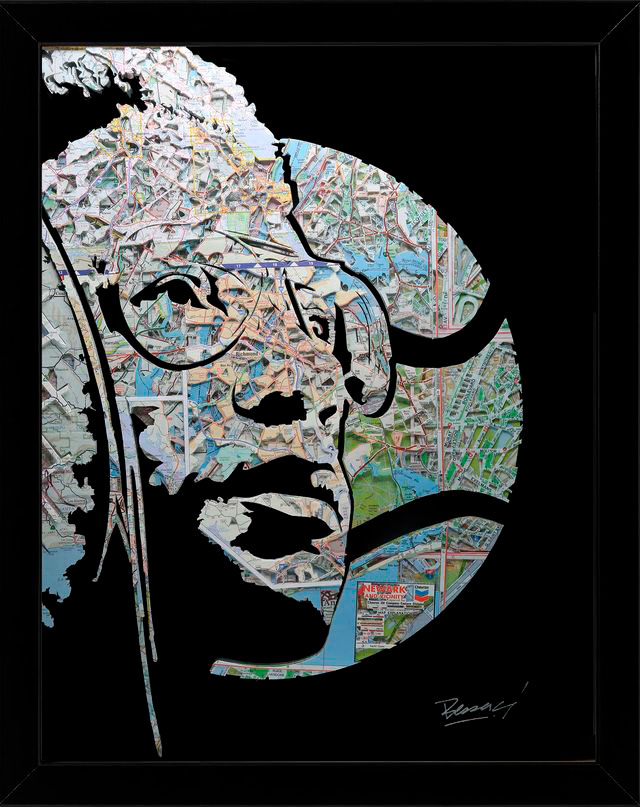
Artist's rendition of a portrait of Arthur Ashe. Courtesy: Joanathan Bessaci
Portrait of Arthur Ashe. Courtesy: Joanathan Bessaci


The maps Bessaci includes in his art create what he calls “layered stories.” The roads and rivers become metaphors for “chosen or imposed paths, uprooted or rediscovered roots.” The cuts, overlaps, and fragmentation he imposes are ways to question his subjects, and to challenge the idea of the subject as fixed. He seeks to portray “something in motion, composed of ruptures and recompositions.”

Bessaci had been primarily a painter for more than 15 years when he shifted his practice these sculptural works on paper. The change coincided with the birth of his daughter, and an extended period of time in a secluded studio in a very small town in France. On a visit to his grandfather at around this time, Bessaci received a box of old items, including old road maps. “It was as if the flea market had returned to my hands, charged with memory and secrets to be revealed.”

At first, Bessaci was reluctant to make any changes to the maps: “The day I dared to cut directly into a map, I felt an inner shift,” he says. “The maps immediately spoke to me: they were at once adventure, travel, and a profound resonance with my family, my memories of the flea market, and this need to explore the traces left by time.”

As Bessaci experimented and refined his technique, he began layering the maps, up to five layers at a time, to explore depth. The more he worked with old maps, the more he saw correspondences with people, and with memory and life itself: “The roads and rivers reminded me of veins, a living cartography of the body and of memory.”

Bessaci describes much of his raised work as bas-relief. He frames his cutouts between layers of glass and road maps, comparing them to mille-feuilles, a many-layered dessert. The layers create depth, “almost a vibration.”

Today, Bessaci owns nearly 5,000 maps, mainly Michelin, dating from 1890 to 1990.

“Their texture, their faded colors, their smell of ink and aged paper fascinate me,” Bessaci says. “A map is a displacement, an adventure, but also an anchor. It helps us know where we are, and I like to believe it also helps us know who we are.”

Bessaci is now working on a new series he calls Roots and Paths, using the kinds of photographs that turn up at flea markets, secondhand stores, and estate sales, devoid of their original context and family connections. Bessaci cuts the people from these images, leaving only their silhouettes, emphasizing their gestures. His goal is to neutralize “any visible markers of race, gender, and age, allowing the viewer to project their own memories, their own emotional history.” In place of the removed material, he fills in map fragments—roads, rivers, mountain ridges—as “layers of inner geography.”

He can foresee many years—perhaps a lifetime—of working with maps as an artist. “Maps, more than any other medium, have something magical: I don’t feel like I chose them—they found me,” he says. “They reflect my identity, but also the memory of my family, of places, of stories that shaped me. What I love is that they never fully reveal themselves. They hold secrets, hidden stories. I like to slip clues into my works, and sometimes, years later, a collector tells me: ‘I’ve just discovered this detail.’ At that moment, I feel that the map keeps speaking, long after me, as if it carried its own narrative.”

    Share

How Does AAG Screen its Investments?

Jumble of white numbers on a black background
Credit: Jon Tyson, unsplash

By Antoinette WinklerPrins, AAG Council Treasurer


Photo of Antoinette WinklerPrinsThis is the fifth of a short series of perspectives by 2024-2026 Council Treasurer Antoinette WinklerPrins — a series designed to help illuminate some of the financial challenges a professional organization such as the AAG faces. In this column, she offers perspectives on the financial aspects of running the AAG Annual Meeting. Read previous columns.

Many nonprofit organizations care about where and how they invest the funds they have available for investment. Most organizations work with financial advisors and use mutual funds as a way of obtaining strong and consistent returns on their investment decisions. While it is a core obligation of the AAG to invest in such a way that it can support its programming and awards, nonprofit organizations also usually have strong missions, and usually seek to align their investment portfolio with their mission. One method of doing so is to use investment “screens,” a device that permits the investor to identify stocks that align with their core mission, and more importantly, to exclude investments that do not.

To manage its modest endowment, the AAG uses exclusively socially responsible screens known as ESG filters. ESG stands for “Environment, Social and Governance” and means that these screens select for investments in corporations that demonstrate concern about environmental issues, social justice, and ethical and transparent governance, and excludes investments in the fossil fuel industry, arms manufacturing, or occupied territories. This way the AAG investment portfolio aligns with AAG’s mission. The AAG has been 100% ESG invested since June 2022, working with its bank, Truist, through its Envestment PMC investment platform. This platform uses ESG screens from Morningstar Sustainalytics, which has conducted monitoring and research into ESG investing for more than 30 years. Clients such as the AAG select screens they wish to have applied to screen investments.

Truist offers a variety of different ESG screens, from which a maximum of three can be selected at any given time. In coordination with the AAG Finance Committee, the AAG Executive Director selected screens that screen out investments in fossil fuels and seek out the best-in-class choices for the environment. AAG also has chosen as its third screen, one that focuses on social justice, including attention to human rights and occupied territories around the world.  We feel that these screens reflect the values of the organization, and all of AAG’s investments are now automatically pushed through these screens to generate a portfolio to ensure consistency with these values.

The AAG is constantly seeking to balance its needs for investment success while underscoring the desire to invest in ways that match its members’ values. By selecting screens that square with our mission, we can assure our members that we lead with our values in our investment portfolio. As part of the work of the Finance Committee, which I chair as AAG Treasurer, there is periodic review of the selected screens to ensure that they are functioning as intended.

Please feel free to reach out to me or Gary Langham, AAG’s Executive Director with questions, comments, or concerns. Send your comments and questions with the subject line “Treasurer’s Corner” to helloword@aag.org.

    Share

Strategies to Protect Yourself Online in the Current Climate

Several faculty convene around a laptop screen

A Guide from the AAUP and Faculty First Responders

In today’s unpredictable digital landscape, the stakes of online engagement are higher than ever—especially for educators and scholars. The AAUP and Faculty First Responders have collaborated to create a timely and practical guide offering essential strategies for protecting yourself online. Whether you’re facing harassment, employment repercussions, or simply want to be proactive about digital safety, this resource provides actionable tips and support avenues tailored to the academic community.

From social media best practices to digital security measures and member benefits like trauma counseling and legal services, this guide is helpful for anyone working in higher education.

Learn more
    Share

Helping Students Bridge the Gap from Student to GIS Professional: How Esri YPN Supports Educators

Photo of Golden Bridge in Vietnam with sculpture of two hands supporting the bridge. Credit: Khải Đồng
Golden Bridge, Hòa Ninh, Hòa Vang, Da Nang, Vietnam. Credit: Khải Đồng

By Rosemary Boone, Senior Industry Marketing Manager – Education, Esri

Graduating from a higher education program is an exciting milestone, but it can also feel overwhelming. Students often ask, “What comes next?”

Esri Young Professionals Network (YPN) helps answer that question by bridging the critical gap between being a student and becoming a working GIS professional. The network also plays a vital role in supporting educators, who are deeply invested in their students’ success, both academically and professionally.

What is Esri YPN?

The Esri Young Professionals Network (YPN) is a global community and network of over 20,000 members worldwide that anyone can join at no cost. Esri YPN is designed to support its members to thrive at any stage of their GIS journey. Members consist of college students, recent graduates, emerging and seasoned GIS professionals, truly making it “a network for all” no matter your age or experience.

Built on three core pillars: Learn, Connect, and Lead, our mission is to provide members of Esri YPN with opportunities and resources to strengthen their skills, expand their networks, and step confidently into leadership roles within the geospatial industry.

Through networking events, professional development opportunities, and its Ambassador Program, Esri YPN empowers students to grow beyond the classroom and begin building the foundation of their careers while still in school.

Why It Matters to Students

By joining YPN, students gain:

  • A support system beyond graduation – Access to peers and mentors through the YPN Chapters, conference activities, LinkedIn group, and YPN Networking Space.
  • A platform to build their professional brand – Opportunities to showcase their work, present ideas, and raise their visibility through the YPN Ambassador Program.
  • Professional development resources – Engage in professional development through attending our webinars, conference sessions, chapter meetups; and by subscribing to the YPN blog on Esri Community.

For students, Esri YPN is more than a network, it’s a launchpad for their future in GIS.

Why Educators Should Take an Interest

By getting students involved in Esri YPN, educators can:

  • Strengthen their program’s value by demonstrating clear pathways to professional growth.
  • Help students gain confidence in their ability to enter a competitive job market.
  • Ensure graduates remain connected to a community that will continue supporting their careers long after they leave campus.

While curriculum and experiential learning opportunities build technical knowledge, students also need guidance on how to bridge the gap from student to professional. By encouraging participation, educators can equip their students with tools and connections that extend well beyond the classroom.

How to Get Started and Involved

Getting students connected with Esri YPN is simple—and the benefits begin immediately.

  1. Encourage students to join online – Direct them to esri.com/ypn, where they can join at no cost and gain instant access to resources, events, and community spaces.
  2. Reinforce their ability to participate tand network. Upon joining, members receive a confirmation email linking to their member badge and digital swag they can share with their networks.
  3. Suggest they join a local YPN chapter. Esri YPN has ten chapters across the United States each hosting local in-person networking meetups. Join a local chapter and search for upcoming chapter events.
  4. Encourage them to become a YPN Ambassador. Students can take steps to become a YPN Ambassador to make them stand out to their peers and recruiters. Upon completion, YPN Ambassadors receive a badge and certificate.
  5. Remind them to browse and subscribe to the YPN blog. The YPN Blog on Esri Community is rich in GIS career content brushing on topics like building a GIS portfolio, overcoming imposter syndrome, and GIS career pathway highlights.
  6. Keep encouraging them to start networking online. Join the YPN LinkedIn group and YPN Networking space on Esri Community to begin meeting peers and mentors in the geospatial field from across the globe.

Students who start engaging with YPN early will be equipped with a better sense of a professional identity, supportive network, and the confidence to step boldly into the next stage of their GIS journey.


Rosemary Boone is a Senior Industry Marketing Manager for Esri, concentrating on executing marketing strategies for K-12 schools and higher education institutions. She holds a master’s degree in education technology with an emphasis on multimedia. Prior to her career in marketing, she taught elementary school and taught overseas. In her free time, she likes to listen to music, exercise, and spend time with her two Dachshunds.

Featured Articles is a special section of the AAG Newsletter where AAG sponsors highlight recent programs and activities of significance to geographers and members of the AAG. To sponsor the AAG and submit an article, please contact meeting@AAG.org. 


    Share