New Books: August 2019

Every month the AAG compiles a list of newly-published books in geography and related areas. Some are selected for review in the AAG Review of Books.

Publishers are welcome to send new volumes to the Editor-in-Chief (Kent Mathewson, Editor-in-Chief, AAG Review of BooksDepartment of Geography and Anthropology, Louisiana State University, Baton Rouge, LA 70803).

Anyone interested in reviewing these or other titles should also contact the Editor-in-Chief.

PLEASE NOTE: Due to current public health policies which have prompted the closing of most offices, we are unable to access incoming books at this time. We are working on a solution during this transition and will continue our new books processing as soon as we can. In the meantime, please feel free to peruse previous books from our archived lists.

August 2019

Climate Machines, Fascist Drives, and Truth by William E. Connolly (Duke University Press 2019)

Culinary Nationalism in Asia by Michelle T. King, ed. (Bloomsbury Academic 2019)

Everyday Equalities: Making Multiculutres in Settler Colonial Cities by Ruth Fincher, Kurt Iveson, Helga Leitner, and Valerie Preston (University of Minnesota Press 2019)

Focus on Geodatabases: In ArcGIS Pro by David W. Allen (Esri Press 2019)

Food Values in Europe by Valeria Siniscalchi and Krista Harper, eds. (Bloomsbury Academic 2019)

GIS for Science: Applying Mapping and Spatial Analytics by Dawn J. Wright and Christian Harder, eds. (Esri Press 2019)

Globalizing the Caribbean: Political Economy, Social Change, and the Transnational Capitalist Classby Jeb Sprague (Temple University Press 2019)

Gods of the Upper Air: How a Circle of Renegade Anthropologists Reinvented Race, Sex, and Gender in the Twentieth Century by Charles King (Doubleday 2019)

Green Infrastructure: Map and Plan the Natural World with GIS by Karen E.Firehock, R. Andrew Walker (Esri Press 2019)

Human Geopolitics: States, Emigrants, and the Rise of Diaspora Institutionsby Alan Gamlen (Oxford University Press 2019)

Hydropolitics: The Itaipu Dam, Sovereignty, and the Engineering of Modern South Americaby Christine Folch (Princeton University Press 2019)

Imperial Metropolis: Los Angeles, Mexico, and the Borderlands of American Empire, 1865–1941 by Jessica M. Kim (University of North Carolina Press 2019)

Meat Planet: Artificial Flesh and the Future of Foodby Benjamin Aldes Wurgaft (University of California Press 2019)

Other Globes: Past and Peripheral Imaginations of Globalizationby Simon Ferdinand, Irene Villaescusa-Illán, and Esther Peeren, eds. (Palgrave Macmillan 2019)

Savage Ecology: War and Geopolitics at the End of the World by Jairus Victor Grove (Duke University Press 2019)

Spatial Histories of Radical Geography: North America and Beyondby Trevor J. Barnes and Eric Sheppard, eds. (Wiley-Blackwell 2019)

Taste, Politics, and Identities in Mexican Foodby Steffan Igor Ayora-Diaz, ed. (Bloomsbury Academic 2019)

The Age of Disruption: Technology and Madness in Computational Capitalism by Bernard Stiegler (Polity 2019)

The Battles of Germantown: Effective Public History in Americaby David W. Young (Temple University Press 2019)

The Book of Lost Saints by Daniel Jose Older (Imprint 2019)

The Emergence of National Food: The Dynamics of Food and Nationalismby Atsuko Ichijo, Venetia Johannes, Ronald Ranta, eds. (Bloomsbury Academic 2019)

The Poetics of Natural History by Christoph Irmscher (Rutgers University Press 2019)

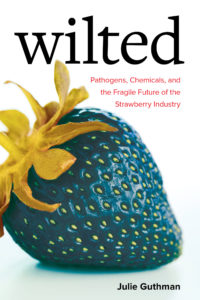
Wilted: Pathogens, Chemicals, and the Fragile Future of the Strawberry Industry by Julie Guthman (University of California Press 2019)

Women and GIS: Mapping Their Storiesby Esri Press (Esri Press 2019)

    Share

Who’s sorting who? Or the explosion of metrics and how we can take back control

For those of us still working with paper student evaluations, we receive our spring semester results during the summer. It is a time of mixed emotions for many of us. While I heard one lucky young professor describe opening up her student evaluations as tantamount to Christmas, I am probably not alone in likening it to Halloween, where the tricks far outnumber the treats! Too hard, too boring, does not provide enough guidelines or makeup opportunities, not what I expected—the list goes on and on for the types of complaints students can and will make anonymously. As professors and grad students, we have seen them all.

I am at a point where these student evaluations mean little to my career. However there are plenty of instructors and junior professors—particularly those in precarious circumstances—who have to worry about each little bump and dip in their average. Colleges and universities, particularly those more oriented to teaching, rely on student evaluations to make tenure decisions. And less than super-positive evaluations can be used to bludgeon contingent faculty.

Student evaluations may have some place in assessment. There is no other way for students to provide anonymous feedback about a course or an instructor. However, the problems with this sort of measurement are legion. For one thing, research has repeatedly demonstrated that many students evaluate female instructors more harshly than male instructors (see the accompanying figure). Even the words that students use are different. Racial bias is also present, as is bias against foreign-born instructors. Nervous professors have figured out that the best way to receive more positive evaluations is to grade more generously. High grades are clearly correlated with good evaluations, though long-term studies have shown that students in courses given lower ratings learned as much if not more than students in courses with higher ratings. I remember an instructor who always plied students with pizza and cookies during evaluation day. Turns out, he was helping boost his evaluations significantly.

Summertime is also when many of us who work as journal editors receive an evaluation of another sort: the yearly impact factor. For those of you who have spent the last couple of decades in monastic solitude, a journal’s impact factor measures the mean number of citations each article garners over the course of a year. So an impact factor of 1 indicates that the average article during the measurement years attracted an average of one citation per year. The calculations can be done in several ways, and while it is not possible to bring pizza and cookies to all potential citers, there are still means of manipulating the process. For instance, some very unscrupulous journal editors will insist that accepted publications include recent citations to their very own journal.

As with student evaluations, journal impact factors have come to rise up and conquer all of academe. Originally meant for life science and medical journals, the impact factor now is used in all fields. The quality of one’s scholarship is also conveniently “measured” by the impact factors of journals that people list on their CVs. The numbers are easily grasped and can be a proxy for a journal’s research and scholarly reputation. I myself watched in dismay as journals I had long held up as models, both in and out of geography, were dismissed by their relatively low impact factors while some niche journals rapidly scrambled their way up the scholarly ladder. Even more dismaying is how these impact factors are used to box in scholars—rapidly quantifying and sorting what should be careful decisions. Taken to its extreme was a recent ad for a postdoctoral position in process engineering (gratefully, not in Geography), where applicants were required to have published in a journal with an impact factor above 10 or they “will get a rejection.” It is not as if impact factors suddenly became calculable; it is just that they became terribly urgent.

Journal impact factors have multiple biases. They favor journals composed largely of review essays or “debates.” They clearly slight some fields. For instance, only two journals in all of History rise above a journal impact factor of 1 and then just barely. Impact factors also screen out many varieties of scholarship, notably books. They can be “gamed” by editorial policy. And as I have found myself, a journal’s impact factor may ride on just one or two well-cited articles. Many new and innovative journals may not have an impact factor at all. To me the oddest thing of all is just how significant journal impact factors have become in an age where scarcely anybody physically handles an entire printed journal. Most of us download relevant articles, no matter what the journal. The well-known deficiencies of journal impact factors have sparked a strong backlash, culminating in the San Francisco Declaration on Research Assessment, which recommends that universities, potential funders, and publishers “not use journal-based metrics, such as Journal Impact Factors, as a surrogate measure of the quality of individual research articles, to assess an individual scientist’s contributions, or in hiring, promotion, or funding decisions.”

What is it about these measures? We have rankings of departments, of universities, and even of individuals. The United Kingdom has long undergone yearly research assessment exercises, and the state of Texas embarked several years ago on a program to evaluate the value added for every faculty member. Is this a needed corrective to professorial deadwood? Or is it yet another cudgel with which to intimidate and mold the professoriate?

Previous AAG presidents have weighed in on the explosion of metrics, while other academics on social media lament “the mushrooming of metrics and their influence on student, academic, and other university professionals’ lives.” My own view is that most metrics can be useful—after all, I employ them myself in research and evaluation. But they are inherently obtuse and contain all manner of biases. Because they are perceived as objective, they end up hiding their role in slighting certain groups and particular practices. Because they themselves become the desired objective, they lead to a warped process. Much like a company that only wants to maximize its quarterly earnings, too much reliance on metrics can lead to timid teaching and overly opportunistic scholarship. Exclusive use of these metrics cannot possibly account for all people do to forward the enterprise—the unplanned service, the approachable demeanor, the helpful hearing out of a student’s or colleague’s research ideas, the emotional labor—in other words, the soul of many a department and the types of things that should be valued more but are so egregiously overlooked.

So what can we do? For starters, it could help to work within your departments and institutions to ensure that teaching evaluations are used only within the appropriate safeguards, if they are used at all, with due respect to their inherent and discriminatory distortions. Beyond this, you can urge institutions and publishers you work with to join signatories to the San Francisco Declaration of Research Assessment as a way to scale back the reliance on misleading measures of research quality.

Professors like to say that we are not producing widgets, and I would agree. Many bemoan the corporatization of the academy. I agree with this as well. Metrics can be a form of empowerment as they provide alternative means of assessment outside the purely subjective. But they reduce a great deal of complexity to one simple and misleading number. Keeping our academic autonomy and retaining the purpose and dignity of our profession means putting these metrics in their place.

— Dave Kaplan
AAG President

DOI: 10.14433/2017.0057

* Gender Disparities in Student Evaluation Scores. Figure from Lisa Martin.

    Share

New Books: July 2019

Every month the AAG compiles a list of newly-published books in geography and related areas. Some are selected for review in the AAG Review of Books.

Publishers are welcome to send new volumes to the Editor-in-Chief (Kent Mathewson, Editor-in-Chief, AAG Review of BooksDepartment of Geography and Anthropology, Louisiana State University, Baton Rouge, LA 70803).

Anyone interested in reviewing these or other titles should also contact the Editor-in-Chief.

PLEASE NOTE: Due to current public health policies which have prompted the closing of most offices, we are unable to access incoming books at this time. We are working on a solution during this transition and will continue our new books processing as soon as we can. In the meantime, please feel free to peruse previous books from our archived lists.

July 2019

All Things Harmless, Useful, and Ornamental: Environmental Transformation through Species Acclimatization, from Colonial Australia to the World by Pete Minard (University of North Carolina Press 2019)

Anthropes and the Material by Penny Harvey, Christian Krohn-Hansen and Knut G. Nustad (Duke University Press 2019)

Bordering by Nira Yuval-Davis, Georgie Wemyss, Kathryn Cassidy (Polity 2019)

Break Up the Anthropocene by Steve Mentz (University of Minnesota Press 2019)

The Browning of the New South by Jennifer A. Jones (University of Chicago Press 2019)

Climate and Society: Transforming the Future by Robin Leichenko and Karen O’Brien (Polity 2019)

From Fascism to Populism in History by Federico Finchelstein (University of California Press 2019)

The Greening of Saint Lucia: Economic Development and Environmental Change in the Eastern Caribbean by Bradley B. Walters (University of West Indies Press 2019)

Of Land, Bones and Money: Towards a South African Ecopoetics by Emily McGiffin (University of Virginia Press 2019)

Lineages of Modernity: A History of Humanity from the Stone Age to Homo Americanus by Emmanuel Todd (Polity 2019)

Love, Anarchy, & Emma Goldman by Candace Falk (Rutgers University Press 2019)

The Meanings of Landscape: Essays on Place, Space, Environment and Justice by Kenneth R. Olwig (Routledge 2019)

Mourning El Dorado: Literature and Extractivism in the Contemporary American Tropics
Literature and Extractivism in the Contemporary American Tropics
by Charlotte Rogers (University of Virginia Press 2019)

National Races: Transnational Power Struggles in the Sciences and Politics of Human Diversity, 1840-1945 by Richard McMahon (ed.) (University of Nebraska Press 2019)

North Carolina Ghost Lights and Legends by Charles F. Gritzner (Blair 2019)

In the Ruins of Neoliberalism: The Rise of Antidemocratic Politics in the West by Wendy Brown (Columbia University Press 2019)

Upheaval: Turning Points for Nations in Crisis by Jared Diamond (Little, Brown and Company 2019)

For the War Yet to Come: Planning Beirut Frontiers by Hiba Bou Akar (Stanford University Press 2018)

    Share

Michael Bradford

It is with sadness that the AAG notes the passing of Professor Michael Bradford on July 12, 2019 at the age of 74 years old. He is survived by his wife of 50 years, Sheila Kaplan, of Rockford, Illinois.

Born in Surrey, Michael became interested in geography throughout grammar school, an interest which continued while he attended Cambridge University in the 1960s. Michael enjoyed a long career at Manchester University where he moved in 1971 following post doctoral studies at the University of Wisconsin, Madison. At Manchester his career led him to become a professor, Undergraduate Dean from 1994 -1996, and Head of Department from 1996 – 2000. He then served as Pro-Vice Chancellor from 2001-2005 and then as Associate Vice President in 2006.

Professor Bradford was deeply committed to geography education and served as president of the Geographical Association from 1999-2000. His love of teaching also shows through his receipt of awards such as a Distinguished Achievement Medal – Teacher of the Year 2005, a National Teaching Fellowship in 2006 from the Higher Education Teaching Council for England, and the Taylor and Francis Award for Excellence in Teaching and Learning in Geography and Higher Education from the Royal Geographical Society in 2008.

An avid environmentalist, Michael’s research was concerned with urban policy, inequality, and social justice. Children’s geography and places of play held a particular interest for Michael. He also collaborated with lifelong friend Ashley Kent on two books: Human Geographies: Theories and their Applications (1977) and Understanding Human Geography: People and their Changing Environments (1993).

A celebration of life for Michael will be held from 1:30 – 4:30 PM on Saturday, 19th October 2019 at University Place, 126 Oxford Road, Manchester M13 9PL. Please contact Sheila for more information.

    Share

Apply for Nomination Process for the 2019 United Nations Climate Change Conference

The American Association of Geographers has been granted Observer Organization status to the UN Framework Convention on Climate Change.  With this formal designation, the AAG is permitted to submit to the UNFCCC Secretariat its nominations for representatives to attend the United Nations Climate Change Conference (COP-25) that will take place from  December 2 – 13, 2019 in Santiago, Chile.

Prior to midnight Friday, August 23, 2019, persons interested in being nominated by the AAG to attend must be a current member of the AAG and provide the following information (in the below exact format, please) via email to cmannozzi [at] aag [dot] org along with a copy of these instructions:

Note: All information must be as it appears in the official photo identification which the participant will present at the registration desk.

·      Salutation (Mr. Ms. Dr. etc.):

·      Given / First name:

·      Family name:

·      Functional title:

·      Department:

·      Organization:

·      Date of birth (DD/MM/YYYY):

·      Country which issued Passport

·      Identification document number (Passport number):

·      E-mail address:

·      Telephone where you can be reached for questions about your application

·      Dates within the range of December 03 – 14 for which you will be actually attending the COP sessions

·      Email address

·      A very brief paragraph describing your interest and purpose for attending the COP sessions

·      A statement agreeing with the terms of these instructions for nomination

Identification number, date of birth and name are for identification verification only and will not be made available to anyone outside of the AAG or the UNFCCC. Date of birth will also be used to signal nomination of minors.

AAG nominees will be provided with a copy of nomination documentation for eventual presentation at the Conference registration desk in Santiago, Chile.  The UN will provide a quota to the AAG which may restrict the number of participants or the dates for which nominees may be approved for attendance.  This quota will be provided to the AAG after September 9, 2019.

All nominees must have their own source of financial support to attend and make all necessary travel, insurance, visa, and logistical arrangements for themselves; the AAG is not providing any funds or other support for travel or participation.  Nominees also must release the AAG from any and all financial or legal liability during their period of participation and refrain from making proclamations, claims, announcements, or other statements as being the official position of the association or its membership.  Attendees must also adhere to the codes of conduct and follow the guidelines for participation as outlined by the United Nations  (see https://unfccc.int/about-us/code-of-conduct-for-unfccc-conferences-meetings-and-events).

Upon return, attendees will submit a brief trip report to the AAG Executive Director, Doug Richardson, drichardson [at] aag [dot] org

More information on the event is at:https://www.cop25.cl/web/en/

A map of the Parque Bicentenario Cerrillos is available at https://www.cop25.cl/web/en/venue/

Information on accommodations for COP-25 is available at:https://mundotour.cl/cop25/

    Share

Newsletter – July 2019

PRESIDENT’S COLUMN

Should we be worried? Or how to maintain and expand the number of geographers in our schools

By David Kaplan

Dave Kaplan“As geographers, we all know the value of geography. Right? It is a field that provides a unique perspective, an appreciation for particularity, an opportunity to synthesize. But as much as we affirm geography’s value to each other, we also need to look at how geography is perceived outside of our community.”

Continue Reading.

ANNUAL MEETING

Prepare to register for #aagDENVER

fee-schedule-300x105-1The 2020 AAG Annual Meeting takes place from April 6-10, 2020. Similar to the 2019 AAG Annual Meeting, registration rates will be based on the way in which attendees choose to participate in the conference. Please check your email in the coming days for an announcement regarding the 2020 Annual Meeting registration opening dates. And remember, register early for the best rates!

View the registration options.

Denver, Colorado to host 2020 AAG Annual Meeting

Mark your calendar for the AAG Annual Meeting in the Mile High City April 6-10, 2020. Registration and the call for papers for #aagDENVER will be announced this summer. We look forward to seeing you in the Rocky Mountains!

PUBLICATIONS

NEW Annals Issue Alert:
Articles with topics ranging from elephant-based labor and energy poverty, airspace to architecture

Annals-generic-225x300-1The most recent issue of Annals of the American Association of Geographers has been published online (Volume 109, Issue 4, July 2019) with 16 new research articles on current geographic research. Topics in this issue include tornadoesU.S. water insecuritysocial vulnerability modelsspaces of parentingemotional geopoliticshistorical geographies of the future, and effects of extreme weather on urban environments. Locational areas of interest include New York City neighborhoodsGhana’s Offin RiverMyanmarNorth Dakota, and Chile. Authors are from a variety of research institutions including Dartmouth CollegeUniversity of ManchesterPunjab University, and University of Connecticut.

All AAG members have full online access to all issues of the Annals through the Members Only page. In every issue, the editors choose one article to make freely available. In this issue you can read Plumbing Poverty: Mapping Hot Spots of Racial and Geographic Inequality in U.S. Household Water Insecurity by Shiloh Deitz and Katie Meeha for free for the next two months.

Questions about the Annals? Contact annals [at] aag [dot] org.

Journals-newsletter-100In addition to the most recently published journal, read the latest issue of the other AAG journals online:

• Annals of the American Association of Geographers
• The Professional Geographer
• GeoHumanities
• The AAG Review of Books

New Books in Geography — April and May Available

New-books1-1-2Read the latest titles in geography and related disciplines as found on the New Books in Geography list. Some of these books are chosen to be reviewed for the AAG Review of Books. If you are interested in reviewing any of the books found on the New Books list, please email AAG Review of Books editor Kent Mathewson at kentm [at] lsu [dot] edu. Please take note, the new books list will now be available exclusively on the AAG’s website.

Browse the April list or the May list of new books.

New issue of African Geographical Review
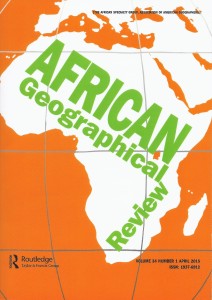
African-Geographical-Review-cvr-212x300-1The latest issue of the journal of the Africa Specialty Group of the AAG, the African Geographical Review, has recently been published. Volume 38, Issue 2 (June 2019) is available online for subscribers and members of the Africa Specialty Group. Each issue, the Editors choose one article to make freely available. In this issue you can read People, place, and animals: using disemplacement to identify invisible losses of conservation near Limpopo National Park, by Michael Strong for free.

See more about the journal.

ASSOCIATION NEWS

‘The Professional Geographer’ Welcomes New Editor

Chang3_web-200x300-1Heejun Chang has assumed the role of editor for The Professional Geographer as of July 1, 2019. A professor and outgoing chair of the department of geography at Portland State University, Heejun seeks to use his experience in interdisciplinary publishing to encourage the submission of fresh ideas and diverse dialogues to the journal. The AAG thanks outgoing editor Barney Warf for his service to the journal over the past eight and a half years.

Learn more about Heejun.

AAG Welcomes 2019 Summer Interns

Summer-2019-Interns-300x169-1

The AAG is excited to welcome three new interns coming aboard our staff for the Summer of 2019! Joining us this summer are Angela Yang, an incoming fourth year student at the University of Toronto majoring in Environmental Science and International Development Studies; Eni Awowale, a rising senior at the University of Maryland, College Park who is majoring in GIS with a concentration in Remote Sensing and also a minor in Astronomy; and Garrett Mogge who is a junior at the University of Maryland, College Park and is double majoring in geographical sciences and broadcast journalism with a minor in Spanish.

Meet the summer interns.

AAG Staff Participate in AP Human Geography Reading

ATTACHMENT DETAILS Alec-Murphy-AP-Reading-300x169-1

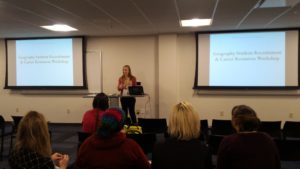
Approximately 950 college professors and AP Human Geography high school teachers gathered June 1 to June 9 in Cincinnati, Ohio to evaluate essay exams from over 233,000 high school students. In addition to scoring exams, professional development activities were held such as a keynote from AAG Past President Alec Murphy and a presentation on AAG college and career resources from AAG social media and engagement coordinator Emily Fekete.

Read more about the AP Human Geography event.

POLICY UPDATE

House Approves Additional $10M for Geospatial Mapping to Address Water Quality, Hazard Resilience

US_CapitolThe AAG recently signed onto a statement in conjunction with MAPPS, NSGIC, and ACEC regarding an increase in FY20 Department of Interior funds to support enhanced 3D Elevation Program (3DEP) coverage of the Great Lakes region. This continued mapping work, managed by the U.S. Geological Service (USGS), will provide essential data for better understanding of the region’s most pressing areas of environmental concern. Since this statement’s release, the FY20 funding bill was passed on June 25th by the full House of Representatives as part of a five-bill appropriations package.

Read the full statement.

RESOURCES AND OPPORTUNITIES

Doug D. Nebert National Spatial Data Infrastructure Champion of the Year Award Seeks Nominations

FGDC-logoNominations are being accepted for the Doug D. Nebert National Spatial Data Infrastructure (NSDI) Champion of the Year Award. The award will recognize an individual or a team representing Federal, State, Tribal, regional, and (or) local government, academia, or non­profit and professional organization that has developed an outstanding, innovative, and operational tool, application, or service capability used by multiple organizations that furthers the vision of the NSDI. The deadline to submit nominations is August 15.

More information about the award.

Internships at the AAG

The AAG seeks interns on a year-round basis for the spring, summer, and fall semesters. Interns participate in most AAG programs and projects such as education, outreach, research, website, publications, or the Annual Meeting. A monthly stipend of $500 is provided and interns are expected to make their own housing and related logistical arrangements. Enrollment in a Geography or closely related program is preferred but not a prerequisite for these opportunities. Applicants should forward a resume, brief writing sample, and three references to Candida Mannozzi.

More information about internships.

GEOGRAPHERS IN THE NEWS
EVENTS CALENDAR
    Share

‘The Professional Geographer’ Welcomes New Editor

Heejun Chang. Photo credit: PSU-ISS.

This summer, the AAG journal The Professional Geographer will see a change in editorial leadership. Barney Warf has completed two terms as editor of The Professional Geographer and is succeeded by Heejun Chang, who assumed editorship of the journal on July 1, 2019.

Heejun Chang is a professor and outgoing chair of the department of geography at Portland State University. His publication record is extensive having published 131 peer-reviewed articles on topics related to hydrology, water resources, human modification of the environment, and environmental change, his areas of expertise. Heejun has experience with publication in a wide variety of journals, both disciplinary and interdisciplinary, and is regarded as a high quality peer reviewer, an accolade for which he received an excellent reviewer award from Journal of Hydrology. He has also served as guest editor for special issues of Climate and International Journal of Geo-Information.

Heejun’s vision for his term as editor of The Professional Geographer is one of diversity, inclusion, and innovation. He sees the journal as a premier location for bridging traditional divides among human, physical, and GIS scholarship and hopes to foster a balance in submissions from the various facets of the geographic discipline. Heejun believes that encouraging more cross-generational scholarship as well as manuscripts co-authored with practitioners will help to cultivate fresh ideas within the discipline and that The Professional Geographer can play a key role in circulating these debates. Lastly, as the AAG has become more international in its membership, Heejun welcomes scholarship from the global geography community including academics from the global south or whose primary language is not English.

The AAG would like to express their heartfelt thanks to Barney Warf for his hard work over the last eight and a half years. Under Barney’s editorship scholarship published in The Professional Geographer maintained high quality and rigor while engaging academics and practitioners worldwide.

The Professional Geographer, published four times a year, features a range in content and approach from rigorously analytic to broadly philosophical or prescriptive. The journal provides a forum for new ideas and alternative viewpoints.

    Share

Carlos Saavedra

Education: Masters Certificate in IT Project Management (Georgetown University), B.S. in Computer Science (University of Sacred Heart, Puerto Rico)

Who is your current employer and what is your job title?
I retired from the federal government about four years ago. Right now, I am a volunteer, and I help nonprofit organizations with their IT and GIS needs. I am helping the Boy Scouts of America at the National and council level, making maps. I am also in a group called Dallas GiveCamp that brings nonprofits together for one weekend to help them create programs and software that they can use, because most of the time they don’t have the resources to do that. I bring in my GIS skills and provide them with the ability to make maps.

For example, I have helped the Turtle Conservancy organization in Florida. They have several turtles around the world with a tracking device on them.  I have taken the coordinates from the satellite and then put them in a map, so the public can see where those turtles have been throughout their life. Last year, I worked with “Water for Life” in Haiti. I kept track of where they had distributed water filters to families, and taught them how to use the software so they can continue with their mission. The other effort that I’m very involved in today is making maps, working with FEMA in regards to Hurricane Maria disaster relief in Puerto Rico and Puerto Rico Rises.

What knowledge have you found, in your past education and training, to be important substantively?
Before doing GIS, I used to work as a civilian for the Army in San Francisco as a Computer Programmer Analyst. After that, I worked for the United States Postal Service, in the Data Center in San Mateo as a Computer Systems Analyst/Programmer Sr. My last job was with the Social Security Administration in the Regional Office in Dallas, where I was an IT Project Manager Director, IT Supervisor, Program/Management Analyst, and IT Specialist. In that job during my last 6 or 7 years, I became one of the GIS experts in the agency as I was one of the first analysts to use this technology in the SSA at a national level. Because of my skillset, I was able to pivot from one area to another very easily.

What allowed you to pivot, in terms of some of your coursework or training beyond GIS?
Before I started GIS, I was an IT professional. I started teaching myself GIS, and I went to a formal training and that is when the floodgates opened.

What drew you to GIS?
At the time, I was working for the Social Security Administration. I was looking for other ways to visualize data and I came across this technology. I did my first map, showed it to my managers, and they were impressed. From that point on, I started investing more and more time testing mapping tools. SSA gave me the tools, training and flexibility to work with this technology.

The first “a-ha” moment for me was after I took my first GIS class. I went to San Diego and I remember the teacher was teaching the class and I kept asking questions. I started making a list of all the things that I could accomplish with GIS to help my agency. Right after I finished the class, Hurricane Katrina happened. I did a lot of maps for SSA that had to do with Katrina. The other moment came when I was asked to realign ZIP codes assigned to Social Security offices in each region. That’s when the floodgates pretty much opened.

It was very challenging being among the first in the agency working with this new technology, but I had a great Regional Commissioner and Director who supported me. I got to go to a lot of high-level meetings and conferences and gave presentations to SSA executives and commissioners about GIS. Basically, I was teaching them what GIS was and how it applies to the SSA, using real-life examples.

Could you provide some of these specific examples?
In the Social Security Administration, we have what is called “e-services”, a way for the public to engage with the agency via the internet. I created a map in order to market this initiative to the public. I used demographic and SSA data to data mine age groups, gender, economical status, race, and location. So, in a concrete way we were working on a project that was for the beneficiaries, the people who were receiving money from us to use SSA checking accounts, instead of us mailing that check to them. I came up with a formula that if you make over $55,000 dollars, it’s very likely that you have a checking account. We targeted the ZIP codes to market the e-services into specific areas, instead of the whole nation.

Another example involves natural disasters. The SSA is focused on people who receive financial assistance when disaster happens. So, we have to know when the disaster is coming. With a hurricane, for example, you kind of know when it’s coming and then prepare for the event. In fact, in Texas, a lot of times we delivered the checks ahead of time so the people could have the checks before the hurricane. This is a massive undertaking. In other instances, we have to find ways to distribute the money to these people. During Katrina, we created this kind of debit card. We would put money on the debit cards and distribute them. We also did this in the West Texas explosion, in the Oklahoma tornadoes, in the hurricanes in Texas, Louisiana, Florida, Puerto Rico, the east coast, and also the tsunami in American Samoa. When the tsunami happened there, I was able to connect with people in American Samoa, and use a map to understand the damages that we were dealing with. Our executives and commissioners in Baltimore were able to see those things and take appropriate action.

Could you talk a little bit about, on a personal level, how GIS connects with your aspirations in your volunteer activities and your sense of civic engagement or responsibility?
Technology impacts us in a positive way and touches almost everything that we are involved in, be it in our lives or in society. You can find a GIS application that can help practically anything. You don’t need to be a GIS or IT/technical person to use this technology, because Esri has made it so easy that you don’t need to have those skills. You can create stuff that maybe a few years back was something that you needed to have an IT person and all of these skills to do. You can visualize data in a map, and I have noticed that when you do that it improves the way you make your decisions.

Now that I am retired, the most fulfilling thing is that I can share how GIS works and educate non-profit organizations on how this tool can change the way they do business. I also tell them that you don’t need a lot of money, you can do it for free. Specifically, in Puerto Rico with the hurricanes, you can still use GIS even when you don’t have an internet connection, and when you get to a place where they have an internet connection, you can sync with the world.

    Share

New Books: June 2019

Every month the AAG compiles a list of newly-published books in geography and related areas. Some are selected for review in the AAG Review of Books.

Publishers are welcome to send new volumes to the Editor-in-Chief (Kent Mathewson, Editor-in-Chief, AAG Review of BooksDepartment of Geography and Anthropology, Louisiana State University, Baton Rouge, LA 70803).

Anyone interested in reviewing these or other titles should also contact the Editor-in-Chief.

PLEASE NOTE: Due to current public health policies which have prompted the closing of most offices, we are unable to access incoming books at this time. We are working on a solution during this transition and will continue our new books processing as soon as we can. In the meantime, please feel free to peruse previous books from our archived lists.

June 2019

Appalachian Reckoning: A Region Responds to Hillbilly Elegy by Anthony Harkins and Meredith McCarroll, eds. (West Virginia University Press 2019)

Between Earth and Empire: From the Necrocene to the Beloved Community by John P. Clark (PM Press 2019)

Cartography: The Ideal and Its History by Matthew H. Edney (University of Chicago Press 2019)

Coal by Mark C. Thurber (Polity Books 2019)

In Defense of Farmers: The Future of Agriculture in the Shadow of Corporate Power by Jane W. Gibson and Sara E. Alexander (eds.) (University of Nebraska Press 2019)

Dream City: Creation, Destruction, and Reinvention in Downtown Detroit by Conrad Kickert (The MIT Press 2019)

Ecologists and Environmental Politics: A History of Contemporary Ecology by Stephen Bocking (West Virginia University Press 2019)

Edges of the State by John Protevi (University of Minnesota Press 2019)

Food by Fabio Parasecoli (The MIT Press 2019)

Giants of the Monsoon Forest: Living and Working with Elephants by Jacob Shell (W. W. Norton & Company, Inc. 2019)

Ibn Khaldun: An Intellectual Biography by Robert Irwin (Princeton University Press 2019)

Imagining Seattle: Social Values in Urban Governance by Serin D. Houston (University of Nebraska Press 2019)

Immigration and the Remaking of Black America by Tod G. Hamilton (Russell Sage Foundation 2019)

Indigenous Struggles for Autonomy: The Caribbean Coast of Nicaragua by Luciano Baracco, ed. (Lexington Books 2019)

The Interior Borderlands: Regional Identity in the Midwest and Great Plains by Jon K. Lauck, ed. (The Center for Western Studies (Augustana University 2019)

Intertwined Histories: Plants in Their Social Contexts by Jim Ellis (ed.) (University of Calgary Press 2019)

Marked, Unmarked, Remembered: A Geography of American Memory by Andrew Lichtenstein (West Virginia University Press 2019)

Mega Cities Mega Challenge: Informal Dynamics of Global Change: Insights from Dhaka, Bangladesh and Pearl River Delta, China by Frauke Kraas, Kirsten Hackenbroch, Harald Sterly, Jost Heintzenberg, Peter Herrle, Volker Kreibich, eds. (Borntraeger Science Publishers 2019)

More than Rural: Textures of Thailand’s Agrarian Transformation by Jonathan Rigg (University of Hawai’i Press 2019)

Outward and Upward Mobilities: International Students in Canada, Their Families, and Structuring Institutions by Ann H. Kim and Min-Jung Kwak, eds. (University of Toronto Press 2019)

The Politics of Lists: Bureaucracy and Genocide under the Khmer Rouge by James A. Tyner (West Virginia University Press 2019)

Power-Lined: Electricity, Landscape, and the American Mind by Daniel L. Wuebben (University of Nebraska Press 2019)

Saints, Statues, and Stories: A Folklorist Looks at the Religious Art of Sonora by James S. Griffith (University of Arizona Press 2020)

Science Be Dammed: How Ignoring Inconvenient Science Drained the Colorado River by Eric Kuhn and John Fleck (University of Arizona Press 2019)

The Science of Breaking Bad by Dave Trumbore and Donna J. Nelson (The MIT Press 2019)

Spiral to the Stars: Mvskoke Tools of Futurity by Laura Harjo (University of Arizona Press 2019)

Street Fights in Copenhagen: Bicycle and Car Politics in a Green Mobility City by Jason Henderson and Natalie Marie Gulsrud (Routledge 2019)

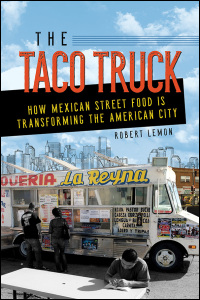
The Taco Truck: How Mexican Street Food Is Transforming the American City by Robert Lemon (University of Illinois Press 2019)

Tambora and the Year without a Summer: How a Volcano Plunged the World into Crisis by Wolfgang Behringer (Polity 2019)

    Share

Newsletter – June 2019

PRESIDENT’S COLUMN

Should we be worried? Or how to maintain and expand the number of geographers in our schools

By David Kaplan

Dave Kaplan“As geographers, we all know the value of geography. Right? It is a field that provides a unique perspective, an appreciation for particularity, an opportunity to synthesize. But as much as we affirm geography’s value to each other, we also need to look at how geography is perceived outside of our community.”

Continue Reading.

ANNUAL MEETING

Prepare to register for #aagDENVER

fee-schedule-300x105-1The 2020 AAG Annual Meeting takes place from April 6-10, 2020. Similar to the 2019 AAG Annual Meeting, registration rates will be based on the way in which attendees choose to participate in the conference. Please check your email in the coming days for an announcement regarding the 2020 Annual Meeting registration opening dates. And remember, register early for the best rates!

View the registration options.

Denver, Colorado to host 2020 AAG Annual Meeting

Mark your calendar for the AAG Annual Meeting in the Mile High City April 6-10, 2020. Registration and the call for papers for #aagDENVER will be announced this summer. We look forward to seeing you in the Rocky Mountains!

PUBLICATIONS

NEW Annals Issue Alert:
Articles with topics ranging from elephant-based labor and energy poverty, airspace to architecture

Annals-generic-225x300-1The most recent issue of Annals of the American Association of Geographers has been published online (Volume 109, Issue 4, July 2019) with 16 new research articles on current geographic research. Topics in this issue include tornadoesU.S. water insecuritysocial vulnerability modelsspaces of parentingemotional geopoliticshistorical geographies of the future, and effects of extreme weather on urban environments. Locational areas of interest include New York City neighborhoodsGhana’s Offin RiverMyanmarNorth Dakota, and Chile. Authors are from a variety of research institutions including Dartmouth CollegeUniversity of ManchesterPunjab University, and University of Connecticut.

All AAG members have full online access to all issues of the Annals through the Members Only page. In every issue, the editors choose one article to make freely available. In this issue you can read Plumbing Poverty: Mapping Hot Spots of Racial and Geographic Inequality in U.S. Household Water Insecurity by Shiloh Deitz and Katie Meeha for free for the next two months.

Questions about the Annals? Contact annals [at] aag [dot] org.

Journals-newsletter-100In addition to the most recently published journal, read the latest issue of the other AAG journals online:

• Annals of the American Association of Geographers
• The Professional Geographer
• GeoHumanities
• The AAG Review of Books

New Books in Geography — April and May Available

New-books1-1-2Read the latest titles in geography and related disciplines as found on the New Books in Geography list. Some of these books are chosen to be reviewed for the AAG Review of Books. If you are interested in reviewing any of the books found on the New Books list, please email AAG Review of Books editor Kent Mathewson at kentm [at] lsu [dot] edu. Please take note, the new books list will now be available exclusively on the AAG’s website.

Browse the April list or the May list of new books.

New issue of African Geographical Review

African-Geographical-Review-cvr-212x300-1The latest issue of the journal of the Africa Specialty Group of the AAG, the African Geographical Review, has recently been published. Volume 38, Issue 2 (June 2019) is available online for subscribers and members of the Africa Specialty Group. Each issue, the Editors choose one article to make freely available. In this issue you can read People, place, and animals: using disemplacement to identify invisible losses of conservation near Limpopo National Park, by Michael Strong for free.

See more about the journal.

ASSOCIATION NEWS

‘The Professional Geographer’ Welcomes New Editor

Chang3_web-200x300-1Heejun Chang has assumed the role of editor for The Professional Geographer as of July 1, 2019. A professor and outgoing chair of the department of geography at Portland State University, Heejun seeks to use his experience in interdisciplinary publishing to encourage the submission of fresh ideas and diverse dialogues to the journal. The AAG thanks outgoing editor Barney Warf for his service to the journal over the past eight and a half years.

Learn more about Heejun.

AAG Welcomes 2019 Summer Interns

Summer-2019-Interns-300x169-1

The AAG is excited to welcome three new interns coming aboard our staff for the Summer of 2019! Joining us this summer are Angela Yang, an incoming fourth year student at the University of Toronto majoring in Environmental Science and International Development Studies; Eni Awowale, a rising senior at the University of Maryland, College Park who is majoring in GIS with a concentration in Remote Sensing and also a minor in Astronomy; and Garrett Mogge who is a junior at the University of Maryland, College Park and is double majoring in geographical sciences and broadcast journalism with a minor in Spanish.

Meet the summer interns.

AAG Staff Participate in AP Human Geography Reading

ATTACHMENT DETAILS Alec-Murphy-AP-Reading-300x169-1

Approximately 950 college professors and AP Human Geography high school teachers gathered June 1 to June 9 in Cincinnati, Ohio to evaluate essay exams from over 233,000 high school students. In addition to scoring exams, professional development activities were held such as a keynote from AAG Past President Alec Murphy and a presentation on AAG college and career resources from AAG social media and engagement coordinator Emily Fekete.

Read more about the AP Human Geography event.

POLICY UPDATE

House Approves Additional $10M for Geospatial Mapping to Address Water Quality, Hazard Resilience

US_CapitolThe AAG recently signed onto a statement in conjunction with MAPPS, NSGIC, and ACEC regarding an increase in FY20 Department of Interior funds to support enhanced 3D Elevation Program (3DEP) coverage of the Great Lakes region. This continued mapping work, managed by the U.S. Geological Service (USGS), will provide essential data for better understanding of the region’s most pressing areas of environmental concern. Since this statement’s release, the FY20 funding bill was passed on June 25th by the full House of Representatives as part of a five-bill appropriations package.

Read the full statement.

RESOURCES AND OPPORTUNITIES

Doug D. Nebert National Spatial Data Infrastructure Champion of the Year Award Seeks Nominations

FGDC-logoNominations are being accepted for the Doug D. Nebert National Spatial Data Infrastructure (NSDI) Champion of the Year Award. The award will recognize an individual or a team representing Federal, State, Tribal, regional, and (or) local government, academia, or non­profit and professional organization that has developed an outstanding, innovative, and operational tool, application, or service capability used by multiple organizations that furthers the vision of the NSDI. The deadline to submit nominations is August 15.

More information about the award.

Internships at the AAG

The AAG seeks interns on a year-round basis for the spring, summer, and fall semesters. Interns participate in most AAG programs and projects such as education, outreach, research, website, publications, or the Annual Meeting. A monthly stipend of $500 is provided and interns are expected to make their own housing and related logistical arrangements. Enrollment in a Geography or closely related program is preferred but not a prerequisite for these opportunities. Applicants should forward a resume, brief writing sample, and three references to Candida Mannozzi.

More information about internships.

GEOGRAPHERS IN THE NEWS
EVENTS CALENDAR
    Share