Richard R. Randall

Dick Randall, geographer, cartographer, and former executive secretary of the US Board on Geographic Names, passed away on March 14, 2015, at the age of 89.

Richard Rainier Randall was born on July 21, 1925, in Toledo, Ohio, into a family of surveyors and cartographers. His middle name came from his relative Admiral Peter Rainier, after whom Mount Rainier was named. Several decades later Richard found himself on the map too.

His father, Robert H. Randall Sr., initially worked as a surveyor with the US Geological Survey in Ohio. Then in 1917 he founded a geodetic and topographic surveying company and his contracts resulted in the first large-scale topographic maps of about 35 cities in the US that were to prove invaluable for local city-planning programs.

In 1936, Robert moved his family to Washington, DC, and joined the US National Resources Board as an adviser in natural resources and cartography. He was then appointed as Coordinator of Maps with the Bureau of the Budget, responsible for liaising with different federal agencies to coordinate cartographic programs and reduce the duplication of map and chart production. He was also instrumental in creating the American Congress of Surveying and Mapping in 1941, a national body for professional surveyors and mappers, and was its first president.

Robert’s career had a significant impact on his three sons. The eldest, Robert H. Randall Jr., received a degree in civil engineering and became an ensign with the US Coast and Geodetic Survey. He served on ships surveying US coastal and undersea areas to produce or revise maritime charts. He later joined the US Navy Hydrographic Office. The middle son, William E. Randall, also studied civil engineering then worked with the US Coast and Geodetic Survey from 1943 to 1974. He spent many years on survey ships in the Atlantic, Pacific and Caribbean, as well as doing aerial photogrammetric mapping in Alaska. The youngest son, Richard R. Randall, was to follow in a similar vein.

During the summer of 1943, 18-year old Richard was employed by the Alaska Branch of the US Geological Survey in Washington. Its mission was to work with aerial photographs and stereoscopic instruments to plot principal points as the basis for detailed topographic maps.

This was followed by a stint in the US Army, serving with the 94th Infantry Division in Europe during the Second World War. He was awarded the Combat Infantryman badge, the Bronze Star, and four Battle Stars.

After the war, Randall entered George Washington University and followed in his brothers’ footsteps to study civil engineering, but soon changed his major to geography. He received his bachelor’s degree in 1948 and master’s degree in 1949. After working for a year as a geographer with the Army Map Service, he entered Clark University Graduate School of Geography. His period of studies included a Fulbright Scholarship to Austria (1953-54) which shaped his doctoral thesis on The Political Geography of the Klagenfurt Plebiscite Area.

After gaining his PhD in 1955, Randall worked with the Central Intelligence Agency for the next six years, first specializing in editorial work in its Geography Division and later developing studies of Eastern European countries from a geographical perspective.

In 1961 he became the Washington representative for publishers Rand McNally and Company. He was responsible for collecting maps and related geographical data from federal and foreign sources to support the company’s extensive program of producing maps, atlases, globes, textbooks and other products.

One of Rand McNally’s flagship products was the Cosmopolitan World Atlas. In 1969 Randall developed the first series of maps showing the world’s oceans and water bodies for inclusion in the atlas. He secured the collaboration of William Menard, a leading academic expert in oceanography, to identify sea-bottom features, while he obtained photographs of deep-sea creatures and other features, and wrote descriptions of them.

After eleven years with Rand McNally, Randall moved back into government service. In 1973 he became the geographer of the Defense Mapping Agency (now the National Geospatial-Intelligence Agency) and the executive secretary of the US Board on Geographic Names (BGN).

The BGN is the arbiter of the nation’s nearly four million place names and of the federally-accepted version of the uncounted millions of foreign names, including the labels for topographic features on sea-beds and on extraterrestrial bodies. Its mandate extends from the smallest crossroads hamlet to the far side of distant planets, and its decisions affect legal, political, economic, academic, and military matters.

In these positions, Randall worked with representatives of many foreign countries and international bodies such as the United Nations.

His interest in oceanography continued while at the BGN. One of the programs that he administered related to naming undersea features. This required work with the United Nations Working Group on Undersea and Maritime Feature Names and the International Hydrographic Organization. He was active in formulating definitions of features being revealed by US sea-bottom surveys and establishing the conventions for naming them.


The latter period of his time at the BGN saw particularly dramatic boundary and mapping issues relating to the break-up of the Soviet Union, to which Randall made a significant contribution.

After 20 years at the helm of the BGN, Randall retired in 1993. A year later, the Advisory Committee on Antarctic Names named a 3,000-meter mountain in Antarctica as Mount Randall in recognition of his contributions to geographic nomenclature.

In retirement, he wrote a book entitled Place Names: How they Define the World – and More (Scarecrow Press, 2001). Drawing from his life’s experience, he explored how place names influence many aspects of people’s lives and shape the way people view the world around them. He demonstrated how place names have become essential elements of our everyday vocabulary, and are ingredients of music and literature. He explored the political importance of place names in military and diplomatic matters and described various disputed and controversial location names. There was also space in the book to share some of his work on the importance of identifying and naming undersea features.

Randall was a member of American Congress on Surveying and Mapping and established its first press relations program in 1966. He joined the Association of American Geographers in 1956, and was also a member of the American Geographical Society, the American Names Society, the Cosmos Club, and the Explorers Club.

During his retirement years in Washington, DC, Randall remained occupied with various professional and civic organizations. This included contributing to the AAG’s Careers in Geography program. He held his own career up as an example of how to be a practical geographer outside of academia and teaching.

In recognition of his contributions to geographic naming, Randall was inducted into the Hall of Fame of the NGA in 2008. Further honor came in 2009 when the BGN named a group of four seamounts located southeast of the Marshall Islands in the Pacific Ocean as the Randall Seamount Group after a father and his three sons who made such a distinguished contribution to surveying, cartography and geographical nomenclature.

Randall was fascinated by the world and the people in it. He relished meeting new people, learning about their lives, sharing his experience, and exchanging ideas.

He was also actively engaged in his local community, both the Cleveland Park neighborhood in Washington, DC, where he and his wife lived since 1966, and the West Virginia farmlands where they owned a family retreat. He absorbed all he could about history, points of interest, and local issues.

Dick leaves behind his wife of 52 years, Patricia; their children, Allison, Susan and Richard Rainier Jr.; and grandchildren Lily, Felix, Hazel, Kumari and Truman.

    Share

Harley E. Johansen

Harley E. Johansen, Chair of the Geography Department at the University of Idaho for 30 years, will be both remembered for his scholarly work on rural development and departmental accomplishments which culminated in 2010 with the National Academy of Sciences ranking the graduate program among the top 20 geography doctoral programs in the nation, and as the top small department program.

He was born and raised on his parent’s dairy farm in Wisconsin, lived in state until the completion of his PhD from the Geography Department at the University of Wisconsin-Madison in 1974. He accepted a position at West Virginia University and in 1981 he was hired as Chair at the University of Idaho.

Harley proceeded to slowly and deliberately build the department, hiring new faculty, and over the span of his tenure encouraging the department to change and adapt with the times. He encouraged the early addition of GIS courses, adding support faculty necessary in that area, then the creation of the first Certificate Program at the university, which was in GIS.

The department had a Master’s Program when Harley arrived. He spearheaded the development of a PhD program which was reviewed and recommended by an outside committee of eminent geographers, and graduated its first PhD student in 1991. The next major shift in the department initiated by Harley was the hiring of physical geographers with a specific focus on climate change.

Harley’s own research work expanded geographically, though he remained rooted in understanding and expanding our knowledge of the process of rural development. Later his focus expanded to, at first, the Post-Soviet transition, and then most recently the impact of climate change on communities in the northern latitudes of Europe and Russia. In carrying out his evolving research agenda he was awarded a variety of grants over the years, notably nine from the National Science Foundation. Harley’s research and teaching was rewarded with four Fulbright Scholar or Senior Specialist Awards to Finland, Russia, and Macedonia. In Macedonia he developed a curriculum for a new university-level school in Skopje. He also conducted research in Denmark, Norway, Sweden and the Baltic countries, especially Estonia.

In 1984 he co-published a now classic book, The Changing Rural Village in America: Demographic and Economic Trends Since 1950 with rural sociologist Glenn Fuguitt, who had been one of his major PhD advisors at Madison. In 1987 he was the lead co-editor of the book Mineral Resource Development: Geopolitics, Economics, and Policy. He continued to publish book chapters and articles, individually and with colleagues, in diverse journals such as Annals of the Association of American Geographers, Business Geographics, Environment and Planning A, Eurasian Geography and Economics, Geografiska Annaler, Journal of Balkan and Near East Studies, Rural Development Perspectives, Rural Sociology, Western Wildlands and most recently Polar Geography in his expanding interests. Harley also attracted the attention of the international press for his work on the Post-Soviet transition and was invited to publish periodically in the Financial Times of London.

His most recent Barents Project initiated in 2012 was on climate adaption policies in Murmansk above the Arctic Circle, published in 2013 with Liza Skryzhevska in Polar Geography as “Adaption Priorities in Russia’s High North: Climate Change vs Post-Soviet Transition.” Harley believed strongly in field research and amazed us with the enthusiasm and obvious joy with which he would go to the coldest northern reaches of Norway or Finland in January or February, where he would drive around in a rental car interviewing people in communities undergoing climate change.

This past summer, even with illness, he joined another Finnish based group to do similar research for a diverse set of regions in Russia. A week before he died at 73 he was talking about developing another NSF grant and an article. Unfortunately, he contracted pneumonia when he was receiving treatment for myelodyplastic syndrome (MDS) after having had a full bone marrow transplant in Seattle, and for which he was dealing with myriad after-affects.

He is sorely missed by his colleagues, students and a multitude of friends around the world. There will be special sessions at the Chicago AAG meetings this April in his honor. Harley is survived by his wife, Nancy; his sister, Amy; his brother, Harry; his son, Peder; his daughter, Ingrid; and his young granddaughters, Johanna and Klara.

This article was reprinted with permission from the Department of Earth and Spatial Sciences, University of Idaho. 

    Share

Florence M. Margai

The sudden passing of Florence M. Margai on January 8, 2015, is of great sadness to the AAG and the geography community. She was a great advocate for the use of geographic data and tools to identify and address health issues.

Margai was born and raised in Freetown, Sierra Leone. She graduated with a BA in Geography from Fourah Bay College in 1985 then moved to the US where she earned a MA (1987) and PhD (1991) in Geography from Kent State University, Ohio.

From 1991 to 1994 she taught in the Department of Geography and Geological Sciences at Hunter College. She then moved to the Department of Geography at Binghamton University. In addition to her active involvement in the department, she served as an Associate Dean since 2011 and Interim Director of the Institute of Global Cultural Studies since 2014.

Margai’s research and teaching centered around the Geographies of Health, particularly health disparities, environmental hazards, and environmental justice and equity. She also maintained an active interest in Africa, particularly her home region of West Africa.

The focus of her work was applied, utilizing geographic data and technologies to understand the spatial distribution of health disparities, particularly within marginalized communities, women, the elderly, and children. Research studies included malaria morbidity and treatment in West Africa, childhood health in Burkina Faso, linkages between lead poisoning and learning disabilities in US cities, and the distribution of hazardous substances in low-income and minority communities.

She also worked with several non-profit organizations in the US and Africa on the geographic targeting of vulnerable population groups for disease intervention and health promotional campaigns.

Margai’s extensive publication record included three books, the most recent of which was Environmental Health Hazards and Social Justice: Geographical Perspectives on Race and Class Disparities (Earthscan 2010). She also served as editor of the African Geographical Review.

She was actively involved in the AAG since becoming a member in 1987. Her contributions included serving as Chair of the African Specialty Group, organizing the first Race, Ethnicity, and Place Conference, and running one of the My Community, Our Earth workshops in Ghana in 2013. In 2014 she was elected to the Council and we were looking forward greatly to her further contributions to the work of the Association.

Florence leaves behind a husband, William, and two daughters, to whom we extend our most sincere condolences.

    Share

C. Gregory Knight

Greg Knight, emeritus professor of geography at Penn State University, passed away on January 1, 2015, after a period of illness.

Knight received his bachelor’s degree from Dartmouth College (1963) followed by a master’s (1965) and PhD (1970) in geography both from the University of Minnesota. After a short appointment at the University of Kansas, he moved to Penn State University in 1971 where he remained until retirement in 2011.

His interests lay in human-environment interactions, specifically climate change, water resources, resource management, global environmental change, and sustainable development. He conducted extensive field research Africa (especially Tanzania and Nigeria) and Southeastern Europe (especially Bulgaria).

Among his early publications were the monograph Ecology and change: rural modernization in an African community (1974) and the edited volume Contemporary Africa: Geography and Change (1976). More recently he was among the editors of Integrated Regional Assessment of Global Climate Change (2009) and Global Environmental Change: Challenges to Science and Society in Southeastern Europe (2010).

Knight served as head of the geography department from 1982 to 1989. It was during this time that the GeoGraphics Laboratory was developed and its successors – the GeoVISTA and Gould Centers – are among the leading GIS/cartography centers in the country. It was also during his time as head that the graduate program was ranked second nationally and that three women were added to an all-male faculty.

He viewed his role as department head as someone helping to plant orchards that other colleagues could tend to maturity. He took great pride in the accomplishments of all the junior colleagues he brought to the department. In the early 1980s Knight was also editor of the AAG Resource Publications in Geography, providing an opportunity for many scholars to add a book to their vitae.

From 1989 to 1993, Knight held a university-level administrator position as Vice Provost and Dean for Undergraduate Education before returning to the College of Earth and Mineral Sciences to become associate director of the Earth Systems Science Center and founding director of the Center for Integrated Regional Assessment, an NSF-sponsored center of excellence on climate change impacts.

Greg leaves behind his wife, Marieta Staneva, also in the geography department at Penn State.

    Share

David Stoddart

David Stoddart, geographer and one of the world’s leading coral-reef scientists, passed away on November 23, 2014, aged 77, following a long period of declining health.

David Ross Stoddart was born in 1937 in Stockton-on-Tees in the northeast of England. He developed an interest in geography at school. Inspired by the successful ascent of Everest in 1953, he immersed himself in books about the Himalaya and spent two years compiling an atlas of Tibet which included maps showing travel times in yak-days from Lhasa. He also borrowed a copy of William Morris Davis’ The Coral Reef Problem from his local library and was captivated by the illustrations of humid tropical landscapes.

He was the first boy from his school to win a scholarship to Cambridge and went up to St John’s College in 1956 with a determination to be a tropical geographer. For a boy ‘from the provinces’, Cambridge was a whole new world, personally and intellectually, and he threw himself in to his studies. His student vacations were spent on expeditions – to India overland by rail, to Sierra Leone by ship, and to the jungles of Colombia and the headwaters of the Orinoco.

After graduating with a first class degree in 1959 Stoddart had the opportunity to join another Cambridge Expedition, this time to British Honduras (Belize). His task of mapping offshore reefs and islands and interpreting their geomorphology was the beginning of a life-long career charting and documenting the world’s major reef systems in the Caribbean, Pacific and Indian Ocean.

He returned to British Honduras in 1961 for further research into corals and the plants of the cays, working for Louisiana State University before and after a major hurricane, tracking its effects on atolls and reefs. While there, he received a postcard from his mentor at Cambridge, the esteemed coastal geomorphologist Professor Alfred Steers, which read: “My dear David: would you like a job in Cambridge?” David took up the offer and was awarded a PhD from Cambridge in 1964 for his work in British Honduras.

Stoddart was a Demonstrator (1962-1967) and University Lecturer (1967-1988) in the Department of Geography, as well as a Fellow of Churchill College (1966-1987). His research continued on the geomorphology and ecology of tropical islands and reefs, with a particular focus on documenting the plant assemblages present on atolls, making links to evolutionary biology. Several plant species were named for him. He also studied the evolution of atolls since the Pleistocene.

Stoddart’s record of fieldwork was nothing short of astonishing. After Belize, he conducted research in the Maldives, Seychelles, Solomon Islands, at various locations in the Pacific including the Great Barrier Reef, Aitutaki in the Cook Islands, and the disputed Phoenix Islands. Each island study was marked by a detailed field survey of reef topography and biogeography, laying down a Domesday-like benchmark from which future environmental change could be gauged.

Stoddart made his reputation with a campaign to save Aldabra, a large uninhabited raised atoll in the Seychelles. It started during a trip to Addo Atoll in the southern Maldives when he stayed at a military station on the island of Gau. Here, a British RAF officer told him about the studies underway in London to assess the suitability of a number of western Indian Ocean islands for use as military airfields. Having seen from Gau the impact of military development on vulnerable island ecosystems, he approached the Royal Society to suggest an independent assessment of the ecological importance of these islands.

Members of the Royal Society pressured politicians who agreed to attach Stoddart to a Ministry of Defence planning group on Aldabra in 1966, and to a joint US Department of Defence and Royal Naval detachment to Diego Garcia, one of the Chagos Islands, in 1967. On Aldabra he recorded the many endemic plants and animals, mapped the vast colonies of nesting seabirds, and surveyed the habitats of giant tortoises. He concluded that Aldabra was one of the world’s most ecologically important atolls and must not be developed by the military. After lobbying and campaigning in parliament, the government caved in and Aldabra was saved. It became a UNESCO World Heritage Site in 1982, protected as a habitat for unique plants, birds and more than 100,000 giant tortoises. He was last on Aldabra in 2007 to celebrate the 25th anniversary of its designation.

Stoddart was astonishingly productive, writing hundreds of scientific papers on coral atolls, islands and reefs, mangrove swamps and salt marshes. Season after season of field work was meticulously recorded in issues of the Atoll Research Bulletin, a publication of the Smithsonian Institution in Washington, DC. He was also the first coordinating editor of the international journal Coral Reefs. He was dedicated to scientific collaboration and support across borders which led him to co-found the International Society for Reef Studies in 1980, serving as its first president, and establish the quadrennial International Coral Reef Symposium.

Stoddart also had an interest in the history of geographic thought, publishing a major book On Geography and Its History in 1986 and writing papers on the influence of Darwin on geographical work. He was also a great advocate for physical geography in the broadest sense and was one of the founders of the journal Progress in Geography.

He grew increasingly restless at Cambridge University in the 1980s. His eccentric lifestyle, long absences in the field, and relaxed attitude to paperwork did not endear him to the university bureaucracy. He also struggled to raise funding for his field research. So when he was offered a position of Professor of Geography at the University of California, Berkeley in 1988 he accepted with alacrity. He served on the faculty until retiring as Emeritus Professor in 2000.

Colleagues note that he was quite a striking figure on campus, with his red hair and red beard contrasting with his “full whites” (white shorts, shirt, socks and plimsolls), worn even in winter. At UC Berkeley his research continued and it went hand-in-hand with his commitment to conservation. He played a central role in the founding of the International Year of the Reef in 1997, and the establishment of the Global Coral Reef Monitoring Network. Later years saw a change to studying the role of fringing mangrove forests on island sedimentation.

Sadly, years of exposure to tropical sunshine on his beloved coral reefs eventually took their toll on Stoddart’s health in the form of skin cancer which began in his early 50s. But he obstinately continued his fieldwork on reefs.

Among the professional recognition for his work was the Ness Award (1965) and the Founder’s Gold Medal (1979) from the Royal Geographical Society, the Prix Manley-Bendall from the Institut Oceanographique de Monaco and the Sociéte Oceanographique de Paris (1972), the Livingstone Gold Medal from the Royal Scottish Geographical Society (1981), the Herbert E. Gregory Medal from the Pacific Science Association (1986), the Darwin Medal from the International Society for Reef Studies (first recipient in 1988), and the George Davidson Medal from the American Geographical Society (2001). He was made an Officer of the Order of the British Empire (OBE) in 1979 and a Fellow of the American Association for the Advancement of Science in 2000. However, no plaudit gave him greater pleasure than the establishment of a David Stoddart Scholarship by the University of the Seychelles to mark his work on Aldabra.

David was an outstanding advocate for geography within the natural sciences. His wide knowledge of the world’s reefs, plus his broad geographical approach, gave him a unique role in bringing specialists within the natural sciences together. He was at his best as a leader of multidisciplinary and internationally complex international expeditions, but he was also a fine lecturer and inspiring research supervisor, committed to nurturing talent and setting high standards in postgraduate research.

He is survived by his wife, June, son Michael, daughter Aldabra (named after the atoll), and a granddaughter.

Read a comprehensive and entertaining account of David’s life and adventures in his own words

    Share

Jay Harman

Long-time geography faculty member at Michigan State University, Jay Harman, passed away suddenly on November, 18, 2014, aged 73, after suffering from a stroke and associated complications

Jay Reginald Harman was born in Hammond, IN, in 1941. He graduated from Illinois State University with a Bachelor of Science degree in 1963 and a Master of Science degree in 1964 then moved to the University of Illinois for a Doctorate (1968). Following this, he spent his entire career on the faculty of the Department of Geography at Michigan State University.

In the early phases of his career Harman’s research and teaching interests were in physical geography, particularly plant geography (mostly of the eastern United States) and synoptic climatology, and often in some combination.

His research was published widely in journals, particularly in the Annals of the AAG. He was also a co-author of The Climatic Atlas of Michigan (1990) and sole author of Synoptic Climatology of the Westerlies: Process and Patterns (1991).

Harman was strongly committed to field instruction and organized fieldtrips to a wide variety of environments in the eastern United States including Michigan’s Upper Peninsula, the Ozark-Ouachita Upland in Missouri and Arkansas, the Coastal Plain in northern Florida, and the southern Appalachian Mountains. His favorite was the Great Smoky Mountains National Park (North Carolina/ Tennessee), a trip repeated many times over the years from which hundreds of students benefitted. Everyone who went on that trip was touched by the grandeur of the place and Harman’s deep affection for it.

During the latter portion of his career, Harman became increasingly interested in philosophical matters, especially epistemology and ethics/morals, particularly as they interfaced with his specialization in the physical environment. He began writing about environmental ethics in scholarly journals and developed a new class on the topic in the 1990s which was taught frequently thereafter to very extremely good reviews.

Harman also wrote about the state of geography and his concerns for the long-term health of the discipline, exemplified by his papers entitled “Whither Geography?” published in The Professional Geographer in 2003 and 2005.

Harman became Professor Emeritus in 2009 and reduced some of his academic activities but continued to research, write, teach and run fieldtrips.

His last book was Collateral Damage: The Imperiled Status of Truth in American Public Discourse and Why It Matters to You published earlier in 2014. It is a culmination of his work and thought about untruthfulness in American popular political discourse – transmitted by politicians and the media – and reflects on how the public may separate truth from spin.

Jay is survived by his loving wife, Theresa Amelotte-Harman, and daughters Sara Renee and Rachel Anne. He will be long remembered by his students, colleagues and friends as a very thoughtful fellow who loved a good conversation on any subject from politics and bee keeping to alternative energy and the weather forecast.

    Share

AAG Member Eric Lambin Wins Volvo Environment Prize

Prize-winner uses satellites to reveal human impact

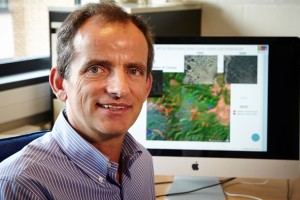
The 2014 winner of the Volvo Environment Prize, Professor Eric Lambin, is a remote sensing pioneer using advanced data collection and satellite images to understand land use and the influence of humans on the planet.


Satellites catch sweeping images of Earth, every hour, day and night. Eric Lambin, who divides his time between Stanford University in California, and Université Catholique de Louvain in his native Belgium, has for decades developed methods of analysing these satellite images by linking them to socioeconomic data. By doing that, he and his research colleagues can track land use changes on the impact of trade and demand for biofuels or food crops. His research has focused on trying to bridge two disparate communities – remote sensing scientists and human ecologists.

This technique, sometimes called the people-to-pixels approach, can, with faster computers and improved data, make it possible for businesses, NGOs and governments to better monitor in almost real-time environmental impacts from human activities.

A world without forests would challenge life on earth. Deforestation was earlier mostly perceived as a result of population growth. In his research, Professor Lambin has demonstrated that it is not as simple as that. In reality there are intricate and complex patterns, even cascade effects of human activities that affect the forests and other natural resources. Eric Lambin points to statistics showing successful reforestation in Vietnam.

“It seemed like a success story. But when we looked at all the data and compiled all information locally and nationally, we discovered that use of wood had simply shifted to imported wood, increasing deforestation in neighbouring Cambodia and Laos.”

This type of research is vital in planning for a transition to sustainability and is a focus area for this year´s Volvo Environment Prize laureate. Eric Lambin adopted the people-to-pixels approach as young doctoral student in Sub-Saharan Africa in the mid-1980s and has expanded it throughout his career.

In the words of the Jury, “Eric Lambin has successfully bridged social, geographical and biophysical disciplines in order to advance the global understanding of land use change and what it means for human wellbeing”.

Besides his academic research Eric Lambin is also reaching out to broader audiences. His most recent book, “Ecology of Happiness”, asks us to take a look at the impact of nature on ourselves, rather than the conventional approach of discussing human impact on the planet. The natural world, he argues, is essential for human wellbeing and pleasure-seeking. Preserving nature is not only good for a portfolio of ecosystem services; it is essential for us in order to be happy.

Eric Lambin is professor at the Earth & Life Institute and School of Geography, Université Catholique de Louvain, Belgium and at Environmental Earth System Science, School of Earth Sciences and Woods Institute for the Environment, Stanford University, California.

Phone: +61 2 6125 4588

The Volvo Environment Prize was founded in 1988 and has become one of the world’s most prestigious environmental prizes. It is awarded annually to people who have made outstanding scientific discoveries within the area of the environment and sustainable development. The prize consists of a diploma, a glass sculpture and a cash sum of SEK 1.5 million and will be presented at a ceremony in Stockholm on 26 November 2014.

For more information about the 2014 laureate and the Volvo Environment Prize: www.environment-prize.com

    Share

Glen MacDonald on Remembering John Muir

Remembering John Muir on the Centennial of His Passing:
Writer, Naturalist, Scientist, Activist, Geographer?

[Glen MacDonald also is organizing a featured panel session, “Geographers on John Muir: Assessing His Legacy and Relevance After 100 Years,” for the 2015 AAG annual meeting in Chicago, April 21-25. More information will be available soon.]

John Muir died in Los Angeles, California on Christmas Eve, 1914 with the pages of an unfinished manuscript on Alaska beside him in his hospital bed. As we mark the centenary of Muir’s passing what might we say about him from the perspective of Geography? Muir can claim many titles — writer, naturalist, scientist and environmental activist. Can we also consider him a geographer? Certainly Muir worked and wrote in a very formative period for American Geography and the Association of American Geographers. Although he received honorary degrees from the University of California, Wisconsin, Harvard and Yale, Muir never earned a formal university diploma. He did, however, attend the University of Wisconsin for two years starting in the 1860’s. Alas, this was long before the establishment of the Department of Geography there. But then founding lights of the AAG, including William Morris David, educated in the 19th century like Muir, did not hold degrees in the then incipient field of geography either. In Muir’s case his academic interests focused on chemistry, geology and botany. Through Ezra Carr, a Professor of Natural Sciences, Muir was likely introduced to the then revolutionary theories of Louis Agassiz regarding Pleistocene glaciation and this became a lifelong interest. Muir would also become acquainted with the controversial theories on evolution articulated by Charles Darwin in The Origin of Species. Although Agassiz was to remain deeply hostile to Darwin’s theory of natural selection, the ideas of both of these men were highly influential in the thinking of Muir as well as creators of the AAG such William Morris Davis. More than this though, Muir, like Davis and every geographer of the time, was profoundly influenced by that foundational figure of modern geography, Alexander von Humboldt. Indeed, in 1866 Muir wrote to his mentor and confident Jeanne Carr “How intensely I desire to be a Humboldt!” Muir’s regard for Humboldt, his intellectual development in the natural sciences and his intense interest in combining both geology and botany reflects the same scholarly, and at the time revolutionary, crucible that formed the science of Davis and Clements. By inclination and available education he was arguably as much a geographer as many of the founders of the AAG.

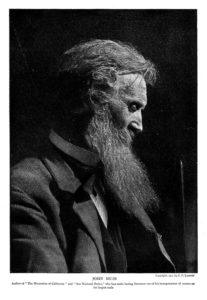
A scan of a more than 100-year-old photo of Muir by C. F. Lummis taken in 1901.
Owned by: Glen M. MacDonald
John Muir Memorial Chair
Distinguished Professor of
Geography,
Ecology and Evolutionary Biology and
The Institute of the Environment and Sustainability
UCLA
Los Angeles, CA
90095-1524
310-825-5008
macdonal@geog.ucla.edu

Like Davis, Muir was a sharp observationalist-inductivist who moved beyond the descriptive confines of natural history and sought to explain nature rather than simply observe and record. Within the earth sciences, Muir’s work on glacial features and evidence of past glaciation coupled with his theory on the glacial origins of Yosemite and other Sierra Nevada valleys stands as an important and lasting contribution. Physical geography is sometimes delineated from geology through its attention to modern processes and landforms. In this regard Muir showed a similar inclination. He was the first to discover living glaciers in the Sierra Nevada. This work, published in 1873 in the American Journal of Science and Arts must have been particularly sweet for Muir as it reinforced his position in a well-known scientific disagreement with Josiah Dwight Whitney, a Professor of Geology at Harvard and head of the California Geological Survey, who argued, incorrectly, that the Yosemite Valley was a tectonic feature. However, if geography is indeed the integrative science, then Muir was to more than equal many founders of the AAG in his desire and capability of spanning the earth and life sciences. Muir wrote many descriptions of the distributions of montane and alpine flora, but my favorite, and certainly most integrative was his study of the giant sequoia (Sequoiadendron giganteum). In his 1876 monograph published as a Proceedings of the American Association for the Advancement of Science, Muir analyzed the contemporary distribution of the species along the west slope of the Sierra Nevada, noted its environmental relations and particularly its disjunct distribution. The latter he attributed to the fragmentation of its range by Pleistocene glaciers emanating from the High Sierra. Now, today we know Muir had an overstated belief in the extent and role of glaciation and new research shows that the geographic distribution of giant sequoia may largely be explained by micro-climate, but the questions he asked remain topical. Muir also presaged the current focus of many geographers on the long-term trajectories and uncertain future of plant animal species in the face of human impact. Consider his pondering the future of the giant sequoia in his 1876 “What area does Sequoia now occupy as the principal tree? Was the species ever more extensively distributed in the Sierra during post-glacial times? Is the species verging on extinction? And if so, then to what causes will its extinction be due? What have been its relation to climate, soils and to other coniferous trees with which it is associated? What are those relations now? What are they likely to be in the future?” These are the same questions biogeographers are asking about a multitude of endangered species.

Muir’s scientific work and his writings were no doubt well known by many of the founders and first members of the AAG. What of his actual engagement with professional geography and his regard by the discipline at that time? It is notable that Muir was a member of the Committee for Arrangements, along with William Morris Davis and a number of eminent geographers for the 8th International Geographic Congress in 1904. His impact on our discipline clearly transcended his passing. It is striking to me that the 1958 Honorary Presidential Address by John Leighly at the first Annual Meeting of the AAG to be held on the west coast was entitled “John Muir’s Image Of The West.” I was alerted to Muir’s quote regarding von Humboldt through Leighly’s speech. Today, 100 years past his death, although citations to Muir’s scientific papers may be sparse, his ideas on the importance of past glaciations and his books such as My First Summer in the Sierra or Our National Parks remain widely known by geographers investigating questions of physical geography, conservation or human-nature perception and interactions. As Muir is in the pantheon of thinkers who developed modern environmentalism and conservation, it would be hard to find any geographer who has not been exposed to the work and philosophy of Muir in the course of their education. Geographer activists knowingly or unknowing are also taking a page from his book, most strikingly developed during his emotional and ultimately failed attempt to save the Hetch Hetchy Valley. For generations these ideas have undoubtedly helped formulate the thinking of geographers and through them the course of the AAG. So, although never formally a trained geographer, Muir was drawn by the same forces of curiosity and cross-disciplinary inquiry that have propelled geographers and geography over the past century.  I am inclined to consider him a true geographer and one of our seminal figures. As he so fervently desired in 1866, Muir was and is “a Humboldt.”  (John Muir: Born April 21, 1838, Dunbar, Scotland; Died December 24, 1914, Los Angeles, CA)

Glen MacDonald is distinguished professor and inaugural John Muir Memorial Chair in Geography at UCLA. He engages Geography with scholars, policy makers, writers, artists, activists and others to look at contemporary nature and people issues in the American West.

Glen MacDonald also is organizing a featured panel session, “Geographers on John Muir: Assessing His Legacy and Relevance After 100 Years,” for the 2015 AAG annual meeting in Chicago, April 21-25. More information will be available soon.

DOI: 10.14433/2014.0019

    Share

Clarence Minkel

Bud Minkel passed away on September 22, 2014. Born and raised to a farming family in Austin, Minnesota, Bud would go on to see much more than just the rural landscape of the United States. Following high school graduation, he joined the United States Army and served in both the U.S. and Japan. He then went on to pursue his B.A. and Ph.D. in geography from Syracuse University.

Following his education, Bud became quite the world traveler, visiting every country in North, Central, and South America, Western and Southern Europe, China, Japan, Indonesia, Australia, New Zealand, as well as 30 African countries, and even Antarctica. He also successfully visited every county in the United States, a task that took him fifty years.

Bud spent time living in Guatemala, Brazil, Venezuela, Columbia, Japan, and Indonesia and had a leadership position in settling the border dispute between Ecuador and Peru in 1998. This world traveler would become the dean and a non-teaching emeritus professor at the Graduate School at the University of Tennessee, Knoxville. His research interests were in economic geography and regional planning as well as Latin America.

He is survived by his wife, Phyllis and his five children, Thomas Minkel (Jackie), Sandra Topper (Jim), Theresa Giroux (Tom), Lorraine Ware (Phil), and many friends, colleagues, and fellow geographers. He was 86.

    Share

New Books: September 2014

Every month the AAG compiles a list of newly-published books in geography and related areas. Some are selected for review in the AAG Review of Books.

Publishers are welcome to send new volumes to the Editor-in-Chief (Kent Mathewson, Editor-in-Chief, AAG Review of BooksDepartment of Geography and Anthropology, Louisiana State University, Baton Rouge, LA 70803).

Anyone interested in reviewing these or other titles should also contact the Editor-in-Chief.

September, 2014
    Share