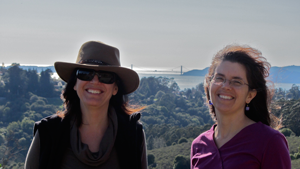
Vincent P. Gutowski

Vince Gutowski, popular and long-time faculty member at Eastern Illinois University, with diverse interests across applied geography, passed away suddenly on October 5, 2015, aged 70.

Vincent Peter Gutowski was born on February 1, 1945, in Jersey City, NJ. His father, Chester, celebrated the birth of his first son from aboard a ship somewhere in the Pacific where he was on wartime service with the U.S. Coast Guard.

Following the war, the Gutowskis lived in Pittsburgh, PA. Vince graduated from South Catholic High School in 1962 then served in the U.S. Navy. This included time in Panama at Coco Solo, the submarine and naval air base in the Canal Zone. There he met Pamela Maedl, whose father spent most of his career as a high school teacher in the Zone. They married in 1971 in California.

After his military service, Gutowski continued with his education, receiving a B.A. in 1974 and an M.A. in 1977 both from California State University Northridge. He then moved back to his home city for a PhD at the University of Pittsburgh in the Department of Geology and Planetary Science, completing it in 1987.

Much of his early work was on fluvial environments, with publications on topics including stream terraces, riverbank erosion, depositional zones, riverside land use, urban water consumption, and changing urban waterfronts.

Gutowski joined the Department of Geology and Geography at Eastern Illinois University (EIU) in 1983 where he stayed until retirement in 2010. He had a broad spectrum of research and teaching interests including geomorphology, environmental studies, field methods, cartography and applied geography.

The university’s geography major was withdrawn just after his arrival at EIU but Gutowski was credited with its revival into a thriving and growing program. He was a committed teacher, following the example of his own teachers in encouraging his students to do more than just take classes. He made his students aware of their importance and thrived on guiding those who had a zeal for learning. He encouraged students to do research; in fact all of his own research projects had student involvement. His appreciation for student scholarship at the undergraduate level allowed him to successfully steer many into graduate school and he was instrumental in helping his students receive scholarships.

Gutowski led students on field trips throughout the United States, including the southern Appalachians, the Coastal Plain and the Southwest. He also demonstrated the importance of balancing studies with social gatherings, frequently hosting students at his home. Many former students will remember Gutowski as their friend, confidant and greatest advocate, while approaching his duties in a laid-back, yet academically-responsible manner.

As GIS emerged as a geographic tool, he embraced it for his continuing interests in fluvial geomorphology and paleogeography. In the latter field of scholarship, he spent over a decade on field-based investigations – digging through layers of soil, and sorting through seeds and snail shells – to construct a portrait of the climate and ecology of eastern Illinois 20,000 years ago.

He was also involved in a number of projects for local governments in Illinois – Charleston, Coles County and Decatur – applying GIS for regional planning, infrastructure mapping, and water resource management.

He was deeply committed to local environmental issues, including serving on the Embarras River Management Association’s board of directors and as chair of the council of the Illinois Department of Natural Resources Conservation 2000 Program.

Gutowski became a member of the AAG in 1978. He regularly attended the Annual Meeting and was actively involved in the West Lakes Regional Division, as well as a number of Specialty Groups.

During his career at EIU, Gutowski received numerous university awards for his teaching, research and service, including the Luis Clay Mendez Distinguished Service Award in 2008 for his outstanding dedication to the university, his profession, and the community-at-large. On receipt of awards, Gutowski always credited those who had mentored him. A hallmark of his scholarly work, publications and consultancy projects was collaboration, testament to his inclusive approach.

Gutowski generously used personal funds made via his consulting work to buy equipment for student use in EIU laboratories. He and his wife also established the Vincent P. and Pamela R. Gutowski Fund to support students majoring in geography who show outstanding scholarship and dedication.

After retirement, Gutowski remained active in the department at EIU and in the community, including a project to locate and map a lost cemetery. In 1922, non-union miners were killed during the famous Herrin Massacre in Southern Illinois. Gutowski, along with his long-term collaborator Steve Di Naso, and a research team used a variety of geospatial techniques along with detective work to uncover the victims who had been buried in an unmarked potter’s field thereby helping to bring closure to a divisive chapter in the community’s history. Their accomplishments were recognized with a Superior Achievement Award from the Illinois State Historical Society.

He also spent time in retirement playing golf and on the family property along Kickapoo Creek, planting and tending to thousands of trees.

Vince Gutowski was highly respected and regarded by his colleagues and students alike. Fellow EUI geographer, Godson Obia, described him as “a stellar academic and a great person,” remarking on how much he gave to his students and department. He will also be greatly missed by his family. He predeceased his siblings – two brothers and a sister – and also leaves behind Pam, his loving wife of 44 years, their three children, Jennifer, Carl and Frank, and four grandchildren.

    Share

William Woods

Bill Woods, professor emeritus at Kansas University and Southern Illinois University Edwardsville, a soil geographer and geoarchaeologist whose work stood at the nexus of geography, soils, anthropology and archaeology, passed away on September 11, 2015, at the age of 68.

William Irving Woods was born on March 5, 1947 in Milwaukee, Wisconsin. After graduating from Whitefish Bay High School in 1965, he received an undergraduate scholarship to attend the University of Wisconsin-Milwaukee (UWM).

His bachelor’s degree, granted with distinction in 1970, was in anthropology. This was follow by a master’s degree in geography, completed in 1973. During his time at UWM, he also served variously as a tutor and teaching assistant in anthropology, economics and geography.

Over this period he also pursued interests in modern languages, passing reading proficiency exams in German and Spanish, and spent a period at the Goethe Institute in Brilon, Germany where he earned a Certificate in German Language Ability.

In 1976 Woods was appointed the staff archaeologist in the Department of Anthropology at Southern Illinois University Edwardsville (SIUE), a position he held until 1985. From 1980 until 1985 he was also a lecturer in the department at SIUE and was involved with the Environmental Studies Program, teaching courses on anthropology, archaeological mapping techniques, archaeology of the Midwest, and interdisciplinary concepts of environmental analysis, as well as running field trips.

He concurrently taught cultural anthropology courses at Jefferson College, MO, and Belleville Area College, IL, as well as giving archaeological training seminars for the USDA Forest Service and US Army Corps of Engineers. At the same time he was also undertaking his doctoral research in geography at UWM. His thesis, completed in 1986 was entitled “Prehistoric Settlement and Subsistence in the Upland Cahokia Creek Drainage.”

Following the completion of his PhD, Woods continued at SIUE but this time in the Department of Geography where he stayed for 17 years, working his way up the ranks to professor. He taught courses including physical geography, soils, field study of environmental problems, cultural geography, cultural landscape, regional geography, and Latin America. He was also an affiliated faculty member in the Environmental Studies Program and the director of the Contract Archaeology Program. In 2004 he left SIUE but remained an emeritus professor in the Department of Geography there until 2013.

Woods started at the University of Kansas (KU) in 2005 and stayed until retirement in 2014 as professor emeritus. He was a professor in the Department of Geography teaching courses on human geography, global environment and civilization, soils, anthrosols, Amazonia, cultural landscape, and sustainability and unsustainability. At KU he also served as director of the Environmental Studies Program and was a courtesy professor of anthropology, core faculty member of the Latin American Studies Program and the Center for Global and International Studies.

He was widely respected internationally and was invited to give seminars at universities across the world including Italy, Germany, Belgium, The Netherlands, Sweden, Poland, Costa Rica and Brazil.

Woods’ interests stood at the interface of geography, anthropology, and archeology, and included abandoned settlements, anthropogenic environmental change, cultural landscapes, soils and sediments, and traditional settlement-subsistence systems. Field study was always a significant aspect of both his teaching and research. He directed archaeological and geological investigations in the United States, Mesoamerica, South America, and Europe, serving as principal investigator on more than 110 projects.

He is perhaps best known for his work on terra preta (black earth) soils, also known as Amazonian Dark Earths (ADE). These are distinguished by dark, nearly black color, high carbon and nutrient content, and high productivity (in contrast to more nutrient-poor soils in the Amazon basin that were shaped by natural processes). In the early days, Woods was part of a small but interdisciplinary group of committed and enthusiastic people studying terra preta, and went on to become a world leader in this field.

In a number of collaborative projects with colleagues from Latin America, Europe, and the US, he investigated the origin and importance of the soil. He was directly involved in organizing seminars, conferences, workshops, field trips on ADE, was the co-editor of the four main books on ADE, and authored of numerous articles and chapters on the subject.

His research showed how terra preta was formed by the strategies for land use and settlement of prehistoric Indian cultures. This provided a deeper understanding of the environmental and cultural history of the Amazon basin, as well as clues to sustainable use of resources in the Amazon today and in the future. His work was crucial to the emergence of a new understanding of the Amazonian rainforest landscape that has evolved over recent years, from having been regarded as an untouched wilderness to being best understood as a cultural landscape.

Throughout his career Woods looked at other aspects of anthropogenic soils and environmental history too, particularly prehistoric cultivation. For example, during his tenure at SIUE, he directed the study of Monks Mound, one of the major earthworks at Cahokia in southwestern Illinois, the largest prehistoric Indian settlement in North America, now a UNESCO World Heritage Site.

He was also well known for his development of techniques for examining soils at archaeological sites, especially the quantitative analysis of soil phosphate. One of his last research topics concerned carbon sequestration in soils as a potential mitigating process for land degradation and atmospheric CO2 accumulation. An ancillary interest involved birds as an indicator of anthropogenic environmental change.

Woods’ cross-disciplinary interests were reflected in his society memberships: Association of American Geographers, American Geographical Society, Geological Society of America, Society for American Archaeology, American Chemical Society, Conference of Latin Americanist Geographers, and British Society of Soil Science. He also served on the editorial boards of Journal of ArchaeologyJournal of Ecosystem and Ecography, and PLOS ONE.

During his career, Woods received many awards and distinctions. At SIUE he received the 1999 Paul Simon Outstanding Teacher-Scholar Award, recognizing the interdependence of research/scholarship and teaching. The Association of American Geographers’ Cultural and Political Ecology Specialty Group awarded him the Robert Netting Award in 2006 for his impressive body of work in interdisciplinary cultural ecology. In the same year he received the Conference of Latin Americanist Geographers’ Carl O. Sauer Distinguished Scholar Award given in recognition of a significant contribution towards Latin American geography.

In 2012, Uppsala University in Sweden conferred on him an honorary doctorate for his pioneering research on terra preta, and in 2013 he received the Rip Rapp Award, one of the Geological Society of America’s most prestigious awards, in recognition of his outstanding contributions to the interdisciplinary field of archaeological geology.

Aside from his influential scholarly work, Bill Woods will be remembered as a great mentor and supporter of young and emergent scientists, providing inspiration and always willing to give advice. He will be missed by colleagues and friends across the disciplines that he touched. He is survived by his wife Deanna, son Colin and daughter Gillian, former wife Sandi, and four grandchildren.

    Share

San Francisco Water: Environmental Sensibilities v. Environmental History

San Franciscans pride themselves on their progressive environmental sensibilities, but there are tensions between these sensibilities and the city’s environmental history. The story of the city’s quest for water makes this clear.

As San Francisco grew on its narrow, hilly peninsula, the city quickly depleted its artesian aquifers. Once residents polluted the city’s creeks with industrial and domestic waste, the need for water imports was clear. In the early 1860s, the newly-chartered Spring Valley Water Company developed wells in two East Bay farm districts, dammed a coastal stream that drained a wooded watershed on the San Francisco peninsula, and built a 32-mile flume to deliver water northward to San Francisco. The system’s vulnerability was apparent in April 1906, when the earthquake severed the flume and 80% of the city burned.

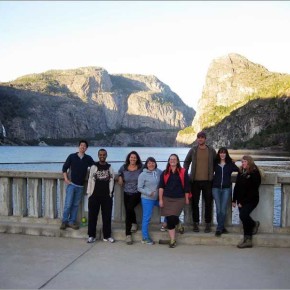
SF State University geographers stand atop O’Shaughnessy Dam, 312 feet above the submerged riverbed, pondering the dam’s future. (Nancy Wilkinson is near the center of the photo, fourth from the left.)
O’Shaughnessy Dam, named after City Engineer Michael O’Shaughnessy, dams the main stem of the Tuolumne River, storing up to 360,400 acre-feet of water.
Landscape painter Albert Bierstadt visited the Sierra in the 1860s and 1870s and found Hetch Hetchy Valley smaller than the more famous Yosemite Valley but quite as beautiful.

San Francisco had already begun a search for more abundant and reliable water supplies, culminating in a decade-long battle for federal permission to dam the Tuolumne River in the Hetch Hetchy Valley, within the borders of Yosemite National Park. Congress approved the right-of-way in late 1913; the valley was flooded by 1923. The $100 million project delivered water to San Francisco, via 148 miles of tunnels and pipelines. It continues to serve over 2.5 million people in San Francisco and nearby communities, and to provide hydroelectric power for the city’s airport, hospitals, streetcars and other public utilities.

The Hetch Hetchy project was widely credited with hastening the death of John Muir, the Sierra Club’s founder and the project’s fiercest opponent. It is still contested to this day.   In 1987, Secretary of the Interior Donald Hodel proposed decommissioning the dam and restoring Hetch Hetchy Valley to expand recreational opportunities for Yosemite’s visitors. Hodel’s proposal caught The Sierra Club and other longtime foes of the water project off guard; they suspected Hodel was trying to discredit the Left Coast City’s environmentalist opposition to the expansion of offshore oil drilling.

Twenty-five years later, in 2012, San Franciscans rejected by 3:1 a ballot measure compelling the city to replace Hetch Hetchy water and power. Opponents argued that the water, power and fiscal benefits were impossible to replace and that restoring the drowned valley would cost billions in public funding. A group called Restore Hetch Hetchy continues the fight and has filed suit, contending that San Francisco’s water diversions violate the California constitution and that the value of restoring the valley exceeds the cost of moving the city’s Tuolumne River diversion downstream of the park boundary.

The most severe drought in historic times, now in its fourth year, has also called San Francisco’s water use into question. Although per capita consumption is among the lowest in the nation, San Francisco is one of the last coastal cities to adopt wastewater reuse programs, preferring to irrigate lawns and flush toilets with virgin snowmelt and to discharge wastewater to the bay and ocean. This is changing: in 2012, the city adopted an ordinance encouraging non-potable wastewater reuse by commercial, multi-family and mixed-use developments.

Efforts to raze the dam at Hetch Hetchy are not the biggest threat to San Francisco’s water supply.   The Hetch Hetchy project, like so much of the California water system, relies on the state’s largest above-ground reservoir: the Sierra snowpack.   Yet climate change models predict the Sierra will continue to receive an increasing share of its precipitation as rain rather than as snow, and that snowpack will melt earlier.   This will necessitate runoff-capture projects to stabilize supplies. Meanwhile, we should anticipate more frequent droughts.

San Francisco, like every city, remakes the countryside around it. The gold rush city owes its early growth and prosperity to resource extraction. Denuded Sierra landscapes, bay fill, mercury contamination and decimated redwood groves join the drowned Hetch Hetchy valley as legacies of the first century of city-building. While San Franciscans may cherish nature and promote environmental restoration, they curiously “naturalize” Hetch Hetchy water, appreciating its pristine purity and the hydroelectricity it generates en route to the city. The Hetch Hetchy project – controversial, unsustainable – is a complex manifestation of the city’s conflicting progressive environmental sensibilities and its environmental history.

—Nancy Wilkinson
San Francisco State University

DOI:10.14433/2015.0022


Nancy Wilkinson has been a Professor in the Department of Geography & Environment at San Francisco State University since 1986. Her teaching and research focus on California water resources and environmental perception.

    Share

The Coming ‘Dry-Wet Knockout’ in California

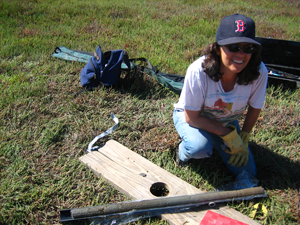
Frances Malamud-Roam on Petaluma Marsh, next to San Francisco Bay, with marsh sediment core.

Seven of the last 10 years have been dry in California, and the last four have been critically dry. The drought is a top concern for Californians, with two-thirds of the state in extreme to exceptional drought. Severe droughts are one feature of our state’s climate; extremely wet years are another. In fact, droughts and floods are two sides of the same coin, because often extremely wet winters have followed on the heels of severe and prolonged droughts. This coming winter, a major El Niño is predicted, and may bring heavy rains accompanied by flooding, mudslides, and landslides.

The coupling of prolonged droughts with extreme wet years has been dubbed a “dry-wet knockout” by climate scientists, who have found that these occur with unnerving frequency in California’s climate history. In just the past century we have seen several examples. The years between 1928 and 1937 were among the driest of the 20th century in California, desiccating the grasslands of the Central Valley and the slopes of the mountains, and shrinking rivers and lakes. Then the winter of 1937-38 saw a series of storms deluge the northern two-thirds of the state, including two storms that dumped 10 inches of rain in southern California, flooding areas from San Diego to Los Angeles and into the Mojave Desert.

This dry-wet scenario was repeated two decades later a drought in the early 1950s was followed by massive floods in 1955, particularly throughout the central Sierra Nevada and the San Francisco Bay region. In Orange County, warm rains melted snow in the San Bernardino Mountains, causing catastrophic flooding of the Santa Ana River. Two decades later, the climate coin flipped from the driest year on record, 1976-1977, to the torrential rains of 1977-1978. More recently, the prolonged drought of 1987-1992 was followed by the extremely wet winter of 1993.

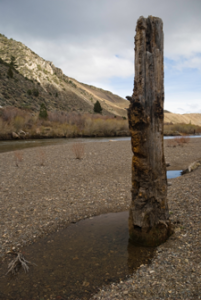
Medieval tree stump in the West Walker River (eastern California).

These scenarios are particularly stressful on local and regional ecosystems. They have been called “dry-wet knockouts” because drought weakens ecosystems, and the following floods deliver a “knockout” blow. Vegetation that holds the soil in place withers during droughts, and the soils desiccate and are more easily eroded. Forests become dangerously dry and susceptible to wildfires sparked by summer lightning strikes. Then the knockout: a winter with storm after storm spawned out over the Pacific slams into the west coast. Heavy rains easily erode the fire-charred slopes, washing massive amounts of sediment downhill, eventually choking streams and lakes. The sediments raise the bed-level of rivers, exacerbating floods. Once on the move, the slurry of sediment-laden waters disrupts downstream aquatic ecosystems in ponds, lakes, estuaries, and even the coastal ocean. Dry-wet knockouts become natural disasters for Californians, as economic losses due to drought are compounded by the subsequent devastation of deluges. Homes – sometimes entire neighborhoods – can be buried in massive mudslides; roads and highways buckle as the once-solid earth is eroded out from beneath them; agricultural fields are inundated and crops lost. The floodwaters can take months to finally drain.

What do the paleoclimate records tell us about these dry-wet knockouts? For one thing, they were not a unique phenomenon of the 20th century. Prolonged droughts are common, occurring once or twice per century. And every one to two millennia in California, climate shifts to a dry phase, or megadrought, lasting a century or longer. For instance, during the Medieval Warm Period, from 900 to 1350 A.D., precipitation in the region dropped to 60 percent of average and wildfires were 30 percent more frequent. Two distinct megadroughts occurred during the Medieval Warm Period, each lasting over 150 years, and each dramatically ending in megafloods. The megadroughts brought down flourishing civilizations, with archaeological evidence of malnutrition, infant mortality, violence, and warfare. Evidence of subsequent widespread knock-out megafloods is clear. For instance, tree stumps found in the middle of lakes in the southern and eastern Sierra Nevada are what remain of trees that grew for over a century during the prolonged medieval droughts and were suddenly drowned by heavy rains and huge floods. Hundreds of miles away, sediment cores collected from beneath the San Francisco Bay and its tidal marshes reveal evidence of megafloods immediately following the medieval droughts. Perhaps the largest knock-out megaflood occurred in AD 1605, after another decades-long drought. Floodwaters rushing through the Bay scoured the estuary and at the same time the sediment-rich floodwaters deposited thick layers of mud on the surrounding marshes.

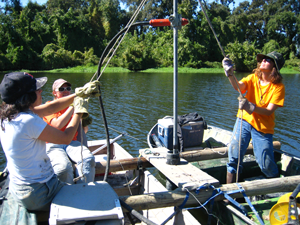
Frances Malamud-Roam, at left, with Lynn Ingram, at right, taking sediment cores from a small lake in the Sacramento River Valley.

The dry-wet knockouts seen in the paleoclimate record are of a much greater magnitude than what our 20th century experiences have been. The more comparable event in historic memory would be the deep drought of the mid-19th century, which peaked in 1860 and was followed by a series of large storms that flowed, one after another, across the Pacific during the winter of 1861-62. Recent research reveals that these were atmospheric river storms – narrow corridors of water vapor that originate over the tropical Pacific Ocean and travel thousands of kilometers to the West Coast, carrying up to 10 Mississippi Rivers worth of water. The Central Valley – 400 miles long and 50 miles wide – was turned into an inland sea in 1862, and Sacramento was submerged for months. Water planners considered the 1861-62 Flood a 1,000-year event, but the paleoclimate records suggest that floods of this magnitude recur every 100-200 years.

Today, many regions in California are even more vulnerable to flooding than during 1861-62. Viewed from above, the Central Valley looks like a giant bathtub, four hundred miles long and seventy miles wide, with San Francisco Bay Delta Estuary as the drain. The region’s population has swollen from 500,000 in 1861 to almost 39 million today, while in the Central Valley, housing developments are replacing agricultural lands in the floodplains. This growth has led to soil compaction, loss of wetlands, and subsidence, causing much of this vast region to literally sink – by as much as thirty feet in some areas. Today, the region is far more susceptible to flooding than it was during the 1861-62 floods. Floodwaters filling the Central Valley now would submerge major population centers instead of small towns, marshes and farmlands. Densely populated cities like Modesto, Fresno, Stockton, and Sacramento are protected by a relatively primitive network of fragile levees that serve as the only line of defense against floods on the Sacramento and San Joaquin rivers.

A warmer world will bring a drier climate to California – an inevitable consequence of higher evaporation rates and shifting storm tracks. But the underlying climate patterns producing dry-wet knockouts will not go away. In fact, it is likely that they will be exacerbated as more precipitation falls as rain than snow during the warmer winters, causing larger floods. At the same time, more evaporation over the tropical Pacific Ocean will spawn larger atmospheric river storms – the type of storms that bring the most flood-producing deluges to California. California needs to begin serious preparations now for both extremes: water scarcity, and larger floods, in the future.

DOI:10.14433/2015.0018


Frances Malamud-Roam and Lynn Ingram

Professor Lynn Ingram studies the history of climate change in California using sediment cores from lakes and estuaries, including San Francisco Bay. Dr. Ingram is a Fellow of the California Academy of Science, and is a Senior Fulbright recipient. She has been a Professor in the Departments of Earth and Planetary Science and Geography at UC Berkeley since 1995. She is the author of more than 60 published scientific articles on past climate change in California and the West.

Dr. Frances Malamud-Roam is a Senior Environmental Planner and Biologist at Caltrans. She received her B.A., M.A. and Ph.D in the Department of Geography at UC Berkeley, with research expertise in the origin of agriculture in China, the long-term evolution of salt marshes and estuaries along the Pacific Coast, and changing climate in California and the West. She has taught earth science and physical geography at Sonoma State University and Laney College.

Both are authors of a new book on the climate history and water resources in California (UC Press, 2013): The West without Water: What Past Floods, Droughts, and Other Climatic Clues Tell Us About Tomorrow.


    Share

Two Geographers Receive ACLS Fellowships for 2015

Two geographers, Jessica Barnes and Eric Carter have received American Council of Learned Societies (ACLS) fellowships for the 2015 program.

Jessica Barnes will be examining the longstanding and widespread identification of food security in Egypt with wheat and bread self-sufficiency. She will be working towards completing a book project entitled “Making Bread: The Cultural Politics of Food Security and Wheat Self-Sufficiency in Egypt.”  The goal of the project is to offer insights into how bread and wheat continue to shape relations of power in Egyptian society, and, more broadly, into how food security is envisioned and experienced across scales.

Carter will conduct archival research in Argentina, Chile, and Costa Rica from 2015-2016 for a book project entitled “The Health of the People: A History of Latin American Social Medicine.” The main goals of the project are to understand the ideological roots of socially conscious health policies in Latin America and the institutional and interpersonal networks that sustained them, from the 1920s onward.

ACLS, funded in 1919, is a private, nonprofit federation of 72 national scholarly organizations, is the preeminent representative of American scholarship in the humanities and related social sciences. Advancing scholarship by awarding fellowships and strengthening relations among learned societies is central to our work. Other activities include support for scholarly conferences, reference works, and scholarly communication innovations. ACLS fellowships fund research in the social sciences and the humanities where the ultimate goal of the fellow is by the end of the year to produce a major piece of scholarly work.

    Share

How We Hurt Each Other Every Day, and What We Might Do About It

For those who do not experience their ill effects, it is difficult to recognize the ways in which a glance, a comment, something mentioned or overlooked, made invisible or hyper-visible, a seat not taken or a body too close, inflicts pain on others. For those who do experience these often subtle acts of othering, the visceral knowing-ness is immediate and the effects cumulative. And they take a large toll on our bodies and our psyches. As the poet Claudia Rankine says, “You can’t put the past behind you. It’s buried in you; it’s turned your flesh into its own cupboard.”¹ Overt acts of sexism, racism, and homophobia in Geography are far less apparent than they used to be, but not so their subtle, small, everyday enactments, what Chester Pierce called microaggressions, that serve to keep people in their place (and that oftentimes means out of Geography). The words that recognize and speak back to these microaggressions are difficult to conjure; a rebuke does little good since the insult wasn’t ‘intended,’ while a complaint raises the specter of the ‘sensitive and difficult person.’ What some have called death by a thousand cuts keeps cutting; perpetrators not recognizing the damage they cause, the victims still and again left silent.Mona-hurt-col-11r

And so what to do with the outrage felt and injustice committed when someone says or does something often unwittingly, perhaps unintentionally and unconsciously, that causes damage because of its insistence that one is less than/different from? I have started by asking fellow geographers to open the cupboards and tell me their stories.² Inspired by many,³ my goal here is to make everyday acts of racism, sexism and homophobia apparent to those who do not feel their effects; and to make the task of holding up those cupboards a little less difficult by sharing its heavy burden with others. Here, only slightly annotated, are some of those stories, collected between April 4 and April 28, 2015.

I have just been asked by a senior male colleague, via email, to join a panel because I’m female, and he needs a female to balance the panel. Why does he not indicate that I have any other skills to offer to the process other than that I am female?

What I have found is that for many ‘critical’ thinkers these isms are wrapped up in a meritocratic veneer. Most recently a colleague who had asked me to work on a grant with her and on which I spent several weeks redid the grant structure and dropped me but kept a white female professor who had purportedly done nothing as yet for the grant. This was because having a white female professor would improve the chance of success for the grant. The desire to build upon the ‘success’ of the white body through association led to the appropriation of the efforts of a black woman.

Day on day, I find myself damning myself with gender by performing surplus emotional labors for my supervisors: ever so slightly inappropriate expressions of concern, admiration and sympathy; praising their outputs which they already know are great. My praise, like any criticism I might come up with, ultimately means nothing. None of this, perhaps, is reducible to gender. Yet it is gendered. The academy must yet be one of the most forgiving or survivable environments, nevertheless, my embodiment feels wrong within it and experiences friction and an alienating discipline.

At a recent grad student party, I noted to a male friend about the noticeable gender segregated activities (e.g. an all-male card game). He responded, “You know you’re one of the guys, right? You can join us any time. You’re cool.”

I heard more than one account from younger female master’s students in my department who were hit on/sexually propositioned by well-established “critical” male geographers at AAG parties. I believe it was clear to others (including other faculty) at the party what this man was doing and he was not called out on it.

Because I am raced, some of my students assumed that I wanted them to read an interview about race. I doubt that if I were a white professor they would have made this mistake. This is because people of color bear the burden of race while whites in the United States are unencumbered by it. Race exists for many whites only when they are in the presence of nonwhites—that is, the raced.

As a teaching assistant, the university’s internal studies are gobsmackingly clear: at ratios of 90:10, complaints will target me and not my male counterparts; will deploy concepts saturated with expectations of masculine authority and tropes of feminine hysteria. Students preponderantly respond to female PhD students, employed to deliver their undergraduate tuition, as though they were not legitimate sources of university level pedagogical value.

Everyday I notice that the lecturers, all of whom are women, teach more and are paid less. The senior lecturers, all of whom are men, teach less and are paid more.

A visiting prospective graduate student walks past the sign outside my door that says “Professor My Name,” sits down in my office and says: “What is your job here?” When I explain my job as a professor, he quickly sits up and explains that he had assumed that I was a member of the office clerical staff.

The disconnect between rhetoric and discourse of being progressive, liberal and inclusive with the actual practices of discrimination, silencing, and marginalizing could not be more glaring in my department. Faculty write about race, class, and other geographies of difference, but cannot seem to recognize, let alone account for, the racism and Othering that they perpetuate all the time, and the various ways it shows up in their behavior and actions. A few colleagues have not spoken with me nor acknowledged my presence in the same room for a number of years due to my calling out their problematic behavior.

Last week I mentioned my ‘partner’ in the classroom. I was way more cautious than I usually am not using the gender of my partner in any of my discussions around immigration and law. Yes, this was my own way of ‘closeting’ myself but it was something that, as a new faculty member, I have been working through in the classroom. Constantly thinking about how my queerness is perceived in the classroom.

After my AAG paper presentation, the only comment I received was: ‘Wow – you only cited women and black people! Was that on purpose?’ If citing ‘women and black people’ still manages to cause such a stir, that means that there is still a lot of work to be done.

When a colleague suggests that our faculty meetings be rescheduled for a time that would be easier for faculty members with school-aged children to attend, a senior male colleague proceeds — in said faculty meeting — to ask each faculty member with children if it is a problem for him or her personally to attend these meetings. Not surprisingly, no one says “yes.”

I am afraid to send this email, because I need my job and if word of this got out, I’m sure I would be let go.

I had this interview with a governmental authority. The interview went quite well and then we talked about this report that was important for me. So the guy said: “You know what, I could give this to you…” He stood up, and while walking over to me he said “But only if you keep this to yourself.” He leaned over, grabbed my boob and tried to kiss me (he only made it to my cheek). I was totally shocked, it took me some seconds to realize what just happened and then I immediately packed my stuff and rushed out of the office. Funny enough one of my research fellows knows that guy and he was talking of him (before that incident) as “good old XXXX.” So while they are having this fella-like male relationship, I’m the one that is being touched and harassed, because I’m a woman.

Otherness is also a question of language and academic context.

I try where possible to avoid ever being in a space where I have to interact or collaborate with my colleague; whenever I find myself in such spaces e.g. department meetings, I can rest assured that any comment/observation that I make, will be routinely discounted or devalued by my colleague, never directly but always by way of a generalized statement that articulates some ethical/moral high ground that positions me/my views as unethical, or naïve or unhelpful relative to their own.

I am constantly being told I don’t need ‘it’ — the ‘it’ being promotion, publication, progression, recognition, then often implicitly but sometimes explicitly reasoned through a familial logic of me not having family (reduced to not having children).

This kind of harassment by men — standing way too close in public and commenting on their consumption habits — certainly felt like a form of misogyny in the moment.

While it’s important to talk about (micro)aggression, I would also like to open a dialogue about what to do when you see it happening. This occurred to me when I was told about an incident when a male panelist made an excuse to leave the room when the women on the panel were being ignored by the audience. And other small, but significant interventions in a handful of cases of “whitesplaining” when people of color were being told about their experience by apparently clueless white people. It wasn’t much in the way of effort — just subtle maneuverings of conversations and body language to shut out/down the ‘splainer (usually a white dude).

I’ve ended with this last story because it reminds me that this (listening to each other) is just a first step. There’s a lot more work to do, including thinking through and sharing strategies with others about what and how to say something/intervene when microaggressions are directed at you or you witness this happening to someone else. I look forward to hearing your stories, strategies, and interventions.

DOI: 10.14433/2015.0014

    Share

Matthias Kuhle

Matthias Kuhle, physical geographer and a leading expert on high mountain regions from the University of Göttingen in Germany, died in the 7.8 magnitude earthquake that struck Nepal on April 25, 2015.

Kuhle was born in Berlin on April 20, 1948. His undergraduate studies at the Free University of Berlin spanned German philology, geography and philosophy. After graduating in 1972 he moved to the University of Göttingen where he was to remain for the rest of his career.

His PhD was in the natural sciences, specifically geography, geology and philosophy with a dissertation on the geomorphology and former glaciation of South-Iranian high mountains. Awarded his doctorate in 1975, he moved on to further research and achieved his habilitation in geography in 1980 with a monograph entitled Dhaulagiri- and Annapurna Himalaya: A Contribution to the Geomorphology of Extreme High Mountains.

In 1983 he became a Professor of Geography at the University of Göttingen and in 1990 was promoted to Professor of Geography and High Mountain Geomorphology.

Kuhle’s passion was high mountain regions but his academic interest was broad, spanning ecology, periglacial and glacial geomorphology, climatology, paleoclimatology and glaciology, as well as tourism and transport issues.

His specialism took him to the mountain ranges and plateaus of High and Central Asia, to the Andes and to the Arctic. In fact, he undertook more than 50 field expeditions to high mountain areas over the course of his career, many of them lasting for several months.

A particular research interest was seeking to reconstruct the former ice cover in High and Central Asia caused by the plate tectonic-induced uplift of the Tibetan Plateau and surrounding mountain areas above the snowline. Based on measurements of radiation energy and budget in these high altitude subtropical areas, he developed a theory that ice sheetcovered practically the entire Tibetan Plateau during the Pleistocene.

Kuhle produced a large number of academic papers on his field-based research in leading geography, geology and scientific journals. He also had an interest in science theory and co-authored a number of papers with his wife.

He was leading a student fieldtrip to Nepal, sharing his passion and knowledge for high mountains with the next generation, when the enormous earthquake struck. The group was in a remote area called Yaruphant just 10 miles from the epicenter and was caught in a rock fall; the students and assistant survived but Kuhle sadly died.

Kuhle leaves behind his wife, Sabine, and loving family.

    Share

Symposium on Physical Geography Features Experts on Environmental Reconstruction

A special event at this year’s AAG annual meeting is the all-day Symposium on Physical Geography, scheduled for Thursday, April 23. The overall goal of the symposium is to facilitate and enhance dialog on emerging developments, challenges, and approaches related to physical geography. Morning oral sessions, organized around the theme “Environmental Reconstruction – A Nexus of Biogeography, Climatology and Geomorphology”, are followed in the afternoon by an extended poster session with over 200 posters on display, and a networking reception and Happy Hour from 4:30 p.m. – 7:30 p.m. All AAG attendees are invited to participate in the Symposium on Physical Geography. Please contact organizers Julie Winkler (winkler [at] msu [dot] edu), Carol Harden (charden [at] utk [dot] edu), or Richard Marston (rmarston [at] ksu [dot] edu) with questions.

The invited speakers for the morning oral sessions are leading experts on environmental reconstruction, whose expertise ranges from the study of past climates, landscapes, and biological systems to the reclamation of altered environments. The speakers and the titles of their presentations are:

Johannes J. Feddema: Modeling the Anthropocene: Potential contributions from Physical Geographers

Dr. Feddema is professor and chair of the Geography Department at the University of Kansas.  He obtained a Ph.D. degree in Climatology from the University of Delaware and his research interest is primarily in studying the processes by which anthropogenic actions affect climate.  His current research combines remote sensing, GIS, and modeling to develop datasets to simulate land cover change and other human processes at the Earth’s surface in the National Center for Atmospheric Research (NCAR) Community Climate System Model (CCSM).  He has published in a variety of journals including Climate ResearchClimate DynamicsClimatic Change and Science, and was a contributing author to the third and fourth IPCC reports.

Melinda D. Daniels: Reconstructing River and Watershed Restoration: Physical Geography and a New Restoration Design Science

Dr. Daniels holds a B.S. in Natural Resources from Cornell University, a Masters of Research in Environmental Science from University College of London, England, and a Ph.D. in Physical Geography from the University of Illinois at Urbana-Champaign.  Her specialties include fluvial geomorphology and river restoration science and policy, with emphases on in-channel flow hydraulics, large river planform dynamics, human impacts on hydrologic and geomorphic regimes, river restoration assessment, and the interconnections between hydro-geomorphologic and ecological processes in stream ecosystems.  She has studied river systems in the Great Plains, Rocky Mountains, Midwest and the Northeast.  Her current research program focuses on legacy land use disturbances, effects of grassland grazing and burning treatments on stream morphology and sediment transport dynamics, the effects of forest loss on woody debris dynamics, modeling impacts of climate change on coupled human-watershed systems, and long term research on the hydro-ecological effects of watershed restoration. Before joining the Stroud Water Research Center, she was a tenured professor at Kansas State University.

Markus Stoffel: Mass movements from periglacial environments — Studying tree rings to put the impacts of current climate warming into perspective

Dr. Stoffel is a Professor of Geomorphology and currently works at the Institute for Environmental Sciences (ISE), University of Geneva and at the Institute of Geological Sciences, University of Berne (Switzerland), where he also directs dendrolab.ch. His research interests are in hydrogeomorphic and earth-surface processes, large volcanic eruptions, climate change impacts, biodiversity, tree physiology, and dendroecology. Books that he has edited or co-edited include Tree Rings and Natural Hazards (Springer 2010), Tracking Torrential Processes on Fans and Cones (Springer, 2012), and Treatise on Geomorphology: Mountain and Hillslope Geomorphology (Elsevier, 2013). Professor Stoffel holds B.Sc. and M.Sc. degrees in Physical Geography, a M.Sc. degree in Media and Communication Sciences, and a Ph.D. in Dendrogeomorphology from the University of Fribourg (Switzerland), as well as a habilitation thesis degree (venia docendi) from the University of Berne (Switzerland). In 2010, he received an honorary professorship (Prof. honoris causa) in Physical Geography at Babeş-Bolyai University (Romania).

Robert A. Washington-Allen: Retrospective Analysis of U.S. Dryland Carbon Dynamics

Dr. Washington-Allen is an assistant professor in the Department of Geography at the University of Tennessee. He has an abiding interest in pastoralists and the sustainability of drylands. His remote sensing-based drylands research has taken him around the world, most recently to southern Ethiopia and Jordan, with side excursions to Tropical Cloud Forests and the Paramo peatlands of Colombia. Dr. Washington-Allen currently serves as the Chair of Remote Sensing & GIS Committee of the Society for Range Management and on the U.S. Global Change Research Program National Climate Assessment’s Grasslands, Rangelands, & Pastures Indicators Technical Team. He has contributed to the U.S. Forest Service’s 2010 Resource Planning Act (RPA) Assessments: A synoptic review of U.S. rangelands: A technical document supporting the Forest Service 2010 RPA Assessment and Future of America’s Forest, and Rangelands: Forest Service 2010 Resources Planning Act Assessment.

Kristine DeLong: Reconstructing Tropical Climate Variability from Massive Corals

Dr. Kristine DeLong is an Assistant Professor in the Department of Geography and Anthropology at Louisiana State University. She received her Ph.D. in Marine Science from the University of South Florida and completed post-doctoral research at the U.S. Geological Survey in St. Petersburg, FL. Professor DeLong’s research is focused on climate change of the past, primarily in the subtropics to tropical regions for the past 120,000 years. She is also concerned with the refinement, fidelity, and data analysis methods used in paleoclimate reconstructions. She has participated in international projects including the Integrated Ocean Drilling Program (IODP), PAGES 2K, and the Marine Annually Resolved Proxy Archives (MARPA), as well as the South Central Climate Science Center funded by the U.S. Department of the Interior.

Bette L. Otto-Bliesner: African Rainfall and Greenhouse Gases: A Lesson from the Past

Dr. Bette Otto-Bliesner is a Senior Scientist at the National Center for Atmospheric Research (NCAR) in Boulder, Colorado, and serves as head of NCAR’s Paleoclimate Modeling Program. As a nationally and internationally recognized expert in using computer-based models of Earth’s climate system to investigate past climate change and climate variability across a wide range of time scales, she has been involved in the IPCC Working Group I reports since the Third Assessment, and was a Lead Author for the IPCC AR4 and AR5. She served as the Chair of the International Geosphere-Biosphere Programme (IGBP) Past Global Changes (PAGES) and is currently Co-chair of the Community Earth System Model (CESM) Paleoclimate Working Group. She is a member of the Scientific Steering Committee for the Paleoclimate Modeling Intercomparison Project (PMIP), the group that coordinates international climate model experiments addressing past climate change relevant to understanding future change. She was born in Chicago and received her Ph.D. in Meteorology from the University of Wisconsin-Madison.

    Share

Chicago Wine Bars and Illinois Grape Production

Perhaps surprising, the United States is the leading consumer of wine. Grape production in the United States over the past five years has hovered around one million acres annually. Average yield 2008-2013 ranged from 7.3 to 8.7 tons per acre. This represents five million tons of grapes processed for wine in 2013 and an industry valued today in excess of 6 trillion dollars annually. (National Agricultural Statistics Service, NASS 2015)

We may not think first of Illinois when considering a wine purchase, however, grape and wine production has a long history and recent resurgence in the state. Most grapes grown in Illinois are used to make wine (94%), a few are sold fresh (5%) and some processed into juice (1%). (Sandra Mason, University of Illinois, 2015 news column) Popular winter hardy wine grape cultivars include Chambourcin, Seyval, Vignoles, Chardonel, Norton and Vidal. According to the Illinois Grape Growers and Vintners Association (IGGVA), most of the Illinois wine grapes “…are ‘French Hybrids’ developed by crossing French grapes, such as the Chardonnay often grown in France and California, with native American vines.” (IGGVA) The exception is the Norton grape which has developed from American vines. A University of Minnesota 2011 study summarized the direct and indirect economic effect of vineyards, wineries and winery tourism. Their analysis concluded that vineyards in Illinois provided employment to 4,640 individuals with labor income totaling $59,330,000. The economic production of Illinois vineyards, wineries and winery tourists totaled $164,340,000. A USDA 2011 survey in collaboration with IGGVA counted 175 commercial vineyards in Illinois growing 1066 acres of grapes. The same survey estimated 105 wineries produced 651,800 gallons of wine.

As Illinois expands its grape and wine production, the population of wine drinkers continues to grow and with it wine bars and restaurants offering many wine choices. The only bonded winery in Chicago is CITY WINERY, 1200 West Randolph St. TEL (312) 733-9463 citywinery.com/chicago/ in the West Loop neighborhood. Established by Michael Dorf in 2012, City Winery is not only a winery, but a restaurant and live entertainment venue well worth a visit. Tours of the winery and wine tastings are available. As an urban winery you may wonder where they grow or procure their grapes. Grapes for the wines they produce are sourced from well-respected terroirs, for example, over 15 different world-class vineyards in California, Oregon, Washington and upstate New York, as well as Argentina, Chile and a few from Europe. Head winemaker David Lecomte works his magic with the grapes in the extensive barrel room where you can sample wines directly from the barrel.

Other options include four exceptional Chicago wine bars highlighted by Chicago Magazine:

  • ADA STREET, 1664 N. Ada St. TEL 773-697-7097 adastreetchicago.com extensive wine list, some food items and craft cocktails.
  • BAR PASTORAL, 2947 N. Broadway TEL 773-472-4781 barpastoral.com specializing in wine and cheese;
  • RM CHAMPAGNE SALON 116 N. Green St. TEL 312-243-1199, rmchampagnesalon.com an upscale “hidden Parisian gem” (Chicago Magazine February 2013) cocktail attire recommended, over 280 labels ranging from $35 to $1500;
  • VERA, 1023 W. Lake St. TEL 312-243-9770 verachicago.com with a focus on wines from Spain, Spain’s neighbors and the Americas (interesting geography), various light food items, extensive wine list, moderately priced.

Below are rankings of the ten most reviewed Chicago wine bars, ten highest rated Chicago wine bars, and ten Chicago wine bars that are good for groups. (Yelp online, April 2015)

Ten MOST REVIEWED Chicago Wine Bars* Food Style Telephone
1 AVEC, 615 W. Randolph St. French, Basque (312) 377-2002
2 FORK, 4600 N. Lincoln Ave. American (773) 751-1500
3 POPS for Champagne, 601 N. State St. American (312) 266-7677
4 FRASCA, 3358 N. Paulina St. Italian pizza (773) 248-5222
5 OSTERIA VIA STATO, 620 N. State St. Italian (312) 642-8540
6 FLEMING’S Prime Steakhouse, 25 E. Ohio American (312) 329-9463
7 The 3rd COAST, 1260 N. Dearborn St. American (312) 649-0730
8 VOLO RESTAURANT, 2008 W. Roscoe St. American (773) 348-4600
9 ENOTECA ROMA, 2146 W. Division St. Italian (773) 772-7700
10 VINCENT, 1475 W. Balmoral Ave. American (773) 334-7168
(*source YELP April 2015)


Ten HIGHEST RATED Chicago Wine Bars* Food Style Telephone
1 AVEC, 615 W. Randolph St. French, Basque (312) 377-2002
2 HOUSE RED VINOTECA, 7403 W. Madison** American (708) 771-7733
3 GATHER, 4539 N. Lincoln Ave. American (773) 506-9300
4 VINCENT, 1475 W. Balmoral Ave. American (773) 334-7168
5 ZIA’S LAGO VISTA, 3819 N. Ashland Ave. Italian (773) 883-0808
6 DISOTTO ENOTECA, 200 E. Chestnut St. Italian tapas (312) 482-8727
7 ROOTSTOCK, 954 N. California Ave. American (773) 292-1616
8 BRINDILLE, 534 N. Clark St. French (312) 595-1616
9 RM CHAMPAGNE Salon, 116 N. Green St. International (312) 243-1199
10 The 3rd COAST, 1260 N. Dearborn St. American (312) 649-0730
(*source YELP April 2015)
(** located in Forest Park, IL 60130)


Chicago Wine Bars GOOD FOR GROUPS* Food Style Telephone
1 BASCULE, 1421 W. Taylor St. (new) American (312) 763-6912
2 ENOLO WINE CAFÉ, 450 N. Clark St. Tapas (224) 325-4989
3 TWISTED VINE Chicago, 3530 N. Halsted St. (773) 388-0942
4 GATHER, 4539 N. Lincoln Ave. American (773) 506-9300
5 D.O.C. Wine Bar, 2602 N. Clark St. (773) 883-5101
6 DISOTTO ENOTECA, 200 E. Chestnut St. Italian tapas (312) 482-8727
7 MAX’S Wine Dive, 1482 N. Milwaukee Ave. American (773) 661-6581
8 WEBSTER’S Wine Bar, 2601 N. Milwaukee Ave. American (773) 292-9463
9 TRELLIS, 2426 N. Racine Ave. American (773)644-6441
10 ZIA’S LAGO VISTA, 3819 N. Ashland Ave. Italian (773) 883-0808
(*source YELP April 2015)


Nearly half of the wineries surveyed in 2011 were established after 2005 and the numbers continue to grow. According to DePaul university professor Clara Orban, “On my travels to visit wineries, one young winemaker told me that he and others like him are trying to transform their grandparents’ culture of the sweet Concord grape wine to embrace dry, international-style wines. There will surely be new changes in the future for Illinois wine.” (Orban 2014, p 6)

For those of you interested in visiting a suburban or rural vineyard and/or winery, there are a dozen or more opportunities within a two hour drive of downtown Chicago. I highly recommend the recently published and affordable paperback “Illinois Wines & Wineries: The Essential Guide” by Clara Orban published 2014 by Southern Illinois University Press. Quality winemaking on a commercial scale is well underway in Illinois.

—Betty Elaine Smith
Eastern Illinois University

DOI: 10.14433/2015.0013

    Share

Op-Ed: A Graduate Student Perspective on Geography

Editor’s Note: This essay was written for a graduate course on “Contemporary Geographic Thought,” which is co-taught by Professors Bruce Rhoads and David Wilson at the University of Illinois. Students were asked to respond to four open-ended questions: 1) How has the course shaped your perception and understanding of geography, 2) Do you see geography as a fractionated or unified discipline, 3) Why do you consider yourself a geographer, and 4) What is the relation of geography to other fields of knowledge?

I started my first semester as a geography graduate student with a geographic background comprised only of GIS and remote sensing, exclusively covering geospatial technology and its applications with little consideration for the discipline that nurtured its growth. Prior to taking this course on contemporary geographic thought, I would have dismissed references to various paradigms and worldviews, to determinism and mechanistic materialism and the quantitative revolution, as the purview of philosophy and meta-theory, relics of the irrelevant discourses of another century. I was operating under the mistaken assumption that the way things are is the way they’ve always been, and that no particular sequence of historical events was required to forge the discipline of Geography as it exists today.

As a recent undergraduate with a layperson’s understanding of modern geography, I divided the field not into traditions of physical and human – with GIS and remote sensing nestled somewhere within – but into quantitative and qualitative, or rather, what I perceived as “scientific” and “unscientific.” I fended off criticism of my choice of major by throwing the social side of things under the bus, assuring others that while there were still those who chose to study the traditional, “social studies” side of geography, I had selected the “scientific” approaches of GIS and remote sensing, and could therefore rest assured of a STEM degree. To be honest, I think I deserved a slap in the face. Instead I received the significantly gentler correction of a semester’s worth of re-education in a class on contemporary geographic thought. I came to recognize, through the course of these past 15 weeks, how incorrect my assumptions were, and how my narrow view was one which discounted the passion and investment of so many geographers of the past. While many of these iconoclasts’ paradigms have suffered the fate predicted by the Kuhnian model, it was the emergence of these paradigms and eventual concerns raised about them that paved the way for the advancement of the field. Without the contention born of Ellen Semple’s determinism, Griffith Taylor might never have suggested possibilism. Without the perceived shortcomings of these approaches, Hartshornian regionalism might never have taken hold. The paradigm of Hartshornian regionalism spurred a turn toward the quantitative revolution and the development of the spatial analytic tradition. Davis’ attractive, but empirically unsubstantiated model of landscape evolution, sowed seeds of discontent that led to engagement between physical geography and human geography during the quantitative revolution. Though perhaps only fleeting, this ephemeral alignment of paradigms allowed the two halves of geography to “touch base,” to find common ground at an unexpected intersection.

With the insights of the historical development of geography etched indelibly in my mind, I came to recognize a key idea: that the lines drawn between the various subfields of geography are not as clean as I initially thought. Human geography can be scientific, physical geography can be qualitative, and “scientific” and “quantitative” are not necessarily synonyms. There is room for, and perhaps even benefit in, the incorporation of multiple methods in a given study.

Taking into account, then, my newfound understanding of geography as a whole, the question arises as to how these differing approaches and viewpoints fit together into a single discipline. Though I would refrain from using the word fractionated because the connotation is similar to fractured – one of brokenness – I think, based on my own experiences, that I would be naïve to declare that geography is an entirely integrated field. My interests align more closely with physical geography than human, but still the nuances of some aspects of physical geography, fluvial geomorphology for example, are lost on me. Likewise, I am very much a foreigner in a seminar on the social implications of gender disparity in land ownership. Sometimes, when I tell other geographers that I use satellite imagery and computer programming to study forest disturbance, I am greeted with a blank stare or an uncertain, polite smile.

While I acknowledge that divisions exist in geography, I also argue that a better word to describe the nature of the discipline is heterogeneous. Heterogeneity, unlike fractionation, implies to me recognized differences within a cohesive whole, rather than disparate parts forced together to create some semblance of a whole. And in everything from stock portfolios to landscape ecology, heterogeneity is not a sign of weakness, but of robustness, of the capacity to absorb change and diffuse it to components best able to handle it while ensuring the survival of those components that cannot. It may be idealistic, maybe even drifting towards a sort of disciplinary socialism, to imagine that if one segment of the discipline falls on hard times, another could rescue it. An individualist society is more likely to chop off the dead limb – to disconnect the weakest link to stop it from inhibiting the whole. But if the turbulence of the past century in geography has shown anything, it’s that what exactly defines the weakest link is capricious at best. The approach at the forefront of innovation one decade might be pushed to the wayside the next. Just as in a close-knit neighborhood, where at any given moment in time neighbors who are struggling are helped by those around them, geography stands to achieve more as a heterogeneous, but unified discipline than as a set of isolated, individual components.

Critical physical geography, as discussed by Lave et al. (2014), offers a compelling argument for integration across the traditional, physical-human divide. Both biophysical and human processes shape geographic space, which necessitates the incorporation of multiple approaches. This capacity for interdisciplinary (or perhaps intersubdisciplinary) cooperation means that resources can be drawn from and shared between relevant subgroups within geography. Studies based on mixed methodologies can be artfully executed by dedicated experts, so that conclusions are derived through collaboration among specialists with multiple areas of expertise. Maintaining geography as a single discipline helps to overcome some of the pitfalls of multidisciplinary collaborations that arise from lack of communication, inconsistencies in standards and conventions, and mismatched expectations or perspectives on the purpose and objectives of a project. Geography as an admittedly heterogeneous, but united discipline – as I believe it is currently positioned – stands to make more of a mark on the world than geography split apart, however cleanly the lines might be drawn.

Stepping outside of the discipline into the context of the broader academic world, the focus becomes not on internal, but external differentiation. What makes geography different? Why study ecological remote sensing in a geography department instead of environmental science or biology? Why are transportation geographers not in urban planning, or health geographers in community health? Why is the CyberGIS lab at the University of Illinois not part of the computer science department?

I can’t speak for all those involved in this transdisciplinary tug-of-war, but I can answer for myself. To be honest, I’m not entirely certain what it is that draws me to geography instead of the various other disciplines in which remote sensing and GIS can be applied. Some part of it I will admit is opportunistic. I applied both to geography and environmental science departments for graduate school, discriminating only on the basis of the quality of the remote sensing and GIS research, rather than by department name. For a time I was torn between another university’s natural sciences program and the geography department at the University of Illinois, and I’ll admit that it was ultimately finances, familiarity, and the strength of the program – not the title of the department – that most influenced my decision.

That said, I think that no matter where my career takes me, I will always call myself a geographer. Even if only because my first classes in remote sensing and GIS were in a geography department, I can’t help but equate those fields with geography, no matter the context in which they are being applied. I think that the same could be said about any geographical approach to a problem, whether physical or human. People tend to search for a short and sweet answer to the question of what makes geography geography, and often the go-to response is “space.” From regionalism to spatial analysis to Strahler’s process paradigm, a “spatial perspective” is always the answer for what unifies geography as a discipline and distinguishes it from others. But I think that the distinctiveness of geography goes beyond that.

Just because volumes of careful explanation might be required to reason through geography’s value as a discipline doesn’t mean that it doesn’t have one. Just because other fields can use spatial statistics, remote sensing, ethnographic studies, and flow measurements doesn’t mean that geography can’t be of value in producing professionals who are well qualified to fill critical roles in the workforce. Part of the value of geography is its flexibility – the fact that geographic concepts, principles, and tools are relevant to so many different problems – and I don’t think that there’s any other discipline that can offer that specific advantage.

That, more than any other characteristic, is what attracts me to geography. While my thesis focuses mainly on an ecological problem, my interests extend far beyond this one topic. As much as there is value in specialization, there’s something thrilling about the idea that many of the skills I’m learning now could be of value in solving a variety of problems in the future. Recent developments within geography, such as the emergence of CyberGIS in support of computationally-intensive geographic analyses (Wang, 2010) or the innovations of real-time mapping and the integration of space and time (Richardson, 2013), offer new tools to address new geographic problems. I love geography because it means that I’m not compartmentalized into a single subject for the rest of my life. This flexibility is equal parts terrifying and thrilling, and from past experience I know the risk that exists in going broad and not deep – learning too many skills at the amateur level without becoming proficient in anything. Geography, I think, offers a guided method of balancing that flexibility with focus.

—Courtney Reents
Department of Geography and Geographic Information Science
University of Illinois at Urbana-Champaign


References

Lave, R. et al. (2014). Intervention: Critical physical geography. The Canadian Geographer, 58(1), 1-10.

Richardson, D.B. (2013). Real-Time Space-Time Integration in GIScience and Geography. Annals of the Association of American Geographers, 103(5), 1062-1071.

Wang, S. (2010). A CyberGIS Framework for the Synthesis of Cyberinfrastructure, GIS, and Spatial Analysis. Annals of the Association of American Geographers, 100(3), 535-557.

    Share