Julian Minghi

Julian Vincent Minghi passed away peacefully on July 26, 2024. A longtime professor of geography at the University of South Carolina Columbia, he had a lasting impact on the careers of his peers and succeeding generations of geographers.

Born in 1933 in London, Dr. Minghi spent his early years in Sussex and Wales. In his youth he traveled to Italy’s Piedmont and Tuscany regions, returning during his undergraduate years to climb the Italian Alps with famous mountain climber Walter Bonatti. These experiences influenced him to become a professional geographer with strong interests in boundaries and borderlands. He was also stimulated by his undergraduate professor, John House, from the University of Durham, who was held in high regard by his peers for pioneering works in political geography.

He received his M.A. and Ph.D. degrees from the University of Washington, where he was advised by Douglas Jackson who was known for cutting-edge approaches to studying interstate political worlds. Minghi’s 1961 Ph.D. dissertation addressed what then were innovative themes and approaches, for example, the impacts of cross-border landscapes in the emerging worlds of television. During this time, he met his wife and life companion Lee.

Active in the American Association of Geographers as a Council member, he also served on the International Geographical Union’s Commission on World Political Geography, where he worked in early years with John House, Ron Johnston, Bertha Becker, David Knight, John O’Loughlin, Anton Gosar, Werner Gallusser, Saul Cohen, Dennis Rumley, Vladimir Kolossov, Andre Louis Sanguin, Peter Taylor and others advancing political geography on many fronts.

Julian Minghi changed political geography through such work as his article “Boundary Studies in Political Geography,” published in the Annals of the American Association of Geographers in 1963, signaling a new turn in the study of boundaries and borders. He co-edited, with Roger Kasperson, the comprehensive book The Structure of Political Geography. First published in 1969 and still in print, it changed political geography and the two mens’ careers.

“In the huge upheavals of geography in the 1960s, political geography was nowhere to be seen,” recalled Peter Taylor, emeritus professor of geography at Loughborough University. “This changed with the publication of The Structure …. It converted political geography into a social science; 40 chapters organized into five sections: Heritage, Structure, Process, Behavior, and Environment — Wow! It certainly recruited me.”

“Julian Minghi stood out in international encounters of political geographers for his kind mentoring and his fascination with borders and borderlands,” said Virginie Mamadouh, associate professor of political and cultural geography at the University of Amsterdam.

“Minghi’s contributions to the field of political geography are immense,” said Reece Jones, chair of Geography and Environment at the University of Hawai‘i-Mānoa. “Thankfully, his legacy will continue to be recognized through the Julian Minghi Distinguished Book Award, which is given annually to the author of the best book in political geography by the Political Geography Specialty Group of the AAG.”

“There was little of note published in political geography in the 1950s before Julian’s first papers and especially his co-edited book with Kasperson, said John O’Loughlin, professor of political geography at the University of Colorado Boulder. “The book’s ambition and broad range of subjects showed the young scholars of the day what should be important research topics and had been neglected for too long.”

“Julian was a pioneer in the field of political geography [whose] major publications led many young geographers to take up political geography and study borders (at a time when it was still partially blackballed within academic and scientific circles due to erroneous associations with the Geopolitics of the Third Reich) and make it into the thriving discipline which it is today.” David Newman, professor of geography at Ben-Gurion University of the Negev.

Herman van der Wusten, professor emeritus of political geography at the University of Amsterdam, agrees: “Julian Minghi helped kickstart a new political geography in the 1970s. Later on he was fruitfully active on political boundary problems for humans and their landscapes as they were put up, withdrawn or got a different function. He was a great colleague who will be sorely missed.”

“In his long and distinguished career, Professor Minghi played a key role and link between an earlier generation of work on border studies in political geography and the revitalization of that field over the last thirty years,” said James Sidaway, professor of political geography at the University of Singapore. “This critical legacy will long endure,”
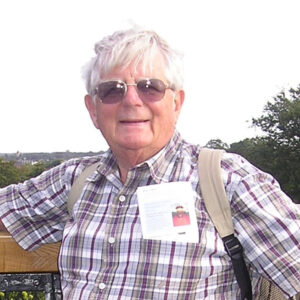
Julian Minghi posed for a photo outdoorsColleagues have praised Minghi’s energy and joyful spirit. He was “audacious and undisciplined … and a little bit playful,” in the words of Phil Steinberg, professor of political geography and arctic studies geographer at Durham University. Richard Schofield, senior lecturer in boundary studies at King’s College London, described Minghi as “a lovely man who continued to captivate my M.A. students at KCL on Geopolitics, Resources, and Territory into his 90s, delivering a usual annual clutch of lectures with relish and good humor. No one would ever call Julian a cowboy, but he did sort of die with his spurs on!”

Alexander (Alec) Murphy: professor emeritus of geography at University of Oregon, said, “Julian was an exceptionally warm, good humored, thoughtful political geographer who made pioneering contributions to the subdiscipline. His work with Roger Kasperson, The Structure …, helped to turn me toward political geography as a graduate student, and I cherished the many times we met at academic gatherings around the world. One of the great honors of my career was the invitation to give the first inaugural Julian Minghi Lecture at the University of South Carolina in 2007.”

Minghi’s knowledge of the world was always informed by his fascination with boundaries. “As a political geographer, Julian Minghi was professionally loyal to the Alps-Adriatic region,” recalled Anton Gosar, professor of geography at the University of Ljubljana. “He wrote extensively with Milan Bufon and made several field trips to the Italo-Slovenian border and organized conferences with scholars from both countries. Julian and his wife were fascinated by the mountain and Lakeland of the Julian Alps. They spent their honeymoon there and wanted to celebrate their anniversaries every year in the same facility.”

Mamadouh remembered, “One of the memorable moments was him sharing his memories of the evolution of the Italian/Slovenian border area over decades during the Cold War and after the disintegration of Yugoslavia when we were visiting Gorizia/Nova Goricia during a fieldtrip at the occasion of the Borderscapes III Conference in Trieste in summer 2012.”

Dennis Rumley, Professor of Indian Ocean Studies and Distinguished Research Fellow at Curtin University in Western Australia, called Minghi “an icon of political geography. He never got bored with borders. He was a very kind and generous man who had a wicked sense of humour. Like his favourite football team — Arsenal — Julian was always straight (talking in his case; shooting — for goal — their case). He clearly enjoyed life and had a positive and permanent impact on all who met and knew him. He will be missed by all of us.”


This memorial was prepared by Stanley Brunn, University of Kentucky, Lexington, insights and information from former colleagues and family members: Lee Minghi, Lynn Shirley, Anton Gosar, Reece Jones, David Knight, Victor Konrad, Virginie Mamadouh, Alec Murphy, David Newman, John O’Loughlin, Dennis Rumley, Richard Schofield, James Sidaway, Phil Steinberg, Peter Taylor and Herman van der Wusten.
    Share

Julia Rose Dowell

By Emily Frisan

Education: Master’s in Geography, California State University, Long Beach; Bachelor of Science in Environmental Science and Policy, California State University, Long Beach

Past Experiences: Adjunct Professor, Chabot College; Field Investigator and Community Advocate. San Francisco Baykeeper; Community Organizer and Policy Advocate, Greenaction for Health and Environmental Justice


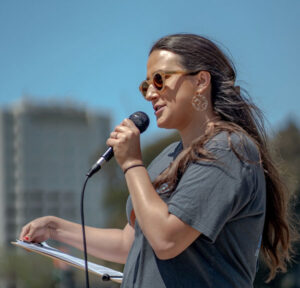
Julia Rose Dowell speaks into a microphone during a public eventGeography was always there, just out of sight for Julia Dowell. Growing up in Long Beach, California, she was aware of the impacts of industrial, gas plants, and high-traffic arterial concentrated in the backyard of marginalized communities. “With my background, if I was going to do anything with my life, it had to be using environmental science and policy to right these wrongs. Studying geography and bringing in all those concepts was the best way for me to be able to do that kind of work.”
Dowell’s commitment to a career in geography began during her last semester as an undergraduate at Cal State Long Beach. She enrolled in “International Environmental Issues,” a geography class centered on justice as the central piece to the environmental movement.

This first direct encounter with the discipline helped focus Dowell’s dedication to environmental justice on concepts of place and people, connecting the impacts of environmental pollution and climate change to people’s lives. This, in turn, has led her to activism through her role at the Sierra Club.

Dowell’s current campaign at the Sierra Club is dedicated to shutting down power plants across the state of California, specifically nearby vulnerable communities on the frontlines of the growing impacts of pollution and climate change.

“I feel like I use my geography skills every day in my current job. I took a lot of human geography courses in my masters – that was really the emphasis. I took a lot of courses on social justice and the sociospatial dialectic: how humans impact their environment and how in turn our environment impacts us. I pull in both physical science and social science, which geography sits perfectly in the middle of.”

“I’m a firm believer that geography touches every aspect of our lives and every discipline. Explore the possibilities because I really believe if you study geography, you can do anything.”


Interpreting Maps for Advocacy

“The two tenets behind the work I’m doing right now are one, to combat climate change and two, to protect communities. Both of those goals involve skills that I learned in geography. I’m always looking at geographical data: Where are these power plants? What communities are they near? What are the cumulative impacts to these communities?”

Although Dowell doesn’t create maps, her skills in interpreting and analyzing maps inform her advocacy work. She explains, “For example, there’s a statewide map called ‘CalEnviroScreen,’ and it shows the different environmental impacts in every census tract in the state. I’ll use that data overlaid with power plant data to look at which communities are most impacted.”

Gaining Expertise on the Job

The most important skill that Dowell did not obtain through school is community organizing experience. “Community organizing is really all about creating relationships with folks in impacted communities and also with other organizations that have similar goals,” Dowell explains. “I owe a lot of this experience to my first organizing job, which was at a small nonprofit called Greenaction for Health and Environmental Justice. I did a lot of organizing around toxic sites in the Bay Area.”

In addition to organizing actions and protests, the exposure, “created my confidence and built up my skill set as an advocate, which today I use to advocate to state agencies and local community advocacy. That’s something you don’t typically use or learn in an academic setting. So, it’s something that I very much learned by doing. Getting into nonprofit work was how I gained that experience. I didn’t get the chance to take a ton of environmental justice courses in either of my programs, though it was embedded in some of the courses.”

From Interest to Advocacy: The Path to Environmental Justice

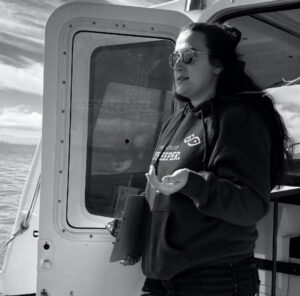
Julia Rose Dowell standing in a ship bulkhead during her work with San Francisco Baykeeper as a field investigatorIn Dowell’s previous job at environmental nonprofit, the San Francisco Baykeeper as a Field Investigator, she travelled across the San Francisco Bay Area to investigate pollution incidents such as illegal dumping or runoff, based on tips called into a hotline. Now in her current role, “it’s more about working with communities that are right next to or near power plants, [asking] the question of, ‘who’s impacting the environment’, and then ‘who’s being impacted by this pollution’. Often those are not the same people.”

Dowell’s work as an environmental geographer engages with questions of power: “Those who have the resources, those who are responsible for the climate crisis, often have the resources to insulate themselves from the impacts. By working to shut down power plants, we’re working to protect communities that have been historically at the front lines of pollution and are starting to be at the front lines of climate change impacts.”

“I feel fortunate that I get to work on these very important issues every day. I often advocate to agencies for policies that incorporate equity as we are moving towards a statewide and national scene of trying to combat climate change.”

Advice for Students

“As one of the biggest environmental nonprofits, I felt like I could make the most change somewhere like that [Sierra Club].”

As a student Dowell was advised by professionals that finding a job in the field would be difficult. Through gaining experience in more local nonprofits, she was then able to expand her work to focus on statewide issues at one of the largest environmental nonprofits, Sierra Club. “This is a field that is growing, especially with environmental issues, like climate change coming to the forefront. Don’t get discouraged – a career in advocacy and justice-oriented work is possible.”


Learn more about what a degree in geography can do for you by reading more AAG Career Profiles and discover the resources we offer for your professional development journey.

    Share

James Gordon Nelson

In May 2024, Canada lost one of its most distinguished and honored geographers, Dr. James Gordon Nelson, Distinguished Professor Emeritus of University of Waterloo in Canada.

Dr. Nelson was an internationally respected and renowned expert in conservation, protected areas, and policy, having worked all over the world, and was a leader as advocate for parks and protected areas all over Canada during a professional academic career that spanned decades. He received his B.A. from McMaster University, his M.A. from Colorado, and his Ph.D. from Johns Hopkins University. Before accepting a position with the University of Waterloo in 1975, Dr. Nelson held academic and administrative positions at the University of Calgary and the University of Western Ontario.

During his time in academia, he was a prolific scholar with hundreds of publications including dozens of peer-reviewed articles and several major authored or edited books — many with students and colleagues as co-authors. In addition, during his academic career at University of Calgary, Western University, and the University of Waterloo, Dr. Nelson advised and mentored dozens of graduate students — many of whom are today leaders in governmental agencies, NGOS, or in academia, continuing the legacy of his work. Although he retired from the University of Waterloo Department of Geography and Environmental Studies in 1998, he remained active working on book projects, with his colleagues including former graduate students. Notable publications include Protected Areas and the Regional Planning Imperative in North America: Integrating Nature, Conservation, and Sustainable Development (2003, Michigan State University Press); Places: Linking Nature and Culture for Understanding and Planning (2009, University of Calgary Press); and Amid Shifting Sands: Ancient History, Explosive Growth, Climate Change and the Uncertain Future of the United Arab (2022, Austin Macauley Publishers).

Dr. Nelson has been a member of the College of Fellows of the Royal Canadian Geographic Society, a committee member of the World Commission on Protected Areas of the International Union for Conservation of Nature and Natural Resources, a member of the National Executive Committee of the Canadian Parks and Wilderness, and Ontario’s Representative on the National Board of Governors of Heritage Canada. He has received many awards, including the first Natural Heritage Award in 1978, the Canadian Association of Geographers Award for Scholarly Distinction in Geography in 1983, the Massey Medal for the Royal Canadian Geographic Society in 1983, a Certificate of Achievement from the Grand River Conservation Authority in 1994, and the 1994 Environment Award for the Regional Municipality of Waterloo.

His loss is deeply felt by all who knew him. His legacy is one of intellectual curiosity, rigorous scholarship, and a deep commitment to the principles of ecology, geography, planning, and policy making.

    Share

Academic Freedom, Advocacy, and the Importance of Our Professional Association

Image showing silhouettes of graduates wearing caps and gowns with a sunset in the background

Photo of Patricia Ehrkamp

Many of us look forward to summer, as it tends to bring some time to rest and reflect. Alas, this summer I find it more difficult to put my mind at ease as hardly a day goes by without news of another challenge facing higher education. At the end of June, Governor Katie Hobbs vetoed House Bill 2735, which landed on her desk after passing the Arizona State Senate following much debate in and outside the legislature. The bill, purportedly drafted in response to a financial crisis at the University of Arizona, intends to concentrate decision-making power over educational matters in university regents and presidents. While House Bill 2735 has not been signed into law, challenges to faculty participation in shared governance and to academic freedom more broadly abound. Some of these challenges originate from within universities. Take, for example, the University of Kentucky, my home institution. Following a longer campaign by the university’s president, our university senate, which had curricular oversight and decision-making power with regard to educational policy, is being replaced with a faculty senate that only has advisory capacity. Similar to the intent of Arizona’s House Bill 2735, this shift consolidates educational policy decision-making power with the university president and the Board of Trustees.

Other challenges to academic freedom and even the right to free speech have followed on the heels of on-campus, often pro-Palestinian, protests and encampments in the late spring and early summer. Across the United States, colleges and universities have responded to such protests with increasing amounts of policing—arresting, suspending, and expelling students and faculty. These crackdowns infringe on the First Amendment right to protest, and they are indicative of growing restrictions to campuses as sites of open dialogue. Together with wider ranging, often sudden shifts in university policies and newly implemented rules that go into effect without notice, police force and the threat of violence toward protesters seem intent on discouraging public debate by intimidating students and faculty.

More broadly, legislatures in numerous states of the U.S. have targeted educational freedom through a number of bills that variably seek to ban particular theoretical frameworks that explain social injustice (such as critical race theory), AP Black Studies courses, or mention of inequalities, as well as DEI initiatives that seek to redress existing inequities in colleges and universities. In 2023 alone, some 45 anti-DEI bills were introduced across the country; more are underway. These legislative initiatives, as many of you know, have gone far in their attempts to undermine efforts at remedying some of the historical injustices and exclusions in higher education.

Safeguarding and Strengthening Geography for the Future

Against the backdrop of these challenges, which often appear alongside broader budgetary and demographic shifts, I felt fortunate to spend some time with department and program leaders in geography and cognate disciplines to discuss external pressures on our discipline, our departments, and workplaces at this year’s AAG Department Leadership workshop. Two days of virtual meetings that I co-organized and co-hosted with past AAG presidents Ken Foote and Rebecca Lave, and the AAG’s chief strategy officer Risha RaQuelle, made space for thinking carefully through the question of what makes a department healthy and why department health matters, a conversation that originated 20 years ago. The workshop provided ample opportunities to discuss the challenges and pressures that face higher education and geography, and to explore with expert session leaders, as well, the opportunities that such shifts in higher education and on college campuses may bring. Some of our sessions explicitly addressed the need to make the case for geography to university administrators and to our students and their parents. These latter sessions generated thoughtful discussions on what geographic inquiry and knowledge offer students in terms of career readiness skills and career paths. We discussed how to communicate (including to university administrators) geography’s integrative nature and our discipline’s ability to tackle big questions such as climate change.

And while state legislatures or some university administrators may think differently, we also talked about the importance of improving shared governance within departments in order to create better workplaces for one another and to better serve our students. Our conversations about building, expanding, and maintaining a Culture of Care in geographers’ everyday workspaces also addressed the legislative challenges to equity, inclusivity, and diversity that may require a new vocabulary and different strategies for us to continue our work toward more just geographies.

Sharing the leadership workshop space with such talented and dedicated department and program leaders not only leaves me impressed and confident in the future of geography, but also reminds me why our professional organization has such a critical and necessary role to play! For many geographers, our first introduction to the AAG comes via participating in the annual meeting or in the regional division conferences, and these remain important cornerstones of the AAG’s work to facilitate geographic knowledge production. But the AAG does much more than that on behalf of geographers. Apart from professional development and mentoring initiatives such as the annual AAG leadership workshop and the GFDA early career development workshop, the AAG supports and enriches the lives of geographers in academic and non-academic careers through its Specialty and Affinity Groups, and AAG’s new initiative to encourage Research Partnerships (the first RFP focuses on Targeted Mentoring Networks). I also encourage you to check out the educational materials on the AAG’s wetbsite and YouTube channel, such as these readings in Black Geographies and racial justice and in Queer and Trans Geographies.

As our professional organization, the AAG also plays an important role in providing guidance, leadership, and advocacy for scholar-educators and non-academic geography practitioners alike. I have been impressed with the growing efforts to integrate our collective commitments to justice, equity, diversity, and inclusion (JEDI) across the AAG’s activities to create a more equitable and more inclusive discipline of geography. The Healthy Departments Committee’s activities in support of programs facing external pressures are invaluable, and so is committee chair and AAG Past President David Kaplan’s advice for departments to be proactive. Similarly, the Elevate the Discipline initiative provides guidance and media training for geographers to engage in public scholarship that communicates geographic insights to the wider public, a worthwhile endeavor that dovetails well with immediate past president Rebecca Lave’s focus on public and engaged scholarship.

In the current moment, I especially appreciate the AAG’s leadership in climate action, support for scientific inquiry, public scholarship, inclusion, and more broadly its advocacy in support of academic and educational freedom. My own scholarly work grapples with questions of rights, care, and justice, and the attacks on shared governance, academic freedom, and civic rights feel like significant challenges to democracy itself. So, I am grateful that the AAG is one of 40 professional organizations to sign on to the American Historical Association’s Statement on 2024 Campus Protests that affirms the right to a diversity of opinions and calls on university administrators to refrain from using force to suppress protests.

As our scientific and professional organization, the AAG’s advocacy on behalf of geography is critical and I am grateful for it. But the work to keep improving our discipline and our work as geographers falls on all of us. So, I want to close with the gentle reminder that in order to create more equitable worlds of geography and for geographers, all of us are called upon “to uphold equity, human rights, and educational freedom.”


Please note: The ideas expressed in the AAG President’s column are not necessarily the views of the AAG as a whole. This column is traditionally a space in which the president may talk about their views or focus during their tenure as president of AAG, or spotlight their areas of professional work. Please feel free to email the president directly at P.Ehrkamp@uky.edu to enable a constructive discussion.

    Share

Philip W. Porter

We mourn the passing of, but also celebrate the life of, Philip (Phil) Wayland Porter, a stalwart member of the University of Minnesota’s Department of Geography between 1958 and 2000. Phil died in Hanover, New Hampshire on April 24, 2024, just two miles from the place of his birth, surrounded by his family (predeceased by his lifelong life partner Patricia Garrigus Porter in December 2021).

Phil was born on July 9, 1928, in Hanover, the son of Wayland R. and Bertha (La Plante) Porter. He graduated from Kimball Union Academy in 1946, where his father taught mathematics and physics and his mother was a librarian. He then earned his A.B. in Geography at Middlebury College in 1950 (where he also was on the ski-jumping team), his M.A. at Syracuse University in 1955 (after two years in the U.S. Army, 1952-4), and his Ph.D. from the London School of Economics in 1956 (“Population Distribution and Land-use in Liberia”). He immediately joined the University of Minnesota department as an instructor, then assistant professor, advancing to associate professor in 1964 and professor in 1966. He chaired the Department of Geography (1969-71), directed the University’s Office of International Programs (1979-83), served on the National Academy of Sciences Committee on Space Programs for Earth Observations (1967-1971) and was a liaison officer for Midwest Universities Consortium for International Activities (1979-1983).

Phil’s first and enduring scholarly commitment was to understanding Indigenous agricultural practices in east Africa, undertaking career-long ethnographic fieldwork, initially with anthropologists, that began with Walter Goldschmidt’s Culture and Ecology in East Africa Project (1961-2). He taught at the University of Dar Es Salaam for two years (1971-73), overlapping with members of the influential The Dar es Salaam School of African History, introducing his daughters to rural African life through many trips in their Land Rover. This scholarship was summarized in two monographs: Food and Development in the Semi-arid Zone of East Africa (Syracuse: 1979) and Challenging Nature: Local Knowledge, Agroscience, and Food Security in Tanga Region, Tanzania (Chicago: 2006). In recognition, he received the inaugural Robert McC. Netting Award from the AAG Cultural and Political Ecology Specialty Group in 1999. His quiet but firm personal and intellectual support was vital for those students seeking to make a better world.

Phil’s interests in geography ranged far and wide. He was intrigued with John K. Wright and the geography of ideas. He was a passionate and innovative cartographer. Among his many published articles, he wrote on economic potentials, the point of minimum aggregate travel, the impact of climate on human activity, human ecology and agro-ecological modeling. During the last three decades of his career, he became particularly interested in critical development studies. This began with an AAG Resource Paper with Anthony de Souza, “The Underdevelopment and Modernization of the Third World” (AAG: 1974), was deepened through his annual undergraduate course on development, and culminated in the textbook A World of Difference (Guilford: 1998, 2008, with Eric Sheppard, Richa Nagar and David Faust). Former colleagues and advisors have described him as a “towering scholar”, “one of the most amazing polymaths and ‘renaissance men’ I’ve ever met”, “incredibly gracious”, and “genuinely curious rather than threatened by new ideas.”

Phil was a quietly reliable anchor of the department, with the capacity to talk with anyone and a puckish sense of humor. His students adored him, graduate and undergraduate alike, queueing outside his office to seek out his wisdom and bathe in his invariable support. He developed an innovative introductory course, in which students were asked to rotate the globe to a new north pole of their own choosing and tasked as teams to produce and rationalize an atlas reconstructing its human and physical geography of this hypothetical globe. The course on “Third World Underdevelopment and Modernization” was similarly made unforgettable by Phil’s extraordinary teaching style. David Faust, who had a chance to serve as a TA and co-instructor for this course, recalls:

“One day Phil would walk into the classroom and remark, ‘I want to show you something from one of my ancestors. Pay careful attention, because this is from one of your ancestors, too.’ He would hold out what appeared to be an ordinary rock. ‘This is a hand axe. You hold it like this. Try it.’ And he would pass it around. Another day he would enter the class carrying a rickety wooden turntable and a couple of bricks. He would ask for a volunteer to stand on the turntable, take a brick in each hand and be spun, extending their arms to make the spinning slow, and bringing them close to their chest to speed up the spinning, just as a figure skater does. This was to demonstrate conservation of angular momentum as part of a lesson about atmospheric circulation.”

Regents Professor Emeritus Eric Sheppard, lead author of this memorial, recalls:

“I first met Phil when I interviewed for the position at Minnesota in 1976. I had no idea who he was when I arrived; a young, overconfident quantitative turk. The only names familiar to me were Fred Lukermann, John Adams and Yifu Tuan, I was here to transform the department. Prior to my talk, the graduate students took me out for a liquid lunch at what was then Bulwinkles, after which I was put in the chair’s office to prep my presentation on geographic potentials (the topic of my Ph.D.). Idly leafing through old copies of the Annals, I was shocked & disconcerted to find a paper authored by Phil and Fred on … geographic potentials. Needless to say, this was a bit embarrassing. I managed to get through the talk with both Phil or Fred being nice enough not to mention their paper (which I had not read; my article on this topic also appeared in the Annals a couple of years later, after it had been rejected and my advisor had prevailed on the editor, John C. Hudson, to change his mind). In the end it was the department that transformed me, and Phil played a key role. I spent the last decade of my career doing the same kind of qualitative research that characterized his lifelong scholarship.”

Former Ph.D. advisee Richa Nagar notes: “Phil played a major role in molding me as a learner, an educator, and a human, and he taught me to better appreciate the unpredictable poetry of the world we live in.” She recalls a moving incident from Fall 1990:

“Phil’s class on ‘Geography of Africa’ inspired me to undertake a directed study with him on the history of Asian communities in East Africa. That same quarter, I also committed to a two-quarter long course sequence in ‘Historical Sociology’ with Ron Aminzade and Barbara Laslett, who required the students to study primary research documents during the second quarter. I came across an article with a footnote which stated that Robert Gregory, a retired professor at Syracuse University, had boxes full of interviews that his students had conducted with Asians in Kenya, Uganda, and Tanzania in the 1970s. I shared my wish with Phil in our directed study meeting, ‘I would’ve loved to examine those interviews for my Historical Sociology assignment.’ A week later I found a check from him in my department mailbox. It had a Post-it note: ‘Go book your plane ticket to Syracuse and read those interviews.’ I went to Phil in disbelief and asked why he had given me the check. He said, ‘I have some research money but your research is more important at this time. This is your Christmas present.’”

The annual Christmas parties, hosted by Phil and his wife Pat, were the major departmental social event of the year drawing almost everyone to feast and even sing carols, irrespective of their religious affiliations. His annual party invitations were also legendary; each year he would pick a letter of the alphabet, plumb his well-thumbed dictionary, and write a page-long invite using words only beginning with that letter.

Phil’s other abiding passion was music, particularly choral music by J.S. Bach. He regularly sang and performed with Pat, organist and choir director at Minneapolis’ First Congregational Church (1957-1971) and then Grace University Lutheran Church (1976-2000). In choirs, the other basses competed to sit nearby so that they could rely on his ability to read music and sing the right notes. After retirement, Phil and Pat returned to New Hampshire, where their lives alternated between scholarly senior living near Dartmouth College, and summers in the sprawling family cottage on Lake Sunapee. He is survived by three daughters, Janet E. Holmén, Sara L. Porter, and Alice C. Porter, as well as five grandchildren and two great grandchildren.

This memorial was contributed by Eric Sheppard, Richa Nagar, and Abdi Samatar on behalf of the Department of Geography, Environment, & Society, University of Minnesota.

    Share

Margaret FitzSimmons

Margaret I. FitzSimmons, a respected geographer in the field of urban planning and environmental studies, died April 3, 2023, in Santa Cruz surrounded by family and friends. She was 76.

Born into a lineage of esteemed geographers, she carried forward the legacy and passion for the environment. Her grandfather, Carl Sauer, a prominent figure in the field, influenced her interest in human-environment interactions. Margaret’s academic journey included undergraduate studies in psychology at Stanford, a master’s degree in geography from California State University, Northridge and a Ph.D. in geography from UCLA.

Her scholarly contributions were both profound and practical, Her dissertation examined the relationship between nature, labor, and capital in California’s agricultural heartlands. Her insights into the political ecologies and environmental history of the Salinas Valley was innovative theoretically but also relevant to understanding and solving real-world problems. She received the Nystrom award from the American Association of Geographers for her dissertation work. Her publications in journals such as Economic Geography and Antipode have been widely cited and respected, especially her Antipode paper on “The matter of nature.” Her book, Thirst for Growth: Water Agencies as Hidden Government in California, co-written with Robert Gottlieb, remains a seminal work in the field, highlighting issues of public accountability and water policy innovation.

In 1980, Margaret was appointed assistant professor in urban planning in UCLA’s Graduate School of Architecture and Urban Planning, where she was instrumental in developing the Environmental Analysis and Policy concentration. In 1994, she moved to UC Santa Cruz’s Environmental Studies program, retiring in 2015.

Margaret’s teaching was characterized by its breadth and depth, reflecting her belief in the power of interdisciplinary approaches to understanding complex environmental issues.  She was a devoted mentor to graduate students and colleagues and a thoughtful and inspiring teacher. In 1991, FitzSimmons received UCLA’s Distinguished Teaching Award and in 2016, her former Ph.D. students organized a gathering and dinner at the AAG annual conference as a tribute to their mentor.

Margaret was a longstanding AAG member who made significant contributions to understanding the geographies of agriculture and water, political economy of environment, and nature-society theory. In 2024, the AAG received initial funding from her trust for an award in her name, administered by the Cultural and Political Ecology Specialty Group. The endowed Margaret Irene Fitzsimmons Early Career Award recognizes the innovative work of an early career scholar in nature-society relations, including research, teaching, and outreach.

Her loss is deeply felt by all who knew her. Margaret’s legacy is one of intellectual curiosity, rigorous scholarship, and a deep commitment to the principles of social and environmental justice.

    Share

Statement of Professional Ethics

Endorsed by the Council of the American Association of Geographers: October 18, 1998; updated April 5, 2005; revised November 1, 2009; revised March 15, 2021; and revised June 12, 2024.


I. Preamble

Geography is a field of study that examines the relations among people, places, and the more-than-human world. Geographical scholarship spans the natural and social sciences as well as the humanities and arts and is undertaken in many different social and environmental contexts. Thus, in our research, teaching, and professional life, geographers are confronted with a wide variety of ethical considerations, each requiring careful reflection and thoughtful action.

Our discipline of geography is stronger when we uphold equity, human rights, and educational freedom across the breadth of geographic inquiry. We appreciate the diversity of our members’ experiences and backgrounds, as well as the broad variety of ideas and approaches to geographic knowledge production.

This Statement on Professional Ethics outlines core principles to inform the ethical conduct of members of the American Association of Geographers (AAG) and the geographical community more broadly. These principles provide general guidelines applicable to geographers working in diverse professional settings. AAG members, in particular, are urged to familiarize themselves with, reflect on, and act in accordance with these principles when working in a professional capacity. Members of the AAG are required to abide by AAG’s Professional Conduct Policy and Procedures, and many geographers must also conform to ethical requirements related to research with human subjects as interpreted and enforced by institutions and funders. Geographers also belong to multiple professional communities, each with its own ethical standards. This Statement should therefore be viewed in conjunction with these other codes, statements, and standards.

This Statement is written with the intent to encourage active, thoughtful engagement with ethical issues in relation to the various circumstances that geographers encounter in their professional lives. These principles address general circumstances, priorities, and relationships, and should therefore be seen as starting points for consideration of the ethical issues attendant to our activities as professional geographers. Each of us must be ready and willing to make, and be equipped to defend, ethical choices that also go beyond the principles laid out here.

II. Do Good: Respect People, Places, and the More-Than-Human World

Geographers should respect people, places, and the more-than-human world in all aspects of our work as professional geographers. Respect for well-being underlies the principle of doing no harm, actively affirming the responsibility of geographers to use our work to enhance the well-being of others, especially for those who are most vulnerable to harm. The principle of respect acknowledges that all geographical knowledge is situated and should depend on building relationships informed by an ethics of care for the well-being of both human and non-human lives as well as the places and environments they call home. Geographers should therefore make reasonable efforts to treat those with whom we interact with dignity and respect, conducting ourselves with honesty and integrity when engaging in academic and professional activities.

  1. Honor Refusal and Data Sovereignty: It is crucial to honor individuals’ and communities’ right to refuse to participate in research, to allow access to their lands for the collection of biophysical data, or to agree to publication of knowledge researchers gain from them or their land.
  2. Respect Research Participants: An important sign of respect and care in geographical scholarship involving human subjects is conducting research with, rather than on, participants and avoiding exploitative or extractive research. Geographers must be accountable not only to our own professional communities but to all of the relations involved in the production and dissemination of geographical knowledge. Geographers should act with particular care in Global North — Global South relationships which historically have been affected by an unequal plain of knowledge construction. Geographers should also carefully reflect upon how we represent ourselves, research participants, and places in our research, teaching, and professional life. Respectful geographical scholarship is based upon an appreciation for reciprocity with research participants in the co-production of geographical knowledge. Reciprocal relationships are built through active listening and an obligation to share the benefits of geographical research with those it directly affects. Acknowledgement of power differentials and privileges is part of creating more reciprocal relationships in research and geographical knowledge construction praxis.
  3. Non-Human World: The principle of respect also extends to the treatment of non-human entities individuals, groups, species, and ecosystems affected by geographical research. Geographers have an ethical obligation to develop geographical knowledge that aims to alleviate the harms caused by anthropogenic environmental change. Geographers should seek to enhance the well-being of more-than-human lives and the environmental conditions conducive to their survival and capacity to thrive. In circumstances where the well-being of one living entity negatively impacts the well-being of another, geographical researchers should carefully consider how our own interventions may affect the well-being and survival of all parties before deciding whether or how to intervene.

Consideration and respect for the non-human world include the following:

  • A commitment for individuals to reduce their GHG emissions in relation to conference participation, etc.
  • Weighing the necessity of travel with regard to how many professional meetings one attends, how far one travels, or if one attends virtually.
  • Using less GHG intensive means travel (train/carpool) where practical and possible.

III. Do No Harm

An overarching ethical principle, serving as the basis for all academic and professional activities of geographers, is that we should do no harm. Our activities inevitably affect the people and places we study, societies, ecosystems, biodiversity, climate and landforms, our students, and those who help make our work possible. It is imperative that both prior to and during the performance of our professional work — ranging across human geography, physical geography, nature-society geography, and GIScience — each geographer should think through the possible ways that our activities might cause harm. Harms include those affecting the dignity, livelihood, and well-being of human and non-human lives as well as the resilience and sustainability of ecosystems and environments. Beyond direct harm, we should also consider long-term and indirect implications, and possible unintended consequences, being willing to step back from or terminate those activities when harm feels unavoidable. The obligation to do no harm should supersede other goals of seeking or communicating new knowledge.

  1. Recognize Power Hierarchies: In making assessments of potential harm, geographers must be sensitive to the unequal power relationships surrounding our activities. We frequently occupy powerful positions relative to our research participants, and it is all too easy for us to be unaware of, or to forget, the impact that these power imbalances can have on those affected by geographical research. Our activities and reflections require special care when the subject matter involves Indigenous peoples, racialized or ethnic minorities, Global South based populations and other vulnerable groups, including when research is conducted with and by members of those groups.
  2. Care for Others: Caring also means that geographers, when possible, engage in reciprocal scholarship and research activities that promote horizontal relationships. Potential issues include physical and social threat and danger to participants both from outside and within such communities, violation of their intellectual property, and threats to the viability of a group and its territory. These can stem not only from published data, but also from the data collection process itself. Information thus should not be extracted from such communities without their consent. Benefits to the community must be recognized as such by the community, and it is particularly important for researchers to consider whether they are accepting funds from sources whose agendas are seen as hostile to such communities. All AAG journals, publications, and presentations at national and regional division meetings of the AAG require an acknowledgement of funding sources.
  3. Be Conscientious: Geographers must exercise the utmost caution and conscientious consideration when interacting with non-human entities, individuals, groups, species, and ecosystems, acknowledging and reflecting upon the potential harm that may arise from their activities. Where methods and activities may be invasive or potentially cause long-term alterations to environments, strong justification and appropriate safeguards are reasonable obligations. In such situations, the costs and benefits of the research and professional activities should be weighed carefully in advance, not just once the work is underway, and be continually reassessed throughout the research process.
  4. Abstain From Actions That Pose Serious Risk: Actions that pose serious risks to the dignity and well-being of participants or other affected parties fall outside the boundaries of accepted geographical scholarship and have no place within the academic study and professional practice of geography. Geographical scholarship depends upon the right to academic freedom, but academic freedom cannot justify violating the well-being of human and non-human lives. It thus follows that geographers should eschew collaborating with or seeking funding from public or private organizations known to participate in warfare or similar acts of violence – such as those associated with the military, intelligence, security, or police – without adequate ethical safeguards, since such participation can create risks for both researchers and the researched. When such collaboration is deemed ethical, geographers are responsible for prominently and publicly reporting such relationships.

IV. Maintain Ethical Professional Relationships

Respect the Rights of Others: Geographers must engage with colleagues, research associates, students, and staff in a respectful manner. This includes respect for the rights of others, a refusal to spread gossip, a commitment to discussing differences openly and honestly, and attention to the power asymmetries in which we are all embedded. Geographers must not plagiarize, fabricate or falsify evidence, or knowingly misrepresent information. Representations of others’ work should be devoid of prejudice or malice, notwithstanding differences of interpretation, translation, personality, ideology, theory, or methodology. We should take time to reflect before posting online, avoiding cyberbullying and abusive language. However, raising ethical concerns about the conduct of others does not, in itself, constitute cyberbullying if there are reasonable grounds for such concerns and they are presented in a professional manner.

  1. Collaborate with Care: The scope of collaboration, rights, and responsibilities of those participating, co-authorship, credit, and acknowledgment should be openly and fairly established at the outset. We must be particularly attentive to actual or perceived conflicts of interest, exercising care to protect the interests and well-being of the less powerful.
  2. Foster Diverse Professional Communities: Geographers should strive to create and maintain a diverse, pluralistic, and inclusive professional community. It is our moral responsibility to respect the dignity of all, valuing a diversity of intellectual commitments and respecting individual differences. In particular, we should continually work to empower the voices and views of underrepresented communities.
  3. Be aware of unconscious bias: Unconscious biases are involuntary associations that are learned through socialization and activated unconsciously. Unconscious biases (also known as implicit biases) are deeply ingrained and pervasive and every individual regardless of their age, gender, ability, race, ethnicity, etc will automatically display them.  These biases may skew towards either a positive or negative outcome.  Unconscious biases influence decision making and can lead to discriminatory practices in hiring, promotion and tenure, grading, and assessment, etc.  Geographers should strive to minimize these biases by increasing their awareness and working towards understanding their own individual biases (e.g. through training) and putting in place effective mitigation strategies.
  4. Engage in Inclusive Teaching: Diversity should also be central to teaching and advising. Instructors should strive to create a classroom environment that fosters respect for and engagement across different learning styles, interpretations, and theoretically informed perspectives, in ways that empower underrepresented positionalities and identities and create safe learning spaces. Instructors should take student perspectives that differ from or critique their own views as seriously as they are presented, modeling for others the value of respectful disagreement and debate.
  5. Respect and Mentor Teaching Assistants: Teaching assistants should be treated with respect, as full partners in delivering a course: departments and instructors should actively foster the pedagogical development of teaching assistants, provide clear instructions about expectations and timely feedback on their performance. Departments and instructors should ensure that teaching assistants’ overall workload does not exceed their contractual obligations and provide mentoring and pedagogical training. Teaching assistants should be encouraged to keep track of their workload and time, and departments should provide clear mechanisms for raising workload concerns with their department chair, TA coordinator, and/or Director of Graduate Studies.
  6. Engage in Holistic Graduate Advising: Advisors should be attentive to students’ overall well-being, including mental health and work/life balance, standing ready to provide personal support and facilitate access to professional counseling when appropriate. Graduate advising includes a commitment to training and respecting students as future colleagues in the profession, discussing students’ career goals with them, providing advice on coursework and research projects, and having regular check-ins on progress toward these goals. To this end, advisors and advisees may want to enter into mutually agreed upon advising contracts that clarify faculty and graduate student commitments. Graduate advising further includes giving timely feedback on work in progress (such as theses, funding applications, and manuscript drafts for publications) and helping prepare students for the academic and non-academic job markets, in part by giving feedback on application materials. For a helpful guide see The University of Michigan’s How to Mentor Graduate Students.
  7. Commit to Inclusive Hiring Practices: Treat job applicants and referees with respect by
    • Making sure to only ask letters from narrower list of candidates rather than at the initial submission date.
    • Being conscious of the fact that job search processes are stressful for applicants and, where possible, keep applicants informed about the progress of the search (letting them know if they are no longer in the running as soon as that’s practical instead of not communicating or only sending a form letter after a year.)
    • Protecting and respecting the privacy and confidentiality of applicants and of the search process.
    • Treating everyone humanely. Geographers should be considerate of the stresses and find ways to support applicants, including those who do not get hired.

V. Do Not Discriminate and Harass

Geographers must not discriminate, harass, bully, or engage in other forms of professional misconduct as defined by the AAG Professional Conduct Policy and Procedures. AAG members should familiarize themselves with their obligations as set out in this document, including procedures for acting on and reporting harassment.

  1. Ensure Fair Evaluations: In evaluating the professional performance of peers and other employees, geographers should not discriminate against individuals or groups using criteria irrelevant to professional performance. Such irrelevant criteria generally include (but are not limited to) age, class, ethnicity, gender, marital status, nationality, politics, physical disability, race, religion, and/or sexual orientation.
  2. Adhere to Fair Employment Practices: In addition, geographers should adhere to fair employment practices. They should not discriminate against individuals or groups using criteria irrelevant to the positions for which they are hiring. Geographers are encouraged to strive for inclusivity, justice, and equity in all employment practices.

VI. Obtain Informed Consent for Research, Manage Data Responsibly, and Make Results Accessible

Geographers working with human communities must obtain free, prior, and informed consent of research participants. The consent process should be a part of project design and continue through implementation as an ongoing dialogue and negotiation with research participants. Minimally, informed consent includes sharing with potential participants the research goals, methods, direct and indirect funding sources or sponsors, expected outcomes, anticipated impacts of the research, and the rights and responsibilities of research participants. It must also establish expectations regarding anonymity and credit. Researchers must present to research participants the possible impacts of participation, and make clear that despite their best efforts, confidentiality may be compromised or outcomes may differ from those anticipated.

  1. Obtain Institutional Approval: Geographers whose research involves humans, based in countries where there is an Institutional Review Board (IRB) or similar process, must obtain institutional approval and follow its stipulations about informed consent, modification of research practices, reporting of adverse events, etc. In countries where there are no IRB processes, geographers, should obtain permission from the communities they will contribute to. Geographers should also familiarize themselves with relevant documents on which such consent is based; in the US, this is particularly informed by the Belmont Report: Ethical Principles and Guidelines for the Protection of Human Subjects of Research. At the same time, geographers should be aware that considerations of ethics go beyond and may in some circumstances differ from such rules.
  2. Take Informed Consent Seriously: The informed consent process is necessarily dynamic, continuous, and reflexive. When research changes in ways that may directly affect participants, geographers must revisit and renegotiate consent. The principle of doing no harm means that the right to refuse research goes beyond specific individuals approached through the IRB process, and also includes the right of communities to refuse participation. Informed consent does not necessarily imply or require a particular written or signed form. It is the quality of the consent, not its format, which is relevant.
  3. Share Findings: Whenever appropriate, results of research should be shared with research participants, local colleagues, host agencies, and affected persons and communities in a format that is accessible to them. Whenever possible, acknowledgement, including authorship, should be determined in a fair and transparent manner.
  4. Make Data Available: In general, geographers should make data and findings publicly available to the greatest extent allowable by funding agencies, IRB protocols, and by our ethical principles, and in a fashion that is consistent with the goal of doing no harm to the people, places, and environments we study. Thus, in some situations, generalization or other measures such as the use of pseudonyms will be necessary to protect privacy, confidentiality, and limit exposure to risks. Most funding agencies have guidelines for the use and distribution of data and research findings, and may require a data use agreement as a condition for grant or contract awards. Such an agreement may include provisions designed to protect de-identified data from re-identification, and conditions relating to data storage, protection, publication, and transmission. Geographers should carefully document how datasets are collected, constructed, and managed, and carefully guard against any data breaches, while promptly notifying affected individuals or communities if a breach does occur. Geographers should reflect carefully on the potential problems that so-called “big data” pose with respect to data management, de- and re-identification, and privacy.
  5. Protect Privacy and Confidentiality: Geospatial technologies introduce further challenges with respect to potential violations of privacy and confidentiality of individuals and groups. In using these technologies, researchers should make reasonable efforts to protect the health, well-being, and privacy of research participants. Understandings, expectations, and preferences regarding privacy differ across and within societies. Further, privacy depends on the nature of the data, the context in which they were created and extracted, and the expectations and norms of those who are affected. Particular efforts should be made to guard against any breaches, especially when such data could be used to undermine the interests of communities or community members, and when specific agreements have been made to keep such data out of the public domain.The following examples of research approaches involving geospatial technologies are particularly likely to raise issues of privacy and confidentiality, and therefore should be undertaken with special care: (1) automated tracking of the locations and movements of individuals or vehicles; (2) the use of images from satellites, aircraft, UAVs (drones), or ground-based sensors that are of sufficient resolution to identify individuals or vehicles; (3) the use of high resolution geographic location to link data in ways that violate personal confidentiality; and (4) any use of big data that compromises privacy, confidentiality, or violates other ethical principles in this Statement, even when such data is considered publicly available. The use of geospatial technologies and other geographical techniques within the context of warfare, or to support other acts of violence, is inconsistent with principles of doing no harm and securing free, prior, and informed consent, and is therefore outside the boundaries of ethical geographical research and practice.
  6. Disclose the Use of Artificial Intelligence (AI): AI is becoming increasingly prevalent in the geographic professions. Geographers should acknowledge and carefully document the use of AI (such as ChatGPT, Microsoft CoPilot) in their scholarship, teaching, grant applications and correspondence, and provide a careful rationale for how and why they used these technologies.

VII. Disclose Funding Sources, Affiliations, and Partnerships

  1. Maintain Ethical Integrity: Geographers should reject funding from any sponsor that compromises the principles of ethical research. The conditions under which data can be used, and restrictions on the use of data after the end of a research project, should be clarified prior to accepting funds. Ethical quandaries are particularly likely to be encountered when seeking funding from military, intelligence, security, and policing agencies as well as private corporations to support research or to undertake government- or corporate-sponsored projects. Geographers should be open and candid, avoiding undertaking any task that requires us to compromise our professional and ethical responsibilities.
  2. Disclose Funding Sources: All funding sources, affiliations, sponsorships, and partnerships should be fully disclosed in an understandable manner at the time that informed consent is requested from research participants, because prospective participants have the right to assess this information as they consider giving or withholding consent. Where relevant, geographers should undertake due diligence to trace and disclose not just intermediary but also original funding sources. Transparency and disclosure also mean reporting in a timely fashion any changes in funding sources, affiliations, or partnerships to affected individuals or communities during the course of research.
  3. Be Transparent: Disclosure and transparency must be practiced throughout the research process, from the first stages through to the dissemination of research results in journals and other publications. Such transparency in the disclosure of funding source reporting, affiliations, and partnerships also applies to presentations of geographical research at AAG and AAG-affiliated meetings as well as in other scholarly and professional forums. Disclosure of funding sources is required for publication in AAG journals and for presentations at the Annual Meeting of the AAG and at the meetings of its regional divisions. Both during the research process and in any related publications and presentations, geographers should make explicit the extent to which governments, corporations, or other funding entities have limited or restricted research efforts.
  4. Exercise Ethical Judgment: In addition to disclosure, geographers should bear in mind that there may be other ethical implications involved in accepting funding and sponsorships. Geographers should carefully consider with due diligence the ethical integrity of those sources as well as conditions or expectations implied by any particular funding, sponsorship, affiliation, or partnership, and be ready to defend our decisions on ethical grounds. Similarly, ethical judgements about funding sources may extend beyond research to teaching, such as teaching in specific programs that are externally supported. Individual geographers should encourage their departments or other units to evaluate, reflect upon, and engage in thoughtful debate regarding the ethical implications of accepting such funding support, particularly in relation to the principle of doing no harm.

VIII. Weigh Competing Ethical Obligations

Ethics are not based on absolute moral standards but are situational. This means taking into account the particular context of an act. In this spirit, geographers must weigh competing ethical obligations to research participants, students, professional colleagues, employers, and funders, among others, while recognizing that obligations to research participants are usually primary. These varying relationships may create conflicting, competing, or crosscutting ethical obligations, reflecting both the relative vulnerabilities of different individuals, communities, or populations, asymmetries of power implicit in these scholarly relationships, and the differing ethical frameworks of collaborators representing other disciplines or areas of practice. These considerations may also include geographers’ own safety, especially if they are a member of a marginalized group, or in cases where research participants, funders, or sponsors are in a position of power over the researcher.

Geographers must often make difficult decisions among competing ethical obligations while recognizing our obligation to do no harm. We remain individually responsible for making thoughtful and defensible ethical decisions. If geographers’ ethical responsibilities conflict with law, regulations, or other governing authority, we should clarify the nature of the conflict and take reasonable steps to resolve the conflict consistent with the principles of ethics laid out in this Statement on Professional Ethics.


Links to other ethics statements

AAA Ethics Statement (2012)

AAA Ethics Forum

AGU Scientific Integrity and Professional Ethics Policy

APA Ethics Code (2017)

APSA Ethics Guide (2017)

ASA Code of Ethics

ASPRS (American Society for Photogrammetry and Remote Sensing)

ESA (Ecological Society of America) Code of Ethics (2020)

GIS Code of Ethics (URISA)

GIS Professional Ethics Project (2011)

IAPG (International Association for Promoting Geoethics) (2016)

IPSG (Indigenous People’s Specialty Group) of AAG (2009)

San Code of Research Ethics (2017)

Resources

Aijazi, Omer, Emily Amburgey, Bina Limbu, Maonj Suji, James Binks, Courtney Balaz-Munn, Katherine Rankin, and Sara Shneiderman. 2021. The ethnography of collaboration: Navigating power relationships in joint research. Collaborative Anthropologies 13(2): 56-99. 10.1353/cla.2021.0003

Arceño, Mark Anthony, Deondre Smiles, Emelie Bailey, Anurag Mazudmar, Thelma Vélez, J.P.Wilson, Kelly Yotebieng, and Kendra McSweeney. 2020. (Too) great expectations?: On fieldwork guidelines and ethics in human Geography. AGITATE! Blog: https://agitatejournal.org/too-great-expectations-on-fieldwork-guidelines-and-ethics-in- human-geography-by-mark-anthony-arceno-deondre-smiles-emelie-bailey-anurag-mazumdar-thelma-velez-j-p-wilson-kelly-yotebieng-k/

Armstrong, Marc P. and Amy J. Ruggles. 2005. Geographic information technologies and privacy. Cartographica, 40(4): 63–73

Askins, Kye. 2007. Codes, committees and other such conundrums. ACME 6(3): 350-359.

Askins, Kye. 2008. In and beyond the classroom: Research ethics and participatory pedagogies. Area, 40(4), 500-509.

Blake, Megan K. 2007. Formality and friendship: Research ethics review and participatory action research. ACME 6 (3):411-421.

Barnett, Clive. 2011. Geography and ethics: Justice unbound. Progress in Human Geography, 35(2), 246-255

Boyd, William E., Healey, R. L, Hardwick, S. W., Haigh, M., Klein, P., Doran, B., Trafford, J., and Bradbeer, J. 2008 ‘None of us sets out to hurt people’: The ethical Geographer and Geography curricula in higher education, Journal of Geography in Higher Education, 32 (1), 37-50.

Cahill, Caitlin, Farhana Sultana, and Rachel Pain. 2007. Participatory ethics: politics, practices, institutions, ACME, 6(3): 304-18.

Craggs, Ruth, and Hannah Neate. 2023. Decolonising Geography? Disciplinary histories and the end of the British Empire in Africa, 1948-1998, Wiley, 288 pp.

Crampton, Jeremy. 1995. The ethics of GIS. Cartography and Geographic Information Systems, 22(1): 84–89.

Cronin-Furman, Kate and Lake, M. 2018. Ethics abroad: Fieldwork in fragile and violent contexts PS: Political Science & Politics, 51 (3) pp. 607-614

Cutchin, Malcolm P. 2002. Ethics and Geography: continuity and emerging syntheses. Progress in Human Geography, 26(5), 656-664.

Dhanju, Richa and Kathleen O’Reilly. 2012. Human subjects research and the ethics of intervention: life, death and radical Geography in practice. Antipode. 45(3): 513-516.

Dowling, Robyn. 2000. Power, subjectivity and ethics in qualitative research, in Iain Hay (ed.), Qualitative Research Methods in Human Geography. Oxford University Press. pp. 23-36.

Dyer, Sarah. and David Demeritt. 2009. Un-ethical review? Why it is wrong to apply the medical model of research governance to human Geography. Progress in Human Geography, 33 (1): 46- 64.

Griffith. Daniel A. 2008. Ethical considerations in geographic research: What especially graduate students need to know. Ethics, Place, and Environment 11 : 237-253.

Hagerty, Kevin D. 2004. Ethics creep: governing social science research in the name of ethics. Qualitative Sociology, Vol. 27, No. 4, Winter.

Hay, Iain and Paul Foley. 1998. Ethics, Geography and Responsible Citizenship. Journal of Geography in Higher Education 22 (2): 169-183.

Hay, Iain and Mark Israel. 2009. Private people, secret places: Ethical research in practice. In Michael Solem, Kenneth Foote and Janice Monk, Aspiring Academics: A Resource Book for graduate students and early career faculty, pp. 167-178.

Hopkins, Peter E. 2007. Positionalities and knowledge: Negotiating ethics in practice. ACME 6 (3):386-394.

Israel, Mark. 2014. Research ethics and integrity for social scientists: Beyond regulatory compliance. Second Edition. Sage.

Joshi-McCutcheon-Sweet, Shangrila Priscilla Elizabeth. 2015. Visceral geographies of Whiteness and invisible micro-aggressions. ACME 14(1): 298-323. DOI: http://acme-journal.org/index.php/acme/article/view/1152

Katz, Cindi. 1994. Playing the field: Questions of fieldwork in Geography, The Professional Geographer, 46:1, 67-72, DOI: 10.1111/j.0033-0124.1994.00067.x

Knott, Eleanor. 2019. Beyond the field: Ethics after fieldwork in politically dynamic contexts. Perspectives on Politics, 17(1), 140-153. doi:10.1017/S1537592718002116

Koopman, Sara. 2016. Beware: Your research may be weaponized. Annals of the American Association of Geographers 106(3): 530-535.

Lee, Roger. and David M. Smith, eds., 2011. Geographies and moralities: International perspectives on development, justice and place. John Wiley & Sons.

Liboiron, Max. 2021. Decolonizing geoscience requires more than equity and inclusion. Nature Geoscience 14: 876–877. https://doi.org/10.1038/s41561-021-00861-7

Louis, Renee Pualani. 2007. Can you hear us now? Voices from the margin: Using indigenous methodologies in Geographic research. Geographical Research 45(2): 130-139.

Lunn, Jenny. 2020. Fieldwork in the Global South: Ethical challenges and Dilemmas. Routledge.

Martin, Deborah and Joshua Inwood 2012. Subjectivity, power and the IRB. Professional Geographer 64(1): 7-15.

Nagar, Richa, and Frah Ali. 2003. Collaboration across borders: Moving beyond positionality. Singapore Journal of Tropical Geography 24(3):356-372.

Olson, Elizabeth. 2022. Crossing from knowledge to responsibility for climate change.” The Professional Geographer 74(1): 141-142.

Olson, Elizabeth. 2018. Geography and ethics III: Whither the next moral turn? Progress in Human Geography, 42(6), 937-948.

Onsrud, Harlan. J. 1995. Identifying unethical conduct in the use of GIS. Cartography and Geographic Information Systems, 22(1): 90–97

Palmer, Jane, Dena Fam, Tanzi Smith, and Sarine Kilham. 2014. Ethics in fieldwork: Reflections on the unexpected. Qualitative Report. 9. 1-13.

Pickerill, Jenny 2014. The ethics of fieldwork. Blog. https://shefgeographylives.wordpress.com/2014/11/21/the-ethics-of-fieldwork-prof- jenny-pickerill/

Pole, Christopher and Sam Hillyard. 2016. Fieldwork: values and ethics, in Doing fieldwork pp. 77-106 Sage Publications. https://www.doi.org/10.4135/9781473966383

Popke, Jeff. 2007. Geography and ethics: Spaces of cosmopolitan responsibility. Progress in Human Geography 31(4): 509-518.

Popke, Jeff. 2009. The spaces of being in-common: Ethics and social Geography. In The Sage Handbook of Social Geographies, edited by Susan Smith, Rachel Pain, Sallie Marston and John Paul Jones III, pp. 435-454. London: Sage.

Price, Patricia. 2012. Geography, me and the IRB: From roadblock to resource. The Professional Geographer 64(1): 34-42.

Proctor, James. 1998. Ethics in Geography: Giving moral form to the geographical imagination. Area 30(1):8-18.

Proctor, James. 1999 Geography and ethics: journeys in a moral terrain. Psychology Press.

Raghuram, Parvati, Clare Madge, and Pat Noxolo. 2009. Rethinking responsibility and care for a postcolonial world. Geoforum 40(1):5-13.

Ritterbusch, Amy. 2012. Bridging guidelines and practice: toward a grounded care ethics in youth participatory research. Professional Geographer 64(1): 16-24.

Rose, Gillian. 1997. Situating knowledges: Positionality, reflexivities and other tactics. Progress in Human Geography 21(3):305-320.

Rose-Redwood, Reuben, Rob Kitchin, Lauren Rickards, Ugo Rossi, Ayona Datta, and Jeremy Crampton. 2018. The possibilities and limits to dialogue. Dialogues in Human Geography 8(2): 109-123.

Scheyvens, Regina and Helen Leslie. 2000. Gender, ethics, and empowerment: Dilemmas of development fieldwork. Women’s Studies International Forum, Vol. 23, No. 1, pp. 119–130.

Skop, Emily, Martina A. Caretta, Caroline Faria and Jessi L. Smith. 2021. An ethos of care. Inside Higher Ed, https://www.insidehighered.com/advice/2021/10/15/pledge-foster-more-equitable-research-collaborations-opinion.

Smith, David M. 1997. Geography and ethics: A moral turn? Progress in Human Geography 21(4): 583-590.

Smith, David M. 2001. Geography and ethics: Progress or more of the same? Progress in Human Geography 25(3): 261-268.

Steinberg, Philip, 2010. Professional ethics and the politics of geographic knowledge: The Bowman Expeditions. Political Geography 29(8): 413-413 10.1016/j.polgeo.2010.08.001

Sultana, Farhana. 2007. Reflexivity, positionality, and participatory ethics: Negotiating fieldwork dilemmas in international research. ACME 6 (3):374-385.

Sultana, Farhana. 2018. The false equivalence of academic freedom and free speech: Defending academic integrity in the age of white supremacy, colonial nostalgia, and anti-intellectualism. ACME: An International Journal for Critical Geographies 17(2): 228-257.

Trudeau, Dan. 2012. IRBs as an asset for ethics education in Geography. The Professional Geographer 64(1): 25-33.

Valentine, Gill. 2005. Geography and ethics: Moral geographies? Ethical commitment in research and teaching. Progress in Human Geography 29(4): 483-487.

Wainwright, Joel. 2013. Geopiracy: Oaxaca, militant empiricism and geographical thought. Palgrave.

Wainwright, Joel and Bryan Weaver. 2020. A critical commentary on the AAG Geography and military study committee report. Annals of the American Association of Geographers. DOI: 10.1080/24694452.2020.1804823

Wassenaar, Douglas R., and Nicole Mamotte. 2012. Ethical issues and ethics reviews in social science research, in A. Ferrero et al., eds., The Oxford Handbook of International Psychological Ethics. Oxford University Press. DOI: 10.1093/oxfordhb/9780199739165.013.0019

White, Catherine and Cathy Bailey. 2009. Feminist knowledge and ethical concerns: Towards a geography of situated ethics, Espace populations sociétés DOI : https://doi.org/10.4000/eps.568

Wilson, Helen F., and Jonathan Darling. Eds. 2021. Research ethics for human Geography: A Handbook for Students. Sage Publications.

Wilmer, Hailey, et al. 2021. Expanded ethical principles for research partnership and transdisciplinary natural resource management science. Environmental Management 68(4): 453-467.

Zook, Matthew, Solon Barocas, Danah Boyd, Kate Crawford, Emily Keller, Seeta Peña Gangadharan, Alyssa Goodman, Rachelle Hollander, Barbara A. Koenig, Jacob Metcalf, Arvind Narayanan, Alondra Nelson, and Frank Pasquale. 2017. Ten simple rules for responsible big data research. PLoS Comput Biol 13(3): e1005399. https://doi.org/10.1371/journal.pcbi.1005399

    Share

Ken Hammond

Kenneth “Ken” Hammond, 90, a beloved faculty member at Central Washington University, passed-away on Tuesday, May 21, 2024.

Ken was born in 1934 along the Columbia River in northeastern Washington. Raised on a farm near Lake Ellen in the Sherman Creek area of Ferry County, he graduated as valedictorian from Marcus High School in 1951, earning a scholarship to Eastern Washington College of Education.

In 1956, Ken earned two Bachelor of Arts degrees from Eastern, one in Geography and one in Education. He taught high school biology for two years in Camas, Washington, before pursuing a Master of Science in Natural Resources at Oregon State College in Corvallis, Oregon. After completing his Master’s degree, he returned to Eastern Washington State College to teach in the Geography Department.

In 1962, Ken joined Central Washington State College in Ellensburg, Washington, teaching in the Geography Department. A year later, he became the Director of Extension and Correspondence for two years. In 1965, he began a doctoral program at the University of Michigan’s Rackham Graduate School, receiving his Ph.D. in Conservation in 1969.

Ken rejoined the Geography Department at Central Washington University in 1967. He taught a wide range of courses from Introductory Physical Geography to graduate-level Policy and Planning. Working with students was his life passion, and he considered effective teaching the most fundamental part of his job. His goal was to help students prepare for employment, citizenship, and graduate school. Ken mentored many graduate students and cherished the ongoing relationships he maintained with them. After 30 years of teaching, he retired in December 1997.

Ken co-edited a book on environmental literature titled “The Sourcebook on the Environment,” funded by the American Association of Geographers and published in 1978.

In 1981, he received the CWU Distinguished University Professor Teaching award. In 1993, the CWU chapter of Phi Kappa Phi named him Scholar of the Year. In 1997, he was granted an Honorary Life Membership by the Northwest Scientific Association in recognition of his outstanding service. In 2001, he received a Distinguished Alumnus Award from Eastern Washington University for his exceptional service.

In retirement, Ken continued to lend his expertise in Conservation and Water Resources Policy. Planning, and Sustainability. He was an early proponent for new and refreshed policies that promoted environmental sustainability. Ken’s attachment to the land began early in life and continued throughout his life.

Ken enjoyed gardening and cultivated a large vegetable garden at his home near the Manastash Ridge trailhead. He happily answered questions and provided advice to visitors and enjoyed encouraging children to grow their own food. He shared his garden’s abundance, regularly stocking a small table outside with a “Fresh Veggies – Free” sign.

Ken is survived by his wife of 70 years, Britta Jo (Torrance) Hammond, and their three children.

    Share

Richard L. Morrill

Professor Emeritus Richard L. Morrill passed away on March 28, 2024. He had been ill for several years and passed away with his wife and best friend at his bedside.

Dick was born in Los Angeles California in 1935. He received his B.A. in Geography from Dartmouth in 1955. He moved to the University of Washington in Seattle that year to pursue a master’s degree under Edward Ullman. Ullman was about to undertake fieldwork in Italy, however, so he moved to work with William Garrison, who was a pioneer in statistical methods and analysis. Dick and his cohort became known as the “Space Cadets.” During the Quantitative Revolution, Dick was part of a group of geographers who sought to transform the discipline from an idiographic regional tradition to a modern, mature spatial science.

After receiving his Ph.D. from Washington in 1959 (on the effects of the U.S interstate highway system on the use of medical services) he became an assistant professor of Geography at Northwestern University. In 1961 he became a post-doctoral researcher at the University of Lund, Sweden. That year he returned to the University of Washington in Seattle as an assistant professor. He would spend the rest of his career there, retiring in 1997. He was a founder of the Institute of Environmental Studies at UW and the first director of the Ph.D. program in Urban Design and Planning. He held appointments in Health Sciences, the Center for Demography and Ecology, and the Graduate School of Public Affairs.

Across his vast career, Dick published eight monographs, over 80 journal articles, as well as 54 chapters in books and proceedings. His books include The Geography of Poverty in the United States (1971), The Spatial Organization of Society (1972), and Political Redistricting and Geographic Theory (1981). He received eight NSF grants, a Guggenheim fellowship (1983-1984), and the University of Washington Distinguished Retiree Excellence in Community Service Award in 2014, amongst many other awards and recognition.

Dick chaired the Washington Geography Department from 1973 to 1983. He was president of the Western Regional Science Association (1992-1994). He served as AAG President in 1983. His presidential address “The Responsibility of Geography” was published in the Annals in 1984, volume 74, issue 1.

Dick’s interests were wide ranging. He was an economic geographer interested in location theory, transportation, regional planning and development. He was a socio-political geographer interested in inequality, segregation, health services, redistricting and local government reform. He was an urban geographer interested in population and migration, growth management, and regional planning. He was a methodologist interested in quantitative and spatial analysis, location and movement models. Finally, Dick was a geographer with regional expertise in the United States, the Pacific Northwest, and the Seattle metropolitan area. He taught in all these areas. He supervised 22 M.A. students and 30 Ph.D. students.

He was appointed as Special Master to the Federal District Court in Seattle to redraw Washington state legislative and congressional electoral districts in 1972. This led to work in major Supreme Court cases on political gerrymandering, and with the U.S. Justice Department on redistricting in Mississippi. Other professional service included serving on the Hanford Environmental Dose Reconstruction Project (1986-1996), drawing maps for the Seattle School District to desegregate schools (1987-1989), conducting a Branch Campus Demographic Analysis for the State of Washington (1988-1989), and drawing proposed City Council districts for a (successful) ballot initiative to shift the City of Seattle from an all at-large Council to a mostly district-based one (2012-2013). He did numerous demographic and spatial analyses including issues of Native fishing rights (the Boldt decision), and the gentrification and African-American displacement of Seattle’s Central District neighborhood.

Dick always melded his political activism with his teaching and scholarship. Besides teaching Garrison’s Geography 426 Quantitative Methods in Geography, Dick created Geography 342 Geography and Inequality (both of which are still on the books in the department!).

Dick was a member of Students for a Democratic Society, and the UW Student Peace Union. He refused to sign the anti-Communist loyalty oath at UW in the early 1960s, and was part of a court case to abolish it. He was the first single man in Washington to be allowed to adopt a child. He worked over three years with the Congress of Racial Equality (CORE) from 1960 to 1964 doing research, legal, and street action. His chapter of CORE chartered a bus to the Student Non-violent Coordinating Committee (SNCC) for the 1964 March on Washington. He worked with the American Friends Service Committee on peace issues and reform of mental institutions. He was also a member of the North Cascades Conservation council.

Amidst all this, Dick was a kind, compassionate, caring, and upbeat person. In a 1998 talk he referred to himself as a “uncurable idealist.”  He is survived by his wife Joanne, sons Lee and Andrew, and his daughter Jean and her husband Dave.

    Share