2015 Annual Reports of the AAG Regional Divisions

East Lakes Division (Tom Maraffa)

The 2015 Annual Meeting of the East Lakes Division will be held Friday and Saturday October 9th and 10th at the Kent State University Conference Center.  The opening reception will be on Friday evening, with papers and panels all day Saturday.  The meeting will conclude with annual banquet on the evening of the 10th.

The Division is the in process of electing new officers which will be concluded by May 2015.

Reports received from the departments in the region indicate healthy activity in program development including:

  • An online graduate certificate and and masters degree in GISc at Kent State University
  • The first graduates in the Ph.D program in Spatially Integrated Social Studies at the University of Toledo, Fall 2014.
  • Wright State University reporting the development of GEO degrees and certificates at two community colleges in its service region.
  • Ohio Wesleyan University creating a new major in Globalization and Development.

The departments in the region are continuing to face challenges related to university budget pressures. In addition the growing prominence of STEM is requiring departments to both advocate for their role as either part of or complimentary to STEM as well as for the importance of liberal arts.

Great Plains/Rocky Mountains Division (J.M. Shawn Hutchinson)

Departments in the region report continued successes in teaching, research, and geographic outreach.  At the graduate level, geography departments are actively meeting current, and preparing for future, demand for STEM-trained students.  One example of this is the new Master’s degree in Applied Geography and Geospatial Science that begins in Fall 2015 at the University of Colorado Denver.  The University of Kansas, whose geography department will soon be led by Nate Brunsell, will also be adding a doctoral program in Atmospheric Science.  Our region also benefits tremendously from a robust Geographic Alliance Network and dedicated state coordinators who actively support and promote geography education at the K-12 level.

Ongoing state and university budget woes remain persistent challenges.  This is especially true for our land grant universities and units housed within colleges of arts and sciences.  Arts and science academic units are being disproportionally impacted by mandated decreases in degree credit hour requirements, incoming freshman arriving at school having already earned a significant number of college credits, and the focus in many states on promoting “job” degrees over the benefits of a well-rounded liberal arts education.  It remains as important as ever to continue advocating for geography with university administration and legislators.

After a successful joint regional meeting with the Southwest Division in 2014, which drew over 300 geographers to sunny Albuquerque, our 2015 regional conference will be hosted by the University of Nebraska-Kearney (in Kearney, Nebraska) on October 2-3.  In 2016 and 2017, we will convene in Colorado Springs (hosted by the Department of Geography and Environmental Studies at the University of Colorado Colorado Springs) and Grand Forks (hosted by the Department of Geography at the University of North Dakota), respectively.

As many already know, geography lost two prominent scholars this calendar year who called the Great Plains/Rocky Mountain region home.  We continue to mourn the passing earlier this year of James W. Merchant (University of Nebraska) and Stephen E. White (Kansas State University).

Middle Atlantic Division (Jeremy Tasch)

The Fall 2014 Annual Division meeting—hosted by Frostburg State University— marked the 50th Anniversary of Geography at Frostburg State.  To help mark this occasion, the 2014 meeting inaugurated the Division’s 1st Annual Best Student Paper Award.  First place went to Zan Dodson, a doctoral candidate from the University of Maryland-College Park. Second Place, however, went to Martin Ndegwa, an undergraduate student from Towson University.

In a break with current practice, MAD’s leadership resolved to charge annual membership dues (set differentially for students, part-time employed, and full-time employed) to help maintain and better serve its membership. In keeping with its resolve to better serve the Division’s diverse membership, the MAD-Board is examining a concern raised by colleagues working for the federal government and with non-academic organizations. Some of these members feel that the AAG’s membership fees are too high for the level of support these non-academically employed geographers receive from the organization. The MAD Board is continuing to discuss how it can help better support its professional members. Further, the Board is working to better meet the needs of its K-12 geography instructors and its contingent faculty members. As part of the Division’s revitalization, the Board is in the process of creating a contingent faculty committee;  a professional geographers Committee; a newsletter committee; and resurrecting the positions of Vice-Chair, Secretary, and Webmaster.

MAD has switched to online nomination and voting, and the Board also now reviews and votes for its minutes online.

The Richard C. Jaffeson Middle Atlantic Division (MAD) Fund

More than three decades ago Richard C. Jaffeson, AICP, MAD-AAG President for 1975-1976 and then again MAD-AAG President from 2002-2003, established a fund for the benefit of MAD-AAG. With his closing of the fund in 2014, MAD received just in access of $8,300 in residual funds. The MAD Board formed a subcommittee to help determine the manner by which MAD’s membership can best benefit from Richard’s foresight and generosity.

MAD comes to Towson

If the annual MAD-AAG conference was ever hosted by Towson University, the division’s longest serving members do not recall and the university’s Department of Geography and Environmental Planning has no records.  Thus, until shown otherwise, fall 2015 will mark the first time that Towson University will host the annual MAD-AAG Conference. Among the planned highlights, the conference will feature the international research and instruction being conducted by the Division’s members; an interdisciplinary celebration of “place” as imagined through geography and poetry; and an evening performance by the only American Master of Mugham (planned, but not confirmed).

Middle States Division (Grant Saff)

General Regional Developments:

  1. The Annual Meeting was held at York, PA, October 24-5, 2014: At the Board meeting on 23 October, David Fyfe (President 2014), noted that 110 people had contacted him about attending, 102 were already paid up. It was projected that there would be 54 papers, 14 posters, 2 panel discussions. According to the Financial Report submitted to the Board by the Executive Director on 9 April 2015, after deducting all costs the meeting lost $646.02.
  2. At this meeting, the membership unanimously voted to amend the Constitution and admit Puerto Rico as part of the Division.
  3. The 2015 Annual Meeting will be held in Binghamton, NY on October 2-3.
  4. In accordance with offers of assistance made by the AAG to provide web hosting of the Division’s web sites, the Board turned over the future hosting of the Dvision’s Website to the AAG.
  5. Robert Mason, Temple University, has been elected as the new Regional Councilor, with his term beginning in July.
  6. Saff noted via email on 3/12/15, that a check Hofstra had received from MSDAAG for reimbursement for paying for our web-hosting expenses (to Bluehost for $53.74) had two signatures on it – the Executive Director and someone unknown to him who was not a member of the Board (and had not been appointed in the three years he had served on the Board). He requested an explanation from the Board of “why/how this arrangement came about and which elected representatives approved of making a non-Board person a co-signer of our checks?” At time of writing no response has been received.
  7. On 30 March 2015, I sent out a call to the members (including the new members from Puerto Rico) for responses to the President’s Challenge Question and for any issues that should be communicated to Council. At time of writing, 4 responses from members were received. A fairly large number of emails are still bounced back indicating that the AAG should perhaps create a better system for tracking membership.

Responses to the Challenge Question: Regarding how to increase diversity in Geogrpahy

From a Professor at Rutgers, “… I was recently thinking about the lack of African Americans in Geography…I wish I knew how the AAG could improve its racial balance….”

From a Professor at West Point, “I know this isn’t exactly what the AAG is looking for, but at its core, our profession is one of exchanging thoughts and ideas with students.  However, academics tend to be incredibly like-minded… I think diversity of thought is more important than diversity of skin pigmentation…and is a topic the AAG should consider.”

From a contingent faculty member at various Universities in New York, “…my experience this semester was that when I talked about subjects that students could identify with or about which students had very strong personal opinions, it seemed to attract them more to the subject and get them more involved in my teaching. The case in point was migration. With first generation students, they were interested because they could reflect on their own experience. With others, they often had very strong opinions on the topic. I realize that may also limit the areas in which one could involve minorities. But I thought the anecdote might be useful.”

A Professor from the Geography Department at Binghamton, comments that the Department has been slated as a growth department over the next 5 years,  “As a result, we hired three new faculty- all growth positions, not replacements.” Of these 3 new hires, 2 are Asians, one white and one of the 3 is a female. Of the 10 FT faculty, 5 are white, 3 Asian and 2 Black (8 males, 2 females). Of the current MA graduate enrollment, “23 are whites, 11 Asian, 6 Black and 4 Hispanic-Latino (34 males and 10 females).” He notes, “It should be clear from these numbers that we are one of the most diversified departments in the nation. While I cannot provide exact data on majors, we have made very good strides in diversifying that population too.”

My own anecdotal experience of teaching at a Private School in NY (Hofstra) is that the number of African-American students in my classes has fallen, while the number of Asian and Latino students has risen slightly. In terms of hiring, since becoming a Department in 2008, we have hired 9 contingent faculty members, with the following racial/ethnic breakdown: 1 African, 2 Asian (India, China), 4 white American, 1 African-American, 1 white from Europe (all are female). We recently conducted a GIS job search that attracted over 60 applicants, with a sizable number from Asia (mostly China and India). Only 1 of the applicants was clearly identifiable as African-American. The final choice was between two applicants, a white male and white female – with the white male being chosen (all of the FT female faculty members voted for this candidate). We have been unsuccessful in numerous attempts to have our African-American contingent faculty member hired to a tenure track position. At one stage, this faculty member accepted a non-tenure track visiting position in a Geography Department at a large research University in the region, but resigned after one year, citing the large classes and lack of contact with faculty in the Department. She subsequently left teaching for a year, before accepting more classes in our Department. This example highlights that even when you have very well qualified African-American geographers, you need sufficient institutional support to keep them within the profession.


New England/St. Lawrence Valley Division (Richard Kujawa) 

The New England and Saint Lawrence Valley Society remains a viable and visible region of the AAG.  In October 2014 the University of New Hampshire (UNH) hosted a successful regional meeting which featured another strong and well-attended public plenary.  The theme for this year was Water in a Changing World.  Jeffery Bolster, Professor of History from UNH presented the plenary lecture titled “Human Impacts on the Piscataqua Estuary and Gulf of Maine: The Long View.”

The region’s refereed publication The Northeastern Geographer distributed its latest volume.  It continues to provide a refereed venue for papers, reviews and commentaries in the region.

A record eleven teams entered the World Geography Bowl.  The University of Massachusetts-Amherst was victorious. Almost eighty people participated in the pizza social which followed.

NESTVAL awarded paper and poster prizes for both undergraduate and graduate students as well as a Distinguished Service Award to John Hayes of Salem State University, Massachusetts and a Lifetime Award to Mark Motte, Rhode Island College.  Next year, NESTVAL will experiment with a faculty professional development grant program.

Future regional meetings are planned for Bridgewater State College in Massachusetts (2015), Bishop’s University in Quebec (2016) and Central Connecticut State University (2017).

Geography departments and programs in the region report a broadly positive picture on program status with some bright spots but also some continued tightening of budgets and resources.  Based on responses from a sample of colleges and universities, there were a few new hires and a small number of confirmed or prospective post-doctoral positions.  For example, Clark University reported a new hire in Political Ecology (Rinku Roy Chowdury); the University of Vermont reported the possibility of a geographer being named to a postdoctoral position.  The University of Vermont has had success in the past with this postdoctoral recruitment program leading to permanent faculty positions in Geography.

In addition to core roles in several Environmental, Global Studies and Sustainability Programs, Geographers are integral to other developments.  Examples include:  New collaborative courses “Mapping American Childhoods” (with a sociologist at the University of Vermont); a service-learning collaboration with the Nature Conservancy focused on Dendrochronology (also at the University of Vermont); and a new multi-faculty member #blacklivesmatter course at Dartmouth, hosted in Geography.  Other initiatives include new tracks inside of Geography majors; continued engagement with the niche of GIS in higher education and the community; and new graduate concentrations or graduate initiatives. For example, a new interdisciplinary Minor in GIS at Fitchburg State University in Massachusetts; a new undergraduate certificate pending approval at Rhode Island College; and continued development of the Community GIS lab at Keene State in New Hampshire.  The University of Maine at Farmington continues its practice of engaged scholarship with its undergraduate majors contributing 100 papers and posters in the last 5 years.  Several institutions have expanded inter-college or university collaborations.  For example, Southern Connecticut State University is in the process of building a collaborate relationship for seamless Study Abroad experiences at Liverpool’s John Moore’s University in the UK in Geography and Marine Studies; and in Quebec, where Bishops University (classes taught in English) will collaborate with the University of Sherbrooke (classes taught in French) on a new graduate program in Environmental Studies.

Geographers in the region continue their work with K-12 education. Geographic Alliances, operating individually and in concert, maintain and increase the visibility of Geography and work to consolidate and enhance K-12 curriculum and professional development.


Pacific Coast Division (Scott Mensing )

Highlights:

The Spatial Sciences Institute at the University of Southern California, under the leadership of John Wilson, has shown impressive growth in the area of GIS education. In particular, the Institute has added, or had approved six new programs over the next two years. These include new interdisciplinary Bachelors, Masters and PhD programs created in collaboration with other departments, including Public Policy, Architecture, Medicine, and Computer Science.

Fall 2014, the University of Arizona School of Geography and Development (SGD) launched a new online Masters of Science in Geographic Information Systems. This is a one year Masters’ degree that has over 30 students enrolled. In the fall of 2015, the SGD will begin a new Bachelor of Science in Geographic Information Systems Technology program.

At the University of California, Davis, the Geography Graduate Group is thriving and published their first newsletter, available online. The incoming class in fall 2014 had 21 students.

Full report from the Association of Pacific Coast Geographers, Scott Mensing, Regional Councilor

Update from the field:

Several campuses have shown healthy growth through initiation of new programs, particularly in the field of GIS.

The University of Southern California Spatial Sciences Institute continues to innovate and strengthen its role and impact. During the past 12-18 months the Institute has launched or received permission to launch six collaborative programs: 1) a new B.S. in GeoDesign (with the Price School of Public Policy and USC School of Architecture) and Spatial Studies Minor in Fall, 2015; 2) online Graduate Certificates in Geospatial Intelligence (now accredited by the U.S. Geospatial Intelligence Foundation) and Geospatial Leadership to complement the existing M.S. and Graduate Certificate Programs in Geographic Information Science & Technology; 3) a new GeoHealth track in the Keck School of Medicine’s online Master of Public Health degree program; 4) garnered approval to launch a new M.S. in Spatial Informatics with the Viterbi School of Engineering’s Department of Computer Science in Fall, 2015; 5) garnered approval to launch a new Graduate Certificate in Spatial Analytics for doctoral students in Fall, 2016; 6) garnered approval to launch a new Interdisciplinary Ph.D. in Population, Health and Place (with the Departments of Preventive Medicine and Sociology) in Fall, 2016. The numbers of faculty, staff, and related activities are growing as well to support these new collaborations.

Fall 2014, the University of Arizona School of Geography and Development (SGD) launched a new online Masters of Science in Geographic Information Systems. This is a one year Masters’ degree that has over 30 students enrolled. In the fall of 2015, the SGD will begin a new Bachelor of Science in Geographic Information Systems Technology program.

The Geography Graduate Group (GGG) is alive and well at the University of California, Davis with the publication of their first newsletter, the Davis Geographer (Vol. 1 2014/2015). Students had a large part in bringing this newsletter to fruition. As noted in the message from the chair, Chris Benner, “Since we are an inter-departmental graduate group, with faculty dispersed across the entire campus, it is the continued cohesion, energy, and contributions of our students that is absolutely critical for our program to thrive.” The UC Davis GGG will have a booth at the 2015 AAG conference in Chicago. You can see all of the news at https://geography.ucdavis.edu/files/ggg/Davis%20Geographer%20Final_Volume%201%202014.pdf

In 2014 UCLA Department of Geography welcomed two new faculty members, Dr. Dennis Lettenmeier and Dr. Kyle Cavanaugh. Both are physical geographers.

In Fall 2014, the University of Nevada, Reno Department of Geography welcomed Dr. Jessie Clark, a political and feminist geographer studying the impacts of socio-economic and gendered development in conflict regions. In Fall of 2015, Dr. Kerri Jean Ormerod will join the department in a position shared between Geography and Cooperative Extension. This newly created position will focus on drought hazards and issues of water use in Nevada.

In October, 2014, the dedication was held for the Robert and Maureen Gohstand Leisure Reading Room in the Oviatt Library on the campus of California State University Northridge. The reading room has long been the vision of Robert (Bob) Gohstand, a Professor Emeritus from the Department of Geography in the College of Social and Behavioral Sciences. Bob and Maureen created an endowment to help support the room and its collection of books well into the future

APCG news:

The APCG is in healthy financial conditions, with receipts greater than disbursements in FY 2014. Membership stood at 506 as of the Fall 2014 APCG annual meeting and looked to possibly top out at 560 by the end of the year. There were 110 new members in 2014. The division plans to re-establish the Membership Committee staffed with former Presidents to focus on approaches for recruiting new members. It was noted at the meeting that while there is a cadre of stalwarts, recruiting younger faculty has been a challenge. The incoming President is Steve Cunha of Humboldt State University.

The APCG 2014 annual meeting was hosted by the University of Arizona and held in Tucson AZ Sept. 25-27. There were 195 registrants and over 100 papers and poster presentations. Eight awards were given for outstanding student presentations and another eight scholarships and 23 travel grants were awarded, for a total of $10,650 awarded to student participants. The full business meeting minutes, conference report and treasurer’ reports are available online through the APCG division’s newsletter Pacifica at https://apcgweb.org/sites/default/files/editor_uploads/files/pacificaf14.pdf.

The 2015 APCG conference will be October 21-24 in Palm Springs, CA.

The division’s journal, the APCG Yearbook is available online through Project Muse and JSTOR, with issues through Volume 76 available (all but three most current years).


Southeast Regional Division (Thomas Mote)

SEDAAG annual meetings

SEDAAG will hold its 70th meeting November 22-24, 2015, in Pensacola, Florida, hosted by the University of West Florida. The 69th meeting in Athens, Georgia, in November 2014 was a success, with 410 people registered and a record number of organized sessions. SEDAAG is in negotiation with sites in South Carolina to host the 71st meeting in 2016. New editors for Southeastern Geographer were selected at the Athens meeting. Hilda Kurtz and Deepak Mishra from the University of Georgia will serve as co-editors beginning July 2015, replacing David Cochran and Carl Reese from the University of Southern Mississippi.

SEDAAG opportunities and challenges

The SEDAAG annual meeting continues to grow in its diversity of opportunities and as such is finding it difficult to complete the meeting in just 1.5 days. Few people remained for the business meeting in Athens.  These problems will be before the Executive Committee at the Pensacola meeting.  Student participation continues to be a major ingredient for attendance, and the division continues to seek participation from a variety of types of institutions. At the 2013 SEDAAG meeting in Roanoke, Virginia, the division supported, financially, the participation of several students from Historically Black Colleges and Universities. The supported students were actively involved in attending papers, posters, social events, and networking with students and faculty. SEDAAG again provided this opportunity for the Athens meeting and plans to do so again in Pensacola. The AAG might consider the benefit of a similar program at the national level. 

Geography in the Southeastern Division

The state representatives of Georgia, Florida, Mississippi, North Carolina, Tennessee, Virginia, and West Virginia all responded to requests for information on the status of Geography in the Southeastern Division. The state of Florida has new rules about general education credits, and the new menus of required physical and social science courses do not include Geography, reducing exposure to the discipline in the most populous state in the division. Several departments reported pressure from declining state budgets, including threats to the future of Geography as an independent program some institutions. Most departments reported steady or increasing undergraduate enrollment in Geography, including some with record high enrollments. Kennesaw State University in Georgia began a 123-hour online B.A. in Geography in Spring 2015, and North Carolina Central University is seeking permission to grant a consolidated degree in Earth Science, Environmental Science, and Geography at the undergraduate level.


Southwestern Division (Ron Hagelman)

With the exception of continuing budget cuts to the higher education in Louisiana, SWAAG programs are showing signs of growth and expansion. Membership and participation the regional meetings remains robust and the division journal, Southwestern Geographer, is publishing a new online version of the journal as of this year. The Fall 2016 meeting will be held November 4-7th in San Antonio, Texas. The meeting will be held jointly with the Applied Geography Conference and is being organized locally by Texas State University and The University of Texas-San Antonio.

The Southwest Division of the AAG hosts a variety of departments and programs distributed across all states within the region. Our division includes faculty/department representatives from the following colleges/universities:

Arkansas

Arkansas State University

University of Arkansas

University of Central Arkansas

New Mexico

New Mexico State University

University of New Mexico

Louisiana

Grambling State University

Louisiana State University

Louisiana Technological University

Northwestern State University

University of Louisiana at Lafayette

University of Louisiana at Monroe

University of New Orleans

Oklahoma

East Central University

Northeastern State University

Oklahoma State University

University of Oklahoma

University of Central Oklahoma

Texas

Baylor University

Stephen F. Austin State University

Sam Houston State University

Texas State University- San Marcos

Texas A&M University- Kingsville

Texas A&M University

Texas A&M University- Commerce

Texas Christian University

Texas Tech University

University of North Texas

University of Texas

University of Texas- Dallas

University of Texas- San Antonio

University of Texas- Tyler

Fall Regional Division Conference

The SWAAG Conference and Business Meeting was held October 23-25, 2014 Albuquerque, NM. The meeting was held jointly with the Great Plains/Rocky Mountain Division of the AAG. Over 300 students and faculty attended the meeting from both regions. Local arrangements were lead by Maria Lane, University of New Mexico, and Shawn Hutchinson, Kansas State. The meeting was successful by all measures and included numerous paper session, panels, poster sessions, student awards, and a keynote presentation by AAG President, Mona Domosh.   

Reports from the Field

New Self-Standing Department

Texas Christian University (Fort Worth, Texas) will be a self-standing Dept. of Geography is the fall 2016 semester.  They will be dividing from the current Dept. of History and Geography structure and have about 25 majors with two degree options: a BA and a BS. One reason for the  growth is their World Regional Geography course.  It is an option in the TCU core.  This spring 2015 semester TCU is teaching 13 sections of World Regional Geography with a total current enrollment of 485 students (5.7% of the total estimated undergraduate enrollment of 8500).  Another reason is the support of our dean and growth in their GIS program, under Kyle Walker’s leadership.

New Geography Minor

The University of Arkansas Fort Smith now has a geography minor. As of fall 2010, their campus only had one geography course in the academic catalog: World Regional Geography. This course was taught to meet a social studies general education requirement and it was taught by an historian. Since that time, geographer Linda Fair has designed and had approved a geography minor. Their first geography minor graduated in December 2014 and five more will graduate in May.

Louisiana higher education continues to be challenges by budget cuts/shrinking enrolments

University of New Orleans (UNO) and Southern University New Orleans (SUNO) will be particularly hard hit due to their enrollment declines over the past few years. Some faculty remain hopeful that the legislators will be able to pull a rabbit out of the hat before the end of the session in June, but the legislators and Governor Jindal show no signs of changing current and proposed cuts.

New BS degree in Geographic Information Science and Technology (GIST)

Texas A&M has created a new undergraduate BS degree in Geographic Information Science and Technology (GIST). Students have to choose one of three tracks to specialize in: (1) Computation, Design and Analysis – programming [the best one, obviously]; (2) Earth Systems Analysis – remote sensing, terrain analysis, and geomorph; or (3) Human Systems and Society – GIS for everything human – https://urldefense.proofpoint.com/v2/url?u=http-3A__geography.tamu.edu_class_aklein_gist-5Fprototype_elements.html&d=AwIFaQ&c=OrYO-caJHQE1g_AJU3az1awi55It-bjDIQrtRiZ6WBk&r=lXg1ADNswCaHIdCtWvIeKQGQkuqDTj2VlO6c3yyuD98&m=WWovRJ2HN5khpvL8-LWsOsEZlcHvEAeiTMwQ2zvXk6g&s=ODI-2mZSk_7J21VuUdQzGwgMgp0ExwL301JK8v7W6gk&e= .

As of this semester (the second since we started it), they already have 63 majors!

New Geography Minor

Tarleton State University (Stephensville, TX) will be offering its first minor in Geography in its history, starting this fall. If enrollments are robust, they have plans to develop a major in coming years.

New” PhD in Geography

As of fall 2015, The Department of Geography at Texas State University will drop the “Environmental” qualifier from their PhD in Environmental Geography degree and begin awarding PhDs in Geography.

Overall, all is well in SWAAG and we remain a stalwart, robust, and highly collegial division!  

    Share

2017 Annual Reports of the AAG Regional Divisions

2017 Annual Reports of the AAG Regional Divisions

Reports from Regional Councilors

Regional Councilor Chair Shawn Hutchinson shared the highlights to the regional reports, and he shared the full report electronically with members of the Council. The full reports will be published on the AAG website.

East Lakes

Patrick Lawrence reported that there is uncertain state support and concern for emerging potential policies impacting higher education in Ohio and Michigan. He said there is a need for more engagement with K-12 geography education including the Ohio Geographic Alliance, Advanced Placement (AP), and other high school college credit programs.

Great Plains-Rocky Mountains

Hutchinson reported that the GPRM meeting will be hosted by the University of North Dakota on October 13–14, 2017. Hutchinson noted the expansion of geotechnology (including GIS and UAV) and online programs buoying enrollment for many regional programs, many of whom continue to operate under increasingly challenging budgetary conditions.

Middle Atlantic

The division had no report, but Hutchinson reported that Rebecca Kelly of Johns Hopkins was recently elected regional councilor.

Middle States

Robert Mason highlighted a response to a distressed department: Long Island University, Post Campus, which suspended admissions for the Geography major. Mason said division members are asking how, if at all, do departments respond to the administration travel bans at local and regional levels.

New England/St. Lawrence Valley

John Hayes reported that NESTVAL had a successful meeting on the campus of Bishop’s University during October 14-15, 2016, in Sherbrooke, QC, Canada. The conference theme was “Multi-Scale Climate and Environmental Change.” The upcoming meeting will be hosted by Central Connecticut State University during October 20–21, 2017, in New Britain, CT. The conference theme will be “Geography in the Community.” The annual, peer-reviewed journal of NESTVAL, The Northeastern Geographer, will publish the next two volumes as special issues on Climate Change in the Northeast and Food Geographies of the NESTVAL Region.

Pacific Coast

Sriram Khé reported that the upcoming APCG meeting will be in Chico, CA, during October 25–28, 2017. Hosted by the Department of Geography and Planning at California State University, Chico, the conference theme is “Sustainable Communities.” He reported that several new programs have been established within the region including four new undergraduate specializations and three new minors at the University of Nevada Reno and three new programs at the University of Southern California, including an interdisciplinary PhD and MS degrees, and an interdisciplinary undergraduate minor.

Southeastern

Thomas Mote reported that the next SEDAAG meeting will be November 19–21, 2017, in Starkville, MS, with local arrangements handled by Mississippi State University. He reported that departments are being creative and innovative about ways in which they attract students and seek support, with much emphasis placed in online programs, geospatial technologies and environmental-related studies. New undergraduate programs are now being offered, or are being proposed, at the University of Florida, Florida State University, Marshall University, and the University of Georgia. At the graduate level, East Carolina State University now offers a Professional Science Masters in GIS&T, and UNC Charlotte is considering a name change for their Ph.D. degree from “Geography and Urban Regional Analysis” to “Geography.”

Southwest

Darren Purcell reported that the University of North Texas Department of Geography and the Environment was selected as the inaugural winner of the Master’s Program Excellence Award. Additionally, the department will strengthen their international offerings with a China Field School in Summer 2017. He also said the Department of Geography at Oklahoma State University received state approval for a Global Studies BA. A new minor in Global Studies is pending approval. This is the fourth undergraduate program managed by the department, adding to their existing BA and BS in Geography and BS in Geospatial Information Science degree programs.

West Lakes

Julie Cidell reported that the regional meeting was successful despite being in a geographic extreme of the region: Marquette, MI. She reported that departments are trying many different approaches to increase enrollment and/or majors and asked if it would it be useful to do a survey of departments to see what changes have been made in the past 5-10 years and what effect they have had. She said members mentioned that they want the Association to do more in this regard.

Hutchinson reviewed the regional reports in response to the call of the Executive Committee to identify the impact of changes in federal policies. A few regions mentioned the effects of federal policies on their programs, with the federal travel policies raising concerns about international student recruitment. He also mentioned the expressions of appreciation for the Association responses to those policies.

Hutchinson said the common theme among most regions was the effect of state budgets on higher education. Many of the regions’ reports mentioned issues regarding declining undergraduate enrollment, which may be related to online programs, AP credit, and transfer credit from other institutions. Purcell asked whether anyone had provided data about the effect of AP Human Geography, as the effect of the AP exam has been a common concern without supporting data. McAnneny suggested that other AP courses may also play a role. Hutchinson discussed the role of geography as a “discovery major” and the importance of contact in the college level. Cidell said that at the University of Illinois 6% of students took AP Human Geography, and of those students, only 6% enrolled in a geography course at the university. Purcell suggested reaching out to the 200,000 students taking AP Human Geography, as well as the people teaching the course. Bednarz emphasized the importance of creating a pipeline with teachers of AP Human Geography. Alderman talked about reaching out to high school guidance counselors, college and university advisers, and community colleges. Chris Hair mentioned the importance of media and video that explain what students can do with a geography degree.  MacDonald said that UCLA uses an open house with community colleges to attract students. Lawrence mentioned the use of the Penn State Geospatial Revolution materials for recruitment plus alumni videos, which have received positive feedback. Richardson commented that he is seeking support from National Geographic to produce promotional videos, but he said it is also worthwhile to determine what is available online that could be used pending permission. He said the media landscape has changed and this may need to be in the form of a social media campaign. Sue Roberts suggested that the Association have a repository of promotional materials that departments produced. Hutchinson mentioned that Kansas State University worked with media professionals in the university to produce brief videos that were targeted to prospective students and their parents.

MacDonald asked that the departmental recruitment effort become an Association priority and suggested that Meridian Place hire someone to help develop media targeted for use by departments seeking to grow enrollment. He said there should be some video presence but the effort should use multiple media platforms. MacDonald said a report to Council regarding progress in this effort should be presented at the Fall 2017 Council meeting. At the annual meeting in New Orleans, he said there should be a session on best practices followed by a document on best practices.

Khé asked about the regional councilor election concerns expressed by Bednarz, particularly in light of the delayed election in one region. Lawrence asked what mechanism is available for expressing concern and offering assistance when regional divisions struggle. The individual regional councilors shared the process for elections in their regions, focusing on nomination processes, eligible voters, timeline, and the form of the election. Richardson shared the rules for electing regional councilors. Bednarz recommended a sub-committee of regional councilors that would examine election processes in each region.

MacDonald stated that Regional Councilors should be elected by AAG members in each regional division, regardless of their regional division membership status.

    Share

About the Newsletter

Newsletter Editor
Emily Frisan

Director of Communications
Lisa Schamess

Director of Design and Digital Platforms
Becky Pendergast

The AAG Newsletter is an online-only publication. It is sent to members’ inboxes 10 times a year and published on the website to highlight the news and other online content published by the AAG.
View the editorial guidelines

Join Our Mailing List

Don’t miss a single issue of the AAG Newsletter. If you don’t already have an account, create one or log in to your current account and select the AAG Newsletter in the communications preferences of your member dashboard. You can also visit the AAG Resource Hub regularly for the most recent news, stories, and announcements.

Past Issues of the AAG Newsletter

Archived copies of the AAG Newsletter from 2003 to 2012 are available as PDFs and following years are compiled on web posts.
View past issues

    Share

World Geography Bowl

world geography bowl

The World Geography Bowl is a quiz bowl tournament held annually since 1993 at the Annual Meeting of the AAG, featuring teams of graduate and undergraduate geography students representing each of the AAG’s regional divisions. Contestants are selected by regional divisions via a competitive process, which in many divisions includes participation in a regional geography bowl held at the division’s annual meeting. If you are interested in participating, contact your regional division leadership for more information.

The winning team, runners-up, and high scoring individuals are awarded with prizes, provided by the generous donations of corporate benefactors. In addition, each participant in the World Geography Bowl receives a travel stipend, co-sponsored by the AAG and that student’s regional division, greatly offsetting expenses for attendance at the national meeting. Typically, approximately 50 students benefit each year from World Geography Bowl stipends.

The World Geography Bowl is fully staffed by volunteers, who write and edit questions and help run the proceedings as judges, scorekeepers and moderators. For more information on organizing a team, joining the World Geography Bowl Executive Committee, or volunteering at the national event, contact the World Geography Bowl executive director, Dr. Jamison Conley, at West Virginia University or the AAG Geography Bowl coordinator, Emily Fekete.

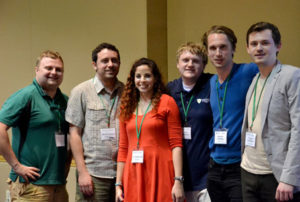
WGB2014_East-Lakes-champs2 geography bowl
AAG Pacific Coast Regional Division 2014 World Geography Bowl Champions
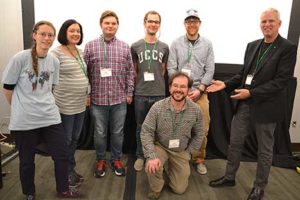
2017 Winning World Geography Bowl Team: Great Plains Rocky Mountain Region

AAG World Geography Bowl Conduct Policy

The American Association of Geographers (AAG) World Geography Bowl is a friendly, team-oriented competition between students in the AAG Regional Divisions. General bullying, intimidation, or hostility directed toward volunteers, audience members, or student competitors (both between and within teams) at the AAG World Geography Bowl is not tolerated. Additionally, as an AAG-sponsored event, the World Geography Bowl falls under the AAG Annual Meeting conduct policy which states:

The American Association of Geographers (AAG) advocates a positive culture of inclusion and respect for the dignity of each individual. AAG opposes all forms of discrimination against and harassment on the basis of an individual’s race, age, religion, creed, color, ancestry, citizenship, national or ethnic origin, language preference, immigration status, disability, medical condition, military or veteran status, social or socioeconomic status or condition, sex, gender identity or expression, sexual orientation, or any other classification protected by applicable local, state or federal law. This policy applies to attendees, AAG staff, speakers, exhibitors, or event venue staff at any AAG-sponsored event, as well as AAG-sponsored meeting social events (such as the international reception, exhibit hall networking events, field trips and receptions).

Therefore, all student competitors, volunteers, and audience members at the AAG World Geography Bowl agree to comply with this policy and alert staff or security when they have knowledge of dangerous situations, violations of this policy, or individuals in distress. Those who are found to be in violation of this policy may be asked to leave, will forfeit their standing towards the MVP Award, and may forfeit their right to participate in future AAG World Geography Bowl events.

For more information about the AAG Conduct Policy visit here.

World Geography Bowl Previous Awardees

2023 Great Plains/Rocky Mountain Division

2022 Southwest Division

2021 Mid-Atlantic Division

2020 Canceled

2019 Mid-Atlantic Division

2018 Mid-Atlantic Division

2017 Great Plains/Rocky Mountain Division

2016 Southeast Division

2015 Association of Pacific Coast Geographers

2014 East Lakes Division

2013 Middle States Division

2012 Great Plains/Rocky Mountain Division

2011 Great Plains/Rocky Mountain Division

2010 Southeast Division

2009 Association of Pacific Coast Geographers

2008 Middle States Division

2007 Middle States Division

2006 Great Plains/Rocky Mountain Division

2005 Mid-Atlantic Division

2004 Southeast Division of the AAG

2003 Southwest AAG

2002 Middle States Division

2001 Southeast Division of the AAG

2000 Southeast Division of the AAG

1999 East Lakes Division

1998 East Lakes Division

1997 Middle States Division

1996 Southeast Division

1995 Southeast Division

1994

1993 Southeast Division

    Share

Member Profile: Trang VoPham — Understanding the Spatial Context of Cancer

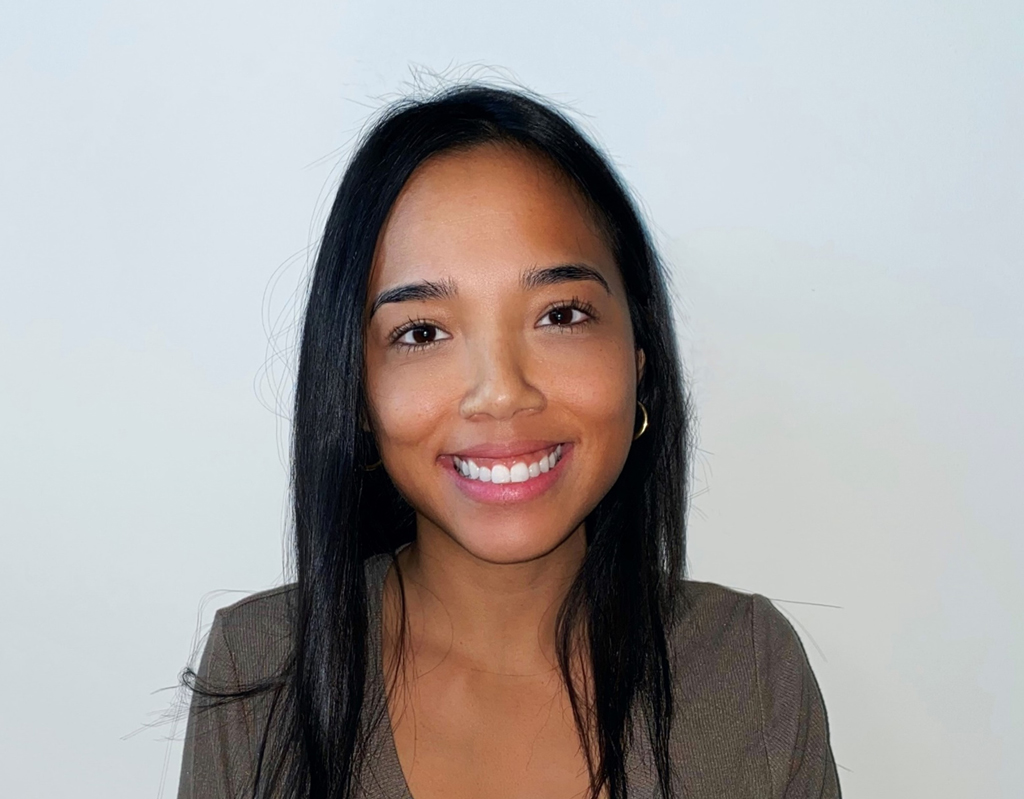
Photo of Trang VoPham
Trang VoPham

Medical geographer Trang VoPham appreciates “the seamlessness between the disciplines” of geography and epidemiology, particularly in the application of geospatial methods, including GIS, to charting and confronting public health risks.

VoPham, who simultaneously pursued a Ph.D. in epidemiology and a masters degree in geospatial methods, now conducts research at the Fred Hutchinson Cancer Research Center in Seattle, Washington. Her focus is understanding the influence of environmental factors associated with place or location on the incidence of disease in humans. On any given day, VoPham might find herself mapping measures of air pollution, analyzing demographic data across census tracts, or reading the latest publications on cancer. 

Much of her recent research has been aimed at uncovering environmental factors associated with liver cancer. In the United States, VoPham notes that a high proportion of liver cancers are unexplained. Aflatoxins produced by different fungi are known to be important environmental causes of liver cancer in some parts of the world but there is an emerging awareness that chronic exposure to air pollution may also result in elevated risk. 

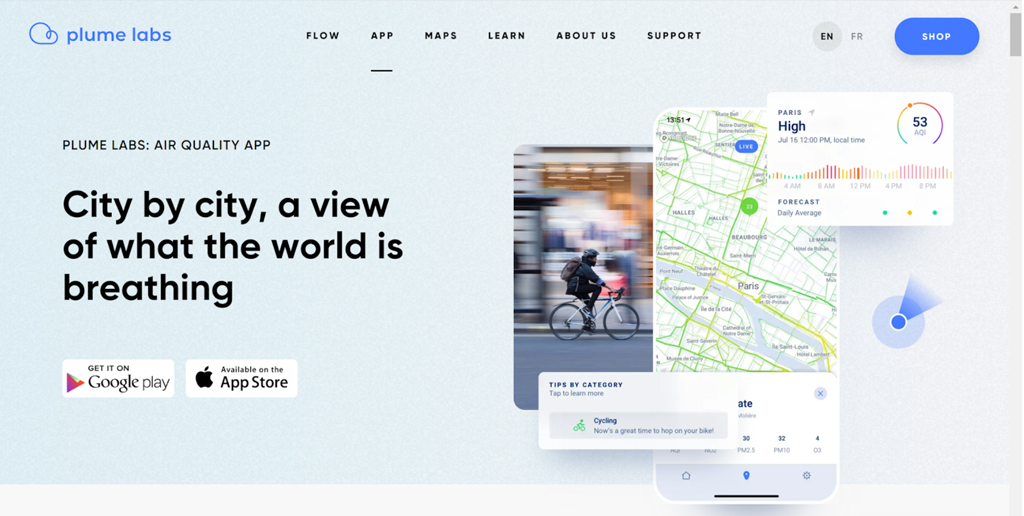
Because cancers result from complex interactions of genetic, behavioral, and environmental factors, VoPham’s work is highly interdisciplinary. For example, in a study funded by the Prevent Cancer Foundation, she is working with investigators with expertise in geospatial science, environmental epidemiology, and health psychology to provide participants with their own air pollution sensors and an associated smartphone app that visualizes air quality in their vicinity. 

During the study, the research group will provide participants with information about harmful health effects of air pollution and offer them general strategies and specific cues for reducing their exposures. In doing so, the research group aims to empower people with information to take control of their own health and then assess whether they act on that information.

When asked about the lessons of the COVID-19 pandemic for her own research, VoPham didn’t hesitate: “The COVID crisis has been a clear reminder to me of health disparities and the importance of addressing them in my work,” regardless of whether they are associated with geography, race/ethnicity, or some other factor.

Screenshot of Plume Labs tool used by Trang VoPham
Plume Labs tool used by Trang VoPham
    Share

Down from the Shelf: Accommodating Color Palettes for All

Photo of Trang VoPham
Trang VoPham

Medical geographer Trang VoPham appreciates “the seamlessness between the disciplines” of geography and epidemiology, particularly in the application of geospatial methods, including GIS, to charting and confronting public health risks.

VoPham, who simultaneously pursued a Ph.D. in epidemiology and a masters degree in geospatial methods, now conducts research at the Fred Hutchinson Cancer Research Center in Seattle, Washington. Her focus is understanding the influence of environmental factors associated with place or location on the incidence of disease in humans. On any given day, VoPham might find herself mapping measures of air pollution, analyzing demographic data across census tracts, or reading the latest publications on cancer. 

Much of her recent research has been aimed at uncovering environmental factors associated with liver cancer. In the United States, VoPham notes that a high proportion of liver cancers are unexplained. Aflatoxins produced by different fungi are known to be important environmental causes of liver cancer in some parts of the world but there is an emerging awareness that chronic exposure to air pollution may also result in elevated risk. 

Because cancers result from complex interactions of genetic, behavioral, and environmental factors, VoPham’s work is highly interdisciplinary. For example, in a study funded by the Prevent Cancer Foundation, she is working with investigators with expertise in geospatial science, environmental epidemiology, and health psychology to provide participants with their own air pollution sensors and an associated smartphone app that visualizes air quality in their vicinity. 

During the study, the research group will provide participants with information about harmful health effects of air pollution and offer them general strategies and specific cues for reducing their exposures. In doing so, the research group aims to empower people with information to take control of their own health and then assess whether they act on that information.

When asked about the lessons of the COVID-19 pandemic for her own research, VoPham didn’t hesitate: “The COVID crisis has been a clear reminder to me of health disparities and the importance of addressing them in my work,” regardless of whether they are associated with geography, race/ethnicity, or some other factor.

Screenshot of Plume Labs tool used by Trang VoPham
Plume Labs tool used by Trang VoPham
    Share

Wayfinding: In the Philippines, Local Knowledge Makes a Global Impact

Photo of Philippine pangolin by Lucy Archer, ZSL Philippines
Philippine pangolin by Lucy Archer, ZSL Philippines

The shy, nocturnal pangolin — an animal that looks like a cross between an anteater and an artichoke — is hard to forget if you happen to see one. That’s what researchers from the United Kingdom and Philippines relied on when they sought out 1,296 residents of the Province of Palawan to describe their interactions with the critically endangered Philippine pangolins (Manis culionensis). Researcher Lucy Archer of the Zoological Society of London joined with the Philippines-based research team of Charity Apale, Darlyn Corona, Josefa Gacilos, and Ronald Amada to conduct interviews across the Palawan province in several languages, greatly enhancing their understanding of pangolin habitat and its interactions with human settlements.

Close-up photo of a pangolin in the Philippines by Lucy Archer, ZSL Philippines


Traditional wildlife surveys can take significant amounts of time and are relatively expensive to perform at large spatial scales. In addition, they are often unreliable for rare, nocturnal, and semi-arboreal species that are difficult to detect, like the Philippine pangolin. So, Archer and her collaborators turned to people living throughout the historical range of the species for information. By recording when and where people had last seen a Philippine pangolin, and whether they thought populations were increasing or decreasing in size, the group was able to establish important baseline information about the geographic distribution and status of pangolin populations. At the same time, and just as importantly, this approach yielded an understanding of differences in threats to pangolins across local geographies, and in attitudes of local residents about engaging in conservation. 

Map of pangolin survey sites in the Philippines


“Aside from providing us with much clearer perspective on where pangolins still exist, the people we interviewed also expressed their willingness to conserve the species,” says project manage Charity Apale. “This gives us hope, knowing that the local people in Palawan show inclination towards conserving and protecting the Critically Endangered Philippine pangolin.” 

Archer agrees. “Local people living throughout Palawan province have provided us with a much clearer perspective on where pangolins still occur, and the differences in pangolin status throughout their geographic range,” she says. “With 87 percent  of respondents able to recognize and provide further information on pangolins, we believe local people are well placed to help guide and co-develop conservation efforts for the species.” 

Photo of researchers studying a map of the Philippines where pangolins are natively found by Lucy Archer, ZSL Philippines
Researchers study a map of the Philippines where pangolins are natively found by Lucy Archer, ZSL Philippines


Unfortunately, this work is urgently needed. The Philippine pangolin is one of eight extant pangolin species worldwide, all of which have been placed on the IUCN Red List of Threatened Species, are hunted for meat, and are covered in scales that are trafficked for traditional medicines. Beyond the direct threats posed by trapping and hunting, palm oil plantations are supplanting pangolin habitats at a rapid rate, and climate change poses a diverse set of indirect threats to populations.

Despite the challenges faced by Philippine pangolin populations, Archer and her collaborators are optimistic that their study results will enable conservation action. People living throughout Palawan have provided them with a much clearer perspective on where pangolins occur and on differences in local perceptions of pangolins throughout their geographic range. Both kinds of geographic information will be essential as conservation efforts for pangolins continue to take shape.

Archer, L. J., Papworth, S. K., Apale, C. M., Corona, D. B., Gacilos, J. T., Amada, R. L., Waterman, C., & Turvey, S. T. (2020). Scaling up local ecological knowledge to prioritise areas for protection: Determining Philippine pangolin distribution, status and threats. Global Ecology and Conservation, 24, e01395.


    Share

The Pandemic, the Scale of ‘We’, and the Fortress-Individual: Geographies of Responsibility

Photo of posted signs requesting workers wear masks by BP Miller
Credit: BP Miller, Unsplash

Last year, now-Past President Amy Lobben titled her first newsletter column, “The Spatial Scale of ‘We,’” to reflect on the rapid shrinking of who counts as ‘we’ “to a remarkably small spatial and social scale” in the context of the COVID-19 pandemic. Her phrase has resonated with me over the past few weeks as I consider the global pandemic that is soon to enter its third year. 

As I write, the Omicron variant dominates the news. Many countries have imposed bans on travel from southern Africa – measures that the World Health Organization (WHO) and African leaders alike describe as counterproductive because such measures penalize transparency and swift scientific work, while failing to stop Omicron’s spread. Instead, public health experts have argued that the world will not cease to reel from new variants until mass vaccination is accomplished globally. However, because of vaccine nationalism — the hoarding of vaccines by wealthy nations, the blocking of patent waivers on COVID-19 vaccines and other technologies, and the underfunding of COVAX – as of November 2021, only 7% of the population of Africa is fully vaccinated. Roughly 54% of the global population had received at least one COVID-19 vaccine dose, an order of magnitude greater than in low-income countries, where the rate is 5.8%. Wealthier countries have ignored WHO pleas to hold off on booster shots until people in lower income countries can receive their initial vaccinations. By the end of this month, 10 high income countries are projected to have 870 million excess doses even after boosters are given.  

This short-sighted view of the “we” that must be protected from severe illness and death not only exacerbates long-standing patterns of global inequity, but is ultimately foolish, both in terms of human health and economically. The more the virus spreads, the more likely new variants will appear that evade current vaccines, further prolonging the pandemic.

This short-sighted view of the “we” that must be protected from severe illness and death not only exacerbates long-standing patterns of global inequity, but is ultimately foolish, both in terms of human health and economically.

One study estimates that the cost of global vaccination is about $23 billion (much less with patent waivers), compared to many trillion dollars in costs of the disease to date. Yet, as with global climate change, another problem that can only be solved with a recognition of the responsibility to address long-standing inequalities along with true global cooperation, the inability to stretch understandings of who is a “deserving-other” beyond the borders of the nation-state and beyond the imperatives of the corporate boardroom will result in a great deal of preventable suffering. 

Photo of posted signs requesting workers wear masks by BP Miller
Series of signs asking passerby to wear a mask for the protection of essential workers. Credit: BP Miller


The same failure to imagine a more robust “we” to whom one has responsibility, reproduces itself at smaller scales. For the last two months my home state of Colorado has been in the grips of a COVID surge that has overwhelmed hospitals. Though 63% of the state’s population is fully vaccinated, this average hides significant spatial variation, with some county rates as low as 40%. Combine this with a governor unwilling to impose another mask mandate and the highly transmissible delta variant, and by early November, the state was forced to activate an emergency protocol, “crisis standards of care,” which further increases nurse to patient ratios and allows workers to care for sicker patients than they normally would. Even with these measures in place, 94% of ICU beds across the state are currently full; in some counties, it is greater than 100%, meaning doubling up on space or sending patients to distant locations. 

My husband is a registered nurse who works on a hospital medical/surgical floor, so I’ve gotten a sense of what this feels like for health care workers. For the past several months, his hospital’s ICU has been so full that many patients who require intensive care — where the patient: nurse ratio is 2:1 — have been put instead in the general medical floor, where the ratio is more than twice that. The profit-driven hospital company in the meantime has prioritized earnings by continuing truly elective surgeries, ignoring pleas from nurses that their workloads are simply unbearable and, increasingly, unsafe. Highly experienced and skilled nurses are quitting in droves out of exhaustion and frustration, and hospital turnover is high. Indeed, across the US, nearly one in five health care workers have quit since the start of the pandemic. After one particularly harrowing day with too many patients needing intensive care, and only one nurse assistant available for an entire floor, my husband too considered leaving the profession he loves.

The neoliberal restructuring of health care as a profit-making industry beholden to shareholders led to a “just in time” business model that entailed an almost 40% decline in hospital beds between 1981 and 1999; even before the pandemic, hospitals were maxed out.

As with all crises, there are many contributing factors. The neoliberal restructuring of health care as a profit-making industry beholden to shareholders led to a “just in time” business model that entailed an almost 40% decline in hospital beds between 1981 and 1999; even before the pandemic, hospitals were maxed out. Vaccine reluctance stems from a host of understandable social factors including distrust of government and skepticism of medical expertise that has indeed often been flawed and arrogant. But in the face of overwhelming evidence at this point in the pandemic, continuing vaccine refusal translates into the suffering of others – including those who cannot get vaccinated (mostly children under 5), those who cannot receive adequate treatment for other medical conditions, whether heart failure or cancer, because hospitals are full of COVID patients, and health care workers struggling with the “crushing downward spiral” of exhaustion.

Vaccine refusals beg the question not only of who counts as “we,” but also of the extent to which some people still believe in a society at all. Margaret Thatcher famously proclaimed that there is no such thing as society, only individual men, women, and their families. Increasingly, acknowledging any kind of responsibility to the well-being of strangers in society has become unthinkable in the constitution of a certain brand of individualism in which the individual self is conceptualized as a fortress. This fortress-individual does not believe that the virus can breach its defenses, and cares not for the argument that vaccination can help protect others.

The apotheosis of the fortress-individual is…also found in the strange idea, unique to the US, that there is simply nothing that can be done to stop gun violence… that the dead and maimed must pay for the sacrosanct freedom of fortress individuals to carry lethal weapons far beyond the imagination of the crafters of the US Constitution.

The apotheosis of the fortress-individual is perhaps the “stand your ground” self-defense statute that exists in 30 US states and the ways in which it has been used to justify racialized vigilantism, from George Zimmerman’s acquittal in the murder of Trayvon Martin to the acquittal of Kyle Rittenhouse for the murders of Joseph Rosenbaum and Anthony Huber, and the wounding of Gaige Grosskreutz — the latter even in a state without a full-fledged stand-your-ground law. But it’s also found in the strange idea, unique to the US, that there is simply nothing that can be done to stop gun violence, that the 651 mass shootings, including 222 school shootings to date in the US in 2021, are inevitable, the price that the dead and maimed must pay for the sacrosanct freedom of fortress individuals to carry lethal weapons far beyond the imagination of the crafters of the U.S. Constitution. This strikes particularly close to home for me because a mass shooting took place this March in a grocery store a few short blocks from my house, a place where my family and many colleagues and their children frequented, and where high school students regularly hung out. Ten people were killed, including several of my sister-in-law’s former co-workers at the store.

Geography is “earth writing” — its purview is the globe, and geographers are uniquely equipped to examine not only spatial patterns (whether of gun violence or pandemic-related hospitalizations and responses) but also to think beyond methodological nationalism. Celebrated human geographer Doreen Massey conceptualized space as the product of interrelations, a discrete multiplicity that is dynamic rather than static, open rather than closed. Spatiality is about relationality; thus Massey argued that people of particular places have a responsibility towards the wider relations on which they invariably both depend and have an effect. Former AAG president Victoria Lawson stated in her presidential address that Geography is a caring discipline, and advocated for “research and practice that begins from a critical ethic of care and responsibility.” I suggest that this responsibility can only be fulfilled by geographers who are not lone fortresses, and who have the capacity to care for a capacious “we.”

* * * * * 

On December 3, you should have received an email inviting you to take the “AAG Annual Meetings and Climate Action” survey. I’m sure you are as tired of surveys as I am, but I’d like to ask that you please take a few minutes if you have not already; it is also available at this link. Extensive member participation is crucial to shaping how AAG moves forward to meet low/net-zero carbon goals related to travel to annual meetings. AAG seeks to reduce these emissions in line with IPCC recommendations, while continuing to provide benefits to all members, increasing access to meetings for those who have faced past barriers to participation, and keeping AAG fiscally sound. These are a lot of considerations to juggle, and AAG can only successfully navigate into our collective climate change-shaped future with your input.  

Thank you for filling it out!

Editor’s Note: AAG will collect results to the survey through December 31.

DOI: 10.14433/2017.0104


Please note: The ideas expressed in the AAG President’s column are not necessarily the views of the AAG as a whole. This column is traditionally a space in which the president may talk about their views or focus during their tenure as president of AAG, or spotlight their areas of professional work. Please feel free to email the president directly at emily [dot] yeh [at] colorado [dot] edu to enable a constructive discussion. 

    Share

Explore careers in geography—download the brochure

Careers Brochure CoverGeography is more than maps—it’s a powerful way to understand the world and shape its future. From climate science and urban planning to business analytics and public health, geographers bring critical insights to today’s most pressing challenges.

Our Careers in Geography brochure offers a snapshot of the many directions a geography background can take you—and how your skills can make a difference.   Download the free PDF and discover where geography can take you


What you’ll find inside

This concise, visually engaging guide highlights:

  • The wide range of career paths available in geography—including business, nonprofit, government, and education
  • Real-world examples of geographers at work across industries
  • Key skills employers value, from spatial thinking to GIS and data analysis
  • Insights into job growth and emerging opportunities in geospatial fields

Whether you’re advising students, exploring majors, or considering your own next step, this brochure is a helpful introduction to the possibilities.


Why Geography?

  • Geographers are uniquely equipped to connect data, place, and people. They help organizations:
  • Understand social and economic patterns
  • Address environmental challenges and resource management
  • Improve decision-making through spatial analysis

These skills are increasingly in demand across sectors, making geography a strong foundation for meaningful and versatile careers.


Need materials for students or events?

While printed copies are not currently available, the downloadable format makes it easy to:

  • Share with students and prospective majors
  • Include in advising packets or course materials
  • Distribute digitally at campus events and info sessions

We’re exploring future updates to this resource, so stay tuned.

The Careers in Geography brochure is now available as a free digital download. Share freely with students, colleagues, and advising networks.

Download the brochure


Continue exploring geography careers

Looking for more?

  • Browse careers, salary insights, and job listings
  • Access career prep resources and tip sheets
  • Explore geography programs across the Americas

Visit AAG’s Careers resources


    Share
    Share