Every month the AAG compiles a list of newly-published books in geography and related areas. Some are selected for review in the AAG Review of Books.
Publishers are welcome to send new volumes to the Editor-in-Chief (Kent Mathewson, Editor-in-Chief, AAG Review of Books, Department of Geography and Anthropology, Louisiana State University, Baton Rouge, LA 70803).
Anyone interested in reviewing these or other titles should also contact the Editor-in-Chief.
Education: Ph.D. in Geography (University of Southern California), M.Sc. in Geography (Peking University), B.Sc. in Geography (Beijing Normal College)
What attracted you to a career in education? My parents worked at Chinese universities as aprofessor and administrator, respectively, and I grew up at their university campuses in Beijing and had always thought education was my destiny. My path to become a university professor, however, took a number detours. I became a ‘set-down youth’ after high school in China, then tried out other possibilities as an ABD in Los Angeles to see if I might be passionate about or good at something other than education. I also worked at a large American company as a GIS intern and volunteered to help my friends run a small business. These experiences convinced me that I am most passionate about and good at education.
How has your background in geography prepared you for this position? I was taught mostly physical geography courses in China during my undergraduate years, then took largely human geography courses since coming to the U.S. I have benefitted from such training, not to mention earned my 1st year TAship teaching physical geography labs. Therefore, I am able to juggle between physical and human geography traditions and be more comprehensive in dealing with complex geography issues. Part of my faculty line is not in geography, but I am able to bring geographical knowledge and skills to that discipline as well.
What geographic skills and information do you use most often in your work? What general skills and information do you use most often in your work? Geographic skills and information: spatial thinking, considering different scales, census geography.
General skills and information: critical thinking and reasoning.
Are there any skills or information you need for your work that you did not obtain through your academic training? If so, how/where did you obtain them? The skills and information needed at work that I did not obtain through academic training include those relating to public policies, including consultation, decision-making, analysis and critic, and recommendation. I learned such skills and information through my 10-year service as an Asian American advisor to the U.S. Census Bureau.
Do you participate in hiring, screening, or training of new employees? If so, what qualities and/or skills do you look for? Yes, I did participate in those processes. The most important qualities we look for, first and foremost, are critical thinking, questioning existing knowledge, and the ability/willingness to perform hard work in order to advance knowledge. I look for people who are passionate with the work, motivated and self-disciplined, and are curious and willing to acquire new knowledge and skills.
What do you find most interesting/challenging/inspiring about your work? As a geographer working in two different academic units, what I find most inspiring/interesting is an academic career itself – it is a very challenging job as it is not a 9 to 5 type, but almost 24/7. But it is a rewarding career. Despite all of the challenges, at the end of each semester when you see students learn something new and read their feedback, there is an immense sense of satisfaction. For me personally, the most rewarding part of this career is to mentor graduate students – comparing students to when they first walk into graduate school to when they obtain their degrees with a rewarding career option, the sense of accomplishment makes all the hard work so much more meaningful as we grow with them.
What advice would you give to someone interested in a job like yours? The same as my previous answer about important qualities and skills in new employees, but also to 1) have good self-assessment – know your own strengths and weaknesses in order to play up the former and overcome the latter; and 2) have a strong support/mentoring network – in the same department, university and beyond.
What is the occupational outlook for career opportunities in your field/organization, esp. for geographers? GIS and environmental studies have the most promising career opportunities for geographers. However, folks need to keep their own passion, as that is the first predictor for a successful career. Continue to expand your skill and knowledge horizon to fit the job market, and be open to other opportunities.
Broadening and Caring for the Footprint of Published Scholarship
By Derek Alderman
Given the labor and emotion poured into publishing one’s ideas, it is perhaps natural for many of us to see the final published manuscript at the end of the research process. However, the journey to publication is really just the start of the hard work of scholarship. Also important, I would argue, is promoting and translating publications to wider scholarly, public, and policy audiences. Developing a culture of advocacy and outreach around published research is critical for our individual professional advancement and the overall health of the field of geography.
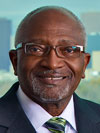
Widely regarded as the Father of Environmental Justice, Dr. Robert Bullard has been chosen as the 2018 AAG Honorary Geographer by the Executive Committee because of the foundational role he has played in the study of environmental and transportation justice research. Bullard’s 2018 AAG Annual Meeting lecture, “The Quest for Environmental and Climate Justice: Why Race and Place Still Matter” will explore contemporary population and pollution disparities in the U.S. explained by ongoing social and environmental segregation. Please mark your calendars to attend his plenary talk on Thursday, April 12, 2018 from 3:20 – 5:00 pm.
Join AAG Past President, Glen MacDonald, at the 2018 AAG Annual Meeting for his presentation, “Climate, Capital, Conflict – Geographies of Failure or Success in the 21st Century.” In his address, MacDonald will ask if people and planet will succeed in meeting the challenges posed by the 21st century or if environmental and socioeconomic pressures will produce catastrophic failure. The address is scheduled for Thursday, April 12, 2018 from 12:00 -1:10 pm.
Commemorating the Enslaved Along Louisiana’s River Road
The geography of the U.S. South is mired with the historical remnants of plantation life, a reminder of the social and agricultural system built on slavery. Often the voices of slaves have been left out of the narratives told at the museums constructed on these historic sites. A team of geographers (Derek H. Alderman, Candace Forbes Bright, David L. Butler, Perry L. Carter, Stephen P. Hanna, E. Arnold Modlin, and Amy E. Potter) have been working to challenge and change the accounts presented to those who visit these locations.
Vernacular culture is strong in the city of New Orleans, explains NOLA’s unofficial “geographer laureate” Richard Campanella (Tulane School of Architecture). This month, in preparation for the 2018 AAG Annual Meeting, read about pedestrian life on Bourbon Street, the shotgun style house architecture likely to be seen in the city, and part of the urban area that has been left as a mid-century forest.
“Focus on New Orleans and the Gulf Coast” is an ongoing series curated by the Local Arrangements Committee to provide insight on and understanding of the geographies of New Orleans, Louisiana, and the greater Gulf Coast region in preparation for the 2018 Annual Meeting.
ASSOCIATION NEWS
AAG Announces New Journal Editors, Thanks Leaving Editors
The AAG welcomes two new editors to take the positions of Cartography Editor for the AAG Journals (Annals, The Professional Geographer, and GeoHumanities) and the Methods, Models, and GIS Editor for the Annals of the AAG. Stephen Hanna will be taking over for Cartography Editor Thomas Hodler while Ling Bian will assume the role of the Methods, Models and GIS Editor as Mei-Po Kwan steps down. The AAG would like to send a very special thank you to Thomas Hodler and Mei-Po Kwan for their years of extraordinary service in these positions.
Regional Divisions Announce Outstanding Graduate Student Papers from Fall Meetings
One of the newest AAG awards, the AAG Council Award for Outstanding Graduate Student Paper at a Regional Meeting is designed to support student attendance at the AAG Annual Meeting. Each awardee receives $1,000 in funding for use towards registration and travel costs to the AAG Annual Meeting.
Leveraging Geographic Information to Combat Wildlife Trafficking
The AAG was invited to participate in the Workshop on Leveraging Geographic Information to Combat Wildlife Trafficking led by Michigan State University Professor Meredith L. Gore in partnership with the Department of State’s Office of the Geographer. The event, hosted at the Stimson Center in Washington, DC on October 23, had the objective of discussing a new strategy in which geospatially-enabled information can be leveraged to combat wildlife trafficking. Future events are already starting to be planned.
The American Association of Geographers (AAG) has an immediate opening for the position of Event and Special Projects Assistant, to be located at the AAG’s central office in Washington, D.C. The successful candidate will assist current AAG staff with planning the Annual Meeting of the AAG; creating, compiling, and sending digital communications; maintaining and moderating website content and analytics; interacting constructively with academic and non-academic individuals and organizations; and contributing to implementation of internal association projects.
AAG Announces Support for Geospatial Data Act of 2017
The American Association of Geographers (AAG) is pleased to announce our support for the Geospatial Data Act (GDA) of 2017 (S. 2128/H.R. 4395). This vital legislation recognizes the growing importance and would ensure Congressional oversight of the government’s rapidly-expanding geospatial programs and assets.
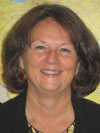
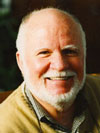
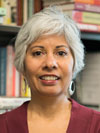
Julie Urbanik, Defense Mitigation Consultant and Executive Director of the Coordinates Society and Wei Li, Professor of Asian Pacific American Studies and Geography at Arizona State University are the two geographers featured this month in the ongoing Profiles of Geographers series. Both women stress critical thinking skills and self motivation as qualities future geographers should hone for a successful career.
AAG President Highlights Civil Rights at Ohio University Colloquium
On November 3, 2017 AAG President Derek Alderman addressed the Ohio University Geography Department through its Colloquium program in a talk, entitled “Civil Rights as Geospatial Work: Role of Counter Mapping and Radical Place-making in the African American Freedom Struggle.” Alderman highlighted AAG resources such as the Geography Speakers Bureau and the Visiting Geographical Scientist Program while discussing the ways in which geographers can play a role in practicing civil rights.
Are you interested in trends in geography? Have you been looking for openly available datasets to investigate aspects of our discipline for a report or research project? We have the answers for you in our freely accessible data resource, the AAG Disciplinary Data Dashboard. Starting in 2016, the DDD provides free information on geography departments, the workforce, members, and our annual meetings compiled from surveys, the Guide to Geography Programs in the Americas, and external organizations.
Robert J. Mason, a professor in the Department of Geography and Urban Studies at Temple University, died on November 15, 2017. Known for his work on environmental policymaking and land use management, he believed in international educational opportunities for students and was passionate about teaching the next generation of environmental leaders. Rob was serving as AAG’s Regional Councilor for the Middle States Division.
Read the January 2018 Issue of the ‘Annals of the AAG’
The first issue of volume 108 of the Annals of the American Association of Geographers has been published. Read articles that span the breadth of the discipline, organized into four major areas: Methods, Models, and Geographic Information Science; Nature and Society; People, Place, and Region; and Physical Geography and Environmental Sciences.
Volume 3, Issue 2 of the AAG’s newest peer-reviewed journal, GeoHumanities, is now available online to members. The journal features both scholarly articles and short creative pieces that bridge the academy and artistic practice. This issue includes a forum on Emotions, Empathy, Ethics, and Engagement.
From bike lanes, borders, and bunkers to plants, politics, and peripheries, read the latest list of new books in geography! Recently released books are compiled from various publishers each month.
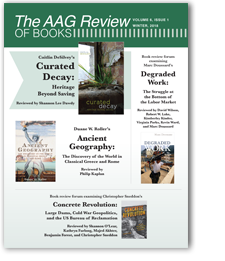
All AAG Members now have access to the book reviews in volume 5, issue 4 of The AAG Review of Books. Featured reviews from this issue are of The Lost City of the Monkey God, A True Story; Jungleland; and The Anarchist Roots of Geography: Toward Spatial Emancipation. Book reviews older than one year are free to the public and can be found in our searchable database.
AAG President Highlights Civil Rights at Ohio University Colloquium
On November 3, 2017 AAG President Derek Alderman addressed the Ohio University Geography Department through its Colloquium program. His talk, entitled “Civil Rights as Geospatial Work: Role of Counter Mapping and Radical Place-making in the African American Freedom Struggle”, engaged the audience in a critical look at how geographers can play a role in discussing and practicing civil rights. He emphasized that geographers now have an opportunity to be active in a second wave of Civil Rights movements, making specific note that there is a chance to feature not only civil rights struggles, but the ways in which we talk about them. Coinciding with the Geography Awareness Week theme of the geography of civil rights movements, Alderman highlighted how geographers can interact with new grassroots movements and ways of knowing about race and place.
A key moment of Alderman’s talk called attention to the next generation of geographers. “Students will be our planners and mappers for the future–but you won’t be doing that alone, you’ll do that as part of a larger history of [geospatial and civil rights] work,” Alderman remarked. The statement captures an idea at the heart of his presentation– civil rights and geography are fundamentally linked and have a deep history which can and should be explored further. Examples of the geospatial work Alderman discussed included The Green Book, a tool which helped black travelers during the height of segregation in America, and the importance of data during sit-ins and bus boycotts. One way of looking at these important topics is to view them as part of a longer, broader civil rights movement beyond the common narratives many of us are familiar with today.
The Ohio University Geography Colloquium is a four-part, semester-long series. Chosen by the OU faculty and a graduate student representative, the colloquium speakers connect students with a variety of areas of geographic research. Many Geography departments regularly host similar events with guest speakers sharing information on topics, study areas, or research initiatives they are passionate about and ways they filter into popular culture. For students, these events can help them explore new areas of geographic thought and inspire new research ideas. For faculty in attendance, it presents an opportunity to branch out into other geographic subfields and become energized for their own research.
One way that the AAG supports colloquium programs and the sharing of geographic ideas is through the Visiting Geographical Scientist Program (VGSP). Funded by the Gamma Theta Upsilon Geography Honor Society, the program is geared towards small departments with limited resources to bring in notable geographers as guest speakers. The VGSP helps to identify potential visitors and assists with costs for travel.
Additionally, the AAG has kicked off a brand new resource to highlight geographers interested in and available to give presentations on various aspects of geographic thought and research. The Geography Speakers Bureau is designed to facilitate connections between speakers and those hosting events such as department colloquia, or media contacts seeking a geographer perspective on a topic. The Speakers Bureau, still in development with more speakers to be added, highlights distinguished geographers and their research interests and encourages a culture of public speaking within the field. Not only does the Speakers Bureau aim to connect geographers to each other, but it also seeks to increase public engagement to help communicate all that geography has to offer the world.
Commemorating the Enslaved Along Louisiana’s River Road
Members of the NSF research team visit the River Road African American Museum in Donaldsonville, Louisiana in June of 2013. (Photo by Amy Potter)
Between New Orleans and Baton Rouge, lies the remnants of antebellum sugar plantations along Louisiana’s famed River Road, named for the Mississippi River that snakes its way through southern Louisiana before spilling into the Gulf of Mexico. Many of the eighteenth-century and nineteenth-century plantation homes that still exist along this road have been preserved, and some have been transformed into museums dedicated to retelling Louisiana’s antebellum period. A few of these museums attract as many as 200,000 visitors a year (Oak Alley and Laura, A Creole Plantation, for example). Most of these plantation house museums, however, have traditionally focused their narrative presentations on the planter and his family, which necessitates that tours be spatially arranged in and around the planter’s home (The Big House).
Such narratives have traditionally marginalized, segregated, or even omitted stories of the enslaved persons whose labors made these landscapes and vast fortunes possible (Eichstedt and Small 2002). Instead of focusing on the people who toiled and effectively created these landscapes, visitors to these sites are regaled with stories of romance, wealth, scandal, and entrepreneurship, and are enchanted by elaborately costumed guides and Oak tree-lined boulevards. Narratives and artifacts tend to limit visitors’ engagement with the enslaved to the hyperlocal and the safely distant past. While their traces are to be found throughout the house and across the landscape, the onus is on visitors to seek them out.
Louisiana’s Highway 18 near Whitney Plantation in summer of 2017. Mississippi River levee on the left and sugar cane on the right. (Photo by Amy Potter)
Disturbed by the absence of the enslaved from these museums’ tour narratives, a team of geographers (Derek H. Alderman, Candace Forbes Bright, David L. Butler, Perry L. Carter, Stephen P. Hanna, E. Arnold Modlin, and Amy E. Potter) received a three-year National Science Foundation grant in 2014 to research how plantations in the South present enslavement. The grant allowed the team to continue their work on plantations in the River Road region (Alderman, Butler, and Hanna 2016), as well as expand this work into Charleston, South Carolina and the James River region of Virginia in order to gain an understanding of regional variations among plantation museum landscapes and narratives. Over a decade of research by some members of our team (Butler 2001; Modlin 2011) allows us to reflect on the transformation of the River Road region alongside other plantations in the South as they struggle to engage with the legacy of slavery.
Allées Gwendolyn Midlo Hall, dedicated to the memory of enslaved persons in Louisiana. (Photo by Amy Potter)
The gross neglect of the stories of the enslaved within the region has been challenged through the development of counter narrative sites. One of these early sites in the region is the River Road African American Museum located today in Donaldsonville, Louisiana. The museum, opened in 1994, is the creation of Kathe Hambrick. Kathe, a native of Louisiana, returned from time away in California and toured plantation museums along the Mississippi River in the early nineties. She was concerned with the romanticizing of plantation life and found the narratives of the enslaved omitted from plantation museums’ presentations. Upon realizing this omission Kathe determined she wanted to do something to change that. The River Road African Museum site notes that “she vowed to her herself – We must do something to tell our story…’ Later on, one night, it just came to Hambrick that the answer was a museum.” (River Road African American Museum 2017)
More recently, the region has experienced another monumental shift in its interpretation of slavery with the 2014 opening of Whitney Plantation, financed by New Orleans attorney John Cummings. Whitney Plantation in many ways is the antithesis of the traditional plantation tourist experience. Rather than center a tour on the house and the planter family, Whitney foregrounds the voices of the enslaved. The tour is an inversion of the spatial narrative with much less emphasis on the Big House.
Children of Whitney located on a front porch of one of the original slave cabins on the property. (Photo by Amy Potter)
Our research team partnered with Whitney in the spring of 2015 as part of our larger project. Several of us have returned since its inaugural year to observe the changes taking place over the site.
In an effort to create a plantation tour that prioritizes the stories and voices of enslaved persons, Whitney utilizes resources like the Federal Writers’ Project of the Works Progress Administration Slave Narrative Collection (1936 to 1938). While the oral histories captured by the mostly white WPA interviewers are problematic (Carter, Butler, and Dwyer 2011), Whitney’s use of excerpts from these interviews with formerly enslaved persons, most of whom were children before emancipation, gives expression to those who help create this region and this country.
Visitors receive a lanyard connecting them to the story of a formerly enslaved child. (Photo by Amy Potter)
While most plantation tours begin by crediting white owners for “building” the house and grounds, Whitney turns the visitor’s attention to enslaved persons (particularly children) immediately upon entering the welcome center. Visitors receive a lanyard (to keep) featuring the words and image of a formerly enslaved child. One such example is Hannah Kelly, who was 10 years old when she was emancipated. While waiting for the 90-minute tour to start visitors can explore an exhibit on slavery, which situates the visitor within a multi-scale history that eventually connects to River Road.
The Children of Whitney, a series of sculptures created by artist Woodrow Nash in the Antioch Church. (Photo by Amy Potter)
After an introduction, visitors begin their tour of the property – a tour laid out to first honor the enslaved, then to educate visitors about the everyday lives of slaves along the River Road, and, finally to connect Whitney to both the broader historical geography of slavery and the legacies of slavery haunting us today. Guides first invite visitors to enter Antioch Church where they encounter the Children of Whitney, a series of sculptures created by artist Woodrow Nash who was inspired by 19th century photographs of enslaved children. These same children appear on the lanyards visitors wear around their necks – an intentional effort by the museum to encourage visitors to connect emotionally with the enslaved.
The tour continues to the Wall of Honor, where we learn about Anna, one of 354 enslaved persons connected to the property. Anna, we are told, was just four years old when she was bought on the dock of New Orleans in 1814 (her mother died on the journey from the Chesapeake). As she grew older she was raped by her mistress’s brother. She is the black matriarch of the eminent Haydel family of New Orleans (Sybil Morial, a descendant of Anna, is the wife of Ernest Morial, New Orleans’ first African-American mayor, and mother of Marc Morial, who also served as Mayor of New Orleans).
The Field of Angels is dedicated to the children who were enslaved in Louisiana and died before their third birthday. (Photo by Amy Potter)
Other stops along the tour include the Gwendolyn Hall Memorial and the Field of Angels, dedicated to the 2,200 children who were enslaved in Louisiana and died before their third birthday. The tour winds through the rows of slave cabins, two of which are original to the property, eventually making its way to the “Big House.” In contrast to most plantation tours, just a few minutes of the tour are spent inside the house and even here the narrative treats the house as a place of work for enslaved women and children. Visitors then return to the welcome center where they are asked to reflect on the tour and share their thoughts on a wall.
Contemplating the enslaved at Allées Gwendolyn Midlo Hall. (Photo by Raymond Glasgow)
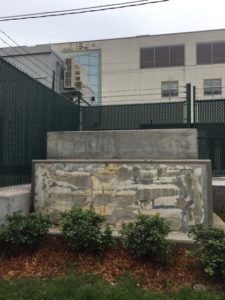
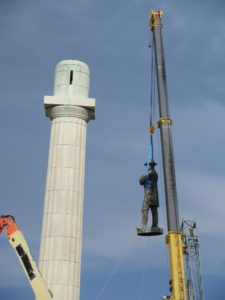
Since the racially motivated mass shooting of worshippers at Mother Emanuel Church in Charleston, South Carolina and the violent gathering of neo-Nazis, KKK, and white supremacists in Charlottesville, Virginia, the foundations of white supremacist accounts of the antebellum South are shaken as never before. New Orleans led the way in pulling down monuments glorifying Confederate “heroes” and cities and towns throughout the country are grappling with the challenge commemorating slavery and the enslaved poses to our national mythos. Southern plantation museums like those on River Road, landscapes that traditionally reproduced a Gone with the Wind version of Southern domesticity, are in many ways at the heart of this struggle.
Carter, P. L., Butler, D. L, and Dwyer, O. (2011). Defetishizing the plantation: African Americans in the memorialized South. Historical Geography 39: 128-146.
Eichstedt, J., and Small, S. 2002. Representations of slavery: Race and ideology in southern plantation museums. Washington, DC: Smithsonian Institution Press.
Regional Divisions Announce Outstanding Graduate Student Papers from their Fall Meetings
The AAG is proud to announce the Fall 2017 student winners of the AAG Council Award for Outstanding Graduate Student Paper at a Regional Meeting. The AAG Council Award for Outstanding Graduate Student Paper at a Regional Meeting is designed to encourage graduate student participation at AAG Regional Division conferences and support their attendance at AAG Annual Meetings. One graduate student in each AAG Regional Division receives this yearly award based on a paper submitted to their respective regional conference. The awardees receive $1,000 in funding for use towards their registration and travel costs to attend the AAG Annual Meeting. The board members from each region determine student award winners.
The winners from each region will be presenting their papers in two dedicated paper sessions at the upcoming 2018 AAG Annual Meeting in New Orleans. The paper sessions are tentatively scheduled for the afternoon of Tuesday, April 10, 2018.
Autumn James
WLDAAG: Autumn C. James, Ph.D. candidate, Northern Illinois University
Paper Title: Construction of Safety in Daily Living: The Role of Personal Experience and Perception
Benjamin Hemmingway
SWAAG: Benjamin Hemingway, Ph.D. candidate, Oklahoma State University
Paper Title: Vertical Sampling Scales for Atmospheric Boundary Layer Measurements from Small Unmanned Aircraft Systems (sUAS)
NESTVAL: Bogumila Backiel, M.S. (December 2017 graduate), University of Massachusetts, Amherst
Paper Title: Mapping Sandbars in the Connecticut River Watershed for Endangered Species Conservation
MAD: Joshua Wayland, PhD Candidate, Department of Geographical Sciences, University of Maryland College Park
Paper Title: Linking Natural Resources and Civil Conflict: A Spatial Panel Regression Approach
Maegen Rochner (center)
APCG: Sean Pries, PhD Candidate, Geography Graduate Group at University of California at Davis
Paper Title: The Past is the Key to the Present” Landscape of the Upper North Fork American River
Meghann Smith
SEDAAG: Maegen Rochner, PhD Candidate, University of Tennessee Knoxville
Paper Title: Climate Change in a High-Elevation Whitebark Pine Ecosystem, Beartooth Mountains, Wyoming, U.S.A.
MSDAAG: Meghann Smith, PhD Student, Montclair State University
Paper Title: Environmental and Economic Assessment of Hard Apple Cider in the Northeastern U.S.
Sam Roodbar
GPRM: Kimberly Johnson, PhD Student, Oklahoma State University
Paper Title: Perceptions and Performances of Wilder-scapes: Shaping contemporary social memories of the American West at Little House tourist sites
ELDAAG: Sam Roobar, Department of Geography, MA Student, Western Michigan University
Paper Title: “Spatial and Temporal Change in Halal Food Sales and Consumption: A case study of the city of Dearborn, Michigan”
Share
Post
Leveraging Geographic Information to Combat Wildlife Trafficking
The AAG was invited to participate in the Workshop on Leveraging Geographic Information to Combat Wildlife Trafficking hosted at the Stimson Center in Washington, DC on October 23, 2017. The workshop was led by Michigan State University Professor Meredith L. Gore in partnership with the Department of State’s Office of the Geographer. This was the first event organized by this partnership and the AAG was invited because of our outreach capacity to the geographic community. Upcoming events will be scheduled to bring together different stakeholders, develop a more comprehensive strategy that leverages geospatially-enabled information and Geographic Information Systems (GIS), and help combat wildlife trafficking more effectively.
Wildlife knows no political boundaries and as a consequence poachers often trespass international borders to carry out their illegal activities. In turn, illegal products extracted from wildlife are often trafficked across borders or continents to satisfy international consumer demand. The complex supply chain for trafficked wildlife products touches multiple human, physical and political geographies. Aware of the geospatial nature of this issue, Sally Yozell (Stimson Center) asserted in her opening remarks that we cannot think about wildlife trafficking without thinking about geographic data.
In 2015, the U.S. Agency for International Development (USAID) published a report on wildlife trafficking containing an assessment of the progress made since 2013, when President Obama created the Task Force on Wildlife Trafficking to create and implement a U.S. National Strategy for combating Wildlife Trafficking. At the workshop, Meredith L. Gore (MSU) and Lee R. Schwartz (DOS) shared some of the progress achieved with current strategies and challenges that still need to be addressed. The USAID assessment reports a decline in the elephant population of about 20% in the last decade and a decline in the rhinoceros population of about 5% in 2014 alone. One of their most successful operations so far, “Operation Crash,” led to the identification and prosecution of 30 individuals or businesses, which resulted in 20 convictions with sentences of up to 6 years and the seizure of 4.5 million U.S. dollars’ worth of illegal wildlife products. Although current strategies have helped, the progress is slow and insufficient in many cases. For example, since 2007 the poaching of rhinos declined for the first time in 2015, but only by about 3% from the year prior (see graph below). The 2017 Wildlife Photographer of the Year awarded by the National History Museum went to Brent Stirton, which he earned with a cheerless photograph of a poached Rhinoceros found in South Africa (see photograph below). This is the first year that the grand title prize goes to a photograph witnessing the suffering of wildlife rather than its beauty, which only hints at the magnitude of this problem.
One of the main objectives of the workshop was to deliberate a new strategy in which geospatially-enabled information can be leveraged to combat wildlife trafficking. Collecting geographic information and using GIS technology has proven effective in prior efforts. One of the guests, Drew Cronin, shared the effectiveness of the Spatial Monitoring and Reporting Tool (SMART), a free and open-source handheld GIS that allows rangers to collect and share geospatially-enabled data when they are in the field. SMART was developed thanks to a partnership between organizations that want to make conservation efforts more efficient. Using geospatial information collected in the field, hotspots of wildlife trafficking activity were mapped, allowing managers and governments to deploy rangers to target areas. Using this tool resulted in the apprehension and prosecution of 64 poachers in a reserve of the Democratic Republic of the Congo in 2014 alone and is now being used in several countries in Africa and Asia.
The workshop included many expert speakers and guests and discussions demonstrated some consensus on the development of a more comprehensive strategy to combat wildlife trafficking. More specifically, there was consensus on the value of collecting geospatially-enabled information and on the need to share these data between governments and organizations. Trust between governments and organizations is currently lacking however and sharing these sensitive data on the location of animals and/or individuals involved in illegal trafficking is risky. To that end, this new strategy will require stronger interdisciplinary and transnational collaborations and the development of a secure platform that facilitates the sharing of geospatially-enabled data.
This workshop was the first of a series of upcoming events around this topic. Future events include an Africa-based workshop in early 2018 to engage local stakeholders to refine and revise the strategy. If you are interested in receiving more information regarding these events, please contact Meredith L. Gore at gorem [at] msu [dot] edu.
Every month the AAG compiles a list of newly-published books in geography and related areas. Some are selected for review in the AAG Review of Books.
Publishers are welcome to send new volumes to the Editor-in-Chief (Kent Mathewson, Editor-in-Chief, AAG Review of Books, Department of Geography and Anthropology, Louisiana State University, Baton Rouge, LA 70803).
Anyone interested in reviewing these or other titles should also contact the Editor-in-Chief.
Making Every Week About Geography Awareness and Advocacy
By Derek Alderman
This column comes to you just a couple weeks before Geography Awareness Week’s 30th birthday. Founded by presidential proclamation in 1987, Geography Awareness Week (GeoWeek) is observed the third week of November each year. The purpose of my remarks is to reflect on what we might want to accomplish through GeoWeek in terms of not just building an awareness of geography but also advocating for geography. I also wish to use Geography Awareness Week to take stock of the broader, year-around importance of disciplinary advocacy, the specific promotional strategies, successes, and struggles of geography programs and departments, and what AAG is doing (and can do further) to assist in providing resources and funding the development of innovations in public promotion of geography.
2018 AAG Annual Meeting Presidential Plenary Announced
AAG President Derek Alderman, along with a panel of esteemed scholars, will present When the Big Easy Isn’t So Easy: Learning from New Orleans’ Geographies of Struggle for the 2018 AAG Annual Meeting Presidential Plenary. When the Big Easy Isn’t So Easy creates a space to explore the role of struggle in the making, unmaking, and remaking of New Orleans. Alderman and panelists will use the Annual Meeting location of New Orleans as a backdrop to explore broader conference subjects such as Black geographies, disaster response, food justice, landscapes of memory, and urban and environmental politics.
Career Mentors Sought for 2018 Annual Meeting in New Orleans
Career mentoring sessions provide an open forum where students, job seekers, and professionals can get advice, feedback, and information on a variety of topics related to careers and professional development. The AAG seeks volunteers representing the business, government, nonprofit, and academic/educational sectors to provide informal consultation during your choice of designated times during the conference. If you would like to participate, contact Mark Revell at mrevell [at] aag [dot] org.
After registering for the AAG Annual Meeting, get your travel planning underway by RSVPing on Facebook for event updates or booking your hotel room in New Orleans. Official #AAG2018 hotels include the Marriott French Quarter, Sheraton New Orleans, and Astor Crowne Plaza, located steps away from one another along Canal Street between the French Quarter and Central Business District. The AAG has negotiated discounted rates, starting as low as $199/night.
From beignets to backyard crawfish boils, Creole and Cajun foods are the focal point for many visitors and locals to New Orleans. The unique blending of the cooking traditions of western European immigrants with local flavors from the Americas created the cuisine that is iconic to the Crescent City. Take a culinary tour of southern Louisiana with Clifton ‘Skeeter’ Dixon, past president of SEDAAG and professor at University of Southern Mississippi in this month’s Focus on New Orleans & the Gulf Coast.
New Orleans’ unofficial “geographer laureate,” Richard Campanella (Tulane School of Architecture) explores what lies below the surface of the Big Easy in this month’s Place Portraits series. A sandy atoll shaped by the Pearl River is partially responsible for the layers of urban streets that had to be repeatedly updated from the city’s founding in 1718 to present day. Underlying ethnic divisions also shaped the contemporary political landscape and divided NOLA into its current three municipalities.
“Focus on New Orleans and the Gulf Coast” is an ongoing series curated by the Local Arrangements Committee to provide insight on and understanding of the geographies of New Orleans, Louisiana, and the greater Gulf Coast region in preparation for the 2018 Annual Meeting.
ASSOCIATION NEWS
The AAG Launches Campaign, Resources to Celebrate Geography Awareness Week
The AAG has established its Hurricane Relief Fund to help coordinate support for those in affected Geography Departments in Florida, Puerto Rico, and Texas from the devastation of Hurricanes Maria, Harvey, and Irma. Please consider lending a hand to your colleagues who are in dire need.15th is the deadline for applications to two annual awards presented by the AAG and supported by the Marble Fund for Geographic Sciences.
On September 24, 2017, President Trump signed Proclamation 9645, which would block entry into the U.S. of most individuals from eight nations: Chad, Iran, Libya, North Korea, Syria, Venezuela, Yemen, and Somalia. Though this proposed travel ban has mostly been blocked by decisions from federal district judges in Hawaii and Maryland, the AAG is monitoring the issue carefully, especially as it relates to our Annual Meeting attendees.
The AAG is disappointed by the Trump Administration’s decision to withdraw from United Nations Education, Scientific, and Cultural Organization (UNESCO) and has issued an official statement regarding this policy move.
Joseph Kerski, Education Manager at Esri, is featured as our Professional Geographer for the month of November. Read his full profile to get inspired about a job in geography! According to Joseph, there’s no better time than the present to get into a career in GIS or geography. The most important things for job seekers are to “Be Yourself and Be Curious.”
Artist and geographer Trevor Paglen has recently been named a MacArthur Fellow for 2017. Paglen’s work, such as Blank Spots on the Map: The Dark Geography of the Pentagon’s Secret World, addresses sites of secrecy surrounding programs by the U.S. government and military. He uses photography to capture these locations, impressing on the public the efforts in which the government takes to shield activities from citizen’s eyes. Paglen is one of 24 individuals granted the prestigious award in 2017.
Stuart Aitken Reflects on AAG Influence throughout Career
“It would be inappropriate to say that I owe my career to the AAG; many actors support me in that endeavor. That said, there is no doubt that the institution has been supportive throughout my career and it is a pleasure to give back when I can.”
Carol L. Hanchette, Associate Professor of Geography at the University of Louisville, died on a hiking adventure in the mountains of Wyoming on October 9, 2017. A medical geographer, Hanchette was particularly active in the development of the applied master’s program at U. of L. and with her research funded through the National Institute of Environmental Health Sciences and the NIH. Her collegiality, professionalism and dedication to geography will be missed by all of the lives she impacted.
Fall 2017 Issue of ‘The AAG Review of Books’ Now Available
All AAG Members now have access to the book reviews in volume 5, issue 4 of The AAG Review of Books. Featured reviews from this issue are of The Lost City of the Monkey God, A True Story; Jungleland; and The Anarchist Roots of Geography: Toward Spatial Emancipation. Book reviews older than one year are free to the public and can be found in our searchable database.
The list of newly published books in geography and related fields includes topics from Foucault to forests. Some of these new titles will be selected to be reviewed for the AAG Review of Books. Individuals interested in reviewing these or other titles should contact the Editor-in-Chief, Kent Mathewson.
November Issue of The Professional Geographer now available!
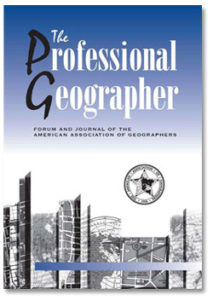
The November 2017 (Volume 69, Issue 4) issue of The Professional Geographer is now available online! This issue features two themed sections – the 2016 AAG Nystrom Paper Competition participant papers and a focus on gender and the histories of geography as a discipline – in addition to a regular selection of manuscripts.
Just Published! The November 2017 Issue of the ‘Annals of the AAG’
Volume 107, Issue 6 (November 2017) of the Annals of the American Association of Geographers is now available! All articles are available to members with your AAG membership. This month, articles span the breadth of topics from oil pipeline activism to extreme precipitation frequency to young people and everyday foods.
The foods of New Orleans are an expression of south Louisiana’s history, culture, and wetlands. Influences upon the area’s traditional cuisine are much like using recipes gathered at a crossroads of European, Caribbean, and Acadian culinary customs at interplay with local ideas and available ingredients. Understanding menus means knowing terms like — roux, remoulade, and bisque. Trying to suggest where to eat to visitors is as challenging as trying to suggest what to eat, just too much diversity. But understanding the culture and tastes behind the foods is a great way to start.
Credit: David Beriss, Society for the Anthropology of Food and Nutrition
The distinction between Cajun and Creole foods can be confusing, overlapping, and misleading. Both are descended from European ancestry, yet the outcome on the plate may be less than distinct. Creoles trace to European aristocrats encouraged by the Spanish to establish New Orleans in the late 17th century. French, German, and Italian settlers also arrived and with them came terminologies, precepts, sauces, and cooking traditions. From the Provence of France came bouillabaisse (a local soup), a dish reflected in the creation of gumbo; the Spanish paella was the forefather of Louisiana’s jambalaya (right) and dirty rice, Germans brought knowledge of charcuterie (charring meat) and established boucheries (butcher shops) which are the base for locally produced sausage used to flavor many traditional dishes. Italian arrivals brought Mediterranean spices and pastries, from the West Indies came piquant flavorings, slow cooking techniques, and exotic vegetables. Local Choctaw and Houmas Indians introduced corn dishes, filé powder from sassafras leaves, and bay leaves from the local laurel tree. Europeans arriving in the 17th and 18th centuries were coming with dietary baggage reflecting their own epicurean genealogy. New Orleans housewives, cooks, and chefs became increasingly frustrated with not being able to acquire their traditional ingredients, thus ingenuity and resourcefulness brought unique people and diverse cultures who were willing to share their cooking styles and experiment with local ingredients.
The evolution of Cajun food is tied to the diffusion of Acadians from southeast Canada. Their refugee history in rural south Louisiana gave rise to the use of wild game, seafood, and local products from the swamps, bayous, and woods. What emerged were boiled crawfish, soups, gumbos, jambalaya, turtle sauce piquante and stuffed vegetable dishes, often just a “one-pot meal.” Spices became the stock ingredient to gumbos and sausages; and onions, celery and bell pepper became the “Holy Trinity” of Cajun cuisine. Cooking brought fellowship and social bonding among the Catholic immigrants. Around the household kitchen these days, men and women are equally talented cooks. A sampling of truly NOLA cuisine tends to show the infusion of Creole and Cajun and how two rich cultures lie at the base of every New Orleans menu.
Flavorings. Nothing in a recipe can bring more debate than spices and yet there is no debate that it is spices that make the tastes of New Orleans an international cooking tradition. Chopped seasonings such as the Holy Trinity are at the beginning of many dishes, but perhaps the most known spice is Tabasco, a global term for hot sauce. Tabasco brand hot sauce is produced from Mexican peppers grown on Avery Island in south Louisiana. Avery Island is a geological salt dome rising above the coastal wetlands and has been the home of the McIlhenny family since the mid-1800s. Originally the peppers for McIlhenny’s hot sauce were grown on the island, but today the local peppers are used for seed stock and the peppers are grown from outside the United States. The sauce is still made on Avery Island. For many Louisianan’s, the meal is not set until the Tabasco is on the table. Another popular condiment locally produced is remoulade sauce. It reflects French-African Creole influence and is mayonnaise-based with green onions, celery, parsley, cayenne pepper, and paprika.
The Stock Pot. The tradition of one-pot meals prepared in a stock base is best enjoyed as a gumbo or etouffee or crawfish bisque. Every cook prides their roux, which is the base from which the liquid stock evolves. Rouxs are passed down through generations and can determine the outcome of the dish before any ingredients are ever added. The roux is a mix of oil or bacon fat (Cajuns may swear by butter instead which presents a blonde roux), with flour and cooked to a desired brownness. Gumbos are commonly seafood based with shrimp, crab meat, and oysters. Filé is added along with the Holy Trinity and okra. Chicken with pork sausage or andouille is another popular gumbo. Andouille originated in France and is claimed to have arrived with Cajun culture. Its popularity has seen generations of regional influence, especially from German immigrants along the German Coast of the lower Mississippi River. It is a smoked sausage using pork, garlic, pepper, onions, and seasonings encased in an intestinal sleeve.
Etouffee, from the French meaning to smother, is a dish cooked in a roux base with the lid on and again heavily spiced with onions, garlic, and peppers. As a testament to the continued evolution of new dishes in the south Louisiana tradition, it is said that etouffee originated in the 1950s among Cajuns along the Atchafalaya River and made its way to being one of the most popular dishes in New Orleans after it was added to the menu at Galatoire’s restaurant on Bourbon Street. Crawfish bisque is normally made in May or June, towards the end of the crawfish season. It is labor intensive and usually brings an entire family together to help prepare the dish. Preparation requires large quantities of peeled crawfish trails and the crawfish’s head (carapace) into which the ground tail meat is blended with seasonings and bread and then stuffed back into the crawfish head. It is served with a roux and rice. You will find dishes from the stock pot commonly served with rice and south Louisianian’s know that if it is Monday, it is red beans and rice. Among the Cajun and Creole households, Sunday’s meal would likely include a main dish of pork served with bone-in. Monday’s were wash days, thus cooking a pot of red beans with leftover pork bones and local sausage made for a one pot meal that simmered all day while attending to the wash. The tradition of red beans and rice continues and many small restaurants will only prepare and serve the dish on Mondays.
Credit: Alex, Flickr
From the Wetlands and Gulf. South Louisiana is America’s largest coastal wetland. Brackish and freshwater lowlands extend along the state’s entire southern interface with the nutrient rich near shore waters of the Gulf of Mexico. The Atchafalaya River basin extends the freshwater wetlands northward. South Louisiana is rich in inshore fish, oysters, shrimp, blue crab (left), water fowl of many kinds, and alligators. It’s no wonder the state is called “Sportsman’s Paradise.” Cajun cooking uses all of these wild food sources, including alligator tail. Spring is crawfish season and the smell of backyard crawfish boils (right) emerges from every neighborhood. Our time in New Orleans will be at the peak of the season. Boiled crawfish are served by the pound and traditionally boiled in a blend of ginger, oregano, celery, cayenne, mustard seeds, peppercorns, bay leaves, and pickling spices along with whole potatoes, corn-on-the-cob, and sometimes slices of pork sausage are added to the pot. The aroma of a crawfish boil is intoxicating.
Fresh fish in south Louisiana means fresh that day! Eating the catch of the day provides diners with the opportunity to experience some of the more popular gulf catches prepared using about every Creole and Cajun touch imaginable. Gulf shrimp and blue crabs are the stock of many gumbos, seafood boils, fried platters, Poboys, etoufees, and rice dishes. Creole chefs have made these crustaceans a part of an endless variety of dishes. Restaurants across the city pride themselves in extending the diversity of preparing seafood. In many areas of south Louisiana, fried alligator tail is served on local menus. Its popularity has grown to where some fried chicken fast food eateries occasionally add it to their menu.
New Orleans has made oysters on the half-shell a crafted specialty. Either served raw or typically prepared with parsley, butter, Parmesan, and assorted herbs and then grilled or broiled. The uniqueness of the dish comes from the variations in preparation. Oysters Rockefeller was created in 1899 at Antoine’s and named after John D. Rockefeller, the richest American at the time; and Oysters Bienville, commonly thought to have originated at Arnaud’s, is now served at select restaurants. Oysters and other foods from the wetlands are what New Orleans cuisine is known for – the blend of Cajun’s dependence upon local food sources with Creole culinary preparation.
Imgur.com
It’s not just a sandwich. The New Orleans PoBoy (right) is not a sub, its not a grinder or hoagie, and its not just a sandwich, it is a PoBoy. Beyond the grand restaurants of New Orleans, a more common and popular meal is the PoBoy, a meat sandwich served on French bread. PoBoys can be fried shrimp or oysters (corn meal batter), sausage, or a variety of fillings, but the best may be a chopped roast beef PoBoy served sloppy with gravy. The more napkins the better the quality. They can be served ‘dressed’ or not; dressed refers to with lettuce, tomato, and pickle. The term dressed seems to be limited to south Louisiana and it is always used when ordering a burger or PoBoy. Not all French breads make a good PoBoy. Leidenheimer Bakery (of direct German descent, founded in 1896) is hands down the most popular and each morning the skilled eye can spot hundreds of freshly baked loaves outside the delivery doors of restaurants serving traditional PoBoys. The history of the name PoBoy has about as many versions as there are types of PoBoys, but it is not disputed that fried oyster sandwiches on French loaves dates to the late 1800s.
CentralGrocery.com
The muffuletta, another NOLA original, was first crafted at Central Grocery (left) on Decatur Street and theirs remains the most popular in town. Muffulettas are large round loaves stuffed with Italian ham and salami, a variety of cheeses, olive salad, lots of garlic, and then spiced. Leidenheimer Bakery produces a loaf many restaurants prefer. To have a traditional New Orleans “sandwich” is to enjoy the fusion of French, German, and Italian immigrants making foods for the working class of the 1800s.
Credit: Smithsonian.com, Andrew Wong, Flickr
Caffeine and Cocktails. Dining is a major economy for south Louisiana and in New Orleans the top spot goes to the Café du Monde (Cafe of the World) in the heart of the French Quarter. Their fare is simple, but the lines are long. It is a landmark destination known for its café au lait (coffee and chicory with cream) and beignets (right). The French brought coffee with them as they settled the coast and in New Orleans, the Creoles added chicory (as there was often a shortage of coffee beans). Ground chicory root adds a chocolate-like flavor to coffee and had been used in 19th century European coffee houses. Adding cream became a way to soften the bitter taste. Beignets (a fried pastry) were part of Cajun cuisine carried from Europe to Acadia to South Louisiana. They are fried dough served hot and with powdered sugar on top. Coffee and beignets became a common breakfast food for all classes in New Orleans and today its popularity is impressive — a tourist trip to New Orleans is considered not complete without a stop at the Café du Monde (below left) for these sugary sweets.
Credit: New Orleans.com, The Official New Orleans Travel Site
The local cocktail menu reflects creations unique to the city. Dixie beer, founded in 1907 has remained a local brew although the craft beer scene is thriving in NOLA. The rum-based Hurricane at Pat O’Brien’s and the Hand Grenade at The Tropical Isle are iconic French Quarter drinks and frozen daiquiris are sold along the sidewalks. But it is a Sazerac that the Louisiana Legislature proclaims as the official cocktail of New Orleans. The drink was created in the mid-1800s by Antoine Amedee Peychaud, a creole immigrant, who in his Vieux Carré pharmacy produced a Peychaud’s Bitters which is one ingredient in a Sazerac. Other ingredients include rye (locally Sazerac brand) and absinthe. There is some claim it is the oldest known American cocktail; regardless, the Sazerac Bar in the historic Roosevelt Hotel is a legendary landmark in New Orleans and there are cocktail tours to historic bars of the Vieux Carré, all of whom view their Sazerac as the city’s best.
Deserts and Sugary Snacks. Sugarcane dominates the lowland agricultural landscape of south Louisiana. It is a perfect crop for the area’s hot, rainy climate and muddy fields. Cane sugar became a common confection and cooking with sugar has led to Cajuns and Creoles finding ways to sweeten their already rich diet. A local classic is Bananas Foster, a desert made from bananas, vanilla ice cream, and a sauce made from brown sugar, dark rum, and cinnamon. It was created in 1951 by the chef at Brennan’s (French Quarter) Restaurant who saw hundreds of bananas left to rot around the United Fruit Company docks on the river. Banana trade from Central America to New Orleans once had a prosperous connection; the spilled fruit was there for the taking.
Credit: WordPress.com
New Orleans also claims the sno-ball as its own. The shaved ice snack is served with a flavored cane syrup. Originally the sno-ball was made from scraping course ice from large blocks, but in 1934 Ernest Hansen developed an ice-shaving machine that produces a very fine ice and their family operated Hansen’s Sno-Bliz is still operating on Tchoupitoulas Street. Get there early as the lines can be long; their most popular sno-ball is their seasonal bananas foster! New Orleans has made the Praline a signature confection, although it is an Old World French candy. They are crafted from melting cane sugar with butter, cream, and pecans. The Mardi-Gras King Cake (right) is associated with the Epiphany and Catholic pre-Lenten celebrations. In the week leading up to Lent, King Cakes abound in bakeries and grocery stores. Typically they are decorated to reflect the themes and colors of Mardi-Gras. Inside the cake is often a small plastic baby representing Baby Jesus. Whomever gets the slice with the baby has various privileges and obligations. Many offices will have a King Cake every day of the week prior to Mardi-Gras and whomever gets the Jesus has to bring the next day’s cake. New Orleans recently renamed its Triple A baseball team from the Pelicans to the New Orleans Baby Cakes. Such is the recognition of Catholicism and celebratory cakes upon local culture.
Understanding how Louisianans eat, is understanding that the ancestry of the foods south Louisiana calls home is a result of culture tied to wetlands. The futures of both are endangered by south Louisiana losing about 16 square miles of coast each year. Subsidence and erosion account for the majority of the loss. The explanations behind both are tied to oil and gas extraction, attempts to control the Mississippi River, and building New Orleans in a most unnatural location. Contributors also include sea-level rise and the frequency of Hurricane landfalls, which erode away the shallow coastal edge. The threats to Louisiana have been measured and the losses mapped; the unintended consequence may also be the impact upon its food culture and traditions. Cajun ancestry is threatened by land loss as some of their communities have already been abandoned. Storms push others to seek new residence away from their lowland homelands. The loss of wetlands also means the loss of locally produced seafood.
A bucket-list for New Orleans always includes sampling great foods and historic restaurants. Whether morning, noon, or night — there is a food tradition that should serve every craving; the city is known for its bon appétit.
Clifton “Skeeter” Dixon is a professor of geography at the University of Southern Mississippi. He is a native to south Louisiana where he still resides for part of the year. Growing up, his family and community held a tradition of cooking and enjoying Creole and Cajun foods and thinks a backyard crawfish boil should be on everyone’s bucket list. Currently he is the past president of the Southeastern Division of the American Association of Geographers.
AAG Members get exclusive access to publications, prominent journals, unique advocacy, grant, scholarship and professional opportunities with access to industry focus communities, and event discounts, including our annual meeting.
Some content may only be accessible if you belong to specific Specialty or Affinity Groups. You can still update your membership below. You will need to go through the Join flow, but you do not need to repurchase your membership unless it is expired or about to expire.
To provide the best experiences, we use technologies like cookies to store and/or access device information. Consenting to these technologies will allow us to process data such as browsing behavior or unique IDs on this site. Not consenting or withdrawing consent, may adversely affect certain features and functions.
Functional
Always active
The technical storage or access is strictly necessary for the legitimate purpose of enabling the use of a specific service explicitly requested by the subscriber or user, or for the sole purpose of carrying out the transmission of a communication over an electronic communications network.
Preferences
The technical storage or access is necessary for the legitimate purpose of storing preferences that are not requested by the subscriber or user.
Statistics
The technical storage or access that is used exclusively for statistical purposes.The technical storage or access that is used exclusively for anonymous statistical purposes. Without a subpoena, voluntary compliance on the part of your Internet Service Provider, or additional records from a third party, information stored or retrieved for this purpose alone cannot usually be used to identify you.
Marketing
The technical storage or access is required to create user profiles to send advertising, or to track the user on a website or across several websites for similar marketing purposes.
To provide the best experiences, we use technologies like cookies to store and/or access device information. Consenting to these technologies will allow us to process data such as browsing behavior or unique IDs on this site. Not consenting or withdrawing consent, may adversely affect certain features and functions.
Functional
Always active
The technical storage or access is strictly necessary for the legitimate purpose of enabling the use of a specific service explicitly requested by the subscriber or user, or for the sole purpose of carrying out the transmission of a communication over an electronic communications network.
Preferences
The technical storage or access is necessary for the legitimate purpose of storing preferences that are not requested by the subscriber or user.
Statistics
The technical storage or access that is used exclusively for statistical purposes.The technical storage or access that is used exclusively for anonymous statistical purposes. Without a subpoena, voluntary compliance on the part of your Internet Service Provider, or additional records from a third party, information stored or retrieved for this purpose alone cannot usually be used to identify you.
Marketing
The technical storage or access is required to create user profiles to send advertising, or to track the user on a website or across several websites for similar marketing purposes.