AAG Partners with Content With Purpose on new digital series: ‘Unearthing Geography’ video series will reveal the power of geographic thinking

Content with Purpose logo using colored letters CWPWashington, D.C., March 4 — The American Association of Geographers (AAG) is partnering with Content With Purpose (CWP) to produce Unearthing Geography, a new digital series that brings the discipline of geography to life, revealing its relevance, impact and essential role in understanding and addressing today’s most complex challenges.

Too frequently, geography is reduced to maps, place names or the physical features of the Earth alone. In reality, it is an inherently interdisciplinary field, one that connects physical and human systems, science and society, and local realities with global dynamics. Through education grounded in the sciences, social sciences and humanities, geographers are trained to think across boundaries, integrate multiple perspectives, and understand how people, places and environments interact.

At a time of accelerating climate change, social inequity, geopolitical tension, and technological transformation, this connective way of thinking has never been more important.

With cinematic storytelling, expert insight and real-world case studies, Unearthing Geography will showcase the work of geographers across academia, government, industry and communities—applying geographic perspectives to issues such as climate resilience, urban development, environmental justice, public health, migration and technological change.

At its heart, Unearthing Geography positions geographers as connectors—of data and lived experience, of disciplines and sectors, and of science and society—highlighting how geographic thinking helps navigate complexity and support systems-based approaches to the world’s most pressing problems.

The series will also look to the future of the discipline: inspiring students and early-career professionals to explore educational opportunities in geography, re-engaging those who have taken diverse career paths, and helping educators, employers, partners and funders better understand the long-term value of geographic education and training.

“Geography is essential to understanding how the world works—and how we can make it better,” said Gary Langham, Executive Director of the AAG. “Our work with CWP is a timely international collaboration to show how geographers work to shape more just, healthy, and sustainable futures.”

Max Smith, Founder and Managing Director of CWP, commented: “Geography offers one of the most powerful lenses for understanding the interconnected challenges facing society today. Through Unearthing Geography, we’re using our storytelling expertise to elevate the discipline and the people behind it, connecting research with lived experience.”

Unearthing Geography will launch at the AAG Annual Meeting in New York in February 2027, followed by a coordinated digital launch and campaign. The campaign will extend across the AAG’s global network and beyond, reaching geographers, students, educators, policymakers, employers, partners and the wider public.

CWP is a B Corp certified strategic content creator that works in partnership with leading member bodies and associations, engaging professionals in their industries’ role in building a better tomorrow.

Organizations interested in contributing to the series are encouraged to contact Sophie Newboult, Series Development Manager at CWP to learn more: sophie@contentwithpurpose.co.uk.

    Share

Bridging Difficult Conversations

Illustration showing a group of diverse hands connecting to form a bridge.

William Moseley

I grew up in the Midwest, a cultural region where we stereotypically avoid difficult conversations. While my people might famously say ‘that’s interesting’ when we disagree, or ‘I’m not mad’ when we are furious, such conflict avoidance is not a healthy approach for a large and diverse organization such as the AAG.

Nearly a year ago (April 2025), the AAG Council received a successful membership petition asking that we hold a special meeting to discuss a proposal for “the AAG to endorse the campaign for an academic boycott of Israeli academic institutions, and for financial disclosure and divestment of any AAG funds invested in corporations or state institutions profiting from the ongoing oppression of the Palestinian people.” Just a few weeks ago (February 12), AAG members received an email with the AAG Council’s response to the petition, a response which reflects nearly a year of deep conversations with a membership that was often sharply divided on this issue, and on the most appropriate response. I am proud to say that the AAG did not avoid this issue, but tackled it head on in a thoughtful and comprehensive manner. Below I discuss our process for arriving at this response, the response itself, and some common reactions and concerns I have heard from the membership.


Our Process

In receiving and reflecting on the petition, the challenge for the AAG Council was to create a space where all member voices could be heard on this important topic. A one- or two-hour online meeting where the petitioners shared their views would have privileged some perspectives over others and not been accessible to a diverse membership on different schedules and across multiple time zones. After careful thought, Council resolved to hear member input on the petition via two pathways last fall:

  1. to create a background document on the topic (including the AAG’s history of dealing with divisive issues, pros and cons of different actions, etc.) which members could comment on over a 60-day period (a two-month asynchronous meeting if you will); and
  2. to offer two online sessions (one closed and the other open to a member audience) where members could directly share their relevant insights with Council.

While this approach was far from perfect, it was appreciated by many. As one AAG member wrote: “We are a community. A community with different viewpoints, research areas, life experiences, and belief systems, which is what makes our community so vibrant. It is also what makes our community, expertise, and ability to constructively debate with one another critical in a time when misinformation, ignorance, and hate are rampant in public discourse.”


The Response

As explained in the February 12 email to the membership, there are four components of the AAG response to the petition: 1) an ESG Investment Framework and Implementation Policy; 2) an International Partnership Framework and Due Diligence Policy; 3) a Displaced Scholars Support Program and Fund; and 4) a Statement on Palestine and Higher Education. Below I briefly discuss each of these components in turn.

ESG Investment Framework and Implementation Policy. This policy obligates the AAG to more actively manage and monitor the Environmental, Social, and Governance (ESG) investment filters that guide its endowment investments. Some of these screens existed beforehand as a result of our climate change work and we added additional screens related to the military weapons industry. As a result, the AAG currently holds no investments in companies listed on the American Friends Service Committee or UN human rights lists. This approach is meant to keep our investments aligned with our values over time, while taking care to sustain our relatively modest endowment in support of our mission. Moving forward, we will review our investments annually, with flags being raised if more than 5% of our investments fall outside of these screens. This policy addresses the divestment concerns of the petitioners without being country specific (we want to avoid investments in problematic companies regardless of where they are operating).

International Partnership Framework and Due Diligence Policy. This policy will help guide new international partnerships (such as formal MOUs, joint programs, or co-sponsored events) with organizations based in countries where there are significant human rights or academic freedom concerns. Using a third-party list of countries where there are concerns as a trigger, the AAG Council will review and vote on potential new partnerships (leaving an official record of the decision). This extra level of scrutiny will also allow Council to make nuanced decisions. For example, Council could decide to collaborate with an organization fighting against oppression in country X, but not to do so with institutions in the same country that are complicit in human rights abuses. While the specific third-party list(s) Council will use to trigger a review is to be determined by a working group in the near future (e.g., Human Rights Watch World Report, Amnesty International Annual Report), it is important to have such a list because Council should not be deciding when or when not to undertake a review on an ad hoc basis. It would also be impractical and cumbersome for Council to review all such partnerships. For example, AAG staff should have the liberty to allow the Canadian Association of Geographers (not on any human rights watch list) to contract for a booth at the annual meeting without Council micromanaging the process. To be clear, the AAG has not had a partnership with any Israeli organization or institution since 2005. This policy, while also not country specific, is essentially a boycott of organizations in other countries that have been complicit in human rights abuses.

Displaced Scholars Support Program and Fund. This is a new AAG program and related fund to support displaced scholars around the world, including those from Gaza and other conflict zones. The program will provide selected displaced scholars with: (1) free AAG membership, (2) waived registration for AAG annual meetings, (3) eligibility to apply for relocation or travel funds, and (4) connections to aid organizations (e.g., IIE Scholar Rescue Fund, Scholars at Risk). A working group will develop the program details over the next year. We currently have three displaced scholars participating in a pilot program, and four internationally recognized experts advising its development. The program provides real and tangible support to geographers whose human rights and academic freedom have been compromised.

Statement on Palestine and Higher Education. The AAG released a statement on February 12 affirming commitments to Palestinian educational rights, human rights, academic freedom, and self-determination. The statement affirms that Palestinian and Israeli scholars, and all members of our community, have the right to pursue higher education and research free from violence, harassment, or discrimination. The statement addresses the destruction of higher-education infrastructure in Gaza, barriers to Palestinian scholars’ mobility and access to education, and threats to campus safety and academic freedom affecting both Palestinian and Israeli scholars. The statement also affirms that criticism of state policy must be clearly distinguished from antisemitism, Islamophobia, or other forms of racism.


Member Reactions and Concerns

While it has only been a few weeks since the AAG released its response, so far member reactions have largely been affirming and recognize the challenge of having such a difficult conversation. One member wrote: “It is notable for the way it [the AAG response] advocates positive and cooperative measures that support our shared values in universal human rights and academic freedom, instead of antagonistic and confrontational actions.” Another member wrote: “While the call for a referendum, and ensuing discussion, were sparked by the events in Gaza, the AAG took a meaningful step in negotiating a series of actions that signal institutional change and a responsiveness to member concerns. I appreciate the clear condemnation of violence and repeated focus on human rights, academic freedom, and education, and rejection of racism, that underpins each of the planned and implemented responses.” Of course, not all AAG members have been happy with the process Council undertook to broker this conversation. Let me speak to a few of those concerns here, concerns that were shared with me before the AAG shared its official response.

Since the time we initially received the member petition, I heard from some members that they would like to have had a yes or no vote on the petitioners’ demands. I would first note that such a vote was not called for in the original petition; it was requested later (without the support of the official petition). Second, such votes are not a part of the AAG bylaws (the membership votes on bylaw changes or in instances where the Council requests a vote). Thirdly, such an approach would have circumvented the AAG Council, a body which is elected by the membership and charged with considering issues in a way that reflects the long-term interests of the association (aka fiduciary responsibility, which is broader than financial considerations). Lastly, a yes or no vote on the original proposal was inherently limiting in terms of choices and would not have resulted in the more nuanced response that eventually emerged after considerable deliberation.

Other members have suggested that our process was undemocratic. I would argue that just because there was not a direct vote on the issue does not mean that the process was undemocratic. The AAG is an indirect democracy in that we elect Council members and special committee members (such as the nominations committee) to act on our behalf. Most of us do not have the time to consider all sides of an issue, so we elect representatives to do this work for us. Furthermore, the AAG Council went to great pains to hear member concerns on this issue and in a way that did not privilege the loudest voices in the room.

In sum, I am proud of the way the AAG has handled this difficult conversation. We have not sidestepped a potentially contentious issue, but addressed the main concerns of the petitioners re: divestment and collaboration, stuck to our core values and heard the views of a diverse membership, while not succumbing to divisive language or putting the organization in legal jeopardy. While I am certain that some of you will remain unhappy with this outcome, being part of a big family often entails compromise, working through challenging issues, and building bridges to arrive at a shared understanding and best possible outcome under the circumstances. Our community is stronger for meeting this moment.


Please note: The ideas expressed in the AAG President’s column are not necessarily the views of the AAG as a whole. This column is traditionally a space in which the president may talk about their views or focus during their tenure as president of AAG, or spotlight their areas of professional work. Please feel free to email the president directly at moseley@macalester.edu to enable a constructive discussion.


    Share

Department Profile: School of the Environment at San Francisco State University

Located off the shores of Lake Merced in San Francisco’s southwestern corner, the School of the Environment at San Francisco State University (SFSU) brings together students and faculty committed to scientific exploration, environmental stewardship, and social justice. This unique setting, where urban life meets coastal and mountainous ecosystems, provides an ideal backdrop for studying the connections between people, landscapes, and the planet.

An Interdisciplinary Approach to Environmental Education

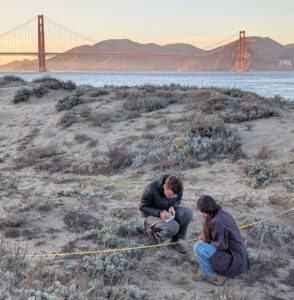
San Francisco State University students gather samples for a field methods class in the San Francisco Bay.

The School of the Environment offers a broad and integrated curriculum that reflects the shared mission of its faculty and programs. Students pursuing undergraduate majors gain a strong foundation in physical and human geography, in addition to field methods and geographic information science (GIS) and systems. These core skills equip students to understand environmental processes, helping them map change and analyze human–environment interactions. Graduate students have the option of specializing in geography, geographic information science, geosciences, or resource management and environmental planning.

These offerings are supported by the vast expertise of faculty across disciplines. Wide-ranging scholarly strengths range from physical geography and the use of technical programs to human-environment interactions. This includes food justice and urban agriculture, researching sustainable communities, green consumerism, and the politics of mobility.

A New School Built on Collaboration

In the years following the COVID-19 pandemic, the Dean brought together three units — the former Department of Geography and Environment, the Department of Earth and Climate Sciences, and the Environmental Studies program — to explore merging into a larger, more cohesive academic home. Andrew Oliphant, professor and School of the Environment co-director, shares the former schools’ shared curriculum, cross-listed classes, and overlapping student communities naturally evolved into what is now the School of the Environment, strengthening opportunities for interdisciplinary research, teaching, and collaboration.

With the formation of the new School, faculty intentionally centered equity, representation, and inclusivity in their mission. Their efforts include a range of initiatives: culturally responsive student support, reducing or eliminating course-related costs wherever possible, and expanding pathways into environmental careers for students from historically marginalized communities. As Oliphant notes: “One of our missions is to change the face of the professional world in California that’s managing and stewarding the environment.”

A Presence Across Campus and Beyond

While the School recently reorganized and renamed itself, department chair Andrew Oliphant notes that its reach extends far beyond environmental programs. Students from art, cinema, ethnic studies, biology, physics, and other departments enroll in its courses.

Through this broad academic footprint, students gain training in climate and environmental fundamentals and the necessary language and context for environmental advocacy. The skills taught in courses are applicable across scientific, creative, and civic fields.

A thriving student–alumni network speaks to the school’s deep commitment to mentorship and career support. Graduates contribute to the California workforce and beyond, including local and state governments, federal agencies such as the U.S. Environmental Protection Agency, and private companies and nonprofits such as East Bay Municipal Utility District (EBMUD). The school’s organically built internship network helps open doors for students who may not otherwise have access to such opportunities.

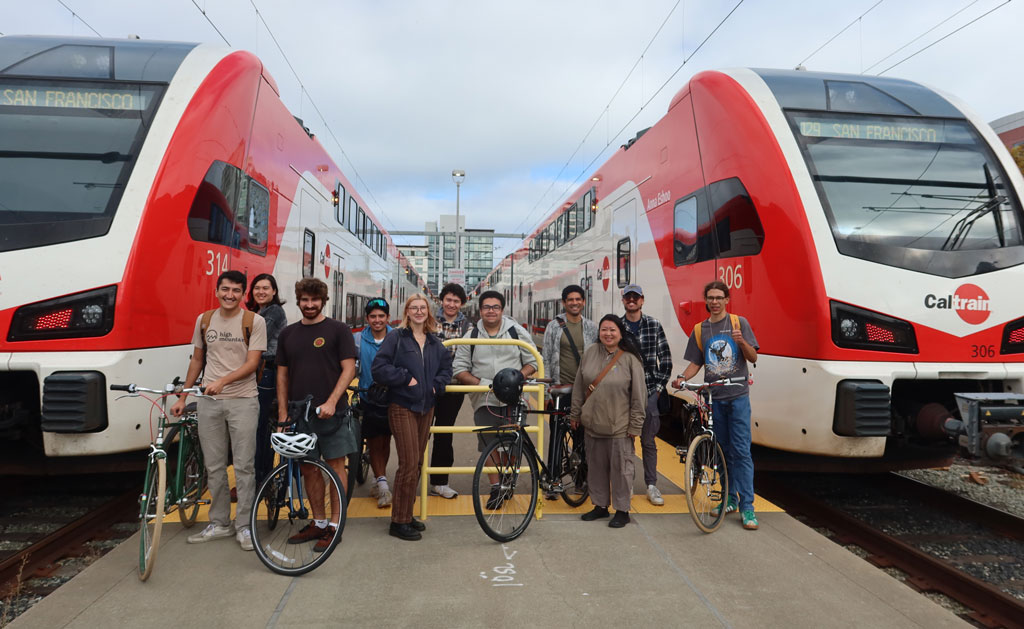
San Francisco State University students gather between two CalTrains for a transportation class field trip.


Preparing Students for a Changing World and Workforce

The school balances professional preparation with a deep commitment to the fundamental sciences. Students can begin to prepare for future steps to careers in environmental management, GIS, or planning; working with nonprofits in scientific research; or doctoral-level academic study.

Oliphant also emphasizes the importance of interdisciplinary training in an era of rapid technological change: “There will be geographers who lose work to AI … but the broad training we give — understanding biophysical processes, social structures, and the philosophies shaping our world — positions our students well in an AI-driven future.”

A prime resource for students includes participating in alternative learning spaces. For example, SFSU’s remote Sierra Nevada Field Campus offers summer field courses where teams of students and faculty spend a week immersed in research. The field campus also provides a location for locally centered research projects. Graduate students frequently use these field experiences to support their thesis work, and faculty encourage student employment on grant-funded research whenever possible.

One project, funded by the state of California, focuses on the restoration of Sierra Nevada Mountain meadows, which have long been degraded by agriculture, mining, and forestry. With numerous faculty who specialize in remote sensing and biogeography, collaboration with community partners such as the Mountain Maidu Consortium, whose Indigenous stewardship of these landscapes spans centuries, is essential. These partnerships represent the school’s holistic approach to environmental research: recognizing that complex spaces — like mountain meadows — cannot be understood through a single disciplinary lens.

When it comes to recounting student success, “it’s about the daughter of immigrant farm workers from the Salinas Valley, now working for the California Department of Food and Agriculture, advising farmers on healthy soil practices.” Oliphant goes on, “Or a recent graduate from the Pitt River Nation who’s working for the USGS, monitoring Northern California lands, part of his tribal community.” This kind of transformative student success is part of the reason SFSU was ranked 8th nationally for social mobility in 2024 by the U.S. News & World Report.

    Share

Department Profile: Geography and Geoinformation Sciences at George Mason University

The Geography and Geoinformation Sciences (GGS) Department at George Mason University is fortunate in its Fairfax, Virginia location, close to many professional opportunities in and around the nation’s capital. Anchored in the center of Northern Virginia’s geospatial intelligence hub, surrounded by federal headquarters like the National Geospatial-Intelligence Agency (NGA), US Geological Survey (USGS), and the National Oceanic and Atmospheric Administration (NOAA), as well as leaders in the private sector like Esri, Dewberry, and BAE Systems, GGS can also connect its students and alumni to local government agencies such as Fairfax County’s GIS and Mapping Services.

The department’s breadth is revealed in its name. “We are not the Department of Geography, but we are the Department of Geography and Geoformation Science,” says Dr. Deiter Pfoser, department chair and director of the Center for Geoscience. “So, there’s a huge distinction there … it sort of alludes to the quantitative sides [of the discipline].” Dr. Nathan Burtch, associate professor, undergraduate coordinator and associate chair, agrees.

George Mason University GGS students gather data with a transit device to create contour maps of a local park in GGS as part of their Field Mapping class.
George Mason University GGS students gather data with a transit device to create contour maps of a local park in GGS as part of their field mapping class.

This emphasis on the quantitative is a major incentive of the program, as the majority of the department’s students are pursuing a Bachelor of Science degree and thinking about careers. Students pursuing a BS in geography can choose from concentrations in Geoinformatics, Geospatial Intelligence, and Urban Science, which are marketable and easily conceptualized by employers.

The department’s research initiatives, which have an annual expenditure of approximately six million dollars, largely trend around topics like artificial intelligence, computational analysis, and informatics. Students researching remote sensing have access to a collection of advanced drone remote-sensing equipment, including DJI drones and interchangeable sensors for environmental and infrastructural studies. Dr. Pfoser points out that the program emphasizes “not only geographical proximity to [many geospatial] agencies, but also work proximity.”

The university and the department’s faculty and leaders involve students in research as early into their academic journeys as possible. The College of Science’s Aspiring Scientists Summer Internship Program (ASSIP) has been active in providing high schoolers and undergraduate students the chance to engage in faculty-mentored research opportunities since 2019. The GGS department has eight prospective mentors for the 2026 session, tackling research interests like spatiotemporal computing, space weather, and food systems transformation. Dr. Pfoser expresses that “the idea is really to bring students closer to research as soon as we can,” to develop students into exemplary undergraduate, graduate, and PhD researchers.

Graduate degree offerings reinforce the department’s quantitative focus, with a master’s degree in Geoinformatics and Geospatial Intelligence. Undergraduate students interested in this degree, or the master’s in Geographic and Cartographic Sciences, can enroll in the Bachelor’s to Accelerated Master’s (BAM) Program and collect graduate credits in their final undergraduate semesters. In addition to offering accelerated, master’s, and doctorate pathways, the department also promotes a culture of lifelong learning by offering graduate certificates in GIS, Geospatial Intelligence, Environmental GIS and Biodiversity, and Remote Sensing and Image Processing. Executive education partnerships with local companies allow working professionals to advance their skills through the guidance of university course content.

An Interdisciplinary Approach to Quantitative Geography

“We’re a little bit more quantitative than the average,” says Dr. Burtch, “But we don’t ignore the cultural and the physical as well.” The GGS department’s Bachelor of Art’s geography program offers concentrations in environmental geography, health geography, geoanthropology, and urban planning. The professors teaching courses in this degree are consistently enthusiastic about their subjects, welcoming students to think critically and exercise real-world problem solving.

The department also values cross-disciplinary exploration. Undergraduate students can choose from a variety of elective courses that traverse neighboring disciplines. Associate professor and BAM advisor Dr. Christine Rosenfeld teaches Spatial Justice, for example, a geographic interrogation of unevenly distributed resources that results in social inequality. Dr. Maction Komwa teaches Geography of Resource Conservation, an analysis of the distribution and preservation of global resources. Dr. Burtch teaches Geography of Sport, purposefully integrating the discipline to reveal surprising explanations about the geography of the sports industry.

The strong sense of student community, accessible advising, and welcoming faculty make the GGS department at GMU an optimal learning environment for students of diverse education and career backgrounds. Standards for teaching excellence are maintained by routine faculty peer review, end-of-semester evaluations, and course modality surveys. The department uses this feedback to support their mindset of “perpetual change” and implement improvements to keep up with the ever-evolving scene of higher education.

Diversity is a big part of George Mason’s identity as an institution, as it is one of the most ethnically and economically diverse schools in Virginia. Dr. Pfoser highlighted the disciplinary diversity of the department by noting that only about half of its faculty are geographers by training. In addition to the interdisciplinary course offerings, the department offers diverse teaching perspectives from career computer scientists, hydrological engineers, environmental geographers, and data scientists. This combination of curriculum, teaching, and student diversity creates classroom environments suited for positive learning experiences.

    Share

AAG Mobile App User Manual

With the AAG mobile app, users can view everything in the program in addition to easily creating a digital calendar of events; browsing sessions by specialty group sponsorship, date, time, and presentation type; receive up to the minute notifications on schedule changes or coffee breaks; and see a list of people who are attending the annual meeting. Whether you are brand new to the AAG mobile app or you are looking for more information on how to use the app, this guide will offer detailed instructions.

Getting Started — Download and update your app

Mobile app QR code to download the appThe AAG mobile app is currently available for all major smartphone brands such as Apple iPhone, Samsung, Google Pixel, and LG. To download the app for your smartphone, visit your app store and search for “AAG Meetings” or follow this link from your phone. For tablet devices, either visit the app store and search for “AAG Meetings” or visit the same link as you would for downloading the app to a smartphone. If you do not have a smartphone, have a Windows phone or table, or prefer to use a laptop, the AAG mobile app can also be used on a Windows phone/tablet or any laptop with this link: https://app.core-apps.com/aagam2026. Bookmark the link to easily return to the app on your laptop!

Once you have downloaded the app, open it to see the list of AAG Meetings and click on the meeting to open the program of your choice. The latest is listed first.

You will need to log in to access the program. All annual meeting registrants receive an email with instructions. PLEASE NOTE: you will NOT use your own AAG password to access the mobile app, but one that AAG has chosen and shared in the instructional email. If you are registered for the annual meeting and didn’t get an email or are having trouble logging in, please contact meeting@aag.org.

If you have previously installed the app and you want, you may need to click on the button that reads “Exit to Meeting List” from the home screen of an old program to reach the list of all programs installed within the app. Once you are on the screen that shows the list of AAG Meetings, click the circular arrow button in the top right hand corner to update your app (this arrow button should be RED in color if it is not yet updated). After the app has been updated, click on the program you wish to browse.

Install the program by clicking the install button, then click the blue Open button to open the program.

Note: The first time you open the program, it may need to download updates. This could take a few minutes. Please install the app before attending the meeting and when you are connected to Wi-Fi to ensure the fastest initial download time. Upon opening the app for the first time, you will also be given helpful tips about where to find information in the app. Click Next after reading these tips. There will also be a button available to click if you no longer wish to receive these types of tips.

The Program is Installed! Now what? (The Basics of the App)

Basic features of the AAG app include the ability to set up an electronic calendar of the sessions you plan to attend, browse the program and schedule of events, search for a specific participant or event, and view the maps of the conference venues. If at any time the circular arrow button in the top right corner of the app (under the magnifying glass) turns red, this means that there is an update to the app! Click on the circular arrow to install the updates.

The Home screen of the AAG app is the first screen that will open when the app is launched. Along the top of the app, you will find the quick keys. These are shortcut buttons to take you to the frequently used features of the app. The button shaped like the House will return you to the main app screen. Use this button if you want to return to the main screen at any time. The next button to the right, shaped like a ticket window, is the list of exhibitors who will have a booth in the exhibition hall during the annual meeting. Continuing to the right, the button shaped like an easel, is the list of sessions during the meeting. The fourth button from the left on the top, with the number 19 on it, is your personal calendar. The button that looks like a page is the list of presentation abstracts. Finally the magnifying glass is the search button.

Below the advertisements on the Home screen Yellow bars will appear when you have a new message or when there is an upcoming event on your calendar. Clicking on the Yellow bar with the Caution symbol brings you to your recent messages. These are alerts that might contain useful information such as room changes or coffee breaks. The number next to the Caution symbol tells you how many unread messages you have. The Yellow bar with the calendar icon shows any upcoming events that you have added to your calendar (more below). Click on this bar to see the event.

Below the Yellow announcement bars are a variety of icon buttons that bring you to different features of the app. The basic features of the app will be explained below and include the Calendar, the Sessions, the Search, and the Maps.

The Calendar (My Schedule) button can be found both at the top of the screen and further down the screen. It looks like a flip calendar and has the number 19 on it. This feature allows users to create their own personal schedule of events from the sessions that they are browsing in the app. When you first open the app, the calendar will have nothing on it. As you browse sessions, click on the star icon next to any session you think looks interesting and would like to attend. These sessions are then automatically added to your calendar. It is also possible to add your own events to the calendar. To do this, click the + icon in the top right. From here, add a title, location, date, time, and duration of the event you would like to add to your calendar then select ‘Done’ in the top right. Events that you add to your calendar will be colored in blue while events that are added from the AAG Program are colored in purple. To browse your calendar, click on the date you would like to see at the top of the screen, then scroll down through the times to see all of your scheduled events. For a list view of your events, click on the icon that has the three dots and three lines. The alarm clock icon takes users to a list of all of the events that are currently happening at the annual meeting at the time of clicking on the icon.

To browse sessions in the AAG Annual Meeting program and to add them to your calendar, click on the Sessions button. This button looks like an easel and can be found both at the center top of the screen as well as further down the screen on the left hand side. Once you click on the sessions button, a screen will appear asking how you would like to browse the session. Browsing by Day allows you to look at all the sessions occurring on a particular day that you choose from the dates listed at the top of the screen. These sessions are organized by time and are alphabetical. Browsing by Session Type allows you to look through sessions based on the type of session it is: Illustrated Paper, Interactive Short Paper, Meeting, Panel, Paper, Plenary, Poster, or Special Event. These are then organized by date (select the date you would like to browse at the top of the screen), time, and alphabetical. To browse a session by specialty group sponsors, select Browse by Sponsor Group. This will produce a list of all of the specialty groups and sponsors. Select which sponsor you would like to browse, then select if you would like to browse those sponsored sessions by day or by session type. Lastly, you can browse by Theme to see sessions related to the three AAG Annual Meeting Themes. Browsing by Theme also allows you to browse by day, session type, and sponsor group after selecting your theme of choice. Click on any session while browsing to learn more about the session, including the session description, organizers, and presenters, and presentation titles. To automatically add a session to your calendar, click on the Star on the left. To learn more about the presenter and read their presentation abstracts, click on any presentation in the session agenda. You can also save individual presentations to your calendar instead of entire sessions by looking at the presentation abstract and selecting the Star icon on the left.

The Magnifying Glass shaped icon lets you Search for anything throughout the entire AAG Program. Simply search for the last name of a presenter, a keyword, or an event title in the search box after clicking on the Magnifying Glass. The search results will be displayed below the search bar. Click on any of the results for more information.

Lastly, the Maps icon (this looks like a small 9×9 grid of squares and can be found in the middle of your screen) contains floor plans of the conference hotels as well as a walking map of the main street routes between the AAG meeting hotels. For the hotel floorplans, any of the rooms that are highlighted in orange are rooms being used for the AAG Annual Meeting. If you click on any orange colored room in the floor plan, it will take you to a list of all of the sessions that will be taking place in that room during the conference, organized by date and time.

The above information explains the basic functions of the AAG Mobile App. Using these basic functions will give you everything that the printed program provided, in a faster and more convenient way. It also gives you the ability to easily make a digital calendar of events to attend and find your way through the hotels using the floorplan maps. For more advanced features of the app, continue reading.

Basics, schmasics. I want to know more! (Advanced App Features)

For those app users who want to explore every inch of what the AAG Mobile App has to offer, this section includes additional features of the app beyond the basics. In this section, learn how to create a personal profile and add friends, use multiple devices, read the front matter of the AAG Program and other essentials, read conference abstracts, see lists of presenters and attendees, take notes, read daily Geograms, find your current location, browse a list of exhibitors, and view social media feeds.

It is possible on the AAG Mobile App to create a personal profile such as what you might find on LinkedIN or Facebook. This profile can then be made publicly available to everyone using the AAG Mobile App or used to connect to friends and colleagues. There are multiple ways to set up your personal profile. Either click on the three diagonal lines on the upper left side of the app to open the Message Center and then click at the top to set up a profile or click on the gear icon on the upper right hand side of the app to open the settings and select “MyProfile.” Once in your profile, add your name and any other information you wish. If it is easier, the icon with the arrow in a circle in the top right allows you to import a profile from another site such as LinkedIN. If you would like your profile to be publicly available to others using the AAG Mobile App, make sure that the box is checked next to the phrase: “Tap here to publish your profile to the Attendees list to engage with others users of the app.”

To see who else has created a profile in the AAG Mobile App, select the icon on the Home screen labeled Attendees that has a picture of the two human profiles. This gives you an option to browse all the attendees who have made a profile or to browse attendees by type of attendee (First Timer, Session Chair, Session Organizer, or Student). Connect with people by selecting their name and hitting the “Request Friend” button. After the person you requested to be your friend approves your request, you can send them a message, share your calendar, share notes, or request a meeting all through the app! Simply hit the three diagonal lines in the upper left corner of the app Home screen to open the Message Center and view your list of friends. Click on a friend to open their profile and view the options at the left: envelope (send message), paper and pencil (share notes), calendar (see their schedule after it has been shared with you), ID card (add to address book), trash can (delete friend), hand shake (invite to a meeting), or question mark (help screen).

If you do not want to publicly make your profile available or you know someone who does not have a public profile, you can still add them as a friend on the AAG Mobile App using a friend code. When you click the three diagonal lines from your Home screen to open the Message Center, there will be an icon labeled “+ Add a Friend.” After you click this, you have the option of entering a code that your friend gave you or finding out what your friend code is to give to a friend. The friend code option is only necessary for those app users who do not have a public profile.

To use the AAG Mobile App on multiple devices and be sure that all of your information syncs to each device, Multi Device Sync must be set up. To set this up, first go to Settings on your primary device by clicking the gear icon in the upper right. Scroll down to Multi Device Sync and select First Device. Enter in your email address and a password. On your additional devices, open the settings by selecting the gear icon in the upper right. Scroll down to Multi Device Sync and select Additional Device. Enter the same email address and password that was used for the First Device. After this step is complete be sure to update your app on all your devices by clicking on the circular arrows in the upper right of the Home screen. Your devices should now all be synced to each other and any information added to one device will appear on all of your devices. If for some reason you do not see information being synced, double check that you are logged in on the Multi Device Sync screen in the Settings. Once you have checked that you are logged in, update the app on all devices.

The remaining buttons on the AAG Mobile App access additional information useful for the AAG Annual Meeting. The Abstracts button is similar to the Sessions button, but allows users to search through all of the abstracts submitted for the Annual Meeting. The Presenters button provides a list of everyone who will be doing a presentation at the Annual Meeting. The Presenters button is different than the Attendees button because the Attendees button only contains those who have created a personal profile on the AAG Mobile App and made their profile public whereas the Presenters button is anyone who is presenting at the conference. The Essentials button contains files of useful information typically found in the front matter of the printed program such as information about the Jobs and Careers Center, the Newcomers Guide, Session Chairs instructions, Student Networking Happy Hour, and other information. The Exhibitors button provides a list of those who will have a booth in the Exhibition Hall. Exhibitors can be starred similar to individuals or sessions and saved under the My Favorites button with anything else you have starred in the app. The Social Media button shows you the current X and Instragram feeds, the AAG Facebook page and the AAG YouTube channel. The Membership button navigates to the AAG website that contains more information about renewing and benefits of an AAG membership. The Locate Me button helps you find your way if you are lost. Type in a room that you are standing next to and the app will show you where you are on the hotel floor plans. Lastly, the Notes button lets you see any notes you may have taken about a session. It also allows you to add a note to save for later.

    Share

2026 AAG Awards Recognition

Photo of bright sparkly lights on dark background

AAG recognizes geographers for their work and achievements in geography. We will continue to add our awardees as soon as they are announced.


AAG Honors

AAG Honors are offered annually to recognize outstanding accomplishments by members in research and scholarship, teaching, education, service to the discipline, public service outside academe and for lifetime achievement.

The AAG Honors are selected by the AAG Honors Committee, which is elected by the AAG Membership. The committee for the 2026 AAG Honors is comprised of Yongmei Lu, Texas State University (chair); Cindi Katz, The City University of New York; Chandana Mitra, Auburn University; Joann Mossa, University of Florida; LaToya Eaves, University of Tennessee; Kara E. Dempsey, Appalachian State University; Joseph Oppong, University of North Texas; Dawna Cerney, Youngstown State University; Michaela Buenemann, New Mexico State University; Ashley Wallace, AAG (staff liaison).

AAG Distinguished Scholarship Honors

Mark D. Schwartz

Mark SchwartzDistinguished Professor Mark D. Schwartz, of the University of Wisconsin–Milwaukee, is internationally recognized for founding the subdiscipline of phenoclimatology—the integrative study of relationships between seasonal biological activity and climate. Over four decades, his pioneering work has transformed understanding of vegetation phenology and its central role in assessing and predicting global environmental change. A prolific and influential scholar, Dr. Schwartz has authored more than one hundred peer-reviewed publications, edited three landmark editions of Phenology: An Integrative Environmental Science, and sustained continuous support from the National Science Foundation. His development of the “Spring Indices” revolutionized how scientists and agencies track the onset of the growing season, establishing indicators now used by the U.S. Global Change Research Program, the Environmental Protection Agency, and the USA National Phenology Network, which he co-founded. Through visionary research, mentorship, and leadership, Dr. Schwartz has elevated phenology from a niche topic to a core dimension of climate science. His work exemplifies geography’s power to bridge disciplines and connect data-driven inquiry with environmental understanding.

Distinguished Teaching Honors

Seth Appiah-Opoku

Seth Appiah OpokuDr. Seth Appiah-Opoku is honored with the AAG Distinguished Teaching Award for his exceptional contributions to geographic education over nearly three decades. A professor at the University of Alabama since 2002, he has demonstrated a deep commitment to student learning, curriculum innovation, and mentorship. His teaching blends interdisciplinary perspectives with experiential learning, including international field programs in Ghana.

Dr. Appiah-Opoku’s impact is reflected in the success of his students, many of whom have become certified planners and leaders in academia and public service. His excellence in teaching has been recognized through multiple awards, including academic merit honors from the University of Waterloo and Ryerson Polytechnic University, and the Rural Research Development Award from the University of Guelph.

Beyond the classroom, he is a prolific scholar with over 40 peer-reviewed publications and editorial roles in leading journals. He is the author of two books and has edited six others. His work enriches his teaching and exemplifies the integration of research and pedagogy.

Through his dedication to inclusive, globally engaged, and student-centered education, Dr. Appiah-Opoku embodies the highest ideals of geographic teaching. His enduring influence on students and the discipline makes him a truly deserving recipient of the AAG Distinguished Teaching Honors.

AAG Gilbert F. White Distinguished Public Service Award

Derek Alderman

Derek AldermanDr. Derek H. Alderman, Chancellor’s Professor of Geography at the University of Tennessee, has received this year’s Gilbert F. White Distinguished Public Service Award. Dr. Alderman has three decades of experience advancing the field of social and cultural geography through public engagement and transformative leadership. He is a Fellow and former President (2017-18) of the AAG, having used his presidency to advocate for outreach, media engagement, and community partnerships as core professional responsibilities.  He is equally dedicated to geographic education, earning the George J. Miller Award for Distinguished Service to Geographic Education (2023) and the Susan Hardwick Excellence in Mentoring Award (2024) for his extraordinary work mentoring graduate students and supporting K–12 teachers.

Dr. Alderman has (co)authored 3 books, 55 book chapters, 122 journal papers, as well as several public-facing essays that make geography scholarship accessible to broad audiences. He has been cited, quoted in/or contributed to 330 news stories, documentaries, radio & TV broadcasts, blogs, and podcasts. He has partnered with civil rights organizations, museums, and numerous city governments to ensure historically marginalized voices and experiences are represented in public memorial spaces.

His work on the politics of street naming, especially honoring Martin Luther King Jr.—has become a model of publicly engaged scholarship, widely cited in the media and referenced by local policymakers. Dr. Alderman’s public service extends to the federal level. As an appointed member of the U.S. Department of the Interior’s Federal Advisory Committee on Reconciliation in Place Names (2022-2025), he served as a lead co-author of the nation’s first set of principles for articulating a reparative, participatory approach to addressing derogatory place names.

Public and Engaged Scholarship Honors

Karen Barton

Karen BartonDr. Karen Barton, Professor of Geography, GIS, and Sustainability at the University of Northern Colorado, is the inaugural awardee of the Public and Engaged Scholarship Honors. Given her outstanding community engagements, Professor Barton exemplifies the qualities celebrated by this honor—collaborative knowledge production; the integration of research, teaching, and service; and long-standing relationships with community partners around the world. Her community-engaged research is rooted in and extends the values shared by geographers and humanitarian scholars, cultivating environmental sustainability with community partners in places as varied as Senegal, Nepal, Nicaragua, and Norway. Whether teaching or engaged in community-based research and practice, Karen Barton embodies the ideals of Public and Engaged Scholarship. Her collaborative, inclusive, and responsive approach to research and teaching is exemplary of how geographers can create knowledge with, not merely about, communities. For more than two decades, Dr. Barton’s research on humanitarian disasters, environmental issues, and social challenges has earned international recognition and the deep respect of those with whom she works. Through numerous grants, including twelve Fulbright awards, she ensures that research translates into tangible, lasting benefits for the communities, students, and colleagues involved. This combination of initiative and stewardship has propelled innovation in her own teaching and spurred the purposeful evolution of the Geography, GIS, and Sustainability program at the University of Northern Colorado.

AAG Lifetime Achievement Honors

Nina Lam

Nina LamDr. Nina Siu-Ngan Lam is the E. L. Abraham Distinguished Professor at Louisiana State University, and Wei Lun Professor at the Chinese University of Hong Kong. She has made transformative and enduring contributions to the field of geography for over four decades. As pioneering scholar in Geographic Information Science, spatial analysis, and environmental studies, Dr. Lam’s seminal research on spatial interpolation, scale, and fractal analysis established foundational principles that continue to shape contemporary GIScience and spatial modeling. Her innovative applications of these methods to topics of environmental health, disaster resilience, and sustainability have significantly advanced the understanding of human–environment systems. Notably, her Resilience Inference Measurement (RIM) framework provides a rigorous, data-driven approach for assessing community resilience to natural hazards.

Dr. Lam has also demonstrated extraordinary leadership and service, including as program director at the National Science Foundation and as president of the University Consortium for Geographic Information Science. Dr. Lam has been a dedicated mentor and advocate for diversity, equity, and inclusion, and guided generations of students and colleagues whose contributions further her work and influence across the discipline. Dr. Lam’s lifetime of scholarship, leadership, and mentorship exemplifies the highest ideals of the American Association of Geographers’ Lifetime Achievement Honors Award.

Paul Robbins

Paul RobbinsDr. Paul Robbins has profoundly shaped geography through his transformative scholarship, exceptional academic leadership, and sustained public engagement. His pioneering work in political ecology has redefined how geographers understand human–environment relationships. His book Political Ecology: A Critical Introduction remains a foundational text in geography and beyond—spanning wildlife ecology, urban planning, and sustainability science—with more than 6,700 citations. His Lawn People—a highly original and witty exploration of the everyday political ecology of suburban landscapes—was honored with the AAG James Blaut Award and cited nearly 1,000 times.

As Dean of the Nelson Institute for Environmental Studies at the University of Wisconsin–Madison, Robbins has elevated geography as a cornerstone of interdisciplinary environmental research and education. He has expanded faculty, launched innovative programs, and championed access for underrepresented students. He has also mentored generations of geographers and environmental scientists who now lead in academia and public institutions worldwide.

Through frequent appearances in NPR, The New York Times, and Scientific American, Robbins has brought geographic thought to broad public audiences. His eloquent advocacy for the social relevance of geography has strengthened the discipline’s visibility and influence. His career bridges theory, method, administration, and outreach—embodying the multidimensional excellence the AAG Lifetime Achievement Honors celebrates.

AAG Media Achievement Award

GLaD Podcast 

GLaD Podcast: Dani Arribas-Bel; Rachel Franklin and Levi Wolf

The 2026 Media Achievement Award is presented to Drs. Daniel Arribas-Bel, Rachel Franklin and Levi Wolf, the co-creators and hosts of the Geography, Life + Data (GLaD) Podcast. This podcast is celebrated for enhancing the understanding of geography by exploring the intersection of our discipline with data science, public life, and academia—or, as their episode intro says, “geography, life, geography life, and data. Launched in 2023, the GLaD Podcast and its predecessor series have produced over 50 episodes, amassing over 8,000 downloads, over 15,000 views on YouTube, and attracting more than 5,000 listeners worldwide. The podcast is renowned for its ability to simplify complex topics—such as spatial data science and urban analytics—through an engaging and accessible conversational style. It effectively breaks down barriers for students, early-career researchers, and non-specialists. Recognized as an invaluable educational resource, it has been integrated into graduate seminars and serves as a platform to humanize leading scholars. The podcast offers candid, practical advice on academic challenges like job searching and conference navigation, fostering a supportive community. GLaD’s continued independent production underscores the creators’ commitment to bridging the gap between academic research and the wider public.

He Yin

He YinDr. He Yin, Associate Professor of Geography at Kent State University, is honored with the AAG Media Achievement Award for his impactful and globally reaching research on the environmental consequences of armed conflicts and land abandonment. Dr. He Yin successfully translated sophisticated geospatial analysis into actionable insights that guide both humanitarian response and financial decision making.

Dr. Yin’s groundbreaking analyses of war-induced agricultural destruction in Gaza have been featured by some of the world’s most influential outlets—including CNN, BBC, The New York Times, The Washington Post, The Wall Street Journal, Al Jazeera, The Guardian, France 24, Deutsche Welle, and Bloomberg. These appearances were substantive and helped governments, humanitarian agencies, and the public grasp the scale of environmental devastation and its humanitarian implications. His work has directly informed policy and humanitarian action. The United Nations Environment Program (UNEP), leading think tanks and NGOs, such as the Center for Strategic and International Studies (CSIS) and PAX, have cited his satellite-based damage assessments, while J.P. Morgan referenced his research in its “Eye on the Market” report. His work on land abandonment—highly relevant to biodiversity conservation, food security, and carbon sequestration—has also attracted broad international attention, including coverage in The Guardian, The Hill, and Haaretz.

Dr. Yin has been coordinating the Global Land Programme (GLP) working groups on the topics of agricultural land abandonment, and remote sensing for land system science since 2021. GLP is affiliated with Future Earth.


AAG Fellows

The AAG Fellows is a recognition and service program that applauds geographers who have made significant contributions to advancing geography.

The 2025-2026 AAG Fellows selection committee: Budhu Badhuri, Oak Ridge National Laboratory; Steven Manson, University of Minnesota Twin Cities; Corene Matyas, University of Florida; Ishan Ashutosh, Indiana University, Bloomington; Sara McLafferty, University of Illinois; and Alex Moulton, CUNY – Hunter College.

Early Career Fellows

Qunying Huang

Qunying HuangDr. Qunying Huang is known for exceptional scholarship, exemplary dedication to training the next generation of geographers, significant contributions to the field of geography, and a strong commitment to diversity, equity, and inclusion. She leads an internationally recognized research program on geospatial big data and GeoAI at the University of Wisconsin-Madison and has established herself as a leading scholar in geocomputation and big-data sensing techniques for real-time emergency response and Earth observation. Dr. Huang is committed to high-quality teaching and mentorship, as evidenced by her recognition as a Madison Teaching and Learning Excellence Faculty Fellow at the University of Wisconsin, where she has made her courses accessible to over 700 students annually from diverse academic and cultural backgrounds. She is a sought-after advisor and has shepherded dozens of master’s and doctoral graduate students who have gone on to academia, government, and industry. She has served in various capacities for the AAG, including multiple roles within the AAG Cyberinfrastructure Specialty Group (CISG), and has organized and chaired numerous sessions at the AAG annual meeting. Her scholarly work has been dedicated to revealing and addressing social issues of underrepresented and marginalized groups, exploring access inequality, and developing evidence-based strategies for increasing equity and inclusion.

Peter Kedron

Peter KedronDr. Peter Kedron is a leading geographer whose work advances fundamental understanding of spatial processes, innovation diffusion, and the dynamics of human-environment systems.  As a faculty member at the University of California Santa Barbara, he is recognized for his methodological rigor and theoretical contributions to spatial data science and economic geography.  Dr. Kedron’s research integrates spatial econometrics, geographic information science, and various forms of geospatial analytics to examine how ideas, technologies, and policies evolve across space and time. His pioneering studies on replication and reproducibility in geographic research have elevated the discipline’s commitment to scientific transparency and open scholarship.  An active leader in the American Association of Geographers (AAG), Dr. Kedron has strengthened the link between geographic theory and data-driven policy solutions. His scholarship exemplifies the fusion of spatial thinking, computational innovation, and interdisciplinary collaboration that defines geography’s expanding role in addressing complex societal challenges.

Abigail Neely

Abigail NeelyDr. Abigail H. Neely is associate professor of geography at Dartmouth College, where she is recognized for her scholarship in political ecology, health, and social justice in sub-Saharan Africa. Her award-winning book Reimagining Social Medicine from the South (Duke University Press, 2021) reframes social medicine through ethnographic and archival work in rural South Africa, examining how human and more-than-human forces shape health and inequality. She has published widely in leading journals such as Social Science & Medicine and Progress in Human Geography, with research supported by major NSF and Yale fellowships. Dr. Neely has also played a key role in disciplinary service, including editorial work for Environment and Planning E and leadership of the AAG Working Group on Research Partnerships for Targeted Mentoring Networks. At Dartmouth, she advances socially engaged scholarship as the School House Professor, leading one of Dartmouth’s six house communities, as a former Senior Fellow in the Society of Fellows and as a committed mentor to students and early career scholars.

Later Career Fellows

Godwin Arku

Godwin ArkuDr. Godwin Arku has made significant contributions to the discipline of geography and to the AAG community through impactful scholarship, dedicated mentoring, and wide-ranging service. As professor and Western Faculty Scholar at Western University in Canada, he works in the field of urban geography, including examining the planning and management of cities, and assessing the lived experiences of urban residents, consistently foregrounding equity, institutional accountability, and the need for context-sensitive planning. Dr. Arku is deeply committed to mentorship and capacity building, having supervised many doctoral students who now hold academic and professional positions around the globe. Dr. Arku has made sustained contributions in foregrounding marginalized voices, including work on informal urban communities in Africa and racialized essential workers in Canada, and has been recognized with the Robbins-Ollivier Excellence in Equity Award. Dr. Arku served as the Chief Editor of the African Geographical Review, an official journal of the AAG published on behalf of its Africa Specialty Group. He has served the AAG in multiple other capacities, including as vice chair of the Africa Specialty Group, member of the Government Data and Employment Committee, and current member of the AAG Honors Committee.

Marilyn Brown

Marilyn BrownDr. Marilyn A. Brown is a leading geographer and energy policy expert whose work has shaped national and global approaches to sustainable energy and climate solutions. A Regents’ Professor at the Georgia Institute of Technology’s School of Public Policy, she integrates geographic analysis with technology and policy research to advance understanding of energy transitions, innovation, and environmental equity.  Previously at Oak Ridge National Laboratory, Dr. Brown led pioneering studies on renewable energy, efficiency, and the spatial dynamics of technological change. Her service on National Academies’ committees and contributions to the Intergovernmental Panel on Climate Change (IPCC) highlight her leadership in linking geography, science, and policy. Elected to the National Academy of Engineering (NAE) and the National Academies of Science, Engineering and Medicine (NASEM), and a Fellow of the American Academy of Arts and Sciences, Dr. Brown’s research continues to inform pathways toward a low-carbon, resilient, and equitable energy future.

K. Maria Lane

K Maria LaneDr. K. Maria D. Lane is a professor of Geography and Environmental Studies and Dean of Graduate Studies at the University of New Mexico, where she has advanced the discipline through innovative scholarship, institutional leadership, and community engagement. An internationally recognized historical geographer, she is the author of Geographies of Mars: Seeing and Knowing the Red Planet (2011) and Fluid Geographies: Water, Science, and Settler Colonialism in New Mexico (2024), both with the University of Chicago Press. These books illuminate how scientific and cartographic practices shape environmental knowledge and power. As department chair from 2014 to 2019, Dr. Lane launched the state’s first joint PhD in Geography, founded the R.H. Mallory Center for Community Geography, expanded faculty ranks, and redesigned the undergraduate curriculum. Her leadership in securing major NSF funding has strengthened graduate education, supported community-engaged research, and advanced climate change and geovisualization initiatives. She has also served as editor of both Historical Geography and the Journal of Historical Geography and continues to lead public scholarship projects such as the Indigenous Cartographies Symposium and the Native Trails geovisualization collaboration with the National Park Service.

David López-Carr

David López-CarrDr. David López-Carr has conducted ground-breaking research on the intersecting issues of poverty, hunger, deforestation, and health in the Americas. A professor at University of California Santa Barbara, López-Carr’s pioneering work in land change science has deepened our understanding of the relationships between population dynamics and tropical deforestation, and the complicating influences of gender, local economics and remittances, and climate-driven impacts. International agencies and community organizations have benefited from his work documenting place-based ecological and socioeconomic drivers of environmental injustices faced by diverse communities across the globe. An inspiring teacher and visionary leader, Dr. López-Carr has mentored underrepresented scholars, advocated for equitable hiring, and shaped institutional practice by improving representation, recruitment, and retention.

Jerry Mitchell

Jerry MitchellDr. Jerry Mitchell, department chair and professor at the University of South Carolina, is a renowned expert in, and advocate for, geographic education. His extensive leadership, community outreach, and scholarly contributions combine a rigorous understanding of what geographic learning and teaching should aim for with creativity and entrepreneurial spirit to promote that intellectual vision. Through his two decade-long coordination of the South Carolina Geographic Alliance (SCGA), more than 40,000 teachers have received training, networking opportunities, and pedagogical support, making SCGA one of the most successful and innovative alliances in the U.S. As editor of the Journal of Geography, and president of the National Council for Geographic Education, he spearheaded efforts to strengthen and diversify geographic education scholarship; to increase involvement of early-career scholars; and to advance inclusion within the discipline. His many honors and awards, including the AAG’s Gilbert H. Grosvenor Honors in Geographic Education, are a testament to his transformative efforts to advance geographic education at all levels and to shape its future nationally and internationally.

Joann Mossa

Joann MossaDr. Joann Mossa is a highly productive fluvial geomorphologist who researches physical geography through a lens of human environment dynamics. Dr. Mossa has produced influential studies that examine coastal plain river systems as sources of water and assess the geomorphic consequences of mining, hydropower, floodplain alterations, and dredging. This work provides not only a scientific understanding of these processes but also a framework for evaluating their social and environmental tradeoffs. As an award-winning teacher and mentor at the University of Florida, her unwavering commitment to advancing discipline and mentoring the next generation of geographers is truly exemplary. She has been active in the AAG, SEDAAG, her state, university, and department, including service as president of SEDAAG and the Florida Society of Geographers. Dr. Mossa has received the AAG Geomorphology Specialty Group’s Mel Marcus Distinguished Career Award, the Richard J. Russell Award from the AAG’s Coastal and Marine Geography Specialty Group, SEDAAG’s Lifetime Achievement Award, SEDAAG Research Honors in 2022, and the inaugural Lifetime Achievement Award from the UF Geography department. The AAG is honored to recognize Dr. Joann Mossa as a Fellow.

Michael Pretes

Michael PretesDr. Michael Pretes, University of North Alabama, has balanced heavy teaching and mentoring responsibilities with impactful scholarship, extensive service to AAG and the profession, and meaningful public outreach, while still actively publishing research across a broad range of topics. He has taught more than fifty different courses covering human geography, physical geography, regional geography, and geographical methods. He has demonstrated a sustained commitment to advance justice, diversity, equity, and inclusion in the discipline, including recruiting colleagues and supporting students from varied backgrounds. Dr. Pretes has received numerous major teaching, advising, service, and scholarship honors including those from AAG, SEDAAG, APCG, NCGE, and his home university, and he served as the Distinguished Visiting Professor of Geosciences at the United States Air Force Academy in 2024-25. He has demonstrated exemplary service to the AAG, actively participating in the leadership of both SEDAAG in the region where he currently teaches, and APCG, his original home region, where he is serving as their Regional Councilor to AAG and has contributed as President, Awards Committee Chair, Archivist, and Chair of the Latina/o/e American Travel Scholarship Committee. With his incredible creativity and unwavering commitment to teaching, research, and service, the AAG proudly recognizes Dr. Michael Pretes as a Fellow.

Patricia Solís

Patricia SolísDr. Patricia Solís is an influential geographer whose career bridges research, education, and global collaboration to advance the applied and socially engaged dimensions of geography. As research professor in the School of Geographical Sciences and Urban Planning and executive director of the Knowledge Exchange for Resilience (KER) at Arizona State University and co-founder of Youth Mappers, she has created innovative platforms connecting geographic scholarship with community resilience, open data, and youth empowerment worldwide.  Dr. Solís’s work exemplifies how geospatial technologies and participatory mapping can address pressing challenges such as disaster preparedness, migration, sustainability, and social equity. Through leadership in the AAG and international initiatives, she has expanded opportunities for geographic learning and global engagement.  A recognized advocate for inclusive and transformative geography, Dr. Solís has inspired a new generation of geographers to apply spatial thinking for social good—making geography a vital force for resilience, justice, and collective problem-solving in communities around the world.

Barney Warf

Barney WarfDr. Barney Warf is a prolific scholar whose work probes and reveals the dynamic forces of change in political and economic geographies. His many books and articles have expanded the field to instill geographic insights into social and economic dimensions of modern life, including the transformative impacts of digital technologies and media, and the emergence of cosmopolitanism and post-truth geographies. A professor at the University of Kansas, Dr. Warf’s diverse contributions, including a prize-winning encyclopedia, have made geographical concepts and research findings accessible to academic and policy audiences, while increasing participation of early-career scholars who have benefited from his mentorship and editorial skills. In editorial positions at the Professional Geographer, GeoJournal, and other leading publications, and through longstanding AAG committee service, Dr. Warf has shaped the future of our discipline by expanding participation of diverse scholars, advancing a steadfast commitment to academic freedom and freedom of speech, and highlighting the responsibility that geographers bear in the public sphere.


Presidential Achievement Award

Chosen by the AAG Past President, recognizing individuals who have made long-standing and distinguished contributions to the discipline of geography

Sarah Elwood

Sarah ElwoodThis award is presented in recognition of Sarah Elwood’s outstanding and sustained scholarly contributions, specifically her work on participatory, collaborative, and community-based GIS, relational poverty, and the broader dedication of her research and scholarship to social justice in the contemporary world. She is professor and chair of Geography at the University of Washington, doing research that focuses on digital technologies, urban geographies, and creative politics forged by structurally disadvantaged peoples fighting for equity, self-determination, and everyday thriving. Dr. Elwood has studied the use of geographic information systems (GIS) by neighborhood groups fighting gentrification and racial dispossession, interactive online mapping by children whose spatial knowledge and agency often go unseen, digital apps used in low-barrier employment by unsheltered people living and working in public space, and visual poverty politics advanced by unsheltered people and their allies. Works published from these lines of research have opened theoretical and methodological horizons in urban and digital geographies, relational poverty studies, critical and qualitative GIS, visual politics and mixed methods.

Dr. Elwood co-founded and co-directed the Relational Poverty Network (2013-2023) with Vicky Lawson. She is past editor of Progress in Human Geography, co-author of Abolishing Poverty: Toward Pluriverse Politics and Futures (University of Georgia, 2023), and co-editor of Relational Poverty Politics (University of Georgia, 2018) and Qualitative GIS (Sage 2009). Dr. Elwood’s undergraduate and graduate courses focus on spatial technologies and urban geographies, with emphasis on impoverishment, and feminist, critical race, and queer theory. At the University of Washington and prior faculty appointments at the University of Arizona and DePaul University, her pedagogies are rooted in a commitment to experiential learning and collaboration as ways that students can carry out intellectually and socially significant scholarship, incorporating peer-based teaching and learning with spatial technologies, student-designed course readers, ethnographic data collection, student-led field research, and mapping collaborations with community partners.

Nik Heynen

Nik HeynenNik Heynen has earned the Presidential Achievement Award in recognition of his work on urban social justice, ecological restoration, and his collaborative work with the Geechee community on Sapelo Island in Georgia, all of which reflect the broader dedication of his research and scholarship to social justice in the contemporary world. He is a Distinguished Research Professor in the Department of Geography at the University of Georgia, a visiting scholar in Food Studies at Spelman College, and the director of education for the Athens-based nonprofit organization Shell to Shore. His research interests sit at the intersection of economic, environmental, climate, and racial justice. For just over a decade, he has been working with members of the Saltwater Geechee in the Hogg Hummock community on Sapelo Island on the restoration of traditional agricultural practices and flood mitigation made necessary as a result of descendants losing their land to development pressure and increasing sea-level rise leading to more frequent flooding. Through this work he co-directs UGA’s Cornelia Walker Bailey Program on Land, Sea and Agriculture with Maurice Bailey.

Dr. Heynen has served as part of the editorial collective at Antipode and was the founding Chair of the Institute for the Geographies of Justice. He has served as an editor for Annals of the AAG and is the founding editor of the University of Georgia Press book series Geographies of Justice and Social Transformation, as well as a co-founding editor of Environment and Planning E: Nature and Space. In recognition of Dr. Heynen’s sustained contributions to the discipline, the AAG recently recognized Dr. Nik Heynen as an AAG Fellow and awarded him the Harold M. Rose Award for Anti-Racism Research and Practice.


AAG Atlas Award

The Atlas Award recognizes outstanding accomplishments that advance world understanding in exceptional ways. Atlas Award recipients are those who have taken the weight of the world on their shoulders and moved it forward, whether in science, politics, scholarship, the arts, or in war and peace.

Jonathan Foley

Jonathan FoleyDr. Jonathan (Jon) Foley is the Executive Director of Project Drawdown, and independent and internationally trusted organization that provides science-based guidance to climate solutions and strategies. A world-renowned environmental scientist, sustainability expert, and public speaker, Foley focuses on understanding our changing planet and finding new solutions to sustain the climate, ecosystems, and natural resources we all depend on.

AAG recognizes Foley with its highest award for his groundbreaking research and advisory support to leaders and groups in all sectors, around the world. His work has contributed to the understanding of global ecosystems, food security and the environment, climate change, and sustainability. His more than 130 peer-reviewed scientific articles that have been widely cited. In 2014, Thomson Reuters named him a Highly Cited Researcher in ecology and environmental science, placing him among the top 1 percent most-cited global scientists.

Foley is a gifted science communicator whose presentations have been featured at hundreds of international venues such as the Aspen Institute, the World Bank, the National Geographic Society, the Chautauqua Institution, the Commonwealth Club, the National Science March in Washington, D.C., and TED.com. He has taught at major universities on topics ranging from climate change and global sustainability solutions to the future of the food system and addressing the world’s “grand challenges.” He has written popular pieces for National Geographic, the New York Times, the Guardian, and Scientific American, and others; and is frequently interviewed by international media outlets, such as National Public Radio, the PBS NewsHour, the BBC, CNN, and more. Foley appeared in the HBO documentary on climate change “Too Hot Not to Handle,” and the film series “Let Science Speak.” Foley’s leadership before Project Drawdown launching the Climate, People, and Environment Program (CPEP) while at the University of Wisconsin from 1993 to 2008, where he also founded the Center for Sustainability and the Global Environment (SAGE) and served as the first Gaylord Nelson Distinguished Professor of Environmental Studies. From 2008 to 2014, he served as the founding director of the Institute on the Environment (IonE) at the University of Minnesota, where he also held the McKnight Presidential Chair of Global Environment and Sustainability. Between 2014 and 2018, he was the executive director of the California Academy of Sciences, the world’s greenest and most forward-thinking science museum.

His numerous awards and honors include the Presidential Early Career Award for Scientists and Engineers, awarded by President Clinton; the J.S. McDonnell Foundation’s 21st Century Science Award; an Aldo Leopold Leadership Fellowship; the Sustainability Science Award from the Ecological Society of America; the National Science Foundation’s Faculty Early Career Development Award; and the Founders’ Medal from the Native Plant Society. He also received the prestigious Heinz Award for the Environment.

AAG commends Dr. Jonathan Foley, the 2026 AAG Atlas Award honoree.


AAG Honorary Geographer

Recognizes excellence in research, teaching, or writing on geographic topics by non-geographers.

Jennifer Clapp

Jennifer Clapp

She is recognized for her groundbreaking work at the intersection of global economy, food systems, and food security, along with her commitment to praxis, including her current service as a member of the International Panel of Experts on Sustainable Food Systems (IPES-Food), and her previous service on the Steering Committee of the High-Level Panel of Experts on Food Security and Nutrition (HLPE-FSN) of the United Nations Committee on World Food Security (CFS) from 2019-2023 (vice chair 2021-2023).

She is a professor and Canada Research Chair in Global Food Security and Sustainability in the School of Environment, Resources and Sustainability at the University of Waterloo. Her recent books include Titans of Industrial Agriculture: How a Few Giant Corporations Came to Dominate the Farm Sector and Why it Matters (MIT Press, 2025), Food, 3rd edition (Polity, 2020), Speculative Harvests: Financialization, Food, and Agriculture (Fernwood Press, 2018), and Hunger in the Balance: The New Politics of International Food Aid (Cornell University Press, 2012).

Dr. Clapp is a Fellow of the Royal Society of Canada and an International Fellow of the Swedish Royal Academy of Agriculture and Forestry. She has also received numerous awards for her interdisciplinary research, including a Killam Research Fellowship, the Innis-Gérin Medal for contributions to Social Sciences from the Royal Society of Canada, a Pierre Elliott Trudeau Foundation Fellowship, the Canada Council for the Arts Molson Prize, and the Canadian Association for Food Studies Award for Excellence in Research.

We are honored to recognize Dr. Jennifer Clapp as Honorary Geographer, 2026.

Learn more about the AAG Honorary Geographer Award


AAG Stanley Brunn Award for Creativity in Geography

Presented annually to an individual geographer or team who has demonstrated originality, creativity, and significant intellectual breakthroughs in geography.

Judith Carney

Judith Carney is pictured in front of ornamental grasses

She is Distinguished Research Professor emerita of Geography at UCLA, and an early practitioner of political ecology whose fieldwork focused on human-environmental issues in West Africa and Latin America. Her publications over the past four decades examine the effects of agrarian transformations on gendered agricultural systems in Senegambia, the female-managed shellfishery of Atlantic mangrove ecologies, the role of enslaved Africans in establishing African plant domesticates in New World slave societies, and the significance of subaltern agroecologies for food futures in the tropics. Professor Carney’s research on African expertise in rice culture resulted in her book, Black Rice: The African Origins of Rice Cultivation in the Americas (Harvard University Press, 2001), which won the Melville Herskovits award. Her second volume, In the Shadow of Slavery: Africa’s Botanical Legacy in the Atlantic World (University of California Press, 2009), which illuminates the role of enslaved Africans in shaping New World food systems, was awarded the Frederick Douglass Book Prize.

Professor Carney is an elected member of the British Academy, the American Academy of Arts and Sciences, and a Fellow of the Association of American Geographers from whom she also received its Distinguished Scholarship Honor, the Historical Geography Award, the Netting Award for Geography and Anthropology, and the Sauer Distinguished Scholarship Award. Her research has been supported by the National Geographic Society, John Simon Guggenheim Memorial Foundation, American Council of Learned Societies, the Rockefeller Foundation, the Wenner-Gren Foundation, and the Rachel Carson Center for Environment and Society.

We commend Dr. Carney for her recognition for the Stanley Brunn Award for Creativity in Geography.

Learn more about the AAG Stanley Brunn Award


Susan Hardwick Excellence in Mentoring Award

Given to an individual geographer, group, or department who has demonstrated extraordinary leadership in building supportive academic and professional environments in their departments, associations, and institutions and guiding the academic and or professional growth of their students and junior colleagues.

Sarah Holloway

Sarah HollowayThe American Association of Geographers recognizes Professor Sarah Holloway with the Susan Hardwick Excellence in Mentoring Award for her longstanding commitment to supporting students and colleagues, and her role in fostering a positive, inclusive academic environment. Over more than 30 years at Loughborough University, she has contributed to meaningful improvements in departmental and institutional culture through her teaching, mentorship, and dedication to equitable practices.

Professor Holloway has provided guidance to individuals at many career stages, including undergraduate and graduate students as well as early and midcareer faculty. Her thoughtful, individualized approach has helped many scholars grow in confidence, navigate key career transitions, and develop leadership skills. Her mentorship has supported people from a wide range of backgrounds, including first-generation students, international scholars, and those facing social or economic barriers.

Her work has also contributed to broader structural change. Professor Holloway played an important role in advancing maternity leave and part-time employment policies at her university and supported the first researchers to benefit from these improvements. She introduced new topics into the curriculum early in her career and helped shape courses that broaden students’ perspectives and strengthen the learning environment. Her contributions to equity and inclusion were further acknowledged when she received her School’s inaugural EDI Champion Award.

Across her career, Professor Holloway has helped build a more supportive and inclusive academic community. Her sustained contributions have positively influenced individuals, programs, and the wider field. The American Association of Geographers is pleased to honor her with the 2026 Susan Hardwick Excellence in Mentoring Award.


Glenda Laws Award

Recognizes outstanding early to mid-career scholars’ contributions to geographic research on social issues.

Rachel Goffe

Rachel GoffeDr. Rachel Goffe is a human geographer whose work sits at the intersection of social reproduction, carceral geographies, Caribbean Studies and Black Geographies. In a time when these issues are absolutely vital, Dr. Goffe is concerned with the state regulation of dispossession from life and land. While her work is situated in her native Jamaica, the work applies to us all, particularly via the global ramifications of considering racial capitalism, gentrification, placemaking, boundary writing, and how policy and the state help shape claims to the idea of home. Dr. Goffe also has a strong record of community engagement and service both in and out of the academy, including organizing writing circles for graduate students from conflict zones and supporting grassroots organizations that fight for Justice in Jamaica.  As someone emphasizing the effects of today’s inequities and fighting to lessen them, Dr. Rachel Goffe should be recognized for continuing the legacy of Dr. Glenda Laws and her exemplary commitment to social justice and social policy.

Xiao Huang

Xiao HuangDr. Xiao Huang is a data and environmental scientist who combines these two interests into work on disaster mitigation, human-environment interactions, disaster remote sensing, urban studies, and other areas. Rather than study data for data’s sake, he wants to put data to work studying and solving human problems. He shows that research, public service, and community engagement are not mutually exclusive endeavors. His research dossier advocates that “computational urban science needs to go beyond computational”: he considers how human mobility affects people’s lives how we can map floods in real time with social media, heat risk assessment in urban areas, and much more. His work has been featured in the popular media, showing the public how important geography is for solving social problems. Dr. Huang also has an extensive record of leadership in and service to the discipline. A true public scholar, Dr. Xiao Huang should be recognized for continuing the legacy of Dr. Glenda Laws’s exemplary commitment to social justice and social policy.


E. Willard and Ruby S. Miller Award

Recognizing members of AAG who have made truly outstanding contributions to the geographic field due to their special competence in teaching or research.

Jayajit Chakraborty

Jayajit ChakrabortyDr. Jayajit Chakraborty is a Professor and Mellichamp Chair in Racial Environmental Justice at the Bren School of Environmental Science and Management in the University of California, Santa Barbara, whose research has analyzed spatial and social inequalities associated with environmental hazards and disasters, as well as informed public policies that address environmental injustices. His extensive body of scholarly work, which includes many co-authored publications with graduate students, is well-cited both within and outside the academy. He has contributed to science research, writing, and advocacy, often as the only geographer, as a member of multiple US Environmental Protection Agency advisory committees. Dr. Chakraborty was recently included in the Stanford-Elsevier ranking of the world’s most cited researchers who are in the top 2% in their academic subfield (geography). He has mentored dozens of graduate and undergraduate students (including first-generation and minority students), taught undergraduate and graduate courses across various geographic subfields, served on the editorial boards of several Geography and Environmental Science journals, and chaired AAG committees.

CindyAnn Rose-Redwood

CindyAnn Rose-RedwoodDr. CindyAnn Rose-Redwood, Teaching Professor of Geography at the University of Victoria, is recognized for her exceptional dedication to teaching excellence, inclusive pedagogy, and student mentorship. Widely recognized as an inspiring instructor and innovative educational researcher, she has received prestigious awards from the Canadian Association of Geographers, the University of Victoria, and the American Association of Geographers, as well as several teaching and learning grants. Dr. Rose-Redwood’s pedagogical creativity is evident through her course design and leadership in integrating anti-racism and social justice into geography curricula, advancing the discipline’s capacity to engage urgent contemporary issues. Beyond the classroom, she has been a transformative mentor to undergraduate and graduate students, serving as a dedicated faculty advisor for student organizations and creating empowering environments for international and first-generation students. Her mentorship has nurtured the next generation of geographers, activists, and community leaders. Also significant are her scholarly contributions to understanding international student experiences. In addition to several refereed articles, her two widely recognized co-edited books reposition international students as critical social actors in shaping higher education, migration, and cultural politics.


J. Warren Nystrom Award

Recognizes a distinguished paper based upon a recent dissertation in geography.

Garima Jain, Ph.D.

Garima JainDissertation: “From adaptation to entrapment: Evidence of aquaculture-induced salinity feedback in coastal India”
Learn more about the J. Warren Nystrom Award


AAG Meridian Book Award for Outstanding Scholarly Work in Geography

Awarded for a book written by a geographer that makes an unusually important contribution to advancing the science and art of geography.

Alison Mountz and Kira Williams

Let Geography DieAlison Mountz and Kira Williams offer a dramatic and important reworking of the disciplinary history of geography itself with Let Geography Die: Chasing Derwent’s Ghost at Harvard  (MIT Press, 2025). Not only does this important book re-examine a crucial story in the discipline’s institutional trajectory within the U.S. academy, it also offers a creative and compelling model for blending together scholarly history with the reflexive practices of contemporary disciplinary critique. Combining a new reading of archival sources with new questions about queer identity and academic politics, Let Geography Die isn’t just an exhumation of a particular painful moment in geography’s past, but also an inquiry into the discipline’s present and future. It makes compelling reading for any geographers who wish to reflect on how scholarly effort and personal longing fit into the broader systems of disciplines and institutions.


AAG Globe Book Award for Public Understanding of Geography

Given for a book written or co-authored by a geographer that conveys most powerfully the nature and importance of geography to the non-academic world.

David L. Prytherch

Reclaiming the RoadWhat would our streets, cities, and neighborhoods look like if urban plans took geographers and their studies seriously? With Reclaiming the Road (University of Minnesota Press), David Prytherch shows us the promise of communities planned, designed, and built for humans, rather than solely cars. Through rich case studies, extensive historical-geographical contexts, and delightful prose, the book offers an indispensable guide for re-engineering urban space through best practices, human-centered designs and policies, and abiding attention to intersectional concepts of equity and justice. In-depth interviews with transportation advocates, city planners, and community leaders across nine U.S. cities meld with interdisciplinary yet accessible theoretical discussions to ground the analysis in both lived experience and insightful scholarship. Immersed in dialogues linking practice, advocacy, and scholarship, Reclaiming the Road wields the powers of geography to ask more of urban design and to reimagine our communities as spaces of mobility and justice.


AAG John Brinkerhoff Jackson Prize

Encourages and rewards American geographers who write books about the United States which convey the insights of professional geography in language that is both interesting and attractive to lay readers.

Jennifer Mapes

The New American Small TownJennifer Mapes is the recipient of this year’s John Brinckerhoff Jackson Prize from the AAG. Mapes is an astute reader of the cultural landscape, deploying her skills in reading and interpreting the American small town and its evolution. Attentive to the social and political forces that shape places and landscapes, The New American Small Town (West Virginia University Press)  challenges stereotypical perceptions and offers a new interpretation by highlighting the diversity among American towns, based in part on the lived experience of their residents. Mapes introduces a typology to show differences among small towns and discusses images ranging from the nostalgic ideal of the “real” America to stale and declining places to towns struggling to respond to rapid growth. With approachable and engaging writing, the book should be interesting to a wide range of readers, equally appealing for a graduate seminar and a general audience. The New American Small Town addresses a big theme in American geography and will encourage readers to think about these places in new ways.


AAG Council Award for Best Student Paper at a Regional Division Meeting

Encourages student participation at AAG Regional Division meetings and supports their attendance at the AAG Annual Meeting.

Undergraduate

  • Carolina Cambron (SWAAG)
  • Katie Dusek (SWAAG)
  • Margarete Brady (ELDAAG)
  • Jake Plasky (WLDAAG)
  • Delaney Gardner (NESTVAL)
  • Valerie Davidheiser (Middle States)

Graduate

  • Adriana Montoya (SWAAG)
  • Theodora Mary Fletcher (ELDAAG)
  • Kei Kato (WLDAAG)
  • Caitlyn Linehan (APCG)
  • Stephen Adebisi (GPRM)
  • Gianna Dejoy (NESTVAL)
  • Naznin Nahar Sultana (Middle States)
  • Nicko Tovar (SEDAAG)
  • Maxwell Gundling (Middle Atlantic)
  • Haijun Li (Middle Atlantic)
Learn more about the Council Award for Best Student Paper


AAG Best Paper Awards in Geography & Entrepreneurship

Sponsored by the Ewing Marion Kauffman Foundation, these two annual awards recognize promising research studying geography and entrepreneurship. Research that has direct practical implications and addresses pressing environmental, economic and/or social problems is especially appropriate for these awards. One award is given to a student, practitioner or faculty member, and one award is given to an undergraduate or graduate student.

  • Pengfei Li, Best Paper
  • Alexandra Harden, Best Student Paper
  • Marisa Raya, Runner-Up
Learn more about the Best Paper Awards in Geography & Entrepreneurship


Marble Fund Award for Innovative Master’s Research in Quantitative Geography

This award recognizes excellence in academic performance for the best research in quantitative geography leading to the master’s degree. Two awards will be issued each year. The award, which is not limited to degrees awarded in the United States, is named for Dr. Duane Marble, creator of the Marble Fund, and instrumental in the development of GIS as a scientific academic endeavor.

Lily Heidger, University of California Santa Barbara

Learn more about the Marble Fund Award


Marble-Boyle Undergraduate Achievement Award in Geographic Science

Recognizes excellence in academic performance by undergraduate students from the U.S. and Canada who are putting forth a strong effort to bridge geographic science and computer science as well as to encourage other students to embark upon similar programs.

Rachel Loftus, University of Illinois Urbana-Champaign

Learn more about the Marble-Boyle Undergraduate Achievement Award


AAG Darrel Hess Community College Geography Scholarships

Awarded to outstanding students from community colleges, junior colleges, city colleges, or two-year educational institutions who will be transferring as geography majors to four-year universities receive support and recognition from this scholarship program, provided by Darrel Hess of the City College of San Francisco since 2006.

Colin Montoya, transferring from Pasadena City College to California State University Los Angeles


Erin Dickey, transferring from Front Range Community College to Colorado State University

Learn more about the Hess Community College Scholarships


AAG Research Grants

Supports direct costs for fieldwork and research.

  • Kim Diver
  • Annick Essoh
  • Jianying Wang
  • Edward C. Holland
  • Ting Liu
  • Orhon Myadar
  • Michelle E. Zuñiga
  • Hanlin Zhou
Learn more about AAG Research Grants


AAG Dissertation Research Grants

Supports for doctoral dissertation Research for Ph.D. candidates of any geographic specialty

  • Holland Haverkamp
  • Sanghamitra Sengupta
  • Esmee Mulder
  • Pearl Fichtel
  • Ledeebari Banuna
  • Brian Boyce
  • Frederick Atkins
  • Annika Hirmke
  • Weishan Bai
Learn more about AAG Dissertation Research Grants


50 Year Members

AAG honors its members who have been active in AAG for 50 concurrent years.

  • Mary Adamson
  • Kent Barnes
  • Warren Davis
  • Phillip Kolbe
  • Jo Margaret Mano
  • Virginia O’Neill (posthumous)
  • Lizbeth Pyle
  • Jeffrey Roet
  • Nigel Smith


AAG International Geographic Information Awards

This program supports college and university student career development in the academic areas of applied spatial analysis or geographic information science or systems (SA/GISS). It was established by generous gifts from Laura and Jack Dangermond and the Environmental Systems Research Institute (Esri).

IGIF Scholarship

  • Alamin Molla
  • Anna Monson
  • Bewuket Tefera
  • Jessica Embury
  • Jiahua Chen
  • Jiayin Zhang
  • Lauren Hollinger
  • Marjan Behnia
  • Pingping Wang
  • Qianheng Zhang
  • Sheida Ghahremani
  • Wenjing Gong
  • Wenyu Zhang
  • Yanbing Chen
  • Yifan Yang
  • Ying Nie
  • Youshuang Hu
  • Yuyan Che
  • Zeping Liu
  • Zhaoxu Sui
  • Zongrong Li

IGIF Graduate Research

  • Ailing Jin
  • Haofeng Tan
  • Haojie Cao
  • Jiwon Jang
  • Mohammad Safaei
  • Seung Jae Lieu
  • Syeda Tasneem
  • Tanvir Hossain
  • Xinyang Zhang
  • Yuxin Cao
  • Yuyang Wu
  • Zhang Chen

IGIF Student Paper

  • Chen Chu
  • Chen Wei
  • Emily Zhou
  • Gabriel Agostini
  • Hao Tian
    Share

Disrespect for the Rule of Law Undermines Science and Fundamental Social Norms

Mass turnout in Minneapolis on Jan 23, 2026. Credit: Bill Moseley

William Moseley

A world and society ruled through suppression and intimidation is fundamentally incompatible with academic pursuits, both in terms of science-informed policy and the social environment needed for good science. While scholarship ranges from basic to applied, and from deeply critical to more constructive, an explicit end goal, or positive byproduct, is often rules and regulations that are informed by a solid understanding of the world. The academy also does not do well when findings are distorted by politics, or the free flow of ideas and people across borders is impeded. A thriving geography depends on the rule of law at home, and strong norms and multilateral institutions internationally.

The current U.S. administration’s “might makes right” approach to domestic and international politics cannot coexist with or support a thriving academy and discipline of geography. How can it, when it undermines the very basic tenets of society? Daily life in my hometown of Minneapolis-Saint Paul has been deeply disrupted by the presence of 2,000-plus federal Immigrations and Customs Enforcement (ICE) agents in recent weeks. Renee Nicole Good and Alex Jeffrey Pretti were murdered in broad daylight for practicing legitimate and constitutionally protected passive resistance, high school students have been tear-gassed when leaving schools, child day care centers have become targets of aggressive military tactics, and people of color (including Native Americans ironically) have been consistently harassed and detained, regardless of their citizenship status. Among a myriad of other impacts, education is being disrupted, local schools have shifted to online learning, and foreign-born faculty and students at local universities and colleges (including my geography department) are understandably afraid and concerned. This is not okay. A federal security force has been weaponized against a particular geography (a state and city it deems a political enemy), the rule of law is not being respected, and ICE agents feel like foreign occupying forces who have no understanding of good community policing.

The administration’s coercive tactics in Minnesota are mirrored in their approach to international affairs (i.e., they are two sides of the same coin). On January 3, 2026, the U.S. President unleashed a dangerous genie when he authorized a mission to capture Venezuelan president Nicolás Maduro in Caracas, Venezuela, violating international law and another country’s territorial sovereignty. This attack signals a return to a 19th century multipolar world where great powers do as they please in their own backyards. While I am not naïve enough to believe that late 20th century multilateralism was perfect, at least there was a promise of strong international institutions, the rule of law, and fact-based policymaking. Geographers of all stripes, and from around the world, have made key contributions in studying the problems of our colonial past and foreign adventurism, as well the strengths and weaknesses of post WWII multilateralism and science-based policymaking. While I am clearly an idealist as opposed to a realist (in international relations terms), I believe geographers have an interest in promoting global cooperation and respect for human rights and international law.

Whatever you may think of Nicolás Maduro, the U.S. violated international law, and another country’s territorial sovereignty, when it sent troops into Caracas to capture him. Worse yet, these actions essentially give other military powers a green light to exact their wills on their neighbors, be it China in Taiwan or Russia in Ukraine. We have been here before and it does not end well. While the U.S. was not a formal colonial power like its European counterparts, its own territorial expansion, and 19th/20th century foreign adventurism, essentially constituted a U.S. imperial era. The atrocities of 20th century wars created a space for multilateralism, the rise of international institutions like the United Nations, the forging of international agreements on basic human rights, and scientific commissions on climate change, food security, and natural disaster mitigation. These hard-fought gains for a more peaceful, humane and sustainable world, in which many geographers played a critical role, must not be relinquished.

The atrocities of 20th century wars created a space for multilateralism, the rise of international institutions like the United Nations, the forging of international agreements on basic human rights, and scientific commissions on climate change, food security, and natural disaster mitigation. These hard-fought gains for a more peaceful, humane and sustainable world, in which many geographers played a critical role, must not be relinquished.

The aggression of the U.S. against its own citizens and residents, as well as the emerging multi-polar world being cemented by recent U.S. actions, are bad for science for at least two reasons. First, authoritarian politics contort scholarly priorities, emphasizing some areas (defense, surveillance and control) and downplaying others (healthy critique of government programs and actions, examination of troublesome histories, self-reflection on colonial assumptions in our disciplines). Second, the fear-based and isolationist tactics of authoritarianism undermine the international institutions that develop science-based policies and facilitate scientific collaboration and exchange.

Mapping the Path Forward

At some point, this moment will pass, and we will be faced with creating a post-Trump world. In the U.S., basic civic education and an appreciation for the rule of law are fundamental to a well-functioning society. While Trump has done much to weaken democratic norms, the vocational drift in U.S. education arguably contributed to the problem with a decline in the development of critical thinking skills and civic engagement. The growing economic divide in the U.S., brought on by neoliberalism, also did much to undermine public trust in higher education and research. In addition to important governance reforms to address campaign finance and the overreach of executive power, we need to address underlying structural problems (eroding public support for democracy and declining access to education) and think big about opening up quality K-12 and higher education in the U.S. to all income groups if we are to have a durable democracy.

On the international stage, multilateralism is clearly not dead, but it has been ailing for some time and the Trump Administration’s actions have wounded it further. Strong international institutions and norms are an antidote to a multipolar world that is a danger to science. While I acknowledge that the United Nations is in need of serious reform, something like it must persist and evolve into a more robust and participatory global forum which supports fundamental rights and brokers international agreements on the environment, health, nutrition and peace-building to name a few. Despite domestic political pressures, geographers must avoid nationalist traps and continue to engage with and support international institutions and exchange.

I don’t like bullies, I never have. It is hard to be thoughtful and productive when you are concerned about your own safety. Furthermore, it is challenging to have a generative scholarly exchange when people are concerned about political censorship or repression. In order to better the human condition and build a more sustainable world, we need strong democratic norms and institutions at home and abroad, i.e., civic nationalism and internationalism.


Please note: The ideas expressed in the AAG President’s column are not necessarily the views of the AAG as a whole. This column is traditionally a space in which the president may talk about their views or focus during their tenure as president of AAG, or spotlight their areas of professional work. Please feel free to email the president directly at moseley@macalester.edu to enable a constructive discussion.


    Share

Upgrading AAG’s Investment Portfolio and Benchmarks

White curved arrow painted on green background (decorative); Credit: Donald Giannatti zHPTMNZz-NM, Unsplash
Credit: Donald Giannatti, Unsplash

Photo of Gary Langham

In June 2022, AAG made a significant change to its investment approach by adding ESG screens to its portfolio. ESG stands for environment, social, and governance, and it offers investors a way to align their values with decisions about their stock holdings.

While it has always been possible to screen holdings actively, there are several reasons this approach is challenging for professional academic organizations like AAG. Active management of funds costs 2-3% more, and unless it allows one to chase the highest-performing stocks, it does not make financial sense. All other things being equal, over 30 years a difference like this results in a 74% reduction in returns. Active management also requires some way to avoid risk in investments and to make informed selections of stock holdings.

So, why don’t we just invest in bonds or something safe? In fact, there is a law that requires organizations like AAG to seek a reasonable return on endowed funds called UPMIFA. When AAG agrees to manage endowments for awards and other member benefits, it agrees to seek returns sufficient to fund them in perpetuity. In addition, we must remind ourselves that these funds are used to pay for things closely aligned with our mission. In 2025, for example, AAG funds helped 471 students attend the annual meeting. Investments pay for mission-related support like this.

To generate sufficient returns over time, investment earnings must exceed the costs of the investment platform and inflation in addition to the awards themselves. A typical approach is to maintain a broad portfolio that buffers against market downturns (as in 2023) and benefits from market upturns (as in 2024-5). AAG has done this for many years with a 50/50 split of bonds and diversified stock holdings. To avoid paying active management fees, it works with an investment advisor and automatically rebalances its stock holdings to seek returns and diversification.

ESG screens are a relatively new option that has the lower costs of passive investing while still allowing for values-based approaches. When AAG switched over to an ESG approach in 2022, we had to choose up to three screens from a list of 20. We selected fossil fuels, environment, and social justice. The returns over the next two years tracked the broader market closely, allowing us to meet our UPMIFA obligations and secure good returns for our mission awards and programming.

This fall, AAG added a fourth investment screen to guide its portfolio of endowed and board-restricted funds. As part of the due diligence in response to the recent member petition, our analyses revealed eight military weapons investments in our portfolio. One of the 20 screens offered by our investment company is military weapons. I enquired about whether adding that screen would cover the eight companies in question. In addition to affirming that the new screen would cover the companies in question, we also analyzed whether adding this as a fourth screen, rather than swapping one of the original three, was possible. This analysis yields a “tracking error” estimate that the industry uses to assess whether the options in the remaining funds after screening are likely to produce sufficient returns. Thankfully, the tracking error was low enough to add it as a fourth screen, which we did immediately. Once the screens were reflected in AAG holdings, I compared them with two human rights divestment benchmarks (the UN human rights and the American Friends Service Committee). Happily, we were now completely aligned with both funds.

This exercise brought up a new question. How do we know whether the ESG screens are performing as intended? Indeed, the ESG ratings are based on detailed compilations of Morningstar, a large, national investment firm. However, even a well-established company like this is susceptible to political pressure. Recently, it reported that it altered its human rights assessments and ratings in response to a coalition of states raising objections to its methods. Even without this example, we know all methods like this are fallible in one way or another. So, how can we continue with ESG screens but assess their performance?

To accomplish this, I recently proposed to the Finance Committee that we adopt external benchmarks to provide a thorough evaluation. The AAG Finance Committee assists AAG in overseeing its budget and investments. For each screen, we will work with stakeholder groups at AAG to identify the best possible benchmarks and then compare our holdings. In addition to the two mentioned above, we are considering Gogel for oil, coal, and gas, and Norges Bank for environment, social justice, and fossil fuels. Collectively, these four benchmarks offer us a way to monitor our ESG screens. Performance would be calculated at least once a year and reported to the Finance Committee and Council. From time to time, AAG would also conduct a more in-depth review of options for value-based screening options.

Collectively, these approaches help AAG set a new standard in investments for professional societies. Our efforts to conduct due diligence as part of the petition process have pushed AAG to define these practices. We remain fully committed to balancing our responsibilities to achieve funding for our awards and member services, while maintaining our values-based organization.


Please note: The ideas expressed by Executive Director Gary Langham are not necessarily the views of the AAG as a whole. Please feel free to email him at glangham [at] aag [dot] org.

    Share

Harlem of the West: Jazz, People, and Place in the Fillmore

By Mirembe Ddumba

Stand on Fillmore and Geary streets on a Saturday evening, and you can almost hear it. Neon humming against the dusk, a saxophone warming up behind a church door, the ghost of Billie Holiday’s voice floating between the streetlights. In these few streets, jazz wrote itself onto San Francisco’s grid.

The sound arrived by train.

The Sound of Migration

During World War II, African Americans from Louisiana, Texas, and across the South boarded trains bound for San Francisco’s shipyards. Between 1940 and 1950, the city’s Black population grew tenfold, from 4,800 to 43,000, filling apartments left empty when Japanese American families were forced into internment camps.

Musicians arrived with guitars slung over shoulders, horns wrapped in cloth. They transformed twenty blocks into the “Harlem of the West.” By the late 1940s, you could walk Fillmore Street on any night and hear Dizzy Gillespie bleeding through one door, smell barbecue from the next, watch Cadillacs pull up to drop off couples dressed for Jimbo’s Bop City.

Bop City at 1690 Post Street ran after-hours sessions until sunrise. Charlie Parker traded choruses with Dexter Gordon while Billie Holiday sat in a corner booth. Down the street, Ella Fitzgerald sang at the Champagne Supper Club and tried on hats between sets. The Blue Mirror. Club Flamingo. Jack’s Tavern. Two dozen venues within one square mile, each separated by a five-minute walk.

John Coltrane, Duke Ellington, Count Basie, Louis Armstrong, and Thelonious Monk rented rooms above the clubs, ate at soul food diners, bought records at local shops, and shaped the neighborhood’s sonic identity night after night. This wasn’t accidental. The grid itself made it possible.

Black-and-white photo showing Fillmore Street, south of Post Street, late 1940s. The neighborhood’s dense grid and constant traffic fueled the energy of the "Harlem of the West." Credit: David Johnson
Fillmore Street, south of Post Street, late 1940s. The neighborhood’s dense grid and constant traffic fueled the energy of the “Harlem of the West.” Credit: David Johnson


Geography as Destiny

The Fillmore’s layout made this density possible. Narrow Victorian storefronts, twenty feet wide, meant multiple clubs per block. Short blocks with corner entries created constant foot traffic. The 22-Fillmore streetcar brought audiences from downtown, turning the neighborhood into one continuous jazz experience.

In 1948, city planners declared the Fillmore “blighted.” Under Redevelopment Agency director M. Justin Herman, bulldozers arrived. The Western Addition A-1 and A-2 projects demolished Victorian homes and shuttered clubs across 104 blocks. Geary Street, once lined with music venues, became Geary Boulevard, a four-lane expressway cutting the neighborhood in half.

By 1964, authorities had displaced 4,000 residents from A-1 alone. Jazz musicians scattered to Oakland, the East Bay, and Los Angeles. Residents gave urban renewal a different name: “Negro Removal”.


You could go out on Friday night and not come home until Sunday night because there is so much to do.”

Elizabeth Pepin Silva, filmmaker and author of Harlem of the West


The clubs closed. The musicians left. But the music never completely died.


Map showing Western Addition redevelopment zones A-1 and A-2, which demolished 104 blocks and displaced thousands of residents. Credit: San Francisco Redevelopment Agency archives
Western Addition redevelopment zones A-1 and A-2, which demolished 104 blocks and displaced thousands of residents. Credit: San Francisco Redevelopment Agency archives


Still Playing

Walk Fillmore Street now, and commemorative plaques mark where Bop City stood, where the barbershop was, where musicians bought their reeds. Listen closely, though. The Fillmore Auditorium still books acts, its walls papered with decades of concert posters. Calvary Presbyterian Church hosts Sunday jazz services. Jones Memorial United Methodist Church opens its doors for Friday night sessions.

Every July since 1986, the Fillmore Jazz Festival closes twelve blocks to cars. Over 50,000 people flooded the streets for two days. Five stages. Artisan booths. The smell of Ethiopian food mixing with New Orleans-style barbecue. For one weekend, the neighborhood becomes what it was, pedestrians moving from stage to stage, music echoing off Victorian facades.

On other nights, the music lives in smaller rooms. 1300 on Fillmore books jazz acts in an intimate room with velvet couches. The Boom Boom Room sits on the corner where John Lee Hooker used to own a club. Rasselas Ethiopian Restaurant serves injera and hosts live music Thursday through Sunday. The building that housed Jimbo’s Bop City was literally picked up and moved two blocks west. It’s Marcus Books now, an Afrocentric bookstore that archives what redevelopment tried to erase.

Stand at Fillmore and Geary on Saturday evening. Close your eyes. Past the bus engines and car horns, you can still hear it. A saxophone warming up. The ghost of a neighborhood that jazz built, that policy tried to destroy, and that memory refuses to let die.

Photo showing an overhead view of musicians playing to a packed crowd at the Fillmore Jazz Festival. Credit: Fillmore Jazz Festival
Musicians play to a packed crowd at the Fillmore Jazz Festival, which brings over 50,000 people annually to celebrate the neighborhood’s musical legacy. Credit: Fillmore Jazz Festival


Learn More
    Share

AAG Honorary Geographer: Jennifer Clapp

Jennifer ClappJennifer Clapp is this year’s AAG Honorary Geographer. She is recognized for her groundbreaking work at the intersection of global economy, food systems, and food security, along with her commitment to praxis, including her current service as a member of the International Panel of Experts on Sustainable Food Systems (IPES-Food), and her previous service on the Steering Committee of the High-Level Panel of Experts on Food Security and Nutrition (HLPE-FSN) of the United Nations Committee on World Food Security (CFS) from 2019-2023 (vice chair 2021-2023).

She is a professor and Canada Research Chair in Global Food Security and Sustainability in the School of Environment, Resources and Sustainability at the University of Waterloo. Her recent books include Titans of Industrial Agriculture: How a Few Giant Corporations Came to Dominate the Farm Sector and Why it Matters (MIT Press, 2025), Food, 3rd edition (Polity, 2020), Speculative Harvests: Financialization, Food, and Agriculture (Fernwood Press, 2018), and Hunger in the Balance: The New Politics of International Food Aid (Cornell University Press, 2012).

Dr. Clapp is a Fellow of the Royal Society of Canada and an International Fellow of the Swedish Royal Academy of Agriculture and Forestry. She has also received numerous awards for her interdisciplinary research, including a Killam Research Fellowship, the Innis-Gérin Medal for contributions to Social Sciences from the Royal Society of Canada, a Pierre Elliott Trudeau Foundation Fellowship, the Canada Council for the Arts Molson Prize, and the Canadian Association for Food Studies Award for Excellence in Research.

We are honored to recognize Dr. Jennifer Clapp as Honorary Geographer, 2026.

    Share