Member Profile: Greg Hill 

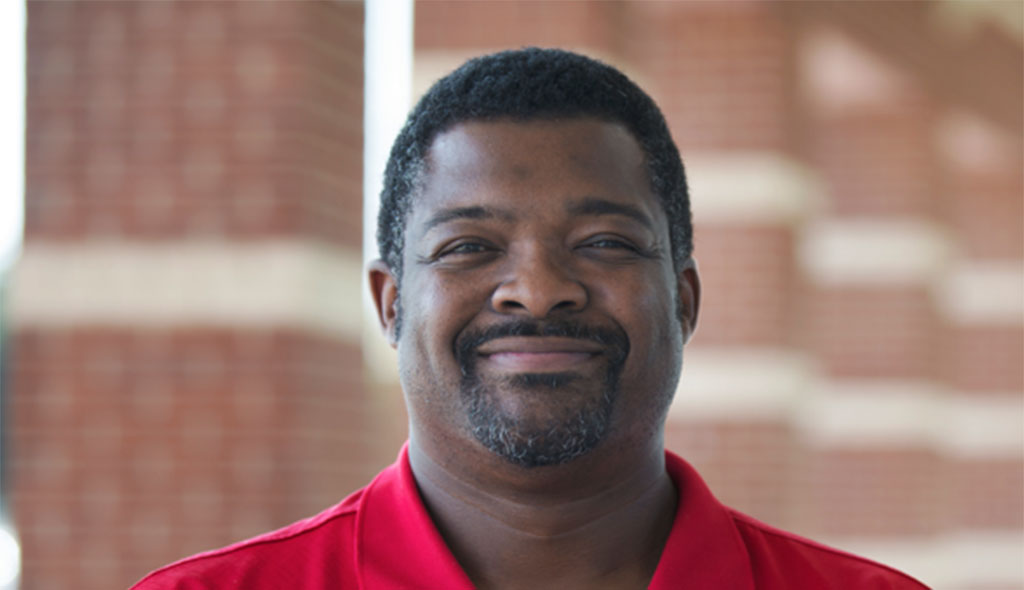
Photo of Greg Hill by Star Local Media

“I tell my students, ‘I’m your teacher, but I can also learn from you,’” says Greg Hill, geography and social studies instructor at John Horn High School in Mesquite, Texas. Hill is a student of life at all times, whether in his own classroom, on the world travels he loves to pursue, or in the geography program at Marshall University, where he is earning his second master’s degree. 

Hill has won numerous awards for his teaching of AP Geography, World Geography, and African American Studies at Horn High School. Geography wasn’t always part of the plan. “For forever and a day, I thought I was a history guy,” he says. His previous master’s degree and undergraduate studies focused on sociology and African American history. He also has a background as a football player and coach. When the principal of Horn asked Hill to come to Horn to teach geography classes, Hill remembered his parents’ advice that ‘when people come get you, give them the time of day.’” He decided he would give the discipline a try. 

“I went to a seminar by Linda Hammon, who is a great pioneer in geography education here in Texas, and trains geography teachers at all levels.” Hill quickly realized, through that experience, how well geography can help students see and explore many connections. “Things like urban layout, religion, language, are all part of the cultural landscape. I just fell in love with the subject. The next school year, our principal told me they had some history spots, and I said, ‘Nope, I’m good, I’m going to stay in geography.’” 

This perspective has influenced what he sees when he travels for pleasure and learning. Something as simple as Tokyo’s manhole covers tell a story of place and culture, he says, as well as the people and lifeways expressed through food, fashion, and architecture. 

Hill’s family gave him the first taste for travel. His father, who worked for Braniff Airlines, “would come home talking about the people he met, the special things like a champagne flight from London, the foods, the passengers. It made me curious about other parts of the world.” Traveling frequently with his mother from Dallas to San Antonio, Hill saw the rapid development along the I-35 highway corridor.” He expanded his knowledge further as a football player at Southern Methodist University when he traveled for games. But it was a trip to China in 2007 that really threw open the gates to international exploration.  

Hill has been surprised by how much his international journeys mean to his students. “To see how interested and immersed my students were in my trips just humbles me. Once I saw that, I knew that every travel opportunity I get, I’m going to take it.” 
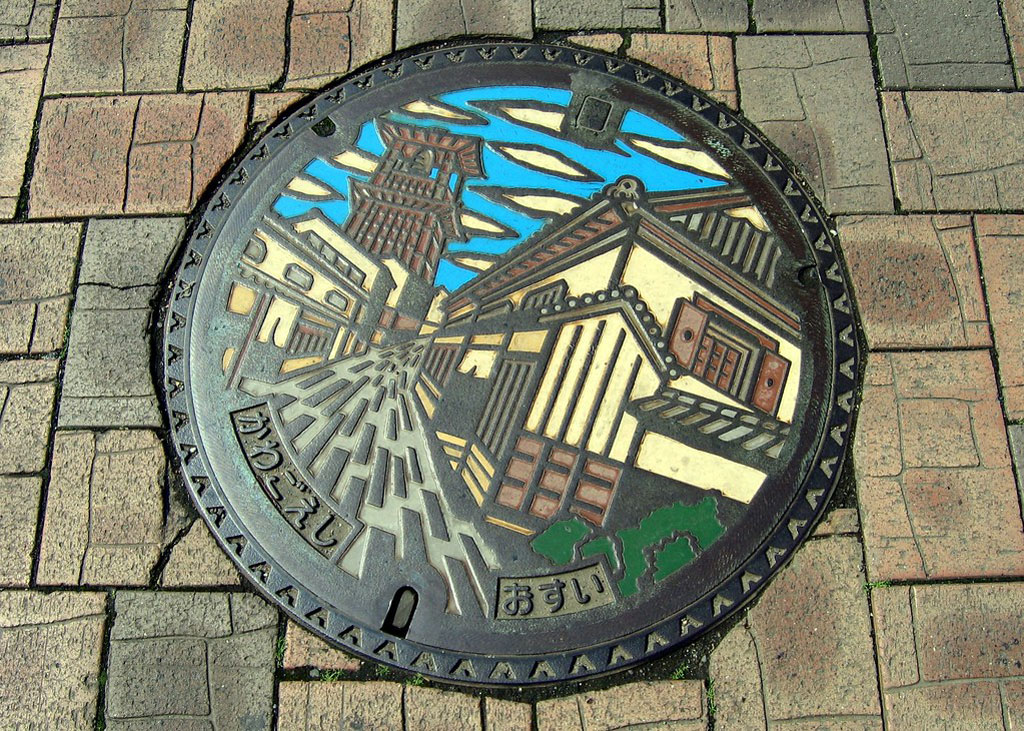
Photo of Tokyo manhole cover by J. Pellgen
Tokyo manhole cover by J. Pellgen


He hopes to offer his students more than mere knowledge of places and facts. “I want them looking at the interconnections of systems, whether they be physical or human. And also to learn critical thinking, how to support your assertions with facts. To dig and get those deeper meanings and stories that geography offers. To understand the why, and be inquisitive.”  

Hill makes those connections in all of his teaching, emphasizing spatial learning in his African American Studies class, for example. “We look at maps and geographical questions, such as when we study the Great Migration and examine “push and pull factors” and the changing sense of place. We also did a case study on the changing urban dynamics of Cleveland, Ohio.” Hill has joined the AAG Black Geographies specialty group to gain even more contacts and ideas about spatial frameworks for his teaching.. 

Recent years have been hard: “We’re exhausted. From the students right up to the administrators. I think it’s the inertia of it all. In 2020 we all scrambled, thinking we’d have a break, but we didn’t. Then came the uncertainty of 2021. Now that we have settled into some semblance of normalcy, that inertia caught up with everybody.” 

As education has come into the crosshairs of current social, cultural, and political battles over content and approach, that, too is discouraging and stressful for educators, Hill says. “A lot of the angst against teachers is misguided and driving our best teachers away. Whether it be over Critical Race Theory, which we don’t teach in high school, or any of the other culture wars, it takes a toll on us.” A record number of Texas school superintendents have resigned in Texas (The Texas Tribune reported nine as of February 2022), and Hill is deeply concerned to see how the issue is touching so many school districts nationwide. Meanwhile, the march of inflation means that many teachers in the U.S. are effectively losing money each year. 

“Every day is a struggle. But the thing that gets me through my day is my students, whether them cracking a joke or discovering something—them being here is what gets me through the day. There’s a need on both sides. They need us as teachers. As my classes go, my kids are great. We do what we can and we make connections.” 

Asked about balancing a full teaching load and full-time work and family with a challenging course toward a master’s degree, Hill recommends it not only for one’s career but for oneself: “It’s never too late to go back and get that second or third degree—or fourth or fifth! I love learning, I love learning about geography, and I am always looking for ways to better myself. This has been a goal of mine for a long time.” 

Find out more about AAG’s 83 Specialty and Affinity Groups, Including groups on education, history, and Black geographies. 

View Greg Hill’s talk on teaching geography at MashpeeED TEDx.
    Share

Member Profile: Tim Fullman

Photo of Greg Hill by Star Local Media

“I tell my students, ‘I’m your teacher, but I can also learn from you,’” says Greg Hill, geography and social studies instructor at John Horn High School in Mesquite, Texas. Hill is a student of life at all times, whether in his own classroom, on the world travels he loves to pursue, or in the geography program at Marshall University, where he is earning his second master’s degree. 

Hill has won numerous awards for his teaching of AP Geography, World Geography, and African American Studies at Horn High School. Geography wasn’t always part of the plan. “For forever and a day, I thought I was a history guy,” he says. His previous master’s degree and undergraduate studies focused on sociology and African American history. He also has a background as a football player and coach. When the principal of Horn asked Hill to come to Horn to teach geography classes, Hill remembered his parents’ advice that ‘when people come get you, give them the time of day.’” He decided he would give the discipline a try. 

“I went to a seminar by Linda Hammon, who is a great pioneer in geography education here in Texas, and trains geography teachers at all levels.” Hill quickly realized, through that experience, how well geography can help students see and explore many connections. “Things like urban layout, religion, language, are all part of the cultural landscape. I just fell in love with the subject. The next school year, our principal told me they had some history spots, and I said, ‘Nope, I’m good, I’m going to stay in geography.’” 

This perspective has influenced what he sees when he travels for pleasure and learning. Something as simple as Tokyo’s manhole covers tell a story of place and culture, he says, as well as the people and lifeways expressed through food, fashion, and architecture. 

Hill’s family gave him the first taste for travel. His father, who worked for Braniff Airlines, “would come home talking about the people he met, the special things like a champagne flight from London, the foods, the passengers. It made me curious about other parts of the world.” Traveling frequently with his mother from Dallas to San Antonio, Hill saw the rapid development along the I-35 highway corridor.” He expanded his knowledge further as a football player at Southern Methodist University when he traveled for games. But it was a trip to China in 2007 that really threw open the gates to international exploration.  

Hill has been surprised by how much his international journeys mean to his students. “To see how interested and immersed my students were in my trips just humbles me. Once I saw that, I knew that every travel opportunity I get, I’m going to take it.” 

Photo of Tokyo manhole cover by J. Pellgen
Tokyo manhole cover by J. Pellgen


He hopes to offer his students more than mere knowledge of places and facts. “I want them looking at the interconnections of systems, whether they be physical or human. And also to learn critical thinking, how to support your assertions with facts. To dig and get those deeper meanings and stories that geography offers. To understand the why, and be inquisitive.”  

Hill makes those connections in all of his teaching, emphasizing spatial learning in his African American Studies class, for example. “We look at maps and geographical questions, such as when we study the Great Migration and examine “push and pull factors” and the changing sense of place. We also did a case study on the changing urban dynamics of Cleveland, Ohio.” Hill has joined the AAG Black Geographies specialty group to gain even more contacts and ideas about spatial frameworks for his teaching.. 

Recent years have been hard: “We’re exhausted. From the students right up to the administrators. I think it’s the inertia of it all. In 2020 we all scrambled, thinking we’d have a break, but we didn’t. Then came the uncertainty of 2021. Now that we have settled into some semblance of normalcy, that inertia caught up with everybody.” 

As education has come into the crosshairs of current social, cultural, and political battles over content and approach, that, too is discouraging and stressful for educators, Hill says. “A lot of the angst against teachers is misguided and driving our best teachers away. Whether it be over Critical Race Theory, which we don’t teach in high school, or any of the other culture wars, it takes a toll on us.” A record number of Texas school superintendents have resigned in Texas (The Texas Tribune reported nine as of February 2022), and Hill is deeply concerned to see how the issue is touching so many school districts nationwide. Meanwhile, the march of inflation means that many teachers in the U.S. are effectively losing money each year. 

“Every day is a struggle. But the thing that gets me through my day is my students, whether them cracking a joke or discovering something—them being here is what gets me through the day. There’s a need on both sides. They need us as teachers. As my classes go, my kids are great. We do what we can and we make connections.” 

Asked about balancing a full teaching load and full-time work and family with a challenging course toward a master’s degree, Hill recommends it not only for one’s career but for oneself: “It’s never too late to go back and get that second or third degree—or fourth or fifth! I love learning, I love learning about geography, and I am always looking for ways to better myself. This has been a goal of mine for a long time.” 

Find out more about AAG’s 83 Specialty and Affinity Groups, Including groups on education, history, and Black geographies. 

View Greg Hill’s talk on teaching geography at MashpeeED TEDx.
    Share

Member Profile: Lesley-Ann Dupigny-Giroux

Photo of Greg Hill by Star Local Media

“I tell my students, ‘I’m your teacher, but I can also learn from you,’” says Greg Hill, geography and social studies instructor at John Horn High School in Mesquite, Texas. Hill is a student of life at all times, whether in his own classroom, on the world travels he loves to pursue, or in the geography program at Marshall University, where he is earning his second master’s degree. 

Hill has won numerous awards for his teaching of AP Geography, World Geography, and African American Studies at Horn High School. Geography wasn’t always part of the plan. “For forever and a day, I thought I was a history guy,” he says. His previous master’s degree and undergraduate studies focused on sociology and African American history. He also has a background as a football player and coach. When the principal of Horn asked Hill to come to Horn to teach geography classes, Hill remembered his parents’ advice that ‘when people come get you, give them the time of day.’” He decided he would give the discipline a try. 

“I went to a seminar by Linda Hammon, who is a great pioneer in geography education here in Texas, and trains geography teachers at all levels.” Hill quickly realized, through that experience, how well geography can help students see and explore many connections. “Things like urban layout, religion, language, are all part of the cultural landscape. I just fell in love with the subject. The next school year, our principal told me they had some history spots, and I said, ‘Nope, I’m good, I’m going to stay in geography.’” 

This perspective has influenced what he sees when he travels for pleasure and learning. Something as simple as Tokyo’s manhole covers tell a story of place and culture, he says, as well as the people and lifeways expressed through food, fashion, and architecture. 

Hill’s family gave him the first taste for travel. His father, who worked for Braniff Airlines, “would come home talking about the people he met, the special things like a champagne flight from London, the foods, the passengers. It made me curious about other parts of the world.” Traveling frequently with his mother from Dallas to San Antonio, Hill saw the rapid development along the I-35 highway corridor.” He expanded his knowledge further as a football player at Southern Methodist University when he traveled for games. But it was a trip to China in 2007 that really threw open the gates to international exploration.  

Hill has been surprised by how much his international journeys mean to his students. “To see how interested and immersed my students were in my trips just humbles me. Once I saw that, I knew that every travel opportunity I get, I’m going to take it.” 

Photo of Tokyo manhole cover by J. Pellgen
Tokyo manhole cover by J. Pellgen


He hopes to offer his students more than mere knowledge of places and facts. “I want them looking at the interconnections of systems, whether they be physical or human. And also to learn critical thinking, how to support your assertions with facts. To dig and get those deeper meanings and stories that geography offers. To understand the why, and be inquisitive.”  

Hill makes those connections in all of his teaching, emphasizing spatial learning in his African American Studies class, for example. “We look at maps and geographical questions, such as when we study the Great Migration and examine “push and pull factors” and the changing sense of place. We also did a case study on the changing urban dynamics of Cleveland, Ohio.” Hill has joined the AAG Black Geographies specialty group to gain even more contacts and ideas about spatial frameworks for his teaching.. 

Recent years have been hard: “We’re exhausted. From the students right up to the administrators. I think it’s the inertia of it all. In 2020 we all scrambled, thinking we’d have a break, but we didn’t. Then came the uncertainty of 2021. Now that we have settled into some semblance of normalcy, that inertia caught up with everybody.” 

As education has come into the crosshairs of current social, cultural, and political battles over content and approach, that, too is discouraging and stressful for educators, Hill says. “A lot of the angst against teachers is misguided and driving our best teachers away. Whether it be over Critical Race Theory, which we don’t teach in high school, or any of the other culture wars, it takes a toll on us.” A record number of Texas school superintendents have resigned in Texas (The Texas Tribune reported nine as of February 2022), and Hill is deeply concerned to see how the issue is touching so many school districts nationwide. Meanwhile, the march of inflation means that many teachers in the U.S. are effectively losing money each year. 

“Every day is a struggle. But the thing that gets me through my day is my students, whether them cracking a joke or discovering something—them being here is what gets me through the day. There’s a need on both sides. They need us as teachers. As my classes go, my kids are great. We do what we can and we make connections.” 

Asked about balancing a full teaching load and full-time work and family with a challenging course toward a master’s degree, Hill recommends it not only for one’s career but for oneself: “It’s never too late to go back and get that second or third degree—or fourth or fifth! I love learning, I love learning about geography, and I am always looking for ways to better myself. This has been a goal of mine for a long time.” 

Find out more about AAG’s 83 Specialty and Affinity Groups, Including groups on education, history, and Black geographies. 

View Greg Hill’s talk on teaching geography at MashpeeED TEDx.
    Share

Member Profile: Trang VoPham — Understanding the Spatial Context of Cancer

Photo of Trang VoPham
Trang VoPham

Medical geographer Trang VoPham appreciates “the seamlessness between the disciplines” of geography and epidemiology, particularly in the application of geospatial methods, including GIS, to charting and confronting public health risks.

VoPham, who simultaneously pursued a Ph.D. in epidemiology and a masters degree in geospatial methods, now conducts research at the Fred Hutchinson Cancer Research Center in Seattle, Washington. Her focus is understanding the influence of environmental factors associated with place or location on the incidence of disease in humans. On any given day, VoPham might find herself mapping measures of air pollution, analyzing demographic data across census tracts, or reading the latest publications on cancer. 

Much of her recent research has been aimed at uncovering environmental factors associated with liver cancer. In the United States, VoPham notes that a high proportion of liver cancers are unexplained. Aflatoxins produced by different fungi are known to be important environmental causes of liver cancer in some parts of the world but there is an emerging awareness that chronic exposure to air pollution may also result in elevated risk. 

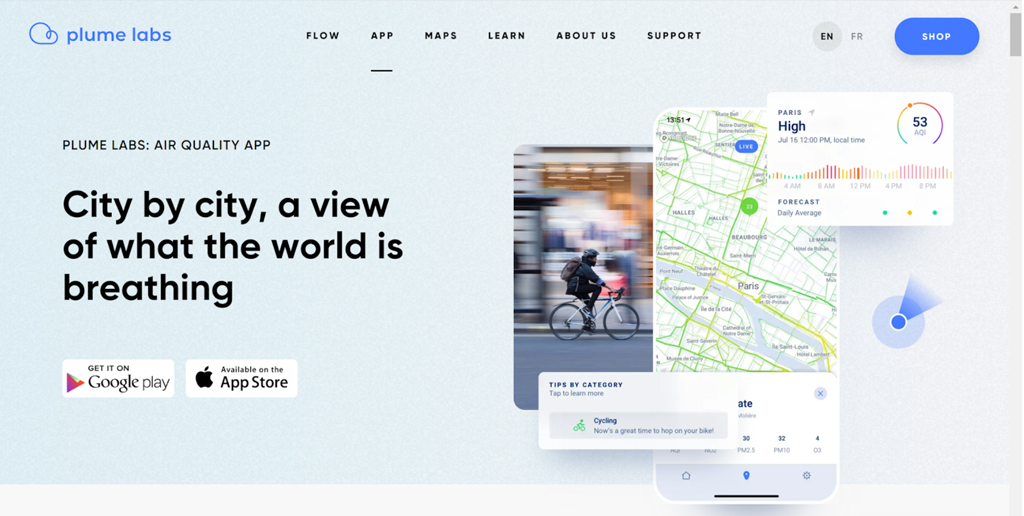
Because cancers result from complex interactions of genetic, behavioral, and environmental factors, VoPham’s work is highly interdisciplinary. For example, in a study funded by the Prevent Cancer Foundation, she is working with investigators with expertise in geospatial science, environmental epidemiology, and health psychology to provide participants with their own air pollution sensors and an associated smartphone app that visualizes air quality in their vicinity. 

During the study, the research group will provide participants with information about harmful health effects of air pollution and offer them general strategies and specific cues for reducing their exposures. In doing so, the research group aims to empower people with information to take control of their own health and then assess whether they act on that information.

When asked about the lessons of the COVID-19 pandemic for her own research, VoPham didn’t hesitate: “The COVID crisis has been a clear reminder to me of health disparities and the importance of addressing them in my work,” regardless of whether they are associated with geography, race/ethnicity, or some other factor.

Screenshot of Plume Labs tool used by Trang VoPham
Plume Labs tool used by Trang VoPham
    Share

The Future Is Here: Sophia Garcia and the Intersections of GIS, Redistricting, and Social Justice

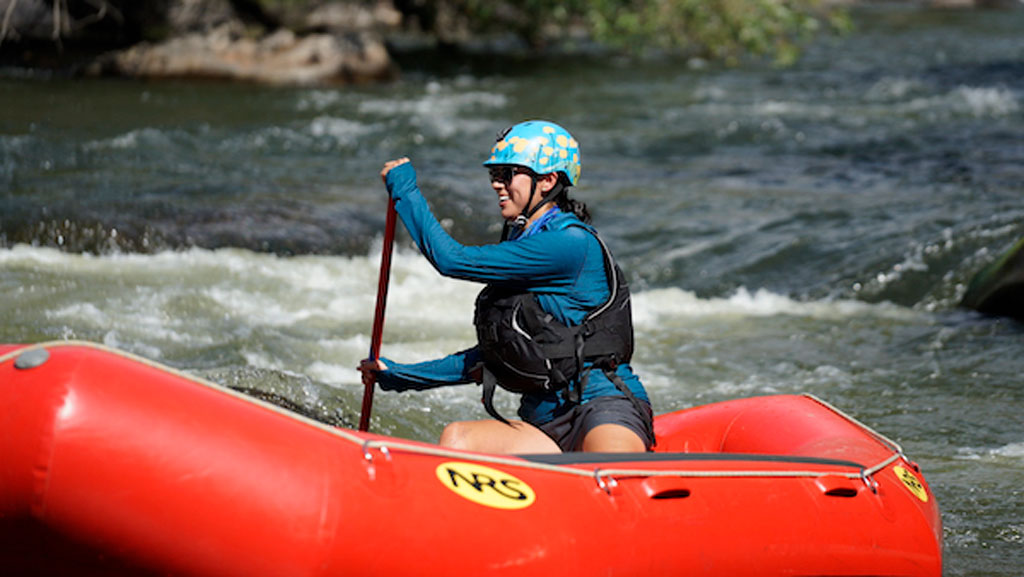
Photo of Sophia Garcia padding a raft in river rapids

We’re celebrating the accomplishments of geographers during Geography Awareness Week (November 14-20) and beyond. Find out more about this year’s theme, “The Future Is Here: Geographers Pursue the Path Forward” at our GeoWeek StoryMap, and follow the celebration at #GeoWeek or #GeoWeek2021.

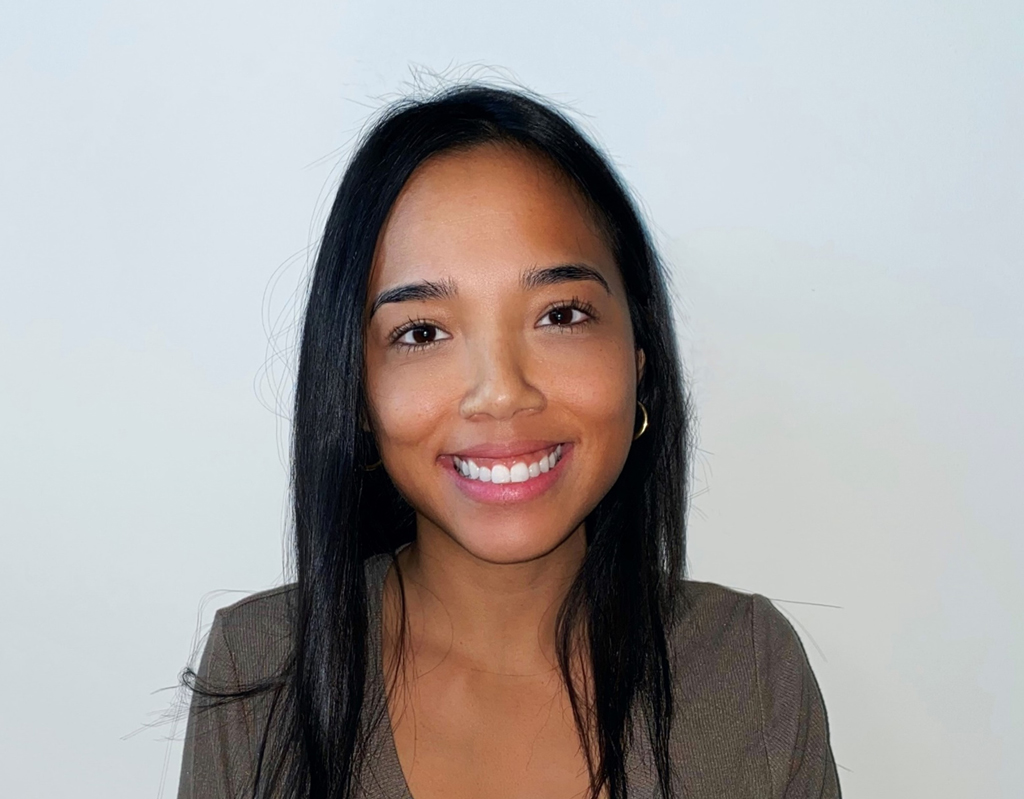
Photo of Sophia GarciaSophia Garcia, the GIS and Outreach Director for Redistricting Partners in Sacramento, CA, understands how maps can start necessary conversations. In her current role, she sees redistricting efforts and community involvement as the “perfect intersection of talking about community, uplifting the community and letting them know what’s happening.” In her work she focuses on the imperative that we bring light to the redistricting process, engage communities, and empower them to get involved.

Garcia graduated with a bachelor’s degree in Environmental Studies from Wellesley College in 2015, and now works for Redistricting Partners from her base in Bakersfield, California. Garcia came to her current role from her previous work as a GIS Analyst for the Dolores Huerta Foundation, where she saw firsthand how she could uplift the work of her colleagues and community organizers through mapping. GIS software has great potential to start a dialogue and Garcia knows this:

Data is more than just numbers; there’s a story behind what’s happening.

Although she grew up with a father who worked in the GIS field (she attended her first ESRI User Conference when she was 10 years old, and mainly remembers the refreshments), Garcia did not see the full potential of GIS until college. Along with her classmates, she was tasked with figuring out how people living in a certain census block could do something sustainable surrounding food and grocery shopping. After knocking on doors and having conversations with people in the neighborhood, she found that not everyone had access to the nearest grocery store because of factors such as affordability, distance, and access to transportation.

Photo of Sophia Garcia padding a raft in river rapids
In addition to her work with GIS and redistricting, Sophia is a skilled rafter and rafting guide.


Because of the geographic nature surrounding the factors of access to food and sustainability, Garcia had an “aha moment” and realized the stories of everyone she had talked to could be conveyed using a map. She started to work with GIS on the project, and eventually went on to intern with the GIS departments in Kern County to learn more about the different ways that the departments utilized GIS.

At Redistricting Partners, Garcia has been very successful in using mapping technologies and outreach to emphasize the real-world implications of redistricting, and advocate for a more fair process. She was part of the group that sparked the passage of the California Assembly Bill No. 849, which mandates rules to increase transparency in the redistricting process in cities and counties across California. This bill, which Garcia hopes to see similarly implemented in other parts of the country, requires localities to have specific redistricting websites and mandates redistricting to be talked about during long public meetings, among other components.

When asked how younger geographers can explore new, interdisciplinary possibilities in geography, Garcia urges them to find a project they are passionate about and make use of mapping technology which is often available from ESRI to college and K-12 students. She recognizes that you can categorize pretty much any data geographically, and urges young geographers to “find whatever you’re passionate about, or mad about, or excited about, and learn to map it, make it as a poster, share it with someone, and you can have a discussion about it.”

    Share

A Day in the Life of a Geographer


    Share