AAG Announces Launch of Geography.com for 2018 Geography Awareness Week
The American Association of Geographers (AAG) is pleased to announce the launch of Geography.com in conjunction with the celebration of Geography Awareness Week, November 11-17, 2018. The website is a joint venture and collaboration between the AAG and Esri, designed for educational purposes and the promotion of the discipline.
Geography.com is intended as an outreach tool for site visitors to learn more about what geography is, what geography offers, and career opportunities available in the field. The intended audience includes the general public and students (high school and undergraduates), as well as educators, parents, and federal agencies or other organizations seeking information about geography. The website can also be used as a resource to help departments recruit undergraduate students to their programs.
Many professional geographers do not discover the field and its related career opportunities until after they have started their undergraduate education, graduate education, or even at some stage after they have entered the workforce. Geography.com is part of the ongoing efforts of the AAG and other organizations to introduce students and the general public to a discipline that offers multiple career paths, as well as information to better understand the world.
Esri has donated the use of the Geography.com domain for this important educational outreach effort. Relatedly, the AAG’s domain, Geography.org, will lead directly to Geography.com in an effort to increase the visibility and discoverability of this outreach tool. That domain previously directed to the AAG’s own home webpage.
About AAG
The American Association of Geographers is a nonprofit scientific and educational society founded in 1904 that contributes to the advancement of geography. Its 12,000+ members from nearly 100 countries share interests in the theory, methods, and practice of geography, which they cultivate through the AAG’s Annual Meeting, scholarly journals, and online newsletter. The AAG promotes discussion among its members and with scholars in related fields, in part through the activities of its 70 specialty and affinity groups. AAG members are geographers and related professionals who work in the public, private, and academic sectors in a wide range of careers. Visit us at aag.org.
Share
President's Column
Watershed Moments
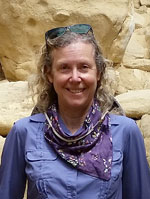
It is time to show our democracy, our humanity, our compassion, and our resolve. It is time to say no to the murders of journalists, worshippers in synagogues, African American churchgoers, schoolchildren, theatergoers, yoga practitioners, and disco dancers. It is time to VOTE. Please take a moment of silence for all victims of ever-senseless and hate-fueled violence inspired by the rhetoric of the current U.S. Administration…
…Thank you.
I embrace the privilege to write this column each month, a right to free expression for which Washington Post journalist Jamal Khashoggi died. VOTE.
I am honored for the opportunity to take part in AAG Regional Division Meetings this fall, and am grateful for the freedom of assembly, a right for which 11 worshippers died in the Pittsburgh Tree of Life Synagogue. VOTE.
Now, the U.S. President believes he can change the Constitution by executive order, to erase the birthright of American citizenship. Furthermore, the Administration is working to erase transgender identities, lift protections for endangered species, and is sending National Guard troops to an imaginary invasion at the U.S.-Mexico border. VOTE.
Remember to speak out against alternative facts, to light the candle in the dark. During Dr. Christine Blasey Ford’s powerful testimony in the Kavanaugh Confirmation Hearing, Sen. Patrick Leahy stated “Bravery is Contagious.” VOTE.
When you exercise your right and civic duty to vote on Tuesday 6 November, remember that our great grandmothers fought for that right in suffrage. Communities today still fight voter suppression. This is a watershed moment in our history, it is now or never for freedom of expression, for civil and human rights, for the environment, for the future of the planet. Of course, your choices are your own: be heard. VOTE.
Deepwater Horizon beach cleanup. (Photo by National Institute for Occupational Safety and Health)
Meanwhile in the Colorado River Watershed we are not safe either, and are not being helped by a gutted and demoralized EPA…It is humbling to live in the very modern city of Austin, Texas, with the advantages of modern water treatment and sewer systems, to receive a 5 am text with a boil water order for our metropolitan area of nearly a million citizens. Our water treatment system was overwhelmed by flood waters traveling down the Colorado River Watershed. This 50 year magnitude storm event took out a 49 year old bridge in the Hill Country. Austin and its suburbs were without clean tap water for over a week and we still face restrictions of not being able to water yards, fill pools, or wash cars. Such a first world problem with regards to pools and cars, and water conservation is the increasing norm for drought-prone central Texas. Imagine never having clean water or sanitation in the first place. 844 million of the world’s citizens today have no access to safe water, and 2.3 billion people live without access to sanitation. And in the U.S., Food and Water Watch notes that half a million households had their water shut off for the inability to pay their water bills in 2016. How do we ensure water security, both from an economic and humanitarian perspective, and from a production capacity perspective? This is a grand challenge for Geographers to work on. As climate change continues to bring more extreme events, our infrastructure is being overwhelmed. If this is the case in one of the most developed nations on the planet, how will less well-off countries cope with looming environmental challenges? In the U.S., the Trump Administration rolled back protections for clean water in 2017, relaxing limits on toxic water pollution from coal-fired power plant ash, among other senseless environmental protection rollbacks. VOTE.
It is encouraging to be receiving AAG Members’ thoughtful geography abstracts for the AAG Annual Meeting major themes: Geospatial Health Research; Geography and Human Rights; and Physical Geography in Environmental Science. Thank you. There is still time to participate the paper abstract deadline has been extended to 8 November 2018; Poster abstracts are due 31 January 2018. Consider submitting your research to be presented at the AAG Annual Meeting in Washington DC in April 2019. While you are in Washington, visit your legislators, share your science, speak up and be a part of the change: make a difference with Geography. And on Tuesday 6 November, make a difference with your citizenship: VOTE.
Please share your thoughts with me at slbeach (at) austin (dot) utexas (dot) edu.
— Sheryl Luzzadder-Beach
Professor and C.B. Smith Sr. Fellow in U.S.-Mexico Relations
Geography and the Environment, University of Texas at Austin
Harriet Tubman Underground Railroad Visitor Center
“I never ran my train off track and I never lost a passenger.” Harriet Tubman was fond of saying this in her later years, but during the 1850s when she was actively escorting enslaved people north to freedom using the Underground Railroad (UGRR) network, she was taking grave risks with her own life and liberty as well as that of the people she led. The Harriet Tubman Underground Railroad Visitor Center (HTVC) tells the story of this renowned “conductor” with her words and with exhibits providing insights into her early years and the historic events of her times. Sites and artifacts of the UGRR are limited. After all, its success depended on secrecy.
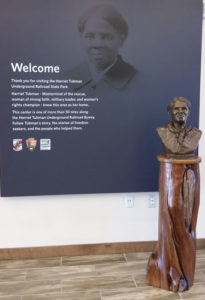
Sculpture by Brendan O’Neill, Sr. The sculptor depicts Tubman at about age 30, approximately when she achieved her freedom. The bust and its pedestal are five feet tall, just Tubman’s height. The scars from whippings stand out on the back of her neck in O’Neill’s sculpture. (Photo by C.W. Cooper)
The history of slavery and of the UGRR is known. This HTVC puts a person, Harriet Tubman, at the center of the historic story. We know where she grew up and the work she did. After she escaped to free territory we know of a number of her trips back to her home region, and we know about many of the family members and friends she helped to escape. Some of the places and people that harbored her and the people with her are known. Most are not. But a drive through this rural landscape of “Chesapeake Bay country” can provide a sense of the woman and the times. Sensitivity to this landscape can help the visitor imagine and understand the events and the people who risked so much to gain so much.
The Site Is the Setting
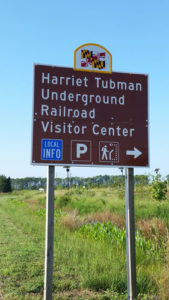
Highway sign at approach to Harriet Tubman Underground Railroad Visitor Center (Photo by C.W. Cooper)
The HTVC in Dorchester County is approximately a two-hour drive from Washington D.C. to the Eastern Shore of Maryland – that is, east of the Chesapeake Bay. The county seat of Dorchester County is Cambridge on the Choptank River. The Cambridge courthouse was the scene of slave auctions and almost the scene of auctions of some of Tubman’s family members.
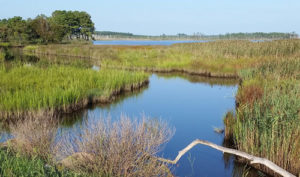
The HTVC is not at Harriet Tubman’s birthplace, like many national park sites, nor at another notable place in her life. But the landscape around the HTVC and across the broader region is an integral part of her story. The HTVC property is carved from Blackwater National Wildlife Refuge (BNWR), so the setting is protected. The farm fields, woodlands, impoundments and open waters of the refuge provide cover and habitat for the migratory waterfowl and other creatures and give a sense of the mid-nineteenth century landscape.
The land of Tubman’s youth is the coastal plain of Delmarva, a region of farming, timbering, marshes, and rivers. Dorchester County is overwhelmingly low lying and flat. The waterways and the land peninsulas (“necks” in this region) intertwine like the fingers of clasped hands. Places that are nearby as the crow flies may be miles apart as the road winds. Woodland trees are not especially tall, but the woods are thick, and the ground cover can be dense. In marshy areas, “wetlands,” there may by little hillocks of dry land. The roads are now paved and the field crops may differ, but imagination may help the visitor form an impression of former times.
The Historic Setting
Students studying the period leading to the Civil War typically concentrate on the national political scene of presidential elections and federal legislation. The story of a single person leading small groups of individuals through the hazards of escape can give a different perspective to illuminate the political story.
The historic setting of the 1840s and 1850s is one of Northerners’ growing antislavery sentiment and of Southerners’ steadfast commitment to slaveholding in a primarily agrarian economy. Political parties shifted and realigned. Opinions became increasingly entrenched with successive administrations: John Tyler (following death of William Henry Harrison 1840, Whig); James K. Polk (elected 1844, Democrat); Zachary Taylor (elected 1848, Whig); Millard Fillmore (following Taylor’s death in 1850, Whig); Franklin Pierce (elected 1852, Democrat); James Buchanan (elected 1856, Democrat); and finally Abraham Lincoln, elected in 1860, Republican. Other important events: The Missouri Compromise, 1820, set the precedent that new states would be admitted to the Union in pairs, one free state and one slave state together. The Fugitive Slave Act, 1850, provided that escaped slaves found in the North must be returned. The Dred Scott decision in 1857 ruled that Dred Scott, a slave, was not a citizen and had not obtained his freedom because he had been taken from a slave state to a free state; it also essentially ruled the Missouri Compromise unconstitutional. The Lincoln-Douglas debates (1858) made Lincoln well known when he ran for the presidency. Then in April 1861 the South fired on the Union troops at Ft. Sumter in the harbor of Charleston, South Carolina touching off the Civil War.
The history is the big story. But it played out in the lives of individuals on local landscapes. One such individual whose local actions illustrated the larger context is Harriet Tubman in Dorchester County on Maryland’s Eastern Shore.
Harriet Tubman, the Person and Her Actions
Water, marsh grasses and woodlands in Dorchester County, Maryland (Photo by C.W. Cooper)
Harriet Tubman was born, it is thought, in 1822 near the village of Madison. She was born Araminta Ross, and was called Minty. Her parents, Ben and Harriet (Rit) were slaves owned by different, though related, people. In 1844 Harriet married John Tubman, a free African American, and about that time took her mother’s first name, Harriet (Larson, p. xvi). Tubman’s father was freed in 1840 by act of his deceased owner’s will (Larson p. 27). Tubman’s brothers remained enslaved until she conducted them to Canada in late 1854. In 1855 Ben bought Rit, then 70 years old, for $20. In pre-Civil War Dorchester County, approximately one-half of the African Americans were free.
One incident in Tubman’s childhood had lifetime repercussions. When she was about seven years old, she accompanied a slave woman of her owner’s household to make a purchase at the Bucktown store. Also at the store were another slave and his overseer. As the two men argued and the slave turned to leave, the overseer threw a two-pound counter weight at him mistakenly hitting Tubman in the head. She dropped to the floor unconscious. It was several days before she recovered, and she carried the scar, a dent in her forehead, the rest of her life. Until her death Tubman was prone to suddenly falling asleep, awakening in a few moments, and she had visions and recurring dreams.
As a youngster, aged about six, Tubman was assigned to collect the catch in muskrat traps. Muskrat is a rodent that lives in marshland, about a foot long when fully grown. The hides are most valuable when the muskrat is caught in the winter when the fur is thick. That’s when the water is cold, sometimes frozen over. Checking muskrat traps is a cold, unpleasant assignment.
Harriet’s father, Ben, worked in timbering, cutting trees and hauling the lumber to wharfs to be sent to shipbuilders in Baltimore. In her teens, Tubman worked with him. Tubman was a strong, effective worker. It was not unusual for a slave owner to hire out a slave for wages which would be paid to the owner. When she was about 25 Harriet paid her owner a fee, estimated at $50 – $60, and then for the next year she kept her wages. With her income she bought two oxen which would have boosted her wage rate.
Tubman would have known a number of people in the broader community. In the lumber camps and river docks she would have met people from beyond the immediate region. Water transport was widespread with boats docking at the wharfs of large homes as well as at the town docks. African Americans working on the boats would have brought news of a wider world. Perhaps the most valuable aspect of her varied work and locations was learning to live on the land.
The horrors of slavery were real. “Every time I saw a white man I was afraid of being carried away. I had two sisters carried away in a chain gang ― one of them left two children. We were always uneasy” (HTVC). The sculptured bust of Tubman displayed in the HTVC includes the raised scars on the back of her neck ― marks of whipping.
Harriet Tubman was determined to be free. As she said looking back in 1886, “I had reasoned this out in my mind; there was one of two things I had a right to, liberty or death; if I could not have one, I would have the other, for no man should take me alive” (HTVC).
After an aborted attempt to escape with her brothers, she went alone. She left after dark one Saturday night in 1849 (Adler p.23). With no work done on Sunday, she would not be missed for two days. Looking back on that 1849 flight to freedom and thinking about her feelings as she crossed into a free state, she said, “When I found I had crossed that line, I looked at my hands to see if I was the same person. There was such a glory over everything the sun came like gold through the trees, and over the fields, and I felt like I was in heaven” (HTVC). What was unexpected in the following weeks, was how much she missed her family. She determined that they too should be free and that she would see to it. Yet every time she returned to Dorchester County to lead others north, she was traveling from a safe place to a place of danger – a place where detection and capture meant the probability of a whipping, or worse, and the possibility of being “sold south.”
In late 1850 through friends, John Bowley, a free African American, contacted Tubman for help. This took some coordination. He was a ship carpenter in Baltimore, but his enslaved family still lived on their owner’s farm on the Eastern Shore. Bowley’s wife, Kessiah, a niece of Tubman, together with the couple’s two young children, was to be sold in an auction on the courthouse steps in Cambridge. Tubman got to Baltimore and met with Bowley to plan his wife’s escape. At the auction, Bowley made the highest bid for the woman and the two children. The officials managing the auction broke for lunch and returned to collect payment but found that the high bidder was no longer around. As they started to re-auction Kessiah, they realized she too was gone. The four members of the Bowley family hid in a nearby cellar and slipped away at night in a small boat on the Choptank River and then sailed to Baltimore where they met Tubman who guided them north to Philadelphia and freedom (Adler p. 48). December weather added to the hazard of the 75-mile journey up the Chesapeake Bay to Baltimore.
In preparing for another journey, Tubman sent a coded letter message to a friend. When the suspicious postal inspectors could not find anything wrong, they handed the letter to the intended recipient who read it, understood the message and tossed the letter back saying it made no sense to him. He then went and alerted Tubman’s brothers to be ready to leave at a moment’s notice.
After gaining his freedom, Tubman’s father had established a home for himself and Rit in Poplar Neck in Caroline County, 40 miles from the Brodess Plantation, where Harriet’s brothers lived near Bucktown. On Christmas Eve, 1854, the brothers went to their parents’ home. Eight people waited in a corncrib, unwilling to let Rit Ross know her children were so close for fear her emotions would alert other people. Ben Ross brought food to them. Knowing he’d be questioned by slave catchers and wanting to answer truthfully that he “hadn’t seen them,” Ben covered his eyes with a handkerchief as he helped his grown children.
Tubman had an unshakable faith that God would protect her and would show her the way to safety in the years she led people north to freedom. One time she was escorting a number of escaping slaves. She had a premonition of danger and immediately left the road leading her “passengers” to wade through chest deep water to cross a river. The danger was real since slave catchers were waiting ahead on the road. Describing her safe escape, she said “It wasn’t me. It was the Lord” (Adler p. 59).
In all, Tubman made, it is believed, 13 trips between the Eastern Shore and free lands, escorting 70 enslaved persons to freedom, and her advice helped at least 50 others escape. No wonder she was called “Moses.” In later years she was fond of saying, “I never ran my train off track and I never lost a passenger” (Adler p.4).
After the Civil War broke out, Tubman went south and aided efforts of the Union Army. She went on one raid up the Combahee River in South Carolina to disrupt Confederate supply lines. As slaves in plantations along the river realized the boats were Union boats, they swam to get aboard. Tubman also helped in the field hospitals for the black troops and distributed food and clothes to escaping slaves who flocked to the Union camps. In later years, Tubman made her home in Auburn, New York, where her parents and some siblings had settled after the war and after returning to the United States from Canada. Tubman actively supported women’s suffrage. She died in 1913.
The Harriet Tubman Underground Railroad Visitor Center
Harriet Tubman Underground Railroad Visitor Center exhibit with sculptural bust and welcome signage (Photo by C.W. Cooper)
The Harriet Tubman Underground Railroad Visitor Center tells the story of Harriet Tubman’s life in the context of her times. The design concept of the visitor center is “The View North,” referencing the direction the slaves took towards freedom setting their course by the North Star. The layout of the building and the exhibits within it follow a progression northward.
Although not particularly “high tech,” the exhibits, the artifacts of model cabins, the two-pound weight, the video of the region with a narrative commentary of her escape trips all contribute to an immersion in Tubman’s world. The context includes acknowledgment of the dangers risked by other people, both enslaved and free, in helping the passengers along on the “railroad.”
Born into slavery, Tubman was small and unable to read and write. She freed herself and others and continued to be a voice for individual rights all her life. The HTVC presents her story. The setting, the Dorchester County landscape, is an integral part of the story.
Adler, David A. 2013. Harriet Tubman and the Underground Railroad. New York: Holiday House. This biography is often classified in the children’s or youth portion of a library.
Larson, Kate Clifford. 2004. Bound for the Promised Land. New York: Ballantine Books. This is a full-length biography of Harriet Tubman.
Lockhart, Barbara M. 2012. Elizabeth’s Field. North Charleston, South Carolina: c. Barbara M. Lockhart. This book of fiction is based on extensive research and the personal oral history with the author’s elderly African American neighbor who heard the stories first hand. The author’s land had been owned briefly in the 1850s by a freed African American woman. This unusual event gave rise to extensive research and this fictional account weaving the lives of slaves and free, owner and slave, and the life of the times. Today’s high school and college students find it to be the basis of discussion and enhanced appreciation for people and place. Copies of Elizabeth’s Field are available at the HTVC and through Amazon.
Harriet Tubman Underground Railroad Byway (Tubman Byway) — The Byway maps a route of over 130 miles in Maryland, Delaware and Pennsylvania showing over 30 sites linked with Tubman’s life and work.
Chesapeake Bay Maritime Museum, St. Michael’s, Maryland — The 18-acre campus on the Miles River is an active center with historic watercraft and interpretive displays of life in the region, watermen, farmers, tourists, people who have made their living from the Chesapeake Bay and the region.
Share
Post
Dwayne Parks joins AAG as Accounting Specialist
The AAG is pleased to announce that Dwayne Parks has joined the AAG Staff at the association’s headquarters in Washington, D.C. as an Accounting Specialist. Dwayne has over 17 years of experience working with organizational data in both New York City and the Washington, D.C. metro area. Throughout this timeframe, Dwayne has managed employee payroll and record keeping in both the legal and healthcare industries including companies such as Edmond Scientific Company, Encore Legal Solutions, and Ikon Document Services (formerly Nightrider Copy Service and Alco Standards).
Dwayne holds an associates degree from Elizabeth Brant School of Business. He has also worked to provide financial reports to his former employers and is certified in QuickBooks for Federal Contractors by the Federal Contractor Services Network. In his spare time, he was volunteer head coach for the Lee Mount Vernon Sport Club over the past 8 years, from 2009-2017. The team always ranked as a number 1 or number 2 seed. Dwayne thought it was “wonderful to watch a child develop from having little skills to developing great skills.” He coached the same group of boys from 4th to 12th grades. The team was more than a team… they were a family!
Share
Post
US Geographer Mei-Po Kwan honored as Fellow of the UK Academy of Social Sciences
The UK Academy of Social Sciences announced today that it has conferred the award of Fellow on US geographer Mei-Po Kwan, among other leading social scientists.
Academy Fellows are drawn from academics, practitioners and policymakers across the social sciences. They have been recognized after an extensive peer review process for the excellence and impact of their work through the use of social science for public benefit. This includes substantial contributions and leadership in various fields, including higher education, social, economic and environmental policy, government, law, charitable foundations and think tanks.
Mei-Po Kwan, Professor of Geography and Geographic Information Science, University of Illinois at Urbana-Champaign, was the only US geographer to receive the award of Fellow by the Academy of Social Sciences this year. The Academy’s citation accompanying her selection emphasized the impact of Professor Kwan’s work, noting that she “has made significant contributions to theory, methods and practice in urban, GI science, mobility and health research.”
About the Academy of Social Sciences
The Academy of Social Sciences is the national academy of academics, learned societies and practitioners in the social sciences. Its mission is to promote social science in the United Kingdom for the public benefit. The Academy is composed of 1313 individual Fellows, 44 Learned Societies, and a number of affiliates, together representing nearly 90,000 social scientists. Fellows are distinguished scholars and practitioners from academia and the public and private sectors. Most learned societies in the social sciences in the UK are represented within the Academy. The Academy also sponsors the Campaign for Social Science.
For further information, interviews or photos contact:
Michelle Kinzer Joins AAG Staff as Government Relations Manager
The AAG is pleased to welcome Michelle Kinzer to fill the role of Government Relations Manager. She will serve as AAG’s primary advocate on public policy in Washington and will continue to grow relationships with government decision makers as well as outside organizations and stakeholders. She will track and analyze relevant issues facing the AAG and work to promote the rapidly growing geography community as a whole.
Michelle brings with her several years of government relations experience from both the public and private sectors. She began her career answering constituent phone calls in the office of Senator Tim Kaine and eventually went on to manage the Senator’s constituent correspondence database. She employed her budding passion for geospatial data by compiling targeted email lists for press releases and town halls in the Commonwealth, and mapping internal correspondence metrics. After some crash courses in ArcGIS Online, she created an interactive Virginia map for the National Park Service’s 2016 Centennial that was featured on Senator Kaine’s website. Michelle later went on to join the government relations firm Public Strategies Washington as a Senior Legislative Assistant. Her client work focused on the issues of renewable energy, small business & seasonal visas, agriculture, and transportation.
Michelle is a graduate of Virginia Tech where she earned her B.A. in Urban Planning with a concentration in Global Development and minors in Political Science and Spanish. She developed a working proficiency in Spanish while studying abroad in Valparaíso, Chile.
In her free time, Michelle enjoys DC theater, bluegrass music, Hokie football, and arguing with friends and family over the quickest way to get somewhere.
Share
Marilyn Sue O’Hara
Marilyn Sue O’Hara, also known as Marilyn Ruiz, died September 30, 2018, following a collision between her car and a semi-truck at an intersection near her home in Urbana-Champaign, Illinois. She was 58 years old. She is survived by her parents, four children, and six siblings.
Marilyn received her Ph.D. in Geography at University of Florida in 1995. Her dissertation was titled “A Model of Error Propagation From Digital Elevation Models To Viewsheds.” Her dissertation advisor was Grant Ian Thrall. Her Bachelors and Masters degrees were from University of Illinois. Her selection of UF for her doctorate degree came about because of communications with Grant about Spatial Diffusion, Grant at the time was resident scholar at the Homer Hoyt Institute, doing research on spatial diffusion of urban development, and he had recently co-authored a monograph titled Spatial Diffusion. She then applied for the graduate program at UF and received an offer of a UF Presidential Scholarship awarded to the University’s top entering graduate students. Marilyn never drew funds from that award because her graduate program at UF was generously and fully funded by contract grants on DEM from the US Military. Her advancements on the topic of DEM were expedient; but, her passion was Epidemiology, Spatial Diffusion of Disease.
After receiving her Ph.D. she was offered several academic appointments and accepted a position as Assistant Professor at Florida State University. After completion of her third year at FSU, she was offered positions at University of Illinois where she advanced to Clinical Professor of Pathobiology.
At University of Illinois she became a cherished teacher, advisor, and mentor. The comments on her FacebookPage from her former students in the USA, India, and Africa, stand as a testament to the high regard she was held by her students, the university, and her biological family. She was a brilliant student; a wonderful person.
I am honored to have been her Ph.D. advisor and her friend
Meet the AAG Journals Editors – James McCarthy and Ling Bian
James McCarthy is the Nature and Society editor for the Annals of the American Association of Geographers and a Professor in the Graduate School of Geography at Clark University. His work analyzes the interactions of political economy and environmental politics, with particular emphases on rural areas, renewable energy, property relations, and social movements. He has published widely on these themes in geography and related disciplines, including two major edited volumes and over 50 articles and chapters. He has carried out research on natural resource management, energy policy, and connections between rural landscapes and livelihoods for the Ford Foundation and Oxfam America. Prior to coming to Clark in 2011, he was an Assistant and Associate Professor of Geography at Penn State University. His current research focuses on the relationships among climate change, renewable energy, and the political economy of capitalism, focusing in particular on the ways in which a renewable energy sector booming in the context of climate change is taking up land and other natural resources in ways that may slow further climate change on the one hand, but create new social and environmental claims, impacts, and conflicts on the other.
Professor McCarthy considers nature-society research and analysis to be an absolutely essential area of scholarship for geography and for society. The field’s breadth, relevance, and potential for integration of diverse topics and approaches is precisely what led him to a career in academic geography after work in the environmental NGO field, and those attributes make creative and committed new work in it needed now more than ever. As editor, Professor McCarthy seeks to ensure that the full range of current nature-society scholarship in geography is represented in the Annals. He enjoys seeing both the tremendous range and vibrancy of work in the field, and working developmentally with scholars early relatively new to the publication process. Professor McCarthy sees cultivating new voices, perspectives, and topics in the discipline and journal as essential responsibilities for an editor, and prospective authors should always feel free to contact him regarding potential topics for the journal.
Ling Bian is the newest of the four editors for the Annals of the American Association of Geographers, having assumed her role in January 2018. She currently serves as the editor for the Geographic Methods section of the Annals. Published six times a year (January, March, May, July, September and November), the Annals also dedicates one Special Issue per year which draws a diversity of papers from across the discipline under a single theme.
In addition to being an editor, Bian is a professor in the Department of Geography at the University at Buffalo where she teaches geographic information systems and sciences, remote sensing, network analysis, and geostatistics. Her research interests are in the general area of geographic information science, but she has decades of publication experience in topics related to GIScience, remote sensing, and geographic image retrieval. In recent years she has focused on the ontological foundation of spatial representation, individual-based and spatially explicit behavior modeling, network analytics, and their implementations in the context of public health.
Bian currently serves on the editorial board of the Annals and has previously served on the editorial board of The Professional Geographer and as Associate Editor of ISPRS Journal of Photogrammetry and Remote Sensing. Bian is the Director of the National Center for Geographic Information and Analysis at Buffalo, which was formed in 1988, to promote excellence in GIScience research. Even though she is the methods editor, Bian believes that those wishing to publish their research in geography today should try to pay attention to more than the methods themselves. Scholars should look to tell a story with their research and strive to see the social relevance of their work.
Share
Post
Meet the AAG Journals Editors – Deborah Dixon, Tim Cresswell, and Philip J. Nicholson
There are two editors who work on the AAG Journal, GeoHumanities as well as an assistant editor. Deborah Dixon is one of the editors who works to publish new scholarly interactions occurring at the intersections of geography and multiple humanities disciplines within the journal.
Deborah Dixon is a cultural and political geographer, with an undergraduate degree from Cambridge; a Masters from the University of Wisconsin-Madison with a thesis on cholera in British India; and a PhD from the University of Kentucky with a thesis on the political reanimation of regions. Her first job was at East Carolina University where she researched the rural geographies of marginal economies and the experience of migrant women, before she returned to the UK to work at Aberystwyth University and then the University of Glasgow. She has four books and over 80 articles, and is currently working on a project on ‘Earth Futures’ that looks at the making of the Anthropocene and anticipated futures though geoengineering and the shifting geographies of radionuclides.
In her own words, Dixon explains what she enjoys most about being an editor for AAG Journals:
“GeoHumanities is a very young journal, and I have been fortunate to be able to develop its ethos, remit and its aesthetics. What I enjoy most is seeing a collection of articles come together with pieces in the ‘Practices and Curations’ section of the journal to give a collective sense of what this field indeed is, what is lays claim to, and how it looks to be developing. I enjoy working with the individual submissions, but it is this collective presentation within the covers of an issue, with its substantive range and epistemic diversity, that really gives me a sense of having contributed something that is worthwhile. What I hope is that readers will go through the entire issue, or, if they are looking up a particular article, feel their eye drawn to something else, and something else again.”
Tim Cresswell is one of the AAG Journals editors for ‘GeoHumanities,’ the newest journal in AAG’s suite of journals. Published twice a year, ‘GeoHumanities’ features both academic articles as well as shorter creative pieces that cross over between the academy and creative practice.
In addition to being an editor, Cresswell is Dean of the Faculty and Vice-President for Academic Affairs at Trinity College in Hartford Connecticut, where he is also Professor of American Studies. He is the author or editor of nine books on the role of space, place, and mobility in social and cultural life including Place: An Introduction (Blackwell, 2014). He has Ph.D.s in geography from University of Wisconsin – Madison and creative writing from Royal Holloway, University of London. Currently, Cresswell is working on books on the representation of mobility in the photography of Eadweard Muybridge, the role of place in contemporary poetry, and the history of Chicago’s Maxwell Street Market (University of Chicago Press, 2019). Cresswell is also a widely published poet with two collections, most recently Fence (Penned in the Margins, 2015).
Being an editor for the AAG Journals brings Cresswell satisfaction, particularly in guiding “creative and bold writers and scholars from across disciplines towards finding a readership and making a mark,” especially with younger scholars. For him, prospective authors should “be bold. Allow the discipline to inspire you, but don’t let it limit you,” and while he definitely thinks that the intersection of geography and the humanities should be at the forefront of geographic thought, he believes that the meeting of “creative geographies” with the digital needs the most attention. Such work, “can address key issues such as life in the Anthropocene, the ethical implications of Big Data, and the hopeful possibilities of inhabiting the earth despite of and across our differences.”
Philip J. Nicholson is the editorial assistant of GeoHumanities, an honorary researcher in the School of Geographical and Earth Sciences at the University of Glasgow, and a practicing artist. In his role as editorial assistant, Nicholson created and currently maintains the GeoHumanities online exhibition. Here, some of the artists and arts-practicing geographers whose work has been published in GeoHumanities are featured.
As an undergraduate, Nicholson studied Contemporary Fine Art at Sheffield Hallam University where he concentrated on sculpture and installation. Following this, he moved to London to study for an MA in Creative Practice for Narrative Environments at Central Saint Martin’s College of Art and Design, University of the Arts London. This was very much an interdisciplinary course, which gave him the opportunity to collaborate with other creative professionals to tell stories in physical and digital spaces. Nicholson’s training as an artist and designer is very much at the heart of his practice as a geographer.
In June he was awarded his PhD in Human Geography from the University of Glasgow. The remit of his PhD project was to explore the creative potential of geographic information systems (GIS) from an arts and humanities perspective. To do this, he developed a methodology that supplemented traditional qualitative methods with creative practice via modes of experimentation, performance, and video making.
Recently, Nicholson has been given the opportunity to work as a postdoctoral research assistant on a set of inter-linked, cross-disciplinary and cross-border projects to develop ‘creative geovisualisation’ as a method of working collaboratively and creatively to map social and physical data sets, but also to map the messy work of knowledge production itself.
Share
Awardees
Carla Hayden, 2019 AAG Atlas Awardee, to Speak in D.C.
The American Association of Geographers invites attendees of the 2019 AAG Annual Meeting in Washington, D.C., to join in celebration of Carla Hayden at the AAG Atlas Award Ceremony. Carla Hayden, 14th Librarian of Congress, will deliver a keynote address at noon on Friday, April 5, after being presented with the 2019 AAG Atlas Award, the association’s highest honor.
Sworn in as the current Librarian of Congress on September 14, 2016, Hayden is both the first woman and the first African American to serve in the position. She is also the first professional librarian to hold the office in more than 60 years. Hayden was recommended to serve as the librarian by former president Barack Obama in February 2016. Following an extensive social media campaign organized by the American Library Association (#Hayden4LOC) urging thousands of library advocates to contact their senators and appeal for the confirmation of Hayden as the new librarian, Hayden was appointed on July 13, 2016.
Hayden has long been an outspoken advocate for the role of librarians as activists, championing equal access to libraries and information. Prior to her position as the Librarian of Congress, Hayden was the CEO of Enoch Pratt Free Library in Baltimore, Md. (1993-2016) where she started an outreach program for teens that included homework assistance, as well as college and career counseling. For these efforts, Hayden was the first African American to receive Library Journal’s Librarian of the Year Award in 1995. She also made the 2016 list of Fortune magazine’s World’s 50 Greatest Leaders and won the 2018 Newberry Library Award for Service to the Humanities.
Hayden has practiced her belief that librarians serve as activists: during the 2015 Baltimore protests as a result of the killing of Freddie Gray, she kept the library open as a refuge and opportunity center while many other businesses and public areas were closed down. While serving as the President of the American Library Association from 2003-2004, she vocally opposed the Patriot Act in support of the privacy of library users. In her new role as the Librarian of Congress she plans to modernize and digitize the vast collections in the Library of Congress to make them more accessible to all Americans while also preserving and respecting their historic structure and significance.
Hayden holds Bachelors of Arts degrees in history and political science from Roosevelt University and both a Master of Arts and Doctorate in library science from the Graduate Library School of University of Chicago. Prior to joining the Enoch Pratt Free Library in Baltimore she was the deputy commissioner and chief librarian of Chicago Public Library from 1991-1993, an assistant professor for library and information science at University of Pittsburgh from 1987-1991, and the library services coordinator for the Museum of Science and Industry in Chicago from 1982-1987. She began her career as a children’s librarian and then young adult services coordinator with the Chicago Public Library.
The AAG Atlas Award, bestowed every other year, recognizes and celebrates outstanding, internationally-recognized leaders who advance world understanding in exceptional ways. The image of Atlas bearing the weight of the world on his shoulders is a powerful metaphor for this award program, as our nominees are those who have taken the weight of the world on their shoulders and moved it forward, whether in science, politics, scholarship, the arts, or in war and peace. Previous Atlas Awardees include primatologist Jane Goodall, international human rights and political leader Mary Robinson, civil rights icon Julian Bond, and public intellectual Noam Chomsky.
Share
Register for Free
Create an account to get free access to exclusive AAG content.
AAG Members get exclusive access to publications, prominent journals, unique advocacy, grant, scholarship and professional opportunities with access to industry focus communities, and event discounts, including our annual meeting.
Some content may only be accessible if you belong to specific Specialty or Affinity Groups. You can still update your membership below. You will need to go through the Join flow, but you do not need to repurchase your membership unless it is expired or about to expire.
To provide the best experiences, we use technologies like cookies to store and/or access device information. Consenting to these technologies will allow us to process data such as browsing behavior or unique IDs on this site. Not consenting or withdrawing consent, may adversely affect certain features and functions.
Functional
Always active
The technical storage or access is strictly necessary for the legitimate purpose of enabling the use of a specific service explicitly requested by the subscriber or user, or for the sole purpose of carrying out the transmission of a communication over an electronic communications network.
Preferences
The technical storage or access is necessary for the legitimate purpose of storing preferences that are not requested by the subscriber or user.
Statistics
The technical storage or access that is used exclusively for statistical purposes.The technical storage or access that is used exclusively for anonymous statistical purposes. Without a subpoena, voluntary compliance on the part of your Internet Service Provider, or additional records from a third party, information stored or retrieved for this purpose alone cannot usually be used to identify you.
Marketing
The technical storage or access is required to create user profiles to send advertising, or to track the user on a website or across several websites for similar marketing purposes.
To provide the best experiences, we use technologies like cookies to store and/or access device information. Consenting to these technologies will allow us to process data such as browsing behavior or unique IDs on this site. Not consenting or withdrawing consent, may adversely affect certain features and functions.
Functional
Always active
The technical storage or access is strictly necessary for the legitimate purpose of enabling the use of a specific service explicitly requested by the subscriber or user, or for the sole purpose of carrying out the transmission of a communication over an electronic communications network.
Preferences
The technical storage or access is necessary for the legitimate purpose of storing preferences that are not requested by the subscriber or user.
Statistics
The technical storage or access that is used exclusively for statistical purposes.The technical storage or access that is used exclusively for anonymous statistical purposes. Without a subpoena, voluntary compliance on the part of your Internet Service Provider, or additional records from a third party, information stored or retrieved for this purpose alone cannot usually be used to identify you.
Marketing
The technical storage or access is required to create user profiles to send advertising, or to track the user on a website or across several websites for similar marketing purposes.


 The American Association of Geographers (AAG) is pleased to announce the launch of Geography.com in conjunction with the celebration of Geography Awareness Week, November 11-17, 2018. The website is a joint venture and collaboration between the AAG and Esri, designed for educational purposes and the promotion of the discipline.
 It is time to show our democracy, our humanity, our compassion, and our resolve. It is time to say no to the murders of journalists, worshippers in synagogues, African American churchgoers, schoolchildren, theatergoers, yoga practitioners, and disco dancers. It is time to VOTE. Please take a moment of silence for all victims of ever-senseless and hate-fueled violence inspired by the rhetoric of the current U.S. Administration…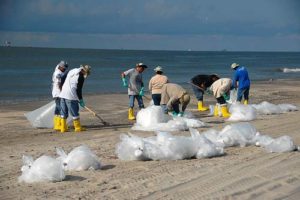
 It is encouraging to be receiving AAG Members’ thoughtful geography abstracts for the AAG Annual Meeting major themes: Geospatial Health Research; Geography and Human Rights; and Physical Geography in Environmental Science. Thank you. There is still time to
  “I never ran my train off track and I never lost a passenger.” Harriet Tubman was fond of saying this in her later years, but during the 1850s when she was actively escorting enslaved people north to freedom using the Underground Railroad (UGRR) network, she was taking grave risks with her own life and liberty as well as that of the people she led. The Harriet Tubman Underground Railroad Visitor Center (HTVC) tells the story of this renowned “conductor” with her words and with exhibits providing insights into her early years and the historic events of her times. Sites and artifacts of the UGRR are limited. After all, its success depended on secrecy.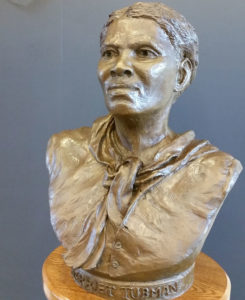
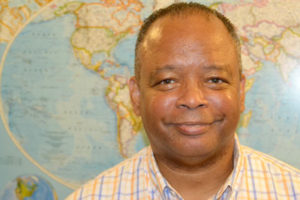 The AAG is pleased to announce that Dwayne Parks has joined the AAG Staff at the association’s headquarters in Washington, D.C. as an Accounting Specialist. Dwayne has over 17 years of experience working with organizational data in both New York City and the Washington, D.C. metro area. Throughout this timeframe, Dwayne has managed employee payroll and record keeping in both the legal and healthcare industries including companies such as Edmond Scientific Company, Encore Legal Solutions, and Ikon Document Services (formerly Nightrider Copy Service and Alco Standards).
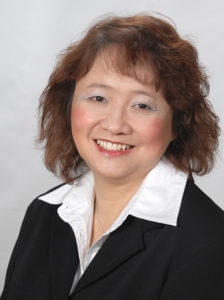 The UK Academy of Social Sciences announced today that it has conferred the award of Fellow on US geographer Mei-Po Kwan, among other leading social scientists.
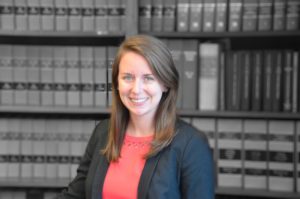 The AAG is pleased to welcome Michelle Kinzer to fill the role of Government Relations Manager. She will serve as AAG’s primary advocate on public policy in Washington and will continue to grow relationships with government decision makers as well as outside organizations and stakeholders. She will track and analyze relevant issues facing the AAG and work to promote the rapidly growing geography community as a whole.
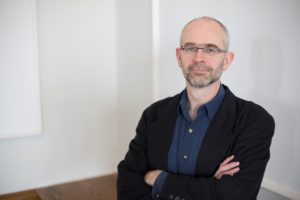 James McCarthy is the Nature and Society editor for the Annals of the American Association of Geographers and a Professor in the Graduate School of Geography at Clark University. His work analyzes the interactions of political economy and environmental politics, with particular emphases on rural areas, renewable energy, property relations, and social movements. He has published widely on these themes in geography and related disciplines, including two major edited volumes and over 50 articles and chapters. He has carried out research on natural resource management, energy policy, and connections between rural landscapes and livelihoods for the Ford Foundation and Oxfam America. Prior to coming to Clark in 2011, he was an Assistant and Associate Professor of Geography at Penn State University. His current research focuses on the relationships among climate change, renewable energy, and the political economy of capitalism, focusing in particular on the ways in which a renewable energy sector booming in the context of climate change is taking up land and other natural resources in ways that may slow further climate change on the one hand, but create new social and environmental claims, impacts, and conflicts on the other.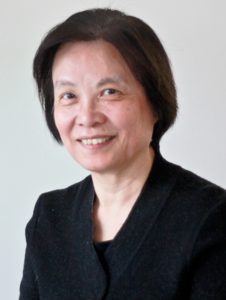
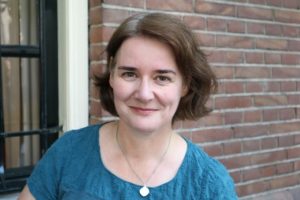 There are two editors who work on the AAG Journal, GeoHumanities as well as an assistant editor. Deborah Dixon is one of the editors who works to publish new scholarly interactions occurring at the intersections of geography and multiple humanities disciplines within the journal.
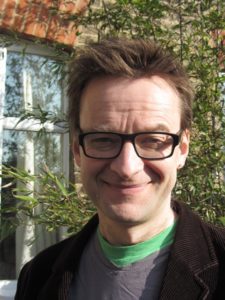 Tim Cresswell is one of the AAG Journals editors for ‘GeoHumanities,’ the newest journal in AAG’s suite of journals. Published twice a year, ‘GeoHumanities’ features both academic articles as well as shorter creative pieces that cross over between the academy and creative practice.
 Philip J. Nicholson is the editorial assistant of GeoHumanities, an honorary researcher in the School of Geographical and Earth Sciences at the University of Glasgow, and a practicing artist. In his role as editorial assistant, Nicholson created and currently maintains the
 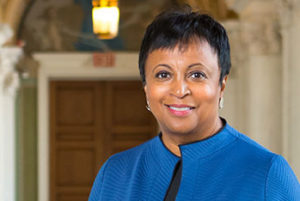 The American Association of Geographers invites attendees of the 2019 AAG Annual Meeting in Washington, D.C., to join in celebration of Carla Hayden at the AAG Atlas Award Ceremony. Carla Hayden, 14th Librarian of Congress, will deliver a keynote address at noon on Friday, April 5, after being presented with the 2019 AAG Atlas Award, the association’s highest honor.