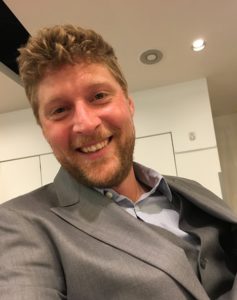
AAG Welcomes Zan Dodson, Director, Program Management & Research
The AAG welcomes Zan Dodson as Director, Program Management & Research. Prior to the AAG, he was a postdoctoral associate for three years in the Public Health Dynamics Laboratory at the University of Pittsburgh and Adjunct Faculty at Carnegie Mellon University. He has taught numerous courses in geography ranging from cultural and regional geography, to qualitative methods, to GIS and remote sensing, and has served as both an undergraduate and graduate advisor.
Zan completed his undergraduate and graduate work at the University of Maryland, College Park, receiving a B.S. in Agricultural & Resource Economics, with minors in GIS and Mandarin, and a Ph.D. in Geographical Sciences. For his dissertation research, Zan used mixed methods to better understand the complex relationship between chronically-ill subsistence farmers in Mozambique, food insecurity, and how access to health care could be improved. More recently, he has focused his efforts on using open data to examine spatiotemporal patterns in opioid use disorder and optimizing health care accessibility, as well as developing new approaches for measuring social determinants of health. Zan also has significant work experience outside of academia, working thirteen years for Merriweather Post Pavilion where he served as an Operations Manager.
Zan will be working on the AAG research program and with the AAG management team to support the Association. He is currently working with the AAG team and researchers around the world to expand the International Geospatial Health Research Network (IGHRN), which explores new research frontiers in geospatial health and to generate research synergies through international networks to share data and information. He will also help support the AAG research team on a newly-funded NSF award that will develop a geospatial virtual data enclave where researchers can work securely with confidential geospatial data.
When not working, Zan enjoys hiking, cooking—especially, working on his sourdough—and spending time with his kids. He also dabbles in photography, painting, and playing guitar.
Share
Annual Meeting
The National Mall: Making Space for the Dream
On September 24, 2016, thousands gathered on the National Mall to celebrate the grand opening of the National Museum of African American History and Culture. The building is distinctive: the bronze-meshed ziggurat moves upwards towards the sky and into the light. Inside the new 400,000 square foot museum are some 36,000 artifacts that share truths about America’s past and tell stories about 400 years of of black life in America. The new museum allows Americans to walk the path from slavery to civil rights to the Black Lives Matter movement.
As much as what we will learn and experience because of what is inside the museum, the mere presence of this museum on the Mall also makes a difference.
It’s all about “location, location, location.” The Mall is a stage for our democracy, a place we tell our national story. Being “on the Mall” makes a powerful statement about a shared identity, about belonging and about recognition. It confers national legitimacy. It’s the reason that each year dozens of groups lobby for their memorial or museum to be on the Mall. Finally, in the last several years, the Mall has become “a space,” both metaphorically and literally, for African Americans.
Both the National Museum of African American History and Culture (NMAAHC, said aloud as neh-MOCK) and the recently completed 2014 memorial to Martin Luther King, Jr.—also on the Mall—mean the African American story is accessible and integral. Each has extended our national narrative to include the contributions of African Americans. At the dedication ceremony for the National Museum of African American History and Culture, then President Obama noted “This national museum helps to tell a richer and fuller story of who we are.” And he is right. Because of these new additions, including the 2004 opening of the National Museum of the American Indian, the Mall now reflects a national history that includes a wider, more racially and ethnically diverse society. Visitors to the new museum are reminded of this by the quote from Langston Hughes: “I, too, am America.”
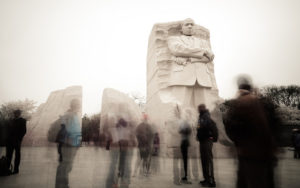
The Martin Luther King Jr. Memorial represents a significant departure from other memorials on the Mall. It is the first to commemorate an African American, and by extension, the first memorial to recognize and legitimize the modern Civil Rights Movement. Civil rights memorials are a litmus test for how far society has progressed towards the goal of racial equality and justice and to what degree society has fulfilled the Civil Rights Movement’s goals. And while there are many other memorials to Martin Luther King Jr. around the country, the MLK Memorial on the Mall confers a national legitimacy on the Civil Rights Movement and its objectives.
New additions to the Mall transform the meaning of this public space in the heart of the nation’s capitol. The MLK Memorial boldly challenges the Mall’s dominant narrative that is devoted largely to national identity and national history as defined and embodied mostly by white men (the Washington, Lincoln, Jefferson, FDR, Grant memorials), and a white heritage reflected in Greco-Roman architecture. The MLK Memorial is a critical development in commemoration on the Mall because it reflects a new writing of the basic principles of equality, rights, and justice.
The National Mall is an extraordinary public space that mirrors our national narrative of who we are and how we came to be. As we have embraced a more inclusive history, commemoration and expressions of national identity have also changed. The new National Museum of African American History and Culture, The MLK Memorial and the Museum of the American Indian correct the implicit bias on the Mall towards a narrow definition of national history and national memory that has ignored minorities. Visitors to the Mall now see a place that more closely reflects the diversity of our nation and our national experience.
These recent additions on the Mall remind us about the power of public spaces to tell these new national narratives. The National Museum of African American History and Culture and the MLK Memorial are more than just buildings or statues. They represent the dream for equality, and justice, and a full inclusive democracy. The Mall has become a space for that dream to come true.
Lisa Benton-Short is Professor and Chair of the Department of Geography at George Washington University, Senior Fellow with the Sustainability Collaborative and the author of the 2016 book The National Mall: No Ordinary Public Space
American Indians of Washington, D.C., and the Chesapeake
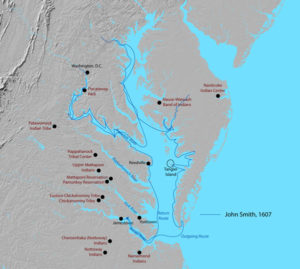
When Captain John Smith sailed up the Potomac River in 1608, he found 13 American Indian villages along its banks. Spanish incursions beginning in 1521 brought diseases, land grabs, resource destruction, military assaults, and slave raids. Nonetheless, there were several large villages and fortified towns by the time of John Smith’s 1608 visit. At that time, three major political groups vied for power in the region: the Susquehannock in Pennsylvania; the Piscataway Chiefdom in southern Maryland; and the Powhatan Chiefdom in Virginia and farther south.
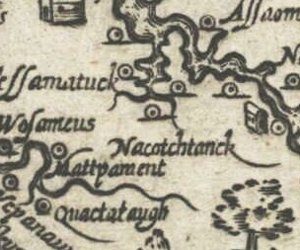
Every place in the Western Hemisphere has an ongoing American Indian story, and the Washington, D.C., area is no exception. People had settled on the shores of Washington’s Anacostia and Potomac rivers as early as 9,500 BCE. Their descendants still reside here. The Nacotchtank Indians of what is now D.C. were part of the Piscataway Chiefdom, with settlements stretching along the Potomac River. Anacostia, a rendering of the word “Nacotchtank” by the English Jesuits who came with Leonard Calvert in 1634, was the home of their most important leader.
Captain John Smith’s map (1612) showing Nacotchtank details (Library of Congress)
Indians of the Chesapeake Bay would form early and lasting impressions on the newly-arriving European settlers. This is where Pocahontas met Captain John Smith, after all, setting up one of the great legends of early American settlement. But the presence of Indians also played a role in racial segregation laws that were only recently changed.
Chesapeake Indians were riverine communities, drawing sustenance from the waterways for as much as 10 months of the year. The Powhatan confederacy of Indians that greeted the Jamestown settlers included tribes from the Carolinas to Maryland. The Piscataway often sided with the Powhatan Chiefdom against the English, and when the Powhatan were defeated in 1646, English settlements quickly expanded. King Charles deeded Piscataway territories to Lord Baltimore in 1632, and European settlements reached what is now Washington, D.C., by 1675.
British settlement during the 17th century followed the usual pattern of expansion. Indians were pushed off their lands. Treaties and alliances were made, then promises broken. Frontiersman pushed into Indian land at the expense of the communities. Epidemics of introduced diseases decimated the Indigenous population, down to perhaps a tenth of its former number.
“There is petition after petition, speech after speech, on record by the chiefs to Maryland Council, asking them to respect treaty rights,” says Gabrielle Tayac, niece of Piscataway Chief Billy Tayac. “Treaty rights were being ignored, and the Indians were getting physically harassed. The first moved over to Virginia, then signed an agreement to move up to join the Haudenosaunee [Iroquoise Confederacy]. They had moved there by 1710. But a conglomeration stayed in the traditional area, around St. Ignacious Church. They’ve been centered there since 1710. Families mostly still live within the old reservation boundaries.”
Map of the American Indian Tribes of the Chesapeake region (courtesy Doug Herman)
“By 1700, the English had settled and established plantation economies along the waterways, because they are shipping to England,” says anthropologist Danielle Moretti-Langholtz at the College of William and Mary. “Claiming those pathways pushed the Indians back, and the back-country Indians become more prominent. Some Natives were removed and sold into slavery in the Caribbean. This whole area was kind of cleaned out. But there are some Indians that remain, and they are right in the face of the English colonies. We can celebrate the fact that they’ve held on.”
But it was racial laws and policies that pushed for the near “disappearance” of Indians from the region. In Bacon’s Rebellion of 1676, white indentured servants united with black slaves in an uprising against the Virginia governor in an attempt to drive Indians out of Virginia. They attacked the friendly Pamunkey and Mattaponi tribes, driving them and their queen Cockacoeske into a swamp. Bacon’s Rebellion is said to have led to the Virginia Slave Codes of 1705, which effectively embedded white supremacy into law, driving a wedge between whites and blacks that came to dominate American social dynamics.
Perhaps most damaging of all was the Racial Integrity Act of 1924, pushed forward by the white supremacist and eugenicist Walter Ashby Plecker, the first registrar of Virginia’s Bureau of Vital Statistics. This Act made it unsafe—and, in fact, illegal—to be Indian. Plecker decreed that Virginia Indians had so intermarried—mostly with blacks—that they no longer existed. He instructed registrars around the state to go through birth certificates and to cross out “Indian” and write in “Colored.” Further, the law also expanded Virginia’s ban on interracial marriage.
While many Indians simply left, the Mattaponi and Pamukey stayed isolated, which protected them. They kept mostly to themselves, not even connecting with the other Virginia tribes. But they continue today to honor their 340-year-old treaty with the Governor of Virginia by bringing tribute every year.
On the Eastern side of the Chesapeake Bay, the Nanticoke mostly fled into Delaware, while a small band called the Nause-Waiwash moved into the waters of the Blackwater Marsh. “We settled on every lump,” said the late chief Sewell Fitzhugh. “Well, a lump is just a piece of land that is higher, that doesn’t flood most of the time.”
The remnant Maryland tribes consolidated under the name of Piscataways, and around 1700 removed to southern Pennsylvania. There they came under the protection of the Iroquois, where they became known as the Conoy. By the end of the 18th century their official numbers had been reduced to 320 persons. Their lands and political autonomy were completely destabilized, and reservation boundaries were not respected past 1700.
Virginia’s ban on interracial marriage would not be overturned until 1967, when the U.S. Supreme Court ruled in Loving v. Virginia. Mildred Loving is often identified as black. She was also Rappahannock Indian. But consequent to Plecker’s actions, Virginia Indians faced considerable challenges proving their unbroken lineage—a requirement necessary for achieving status as a Federally Recognized Tribe. The Pamunkey received Federal recognition in 2015, and six other Virginia tribes in January 2018—500 years after Pocahontas.
The Smithsonian National Museum of the American Indian located on the National Mall, welcomes you to visit and learn more about the Piscataway and other Indigenous peoples of the Americas during your visit to Washington, D.C., for the 2019 AAG Annual Meeting.
Recommended readings:
The Aborigines of the District of Columbia and the Lower Potomac – A Symposium, under the Direction of the Vice President of Section D. Otis T. Mason; W J McGee; Thomas Wilson; S. V. Proudfit; W. H. Holmes; Elmer R. Reynolds; James Mooney. American Anthropologist, Vol. 2, No. 3. (Jul., 1889), pp. 225-268. https://www.jstor.org/stable/658373?seq=1#page_scan_tab_contents
The AAG is pleased to have three interns joining the AAG staff for the summer of 2018!
Alex Lafler is a Junior at Michigan State University pursuing a BS in Geographic Information Science and a BA in Human Geography (along with a Minor in Environment and Health). Alex previously interned at the St. Joseph County Land Resource Centre (Centreville, MI). After Graduation, Alex hopes to pursue a career in GIS or a related field. In his spare time, Alex likes to watch movies and sports (Go Green!), walk as much as he can, and create videos and podcasts.
Christian Meoli is a senior at the University of Mary Washington, double majoring in Geography and Environmental Science with a certificate in GIS. He has interned for the town planning departments in his hometown of Maryland and in his college town in Virginia. Most recently he interned for the Sierra Club in Boston where he explored urban environmental geography. He hopes to bring his academic perspective and enthusiasm for geography to the AAG. In his spare time he enjoys traveling, hiking, and playing tennis.
Jenny Roepe is a rising senior at Virginia Polytechnic Institute and State University, pursuing a B.A. in geography with a minor in geographical information systems and urban and public issues. Last summer Jenny interned for the Fairfax County Park Authority Planning and Development Division. During her time at FCPA, she designed trail maps using GIS software. The maps were posted for public use at various parks in Fairfax County. After graduation, Jenny hopes to pursue a career that combines her passion for the environment with her skills and background in Geographical Information Systems. In her spare time, Jenny likes to read, hike and travel to new places.
Share
President's Column
Toddlers and Tears on the Texas Border
his column begins with special thanks and recognition of our outgoing President Dr. Derek Alderman, and outgoing Past President Dr. Glen MacDonald. Please join me in recognizing their leadership in moving the association forward on so many important fronts, ranging from civil rights to environmental security. We must carry this momentum forward from the strong foundations they established, and I am honored to take up the baton as your new AAG president. I offer many thanks to the AAG staff, and to current and outgoing council members, as well for their hard work on difficult issues, and welcome new AAG officers, councilors and committee members. It takes dedicated volunteers to make our association a community that makes a difference, and I thank all of you for serving, especially our first cohort of AAG Fellows. Finally, I ask us to thank and recognize the dedicated work and many accomplishments of AAG Executive Director Dr. Douglas Richardson, who announced his countdown to retirement at the New Orleans AAG meetings. There is much work to do to ensure a smooth transition and AAG’s continued positive trajectory, contributions, and influence. In my first presidential column, I address a matter of human rights and global understanding, to which geographers have much to contribute.
I began writing this column in the back country of the Petén, Guatemala, having journeyed by bus and 4WD pickup truck through lively Guatemalan towns and villages, on muddy track roads to the field camp of El Zotz. In Belize the week before, and also at El Zotz, our team was field validating some of the latest findings in airborne LiDAR mapping: fabulous stone structures, temples, settlements, waterworks, and agricultural features of the ancient Maya Civilization, more numerous than ever imagined. Our research questions are about resilience and collapse, long-term environmental change, and about population, landesque capital, technology, agriculture, and sustainability, all in a changing and challenging environment. Meanwhile, on our way from the modern world to this ancient world emerging from the Petén jungle, we passed a busy market square where, since my last visit, motorized tuk tuks spewing exhaust have replaced three wheeled bicycles for local transport on narrow streets. As the day turned to dusk and then into night on our journey towards field camp, glimpses of modern Central American life continued to pass by, people gathered for discussions and cold drinks in LED-lit tiendas, in church halls softly illuminated by candlelight and song, and families cooking dinner at home, some over smoky cookfires in outdoor kitchens, together with their children. Which family will have enough to eat? Enough clean water? Mosquito nets? Pencils and notebooks for school? And, which child could be the next Sally Ride? The next Albert Einstein? So much potential, and so much poverty. How do we extend the opportunities we Americans have to the next generation, and across borders, to understand and move our global society and environment forward, together?
After our field research ended, I took another bumpy, muddy, and dusty truck ride out of El Zotz, and a bus from Flores, Guatemala to Belize to fly home to Austin, Texas, with no trouble crossing the borders and no visa required. I recall an earlier Belize-Mexico border crossing and the Mexican Green Guardians who kindly helped us with a flat tire; and recall the many kindnesses our Central American hosts have bestowed over the years. Back home in Texas, a dead-serious drama is currently playing out on the border of my adopted home state as I continue this column for the publication deadline. Central American families seeking asylum from deplorable conditions, threats, and abuses, and seeking better lives for their children, are being arrested under a U.S. government zero-tolerance policy for illegally crossing the U.S.-Mexico border. Children, some too young to even write or know their parents’ formal names, are being separated from their mothers and fathers and placed into caged warehouses, with no clear reunification plan. Those families have names and dreams, and they have deep care for and hope for their children. I have seen the hope and optimism with which parents escort their children to school in small villages in Mexico. Are former big box store warehouses the best America can offer to our tired, poor, and huddled masses? America offered far more to my immigrant Czech great-grandparents. But our American tolerance and generosity seem to come in waves: despite the welcome my Czech family received in California, WWII saw internment camps arise and imprison their Japanese-American neighbors. How can 21st century America slip so easily back into an “us vs. them” mindset? Not all hope is lost, airlines and local governments are beginning to publicly resist complicity in related federal actions. As of press time, the U.S. President has signed an executive order, after repeatedly blaming others and denying the ability to do so, to suspend the family separation orders for families arrested crossing the border. This order solves few problems, because there is no clear plan in place for the thousands of children who remain separated from their parents. As Glen MacDonald’s past president’s address called us to action on the environment, and Past President Derek Alderman called us to action on civil rights, I call us to action now on human rights, which encompasses both, and takes positive steps towards solving long term environmental and social crises driving migrants from their homes.
Make a Difference with a Focus on Human Rights
This leads us to one of the major themes for my presidential year, and that is Science, Geography and Human Rights. We too, the American Association of Geographers, are 12,000 individuals who can, will, and do make a difference. Under the bold leadership of outgoing President Derek Alderman, we have strengthened our commitment to civil rights, to saying no to bullying, violence, harassment and discrimination. Under the inspiring leadership of Past President Dr. Glen MacDonald, we have recommitted ourselves to protecting and cherishing science and our environment, culminating in his tour de force 2018 past presidential address calling us to action on the grand challenges of climate change and environmental degradation. I call upon us now to broaden our scope to human rights, where on the world stage science, society and the environment can all benefit from the expertise and unique global and spatial perspectives that geographers bring to bear. It is the moment where “we, too” can change the world.
A specific area for geographers to take action is within the AAAS Science and Human Rights Coalition, by becoming involved as an independent scholar. AAG, under the leadership of Executive Director Doug Richardson, was a founding member organization for this coalition in 2009, and has participated ever since on multiple projects, working groups and biannual meetings on a variety of human rights themes. A quick way to become involved is through the AAAS On-call Scientists, to target assistance where it is needed the most, by sharing your respective regional and systematic expertise in geography. Many universities may also have human rights and law centers seeking volunteers or affiliates. Imagine 12,000 geographers working together to solve the most difficult global challenges.
Recognize Those Who Make a Difference, and Stay Involved
I close this column with a reminder that there are numerous committees and awards for which to nominate AAG Members. Please honor those who work hard to make a difference by nominating someone today. Also, begin plans for your active participation in sessions, papers, posters, and field trips at the AAG Annual Meeting in Washington D.C. April 3-7, 2019. The AAG meeting themes for 2019 will include Geography Science and Human Rights, among others including Geography, Sustainability, and GIScience. Let’s make this our biggest annual meeting yet: we look forward to seeing you in Washington, D.C. Come home to Meridian Place!
— Sheryl Luzzadder-Beach
Professor and Chair, Geography and the Environment, The University of Texas at Austin
President, American Association of Geographers
Arleigh Howard Laycock, Professor Emeritus of Geography at the University of Alberta, died June 7, 2018. He was 94.
Laycock was born on May 10, 1924, in Strathmore, Alberta, the son of the late George Henry (“Harry”) and Helia (Riekki) Laycock. He was married for 60 years to Audrey Jean Tyrholm (d. 2010) and had three children: Deborah, David, and James.
From 1943 to 1945, Laycock served as a pilot in the R.C.A.F. He graduated from the University of Toronto with a BA in 1949 and received his Ph.D. from the University of Minnesota in 1957.
Arleigh held the position of Hydrologist with the Eastern Rockies Forest Conservation Board from 1952-1955, whereupon he joined the faculty of the Department of Geography at the University of Alberta, where he served as Professor until his retirement in 1989.
Meet the AAG Journals Editors – Barney Warf and Blake Mayberry
Barney Warf and Blake Mayberry work on The Professional Geographer, one of three academic journals published by the AAG. The Professional Geographer, published four times a year, was initially a publication of the American Society of Professional Geographers but became a journal of the American Association of Geographers in 1949 after the two organisations merged. The focus of this journal is on short articles in academic or applied geography, emphasizing empirical studies and methodologies. These features may range in content and approach from rigorously analytic to broadly philosophical or prescriptive. The journal provides a forum for new ideas and alternative viewpoints.
Barney Warf is the current Editor for The Professional Geographer and a Professor of Geography at the University of Kansas. His professional interests lie within the broad domain of human geography. Much of his research concerns information technology and telecommunications, notably geographies of the internet, including fiber optics, the digital divide, and e-government. He has also written on military spending, electoral geography, religious diversity, cosmopolitanism, and corruption. While most of his research involves secondary data, Barney’s most memorable research experiences have involved doing interviews in Latin America, particularly in Panama and Costa Rica, that added a human depth to the topics he researched. He has authored, co-authored, or co-edited eight research books, three encyclopedias, three textbooks, 50 book chapters and more than 100 refereed journal articles.
In addition to serving as editor of The Professional Geographer, he also currently serves as the editor of Geojournal, co-editor of Growth and Change, and edits a series of geography texts for Rowman and Littlefield publishers. For Barney, the best thing about being a journal editor is “reading about the diverse set of topics that authors write about. It’s truly astonishing the things people choose to research. Being an editor has exposed me to all sorts of issues and worldviews that I didn’t know existed.” For new authors, Barney encourages them to “keep an eye on important issues in the world like poverty and inequality. I worry that at times geography becomes overly ‘academic’ and too concerned with relatively obscure issues that have little bearing on the ‘real world.’”
Barney’s teaching interests include urban and economic geography, the history of geographic thought, globalization, and contemporary social theory. When asked about which area of geographic thought needs the most attention at this point in time, Barney believes “human geography today is at the confluence of several intersecting lines of theory, including poststructuralism, postcolonialism, feminism, queer theory, and the social construction of nature. I think the most interesting works are those that bring these perspectives into a creative tension with one another.”
Blake Mayberry is the editorial assistant for the Professional Geographer where his role is to help screen manuscripts initially for style and then to assign appropriate peer reviewers. Blake is also currently Assistant Professor of Geography at Red Rocks Community College where he edits an on-campus student-oriented scholarly journal, teaches in the Water Quality Management Program (a four-year program), and serves on the City of Golden Planning Commission.
Blake’s path to become a geographer has been appropriately circuitous, but he could start in the beginning: as a child he slept with a globe instead of a teddy bear! At times Blake wanted to be Indiana Jones, and at other times, Leonardo DaVinci. He found that geography was the best way to satisfy the scientific, analytical side of my brain, while also indulging my more romantic, artistic side. As a career, He also found geography to be extremely rewarding. Blake has worked as an urban planner in the Omaha metropolitan area, and with environmental groups conducting ecological restoration and advocating for the protection of native ecosystems.
Blake has done research on topics ranging from urbanization and water resources in the southwestern United States, to the Indian Removal Period during the nineteenth century. However, his real passion is for grasslands. His master’s thesis at the University of Nebraska-Omaha focused on the effort to create a national park in western Iowa’s Loess Hills in the aftermath of the Farm Crisis, specifically, the role that media play in natural resource conservation policy. Expanding on that theme, his dissertation research at the University of Kansas involved an ethnographic study of environmentalists working to restore prairies on the Great Plains and how cultural identity and sense of place influence people’s actions to remake the landscape. In his spare time Blake enjoys reading maps, drawing maps, and exploring places real-life places that he find on maps.
Blake encourages prospective authors to read as much as they can before publishing: “Engage with the literature, all of it, in depth, all the time, all throughout your research… as someone who sees a lot of manuscripts come and go at the PG, the really successful ones, and the ones that end up having the most impact on the discipline, are the those that engage deeply with theory, and from multiple perspectives. Resist the temptation to get into a ‘citation silo,’ where you only engage with the literature on your subject matter from the perspective of your PhD advisor and their former students. There is nothing more I love than to see a manuscript on spatial regression that cites Tuan! I tell my students that your written work reflects your effort, and I’d say the same about being a scholar – your lit review tells us whether you did your homework or not. Doing your homework will go a long way towards preventing revise and resubmits, and outright rejections.”
Share
New Books for Geographers
New Books: May 2018
Every month the AAG compiles a list of newly-published books in geography and related areas. Some are selected for review in the AAG Review of Books.
Publishers are welcome to send new volumes to the Editor-in-Chief (Kent Mathewson, Editor-in-Chief, AAG Review of Books, Department of Geography and Anthropology, Louisiana State University, Baton Rouge, LA 70803).
Anyone interested in reviewing these or other titles should also contact the Editor-in-Chief.
PLEASE NOTE: Due to current public health policies which have prompted the closing of most offices, we are unable to access incoming books at this time. We are working on a solution during this transition and will continue our new books processing as soon as we can. In the meantime, please feel free to peruse previous books from our archived lists.
Otis W. Templer Jr., 84, passed away on May 8, 2018 at Carillon House in Lubbock, Texas. He was born in Crystal City, Texas, and had lived in Lubbock for the past 49 years. He married Josephine Parks in Dallas. She preceded him in death. He was a member of First United Methodist Church.
He was valedictorian of his high school class and an Eagle Scout. He graduated from Texas A&M University in 1954, and then served as an artillery officer in the United States Army. In 1959, he received a J.D. degree from the University of Texas School of Law and practiced law for several years in Central Texas. He returned to graduate school at Southern Methodist University, earning a master’s degree in 1964, and later a Ph.D. from the University of California, Los Angeles in 1969.
He was the first permanent professor of Geography hired at Texas Tech and was among the founders of the Department of Geography. He came to Texas Tech as an Assistant Professor of Geography in 1968, and was promoted through the ranks to Professor in 1978, and he taught at the university for over 45 years. He served as chairman of the Department of Geography for 15 years until 1994, and as associate chair of the Department of Economics and Geography from 1994 to 2001. He retired from full-time teaching in 2001, and continued teaching part-time until 2015. Almost everyone with a Bachelor’s degree in Geography from Texas Tech has had a class with Dr. Templer. His research primarily revolved around arid lands and water law, largely in Texas.
Survivors include a brother, a son, four daughters, six grandchildren, and two great-grandchildren.
The family suggests memorial contributions be made to the Texas Tech Foundation, Inc. for the “Otis and Josephine Templer Geography Scholarship Endowment,” c/o P.O. Box 41034, Texas Tech.
Mid Atlantic Division Team Takes 2018 World Geography Bowl Title
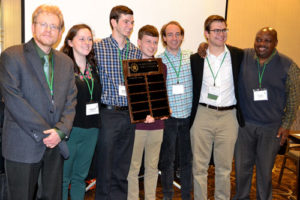
Mid Atlantic Division Team Takes 2018 World Geography Bowl Title. AAG President Derek Alderman (far left) presented the new championship award.
The Mid Atlantic Team won first place in the 2018 World Geography Bowl, an annual quiz competition for teams of college-level geography students representing the AAG’s regional divisions. The 2018 event was a milestone, marking the 25th year for hosting the event during the AAG Annual Meeting.
On April 11, while the International Reception was pumping away upstairs, the World Geography Bowl was underway on the third floor of the Sheraton Hotel in New Orleans. Ten teams representing eight of the regional divisions as well as two ad hoc spoiler teams competed in the 9 round preliminary match up. The eight divisions represented were: Mid Atlantic, East Lakes, West Lakes, Southwest, Southeast, Great Plains/Rocky Mountain, New England-St. Lawrence Valley, and Middle States Divisions. The two spoiler teams were aptly named Longitude and Latitude.
The championship round challenged the top two teams from the round-robin preliminaries: Southeast and Mid Atlantic. After a neck and neck round of toss-up questions, Mid Atlantic pulled out the victory in the team question portion of the final. AAG President Derek Alderman was on hand during the final round to serve as the guest judge and grantor of the prize atlases courtesy of National Geographic Society to the winning team.
Most of the students who participate on the regional teams are chosen during their respective regional division Geography Bowl competition held during their regional division annual meeting each fall. All students who participate receive funding from their regional division as well as the AAG in order to help offset the costs of attending the AAG Annual Meeting.
The winning Mid Atlantic Division team’s roster was:
Matthew Cooper, University of Maryland
Christine MacKrell, George Washington University
Brian Slobotsky, University of Maryland
Zachery Radziewicz, Salisbury University
Daniel Milbrath, Salisbury University
The first runner-up Southwest Division team’s roster was:
Jesse Andrews, Appalachian State University
William Canup, University of North Carolina, Greensboro
Jacob Cecil, University of Tennessee, Knoxville
Darby Libka, University of Mary Washington
Randi Robinson, Mississippi State University
Jared White, University of West Florida
The second runner-up Great Plains/Rocky Mountain team’s roster was:
Tristan Boyd, University of Colorado, Denver
Karl Bauer, Kansas State University
Sara Newman, University of Colorado, Denver
Peter Brandt, North Dakota State University
Lindy Westenhoff, University of Wyoming
Jonathon Preece, University of Wyoming
Sujan Parajuli, South Dakota State University
In addition to team prizes, the top individual scorers are also acknowledged. The Most Valuable Player of the 2018 World Geography Bowl was Jesse Andrews from Appalachian State University (SEDAAG) who was presented with an atlas courtesy of Gamma Theta Upsilon.
The remaining top five individual scorers listed in order of points received were:
Matthew Cooper, University of Maryland Graduate Student (MAD)
Kate Rigot, University of Colorado, Denver Graduate Student (Team Latitude)
Deondre Smiles, Ohio State University Graduate Student (East Lakes)
Tristan Boyd, University of Colorado, Denver Undergraduate Student (Great Plains/Rocky Mountain)
Thanks to the 2018 WGB prize donors and volunteers
Organizers of the World Geography Bowl would like to express thanks to the countless volunteer question writers, team sponsors/coaches, moderators, judges, and scorekeepers who make the competition possible, and to the many students who competed across the country. We would like to recognize the volunteers this year as: Paul McDaniel (Kennesaw State University), Wesley Reisser (US Department of State & George Washington University), Rob Edsall (Idaho State University), Dawn Drake (Missouri Western State University), Richard Deal (Edinboro University of Pennsylvania), Zia Salim (California State University at Fullerton), Ronnie Schumann (University of North Texas), Liz Lowe (GIS Technician, New Orleans City Park), Jim Baker (University of Nebraska-Omaha) Patrick May (Plymouth State University), Jase Bernhardt (Hofstra University), Mel Johnson (University of Wisconsin-Manitowoc), Olumide Olufowobi (University of Lagos), Megan Heckert (West Chester University), Tom Bell (University of Tennessee) Peggy Gripshover (Western Kentucky University), Amber Williams (West Virginia University), Lee Ann Nolan (Pennsylvania State University), Jeff Neff (Western Carolina University), Casey Allen (University of Colorado, Denver).
World Geography Bowl organizers thank its supporters, who generously donated atlases, books, gift certificates, software, plaques, and clothing – Texas State University, National Geographic Society, Pearson, Gamma Theta Upsilon, University of Georgia Press, Clark Labs, Esri, Guilford Press, Syracuse University Press, Penguin Random House, American Geosciences Institution, and Expedia – who recognize the important role the competition plays in building a sense of community and generating excitement around geographic learning. Your continued support is truly appreciated.
A special thank you goes out to the World Geography Bowl executive director, Jamison Conley (West Virginia University) for his volunteer efforts at organizing the bowl since 2015.
2019 World Geography Bowl – Washington, D.C.
The 2019 World Geography Bowl competition will be held in Washington, D.C. in April 2019. Regional competition typically occur during the fall at respective AAG regional meetings, where regional teams for the national competition are usually formed. For more information on organizing a team or volunteering at the national event, contact the World Geography Bowl executive director, Jamison Conley at West Virginia University at Jamison [dot] Conley [at] mail [dot] wvu [dot] edu or the AAG Geography Bowl coordinator, Emily Fekete at efekete [at] aag [dot] org. To learn more about the 2019 World Geography Bowl, follow updates posted here.
In addition, a photo album of the event will be shared soon.
Share
Register for Free
Create an account to get free access to exclusive AAG content.
AAG Members get exclusive access to publications, prominent journals, unique advocacy, grant, scholarship and professional opportunities with access to industry focus communities, and event discounts, including our annual meeting.
Some content may only be accessible if you belong to specific Specialty or Affinity Groups. You can still update your membership below. You will need to go through the Join flow, but you do not need to repurchase your membership unless it is expired or about to expire.
To provide the best experiences, we use technologies like cookies to store and/or access device information. Consenting to these technologies will allow us to process data such as browsing behavior or unique IDs on this site. Not consenting or withdrawing consent, may adversely affect certain features and functions.
Functional
Always active
The technical storage or access is strictly necessary for the legitimate purpose of enabling the use of a specific service explicitly requested by the subscriber or user, or for the sole purpose of carrying out the transmission of a communication over an electronic communications network.
Preferences
The technical storage or access is necessary for the legitimate purpose of storing preferences that are not requested by the subscriber or user.
Statistics
The technical storage or access that is used exclusively for statistical purposes.The technical storage or access that is used exclusively for anonymous statistical purposes. Without a subpoena, voluntary compliance on the part of your Internet Service Provider, or additional records from a third party, information stored or retrieved for this purpose alone cannot usually be used to identify you.
Marketing
The technical storage or access is required to create user profiles to send advertising, or to track the user on a website or across several websites for similar marketing purposes.
To provide the best experiences, we use technologies like cookies to store and/or access device information. Consenting to these technologies will allow us to process data such as browsing behavior or unique IDs on this site. Not consenting or withdrawing consent, may adversely affect certain features and functions.
Functional
Always active
The technical storage or access is strictly necessary for the legitimate purpose of enabling the use of a specific service explicitly requested by the subscriber or user, or for the sole purpose of carrying out the transmission of a communication over an electronic communications network.
Preferences
The technical storage or access is necessary for the legitimate purpose of storing preferences that are not requested by the subscriber or user.
Statistics
The technical storage or access that is used exclusively for statistical purposes.The technical storage or access that is used exclusively for anonymous statistical purposes. Without a subpoena, voluntary compliance on the part of your Internet Service Provider, or additional records from a third party, information stored or retrieved for this purpose alone cannot usually be used to identify you.
Marketing
The technical storage or access is required to create user profiles to send advertising, or to track the user on a website or across several websites for similar marketing purposes.

 The AAG welcomes Zan Dodson as Director, Program Management & Research. Prior to the AAG, he was a postdoctoral associate for three years in the Public Health Dynamics Laboratory at the University of Pittsburgh and Adjunct Faculty at Carnegie Mellon University. He has taught numerous courses in geography ranging from cultural and regional geography, to qualitative methods, to GIS and remote sensing, and has served as both an undergraduate and graduate advisor.
 On September 24, 2016, thousands gathered on the National Mall to celebrate the grand opening of the National Museum of African American History and Culture. The building is distinctive: the bronze-meshed ziggurat moves upwards towards the sky and into the light. Inside the new 400,000 square foot museum are some 36,000 artifacts that share truths about America’s past and tell stories about 400 years of of black life in America. The new museum allows Americans to walk the path from slavery to civil rights to the Black Lives Matter movement.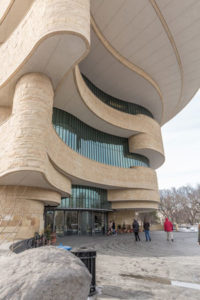
 The Martin Luther King Jr. Memorial represents a significant departure from other memorials on the Mall. It is the first to commemorate an African American, and by extension, the first memorial to recognize and legitimize the modern Civil Rights Movement. Civil rights memorials are a litmus test for how far society has progressed towards the goal of racial equality and justice and to what degree society has fulfilled the Civil Rights Movement’s goals. And while there are many other memorials to Martin Luther King Jr. around the country, the MLK Memorial on the Mall confers a national legitimacy on the Civil Rights Movement and its objectives.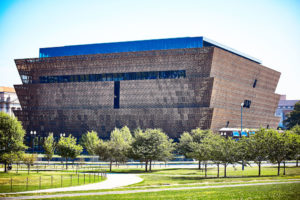
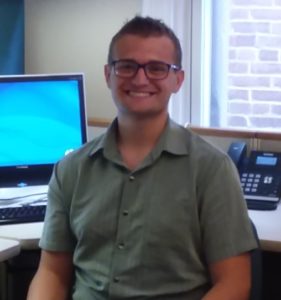 Alex Lafler is a Junior at Michigan State University pursuing a BS in Geographic Information Science and a BA in Human Geography (along with a Minor in Environment and Health). Alex previously interned at the St. Joseph County Land Resource Centre (Centreville, MI). After Graduation, Alex hopes to pursue a career in GIS or a related field. In his spare time, Alex likes to watch movies and sports (Go Green!), walk as much as he can, and create videos and podcasts.
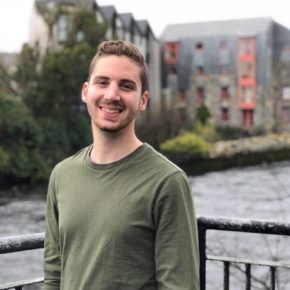 Christian Meoli is a senior at the University of Mary Washington, double majoring in Geography and Environmental Science with a certificate in GIS. He has interned for the town planning departments in his hometown of Maryland and in his college town in Virginia. Most recently he interned for the Sierra Club in Boston where he explored urban environmental geography. He hopes to bring his academic perspective and enthusiasm for geography to the AAG. In his spare time he enjoys traveling, hiking, and playing tennis.
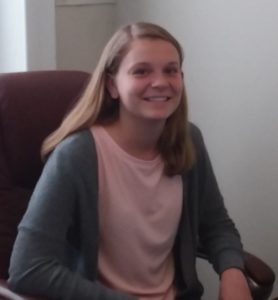 Jenny Roepe is a rising senior at Virginia Polytechnic Institute and State University, pursuing a B.A. in geography with a minor in geographical information systems and urban and public issues. Last summer Jenny interned for the Fairfax County Park Authority Planning and Development Division. During her time at FCPA, she designed trail maps using GIS software. The maps were posted for public use at various parks in Fairfax County. After graduation, Jenny hopes to pursue a career that combines her passion for the environment with her skills and background in Geographical Information Systems. In her spare time, Jenny likes to read, hike and travel to new places.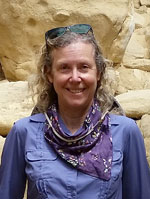
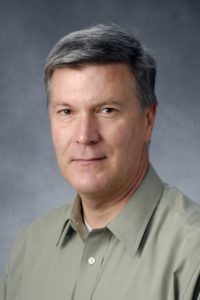 Barney Warf is the current Editor for The Professional Geographer and a Professor of Geography at the University of Kansas. His professional interests lie within the broad domain of human geography. Much of his research concerns information technology and telecommunications, notably geographies of the internet, including fiber optics, the digital divide, and e-government. He has also written on military spending, electoral geography, religious diversity, cosmopolitanism, and corruption. While most of his research involves secondary data, Barney’s most memorable research experiences have involved doing interviews in Latin America, particularly in Panama and Costa Rica, that added a human depth to the topics he researched. He has authored, co-authored, or co-edited eight research books, three encyclopedias, three textbooks, 50 book chapters and more than 100 refereed journal articles.