Share

Advocate for Geography in Austerity

This is Part 1 of a two-part column on what geography departments can do (and should not do) to advocate for their work in budget talks, which are all the more crucial during the COVID-19 pandemic. These points are largely derived from answers I received from geographers in upper administrative positions at universities.
At the end of October, the Chronicle of Higher Education covered the looming budget woes for colleges and universities across the country, with many states expecting 10% budget cuts. Public higher education likely will be disproportionally affected by state budget cuts as they face “two crises: the impact of Covid-19 on their operations and a downturn in state funding brought on by the current recession.” In addition, as reported in a June article in Nature, the response to the Coronavirus pandemic will also force universities to address growing challenges in higher education, such as mounting tuition costs, public perception of relevancy, and a demographically driven decrease in numbers of graduating high school seniors.  Yet, as we know, tuition increases are a direct result of more than a decade’s worth of states balancing their budgets on the backs of public colleges and universities that were once the lifeblood of the U.S.’s affordable higher education.  Further, in an article just released in Inside Higher Ed, the coronavirus pandemic has caused more than one-third of prospective college students to reconsider higher education (see Doubts About Going to College).

In short, the COVID-19 crisis has aggravated problems we have known about for some time. As a 2019 Gallup poll showed, there was already a marked decrease in public confidence in higher education in the U.S. going into this pandemic as a result of soaring tuition and barriers to access.  If 2020 has taught us nothing else, it is that geography is a crucial discipline for grasping and addressing the dire issues our earth faces. Yet in a year that has demonstrated our value, some of our geography departments continue to struggle for relevancy on university campuses.

What’s a Geography Department To Do (or Not Do)?

While geography departments do not control university budgets, we can think and act strategically to remain relevant to students, the public, and university and college administration. In this light, I have received a growing number of requests from department chairs as well as individual members asking for AAG assistance in demonstrating geography departments’ relevancy to key stakeholders. Those requests have varied, but range from advocating for lost positions to requesting brochures/videos to show to administration to demonstrate geography’s relevancy. I reflected on my experience as department chair and I was fairly certain that deans, provosts, and presidents wouldn’t be swayed by (or even take the time to view) brochures or videos from AAG.  I also knew that the time to act is before positions are cut, not after.

I therefore drafted an email and sent it to several geographers in administrative positions around the U.S.  My request was fairly simple… “please list your ‘Top 3 Dos’ and ‘Top 3 Not Dos’ in order to develop highly effective, impactful, and well-functioning geography departments (from the perspective of deans and provosts).”  The responses were remarkably consistent.

I’ll go in reverse order and start with the “Top 3 Don’ts,” mostly because these are relatively straightforward and require little additional discussion—the “Do’s” will have a column of their own next month.  Some of these Don’ts harken back to Ron Abler’s Five Steps to Oblivion.

1.  Don’t Prolong and Disseminate Department Conflict and In-fighting. Unless you’re a one-person department, you can’t escape departmental politics, one of the primary dynamics in academic departments. In a broader sense, conflict is an unavoidable and sometimes-necessary aspect of academic life. Yet persistent, unresolved in-fighting is not healthy for departments and, if tolerated, will hurt your department’s chances of success in budget battles. As one of the respondents to my request said: “No provost or president wants to become embroiled in personnel problems in a department.  I had the very negative experience of being an external “visitor” at a major university to look at the issues in a particular department (not geography).  The department members had done almost everything they could have done to bring negative attention to themselves and place themselves on the cutting block.”

While we have our moments, I’m fortunate to work in a functional and collegial department.  But I’ve experienced and heard tales about departments that are not as fortunate…slamming doors, stomping out of meetings, pouting, insulting…  Is this behavior rooted in academics’ quest for intellectual discussion, our passion for our sub-disciplines, or because we care so much for our students?

No.

Clearly, some conflicts can be helpful.  For example, conflicts around marginalization because of disability, race, or gender are necessary for departments to grow.  The  destructive conflicts, however—the ones that divide departments—always seem to be personal.  Petty turf wars, feelings of being slighted, resentment about small merit pay differences, irritation at office assignments, frustration over teaching assistant selection, and on and on.  We all know the many examples.  Airing these grievances may offer temporary relief and validation, but can in the long term crowd out the space for collaboration where the exploration of healthy, generative differences can be daylighted and lead to stronger visions for a department that addresses different views about direction, vision, power, and the future of the discipline.  Worse yet, airing these grievances outside the department creates a large billboard to the world stating “This department is dysfunctional.”

In short, work out difficulties and leave the personal battles at the door when visiting your dean or provost with requests on behalf of the department.  As intelligent, hyper-educated academics, we should know better than to pee in our own pool.

2. Don’t be unrealistic in demands for central resource investments. In my experience, this issue often arises when departments discuss graduate student support and new or replacement faculty lines. I’m always surprised when I hear something along the lines of… “central administration has to know how important it is for us to replace our position in fill-in-the-blank sub-discipline.”

No, they don’t have to know that.  In fact, they may not even care about disciplines; their focus is on the overall health of the home institution.  It’s our job to collect, analyze, and summarize the data and demonstrate the relevance of our needs to the entire university, not just to Geography.  Usually, but not always, university budgets are rather immobile.  And inadequate.  It’s strategic and realistic to realize that a finite and inadequate budget is applied to all units across campus.  Departments should continue to be visionary and ambitious, but recognize the broader realities and adjust arguments accordingly.  Every other department on campus is also asking for resources.  And, many colleges and universities have precarious structures which are not designed to withstand the level of disruption that the collective COVID response has thrown at them.

3. Don’t whine. 

The them-versus-us paradigm between faculty and administrators plays out across campuses throughout the world.  Faculty complain about the familiar issues: poor student preparation, equity in teaching loads, poor facilities, lack of equipment, competition for inadequate resources, underfunded initiatives…  This paradigm has become its own social construct in which faculty often see administrators as obstructionists.

Yet, often the reality is that both faculty and administrators care deeply about the students and institution.  The disconnect comes because administrators are the policy and budgetary gatekeepers, with the unappealing task of trying to stretch inadequate resources across an entire campus.  They are often (but not always) aware of the shortfalls that result.  Departments and faculty, then, often feel that they’re at the bottom of the hill, shoveling the proverbial dung.

While it’s important to advocate for the needs of our departments to higher administration, perpetuating institutional cynicism is not strategic.  One of the best lessons I learned from all of my years serving on review panels throughout the National Science Foundation is the importance of positively stating negative critiques:  “this proposal would be improved if the PI did…”.  I shamelessly borrowed this approach from NSF during my time as department chair, making the argument to the administration that specific productivity and metrics would be enhanced with identified allocation improvements.

Don’t bring a problem to your administrators.  Bring a solution.

.  .  .

In hindsight, I realize that the lists of Dos and Don’ts I received rather mirror each other.  But, I parsed them out and summarize the Don’ts above.  Next month, I’ll share the Dos.  As a preview, the three Dos, which have been expanded into four Dos, include: strategic alignment, communication, partnership, and productivity.

—Amy Lobben
AAG President and Professor at University of Oregon
lobben [at] uoregon [dot] edu

DOI: 10.14433/2017.0082


Please note: The ideas expressed in the AAG President’s column are not necessarily the views of the AAG as a whole. This column is traditionally a space in which the president may talk about their views or focus during their tenure as president of AAG, or spotlight their areas of professional work. Please feel free to email the president directly at lobben [at] uoregon [dot] edu to enable a constructive discussion.

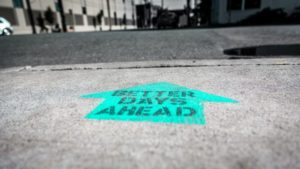
Featured Image: “Better Days Ahead” painted in a bright blue arrow directly on a street. Photographer Ian Taylor, Unsplash

    Share

Regional Divisions Announce Outstanding Student Papers During their Fall Meetings

While most of the 2020 AAG Regional Division Meetings shifted to an online format due to the effects of COVID-19, students continued to present outstanding work in their respective regions. An exciting addition to the student presentations this year was the creation of a new award to recognize the increased participation of undergraduate students at the AAG Regional Division Meetings.

The AAG is proud to announce the Fall 2020 student winners of the AAG Council Award for Outstanding Undergraduate and Graduate Student Papers at a Regional Meeting. The AAG Council Award for Outstanding Undergraduate and Graduate Student Papers at a Regional Meeting is designed to encourage student participation at AAG Regional Division conferences and support their attendance at AAG Annual Meetings. One graduate student and one undergraduate student in each AAG Regional Division receives this yearly award based on a paper submitted to their respective regional conference. The awardees receive $1,000 in funding for use towards their registration and travel costs to attend the AAG Annual Meeting. The board members from each region determine student award winners. This year, due to COVID-19, students can use their funds to attend the fully online 2021 AAG Annual Meeting with the remainder being put towards attendance at either their 2021 Regional Division Meeting or the 2022 AAG Annual Meeting.
The winners from each region will be presenting their papers in two dedicated paper sessions at the upcoming 2021 AAG Annual Meeting online.

MSDAAG: Sheovoney O’Bryan, Undergraduate Student, Church Teachers College: Mandeville; Paper Title – The Challenges of Farming in Manchester, Jamaica.

Matthew Walter, PhD Student, University of Delaware, Department of Geography and Spatial Sciences; Paper title – Invasive Species Mapping in Estuarine Wetlands Using High-Resolution Aerial Imagery

WLDAAG: Michael Cullen, Undergraduate Student, DePaul University, Department of Geography; Skateboarding, Urban Public Space, and Identity

Austin Holland, PhD Student, University of Iowa, Department of Geography and Sustainability Sciences; Paper title – Complying with Conservation Compliance? An Assessment of Recent Evidence in the United States Corn Belt

SEDAAG: Lilian Hutchens, Undergraduate Student (co-winner), University of South Carolina, Department of Geography; Poster Title – “Improving Conservation Planning for the Congaree Biosphere Reserve”

Sierra Moore, Undergraduate Student (co-winner), Virginia Tech, Conservation Management Institute; Poster Title – “Effects of Clearing Linear Features through Forest Patches in WV and VA”

Yasin Wahid Rabby, PhD Student, University of Tennessee, Knoxville, Department of Geography; Paper Title – “Exploring the effects of Mahalanobis distance-based absence data sampling method on the landslide susceptibility mapping”

NESTVAL: Shayla Peterson, Undergraduate Student, Southern Connecticut State University, Department of Environment, Geography, and Marine Sciences; Paper Title – “Climate Change and the Green New Deal: Attitudes Towards Climate Justice in Connecticut”

Shaina Sadai, PhD Candidate, University of Massachusetts Amherst, Department of Geosciences; Paper Title – “Using climate modeling and interdisciplinary theory to analyze climate justice impacts of the Paris Agreement”

SWAAG: Madison Wilson, Undergraduate Student, University of Oklahoma; Paper Title – “Integrated analysis of fallow/idle cropland patterns and drivers of change in the United States Rio Grande Basin”

Daniel Silva, MA Student, University of Texas at Austin; Paper Title – “Climate oscillation effects on Brazilian soybeans yield, and the farmers’ response”

*Note: Due to the ongoing COVID-19 pandemic, APCG and GPRM postponed their fall 2020 meetings to fall 2021. MAD did not have any paper submissions this year.

    Share

AAG Highlights Advancing Discipline Diversity During Geography Awareness Week at Michigan State University

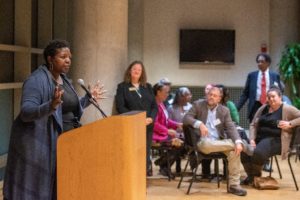
Photo 1 Yoruba Richen, filmmaker and director, speaks during the AAG ceremony at MSU during Geography Awareness Week in 2019. (Photo credit: Jacqueline Hawthorne)

As part of its annual celebration of Geography Awareness Week, the Department of Geography, Environment, and Spatial Sciences at Michigan State University (MSU), featured a screening of The Smithsonian Channel’s The Green Book: A Guide to Freedom followed by an engaging Q & A session with filmmaker and director Yoruba Richen. Richen’s film takes an in-depth look into the real story of Victor H. Green’s The Negro Motorist Green Book, during the Jim Crow era and beyond.

A $10,000 check was presented to the department on behalf of the American Association of Geographers (AAG) during the event held at the Clifton & Dolores Wharton Center for Performing Arts on the campus of MSU on November 14, 2019. This award denoted the first installment of a $30,000 gift in support of the Advancing Geography Through Diversity Program (AGTDP) initiative to support underrepresented graduate students who are African-American, Latinx, and Native American.

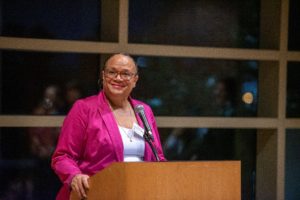
Photo 2 Dr. Karen Johnson-Webb speaks during the AAG ceremony at MSU during Geography Awareness Week in 2019. Johnson-Webb is a Professor of Geography at Bowling Green State University (BGSU) and serves as the elected secretary to the executive committee of the American Association of Geographers (AAG). Before earning her Ph.D. from the University of North Carolina at Chapel Hill, Johnson-Webb, a human geographer specializing in health and medical geography, earned a BA and an MA in Geography from MSU. (Photo credit: Jacqueline Hawthorne)

The Advancing Geography Through Diversity Program (AGTDP) at MSU is a nationally recognized initiative facilitating diversity within the discipline of Geography. The program’s goal is to recruit and support outstanding graduate students from key underrepresented groups, who are seeking to obtain either a Master’s or Doctorate in Geography. Students admitted to the MSU Department of Geography, Environment, and Spatial Sciences via AGTDP receive full funding.

Following a few brief remarks by Richen, Dr. Karen Johnson-Webb, Associate Professor of Geography at Bowling Green State University, and elected secretary to the executive committee of the AAG, presented the check in support of the professional development of underrepresented graduate students within the department. Before earning her Ph.D. from the University of North Carolina at Chapel Hill, Johnson-Webb, a human geographer specializing in health and medical geography, earned a BA and an MA in Geography from MSU. “Shortly before the presentation, I was told that I was the first African-American (U.S.-born) to earn a Master’s degree (1994) in Geography at MSU. This seemed hard to believe,” said Johnson-Webb. “Geography is a very diverse discipline in terms of ethnicity and nationality. However, scholars of African American, Hispanic American, and American Indian heritage are grossly underrepresented.”

Dr. Johnson-Webb commended the department for making a concerted effort to recruit and fund underrepresented scholars in geography. She also praised MSU’s Dr. Joe Darden, a professor of Geography for nearly 50 years and recipient of the 2019 AAG Lifetime Achievement Award, for his tireless efforts both in the department and in the discipline to increase diversity. Darden has served as a mentor to countless students and is also the recipient of MSU’s Distinguished Faculty Award (1984), the Ethnic Geography Specialty Group’s Distinguished Scholar Award (2006), the AAG Enhancing Diversity Award (2006), and the Distinguished Ethnic Geography Career Award (2015), and was elected to the inaugural cohort of AAG Fellows in 2018.

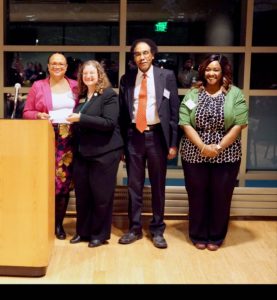
Photo 3 Rachel Croson, Former Dean of the College of Social Science, accepts a check presented by Dr. Karen Webb-Johnson on behalf of AAG. From left to right: Dr. Karen Johnson-Webb, Professor of Geography at BGSU and AAG Secretary; Rachel Croson, former Dean of the College of Social Science, Dr. Joe T Darden, Professor of Geography; and Dr. Dee Jordan, recent Ph.D. graduate and second African-American woman to receive a doctorate from the Department of Geography. (Photo Courtesy of Dee Jordan)

“I am honored to be a member of this pioneering initiative. AGTDP has facilitated the building of a lifelong network of support,” said Cordelia Martin, a health geographer pursuing her Ph.D. in MSU’s Global Urban Studies Program (GUSP). “I am inspired by the talent and passion of my fellow members, and I know they will go forward and be forces of progressive change within their local and global communities.”

Angie Sanchez, a Ph.D. student, says she has benefitted from AGTDP in several ways. “First off, the camaraderie build with other AGTDP scholars has been lifesaving during my first year as a Ph.D. student,” she said. “We have built a system of folks that understand the issues that go on in our lives as minorities, as minority scholars, and as minorities in a predominantly non-diverse field. We support each other through things as simple as having a social hour together, to having write-ins and study groups for classes we end up taking together.” Sanchez also appreciates the access AGTDP has provided to guest speakers such as Dr. Beronda Montgomery. “She has helped guide me through her words and is a support and source of encouragement.”

Funding through AGTDP helps lessen the financial stressors many graduate students face allowing them to focus on their studies. “Because of the financial assistance and support from the AAG, I was able to complete my first year as a doctoral student with a 4.0 and make numerous academic and professional connections,” said Kionna Henderson, pursuing a Ph.D. in Geography after receiving a Master of Public Health degree.

Photo 5 (From left to right) Rachel Croson, former Dean of the College of Social Science, Dr. Joe T Darden, Professor of Geography; and Dr. Dee Jordan, recent Ph.D. graduate and second African-American woman to receive a doctorate from the Department of Geography. (Photo credit: Jacqueline Hawthorne)

MSU is grateful for the ongoing support of AAG and is committed to AGTDP and to expanding the impact of scholars of African American, Hispanic American, and American Indian heritage in the discipline of Geography. For additional information about AGTDP, please visit geo.msu.edu.


    Share

News from the Human-Environment and Geographical Sciences (HEGS) Program at the National Science Foundation (NSF), September 2020

Update 9/15/2020: In response to concerns raised by members of the AAG, the NSF has clarified its announced changes to the Human-Environment and Geographical Sciences program (HEGS), formerly known as the Geography and Spatial Sciences program (GSS). 

AAG appreciates the time many of our members have taken to bring  questions and concerns about the program changes to light. The NSF’s Program Officers are available to provide answers and assistance in preparing proposals (email for the program and program guidelines are at the end of this clarification). 

Clarification from National Science Foundation: The repositioning of the Geography and Spatial Sciences program (GSS) to the Human-Environment and Geographical Sciences program (HEGS)

Over the past several years, NSF’s Directorate for Social, Behavioral and Economic Sciences (SBE) has repositioned several programs to better reflect the science supported by those programs and to make their value more apparent to a broader audience. Nearly all NSF program names draw attention to what researchers do or why it matters. As a result, most programs are no longer named solely after disciplines. These changes bring SBE into closer alignment with long-held program naming practices at the rest of NSF. This provides more opportunities for researchers to conduct innovative and valuable work and for NSF to more effectively communicate the value of the research that it supports.

The name change from Geography and Spatial Sciences (GSS) to Human-Environment and Geographical Sciences (HEGS) represents a more holistic perspective that considers the broad range of topics that enhance fundamental geographical knowledge, concepts, theories, methods and their application to societal problems and concerns. With the increase in convergent programs across NSF directorates such as Dynamics of Integrated Socio-Environmental Systems (DISES), Coastlines and People (CoPe), Sustainable Regional Systems (SRS) and Navigating the New Arctic (NNA), geographers stand uniquely situated to participate in such endeavors. At the same time, the inclusion of the term “Geographical Sciences” in the new program title signals the sustained and continued support of geography. In line with NSF’s mandate to support basic scientific research, HEGS-supported projects are expected to yield results that enhance, expand, and transform fundamental geographical/spatial theory and methods, and produce broader impacts that benefit society.

HEGS (previously GSS, and before that Geography and Regional Science-GRS) recognizes that geography is a broad discipline that includes the natural sciences, the social sciences and the humanitiesWhile HEGS continues to consider proposals that cover research in human geography, HEGS does not fund research that engages predominantly humanistic, non-scientific framings and methods. This has always been the case and is not a new policy or a change in requirements for proposals submitted to NSF. HEGS has always stressed to PIs that their proposals must focus on the scientific aspects of a project, including clearly articulated questions or hypotheses, methods and a corresponding data analysis plan that can provide answers to those questions. HEGS program staff have noted a steady increase in predominantly non-science-oriented proposals. It is important to note that this repositioning is not a judgement on the value of such scholarship or its practitioners. HEGS will continue to accept proposals that creatively integrate scientific and critical approaches. Prospective PIs are encouraged to visit the HEGS website and explore the diverse research and PIs that have been recently funded by the program.

The repositioning of HEGS also reflects the breadth of research appropriate for submission to the programs. HEGS is situated in the Behavioral and Cognitive Sciences Division of SBE and thus research projects submitted to the program must illustrate their relevance and importance to people and societiesIf a proposal is not well-connected to social or human dimensions, the proposal could be more appropriate for other programs at NSF. For example, bio-physical science is supported by programs in the Division of Environmental Biology in NSF’s Biological Sciences Directorate, and physical science is supported by programs in the Division of Earth Sciences (e.g. the Geomorphology and Land-use Dynamics Program) in the Geosciences Directorate.

Potential investigators are encouraged to contact a HEGS program officer with questions about whether their proposal would be considered by HEGS. Email hegs-info [at] nsf [dot] gov with a two-page (maximum) attachment outlining the research question(s) or hypotheses, the intellectual merit and anticipated broader impacts of the project, as well as the methods and anticipated data and analysis.

Scott M. Freundschuh, HEGS Program Officer

Sharmistha Bagchi-Sen, HEGS Program Officer

Antoinette WinklerPrins, Former GSS Program Officer and current Deputy Division Director in BCS

FAQs 

overview of guidance 

detailed guideline

***
Original announcement: Announcing Staff Changes in HEGS

Scott Freundschuh continues as HEGS Program Director.
BIO: Scott M. Freundschuh holds a Ph.D. in geography from SUNY Buffalo. Scott is a cognitive geographer, specializing in spatial cognition as it relates to types of spatial knowledge and their structures, geographic scale, spatial concept development and understanding, and spatial skills development. He is a faculty member at the University of New Mexico.

Sharmistha Bagchi-Sen joins HEGS as new Program Director.

BIO: Sharmistha Bagchi-Sen holds a Ph.D. in geography from the University of Georgia. Her research interests include the geography of innovation, geographic implications of industrial evolution with a focus on bio-pharmaceuticals, agri-bio, and bioenergy sectors, energy transitions, foreign direct investment in the United States, and socioeconomic implications of urban-regional population shrinkage. She is a faculty member at the State University of New York-Buffalo.

Kendra McLauchlan is now a permanent Program Director in the Division of Environmental Biology and works closely with HEGS.

BIO: Kendra K. McLauchlan holds a Ph.D. in ecology from University of Minnesota. Kendra is a physical geographer, specializing in reconstructing North American paleoenvironments as recorded in lacustrine sediments and dendrochronological records. She holds an adjunct appointment as a faculty member in Geography and Geospatial Sciences at Kansas State University.

HEGS Program Director Jacqueline (Jackie) Vadjunec has returned to Oklahoma State University where she has been promoted to full professor. Congratulations Jackie!

From GSS to HEGS – Why the Change?

The change from Geography and Spatial Sciences to Human-Environment and Geographical Sciences at NSF is the result of efforts within the Social and Behavioral Sciences Directorate to reposition programs so that they align with the mission of the Directorate. Geography is a broad discipline, spanning multiple paradigms and topics ranging from purely process-oriented biophysical geography to post-modern, humanistic geography. However, not all geographic scholarship is a good fit at the National Science Foundation (NSF). The name change articulates more clearly the human, environmental, and geographical sciences that are appropriate for funding at NSF. This change reflects NSF’s mission to “promote the progress of science; to advance the national health, prosperity, and welfare; and to secure the national defense” and also HEGS’s location in the Division of Behavioral and Cognitive Sciences (BCS) in the Directorate for Social, Behavioral, and Economic Sciences (SBE).

In general, research that is predominantly post-modern, post-structural, humanistic etc., is not a good fit for NSF. As noted in the solicitation, “A proposal to the HEGS Program must explain how the research will contribute to geographic and spatial scientific theory and/or methods development, and how the results are generalizable beyond the case study.” If research is more biophysical or process oriented, but aspatial and/or not well-connected to social or human dimensions, the proposal could be more appropriate for other programs at NSF. For example, bio-physical science is supported by the programs in the Division of Environmental Biology (DEB) directorate, and physical science is supported by the Geomorphology and Land-use Dynamics (GLD) program. When considering the fit of research at NSF, it is useful to understand the overall institutional architecture of the Foundation.

Potential investigators are encouraged to contact a HEGS program officer with questions regarding the fit of their research in HEGS. Please send an email inquiry to hegs-info [at] nsf [dot] gov with no more than a two page attachment that outlines the research question(s) or hypotheses, the intellectual merit and anticipated broader impacts of the project, as well as the methods and anticipated data and analysis.

You can find the new HEGS solicitation here.

You can find the HEGS FAQ here.

Other Funding Opportunities at NSF

Dynamics of Integrated Socio-Environmental Systems (DISES) Program

Navigating the New Arctic (NNA) Program

Coastlines and People (CoPe) Program

Build and Broaden DLC

Contact information for HEGS Program Directors is hegs-info [at] nsf [dot] gov.

    Share

Marvin Creamer

Marvin Creamer, a geographer and skilled sailor who completed a two-year circumnavigation of the globe in 1984, without any instruments at all, died on August 12, 2020 in Raleigh, North Carolina, after a brief illness. He was 104 years old.

Creamer, born in 1916 in Salem County, New Jersey, was a graduate of Glassboro State College, now known as Rowan University. He stayed on as a professor, establishing the Geography Department as its first chair in 1970 and received numerous honors up until his retirement in 1977. He was awarded an honorary doctorate degree in the humanities in 1980. Creamer also had graduate degrees in education and geography from the University of Pennsylvania and the University of Wisconsin.

An avid traveler by both land or sea, Creamer was best known for his extraordinary sailing feet aboard the 26-foot Globerstar, a voyage that he completed when he was nearly 70 years old. His life and adventure were covered by the New York Times, The Economist, and perhaps most importantly, Cruising World.

He was married to Blanche Layton Creamer in 1946 (deceased 2005) and is survived by his sister Evelyn Creamer Daniels; children Andra Creamer Hohler James (David), Lynn Creamer Borstelmann (Tim), and Kurt Creamer (Melissa); grandchildren and step-grandchildren Peggy James, Star Schreier Nixon (Matt), Evan Schreier, Vaughn Creamer, John Borstelmann, Kathryn Jeffery, Maggie Creamer, and Daniel Borstelmann; great-grandchildren Charlotte Nixon and Logan Nixon. He is survived also by his wife of 10 years, Elaine Gillam Creamer.


    Share

Woody Gagliano

Sherwood M. “Woody” Gagliano, a geologist, geographer and archaeologist who documented Louisiana’s rapidly eroding coastline in the 1970s in a process that alerted the state to the problem, died on July 17, 2020 at the age of 84.

“History has shown that one person can make a difference, and that certainly applies to Woody Gagliano,” said Bren Haase, executive director of the Louisiana Coastal Protection and Restoration Authority. “Louisiana owes him a great debt for not only sounding the alarm in our coastal crisis, but for never giving up when few would listen.” Gagliano advocated tirelessly for a state comprehensive coastal protection program.

Dr. Gagliano;s work marked a turning point in coastal science and in the state’s decision to meet the challenge of coastal erosion at scale. “His vision allowed Louisiana to be years or decades ahead of where we would have been without Woody Gagliano,” said U.S. Rep. Garret Graves, R-Baton Rouge, and former chairman of the CPRA board. “He will be missed, but thank God we can stand upon his shoulders.”

Gagliano received his bachelor’s degree in geography and master’s degree and Ph.D in physical geography from Louisiana State University. He also served a stint in the U.S. Army.

In 1967, Gagliano founded Coastal Environments Inc., the Baton Rouge-based archaeological and applied sciences firm, while still working as a researcher studying river delta processes for the LSU Coastal Studies Institute.

Beginning in 1969, Gagliano was instrumental in documenting and designing solutions for Louisiana’s coastal erosion–a problem unrecognized by state officials before 1970, on the basis of Gagliano’s work. Don Boesch, former director of the University of Maryland Center for Environmental Studies and the Louisiana Universities Marine Consortium, told a local paper that the work was forward-thinking: “Fifty years later, we are still trying to execute his exact concept.” Boesch said. Gagliano assisted state officials in developing Coast 2050 in 1998, the first comprehensive effort to outline steps towards restoring or saving coastal wetlands, and in the aftermath of Hurricane Katrina, the state’s creation of its first formal Coastal Master Plan in 2007.

Gagliano also produced groundbreaking research showing how some wetland loss was caused by slipping blocks of coastal soil along fault lines, and how the faulting could threaten levees, navigation routes, and coastal restoration projects. He and his company also developed new ways to create artificial oyster reefs – called Reef Blk – to assist in coastal restoration efforts.

Gagliano was the founding president of the Louisiana Archaeological Society and vice president of the Intracoastal Seaway Association. The Coalition to Restore Coastal Louisiana honored him with its Coastal Stewardship Award in 1996 and its Lifetime Achievement Award in 2012. He is survived by his wife, Betty Ann (Huxen) Gagliano, son Mark Huxen Gagliano, daughter-in-law Kristie Gagliano, and granddaughter Marguerite Lucy Gagliano.

    Share

Leonard Kouba

Geographer Leonard Kouba died on July 15, 2020. A longtime  professor at Northern Illinois University until 1993, he was 82.

Kouba, who specialized in African geography, was an avid traveler, fisherman, and big-game hunter. He visited approximately 120 countries in his lifetime. He was a past recipient of NIU’s Excellence in Undergraduate Teaching Award. He established the Leonard J. Kouba Geography Graduate Student Fund to provide scholarships and other resources for graduate students in his home department at NIU.

    Share

The Geography of Despair (or All These Rubber Bullets)

Aretina R. Hamilton

This article was originally published on Medium. Follow Dr. Hamilton on Twitter at @BlackGeographer.

As a scholar, I entered the world of academia as a planner. I examined urban planning and the devolution of American cities — and then I discovered Geography. The original scene of the crime. This original technology was used to cut up the world into pieces and to fulfill manifest destinies. When non-Geographers think about Geography, they imagine GPS maps, landscapes, physical terrain, and valleys. They don’t think of culture, people, conflict, contestation, imperialism, or exploitation. In the same way, geographical thinking frequently ignores how geographies enact violence, create spaces of belonging, reproduce systematic equalities, and codify race. Yet for Black People, geography operates across multiple sites and multiple planes, and it is all-encompassing, frequently defining the outcomes of our lives.

My first site of geographic containment occurred within the walls of my mother’s uterus. It was a site of warmth, love, and nourishment. Even before I sprang into the world, I could feel the yearning for me and the love of my parents as they spoke to me. As a Black child growing up in Louisville, Kentucky in the 1980s, I began to understand that my geographies were filled with visceral meanings and assumptions. At my elementary school, I attended one of the most racially and socioeconomically diverse schools in the city. We were a fulfillment of the dream. However, as I grew older and reflected back on those times, I remember how the Black kids who lived in Southwick, Parkhill, and the West End were disproportionately called out for behavioral or socio-emotional issues. They lived in spaces that lie along the margins of the map, sites on “the other side of the tracks,” and there was a definite difference in how they were treated. At that age, we never discussed where we came from, but we knew that geography had a dramatic impact on where we might end.

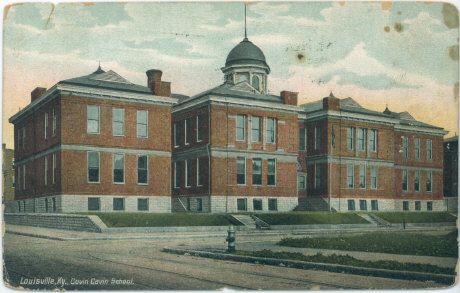
Gavin H. Cochran Elementary School, Louisville, Kentucky

In March, when one of my best friends called and told me that a Black woman was murdered by police in Louisville, I sighed. Breonna Taylor, a 26-year-old African-American emergency room technician, was killed by police who used a battering ram to crash into her apartment and kill her. I was so sick of hearing stories of Black Death, but this one happened in my hometown. For months and years before, I had heard stories of shootings in the city but had tried to block it out — if only temporarily. I think I had become numb or was trying to isolate the pain. I hadn’t lived in Louisville in over 20 years, but I remembered the racial politics and understood that the history of racial residential segregation, gerrymandering, white flight, and educational disparities had set the stage for this event. The police who murdered Breonna and David McAtee had a particular understanding of the geography and understood that these geographies and the people that lived in them didn’t matter. They were considered disposable and irrelevant.


    Share

The Spatial Scale of ‘We’

Every day around my town, I see signs of encouragement, most frequently — “We’re All In This Together.” That statement refers to the coronavirus pandemic, suggesting and assuming that we are all equally engaged in and affected by the pandemic. Similar messaging is delivered via emails, websites, and store speakers. Oregon’s public campaign takes the messaging even further, reminding us that “It’s up to you how many people live or die,” staying home ensures that we “don’t accidentally kill someone today.”

This messaging is clearly not limited to Oregon. We’re bombarded with fearful and dire characterizations of the force and magnitude of coronavirus. World leaders are asserting that coronavirus is “the worst public health crisis for a generation” (Boris Johnson), “we are at war” (Emmanuel Macron), or labeling themselves as “a wartime president” (Donald Trump).

At war? In his Nobel Peace Prize Acceptance Speech, President Barack Obama summarized the conditions under which war is justified: if it’s a last resort, if force is proportional, and if civilians are spared from harm (i.e. collateral damage). He further reflected that throughout history, the notion of “just war” was rarely observed. Our world leaders are certainly invoking rhetoric of war to muster broad public support for their unprecedented actions in the fight against coronavirus. And, polls seem to show that we support these actions. Therefore, we are obliged to ask ourselves whether our actions are, in fact, just.

The World Health Organization collects and maintains statistics on pandemics, epidemics, endemics, and outbreaks. As only a few examples, in 2018 405,000 people died from malaria (out of 228 million known cases) and 1,500,000 people died from tuberculosis (from 10,000,000 known cases). The United Nations reports that 9,000,000 people die of hunger every year (out of over 820 million people who are chronically hungry).  This already calls in question Boris Johnson’s assertion that Covid-19 is “the worst public health crisis for a generation.” But now include lockdown-related collateral damage and the UN predicts that the global coronavirus lockdowns will drive an additional 130 million people to the edge of starvation. The World Health Organization estimates that an additional 1.4 million people will die from tuberculosis as a direct result of the global lockdowns. The impact on other indices of health is dizzying, with surges in suicide, domestic violence, and mental health problems (the United States Centers for Disease Control reported in May that one-third of Americans are experiencing Generalized Anxiety Disorder, with rates higher for women, people of color, and people with less education). Factor-in unprecedented unemployment directly tied to coronavirus lockdowns that is surging across class, race, and gender lines, disproportionately affecting women, people with disabilities, and people of color. They bear the brunt of the crisis while we are protected in lockdown.

Apparently, this is what we accept as collateral damage in this war.

So, why doesn’t the world respond in the same way to malaria, tuberculosis, or starvation as it does to COVID-19? The answer is quite simple. Coronavirus has the audacity to attack wealthy white people. It affects visible people, rich people, important people, even world leaders. Those other maladies are primarily relegated to poor people in poor nations. In response to “the worst public health crisis for a generation,” these affected wealthy people adopted a large-scale extraordinary means in the “war” against coronavirus, while other maladies and the less privileged find funding and assistance dwindling. Lucica Ditiu, executive director of Stop TB Partnership succinctly summarizes the disparity.

“TB has been with us for thousands of years. For 100 years we’ve had only an infant vaccine and we have two or three potential vaccines in the pipeline. We look on in amazement at a disease that is 120 days old and it has 100 vaccine candidates in the pipeline. This is really fucked up.”

Ditiu’s statement illuminates the otherness in we. It illustrates the fluidity of how we define we. As a Geographer, I’m struck most by the sudden collapse of the social and spatial scale that defines the we in the rhetoric “we’re all in this together.” Shrinking the scale of we is demanded by our political leaders and supported by our society. But, usually, we lead very interdependent international-scale lives. Our political, economic, and social systems have created an international civilization that mandates the spatial scale of we to be global.

Or does it?

What happens when the we who are threatened are defined by ever-shrinking social and spatial scales of privilege? In the face of a pandemic, the admission to the world of we who can engage in lockdown is brutally strict. The more people we allow into our we, the less safe we are.  It becomes necessary to expand the margins of “other” in our effort to define and protect the we.

We have been told that saving lives is more important than the economy. Whose lives? This new we defined by coronavirus is the very essence of privilege, including only those who have the choice to stay at home. And even among those with housing, it works only for those who remain employed and have a home that is uncrowded, safe, non-violent, clean, warm, and well stocked with food and potable water. Our we excludes any of those who cannot participate in the lockdown. This means that we accept a giant portion of the world’s population being collateral damage in this war against coronavirus.

During Spring 2020, I have watched with distress at how easy it has been for the privileged to re-shape their we to a remarkably small spatial and social scale. I’m further horrified by the acceptance of collateral damage that has been caused by the systematic and intentional re-forming of that we. But, of course, the idea of we is fluid. It always has been. Throughout history, membership in we has been defined by spatial and social boundaries. Coronavirus has just created another boundary defining a we: those who benefit from lockdown and those who are collateral damage from lockdown.

We’re all in this together?

No. We are not.

— Amy Lobben
AAG President

DOI: 10.14433/2017.0074

    Share