Targeted Mentoring Networks

Call for Participation for the Convening of Care in Washington, DC

Person holding their hands in the shape of a heart with sunlight in background

By Risha RaQuelle

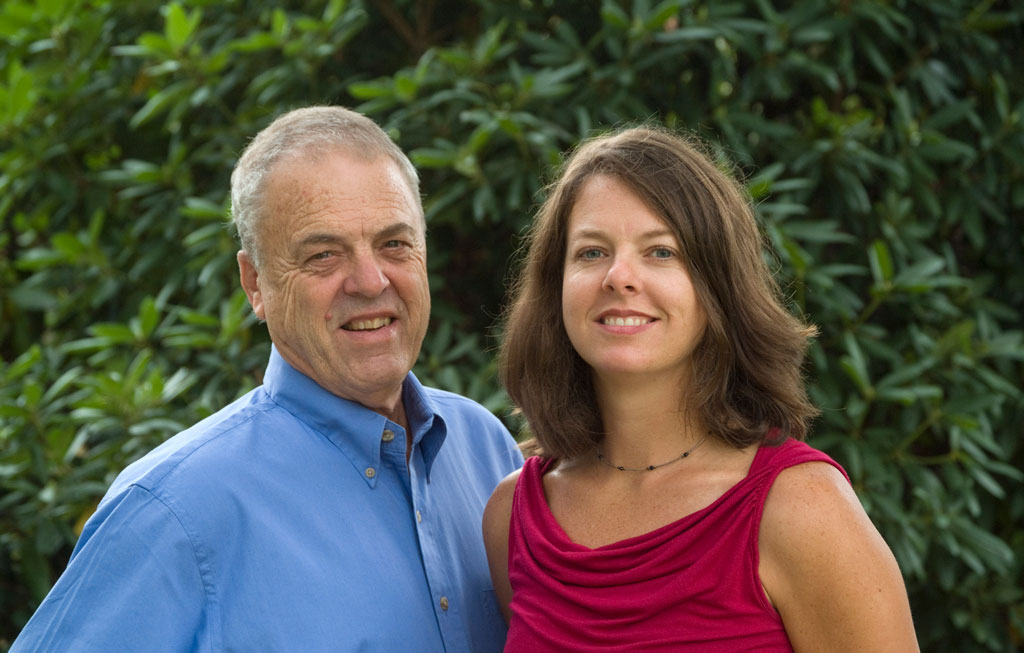
Photo of Risha Berry

I’m excited to share with you the Call for Participation for the upcoming Convening of Care, scheduled to take place in Washington, DC, September 19-20, 2024. Funded by the National Science Foundation and in partnership with the University of Colorado Colorado Springs (UCCS) and the National Organization of Research Development Professionals (NORDP), the convening will bring together 30 participants from three different, key perspectives within the research enterprise: funding officers at colleges and universities, department chairs, and early-career geographers.

If you would like to attend, take a look at our Call and start your application.

The convening will lay the groundwork for alternative standards in the research enterprise — defined as the systems and activities that lead to funding and research — by asking participants to reconsider their work through an “ethos of care” framework. Based on work by Principal Investigator Emily Skop of UCCS has led, an ethos of care seeks to enhance practices and processes within the research enterprise and enable collaborators to confront and address the accepted norms of power and bias, and to “resolve to disrupt and transform those norms in a mutually beneficial, evolving and inspiring manner.”

We are especially eager to see participants from Emerging Research Institutions (ERIs), Minority Serving Institutions (MSIs), and community colleges, who are often under-resourced yet most qualified to address the much-needed change to align institutional research activities with the goals of belonging, access, justice, equity, diversity, and inclusion (BAJEDI).

Questions? You can sign up for Friday Office Hours to meet with me as one of the two Principal Investigators.

This award is based upon work supported by the National Science Foundation under Award No. 2324401 and Award No. 2324402. Any opinions, findings and conclusions or recommendations expressed in this material are those of the author(s) and do not necessarily reflect the views of the National Science Foundation.

The AAG Culture of Care column is an outreach initiative by the AAG JEDI Committee. Don’t forget to sign up for JEDI Office Hours. The current theme of Office Hours is An Ethos of Care in the Research Enterprise.

    Share

AAG Travel Policy

    Share

Pono Science

Healthy Departments Initiative

Language Matters: Communications for Justice, Equity, Diversity and Inclusion

Person holding their hands in the shape of a heart with sunlight in background

Caroline Nagel, JEDI Committee Chair

Caroline NagleOver the next several months, we’ll devote space in this column to the perspectives of JEDI Committee chairs as they continue implementing AAG’s Justice, Equity, Diversity, and Inclusion (JEDI) plan through the framework of TLC GRAM, which stands for Training, Listening, Communications; and Governance, Reports, Advocacy, and Membership. Caroline Nagel is the chair of the JEDI Committee and also chairs the JEDI Communications subcommittee.

As geographers, we are often reminded that geography means earth-writing. Put another way, we are in the business of words. The identification of communications as a pillar of the JEDI strategic plan acknowledges explicitly that our words are important—that the messages we convey among ourselves as geographers and to the rest of the world matter.

As chair of the AAG Justice, Equity, Diversity, and Inclusion (JEDI) Committee, as well as chair of its Communications subcommittee, I am charged with overseeing a process that has ever more importance: enhancing AAG’s capacity to achieve greater diversity, equity, and inclusion within the discipline, whether on college campuses, in private sector work, or in government agencies. Before I discuss some of the committee’s specific activities, I’d like to comment on the context in which we are doing our work.

TLC GRAM logoThe weeks and months following the 2020 murder of George Floyd by police officers in Minneapolis saw an outpouring of public support for racial justice in the United States. America, it seemed, was ready for a long overdue ‘racial reckoning’.  American corporations, government agencies, and academic institutions hurried to introduce an array of Diversity, Equity, and Inclusion (DEI) measures designed to address institutional barriers to equality.

The backlash against DEI efforts, however, was swift, and, in hindsight, not entirely surprising.  DEI opponents in ‘red’ states moved to cut spending on DEI activities at public universities, while well-financed conservative legal groups successfully challenged the vestiges of ‘race-conscious’ admissions policies.

As chair of the AAG JEDI Committee, I have watched these disheartening developments closely and have pondered what they mean for the AAG’s DEI efforts.  In this fraught moment, my thoughts turn to how words are laden with political meaning. DEI opponents often argue that DEI, and the critical scholarship that underpins it, is a form of ideological indoctrination that limits freedom of thought and expression.  Their response, ironically, has been to restrict or to eliminate narratives around race, gender, and sexuality that they associate with ‘wokeness’ and to replace them with other, more ‘acceptable’ narratives—for instance, that America is a colorblind society.

As the so-called ‘war on woke’ has gained momentum, some organizations wishing to preserve elements of their DEI programs have looked for new, less overt, ways to talk about diversity, equity, and inclusion.   At my university, for instance, the administration preempted pressure from conservative legislators by folding DEI activities into a new Office of Access and Opportunity.  Although this new office does much of the same work that the old DEI office did, I was struck by how our university president, in explaining the name change, emphasized outreach to first-generation students and to veterans and, in so doing, seemed to downplay the focus on students of color. This is not to discount the validity of any such outreach, but, rather, to indicate how certain signifiers of difference—especially of race—are viewed with suspicion despite evidence of their continued relevance in South Carolina and beyond.

While tactics to “rebrand” DEI may be prudent, we should be wary of backing off from the language associated with DEI.  Justice, equity, diversity, and inclusion are not the buzzwords of some woke agenda; rather, they are terms that speak incisively to empirical realities.  Take, for instance, the concept of ‘justice’, which has been part of the vocabulary of geographers for many decades.  In some corners of the social media universe, the term ‘justice’ has taken on almost pejorative connotations—hence, the widely mocked figure of the ‘social justice warrior’. But how else are we to talk about the dumping of toxic waste in poor communities, the lack of public investment in affordable housing, the devastation of communities and environments caused by the extraction of resources, or the dire impacts of climate change on countries that have contributed almost nothing to global warming?  If these aren’t matters of social justice, what are they?

This is not to say that concepts like justice, equity, diversity, and inclusion should not be held up to critical scrutiny. Geographers, for instance, have rightly been critical of diversity discourses in universities and other institutions, which often avoid substantive responses to systemic exclusions.  But critiquing these concepts and demanding more of them is different from discrediting them altogether.

I would venture that for most geographers, it is an obvious statement of fact that the world is replete with social inequalities that are reproduced through political structures, institutional policies, and everyday behaviors.  The aim of the AAG JEDI committee is to ensure that geography as a discipline can produce knowledge that captures these complexities; to do this, we need to acknowledge and to elevate perspectives and experiences that have typically been ignored; and we need to ensure that many different voices are shaping conversations within all disciplinary subfields.

Within the JEDI Communications Committee, we have focused on a heightened presence for JEDI activities on AAG’s social media and other platforms, as well as the work underway to help reorganize the AAG website and JEDI page so that they serve as a hub for JEDI-related resources and tools. This will involve collating resources from past DEI initiatives and making these resources more readily available for AAG members.  It will also involve creating profiles of departments that have successfully recruited diverse groups of undergraduate and postgraduate students; posting curricular resources that emphasize critical geographical thought; providing curated lists of sources that explain community engagement; and short videos of AAG members who are making a difference in their institutions and communities.  We also plan to post information about upcoming JEDI-related events (including AAG sponsored workshops and forums), and to highlight JEDI-focused conference sessions.

As we work toward the implementation of the JEDI strategic plan, we invite AAG members to get involved and to keep the principles of justice, equity, diversity, and inclusion at the center of our mission as geographers.

The AAG Culture of Care column is an outreach initiative by the AAG JEDI Committee. Don’t forget to sign up for JEDI Office Hours. The current theme of Office Hours is An Ethos of Care in the Research Enterprise.

    Share

Research Partnerships: The Foundation for a Culture of Care 

Person holding their hands in the shape of a heart with sunlight in background

By Risha RaQuelle

Photo of Risha Berry

Last month, I shared the news that AAG is embarking on a a collaborative project with the University of Colorado Colorado Springs (UCCS) to create pathways to an ethos of care within the discipline of geography and scientific disciplines. This project, funded by the National Science Foundation, exemplifies the kind of work that AAG wants to encourage and support in the geography discipline.

We can’t do it without partners.

In 2024 and beyond, AAG is seeking interested collaborators, especially at emerging research institutions, to help us examine, enhance, and reform research practices, teaching, outreach across sectors, career development, mentoring—in essence, anything that will advance the discipline with a culture of care in mind.

AAG has a vision: We want to be a national fulcrum for grant and research opportunities for the discipline’s transformation, and we want to provide technical support to partner institutions and organizations seeking to share their knowledge and level up their prominence in research. The common throughline of the projects we encourage is commitment to the central principles of belonging, access, justice, equity, diversity, and inclusion (BAJEDI).

We are especially interested in lending our technical expertise to institutions that are not considered R1 and may otherwise, without a partner, be less competitive for research opportunities.

To learn more about the ethos of care framework, read this perspective from Inside Higher Ed, by Emily Skop, Martina Angela Caretta, Caroline Faria and Jessi L. Smith, offering a call to the discipline.

In the coming months, I’d like to focus the JEDI Office Hours on connecting with interested AAG members who might want to create a collaboration. Are you interested in exploring this opportunity? Please take a moment to sign up for a time to chat about partnerships and ideas to create a culture of care in the research enterprise.

DOI: 10.14433/2017.0144


The AAG Culture of Care column is an outreach initiative by the AAG JEDI Committee. Don’t forget to sign up for JEDI Office Hours. The theme in November is An Ethos of Care in the Research Enterprise.

    Share

Building Vibrant Departmental Cultures, Part Two: Creating a culture of respect and care for students, staff and faculty

A group of students explores geography with using their sense of smell over drinking glasses filled with liquid.
A group of students explores geography with their senses. UI Geography now prides itself on its environment of trust, respect, and creative inquiry.

Photo of Rebecca Lave

My previous column began the story of Indiana University Geography’s near-death experience in the 2010s and our decade of collective work to transform the department. Walking away from the traditional physical/human-environment/human geography division was a key aspect of that transformation, but creating a culture of care and respect and developing more transparent, horizontal governance were key components as well. In this column, I focus on how we created a more respectful and supportive departmental culture; I will address governance in the third column in this series.

Building respectful and supportive practices

I don’t know when the culture at IU Geography broke down; by the time I arrived to interview in spring 2008, the level of intellectual and personal disrespect within the department was intense enough that I nearly refused the job. In the end, I accepted, thinking that if I could keep my head down and my office door shut the cultural issues would not affect me. But as anyone who has been in a toxic department knows, bad behavior has surprisingly pervasive effects.

Our departmental meltdown in Fall 2011 had many long-term causes, but the immediate catalyst was two physical scientists declaring during a meet-and-greet with our new Dean that their situation was untenable because of teaching load and the presence of social scientists, and that they had independently begun negotiations to merge our department into the Geology Department. The rest of us were shocked and horrified. Our new Dean was unimpressed by our collective dysfunction, to put it mildly.

The year that followed was deeply stressful and upsetting. We were nearly forced to merge into two other units and multiple faculty moved to other departments or left IU. In the end, when the Dean decided to support our continued existence and gave us hires to rebuild, one of our highest priorities was building a more supportive and respectful culture. That took many different forms, but I’ll highlight three here.

The first was a commitment to respectful speech. We asserted, and then reinforced, the importance of treating everyone in the department (students, staff, faculty, colloquium speakers, etc.) respectfully in person and in email. This included an explicit acknowledgement that people in the department employed very different models of scholarship, and that all were worthy of respect.

Secondly, we changed department practices to better support each other’s lives outside of work. The point was not to recast the department as family, but to acknowledge that we are all human: some of us have care responsibilities; others have chronic illnesses or other vulnerabilities. We acknowledged and tried to support that in multiple ways, such as stepping in to cover classes when someone had surgery and moving the timeslot for our colloquium earlier to accommodate childcare pick-up times.

Perhaps the most important of these changes has been our collective commitment to only hire people who treat others well (the “no a**holes” rule).  This rule has been challenged occasionally when one or more of us was starry-eyed about an exceptionally strong CV; so far, though, we have held the line. Those of us who survived the meltdown at IU, or who came in from other departments with toxic cultures, are all too aware of the value of collegiality.

Meal trains as a metric

There are many metrics for assessing attempts to build more supportive and respectful department cultures; mine is meal trains.

Meal trains are a form of mutual aid in which people cook and bring meals to someone who needs support. When my daughter was born at a difficult time for my family, our community in Berkeley brought us dinner every other night for six weeks, getting us through the worst of the transition. Meal trains are powerful symbolically, drawing the recipient into a network of care. They are also powerful practices: there is nothing like preparing a meal with your own hands to ground you in care for another.

When I arrived at IU, there was no tradition of meal trains; frankly, there was only a 50% chance that another faculty member would say hello if you ran into them in the hall. I made a few solo attempts to get the tradition started, but it wasn’t until my colleague Justin Maxwell’s second child was born that we had our first departmental meal train. At first, we organized them only for faculty; then we expanded them to staff. I opened a bottle of bubbly when we voted to extend meal trains to graduate students. The hierarchies in academia are no joke, but it is possible to extend care, respect and appreciation within them.

The topics I’ve called out here are part of a broader set of endemic inequities within geography, both inside and outside the academy, that stem from a range of factors including unequal job security; race, ethnicity, gender, class, and ability; differences in institutional status, including research v. teaching institutions, but also Global South v. Global North; and the increasing dominance of English as the language of academic and professional life. These inequities play out in different ways. Some, like pay, job security, and career support, are obvious. Others, such as the expectations around who will do take on the work of mentoring and advising, and who is allowed to make ground-breaking scholarly contributions v. who is expected to demonstrate the relevance of others’ theories, are less obvious. As you think about how to make your own department a more respectful and supportive place to work, I strongly encourage you to check out AAG’s initiative with the University of Colorado Colorado Springs to identify and strengthen cultures of care within the geographic research community.

This is the second of three parts of a series on culture change at University of Indiana Geography.

Read Part 1

Please note: The ideas expressed in the AAG President’s column are not necessarily the views of the AAG as a whole. This column is traditionally a space in which the president may talk about their views or focus during their tenure as president of AAG, or spotlight their areas of professional work. Please feel free to email the president directly at rlave [at] indiana [at] edu to enable a constructive discussion.

    Share

Convening of Care

Member Profile: Neal Lineback

Neal Lineback's SUV and RV displaying Geography in the News logos
The GITN Mobile, outfitted by Lineback for geographic adventures.

As an adventuresome boy growing up in the 1940s and 50s in Forsyth County, North Carolina, Neal Lineback became a geographer before he knew what it was. Working summers for his uncle, a surveyor, since Neal was 11, he learned about topography and mapping by cutting brush and helping identify property lines, eventually training to operate the surveyor’s transit for observations.

“I was constantly exposed to maps and surveys. I loved maps and cartography and spent days plotting bicycle and car trips,” Lineback recalls. By the time he was 14, he had plotted an 80-mile backroad bicycle trip with a friend to earn Boy Scout merit badges. The trip was interrupted by Hurricane Hazel, the deadliest, costliest hurricane of the 1954 season. “We had to camp out in a dilapidated house at the foot of the Blue Ridge as the hurricane brought driving wind and rain,” says Lineback. “Our parents had no idea where we were.” Fortunately, the boys arrived at their destination unharmed the next day, and earned their badges.

At sixteen, Lineback bought a used Model A Ford for $100, intent on driving to Alaska. He changed his mind after the car broke down while he was still in North Carolina, resold it for the same amount he bought it for, and turned his attention to a more formal education. In the meantime, he worked a year in manufacturing as a millwright before he seriously began his college education.

Then as now, geography was a “discovery major.” It was not until his second year at East Carolina College that Lineback met two young and dynamic geography faculty, “Fritz” Gritzner and Louis DeVorsey and departmental chair Robert Cramer. “Thanks to them, I realized I had already been a geographer for 10 years and didn’t know it. Maps were my life and still are.”

In 1963, Lineback took his first teaching job, as a high school teacher in Henry County, Virginia. “I was told I was the first trained geographer to teach in the state. I entered the classroom with four things on my desk: a roll book, an out-of-date geography textbook from the 1950s, a 1930’s world map, and a paddle.” The Vietnam War was ever-present, and Lineback soon found the need to keep himself and the 30 students in five classes — many of them boys who might be drafted — up to date on the Southeast Asia daily news. That’s when he first had an epiphany about the work that would become a passion project of public scholarship: Geography in the News, which finally came to fruition nearly 25 years later and continued for more than 1,200 published articles. (In 2023, Lineback transferred the trademark and archives of Geography in the News to AAG, which is developing a repository of the articles and publishes highlights from the collection.)

College Teaching, Atlas of Alabama, and Field Work in Syria

Lineback went on to receive his Ph.D. from the University of Tennessee and also taught there for two years as a graduate student and adjunct instructor before taking up a post at the University of Alabama in Tuscaloosa. For 18 years, he served as editor of The Atlas of Alabama (1973, The University of Alabama Press) and several computer atlases, among the first of their kind. He served as department chair for 12 years, and also did field work as a hydrologist in Syria, studying the Figeh spring, which brings water to Damascus.

In 1986, when Lineback became chair of the Department of Geography and Planning at Appalachian State University, he was finally able to bring GITN to life. His idea for GITN’s  journalistic approach to blending geography and current events met with the enthusiasm of dean William Byrd. What clinched it was when Lineback met political and environmental geographer Harm de Blij. “I told him that I was contemplating starting work on Geography in the News that summer. He listened intently, then said, ‘Great idea! If you don’t do it, I know of someone who will.’ I immediately pitched the idea to my local newspaper, The Watauga Democrat.”

The column was a hit with local readers and was increasingly requested by teachers. Within four years, Lineback had signed a contract to publish GITN online with Maps.Com in Santa Barbara, California. The Internet made it still easier to produce the column and send maps and text by email from coast to coast weekly.

I took considerable pride in involving both my undergraduate and graduate students in GITN and other work, particularly to the point of making sure their names were on my research papers and published maps.”


Using Geography to Delve Beneath the Headlines

How did Lineback address breaking issues in the news with thorough, thoughtful geographical perspectives week after week? The process went something like this: The first draft for the week would be written every Sunday evening, in time to meet his graduate or undergraduate cartographer on Monday morning for instructions for a map. Then he sent the draft to his long-time University News Bureau editor. Lineback used his lunch hour between classes to edit the article. After a few days of edits back and forth, Lineback would be ready to email the final version to California by 10 a.m. Friday. By this time he was doing 52 articles a year, never missing a week.

“I wrote them on vacation in Mexico, during Christmas week with the family, on a two-week cruise ship speaking tour around Scotland, Ireland, Portugal and Spain, and on fishing trips to Cape Hatteras. “Nobody else would be so stupid,” he laughs now. “It was almost non-stop for more than 20 years.”

The 27-year success of “Geography in the News” has given Lineback his greatest source of achievement. At its height, through school adoptions, subscriptions and media publications, the column enjoyed an estimated weekly readership far exceeding three million in the early 2000’s, winning awards from the AAG, SEDAAG, Travelocity and more, including a 2-year run on the NGS Newswatch blog.

Portrait of Neal Lineback and his daughter Mandy Lineback Gritzner, who has followed in her dad’s footsteps and become a geographer.
Neal Lineback and daughter Mandy Lineback Gritzner, who has followed in her dad’s footsteps and become a geographer.


During the last five years he teamed with his daughter, geographer Mandy Gritzner. “A Godsend,” he says. He continued to teach two or three classes per semester, preside as Department Chair, and serve on AAG and University committees, as well as writing for research projects, including a co-author of Global Change in Local Places, funded by NASA through the AAG. He debuted the World Geography Bowl to SEDAAG (1990) and two years later at AAG after witnessing it as a simple game among North Carolina college students and realized that it could be a thrilling exercise for both geography students and faculty. It was immediately a resounding success. The World Geography Bowl is now a popular event at the AAG annual meeting.

In his experiences, “Geography departments should adopt the academic model of a three-legged stool: promoting well-rounded faculty who carry out good teaching, provide good academic service to their disciplines, and accomplish/publish research in their field,” says Lineback. “In all of these tasks, they should involve their students. I took considerable pride in involving both my own undergraduate and graduate students, particularly to the point of making sure their names were on my research papers and published maps. University teaching shouldn’t go on solely in the classroom.”

    Share