Alfred W. Crosby died peacefully at Nantucket Cottage Hospital among friends and family on March 14, 2018, after residing for two and a half years at Our Island Home. He was 87 and had lived with Parkinson’s Disease for two decades.
Born in Boston in 1931, he graduated from Harvard College in 1952 and served in the U. S. Army 1952—1955. He then earned an M.A.T. from the Harvard School of Education and a Ph.D. in history from Boston University in 1961. His first book, America, Russia, Hemp, and Napoleon, is about relations between Russia and the U.S.A. from the American Revolution through the War of 1812. He taught at Albion College, the Ohio State University, Washington State University, and the University of Texas at Austin, retiring in 1999 as Professor Emeritus of Geography, History, and American Studies. He was the recipient of many awards including three Fulbright Fellowships and a Guggenheim Fellowship. He was elected to the American Philosophical Society, the American Academy of Arts and Sciences, and the Academy of Finland and was a fellow of the John Carter Brown Library.
He was involved in the Civil Rights movement, taught Black Studies and the history of American jazz, helped to build a medical center for the United Farm Workers’ Union, and took a leadership role in anti-war demonstrations.
His interest in demography and the role of infectious disease in human history led him to write The Columbian Exchange: Biological and Cultural Consequences of 1492; America’s Forgotten Pandemic (originally Epidemic and Peace 1918); and Ecological Imperialism: The Biological Expansion of Europe, 900-1900. His fascination with intellectual and technological history produced The Measure of Reality: Quantification and Western Society, 1250-1600; Throwing Fire: Projectile Technology Through History; and Children of the Sun: A History of Humanity’s Unappeasable Appetite for Energy. His books have been published in Chinese, Greek, Italian, Japanese, Korean, Polish, Portuguese, Spanish, Slovene, Swedish, and Turkish translations. His work as a historian, he said, turned him from facing the past to facing the future. He lived by the maxim: What can I do today to make tomorrow better?
He was predeceased by his sister Ruth and by Anna Bienemann Crosby and Barbara Stevens Crosby. He is survived by Frances Karttunen, his wife of thirty-five years; his son Kevin and Kevin‘s wife Pamela Mieth; his daughter Carolyn and his grandchildren Allegra and Xander Crosby-Laramie; and by his stepdaughters Jaana Karttunen and Suvi Aika and their families.
There will be a memorial service and celebration of life in May. Donations in his memory can be made to the Friends of Our Island Home, Box 39, Nantucket, MA 02554; Palliative and Supportive Care of Nantucket; or Doctors Without Borders.
Exploring New Orleans and Beyond Using Web Mapping Tools, Maps, and Data
The evolution of geographic information system (GIS) technology to the web presents an excellent opportunity for the geography community to foster spatial thinking among colleagues, students, and administrators. The use of web maps, spatial data, and analysis tools to examine local to global issues has never been so powerful and easy to embrace. It also provides a means for the community to promote geography as an essential twenty-first-century subject to the general public.
With the upcoming 2018 AAG Annual Meeting in New Orleans in April, these web maps and analysis tools can be used by anyone to thoroughly explore the city in order to enhance the time spent there and in the surrounding area.
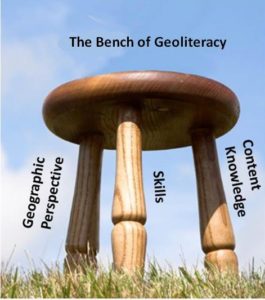
The following examples illustrate the use of geographic data and tools in an inquiry-driven environment. These maps cultivate the three legs holding a bench that I believe constitutes geographic literacy: content knowledge, skills, and the geographic perspective.
Figure 1: Geoliteracy can be conceptualized as being supported by content knowledge, skills, and the geographic perspective.
Teaching with these tools can foster students’ knowledge of core content, including concepts (scale, diffusion, patterns, relationships, systems), regions, and themes (geomorphology, watersheds, demographics, ecoregions). Skills include the use of maps, analyzing data, assessing data quality, charting, collecting and analyzing field data, symbolizing maps, and communicating geographic content. Through use of these tools, the geographic perspective—in which geographers see the world working through a series of interwoven, changing spatial relationships operating at a wide variety of scales—can be promoted.
These tools can also promote the idea that big data exists at our fingertips, but it is of varying quality. Mapped data is distorted due to its map projection and may have gaps in attributes or resolution and scale. Inquiring about the data’s origins, date, scale, and other characteristics and examining metadata are key to data’s effective use. Discussions about copyright, location privacy, data aggregation, interpretation, dissemination, and communication can be interwoven with the following maps and activities. Through each, students can see that every issue in our world and communities has a geographic component.
To start, let us focus on a few easy-to-use yet powerful tools, modeling how to use these resources in instruction. As an example, we will explore New Orleans and the surrounding region, but these tools can be used to study other regions as well.
Examining Change over Time Using Photographs and Satellite Imagery
The Esri ChangeMatters Viewer
Historical and current satellite images can be compared via the Esri ChangeMatters viewer. Its Landsat images are recorded in infrared wavelengths, providing a springboard for discussion about the electromagnetic spectrum and what different wavelengths reveal. Because the US Geological Survey (USGS) and the National Aeronautics and Space Administration (NASA) have been operating the Landsat satellites since 1972, over 45 years of earth changes are viewable with this single tool. These images can be interacted with in a three-panel view with time period one on the left, time period two in the center, and the change detection image on the right.
Figure 2: Shown above is New Orleans, from Landsat imagery in 1975 (left), in 2010 (center), and as a change detection image from 1975 to 2010.
What has changed, and why has it changed? What will this area look like in 10 years? Is it changing more quickly or more slowly than other parts of the world? Why? How does the land use here compare to elsewhere in the world? What influence does population, climate, or coastlines have on land use? Can you estimate the population in the area shown? What type of dwellings exist, and how do these dwellings compare in size and density to other regions?
As an example, the intersection of such issues as irrigation, politics, climate, and internal drainage can be discussed by examining the shrinking Aral Sea in Central Asia over the past 40 years. The physical characteristics of the eruption of Mount St. Helens, the regrowth of some surrounding vegetation, and the volcano’s proximity to Portland and other regional volcanoes can be examined with the same tool. The urban growth of Las Vegas or São Paulo, the construction of the Three Gorges Dam and other dams, the expansion of center-pivot irrigation in the United States and Saudi Arabia, agricultural and mining expansion and reclamation, and changes in coastlines and glaciers are just a few of the themes that can also be examined using the ChangeMatters viewer.
The USGS Esri Historical Topographic Map Explorer
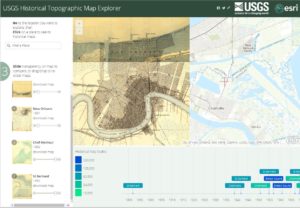
Physical and human-induced land-use and land-cover changes can be examined at a variety of scales using tens of thousands of USGS maps stretching back 100 years with the USGS Esri Historical Topographic Map Explorer. Enter a US-based location, click on the map, and choose from the historical maps covering that area, comparing them to the present-day topographic basemap. Each map’s transparency can be adjusted, allowing changes to be investigated. In New Orleans, the construction of levees, the Lake Pontchartrain Causeway, and draining of wetlands can be seen, along with below-sea-level contour lines that allow the physical setting of the city to be studied.
Supplementing the topographic map viewer with historical ground photographs can be instructive. Ground photographs taken in the same location during two different time periods can be used to analyze changes in land use, land cover, transportation, styles of clothing, the things that society values, and much more. Sources and maps include SepiaTown, WhatWasThere, and Historypin. Some historical street images are embedded in Google Street View scenes via a slider.
Figure 3: Changes in New Orleans can be examined using the USGS Esri Historical Topographic Map Explorer, comparing the 1891 topographic maps (left) with the 2018 topographic basemap (right).
Urban Observatory
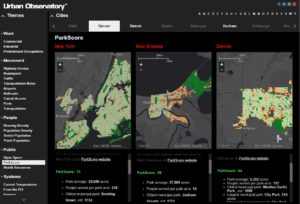
The Urban Observatory is a web-mapping application that allows 100 cities to be examined on dozens of variables. Created by Richard Saul Wurman, RadicalMedia, and Esri, the Urban Observatory provides a synchronized set of up to three maps, all showing the same theme and at the same scale. With this tool, you can analyze senior population, land use, current traffic, current weather, parks, and more. Up to three city maps can be viewed at once, and the maps are synchronized, making comparisons easy.
Figure 4: Users can compare city park scores (developed by The Trust for Public Land) using the Urban Observatory for New York, New Orleans, and Denver. ParkScore maps show which areas of a city lie within a short walk of a park, and areas that are not served by a park.
Demographic Analysis of New Orleans and Beyond
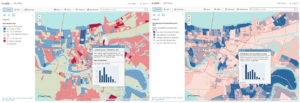
ArcGIS Online is a web-based mapping platform from Esri containing analytical tools, maps, data services, and databases, which are behind most of the mapping tools described in this article. Start with ArcGIS Online > Map > Modify Map, then search for and add data on median age and median income. In the resultant interactive web map, shown below, examine the spatial pattern at the city level, such as New Orleans, or at a regional or state level—with no login required. The transparency of any map can be adjusted; the basemap can be changed from the topographic map pictured to a satellite image, OpenStreetMap, or others. Layers such as hydrography, ecoregions, or land cover can also be added. The classification method, variable, number of classes, and symbology can all be changed to help students understand the relationships among various datasets. What patterns are evident, and why do they exist? How do the New Orleans patterns compare to those of other cities? How do the patterns change as the level of geography changes between block group, census tract, county, and state?
Figure 5: ArcGIS Online can be used to examine median age (left) and median income (right) for New Orleans. For more census maps in ArcGIS Online, see this gallery.
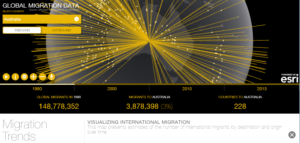
Migration touches the themes of physical geography (such as climate and landforms), cultural geography (political systems, political instability, boundaries, demographic trends), sociology (perception, push-pull factors), and change. Migration causes deep and long-lasting changes in culture, language, urban forms, food, land use, social policy, and politics. Migration is a global issue that affects our everyday lives. It is also a personal issue, because we all have a migration story to tell about our own ancestors and families. Part of the Esri Cool Maps gallery, the Migration Trends map is an interactive 2D and 3D web mapping application running in a browser.International Migration
Using data from the United Nations (UN) Department of Economic and Social Affairs, Migration Trends displays out-migration and in-migration data for every country from the 1990s, 2000s, 2010, and 2013. Line thicknesses indicate the number of migrants, and the line endpoints indicate the countries sending people out or receiving people. The raw number and percentage of out- and in-migration for each country are indicated. After viewing the animation, you can select individual countries and time periods. Compelling cartography and the ability to switch between 2D and 3D make this a useful teaching and research tool.
Is climate-induced sea level rise the reason why a high percentage of Reunion Island’s population is moving to the United States? Why so much flow between Russia and the UK? Why does Australia have a high percentage of migrants, and how has in-migration to Australia changed recently? See my video for more questions to pose using this map. Explore the other maps in the Esri Cool Maps gallery; they change periodically, so check back often.
Figure 6: The Migration Trends 2D and 3D mapping and visualization tool.
Combining Fieldwork with Web Mapping
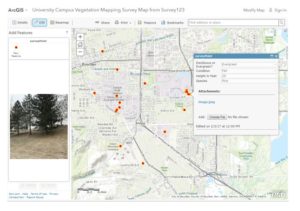
Survey123 for ArcGIS can be used on a mobile device to collect data quickly and easily in the field via a form that can be created using a web browser or an Excel spreadsheet. Students can collect information on tree height and species, water quality, pedestrian or vehicle counts, weather, graffiti, or anything else in the field. The results are immediately captured and displayed on interactive web maps, which can be symbolized, classified, and spatially analyzed. The maps can be crowdsourced so the public can add to the content.
Figure 7: Using ArcGIS Online and the Survey123 for ArcGIS app, citizen scientists can collaborate and use their smartphones to map trees. The interactive map is visible here.
Using and Creating Story Maps
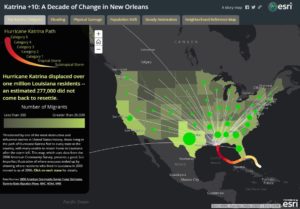
People have told stories through maps for thousands of years, and the Esri Story Maps web mapping applications allow multimedia to be easily incorporated into mapping. A gallery of story maps includes New Orleans topics ranging from Hurricane Katrina, gauging US population change, sea level rise and storm surge effects on energy assets, and Alan Lomax’s video archive of the Deep South. Students can create their own story maps to present their own research through interactive maps, text, video, audio, and photographs. Story maps can be shared online and used on any device. Story maps can serve as assessment pieces in student portfolios; provide an alternative to PowerPoint or Prezi for students’ oral presentations; and be embedded in web pages, Sway presentations, or other types of media.
Figure 8: This story map shows one aspect of change in New Orleans more than 10 years after Hurricane Katrina.
Synthesis
Students who use web mapping in geography develop critical thinking skills and understand how to use and evaluate data. This is particularly important with geographic data due to its increasing volume and diversity and its often sensitive and politically charged nature. Students who are well-grounded in the spatial perspective through web mapping have the ability to use data at a variety of scales and contexts, think systematically and holistically, and use quantitative and qualitative approaches to solve problems and become better decision-makers. Students can use these tools to understand that the earth is changing and begin to think analytically about why it is changing. After using these web maps, students ask and grapple with value-based questions. Should the earth be changing in these ways? Is there anything I can and should do about it?
Joseph J. Kerski, PhD, Instructor, University of Denver, and Education Manager, Esri
Coastal Land Loss in Louisiana: From Denial to Reality
The coastline formed by the Mississippi River is changing continually as part of the never-ending interplay between the forces and processes reshaping and realigning coastal contours and bathymetry. Over millennia, this formative process created Louisiana’s expansive wetlands that once encompassed 7.3 million acres (11,500 square miles) – about the size of Connecticut and Delaware combined – and accounted for at least 40 percent of the nation’s marsh/swamp ecosystems. This natural land-building process, however, has been disrupted by human activities in recent decades—with catastrophic results. Deprived of essential sediments, Louisiana’s coastal wetlands are subsiding and eroding at an alarming pace that casts into doubt humanity’s ability to inhabit and exploit one of the planet’s most economically productive regions.
Erosion alone claims an area the size of a football field every hour, as canals, subsidence, muskrat and nutria eat-outs, salt water intrusion, cold fronts, sea-level rise, and change in the regional hydrology collectively take their toll on this productive habitat. These forces have transformed the state’s once pristine coastal “trembling prairie” into a tattered, shrinking geomorphic artifact. To put this land loss into perspective, Louisiana loses an area greater than New Orleans (180.6 square miles) every 7.2 years.
Alarmed by the disappearance of these wetlands, many concerned citizens now believe that unless corrective measures are initiated soon, the damage to the coastline’s fragile ecosystems will be irreversible. Further, wind and waves are causing the state’s barrier islands to move landward at rates up to 65 feet per year. Between 1900 and 2000, some islands lost nearly half of their surface area; others are completely gone. The region is losing more than a productive estuarine/wetland habitat; the citizens are losing a natural buffer against the full force of a hurricane-induced storm surge. Katrina, for example, generated a surge that approached 30 feet, which is about the height of a three-story building.
Louisiana’s scientific community has diligently investigated and reported the state’s escalating coastal land-loss problem for more than a half-century; yet, coastal erosion has been an urgent political topic only since the first decade of the 21st century. Prior to that time, most policy-makers simply ignored the problem or denied that it even existed. Amazingly, those most affected, the residents of local sea-level communities, simply did not—and, according to a recent Yale University study, still do not—believe their land is washing away. Through their willful blindness, the deniers also generally ignore the impact of increasingly severe natural and manmade catastrophes that repeatedly pummel their environmentally beleaguered homeland: Hurricanes Isadore (2002), Lili (2002), Cindy (2005), Katrina (2005), Rita (2005), Gustav (2008), Ike (2008), Isaac (2012), Harvey (2017), the Macondo/Deepwater Horizon oil spill (2010), the Mississippi River’s “high water” episodes of 2008, 2011, and 2016, and repeated “100-year” rain events, which, in 2016 alone, damaged approximately 146,000 homes in the Louisiana coastal plain.
The once-pervasive notion that Louisiana’s wetlands were too big to fail was — and remains — a widespread misconception. Unfortunately, the ecosystems obscured the darkening reality until an accident of history changed this belief. In the 1960s, President Lyndon Johnson wanted to know if it were possible to divert Mississippi River water to West Texas. The U.S. Army Corps of Engineers issued LSU a feasibility study contract. After investigatory analysis, the research team, under the direction of Dr. Sherwood Gagliano, discovered the Pelican State was losing about 17 square miles of land a year – a number that has fluctuated through time, rising, according to one estimate, to 35 square miles. As a result, the science was clear; diverting the Mississippi would exacerbate the erosion problem dramatically, and the river was not diverted.
Once completed and carefully peer-reviewed, this groundbreaking study was put on a shelf, where it remained largely ignored until later research proved its prescient significance. Beginning in the 1970s and accelerating after 2000, dramatic improvements in computer-aided cartography, GIS, repetitive satellite imagery, photo interpretation and surveying technology, three-dimension models and computer simulations provides better, more accurate measurements of land loss. The 1970 LSU research findings were further reinforced by Dr. Karen Wicker’s 1980 study Environmental Characterization of Terrebonne Parish: 1955-1978, which was one of the first comprehensive land loss assessments of individual coastal parishes. That study morphed into the Atlas of Shoreline Changes in Louisiana from 1853 to 1989, which, in conjunction with a burgeoning number of applied research endeavors, more thoroughly documented Louisiana’s coastal lowlands issues that increasingly endangered the lives and livelihoods of residents supported by wetland resources.
Louisiana has emerged as the national poster child for the dangers environmental changes pose to vulnerable coastal communities. The state’s collective responses to these unprecedented challenges should consequently serve as a national template for addressing environmental Armageddon. The nation must also come to terms with the wetland loss crisis, which until recently was not recognized as a national priority. Recognition at all levels of government was a slow process. In 1990, Louisiana legislators convinced Congress to enact the Coastal Wetlands Planning, Protection and Restoration Act (popularly known at the Breaux Act), which allowed federal funding to go toward wetland protection. Thirty-five years after the initial 1970 study – Louisiana restructured the State’s Wetland Conservation and Restoration Authority to form the Coastal Protection and Restoration Authority (CPRA), the central hub to articulate and development a comprehensive coastal protection plan for Louisiana.
This early momentum continued into the early 21st century, as scientific publications, gray literature, and non-governmental organizations’ outreach efforts have sustained public interest in and concern about continuing land loss. Congress has also approved coastal restoration funds derived from offshore oil and gas revenue produced in the outer continental shelf to help restore and protect the coastal wetlands. A number of bills and measures have been passed and the state in 2009 was entitled to nearly $500 million, a five-fold increase from the $50 million allocated in the early part of the 21st century. Since then, the State Master Plan, and others studies have projected the price tag for rehabilitating the state’s disappearing wetlands from $50 billion to $100 billion. Money is starting to move through the legislative process and projects are moving from the design stage to implementation. This is good news, because the coast continues to disappear and the region’s citizens are increasingly at risk.
Regional Divisions Announce Outstanding Graduate Student Papers from their Fall Meetings
The AAG is proud to announce the Fall 2017 student winners of the AAG Council Award for Outstanding Graduate Student Paper at a Regional Meeting. The AAG Council Award for Outstanding Graduate Student Paper at a Regional Meeting is designed to encourage graduate student participation at AAG Regional Division conferences and support their attendance at AAG Annual Meetings. One graduate student in each AAG Regional Division receives this yearly award based on a paper submitted to their respective regional conference. The awardees receive $1,000 in funding for use towards their registration and travel costs to attend the AAG Annual Meeting. The board members from each region determine student award winners.
The winners from each region will be presenting their papers in two dedicated paper sessions at the upcoming 2018 AAG Annual Meeting in New Orleans. The paper sessions are tentatively scheduled for the afternoon of Tuesday, April 10, 2018.
Autumn James
WLDAAG: Autumn C. James, Ph.D. candidate, Northern Illinois University
Paper Title: Construction of Safety in Daily Living: The Role of Personal Experience and Perception
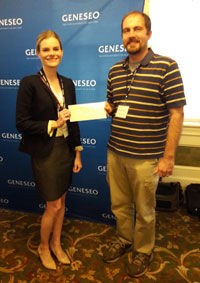
Benjamin Hemmingway
SWAAG: Benjamin Hemingway, Ph.D. candidate, Oklahoma State University
Paper Title: Vertical Sampling Scales for Atmospheric Boundary Layer Measurements from Small Unmanned Aircraft Systems (sUAS)
NESTVAL: Bogumila Backiel, M.S. (December 2017 graduate), University of Massachusetts, Amherst
Paper Title: Mapping Sandbars in the Connecticut River Watershed for Endangered Species Conservation
MAD: Joshua Wayland, PhD Candidate, Department of Geographical Sciences, University of Maryland College Park
Paper Title: Linking Natural Resources and Civil Conflict: A Spatial Panel Regression Approach
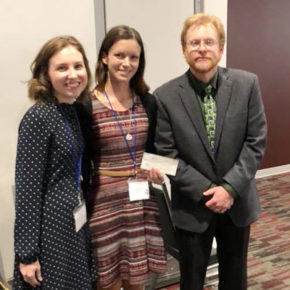
Maegen Rochner (center)
APCG: Sean Pries, PhD Candidate, Geography Graduate Group at University of California at Davis
Paper Title: The Past is the Key to the Present” Landscape of the Upper North Fork American River
Meghann Smith
SEDAAG: Maegen Rochner, PhD Candidate, University of Tennessee Knoxville
Paper Title: Climate Change in a High-Elevation Whitebark Pine Ecosystem, Beartooth Mountains, Wyoming, U.S.A.
MSDAAG: Meghann Smith, PhD Student, Montclair State University
Paper Title: Environmental and Economic Assessment of Hard Apple Cider in the Northeastern U.S.
Sam Roodbar
GPRM: Kimberly Johnson, PhD Student, Oklahoma State University
Paper Title: Perceptions and Performances of Wilder-scapes: Shaping contemporary social memories of the American West at Little House tourist sites
ELDAAG: Sam Roobar, Department of Geography, MA Student, Western Michigan University
Paper Title: “Spatial and Temporal Change in Halal Food Sales and Consumption: A case study of the city of Dearborn, Michigan”
Share
Post
Leveraging Geographic Information to Combat Wildlife Trafficking
The AAG was invited to participate in the Workshop on Leveraging Geographic Information to Combat Wildlife Trafficking hosted at the Stimson Center in Washington, DC on October 23, 2017. The workshop was led by Michigan State University Professor Meredith L. Gore in partnership with the Department of State’s Office of the Geographer. This was the first event organized by this partnership and the AAG was invited because of our outreach capacity to the geographic community. Upcoming events will be scheduled to bring together different stakeholders, develop a more comprehensive strategy that leverages geospatially-enabled information and Geographic Information Systems (GIS), and help combat wildlife trafficking more effectively.
Wildlife knows no political boundaries and as a consequence poachers often trespass international borders to carry out their illegal activities. In turn, illegal products extracted from wildlife are often trafficked across borders or continents to satisfy international consumer demand. The complex supply chain for trafficked wildlife products touches multiple human, physical and political geographies. Aware of the geospatial nature of this issue, Sally Yozell (Stimson Center) asserted in her opening remarks that we cannot think about wildlife trafficking without thinking about geographic data.
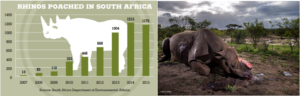
In 2015, the U.S. Agency for International Development (USAID) published a report on wildlife trafficking containing an assessment of the progress made since 2013, when President Obama created the Task Force on Wildlife Trafficking to create and implement a U.S. National Strategy for combating Wildlife Trafficking. At the workshop, Meredith L. Gore (MSU) and Lee R. Schwartz (DOS) shared some of the progress achieved with current strategies and challenges that still need to be addressed. The USAID assessment reports a decline in the elephant population of about 20% in the last decade and a decline in the rhinoceros population of about 5% in 2014 alone. One of their most successful operations so far, “Operation Crash,” led to the identification and prosecution of 30 individuals or businesses, which resulted in 20 convictions with sentences of up to 6 years and the seizure of 4.5 million U.S. dollars’ worth of illegal wildlife products. Although current strategies have helped, the progress is slow and insufficient in many cases. For example, since 2007 the poaching of rhinos declined for the first time in 2015, but only by about 3% from the year prior (see graph below). The 2017 Wildlife Photographer of the Year awarded by the National History Museum went to Brent Stirton, which he earned with a cheerless photograph of a poached Rhinoceros found in South Africa (see photograph below). This is the first year that the grand title prize goes to a photograph witnessing the suffering of wildlife rather than its beauty, which only hints at the magnitude of this problem.
One of the main objectives of the workshop was to deliberate a new strategy in which geospatially-enabled information can be leveraged to combat wildlife trafficking. Collecting geographic information and using GIS technology has proven effective in prior efforts. One of the guests, Drew Cronin, shared the effectiveness of the Spatial Monitoring and Reporting Tool (SMART), a free and open-source handheld GIS that allows rangers to collect and share geospatially-enabled data when they are in the field. SMART was developed thanks to a partnership between organizations that want to make conservation efforts more efficient. Using geospatial information collected in the field, hotspots of wildlife trafficking activity were mapped, allowing managers and governments to deploy rangers to target areas. Using this tool resulted in the apprehension and prosecution of 64 poachers in a reserve of the Democratic Republic of the Congo in 2014 alone and is now being used in several countries in Africa and Asia.
The workshop included many expert speakers and guests and discussions demonstrated some consensus on the development of a more comprehensive strategy to combat wildlife trafficking. More specifically, there was consensus on the value of collecting geospatially-enabled information and on the need to share these data between governments and organizations. Trust between governments and organizations is currently lacking however and sharing these sensitive data on the location of animals and/or individuals involved in illegal trafficking is risky. To that end, this new strategy will require stronger interdisciplinary and transnational collaborations and the development of a secure platform that facilitates the sharing of geospatially-enabled data.
This workshop was the first of a series of upcoming events around this topic. Future events include an Africa-based workshop in early 2018 to engage local stakeholders to refine and revise the strategy. If you are interested in receiving more information regarding these events, please contact Meredith L. Gore at gorem [at] msu [dot] edu.
Geographers Farhana Sultana and Tim Beach Lecture at Vatican Workshops
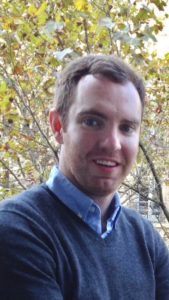
Tim Beach, Centennial Professor of Geography and Environment at UT Austin, presented an invited lecture on “Societal Collapses from the Maya to Mesopotamia and Beyond” at the Vatican in a workshop on Biological Extinction sponsored by the Pontifical Academy of Sciences and Pontifical Academy of Social Sciences. His talk included discussions of extinctions in soil ecology and used the lenses of soil and sediments to view and understand the complexity of cultural transitions from the Pleistocene to present, focusing on Maya history. The workshop, held Feb. 27-Mar. 1, 2017, included world leaders in multiple fields from around the world. Learn more.
Farhana Sultana, associate professor of geography at the Maxwell School, presented at “The Human Right to Water” workshop, also hosted by the Pontifical Academy of Sciences, in Vatican City on Feb. 23-24, 2017. She was one of the several international researchers, humanitarian workers, government officials and corporate leaders invited to present and debate issues about water insecurity and ongoing global efforts to ensure access to clean water. Learn more.
This month geographers from around the country and the world will gather in Boston for the AAG Annual Meeting. This should be a time of celebration for geographers. It is an occasion when we get together for exciting exchanges of ideas, reminisces with old friends and the chance to make new ones. In looking at the recent trajectory of our discipline and the AAG there is much to celebrate. However, it would be naïve to think that we do not also face some challenges. Some of these challenges are external, but some arise internally from the pressures created by the rapid growth and intellectual expansion of our discipline. Let’s take a look at all of this, and then consider some ideas on how at Boston we can derive maximum benefit and mitigate the challenges at hand.
The AAG continues to actively monitor and respond to key issues that have a clear impact on geography and our membership, as well as topics for which our discipline can serve as a valued stakeholder in shaping viewpoints and policy outcomes. Recent updates include:
The 2016 U.S. Elections: Implications for Geography and Beyond
This series of sessions will focus on analysis and research on the 2016 U.S. election, and what the results may mean for geography, the nation, and our planet.
This special track features the session, “The 2016 U.S. Elections: Implications for Geography and Beyond,” a high-profile panel session, chaired and organized by AAG President Glen M. MacDonald, with Sarah Witham Bednarz, Texas A&M University; Alexander B. Murphy, University of Oregon; Douglas Richardson, American Association of Geographers; Derek H. Alderman, University of Tennessee; Victoria A. Lawson, University of Washington; Julie Winkler, Michigan State University, among others. This special session will be held on Saturday, April 8, 2017, from 5:20 p.m. – 7:00 p.m. in Room 312 of the Hynes Convention Center in Boston.
On, Friday, April 7, from 1:20 p.m. – 3:00 p.m., panelists will address the specific issue of immigration in the session “Trump on Immigration Enforcement: the First 100 Days.” The panel will be up-to-date, research-based, and policy-informed, addressing questions on what immigration enforcement looks like in a Trump administration.
In addition to the ongoing communication and outreach needed among and within our geography community, there is also a need for increased and improved communication and outreach from our discipline to the greater public. Two featured sessions at the Annual Meeting will discuss this need and the ways in which geographers can contribute their voice to such efforts.
Rush Holt, chief executive officer of the American Association for the Advancement of Science (AAAS), will deliver a featured talk on “Advancing Science in the Public Arena,” on Thursday, April 6, from 11:50 a.m. – 1:10 p.m. in Room 103 of the Hynes Convention Center.
Mainstreaming Human Rights in Geography and the AAG
This special theme will feature 50 sessions with more than 250 presentations at the intersection of human rights and geography and will build on the AAG’s decade-long initiatives in this area. Speakers from leading international human rights organizations, academia, government, and NGOs will address human rights challenges around the world.
In the keynote plenary, “A Continuing Conversation with Noam Chomsky,” Noam Chomsky will engage in a conversational interview with AAG Executive Director Doug Richardson. The audience will also have an opportunity to ask questions following the interview. In addition, Chomsky will receive the 2017 AAG Atlas Award, the association’s highest honor. Be sure and add to your calendar this important keynote session scheduled for Thursday, April 6, 2017, from 5:20 p.m. – 7:00 p.m. in Ballroom B of the Hynes Convention Center.
Another high-profile Human Rights session, “International Human Rights Priorities: Featured Perspectives,” features panelists Terry Rockefeller, Board of Directors, Amnesty International USA; Michael Posner, NYU Stern Center for Business and Human Rights and former Assistant Secretary of State for the Bureau of Democracy, Human Rights and Labor at the State Department; Beth Simmons, Andrea Mitchell University Professor of Law and Political Science, University of Pennsylvania; Jessica Wyndham, AAAS Scientific Responsibility, Human Rights and Law Program; Tawanda Mutasah, Amnesty International and Douglas Richardson, Executive Director, American Association of Geographers. This session is scheduled on Saturday, April 8, 2017, from 1:20 p.m. – 3:00 p.m. in Room 103, on the Plaza level of the Hynes Convention Center.
Burgeoning global population along with increasing appetite for high-protein or resource demanding food choices may double demands on world agriculture by 2050. At the same time groundwater depletion and climate change are negatively impacting the availability of sufficient water to meet agricultural and domestic freshwater demands in many regions. Compounding these challenges are socioeconomic forces, including armed conflicts and state collapse that negatively affect agricultural productivity, food transference and water resources. The challenges to food and water security over the 21st century represent an increasing and potentially existential threat to global society. These issues are fundamentally geographical in nature and form a central research and educational focus of geography and the AAG special theme.
The AAGOpening Session and Presidential Plenary: Bread and Water in the 21st Century will anchor this featured theme. AAG Executive Director Doug Richardson will deliver welcoming remarks to open the meeting. Speakers in this plenary session will be AAGPresident Glen M. MacDonald (UCLA), Ruth DeFries (Columbia University) and Peter Gleick (Pacific Institute). Discussants will be Laura-Anne Minkoff-Zern (Syracuse University) and William G. Moseley (Macalaster College). This plenary session is on Wednesday, April 5, from 6:30 p.m. – 8:30 p.m. in Ballroom B of the Hynes Convention Center.
Uncertainty and Context in Geography and GIScience
Uncertainty and context pose fundamental challenges in geographic research and GIScience. Geospatial data are imbued with error (e.g., measurement and sampling error), and understanding of the effects of contextual influences on human behavior and experience are often obfuscated by various types of uncertainty (e.g., contextual uncertainties, algorithmic uncertainties, and uncertainty arising from different spatial scales and zonal schemes). To generate reliable geographic knowledge, these uncertainties and contextual issues will be addressed within the special theme.
The Opening plenary of the Uncertainty and Context theme features keynote presentations by Mei-Po Kwan (University of Illinois at Urbana-Champaign) and Michael Goodchild (University of California) on “New Developments and Perspectives on Context and Uncertainty.” David Berrigan (National Cancer Institute) will be a discussant. Tim Schwanen (University of Oxford) will chair the plenary. This plenary session is on Thursday, April 6, from 10:00 a.m. – 11:40 a.m. in the Independence West room at the Sheraton.
The Closing plenary features Tim Schwanen, University of Oxford; Wenzhong Shi, The Hong Kong Polytechnic University; Jamie Pearce, University of Edinburgh; and Daniel A. Griffith, U. of Texas at Dallas. This plenary session is on Saturday, April 8, from 11:50 a.m. – 1:10 a.m. in the Independence West room at the Sheraton.
This year, the AAG has launched a unique new initiative called the Emerging Workforce Scholars Program. The program allows aspirational high school and undergraduate students from underserved Boston-area communities to attend the Annual Meeting and interact with geography and geoscience professionals to learn about the work they perform and the preparation needed for careers in their field. The program builds on the AAG’s long-term commitment to enhancing diversity in geography and the geosciences and addressing equity and social justice issues. In support of this program, two special careers sessions will be featured, including Ms. Trinh Nguyen, Director of Boston Mayor Walsh’s Office of Workforce Development, and the Honorable Ronald L. Walker, II, Massachusetts Secretary of Labor and Workforce Development.
The AAG is planning several activities to foster increased participation in the March for Science by AAG members and to provide resources and assistance for geographers who are planning to be in Washington on April 22:
On the day of the March, the AAG Meridian Place office in Washington (1710 16th Street, N.W.) will remain open as a gathering place for geographers participating in the March. Coffee and refreshments will be available for marchers and the office will serve as a communication center for those taking part.
The AAG has designed special “Geographers March for Science” hats that will be available at the Annual Meeting in Boston for $7 at the AAG booth, Level 2, Hynes Convention Center; and, at the AAG office leading up to and during the March.
We have also produced large banners for groups of geographers participating in the March. AAG members will have an opportunity to sign these banners during the Annual Meeting at the AAG Communications Center (near registration).
On Wednesday, April 5, the AAG Council will hold a town hall meeting for members to learn more about the association and its activities. This meeting gives an opportunity to ask questions and to provide input. The meeting is from 12-1 p.m., in the Commonwealth Room, Level 3, at the Sheraton.
AAG Snapshots: Learn About the Many Programs, Projects, and Resources the AAG Has to Offer
There is much more the AAG has to offer beyond its annual meeting! Check out our new AAG Snapshots series at the 2017 Annual Meeting in Boston to learn about the many resources and opportunities available to you through the AAG. Throughout the week, AAG staff will be giving brief (5-10 minute) talks on different aspects of the projects, programs, and resources of the association, with website demonstrations showing how to access more information online. Topics range from making the most of student membership to AAG’s efforts regarding public policy. We encourage everyone to attend these casual presentations and interact with AAG staff, asking your questions and learning more about the association and membership.
Carry the AAG 2017 Annual Meeting Program in Your Pocket
Get the most from your AAG 2017 Boston experience with the mobile app. Enjoy an interactive experience on your Apple, Android, BlackBerry and other mobile devices during the annual meeting. If you’re a laptop user or have a Windows phone, there’s also a Web version for your devices.
Celebrate the International Encyclopedia of Geography in Boston
Join us in celebrating the official launch of the International Encyclopedia of Geography: People, the Earth, Environment, and Technologies during an AAG International Reception in Boston! This reception is an opportunity to see old friends and meet colleagues at the outset of the AAG Annual Meeting. There will be food, drinks, music, and interaction with IEG authors and editors. All attendees are invited to attend.
Boston’s cultural scene is vibrant in all seasons. From museums and performing arts to interactive festivals and outdoor concerts, Boston is abuzz with activities for cultural enthusiasts. If you love the classics, ensembles such as Handel & Haydn Society and the Boston Symphony Orchestra are reason enough to visit Boston. If you prefer a lighter, contemporary flair then the Boston Pops are your orchestra of choice. Boston’s heralded conservatories, including Boston Conservatory, New England Conservatory, and Berklee College of Music, also performance concerts every week throughout the year.
Family fun in Boston is around every corner. From the waterfront to the Fens, and across the river too, Boston is full of family-oriented attractions. We make history fun with tours of the Freedom Trail and interactive exhibits at the Boston Tea Party Ships & Museum and the USS Constitution Museum. Don’t worry about those little feet getting fatigued because everything in Boston is nearby. If you do need a rest hop aboard a Trolley Tour or Boston Duck Tour.
The AAG Wilbanks Award for Transformational Research in Geography
The AAG Wilbanks Award for Transformational Research in Geographyhas been established in memory of the late Dr. Thomas Wilbanks, a former AAG President and long-standing AAG member. The Wilbanks family has created this new award to honor researchers who have made significant contributions to Geography and GIScience. The family asks that donations be made to the AAG Wilbanks Award for Transformational Research in Geography at this link or by contacting Candida Mannozzi at cmannozzi [at] aag [dot] org or 202-234-1450.
AAG Accepting Registrations for Early Career and Department Leadership Workshops
The University of Tennessee will host two AAG-sponsored workshops in June designed for all geographers interested in 1) improving their programs and 2) graduate students and faculty who are beginning their careers in higher education.
Please consider nominating outstanding colleagues for the AAG Honors, the highest awards offered by the AAG! AAG Honors are offered annually to recognize outstanding accomplishments by members in research and scholarship, teaching, education, service to the discipline, public service outside academe, and for lifetime achievement. Individual AAG members, specialty groups, affinity groups, departments, and other interested parties are encouraged to nominate outstanding colleagues by June 30. Currently, honors are awarded in several categories, including: Distinguished Teaching Honors; Gilbert F. White Distinguished Public Service Honors; Ronald F. Abler Distinguished Service Honors; Gilbert Grosvenor Honors for Geographic Education; Distinguished Scholarship Honors; and Lifetime Achievement Honors. AAG Honors are selected annually by the AAG Honors Committee from a collection of nomination submissions.
The AAG is honored to announce it has launched AAG Fellows, a new program to recognize geographers who have made significant contributions to advancing geography. In addition to honoring geographers, AAG Fellows will serve the AAG as an august body to address key AAG initiatives including creating and contributing to AAG initiatives; advising on AAG strategic directions and grand challenges; and mentoring early and mid-career faculty. The deadline for nominations is June 30.
Request for Proposals: Transformative Research in Geography Education
The National Center for Research in Geography Education (NCRGE) invites proposals to develop new collaborative and interdisciplinary research networks addressing major questions and challenges in geography education. Through this program, NCRGE aspires to strengthen geography education research processes and promote the growth of sustainable, and potentially transformative, lines of research.
Call for Nominations: GeoCUR Undergraduate Research Mentor Award
The Geosciences Division of the Council on Undergraduate Research (GeoCUR) is now accepting nominations for its annual award that highlights the importance of mentoring undergraduate research activities. The award annually recognizes an individual who serves as a role model for productive and transformative student-faculty mentoring relationships and for maintaining a sustained and innovative approach to the enterprise of undergraduate research.
The International Encyclopedia of Geography is Here
The AAG and an international team of distinguished editors and authors announce a new major reference work for Geography: The International Encyclopedia of Geography: People, the Earth, Environment, and Technology. Available as an online resource and as a 15-volume full-color print set published by Wiley, this is an invaluable resource for libraries, geographers, GIScientists, students and academic departments around the globe. Updated annually, this Encyclopedia is the authoritative reference work in the field of geography for decades to come.
May 2017 Issue of ‘The Professional Geographer’ Now Available
The AAG is pleased to announce that Volume 69, Issue 2 (May 2017) of The Professional Geographer is now available. The focus of The Professional Geographer is on short articles in academic or applied geography, emphasizing empirical studies and methodologies. These features may range in content and approach from rigorously analytic to broadly philosophical or prescriptive. The journal provides a forum for new ideas and alternative viewpoints. Each issue, the Editor chooses one article to make freely available. In this issue you can read The Price of Journals in Geography by Oliver T. Coomes, Tim R. Moore, and Sébastien Breau for free for the next three months.
April 2017 Issue of the ‘African Geographical Review’ Now Available
The AAG is pleased to announce that Volume 36, Issue 1 (April 2017) of the African Geographical Review is now available. The African Geographical Review is the journal of the Africa Specialty Group of the American Association of Geographers. It provides a medium for the publication of geographical material relating to Africa, seeks to enhance the standing of African regional geography, and to promote a better representation of African scholarship. Articles cover all sub-fields of geography, and can be theoretical, empirical or applied in nature.
This month geographers from around the country and the world will gather in Boston for the AAG Annual Meeting. This should be a time of celebration for geographers. It is an occasion when we get together for exciting exchanges of ideas, reminisces with old friends and the chance to make new ones. In looking at the recent trajectory of our discipline and the AAG there is much to celebrate. However, it would be naïve to think that we do not also face some challenges. Some of these challenges are external, but some arise internally from the pressures created by the rapid growth and intellectual expansion of our discipline. Let’s take a look at all of this, and then consider some ideas on how at Boston we can derive maximum benefit and mitigate the challenges at hand.
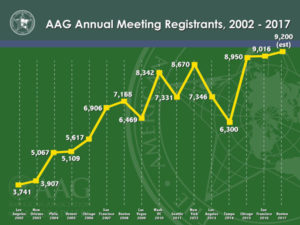
The AAG expects to host well over 9,000 registrants at the Boston meeting. This will be a record for the Association. The registrants come from countries around the world, including many from developing regions to whom the AAG offers special membership assistance. The size of the Boston meeting is not a singular fluke and should be viewed in the context of the remarkable growth of our annual meetings over the 21st century. Just 15 years ago our annual meetings had less than 4,000 attendees. Since that time there has been a strong, albeit sometimes noisy, increase in attendance.
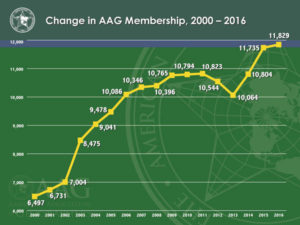
As one might expect, the rise in annual meeting attendees is matched by a similar increase in the Association’s membership. Since the early 2000s the Association membership has climbed from less than 7,000 members to almost 12,000. As impressive as it is, this figure does not begin to reflect the exciting growth in the breadth of the AAG membership. About a third of the membership is international, coming today from 96 countries. About 9 percent of the total membership is from developing regions and can take advantage of the AAG’s Developing Regions Program. This is a program I hope to see expanded in terms of benefits and numbers moving forward. It is also reassuring that about 42 percent of our members are students. They are the future of geography and the AAG. The recent addition of an official student representative to the Council affirms the commitment of the AAG to building that future.
The growth in AAG membership and meeting attendance has occurred hand-in-hand with an increase in what the Association and meetings offer in terms of scholarly and intellectual exchanges and stimulation. At present there are almost 70 AAG Specialty and Affinity Groups – with more being proposed as new areas of geographical scholarship arise. Today these groups range in interest from A (Africa) to W (Water Resources). The astounding breadth of modern geographical enquiry is manifest in the number of oral and poster sessions at the annual meeting. This year in Boston there will be almost 1,800 various sessions. I find this incredible. Surely there will be a plethora of sessions that will appeal to any geographer.
So, based on the accounting above one can conclude that the state of the AAG is good – and indeed continues to grow in terms of membership and the span of geographical scholarship. However, we still face some important challenges. In terms of external challenges, some of these take aim at our core values of open and free geographical research and dissemination of information and the free travel and association of our members. As I have written before, proposed Federal Legislation in the U.S. would curtail the collection, dissemination and study of geospatial data on racial disparities. This past year many academics and teachers in Turkey have been arbitrarily dismissed following the recent failed coup. Exactly how many geographers there have experienced this is unknown at this time.
The proposed U.S. travel ban on citizens from Iran, Iraq, Libya, Somalia, Sudan, Syria and Yemen excludes those members from travel to the United States and attendance of our Annual Meeting. It has been reported to the AAG that members from visa-waiver countries may be asked to obtain special visas to enter the U.S. because they have visited and conducted research in countries such as Iraq in recent years. In addition to these direct actions, the travel ban and the anti-Muslim and anti-immigrant rhetoric associated with the current Presidential Administration has made some AAG members unwilling for personal or political reasons to travel to the U.S. to attend the Annual Meeting. I have heard from many of you about your concerns in regards to the immigration situation and have been offered suggestions on what the AAG should or should not do policy-wise. I myself have friends, both Muslim and non-Muslim, who decided not to attend the Boston meeting.
I respect the views that members have shared and the decisions they have made. I also believe that we are strongest standing together to defend human and scholarly freedoms and rights – and that the AAG annual meeting provides a place where we can all come together to discuss these issues and chart courses of action. The Council and staff at the AAG are trying our best to rise to these external challenges at the Boston meeting and beyond.
To respond to the issues discussed above and to assist our members, the AAG has taken a number of specific actions. We have issued a new public statement condemning the revised travel ban. We have put in place mechanisms for those from countries named in the travel ban to participate by proxy or remotely at the Annual Meeting. We have collated online immigration information and sources of help for any of our attendees who encounter immigration issues. You can get information on all of this and more of the AAG actions on the AAG Policy Action page. Finally, through special sessions and other activities, the AAG has provided a chance for members to both learn about some of the policy-related challenges we face and to directly share your views and help guide our association. Two of these include “The 2016 U.S. Elections: Implications for Geography and Beyond” with discussions by past and present Presidents of the AAG and “Need for Public Intellectuals in a Trump America: Strategies for Communication, Engagement, and Advocacy,” organized by AAG Vice President Derek Alderman. Learn about all that is going on in this regard at the Boston meeting at our Boston Policy Actions page.
In addition to external challenges, the growth of our membership and our annual meetings raise their own internal challenges for the AAG. Geography and the AAG have become very large enterprises indeed, spread across a huge range of specialties and sub-disciplines. How might this impede our sense of identity as geographers, our sense of community, and the internal synergies that might develop in a smaller group? On a practical basis – our size and scope means that our annual meetings must include many concurrent sessions, making it difficult to “explore” areas of geography outside of one’s discipline. There seems to be precious few moments with all that is going on to sit and converse with other geographers – strengthening old collaborations and forging new ones. No single session, plenary or otherwise, can possibly bring all of us together in a room to hear about new breakthroughs or share thoughts on the future of the discipline and the AAG. Older members lament the loss of a more intimate meeting. With our meeting attendance at record levels, the large number of attendees and sessions that must be accommodated also means that there are a limited number of cities and convention centers that can host the Annual Meeting. In general the venue now has to be in larger and often more expensive cities. This means that some faculty and students find it hard to attend the meeting due to distance from potential venues or the costs of accommodation. As our Specialty and Affinity Groups have multiplied in response to the growing scope of the discipline of geography, our electronic communities also become more fragmented. Unless we actively work at maintaining some sense of an overall geography community we face the danger of becoming distant strangers to each other within our own discipline.
I have also learned as President that the sheer size of the Association and our Annual Meeting can foster a feeling of estrangement between some members and the Council and staff. The Council are elected from the membership and strive to do the best for the members and the sustainability of the Association. With almost 12,000 members it is hard to be cognizant of all the concerns or ideas for improvement that are circulating – and clearly impossible given the multifaceted diversity of our membership and their geographical interests to satisfy everyone all the time. The meeting should be a time for members, Council and staff to meet and both formally and informally share views. This interaction is difficult to easily accomplish during the rich and hectic schedule afforded by our Annual Meeting. In an effort to help with this situation, the Council will be holding a Town Hall early in the meeting (Wednesday, 4/5/2017, from 11:50 AM – 12:30 PM in Commonwealth, Sheraton, Third Floor). Come out and talk with us.
So, our successes in terms of membership and meeting attendance, and in building international and disciplinary diversity, puts its own pressures on the AAG and its members. I would not, however, want to see our membership shrink or retreat from the many horizons we are exploring. The days of geography as a numerically small or scholarly parochial discipline are behind us and not lamented. As I have argued, geography and geographers have a very important role to play in the world today both within and outside the academy.
How then do we counteract the centrifugal and entropic forces we face? I suppose the real solution starts with each and every one of us working to be the matrix that builds and maintains the critical mass we need to grow and illuminate even more brightly the nova that geography is creating in the 21st century. That means at its foundational level individually taking the time at the meeting and elsewhere to get to know the wide diversity of geography and geographers that comprise the AAG.
How about we all agree to attend one or two talks outside our sub-discipline? Attend some of the plenaries, major sessions and guest presentations and add your voice to the discussion during the Q/A. Come to meet the Council members at the registration area where we will be on duty throughout the meeting to hear your views and answer your questions individually. Why not put the smartphone down for a moment during lulls in the program and introduce yourself to the geographer sitting next to you and ask who they are, where they are from and what interests them? How about this year we all try to use the Annual Meeting not just to augment our knowledge about our own area of interest, but strive to enrich ourselves and others by learning more about the wider discipline and the geographers working in those other areas. Yes, there will be 9,000 people attending the Boston meeting, a daunting number, but let’s look at this as 9,000 opportunities to become and create more informed geographers and build a stronger and more cohesive discipline. The building of a better geography and AAG needs your voice, your ideas and your engagement with each other. Get out there and introduce yourself!
Every month the AAG compiles a list of newly-published books in geography and related areas. Some are selected for review in the AAG Review of Books.
Publishers are welcome to send new volumes to the Editor-in-Chief (Kent Mathewson, Editor-in-Chief, AAG Review of Books, Department of Geography and Anthropology, Louisiana State University, Baton Rouge, LA 70803).
Anyone interested in reviewing these or other titles should also contact the Editor-in-Chief.
PLEASE NOTE: Due to current public health policies which have prompted the closing of most offices, we are unable to access incoming books at this time. We are working on a solution during this transition and will continue our new books processing as soon as we can. In the meantime, please feel free to peruse previous books from our archived lists.
Ray Henkel was born Jan. 28, 1931 on a farm along the Cimarron River about 30 miles west of Tulsa. He died March 11, 2017, at age 86. Ray attended a one-room elementary school, and in 1948 graduated from Kellyville H. S. in a class of 15, earning an A in every class. Ray had a photographic memory, so school work was always easy for him.
Immediately after H.S. graduation in 1948, Ray and his family moved to Arizona to pick cotton. For the next two years, his family followed other laborers, mostly Hispanics, into California and the Northwest to pick fruit, potatoes, vegetables and the like. It was at this time that Ray learned to speak Spanish. Since the family was driving old cars, it was also at this time that he became an excellent mechanic, and for the rest of his life he worked on cars, doing both small and major projects.
He was drafted into the Army in 1950. After basic training, he was sent to the Officer Training School for the Army Corps of Engineers at Ft. Belvoir, VA. There were 21 students in his class, and he was the only one without a college degree or any engineer training, but he graduated 2nd in the class. Upon completion of the course he was commissioned an officer in the Corps of Engineers. He was assigned to Korea, and his unit, the 811th Engineer Battalion, was attached to the 5th Air Force, and he quickly became commander of “A” Company. Ray spent time in Korea and Thailand, mostly locating and building airfields and revetments, and building radar stations on islands off the coast of North Korea. As well, Ray was assigned as the Army Intelligence Officer for his battalion, and solved several major cases (only one remained unsolved). He left the military in 1952 with the rank of Captain.
Ray returned to Arizona to work on cotton farms. With his engineering and organizational skills, he quickly became manager of a large vegetable farm. He earned “very good money,” but eventually decided to attend Arizona State College, starting out part-time. He graduated in 1960 (by then it was ASU) as a geography major, with all “As” except for one “B” (in a class where no one received an “A”).
Ray went to the University of Wisconsin where he completed an M.A. and a Ph.D. Both degrees were in geography, but he had extensive work in agricultural economics, which greatly helped in his later work, and where most of his interests lay. His dissertation was done in Bolivia on the Amazon side of the Andes, at a time in the mid-1960s when coca production was just beginning. His work was funded by the National Science Foundation, and the title of this work was “The Chapare of Bolivia: A Study of Tropical Agriculture in Transition” (1971). This was the beginning of a lifetime of work on the subject of coca and cocaine, and the tropics in general. He often described many “close calls” with government troops and violent narcotics producers. It was dangerous work, but he developed contacts with the two sides, and luckily managed to survive. He had many stories and slides, and he used both with great effectiveness in classes.
Ray taught at ASU from 1966 to 1995. He took a leave to teach 2 years in the early 1970s at the U. of Zambia (to help establish their Geography Department), and one year at New Mexico State. Ray published on all aspects of coca and cocaine. However, all of these publications were in classified government documents without his name on them–as he once explained “I don’t want a bullseye on my back.” The only publication on cocaine with his name on it was with two co-authors on the use of climate for determining cocaine production (Nature Vol. 361, p. 25). For many years, during summer months, he worked for various agencies in Latin America on cocaine and varied problems in the tropics (for example, once on road building, where his engineering background came in handy). He traveled in both high society in cities, and among the poor in the jungles of the Amazon. He was considered the leading expert on all aspects of cocaine (the growing, processing, transport and distribution), and often was flown to Washington, D.C. for conferences, policy meetings, and for consultations. All of his work would be considered in the broad area of “applied geography.”
On first meeting him, many underestimated Ray. He was an “Oakie,” who spoke, dressed, and acted the part. But not only was he very intelligent, he was exceedingly observant, and quickly able to understand and make connections as to what he was seeing. He was also–academically and intellectually–a very organized person, and with this trait, he helped many graduate students organize and conceptualize theses and dissertations. He was a humble and quiet person, who never wanted to “stand out” in a crowd. He grew up in a very impoverished family, where everything was always shared, and that background influenced him the rest of his life.
Dr. Henkel contributed to geographic education at Arizona State University in many ways. He had a true commitment to students. He was a very compassionate person, who was willing to help any student who wandered into his office. Ray was always positive, never judgmental, and never had a bad word to say about anyone. He guided 26 MA theses during his career, but he helped many other students at all levels of academic work. He was also an excellent and very popular teacher. His classes were always educational and entertaining, and students flocked to them. He also taught many televised classes that were viewed by many in the community who were not even enrolled. Ray was involved with the geography honor society (GTU) from the time he returned to ASU to a year or two after he retired. He organized and led many field trips, held parties and gatherings, and organized an annual picnic that has since evolved into the unit’s annual banquet. He was liked and respected by all, and will be greatly missed.
Ray is survived by three brothers and numerous nieces and nephews.
AAG Members get exclusive access to publications, prominent journals, unique advocacy, grant, scholarship and professional opportunities with access to industry focus communities, and event discounts, including our annual meeting.
Some content may only be accessible if you belong to specific Specialty or Affinity Groups. You can still update your membership below. You will need to go through the Join flow, but you do not need to repurchase your membership unless it is expired or about to expire.
To provide the best experiences, we use technologies like cookies to store and/or access device information. Consenting to these technologies will allow us to process data such as browsing behavior or unique IDs on this site. Not consenting or withdrawing consent, may adversely affect certain features and functions.
Functional
Always active
The technical storage or access is strictly necessary for the legitimate purpose of enabling the use of a specific service explicitly requested by the subscriber or user, or for the sole purpose of carrying out the transmission of a communication over an electronic communications network.
Preferences
The technical storage or access is necessary for the legitimate purpose of storing preferences that are not requested by the subscriber or user.
Statistics
The technical storage or access that is used exclusively for statistical purposes.The technical storage or access that is used exclusively for anonymous statistical purposes. Without a subpoena, voluntary compliance on the part of your Internet Service Provider, or additional records from a third party, information stored or retrieved for this purpose alone cannot usually be used to identify you.
Marketing
The technical storage or access is required to create user profiles to send advertising, or to track the user on a website or across several websites for similar marketing purposes.
To provide the best experiences, we use technologies like cookies to store and/or access device information. Consenting to these technologies will allow us to process data such as browsing behavior or unique IDs on this site. Not consenting or withdrawing consent, may adversely affect certain features and functions.
Functional
Always active
The technical storage or access is strictly necessary for the legitimate purpose of enabling the use of a specific service explicitly requested by the subscriber or user, or for the sole purpose of carrying out the transmission of a communication over an electronic communications network.
Preferences
The technical storage or access is necessary for the legitimate purpose of storing preferences that are not requested by the subscriber or user.
Statistics
The technical storage or access that is used exclusively for statistical purposes.The technical storage or access that is used exclusively for anonymous statistical purposes. Without a subpoena, voluntary compliance on the part of your Internet Service Provider, or additional records from a third party, information stored or retrieved for this purpose alone cannot usually be used to identify you.
Marketing
The technical storage or access is required to create user profiles to send advertising, or to track the user on a website or across several websites for similar marketing purposes.


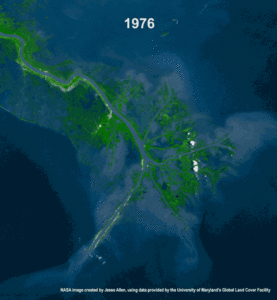 The coastline formed by the Mississippi River is changing continually as part of the never-ending interplay between the forces and processes reshaping and realigning coastal contours and bathymetry. Over millennia, this formative process created Louisiana’s expansive wetlands that once encompassed 7.3 million acres (11,500 square miles) – about the size of Connecticut and Delaware combined – and accounted for at least 40 percent of the nation’s marsh/swamp ecosystems. This natural land-building process, however, has been disrupted by human activities in recent decades—with catastrophic results. Deprived of essential sediments, Louisiana’s coastal wetlands are subsiding and eroding at an alarming pace that casts into doubt humanity’s ability to inhabit and exploit one of the planet’s most economically productive regions.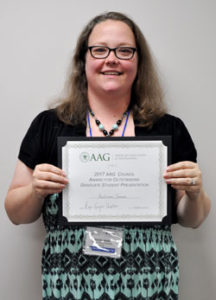

 Tim Beach, Centennial Professor of Geography and Environment at UT Austin, presented an invited lecture on “Societal Collapses from the Maya to Mesopotamia and Beyond” at the Vatican in a workshop on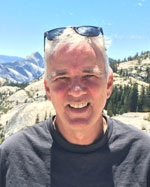
 The 2016 U.S. Elections: Implications for Geography and Beyond
 This special theme will feature 50 sessions with more than 250 presentations at the intersection of human rights and geography and will build on the AAG’s decade-long initiatives in this area. Speakers from leading international human rights organizations, academia, government, and NGOs will address human rights challenges around the world.
 Geographies of Bread and Water
 The AAG is planning several activities to foster increased participation in the March for Science by AAG members and to provide resources and assistance for geographers who are planning to be in Washington on April 22:
 On Wednesday, April 5, the AAG Council will hold a town hall meeting for members to learn more about the association and its activities. This meeting gives an opportunity to ask questions and to provide input. The meeting is from 12-1 p.m., in the Commonwealth Room, Level 3, at the Sheraton.
 There is much more the
 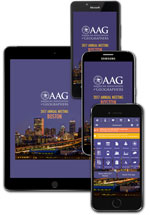 Get the most from your AAG 2017 Boston experience with the mobile app. Enjoy an interactive experience on your Apple, Android, BlackBerry and other mobile devices during the annual meeting. If you’re a laptop user or have a Windows phone, there’s also a Web version for your devices.
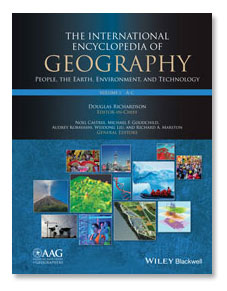 Join us in celebrating the official launch of the International Encyclopedia of Geography: People, the Earth, Environment, and Technologies during an AAG International Reception in Boston! This
 The AAG Wilbanks Award for Transformational Research in Geography
 The National Center for Research in Geography Education (NCRGE) invites proposals to develop new collaborative and interdisciplinary research networks addressing major questions and challenges in geography education. Through this program, NCRGE aspires to strengthen geography education research processes and promote the growth of sustainable, and potentially transformative, lines of research.
 The Geosciences Division of the Council on Undergraduate Research (GeoCUR) is now accepting nominations for its annual award that highlights the importance of mentoring undergraduate research activities. The award annually recognizes an individual who serves as a role model for productive and transformative student-faculty mentoring relationships and for maintaining a sustained and innovative approach to the enterprise of undergraduate research.
 The AAG is pleased to announce that Volume 69, Issue 2 (May 2017) of The Professional Geographer is now available. The focus of The Professional Geographer is on short articles in academic or applied geography, emphasizing empirical studies and methodologies. These features may range in content and approach from rigorously analytic to broadly philosophical or prescriptive. The journal provides a forum for new ideas and alternative viewpoints. Each issue, the Editor chooses one article to make freely available. In this issue you can read The Price of Journals in Geography by Oliver T. Coomes, Tim R. Moore, and Sébastien Breau for free for the next three months.
 The AAG is pleased to announce that Volume 36, Issue 1 (April 2017) of the African Geographical Review is now available. The African Geographical Review is the journal of the Africa Specialty Group of the American Association of Geographers. It provides a medium for the publication of geographical material relating to Africa, seeks to enhance the standing of African regional geography, and to promote a better representation of African scholarship. Articles cover all sub-fields of geography, and can be theoretical, empirical or applied in nature.
 This month geographers from around the country and the world will gather in Boston for the AAG Annual Meeting. This should be a time of celebration for geographers. It is an occasion when we get together for exciting exchanges of ideas, reminisces with old friends and the chance to make new ones. In looking at the recent trajectory of our discipline and the AAG there is much to celebrate. However, it would be naïve to think that we do not also face some challenges. Some of these challenges are external, but some arise internally from the pressures created by the rapid growth and intellectual expansion of our discipline. Let’s take a look at all of this, and then consider some ideas on how at Boston we can derive maximum benefit and mitigate the challenges at hand.
 The AAG expects to host well over 9,000 registrants at the Boston meeting. This will be a record for the Association. The registrants come from countries around the world, including many from developing regions to whom the AAG offers special membership assistance. The size of the Boston meeting is not a singular fluke and should be viewed in the context of the remarkable growth of our annual meetings over the 21st century. Just 15 years ago our annual meetings had less than 4,000 attendees. Since that time there has been a strong, albeit sometimes noisy, increase in attendance.
 The growth in AAG membership and meeting attendance has occurred hand-in-hand with an increase in what the Association and meetings offer in terms of scholarly and intellectual exchanges and stimulation. At present there are almost 70 AAG Specialty and Affinity Groups – with more being proposed as new areas of geographical scholarship arise. Today these groups range in interest from A (Africa) to W (Water Resources). The astounding breadth of modern geographical enquiry is manifest in the number of oral and poster sessions at the annual meeting. This year in Boston there will be almost 1,800 various sessions. I find this incredible. Surely there will be a plethora of sessions that will appeal to any geographer.