Melinda Meade was born in 1945 in New York City and grew up and went to school and college on Long Island. She was valedictorian of her Hicksville High School (1963) and Hofstra University (1966) classes. Melinda planned to teach history, but then changed her life by volunteering for the Peace Corps instead of going to graduate school in history. She taught English for two years in a small town in northeastern Thailand, six hours by elephant from the railhead in the provincial capital. As Melinda put it, the village did not want a male volunteer, and there was concern about sending a young woman into the jungle of Thailand in the 1960s, but the Peace Corps knew Melinda could do the job. In Thailand she discovered the complexities of development and learned to view the world through the lived experiences of another culture. She also made lifelong friends, one of her dearest friends, Phoungphet Meesawat, was her assistant in the village. Melinda and Phoungphet visited one another several times in Thailand and the States, remaining in close contact over the decades first via letters and then via email.
Following the Peace Corps, Melinda went to graduate school, first at Michigan State University (MA 1970) and then at the East-West Center at the University of Hawaii (PhD 1974). She chose geography, a field to which she would dedicate her life; geography allowed her to combine her interests in Asia, population change, and health promotion and disease ecology. Her dissertation research involved two years of fieldwork on land development/population resettlement schemes in Malaysia, which explored the dimensions of population movement and how such movement affected disease ecologies. This was Dr. Meade’s constant interest, how people move through environments and thus move through disease ecologies. Returning from field work in Malaysia, she took a tramp steamer up through Japan. Her academic career spanned departments of geography at the University of California at Los Angeles, the University of Georgia, and finally the University of North Carolina at Chapel Hill (UNC) from 1976 until her retirement in 2010. She studied topics as diverse as the eradication of malaria in the United States, the enigma of cardiovascular disease and stroke in the coastal plain of the southeast as expressed in the city of Savannah, Georgia, and the implications of the growth of megacities and the globalization of population movement for the diffusion of diseases and the emergence of a different state of disease and health ecology in the urban population of the future. Melinda was a trailblazer for women academics. She traveled widely and conducted international research in a time when most young women simply didn’t. Melinda was an active member of the generation that shattered ill-conceived beliefs and expectations about a woman’s place in academia. Her hard work and sacrifice made it possible for generations of young women to have fulfilling and successful academic careers.
Professor Meade taught courses from first year undergraduate to doctoral levels on issues of changing population dynamics and structure, agricultural modernization, urbanization, and globalization in the developing world; on population geography, medical geography, disease ecology, the world’s food supply; and on Tropical Asia. She excited students with discussions of mobility and exposure and why both people and places are important for human health. She spoke of the day in 1974 when the world’s population reached 4 billion, and how there was fear about rampant famine due to overpopulation, but how Esther Boserup’s predictions of necessity producing innovation and Norman Borlaug’s Green Revolution averted those dire forecasts. Dr. Meade won the Spencer and Tanner Award for excellence in inspirational undergraduate teaching from UNC, and was inducted into the UNC Academy of Distinguished Teaching Scholars in 2000. Melinda is best known, particularly to undergraduates, as the author of the definitive textbook in the field of medical geography. Working with a succession of co-authors, she has opened the world of population and health to students far beyond the walls of UNC.
Over her many years as the departmental population and medical geographer, Melinda oversaw the training of 4 MA and 7 PhD students. She also informally mentored many other students, particularly women scholars. Melinda was a well-respected and well-loved mentor. Her intellect and compassion were always on hand when working through research or contemplating life as a graduate student. She gave unselfishly of her time to her graduate students and approached student research with an enthusiasm and excitement that was contagious. She encouraged people to think deeply and to strive not just to “do research” on a population, but to truly understand and appreciate the different ways in which diverse populations live their lives. Melinda engaged her students in scholarly dialogue which demanded a maturity of thinking which naturally led to intellectual development. She read voraciously and widely. She was also stubborn and brutally honest. Her academic legacy is a far reaching network of scholars who focus on people and places and health outcomes.
She loved gardening, growing fabulously beautiful roses, and her dogs, including Jenny, who misses Melinda very much. A beautiful video tribute to Melinda’s life entitled “ATLAS HANDS” can be watched at swraex.wistia.com/medias/plaluvak07.
Every month the AAG compiles a list of newly-published books in geography and related areas. Some are selected for review in the AAG Review of Books.
Publishers are welcome to send new volumes to the Editor-in-Chief (Kent Mathewson, Editor-in-Chief, AAG Review of Books, Department of Geography and Anthropology, Louisiana State University, Baton Rouge, LA 70803).
Anyone interested in reviewing these or other titles should also contact the Editor-in-Chief.
Documents of Life Revisited: Narrative and Biographical Methodology for a 21st Century Critical Humanism by Stanley, Liz, ed (Ashgate 2013, http://www.ashgate.com/isbn/9781409442899).
The Ecology of the Barí: Rainforest Horticulturalists of South America by Beckerman, Stephen, and Roberto Lizarralde (University of Texas Press 2013, http://utpress.utexas.edu/index.php/books/bececo).
Empire De/Centered: New Spatial Histories of Russia and the Soviet Union by Turoma, Sanna and Maxim Waldstein, eds (Ashgate 2013, http://www.ashgate.com/isbn/9781409447863).
The Food and Feasts of Jesus: The Original Mediterranean Diet, with Menus and Recipes by Neel, Douglas E. and Joe A. Pugh (Rowman and Littlefield 2013, https://rowman.com/ISBN/9781442212916).
The Garage: Automobility and Building Innovation in America’s Early Auto Age by Jakle, John A., and Keith A. Sculle (University of Tennessee Press 2013, http://utpress.org/bookdetail-2/?jobno=T01688).
Population Geography: Problems, Concepts, and Prospects by Peters, Gary L., Robert P Larkin, Karen Johnson-Webb, Kefa M Otiso (Kendall Hunt Publishing Company 2013, http://www.kendallhunt.com/peters-larkin/).
Subterranean Struggles: New Dynamics of Mining, Oil, and Gas in Latin America by Bebbington, Anthony, and Jeffrey Bury, eds (University of Texas Press 2013, http://utpress.utexas.edu/index.php/books/beesub).
Steven R. Kale, 65, died November 7, 2013, in his hometown of Salem, Oregon, following a brief illness. Kale achieved much in his life in academics, his profession, and in relationships with others in his life.
Kale, the middle of three children, was born in Manhattan, Kansas, in 1948 to Alton and Ruby Kale. His early years were spent in central Kansas where he and his older brother James became Eagle Scouts. After graduating from Mankato High School in 1966, Kale matriculated at Kansas State University. He earned degrees in Geography and Business Administration. Later, he obtained a master’s degree and doctorate from the University of Nebraska in Lincoln.
In 1975, Steve started his career as an economist at the Nebraska Department of Economic Development. From 1982 to 1989, Kale taught courses and conducted research in economic development, area and community development, renewable energy, and other topics at Oregon State University in Corvallis.
Kale left the University in 1989 to take on transportation work at the Oregon Department of Transportation. He remained at ODOT for 16 years and retired as the agency’s primary freight planning person. However, Steve continued to work, setting up his own consulting firm and taking on jobs for several Oregon ports and intermodal freight businesses to help them plan seed funding for projects. He also subcontracted with other consulting firms on a variety of transportation related projects.
Steve was an active member of many professional organization and national bodies, including the American Institute of Certified Planners and the Intermodal Freight Transport Committee of the Transportation Research Board where he served as the chair. Kale was also active in the Association of American Geographers and the International Geographic Union. His enthusiasm for geography and interest in his alma mater kept him involved on the KSU Geography Alumni Board.
Kale’s lifelong interest in far-away places took him to Oulu, Finland; Mendoza, Argentina; Sidney, Australia; Dubrovnik, Croatia; and much of Europe. He also managed to visit all 50 U.S. states. Steve’s travels also took him to the Arctic Circle twice: once in Alaska and another time in Finland.
A lover of the outdoors, Kale was also interested in hiking, camping, skiing, canoeing, whitewater rafting, and bird watching. He was an ardent supporter of environmental protection and cultivated lifelong friendships with many people. Steve’s personal and professional qualities were very much respected. He will be dearly missed.
Steve was preceded in death by his mother Ruby (Streit), father Alton Dale Kale, his sister Elaine and brother James. He is survived by three nephews: Jonathan Cote, David Kale, and Dan Kale.
A great deal of excellent research is conducted by physical geographers. Unfortunately, only a small portion of this research is published in the two AAG journals, the Annals of the Association of American Geographers and The Professional Geographer. As you peruse your November issue of the Annals, you may notice that, for the first time in a number of years, this issue does not include an Environmental Sciences (ES) section. The small number of submissions to this section, in conjunction with the recent increase in the number of Annals issues per year, has made it more difficult to regularly populate an ES section in spite of extensive efforts by the current ES editor to recruit manuscripts. The submission rate of physical geography manuscripts is in sharp contrast to the overall substantial increase in manuscripts submitted to the Annals and The Professional Geographer, but is consistent with trends observed for journals published by other geographical scholarly societies. Few articles by physical geographers appear in the Transactions of the British Geographical Society, for example.
Why do physical geographers publish less in the AAG journals compared to other subfields of geography? Like any author, physical geographers want their research to reach the largest possible audience. They also want their work to reach the audience that can best make use of, and build upon, their research. The perception of many physical geographers is that these goals may not be achieved by publishing in the AAG journals. My own experience is in line with this perception. Over my career, I have published a modest number of physical geography-related articles in the Annals and TheProfessional Geographer. For the most part, these articles have been cited by fellow “geographer climatologists.” This, of course, is a community whom I respect, and I am honored that they read my work. But at the same time, I would have liked a broader readership for these articles. Other physical geographers apparently feel similarly, as recent surveys, such as that of Steven Quiring* from Texas A&M University, suggest a decline in the proportion of physical geography articles published in geography journals. Quiring found that in 1989-1997 geographer climatologists published 21% of their articles in geography journals, but by 1998-2005 the proportion had dropped to only 11%.
Another confounding factor is that physical geographers are frequently involved in multi-disciplinary research, and the selection of a journal for publication is often a group decision. Journals with names like Annals of the Association of American Geographers or The Professional Geographer can be seen as overly discipline-specific to non-geographers on a research team. More often, interdisciplinary research is submitted to journals serving a broad range of disciplines or to disciplinary journals with exceptionally large readerships. Greater use of quantitative indices to evaluate research success may also be contributing to the relatively small number of submissions by physical geographers to AAG journals. A decade or more ago, quantification of individual productivity was mostly limited to the number of articles published per year, but now H-factors, total number of citations, and related measures are also used to evaluate research productivity and impact. Since physical geographers often compete for resources and recognition with other physical scientists, they are compelled to publish in journals with similar impact factors as the publication outlets of their non-geography colleagues.
What impact does the limited publication by physical geographers in the Annals and The Professional Geography have on the AAG and, more generally, the discipline of geography? In my opinion, the potential consequences are large. We argue that a major strength of our discipline is its integrative nature and the ability of geographers to think and work across the human/physical divide. Yet how strongly can we make this argument if our major journals include little physical geography? What impression do these journals give others of the breadth of geography and its synergies? Also, how is a geography community built, if a major component of the discipline is not publishing in geography journals, and, consequently, other geographers are largely unaware of their work? And if physical geographers no longer turn to the AAG as a publication outlet, will they continue to participate in and support other aspects of the AAG, such as its professional meetings?
The concerns raised above are not new. Nor do they apply only to physical geography. But the lack of an ES section in next month’s Annals reinforces the need for new efforts to ensure the visibility of physical geography within the geography community and beyond.
An essential initial step is for individual physical geographers — including me — to acknowledge the importance of a physical geography presence in AAG journals to the discipline as a whole. A modest commitment, of perhaps one manuscript submission every three to four years over the course of one’s publishing career, would go a long way to increasing physical geography’s presence in the Annals and The Professional Geographer. Physical geographers also need to reconsider what constitutes an “Annals article.” Many of us wait to submit to the Annals until we have that special manuscript we think appeals broadly across much of geography or can be written in a manner that is easily understandable across multiple subfields. We need to keep in mind that scientifically-sound manuscripts that move a subfield of geography forward also merit review and potential publication in the Annals. Greater publicity of AAG journals to other disciplines is also needed. Strategically-distributed press releases of particularly significant papers, whatever the subfield, can attract readership. Additional options include the wide distribution of the table of contents of the Annals and The Professional Geographer via relevant listservs and other media to reach a broader audience.
But “out of the box” approaches also need to be considered. One such option is for the AAG to add new journals to its publications suite — journals that have the AAG imprimatur, yet appeal to a wide range of disciplines and have broad visibility. Such a journal, tentatively titled Geohumanities, is already under consideration by the AAG Council and Central Office, and, at its last meeting, the AAG Council initiated discussion of a second journal geared toward environmental science, referred to, for discussion only at this point, as Geographical Perspectives on Global Change. Both journals would have as their goal the publication of quality research by geographers and non-geographers that advances geographic understanding and/or employs geographic methods and techniques.
How might a new AAG-sponsored global change/environmental science journal enhance the visibility of physical geography research? A thematic, rather than disciplinary, journal title would hopefully attract a broad readership across multiple disciplines. A broad readership, in turn, would make this journal an attractive outlet for physical geographers and other environmental scientists to publish their research. Also, a more thematic journal would be appealing as a publication outlet for the outcomes of interdisciplinary research efforts. If well supported by physical geographers, all geographers could easily turn to this journal to keep abreast of new developments in physical geography. In addition, the AAG could more aggressively market a journal devoted to global change/environmental science to other disciplines, especially those in the natural sciences, than what is currently possible when only a small number of articles related to environmental science are published in the Annals and The Physical Geographer. Wider marketing would bring more attention to the entire AAG journal suite, benefiting our current journals, as well as the proposed new journal. Furthermore, the AAG imprimatur on a successful global change/environmental science journal that is highly regarded across multiple disciplines would bring more visibility to geography’s contribution to these areas, a benefit for the entire discipline.
Obviously, further effort is needed to assure such a journal’s success. We need to explore and identify a niche(s) that an AAG-sponsored global change/environmental science journal could best fill, and selection of a journal title requires careful attention. A visionary, well respected, and dedicated editor, along with a world-class editorial board drawn from multiple disciplines, are essential to the journal’s success. An intense and extensive publicity campaign is also essential. Admittedly, initiating a new journal, especially at a time when the publication industry is undergoing substantial change, has some risk. But so, too, does having a major portion of our discipline not publishing in AAG journals.
I look forward to hearing your thoughts on a new journal, specifically, and on physical geography, more broadly. Also, we will have a moderated discussion on how the AAG can better support physical geography at our annual meeting in Tampa. I invite you to participate. This session is tentatively scheduled for 11:45 a.m. – 12:40 p.m., Thursday, April 10, 2014. More information will be posted on the AAG website and distributed electronically via the AAG Geogram.
* For more information on the survey conducted by Steven Quiring see “Trends in Publication Outlets of Geographer-Climatologists,” The Professional Geographer, Volume 59, Issue 3, pages 357–364, August 2007. DOI: 10.1111/j.1467-9272.2007.00618.x Members can log in to see this article.
Share
New Books for Geographers
New Books: October 2013
Every month the AAG compiles a list of newly-published books in geography and related areas. Some are selected for review in the AAG Review of Books.
Publishers are welcome to send new volumes to the Editor-in-Chief (Kent Mathewson, Editor-in-Chief, AAG Review of Books, Department of Geography and Anthropology, Louisiana State University, Baton Rouge, LA 70803).
Anyone interested in reviewing these or other titles should also contact the Editor-in-Chief.
Documents of Life Revisited: Narrative and Biographical Methodology for a 21st Century Critical Humanism by Stanley, Liz, ed (Ashgate 2013, http://www.ashgate.com/isbn/9781409442899).
The Ecology of the Barí: Rainforest Horticulturalists of South America by Beckerman, Stephen, and Roberto Lizarralde (University of Texas Press 2013, http://utpress.utexas.edu/index.php/books/bececo).
Empire De/Centered: New Spatial Histories of Russia and the Soviet Union by Turoma, Sanna and Maxim Waldstein, eds (Ashgate 2013, http://www.ashgate.com/isbn/9781409447863).
The Food and Feasts of Jesus: The Original Mediterranean Diet, with Menus and Recipes by Neel, Douglas E. and Joe A. Pugh (Rowman and Littlefield 2013, https://rowman.com/ISBN/9781442212916).
The Garage: Automobility and Building Innovation in America’s Early Auto Age by Jakle, John A., and Keith A. Sculle (University of Tennessee Press 2013, http://utpress.org/bookdetail-2/?jobno=T01688).
Population Geography: Problems, Concepts, and Prospects by Peters, Gary L., Robert P Larkin, Karen Johnson-Webb, Kefa M Otiso (Kendall Hunt Publishing Company 2013, http://www.kendallhunt.com/peters-larkin/).
Subterranean Struggles: New Dynamics of Mining, Oil, and Gas in Latin America by Bebbington, Anthony, and Jeffrey Bury, eds (University of Texas Press 2013, http://utpress.utexas.edu/index.php/books/beesub).
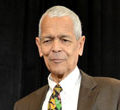
The Association of American Geographers (AAG) is pleased to announce that Julian Bond, a renowned civil rights pioneer and political leader, has been named the third recipient of the AAG Atlas Award. Professor Bond will receive the award at the AAG’s next Annual Meeting in Tampa, Florida on Friday evening, April 11, 2014, where he will deliver a presentation on “Race Around the World,” focusing on how civil rights figures and organizations have shaped and changed American foreign policy. More than 8,000 geographers and others from around the world, including the media, are expected to attend the AAG meeting.
Julian Bond
Bond
Bond is the son of former college and university president Horace Mann Bond, and he has built his own record as a celebrated educator, having held appointments at several leading institutions, including American, Harvard, and the University of Virginia. He has been awarded more than 20 honorary degrees throughout his career.Julian Bond has played a central role throughout the U.S. Civil Rights Movement, as a leading figure in the Student Nonviolent Coordinating Committee and as co-founder and first president of the Southern Poverty Law Center. Bond was repeatedly elected to the Georgia General Assembly for 20 years, including six terms as a state senator. More recently, he has served as Chairman of the NAACP for 12 years, from 1998 to 2010.
Julian Bond embodies the ideals and goals of the AAG Atlas Award, which is designed to recognize and celebrate outstanding accomplishments that advance world understanding in exceptional ways. The image of Atlas bearing the weight of the world on his shoulders is a powerful metaphor for this award program, as the AAG’s awardees are those who have taken the weight of the world on their shoulders and moved it forward, whether in science, politics, scholarship, the arts, or in war and peace. In addition to a substantial cash prize, an Atlas statuette will be presented to Professor Bond as a compelling keepsake and an inspiring symbol for the award program itself. Author and scientist Jane Goodall and human rights leader Mary Robinson are the previous recipients of the AAG Atlas Award.
We invite you to join Professor Julian Bond and the AAG in Tampa to celebrate his extraordinary accomplishments and to discuss with him and others from around the world the future of civil rights and social justice. To register for the meeting, please visit www.aag.org/annualmeeting.
About the Association of American Geographers
The AAG is a scholarly and professional association representing leading researchers, educators, and practitioners in geography. Founded in 1904, its 10,000 members share interests in the theory, methods, and practice of geography, and its role in helping to create a better world. Visit www.aag.org for more information.
Share
Annual Meeting
While you are in Tampa, you may notice signage for U.S. Highway 41.
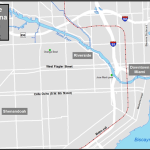
For a walking tour of Calle Ocho in Little Havana visit: https://travel.nationalgeographic.com/travel/city-guides/miami-walking-tour-3/. Map Credit: Hilton Cordoba.
While you are in Tampa, you may notice signage for U.S. Highway 41. Built in the 1920s, it was the only overland route across the southern tip of Florida. U.S. In a larger spatial context, U.S. 41 is a north-south axis that spans the middle of North America and extends from Michigan’s Upper Peninsula to Miami. The southernmost section (Tampa to Miami) is known as the Tamiami Trail. The last few miles of the road are locally known as Calle Ocho (Southwest 8th Street), which forms the main artery and an important boundary within the vibrant multi-ethnic community of Little Havana. The Cuban imprint in ‘Little Havana’ is a cultural layer that simultaneously underlies the current demographic structure of the neighborhood and provides glimpses into the neighborhood’s cultural and historical change.
Before Little Havana
Little Havana has been a common destination for a number of groups that include: Miccosukees, Bahamians Jews, Greeks, Cuban refugees, and immigrants from almost every Latin American country (Shell-Weiss, 2009). Originally, Little Havana consisted of two neighborhoods: Riverside and Shenandoah. Calle Ocho was known as Orange Glades Road that marked a division within the area that is noticeable even today. Riverside, the neighborhood north of Calle Ocho, acquired its name due to its close proximity to the Miami River and was home to some of Miami’s earliest schools, churches, and businesses. Shenandoah (the neighborhood south of Calle Ocho) remained in farmland until the 1920’s when it was developed as a single-family residential area. By contrast, the Riverside the area north of Calle Ocho saw the construction of primarily multi-family housing to meet the needs of number of Jewish people who moved from the Northeast. With them came a landscape comprising a number of synagogues, Sunday schools, Jewish senior homes, as well as numbers of influential leaders who arrived in Miami from the Southeast (George, 2006).
The Tower Theater with its Art Deco style has been a landmark of the neighborhood since it first opened its doors in 1926. Located along Calle Ocho and 15th avenue, the road was a two way street at the time hence the sign of the theater was built at an angle so that it was easy for the drivers to glance quickly at the listing of shows. In the 1960’s with the growth of the Cuban population, the theater was the first one to offer titles in Spanish in Miami-Dade County. Picture Credit: Hilton Cordoba
The making of an enclave
The first wave of Cubans arrived between 1959 and 1962 and became known in the Cuban Community as the ‘golden exiles’ because of the human capital that they brought with them. Many of them were well educated and had business experience. They settled in Riverside and Shenandoah and established businesses and social organizations. In a second wave that occurred from1965 to1973, 3,000 to 4,000 Cubans per month were airlifted to the U.S. Diplomatic preference and easier paths to resettlement were given to those Cubans who had relatives already established in the U.S. During this period Riverside and Shenandoah collectively became known as Little Havana. In this new layer of settlement, many of the apartment buildings that once were occupied by Jews and Anglo Americans were now homes of the newly arrived Cubans. In this cultural an ethnic shift, many of the synagogues were converted into Catholic churches, and the elementary schools’ curricula now featured classes in Spanish (Alberts, 2005). The last major wave of Cuban migration was in 1980 when a boatlift was organized at the port of Mariel; those who embarked on this voyage are sometimes referred as ‘Marielitos’ because of their port of exit. The Cuban population of Little Havana reached its peak with the Census of 1980 when it stood at 95,522. In relative terms that number accounted for approximately 70 percent of the total population and 85 percent of the Hispanics in Little Havana (Cordoba & Carrillo, 2010).
A shot of the Miami River from Jose Marti Park with the I-95 overpass in the background. In the late 1800’s the Miccosukee people navigated the river from the Everglades to come to trade and exchange items with the white settlers. By 1980, the I-95 overpass was the temporary home where the U.S. government created makeshift camps for Cuban refugees that arrived during the Mariel boatlift. In 2008, Jose Marti Park with the Miami River in the background were the setting for a scene in the comedy-drama film Marley & Me. Picture Credit: Hilton Cordoba
From ethnic enclave to multi-ethnic community
Between 1980 and 2000, Little Havana’s Cuban population decreased by 30 percent, and by the 2000 U.S. census, they accounted for 56 percent of Hispanics in Little Havana; estimates of the 2009 American Community Survey showed a slight increase to 58 percent share among Hispanics. Central and South Americans on the other hand, have continued to increase their numbers in Little Havana where now they represent thirty and twelve percent of the Hispanic population, respectively. Nicaraguans and Hondurans account for the two biggest groups from the Central American community while Colombians and Peruvians from the South American community. The fastest growth in the last decade came from the Uruguayans and Argentineans (595 and 318 percent, respectively) as many left for the United States with the collapse of the Argentinean economy in 2001. Little Havana has changed as the different groups that have come through the area have made it their home. Nicaraguans have especially acquired an affinity for Little Havana as you can find their fritangas (cafeteria style restaurants serving Nicaraguan food and specialty drinks) at almost every major intersection, a street name after Nicaraguan poet Ruben Dario, the offices of the Nicaraguan consulate, the mausoleum of former Nicaraguan president Anastasio Somoza Debayle, and St. John Bosco Catholic Church and its Nicaraguan parishioners.
Fritangas are found throughout the streetscape of Little Havana. These restaurants are not just about the ethnic dishes but also a place to gather news about the homeland or the local community, buy phone cards to call relatives, a place to find souvenirs and delicacies imported from Nicaragua, and even a place of worship on the evening of every December 7th when Nicaraguans celebrate ‘la griteria’ (a chanting to the Immaculate Concepcion of the Virgin Mary, a tradition that dates back to colonial times). Picture Credit: Hilton Cordoba
The centrality of Little Havana is often most overlooked but helps explain why this area has been sought out by so many immigrants and helps us understand why it continues to be the residential area of choice of many Hispanic seniors. Businesses along Southwest 8th Street, West Flagler Street and other major roads not only prevent residents from having to go outside the neighborhood for goods and services, but also make it easy to live in the area without dependence on the automobile. This centrality also creates locational advantages in access jobs: Little Havana is in the vicinity of higher income areas, which are the workplace for many immigrants who live in the neighborhood. Areas such as Brickell, Coconut Grove, Key Biscayne, and Miami Beach, are luxury condominium communities, with extravagant homes, and hotels that provide work for many immigrants who find positions as maids, gardeners, and construction workers. These workers capitalize on a huge cultural benefit of not having to learn a new language; many can live in Little Havana without ever learning English. The combination of these unique characteristics creates a safe haven for immigrants and the perfect gateway for those in search of a new life in America.
There is more to Little Havana than the name suggests, so when you come across U.S. route 41 in Tampa, think about the lively multi-ethnic neighborhood at the southern end of the road. You can venture out along the Tamiami Trail and cross the Everglades as the famous Trail Blazers did in early 1920’s. You will have a chance to stop by the Miccosukee village, catch an airboat ride, or hop on a bike to explore the Everglades on a 15 mile loop at Shark Valley. If you prefer not to drive, you may take the 92 Silverstar and enjoy a train ride through the verdant back country of Florida; whatever you decide to do, just bring a camera along to capture the unique streetscape and a hearty appetite for the endless variety of Latin food that await you in Little Havana.
Every month the AAG compiles a list of newly-published books in geography and related areas. Some are selected for review in the AAG Review of Books.
Publishers are welcome to send new volumes to the Editor-in-Chief (Kent Mathewson, Editor-in-Chief, AAG Review of Books, Department of Geography and Anthropology, Louisiana State University, Baton Rouge, LA 70803).
Anyone interested in reviewing these or other titles should also contact the Editor-in-Chief.
Documents of Life Revisited: Narrative and Biographical Methodology for a 21st Century Critical Humanism by Stanley, Liz, ed (Ashgate 2013, http://www.ashgate.com/isbn/9781409442899).
The Ecology of the Barí: Rainforest Horticulturalists of South America by Beckerman, Stephen, and Roberto Lizarralde (University of Texas Press 2013, http://utpress.utexas.edu/index.php/books/bececo).
Empire De/Centered: New Spatial Histories of Russia and the Soviet Union by Turoma, Sanna and Maxim Waldstein, eds (Ashgate 2013, http://www.ashgate.com/isbn/9781409447863).
The Food and Feasts of Jesus: The Original Mediterranean Diet, with Menus and Recipes by Neel, Douglas E. and Joe A. Pugh (Rowman and Littlefield 2013, https://rowman.com/ISBN/9781442212916).
The Garage: Automobility and Building Innovation in America’s Early Auto Age by Jakle, John A., and Keith A. Sculle (University of Tennessee Press 2013, http://utpress.org/bookdetail-2/?jobno=T01688).
Population Geography: Problems, Concepts, and Prospects by Peters, Gary L., Robert P Larkin, Karen Johnson-Webb, Kefa M Otiso (Kendall Hunt Publishing Company 2013, http://www.kendallhunt.com/peters-larkin/).
Subterranean Struggles: New Dynamics of Mining, Oil, and Gas in Latin America by Bebbington, Anthony, and Jeffrey Bury, eds (University of Texas Press 2013, http://utpress.utexas.edu/index.php/books/beesub).
Now is the time to begin planning for the AAG annual meeting, one of the largest venues in the world for sharing and communicating the broad range of contributions by geographers to basic and applied knowledge and to problem solving. The 2014 annual meeting will be held April 8-12 in Tampa, Florida. This is the first annual meeting to be held in the southeastern United States in over a decade and the first ever in Tampa. The excitement of a new venue, coupled with the intellectual stimulation that we all expect of an AAG annual meeting, promise to make the 2014 AAG annual meeting particularly noteworthy.
The AAG annual meeting traditionally has a number of featured themes that help to provide some structure to this diverse and rich meeting. Some of the featured themes emerge organically as the Local Arrangements Committee and the AAG meeting staff organize the thousands of abstracts and hundreds of special sessions submitted for the conference. Other themes are provided directly by AAG members, and I invite all of you to suggest provocative and engaging themes for the Tampa meeting. The setting of the meeting itself suggests numerous potential themes including environmental hazards, emigration, the aging of America, among others. There are many other current issues and developments that merit consideration as a featured theme, and I encourage you to submit suggestions.
In addition, the AAG Executive Committee and Executive Director have developed three overarching, “core” themes for the Tampa meeting that we believe are of sufficient interest to engage all meeting participants, that are of themselves interconnected and cross the human, physical and methods dimensions of the discipline, and that, most importantly, are of such weight and significance that collective focused attention is warranted. These themes are “Geographies of Climate Change,” “Racism and Violence in America: Fifty Years since the March on Washington for Jobs and Freedom” and “GIScience, GIS, and Public Policy.”
Climate change is one of a myriad of environmental concerns facing humankind today and is representative of the inherent scientific complexity and uncertainty of these concerns, their political and policy contextualization, the challenges of formulating adaptation and mitigation strategies, and the importance of effective communication. The “Geographies of Climate Change” theme was selected to highlight the complex scale interactions of climate change including the observed and anticipated spatial differentiation in potential impacts and vulnerability. The Presidential Plenary session on the opening day of the conference will “kick off” this theme. Presenters include: Mike Hulme, founding director of the Tyndall Center for Climate Change Research and currently Professor of Climate and Culture in the Department of Geography at King’s College London, and author of Why We Disagree about Climate Change; Linda Mearns, director of the National Center for Atmospheric Research Weather and Climate Impacts Assessment Science Program, and project leader of the North American Regional Climate Change Assessment Program (NARCCAP) which is providing high-resolution climate change projections for the impacts community; Susanne Moser, an independent researcher and consultant on adaptation, science-policy interactions, decision support, and climate change communication; and J. Marshall Shepherd, the current president of the American Meteorological Society and a faculty member in the Department of Geography at the University of Georgia, whose research focuses on urban influences on climate. Numerous other sessions on the “Geographies of Climate Change” will be held throughout the annual meeting, and I urge you to keep this theme in mind as you submit an abstract and/or propose sessions.
I am writing this column on the anniversary of Martin Luther King’s March on Washington for Jobs and Freedom. Fifty years have passed since that landmark event, and many of the commemorative addresses acknowledge the considerable progress that has been made with respect to civil rights over the past half century. However, Florida is the location of a harsh and sorrowful reminder of the continuing pervasiveness of racism and violence in the United States. We would be remiss, while in Tampa, to not collectively consider the broader implications of the death of Trayvon Martin and the complex and disturbing trial that followed, and to explore our potential contributions to a path forward. Hence, a core theme of the meeting is “Racism and Violence in America: Fifty Years since the March on Washington for Jobs and Freedom.“ Fifty years ago the March participants sought comprehensive civil rights legislation, desegregation of public schools, greater access to employment for all groups, and an increased minimum wage. The featured theme for the AAG annual meeting provides an opportunity for us to explore past, current, and potential future contributions of geographical research to understanding and addressing progress in these and related areas. It will also enable all of us to reflect on our personal actions and commitment to reducing racism and violence. AAG Past-President Audrey Kobayashi and Professor Joe Darden from Michigan State University are leading the planning effort for a collection of plenary and special sessions and public events around this featured theme, and they request your input and suggestions.
The potential for GIScience to contribute to the formation of public policy has been demonstrated, but not fully realized. The third core theme, “GIScience, GIS, and Public Policy” will explore the expanding role of GIScience in the public policy arena, both generally and also with respect to climate change and racism and violence. This theme also encompasses another dimension, that of federal and state policy-making regarding GIS itself. In particular, the roles of the Federal Geographic Data Committee (FGDC) and the National Geospatial Advisory Committee (NGAC) in developing a new strategic plan for the U.S. National Spatial Data Infrastructure (NSDI) will be highlighted during several special sessions. Again, your assistance in contributing papers and posters, and organizing special sessions around the featured theme of “GIScience, GIS, and Public Policy,” is requested.
As noted above, the featured themes attempt to provide some structure to a large, exciting, highly attended meeting. But, as always, the AAG annual meeting is an open meeting, and I look forward to your contribution to the meeting and to being submerged in the diverse set of paper and poster topics that we all expect at our annual meeting. Instructions for submitting abstracts and special sessions are found at http://www.aag.org/cs/annualmeeting. Keep in mind that the “early bird” registration discount ends October 23.
Part 1: Congo Square, Atlantic Exchange, and the Emergence of Jazz
New Orleans is a meeting ground. Situated at the confluence of the Mississippi River and the Gulf of Mexico, the city connects North America’s most expansive riverine network with the vast Atlantic basin. Its strategic location has long attracted diverse peoples and ideas, whose collaborations have forged extraordinary cultural, economic, and ecological innovations. Prominent among those novel expressions, music remains central to New Orleans’ sense of place. This essay, offered in two parts, surveys the cultural and historical geographies of music in New Orleans. It outlines a rough chronology of the innovative musical cultures that coalesced and continue to proliferate in New Orleans, emphasizing both the singularity of the city’s cultural production, as well as its fundamental connections with the French, Hispanic, and Black Atlantics.[1] This geographical treatment will, I hope, prime attendees of the 2018 AAG Annual Meeting to indulge in New Orleans’ rich musical (and other performative) cultures on display at countless clubs, bars, restaurants, parties, parades, and street corners, as well as the French Quarter Music Festival. Overlapping with the AAG conference and free of charge (!), the lively outdoor fête showcases some of the region’s most celebrated acts and styles. In this first of two parts, I treat the city from its founding in the early-eighteenth century through the emergence of jazz in the early-twentieth century, providing historical-geographical context for the distinct and diverse musical cultures emanating from New Orleans.
New Orleans and its musical cultures are perhaps best understood through the city’s complex connections to the African diaspora, its experiences within the French and Spanish Colonial Empires, and its relations to fluvial networks and ports throughout the mainland Americas and the Caribbean. After founding the city in 1718, France ceded New Orleans to Spain in 1762. The city spent four formative decades under Spanish control, undergoing significant demographic, urban, and economic growth. Napoleonic France briefly regained control of the city in 1803 before selling it to the United States just three weeks later in the Louisiana Purchase. As the colony changed hands over the eighteenth and nineteenth centuries, a steady flow of enslaved Africans continually replenished profound African influence in New Orleans and its environs. Those fundamental influences continue to manifest in the city’s rich cultural and economic development, especially by way of its music.[2]
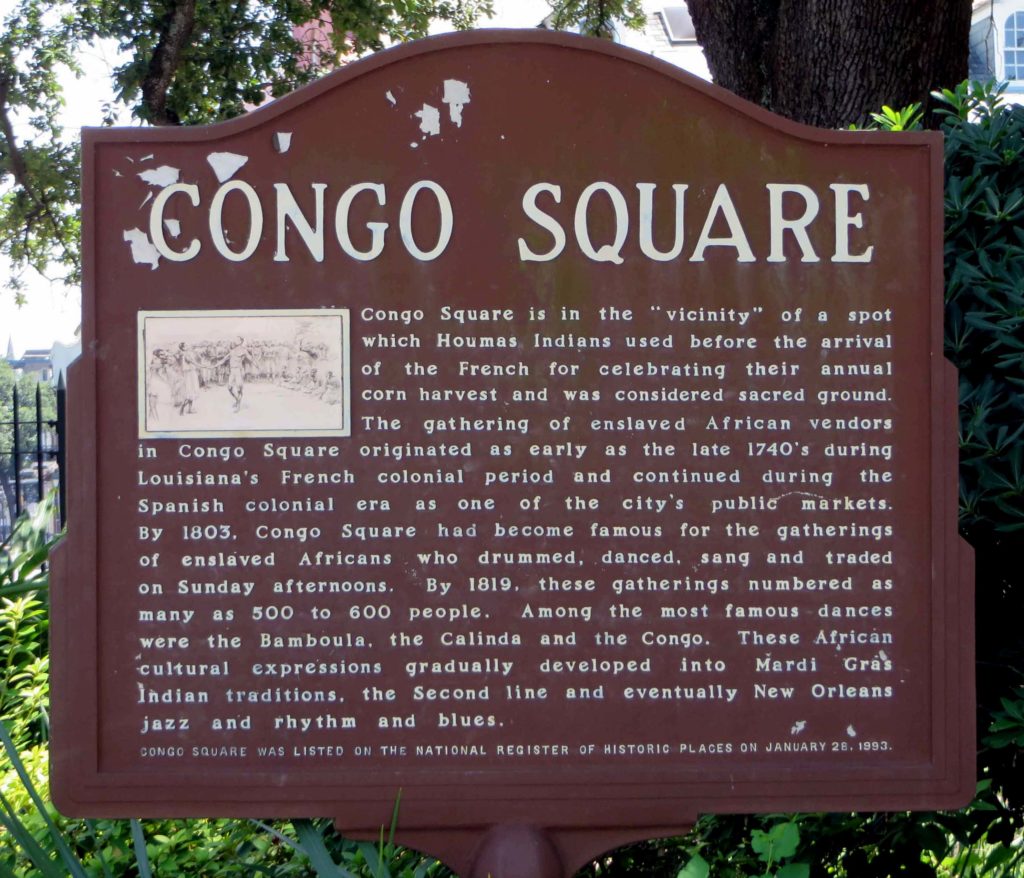
The historical-geographical hearth of musical culture in New Orleans (and, it could be said, of the US as a whole) is Congo Square—the first and only sanctioned gathering place for enslaved people in the antebellum United States—beginning as early as the 1740s (Figure 1). Located just outside of the original city walls, near the grounds of the Tremé Planation, Congo Square originated as a Sunday market where enslaved Afro-descendants and indigenous people gathered to trade in goods they themselves had grown, gathered, and hunted. The weekly gatherings soon became an extraordinary venue for cultural exchange where hundreds of people mingled, cooked, drummed, worshipped, danced, and sang. Spirituality was fundamental in those musical and rhythmic expressions, as drumming remains essential in the syncretic religions that developed among Afro-descendants in the New World, among them Vodun in Haiti, Santeria in Cuba, and Voodoo and Hoodoo in New Orleans.[3]
Beginning in the French period, Congo Square and its weekly assemblies survived and evolved through Spanish control and later the city’s integration into the United States. By the early nineteenth century, visitors documented crowds numbering more than 500 practicing distinct forms of African drumming, singing, and dancing. The humble outdoor market became a historic nexus crucial for the preservation of African cultural forms, as well as the eventual creation of novel hybrids mixing, as just one example, Senegambian-style banjos with drumming from the Kongo. Congo Square thus remains an important site of African-American cultural and economic resistance where enslaved people of African descent, despite the horrific brutalities of slavery, laid the rhythmic foundations for what eventually became blues, ragtime, jazz, country, rhythm and blues, rock and roll, hip hop, and countless other American musical genres. As prominent New Orleans jazz musician, educator, and advocate Wynton Marsalis proclaimed, “The bloodlines of all important modern American music can be traced to Congo Square.”[4]
A plaque commemorating Congo Square in Louis Armstrong Park where the French Quarter and Tremé neighborhoods meet at Rampart and Orleans Streets (Photo credit: K.D. Burns, 2012).
While many New Orleans traditions trace their beginnings to Congo Square, the various groups collectively known as Mardi Gras Indians maintain a particularly firm link to the traditions forged there. Melding West African, Indigenous American, and European Catholic traditions, the Mardi Gras Indians celebrate the pre-Lenten Carnival (and a few other dates) by creating, costuming, and parading in lavish handmade regalia adorned with thousands of sequins, beads, and feathers (see Figure 2). Keepers of extravagant musical and material traditions traceable to Yoruba and Haitian Afro-creole antecedents, the Indians remain influential community leaders in many neighborhoods of New Orleans. (See Part II of this essay for more on the Indians’ musical influence).[5]
New Orleans Mardi Gras Indians “masking” in the Lower Ninth Ward. Image courtesy of House of Dance and Feathers, a local museum (consider visiting and supporting them).
New Orleans’ distinct musical traditions began to coalesce during the Spanish period (1763-1803) when colonial trade and administrative networks linked the city with Vera Cruz, Tampico, and especially Havana, then the seat of the Spanish American colonies. Military-style marching bands provided the basic instrumentation and arrangements for the region’s music, as well as public spectacles. When Spanish Governor Miro received a delegation of Choctaw and Chickasaw Indian chiefs in 1787, he wooed them with a ballroom dance and an extravagant military parade.[6]
The following decade, refugees fleeing the Haitian (Saint Domingan) Revolution—roughly equal thirds White creole, enslaved, and free people of color—began streaming into New Orleans. Bringing with them African-inspired spiritual and musical traditions forged in the French Atlantic, the refugees doubled the city’s size by 1810. To keep up with the abrupt population growth, New Orleans quickly expanded its footprint north of the original city into former lands of the Tremé plantation, creating the faubourg (neighborhood) of the same name, where many Haitians and other émigrés eventually settled.[7]
Born in New Orleans, antebellum piano prodigy Louis Moreau Gottschalk grew up studying music with his grandmother Bruslé and her enslaved nurse Sally, both natives of Saint Domingue, before travelling widely in the Caribbean and Latin America. His piano composition “Bamboula, Danse des Nègres” (1848) drew on African-inspired folk traditions from the Antilles, and melded seamlessly with the rhythms of Congo Square. Written in Martinique in 1859, his “Ojos Criollos, Danse Cubaine” (Creole Eyes, Cuban Dance) blended Afro-Cuban rhythms with European melodies to foreshadow ragtime by three decades. By the mid-19th century, many widely popular musical styles—from minstrel show tunes, ragtime, and cakewalks to Cuban habanera, rumba, and son clave—all shared syncopated two-hand piano riffs made popular by Gottschalk. Those rhythms served as a foundation for later styles, including jazz, and live on not only in New Orleans’ second line parades and Mardi Gras Indian gatherings, but also the comparsa and conga processions of Cuban Carnival.[8]
Essential to the city’s musical traditions, brass bands were already integral to public life in New Orleans by the early nineteenth century. In 1838 the daily Picayune proclaimed a “mania in this city for horn and trumpet playing” derived from military bands and processions. Following the Civil War, that instrumentation combined with African-inspired funeral celebrations to lay the groundwork for New Orleans jazz funerals and second lines. Adding to the mix were post-abolition waves of African-American workers who migrated to the city in search of economic opportunities, bringing along their canon of work songs, spirituals, and blues from the Mississippi Delta. There the sacred call-and-response musical aesthetic of the Plantation South encountered the widely popular dance craze known as ragtime, and together began filtering through New Orleans’ traditional brass instrumentation and syncopated African rhythms.[9]
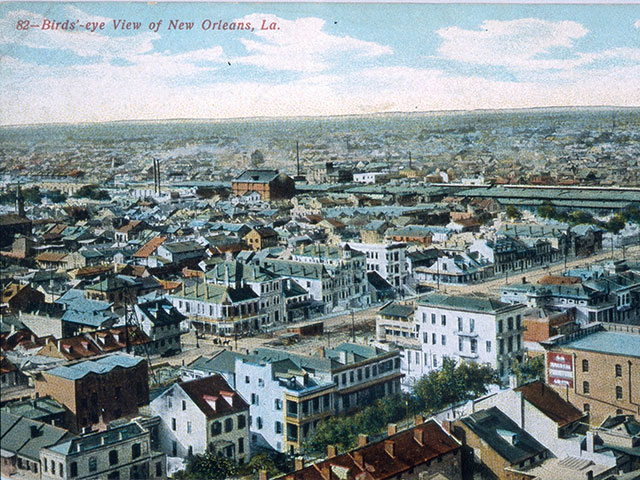
By century’s end, changes in the city’s legal frameworks would unwittingly galvanize the music scene in New Orleans, and provide the final ingredients for the musical gumbo that would coalesce as jazz. After the landmark Supreme Court decision Plessy v. Ferguson codified racial segregation into a strict binary, mixed race creole musicians found themselves officially classified as Blacks. An unforeseen consequence of that terrible ruling was the integration of the city’s brass bands, unifying creole musicians and their classical training with the more freewheeling styles of the city’s Black blues musicians. The following year, in 1897, the New Orleans city council created the city’s red light district where prostitution, drugs, and gambling were regulated and confined. The rough-and-tumble Storyville district provided steady gigs for brass bands and piano players at the end of the nineteenth century. Located in the Faubourg Tremé just two blocks from the site of Congo Square, the district became ground zero for a revolution in American music (Figure 3).[10]
Postcard showing view of Storyville; New Orleans: C. B. Mason, [1904–8]; The Historic New Orleans Collection, 1979.362.16
Emanating from New Orleans around the turn of the twentieth century, the novel improvisational styles that would collectively become known as jazz emerged from essential connections with the Mississippi Delta, Latin America, and the Caribbean. First visiting the city as part of the New Orleans World’s Fair of 1884–85, several Mexican bands and musicians became legendary for their lasting effects on the city’s musical cultures, including the introduction of the saxophone, bass plucking, and original compositions. Members of the Onward Brass Band, then among New Orleans’ most prominent marching bands, traveled to Cuba during the Spanish-American War. Among them were trombonist Willie Cornish and alto horn player John Baptiste Delisle, musicians that also played with Charles “Buddy” Bolden, a (the?) forerunning jazz musician. By the turn of the 20th century, jazz pioneers Bolden, Joe “King” Oliver, and Jack “Papa” Laine were collaborating with musicians with strong ties to Cuba, such as Manuel Pérez and Manuel Mello.[11]
The second generation of New Orleans jazz musicians could still discern the Afro-Latin influences fundamental to the jazz sound. Citing what he called “little tinges of Spanish,” New Orleans pianist Ferdinand “Jelly Roll” Morton, himself a descendant of creole Haitian émigrés, credited habanera rhythms as essential elements in New Orleans jazz. Another member of the second generation, the great Louis Armstrong, got his start in Storyville where he played in bands led by Kid Ory and King Oliver. Their repertoire included “New Orleans Stomp,” a popular dance tune steeped in complex Afro-Caribbean rhythms and time signatures.[12]
Jazz thus emerged in New Orleans as a delicious gumbo of ragtime, Delta blues, and the diasporic rhythms of the Afro-Caribbean. Despite continuous growth and innovation, most New Orleans music still derives from fluid blends of syncopated rhythms celebrated in Congo square and countless Afro-Caribbean communities with Eurasian instrumentation and melodic forms. The genius of New Orleans’ music springs not from the spontaneous epiphanies of a few talented individuals, but instead crystallizes from the city’s fluid connections to other places. At the confluence of the French, Spanish, and Black Atlantic Worlds, New Orleans has long provided an inclusive venue for the integration of diverse cultural forms.
New Orleans will forever be associated with jazz, yet the soundtrack of the contemporary city is more complex. While people of all ages continue to enjoy an ever-expanding array of expressions falling under the jazz umbrella (e.g. Dixieland, trad jazz, Latin jazz, avant-garde jazz, jazz-funk, and various fusion sounds), New Orleans remains devoted to a grand diversity of musical genres and styles, such as brass bands, R&B, soul, funk, rock and roll, heavy metal, hip hop, bounce, and even zydeco—an upbeat Afro-French creole dance music from west of the Atchafalaya. In part two of this essay (coming early 2018) I discuss several of those musical traditions as they emerged in New Orleans since the twentieth century, with special emphasis on the artists and styles on display at the 2018 French Quarter Music Festival (Figure 4) that overlaps with the AAG annual meeting.
New Orleans blues guitarist Little Freddie King jams with Big Chief Juan Pardo of The Golden Comanche Mardi Gras Indians at the French Quarter Festival near Woldenberg Riverfront Park, 2015. Photo credit: Zack Smith, courtesy of French Quarter Festival.
Further reading and listening: To begin your preparations for New Orleans, be sure to live stream WWOZ, New Orleans community radio and self-proclaimed “Guardians of the Groove.” For more on New Orleans music, see the works referenced in the notes below and the following resources: recordings posted online by the Smithsonian Folkways Magazine, a YouTube playlist of recordings of Mardi Gras Indians compiled by the Alan Lomax archive; and a YouTube playlist of New Orleans music compiled by the author. Finally, I cannot recommend enough A Closer Walk, an interactive website, map, and series of guided tours of the geographies of New Orleans music, sponsored by WWOZ and others.
[4] References in note 3. Benjamin Henry Latrobe, Impressions Respecting New Orleans: Diary and Sketches, 1818-1820, ed. Samuel Wilson Jr. (New York: Columbia University Press, 1951). Quote on the jacket for Evans, Congo Square.
[6] Charles Gayarré, History of Louisiana, Vol. 3 (New York: Redfield, 1885). William Schafer, Brass Bands and New Orleans Jazz (Baton Rouge: Louisiana State University Press, 1977).
[7] Sublette, The World that Made New Orleans. Crutcher, Tremé.
[8] S. Frederick Starr, Bamboula! The Life and Times of Louis Moreau Gottschalk (New York: Oxford University Press, 1995). Jack Stewart, “Cuban Influences on New Orleans Music,” Jazz Archivist 13 (1999): 14–23. Turner, Jazz Religion. Sublette, The World that Made New Orleans.
[10] Al Rose, Storyville, New Orleans: Being an Authentic, Illustrated Account of the Notorious Red-Light District (Tuscaloosa: University of Alabama Press, 1974). Charles Hersch, Subversive Sounds: Race and the Birth of Jazz in New Orleans (Chicago: University of Chicago Press, 2007). City leaders demolished Storyville in 1940 to make way for the New Deal era Iberville Housing Projects, which are currently being redeveloped as mixed-income apartments.
[11] Jack Stewart, “Cuban Influences on New Orleans Music.” Jack Stewart, “The Mexican Band Legend: Myth, Reality, and Musical Impact; A Preliminary Investigation,” Jazz Archivist 6, no. 2 (1991): 1–14. Jack Stewart, “The Mexican Band Legend–Part II,” Jazz Archivist 9, no. 1 (1994): 1–17. John McCusker, “The Onward Brass Band in the Spanish American War,” Jazz Archivist 13 (1998-1999): 24-35. Schafer, Brass bands.
[12] Ferdinand “Jelly Roll” Morton, Jelly Roll Morton: The Complete Library of Congress Recordings by Alan Lomax, Music CD (Cambridge, MA: Rounder Records, 2005): Disc 6, Tracks 8 and 9. Stewart, “Cuban Influences.” Louis Armstrong, Satchmo: My Life in New Orleans (New York: Da Capo Press, 1986).
AAG Members get exclusive access to publications, prominent journals, unique advocacy, grant, scholarship and professional opportunities with access to industry focus communities, and event discounts, including our annual meeting.
Some content may only be accessible if you belong to specific Specialty or Affinity Groups. You can still update your membership below. You will need to go through the Join flow, but you do not need to repurchase your membership unless it is expired or about to expire.
To provide the best experiences, we use technologies like cookies to store and/or access device information. Consenting to these technologies will allow us to process data such as browsing behavior or unique IDs on this site. Not consenting or withdrawing consent, may adversely affect certain features and functions.
Functional
Always active
The technical storage or access is strictly necessary for the legitimate purpose of enabling the use of a specific service explicitly requested by the subscriber or user, or for the sole purpose of carrying out the transmission of a communication over an electronic communications network.
Preferences
The technical storage or access is necessary for the legitimate purpose of storing preferences that are not requested by the subscriber or user.
Statistics
The technical storage or access that is used exclusively for statistical purposes.The technical storage or access that is used exclusively for anonymous statistical purposes. Without a subpoena, voluntary compliance on the part of your Internet Service Provider, or additional records from a third party, information stored or retrieved for this purpose alone cannot usually be used to identify you.
Marketing
The technical storage or access is required to create user profiles to send advertising, or to track the user on a website or across several websites for similar marketing purposes.
To provide the best experiences, we use technologies like cookies to store and/or access device information. Consenting to these technologies will allow us to process data such as browsing behavior or unique IDs on this site. Not consenting or withdrawing consent, may adversely affect certain features and functions.
Functional
Always active
The technical storage or access is strictly necessary for the legitimate purpose of enabling the use of a specific service explicitly requested by the subscriber or user, or for the sole purpose of carrying out the transmission of a communication over an electronic communications network.
Preferences
The technical storage or access is necessary for the legitimate purpose of storing preferences that are not requested by the subscriber or user.
Statistics
The technical storage or access that is used exclusively for statistical purposes.The technical storage or access that is used exclusively for anonymous statistical purposes. Without a subpoena, voluntary compliance on the part of your Internet Service Provider, or additional records from a third party, information stored or retrieved for this purpose alone cannot usually be used to identify you.
Marketing
The technical storage or access is required to create user profiles to send advertising, or to track the user on a website or across several websites for similar marketing purposes.



 The Tower Theater with its Art Deco style has been a landmark of the neighborhood since it first opened its doors in 1926. Located along Calle Ocho and 15th avenue, the road was a two way street at the time hence the sign of the theater was built at an angle so that it was easy for the drivers to glance quickly at the listing of shows. In the 1960’s with the growth of the Cuban population, the theater was the first one to offer titles in Spanish in Miami-Dade County. Picture Credit: Hilton Cordoba
 A shot of the Miami River from Jose Marti Park with the I-95 overpass in the background. In the late 1800’s the Miccosukee people navigated the river from the Everglades to come to trade and exchange items with the white settlers. By 1980, the I-95 overpass was the temporary home where the U.S. government created makeshift camps for Cuban refugees that arrived during the Mariel boatlift. In 2008, Jose Marti Park with the Miami River in the background were the setting for a scene in the comedy-drama film Marley & Me. Picture Credit: Hilton Cordoba
 Fritangas are found throughout the streetscape of Little Havana. These restaurants are not just about the ethnic dishes but also a place to gather news about the homeland or the local community, buy phone cards to call relatives, a place to find souvenirs and delicacies imported from Nicaragua, and even a place of worship on the evening of every December 7th when Nicaraguans celebrate ‘la griteria’ (a chanting to the Immaculate Concepcion of the Virgin Mary, a tradition that dates back to colonial times). Picture Credit: Hilton Cordoba