Newsletter – February 2017

PRESIDENT’S COLUMN

Creating and Preserving Actionable and Policy-Relevant Geography

By Glen M. MacDonald
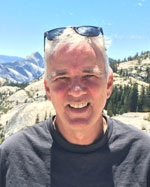
Glen M. MacDonald

Ensconced in our academic environs, as students or as faculty, we are sometimes accused of being removed and aloof from the issues of the real world and our research regarded as being of purely scholarly interest. Indeed, there are times for many of us that this may be more than a little bit true. I certainly have not been immune to being intrigued by questions with no apparent implications for the practical problems of the here-and-now. However, today, as often has been the case over its long history, the discipline of geography is being called upon — and called out — because of its importance in identifying and addressing problems of the wider world. Three recent items in the news reminded me of the potential role of geographers and geography in addressing the myriad challenges swirling around us at the present time.

Continue Reading.

Recent columns from the President


FEATURE

AAG Policy Action

The AAG continues to monitor and update members on key issues that have a clear impact on geography or in which our discipline can serve as a valued stakeholder in shaping viewpoints and policy outcomes. We are currently compiling the list of actions and responses by the AAG so far, and also information to help you take action within your communities:

Continue reading.


ANNUAL MEETING

Mainstreaming Human Rights in Geography and the AAG

Mainstreaming-Human-Rights-courtesy-AAAS-272x300Nearly all geographers are concerned about human rights, and in their personal and professional lives seek meaningful ways to act on these concerns and values. The AAG and the discipline of geography intersects with human rights in numerous ways. This special theme within the 2017 AAG Annual Meeting will explore intersections of Human Rights and Geography, and will build on the AAG’s decade-long initiatives on Mainstreaming Human Rights in Geography and the AAG. An Interview with Noam Chomsky by Doug Richardson will keynote this theme at the 2017 Boston Annual Meeting.

This theme will feature 50 sessions with more than 250 presentations at the intersection of human rights and geography. Speakers from leading human rights organizations, academia, government, and international organizations will address human rights challenges around the world.

Learn more.

James Hansen to Address Climate Change at AAG Annual Meeting
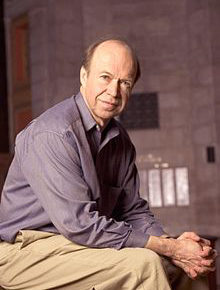
Hansen_James_profile-w-220x290James Hansen, known for his climate research and his Congressional testimony on climate change that raised awareness of global warming, will deliver a featured talk on climate change, moderated by AAG President Glen MacDonald, at the AAG annual meeting in Boston on April 7, 2017. Hansen received a B.A. in physics and mathematics, an M.S. in astronomy and a Ph.D. in physics from the University of Iowa. From 1981 to 2013, he was the head of the NASA Goddard Institute for Space Studies in New York City. Currently, he directs the Program on Climate Science, Awareness and Solutions at Columbia University’s Earth Institute.

Learn more.

David Harvey To Deliver Featured Lecture at AAG Annual Meeting in Boston
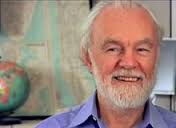
David Harvey, one of the most influential figures in geography and urban studies, and among the most cited intellectuals of all time across the humanities and social sciences, will deliver a featured lecture, “Marx, Capital and the Madness of Economic Reason,” on April 8, 2017, at the AAG Annual Meeting in Boston.

For geographers and non-geographers across many disciplines and languages, David Harvey has established the importance of space and uneven geographical development to the survival of capitalist accumulation, the perpetuation of inequality, and the rise of neoliberalism. His body of work demonstrates the highly creative and consequential place that geographers can have in engaging in and shaping broader transdisciplinary discussions and debates.

Learn more.

AAAS Director Rush Holt to Address Challenges Facing Science at the AAG Annual Meeting
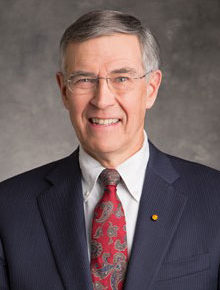
Rush D.Rush D. Holt, Ph.D., chief executive officer of the American Association for the Advancement of Science (AAAS), will deliver a  featured talk on emerging opportunities and challenges that science will face in the coming years at the AAG annual meeting in Boston on April 6, 2017. Holt is a Phi Beta Kappa graduate of Carleton College in Northfield, Minnesota, and he holds M.A. and Ph.D. degrees in physics from New York University. He is an elected fellow of AAAS, the American Physical Society, and Sigma Xi, and he holds honorary degrees from multiple universities. He is also a former Congressman and Jeopardy Champion.

Learn more.

Annual Meeting Preliminary Program Now Available Online

The online, searchable program includes a preliminary agenda of sessions, plenary speakers, and specialty group meetings. You can browse the program by presenter, keyword, title, or specialty group. You can also view sessions by day using the calendar of events. Please note that sessions and events for the 2017 Annual Meeting begin on Wednesday and conclude on Sunday.

Browse the program.

The Neighborhoods of Boston … and Beyond2382802009_45fdf69701
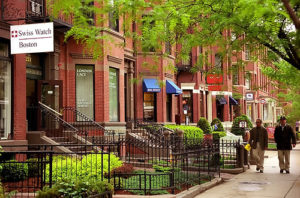
Every day is a new day in Boston. Parks and green spaces are sprouting up all over, new hotels have recently opened, and more are soon to break ground. New restaurants are joining Boston’s distinctive dining scene and the vibrant Seaport District has added to the city’s already dynamic downtown neighborhoods. The following is an overview of the many diverse neighborhoods in and around Boston.

Learn more.

Celebrate the International Encyclopedia of Geography in Boston

Attend the editor’s panel and reception
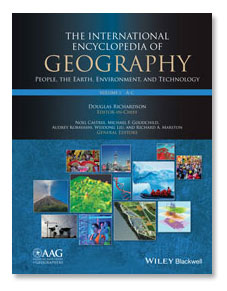
he International EncyclopediaJoin us in celebrating the official launch of the International Encyclopedia of Geography: People, the Earth, Environment, and Technologies in Boston! There will be a brief overview of the Encyclopedia from its general editors, followed by a Q&A session with the general and section editors of this great work. Mark your calendars for 5:20-7:00 p.m. on Friday, April 7, 2017.

Following this session will be the AAG International Reception: A Celebration of the International Encyclopedia of Geography, an event with food, drinks, music, and interaction with the editors. All attendees are invited to attend.

Learn More.

Abstracts for Poster Sessions are due by Feb. 23

Posters are exhibited for informal browsing with opportunities for individual discussion with poster authors. The AAG will host all themed poster sessions in the Exhibit Hall. Please note that the AAG will add your poster to the session which most closely aligns to your poster’s theme, however if you have a strong preference you may indicate in which poster session you would like to participate in in the “Special Requests” field of the abstract submission console. All abstracts must be submitted by Feb. 23, 2017.

Learn More.

AAG Specialty and Affinity Group Awards

Each year many AAG Specialty and Affinity Groups confer travel grants, hold paper competitions, and bestow honors and awards to their faculty and student members at the AAG Annual Meeting. Notices for these competitions may appear on the relevant specialty group’s website or listserve, or on the AAG News site.

Learn more.

Additional Annual Meeting Updates


ASSOCIATION NEWS

Important Election Information: Voting Ends Feb. 2!

The AAG election will be conducted online again, and will take place Jan. 11-Feb. 2, 2017. Each member who has an email address on record with the AAG will receive a special email with a code that will allow them to sign in to our AAG SimplyVoting website and vote. It’s important to update your email address to make sure you will be able to vote. If you know your email address is up to date with us, there’s no need to do anything further.

Read about the candidates now.

Receive the African Geographical Review: Join the African Specialty Group
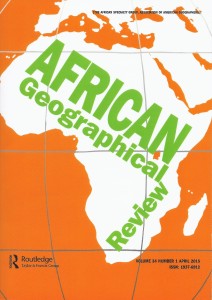
The African Geographical Review is an AAG journal edited by the Africa Specialty Group. It provides a medium for the publication of geographical material relating to Africa, seeks to enhance the standing of African regional geography, and to promote a better representation of African scholarship. Articles cover all sub-fields of geography, and can be theoretical, empirical or applied in nature.

Members of the AAG’s Africa Specialty Group receive a complimentary online subscription to the journal. If you are interested in receiving this journal, add membership in the African Specialty Group to your AAG membership for just $15 per year ($5 for students).

Learn more.

Ryan Habron Interns at AAG for Spring Semester
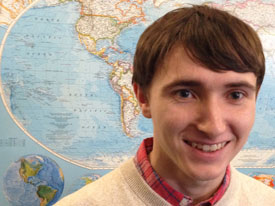
Habron_Ryan-2017Ryan Habron is a senior at the University of Maryland pursuing a B.S. in Geographical Sciences. His focuses include GIS, Computer Cartography, and Remote Sensing. He hopes to use these skills to monitor transportation, and other urban planning tasks in his future career.

During his internship at the AAG, he will work on obtaining attestations from 250 high schools for a proposed AP GIS&T course. He will also work on other related programs and projects, including outreach, research, website and the Annual Meeting.

Learn more.

Join the Effort to Make a New AP Course in GIS&T
AP-GIST

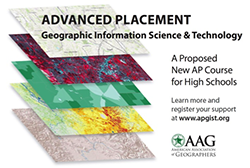
The AAG’s proposal for a new Advanced Placement course in Geographic Information Science and Technology (AP GIS&T) continues to receive strong interest from high schools, colleges, and universities across the U.S. However, in order to complete the proposal package for the College Board, the AAG needs to collect attestations of interest from at least 250 high schools.

So far 127 high schools have registered their interest in the AP GIS&T course. The AAG invites all members to share the AP GIS&T proposal with high schools in their local community.

Learn more.

AAG Calls for Nominations for Standing Committees

The AAG Council will make appointments to several of the AAG Standing Committees at its spring 2017 meeting. These appointments will replace members whose terms will expire on June 30, 2017.

If you wish to nominate yourself or other qualified individuals for one or more of these vacancies, please notify AAG Secretary Thomas Mote on or before March 1, 2017. Please make sure that your nominee is willing to serve if appointed. Include contact information for your nominee as well as a brief paragraph indicating his/her suitability for the position.

Learn more. 


RESOURCES & OPPORTUNITIES

Annual Meeting Support‎

AAG has a variety of opportunities for students, un-/underemployed geographers, and scholars outside the discipline to attend and participate in the Annual Meeting.

Some funding opportunities:

Learn More.

Visiting Geographical Scientist Program Accepting Applications for 2017-18

The Visiting Geographical Scientist program (VGSP) is accepting applications for the 2017-18 academic year. VGSP sponsors visits by prominent geographers to small departments or institutions that do not have the resources to bring in well-known speakers. The purpose of this program is to stimulate interest in geography, targeted for students, faculty members, and administrative officers. Participating institutions select and make arrangements with the visiting geographer.

Learn more.


IN MEMORIAM

Distinguished Professor Emeritus John M.Hunter
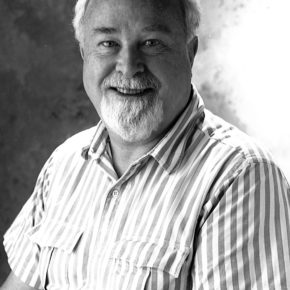
John M.HunterProfessor Hunter who has died aged 88, was an influential figure in establishing the study of medical geography as a specialty within geography. John Melton Hunter was born in Windsor, Canada on January 1, 1928. John was educated at Bemrose School, Derby and went on to receive his Ph.D. in geography from the University of Reading in 1954. During his time at the University of Ghana, Legon, Accra, he was planning officer and adviser for the preparation and enumeration of area maps and census reports for the 1960 Ghana Census. After returning to Great Britain, he taught at the University of Durham from 1964 to 1967 before beginning his tenure at Michigan State University, East Lansing, Michigan in 1967.

Throughout his career at Michigan State University, he received numerous honors awards and appointments, including the Distinguished Faculty award in 1982, an Honors Award from the Association of American Geographers, 1983, Appointed to serve on the National Academy of Sciences, National Research Council, Board of Science and Technology for International Development, Juba Valley Advisory Panel, 1986-88, Appointed Member of WHO Commission on Health and Environment, 1990-92, and University Distinguished Professor, 1990.

Learn more.


OF NOTE

Bruce Rhoads Elected AAAS Fellow
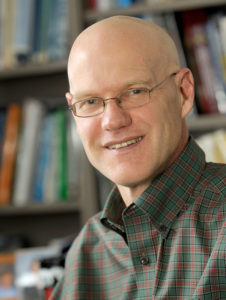
Bruce L. Rhoads, a professor of geography and geographic information science at the University of Illinois at Urbana-Champaign, been elected a 2016 Fellow of the American Association for the Advancement of Science. He was honored “for distinguished contributions to physical geography and fluvial geomorphology, particularly for defining flow and sediment dynamics of stream confluences and river meanders.” According to his university profile, Rhoads has worked on the fluvial dynamics of streams in the Midwest for over 30 years.

Learn more.


PUBLICATIONS

Pre-order ‘The International Encyclopedia of Geography’

he International EncyclopediaThe AAG and an international team of distinguished editors and authors are in the final stages of preparing a new major reference work for Geography: The International Encyclopedia of Geography: People, the Earth, Environment, and Technology.

This 15-volume work, published by Wiley both in hard copy and online, will be an invaluable resource for libraries, geographers, GIScientists, students and academic departments around the globe. Updated annually, this Encyclopedia will be the authoritative reference work in the field of geography for decades to come.

Learn more.

New Books in Geography — December 2016

Every month the AAG compiles a list of newly-published books in geography and related fields. Some are selected for review in the AAG Review of Books. Anyone interested in reviewing these or other titles should contact the Editor-in-Chief, Kent Mathewson. Listed below are the books received from publishers in the last month.

Learn more.

Latest Issue of ‘GeoHumanities’ Features Special Thematic Forum on Border Topologies

In the two years since the AAG launched its GeoHumanities journal, the editors have received a vast array of
fascinating manuscripts in the form of traditional scholarly “Articles” and “Practices and Curations” pieces, which cross over between the academy and creative practice. As the space for interdisciplinary scholarship at the intersection of geography and the humanities, GeoHumanities presents new opportunities for academic interaction and has inspired new proposals for special compilations on crosscutting themes.

Learn more.

Winter 2017 Issue of ‘The AAG Review of Books’ Now Available

Volume 5, Issue 1 of The AAG Review of Books has now been published online. This quarterly online journal publishes scholarly reviews of recent books related to geography, public policy and international affairs. It also features review essays reflecting on several books on a particular theme, and book review fora with multiple contributors discussing a title.

Learn more.

Newly Renamed ‘Annals’ Section “Physical Geography and Environmental Sciences”

The Annals of the American Association of Geographers has a newly renamed “Physical Geography and Environmental Sciences” section. It’s our hope that this section of the journal will identify with physical geographers, in addition to being open in a multidisciplinary sense to the Environmental Sciences. By explicitly stating “Physical Geography” in the section name, we’d like to encourage more physical geographers to submit their best work to the Annals.

Learn more.

Second Annual ‘GeoHumanities’ GeoPoetics Poetry Reading

GeoHumanities has organized a GeoPoetics poetry reading to take place at the 2017 AAG Annual Meeting in Boston, with accomplished poets from Boston and New England. These include Stephen Burt (poet, critic and professor of poetry at Harvard), January O’Neill (poet and professor at Salem State University, executive director of the Massachusetts Poetry Festival), Danielle Legros Georges (faculty member at Lesley University and Boston’s Poet Laureate), Joseph Massey (author or the recent Illocality from Wave books – “a Massey poem is a revelation of place” according to Stephen Burt in a New York Times review), and Jill McDonough (poet and professor at UMass Boston. Three times winner of the Pushcart Prize). All of these poets approach place, and particularly the places of Boston and New England, in fresh and slant-wise ways that force us to see our world in new ways.

Learn more.

Call for Abstracts: Special Issue of ‘Annals’ on “Environmental Governance in a Populist/Authoritarian Era”

The Annals of the American Association of Geographers is seeking contributions for a Special Issue on “Environmental Governance in a Populist/Authoritarian Era.” The 2019 Special Issue of the Annals will address theoretical, methodological, and empirical questions regarding how environments are known and governed in an era substantially characterized by populist and/or authoritarian politics around much of the world. The issue will explore what differences it makes when environmental research, knowledge construction, and decision making occur in the context of such political formations.

Learn more.


ADDENDA

IN THE NEWS

Popular stories from the AAG SmartBrief


EVENTS CALENDAR

Submit News to the AAG Newsletter. To share your news, submit announcements to newsletter [at] aag [dot] org.

    Share

AAG to Support Geographers from Countries Affected by Trump Travel Restrictions

The AAG will refund the conference registration fees for any AAG member or attendee who is a citizen of one of the seven countries affected by the U.S. Travel Ban and who by virtue of being outside the United States at this time will not be able to attend the AAG Annual Meeting in Boston. In the interest of giving such members a voice at the conference we also will allow for their abstracts to remain in the program and their oral presentations to be delivered by a registered member able to attend the meeting or their posters to be displayed should they be able to send their posters to the meeting. The AAG also will provide for a Skype or similar teleconference option for these affected participants to present their paper. We will need notification in advance if members affected by the Travel Ban wish to have a surrogate present their talk or poster, or wish to deliver their paper via teleconference.

    Share

The Neighborhoods of Boston … and Beyond

Boston – Newbury Street Brownstones. Creative Commons License David Ohmer via Compfight.

Every day is a new day in Boston. Parks and green spaces are sprouting up all over, new hotels have recently opened, and more are soon to break ground. New restaurants are joining Boston’s distinctive dining scene and the vibrant Seaport District has added to the city’s already dynamic downtown neighborhoods. Below is an overview of the many diverse neighborhoods in and around Boston.

The Back Bay:  The Back Bay was planned as a fashionable residential district, and was laid out as such by the architect Arthur Gilman in 1856. Having traveled to Paris, Gilman was heavily influenced by Baron Haussmann’s plan for the new layout of that city.  The result of Gilman’s inspiration is reflected in the Back Bay thoroughfares that resemble Parisian boulevards.

In the mid-19th century, Boston’s Back Bay tidal flats were filled in to form the 450-acre neighborhood, which we now know as the Back Bay.  Prior to this time, the Back Bay was used for little more than milling operations.

As the tidal flats were slowly filled in, beginning at the edge of the Public Garden and extending westward, residential construction followed.  Because the land filling efforts proceeded slowly, construction advanced concurrently on filled-in lots as they became available.  As a result, most blocks in the Back Bay date from approximately the same era and, when viewed in sequence, illustrate the changing tastes in and stylistic evolution of American architecture over the course of the mid- to late 19th and early 20th centuries.

Commercial buildings were erected alongside these residential structures, primarily on Newbury and Boylston Streets. Commercial development began on Boylston Street around 1880 and on Newbury Street in the early 20th century. While new structures were built for some of these commercial ventures, others adapted existing row houses for their purposes.  This early example of adaptive reuse helped to maintain the Back Bay’s uniform appearance.

Today, it’s easy to understand why the Back Bay is one of America’s most desirable neighborhoods. Newbury Street, Boylston Street, and Commonwealth Avenue are lined with unique shops, trendy restaurants, and vintage homes, making the Back Bay an extremely fashionable destination for Boston residents and visitors. In fact, it’s not uncommon to spot celebrities strolling up and down these picturesque streets. This bustling neighborhood also houses the two tallest members of Boston’s skyline, the Prudential Center, and the John Hancock Tower, in addition to architectural treasures such as Trinity Church and the Boston Public Library, the first public lending library in the United States.

Beacon Hill: A 19th-century residential area north of Boston Common, Beacon Hill is named for the location of a beacon that once stood here atop the highest point in central Boston. Beacon Hill is now topped by the gleaming gold dome of the State House.  Stroll this charming half-square-mile neighborhood filled with townhomes and mansions, to discover a delightful maze of red bricked sidewalks and cobblestone streets with working gas lamps, local boutiques, popular restaurants, and quaint B&Bs.

Winding along the north slope of Beacon Hill is the Black Heritage Trail, which explores the history of Boston’s 19th century African-American community.  Highlights along the 1.6 mile trail include: The African Meeting House (1806) – the nation’s oldest existing black church built by free black Bostonians; the Abiel Smith School (1835) – the first public school for black children; and the Hayden House, an important station on the Underground Railway for escaping slaves.

Downtown Crossing: Shoppers can browse for Boston keepsakes, one-of-a-kind gifts and the latest fashions along this bustling pedestrian mall at the intersection of Summer and Washington Streets. Some of Boston’s oldest landmarks can be found here, such as the 19th-century Old South Meeting House, where a meeting of more than 5000 colonists resulted in the Boston Tea Party of 1773.

South End: The historic South End has the largest Victorian brick row house district in the nation, and has recently emerged as a vibrant urban center with fabulous art studios, experimental theaters and independent boutiques and restaurants. Explore it on foot to discover community garden plots, tiny bakeries and some of the city’s best dining.

Fenway/Kenmore Square: While this neighborhood may best be known as the home of the Red Sox and Fenway Park, it is also one of Boston’s academic and cultural hubs.  Nearly a dozen of the 70 colleges and universities located in the area can be found here giving the neighborhood an unmistakably energetic feel. Not far from Kenmore Square, you’ll find the Isabella Stewart Gardner Museum, Museum of Fine Arts and Symphony Hall.

Rickshaw
Rickshaw. Bruno Zaffoni via Compfight.

Chinatown: Boston’s Chinatown is the third largest Chinese neighborhood in the country.  Renowned for its concentration of restaurants, Chinatown’s converted historic theaters now serve up decadent dim sum feasts. Beyond the neighborhood’s elaborately decorated gate, stroll the alleys for herbal shops, barbecues and Asian markets stocked with vegetables and spices. During the Chinese New Year and August Moon Festival, the streets are filled with dancing dragons, traditional music, and martial arts demonstrations.

Theatre District: Boston’s Theater District hosts an endless array of Broadway shows. Productions at the Colonial Theatre, Opera House Boston, along with the Citi Performing Arts Center, attract theatergoers of all ages. Bordering Chinatown, the area is also home to dozens of restaurants and bars offering fare in a wide range of prices. From Chinese to Thai to upscale contemporary American cuisine, the area is the ideal place for a pre-show meal.

The North End: With dozens of eateries serving homemade pasta, fresh bread, imported olive oil, cannoli, and cappuccino, the North End is infused with the flavor of its rich Italian history. Colonial-era sites are hidden throughout the neighborhood including Paul Revere’s house, the Old North Church, and Copp’s Hill Burying Ground. The North End comes alive in the summertime with feasts, festivals, and processions.

South Boston Seaport District: Boston’s waterfront is a vibrant mix of residential condos, marinas, hotels, artists’ lofts and restaurants. The city’s Institute of Contemporary Art is an architectural masterpiece overlooking the harbor. Nearby, the newly renovated Boston Children’s Museum invites your inner child to enjoy and explore the world around you. The Boston Convention & Exhibition Center also calls the Seaport District home, as does the Seaport Hotel & World Trade Center.

Cambridge:  Just a bridge away across the Charles River, MIT and Harvard University help create the progressive flavor of Cambridge.  Often referred to as Boston’s Left Bank, it’s the spirited, slightly mischievous side of Boston and has an atmosphere and attitude all its own.  Packed with youthful vitality and international flair, it’s a city where Old World meets New Age in a mesmerizing blend of history and technology.

As a captivating, offbeat alternative to Boston’s urban center, the “squares” of Cambridge are charming neighborhoods rich in fine dining, eclectic shopping, theaters, museums and historical sites. Each square is a vibrant, colorful destination with a personality all its own, offering a unique selection of everything from restaurants, shopping, and music to technology and innovation.

As the East Coast’s leading hub for high-tech and biotech, Cambridge has a creative, entrepreneurial spirit. With over 3,000 hotel rooms, Cambridge is also a popular destination for professional meetings and conferences, offering the largest hotel inventory in New England outside of Boston.

Cambridge is the birthplace of higher education in America. Harvard College was founded in 1636, and across town, Massachusetts Institute of Technology (MIT) is known as the epicenter of cyberculture. Both universities house renowned museum collections and tours that are open to the public.

Beyond Boston: In addition to everything within the city limits, some of Massachusetts’ most scenic and historic towns are just a short distance from the city center. There are sights to see at every turn.

Hawthorne in Bronze, Salem, MA.
Hawthorne in Bronze, Salem, MA. Melinda Stuart via Compfight.

North of Boston: The charm and lure of the sea draw visitors north. The oceanside town of Winthrop is minutes from downtown Boston. Winthrop’s beaches are popular destinations for festivals and special events throughout the summer.

Five miles from the heart of Boston is a magnificent three-mile stretch of unbroken shoreline in Revere. Sea lovers stroll along the beautiful salt-water marshes and look forward to the annual Sand Sculpting Festival in July.

Nearby, historic Salem is one of the country’s oldest cities, with streets retaining an 18th-century charm. Sites to visit in Salem include The House of the Seven Gables, a National Historic Landmark forever immortalized by author Nathaniel Hawthorne, the Peabody Essex Museum, a museum of international art and culture housing one of the best Chinese art collections outside of China, and the Salem Witch Museum, where you can experience the Salem witch trials of 1692.

Whale-watching expeditions and harbor cruises are popular activities in the Cape Ann towns of Gloucester and Rockport. Both feature fine seafood restaurants, art galleries, and small inns.

Lowell, in the heart of the Merrimack River Valley, was home to the American Industrial Revolution and famed author Jack Kerouac. Lowell’s Heritage State Park and National Historic Park and the Lowell Folk Festival in July should not be missed.

South of Boston: With its close proximity to Boston (eight miles away), convenient access to major highways and public transportation, as well as numerous historic sites and attractions, the town of Quincy is ideally situated to host meetings, conventions, and large tour groups.

Quincy is the birthplace and summer home of presidents John Adams and John Quincy Adams. It also the shops and restaurants of picturesque Marina Bay and nearby destinations for rock climbing and harbor cruises.

An hour’s drive from Boston, Plymouth offers a resort-oriented seaside setting with 21 miles of coastline and a small-town feel. It has become a popular tourist stop and a great destination for meetings and conventions.  Visitors can enjoy championship golf courses, whale watching, sailing, and shopping. This is also the place to find attractions such as Plimoth Plantation and the Mayflower II, a full-scale reproduction of the original Pilgrim ship. From now through 2020, Plymouth will be celebrating Plymouth 400, the 400th anniversary of the 1620 Mayflower voyage, the landing of the Pilgrims and the founding of Plymouth Colony.

Just a little further south of Boston is Battleship Cove in Fall River, a maritime heritage museum featuring the world’s largest collection of historic naval ships including the Battleship U.S.S. Massachusetts.  Nearby is the New Bedford Whaling Museum, celebrating the region’s rich whaling history.

Also South of Boston are Cape Cod and the islands of Nantucket and Martha’s Vineyard. This area has become a haven for those who seek the peaceful inspiration of natural seaside beauty. Visitors can savor the local seafood delicacies and enjoy excellent beaches.  For those looking for something a little more active, fishing, golf, antiquing and shopping abound.

Though the Cape is a world apart from many other destinations in its charms and services, it lies within easy reach of Boston’s Logan International Airport, just 50 miles away. Local flights from Boston to Hyannis are available as well as excellent bus transportation and limousine service. The tip of Cape Cod, Provincetown, can be accessed from Boston on a high-speed ferry that takes only 90 minutes.

Martha’s Vineyard and Nantucket can be reached by ferry from Woods Hole and Hyannis. Air transportation is available from Boston, New York City and several Cape towns to both islands’ airports.

West of Boston: The picturesque towns of Lexington and Concord complement any visit to the Boston area. It was on Lexington Green, in the early morning hours of April 19, 1775, that Captain John Parker of the Colonial Militia announced, “Don’t fire unless fired on. But if they mean to have a war, let it begin here.” Those words and the battle that followed changed the course of history.

Sites to visit in Concord include The Old Manse, Old North Bridge, and the Concord Museum. The Concord Museum has been collecting American artifacts since before the Civil War and features treasures including the “one, if by land, and two, if by sea” lantern immortalized by Longfellow’s “Paul Revere’s Ride.”

Additional sites west of Boston include Waterworks Museum, the deCordova Sculpture Park and Museum and historic Old Sturbridge Village, which brings 19-century New England back to life. Visitors can also go skiing at Wachusett Mountain from late November through early April.

New England:  If you were to draw a two-hour circle around Boston, you’d hit all six New England States.  Visitors to Boston find that once they are here, it’s easy to get around by train or car to visit the other states that comprise this great region.

Once the showplace of opulence for New York’s high society, today’s visitors to Newport, Rhode Island, can tour its Gilded Age mansions and gardens, shop along the waterfront or enjoy the holidays with re-creations of Victorian parties and concerts. This modern and sophisticated seaside town is just one-and-a-half hours from Boston.

Mohegan Sun Casino in Connecticut is a major destination for glitz and gaming. This hot spot offers slot machines, poker, and blackjack, live entertainment, lounges, hotels, shopping and more. The casino is located two hours southwest of Boston by car, and can also be reached by bus or train.

From the quaint towns of Ogunquit and Kennebunkport to the cosmopolitan flair of Portland or Freeport with its designer outlets and LL Bean flagship store, visitors can explore timeless villages, antique or outlet stores and numerous beaches in Maine.

New Hampshire offers visitors the charm and history of Portsmouth, a rich arts-and-culture scene, and exciting mountain skiing adventures. From the capital city of Burlington on Lake Champlain to small towns and villages, Vermont offers visitors outdoor adventures and artisan experiences.


Courtesy www.bostonusa.com.

    Share

AAG Statement on President Trump’s Executive Order

The following is a Statement by the AAG Council on the recent Trump Executive Order limiting travel to the US from several countries.
The AAG is committed to supporting all AAG members who are impacted by this executive order.

We also are taking action in concert with several other organizations in Washington, DC., to attempt roll back the restrictions of this Executive Order. The AAG Council and Central Office are actively working with determination in this effort and will share regular updates with you. We also encourage all of our members to engage at the local and state levels with your own Congressional representatives, to express to them your own perspectives on this issue.

President Glen MacDonald and the governing Council of the American Association of Geographers (AAG) today issued the following statement:

Download a PDF copy of the Statement.

We are deeply concerned by the recent executive order that restricts the ability of AAG members and the broader geography community from certain countries from being able to enter or return to the United States.

This executive order is contrary to the values we hold dear in geography, which is an inherently open and international discipline. Diversity and international interactions in the field of geography are essential to addressing global issues including security, peace, economic well-being, and health, as well as to achieving global understanding of our world and understanding in our world.

The AAG community, like universities and other associations across the United States, has long been deeply enriched by researchers, scholars, and students from around the world, including the affected countries, coming to study, teach, share knowledge, and learn. It is critical that the United States continues to welcome geographers and others of all backgrounds and nationalities. This is not only just and ethical, but our nation’s ability to remain a global leader in innovation, science, research, and education depends on it.

The AAG welcomes all of our members and the international scientific community to participate in our association’s activities, including at our Annual Meetings which provide the world’s largest forum for international exchange of scholarship, research, and applications in geography, to over 9,000 attendees annually. This year an extraordinary special session will discuss the challenges we now face and draw upon the insight and help of our membership.

We are committed to supporting all AAG members who are impacted by this executive action. The Council and Executive Director are actively working with determination in this effort and will provide regular updates.


Glen MacDonald
President


Douglas Richardson
Executive Director

    Share

Creating and Preserving Actionable and Policy-Relevant Geography

Ensconced in our academic environs, as students or as faculty, we are sometimes accused of being removed and aloof from the issues of the real world and our research regarded as being of purely scholarly interest. Indeed, there are times for many of us that this may be more than a little bit true. I certainly have not been immune to being intrigued by questions with no apparent implications for the practical problems of the here-and-now. However, today, as often has been the case over its long history, the discipline of geography is being called upon — and called out — because of its importance in identifying and addressing problems of the wider world. Three recent items in the news reminded me of the potential role of geographers and geography in addressing the myriad challenges swirling around us at the present time.

First, this past week the Prime Minister of the United Kingdom, Theresa May, spoke at a Republican Party meeting in Philadelphia. She then met with President Trump in Washington. The Prime Minister’s speech was one in which geography, and geopolitics in particular, formed a central focus. She turned her attention from one geographic region to another, from the threats felt by the Baltic Republics, to the situation in the Mideast, to details of British trade with Pennsylvania. This should not be surprising, the Prime Minister does after all hold an undergraduate degree in geography from Oxford. We may debate their political stands, but it is notable for our discipline that the first world leader to meet with the newly inaugurated President of the United States is a geographer. May’s speech might be taken in part as a geography lesson for the now empowered, but increasingly nativist, Republicans. Political Editor, George Parker, who is himself a geographer, wrote recently in the Financial Times about the Prime Minister’ grounding in geography and the growing political influence of the discipline. Parker concludes that “Her arrival in Downing Street is symbolic of the subject’s renaissance.” In this he is speaking not about a purely academic renaissance, but ascension of geography to a prominent place on the world political stage and the highest ranks of policy making.

Theresa May, U.K. Prime Minister and a geographer, is the first foreign leader to meet President Donald Trump. Photo courtesy of https://assets.publishing.service.gov.uk/government/uploads/system/uploads/feature/image/51236/s630_press_conference.jpg


Also in the past week, a more critical take on President Trump’s policies was offered by the geographer Michael Dear, professor emeritus at Berkeley. In interviews with CNN’s Fareed Zakaria and later with Michael Smerconish, Dear provided criticisms of the proposed wall along the U.S.-Mexico border. He informed CNN viewers on the 650 miles of current walls and fencing and the geographical obstacles that confound extending this barrier in many places. He also critiqued the efficiency of such structures and the policies behind them. The demand for Dear to share his expert opinion on the geographical and policy problems of the proposed wall is based upon his book Why Walls Won’t Work: Repairing the US-Mexico Divide. The fact that this book was published in 2013, its research and writing occurring well before the recent election and new administration, displays a prescience that one would hope geographers can bring to real-world issues.

In the realm of natural and environmental sciences there has been increasingly strong emphasis on conducting research which is informed by, and directly applicable to, issues of environmental resource management, planning and policy. In the past this work fell under the rubric of “applied research.” Today the term “actionable science” is often used to denote research which can be directly used in management and planning and the term “policy relevant science” used to denote work which has direct engagement with policy questions. By its very nature, the discipline of geography, which is after all concerned with the Earth’s physical and biological processes and features, and human use of, and impact on, those features and processes, should be a fountainhead of actionable and policy relevant knowledge. I would argue we are seeing increasing efforts to produce actionable and policy relevant geography throughout our discipline and that the recognition of the value of such work within the world of geographical scholarship has also increased. Take for example the trend in the impact of the journal Applied Geography. The journal has seen its Researchgate Impact rise from <0.5 in 2000 to hover around 4.0 over the past few years.

Increasing impact of the journal Applied Geography as measured by ResearchGate impact metrics (https://www.researchgate.net/journal/0143-6228_Applied_Geography)


Increasing participation in actionable research is a widespread trend in universities that extends far beyond geography and began well before the present century. Michael Gibbons and his colleagues described this emerging trend and its impetus in their influential 1994 book The New Production of Knowledge: The Dynamics of Science and Research in Contemporary Societies. More recently, a 2015 study published in Higher Education by Peter James Bentley, Magnus Gulbrandsen and Svein Kyvik analyzed survey data from over 12,000 academics in 15 countries. They found that in the United States the number of academics who conducted solely applied and practical research significantly exceeded the number who conducted solely basic and theoretical research. However, the preponderance of academics surveyed conducted a blend of applied and basic research. There are a number of factors driving the embracement of applied and practical research. These range from altruistic desires of students and faculty to demonstrably contribute to alleviating health, social and environmental harm, a greater communication of such applied issues and the need for specific research, greater academic recognition and acceptance of such research in universities, and greater funding and other support for such research both inside and outside of academia.

Now, I want to be clear that I am not suggesting that purely academic and theoretical work has no place within the geography corpus. Within academia in particular such work must be valued and supported. I do want to suggest, however, that geographers have, like other academics, increasingly embraced actionable and policy relevant research and that our discipline has much to contribute to mitigating the world’s health, societal and environmental ills in this manner. Aside from the benefits accruing to people and planet by such contributions, the individual researcher and the discipline also benefit. Bentley et al. concluded that researchers engaged in practical and applied research generally were better funded than their colleagues. In addition, they note that that increased engagement with practical and applied research can produce “shifts towards collaborative and transdisciplinary research, greater heterogeneity in the sites of knowledge production, deeper social accountability and broader forms of quality control.” These would seem to be goals which many of us in Geography embrace for our discipline. Finally, our actionable engagement with widely perceived health, social and environmental challenges raises the profile of geography and geographers amongst our academic colleagues, the public and policy makers. These are all audiences upon which the long-term health of our discipline depends. Simply stated, the discipline of geography must be widely seen as relevant and of practical importance to people and planet if it is to survive and grow in the 21st century.

Fortunately, geography, through substantive interests such as health geography, demography, housing, economic geography, social justice, development, hydrology, climate change, conservation biogeography etc., is well positioned to produce actionable and policy relevant research. The twinning of geography with planning in a number of departments and schools provides an exciting opportunity to engage in actionable and policy relevant research while strengthening internal ties. There is no question that our technical capacity in areas such as mapping, surveys, qualitative social research, geographic information sciences, remote sensing, etc., also equip us to be leaders in actionable and policy relevant work. In this, geographers are not only using, but creating new technologies and approaches. As one example I would point to AAG Executive Director Doug Richardson’s 2013 Annals article on the development “real-time GIS” and the near instantaneous integration of spatiotemporal data, which has widespread applications in government, businesses, and society in general. The capacity for geography to engage in actionable and policy relevant research must, however, be realized through efforts by geographers to seize these opportunities.

In the past decade or so my external research funding has almost entirely shifted to actionable and policy relevant work. I have found this immensely satisfying both on a personal level and in terms of supporting my work and expanding my research team. In this effort I have noted the remarkable ability of such work to snowball in which an initial engagement leads to deeper understanding of a problem, expanded contacts and collaborations, and ultimately additional research opportunities and support. My own experience is that this snowball is started by reading broadly beyond disciplinary and academic pieces and attending meetings and communicating directly with those involved in management, planning and policy. It takes a commitment to being open to actionable research opportunities that arise and willing to think hard on how your geographical tool set might be modified and applied to such applied research questions. One must also work hard at figuring out how to translate your research into the language and concepts which are employed in the management, planning and policy communities with whom you wish to engage. Pursue opportunities to co-produce research with the members of those communities and can deepen your understanding of the problem and increase the transmission of your work. Finally, one must be willing to accept that you may have to learn new perspectives and that your work may not be the sole or most important deciding factor in a management, planning or policy decision — i.e. display some humility.

I do not want to mislead anyone, however, into thinking that the production of actionable and policy relevant geography is risk-free. Work which transcends purely academic interest can have real socioeconomic and environmental consequences. There are often two or more conflicting sides on such issues. One should expect that important actionable research can potentially draw sharp public and private attacks. An obvious example is the ad hominin assaults launched in debates over the science of climate change. Although this may be personally unpleasant and even professionally challenging it should not be a reason for geographers to turn away from actionable and policy relevant work. Rather it should be a call to action. There will be times that we as individuals, as an association, and as a discipline must fight to preserve our ability to engage in actionable and policy relevant research. This then brings me to the third news item that I wish to relate to you.

At this time there is a direct and dangerous political attack launched explicitly against geospatial data and geographical research that could have a dramatic chilling effect on applied geographical research and ultimately on racial equality in the United States. Twinned Senate and House of Representatives bills (S.103 and H.R. 482) introduced by Senator Mike Lee (R-UT) and Marco Rubio (R-FL) in the Senate and by Rep. Paul Gosar (R-AZ) along with a number of Republican Congressmen in the House would do the following:

SEC. 3. Prohibition on use of Federal funds.
Notwithstanding any other provision of law, no Federal funds may be used to design, build, maintain, utilize, or provide access to a Federal database of geospatial information on community racial disparities or disparities in access to affordable housing.

The wording above is clear and troubling. Not only would the creation of new Federal geospatial databases on racial disparities be prohibited, so too would access to existing geospatial information of this sort and the use of Federal funds from agencies such as the National Science Foundation to study such data. As written, this represents a direct attack on the ability of geographers and others to produce actionable and policy relevant research on racial disparities in this country. What then can be done about the threat posed by S.103 and H.R. 482 to geospatial and geographical information and research? The AAG has already drafted and sent a letter of concern to Senator Lee. However, I would suggest more needs be done by our members directly. First, spread the word to geographers, other scholars and the public about the threat posed by S.103 and H.R. 482. Second, take a moment to contact your Federal Senators and representative – easily done via https://www.usa.gov/elected-officials. Third, you may want to also contact the Bill’s sponsors with your concerns. Finally, stay aware, informed and communicative of similar threats to geospatial information or geographical research that may arise in the future. We may well be entering an era when not only has the need to create actionable and policy relevant geography never been more pressing, but the fight to preserve our ability to conduct such research never more necessary.

Join the conversation on Twitter #PresidentAAG

—Glen M. MacDonald


DOI: 10.14433/2017.0002

    Share

Ryan Habron Interns at AAG for Spring Semester

Ryan Habron is a senior at the University of Maryland pursuing a B.S. in Geographical Sciences. His focuses include GIS, Computer Cartography, and Remote Sensing. He hopes to use these skills to monitor transportation, and other urban planning tasks in his future career.

During his internship at the AAG, he will work on obtaining attestations from 250 high schools for a proposed AP GIS&T course. He will also work on other related programs and projects, including outreach, research, website and the Annual Meeting.

When not at school or at work he is usually at a Maryland basketball game. Go Terps!

    Share

New Books: January 2017

Every month the AAG compiles a list of newly-published books in geography and related areas. Some are selected for review in the AAG Review of Books.

Publishers are welcome to send new volumes to the Editor-in-Chief (Kent Mathewson, Editor-in-Chief, AAG Review of BooksDepartment of Geography and Anthropology, Louisiana State University, Baton Rouge, LA 70803).

Anyone interested in reviewing these or other titles should also contact the Editor-in-Chief.

January 2017

An Aqueous Territory: Sailor Geographies and New Granada’s Transimperial Greater Caribbean World by Ernesto Bassi (Duke University Press 2017)

Cartographies of Disease: Maps, Mapping, and Medicine by Tom Koch (ESRI Press 2017)

Climate Change and Natural Disasters: Transforming Economies and Policies for a Sustainable Future by Vinod Thomas (Transaction Publishers 2017)

Coastal Geography in Northeast Brazil: Analyzing Maritimity in the Tropics by Eustogio Wanderley Correia Dantas (Springer 2017)

The Colombia Reader: History, Culture, Politics by Anna Farnsworth-Alvear, Marco Palacios, and Ana Maria Gomez Lopez (Duke University Press 2017)

Connecting The Wire: Race, Space, and the Postindustrial Baltimore by Stanley Corkin (University of Texas Press 2017)

Environment and Society in Ethiopia by Girma Kebbede (Routledge 2017)

Life after Ruin: The Struggles over Israel’s Depopulated Arab Spaces by Noam Leshem (Cambridge University Press 2017)

The Lost City of the Monkey God: A True Story by Douglas Preston (Grand Central Publishing 2017)

Near Abroad: Putin, the West and the Contest over Ukraine and the Caucasus by Gerard Toal  (Oxford University Press 2017)

Resilience, Development and Global Change by Katrina Brown (Routledge 2016)

Rethinking Sustainable Cities: Accessible, Green and Fair by David Simon (ed.) (Policy Press 2016)

Selected Political Writings: The Great Moving Right Show and Other Essays by Stuart Hall (author) Sally Davison, David Featherstone, Michael Rustin, and Bill Schwarz (eds.) (Duke University Press 2017)

Staying with the Trouble: Making Kin in the Chthulucene by Donna J. Haraway (Duke University Press 2016)

Urban Environments in Africa: A Critical Analysis of Environmental Politics by Garth Myers (Policy Press 2016)

    Share

‘Annals of the AAG’ Welcomes New Editor

David R. Butler. Credit: Texas State University.

Our flagship journal, the Annals of the American Association of Geographers, begins the new year with a change of editorship for the newly named Physical Geography and Environmental Sciences section.

Mark A. Fonstad has completed two terms as editor of the Environmental Sciences section and is succeeded by David R. Butler, who assumes editorship of the Physical Geography and Environmental Sciences section.

David Butler is a Texas State University System Regents’ Professor in the Department of Geography at Texas State University. His accomplishments and experience spanning the discipline of geography are impressive, with research interests centering around geomorphology, biogeography, natural hazards, mountain environments and environmental change.

David has considerable editorial experience, including: serving as Section Editor for Geomorphology for the forthcoming AAG International Encyclopedia of Geography, as a section editor for the international journal Progress in Physical Geography, and as long-time book review editor for the journal Geomorphology. He has also guest edited/co-edited nine special issues of the journals Physical Geography, and Geomorphology. David is looking forward to leading the Physical Geography and Environmental Sciences section of the Annals: “It’s a tremendous honor to be selected to be editor of this section of the Annals, and I hope my many friends in physical geography will help out by submitting their best work for possible publication in the journal. Please put me to work!”

The AAG, the Publications Committee, and the rest of the Annals editorial team would like to express their heartfelt thanks to Mark Fonstad for his hard work over the last seven years. He has presided over a busy section, managing a heavy workload of manuscripts while ensuring that high quality and rigor were maintained.

The Annals of the AAG publishes six times a year (January, March, May, July, September and November) with one issue per year being a special themed issue. The upcoming March 2017 Special Issue is on the topic of Mountains. See the contents of the latest issue or browse all past issues. If you are interested in submitting a paper to the Annals, please refer to the information for authors.

    Share

David Harvey To Deliver Featured Lecture at AAG Annual Meeting in Boston

David Harvey, one of the most influential figures in geography and urban studies, and among the most cited intellectuals of all time across the humanities and social sciences, will deliver a featured lecture, “Marx, Capital and the Madness of Economic Reason,” on April 8, 2017, at the AAG annual meeting in Boston.

For geographers and non-geographers across many disciplines and languages, David Harvey has established the importance of space and uneven geographical development to the survival of capitalist accumulation, the perpetuation of inequality, and the rise of neoliberalism. His body of work demonstrates the highly creative and consequential place that geographers can have in engaging in and shaping broader transdisciplinary discussions and debates.

After receiving his Ph.D. from the University of Cambridge in 1961, Harvey’s research focused on social science trends using quantitative methods towards spatial science and philosophical theory. In the early 1970s, Harvey moved to Johns Hopkins University concentrating on radical and Marxist geography. At that time, injustice, racism, and exploitation were evident and activism around those issues was front-and-center, especially in Baltimore. In 2001, he became a distinguished professor at the City University of New York where he still resides.

His books, including Explanation in Geography, Social Justice and the City; Limits to Capital; The Condition of Postmodernity; Justice, Nature and the Geography of Difference; Spaces of Hope; The New Imperialism; A Brief History of Neoliberalism and The Enigma of Capital are some of the most widely-cited, best-selling and controversial writings across many disciplines. Harvey was also one of the first contributors to the journal Antipode.

Among his many international honors are his fellowships with the British Academy and the American Academy of Arts and Sciences. David Harvey will also receive the AAG Brunn Award for Creativity in Geography during the AAG awards luncheon on April 9, 2017. This annual AAG award recognizes a geographer who has demonstrated originality, creativity, and significant intellectual breakthroughs in geography.

    Share

Strengths and Challenges of Diversity

It is fair to say that the recent election has created deep concerns in our community regarding issues of diversity and gender equity. This unease certainly extends far beyond the campuses. In writing about the uncertainty in America’s corporate workplaces a recent article in Bloomberg stated, “Diversity issues have come to the fore as the presidential campaign exposed and deepened bitter divisions on matters such as the treatment of women and minorities.” So, as we enter the potentially troubled waters of 2017, allow me to share some of my thoughts on the fundamental issue of diversity as it relates to our discipline and the AAG.

This past month the University of California reported on our 2017 applicant pool and it makes for enlightening reading in this regard. By the numbers — the UC applicants were 34 percent Chicano/Latino, 30 percent Asian American, 25 percent White, 6 percent African American and about 1 percent American Indian and Pacific Islander. In terms of socioeconomic diversity, 42.4 percent were from low income families and 46 percent would be the first in their families to obtain a degree. On my own campus about 21 percent of the current undergraduate population are Chicano/Latino, 32 percent Asian American, 26 percent white, 5 percent African American and 1 percent American Indian/Pacific Islander. Slightly over 50 percent of UC undergraduate students are women.

This increasing diversity and gender balance amongst university students is of course not just a feature of the University of California. It is part of a long-term national trend. According to the National Center for Education Statistics (NCES) the proportion of Hispanic and Asian/Pacific Islander students in higher education tripled and African American enrollment increased by about 40 percent between 1976 and 2008. Since about 1980 women have been the majority gender amongst undergraduates. The diversity amongst graduate students remains lower than amongst undergraduates, but the NCES data indicate progress towards developing a graduate student body, which more closely resembles the complexion of the nation. The percent of African American graduate students has increased from 6 percent to 12 percent, Hispanics increased from 2 percent to 6 percent and Asians/Pacific Islanders increased from 2 percent to 7 percent. Women now account for a bit more than half of all graduate students. Recent data by NCES also shed some light on the diversity of the faculty. Although the ranks of full professor are largely dominated by White males, there is increasing ethnic and gender diversity in the more junior ranks. One would suspect that this increased diversity in the ranks of associate and assistant professors will propagate upwards into the professorial ranks over time.

Diversity of U.S. university faculty from the U.S. Department of Education, National Center for Education Statistics – https://nces.ed.gov/programs/coe/indicator_csc.asp


There are obvious reasons why, in a healthy and equitable democracy, access to higher education must be open to all regardless of gender, sexual orientation, ethnicity, religion or socioeconomic status. There are also many reasons why diversity bestows benefits to students in the classroom and on the campus in general. The potential added value of greater diversity has been articulated many places including in U.S. News and World Report – 1. Diversity expands worldliness in regards to exposure to people beyond a single social set, 2. Diversity enhances social development, 3. Diversity prepares students for future career success in today’s diverse workplaces, 4. Diversity provides preparation for work in a global society, 5. Diversity drives increases in the student’s own knowledge base, 6. Diversity promotes creative thinking, 7. Diversity enhances self-awareness, 8. Diversity enriches the multiple perspectives developed by higher education. It is not surprising the U.S. News and World Report includes a Diversity Index in its campus rankings.

The value of diversity extends beyond the campus setting and into professional life. For example, a study authored by Vivian Hunt, Dennis Layton, and Sara Prince and released in 2015 by McKinsey and Company examined management data for 366 public companies across a range of industries in the Unites States, Canada, the United Kingdom and Latin America. They found that firms in the top quartile for racial and ethnic diversity were 35 percent more likely to have financial returns above their national industry medians. They also found that companies in the top quartile for gender diversity were 15 percent more likely to have financial returns above their national industry medians. Interestingly, for the United States there was a linear relationship between racial and ethnic diversity and better financial performance. Every 10 percent increase in racial and ethnic diversity in senior management was correlated with an increase in earnings before interest and taxes of 0.8 percent.

Collaborator diversity has also been shown to be a positive driver of research performance. As Jean Vanski, Director of Management and Analysis, Division of Institution and Award Support at the National Science Foundation, has stated “Diversity is important to our mission because different perspectives bring to an enterprise different ways of solving problems.” Katherine Phillips argues in Scientific American that it is not just the diversity of views that is important, but the diversity of the voices expressing those views is also impactful. Differences in race and gender can actually increase the impact of novel or dissonant opinions in group research. There is also a potential payoff to diversity in the communication and impact of the resulting research. In a 2014 commentary published in Nature, Richard B. Freeman and Wei Huang of Harvard discuss an analysis of 2.5 million research papers in which they found greater ethnic homogeneity among authors was associated with publication in lower-impact journals. In contrast, papers by multi-ethnic teams of four or five authors experienced a 5-10 percent advantage in terms of citation numbers.

So, with all this in mind, we might ask how our discipline and our association are faring in terms of diversity? As it happens, there is a wonderful AAG Disciplinary Data Dashboard that allows members to explore this question in detail. If you have not visited the Dashboard I highly recommend you take a look. The data therein suggest a positive trajectory, but as of yet incomplete journey. Let’s assume that with almost 12,000 members, the association roughly represents the demography of the discipline as a whole in terms of gender balance and ethnic diversity. Since 1972 the proportion of female members has increased from less than 20 percent to about 40 percent. Close, but not quite parity when measured against the general population or university student proportions. In terms of ethnic diversity we clearly have work to do. Our numbers of African American, Hispanic, Native American/Alaskan and Pacific Islander remain markedly below the proportions of those groups in the general population.

From http://www.aag.org/disciplinarydata


Some of this may reflect the fact that about a third of our membership is international, but I do not think that wholly explains the disparity between the AAG and the U.S. population. We should also be cognizant that our survey numbers remain incomplete in terms of socioeconomic background, sexual orientation and other attributes that contribute to the full palette of diversity in any society.

As a discipline, and as an association, we are making progress, but work remains. That work must center on making sure that the discipline of geography and the AAG are seen as relevant and valuable to a wider cross-section of the population. Here I believe there are important positive feedbacks to be realized. As we add more geographers from currently under-represented groups we add to the perspectives that geography provides and the voices by which those perspectives are communicated. Our work expands in its relevance and the message of that growing relevance is shared more widely and effectively through having a diverse membership.

We would be remiss if we think of diversity simply in terms of numbers needed to fill-out comparative spread sheets. There has been much work done in business on the challenges of the effective development and capitalization of diversity. This is often referred to as “diversity management.” As Glenn Llopis points out in Forbes Magazine, “Diversity can no longer just be about making the numbers, but rather how an organization treats its people authentically.” To be effectively and authentically diverse an organization must allow its diverse membership to be both meaningfully engaged with the organization and empowered to change operating models and chart new courses. Engagement means more than just giving voice. It means identifying priorities and providing opportunities that are relevant to broader populations. Empowerment to change priorities and operations may mean surrendering of some power by established leaders. However, as Kathy Hannan, National Managing Partner, Diversity & Corporate Responsibility, KPMG LLP, argued in the Forbes piece, “Diversity must move from just a value, to being operational.” I believe that this is the same for our discipline and association.

This all sounds good, but how can it be effected? As diversity has increased in universities and other organizations there can develop a sense of alienation by both the previously dominant or empowered groups and newly arrived and developing groups. Communication and cooperation give way to dismissal and adversity. An article in the Harvard Business Review by Tessa L. Dover, Brenda Major and Cheryl R. Kaiser suggests that in many cases corporate diversity training does little to improve such cultures or alleviate increasing senses of alienation. To overcome these challenges takes more than exposure to training, it takes more than curriculum, it takes doing by each and every one of us. Simon Goring at the Department of Geography, University of Wisconsin-Madison, was part of a team that produced an article in Frontiers in Ecology and the Environment on creating and maintaining diverse and high-performing collaborative research teams. I find the piece quite instructive on how we, as individuals, can promote a healthy diverse organization. The article highlights the importance of Social Sensitivity (empathy, honesty, clarity, integrity, accountability) coupled with Emotional Engagement (shared excitement about goals, personal commitment to the team, trust). Another important element they identify is Team Communication (evenness of talking and listening, lack of dominance, equality of interactions and tone). These values are important for any team or organization, and critical for those which are highly diverse and incorporate members with a variety of markedly different life experiences and perspectives. One might distill this all down to actively showing mutual respect.

Many of our members have long been working hard in their teaching, research and service to advance the cause of diversity and equity. So too has the Association. The commitment of AAG leadership and staff from past presidents on down has been continuous. I invite you to the read the 2006 Diversity Task Force Report on goals for enhancing diversity. My recent predecessor, Mona Domosh, has written in this column about the importance of diversifying our curriculum. Each year the AAG expressly honors a geographer for their efforts toward encouraging a more diverse discipline. Geography is innately a discipline about diversity and geographers should be better equipped than most to embrace and foster a culture of diversity. If we wish to see our discipline and organization grow and prosper in an increasingly diverse nation we must do so. In addition, we as geographers can and should provide an example of the strength of diversity and the route to overcoming any challenges along that path. Let’s all think about working to achieve this, particularly in our own personal interactions, as we move forward into the New Year.

Join the conversation on Twitter #PresidentAAG

—Glen M. MacDonald

DOI: 10.14433/2017.0001

    Share