Every month the AAG compiles a list of newly-published books in geography and related areas. Some are selected for review in the AAG Review of Books.
Publishers are welcome to send new volumes to the Editor-in-Chief (Kent Mathewson, Editor-in-Chief, AAG Review of Books, Department of Geography and Anthropology, Louisiana State University, Baton Rouge, LA 70803).
Anyone interested in reviewing these or other titles should also contact the Editor-in-Chief.
PLEASE NOTE: Due to current public health policies which have prompted the closing of most offices, we are unable to access incoming books at this time. We are working on a solution during this transition and will continue our new books processing as soon as we can. In the meantime, please feel free to peruse previous books from our archived lists.
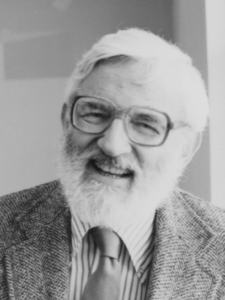
Alfred W. Crosby died peacefully at Nantucket Cottage Hospital among friends and family on March 14, 2018, after residing for two and a half years at Our Island Home. He was 87 and had lived with Parkinson’s Disease for two decades.
Born in Boston in 1931, he graduated from Harvard College in 1952 and served in the U. S. Army 1952—1955. He then earned an M.A.T. from the Harvard School of Education and a Ph.D. in history from Boston University in 1961. His first book, America, Russia, Hemp, and Napoleon, is about relations between Russia and the U.S.A. from the American Revolution through the War of 1812. He taught at Albion College, the Ohio State University, Washington State University, and the University of Texas at Austin, retiring in 1999 as Professor Emeritus of Geography, History, and American Studies. He was the recipient of many awards including three Fulbright Fellowships and a Guggenheim Fellowship. He was elected to the American Philosophical Society, the American Academy of Arts and Sciences, and the Academy of Finland and was a fellow of the John Carter Brown Library.
He was involved in the Civil Rights movement, taught Black Studies and the history of American jazz, helped to build a medical center for the United Farm Workers’ Union, and took a leadership role in anti-war demonstrations.
His interest in demography and the role of infectious disease in human history led him to write The Columbian Exchange: Biological and Cultural Consequences of 1492; America’s Forgotten Pandemic (originally Epidemic and Peace 1918); and Ecological Imperialism: The Biological Expansion of Europe, 900-1900. His fascination with intellectual and technological history produced The Measure of Reality: Quantification and Western Society, 1250-1600; Throwing Fire: Projectile Technology Through History; and Children of the Sun: A History of Humanity’s Unappeasable Appetite for Energy. His books have been published in Chinese, Greek, Italian, Japanese, Korean, Polish, Portuguese, Spanish, Slovene, Swedish, and Turkish translations. His work as a historian, he said, turned him from facing the past to facing the future. He lived by the maxim: What can I do today to make tomorrow better?
He was predeceased by his sister Ruth and by Anna Bienemann Crosby and Barbara Stevens Crosby. He is survived by Frances Karttunen, his wife of thirty-five years; his son Kevin and Kevin‘s wife Pamela Mieth; his daughter Carolyn and his grandchildren Allegra and Xander Crosby-Laramie; and by his stepdaughters Jaana Karttunen and Suvi Aika and their families.
There will be a memorial service and celebration of life in May. Donations in his memory can be made to the Friends of Our Island Home, Box 39, Nantucket, MA 02554; Palliative and Supportive Care of Nantucket; or Doctors Without Borders.
Part 2: Rhythms, Blues, and the Infinite Potential of Congo Square
What comes after jazz? How does a city reprise its collective creation of the Americas’ most original and distinctive art form? Part 2 of this essay surveys happenings in New Orleans music since the emergence of jazz around the turn of the twentieth century. For a take on earlier developments, check out Part 1 before working your way back here. Each of these essays, it is important to note, are highly personal accounts, framed and embellished by my own encounters and experiences in the Crescent City and points south. In this second part, I work to demonstrate how New Orleans drew from its fundamental links with the African Diaspora and Atlantic Worlds to influence many of the major shifts in American popular music over the twentieth century. I hope these brief discussions help set the mood for geographers attending the 2018 AAG Annual Meeting held in New Orleans as the city fêtes its tricentennial. These accounts also provide context for many of the musical acts and styles on display at the French Quarter Fest, the city’s gratis outdoor music festival that coincides with the AAG meeting.
Jazz is not an only child. On the contrary, the birth of jazz as a musical and economic form and force was but one flare-up in a long and gradual process of musical innovation and exchange in New Orleans. As myriad musical forms collected under a broad jazz umbrella, those various styles steadily evolved and expanded in a never-ending flow of accumulation and origination. Sustaining its status as a globally eminent cultural hearth, New Orleans continues to avail its strategic situation at the confluence of the Mississippi River and the Gulf of Mexico to churn out innovative and influential music.[i]
As the jazz sound bubbled up from the streets around the turn of the century, the city’s (in)famous red-light district, Storyville, provided steady gigs for the growing class of New Orleans musicians. And it was during the district’s twenty-year existence (1897-1917) that two of the city’s stalwart musical institutions assumed their distinctive styles. Brass bands typically played rowdy gin mills, restaurants, and saloons, while solo piano players worked the parlor houses of the district’s many brothels and cabarets. Beginning with legendary forebears Tony Jackson and Jelly Roll Morton, piano “professors” remain an iconic leitmotif in the city’s musical culture. Moreover, a sampling of the city’s more prominent pianists helps trace a particular evolution of New Orleans’ musical innovations over the twentieth century, from Jelly Roll Morton to Tuts Washington to Fats Domino to Allen Toussaint; and from Professor Longhair to Art Neville to James Booker to Dr. John.[ii]
As jazz became an international phenomenon in the early twentieth century, New Orleans maintained its outsized influence by simultaneously nurturing its jazz scene and fomenting new innovative expressions. Emanating from Congo Square in the centuries prior, the syncopated rhythms that became essential in early jazz remained the city’s backbeat, and toward the mid-twentieth century provided the foundation for New Orleans rhythm and blues, and in turn, rock and roll. The diasporic habanera rhythms underlying jazz, what Jelly Roll called “the Spanish tinge,” along with the derivatives rumba and mambo, went on to become key elements in the forerunning rhythm and blues of Professor Longhair. First showcased in his 1949 debut, “Blues Rhumba,” the Fess’s rollicking two-hand piano style melded many of the musical innovations that had traveled down the river or across the Gulf to New Orleans. An admirer of both Hank Williams and the Cuban “Mambo King” Pérez Prado, Longhair kept time with Afro-Cuban clave polyrhythms on his left hand, while riffing barrelhouse blues from the upland South on his right. The Fess thus integrated and indeed embodied the far-flung musical traditions that coalesced in New Orleans, uniting the call-and-response blues of the Mississippi Delta with the Afro-Caribbean rhythms circulating in the broader Atlantic World.[iii]
Figure 1: Fats Domino’s home and office on Caffin Avenue in the Lower Ninth Ward (Credit: Kent Kanouse, 2009).
Those rhythms and blues later became fundamental in the early development of yet another popular musical form: rock and roll. In retrospect, writers continue to disagree on the exact origins of what became rock music; however, New Orleans looms large in nearly every interpretation. For his part, Elvis Presley famously insisted in 1956 that New Orleans’ ownFats Domino was “the real king of rock and roll” (see Figure 1). Many writers now look back on Domino’s “The Fat Man,” recorded in 1949, along with Roy Brown’s “Good Rocking Tonight” (1947) and Little Richard’s “Tutti Frutti” (1955), as preeminent contenders for the first unequivocally rock and roll track. Amazingly, each of those records were among the many milestone works recorded and engineered at Cosimo Matassa’slegendary J&M Recording Studio (see Figure 2). Backed by versatile bandleader Dave Bartholomew and drummer Earl Palmer—an early and prolific progenitor of rock and roll’s signature backbeat, the likes of Ray Charles, Sam Cooke, Dr. John, Jerry Lee Lewis, Professor Longhair, Irma Thomas, and Allen Toussaint all cut sides with Matassa at J&M. Housed in his father’s appliance store at the corner of Rampart and Dumaine Streets, J&M sat just one block down from the site now commemorating Congo Square. In 2010, the Rock and Roll Hall of Fame designated the studio one of just eleven nationwide Historic Rock and Roll Landmarks.[iv]
Before co-founding the influential groups the Meters and the Neville Brothers, Art Neville began his recording career at J&M, laying down “Mardi Gras Mambo” with the Hawketts in 1954. The Carnival classic celebrates New Orleans’ enduring camaraderie with the Caribbean and remains a popular seasonal standard. A decade later Neville helped form The Meters, a powerhouse electric rhythm section that drew on syncopated second line rhythms and call-and-response Mardi Gras Indian chants to become an early architect of the style later known as funk (see Figure 2). The Meters became a sturdy foundation of the mid-century New Orleans sound, serving as the house band for Allen Toussaint’s Sansu label and backing renowned New Orleans soul and R&B artists Lee Dorsey, Irma Thomas, and Dr. John, among many others. As independent recording artists the band released several hits that remain New Orleans classics, including Hey Pocky Way, based on Mardi Gras Indian chants, and Cissy Strut, a gritty funk standard now considered an early milestone in the genre.[v]
Figure 2: The original location of Cosimo Matassa’s J&M Recording Studio at the corner of Rampart and Dumaine Streets in New Orleans (Credit: Jason Riedy, 2012).
The street culture of Mardi Gras Indians came of age with the city’s popular music, from second line to jazz to R&B to funk. Jelly Roll Morton discussed Indian culture with Alan Lomax at the Library of Congress in 1938, even rapping the traditional patois chant “T’ouwais, bas q’ouwais [tu es pas coller or two way pocky way]” on which the Meters based their mid-century hit. Later groups of Mardi Gras Indians combined their oral traditions with syncopated electric funk to create a popular and enduring sub-genre. A group led by big chiefs Bo Dollis and Monk Boudreaux joined bandleader Willie Tee and blues guitarist Snooks Eaglin to record as the Wild Magnolias in 1970 (see Figure 3). Now an acclaimed New Orleans institution, the Wild Mags continue to perform both as a traditional Indian gang and a funk band on the streets and in venues throughout the city.[vi]
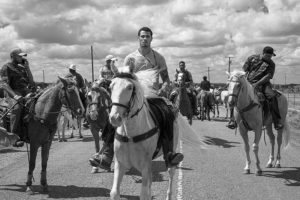
Figure 3: Big Chief Monk Boudreaux of the Golden Eagles Mardi Gras Indians leads his gang through Central City near A.L. Davis Park on “Super Sunday.” (Credit: Mike Connor, 2015).
As New Orleans rhythm and blues morphed into rock and roll and later funk, other influential offshoots were materializing in the city, elevating two queens to global eminence. “New Orleans Soul Queen” Irma Thomas recorded many of her early soul classics at J&M, and continues to perform as a leading figure in the genre. Civil Rights activist and iconMahalia Jackson got her start singing in the full gospel congregations of Plymouth Rock and Mount Moriah Baptist Churches in Uptown New Orleans (see Figure 4). From there she went on to inspire millions as the “Queen of Gospel,” combining the soulful Black spirituals of the plantation South with syncopated rhythms she learned to tap out on the wood floors of her New Orleans churches.[viii]
In both the background and the forefront of the rich diversity and complexity of twentieth century New Orleans music, piano players remained iconic. There is perhaps no better single example of the multiplicity and centrality of piano players in the city than the irrepressible Mac Rebennack, known worldwide as Dr. John. A celebrated composer and performer from the 1950s to the present, Dr. John remains distinguished as a standard bearer and keeper of the flame for the storied New Orleans piano professor tradition. As a teenager Dr. John drew early inspiration from Fats Domino, Little Richard, and especially Professor Longhair in the clubs and studios around town. His range as a player, however, transcends R&B to traverse a wide array of styles including rock, jazz, funk, and the haunting voodoo-inspired psychedelia for which he became most distinctive.[ix]
Figure 4: Mt. Moriah Missionary Baptist Church where Mahalia Jackson sang in the choir, 147 Millaudon Street, New Orleans (Google Street View, 2016).
After trouble found him in New Orleans, Mac fled to Los Angeles where the libertine spirit of late-60s California gave him license to experiment with New Orleans music in new and profound ways. There Mac serendipitously came under the wing of New Orleans patriarch Harold Battiste who managed to finagle some free studio time between Sonny and Cher takes in 1967. The duo put together a group of veteran New Orleans musicians to explore a visionary musical concept and stage persona based on nineteenth-century voodoo conjurer and man about town, Dr. John Montaigne (or Jean Montanet). A formerly enslaved native of Senegal, Dr. John the elder regained his freedom in Cuba before rising to prominence as a trusted root doctor in antebellum New Orleans. His 1885 obituary in Harper’s Weekly deemed him “the last of the Voudoos,” that is “the last really important figure of a long line of wizards or witches whose African titles were recognized,” and “the most extraordinary African character that ever obtained celebrity” in New Orleans. Studying the legend of Dr. John, Mac discovered a reference to one Pauline Rebennack, arrested along with Montaigne in the 1840s for her involvement in voodoo and other illicit acts. Realizing a likely familial connection, Mac assumed the stage persona Dr. John the Night Tripper, and with fellow New Orleans musicians in exile cut the classic LP Gris-Gris. That album amounted to a profoundly New Orleanian tribute to the Black Atlantic, melding the syncopated rhythms and bamboula dances of Congo Square with the power and grace of Afro-Caribbean spirituality and the lavish costumes, chants, and performance art of the Mardi Gras Indians. The result was a fantastic if somewhat cryptic masterpiece that conjured a range of New Orleans traditions to stake out the eeriest edges of the psychedelic zeitgeist of the 1960s.[x]
After beginning his career as a guitar player and session musician for J&M, a gunshot to the finger forced Dr. John to switch to the piano. His teacher was the brilliant and irrepressible James Booker, whom Mac later called “the best black, gay, one-eyed junkie piano genius New Orleans has ever produced.” Judging from the testimonies of his peers and scattered live recordingsBooker left behind, it is clear that he was among the most talented and original piano players the city ever gave us, notwithstanding Dr. John’s tongue-in-cheek qualifiers. Booker was an undisputed piano genius who brought classical heft to New Orleans rhythm and blues while sacrificing none of its soul. Booker could play it all: R&B, jazz, rock, classical, soul, gospel—often in a single performance, while making it feel deliberate and cohesive. In a town distinguished by a long and storied history of world-class piano players, Booker may have been its most versatile and proficient. Tormented by addiction and inner turmoil, the tragic genius and epicure died in the waiting room of Charity Hospital in 1983, far before his time.[xi]
Note: Click at your own risk! The links in the following section contain content some may consider not safe for work (NSFW).
Bounce and related forms of New Orleans hip hop arose from roots in the city’s public housing developments, especially the (former) Calliope and Magnolia projects. No Limit brothers Master P, Silkk the Shocker, and C Murder grew up in the former, while Juvenile, Soulja Slim, and “the queen of bounce” Magnolia Shorty, all hail from the latter. Before its demolition and redevelopment in 2014, the Magnolia projects were an important cultural crossroads in the city. Its A.L. Davis Park (formerly known as Shakespeare Park) has served as a historic training ground for second lines and brass bands, and remains an important gathering site for Mardi Gras Indians on Super Sunday. Just across LaSalle Street sits the Dew Drop Inn, a legendary lounge, barbershop, restaurant, hotel, and 24-hour performance venue that hosted a who’s who of soul and R&B acts, including Roy Brown, Dave Bartholomew, Fats Domino, Ray Charles, James Brown, Otis Redding, Little Richard, and so many others in the 1950s and 60s (see Figure 5). The club was a cornerstone of African American society in mid-century New Orleans, serving as a laboratory where late night sonic experiments led to early advances in rhythm and blues and rock and roll.[xiii]
Figure 5: The Dew Drop Inn, at 2836 LaSalle Street, in New Orleans, 1953 (Credit: Ralston Crawford Collection of Jazz Photography, Hogan Jazz Archive, Tulane University.)
In the twenty-first century, as New Orleans continues to innovate new musical forms and styles, the city remains devoted to jazz—its first born. The Preservation Hall Jazz Band and other acts based in traditional jazz sounds continue to pack venues in New Orleans and worldwide. So, too, have the Blues continued to travel down the Mississippi River to New Orleans, at times in the form of legendary artists such as Little Freddie King or turning up in distinctive local interpretations like the mystical Acadiana blues of the late Coco Robicheaux. New Orleans R&B Emperor Ernie K-Doe kept the mid-century sound alive with regular performances (musical and otherwise) in his storied Tremé nightclub, The Mother-in-Law Lounge, until his death in 2001. Shuttered in 2010, the New Orleans institution reopened a year later thanks to the efforts of beloved New Orleans trumpeter and bon vivantKermit Ruffins.
New Orleans royal families such as the Andrews, the Battistes, and the Marsalises continue to rear and train world-class musicians in the jazz and rhythm and blues traditions. Harold Battiste founded the collective A.F.O. (All For One) Records in 1961, the city’s first label owned and operated by African-American musicians. Before his death in 2015, he had educated hundreds of New Orleans musicians in New Orleans as a public school teacher and later on the faculty in the jazz studies program at the University of New Orleans. There he mentored an impressive list of twenty-first-century jazz luminaries, including Wynton and Branford Marsalis, saxophonist Donald Harrison Jr., trumpeters Nicholas Payton and Terence Blanchard, and pianist Jesse McBride. Hailing from the storied Tremé neighborhood, the Andrews familyblurs the boundaries that would otherwise delineate styles of New Orleans music. Cousins James, Glen David, and Troy “Trombone Shorty” Andrews carry on the traditional sounds of the city from second line to jazz to funk.
In the activist spirit of Mahalia Jackson, Harrison’s nephew Christian Scott aTunde Adjuah “stretches” traditional jazz with hip hop samples and second line rhythms designed to highlight contemporary anti-racist social movements. Local jazz aficionado Irvin Mayfield leads a renowned Latin Jazz group with percussionist Bill Summers. Their Grammy-winning Los Hombres Calientes reaffirms New Orleans’ enduring musical connections to Latin America and the Caribbean. The emerging Tank and the Bangas are among the most exciting groups in New Orleans today. Combing New Orleans jazz, funk, and hip hop with a charismatic slam poetry sensibility, Tank demonstrates, once again, the limitless potential and broad appeal of New Orleans music.
While jazz continues to diversify in infinite directions, brass bands remain essential cultural and economic institutions in the city. Groups such as the Dirty Dozen, the Hot 8, Rebirth, the Soul Rebels, Tremé, and Soul Brass Band perpetually update the tradition with new styles and sounds while maintaining their fundamental connections to the earliest forms of jazz. On any given day in New Orleans, countless brass bands second line through the city’s streets, animating onlookers with a “big noise” that recalls Buddy Bolden at the turn of the twentieth century.
Figure 6: Big Freedia performs at the Congo Square Stage during the New Orleans Jazz and Heritage Festival, 2017 (Credit: William Widmer, Billboard)
In the twelve or so decades following the birth of jazz, a delightful multiplicity of styles and sounds emerged in New Orleans. Despite the ever-expanding diversity and complexity of the city’s music, each of its magnificent innovations emerges from roots in the bedrock of syncopated rhythms and call-and-response lyrical forms given life at Congo Square. Fortunately for us, the essence of Congo Square beats on in two important commemorative spaces: its somber historic landmark in Louis Armstrong Park and as a dedicated stage at the annual New Orleans Jazz and Heritage Festival (see Figure 6). On that stage, when Donald Harrison, Jr., masks in Indian regalia to lead his swinging jazz band over syncopated rhythms, and when Big Freedia directs her twerk team with call-and-response lyrics, they all stir a heaping pot of gumbo that first felt the flame in Place Congo, at the back of town, in New Orleans.
To prepare for your trip to the Crescent City, keep the Guardians of the Groove, New Orleans community radio WWOZ streaming in the background at all times. Take an open online course on New Orleans music from Dr. Matt Sakakeeny, Assistant Professor of Music at Tulane University. Listen to an archive of Mardi Gras Indian performances from 1985 and a more recent writeup hosted by Smithsonian Folkways Magazine. Watch a YouTube playlist of recordings of Mardi Gras Indians compiled by the Alan Lomax archive and a mishmash YouTube playlist curated by the author. Once again, I cannot recommend enough A Closer Walk, an interactive website, map, and series of guided tours of the geographies of New Orleans music, sponsored by WWOZ and others. In the city, visit the Louisiana Music Factory to purchase hard-to-find vinyl, CDs, films, etc. Check out the WWOZ Live Wire page for the most comprehensive listings for live music in the city, and then go find some.
[i] Grace Lichtenstein and Laura Dankner, Musical Gumbo: The Music of New Orleans (New York: W.W. Norton, 1993); Jason Berry, Jonathan Foose, and Tad Jones. Up from the Cradle of Jazz: New Orleans Music Since World War II, revised ed. (Lafayette: University of Louisiana at Lafayette Press, 2009).
[ii] Al Rose, Storyville, New Orleans: Being an Authentic, Illustrated Account of the Notorious Red-Light District (Tuscaloosa: University of Alabama Press, 1974); Lichtenstein and Dankner, Musical Gumbo. See also Part 1 of this essay for more on Storyville and the emergence of Jazz.
[iii] Quotes in Ferdinand “Jelly Roll” Morton, Jelly Roll Morton: The Complete Library of Congress Recordings by Alan Lomax, Music CD (Cambridge, MA: Rounder Records, 2005): Disc 6, Tracks 8 and 9. Lichtenstein and Dankner, Musical Gumbo; Robert Palmer, “Folk, Popular, Jazz, and Classical Elements in New Orleans,” in Folk Music and Modern Sound, ed. William Ferris and Mary L. Hart (Oxford: University Press of Mississippi, 2008), 194-201.
[iv] John Broven, Rhythm and Blues in New Orleans (Gretna, LA: Pelican, 1988); Rick Coleman, Blue Monday: Fats Domino and the Lost Dawn of Rock “n” Roll (Cambridge: Da Capo Press, 2006: p. 246); Jim Cogan and William Clark, Temples of Sound: Inside the Great Recording Studios (San Francisco: Chronicle Books, 2003)
[v] John Storm Roberts, The Latin Tínge: The Impact of Latin American Music on the United States (New York; Oxford: Oxford University Press, 1979); Alexander Stewart, “New Orleans, James Brown and the Rhythmic Transformation of American Popular Music,” Popular Music 19, no. 3 (2000): 293-318; Ned Sublette, The World That Made New Orleans: From Spanish Silver to Congo Square (Chicago: Lawrence Hill Books, 2008). Ned Sublette, Cuba and Its Music: From the First Drums to the Mambo (Chicago: Chicago Review Press, 2004).
[vi] Alan Lomax. Mister Jelly Roll (New York: Grosset & Dunlap, 1950); Berry et al. Up from the Cradle of Jazz.
[vii] Lomax. Mister Jelly Roll; Berry et al. Up from the Cradle of Jazz; David Ritz, Charles Neville, Aaron Neville, and Cyril Neville. The Brothers: An Autobiography (New York: Da Capo Press, 2001).
[viii] Berry et al. Up from the Cradle of Jazz; Jules Victor Schwerin. Got to Tell It: Mahalia Jackson, Queen of Gospel (New York: Oxford University Press, 1992).
[ix] Dr. John (Mac Rebennack) with Jack Rummel. Under a Hoodoo Moon: The Life of the Night Tripper (New York: St. Martin’s Griffin, 1995).
[x] Quotes in Lafcadio Hearn. “The Last of the Voodoos,” Harper’s Weekly 29 (Nov. 7, 1885): 726–27, reprinted in S. Frederick Starr, ed. Inventing New Orleans: Writings of Lafcadio Hearn (Jackson : University Press of Mississippi, 2001): 77-82; Dr. John, Under a Hoodoo Moon.
[xi] Quote aired in Lily Keber, Bayou Maharajah: The Tragic Genius of James Booker (Film: Mairzy Doats Productions, 2016), available on Netflix. Trailer available on Vimeo.
[xii] Matt Miller, Bounce: Rap Music and Local Identity in New Orleans (Amherst: University of Massachusetts Press, 2012); Afropop Worldwide, “Shake It Fo Ya Hood: Bounce, New Orleans Hip-Hop,” (podcast, 2017).
[xiii] Berry et al. Up from the Cradle of Jazz; Coleman, Blue Monday. An illuminative and disturbing documentary (NSFW) of C Murder and the Calliope projects is available here. Super Sunday is a gathering of Indians typically held on the Sunday nearest St. Joseph’s Day. The Calliope and Magnolia are two of the four public housing developments that city and federal authorities demolished and redeveloped following Katrina.
Share
Annual Meeting
Social Media at #AAG2018
We’re getting closer to the 2018 AAG Annual Meeting! Whether you will be attending the meeting all week, for a few days, or looking to follow the action from afar, there are plenty of ways to get involved using social media. Social media is a great way for seasoned conference goers and newcomers alike to network, report on new research, engage in lively debate with those inside and outside of the discipline, and find out what’s going on during the largest geography conference in the world! Start planning your #AAG2018 social media strategy today with these helpful guidelines!
Twitter
One of the most frequently used social media sites for live events, Twitter is a great place to start scoping out the annual meeting. Twitter is used by geographers to discuss and share research ideas or connect with others, often leading to face to face meet-ups at the annual meeting. As the main social media channel, the AAG annual meeting has had active Twitter users since at least 2011 in Seattle. The hashtag #AAG followed by the year of the event has become the standard AAG Annual Meeting tag – this year the hashtag will be #AAG2018. Start using and following #AAG2018; posts are already being compiled in anticipation of the meeting! If you are new to Twitter, try these tips to benefit most from the network:
Follow @theAAG on Twitter! The official AAG Twitter account will be active throughout the meeting with important announcements, live tweets of events, and fun photos throughout the conference hotels. New this year: the AAG will conduct a Twitter poll once a day for members to choose a session they would like to see live-Tweeted!
Use #AAG2018 on all your meeting related communications. Sometimes it is difficult to fit your thoughts into the (now expanded!) 280 character count, but try to include the hashtag #AAG2018 in each of your tweets. This will ensure that your tweets are being seen by others both at the conference and following along offsite. If you are new to hashtags, a hashtag is a way to organize a specific topic into one feed. Click on the hashtag to see the conversations happening related to that topic.
Whenever possible, try to include Twitter handles. If you are tweeting about a paper, panel, or poster, be sure to attribute the research to the right person by using their Twitter handle. Presenters and panelists should consider including their handles on an opening slide or in a poster corner. Conversely, if you do not want your research to be tweeted, please state that information upfront so the audience is aware of your desires.
Unable to attend the meeting this year? Follow the hashtag and join the conversation!
Facebook
Do you prefer Facebook over Twitter as your social media site of choice? While there will be less live coverage of specific sessions, Facebook is a great way to share photos, videos, and news about the annual meeting with your friends, family, and colleagues.
Make sure you like the AAG Facebook page (www.facebook.com/geographers) and set the page so that you see it first in your News Feed by clicking on the “Following” dropdown menu on the AAG Facebook page itself. This will ensure that you receive the latest meeting related announcements as soon as you open the Facebook app or website.
Be on the lookout for Facebook Live videos from some of the major events like the Exhibition Hall opening and the World Geography Bowl finals!
Check on the page each morning for reminders of the day’s schedule of events.
Instagram
The AAG’s newest social media channel, Instagram is a fun place to share your photos of activities at the annual meeting and your daily life as a geographer!
Follow @theAAG on Instagram for photos of the annual meeting as well as behind the scenes looks at the work that goes into planning the conference on a yearly basis!
Share your photos of the meeting with other attendees using the conference hashtag #AAG2018 and look for an Instagram collage of #AAG2018 photos after the meeting ends.
Want to be featured in our new Instagram Campaign to meet members of the AAG, #MeettheAAG? Look for AAG Staff throughout the meeting who will be taking photos and collecting information about AAG members that will be showcased during the summer.
Snapchat
Have you tried out the latest social media craze? While the AAG does not have an official Snapchat channel, there will be an unveiling of the first ever AAG Annual Meeting Snapchat Filter! This exclusive geofilter is only available in the Marriott by the registration, AAG booth, and Exhibit Hall (or on floors above and below these areas – 3D space!).
Take a snap, use the geofilter, and share it with your friends!
For extra pizzazz, save the snap with the applied geofilter to your memories and share it out over Instagram or Twitter with the #AAG2018 hashtag.
Add a special flourish to your social media profiles by using a geofiltered snap as your profile photo! Get creative and have fun!
General Communications
Because the AAG social media channels will be busy during the annual meeting, AAG staff may not be able to provide a timely reply through these mediums. The AAG Annual Meeting App is a good place to start for conference information with regards to floor plans, session times and locations, and abstracts. If you have questions or concerns and need to contact a staff member, the best option is to find a conference volunteer (wearing a neon yellow t-shirt) or to stop by the AAG Meridian or Registration area on the 3rd Floor of the Marriott Hotel.
Share
Post
Continuing Creolization in New Orleans Foodways
Among other points of distinction, New Orleans is often and enthusiastically celebrated as a great place to eat. Boosters of the city’s cuisine point to the same cultural hybridity and cosmopolitanism that enabled the flourishing of jazz music and distinctive architectural styles as explanation for the development of Creole cuisine. Tom Fitzmorris, a prominent restaurant critic and radio host in New Orleans since the 1970s and curator of the website nomenu.com, argues in his book Hungry Town: A Culinary History of New Orleans: “Throughout its history, New Orleans was always a net exporter of culinary innovation; we largely ignored what was going on in other cities around the country. With good reason. Outside New York, San Francisco, and Chicago, no other American city was in league with New Orleans in its culture of cookery. And not even those cities had so well-developed and old a native flavor as we did.”[1] The “native flavor” of which Fitzmorris boasts is a near-proprietary blend of European, African, and Native American preparations that highlight local ingredients, especially seafood and certain fresh produce. The most iconic and classic dishes of the New Orleans culinary canon–gumbo, jambalaya, oysters Rockefeller, red beans and rice, turtle soup, anything with shrimp or crawfish–illustrate the creolization of European, African, and Caribbean cuisines while emphasizing the importance of proximity to the Mississippi river, the Gulf of Mexico, and the bayous that characterize the landscape around New Orleans.
The terms “Creole” and “Cajun” refer to the foodways (and broader cultural characteristics) of urban and rural Southern Louisiana, respectively. Creole describes the population born to settlers in French colonial Louisiana, particularly in New Orleans, as well as native-born people of African descent, both enslaved and free people of color. Like the people, Creole food is a blend of the various cultures of New Orleans (including Spanish, French, African, Italian, German, Caribbean, and Native American, among others), and is typically considered more cosmopolitan and varied than Cajun cuisine. Cajun refers to descendents of the French Canadian settlers forcibly removed from the Acadian region by the British in the mid- 18th century. They settled in the swampy areas of southern Louisiana today known as Acadiana and encompassing four distinct regions: the levees and bayous (Lafourche and Teche), the prairies (Attakapas Native land), swamplands (Atchafalaya Basin), and coastal marshes (New Orleans area and Houma).[2] Cajun cooking continues to draw heavily, in many cases exclusively, from these local landscapes, and has further blended with Creole cuisine to characterize what many believe is “authentic” New Orleans cuisine.
Seafood photo by Cheryl Gerber courtesy New Orleans Convention and Visitors Bureau
The prominence of indigenous ingredients and dishes in the formulation of a distinctive cuisine is “central to ideas about what is specific about New Orleans” argues University of New Orleans anthropologist David Beriss.[3] Prior to Hurricane Katrina, Beriss explains, New Orleans had a “long-standing food culture, a cuisine, built from local products, that is regularly produced in homes and restaurants and frequently discussed around local tables and in the local media.” This food culture, and the celebratory rhetoric surrounding it, seem to indicate that the city’s creolized foodways are more broadly representative of the cultural and ethnic heterogeneity that have long characterized New Orleans. And while contemporary New Orleans foodways continue to claim distinctive terroir[4] (and merroir – the aquatic equivalent of terroir)–ingredients conveying the taste of their place of origin–the late geographer Clyde Woods reminds us that these foodways and the culture that produced them bear legacies often neglected from the dominant celebratory narratives.[5] At risk of vastly oversimplifying complex historical processes, I want to highlight the importance of colonialism and enslavement for the development of contemporary New Orleans foodways. (I also acknowledge that those processes contributed to the formulation of Southern U.S. foodways more broadly.)
Between 2,000 and 600 B.C., long before European colonization, the Poverty Point settlement in Northeast Louisiana and its surrounding villages had a highly developed pre-agricultural subsistence system based on local plants and game, especially aquatic. Maize-based farming seems to have come late to Louisiana compared the rest of the Mississippi Valley and the Eastern U.S. — only a few hundred years before the arrivals of Europeans. This may have been because of the abundance of wild sources of food, again aquatic as well as terrestrial. As indigenous agriculture declined under the pressure of European settlement, war and exploitation increased. French settlers enslaved women from defeated nations and forced them to both grow food and endure a lifetime of sexual exploitation.[6] As European settlement expanded throughout the region, Woods explains, “many of the new immigrants avoided agricultural labor in the fetid, humid, and dangerous bayous. To solve the plantation and farm labor shortages, the Company of the Indies directed the African slave trade toward New Orleans in 1719.”[7] Most of the enslaved Africans who entered the colony between 1717 and 1731 were transported directly from Senegambia, a West African region whose cooking ingredients (rice, okra, various spices, legumes, and seafoods) and techniques took firm hold in the colonies.[8],[9] New Orleans distinctive cuisine, then, is a product not just of local ecologies, but also of legacies of violence, erasure, and enslavement. Those same legacies contributed to disproportionate exposure to violence and death in the wake of Hurricane Katrina, which devastated the city in 2005.[10],[11]
And yet, in the months and years following the storm, a curious thing happened to the city’s culinary landscape: it experienced what many referred to as a “renaissance.”[12][13] For many, the restaurant industry became a barometer for broader recovery within the city. “If eating out was a major part of social life in New Orleans before Katrina, after the disaster, eating in restaurants turned into one of the central ways the city’s fabric was to be rewoven.”[14] Tom Fitzmorris, mentioned earlier, maintained an index of all open restaurants in the city beginning just a few weeks after the levees broke on August 29; less than two years after the storm, there were more restaurants operating in the city then there were prior to it.[15] Among these were the old standard-bearers of traditional Creole and Cajun cuisine–Galatoires, Antoines, Commander’s Palace, and countless po-boy shops and neighborhood eateries. But the post-Katrina landscape saw an influx of new restaurants catering to new tastes, including those of young, mostly white transplants, but also large numbers of Latinos, whose labor was essential to the rebuilding of the city. These new New Orleanians embraced a wider range of cuisines and eating experiences, leading to a potential fracturing of what constitutes New Orleans foodways. It is nearly as possible to obtain a banh mi as a po-boy in present day New Orleans[16],[17], leading some to fret that “authentic” New Orleans cuisine is under assault. Others celebrate the evolution of a cuisine that embraces tradition while welcoming innovation and expansion–essentially, a further creolization of the “original” Creole cuisine.
While there will always be debates over the meaning (and value) of “authenticity” in foodways, it is certainly the case that foodways and food culture, especially in New Orleans, reflect broader historical and geographic trends and processes. Contemporary New Orleans foodways are a result of forced and voluntary migrations to this ecologically unique region over the course of several centuries. Embedded within the region’s foodways are tensions and contradictions: gourmet excesses abut food insecurity; a mostly white male hegemony reigns in the city’s kitchens (where recent revelations of widespread sexual assault perpetrated by perhaps New Orleans’ most beloved chef have sparked national conversations[18]); African American creative and cultural capital remains subject to appropriation (and reclamation)–these are just a few examples. And yet, food remains a central source of pride for New Orleanians. With all its complexity and contradictions, New Orleans is (still/more than ever?) full of good places to eat.
[1] Tom Fitzmorris, Tom Fitzmorris’s Hungry Town: A Culinary History of New Orleans, the City Where Food Is Almost Everything (Abrams, 2014).
[2] Jay D. Ducote, “Cajun vs. Creole Food – What Is the Difference?,” Louisiana Travel, November 25, 2013, https://www.louisianatravel.com/articles/cajun-vs-creole-food-what-difference.
[3] David Beriss, “Authentic Creole: Tourism, Style and Calamity in New Orleans Restaurants,” in The Restaurants Book: Ethnographies of Where We Eat, ed. David Beriss and David E. Sutton (New York: Berg Publishers, 2007), 151–66.
[4] Amy Trubek, The Taste of Place (Berkeley: University of California Press, 2009)
[5] Clyde Woods, Development Drowned and Reborn: The Blues and Bourbon Restorations of Post-Katrina New Orleans, ed. Jordan T. Camp and Laura Pulido, vol. 35, Geographies of Justice and Social Transformation (Athens, GA: University of Georgia Press, 2017).
[8] Judith Ann Carney and Richard Nicholas Rosomoff, In the Shadow of Slavery: Africa’s Botanical Legacy in the Atlantic World (Berkeley, Calif: University of California Press, 2009), https://www.ucpress.edu/book.php?isbn=9780520269965.
[9] Michael W. Twitty, The Cooking Gene: A Journey Through African American Culinary History in the Old South (New York, NY: Harper Collins, 2017).
[10] Michael Eric Dyson, Come Hell or High Water: Hurricane Katrina and the Color of Disaster, 1 edition (New York: Civitas Books, 2007).
[11] Catarina Passidomo, “Whose Right to (farm) the City? Race and Food Justice Activism in Post-Katrina New Orleans,” Agriculture and Human Values 31, no. 3 (September 2014): 385–96, https://doi.org/10.1007/s10460-014-9490-x.
[12] Kim Severson, “The New Orleans Restaurant Bounce, After Katrina,” The New York Times, August 4, 2015, sec. Food, https://www.nytimes.com/2015/08/05/dining/new-orleans-restaurants-post-hurricane-katrina.html.
[13] Brett Anderson, “New Orleans Restaurant Scene Emerging Better after Hurricane Katrina,” The Times-Picayune, August 27, 2010, https://www.nola.com/dining-guide/index.ssf/2010/08/new_orleans_restaurant_scene_h.html.
[14] Beriss, David and David Sutton, “Starter: Restaurants, Ideal Postmodern Institutions,” in The Restaurants Book: Ethnographies of Where We Eat, ed. David Beriss, and David Sutton (Oxford ; New York: Berg Publishers, 2007), 1–13.
[16] an McNulty, “Orleans Goes Nouvelle,” Gambit, accessed February 23, 2018, https://www.bestofneworleans.com/gambit/orleans-goes-nouvelle/Content?oid=1571316.
[17] “The Lives and Loaves of New Orleans,” Southern Foodways Alliance (blog), accessed February 23, 2018, https://www.southernfoodways.org/the-lives-and-loaves-of-new-orleans/.
[18] Brett Anderson, “John Besh Restaurants Fostered Culture of Sexual Harassment, 25 Women Say,” NOLA.com, accessed February 24, 2018, https://www.nola.com/business/index.ssf/2017/10/john_besh_restaurants_fostered.html.
Share
President's Column
Non-Killing Geographies
This column is written with a very heavy heart, coming just several days after the deadly mass shooting at the Marjory Stoneman Douglas High School in Parkland, Florida. The massacre ended the lives of 17 students and staff, injured dozens, and left behind many traumatized survivors, as well grieving friends, families, and community members. Counted among the murdered was Scott Beigel, a geography teacher and cross country coach at the high school, who heroically lost his life providing students with shelter from the gunman’s bullets.
This tragedy, which sadly has become just the latest in now a long and growing line of school shootings in the United States, drew significant expressions of sadness and anger from AAG members, our governing Council, and the wider geography community. On behalf of the Association, I express heartfelt sympathy to the victims of the Parkland school shooting. I also demand in the strongest possible terms that U.S. federal, state, and local government officials be tireless and unflinching in examining what can be done to eliminate the pervasiveness of violence not only in schools but across the nation’s communities. Thankfully the news industry has cast a significant spotlight on the massacre in Parkland, but there are scores of neighborhoods, workplaces, campuses, and other spaces and lives marked by this and other forms of violence, much of it going under-reported and under-analyzed.
Disciplinary response to the Florida murders remains very fluid as many of us in the AAG consider the most appropriate way to memorialize Scott Beigel and all the victims and survivors of the shooting. No doubt, this will be the subject of conversations at the AAG Council’s upcoming spring meeting in New Orleans. There is also considerable ongoing discussion among geographers about the impact that this tragedy will have on broader social discussions and debates about gun reform, school safety, mental health, and the responsiveness (or lack thereof) of some government authorities to the precarity of human life. The outrage and political activism recently demonstrated by the surviving students of Stoneman Douglas High School suggest these debates will remain highly charged for some time and rightly so.
While these aforementioned issues cannot be settled overnight, I do feel responsible as AAG President to reflect upon what these recent horrific events might mean for our discipline and our Association. In particular, I would like to use this column to suggest that while a growing number of geographers are engaged in a critical study of violence, it should become an even more central theme within geographic research, teaching, community engagement, and other disciplinary initiatives.
Throughout my tenure as AAG President, I have forwarded efforts to make Geography REAL, that is, responsive, engaged, advocating, and life-improving. As we work to further enhance our discipline’s responsiveness to critical issues and its commitment to the welfare of people and their social and natural environments, geographers can and should play an important role in better understanding the place of violence—and its many forms, causes, and consequences—within contemporary society and space.
In writing monthly columns, I frequently reach out to colleagues with expertise that I don’t have. In the wake of the Parkland massacre, I reached out to newly selected AAG Fellow, James “Jim” Tyner, who has written several books and important articles on the relationship between space, society, and violence. The position of AAG Fellow is meant not only to honor distinguished scholars but to create a cohort of experts and mentors who can advise on AAG strategic directions and assist in responding to grand challenges. Jim and I are united in believing that violence represents one of those grand challenges.
For the remainder of this column, Jim and I shift, perhaps awkwardly but by necessity, to joining voices in a collaborative way. In particular, we wish to offer some initial ideas of what the discipline can offer or contribute, and then what specific role the AAG and its members might play in the study and prevention of “killing geographies” and the advocacy of “non-killing geographies.”
Myriad Geographies and Victims of Violence
Simon Springer recently argued that violence sits in places—a phrase that effectively captures the myriad geographies of violence. The tragedy in Parkland, Florida has called attention both to gun violence and to school shootings. Sadly, there are innumerable other killing geographies that remain off the radar and thus fail to garner political attention. Existing proposals, however well intentioned, to provide additional security to schools will do nothing to prevent the next ‘Aurora’ or ‘Las Vegas’ massacre. The (impractical) proposal to arm teachers not only will not keep students safe at school; it will in no way afford protection to children from violence that happens when they go to the movies, eat at the mall, ride their bicycles to the park, or simply drive and walk through their policed communities. Nor will any of these measures address the now-routine litany of shooting deaths that take place, by accident or intention, in the home. Domestic violence, as Rachel Pain has argued, is a form of “everyday terrorism” that like global terrorism is related to “attempts to exert political control through fear.”
We must acknowledge also that it is not only our children at risk to ever-increasing forms of direct violence. Our mothers and fathers, brothers and sisters, friends and co-workers remain vulnerable to premature death. Journalists, politicians, and environmental activists are targets of assassination and forms of violent intimidation. Alt-right attacks on scholars, including some of our colleagues in geography, have resulted in not only criticism and defamation of their research but also in social media trolling, harassment, and even death threats. It prompts a sober discussion, one that has yet to happen among AAG leaders, about what professional societies, universities, and programs can do to safeguard and support faculty and students in the face of this aggression.
Mass shootings, whether at schools, shopping malls, theaters, or open-air concerts, constitute spectacular forms of direct violence. As a discipline, Geography would be remiss to concentrate solely on these moments to the neglect of other forms of structural violence that come from the harm and neglect inflicted by social institutions and governmental policies and spaces. Ruth Wilson Gilmore, for example, has encouraged us to see the role that ever increasing rates of mass incarceration play in inflicting a wider organized, legalized violence and abandonment upon people of color, who are disproportionately represented in America’s prisons. Congressional in-action in the promotion of gun control is matched by a concomitant in-action toward the provision of health-care and welfare. Budget cuts aimed at reductions in food stamps and health insurance prove no less deadly to the human body than a bullet from an AR-15. To date, many geographers have made considerable contributions; but more can and should be done.
A beginning point in the promotion of non-killing geographies is to confront directly the socio-spatial organization of violence: the spaces where violence takes place and those affected. Violence has important geographic consequences; it reshapes people’s perceptions of and interactions with places as well as their survivability and sense of belonging within those places. Violence is produced through social relations and interactions, some very intimate and others more distant. But violence is always social and always coded by dominant ideas and vulnerabilities related to ‘race,’ gender, class, nationality, and so on. To this end, solutions to violence must necessarily address the social milieu of prejudice, hatred, and xenophobia, but also the more banal indifference toward others.
Studying and Preventing Violence as an AAG Initiative
What role can, and should, the AAG perform in studying violence and advocating for non-killing geographies? An obvious call is to promote research. Drawing on a multitude of quantitative and qualitative methodologies, including GIS, participatory mapping, and ethnographies, geographers are well-trained to provide theoretical insight and empirical documentation of wide ranging forms of violence. Recent evidence suggest great potential for such analysis. Geographers at the University of Utah recently mapped and conducted a spatial analysis of hate groups in the U.S., while Kent State’s GIS / Health and Hazards Lab teamed up with officials in Akron, Ohio to study the impact of violence on children in the city.
Geographers can provide a much-needed spatial awareness to violence, namely the scalar connections of violence ranging from the body to the global political economy. The spatiality of violence demands analysis from any number of sub-fields within the discipline, including environmental geographers who could shed significant light on what Rob Nixon calls the “slow,” gradual violence “wrought by climate change, toxic drift, deforestation, oil spills, and the environmental aftermath of war.” Devoting one of the featured themes of an upcoming AAG meeting to violence and non-killing geographies would be an ideal place to start building such a focused initiative, organizing networks of collaboration among academics and advocacy organizations, and drafting traditional publications as well as white papers to inform public policy.
Research does not occur in a vacuum, but is positioned within and actively shaped by the social and political conditions that can either facilitate or hinder certain avenues of research. Indeed, detailed understandings of gun violence—to take but one example—have been hamstrung by a lack of sufficient federal support. As The Washington Post and criminal justice professor Lacey Wallace reported in the immediate aftermath of the Las Vegas mass shooting, large scale gun violence research has been largely stymied since 1996, when the National Rifle Association (NRA) pressured congressional leaders to place restrictions on the ability of the Centers for Disease Control (CDC) to fund scholarship that would “advocate or promote gun control.” The measure had a “chilling ripple effect” across other federal agencies and private foundations, leaving scholars not to mention lawmakers with “little up-to-date data about what causes gun violence or how it can be prevented or reduced.” As geographers ramp up their research on violence, it is quite likely that AAG’s growing strides in monitoring, analyzing, and making interventions in public policy on Capitol Hill will be important in calling on national leaders to permit and facilitate research on gun control, gun violence, and other violence-related topics, such as intimate partner violence and hate-crimes.
The Association, with its growing support of outreach and communication, is in a key position to help geographers speak with wider audiences about the spatiality of violence and move toward the training of geography faculty and students as “scientists-advocates.” As explained in a recent presidential column, “advancing ‘awareness’ is too passive of an idea to capture the kind of broader and deeper public investment in geography that needs to occur.” It is necessary, following the Past President Glen MacDonald, for the AAG to initiate and support efforts of a “transformative” nature, that is, the promotion of non-killing geographies. This is a tall order—one that entails a sustained commitment to advocacy on behalf of victims of violence and toward the prevention of violence. Specific proposals include the advocacy of non-violence and non-killing geographies during Geography Awareness Week, the greater development of college geography courses on violence, the hosting of workshops and teach-ins not only on campuses, but beyond, to include K-12 institutions, places of worship, and other public forums.
AAG might consider supporting the compilation and dissemination of data and research on violence; such materials, in line with existing efforts by the Association, would include a variety of outreach-related publications, brochures, handouts, and multimedia tools. And we can think bigger: The AAG could establish a clearinghouse on geographies of violence, a repository for journalists, politicians, academics, and activists to learn about the study and prevention of violence as well as what a geographic perspective can lend to such work. From our perspective, the resource would appear to have a natural connection with the Association’s long-time focus on human rights.
Efforts are already underway within the AAG to develop a “culture of mentorship,” including for example the establishment of the Susan Hardwick Excellence in Mentoring Award, the AAG Department Leadership Workshop, the AAG-ESRI ConnectED GeoMentors Program, the Women’s Mentoring Network, and the AAG Fellows Program. There is a rich opportunity for geographers to expand our understandings of mentorship in light of a greater sensitivity to violence and victims, such as partnering with the Scholars at Risk (SAR) program. Scholar At Risk is an advocacy network that provides institutional support to those scholars “suffering grave threats to their lives, liberty and well-being by arranging temporary research and teaching positions at institutions in [the SAR] network as well as by providing advisory and referral services.”
In closing, geographers are encouraged to consider the promotion of non-killing geographies as one of the discipline’s and society’s grand challenges and to reflect on what role they and the AAG might play in studying, preventing, and speaking out against violence. Cultivation of non-violence feels like an insurmountable issue, especially in light of the loss of life and the political debates surrounding Parkland massacre, but there is arguably no more important task confronting Geography. And there can be no greater way to remember the sacrifice of Scott Beigel, a fellow geography educator who gave his life to save his students from violence.
No doubt, there are some readers of this column already making important contributions in scholarly and public understanding of geographies of violence and non-killing. Share these contributions and any other ideas and opinions by email or on Twitter using #PresidentAAG.
— Derek Alderman, AAG President
University of Tennessee
Twitter: @MLKStreet
Email: dalderma [at] utk [dot] edu
— James Tyner, AAG Fellow
Kent State University
Twitter: @Tynergeography
Email: jtyner [at] kent [dot] edu
Every month the AAG compiles a list of newly-published books in geography and related areas. Some are selected for review in the AAG Review of Books.
Publishers are welcome to send new volumes to the Editor-in-Chief (Kent Mathewson, Editor-in-Chief, AAG Review of Books, Department of Geography and Anthropology, Louisiana State University, Baton Rouge, LA 70803).
Anyone interested in reviewing these or other titles should also contact the Editor-in-Chief.
PLEASE NOTE: Due to current public health policies which have prompted the closing of most offices, we are unable to access incoming books at this time. We are working on a solution during this transition and will continue our new books processing as soon as we can. In the meantime, please feel free to peruse previous books from our archived lists.
Atlas of the 2016 Elections by Robert H. Watrel, Ryan Weichelt, Fiona M. Davidson, John Heppen, Erin H. Fouberg, J. Clark Archer, Richard L. Morrill, Fred M. Shelley, and Kenneth C. Martis (eds.) (Rowman and Littlefield 2017)
Time for a Radical Geographic Literacy in Trump America
By Derek Alderman
I am sure many of you know of the strong allegations that Mr. Donald Trump—frustrated with a bipartisan immigration proposal—argued that America needs more immigrants from places like Norway and fewer from Haiti, El Salvador and African nations, which the President reportedly called “shithole countries.” More than mere “locker room cartography,” as one late night comic put it, the President’s harmful words project a racialized map of the world that represents Haitians, Salvadorians, and Africans not only as unwelcomed, but also as inferior. By reducing countries and an entire continent to a pejorative label, Mr. Trump denies the complexity, dignity, and richness of life in these countries and the creative resilience and resistant survivability that have always existed amid and in opposition to political oppression and poverty.
The Preliminary Program for #AAG2018 has been released! The online searchable program includes a preliminary agenda of sessions, plenary speakers, and specialty group meetings. You can browse the schedule by author, title, keyword, sponsor group, theme and day.
With the release of the 2018 AAG Annual Meeting Preliminary Program, now is the best time to book your travel to New Orleans. The AAG is pleased to partner with United Airlines, Amtrak, and Super Shuttle to helpreduce costs for Annual Meeting attendees traveling to New Orleans by train or airplane. Stay close to the action in the AAG co-headquarter hotels. The Opening Plenary and International Reception will take place in the Sheraton New Orleans and the Exhibition Hall and Registration can be found in theMarriott French Quarter. Limited rooms are still available in the AAG block of rooms in each hotel.
Nora Newcombe and David Lambert to Keynote Geography Education Research Track at 2018 AAG Annual Meeting
The National Center for Research in Geography Education (NCRGE) is pleased to announce keynotes by Nora Newcombe and David Lambert for a special track of geography education sessions during the 2018 AAG Annual Meeting in New Orleans. Nora Newcombe’s lecture, “GPS in Our Heads: What Do Behavioral and Neural Data on Navigation Offer to Geography Educators?”, engages the long and controversial proposal that humans can develop cognitive maps of their environment. Following Newcombe’s lecture, David Lambert will deliver a lecture entitled “Nurturing the ‘Garden of Peace’: Powerful Geographical Knowledge and the Pursuit of Real Education.”
Élisée Reclus in Louisiana (1853-1855): Encounters with racism and slavery
In 1853, New Orleans was second only to New York City as the largest port city in the United States. The early capitalist economy welcomed a young Élisée Reclus, French geographer and future anarchist, to its shores, forever changing the scholar’s philosophical stance. In this article, Federico Ferretti uses Reclus’ accounts of the city to trace the roots of a geographer “later considered as a founding figure in both scientific geography and socialist libertarianism (anarchism).”
Louisiana’s Turn to Mass Incarceration: The Building of a Carceral State
“The history of the Louisiana penal system is marked through crisis,” states Lydia Pelot-Hobbs in her expose on the decentralization of ‘Angola,’ the state of Louisiana’s only prison, during the late 20th century. The carceral geographies of New Orleans during the 1970s and 1980s are continuing to shape its political geographies today.
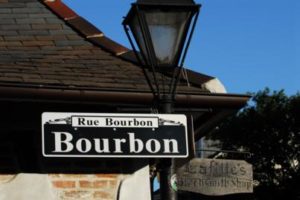
2018 marks the tricentennial anniversary of the city of New Orleans, site of the 2018 AAG Annual Meeting. Over the course of its 300 years, the Big Easy has experienced quite a few changes. New Orleans’ unofficial “geographer laureate” Richard Campanella of the Tulane School of Architecture chronicles a few in this month’s Place Portraits: how Bourbon Street became a place to publicly imbibe, the shift of the Louisiana state capitol from New Orleans to Baton Rouge, and three centuries of responses to natural and human disasters.
“Focus on New Orleans and the Gulf Coast” is an ongoing series curated by the Local Arrangements Committee to provide insight on and understanding of the geographies of New Orleans, Louisiana, and the greater Gulf Coast region in preparation for the 2018 Annual Meeting.
ASSOCIATION NEWS
First Round of 2018 AAG Award Recipients Announced
The American Association of Geographers congratulates the individuals named to receive an AAG Award. The awardees represent outstanding contributions to and accomplishments in the geographic field. Formal recognition of the awardees will occur during the AAG Awards Luncheon at the Annual Meeting on Saturday, April 14, 2018.

The AAG is excited to have two new interns join our staff for the Spring 2018 semester. Laura Akindo, graduate of Frostburg State University, and Hannah Ellingson, sophomore at The George Washington University, will both be assisting staff on a variety of internal projects in addition to the 2018 AAG Annual Meeting.
The 2018 AAG election is being conducted online between January 31 and February 22, 2018. Ballots will be emailed to members based on the email address provided to the AAG. Candidate information is currently available on the AAG website.
Each month, learn more about the field of geography from people who are working in it! This month, AAG talked to Leslie McLees, Undergraduate Coordinator & Instructor at the University of Oregon Department of Geography, and Pete Chirico, Research Geographer & Associate Director of the Eastern Geology and Paleoclimate Science Center at U.S. Geological Survey. Both discussed the need for effective communication skills on the job market and their passions for geography.
Qihao Weng named fellow by Institute of Electrical and Electronics Engineers
The Institute of Electrical and Electronics Engineers (IEEE) has named geographer and long time AAG Member, Qihao Weng to its list of fellows. Weng has been a professor at Indiana State University since 2001 where his research focuses on urban remote sensing. The author of 210 articles and 10 books, Weng is the 2015 AAG Willard and Ruby S. Miller Award recipient.
Looking to learn more about the four scholarly journals published by the AAG throughout the year? In this month’s AAG Snapshot, delve into the academic publishing sphere as AAG Publications Director Jennifer Cassidento shares tidbits about the Annals of the American Association of Geographers, The Professional Geographer, GeoHumanities, and The AAG Review of Books!
Winter 2018 Issue of ‘The AAG Review of Books’ Now Available
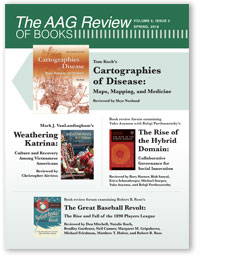
Volume 6, Issue 1 of The AAG Review of Books has now been published online. In this first issue of 2018 be sure to check out the discussions of Concrete Revolution: Large Dams, Cold War Geopolitics, and the US Bureau of Reclamation, Degraded Work: The Struggle at the Bottom of the Labor Market, and Cities in Global Capitalism.

Forests and labor and states, oh my! Check out the list of new books in geography that were received by the AAG during the month of December. The New Books list contains recently published titles in geography and related fields.
February 2018 Issue of the ‘Professional Geographer’ Now Available
The Professional Geographer, Volume 70, Issue 1, has been published. The focus of this journal is on short articles in academic or applied geography, emphasizing empirical studies and methodologies. Volume 70, Issue 1 includes a focus section entitled: Critical Data, Critical Technology.
Read the January 2018 Issue of the ‘Annals of the AAG’
The first issue of volume 108 of the Annals of the American Association of Geographers has been published. Read articles that span the breadth of the discipline, organized into four major areas: Methods, Models, and Geographic Information Science; Nature and Society; People, Place, and Region; and Physical Geography and Environmental Sciences.
“I was a thief. A mild thief, but a thief nonetheless. In 1996, the Binghamton Geomorphology Symposium held a series of talks on the topic of “The Scientific Nature of Geomorphology”. As a young a 23-year old graduate student, I registered and then covertly audio-recorded the talks from a cassette recorder hidden in my jacket pocket. Even though it wasn’t stated explicitly, I guessed that doing this would probably constitute theft of intellectual property. But I did it anyway…”
“As educators, we are always faced with challenges on how we structure our curriculum activities to ensure that we are in line with modern industry practices. This is easier said than done—for one, there is likely no consensus on what a “modern geographic information system (GIS)” means; and two, it takes a tremendous amount of time to do curricula updates… Below is an attempt to outline a few important topics amid the massive digital transformation we have experienced.”
Featured Articles is a special section of the AAG Newsletter where AAG sponsors highlight recent programs and activities of significance to geographers and members of the AAG. To sponsor the AAG and submit an article, please contact Oscar Larson olarson [at] aag [dot] org.
Submit News to the AAG Newsletter. To share your news,email us!
Share
New Books for Geographers
New Geography Books: January 2018
Every month the AAG compiles a list of newly-published books in geography and related fields. Some are selected for review in the AAG Review of Books. Anyone interested in reviewing these or other titles should contact the Editor-in-Chief, Kent Mathewson (kentm [at] lsu [dot] edu). Listed below are the books received from publishers in the last month.
Louisiana’s Turn to Mass Incarceration: The Building of a Carceral State
Louisiana’s prison and jail incarceration rates from 1978 to 2015 showing the number of people incarcerated in state prisons and local jails per 100,000 people; https://www.prisonpolicy.org/reports/jailsovertime.html#methodology
The history of the Louisiana penal system is marked through crisis. For the majority of the 20th century such crises revolved around the state’s singular prison, the Louisiana State Penitentiary, commonly referred to as Angola. Having long been known as the “bloodiest prison in the nation,” the prison entered into an unmatched crisis of legitimacy in the 1970s. Conditions were wretched and stabbings and escapes were monthly affairs.[1] Within this climate, scores of incarcerated people filed lawsuits against the penitentiary. In 1975, U.S. Magistrate Frank Polozola found in favor of four Black prisoners at Angola, Arthur Mitchell Jr., Hayes Williams, Lee E. Stevenson, and Lazarus D. Joseph, who had filed a lawsuit against Angola in 1971 for numerous constitutional issues including medical neglect, unsafe facilities, religious discrimination, racial segregation, and overcrowding. Polozola declared the penitentiary to be in a state of “extreme public emergency.”[2] Massive changes were ordered in the name of restoring incarcerated people’s constitutional rights.[3] For the next several years, the Louisiana penal system, including parish jails, were under the jurisdiction of federal court orders.
Map of Louisiana State Penitentiary-Angola, Creative Commons
While many issues were brought to the forefront through this legal ruling, overcrowding became the central issue for the Department of Corrections (DOC) and the broader state. The federal courts ordered that Angola’s prison population be reduced from over 4,000 prisoners to 2,641 prisoners within a few months time.[4] In response, the DOC advocated for the “decentralization” of Angola through creating small rehabilitation focused prisons and the potential for shuttering Angola altogether. With time at a premium, the DOC scrambled to find and convert a wide range of surplus state property from schools, to hospitals, to even a decommissioned navy ship into new prisons.[5] Recent infusions of federal funds in the form of Law Enforcement Assistance Administration (LEAA) grants and the exponential increase in state revenues do to the global jump in oil prices following the 1973 OPEC price hike meant that funding such conversions was of little concern to the state. However, the DOC had extreme difficulty in attaining the support of local residents who routinely protested new prison plans.[6] Mobilized via fears of “dangerous criminals” that they believed would not only make their communities unsafe but would also lower their property taxes, communities from Caddo Parish to Bossier City to New Orleans East were successful in keeping out new satellite prisons.[7] At the same time, parish jails throughout Louisiana entered into their own state of emergency as they were forced to accommodate the hundreds of prisoners prohibited from being transferred to Angola inciting anger in local sheriffs statewide.[8] In response to these challenges, DOC Secretary Elayn Hunt and Angola Warden C. Paul Phelps, who had long been concerned with the rise of “lifers” at Angola, joined the call led by Angola’s incarcerated activists for a different solution to the overcrowding crisis: the early release of prisoners.[9]
Harry Connick Campaign Ad 1973, The Times-Picayune
However, the New Orleans D.A. Harry Connick was adamantly against such proposals. At the time, Connick was in the process of building his career upon the racialized tough on crime politics sweeping the nation. He routinely attacked DOC officials in the press for advocating early release and alternatives to incarceration.[10] In fact, in the same months the federal court orders were coming down, he successfully pushed for more punitive policies and practices through working with the NOPD to attain LEAA grants to expand policing powers.[11] In addition, he personally drafted dozens of draconian crime bills that instituted mandatory sentencing and reduced good time and parole eligibility, which the increasingly law and order state legislature was more than happy to pass.[12] With arrest rates going up,[13] sentencing becoming harsher and the number of people being paroled steadily dropping, overcrowding pressure intensified across the state.[14] Thus, Louisiana was confronted with a range of different pushes and pulls, from federal court rulings, to parish level politics, to active disagreement among state and city officials, to global political economic realignments and new federal monies, as state leaders attempted to figure out the future direction of the penal system.
By the decade’s end, it was clear that Louisiana’s politicians were attempting to build their way out of the overcrowding crisis. Three new prisons had been built with more on the way and thousands of new beds were added to Angola more than doubling the state’s prison population from 3,550 people in 1975 to 8,661 people in 1980.[15] This unprecedented carceral state building project was emboldened and buttressed by the 1980 election of David Treen to governor who had explicitly campaigned on a tough on crime platform and by Polozola, now a federal judge, who began to mandate that Louisiana deal with its continual overcrowding crisis through expanding the prison system.[16] Yet, as incarcerated activists with The Angolite and the Lifers Association as well as free world prison reformers argued at the time, growing the state’s carceral apparatus did not solve the crisis but propelled further overcrowding.[17] The ongoing overcrowding at the prisons further increased pressure on dozens of parish jails as they were yet again, relied on to house thousands of state prisoners, leading to overflowing jails from New Orleans to Lafayette.[18] In the case of New Orleans, the situation became so dire that in the summer of 1983 then Sheriff Foti erected a tent jail in the face of overcrowding at the city jail, Orleans Parish Prison (OPP).[19]
Editorial cartoon; Sept. 24, 1989, from the Times-Picayune
While sheriffs everywhere were frustrated by this situation, their response to such overcrowding was markedly different in the early 1980s than it had been in the mid-1970s. When parish jails had filled to capacity in response to the 1975 court orders, sheriffs lobbied to get state prisoners out of their jails.[20] But only a few years later, while sheriffs collectively petitioned the state to get so-called “violent offenders” out of their jails they also pushed for funds to renovate and expand the parish jails to make space for both folks awaiting trial as well as state prisoners.[21] We can understand this shift from a number of vantage points. While in 1975 the overcrowding crisis appeared to be temporary, by the early 1980s there was no sign of incarceration rates letting up as Governor Treen and the state legislature continued to press for the passage punitive crime bills. In addition, when parish officials had been compelled to release people to stay within the population limits set by Judge Polozola, the media attacked them for letting “criminals” loose into the streets.[22] With both politicians and the media employing such fear-mongering tactics, political will was on the side of jail expansion versus early release or alternatives to incarceration as a solution to the overcrowding. In fact, Governor Treen’s decision to prioritize jail construction over education, healthcare, and levees in the state budget was “not out of a desire to make life easier for these convicts but to make sure that no judge feels compelled to release somebody back into society who should not be there just because prisons are overcrowded.”[23] And indeed, as the Louisiana Coalition on Jails and Prisons would highlight in their decarceration campaigns throughout the 1980s, the atrocious conditions within jails persisted alongside their shiny new renovations.[24]
Sheriffs’ desires to build up their parish jails aligned not only with the dominant law and order politics of racial neoliberal governance, but also with the economic conditions confronted by the state. When sheriffs were first required to take in state prisoners in 1975 it was a financial burden since the DOC was paying sheriff departments a per diem rate of only $4.50/day per prisoner.[25] But as the overcrowding crisis wore on, local parish officials, including sheriffs, successfully petitioned the state to increase the per diem to $18.25 by 1980.[26] The higher per diem rate made sheriffs much more amenable to housing state prisoners as they were able to use the funds to build out their departments’ carceral infrastructure. Sheriffs throughout the state leveraged such jail growth to expand their political power both within their own parishes and through the Louisiana Sheriffs’ Association.
What’s more is this per diem system met the financial needs of the broader state as well. Since the Jim Crow regime, the state had been loathe to finance the penal system.[27] To meet mandates of the federal courts, the state was required to increase funding to the Department of Corrections on an unmatched scale. The DOC budget during this time shot up from $20 million in 1974 to $135 million by 1982 with tens of millions of dollars spent on new prison construction which, as previously mentioned, was easily funded for the first several years through unexpected oil revenues.[28] Yet as oil dependent economies are notoriously precarious, Louisiana entered into a fiscal crisis in the early 1980s in response to the global oil slump.[29] With the state’s fiscal crisis and accompanied economic recession deepening throughout the 1980s, state officials sought new solutions for maintaining carceral growth. While state officials turned to debt-financing for new carceral construction, the state’s inability to cover prison operating costs with such debt schemes put the state in a conundrum. Although prisoners and decarceration activists offered the solution of the state curtailing law and order politics and instituting mass parole as other states had in similar situations, Louisiana turned to upping its reliance on the parish jail system as a more politically and financially viable option. [30] As the per diem rate was much lower than the costs of keeping prisoners incarcerated in state prisons, the state forged ahead with creating multi-decade cooperation endeavor agreements between the Department of Corrections and a slew of primarily rural parishes to house the lion’s share of state prisoners. What had started out as a temporary spatial fix had become the long-term geographic solution to prison overcrowding.
By the time Louisiana gained the title of having the highest incarceration rate in the nation in the late 1990s, almost half of the state’s prisoners were behind bars in parish jails with New Orleans’ OPP at 7,000 plus beds, the largest carceral facility in the state.[31] Although when the jail was first enlarged to this mammoth size, its jail population had stabilized to around 5,000. Yet only five years later, the jail was at capacity. Three thousand of those locked away were state prisoners while a combination of people awaiting trial who could not afford to pay exorbitant bail bonds, individuals serving municipal offenses, a growing number of juveniles, and INS immigrant prisoners held through federal contracts filled the remaining 4,000 beds. Many of those held behind OPP’s walls at Tulane and Broad avenues were targets of intensified policing crackdowns during the 1990s. Although officially most crime was in decline during the 1990s in New Orleans, the escalation of fear-based, racially-coded news media made controlling the city’s supposed lawlessness a priority for city leaders who were concerned about the negative impacts of such reporting on the tourist economy.[32] Under the administration of Mayor Marc Morial and his Police Superintendent Richard Pennington, the NOPD implemented a form of “community policing” to saturate the city’s housing projects, the French Quarter, and Downtown Development District with law enforcement.[33] This spatial strategy for law enforcement illuminated the interlaced primacy of “sanitizing” the city’s tourist epicenters of the homeless, youth, queer and trans people, and sex workers as well as containing and controlling Black working class spaces. Such policing tactics served to fill OPP to the brim by the time Hurricane Katrina made landfall in the Crescent City on August 29, 2005 and prisoners were abandoned by the state to flooded cells.[34]
In the dozen years since the levee breaks, attention has finally begun to be given to the crisis of mass incarceration in Louisiana. The sustained community organizing of the Orleans Parish Prison Reform Coalition (OPPRC) successfully campaigned for OPP to be rebuilt on the much smaller scale of 1438 beds in 2010 while the creation of the Independent Police Monitor’s Office and the Department of Justice’s implementation of a consent decree on the NOPD has tempered police misconduct.[35] This past summer organizations such as VOTE (Voice of the Experienced) were successful in getting the state legislature to pass ban the box legislation and raising the age that juveniles can be tried as adults.[36]
French Quarter Security Task Force vehicle; photo by Lydia Pelot-Hobbs, 2017
However, these local gains have never been final victories. Public defenders in Louisiana continue to be woefully underfunded. The current New Orleans Mayor Mitch Landrieu has been pushing a law and order surveillance plan for the city while the New Orleans city council is bending towards the will of Sheriff Marlin Gusman that the city needs to raise the jail cap for a “Phase Three” of construction at OPP.[37] Several front-runners in the upcoming mayoral and city council elections are following old tough on crime scripts in making expanding the NOPD the number one piece of their political platform. The current Louisiana Attorney General Jeff Landry recently sent his own rogue band of state troopers to police New Orleans and has been working with AG Jeff Sessions to repeal the consent decree governing the NOPD.[38] AAG attendees are likely to catch a glimpse of the French Quarter Management District’s private security vehicles that work in alliance with the NOPD and state troopers. Their explicit mandate from the French Quarter business leaders is to crack down on perceived sex workers, transgender individuals, street musicians, and others they deem “undesirable” to the imperatives of racial capital.
While the future of the Louisiana carceral state remains uncertain, it is clear that understanding the multiscalar factors that have produced the current crisis of mass incarceration is a critical starting point to undoing this systematic violence and striving towards the still unrealized project of abolition democracy.
[1] “State Prison Inmate Slain in Stabbing,” State Times (Baton Rouge, LA), July 18, 1974, 9-A.
[2] Williams v. McKeithan C.A 71-98 (M.D.La, 1975), US Magistrate Special Report; Gibbs Adams, “Federal Court Orders State Prison Changes,” The Advocate (Baton Rouge, LA), April 29, 1975. Judge West backed up Polozola in ordering sweeping changes. However, it is worth noting that Polozola had nothing to say about one of the plaintiffs main complaints: solitary confinement. “4 Inmates Ask Changes in Pen Safety Reform Plan,” State Times (Baton Rouge, LA), May 6, 1975.
[3] Williams v. McKeithan C.A 71-98 (M.D.La, 1975), Judgement and Order.
[4]Louisiana Prison System Study, 29, Governor’s Office Long Range Prison Study Files, 1972-1980, Box 1, Louisiana State Archives.
[5] C.M. Hargroder, “7 Prison Sites Proposed,” The Times-Picayune (New Orleans, LA), September 16, 1975; “World War II Troopship May Be Used As Floating Louisiana Prison,” Monroe Morning World (Monroe, LA), October 26, 1975.
[6]“Executive Budget 1974-1975, Vol. 1,” Box 1: Executive Budget 1975-1980, State Budget Reports 1970-1989, Louisiana State Archives (LSA); “State of Louisiana Budget Fiscal Year 1974-1975,” Box 3, State Budget Reports 1970-1989, LSA; “State of Louisiana Budget Fiscal Year 1975-1976,” Box 3, State Budget Reports 1970-1989, LSA.
[7] Bonnie Davis, “Residents Will Protest Use of Carver School as Prison,” Shreveport Times (Shreveport, LA), July 24, 1975; Lynn Stewart, “State May Seize Site in Caddo for Prison,” Shreveport Times (Shreveport, LA), August 19, 1975; “Bossier Prison Site Reported Ruled Out,” Morning Advocate (Baton Rouge, LA), March 19, 1976; Richard Boyd, “Council Vows to Fight East N.O. Prison Facility” States Item (New Orleans, LA), April 23, 1976; Patricia Gorman, “Homes Closed to Inmates” States Item (New Orleans, LA), April 30, 1976.
[8] Roy Reed, “Louisiana’s Jails Are Being Packed,” New York Times (New York, New York), September 18, 1975; Pierre V. DeGruy, “ ‘State of Emergency’ at Parish Jail—Foti, “The Times Picayune (New Orleans, LA), October 16, 1975.
[9] “Two Year Time Limit Termed Impossible for Angola Changes,” State Times (Baton Rouge, LA), June 17, 1975; Tommy Mason, “Lifer’s,” The Angolite, August 1975, 23; John McCormick, “Legal Action: Our Goodtime Law May Be Changed,” The Angolite, September 1975, 1-2.
[10] Associated Press, “Inmate Release Policy Blasted,” Morning Advocate (Baton Rouge, LA), June 9, 197; Ed Anderson, “Connick Attacks Parole Board Plan,” The Times-Picayune (New Orleans, LA), October 28, 1975.
[11] “ ‘Career Criminal’ Bureau for N.O.” The Times-Picayune (New Orleans, LA), March 19, 1975.
[12] Jack Wardlaw, “Connick Wins Anti-‘Good Time’ Battle in House,” State Item (Baton Rouge, LA), July 2, 1975; 12-a; Pierre V. DeGruy, “Connick Endeavors in Legislature Pay Off: Entire Package is Passed” The Times-Picayune (New Orleans, LA), July 31, 1975.
[13] “Jail Overload Credited to Police Work,” The Times-Picayune (New Orleans, LA), April 17, 1980.
[14] “Criminals Face Harsher Penalties as New Law Takes Effect,” State Item (Baton Rouge, LA), September 17, 1975.
[15]Louisiana Prison System Study, 4, Governor’s Office Long Range Prison Study Files, 1972-1980, Box 1, LSA; Louisiana Commission on Law Enforcement, “The Data: Prison Crowding in Louisiana, 1988,” Folder 9: Prison Reform Reports, Remarks, Statements 1987-1988, Box 3, Rev. James Stovall Papers, Louisiana State University.
[16] Treen: ‘Going to Be Touch to Get a Pardon From Me’ “ Alexandria Town Talk (Alexandria, LA), March 9, 1980; Gibbs Adams, “State Prisons Must Expand,” Morning Advocate (Baton Rouge, LA), May 19, 1983.
[17] “Remarks by Jack D. Foster, Project Director Law and Justice Section, The Council of Staet Governments Before The Governor’s Pardon, Parole, and Rehabilitation Commission,” May 9, 1977, Folder 2: Governors Pardon, Parole, and Rehabilitation Commission Remarks and Reports, Box 3, Rev. James Stovall Papers, Louisiana State University; “The Crowded Cage,” The Angolite, November/December 1983, 35-60.
[18] “Orleans Prison Above Inmate Ceiling for 3 Months,” State Times (Baton Rouge, LA), May 17, 1983; Nanette Russell, “District Attorney Angry State Prisoners in Jails,” Lafayette Advertiser (Lafayette, LA), June 28, 1983.
[19] “Foti Gets OK to Put Inmates in Tents,” The Times-Picayune (New Orleans, LA), June 14, 1983.
[20] Pierre V. Degruy, “Packed Prison Feared,” The Times Picayune (New Orleans, LA), September 12, 1975.
[21] Memo from Carey J. Roussel to Donald G. Bollinger, March 17, 1981, Folder 1: Public Safety 1981, Box 815: P 1981, David Treen Papers, Louisiana Research Collection, Tulane University; “Sheriff Layrisson Angry Over Jail Fund Postponement,” Vindicator (Hammond, LA), May 25, 1983.
[22] Monte Williams, “Crowded Jails Let Criminals Free,” Daily Iberian (New Iberia, LA), June 12, 1983.
[23] “Comments on Governor David C. Treen’s Criminal Justice Package for Possible Use by President Reagan in his September 28 Speech to the International Association of Chiefs of Police,” Folder 4: Law Enforcement and Criminal Justice 1981, Box 796: L 1981, David Treen Papers, Tulane University.
[24] Louisiana Coalition on Jails & Prisons, “Jail Project Update” pamphlet, 1981, Folder: Louisiana Coalition, Box 2, Southern Coalition on Jails and Prisons Records, 1974-1980, The Southern Historical Collection, Louis Round Wilson Special Collections Library, University of North Carolina at Chapel Hill; Louisiana Coalition on Jails & Prisons, “Louisiana Jails” pamphlet, n.d., Folder: Louisiana Coalition, Box 2, Southern Coalition on Jails and Prisons Records, 1974-1980, The Southern Historical Collection, Louis Round Wilson Special Collections Library, University of North Carolina at Chapel Hill.
[25] “Legislative Digest,” The Angolite, September/October 1978, 9.
[26] Memo from C. Paul Phelps to William A. Nungesser, October 3, 1980, Folder 8: Corrections 1980, Box 666: C 1980, David Treen Papers, Tulane University.
[27] Mark T. Carleton, Politics and Punishment; the History of the Louisiana State Penal System (Baton Rouge: Louisiana State University Press, 1971).
[28] “Executive Budget 1974-1975, Vol. 1,” 9, Box 1, State Budget Reports 1970-1989, Louisiana State Archives; “Louisiana State Budget 1982-1983,” 39, Box 4, State Budget Reports 1970-1989, Louisiana State Archives;
[29] “Executive Budget Program 1982-1983 Vol 1,” A11, Box 2: Executive Budgets 1980-1985, Louisiana State Archives. For more on the precarity of oil economies at this time see Petter Nore and Terisa Turner, Oil and Class Struggle (London: Zed Press, 1980).
[30] “The Moment of Truth” The Angolite, May/June 1982, 12.
[31] Southern Legislative Conference, Louisiana Legislative Fiscal Office, Adult Corrections Systems 1998, by Christopher A. Keaton, (Baton Rouge, Louisiana, 1999), 7-8.
[32] Chris Adams, “Tragedy Marks a Night of Crime,” The Times-Picayune (New Orleans, LA), August 5, 1990; Walt Philbin, “Shooting Sets Murder Record,” The Times-Picayune (New Orleans, LA), October 23, 1990; Michael Perlstein, “Beyond the Bullet – Murder in New Orleans,” The Times-Picayune (New Orleans, LA), July 1, 1993; Sheila Grissett, “Murder Rate in N.O. Exceeds One a Day,” The Times-Picayune (New Orleans, LA), July 17, 1993; Sheila Stroup, “When Will It All End?” The Times-Picayune (New Orleans, LA), July 26, 1994. International Association of Police Chiefs, The New Orleans Police Department Revisited, June 29, 1993, 2-8, Marc H. Morial Papers. Box 33, Folder 1: Morial Transition The New Orleans Police Department, Revisited 1993, Amistad Research Center.
[33]Building New Orleans Together: City of New Orleans 1997 Annual Report, 1997, 7, Box 43, Folder 7: Mayoral City of New Orleans Annual Reports, Marc H. Morial Papers 1994-2002, Amistad Research Center.
[36] This is not to be confused with the widely lauded bipartisan package of prison reform bills that passed the Louisiana legislature last summer, which has served to primarily tinker with the penal system rather than make meaningful reforms. “Louisiana’s Parole Reform Law Continues a Positive Trend in Criminal Justice Reform,” Voice of the Experienced, accessed September 26, 2017, https://www.vote-nola.org/archive/louisianas-parole-reform-law-continues-a-positive-trend-in-criminal-justice-reform.
AAG Members get exclusive access to publications, prominent journals, unique advocacy, grant, scholarship and professional opportunities with access to industry focus communities, and event discounts, including our annual meeting.
Some content may only be accessible if you belong to specific Specialty or Affinity Groups. You can still update your membership below. You will need to go through the Join flow, but you do not need to repurchase your membership unless it is expired or about to expire.
To provide the best experiences, we use technologies like cookies to store and/or access device information. Consenting to these technologies will allow us to process data such as browsing behavior or unique IDs on this site. Not consenting or withdrawing consent, may adversely affect certain features and functions.
Functional
Always active
The technical storage or access is strictly necessary for the legitimate purpose of enabling the use of a specific service explicitly requested by the subscriber or user, or for the sole purpose of carrying out the transmission of a communication over an electronic communications network.
Preferences
The technical storage or access is necessary for the legitimate purpose of storing preferences that are not requested by the subscriber or user.
Statistics
The technical storage or access that is used exclusively for statistical purposes.The technical storage or access that is used exclusively for anonymous statistical purposes. Without a subpoena, voluntary compliance on the part of your Internet Service Provider, or additional records from a third party, information stored or retrieved for this purpose alone cannot usually be used to identify you.
Marketing
The technical storage or access is required to create user profiles to send advertising, or to track the user on a website or across several websites for similar marketing purposes.
To provide the best experiences, we use technologies like cookies to store and/or access device information. Consenting to these technologies will allow us to process data such as browsing behavior or unique IDs on this site. Not consenting or withdrawing consent, may adversely affect certain features and functions.
Functional
Always active
The technical storage or access is strictly necessary for the legitimate purpose of enabling the use of a specific service explicitly requested by the subscriber or user, or for the sole purpose of carrying out the transmission of a communication over an electronic communications network.
Preferences
The technical storage or access is necessary for the legitimate purpose of storing preferences that are not requested by the subscriber or user.
Statistics
The technical storage or access that is used exclusively for statistical purposes.The technical storage or access that is used exclusively for anonymous statistical purposes. Without a subpoena, voluntary compliance on the part of your Internet Service Provider, or additional records from a third party, information stored or retrieved for this purpose alone cannot usually be used to identify you.
Marketing
The technical storage or access is required to create user profiles to send advertising, or to track the user on a website or across several websites for similar marketing purposes.