Newsletter – February 2019

PRESIDENT’S COLUMN

AAG Election Underway and Looking Forward to Annual Meeting in Washington DC in April!


By Sheryl Luzzadder-Beach

AAG president Sheryl Luzzadder-Beach provides the inside scoop on upcoming activities at the AAG Annual Meeting as well as a reminder to vote in the ongoing AAG election in her monthly column. As she remarked in her first presidential column, as AAG members prepare to visit Washington, D.C., “imagine what 12,000-plus geographers can do together to make a better world.”


Continue Reading.

ANNUAL MEETING

2019 AAG Annual Meeting Presidential Plenary and Opening Session Announced

The AAG Opening Session will take place on Wednesday, April 3 at 6:20 p.m. Following welcoming remarks from Executive Director Doug Richardson, the Presidential Plenary will address “The Intersection of Geography, Environmental Science, Human Health, and Human Rights” and feature distinguished panelists joining AAG President Sheryl Luzzadder-Beach to discuss how their research fields intersect with geography and the three AAG 2019 DC themes.

Learn more

Eric Holder to Deliver Keynote on Gerrymandering

Holder_Eric-2009-w

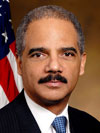
In anticipation of the 2020 Census, the AAG announces the participation of Eric H. Holder, Jr. as a keynote speaker at this year’s Annual Meeting in Washington, D.C. Currently serving as chairman of the National Democratic Redistricting Committee, he will present his expertise on gerrymandering in a special address. Holder will deliver his remarks on Thursday, April 4th 2019 at 12:00 pm.

Learn more about the keynote.

“Focus on Washington, DC and the Mid Atlantic” is an ongoing series curated by the Local Arrangements Committee to provide insight on and understanding of the geographies of Washington, DC and the greater Mid Atlantic region in preparation for the 2019 AAG Annual Meeting.


A Local’s Guide to D.C. Neighborhoods

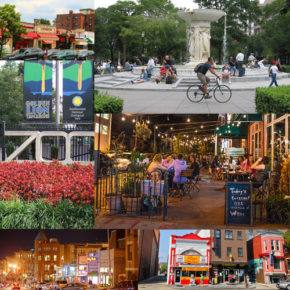
Curious to know more about the area immediately surrounding the 2019 AAG Annual Meeting hotels? While the hotels themselves are situated in the Woodley Park Neighborhood (home to the Smithsonian National Zoo), several bordering neighborhoods are easily accessible by foot, bike, or transit. Learn more about the hyperlocal sites found in each of these communities while you prepare to visit Northwest D.C. in April.
Read more about DC Neighborhoods.

Don’t delay – book your room for #aagDC today!

AAG has negotiated a discounted block of hotel rooms at the 2019 AAG Annual Meeting headquarters, the Marriott Wardman Park. This rate is available on a first come, first served basis. Spring is a busy season in DC, be sure to reserve your room before they are filled and rates increase.

PUBLICATIONS

NEW Issue of The AAG Review of Books:
Discussions on Ethnicity, Economic Geography, Global Health, and Arid Lands

AAG-RoB-winter-7-1-cvr-baby

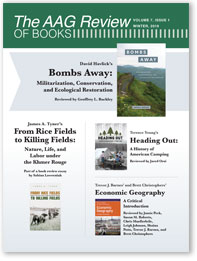
The latest issue of The AAG Review of Books is now available (Volume 7, Issue 1, Winter 2019) with 11 book reviews on recent books related to geography, public policy and international affairs. The Winter 2019 issue also includes one book review essay and four book review discussions.

All AAG members have full online access to all issues of The AAG Review of Books through the Members Only page. Each issue, the Editor chooses two items to feature, made available free of charge. In this issue you can read the following for free: Book Review Forum of The Arid Lands: History, Power, Knowledge, by Diana K. Davis and The Politics of Scale: A History of Rangeland Science, by Nathan F. Sayre; Review by Rebecca Lave, Thomas Bassett, Geoff Mann, Paul Robbins, Simon Batterbury, Nathan F. Sayre, and Diana K. Davis; as well as Sabina Lawreniuk’s Book Review Essay of From Rice Fields to Killing Fields: Nature, Life, and Labor under the Khmer Rouge, by James A. Tyner and Landscape, Memory and Post-Violence in Cambodia, by James A. Tyner. As a reminder, anyone can search the full list of books reviewed in all issues of The AAG Review of Books by title, author, reviewer, theme and other categories using our new database.

Questions about The AAG Review of Books? Contact aagreview [at] aag [dot] org.

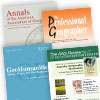
In addition to the most recently published journal, read the latest issue of the other AAG journals online:

• Annals of the American Association of Geographers
• The Professional Geographer
• GeoHumanities
• The AAG Review of Books

New Books in Geography – January Available! 

AAGRoB-winter-7-1-cvr-babyFrom art in China to water security, almost the whole alphabet is covered with the latest titles in geography that were received by the AAG during the month of January. The New Books list contains recently published titles in geography and related fields.
Browse the whole list of new books.

ASSOCIATION NEWS


AAG Seeks Feedback In Search Process for New Executive Director

The AAG Council has assembled a search committee composed of current council members and other experienced geographers to work on the important task of recruiting a new executive director. In addition to specialty, affinity and other groups within AAG, the general membership is encouraged to provide their views, and suggested candidates, through an online survey available until Feb. 13 or via email to AAGExecDir [at] StorbeckSearch [dot] com.

More information on the survey

Vote today in the 2019 AAG Election

Election-buttonThe AAG election will be conducted online again, and will take place January 30 – February 21. Each member who has an email address on record with the AAG will receive a special email with a code that will allow them to sign in to our AAG SimplyVoting website and vote. The 2019 election slate is available on our website to prepare you for casting your vote.

Learn more about the candidates.


Meet the 2019 Class of AAG Fellows!

The AAG Fellows program recognizes geographers who have made significant contributions to advancing geography. AAG Fellows, conferred for life, serve the AAG as an august body to address key AAG initiatives including creating and contributing to AAG initiatives; advising on AAG strategic directions and grand challenges; and mentoring early and mid-career faculty.

See the Fellows.

AAG Welcomes Spring 2019 Interns

The AAG is excited to welcome three new interns coming aboard our staff for the Spring 2019 semester! Joining us this semester are Matilda Kreider, a junior at George Washington University majoring in Political Communication with a minor in Geography, Crystal King, a senior at Michigan State University majoring in Economic Geography with a cognate in Business, and Jessica Gillette, a sophomore at George Washington University double majoring in Geography and International Affairs.

MEMBER NEWS

Profiles of Professional Geographers

Many geographers are employed in all levels of government – local, state, and federal. This month, meet Hope Morgan, a GIS Manager at North Carolina Geospatial & Technology Management Office, an office within NC Emergency Management. Hope explains the connections between technology, emergency management, and government employment and how this helps her to make a difference in her home state of North Carolina!

Learn more about Geography Careers.

February Member Updates

HWISE-logo-300x146-1

The latest news about AAG Members.

The Household Water Insecurity Experiences (HWISE) – Research Coordination Network (RCN), led in part by AAG National Councilor Wendy Jepson, is hosting special sessions at the 2019 AAG Annual Meeting. HWISE is excited to announce five panels on April 4 with the following themes: HWISE Data, Methodological Advances, Thematic Engagements, Research in Economically Advanced Countries, and Quantitative Approaches. They will conclude with an open reception for networking. Watch a video of their recent work or follow them on Twitter @HWISE_RCN.

RESOURCES AND OPPORTUNITIES

Call For Papers – Special Annals Issue on the Anthropocene

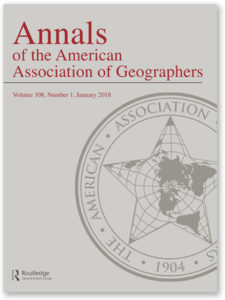
In 2017 the Working Group on the Anthropocene recommended formalization of the Anthropocene with an Epoch rank based on a mid-twentieth century boundary associated with radionuclide fallout as a stratigraphic Golden Spike, but this recommendation has yet to be acted upon and is far from universally accepted. This Special Issue of the Annals of the American Association of Geographers calls for papers examining all geographic aspects of the concept of the Anthropocene. Abstracts of no more than 250 words should be submitted by email to Jennifer Cassidento (jcassidento [at] aag [dot] org) by March 31, 2019. The Editor will consider all abstracts and then invite a selection to submit full papers for peer review by May 15, 2019.

Learn how to contribute to the special issue.

FEATURED ARTICLES

Mapping chimps: Drones and the future of conservation

Professor Serge Wich, Dr. Alex Piel, Dr. Fiona Stewart and a team of PhD researchers from Liverpool John Moores University are working to save Tanzania’s chimpanzees. Their tools: homemade drones and Pix4Dmapper.

Since the project launched in 2012, Serge and the team have been working on a number of initiatives to support and protect the chimpanzees.

Learn how Pix4D is giving chimps a chance.

GEOGRAPHERS IN THE NEWS
EVENTS CALENDAR
    Share

Mapping chimps: Drones and the future of conservation

Chimpanzees are one of our closest cousins – and are at risk of extinction. Drone mapping is giving them another chance.


Image courtesy of Allison Rogers.

Professor Serge Wich, Dr. Alex Piel, Dr. Fiona Stewart and a team of PhD researchers from Liverpool John Moores University are working to save Tanzania’s chimpanzees. Their tools: homemade drones and Pix4Dmapper.

Since the project launched in 2012, Serge and the team have been working on a number of initiatives to support and protect the chimpanzees.

“Chimpanzees are so closely related to us,” explained Serge. “So if we are to unravel our own human ancestry we need to be able to study the species – if they go extinct then we definitely don’t have that opportunity anymore.”

As most conservation interventions come from government, the team is focusing on gathering high quality data on the number of animals, and feeding the information back to the government.

Up until the project launched, data was collected on foot, a time-consuming process – despite the fact that the forests and savannas of Tanzania are well known for having low densities of chimpanzees. Chimpanzees are always on the move to find food and “Over a year, they might cover fifty, sixty or even seventy square kilometers. That’s quite large particularly in this very undulating terrain. It’s a real challenge to study them in those areas,” says Serge.

“The main aim of the project is to create more efficient methods of obtaining the distribution and density of chimpanzees in these kind of habitats. These areas are very hilly and are very difficult to negotiate,” says Serge. “Plus some areas are not reachable by car, especially given that we do survey work over large areas. So if we can make a more efficient by using drones that would be really helpful.”

Continue reading about the project.

    Share

AAG Election Underway and Looking Forward to the Annual Meeting in Washington DC in April!

The AAG election season is underway! This week, AAG members around the globe received email links to log on and vote for 2019-2020 AAG officers and committee members. Balloting is open from 30 January to 21 February, so please remember to take a few minutes to dig out that email, vote, and be heard! I thank the AAG nominating committee for providing us with a highly distinguished slate of candidates, and I especially thank the candidates for their willingness to stand for office and their commitment to serve the AAG should they be elected. So now it is up to you, fellow AAG members, to get out and vote to select the future leaders of our association!

Borderline Insanity: The Threat from the North

The record-breaking 35-day U.S. Government partial shutdown was finally suspended on 25 January, until 15 February 2018 for negations on border security. I hope that the White House can come to an agreement with our Congress on how best to ensure our security, avoid another partial government shutdown, and treat those seeking refuge humanely and with dignity. I truly hope that government workers, including thousands of professional geographers, are never used as political hostages again. On a related front, four women who are members of a humanitarian group whose intent is to save lives of asylum seekers lost in the desert with no water, where hundreds have already died, have been convicted on 18 January 2018 of entering a protected federal refuge in Arizona and leaving behind food and water jugs. AAG and APCG have been closely following the situation for a humanitarian geographer also caught up in this sweep, and for our colleague’s sake we have been careful to not interfere with the case until action is requested. Individuals have been staying in contact, and have contributed to a defense fund. More volunteers go on trial this spring.

Chicago (polar vortex), Australia (fires)

Our nation’s attention was diverted from immigration issues and the potential for a border wall on the U.S.-Mexico border this past week, to a more serious and dangerous threat streaming across the northern border of the U.S. This threat took the lives of at least 21 people, and made no distinction between college students, package delivery workers, jail inmates, and homeless people. The threat was the Polar Vortex, and it unleashed record-breaking cold on about 70 percent of the U.S. population this past week. The White House response was to tweet about the record cold and ask essentially, “what the (heck) is going on with global waming (sic)? Please come back fast, we need you.” We need not look too far to find it … for at the very same time, the White House forgets that it is summer in the Southern Hemisphere, where in parallel, extreme heat fanned wildfires in Australia. Of course, with a flat earth, one never worries about the other side. What the White House does not care to understand is that Polar Vortex disruption can be connected to atmospheric carbon imbalances, and global warming splitting the polar jets (read more at PBS.org). NOAA also explained it elegantly. The White House’s purposeful mischaracterization of how the atmosphere works feeds the flames of climate denial, and puts our citizens, economy, and environment in physical danger. We geographers need to continue to communicate climate change science to the general public and to policy makers because it is every global citizen’s right to benefit from scientific knowledge. We must also continue our research to understand and communicate the teleconnections of global warming, atmospheric circulation, and extreme weather events, and to protect that right to conduct our scientific inquiry.

Closing Thoughts: Looking Forward to Annual Meeting in Washington DC in April!

As I noted in my first presidential column, imagine what 12,000-plus geographers can do together to make a better world. We will be meeting in just two months in Washington, D.C. to share our ideas and to make a difference with Geography! Although the call for AAG annual meeting paper sessions and individual paper and poster abstracts is now closed, participants may still edit their entries until 23 February 2019. Poster session organizing is open until 14 February 2019. The annual meeting schedule is now posted so you can make your travel plans accordingly. In addition to the opportunity to share your exciting geography research at paper and poster sessions, AAG is planning many special events for the 2019 Annual Meeting.

I am very happy to announce the full slate of our presidential plenary panel who will join me to kick off the AAG meetings on 3 April 2019: Dr. Douglas Richardson (AAG Executive Director); Dr. Mei-Po Kwan (U. Illinois at Urbana-Champaign Geography Professor), Dr. John McNeill (University Professor of History, Georgetown U.; American Historical Association President), Dr. Heather Viles (Oxford University Geography Head and Professor), and Dr. Rita Colwell (University of Maryland College Park Distinguished University Professor, Cell Biology and Public Health).

Please do plan to join us at 6:20 pm on 3 April 2019 to hear opening remarks from AAG Executive Director Dr. Douglas Richardson. This will be an historic moment you will not want to miss, as it will be Doug’s last opening session welcome before he retires from the directorship in early 2020. We thank and congratulate him for his dedication and leadership!

Next, you will hear from our distinguished panelists. These eminent scholars in Human Geography and Physical Geography, Environmental History, and Biological Sciences will address the intersection of their research and the themes of our meeting: “Geography, Environmental Science, Human Health, and Human Rights.”

We will conclude our opening session by recognizing our 2019 Honorary Geographer Dr. Rita Colwell, who will also address the audience as a distinguished panelist.

Other special events during the annual meeting will include a keynote address by former U.S. Attorney General Eric H. Holder, Jr. (April 4), and on 5 April we will honor The Librarian of Congress Dr. Carla Hayden with the AAG Atlas Award, followed by her keynote address.

It will be my deepest honor to welcome all of you in Washington, D.C. in April, just in time for the cherry blossoms.

Until then I wish you a warm and cozy Groundhog Day weekend!

— Sheryl Luzzadder-Beach
President, American Association of Geographers
Professor of Geography and Fellow of the C.B. Smith Sr. Centennial Chair in U.S. Mexico Relations, University of Texas at Austin

Please share your ideas with me at: slbeach(at)austin(dot)utexas(dot)edu

To register for the annual meeting, click here.

DOI: 10.14433/2017.0051


    Share

Regional Divisions Announce Outstanding Graduate Student Papers During their Fall Meetings

The AAG is proud to announce the Fall 2018 student winners of the AAG Council Award for Outstanding Graduate Student Paper at a Regional Meeting. The AAG Council Award for Outstanding Graduate Student Paper at a Regional Meeting is designed to encourage graduate student participation at AAG Regional Division conferences and support their attendance at AAG Annual Meetings. One graduate student in each AAG Regional Division receives this yearly award based on a paper submitted to their respective regional conference. The awardees receive $1,000 in funding for use towards their registration and travel costs to attend the AAG Annual Meeting. The board members from each region determine student award winners.

The winners from each region will be presenting their papers in two dedicated paper sessions at the upcoming 2019 AAG Annual Meeting in Washington, D.C. The paper sessions are tentatively scheduled for the afternoon of Friday, April 5, 2019.

Betsy Breyer

WLDAAG: Betsy Breyer, Ph.D. candidate, University of Illinois at Urbana-Champaign; Paper title – Sociohydrological Impacts of Water Conservation Under Anthropogenic Drought in Austin, TX

Hayley Pedrick

SWAAG: Hayley Pedrick, Masters candidate, University of New Mexico; Paper title – Textures of Transition: Understanding Memorial Spaces in Medellin, Colombia

NESTVAL: Christina Woehrle, Masters candidate, Oklahoma State University;

MAD: Molly Pickel, Masters candidate, Graduate Program in Geography and Environmental Planning at Towson University; Paper title – Navigating Māori Fishing Rights Under the Quota Management System

Katharine Georges and Katie Wade


APCG:
 Katherine Georges, Masters candidate, California State University – Long Beach, Paper title – Just a Little Rain: the Effects of Lifting Water Restrictions on Local Water Purveyors Conservation Policies
Katie Wade, Masters candidate, California State University – Long Beach, Paper title – Indigenous Women’s Ways of Knowing and Ecological Sustainability in Yosemite Valley

Doug Allen

SEDAAG: Doug Allen, Ph.D. candidate, Florida State University; Paper title – Asserting a Black Sense of Place: Florida A&M University’s Homecoming as a Temporary Claim of Place

MSDAAG: Emily Holloway, Masters candidate, Liberal Studies program at the CUNY Graduate Center; Paper title – “Business as usual” or “just business”? A critical comparison of industrial rezoning

GPRM: Sylvia Arriaga Brady, Ph.D. candidate, University of Denver; Paper title – Public-private partnerships with public transit, local government agencies, and ridesourcing in Denver, CO

Kathryn Hannum

ELDAAG: Kathryn Hannum, Ph.D. student, Kent State University; Paper title – Socio-linguistic consequences of regional convergence in Galicia, Spain


    Share

Lawrence Estaville

It is with a heavy heart that I write to inform each of you that Dr. Lawrence Estaville, founding member of the Ethnic Geography Specialty Group, had died.

Lawrence served in the academy as a professor, scholar, and administrator for more than 40 years with positions in Wisconsin, California, South Carolina, and Texas. During his career, Lawrence was a prolific scholar, steadfast mentor and educator, and an effective administrator. While in no way inclusive, I would like to highlight some of Lawrence’s many accomplishments during his unparalleled career and life. Lawrence led the establishment of three PhD programs at Texas State University and aided in the founding of the James and Marilyn Lovell Center for Environmental Geography and Hazards Research and the Gilbert M. Grosvenor Center for Geographic Education. He published 10 books (with an additional co-authored monograph forthcoming), 36 peer-reviewed articles, 19 peer-reviewed book chapters, and presented 92 conference papers. An effective fundraiser, Lawrence raised over $6-million in grants and raised funds to support graduate students and conferences. He worked closely with the Race, Ethnicity, and Place Conferences and with the conference creator and his dear friend Dr. John Frazier.

Above all, Lawrence would tell you that his passion was teaching. He taught nearly 40 courses during his career and was a steadfast advocate for students. Diversity of students and ideas was a cornerstone of his teaching. Lawrence’s love of cinema led him to include assignments involving important films in several of his undergraduate courses. He was often recognized as a favorite professor by both undergraduate and graduate students. He advised three doctoral students and several masters students to the successful completion of their degrees. As one of those doctoral students, I will share that Lawrence’s mentorship did not end at the culmination of my graduate degree but rather turned into a life-long duty for him.

Lawrence was an award-winning professor with recognition at the highest level. I highlight a few here. Lawrence was a recipient of the Distinguished Teaching Award in 1985 and the Distinguished Mentor Award in 2012 from the National Council for Geographic Education. He was honored in 2011 with the Outstanding Scholarship and Service Award from the Business Geography Specialty Group – a group that he led in establishing. From our Ethnic Geography Specialty Group, Lawrence was the recipient of the Distinguished Scholar Award in 2015 and the Distinguished Ethnic Geographer Career Award in 2010. He received the Enhancing Diversity Award from the American Association of Geographers in 2016. Most recently, on November 16, 2018, Lawrence was the recipient of the highest faculty honor and title bestowed by the Texas State University System – Regents’ Professor.

I will add that one of the things that Lawrence was most proud of, especially toward the end of his career, was his service to the National Marrow Donor Program and his establishment (with Yvonne Ybarra and Angelika Wahl) of the Texas State Cancer Advocacy Movement for Colleges and Outreach (CAMCO). The efforts of this state-wide alliance resulted in tens of thousands of student marrow donors and, most importantly, the saving of over 50 lives through marrow matches – including several children. He shared privately with me years ago, after his successful fight with leukemia, that he felt that he just had to do something if he “beat this thing,” especially after seeing what he saw at M.D. Anderson. He did.

These few paragraphs only scratch the surface of Lawrence Estaville’s vast career accomplishments. Lawrence was very private about his valiant fights with cancer.

On Wednesday, December 5, 2018, Lawrence was honored with a Texas State University presidential reception for his Regents’ Professor distinction in San Marcos, Texas. Although he was a little thinner and in a wheel chair, Lawrence was vibrant and excited to speak to all who came to congratulate him. His contagious, deep laughter could be heard throughout the room as he reminisced and joked with friends and colleagues. I remember that he displayed his Regents’ Professor medallion proudly over his suit jacket adjusting it for pictures. He would later tell me that he was so very thankful for the experience and for all his friends near and far. He said that the award was “the cherry on top” of what he said was a great life and career.

I visited him again a few days later in his home. Lawrence, in characteristic fashion, wanted to talk more about me, my family, and our friends than himself. Always the hosts, the Estaville’s had refreshments out for me. When I commented on not needing to have refreshments out he said, “Oh Edris, that is my beautiful wife Sandra who put those out.” I said, “You are one lucky man.” He replied, “You’re telling me.”  Lawrence’s deepest love and admiration for his wife, Sandra, remains an example to us all.

A professor and educator until the end, Lawrence was afraid that he would not be able to complete his Ethnic Geography course this semester and see his students’ presentations. Angelika Wahl, his dear friend and colleague from the department at Texas State suggested that he could Skype-in to see and grade the final presentations which excited Lawrence greatly. With the assistance of Yongmei Lu, TX State Geography Department Chair and cherished friend, Lawrence was able to finish his course this semester – a duty he would tell me that he felt he owed his students… to finish what he started. He was very thankful for that.

In one of our conversations, Lawrence did lament that there would be many that he would not be able to say goodbye to personally and he hoped that everyone understood. I, of course, reassured him that all would. He shared with me that he felt that he had lived a wonderful life and was thankful for every moment of it.

Lieutenant Colonel (Ret.), professor, scholar, mentor, colleague, and friend Dr. Lawrence Estaville passed away on the morning of December 20, 2018 with his loving wife Sandra by his side. He was 74 years old. Lawrence is survived by his wife Sandra and his daughter Deborah. He is survived by dozens of colleagues and friends who he collaborated with over his long career. Finally, Dr. Lawrence Estaville is survived by thousands of students who are better for their time spent with him – in the classroom and beyond.

Per Lawrence’s wishes, there will not be a funeral. The family has asked in lieu of flowers, to consider contributing to the many scholarships he supported/funded at Texas State (geography specific scholarship information: https://donate.txstate.edu/givingsearch) or to the Be the Match Foundation (https://bethematch.org/support-the-cause/donate-financially/). Those who wish may also consider donating to the EGSG’s newly established student travel fund in Lawrence’s memory (If you wish to donate to the EGSG student travel fund please contact me at emontalvo@cameron.edu).

As we take the time to remember Lawrence in the next few months and at the AAG meeting in Washington D.C., I know that our friend and colleague wouldn’t want us to spend too long mourning him. Instead, I believe that Lawrence would want us to continue to educate and serve students and each other to the best of our ability. He did.

— Edris J. Montalvo Jr., Ph.D.

Associate Professor of Geography

Department of Social Sciences

Cameron University

    Share

Little Known Tampa: Culturally Diverse and Exciting!

When you come to Tampa, you’ll find examples of good planning, fabulous natural areas, and appealing urban spaces. Here are some things to keep in mind:

Florida and the Tampa Bay area are—or at least were—national leaders in growth management

Beginning in the late 1970s and culminating in the Growth Management Act of 1985, the state of Florida had one of the nation’s most fully articulated statewide planning regimes. Perhaps because Floridians had experienced firsthand the problems of rapid growth without much planning, the state legislature created measures to ensure that each county and municipality engaged in long term planning, that large regional projects were reviewed by regional planning agencies, and that state officials would be charged with upholding plans. Transportation, water resources, and coastal concerns were all taken into account when new developments were proposed. Growth management hardly stopped development – Florida’s population grew from 9.7 million in 1980 to just over 19 million in 2012, with new single family housing accommodating much of that growth. But under the state’s growth management laws, some of the sins of the 1960s and 1970s – houses constructed without attendant municipal services in place, unrestrained draining of wetlands, and inattention to water resource limits – were contained. Unfortunately, important parts of these Growth Management laws were overturned in 2011. The full impact of this retreat has not yet been felt; thanks to the recession, demand for new construction has been limited. But once demand picks up, the flight from comprehensive planning is likely to be felt, especially in the less urban parts of the state.

Tampa Demographics

White or Caucasian (including White Hispanic) 62.9%
(Non-Hispanic White or Caucasian) 46.3%
Black or African-American 26.2%
Hispanic or Latino (of any race) 23.1%
Asian 3.4%
Native American or Native Alaskan 0.4%
Pacific Islander or Native Hawaiian 0.1%
Two or more races (Multiracial) 3.2%
Source: US Census Bureau

Tampa has an industrial history

Incorporated in 1849, Tampa, unlike many Sunbelt cities, emerged as an industrial center. Between 1865 and World War II, Tampa was a key center of the cigar industry. The cities (and now neighborhoods within Tampa) of Ybor City and West Tampa both developed around cigar manufacturing, drawing streams of immigrants to work in the factories. Tampa has a tradition of union activism having experienced several general strikes in the early decades of the last century. Its racially and ethnically diverse population has a tradition of immigrant social clubs and mutual benefit societies that provided cultural and material resources to working class residents. The built legacy of these traditions can be found throughout these communities. The Cuban Club, the German-American Club and the Italian Club are a few of the early 20th century establishments whose buildings have been preserved. And the former cigar factories remain distinctive features of the central Tampa built environment. While some of these sit vacant, others have been repurposed for other industrial uses or converted to condos and offices. Those interested in exploring Tampa history can do so in Ybor City, either by taking advantage of the programs of the Ybor City Museum (www.ybormuseum.org ), or by strolling through the neighborhood.

 Tampa has rediscovered its downtown waterfront

Among the most striking characteristics of our area are its water features. Parts of Tampa and all of Pinellas County (location of St. Petersburg) are defined by their rivers, bays and oceans. But until recently, Tampa was largely cut off from its waterfront. In an earlier era, river and bayfront areas were dominated by industrial, port and transportation infrastructure, but as those uses have receded (the Port of Tampa remains quite active, but other waterfront industries are gone), Tampa was slow to recognize the value of its waterfront for recreation and the development of other amenities. One of the major commercial developments in the downtown area, the Channelside shopping/entertainment center, is located directly on the water, next to the Tampa port facilities, and it has been ingeniously designed so that those visiting the development have no contact with the water at all – no access, no vistas. Perhaps that helps explain why the development has gone bankrupt.

But more recent downtown planning has embraced the waterfront location. A “Riverwalk” has been under development now across two mayoral administrations; a recent federal grant will accelerate its completion (www.thetampariverwalk.com ). Those of you visiting downtown Tampa will have the opportunity to enjoy the water at some new locations. The Tampa Bay History Center opens onto a waterfront plaza (https://www.tampabayhistorycenter.org/ ). The newly renovated Curtis Hixon Park, at the other end of the downtown peninsula, is a well-designed, inviting urban space flanked by the newly built Tampa Museum of Art (https://tampamuseum.org/ ). With food kiosks, fountains and children’s play areas, it’s the sort of urban gathering point that this city has lacked for too long. These new spaces signal the success of fledgling coalitions of elected officials, civic activists and business leaders who share an appreciation for appealing design and pedestrian-friendly urban environments.

Ride the TECO trolley

Like too many Sunbelt cities, Tampa once had a dense network of light rail lines, most of which were bought up by bus companies and dismantled by the late 1940s. But a trolley line was resurrected recently; it runs a loop connecting the downtown/Channelside area with Ybor City (https://www.tecolinestreetcar.org/). The embattled trolley line has struggled to maintain ridership; critics claim its empty cars are proof that this region will never embrace mass transit while defenders note that its limited route makes it useful mostly to visitors or the rare resident whose home and work happen to be near one if its stops. But those of you staying at one of the conference hotels are well positioned to use the trolley for your explorations.

There’s much in this area that transcends the generic – the newly opened bike and pedestrian bridge that traverses Tampa Bay along the Courtney Campbell Causeway; one of baseball’s best teams (the Tampa Bay Rays) playing in one of baseball’s worst stadiums (Tropicana Field); the annual invasion of the city by sea led by business and civic leaders dressed as pirates (the Gasparilla Festival) and the annual crowning of a “Strawberry Queen” in nearby Plant City. If you want to learn more about what the region offers, you can read all about it the highly regarded Tampa Bay Times (www.tampabay.com), one of the last independently owned metro area newspapers. We urge you to explore the area and learn that it has a diverse array of historic places, quirky areas, and scenic spots. ♦

Elizabeth Strom
University of South Florida

DOI: 10.14433/2013.0024

    Share

New Books: December 2018

Every month the AAG compiles a list of newly-published books in geography and related areas. Some are selected for review in the AAG Review of Books.

Publishers are welcome to send new volumes to the Editor-in-Chief (Kent Mathewson, Editor-in-Chief, AAG Review of BooksDepartment of Geography and Anthropology, Louisiana State University, Baton Rouge, LA 70803).

Anyone interested in reviewing these or other titles should also contact the Editor-in-Chief.

PLEASE NOTE: Due to current public health policies which have prompted the closing of most offices, we are unable to access incoming books at this time. We are working on a solution during this transition and will continue our new books processing as soon as we can. In the meantime, please feel free to peruse previous books from our archived lists.

December 2018

Alfred Wegener: Science, Exploration, and the Theory of Continental Drift by Mott T. Greene (Johns Hopkins University Press 2018)

Bodies as Evidence: Security, Knowledge, and Power by Mark Maguire, Ursula Rao, Nils Zurawski (eds.) (Duke University Press 2018)

Coffee: From Bean to Barista by Robert W. Thurston (Rowman and Littlefield 2018)

Doreen Massey: Critical Dialogues by Marion Werner, Jamie Peck, Rebecca Lave, Brett Christophers (Agenda Publishing 2018)

The Doreen Massey Reader by Brett Christophers, Rebecca Lave, Jamie Peck, Marion Werner (eds.) (Agenda Publishing 2018)

The Geography of Scientific Collaboration by Agnieszka Olechnicka, Adam Ploszaj, Dorota Celińska-Janowicz (Routledge 2018)

Giving Back: Research and Reciprocity in Indigenous Settings by R. D. K. Herman (Oregon State University Press 2018)

Greening the City: Urban Landscapes in the Twentieth Century by Dorothee Brantz and Sonja Duempelmann (eds.) (University of Virginia Press 2019)

Handbook on the Geographies of Corruption by Barney Warf (ed.) (Edward Elgar Publishing 2018)

Metropolitan Denver: Growth and Change in the Mile High City by Andrew R. Goetz and E. Eric Boschmann (University of Pennsylvania Press 2018)

Neighborhood by Emily Talen (Oxford University Press 2018)

Other Geographies: The Influences of Michael Watts by Sharad Chari, Susanne Freidberg, Vinay Gidwani, Jesse Ribot, Wendy Wolford (eds.) (Wiley-Blackwell 2017)

Portuguese Decolonization in the Indian Ocean World by Pamila Gupta (Bloomsbury Academic 2018)

The Promise of the East: Nazi Hopes and Genocide, 1939-43 by Christian Ingrao (Polity 2019)

The Torrid Zone: Caribbean Colonization and Cultural Interaction in the Long Seventeenth Centuryby L. H. Roper (ed.) (University of South Carolina Press 2018)

Unsettled Waters: Rights, Law, and Identity in the American West by Eric P. Perramond (University of California Press 2018)

WikiLeaking: The Ethics of Secrecy and Exposure by Christian Cotton and Robert Arp (eds.) (Open Court 2019)

A World of Many Worlds by Marisol de la Cadena, Mario Blaser (eds.) (Duke University Press 2018)

    Share

Dorothy Drummond

It is with sadness that we note the passing of geography professor and advocate Dorothy Drummond on November 30, 2018. At the age of 89, she was traveling on her seventh trip to China to conduct research when she fell at the museum for the Three Gorges Project. After surgery in Hong Kong, she sustained severe head trauma and passed away peacefully with her friend and daughter by her side.

Drummond began her career as an editorial assistant for the Geographical Review, the flagship journal of the American Geographical Society. She then went on to live in Terre Haute, Indiana where she was an affiliate faculty member of Indiana State University and an adjunct at Saint Mary-of-the-Woods College. In 1983 she founded the geography non-profit, Geography Educators’ Network of Indiana, following her husband’s death in 1982, and remained a long standing board member of the organization.

Born in San Diego in 1928, she held an undergraduate degree from Valparaiso University (1949) and a masters degree in geography from Northwestern University (1951). A world traveler, she lived in Burma during 1957 while both her and her husband were Fulbright Scholars. She also traveled widely in Europe, the Mediterranean, and the Middle East, and had visited large parts of Central and South America, Australia, New Zealand, and China. She used this experience and her geographical expertise to author and co-author four World Cultures textbooks. She was included as a GeoInspiration in Directions Magazine in 2016.

In addition to her work with the Geography Educators’ Network of Indiana, Dorothy was active in service to several non-profit organizations including United Campus Ministries and Citizens for Better Government and a respected member of the Terre Haute community. She was scheduled to present a paper at the 2019 AAG Annual Meeting on the historical settlement of ancient Israel as well as appear on a panel sponsored by the Bible Geography Specialty Group on curbing violence in the Middle East.

The information above is courtesy of the Terre Haute Tribune Star

    Share

Paradise Lost, Global Warming Report, and Geographers Speak Up

The 2019 Annual Meeting of the AAG is shaping up, and I thank those who responded to participate in the three featured themes, Health and GIScience, Human Rights, and Physical Geography in Environmental Science, in addition to the many independent abstracts and sessions submitted. Program committees and AAG staff, to whom I offer my deepest appreciation, are now sorting abstracts and assembling sessions from the more than 5,000 paper abstracts submitted. Thus far, we have 306 paper abstracts and 71 sessions submitted in Health and GIScience; in the Human Rights Theme we have 201 paper abstracts and 82 sessions; and in Physical Geography in Environmental Science there are 233 paper abstracts and 42 proposed sessions. Although the call for paper sessions and abstracts is now closed, participants may still edit their entries until 23 February 2019. Additionally, the Call for Posters is open until 31 January 2019, and poster session organizing is open until 14 February 2019. I look forward to seeing you in Washington, D.C., April 3-7, 2019!

Smoke plume from the fast-moving Woolsey Fire encroaching on Malibu on Nov. 9, 2018, as residents evacuate along the Pacific Coast Highway (CC by-SA 4.0 by Cyclonebiskit)

This week marked two landmark accomplishments. The first accomplishment is that fire-fighting crews have brought the Camp Fire in my beloved northern California to 100 percent containment. The city of Paradise, (population around 26,000), is devastated along with the smaller communities of Magalia and Concow in the largest and deadliest wildfire in California history, and the largest fire in the U.S. in 100 years. 88 people are now known to have lost their lives, with nearly 200 still missing. Paradise is on the doorstep of Chico where I went to school, and families are hurting, with hundreds homeless, 18,000 buildings destroyed, and more than 62,000 hectares scorched (an area bigger than the city of Chicago). Schools across northern California, all the way to San Francisco, were closed due to the smoke from the fires, and only recently are re-opening. A part of southern California also burned in tandem to the Camp Fire, with the Woolsey Fire in Ventura and Los Angeles Counties consuming over 39,000 hectares, an area roughly the size of Denver. The fire destroyed 1,500 buildings, and killed three people. It was brought under containment shortly before the Camp Fire. Three firefighters were injured in each fire, respectively. We thank Cal Fire and all of the responders from other jurisdictions who assisted. Cal Fire provides web based GIS fire mapping and incident tracking, an important geographic information science benefit offered to the public. And the first response from the White House was unbridled ignorance about California forests and blame wrongly cast upon California State forest management, before and after a Presidential site visit. Our dear leader in the White House suggested forest floor raking as the answer. This is lunacy. In reality, 45.8 percent of all land in CA is federally owned, and KTVU TV reported that 57 percent of California forests are federally managed, with 2 percent managed by the state, and the remaining 39 percent are under private management, where most of the fire losses have occurred. Most of the land that burned does not look like Trump’s imagined Jellystone (apologies to Hanna-Barbera Productions) to be tended by Finnish raking teams, it is Mediterranean scrubland and chaparral, mixed with suburban neighborhoods. As the Camp Fire hit close to home for my family and community, the Woolsey Fire hit even closer to home for Past AAG President Glen MacDonald, who with his family had to evacuate from their home. Dr. MacDonald made a bold public statement calling out the U.S. President’s misinformation about California forest management, and noted the powerful connection between increasingly frequent and large wildfires, changing seasonality, and climate change. Now, flooding is beginning to take over the Camp Fire site. Although Giving Tuesday is past, and I do not often break the “fourth wall” to make personal appeals, please do consider contributing to the charities of your choice to assist wildfire victims.

Leslie-Ann Dupigny-Giroux (Photo courtesy U. of Vermont)

The second landmark accomplishment this week was in climate change communication: Federal scientists at 13 Federal agencies partnering with independent, university, and research scientists were able to complete and publish a clear and sobering report on Climate Change, the Fourth National Assessment, reporting mandated by Congress since 1990. The report covers 12 areas of impact and actions. When reporters asked Trump about the report, Trump said he “saw” it, read “parts” of it, and it is “fine.” A follow-up question about the findings of negative economic impacts elicited his response that he does not believe it. This is completely off the rails to deny, without any counter evidence, his own administration’s scientists’ dire findings on global warming that will affect our economy, our environment, our food, our water, and our health. He claims that our water and air are at their “cleanest” by ignoring the very legislation that he has attempted to disassemble, that allowed air and water quality to improve over the last decades. If our commander in chief will not wake up, we cannot wait for that day, we must wake up and act ourselves. Geography Professor Lesley-Ann Dupigny-Giroux, Northeast Chapter lead author on the Fourth Climate Assessmentspoke out in an interview on the report. She notes that changes in seasonality and in coastal environments are vulnerabilities in the Northeast, the regional report she led. She also notes a key takeaway that mitigation and adaptation measures being put in place offer hope and are critical. Dr. Dupigny-Giroux also notes that even if greenhouse gas inputs stop today, global warming will not level off anytime soon due to greenhouse gases already accumulated in the atmosphere. Climate change matters. The free press matters. Peer-reviewed science matters. The freedom to practice, communicate, and benefit from science matters.

An ancient Roman aqueduct leading to ancient Carthage (Tunis) is presented by CAJG meeting local organizing chair Dr. Mabrouk Boughdiri, professor at the University of Carthage, earth science department to field group. (Photo courtesy Sheryl Luzzadder-Beach)

I end this column with hope. We must work hard to get there, however. In the same month that a CNN White House correspondent had his press credentials stripped by the White House, but later restored by a federal judge, as noted in last month’s column, a Washington Post reporter was brutally murdered in the Saudi Embassy in Istanbul. The White House has repeatedly called members of the press the enemy of the people and has chosen to believe Saudi government denials of involvement in the murder, over our own national intelligence community findings otherwise. I travelled to Tunisia this month to give a keynote in the 10th Anniversary of a Springer/Nature Journal, the Arabian Journal of Geosciences, the flagship journal of the Saudi Society for Geosciences. (Full disclosure, I am an AJGS associate editor for Geography, Geoarchaeology, and Geotourism.) What I witnessed at this international meeting of nearly 500 participants was enthusiastic freedom of expression, camaraderie, academic diplomacy, thoughtful discussion and debate, student encouragement and empowerment, and science communication. In my keynote comments, I thanked the founding editor for giving voice to scientists across the region for the past 10 years with the journal, and reminded all of the right for scientists to practice, to share their science, and to gather and collaborate internationally. And at this meeting, all were treated as welcome, and women were featured speakers in addition to men. I am grateful for the new friends I have met, the outstanding papers I heard, the excellent field trips to enhance our teaching, and the new research opportunities and ideas we all shared. (Tunisia hosted the International Geographical Union meeting in 2008). This week, Tunisian citizens freely rose up to speak against the visit of the Saudi Crown Prince, in protest of the murder of Journalist Jamal Khashoggi. So, our Geoscience conference was not a singular or staged event in free speech. I am encouraged by Tunisians lighting a candle in the darkness, and thank our Tunisian hosts for their warm welcome, sincere hospitality, and many kindnesses during the meetings, and look forward to returning, Inshallah.

Finally, there are two upcoming events related to Science and Human Rights to observe in December: The 30th Anniversary of World AIDS Day will be observed on 1 December 2018; and Human Rights Day will mark the 70th Anniversary of the Universal Declaration of Human Rights on 10 December 2018. Cherish and protect our First Amendment and our human rights. Take part, speak up, and make a difference with Geography!

Wishing you a peaceful and rejuvenating holiday season,

— Sheryl Luzzadder-Beach
President, American Association of Geographers
Professor of Geography and Fellow of the C.B. Smith Sr. Centennial Chair in U.S. Mexico Relations, University of Texas at Austin

Please share your ideas with me at: slbeach(at)austin(dot)utexas(dot)edu

DOI: 10.14433/2017.0048

    Share

New Books: November 2018

Every month the AAG compiles a list of newly-published books in geography and related areas. Some are selected for review in the AAG Review of Books.

Publishers are welcome to send new volumes to the Editor-in-Chief (Kent Mathewson, Editor-in-Chief, AAG Review of BooksDepartment of Geography and Anthropology, Louisiana State University, Baton Rouge, LA 70803).

Anyone interested in reviewing these or other titles should also contact the Editor-in-Chief.

PLEASE NOTE: Due to current public health policies which have prompted the closing of most offices, we are unable to access incoming books at this time. We are working on a solution during this transition and will continue our new books processing as soon as we can. In the meantime, please feel free to peruse previous books from our archived lists.

November 2018

Anarchist Education and the Modern School: A Francisco Ferrer Reader by Francisco Ferrer (author); Mark Bray and Robert H. Haworth (eds.) (PM Press 2018)

Barcelona by Gary McDonogh, Sergi Martínez-Rigol (Polity Books 2018)

Bodies as Evidence: Security, Knowledge, and Power by Mark Maguire, Ursula Rao, Nils Zurawski (eds.) (Duke University Press 2018)

Gringolandia: Lifestyle Migration under Late Capitalism by Matthew Hayes (University of Minnesota Press 2018)

A Living Past: Environmental Histories of Modern Latin America by John Soluri, Claudia Leal, José Augusto Pádua (eds.) (Berghahn Books 2018)

The New Authoritarianism: Trump, Populism, and the Tyranny of Experts by Salvatore Babones (Polity 2018)

The New Faces of Fascism: Populism and the Far Right by Enzo Traverso (Verso 2019)

Sea Otters: A History by Richard Ravalli (University of Nebraska Press 2018)

Shaping the Postwar Landscape: New Profiles from the Pioneers of American Landscape Design Projectby Charles A. Birnbaum and Scott Craver (eds.) (University of Virginia Press 2018)

This Vast Southern Empire: Slaveholders at the Helm of American Foreign Policy by Matthew Karp (Harvard University Press 2018)

Vernacular Latin Americanisms: War, the Market, and the Making of a Discipline by Fernando Degiovanni (University of Pittsburgh Press 2018)

Visualizing Posthuman Conservation in the Age of the Anthropocene by Amy D. Propen (The Ohio State University Press 2018)

A World of Many Worlds by Marisol de la Cadena, Mario Blaser (eds.) (Duke University Press 2018)

    Share