Geographies of Accountability

When I interviewed for my job at the University of North Carolina at Chapel Hill, I was nervous or maybe even awestruck. It was beyond comprehension that I could get a tenure track job at such an institution. I remember my anxiously chosen secondhand outfit, mistakes I made, but also little moments that seem telling now. On the campus tour, a professor paused by a towering figure of a soldier facing North, and said sarcastically: “Welcome to the South — this is Silent Sam — he’s facing north to protect us from the Yankees.” Much to my surprise, I got the job, and started in 2009.
Most folks described the statue as though he had sprung out of the earth and would be there until the whole university was in ruins in some distant future. My office was in the Saunders building — and I slowly learned from undergraduate students that Saunders was a KKK leader. I had been teaching political geography without knowing the political geography of my own building. Student activists in the Real Silent Sam Coalition spent time in the library, in the archives, and found documents confirming Saunders’s KKK leadership, and that this was a reason the building had been named for him. Students used geographic strategies to force the university administration to rename the building. Students have taught me how to be in ethical relationship to the place and people that sustain me and my work — teaching and learning from UNC students has been one of the best things that’s ever happened to me. Witnessing these events shaped my approach to political geography and is reflected in the first chapter of my political geography textbook.
In 2018, a decade after my interview, that Confederate monument was toppled by activists and pictures of his face in the dirt were national news.
Investigating Power and Place
I’m writing to you today from a sunny summer Ladakh, in the Indian Himalayas, but at the same time I am recalling these events, to introduce my motivations for starting my presidential Task Force on Grounded Relations and Repair, with the dream team of James Bryan, Andrew Curley (Diné), LaToya Eaves, Elspeth Iralu (Angami Naga), Jovan Scott Lewis, Natasha Myhal (Sault Ste. Marie Tribe of Chippewa Indians), Meredith Palmer (Tuscarora, Six Nations of the Grand River), Laura Pulido, Isaac Rivera, and Kayla Roulhac. A future column will describe more of the task force’s activities and invite participation, but I wanted to begin with the inspiration.
Our university does not have an official land acknowledgment. The First Nations Graduate Circle has written: “We acknowledge that the land on which the University of North Carolina stands is the ancestral homeland of Eastern Siouan-speaking Indigenous peoples (Yesàh, “The People”).” Many of the buildings on campus were built by people who had been stolen from their homelands in Africa and enslaved in North Carolina, and university founders and faculty rented out the people they had enslaved to build and maintain our buildings. Nearly all of the early benefactors were settler-enslavers, including Benjamin Smith, who enslaved 221 people and gave the largest early donation of 20,000 acres of land, and Duncan Cameron and then his son Paul — generational benefactors and trustees who also owned the largest plantation in North Carolina. In the first half of the 19th century when the university faced financial crisis, it benefited from Indian removal by acquiring and selling Cherokee and Chickasaw lands as far west as Tennessee, and also by profiting from the sale and labor of enslaved people.
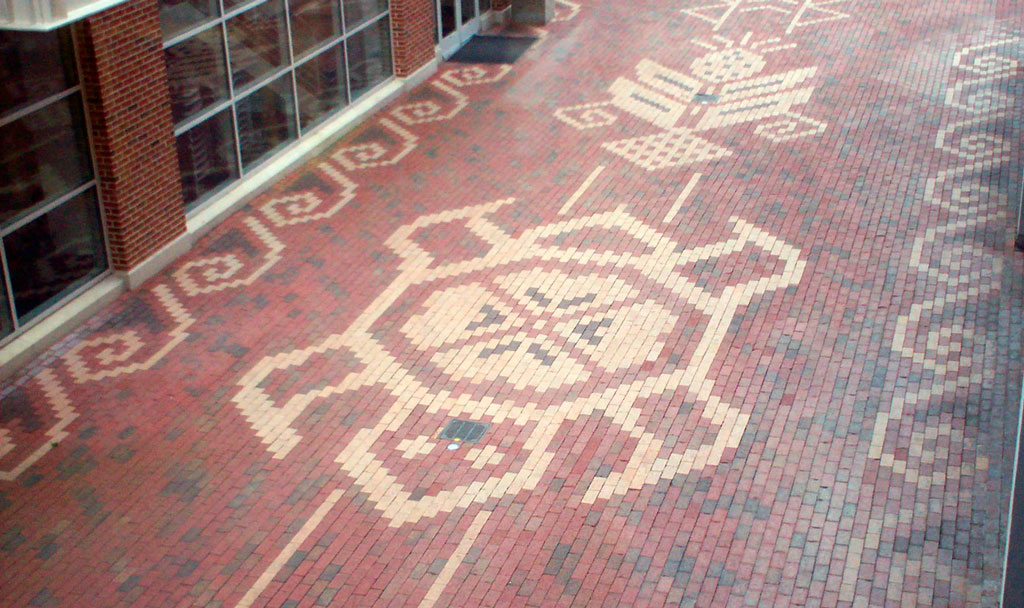
Working at the university taught me so much about power and geography, and I started to write about these questions and work with student activists. Diné geographer Andrew Curley and I also wrote about what it’s like to work at this kind of institution. This led me to ask Danielle Purifoy to join me in co-founding our Landback Abolition Project. This is a collective endeavor in which we have been working with Native students, descendants of the enslaved, and the students in our classes to create an archive of place-based knowledge about the university in order to support institutional change and repair — for instance, working with descendants of those enslaved by our institution to understand what could constitute justice or repair when plantation power structures still animate our institution; and working with members of the Carolina Indian Circle to create an archive of Native life in this place.
In our classes, we take students to the archives and on campus tours: I am trying to recreate for them the process through which I learned to take my ethical relations to place more seriously. I also tell them that this is a rehearsal — that when they graduate and move to a new place, a new job, or a new educational setting they can ask the same questions: whose land am I on? Who built these buildings? Whose neighborhood is this?
The legacies of slavery and Indigenous dispossession at our institutions are both widespread and contextually specific. In 2020, the Land-grab Universities report from High Country News asked us to consider how our academic institutions had been funded by the expropriation of Native land. In 2016, the Universities Studying Slavery consortium convened to ask what responsibilities universities have to the enslaved people who built them and their descendants. These are natural place-based questions that geographers are well-placed to take up. Who are the people that our institutions and research are grounded among and who do our institutions and research agendas serve? How can we be in better ethical relations to the land and people upon whom we are dependent as scholars, practitioners, educators, learners, and simply as people?
I want to take up these questions in my taskforce, and I have also found that these kinds of questions really draw community members and students into the discipline — connecting to past President Bill Moseley’s Generation Alpha Project Task Force asking about our discipline’s future, and past President Rebecca Lave’s Task Force on Public and Engaged Scholarship, for example. Since beginning these conversations with members, it has been wonderful to hear here how many of you are doing related or similar community-based work. For the task force, I am bringing together scholars to study how we can cultivate better grounded relations in the institutions and communities we are located in, and be more responsive to the ethical responsibilities that these relations entail.
As geographers, we sometimes operate as though we were untethered to the places that support our work and existence, whether that is the cleaning and maintenance labor that makes our university or organization function or the places and people we engage with through research. I am hoping through the task force for us to learn more about geographers who are building strong and careful ethical relations to place and people so that we can expand those models and share best practices. We are beginning from these initial questions.
- What are best practices for accountability to the Native nations to whom our institutions are in debt? How can we advocate for enhanced Native governance at our institutions? What are the current relations between our departments or organizations and the Native nations in their region and how can they be improved without placing a burden on overburdened individuals and institutions?
- What are best practices for engaging with repair at our institutions for the legacies of slavery and understanding how those logics and antiblackness shaped our institutions? How can we support existing demands for reparative action?
- How do we best ground our relations to places and the labor that currently sustains our work?
- What are our responsibilities to address the uneven and extractive politics of research and fieldwork (including international research and collaborations), as well as our material complicity in empire and extraction, both material and intellectual?
During my time in AAG leadership, I want us to think through these questions in relation to our institutions and to the AAG itself — building on much prior work the organization has been taking up. I am excited to talk about these ideas at regional meetings and I would like to be learning more about what you are doing at your institution. Please reach out to me — and share your ideas with us!
Please note: The ideas expressed in the AAG President’s column are not necessarily the views of the AAG as a whole. This column is traditionally a space in which the president may talk about their views or focus during their tenure as president of AAG, or spotlight their areas of professional work. Please feel free to email AAG President Sara Smith directly to enable a constructive discussion.