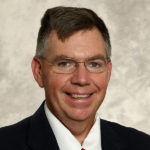
Stanley W. Toops

With heavy hearts we mourn our dear friend and colleague Stanley Toops, who passed away yesterday of a failing heart. We’re proud Stan called Miami home for 32 years, but he was a man of the world — a quintessential geographer — whose curiosity knew no bounds. He visited so many places and touched so many people through his teaching, research, mentorship, and friendship. We highlight some accomplishments and memories below.

Stan was a Midwesterner, born and bred, from Milton, Iowa. He attended Drake University, earning a B.A. in Geography and Political Science in 1979, and later an Advanced Chinese Certificate from Middlebury College in 1982. Stan went west for his graduate work in Geography at the University of Washington, earning an M.A. in 1983 and Ph.D. in 1990 (with a dissertation “The Tourism and Handicraft Industries of Xinjiang: Development and Ethnicity in a Minority Periphery”). Through his education and research, he became fluent in Chinese and knowledgeable of Uyghur, but could greet you in a variety of other languages.

Stan joined Miami that same year with a joint appointment in the Department of Geography and International Studies. For 32 years he shared his insights and experiences with thousands of students in classes on world regional geography, geography of East Asia, introductory and capstone international studies courses, and more. He enlivened the classroom with anecdotes from his travels, and sometimes with song (a capella renditions of national anthems). He supervised many graduate students, encouraging bold topics and field research across the globe. Former students attest to his depth of knowledge, infectious passion for learning, and encouraging them to critically engage with the world. Colleagues likewise appreciated his dedication to and impact on curricula in Geography and International Studies. Education at Miami will never be the same without him, but so many have been touched by his gifts as a teacher.

Stan was an innovative and productive researcher. He was a classic area studies geographer, focused on East and Central Asia, and particularly China’s Xinjiang Uyghur Autonomous Region. His research in geography and international studies exploring the interplay of culture and development earned him diverse publications (and a travel ban by the Chinese government, a badge of honor if there ever was one). He remained an active researcher across his career, with scores of articles, chapters, and books to his credit. Notably, he was a key contributor to the Routledge Atlas of Central Eurasian Affairs (2012) and lead editor of the International Studies: An Interdisciplinary Approach to Global Issues (now in its fifth edition, 2022). His geographical perspective lent important value to diverse conversations spanning borders and disciplinary boundaries. Stan left an important and lasting mark as a scholar.

All of these contributions earned him tenure and promotion in 1996 and the esteem of colleagues across campus, and a much celebrated and well-earned retirement in 2022. Stan moved back west to enjoy retirement at a new home in Federal Way, Washington (with Mt. Rainier on the horizon), but kept in touch with Oxford friends.

But we’ll remember Stan especially as a wonderful colleague and friend. He was incredibly smart, but also profoundly modest and personally warm. He was a regular presence around Shideler Hall, often found in his office surrounded by a towering mess of books and mementos. He spoke gently, but his tenor singing voice carried across the halls. Each day he sported a different, place-themed T-shirt or necktie, many of which he shared with us upon retirement. And in an increasingly busy and distracted campus, Stan took the time for careful and thoughtful conversation with undergraduates, graduate students, and his colleagues. They don’t make colleagues like Stan every day, and his loss leaves a big hole in Shideler Hall and our hearts.

We offer our sincerest condolences to his wife Simone Andrus, their much-loved dog Egg, and Stan’s extensive family and network of friends and collaborators in Iowa, Ohio, Washington, and across the globe. We feel his loss acutely but are thankful for his many years of collegiality and friendship, and proud of his deep contributions to Miami University, Geography (in Oxford and beyond), and everyone who knew him.

Stan’s life was cut far too short, but he lived it very fully. As a quintessential geographer would.


Provided by Marcia England and the Miami University geography department.


    Share

Laurence Allan James

Laurence Allan James passed from this world in the loving arms of his sister and niece on the night of December 3, 2022.

Allan (AKA, A.J.) was born in Hollywood, California, on March 18, 1949, into a family of many geologists. His family moved to Sacramento in northern California in 1956. He was active in Little League baseball and later attended Mira Loma High School, where he was on the Honor Roll, elected Senior Class President, played basketball and ran on the cross-country track team. He also began to write songs and play guitar with his friends. The garage band at 4425 Glen Oak Court was infamous.

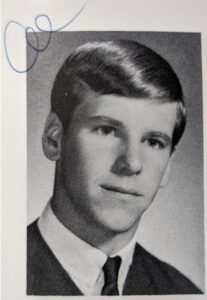
Photo of a young Laurence Allan James, Mira Loma High School yearbook, 1967

After high school, he interrupted his studies at University of California, Berkeley a number of times to pursue his singer-songwriter aspirations. Allan helped run a café on Bleeker Street in New York City and busked in Europe. He hitchhiked across the United States to greet his newborn niece.

He earned his bachelor’s degree in 1978 and moved to Madison, Wisconsin, where he pursued two Masters of Science degrees, in Water Resources Management and in Geography, with Jim Knox as his advisor. His Ph.D., also from the University of Wisconsin, was held jointly in Geography and Geology, with James C. Knox and David M. Mickelson as his dissertation advisors. While in Madison, he researched several family pioneers, including a Civil War hero who has a statue there.

Allan taught at the University of Wisconsin and in Atlanta, Georgia before moving to the University of South Carolina in 1988, where he was a professor in the Geography Department for three decades. He also served as Director of the BioGeomorphology Laboratory and Senior Associate in the Environment and Sustainability Program.

His teaching and research primarily focused on fluvial geomorphology with emphases on river sedimentation, floodplain and channel morphogenesis following human activities, interactions between alluvium and flooding, and the use of spatial analysis in geomorphology. Specific themes included investigations of hydraulic mining sediment in California, historical erosion by rills and gullies and floodplain sedimentation in the U.S. southeastern Piedmont, concepts of legacy (anthropogenic) sediment, Quaternary glaciations of the northwestern Sierra Nevada in California, geomorphometry and geomorphic change detection.

He was a member of national and international societies encompassing the field of geomorphology, including the Geological Society of America (GSA) and the American Association of Geographers (AAG) and received a number of Distinguished Career awards. The Southeastern Division and Water Resources Specialty Group of AAG honored him with Distinguished Career awards in 2018. The Geomorphology Specialty Group (GSG) of the AAG presented him with the Grove Karl Gilbert Award for Excellence in Research in 2015 and the Melvin G. Marcus Distinguished Career Award in 2023. (He was notified of the latter award by his friends prior to his death.)

Allan was predeceased by his parents, Laurence B. and Elizabeth M. James, and his brother Benjamin. He is survived by his sister Catherine (JJ) DeMauro, his brother Stephen, his niece Stacey Swatek Huie and her spouse Jeremy, their daughters Madeleine and Miriya, his ex-wife Myrna N. Skoda James, her sons Joseph Skoda, Jr. and Jesse Skoda, granddaughters Chloe and Kylie, and his beloved companion Dr. Marcia Ehinger.

According to his wishes, he will be cremated and interred in his parents’ plot at East Lawn Cemetery on Greenback Lane in Sacramento, California. Celebration of life events are planned at his sister’s home and at the AAG annual meeting in 2023.


Written by Dr. Marcia Ehinger

    Share

Frederick John Simoons

Frederick John Simoons, Jr., a renowned cultural geographer, the latest-surviving of Carl Ortwin Sauer’s Ph.D. graduates, and an emeritus professor of Geography at the University of California, Davis, died on June 30, 2022, four months short of his one-hundredth birthday. He seems to have outlived most of his one-time graduate students.


Background and Education

Born on Nov. 2, 1922 in Philadelphia of World War I immigrant parents (Dutch and Flemish Belgian), Fred was raised in poverty in a single-parent home in a dangerous neighborhood of Newark, NJ. According to his one-time PhD student Daniel Wynne Gade (1936–2015; 1987b: 135), Fred’s parents’ European background and the neighborhood’s ethnic diversity contributed to the maturing child’s sense of culture in the anthropological sense.

Following stateside Army service during and just after World War II, he completed his AB in Sociology at Rutgers University but was impressed by courses taught there by the geographers Andrew Hill Clark (1911–1975) and William LeRoy Thomas, Jr. (1920–2002); accordingly, he declared a special interest in Geography. Simoons graduated in 1949, earning Highest Honors, and was named to The Phi Beta Kappa Society (Gade 1987b: 135).

He opted to take graduate work in Geography at the Berkeley-influenced University of Wisconsin-Madison. There, he met and married the librarianship student Elizabeth “Liz” Stadler (1925–2009), in April 1949. Still, sociology continued to appeal, and, supported by the GI Bill, Fred transferred to Harvard University’s Social Relations program—which included sociology, cultural anthropology, and psychology. There, impressed by a geography course taught by Derwent S. Whittlesey (1890–1956), Fred was stimulated to return to that field.

Obtaining a teaching assistantship at U.C. Berkeley, he removed to the famous Geography Department there, completing a 1952 master’s thesis under young James J. Parsons (1915–1997), “The Settlement of the Clear Lake Upland of California.” During his subsequent Ph.D. studies, he worked under the iconic pioneering cultural geographer Carl Ortwin Sauer (1889–1975), who had been fundamentally influenced by the writings of Romanticist German geographers, historians, and ethnologists and by his campus’s Germanic-American Franz Boas-trained anthropological colleagues Alfred Louis Kroeber (1876–1960) and Robert Harry Lowie (1883–1957; Williams, Lowenthal, and Denevan 2014). Fred absorbed Sauer’s Germanic historicist approach as well as the Old Man’s empiricism, very demanding work ethic, and surpassingly high academic standards.

Research

With Ford Foundation support, in 1953 Liz and Fred traveled to remote and risky northwestern Ethiopia to accomplish fieldwork for his dissertation, “The Peoples and Economy of Begemder and Semyen, Ethiopia” (1956), which emphasized horticulture. In 1960, the University of Wisconsin Press published the adaptation, Northwest Ethiopia: Peoples and Economy (reprinted by Greenwood Press in 1983).

Fred was fascinated by bovines and their religious roles. Office of Naval Research- and Guggenheim Foundation-fostered sabbatical fieldwork in southern Asia led to Fred and Liz’s learning of the mithan, a little-known bovine kept and used ritually by tribal peoples in India’s Assam hills. Subsequent library study resulted in UWP’s A Ceremonial Ox of India (Simoons with Simoons 1968).

Following their Abyssinian stint, for five months Fred and Liz had traveled widely across Subsaharan Africa. One result was that beyond domesticates and traditional farming, Fred had taken up an interest in food habits. His pioneering work on animal-food avoidances resulted in 1961 in the classic Eat Not This Flesh (Wisconsin; reprinted in 1981 by Greenwood). Thirty-three years later, in 1994, Wisconsin issued a revised and augmented edition. Numerous reviews and translations of Eat Not appeared.

Echoing the nineteenth-century German historian Eduard Hahn (1856–1928), Simoons stressed ritual and other non-economical motives for domestication and animal-keeping, contrary to the economic-adaptationist ideas of the cultural-ecological materialist anthropologist Marvin Harris and many others of the day (Simoons 1979).

Cattle, dairying, and milk are major themes in the Simoons oeuvre. At the end of the 1960s, Fred took note of the fact that adult lactose (milk-sugar) intolerance—the usual and genetically controlled human condition—did not pertain among select human groups, notably those having had a long history of dairying. Fred investigated further and, with three publications (Simoons 1969, 1970a, 1970b), first forwarded what came to be called the “geographic” or “culture-historical” hypothesis of the co-emergence of dairying and adult lactase-persistence, which affords the ability comfortably to digest lactose (milk sugar) past puberty (the chronologically lock-step nature of this has recently been questioned: Evershed et al. 2022). A flock of related studies followed, and Fred’s fame grew, including in medicine and in nutrition, and he collaborated with researchers in those fields. His final publication was on this topic (Simoons 2001). Simoons’s contributions in this area led to an above-step promotion and appointment as the UCD Academic Senate’s Faculty Research Lecturer for 1981, a top campus honor. In 1987, Fred’s old Wisconsin student Dan Gade edited a Simoons-Festschrift issue of the Journal of Cultural Geography (Gade 1987), including a bibliography (Simoons 1987)

Other food-habit and related topics also captured Fred’s attention over ensuing decades. Although knowing no Chinese, following extensive research, including field investigation with Liz, Fred produced Food in China: A Cultural and Historical Inquiry (Simoons 1991; translated into Chinese in 2003). In 1998, Wisconsin published his Plants of Life, Plants of Death, which dealt with plants culturally associated with ritual purity, fertility, prosperity and life, as opposed to those associated with ritual impurity, illness, ill fate, and death.

University Employment

Fred first taught as an instructor at The Ohio State University, staying but a year (1956–1957). The following nine years were passed at the Sauerian-flavored University of Wisconsin Department of Geography at Madison, which years saw rapid advancement to full-professorship, until the Louisiana State University Department of Geography and Anthropology recruited him (and Jonathan Sauer) in 1966; but, as in the case of OSU, he (like Sauer) left LSU after one academic year. There followed two academic years (1967–1969) in the University of Texas at Austin’s Department of Geography. Finally, in 1968 Simoons moved on to UC Davis’s Department of Geography, where he spent the remainder of his distinguished career, mentoring many graduate students, serving an effective term as departmental chair, and—after two decades of UCD employment, retiring in 1989. He and Elizabeth—1981 retiree as Branch Manager and Assistant County Librarian in the Yolo County Public Library system—moved to Olympia and then on to Spokane, WA. Fred continued to publish through 2001. Following Liz’s death in 2009, he established a domestic partnership with former Geography graduate student Helen Issel (1926–2021) and resided outside of Sonoma, CA. They both died at the Sonoma Retirement Home, he from complications following a stroke.

References Cited

Evershed, Richard P., et al.  2022.  Dairying, Diseases and the Evolution of Lactase Persistence in Europe.  Nature: International Journal of Science 608(7922): 336–45.

Gade, Daniel W.  1987.  Commentary: Frederick J. Simoons, Cultural Geographer.  Journal of Cultural Geography 7(2): 135–41.

Simoons, Frederick J.  1952.  “The Settlement of the Clear Lake Upland of California.”  Unpublished master’s thesis in Geography, University of California, Berkeley.

––––––1956.  “The Peoples and Economy of Begemder and Semyen, Ethiopia.”  Unpublished Ph.D. dissertation in Geography, University of California, Berkeley.

––––––1960.  Northwest Ethiopia: Peoples and Economy.  Madison:  University of Wisconsin Press

––––––, with Elizabeth S. Simoons.  1968.  A Ceremonial Ox of India: The Mithan in Nature, Culture, and History, with Notes on the Domestication of Common Cattle.  Madison:  University of Wisconsin Press.  

––––––1961.  Eat Not This Flesh: Food Avoidances in the Old World.  Madison:  University of Wisconsin Press; expanded 2nd ed. 1994.

––––––1969.  Primary Adult Lactose Intolerance and the Milking Habit: A Problem in Biological and Cultural Interrelations.  I. Review of the Medical Research.  The American Journal of Digestive Diseases 14(12): 819–36.

––––––1970a.  The Traditional Limits of Milking and Milk Use in Southern Asia.  Anthropos 65(3/4): 547–93.

––––––1970b.  Primary Adult Lactose Intolerance and the Milking Habit: A Problem in Biologic and Cultural Interrelationships.  II. A Culture Historical Hypothesis.  The American Journal of Digestive Diseases 15(8): 695–715.

______1979.  Questions in the Sacred-Cow Controversy.  Current Anthropology 20(3): 467–76. Williams, Michael, with David Lowenthal and William M. Denevan.  2014.  To Pass on a Good Earth: The Life and Work of Carl O Sauer.  Charlottesville:  University of Virginia Press.

––––––1987.  Research Publications,” Journal of Cultural Geography 7(2): 143–7.

––––––1991.  Food in China: A Cultural and Historical Inquiry.  Boca Raton, FL:  CRC Press.

––––––1998.  Plants of Life, Plants of Death.  Madison:  University of Wisconsin Press.

––––––2001.  Persistence of Lactase Activity among Northern Europeans: A Weighing of Evidence in the Calcium Absorption Hypothesis.  Ecology of Food and Nutrition 40(5): 397–469.


By Stephen C. Jett, University of California, Davis, scjett@hotmail.com

    Share

Ashok Dutt

Dr. Ashok K. Dutt, Professor Emeritus at the University of Akron, Ohio and a long time AAG member passed away on November 4, 2022. He was 91 years old.

He studied geography at the master and doctoral levels at Patna University (India, 1955, 1961). Subsequently, he was a Post-Doctoral Fellow at the Institute of Social Studies at Hague (Netherlands, 1964)  and studied physical planning under the supervision of  Professor J.P. Thijsee. He then emigrated to the United States and began his academic career at St. Anselm’s College (New Hampshire, 1966-68), Asian Institute, East Carolina University (Summer, 1967) and spent the remainder of his career teaching and conducting research at the Department of Geography and Urban Studies, University of Akron (1968-2004).

He had a distinguished career in teaching and research in the areas of urban, social, medical, and development planning with regional interests in Europe, Asia and US. He published over a dozen co-edited books and more than 200 research papers, book chapters, and encyclopedic entries. A notable contribution of his research was the conceptualization of the models of urban city forms called the Colonial-based South Asian City and Bazaar-based South Asian City. His most recent co-edited book is titled Urban and Regional Planning and Development: 20th Century Forms and 21st Century Transformations (Springer, 2020). He was a Fulbright scholar in India (1988-89) and was recognized as the recipient of distinguished scholar award by the Asian Geography and Regional Development Planning Specialty groups at the Association of American Geographers (1991 and 1992).

He is survived by his wife Professor Emeritus Hiran Dutta, daughters Jhumku Kohtz and Rinku Dutt and grandchildren.

By Sudhir Thakur, Professor, California State University Sacramento

    Share

Paul Edward Phillips

Paul Edward Phillips, 79, Hays, died Tuesday, November 22, 2022 at his home surrounded by family, after a long battle with pancreatic and liver illness.

He was born on January 25, 1943 in Peoria, Illinois to Dale and Frances (Icenogle) Phillips. In 1961, he graduated from Woodruff High School in Peoria and then earned his BS and MS degrees at Illinois State University in Normal, Illinois in 1965 and 1967. He was united in marriage to Patricia Jean Purkey at Christ Lutheran Church in Normal, Illinois on May 29, 1965. Paul earned his Ph.D. at the University of Kansas in 1978, and he taught Cultural Geography at Fort Hays State University for 50 years, retiring in 2017.

While at FHSU, he taught a multitude of geography courses, led numerous geography field trips for students and teachers, was chairperson of the Department of Geosciences, initiated the teaching of geography for students across the globe courses at FHSU via distance learning, was instrumental in developing the Kansas Geography Alliance to educate K-12 teachers in effective methods to include geography in the state’s social studies curriculum, as well as serving on many university committees throughout his tenure.

Paul was also active in his church and in the community of Hays. At Messiah Lutheran Church, he served multiple times as congregational president and on the Board of Parish Life, more recently helping in the kitchen for the Wednesday Midweek evening education program and Vacation Bible School. His community activities included holding many offices in the Hays Lions Club, on the Board of Directors for the Farmer’s Credit Union, and many years of the Hays City Planning Commission, continuing to serve as chairperson until the time of his latest illness. His longtime interest in radio found an outlet as he served on the High Plains Public Radio (HPPR) board for many years.

Survivors include Pat, his wife of fifty-seven years of the home, his daughter Keri Lynn Applequist and husband Patrick, a granddaughter Jennifer Anne Applequist and a grandson Phillip James Applequist, all of Larned, Kansas, a sister Carol Anderson and husband Charles of Tucson, Arizona, as well as nieces and nephews in Illinois and Arizona.

He was preceded in death by his parents.

Paul loved traveling and enjoyed sharing stories and pictures from his many trips across the US and around the world. He strongly feels that first hand knowledge about the world is more important today than ever, so when he realized his time on earth was nearing its end, he and Pat established the Paul and Pat Phillips Abroad Award at FHSU to support students pursuing a BS degree and wishing to spend a semester abroad. This would help with student expenses not otherwise covered by the Study Abroad Exchange Program.

Originally published by Hays Memorial Chapel Funeral Home.

    Share

Program Profile: Lakeland Community College’s Geography and Geospatial Technology Program

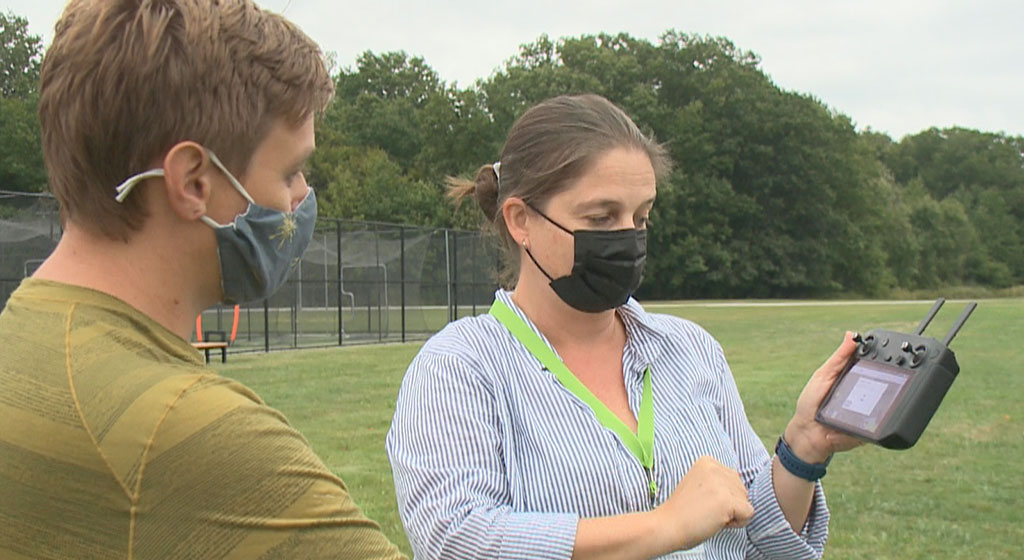
Photo of geography students receiving instruction on UAS operation during a class lab. Credit: Bobby Oliver
Geography students receive instruction on UAS operation during a class lab. Credit: Bobby Oliver

“Keeping up with technological change in the industry is key to our program,” explains Bobby Oliver, M.A., GISP professor and department chair for the Geography and Geospatial Technology program at Lakeland Community College (LCC) in Kirtland, Ohio. “We’re constantly updating and revising our curriculum to meet all of the changing needs, to ensure our students have access to the most current and advanced geospatial technologies out there.”

At LCC, keeping pace with the geospatial industry is essential to ensure the success of the hundreds of students who enroll in the Geography and Geospatial Technology program. Not only do Oliver and the LCC faculty accomplish this goal, but they do it well. In 2020, the program was recognized with the AAG Award for Associates Program Excellence. We asked Oliver what it was that made them stand out from the rest and her response was threefold: service-learning opportunities, a community engagement focus, and a highly connected professional network.

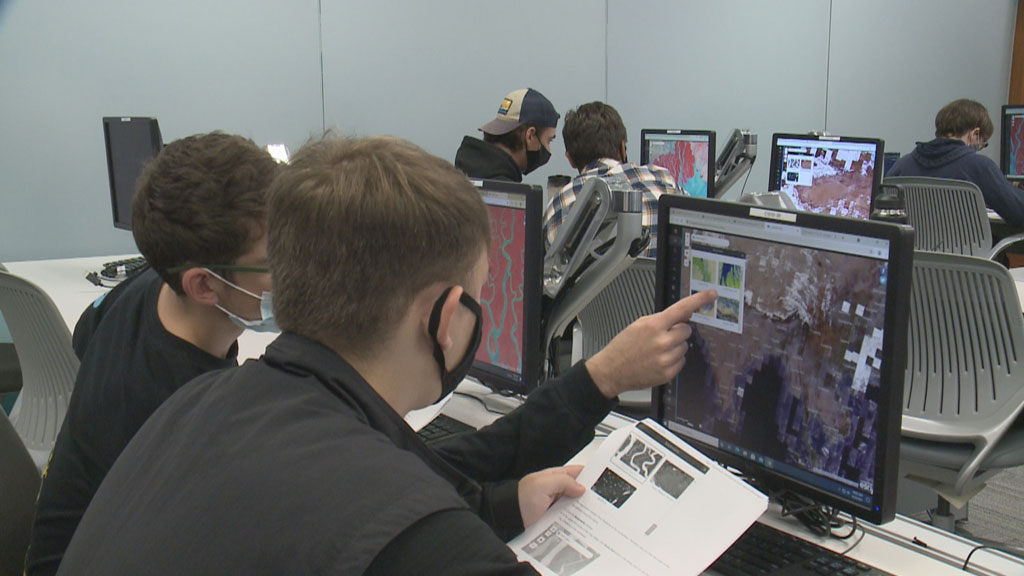
Photo of students at Lakeland Community College participating in an introductory geography class; by Bobby Oliver
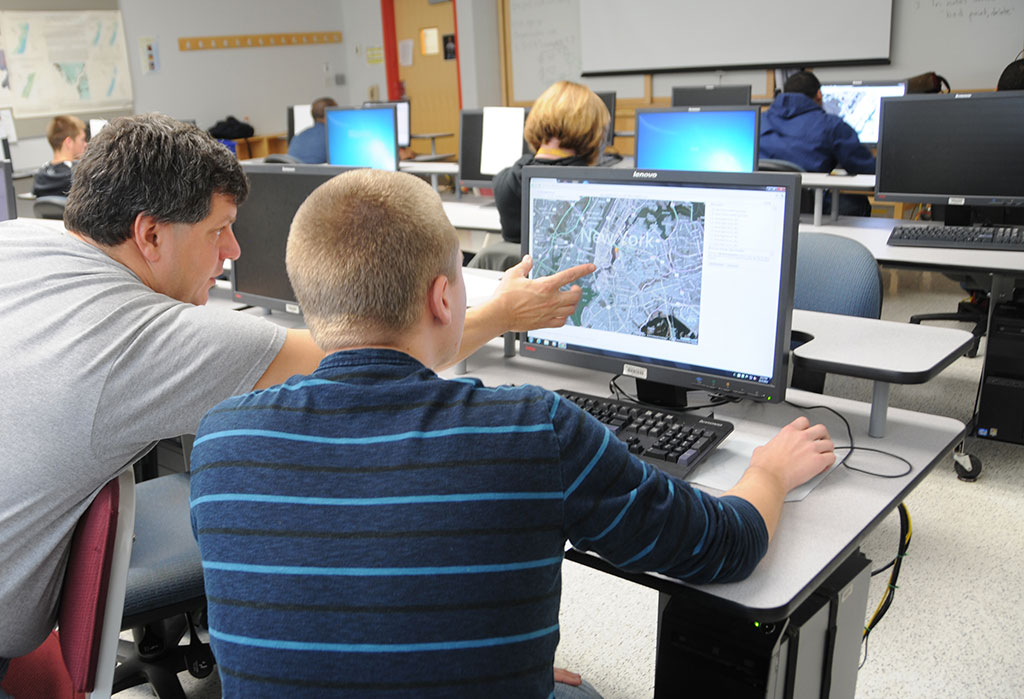
Students at Lakeland Community College participate in an introductory geography class. Credit: Bobby Oliver


Community-oriented learning as a pathway to excellence

Since the program’s inception in 2011, LCC geography students have completed service-learning projects with the Greater Cleveland Food Bank, the City of Euclid’s Shore Cultural Center, and many other Cleveland-area nonprofit organizations. In response, these projects have often translated into internship opportunities for students.

We do a lot of community and college-wide engagement and make it a goal to create service-learning projects for students. We require our students to go out and be part of professional organizations within the community.

—Bobby Oliver

The involvement of LCC students within the local Cleveland community facilitates a symbiotic relationship centered around the value of a geographic education. For Oliver, this is a key component to the program. It enables students to apply their growing knowledge and skills in the real world while also building connections and bringing awareness to organizations that may not have previously understood the value of geography.

Finding success through championing the students and championing the program

Program faculty have also taken a proactive, integrative approach to teaching students about how the skills they’re learning in the classroom translate to professional careers, something geography students often aren’t aware of. Internships with local employers, job shadowing, alumni engagement, and professional meetings are well engrained elements of the program. “We have what’s called a career service checklist our students go through within each one of the courses in their program,” explains Oliver. “All of these things have helped build their job search skills for when they hit the job market.”

Developing and maintaining relationships with local professionals working in geography, GIS, and other related professions has been critical to the program’s success. Many of these professionals are on the program’s advisory board, which has strong and diverse representation from the public, private, and nonprofit sectors. This has the added benefit of ensuring that students learn on the latest software platforms used by industry professionals.

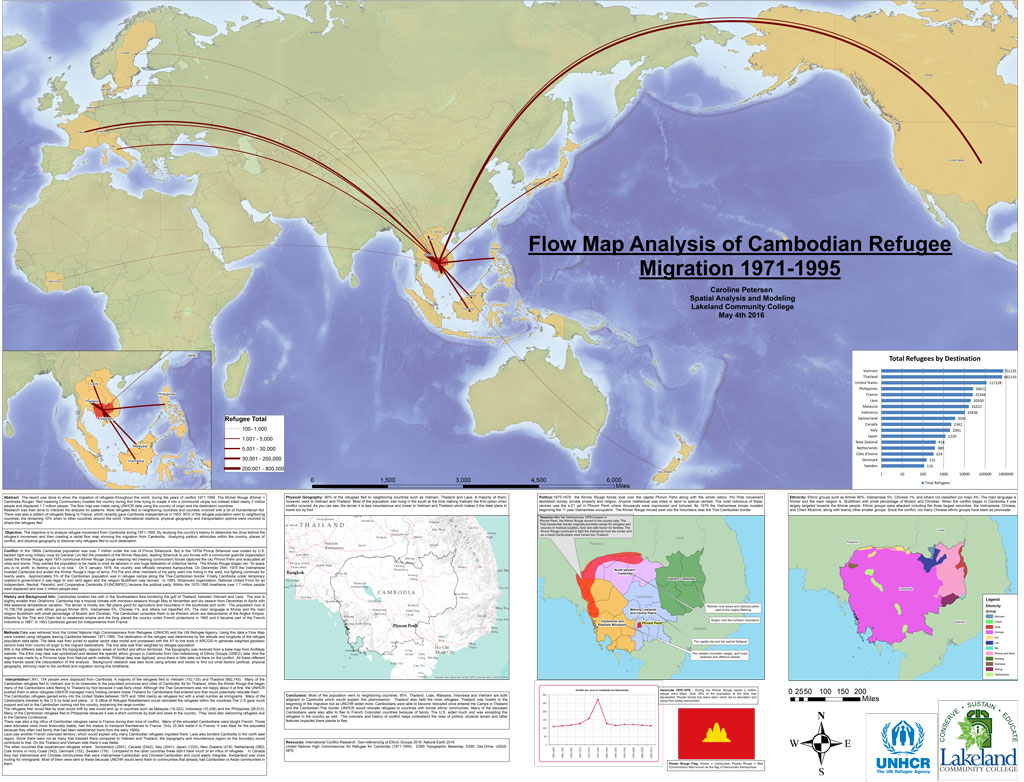
GIS poster project by Lakeland Community College Geography student Caroline Petersen on Flow Map Analysis of Cambodian Refugee Migration, 1976-1995
GIS project by Lakeland Community College Geography student Caroline Petersen on Flow Map Analysis of Cambodian Refugee Migration, 1971-1995


How increased visibility is essential to program viability

As with many geography programs, maintaining strong enrollments is the foremost challenge the program faces, and the COVID-19 pandemic has only added to the difficulty of recruiting and retaining students. However, Oliver and other program leaders have developed innovative solutions to attracting students, by exploring opportunities with other departments on campus, leveraging a dual enrollment program with area high schools, and making ongoing efforts to increase the program’s visibility on campus and in the community.

For our program to be successful, we have to make sure that people see what we’re doing, and how it impacts our community. Making sure the campus is aware that we’re here and [that] what we do is very essential—especially when it comes to [LCC’s] enrollments and long-term viability.

—Bobby Oliver


Video of LCC alumni Caroline Peterson sharing her experience in the LCC GIS program and how she uses those skills in her career.

An annual GIS Day event, Women in GIS luncheons, presentations to the Math Club and Model U.N., and collaborative projects with other departments across campus have all helped to highlight the program’s value. “We’re really trying to get the students to see how our community and region use GIS, and how geographic and geospatial skills are used in real jobs,” says Oliver. “These are the things that I feel really put us ahead, for a two-year program.”

    Share

David M. Mark

David M. Mark, The University at Buffalo, The State University of New York (UB) Distinguished Professor Emeritus in the Department of Geography and an internationally recognized leader in the field of GIScience, died Sept. 24 after a brief illness. He was 74.

Jeri Jaeger, UB professor emeritus of linguistics and Mark’s partner of 15 years, was by his side.

Mark joined the UB faculty in 1981 and had a major impact on the Department of Geography and the university more broadly, and his influence on the disciplines of geography, GIScience and human spatial cognition/languages was seen on an international scale. Among his many achievements, he worked with Andrew Frank, Andrew Turk, David Stea and others to establish the field of ethnophysiography — the perception and description of landforms by different cultures.

Mark served as director of the UB site of the National Center for Geographic Information and Analysis (NCGIA), funded by NSF to UB, UC Santa Barbara, and University of Maine from 1995-2013. NCGIA helped establish a national and international presence for the burgeoning field of GIScience.

Mark’s own research began with geometric descriptions of the land surface and evolved toward ethnophysiography. Along the way, he pioneered methods for representing these landforms using digital computers, which helped usher in the field of GIScience. He and other NCGIA colleagues simultaneously developed a formal theory for spatial thinking, grounded in cognition and linguistics. His ethnophysiographic and ontological research has been a major component of the theoretical foundation of GIScience. Collectively, his work has profoundly influenced the knowledge body of GIScience and the research directions pursued in the field today.

A prolific scholar, Mark published well over 200 manuscripts that have been cited over 18,000 times. He was lead investigator on numerous large grants, including from the National Institutes of Health and two National Science Foundation (NSF) Integrated Graduate Education, Research and Training (IGERT) projects, which funded and launched the careers of about 50 doctoral students.

He was the recipient of numerous awards and honors, including the University Consortium for Geographic Information Science Researcher of the year (2004), Educator of the Year (2009) and Elected Fellow (2010); the American Association of Geographers’ Robert T. Aangeenbrug Distinguished Career Award (2013); Simon Fraser University’s Outstanding Alumni Award for Academic Achievement (2016); and the Waldo-Tobler GIScience Prize from the Austrian Academy of Sciences (2016).

A native of British Columbia, Canada, he earned a B.A. in geography from Simon Fraser in 1970, an M.A. in geography from the University of British Columbia in 1974 and a Ph.D. in geography from Simon Fraser in 1977. He was an assistant professor at the University of Western Ontario before joining the UB faculty.

Aside from his academic achievements, Mark was an enthusiastic “birder” for many decades. He and Jaeger traveled extensively, including to the Amazon River, the coast of Alaska, game parks in Africa, Egypt and the Nile River, and India. He added to his lifetime list of birds wherever he traveled.

In years past, David was a member of the geography department’s soccer team and goalie for the floor hockey team. Many of his teammates were his graduate students. He was a dedicated fan of the Buffalo Sabres and Bills, and went to many games with friends. Having bonded with the Bills during the Super Bowl years of 1991-94, he had been looking forward to this year with great anticipation.


Contributed by members of the University at Buffalo Geography Department.

    Share

Program Profile: Salisbury University – GIS

Photo of Michael Scott
Michael Scott

GIS has been taught at Salisbury University since at least the early nineties, says Dr. Michael Scott, a graduate of the Department of Geography and Geosciences and now a professor in the department and dean of the Henson School of Science and Technology. Continuing the success of their GIS program, in 2007, the department expanded into graduate education with their M.S. in GIS Management (MSGISM).   

Photo of Andrea Presotto
Andrea Presotto

“We realized that our students were doing very well in terms of finding employment and working in the field,” said Dr. Andrea Presotto, director of the MSGISM. “But the organizations they worked for were not particularly strategic about managing their GIS implementations.”   

The new M.S. program was conceived as a combination MBA and GIS degree, to better equip students with the skillsets necessary to become not only effective GIS practitioners, but also address this gap in data management and become leaders in public administration, grant writing, enterprise operations management, and a host of other skills beyond the technical level. This outside-the-box thinking and response to employment realities have elevated the program to one of the most respected departments on campus.  

A Regional Approach

On Maryland’s Eastern Shore, agriculture, tourism, fisheries, residential and commercial development all face challenges in response to increasing climate change. The Department of Geography and Geosciences at Salisbury University has positioned itself as a big part of the solution for the communities in the region. In 2004, department faculty formed the Eastern Shore Regional GIS Cooperative (ESRGC), which Dr. Scott directs, to help organize the region’s small towns to pool their resources for much-needed GIS project support.    

“One small town doesn’t have the ability for a GIS staff to do data collection and analysis. If you put seven or eight little towns together, suddenly there are enough resources to hire somebody to actually get that done,” explains Scott.    

[Our students] are able to get this very intensive, on-the-job experience, but the only way that works, of course, is the ESRGC has to know that the quality of the students getting GIS education coming out of the department is great, because they’re going to put them right to work.”

—Michael Scott

An outreach unit of Salisbury University and joint effort between a collection of Maryland Eastern Shore regional councils and the university, the ESRGC has grown to include 10 full-time staff, nine of whom are alumni of the department. In good years, Scott estimates that the cooperative hires anywhere from 25 to 30 interns from the department, where they acquire the invaluable real-world experiences and skills needed to move directly into professional GIS positions, even before they graduate.  

“[Our students] are able to get this very intensive, on-the-job experience,” Salisbury University’s Dr. Michael Scott explains, “but the only way that works, of course, is the ESRGC has to know that the quality of the students getting GIS education coming out of the department is great, because they’re going to put them right to work.”

Photo of students in a Salisbury University GIS class demonstrating mapping on their computers
Photo courtesy Salisbury University

If you build it, they will come…

Students and alumni of the Department of Geography and Geosciences have earned an excellent reputation throughout the region, a credit to the dedication of the department’s faculty, and their student-centered approach. As Dr. Art Lembo, a professor in the department and Technical Director of the ESRGC explains, this starts with the physical building itself:   

“We requested the faculty offices be located in an off-hallway suite that allows our doors to be open all the time, so the students can better interact with the faculty. We made structural changes to accommodate better interaction, because it’s just in our DNA to give the students this kind of experience.”  

It trickles into [our students] bringing their friends, who can become majors as well.”

—Dr. Andrea Presotto

Dr. Dan Harris, a professor and chair of the department, notes that unlike other academic buildings on campus, which typically close at midnight, the Geography and Geosciences faculty years ago made a special request to the president of the university to allow the department lab to remain open 24 hours to provide students with the opportunity to be in the building at any time. This level of attention to detail concerning the physical learning space is representative of the student-first, innovative thinking that has set the program apart.    

“It trickles into [our students] bringing their friends, who can become majors as well,” Dr. Andrea Presotto, Geography and Geosciences professor at Salisbury University.   

Photo of Dan Harris
Dan Harris

“We have faculty who are really good at getting [undergraduate students] in for field courses, and we embed field experiences in their classes. It’s really important to show the students that it’s not just a discipline where we come in and lecture in a classroom, and you walk away and read a textbook. We actually want them to get out and see it,” says Dr. Dan Harris, department chair.

    Share

William Laatsch

The geographer who loved nothing more than exploring unfamiliar territory has embarked on his next journey, to a destination not found in any atlas. William Ganfield Laatsch, 84, passed away September 14, 2022.

William Laatsch was born June 20, 1938, in Waukesha, WI, to Wayland and Elizabeth (Ganfield) Laatsch. His lifelong love of learning and exploring began in childhood, nurtured by family trips to Northern Wisconsin and the east coast. An only child, he often joked about how, instead of being chaotic and crowded affairs, holidays were often spent reading, surrounded by aunts and uncles who would do the same until cocktail hour.

I don’t expect them all to become geographers. I just expect them to be better stewards of the Earth and its people.

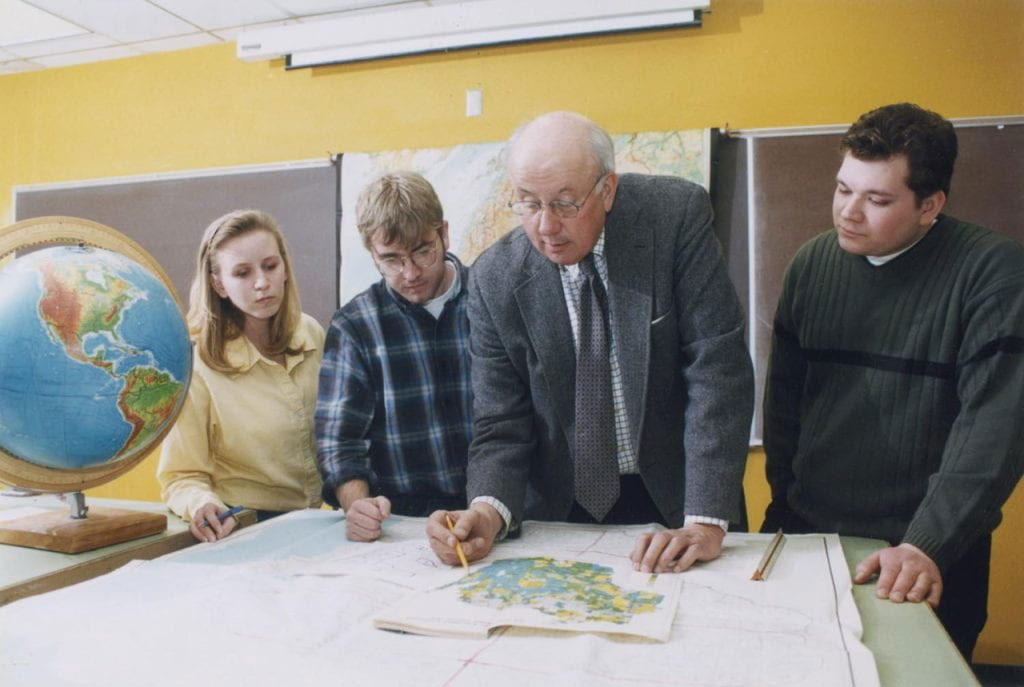
Photo of William Laatsch pointing to a desk map with students looking on

While Bill’s immediate family was small, his youth in Waukesha was surrounded by a close knit group of families that included Richard and Elizabeth Hunter and their daughter Frances. Growing up on the same block, Fran and Bill would accompany each other to school which was the start of a loving relationship that would see them marry on August 18, 1962 and go on to spend the next 60 years together. Fran was Bill’s partner as he pursued his academic career, and together they traveled widely, across North America, Europe, and Asia. They had a special affinity for the American West. Together Bill and Fran would raise two children, Ann (Shorewood, WI) and David (Wauwatosa, WI).

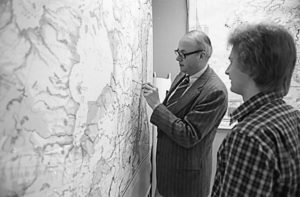
Photo of William Laatsch pointing to a large wall map with student looking on

In 1956 Bill enrolled at Carroll College, now Carroll University, where his family ties to the institution ran deep. His grandfather, William Arthur Ganfield, served as the College’s sixth president and Bill’s parents, aunts, and uncle also attended Carroll. He continued his studies at the University of Oklahoma where he earned a Master of Science in physical geography, and the University of Alberta in Edmonton. There, he studied high latitude geography, mining development, and town site development. (Decades later, he would be honored with a Yukon ecological reserve named after him in recognition of his 1970’s doctoral dissertation recommendation that the region emphasize ecotourism as a hedge against the decline of mining). After earning his Ph.D. in cultural geography, he accepted a position in the Department of Regional Analysis at the University of Wisconsin-Green Bay.

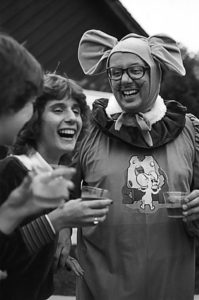
Photo of William Laatsch wearing a mouse costume for the annual fall Bill Laatsch Wine and Cheese Classic, courtesy University of Wisconsin library digital archivesBill spent 43 years at UWGB as a Professor of Geography and Department Chair, and postponed retirement to fill the position of Interim Provost and Vice Chancellor for Academic Affairs. For decades, he hosted the Bill Laatsch Wine and Cheese Classic each fall, where he—dressed as a 6’4” gray mouse (shown at right)—would welcome students back to campus with his signature warmth and good humor. Bill retired in 2009, and became the first faculty member to have a classroom named in their honor. During the course of his career he earned numerous prestigious awards for teaching excellence, both locally and nationally. Bill inspired generations of students to pursue careers in teaching, urban planning, cartography, GIS, remote sensing, and other professions related to cultural geography’s focus on the Earth and how humans interact with it. About his students, he remarked “I don’t expect them all to become geographers. I just expect them to be better stewards of the Earth and its people.”
He also served as a consultant for the U.S. Department of Defense, Wisconsin Department of Transportation and the Wisconsin Department of Development. He was a member of the Editorial Board of the “Voyageur” Historical Review, former chairman of the State of Wisconsin Historic Preservation Review Board, Chairman of the Midwest division of the Association of American Geographers and Fellow of the American Geographical Society. He is a former President of the Heritage Hill Corporation, which operates the Heritage Hill State Historical Park for the Department of Natural Resources.

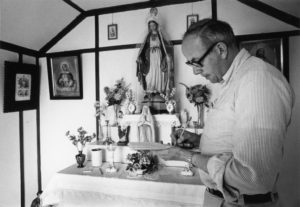
Photo of William Laatsch taking notes near an alter with religious artifactsA professional interest in Belgian settlement in northeastern Wisconsin culminated in helping to establish the Belgian Heritage Center in Namur, Wisconsin, which is dedicated to telling the story of Belgian settlement in Wisconsin and works to preserve unique elements of Belgian culture. Bill loved leading bus tours of the Southern Door County Belgian architectural and historical sites for students, tourists, and anyone who would seek out his expertise and, to his children’s horror, terrible jokes.

A deep allegiance to his alma mater, Carroll, is evident in Bill’s years of service to the institution. He served on the Board of Trustees for 19 years (1991-2010) chairing numerous committees and ultimately as Chairman of the Board.

Bill revered the Earth’s beauty, and was moved to tears when he saw Mount Everest in person in 1996. He loved Jake’s corned beef, deep belly laughs, early morning fresh cheese curd runs, Door County, and striking up conversations with strangers across the world (whether they spoke his language or not). A champion trapshooter, he loved shooting and found joy in teaching his children to enjoy the sport as well. Above all else, he loved being Papa to his grandchildren. He treated everyone he met with respect and kindness, and gave generously of his time and energy to environmental, educational, historical, and artistic causes.

Bill was preceded in death by his parents and his beloved in-laws Richard and Elizabeth Hunter. He is survived by his wife Frances Hunter, daughter Ann Laatsch, son David (Tara) Laatsch, and his two amazing grandchildren, Elizabeth and Andrew, as well as countless friends, colleagues, and students who he inspired, encouraged, and mentored.


Reprinted with permission from the Feerick Funeral Home.

    Share

On the Map: The Spot Where Modern Denver Began

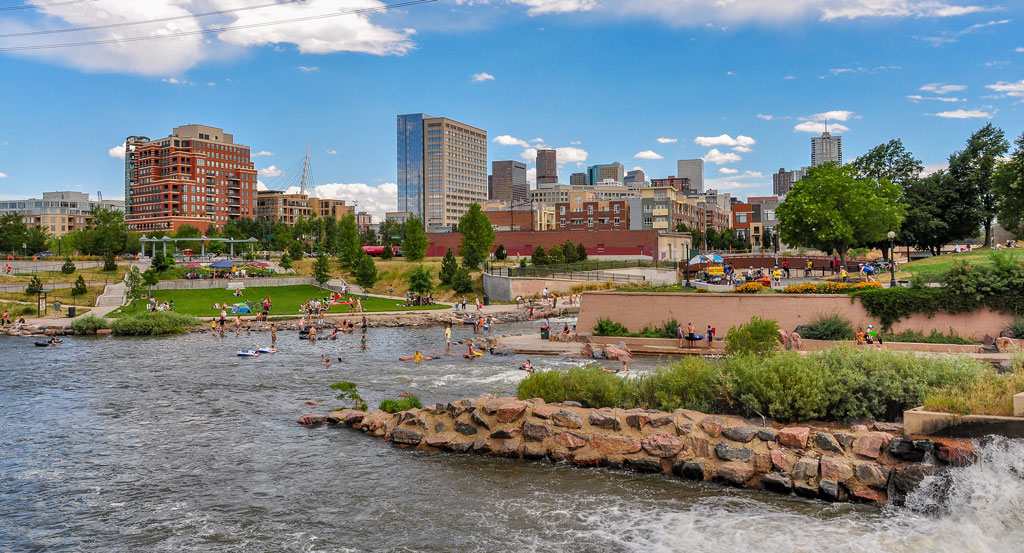
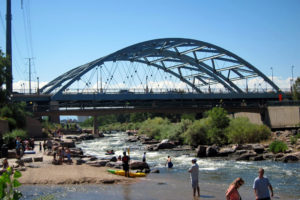
Confluence Park rapids and beach with a backdrop of the Denver Skyline by Kent Kanouse, Creative Commons

The confluence of two rivers in downtown Denver — Niinéniiniicíihéhe (the South Platte River) and Cherry Creek — marks the 1858 gold strike that launched a major city.

This spot also marks the prospectors’ encounter with the Arapaho, whose winter camping grounds and sovereign land this was, as affirmed in the 1851 Treaty of Fort Laramie. In addition to white settlers, Cherokee Nation citizens made up a significant number of the early prospectors, pushed off their own land after the 1828 Georgia Gold Rush and subsequent Trail of Tears.

At the site of Confluence Park, it was William Greenberry “Green” Russell who led the group that began a search for gold there in May 1858. When they found indications four miles south, their temporary settlement became what is now known as Denver.

In the intervening century, the 10.5-mile stretch of the South Platte River where Confluence Park rests fell on hard times, like many urban rivers. By the 1970s, it was a polluted, not only neglected but a frequent dumping site, “Denver’s receptacle for anything they wanted out of sight, out of mind.” according to Colorado State Senator Joe Shoemaker, who led the campaign to restore the riverfront. In 1974, Shoemaker co-founded the Platte River Development Committee with then-Denver Mayor Bill McNichols, eventually transforming it into the Greenway Foundation. The park underwent a long renovation and reopened with more amenities in 2018.

Confluence Park rapids and beach by Kent Kanouse, Creative Commons by Wally Gobetz, Creative Commons
Confluence Park rapids and beach by Wally Gobetz, Creative Commons

Today’s Confluence Park is a public gathering place that offers recreation, paved paths and nature trails, river views and natural landscapes; tubing, and a kayak run. Fishing is permitted, as are wading and shallow swimming at a small beach. Shopping and dining are close by.


Find out more about the Cherokee Nation’s participation in the Colorado Gold Rush

DOI: 10.14433/2017.0118


Sources: Colorado Encyclopedia; “Confluence Park,” The Cultural Landscape Foundation; “RIVER TOWNS: Denver | The South Platte’s dirty past promises a pristine future,” September 18, 2021 Colorado Politics; OsiyoTV; Uncover Colorado; “The Birth of Denver, from Boom to Bust to Boom,” Indian Country Today, Oct. 29, 2013. 

    Share