David M. Mark

David M. Mark, The University at Buffalo, The State University of New York (UB) Distinguished Professor Emeritus in the Department of Geography and an internationally recognized leader in the field of GIScience, died Sept. 24 after a brief illness. He was 74.

Jeri Jaeger, UB professor emeritus of linguistics and Mark’s partner of 15 years, was by his side.

Mark joined the UB faculty in 1981 and had a major impact on the Department of Geography and the university more broadly, and his influence on the disciplines of geography, GIScience and human spatial cognition/languages was seen on an international scale. Among his many achievements, he worked with Andrew Frank, Andrew Turk, David Stea and others to establish the field of ethnophysiography — the perception and description of landforms by different cultures.

Mark served as director of the UB site of the National Center for Geographic Information and Analysis (NCGIA), funded by NSF to UB, UC Santa Barbara, and University of Maine from 1995-2013. NCGIA helped establish a national and international presence for the burgeoning field of GIScience.

Mark’s own research began with geometric descriptions of the land surface and evolved toward ethnophysiography. Along the way, he pioneered methods for representing these landforms using digital computers, which helped usher in the field of GIScience. He and other NCGIA colleagues simultaneously developed a formal theory for spatial thinking, grounded in cognition and linguistics. His ethnophysiographic and ontological research has been a major component of the theoretical foundation of GIScience. Collectively, his work has profoundly influenced the knowledge body of GIScience and the research directions pursued in the field today.

A prolific scholar, Mark published well over 200 manuscripts that have been cited over 18,000 times. He was lead investigator on numerous large grants, including from the National Institutes of Health and two National Science Foundation (NSF) Integrated Graduate Education, Research and Training (IGERT) projects, which funded and launched the careers of about 50 doctoral students.

He was the recipient of numerous awards and honors, including the University Consortium for Geographic Information Science Researcher of the year (2004), Educator of the Year (2009) and Elected Fellow (2010); the American Association of Geographers’ Robert T. Aangeenbrug Distinguished Career Award (2013); Simon Fraser University’s Outstanding Alumni Award for Academic Achievement (2016); and the Waldo-Tobler GIScience Prize from the Austrian Academy of Sciences (2016).

A native of British Columbia, Canada, he earned a B.A. in geography from Simon Fraser in 1970, an M.A. in geography from the University of British Columbia in 1974 and a Ph.D. in geography from Simon Fraser in 1977. He was an assistant professor at the University of Western Ontario before joining the UB faculty.

Aside from his academic achievements, Mark was an enthusiastic “birder” for many decades. He and Jaeger traveled extensively, including to the Amazon River, the coast of Alaska, game parks in Africa, Egypt and the Nile River, and India. He added to his lifetime list of birds wherever he traveled.

In years past, David was a member of the geography department’s soccer team and goalie for the floor hockey team. Many of his teammates were his graduate students. He was a dedicated fan of the Buffalo Sabres and Bills, and went to many games with friends. Having bonded with the Bills during the Super Bowl years of 1991-94, he had been looking forward to this year with great anticipation.


Contributed by members of the University at Buffalo Geography Department.

    Share

William Laatsch

The geographer who loved nothing more than exploring unfamiliar territory has embarked on his next journey, to a destination not found in any atlas. William Ganfield Laatsch, 84, passed away September 14, 2022.

William Laatsch was born June 20, 1938, in Waukesha, WI, to Wayland and Elizabeth (Ganfield) Laatsch. His lifelong love of learning and exploring began in childhood, nurtured by family trips to Northern Wisconsin and the east coast. An only child, he often joked about how, instead of being chaotic and crowded affairs, holidays were often spent reading, surrounded by aunts and uncles who would do the same until cocktail hour.

I don’t expect them all to become geographers. I just expect them to be better stewards of the Earth and its people.

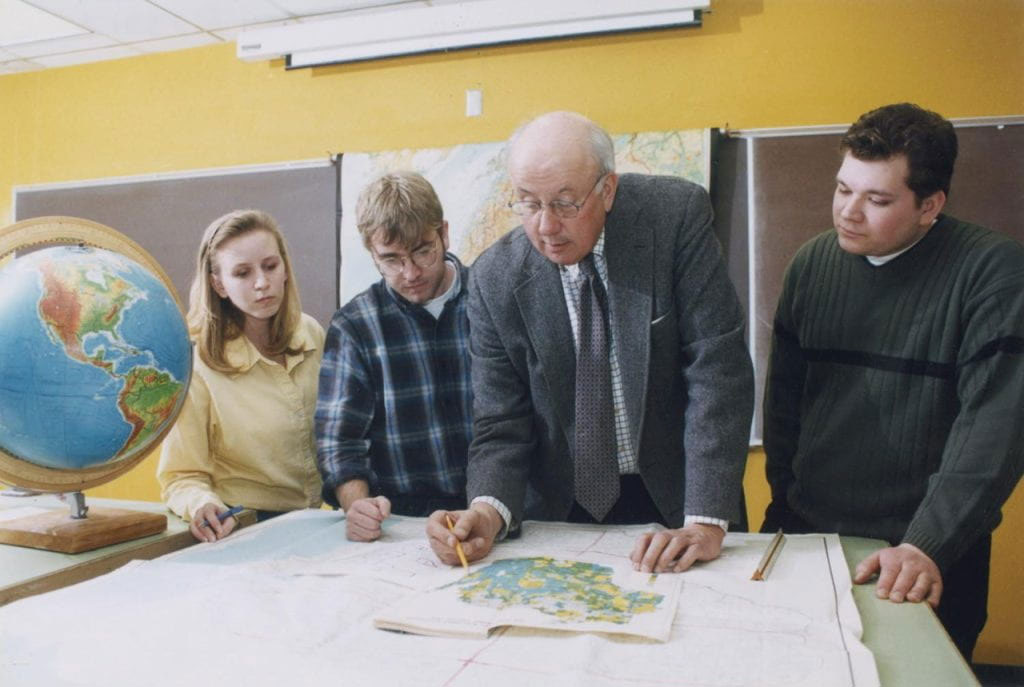
Photo of William Laatsch pointing to a desk map with students looking on

While Bill’s immediate family was small, his youth in Waukesha was surrounded by a close knit group of families that included Richard and Elizabeth Hunter and their daughter Frances. Growing up on the same block, Fran and Bill would accompany each other to school which was the start of a loving relationship that would see them marry on August 18, 1962 and go on to spend the next 60 years together. Fran was Bill’s partner as he pursued his academic career, and together they traveled widely, across North America, Europe, and Asia. They had a special affinity for the American West. Together Bill and Fran would raise two children, Ann (Shorewood, WI) and David (Wauwatosa, WI).

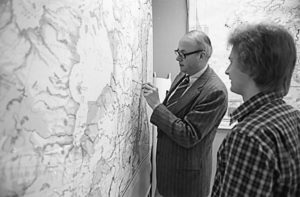
Photo of William Laatsch pointing to a large wall map with student looking on

In 1956 Bill enrolled at Carroll College, now Carroll University, where his family ties to the institution ran deep. His grandfather, William Arthur Ganfield, served as the College’s sixth president and Bill’s parents, aunts, and uncle also attended Carroll. He continued his studies at the University of Oklahoma where he earned a Master of Science in physical geography, and the University of Alberta in Edmonton. There, he studied high latitude geography, mining development, and town site development. (Decades later, he would be honored with a Yukon ecological reserve named after him in recognition of his 1970’s doctoral dissertation recommendation that the region emphasize ecotourism as a hedge against the decline of mining). After earning his Ph.D. in cultural geography, he accepted a position in the Department of Regional Analysis at the University of Wisconsin-Green Bay.

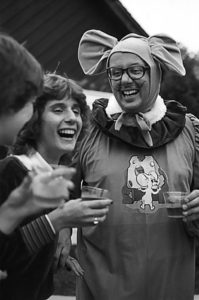
Photo of William Laatsch wearing a mouse costume for the annual fall Bill Laatsch Wine and Cheese Classic, courtesy University of Wisconsin library digital archivesBill spent 43 years at UWGB as a Professor of Geography and Department Chair, and postponed retirement to fill the position of Interim Provost and Vice Chancellor for Academic Affairs. For decades, he hosted the Bill Laatsch Wine and Cheese Classic each fall, where he—dressed as a 6’4” gray mouse (shown at right)—would welcome students back to campus with his signature warmth and good humor. Bill retired in 2009, and became the first faculty member to have a classroom named in their honor. During the course of his career he earned numerous prestigious awards for teaching excellence, both locally and nationally. Bill inspired generations of students to pursue careers in teaching, urban planning, cartography, GIS, remote sensing, and other professions related to cultural geography’s focus on the Earth and how humans interact with it. About his students, he remarked “I don’t expect them all to become geographers. I just expect them to be better stewards of the Earth and its people.”

He also served as a consultant for the U.S. Department of Defense, Wisconsin Department of Transportation and the Wisconsin Department of Development. He was a member of the Editorial Board of the “Voyageur” Historical Review, former chairman of the State of Wisconsin Historic Preservation Review Board, Chairman of the Midwest division of the Association of American Geographers and Fellow of the American Geographical Society. He is a former President of the Heritage Hill Corporation, which operates the Heritage Hill State Historical Park for the Department of Natural Resources.

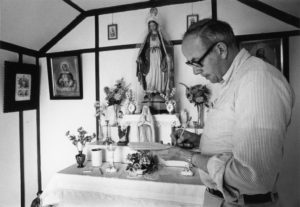
Photo of William Laatsch taking notes near an alter with religious artifactsA professional interest in Belgian settlement in northeastern Wisconsin culminated in helping to establish the Belgian Heritage Center in Namur, Wisconsin, which is dedicated to telling the story of Belgian settlement in Wisconsin and works to preserve unique elements of Belgian culture. Bill loved leading bus tours of the Southern Door County Belgian architectural and historical sites for students, tourists, and anyone who would seek out his expertise and, to his children’s horror, terrible jokes.

A deep allegiance to his alma mater, Carroll, is evident in Bill’s years of service to the institution. He served on the Board of Trustees for 19 years (1991-2010) chairing numerous committees and ultimately as Chairman of the Board.

Bill revered the Earth’s beauty, and was moved to tears when he saw Mount Everest in person in 1996. He loved Jake’s corned beef, deep belly laughs, early morning fresh cheese curd runs, Door County, and striking up conversations with strangers across the world (whether they spoke his language or not). A champion trapshooter, he loved shooting and found joy in teaching his children to enjoy the sport as well. Above all else, he loved being Papa to his grandchildren. He treated everyone he met with respect and kindness, and gave generously of his time and energy to environmental, educational, historical, and artistic causes.

Bill was preceded in death by his parents and his beloved in-laws Richard and Elizabeth Hunter. He is survived by his wife Frances Hunter, daughter Ann Laatsch, son David (Tara) Laatsch, and his two amazing grandchildren, Elizabeth and Andrew, as well as countless friends, colleagues, and students who he inspired, encouraged, and mentored.


Reprinted with permission from the Feerick Funeral Home.

    Share

Robert F. Austin

Robert F. Austin (Bob), Ph.D., GISP, age 72, of Clearwater, Florida and Asheville, North Carolina passed away on August 14, 2022.

Austin graduated from Southfield High in 1968 where he lettered in basketball and tennis and then attended the University of Michigan in Ann Arbor on an academic scholarship. He earned his Bachelor of Arts and Master of Arts degrees while studying Geography and Southeast Asian Studies. He also studied Thai and learned to speak it quite well, thanks to regular practice with a group of his students from Thailand. Upon graduation he was admitted to the doctoral program and spent a year abroad in the United Kingdom, Brunei, Malaysia, Thailand and Singapore conducting research for his dissertation. He received his Ph.D. in Geography from the University of Michigan at the age of 27.

After leaving Michigan, he continued in academia at the University of Missouri where he was an Assistant Professor and Chair of the Geography department. While at Missouri, he received a Fulbright Fellowship and spent a year lecturing and teaching at Oxford Polytechnic in England. In 1984 Bob left academia to pursue advancing technological opportunities in the private sector; he took his first position in that arena with Chicago Aerial Survey (later Geonex) where he was like a kid in a candy shop with all the computer and photogrammetry equipment on site. He applied his experience working in the field for telephone companies during summers while in college, along with his knowledge of computer mapping and database management systems, to develop large projects and training programs for telephone and other utility companies converting their archives of paper maps and records to digital format. Bob worked as a consultant in the telephone and engineering industries nationally and internationally and had long term assignments in Russia and Malaysia.

Over the years, he taught courses and/or lectured at several universities including Virginia Tech, University of Tampa and Delta State. Having experienced careers in both the academic and private sectors, Bob spent his last years of employment in public service with the City of Tampa in the Department of Technology and Innovation where he was the Enterprise Applications Integration Manager. Always excited about learning more and sharing the many ways he envisioned GIS benefiting the world, Bob greatly enjoyed collaborating with other scholars and colleagues in several professional organizations. He was an active member of AM/FM International (later GITA) where he was a regular presenter at conferences and assumed the roles of conference Chair and President. He also had the great privilege of serving as a Member and Chair of the National Geospatial Advisory Committee which is a Secretary of State appointment.

Bob was quite dedicated to the use of geospatial to save lives and property. In 2016 he travelled to Vietnam as a subject matter expert for UN-SPIDER (United Nations Platform for Space-based Information for Disaster Management and Emergency Response). In addition to his many published papers, monographs and book chapters, Bob was a regular contributor and served on the editorial board of Solstice: An Electronic Journal of Geography and Mathematics. After retiring he continued to write and co-published a textbook on GIS for Critical Infrastructure Protection. He also published The Big Cabbage: A Memoir of Life in Russia in the 1990s.

At the time of his passing, he was working on a book of historical fiction set primarily in Barbados and the American colonies in the 18th century. Like most geographers, Bob had a great love of travel and was happiest when he could take his family along even when, for him, they often were working vacations. He and his wife, Michelle, accomplished their goal of visiting every continent with a trip to Antarctica in 2014. His daughters, Alexandra and Lisa, were also along for many of their excursions and whether they were digging for thunder eggs in Australia, playing with orangutans on Borneo or exploring museums in Cairo he enthusiastically took on the role of tour guide.

    Share

Yi-Fu Tuan

By Mary Ellen Gabriel

Yi-Fu Tuan, a towering intellectual figure and University of Wisconsin–Madison professor emeritus of geography died Aug. 10 at UW Hospital in Madison at age 91, with a dear friend and former student, Charles Chang, by his side.


Yi-Fu Tuan in March 2022 during a break in filming with a Dutch film crew. His work introducing and expanding the field of humanistic geography is influential across the arts, humanities and social sciences, as well outside academia. Photo by Kris Olds


People think that geography is about capitals, landforms and so on. But it is also about place — its emotional tone, social meaning, and generative potential.”

—Yi-Fu Tuan

Tuan was a prolific writer and deep thinker who was known as the father of humanistic geography. A movement within the field of human geography, humanistic geography arose in the 1970s as a way to counter what humanists saw as a tendency to treat places as mere sites or locations. Instead, a humanistic geographer would argue, the places we inhabit have as many personalities as those whose lives have intersected with them. And the stories we tell about places often say as much about who we are, as about where our feet are planted.

It was Tuan who gave rise to the recognition among geographers that the intimacies of personal encounters with space produce a “sense of place.”

“People think that geography is about capitals, landforms and so on,” Tuan said. “But it is also about place — its emotional tone, social meaning, and generative potential.”

Time, age, sadness, loss, goodness, happiness, and the concept of home are all themes Tuan explored at length in his more than 20 books, including his best-known work, “Space & Place,” as well as “Humanist Geography: An Individual’s Search for Meaning.” In his later years, Tuan turned to introspection with his most recent books: “Who Am I?  An Autobiography of Emotion, Mind and Spirit” and an addendum, “Who Am I? A Sequel.” Both works look back on the author’s early life in China and his rise to become one of America’s most innovative intellectuals.

Born in 1930 in Tianjin, China, Yi-Fu Tuan was educated in China, Australia, the Philippines and the United Kingdom. He received his bachelor’s and master’s degrees from the University of Oxford and his doctorate from the University of California, Berkeley.

Yi-Fu Tuan joined the faculty of the Department of Geography at UW–Madison in 1983, was named John Kirtland Wright Professor of Geography in 1985 and was named a Vilas Research Professor that same year, before attaining emeritus status in 1998.

His influence on the field of geography was enormous.

“For decades, Yi-Fu Tuan’s work shaped the thinking of generations of geography students and academics,” says Lily Kong, human geographer and president, Singapore Management University. “His place in the geographical canon is undoubted. His shaping of humanistic geography contributed to important philosophical shifts in the discipline.”

By emphasizing humans as thinking, dreaming, imagining beings who experience the world — capable of goodness, beauty and truth as well as greed, cruelty and domination — he showed us how all of these traits are reflected in our spaces, places and landscapes.”

—Tim Cresswell

Tuan was beloved by his students, both graduate and undergraduate alike. He often shared meals with undergraduates and enjoyed visiting the State Street Starbucks to listen in on, and sometimes join, students’ conversations about their studies.

“Yi-Fu Tuan insisted on the importance of the “human” in “human geography,” says Tim Cresswell, a graduate student of Tuan’s at UW–Madison who is now Ogilvie Professor of Geography at the University of Edinburgh. “By emphasizing humans as thinking, dreaming, imagining beings who experience the world — capable of goodness, beauty and truth as well as greed, cruelty and domination — he showed us how all of these traits are reflected in our spaces, places and landscapes.”

Tuan opened geography to scholars in other disciplines, according to Cresswell, and invited thinking on what geography had to offer our understanding of the human condition. Tuan’s work was cited and celebrated by scholars across the arts, humanities and social sciences, as well as by writers and professionals outside academia.

After his retirement, Tuan remained an emphatic presence on campus. Through his books, essays, and letters, as well as through innumerable conversations with students, Tuan continued to profoundly influence scholarship and thinking. An article about Yi-Fu Tuan in The Chronicle of Higher Education, 13 years after his retirement from UW–Madison, claimed that the geographer “may be the most influential scholar you’ve never heard of.” His world-renowned stature was complemented by a kind and generous demeanor, an intense curiosity about the world, and a keen interest in how his beloved department was evolving over the years. He was a model university scholar and citizen, says Kris Olds, a professor in the Department of Geography.

Yi-Fu Tuan at work in his Science Hall office in 1998. Tuan was a prolific writer. Photo by Jeff Miller


In Oct. 2012, Tuan was awarded the Vautrin-Lud International Geography Prize, the highest honor a geographer can receive. In 2013, he received the inaugural American Association of Geographers Stanley Brunn Award for Creativity in Geography, created to recognize “originality, creativity, and significant intellectual breakthroughs in geography.”

One of Tuan’s most unique contributions may be his “Dear Colleague” letters, composed over decades and sent to colleagues and friends, relating observations and changes in his daily life against a backdrop of larger political, educational, and social change.

“I do not know what Yi-Fu would like to say to everyone at the department in his last ‘Dear Colleague’ letter on Earth,” says Charles Chang. “But I do know that in his first ‘Dear Colleague’ letter from (hopefully) Heaven, he would like to thank them for their support over all these years.”

Chang also pointed to a story Tuan shared in an unpublished manuscript entitled “Summing Up,” in 2019.

“One day, as I walked down State Street, I heard the voice of a child behind me saying repeatedly, ‘Are you a student?’ Tuan wrote. “I ignored the question, for it could hardly be addressed to me. But I got curious, turned around, and asked the child, ‘Now, look here, do I look like a student?’ His reply, ‘Yes, you have a backpack.’ Well, that made my day! I have a backpack, which means that I am a student still open to life.”

“In a broad sense,” Chang says, “he was always open to life. He remained an active learner of the cosmos, of human goodness, to the end.”


Reprinted with permission from the University of Wisconsin-Madison.

    Share

Akin Mabogunje

By Toyin Falola

As I heard of the passing of Professor Akin Mabogunje yesterday, August 4, incidentally in Lagos close to the house where he spent the last phase of his life, I began to reflect on the odyssey of life and how one needs a compass to successfully navigate the crescendos and decrescendos. What makes life itself is not just the source of respiration in humans’ biological make-up but the hurdles and smoothness that ironically constitute the essence and the extent of life itself. One might need directions to find a pathway to purpose, so as not to fall or get lost in the labyrinth of life, and sometimes the needed guide are people who have walked the land and stretched its excesses. Professor Akin Mabogunje’s life and career have proven to be the needed trajectory to safely surf the turbulent sea of life. He has become a compass, both figuratively and literally, by living a life worthy of emulation and leading a career that helps understand the complexity of earth itself.

Death is not a period that ends the great sentence of life, but a comma that punctuates it to more lofty significance. Death is not a blind alley that leads the human race into a state of nothingness, but an open door which leads man into life eternal.” ­

—Martin Luther King Jr.

In his autobiography, A Measure of Grace, Professor Mabogunje meticulously maps out his life and career in two parts: “On the Wings of Love” and “Towards the Emerging Vision,” each detailing his journey through life and a career. If Professor Mabogunje could look back, I am certain that he would proudly declare “c’est fini” to his vision, which had manifested with enviable expression. When a man can cease to exist, his image and contributions to society are bound to be legendary, and as such, it is safe to say that his very visions have “emerged” and have redefined the trajectory of scholarship and governmental policies alike. Mabogunje sat at the forefront of the echelon of African geographers, and his brilliance and scholarship drew global applause.

Mabogunje’s journey through life was defined by his quest for knowledge and resolution for success. As a young and brilliant child in Kano, with a father working for the colonial government, he was inquisitive, a character that set him apart from his counterparts. He started school when he was four years old and was younger than many of his classmates, which was a disadvantage because the teacher did not make an exception for him by coming down to his level of understanding. However, Mabogunje quickly adjusted and blended with the other students. His desire for success was once met with a hilarious experience. His father had instructed that he and his colleagues should prepare for higher examinations, and they had to do this by studying. However, Mabogunje’s friend had taken him to get voodoo that would make him pass the exams. Unfortunately, he failed and was taught by life itself that there was no shortcut to success. Following that, his lifestyle and achievements showed that he had taken these lessons from life and converted them into a muse that built his determination for success.

Professor Mabogunje attended the Holy Trinity Church School, Sabon Gari, Kano, before moving to the Anglican Church-run United Native African Church School. His father had participated in the facilitation of an Anglican School, which led to the establishment of the United Native African Church School. Upon the establishment of the school, Mabogunje and his siblings were transferred to become part of the foundational students at the school. In Class IV, he emerged as the best student in Geography, laying the foundation for his successful career as a Geographer. His sterling records continued to develop, especially as a student at the University College, Ibadan, where he won several prizes both within and outside Nigeria. He earned his Master’s degree in 1958 and his Ph.D in 1961, both from the University of London.

Professor Mabogunje did more than merely study or teach geography, he also carved a niche for himself, becoming an epitome of excellence in the field and contributing to the nation’s development. His teaching career and ascension to professorship within twelve years set the pace for his remarkable contribution to the geographical body of knowledge. He quickly reached the apex of intellectual stardom in the field, to the extent that he was nicknamed “the Father of African Geography,” a big credit to his many years of aggressively studying and analysing the geographical explanation of societies and the people resident in them.

Some of his early scholarship focused on the effect and process of Nigeria’s urbanisation, concerning the precolonial, colonial, and post-colonial epochs. While most scholars in 1965 found it easy to align with European opinions that urbanisation had a positive and developmental impact on the economy and other social sectors of society, Mabogunje introduced further ideas and examined Nigerian society beyond this context. He equipped himself with the people’s distinct economic, commercial, and social orientations before colonialism, some of which were still evident during the colonial period. Despite acknowledging the positive developments in other sectors, he emphasised the effect of urbanisation on these economic systems that might cause serious constraints for the country. He explained the philosophies and constitutions of the concept of cities in precolonial Nigeria, which were quite different from European systems.

Regarding the impact of the colonial economy and urbanisation in Nigeria, Mabogunje was particular about the interplay between pre-industrial and industrial urbanisation in Nigeria, and he provided a framework for the construction of data and public policies. His understanding and knowledge, especially on the urbanisation process, were put to specific and broader use, giving particular geographical analyses of Ibadan and Kano and becoming materials for laying the foundation of African urbanisation.

Also, Mabogunje was the epitome of the relationship between the town and gown. His scholarship extended beyond academic endeavours and research and included public assignments aimed at societal development. This was not surprising, as the icon was among the best brains in Nigeria in the fields of geography and urbanisation. His first contribution to society and policy was his participation in the 1962 census, which was considered long overdue after the failures of previously planned ones. Towards the census, he also led the section in charge of listing demarcation areas and was material to the 1963 census, following political factors and tensions in the country.

Additionally, the brilliant geographer played a significant role in the creation and generation of hydroelectric power in Kainji, Niger State, and was part of the discussions on how to relocate the people originally situated in this environment. He participated in research into the region’s situations before, during, and after the dam’s construction, as well as the socioeconomic implications on the people and Nigeria in general. Mabogunje’s contributions to the establishment of Olabisi Onabanjo University, Ago-Iwoye (known as Ogun State University at inception) cannot be forgotten. He contributed his wealth of knowledge and wisdom to the Public Service Review Commission and the Western Region Forestry Commission. His role in the development of the Federal Capital Territory, including other national duties he performed diligently, are some of his remarkable contributions that are instrumental to the fabric of contemporary society.

Mabogunje was not just a national hero; his international reputation helped him to make Nigeria and Africa proud in the international community. As the first African to head the International Geographical Union and United States National Academy of Sciences Foreign Associate, he became a trailblazer in positioning Africans for more international developmental roles and performed his duty with such emulative vigour and determination. Given his accomplishments, it is not surprising that he has won several awards and honours, both on a national and international levels, including the 2017 Vautrin Lud Prize for Geography, the highest award in the field of Geography.

As many have stated, Mabogunje’s movement from different locations and staying among different people must have contributed to his versatility and was instrumental in the foundation of his geographical knowledge that showed him to the world. Aside from his career, he led an exemplary life that touched individuals and served as an inspiration for those who would love to understand life. Indeed, he was a compass for understanding both society and life itself. Mabogunje had a vision for development, which was clear enough for others to build on, thus laying the foundation of Nigerian geographical studies and African urban development.

Although Mabogunje has left us, his legacy will live on like that of every other hero. When he was alive, he asked me to write a book on education in the Western Region in the 1950s; however, I could not deliver. Now that he is gone, I will request him to do a map of heaven, locating the longitude and latitude of hell and Satan, angels, and the abode of God, especially the city of gold, where he has gone on to continue a glorious and well-lived life. I intend to put his findings to good use. This is one hero we are sure to miss, but his hallowed presence will always hold a place of honour in the closet of our hearts.


Toyin Falola, a professor of History, University Distinguished Teaching Professor, and Jacob and Frances Sanger Mossiker Chair in the Humanities at The University of Texas at Austin, is the Bobapitan of Ibadanland. Reprinted with permission from The Premium Times, Nigeria.

    Share

John D. Nystuen

Professor John D. Nystuen, Ph.D., 91, of Ann Arbor Michigan, passed away on July 2, 2022 at his long-time home on Olivia Avenue in Ann Arbor.

After graduating from Oroville High School in Northern California in 1948 he moved to Berkeley and the University of California, completing a Bachelor of Arts degree in Geography in 1953. Immediately after graduating, he finished ROTC training as a Second Lieutenant in the Army Artillery, serving two years at Misawa Airbase in Northern Japan. In 1955 he earned a Master’s degree and Doctorate in Geography from the University of Washington in Seattle. John’s professional career began in 1959 at the University of Michigan in Ann Arbor in the Department of Geography, and later he worked in the Taubman College of Architecture and Urban Planning. John educated a world of doctoral students. He was the chair for more than 70 Ph.D. students from around the globe. Many of his students comment on how much they learned from him and how supportive and caring they found him to be in their intellectual development. Indeed, Gwen notes how John often said that he had learned a lot from his students, as well. He was a master of the one-on-one educational experience. He implemented his belief in interactive educational interchange long before it became fashionable.

John was a leader not only in the mentoring arena but also in the research arena. As one of the first ‘space cadets’ in the quantitative revolution in geography, originated at the University of Washington in Seattle, John retained a lifelong curiosity not only about traditional geographic inquiry but also about the role of the geographer in studying evolving dynamical systems as applied both on the Earth and in the heavens above.

He published numerous books and articles with citations available in major citation indexing services. Many of his publications are archived in Deep Blue, the online persistent digital repository of The University of Michigan. He served in advisory capacities on academic boards specific to mathematical geography (first on that of the Michigan Interuniversity Community of Mathematical Geographers and subsequently on that of the Institute of Mathematical Geography).

In the early 1960s John and Gwen, his wife, met with the seven Sierra Club members who lived in Ann Arbor (out of the 40 who lived in Michigan). They began meeting regularly, going on outings, and working on conservation issues. John was active in recruiting students and faculty from his and related departments. By 1967 they had a large enough membership to become a local Sierra Club group and ultimately formed the state chapter in Michigan. Over the succeeding years, John continued his work on local and state issues — contributing to our local Natural Features Inventory and supporting Gwen in an amphibian survey in local ponds. John also contributed his photography and sketching skills to many local conservation efforts.

John is survived by his wife of 67 years, Gwen Nystuen, and their daughter, Dr. Leslie Ann Nystuen, M.D. [Peter Leopold], sister-in-law Gaile Hoffman [Augustus] of Oakland, California, and nieces and nephews in California, Washington, New Mexico, Canada and Australia.

    Share

Edward Fernald

Edward Arthur Fernald, 90, retired Professor Emeritus of Geography and Associate Vice President of Florida State University, passed away on June 18, 2022 in Tallahassee. He was born on January 31, 1932 in Bradenton, Florida. His parents were Francis Gordon and Rebecca Jane Fernald. He is preceded in death by his wife of 67 years, Jean Kathryn Martin Fernald, and brother, Harry Fernald. He is survived by two sons, Thomas Edward Fernald (Cindy) of Tallahassee and Gary Martin Fernald (Kim) of St Petersburg, and one daughter, Joy Kathryn Portero of Tallahassee. He is also survived by six grandchildren: Ashlyn Portero of London, UK, Sarah Fernald Miller (Josh) and Amberly Portero of Tallahassee, Scott and Emma Fernald of St. Petersburg, FL, and Rebecca Fernald Groves (Dakota) of Denver, CO, and 2 great-granddaughters, Caroline and Kate Miller.

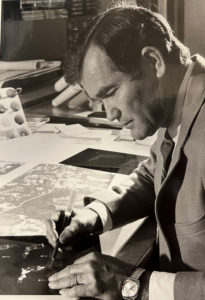
Portrait of Edward Fernald working on maps at his deskEd graduated from Manatee County High School, Bradenton in 1949, where he also taught from 1957 to 1960. He was an Eagle Scout, and a member of the first National Championship team in gymnastics at Florida State University. Ed served in the U.S. Navy four years, including a tour in the Far East on the aircraft carrier Yorktown. He received bachelor’s and master’s degrees from FSU and a Ph.D. in geography from Michigan State University. Ed began teaching at Florida High in 1960 and transferred to the FSU Geography Department in 1967. During a 38-year career of teaching and administration at FSU, he founded and was Director of the Institute of Science and Public Affairs which included 17 centers for research and service.

Ed was very active in his profession on both the state and national levels. He served as president of the Florida Society of Geographers and the National Council for Geographic Education. In addition, he served as State Geographer of Florida for over 30 years; eight years on the Leon/Tallahassee Planning Commission; member of the U.S. State Department Directorate on Man and Biosphere (28 years); chaired the Florida Board on Geographic Names (10 years); and developed and chaired the Florida Geographic Alliance (30 years). His work with the U.S. State Department and the National Geographic Society took him to 45 countries. Among his books written and edited are Atlas of Florida (2 editions), Water Atlas of Florida (2 editions), Florida: Problems and Prospects, and Florida: Heritage and Horizons. He was quick to point out that the only way to get so much done was to have bright, hard-working colleagues carrying much of the load.

Ed was a member of First Baptist Church, serving as a deacon and Sunday School teacher. He acknowledged his dependence on Jesus, his Savior, and his faith in the statement from Philippians 1:21, “To live is Christ, to die is gain.”


Reprinted with permission from Dignity Memorial.

    Share

Johannes Feddema

Professor Johannes Feddema passed away on January 31, 2022 after a 2-year battle with stomach cancer. Johan was a proud Frieslander, growing up in a rural dairy community in the (Ferwerd) Netherlands for his first 10 years. His parents worked for the Dutch development agency in Kenya (Nakuru, 7 years), Rwanda (Butare and Kigali, 6 years), Pakistan (Peshawar, 3 years), and Tunisia (Bizerte, 3 years). He took every opportunity to accompany his father to a wide variety of development activities across these countries. As part of this upbringing, he also traveled extensively and spent much time in wildlife areas, national parks, and cultural locations in these countries. Because of these experiences, he started University with an interest in marine biology and conservation science, and finished with a double major in Biology and Geography, emphasizing ecology and climate studies. His interest in climate studies was the direct result of a water balance climate course he took that vividly demonstrated the link between water resources and agricultural production, which was made especially impactful because he had been in Rwanda and witnessed a mass starvation event due to rain failures. Johan then completed an MS degree in Geography, focusing on mapping air quality impacts on marble tombstones and monuments in Philadelphia, and then a PhD degree in Climatology from University of Delaware, exploring global climate teleconnections using a water balance methodology.

In the early 1990s, Johan secured a position as an Assistant Professor in the Department of Geography at UCLA. Even as a young professor, he poured his hallmark energy and enthusiasm into his belief that systemic environmental challenges require systemic solutions. To that end, he launched the inaugural course offering, Geography 5, in UCLA’s then newly-founded Institute of the Environment (now Institute of the Environment and Sustainability), established and led by Richard Turco. To properly tackle the inherently cross-cutting theme of “environmental study,” Johan ensured that a broad range of disciplines were represented in the course, and brought in a number of guest lecturers to reflect that thematic integration and breadth. This would come to define his approach to teaching and research throughout his career. Richard Turco remembers Johan as a bold young thinker who recognized the compelling need for interdisciplinary research to devise practical solutions and guide policy action on environmental issues.  He said “Even as a newly appointed and vulnerable UCLA Assistant Professor, Johan reached out to collaborators across the campus, breaching academic barriers at some risk to his own career. We were lucky to have him at UCLA at the time.”

In December of 1998, Johan left UCLA to pursue an opportunity at University of Kanas in the Department of Geography. Johan impressed both students and faculty with his ecumenical approach to geography, and was equally adept at talking with hard-science physical geographers, biogeographers, GIS and remote-sensing specialists, and human geographers. His breadth and enthusiasm served him well in his time at KU by helping bridge differences among the wings of the department, often around environmental themes that many in the department studied in common. In 2003, Johan was instrumental in bringing the Atmospheric Science program at KU from the physics department back into its original home of Geography, where it has been nurtured and has steadily grown over the years. With colleagues from History, Environmental Studies, and English, Johan created a new, year-long, team-taught, truly interdisciplinary and integrative approach to the introduction to environmental studies. This series of courses and labs covered humanist, social science, and natural science approaches to the study of the earth, and holistically satisfied a large number of general education requirements. Over the years, Johan’s interest in others and their work led to collaborations with social scientists, humanists, and artists across campus. He took on several iterations of efforts to reform the various majors within what ultimately was renamed the Geography and Atmospheric Science Department, serving as department Chair from 2012 to 2015. All the while, Johan continued his productive research agenda, always with his eyes on the interdisciplinary connectivity that was central to his integrative vision of Geography. In 1999, he co-led the NSF International Workshop on African Environments at KU, and subsequently (2000-2004) co-directed the US State Department-funded University Affiliation linkage with the University of Zambia. Johan is remembered for his open door, and his enthusiasm, directness, work ethic, and absolute honesty. His smile and genuine, infectious positivity and curiosity helped bring out the best in others. The department still bears the fingerprints of his many accomplishments while he was here.

Johan’s interest in climatology largely focused on using climate science to better understand the human impact of climate change on humans and ecological systems, and also to better understand how humans impact local climates through land cover conversion, hydrologic change, and other factors. This stemmed from his early experiences in Africa and his biology background. Much of this work was developed in modeling frameworks, but as an academic, he took advantage of the liberty to develop these other areas in his teaching, and also through public outreach.  His research also simulated the impact of human activities on climate, especially the nature of the built environment.

His research career started with the use of water balance models to simulate climate impacts on water resources focusing on drought, and he studied the climate impacts of land-use change and human-induced soil degradation. Other work included climate impacts on glaciers in the Himalayas, simulation of fire impacts on forest regeneration in the US southwest, and drought detection and methodological work on climate network issues. To better understand the feedbacks in the coupled human climate system, he began to conduct experiments in Global Climate Models (GCMs).  His most recent work was centered around creating models and databases to assess the impacts of anthropogenic land cover change, urbanization, and soil degradation on climate in the National Center for Atmospheric Research (NCAR) Global Earth System Models.  He published in a variety of journals, including Climate Research, Climate Dynamics, Climatic Change, Urban Climate, the Annals of the Association of American Geographers, and Science, and was a contributing author on the third and fourth IPCC reports. These are some of the most important journals in climate and geographical sciences, and he is well known and respected in the climate and geography fields: based on Google Scholar data, his research has been cited almost 13,000 times.

Johan was a highly motivated mentor, both in the undergraduate setting and for graduate students. He was so eager to share; often was the occasion I was in his office staring down at 50+ slides full of equations for an hour-long time slot, and then seeing his look of pure delight as he reviewed what he was about to share with the second year class. He gave his time freely to students, and not just the grad students under his supervision, but any grad, or indeed, any student, who approached him for help. He was so generous with his time that I had to be careful not to casually engage him when I knew he needed to be otherwise focused, because that is who he was – he would set aside what he was doing to give you his full attention and honest assistance. He spent a lot of time with his graduate students, and mentored his most recent grads at UVic to achieve impressive results.

Beyond mentoring in the academic setting, Johan felt strongly about using his position to advocate and to make a difference. Throughout his career, starting even in graduate school, he was involved in various levels of public engagement on the topic of climate change.  This included outreach to schools from elementary to University level, providing testimony to the Kansas State legislature at the request of the Sierra Club and other environmental organizations, advising several organizations (e.g., Climate and Energy Project in Kansas), and serving on the Kansas Environmental and Energy Policy (KEEP) at the request of the Governor of Kansas. He took opportunities to present climate information to a variety of groups in British Columbia (about 5-6 times annually), with the most influential being presentations to public retirement fund boards (> 1 billion dollars each).  He genuinely enjoyed his outreach activities, and viewed these as a key mechanism by which he could effect change in society.  His approach was generally relatively neutral, and instead focused on the fundamental science concepts and evidence, including a history of the science, and linking peoples’ lived experiences to that evidence. He found this approach especially effective in dealing with more conservative, and often more skeptical, audiences.

Johan was a committed academic leader. He served as department Chair for almost 10 years at both the University of Kansas and the University of Victoria, where he was hired as an external Chair. In both units, his administrative work was marked by strong efforts to increase research capacity, keeping an eye on reputation and strategies to improve rank metrics, while at the same time encouraging a cooperative and healthy culture within the unit. As a leader, he was transparent, persistent, and fair and equitable in the treatment of people. He led and encouraged methods for increasing diversity, with a strong focus on Indigenous knowledge; this came naturally to him, an outgrowth of growing up in Africa. To this end, he oversaw Indigenous hires in both units. Equity was central to his ethos, and he helped guide three – overdue – female faculty members’ promotions to Full Professor rank; there had only been one other such promotion in 50 years.  He also implemented new hiring practices in both institutions to ensure improved access to opportunities for minority candidates. He was a strong proponent of and helped facilitate community-engaged work, and combining this with his interest in Indigenous partnership, he developed significant interactions with Indigenous institutions in both Kansas (e.g., Haskell Nations University) and in British Columbia, where he led a field school in Ahousaht Territory (Flores Island), and initiated a semester-long field school (6 courses) in Tofino that incorporates major community engagement components with local groups (both Indigenous and other).  In general, his broad range of these recent experiences, combined with his exposure to various groups in Africa and Asia, equipped him to be a true leader in academic-Indigenous engagement.

Johannes Feddema was dynamic, creative, highly engaged, and deeply optimistic. He was someone you noticed, and his leadership left a strong impact at UVic. He cared deeply about his family, and his world. His professional world will miss him; Geography, Climate Science, and UVic will miss him; and I will miss him, and hope I can be worthy of his example as Chair. On a personal level, I considered him a friend.  I got to know his family, and knew him to be a loving, supportive, and very proud husband and father.  It pleased and privileged me greatly that I had the opportunity to speak with him remotely for most of the morning on the Saturday before he passed, and I received his last email at 2 am on the Monday morning of his passing. True to form, it was a last tweak of a paper he was working on.


David E Atkinson, Chair, UVic Geography

Other contributors


    Share

Lynn Usery

On March 22, 2022, the world lost a GIS giant and cartography compadre when Dr. Lynn Usery passed from this earthly plane following a brief illness. He will be sorely missed by the geography community, not only for his many research contributions, leadership and vision, and tireless service, but also for his friendship and camaraderie.

Michael Tischler of the U.S. Geological Survey (USGS) wrote, “On paper, we knew him as the Director of the Center of Excellence for Geographic Information Science [CEGIS]. But he was far more than that title would lead one to believe. Lynn leaves a remarkable legacy given his extraordinary scientific accomplishments, presence as a leader in the geographic science community, and impact on individual geographic scientists inside USGS and around the world.”

It’s a challenge to specify the impact that Lynn has had on the field of GIScience because of the breadth and depth of his involvement and contributions. He was centrally involved in many areas of the discipline, including cartography, GIS, remote sensing, and spatial analysis. His eclectic research interests included digital cartography, map projections, scale and resolution, image classification, temporal GIS, geospatial semantics and ontology, and high-performance computing for geospatial data. It would be difficult to name a subject in the field about which Lynn could not speak knowledgeably and insightfully.

Lynn was unique in that his impact came through his careers in both government and academia. Lynn started working for the USGS in 1977. He was a cartographer and geographer for the USGS from 1978 to 1988 focusing on developing automated cartographic production systems. In 1988, he took on a geography faculty position at the University of Wisconsin (UW) – Madison. In January of 1994, he moved to Georgia to serve on the geography faculty at the University of Georgia (UGA). In May of 1999, Lynn took on a Research Geographer position with the USGS in addition to his academic job at UGA. In 2005, he returned to USGS and ultimately conceived and became Director of CEGIS. In this role, he directed the science program and the visions and plans for topographic mapping research. While at USGS, Lynn also taught remote sensing at the Missouri University of Science and Technology.

In all his positions, Lynn was a ground breaker. In his early days at USGS, he began the development of digital mapping systems for the automated production of printed topographic maps. At UW, he helped found a GIS program. At UGA, he helped establish certificate programs in GIScience at both the undergraduate and graduate levels. When he returned to USGS, he started a cartography research program that led to CEGIS.

Lynn was active in several professional societies including the AAG, the Cartography and Geographic Information Society (CaGIS) where he served as president from 2002 to 2004 and chaired AutoCarto 2005, 2006, and 2010, and the International Cartographic Association (ICA) where he spearheaded the effort to bring the International Cartographic Conference back to the United States for only the second time. He was also presented with the CaGIS Distinguished Career Award in 2012.

On a personal note, Lynn was born in December 1951. He had two children, a son Kelynn, born 1986, and a daughter, Lacy, born 1988. Lynn received his BS in geography from the University of Alabama and MA and Ph.D. degrees in geography from UGA.

On an even more personal note, I first met Lynn when, as a lowly master’s student, I invited him to give a presentation at Indiana University using funding from the American Association of Geographers’ Visiting Geographical Scientist Program (VGSP). To me, Lynn was already a GIS giant. I placed him on a proverbial pedestal, but he wouldn’t stay put. He treated me as an equal, though I didn’t feel that was deserved. And throughout the remainder of our association, he continued to do the same. He also did that with everyone else I saw him interact with. He was truly a giant, but he interacted with people on the same level, not by bringing himself down to their level, but by elevating them to his. He will truly be missed.


By Aileen Buckley

    Share

William B. Kory

With a very heavy heart, we announce that Dr. William B. Kory, professor emeritus of geography at the University of Pittsburgh–Johnstown, passed away on Saturday, April 2, 2022 in his Florida home. Our dear friend, colleague, and mentor had been diagnosed with leukemia. He retired only last year, and we are grateful for his more than half-century of service to the discipline and his 83 years of joyful life.

Dr. Kory was unrelentingly committed to his students’ success at Pitt-Johnstown. He joined the campus as an instructor in 1971, only two years into his doctoral training at the University of Pittsburgh, where he specialized in demography and geopolitics. When the Department of Geography in Pittsburgh disbanded like so many others during the 1980s, Dr. Kory reestablished the University’s undergraduate major in Johnstown. He also believed a global education was crucial for even the most practical vocations. His experience as a Peace Corps volunteer in Liberia, as a Fulbright Scholar in Egypt, and as a Russian speaker since birth, all informed his educational mission. As more employers sought geospatial specialists, Dr. Kory chaired the initiative to establish a GIS certificate program. Dr. Kory had generous office hours – when he taught, he kept the door ajar for students – and he’d encourage students to chat with him for hours between classes. Even if one of his buddies in the state legislature or local chamber of commerce stopped by on business, Dr. Kory would make a personal introduction and insist with a welcoming grin that his students kept their seats around the desk. He wanted students to participate in all aspects of campus and the Johnstown community.

Photo of William B Kory with some of his studentsThroughout his tenure at Pitt-Johnstown, Dr. Kory made a home for students in the Geography Club. His office was filled with scrapbooks spanning five decades of raffle-ticket fundraisers, environmental field trips and creek clean-ups, conferences with the Pennsylvania Geographical Society (PGS), and the seemingly thousands of photographs students sent him after they graduated. The club met monthly at Bigdogz Grill, his favorite dive, for a Coors yellowbelly and ham sandwich. Every new internship and conference paper got a toast. Under Dr. Kory’s leadership and individual generosity, the Geography Club financed undergraduate travel to the AAG in New York, Tampa, and Washington, D.C., among many other national meetings. He also brought guest lecturers like his friend Harm de Blij to campus and hosted a week-long program of speakers for every Geography Awareness Week. At the annual department banquet or bi-annual induction ceremony to Gamma Theta Upsilon, Dr. Kory gave out a half-dozen prizes for student success, including the beloved “K” Award. Above almost anything else, Dr. Kory believed in his students, and he created opportunities to support and celebrate everybody in the department.

In his own words, one of Dr. Kory’s proudest achievements was that he had sent 200 students to graduate schools during his time at Pitt-Johnstown. Further, he was always quick to add that all his students that had attended graduate schools were successful completing their degrees. “Some may have found Jesus or a wife, and dropped out of school, but no one ever failed,” he would often say. Dozens of universities where he helped send students to graduate schools were highlighted on a customized map Dr. Kory proudly displayed from his office door. Dr. Kory used his numerous connections to tirelessly work for funding packages for all his students interested in attending graduate school. This achievement, too, should not be overshadowed as he made the process navigable and achievable for so many. He was part of the graduate school process for his students every step of the way. Dr. Kory would follow-up with his students during their graduate studies offering support and encouragement. Graduate school has the potential to change one’s life course, and he is personally responsible for changing the lives of many in a significant way.

Dr. Kory instilled the fiercest confidence in his students. He believed in his students’ potential,  sometimes before they believed in themselves, and that is a remarkable and truly special value he held. Dr. Kory had a unique talent of making his students feel valued and recognized. He bragged about his current and former students as often as he was able, and he considered the Pitt-Johnstown Geography Department his family. Dr. Kory and his wife, Mary Ann, would welcome students and colleagues into their home for meals and friendship. For those of us lucky enough to know Dr. Kory, we felt his love and support every step of the way in our personal and professional accomplishments.

Dr. Kory’s professional contribution primarily lay in his dedication to the Pennsylvania Geographical Society. He was an active member of the organization for much of his academic life. In fact, he received PGS’s lifetime achievement award last year, in recognition of his retirement. It is hard to imagine an award that was more appropriate. In particular, his “baby” was the society’s journal, The Pennsylvania Geographer, which he was instrumental in guiding to become a peer-reviewed journal. Dr. Kory tirelessly devoted much of his time to the editorial duties.

Not only was Dr. Kory a cheerleader for his students, but also an effective department head. His enthusiasm in the classroom meant that there were always students who wanted to major in geography. For a small undergraduate department, that’s our bread and butter. The tight-knit environment that Dr. Kory created meant that Pitt-Johnstown geography was a place that faculty wanted to stay. While there may be more prestigious institutions elsewhere, our geography faculty learned this truism first-hand: the grass is not greener on the other side. In fact, some left the department only to return a few years later, missing the collegiality at Pitt-Johnstown.

The impact of Dr. Kory’s efforts to lead, promote geography, and educate and enrich his students radiates far beyond Johnstown, Pennsylvania. Throughout his career Dr. Kory built a department, coalition of graduate students, and a family that stretches around the world. He is fondly remembered for immeasurable dedication to the discipline of geography, his colleagues, and his students’ success and happiness.


Compiled by:

Jacob R. Wolff, Ph.D. student, Temple University

J.T. Bandzuh, Ph.D. candidate, Florida State University; Instructor, University of Pittsburgh at Johnstown

Ola Johansson, Professor of Geography, University of Pittsburgh at Johnstown

    Share