2016 AAG Dissertation Research Grants

Every year the AAG provides support for doctoral research in the form of small grants to PhD candidates of any geographic specialty. Three recipients were chosen this year from among 25 applicants and will each receive $1,000.

Clifton Barrineau from the Department of Geography at Texas A&M University is a quaternary scientist studying a large sand plain of aeolian origin in South Texas. The funds from the grant will be used for Optically Stimulated Luminescence dating of sand samples collected from soil cores. This dating will determine periods of aeolian activation across the sand plain and be used to generate a detailed landscape history of the area. An understanding of the landscape’s history can be used to predict the future response to forecast changes in climate and to mitigate negative side effects of land degradation and soil loss via desertification.

Lucia Hussey from the Department of Geography at Western University in Ontario is seeking to identify the infectious diseases that are likely to have the most severe impacts from climate change in her native Ghana. The funds from the grant will support her field research during summer 2016. Her mixed methodology includes a multi-criteria evaluation approach to prioritize climate sensitive infectious diseases, then a survey, in-depth interviews and focus groups in two ecologically and climatically different districts to assess determinants of current vulnerabilities to endemic diseases. Her findings will inform the development of adaptation measures and policies to minimize infectious disease risks due to climate change in Ghana.

Sandy Wong from the Department of Geography & Geographic Information Science at the University of Illinois at Urbana-Champaign is conducting research on the causes of low rates of employment and overall well-being among individuals who are visually impaired. The funds from the grant will be used to support her travel to and lodging at her fieldwork site in the San Francisco Bay Area. Her fieldwork will involve collecting qualitative data on individual experiences and perspectives through interviews and participant observation. Her study seeks to demonstrate that space actively creates and strengthens social processes that continue to marginalize individuals with disabilities.

The AAG Dissertation Research Grants are supported partly by the AAG and partly from the Robert D. Hodgson Memorial Ph.D. Dissertation Fund, the Paul Vouras Fund, and the Otis Paul Starkey Fund.
    Share

2016 Harm J. de Blij Award for Excellence in Undergraduate Geography Teaching

The 2016 Harm J. de Blij Award is presented to Donald J. Zeigler of Old Dominion University for his long and distinguished career as a teacher of geography to undergraduate students. The Harm J. de Blij Award recognizes outstanding achievement in teaching undergraduate geography including the use of innovative teaching methods. This award is generously funded by John Wiley & Sons in memory of their long-standing collaboration with the late Harm de Blij on his seminal geography textbooks

Don Zeigler has taught geography to undergraduate students at Old Dominion University, Virginia Beach, Virginia, for the past 36 years. During that period, he has taught nearly 200 sections of geography courses representing more than 25 geographical topics.

Zeigler attended to the ever changing student population and course dynamics by using a variety of pedagogical methods, beginning initially with chalk and talk in 1980 and employing video streaming and virtual reality in 2016. His teaching repertoire includes standard lecture classes (serving small to very large course sections), field-based and study abroad courses, problem based learning, and web-based and televised distance learning courses. Zeigler’s commitment to excellence in teaching has led him to design and teach courses fulfilling key university missions, including writing intensive and service learning courses, each with a geographical perspective.

Zeigler began his career at Old Dominion University as a first year faculty member in a major that had not existed the prior academic year. Zeigler was instrumental in building the undergraduate program in geography to its present size today of seven faculty members and 100 geography majors. He has accompanied students on field study trips to Israel, Jordan, the Bahamas and Mexico. “Simply stated, Don Zeigler is the face of Geography at Old Dominion University,” said Dr. Jonathan Leib, current Director of the Geography Program, “His reputation as a teacher, scholar, and as a genuine person permeates the campus and its student body.”

Donald J. Zeigler is recognized for his accomplishments as a gifted teacher, for his role as a mentor for students both within and outside the classroom, and for his continued passion for teaching geography. The American Association of Geographers, John Wiley & Sons Publishers, his friends and colleagues, and his many students from the past 36 years at Old Dominion University congratulate Don as the 2016 recipient of this award for excellence in undergraduate geography teaching. The Harm J. de Blij Award consists of $2,500 in prize money and an additional $500 in travel expenses to attend the AAG Annual Meeting, where the award is annually conveyed.

    Share

2016 Miller Award

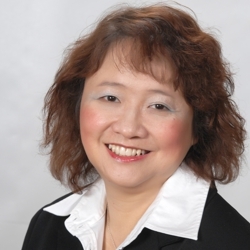
The AAG is pleased to announce that the winner of this year’s AAG E. Willard and Ruby S. Miller Award is Professor Mei-Po Kwan from the Department of Geography and Geographic Information Science, University of Illinois at Urbana-Champaign. This award recognizes members of the Association who have made truly outstanding contributions to the geographic field due to their special competence in teaching or research.

Kwan is one of the most distinguished and influential scholars in the discipline of geography today. Her broad research interests span environmental health, sustainable cities, human mobility, urban/social issues in cities, and GIScience, and she has made ground-breaking contributions to the discipline of geography in each of these areas.

One of the defining characteristics of her research is that it transcends and eschews boundaries and divides, both within our discipline and between geography and other disciplines.

Kwan is a highly productive scholar, having edited or co-edited 31 volumes (including two encyclopedias, five books and 24 journal special issues) and published over 150 peer-reviewed journal articles and book chapters. Her publications on time-activity analysis, feminist geovisualization, hybrid geographies, and the uncertain geographic context problem are among the most widely cited papers within the disciplines of human geography and GIScience.

She is internationally renowned for her work and has delivered approximately 170 keynote addresses and invited lectures in 18 countries. These presentations were given at major international conferences and in schools and departments of many different disciplines.

Kwan has received major research grants from sources including the National Science Foundation, the National Institutes of Health, the National Center for Geographic Information and Analysis, and the U.S. Department of Transportation.

Kwan’s record of research accomplishment, impact, and contribution, both within the discipline of geography and beyond, makes her a most outstanding and deserving winner of the Miller Award.

Funding for the award comes from the estate of Ruby and Will Miller. Will started the Geography Department at Pennsylvania State University while Ruby became the maps librarian, developing the collection and teaching classes on the use of maps. After retirement they co-authored more than 20 books and continued to travel around the world. Will was also founder of the Pennsylvania Geographical Society and played important leadership roles in the American Association of Geographers, American Geographical Society, and the National Council for Geographic Education.

    Share

AAG-Esri ConnectED GeoMentors Program Activities at the AAG Annual Meeting

Now in its second year, the AAG-Esri ConnectED GeoMentors Program will be featured at the AAG 2016 Annual Meeting in San Francisco. Attendees can learn more about the program, speak with program staff, and sign up to be a GeoMentor through program activities throughout the week. Follow @AAGGeoMentors on Twitter and use/search for #GeoMentors.

  • Visit the GeoMentors Program space, open all week near the conference registration area in the AAG booth, to find program materials, speak with program staff, and meet other GeoMentor volunteers! We would love the opportunity to meet current and future members of our community!
  • Attend the panel session featuring the GeoMentors program. All are encouraged to attend and learn about how to get involved, available resources, and current program achievements. The panel will also feature an open discussion about the program, including advice and insights from active GeoMentors. Panelists include AAG President Dr. Sarah Bednarz, Esri President and Founder Jack Dangermond, and members of Esri’s Education team, David DiBiase and Dr. Joseph Kerski.

Session: The AAG-Esri GeoMentors Program: Supporting GIS and Geography Education
Thursday, March 31, 10:00 a.m. – 11:40 a.m.
Plaza A, Hilton Hotel, Lobby Level

  • Pick up your GeoMentor ribbon! Drop by the GeoMentors space (in the AAG booth near conference registration) to get your GeoMentor name badge ribbon to showcase your involvement in this important community. Not a GeoMentor yet? Register as a GeoMentor during the meeting and get a ribbon! This is a great way for GeoMentors to meet each other, network, and start new volunteer collaborations!
  • Talk to Esri staff about the ConnectED Initiative and GeoMentors program at the Esri booth in the exhibition hall.
  • Listen for GeoMentors program announcements in Geography Education & GIS sessions. Organizing or attending sessions whose audience might be interested in the GeoMentors program? Contact program staff at geomentors [at] aag [dot] org for a promo slide to display and come by the GeoMentors space for flyers to distribute at your session.

The AAG encourages its members to become a GeoMentor and help make a difference in improving GIS and geographic learning in schools (and you can get credit towards your GISP by volunteering as a GeoMentor!). Visit www.geomentors.net for more information, or sign up to be a GeoMentor directly at www.geomentors.net/participate.

    Share

2016 Mel Marcus Fund for Physical Geography

The AAG is pleased to announce that the Mel Marcus Fund for Physical Geography is awarded in 2016 to Hannah Cooper from the Department of Geosciences at Florida Atlantic University, Boca Raton. She receives a grant of $2,000 to support field research in Everglades National Park.

 Hannah is currently a third-year PhD student developing innovative models for sea level rise applications in the coastal Everglades.

Accurate ground elevation data is vitally important in the low-lying Everglades for various reasons including emergency planning and ecosystem management. However, the two best elevation datasets that are currently available have shortcomings; one did not include enough checkpoints to provide fine-scale mapping while the other lacked an accuracy assessment.

Hannah’s field survey will collect the survey-grade GPS and total station elevation measurements which will be used to validate and calibrate the LiDAR elevation data for different coastal vegetation substrate.

The data collection will focus on the coastal Flamingo district of Everglades National Park, an area consisting of estuarine forested wetland, estuarine scrub/shrub wetland, and estuarine emergent wetland.

Three colleagues from the Department of Geosciences at Florida Atlantic University will be involved in the fieldwork: Assistant Professor Dr Caiyun Zhang, fellow doctoral student Matt Sirianni, and graduate student Pramod Pandey.

The field experience will enable team members to learn new skills in field survey mapping tools and data post processing. They will also gain hands-on experience in the remote coastal Everglades learning about this unique habitat.

The objective of the Mel Marcus Fund for Physical Geography is to carry on the tradition of excellence and humanity in field work espoused by Dr. Melvin G. Marcus. Marcus was an internationally-recognized physical geographer and served as president of the Association of American Geographers in 1978-79. He was committed to making physical geography accessible to everyone with a love of the outdoors, including women, minorities, and the less-privileged. He created and oversaw programs that emphasized excellence in field studies and the translation of field studies into scholarly achievement. He took students on research expeditions to the Yukon and Alaska, the Himalayas, the Southern Alps, the Colorado Rockies, and the Grand Canyon, as well as many other locations. These expeditions were often life-transforming experiences for those students fortunate enough to participate. This award in his name enables faculty to involve students in field-based physical geography research in challenging outdoor environments.

    Share

2016 Anne U. White Fund

Every year the AAG provides funding to enable a member of the AAG to take their domestic partner on a research trip, regardless of them having any formal training in geography. One recipient was chosen this year from among eight applicants and receives $1,200.

Shouraseni Roy, Associate Professor in the Department of Geography and Regional Studies at the University of Miami, is conducting a research project entitled “Linking Gender Inequalities/Inequities with Impacts of Climate Change in the Global South.” The study explores how the detrimental impacts of climate change in the Global South affect women more than men.

The first stage of Shouraseni’s research is an analysis of secondary data. Using several variables from the 2015 Human Development Report and the World Bank’s Global Gender Gap Report, she will identify the spatial clustering of low levels of female education. She will then set this alongside data from the climate vulnerability index to reveal the different relationships that exist in different points in space.

The second stage of her research is to examine how regional scale spatial patterns relate to local level processes. In the Indian cities of New Delhi and Mumbai, she will meet with various NGOs working in women’s empowerment and environment. She hopes that her findings will expand the debate on the gendering impacts of climate change and help in effective gender mainstreaming in policy formulation.

The funding will enable Shouraseni’s partner, Oliver Martin, a Marketing Technical Adviser for Federal Express, to join her during her fieldwork in India.

The joy of working alongside one’s partner was something very dear to Anne Underwood, wife of geographer, Gilbert White. After their youngest child went off to boarding school, Anne joined with Gilbert in field studies of domestic water use in East Africa. This was the first in a series of studies on water supply and health that she completed independently or in collaboration with others.

In 1989, Gilbert and Anne donated a sum of money to the American Association of Geographers to establish the Anne U. White Fund specifically to support accompanied field research. Gilbert White and other donors subsequently added substantially to the original gift.

    Share

2016 AAG Research Grants

Every year the AAG provides small grants to support research and fieldwork that address questions of major importance to the discipline. Three recipients were chosen this year from among 15 applicants and will each receive $500.

Laura-Anne Minkoff-Zern is Assistant Professor of Food Studies in the Department of Public Health, Food Studies and Nutrition at Syracuse University, as well as an Affiliated Faculty in the departments of Geography, and Women’s and Gender Studies. She has received support for a project entitled “The New American Farmer: Immigration, Race, and the Struggle for Sustainability.” This research explores the transition of immigrant Latinos from farmworkers to farm owners, looking at racial discrimination, agrarian identity, and inclusivity in food and farming in America. She is comparing four sites across the United States, each of which has a significant and unique group of Latino farmers who have struggled against multiple levels of inequality to start their own farm businesses. The funds from the grant will be used for travel to her final fieldwork location of Yakima, Washington in spring 2016 to conduct interviews.

Margaret Sugg is an Assistant Professor in the Department of Geography and Planning at Appalachian State University. She has received support for a project entitled “A multiscale approach to assessing heat-health vulnerability.” With a large number of hospitalizations and deaths each year related to heat exposure, this research seeks to identify individual to regional patterns of heat-health vulnerabilities and the thermal environments that control these patterns. The funds from the grant will be used to purchase 12 Maximum Integrated thermocron ibutton Devices which measure the ambient temperatures experienced by wearers both indoors and outdoors. Students from Appalachian State University will test the devices before they are given to heat-vulnerable populations such has outdoor laborers and high school athletes.

Sophie Webber is a Postdoctoral Research Fellow in the Department of Geography at University of California, Los Angeles. She has received support for a project entitled “Climate Service: Commercializing science for urban adaptation and infrastructure planning.” This research explores the relations between states, markets, and science in the context of climate change, particularly the commercialization of climate science through ‘climate services.’ She will be looking at major global climate service governance organizations such as the World Bank and the Climate Services Center, conducting key informant interviews, analyses of policies and documentation, and participant observation at conferences and meetings. The funds from the grant will be used for travel to Washington DC and New York City to study these organizations that produce climate services.

The AAG Research Grants are competitively awarded to scholars to provide direct expenses for research or fieldwork, excluding master’s or doctoral dissertation research.

    Share

2015 AAG Book Awards

The AAG’s three annual book awards recognize outstanding works written by geographers and published by during the previous year. 

The Meridian Book Award for Outstanding Scholarly Work in Geography goes to a volume that makes an unusually important contribution to advancing the science and art of geography. This year’s winner is Concrete Revolution: Large Dams, Cold War Geopolitics, and US Bureau of Reclamation by Christopher Sneddon. It was published in 2015 by the University of Chicago Press.
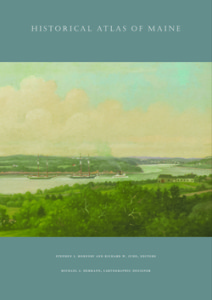
The story of the Bureau of Reclamation and the damming of America’s rivers has been told before, but never from the fresh and provocative perspective found in Concrete Revolution. As told by Sneddon, this is a story that transcends the United States and led to the redesign of drainage systems across the developing world, as American dam building became an instrument of Cold War rivalry for the affection of peoples in the emerging economies of the non-aligned world.  It is also a story that takes us to the philosophical heart of modernity and its radical reimagining of human relations with the natural world.  All of this Sneddon does in a style that is accessible and engaging, but also serious and masterly.

The Globe Book Award for Public Understanding of Geography is for a book that conveys most powerfully the nature and importance of geography to the non-academic world. This year’s winner is the Historical Atlas of Maine, edited by Stephen J. Hornsby and Richard W. Judd, with the Cartographic Design by Michael J. Hermann. It was published by the University of Maine Press in 2015.

This is one of the most significant atlases to appear in the United States in recent decades. It covers the period from the end of the last ice age to AD 2000, telling the history of Native peoples, European exploration and settlement, the American Revolution, Maine statehood, industrial development, and the rise of tourism and environmental awareness. Almost every plate in the atlas is based on new research. The creation of the atlas, which took 18 years from conception to publication, was envisioned as an outreach project from the University of Maine to the state’s residents, visitors, and the general public. The result is not only a unique interpretation of Maine, but also a splendid visual record of the state’s history.

The John Brinckerhoff Jackson Prize is awarded to a serious but popular book about the human geography of the contemporary United States that conveys the insights of professional geography in language that is interesting and attractive to a lay audience.
This year’s winner is Hispanic and Latino New Orleans: Immigration and Identity since the Eighteenth Century by Andrew Sluyter, Case Watkins, James P. Chaney, and Annie M. Gibson. It was published in 2015 by Louisiana State University Press.

The four authors of this book seamlessly combined their expertise and varied perspectives to produce a well-written account of a little-known aspect of New Orleans’ cultural and historical geography. Thanks to their careful study of census records, archival research, interviews, and other sources, we now know that Hispanic and Latino individuals and communities have been part of the city throughout its history. Previous assumptions about the basic similarities of Latino and Hispanic immigrants become much more nuanced in this study, as the authors explain the diversity of Spanish-speaking immigrants from Mexico, Latin America, South America, and the Caribbean – people who made distinct impressions on their respective neighborhoods and contributions to the city’s rich culture. These immigrants’ experiences also varied significantly depending on many factors, not least when they came. The book also contributes to the emerging literature on Hispanics in the South and the cultural diversity of Hispanic and Latino immigration from the period of early European contact up to the present.

The AAG congratulates each of the winners and would like to thank the three book award committees who considered this year’s nominations.

The AAG Book Awards will be conferred during the AAG Awards Luncheon on April 2, 2016, at the Hotel Nikko in San Francisco.

    Share

AAG Invites Members to Join Mentoring Network for Women in Geography

A Special Kickoff Event is Planned for the AAG Annual Meeting

The AAG Committee on the Status of Women in Geography will hold a special session at the AAG Annual Meeting to help launch the Mentoring Network for Women in Geography.

The CSWG also invites faculty, staff, and professionals to serve as mentors in the newly established mentoring group. A previous call for participants yielded an unprecedented number of requests for mentors. Participation is not limited to those with senior positions, tenure, or who identify as female. Anyone who feels they can provide guidance on the early stages of academic careers is highly encouraged to participate.

Mentors are asked to commit to regular mentoring sessions (via call or Skype) with their mentee for one year, commencing with the 2016 Annual Meeting and concluding at the 2017 Annual Meeting. It is recommended that mentoring sessions occur once every six weeks but ultimately the mentor and their mentee should decide upon an appropriate interval.

The CSWG would like for mentors to meet their mentees in person at the 2016 Annual Meeting at a session scheduled for Thursday, March 31. The session will begin at 7:10 p.m. in Franciscan A on the Ballroom Level at the Hilton Hotel.

If you are willing to serve as a mentor to a woman geographer, please e-mail Lisa Davis (CSWG Chair), lisa [dot] davis [at] ua [dot] edu, as soon as possible.

    Share

Carry the AAG 2016 Annual Meeting Program in Your Pocket

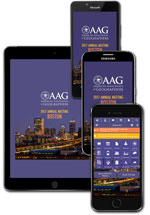
Get the most from your AAG 2016 San Francisco experience with the mobile app. Enjoy an interactive experience on your Apple, Android, BlackBerry and other mobile devices during AAG 2016 in San Francisco. If you’re a laptop user or have a Windows phone, there’s also a Web version for your devices.

Plan your experience throughout the meeting:

  • search sessions by day, group or type or just browse the abstracts and participants listings
  • create your own calendar of events by adding your favorite sessions to your schedule
  • receive updated changes to sessions and events from organizers
    browse exhibitor listings
  • take notes during sessions and send as emails and also rate the sessions
    view the list of local restaurants to experience during your visit
  • locate various sessions by tapping on areas of each floor plan within the maps icon

The app will help you balance your schedule of preferred sessions, events and meetings with friends and colleagues, while keeping you informed with daily Geograms and social media updates. Networking features offer colleagues tools to share schedules and exchange contact information. The AAG mobile app also integrates with social media networks on Twitter, Facebook, and LinkedIn. And, it will help you collect and share important notes and information from sessions and exhibitors.

For more information, download the tip sheet to help get you started.

Download the native app: https://m.core-apps.com/aagmeetings

Bookmark the Web version on your Windows phone, computer or laptop: https://app.core-apps.com/aagam2016

IMPORTANT NOTES: If you plan to use the app on two of your mobile devices, it’s important to set up the multi-device sync within the app on both devices. (See tip sheet for more details.)

Also, if you find the app is slow to launch, you may bypass the update by simply tapping the back arrow on Android or the cancel button on iOS devices to immediately get to the dashboard. Update times during app launch vary by device, connection strength and also depend on when you last did a full update. Remember, this is a large meeting with 6,600 abstracts, 1,700 sessions and 8,500 attendees! Make sure you try to update at least once a day to capture any changes, such as session updates, newly added attendees, etc. If your refresh button turns red, it’s time to update.

    Share