
When New York transforms contaminated or formerly industrial landscapes, who receives the environmental, social, and economic benefits? How can communities participate meaningfully to advance justice?
Mark Yarish and Ivan Ramírez explore the sword’s-edge realities of New York’s environmental restoration and urban reinvention efforts, through the lens of community participation and ideally meaningful engagement. Such projects can improve public space, environmental quality, housing, and infrastructure. They can also increase land values, intensify displacement pressures, leave unresolved environmental risks, and reinforce environmental injustices.
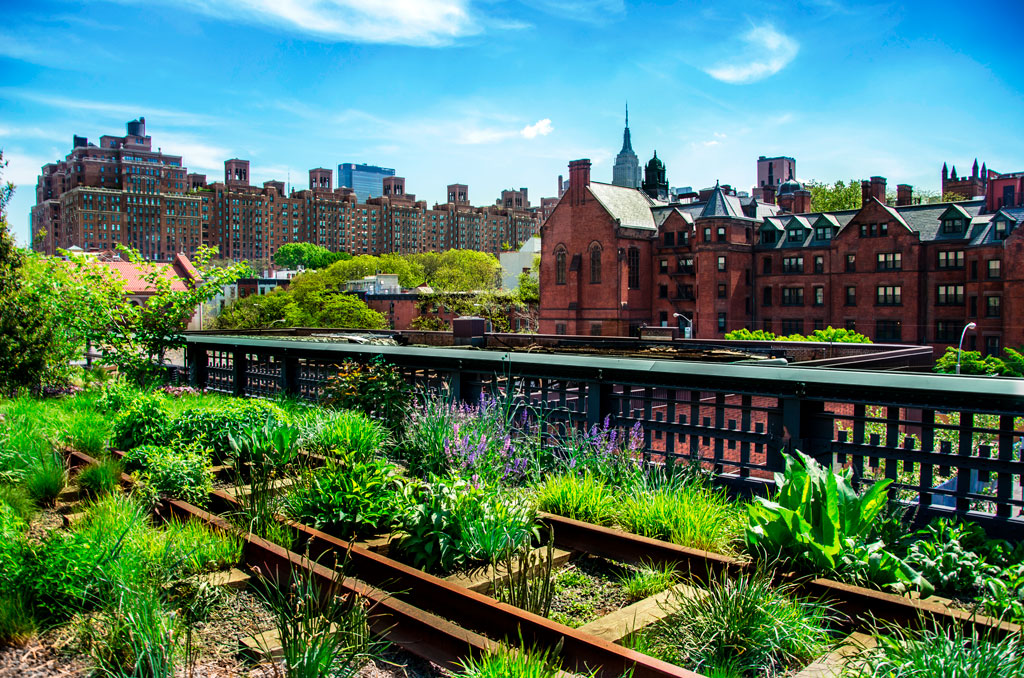
Learn about how environmental restoration and community participation have interacted in high-profile projects such as the creation of The High Line and the transformation of West Chelsea. Yarish and Ramírez also offer examples where citizen involvement can lead to stronger community benefits, such as in Gowanus and Southside Williamsburg in Brooklyn. This webinar identifies different kinds of community involvement, from citizen oversight in Gowanus to the work of environmental justice groups Harlem-based WEACT and El Puente, a human rights institution based in Brooklyn and Puerto Rico, stepped in to monitor and change poor air quality in South Williamsburg.
 Ívan J. Ramírez is a geographer based in Colorado, originally from Quito, Ecuador, and raised in New York City. Dr. Ramírez is strongly motivated by justice and equity in his scholarship which focuses on climate, health, and community engagement. He is a faculty member in the Department of Health and Behavioral Sciences at the University of Colorado Denver and co-director of the undergraduate Climate Change Studies program.
Dr. Ramírez also directs the Civic Engagement and Climate Justice (CECJ) ThinkLab, which advances interdisciplinary research with undergraduate and graduate students while supporting faculty and staff through community-building workshops. He earned a B.A. in Environmental Studies from Hunter College, City University of New York, an M.A. in Climate and Society from Columbia University, and a Ph.D. in Geography from Michigan State University, with specializations in community engagement and development ethics.
 Mark Yarish, Ph.D., is a Brooklyn-based sustainability researcher, data analytics educator, and public scholar who has taught in a wide range of settings, from continuing education and professional studies courses in data analytics at New York University and LaGuardia Community College (CUNY), to his previous career teaching Earth and environmental science at public high schools in the South Bronx, Hell’s Kitchen, and Downtown Brooklyn. For more than 10 years, he has also taught data analytics, open data, and technology courses for New York City employees through professional workforce development programs. His published research and public scholarship explore GeoAI, data justice, environmental justice, climate resilience, eco-gentrification, and equitable urban redevelopment, with a particular focus on the Gowanus Canal Superfund site, the High Line, and the role of public data in promoting transparency, accountability, and resilient infrastructure planning.
An active member of the Gowanus Canal Community Advisory Group (CAG), which advises the U.S. Environmental Protection Agency (EPA) on the cleanup, remediation, and long-term stewardship of the Gowanus Canal Superfund site. He also serves on the Sustainability and Resiliency Committee of the Gowanus Oversight Task Force (GOTF), a community-led oversight body established following the 2021 Gowanus Neighborhood Rezoning to help ensure implementation of the City’s 56 Points of Agreement and other neighborhood commitments.