
Chicago’s Asian Cultures

The Association of American Geographers (AAG) will be holding its next annual meeting April 21-25, 2015, in the American business hub city of Chicago, which can be reached by a direct flight from Beijing, Shanghai, Hong Kong, and many other major Asian cities. It is little wonder that many Asian cultures feel at home here in America’s heartland global city. On December 19 2014, the “25th U.S. – China Joint Commission on Commerce and Trade” concluded in Chicago. The Chicago Tribune reported that Beijing economic development official Cheng Yuhua expected a dingy industrial city, but the real Chicago surprised her: “What I’ve seen here – it completely changed my mind, the city looks young, it’s full of energy (Chicago Tribune, 21 December 2014).” Although the meeting was focused on U.S. trade, local Chicago got a fair bump in marketing itself as a global city open to foreign investment.

Asians in Chicago

In this newsletter article I will describe the residential patterns of six major Asian immigrant groups – Asian Indians, Chinese, Filipinos, Japanese, Koreans, and Vietnamese – in the Chicago metropolitan area. Using the 2010 Census and GIS, I will address two questions: (1) Where are the six major Asian groups most heavily concentrated in the city of Chicago, and in the 13-county metropolitan area? (2) Which of the six Asian groups is more dispersed in the city of Chicago? Mean centers and standard deviational ellipses are employed to describe the concentration differences.

1990 to 2000

This article also provides an update to an earlier study that used 1990 and 2000 census data to describe the geographic distribution of Asian groups (Park, Chung, & Choi, 2006). Their study identified Asian Indians as the fastest growing group, which settled primarily in DuPage County and northern Cook County, while the Chinese remained concentrated in Chinatown with some expansion to the south and southwestern suburbs (Park et al., 2006). Japanese and Koreans were concentrated in the north, while Vietnamese were concentrated in the city and in a few western suburbs (Park et al., 2006). Filipinos were bi-polarized commensurate with their socioeconomic status (Park et al., 2006). Suburbs like Lincolnwood and Skokie were strongly favored by all six Asian groups, due to employment opportunities in those areas. Traditional Asian enclaves in the inner-city area remained port of entry zones, and even expanded geographically over time, while new Asian concentrations emerged in relatively affluent suburbs (Park et al., 2006). According to the study, Asian groups maintained strong social cohesion, indicating that Asian residential patterns were closely linked to economic factors, while keeping close ties with their own respective groups.

2010 Chicago Region and its Suburbs

Based on a 13-county definition of the Chicago region, a dot density and graduated color map (fig. 1 and 2) show that the six major Asian groups occupy distinct geographical spaces and have varying spatial distributions. Asian Indians are highly concentrated northwest of Chicago in Buffalo Grove, Hoffman Estates, Schaumburg, Lincolnwood, Skokie, and Devon Avenue. The trend toward concentration in DuPage County and northern Cook County has intensified in 2010 compared to previous years. The Chinese are highly dominant in Chicago’s Chinatown (Photo 1), but have also spread to suburbs like Vernon Hills, Skokie, Evanston, Schaumburg, Hoffman Estates, Naperville and Aurora. Their strong concentration areas remain in the southern half of the Chicago metro area, but communities have developed in northern suburbs, including southern Lake County and northern Kane County. Filipinos are scattered to a greater extent around the metropolitan than many other Asian groups. Their high concentrations are found in Morton Grove, Wilmette, Skokie, Carol Stream, Glendale Heights, Streamwood and Hoffman Estates.
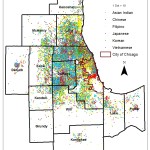
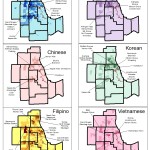
Figure 1: Dot density map of six major Asian groups in the Chicago metropolitan area, 2010
Figure 2: Graduated color maps showing the spatial distribution of 6 major Asian groups in the Chicago metropolitan area, 2010

The Japanese are mostly concentrated northwest of the city, in the suburbs of Elk Grove, Schaumburg, Arlington Heights, Mount Prospect, Inverness, Skokie, Morton Grove, Lincolnwood, Lincoln hire and Buffalo Grove. For Koreans, there is a great dominance around Chicago’s Korea town, but also in north and northwestern suburbs including Lincolnwood, Wilmette, Skokie, Evanston, Northbrook, Glenview, Morton Grove and Wheeling. Japanese are also increasing in Buffalo Groves, Vernon Hills, Inverness, Hoffman Estates, Schaumburg, and Naperville. The Vietnamese are more scattered, but there is a notable concentration on the north side of the city of Chicago.

There are several suburbs in which all six major Asian groups are concentrated, mostly the northern half of the Chicago metropolitan region. Asian Indians and Filipinos, who are relatively more fluent in English, tend to assimilate into the mainstream and are dispersed to a greater extent around the metropolitan area than are other Asian nationalities. Suburbs like Skokie, Lincolnwood, Morton Grove, Hoffman Estates and Schaumburg are popular residential locations among the Asian groups. All six concentrate across the northern limits of the city of Chicago, where many high skilled job opportunities are located. The higher income professionals of Asian Indians, Japanese, and Koreans favor edge cities, such as Schaumburg and Hoffman Estates. One prominent trend is the rise of Asian populations in western suburbs like Carol Stream, Glendale Heights, Elgin and Pingree Grove, as well as in southern suburbs like Naperville and Aurora. Compared to 2000, Elgin, Pingree Grove and Gilberts in Kane County have experienced an influx of all six Asian groups.

2010 City of Chicago

The 2010 Census reported that the city of Chicago had an Asian population of 166,770, placing it as the 7th ranked city in the USA for the number of Asians (Census 2010). In the city of Chicago (fig. 3 and 4), a similar residential pattern is visible among all six groups, with high concentrations in the northeastern part of the city – the neighborhoods of Uptown, Rogers Park, Albany Park, West Ridge, North Park, and Lincoln Square. Asian populations are also dominant near Downtown Chicago, especially in the Loop and Millennium Park neighborhoods. All six groups, especially Chinese, are also concentrated in Hyde Park, which is home to the University of Chicago. Besides Chinatown, Bridgeport, and Armour Square, which all have sizable Chinese populations, Argyle in the Uptown neighborhood is becoming a new Chinatown (Photo 2), as well as a distinctive Vietnamese enclave.
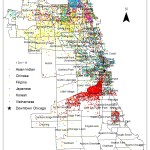
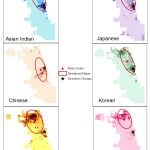
Figure 3: Dot density map of 6 major Asian groups in the city of Chicago, 2010
Figure 4: Graduated color maps showing the spatial distribution, mean centers and standard deviational ellipses of 6 major Asian groups in the city of Chicago, 2010

Spatial Analysis

The Chinese mean center is closest to Downtown Chicago, at a distance of 2.76 km. This is followed by the Korean (6.91 km), Asian Indian (7.41 km), and Japanese (7.74 km) mean centers. The Filipino mean center (10.38 km) is relatively far from downtown, and the Vietnamese center is the furthest at 11.74 km. The standard deviational ellipses suggest that the Chinese are the most spatially concentrated, with an ellipse area of 100.3 km2. The Vietnamese and Koreans are also relatively concentrated, with ellipse areas of 112.9 km2 and 119.5 km2 respectively. These are followed by Asian Indians (142.3 km2), Japanese (153.4 km2), and Filipinos, with the greatest spatial dispersion (ellipse area 162.9 km2). The ellipse of each group overlaps with the other five, although Filipinos and Vietnamese are concentrated mostly in the city’s north side, while the Chinese are dominant in neighborhoods around Chinatown spreading toward the southwest. The almost circular shapes of the Filipino and Vietnamese ellipses suggest that these two groups are dispersed in nearly equal directions from their mean centers. The Asian Indian, Chinese, Japanese, and Korean ellipses are elongated, with the Korean ellipse being the most stretched.


In conclusion, Asian groups in Chicago are culturally diverse and occupy different geographical spaces according to their home country. The spatial distribution of the six major Asian groups became more dispersed throughout the Chicago metropolitan area over time, although several suburbs, as well as neighborhoods within the city, are popular among all groups. Besides traditional Asian suburbs like Skokie, new communities in Elgin, Carol Stream and Naperville are on the rise. While visiting Chicago during the AAG annual meeting in 2015, it is worth taking time to appreciate this diverse Asian culture. Choices include dinner in Chinatown, which is a short taxi ride from the convention hotel, or an afternoon in Chicago’s New Chinatown, which can be accessed by the red line train on the Argyle stop. In the suburbs, one can also visit a Chinese grocery store in Naperville or a Japanese grocery store in Schaumburg for a taste of Asian culture!

Jiahe “Caitlyn” Wei
Northwestern University

DOI: 10.14433/2015.0002


References

Chicago Tribune (December 21, 2014). “Chicago’s China challenge.” Section 2, page 3.

Park, S., Chung, S-Y., & Choi, J. (2006). “Asians in Chicago.” In Greene, R. P., Bouman, M. J., & Grammenos, D., Chicago’s Geographies: Metropolis for the 21st century (pp. 217-231). Washington, D.C.: Association of American Geographers.

U.S. Census Bureau (2012). The Asian population: 2010. Available at https://www.census.gov/prod/cen2010/briefs/c2010br-11.pdf

    Share

Roger Tomlinson

Roger Tomlinson, often referred to as the “Father of GIS” was born in Cambridge, England in 1933, and received degrees in geography from Nottingham University in England and McGill University in Montreal, and a PhD from University College in London. After a stint in the Royal Air Force, he adopted Canadian citizenship and joined Canada’s government as a GIS developer in the early 1960s. In that position, he conducted a geographic analysis of Canada’s vast landbase, a major national need at the time.An outgrowth of that project in which he played the leading role was the development of the Canada Geographic Information System, widely regarded as the first serious GIS.

In his approach to Geographic Information Systems, Tomlinson has consistently stressed the idea that GIS begins with and is based on geography. He emphasized that the strength of the term GIS comes from its fundamentals: “The word “geography” is not going to go away. It has been in use for hundreds (some would say thousands) of years…It is clear to me that the overall process is that of earth description; in short, it is geography. It has been demonstrated beyond any refutation that geography matters in human decision making.”

His career focused on the development of major international GIS programs, ranging widely in geographic scope and content, but with a special emphasis on environmental protection, natural resources management, national parks, and forests. Throughout his impressive career in geography and GIS, Tomlinson served as a consultant to many governmental and international organizations, including the World Bank; several branches of the United Nations, including UNESCO, the FAO, UNIDO, and UNEP; the U.S. Departments of Commerce and Agriculture, the U.S. Geological Survey, the U.S. Forest Service, the U.S. Bureau of the Census; several U.S. state governments; and the national governments of Canada, the United Kingdom, France, Australia, and Sweden.

Roger also places enormous importance on geographic education, calling it a vital goal, and has long supported geography education at all levels of our schools and universities. He says that it was a high school geography teacher that first captured his imagination in the geography of the world around him, and led to his lifelong interest and pioneering career in the field.

Jack Dangermond, founder and president of Esri, sees Tomlinson as one of the great contributors to the origin and development of GIS. Regarding Tomlinson’s career, Jack commented:

“Roger has brought great distinction to our field by defining the basic and essential vision that GIS is both an extension of geographic science and a practical way to apply geographic knowledge to a whole world of applications. His work over the last three decades has also defined our field as a kind of profession with formal methodology for designing and implementing systems. Finally, Roger always makes me realize that GIS must first and foremost be focused on providing information that really matters (maps, reports, etc.) and that improves our sciences, processes, and decision making.”

Geographers and friends from around the world gathered to honor GIS pioneer Roger Tomlinson when he received the first Robert T. Aangeenbrug Distinguished Career Award on April 7, 2005, at the Association of American Geographers Annual Meeting in Denver. That inaugural award was formally bestowed at the AAG Banquet by the Association’s Geographic Information Science and Systems Specialty Group. The Distinguished Career Award is named after the late Dr. Robert Aangeenbrug, also an early leader in GIS and a contemporary of Roger Tomlinson.

    Share

Peter Francis Fisher

Peter Francis Fisher, professor and chair of geographic information systems at the University of Leicester, has passed away. Peter was a prominent figure during the emersion of GIS and served at many academic institutions including Kingston Polytechnic (now Kingston University), Kent State University, City University, as well as the University of Leicester.

He received his degree in environmental science at the University of Lancaster in 1977, after which he received his MSc in pedology and soil survey from the University of Reading. Fisher also received his PhD from Kingston Polytechnic where he studied the plateau gravels of the western part of the London Basin.

His work in the 1980s consisted of research on expert systems and artificial intelligence that sought to automate human processes in the identification and mapping of landscape features. He also developed strong interest in the research on fuzzy sets. The concept of uncertainty in geographic phenomena was also a specialization of his where he looked at spatial data quality, virtual reality, and visualization of geographic information. Fisher critiqued the dangers of the ubiquity of GPS and questioned the impact of locational information on human rights. He was also very committed to peace and green movements.

He is survived by his wife, Jill, and three children, Beth, Kate, and Ian. Peter Fisher will be greatly missed by the many students and young researchers to which he assumed the role of a second father. Fisher taught all levels of students, from undergraduates to masters students, however most recently specifically requested the role of teaching introductory GIS to new students.

    Share

2015 AAG Excellence in Mentoring Award

The AAG bestows an annual award recognizing an individual geographer, group, or department, who demonstrate extraordinary leadership in building supportive academic and professional environments and in guiding the academic or professional growth of their students and junior colleagues.

Dr. Susan Hardwick has, throughout her long and meritorious career, served as primary mentor or advisor to countless graduate and undergraduate students, as well as supporting K-12 geography teachers in Oregon, Texas, California and elsewhere. Through her service within the AAG and other professional organizations, she has also contributed greatly to the mentoring of junior faculty members and graduate students outside her departments.  Young scholars and faculty from across the US and overseas have contacted Susan for advice on career planning, life-work balance, tenure and promotion processes and she gives constructive, valuable advice to each of them. She does so tirelessly, with energy and great humor.

Her thoughtful interactions often inspire in her students, advisees and junior colleagues a commitment to follow her example. She has helped many young people enter into and pursue rewarding paths within our discipline.

Dr. Hardwick has been an especially valuable mentor to women in geography. Besides directly mentoring individual women in the discipline, she has also worked to raise awareness of the experiences of women as they seek to become successful in their careers as geographers. Furthermore, she is highly committed to diversity in the discipline and works for greater inclusiveness within the AAG and other professional organizations.

For these reasons the AAG presents Susan Hardwick with the AAG Excellence in Mentoring Award.

    Share

New Books: December 2014

Every month the AAG compiles a list of newly-published books in geography and related areas. Some are selected for review in the AAG Review of Books.

Publishers are welcome to send new volumes to the Editor-in-Chief (Kent Mathewson, Editor-in-Chief, AAG Review of BooksDepartment of Geography and Anthropology, Louisiana State University, Baton Rouge, LA 70803).

Anyone interested in reviewing these or other titles should also contact the Editor-in-Chief.

December, 2014

    Share

Show us the best of Chicagoland

Lead a field trip on the geographies of Chicago and the Great Lakes


New and returning visitors to Chicago are looking to learn more about Chicagoland and the Great Lakes region. You can guide them through the rich cultural and physical geographies the area has to offer by organizing and/or leading a field trip. Field trips also allow attendees to learn about different areas of geography in an interactive environment. Share what you know and propose a field trip today. Workshop Proposals

    Share

2015 AAG Stanley Brunn Award for Creativity in Geography

The AAG Stanley Brunn Award for Creativity in Geography in given annually to an individual geographer or team of geographers that has demonstrated originality, creativity and significant intellectual breakthroughs in geography. The award includes a prize of $1000.

Susan Hanson, Professor Emeritus at Clark University and Fellow of the National academy of Sciences, was instrumental in introducing feminist theories and gendered analysis to geography, thus creating new modes of interpreting and explaining our everyday worlds.

Her work challenged the field of transportation geography by bringing to the fore how difference – understood as gendered, classed and racialized – matters in people’s mobility, job opportunities, and access to services. by so doing, her research literally re-wrote the textbook on urban transportation geography. She has deepened these insights by extending her research into the gendered character of local labor market, women’s entrepreneurship and the role of networks in enabling and constraining women. Feminism is integral not only to her research but to her intellectual and pedagogical practices. Through her writings, teachings and everyday life, she has provided inspiration to several generations of geographers by understanding the importance of integrating familial responsibilities and the caring for others with career aspirations and obligations.

She also has continually worked to build networks for women in geography for research-focused geographers with interests in undergraduate education. The AAG recognizes Hanson for her creative and foundational contributions to feminist geography and for her role in transforming human geography.

The AAG is proud to award the 2015 AAG Stanley Brunn Award for Creativity in Geography to Susan Hanson.

    Share

Diana Liverman Selected for AAG Presidential Achievement Award

Diana Liverman for her extraordinary contributions to understanding the human dimensions of global change, including the impacts of climate on society and issues of equity and climate change, and for her leadership roles in numerous boundary organizations, including Future Earth, that strengthen partnerships with scientists, policymakers and stakeholders to promote regional and global sustainability.

The AAG Presidential Achievement Award was established by the AAG Council to recognize individuals who have made long-standing and distinguished contributions to the discipline of geography. Up to two individuals may be recognized each year.

    Share

2015 AAG Rose Award for Anti-Racism Research and Practice

The AAG Rose Award for Anti-Racism Research and Practice was created in 2012 to honor Harold M. Rose, who was a pioneer in conducting research on the condition faced by African Americans. The award honors geographers who have a demonstrated record of this type of research and active contributions to society to advance the discipline as well as impact anti-racist practice.

Bobby Wilson’s career exemplifies the principles for which the Harold M. Rose Award was established. Professor Wilson’s path-breaking research agenda examines the socio-spatial dialectics of race and class in the United States, and he demonstrates not only how racism perpetuates inequality but also how capitalism, in its structural dependence on inequality, perpetuates racism.

His journey to the insights he published in his multi-scalar studies America’s Johannesburg and Race and Class in Birmingham, began in childhood as he struggled to understand why his mother’s best job opportunities were hundreds of miles from home. Later on, as a doctoral student at Clark University, he consolidated his direct experience under the theoretical frame of historical materialism.

His leadership roles as a geographer, researcher, writer, teacher, mentor and community resource are the reasons why the AAG is pleased to recognize Bobby Wilson with this award.

    Share

2015 AAG Enhancing Diversity Award

The AAG is pleased to bestow an annual award honoring geographers who have pioneered efforts toward or actively participated in efforts toward encouraging a more diverse discipline over the course of several years.

This year, we are proud to award Wendy Jepson with the AAG Enhancing Diversity Award.

Dr. Jepson teaches Environmental Justice at Texas A&M University, sharing in her students an understanding of the economic and social problems inherent in environmental inequalities.

Wendy keenly understands the importance of increasing diversity in our discipline. In her role as Chair of the Texas A&M University Faculty Senate Committee on Diversity she has contributed to diversifying both faculty and student bodies.  As director of undergraduate education in her department, she is spearheading a renewed recruiting effort to bring in diverse students. Wendy has also been working closely as a mentor to students who are the first in their family to attend college, as well as their parents.

For her service to diversity and as an active participant in efforts to achieve excellence through equality and inclusion, the AAG recognizes Wendy Jepson.

    Share