Sara Haywood Joins AAG Staff as Director of Strategic Projects

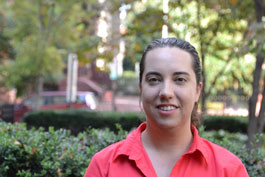
The AAG is pleased to announce that Sara Haywood has joined the staff as director of strategic projects at the association’s headquarters in Washington, D.C. Prior to joining the AAG, she served as the associate director of education and events for the Association for Professionals in Infection Control and Epidemiology (APIC). Sara is a certified meeting professional with 13 years of progressive experience developing and managing association conferences and educational programs. Her specialties include budget and program development, project management, staff and volunteer coordination, contract negotiation, and strategic relationship management.

She is the recipient of several honors including being named to the inaugural class of 40 under 40 Award Recipients, recognizing the most accomplished association professionals nationally under the age of 40, by the Association Forum of Chicagoland in 2013. She was also a member of the first North American conference and events team to receive BS8901 Sustainability in Event Management Certification in 2009. BS8901 was the British standard that became the basis for the international standard ISO 20121 which specifies the requirements for an Event Sustainability Management System to improve the sustainability of events.

Sara holds a Bachelor’s Degree in art history and Spanish with a minor in history from Indiana University and a graduate certificate in museum exhibition planning and design from Georgetown University.

When not working, Sara enjoys kayaking and paddle boarding along the Potomac River and exploring the great hiking trails in the D.C. metropolitan area.

    Share

Old Name Officially Returns to Nation’s Highest Peak

The story of America is told by the names on the land. When you hear names like Kentucky and Kennesaw, Klamath and Kodiak, your mind immediately starts to turn over all manner of associated thoughts of what you may have experienced or learned or even what you may imagine about that place. Geographic names often serve as a mental index and guide to help organize our knowledge of American geography and history.

Most of the time the names of places seem quite mundane because they are so basic in our everyday lives. They are invisible, unremarkable elements of the way we think and communicate. Yet, to borrow a phrase from Sir Francis Bacon*, names carry “much impression and enchantment.” When people disagree about the right name of a place, then the importance of geographic names becomes clearly evident.

Secretary of the Interior Sally Jewell has announced that the highest mountain in the United States and North America, formerly known as Mount McKinley, will now be officially designated by the name Denali in all federal records.

“This name change recognizes the sacred status of Denali to many Alaska Natives,” Secretary Jewell said. “The name Denali has been official for use by the State of Alaska since 1975, but even more importantly, the mountain has been known as Denali for generations. With our own sense of reverence for this place, we are officially renaming the mountain Denali in recognition of the traditions of Alaska Natives and the strong support of the people of Alaska.”

Secretary Jewell issued a Secretarial Order to make the name Denali official in accordance with her authority under the 1947 federal law that provides for the standardization of geographic names through the U.S Board on Geographic Names. Her action was heartily endorsed by President Obama who was participating in a meeting of the international Arctic Council in Anchorage.

    Share

Jolene Keen Joins AAG Staff as Research Associate

The AAG is pleased to announce that Jolene Keen has joined the AAG staff as a research associate at the association’s headquarters in Washington, D.C. She has a Bachelor’s of Science in anthropology and geography from Middle Tennessee State University and a Master’s of Science in geographic and cartographic science from George Mason University. Her Master’s thesis utilized geographic information systems (GIS) to analyze historic records from a spatial perspective in order to identify the location of ancient Maya sites. Her work experience includes land cover/land use change analysis, energy resource assessment, cultural resource management (CRM), museum collections management, environmental impact studies and geodatabase development and maintenance. Her research focus is on the application of GIS and remote sensing technologies for the documentation and analysis of archaeological resources.

When not working, she enjoys exploring the variety of outdoor activities available throughout Virginia and the DC region with her husband and her dogs. She also enjoys remodeling old furniture, as well as other hands-on projects.

    Share

A Movement Lab in New Orleans

The evening of Wednesday, May 20, was a night like any other 
in a town that, despite its near-demise a decade ago, persists as this country’s beating heart of creative chaos. By 6:30, the bars on Frenchmen Street were clinking to life. Around the city, Walter “Wolfman” Washington, the TBC Brass Band, and Delfeayo Marsalis were among the world-class musicians preparing for weekly gigs. Tourists were already filling the strip clubs and daiquiri shops of Bourbon Street and the trendy restaurants of the recently gentrified Bywater neighborhood. And in Mid-City, in front of the First Grace United Methodist Church, a couple of women stood beside tables selling tacos and mondongo (pork-belly soup) to an intergenerational mix of Latino families.

The families were on their way to the church for the weekly gathering of the Congress of Day Laborers. El Congreso, as it’s called for short, fights for equal treatment for the city’s recent Latino immigrants, and every Wednesday as many as 400 members come together to discuss ways to solve problems as varied as wage theft and deportation. As they settled into the pews, Leticia Casildo kicked off the meeting with a fiery call to action: “¡Fuera la migra de Louisiana!”—or, “Kick the immigration-enforcement agents out of Louisiana!”

There was no chanting at the BreakOUT meeting just over a mile away, in a former produce warehouse that is now a collection of artists’ studios and offices, but there was laughter. BreakOUT is an LGBTQ criminal-justice reform organization, and on this evening, a dozen transgender and gender-nonconforming young people were working and gossiping, creating a safe space behind a door with a welcome mat that read: come back with a warrant. The room felt like a mix of social club and office. A meeting started with a countdown exercise that looked like a free-form dance party, but soon those gathered got down to the business of assigning tasks for an event on the coming weekend. “Sometimes, I’ll just be so blown away to see how strong these youth are and how they constantly just keep fighting,” says Milan Nicole Sherry, 24, one of BreakOUT’s founding members and now a staffer. “They don’t take no for an answer.”

The rebel spirit continued about half an hour later and a few miles uptown, as roughly 100 people sat in a wide circle inside a Unitarian Church. The ­multiracial group, called Gulf South Rising, had come together to discuss grassroots responses to the anniversary of Hurricane Katrina. Its members were frustrated with the official commemorations, which are designed to highlight the city’s resilience and which, critics say, work to obscure and conceal the systemic injustices at play.

That’s a theme that was picked up, like a relay baton, at another meeting back in Mid-City, of a group of mostly young white activists from an antiracist organization called European Dissent. Founded in the 1990s, when Klansman David Duke ran for governor of Louisiana, the group has more active members now than at any point in its history. Many of its members moved here in the past few months and are concerned about their contribution to the displacement that’s defined the city since Katrina. On the evening’s agenda: strategies to fight gentrification.

This is New Orleans 10 years after Hurricane Katrina—a town of ferment and possibility, open wounds and agitation. It is whiter, wealthier, and smaller than it was on August 28, 2005. Around 100,000 black residents are still displaced, scattered to places unknown; housing prices continue to rise rapidly, pushing out those trying to get by on jobs in the city’s low-paying tourism economy. But despite the violence represented by these changes, or perhaps because of them, New Orleans has also seen a rise in coordinated resistance. More people have been organizing, taking to the streets, and risking arrest than at any other time in recent history.

Continue reading at TheNation.com

Excerpt from A Movement Lab in New Orleans © 2015 by Jordan Flaherty. Used with permission from The Nation.

    Share

Ten Years Since: A Meditation on New Orleans

This anniversary is a crossroads, a time 
to decide what to run toward and what to cast aside for a lighter burden. Ten years ago, I was a “refugee” from an American city. The consequence of that label has been a chaos of circumstances and quick decisions. The first 10 years, all a scramble to reconstruct oneself. The truth is, I am one of the lucky ones. One of the luckiest. I am home. I am sane. I am alive to speak for myself. I mourn for those lost and struggle with the gratitude and guilt of being spared. Survival is an animal instinct that moves us all toward good and bad, and I am doing my best with its weight. In these 10 years, I’ve learned to use this realization to heat and cool my anxiety, to forgive myself and propel my body into motion. There is so much about the last 10 years that I would rather forget, experiences I would remake. But it is not possible to go backward. There is only what is, and right now the stakes are high. New Orleans changes for good, a little bit at a time, every day. Houses in my neighborhood flip at sometimes three times their pre-Katrina “worth.” For white families in the new New Orleans, the median income has grown at triple the rate of black families’ income. It’s no wonder many are insistent that New Orleans is back and better than ever. There are roughly 100,000 fewer black people in the metro area. Old people out; new people in. It is critical not to cede the story at its crossroads.

Raised black in New Orleans and having made it to this side of these 10 years, I remember that with living comes the sacred responsibility of recalling. New Orleans has always been a place of many peoples. The Chata (Choctaw) named the city Bulbancha, “Many Languages Spoken There,” and the Ishak call it Nun Ush, “The Big Village.” Many of the places and locations known to tourists and travelers worldwide, such as the Port of New Orleans, the French Market, and Congo Square, served as thoroughfares for trade and culture long before the arrival of whites. Born and raised black in New Orleans, I speak an English marked by its African and Native vocabularies and patterns of speech. I like my short adjectives repeated two and three times each. The food is good-good and the picture might be pretty-pretty-pretty. I grew up with a distinct awareness of our longstanding ties to this land and the people who originally inhabited it. New Orleans is our place, a place with a syncretic and independent culture and a multilayered relationship to the diaspora—a relationship not of theory, but of practice.

Continue reading at TheNation.com

Excerpt from Ten Years Since: A Meditation on New Orleans © 2015 by Kristina Kay Robinson. Used with permission from The Nation.

    Share

New Books: August 2015

Every month the AAG compiles a list of newly-published books in geography and related areas. Some are selected for review in the AAG Review of Books.

Publishers are welcome to send new volumes to the Editor-in-Chief (Kent Mathewson, Editor-in-Chief, AAG Review of BooksDepartment of Geography and Anthropology, Louisiana State University, Baton Rouge, LA 70803).

Anyone interested in reviewing these or other titles should also contact the Editor-in-Chief.

 August, 2015

    Share

House Legislation Would Undermine NSF Merit Review Process

A bill (H.R. 3293) just introduced by the chair of the U.S. House Science Committee would undermine the National Science Foundation’s (NSF) longstanding use of merit review for awarding grants. The Consortium of Social Science Associations (COSSA) and several other organizations have expressed their opposition.

The legislation, which is similar to other bills that the AAG has alerted the geography community about, is portrayed by the Science Committee as helping to weed out grants that are unworthy of federal support. The Committee also asserts that nothing in the bill “shall be construed as altering the Foundation’s intellectual merit or broader impacts criteria for evaluating grant applications.”

The legislation would require NSF program officers to produce written justification for each project that receives funding that the grant is “worthy of federal funding” and is in the national interest in at least one of the seven following categories:

  • increased economic competitiveness in the United States;
  • advancement of the health and welfare of the American public;
  • development of an American STEM workforce that is globally competitive;
  • increased public scientific literacy and public engagement with science and technology in the United States;
  • increased partnerships between academia and industry in the United States;
  • support for the national defense of the United States; or
  • promotion of the progress of science for the United States.

Requiring these justification statements could ultimately force the Foundation’s program officials, including those at the Geography and Spatial Science program, to have to testify publicly in defense of merit review decisions, which are currently handled through a confidential process.

We will monitor this legislation and report on any important developments. View the COSSA statement opposing H.R. 3293. 

—John Wertman

    Share

Op-Ed: Make Civil Rights a Geography Awareness Week Theme

We have thought for some time now that it would be educationally productive to have a Geography Awareness Week theme devoted to civil rights. Tragically, events over the summer—especially the massacre at the Emanuel AME Church in Charleston, South Carolina—convince us that such an event is now socially and politically necessary. Across the country—from the fires of Ferguson, Missouri, to the most recent controversy surrounding the unjust arrest and suspicious death of Sandra Bland in Waller County, Texas—racialized violence, discrimination, and white supremacy demonstrates the power racism has over the lives of our communities, including the students in our classrooms. We encourage the National Geographic Society (NGS) and other prominent disciplinary organizations such as Association of American Geographers (AAG), American Geographical Society (AGS), National Council for Geographic Education (NCGE), and Canadian Association of Geographers (CAG) to seize this moment and organize this initiative. Continued silence not only demonstrates tacit approval of inequity in U.S. society, but calls into question the very relevance of Geography to solve the most pressing social issues in U.S. society

Observed every third week in November since 1987, Geography Awareness Week is a national and international opportunity to promote the importance of geography education and the relevance of spatial perspectives and tools to studying contemporary issues. To use a famous term recently invoked by AAG President Sarah Bednarz, Awareness Week is Geography’s “bully pulpit,” one of only a handful of times during the year in which the discipline has the full attention of school administrators, news media, government leaders, and the general public. Making civil rights the theme of Geography Awareness Week sends a strong message that we, as geographers, feel strongly about the need to address the historical and contemporary struggles of people of color in the United States as well as the general importance of human rights and social justice as they apply across a wide range of social groups, identities and issues—here at home and in other countries.

According to a 2011 Southern Poverty Law Center (SPLC) report, the United States has done a “dismal” job of including discussions of civil rights history, racism, and discrimination into state curriculum and educational standards. All 50 states were evaluated and graded. You might want to check out how your state fared. Even if your home state passed, it is important to note that SPLC’s expectations were somewhat modest—states received an “A” if their curriculum and standards included at least 60% of the recommended content related to the civil rights movement. No state included more than 74% of recommended content—a “C” in most of our own schools. In Sandra Bland’s Texas—which included only 35% of the civil rights content recommended by the SPLC—there is a tradition of the state school board revising textbooks in ways that “whitewash” human injustices. In the Texas history textbooks that will take effect in fall 2015, little mention is made of the Ku Klux Klan and Jim Crow laws. Students will barely read about racial segregation, and slavery will be downplayed as a leading cause of the American Civil War. These developments parallel the frightening material reality that the strides of the Movement are being eroded away with the ongoing racial and economic re-segregation of schools. Perhaps we shouldn’t be surprised given that, according to the SPLC report, “only 2% of high school seniors in 2010 could answer a simple question about the U.S. Supreme Court’s landmark Brown v. Board of Education decision” (p. 7).

Our own state of Tennessee did marginally better (39%) and it has had its own embarrassing moment of curriculum reform, when Tea Party groups demanded that state history textbooks remove references that would connect the founding fathers to slavery and the removal of indigenous peoples. The efforts of politicians in Tennessee and Texas speak to the continued marginalization of persons of color within our curriculum (an issue addressed recently by past-President Mona Domosh), which has important implications for the ways in which black lives (amongst other persons of color) not only do not matter, but are expendable, disposable and dangerous for those in power. What is the lesson we should take from Texas and Tennessee? Raising the quantity of civil rights teaching is critical, but it is even more crucial to address the quality of those ideas. There is a desperate need to teach about certain topics and issues in a frank way that challenges the normative power of white supremacy and to discuss issues that are potentially uncomfortable for students—both white and black. Again, continued silence on these issues demonstrates our tacit approval of these actions.

For these reasons we argue the civil rights theme is timely, especially in light of the growing amount of work that university and K-12 geographers are doing on social and environmental justice, peace geographies, and minority political empowerment. It is a theme that is well supported in geographic theory, case studies, and student interest and activism. Indeed, we teach a course in the Geography of Human Rights here at the University of Tennessee. Our in-state colleague, Esra Ozdenerol, has used GIS to map civil rights sites in the city of Memphis, funded in part by a grant from the Benjamin L. Hooks Institute for Social Change. Geography students and faculty from across the country have had teach-ins on #Blacklivesmatter, and led campaigns to challenge the legacy of white supremacy on college campuses (e.g., UNC-Chapel Hill).   Additionally, David L. Butler of the University of Southern Mississippi is leading a NSF-funded group of researchers from six universities—including an HBCU—to investigate how the southern plantation heritage tourism industry has traditionally done the same type of erasing of slavery that we now see in Texas history books. Yet, this team is also finding evidence that the representation of slavery at plantations is changing, creating important yet still high contested moments to discuss racism, white supremacy, and black resistance. No doubt, there are many other examples of geographers who could contribute to civil rights pedagogy, some of whom might not have thought about participating in Awareness Week activities until now.

Giving civil rights an official place in our Awareness Week not only opens up space in classrooms to teach about tolerance, diversity, and anti-racism as core geographic values, it also sends a powerful message about the relevance and commitment of geographers to be active participants in making the world a better place. Furthermore, broadening the participation of historically under-represented groups in Geography and other STEM disciplines has emerged as a top priority over the last several years, and AAG has taken a leadership role in this initiative. Put simply, it is time to take the next step. Imagine the kind of “sense of belonging” that can be communicated to underrepresented persons in our classrooms and across the academy when they hear that the discipline of Geography values civil rights and we are willing to devote an entire national campaign to the theme. Highlighting civil rights creates a strategic moment for public engagement, another principle of growing importance in the Academy. Such public engagement can take the form of inviting local activists and community leaders to deliver guest lecturers and workshops in our schools and the organization of service-learning and engaged scholarship partnerships with historically marginalized communities and civic groups. Many geographers are already engaged in a public geography projects with a strong civil rights and social justice dimension. Geography Awareness Week offers an opportunity to highlight and build upon those efforts while also further charting a progressive vision for our discipline. In that vision, geographers do not simply study critical social and environmental issues but make an active intervention in the welfare of communities.

In closing, we reaffirm our request to the Geography establishment to collaborate with us and many of our colleagues to work soon to make civil rights a theme of an upcoming Geography Awareness Week. In the meantime, before that goal is accomplished, geographers are encouraged to teach more about civil rights, anti-racism, and inequality in classrooms and to bring these issues to bear on whatever themes are chosen for Awareness Week. We ask that geographers in community colleges, universities and K-12 schools communicate their views about the need for a civil rights-oriented Geography Awareness Week to NGS, AAG, AGS, NCGE, and CAG. Doing so is important for winning support for the proposal, and we are confident that many leaders in Geography would welcome such an idea. Moreover, if we are to truly build a civil rights consciousness in the field of Geography, it is also important to let these leaders know who you are, what you already do in researching and teaching civil rights, and what more you hope to do along these lines in a late November week in the not too distant future. Let’s collectively break our silence.

—Derek H. Alderman
Professor & Department Head
University of Tennessee
dalderma [at] utk [dot] edu
Twitter @MLKStreet

—Josh Inwood
Associate Professor
University of Tennessee
jinwood [at] utk [dot] edu
Twitter @JoshGeog

DOI:10.14433/2015.0020


AAG Newsletter Op-Eds

The AAG invites brief opinion pieces highlighting the contributions of geographical analysis to the understanding of important public issues and events. Submissions are encouraged from across the full breadth of the discipline. These pieces reflect opinions of contributing AAG members and do not represent an official AAG position on any issue. Op-ed pieces must be consistent with the AAG ethics policy to be considered for publication. Send submissions to newsletter [at] aag [dot] org.

    Share

Emma Martin Interns at AAG for Summer Semester

Emma Martin is a senior at James Madison University earning a B.S. in Geographic Science with a concentration in Environmental Conservation, Sustainability and Development and a minor in Spanish. As an honors program student she is currently working on a senior thesis in the field of geography. She is also a member of Gamma Theta Upsilon and Phi Beta Kappa. After graduation, Emma aims to focus her career on biogeography, biodiversity and sustainability by pursuing a master’s degree before working for a government or non-profit organization.

Throughout her summer at the AAG, Emma has been developing an interactive map application for the Guide to Geography Programs in the Americas using ArcGIS Online. She also helps out with a number of other AAG projects, such as the GeoMentors program.

In her spare time, she enjoys being outdoors. You can often find her either eBirding or geocaching!

    Share

Joseph Bencloski receives lifetime achievement award from PA geographical society

Dr. Joseph W. Bencloski received the 2014 Ruby S. and E. Willard Miller Lifetime Achievement Award from the Pennsylvania Geographical Society (PGS) at its annual meeting in State College, Pa., on November 7, 2014. The award is given occasionally to an individual for exemplary long-term dedication to the discipline of Geography and to the PGS. Bencloski is only the fifth recipient of the award, which was established in 2002 in honor of the late Penn State professor E. Willard Miller and his wife Ruby S. Miller.

Bencloski said that the award has special meaning, because his very first graduate assistantship assignment at Penn State was to work with Professor Miller. It was also special, because it was awarded at Penn State, his Ph.D. alma mater. The Miller Award is the latest of numerous national, regional, and university teaching and service awards and recognitions he received during his career as a university professor.

A professor emeritus at Indiana University of Pennsylvania, Bencloski taught in the Department of Geography and Regional Planning for 24 years until his retirement in 2013. His specialties include climatology, remote sensing, and geomorphology.

    Share